トピック: ロボティクス
該当記事 1338 件 / 新しい順

空間記憶エージェント: 空間知性のための経験に基づいた手順記憶
空間インテリジェンスは、身体化されたエージェント、ロボットによるプランニング、およびマルチモーダル アシスタントの基盤になりつつあります。 VLM エージェントの空間推論能力を向上させるために、既存の研究は主に 2 つの方針に従っています。 1 行では、教師あり微調整や強化学習などのトレーニング後の手法を使用しています。別のラインでは、モデルが深さ推定や 3D 再構成ツールなどの外部空間ツールを呼び出して、中間の空間証拠を収集するエージェント パラダイムを採用しています。私たちは、補完的かつ未開拓のルートを研究します。凍結された VLM エージェントは、推論時に外部の専門家空間ツールに依存せずに、\textbf{パラメータ更新不要の自己進化} を通じて空間推論を改善できるでしょうか?私たちは、検証された空間体験を再利用可能な転送可能なレッスンに変換する \textbf{経験に基づいたランタイム フレームワーク}である \textbf{空間メモリ エージェント (SMA)} を紹介します。検証可能な空間環境では、SMA は凍結された VLM にクエリを実行し、予測された答えと報酬を取得し、\textbf{検証者ガイド付きリフレクション} を使用して、空間経験からコンパクトで譲渡可能な教訓を抽出します。 SMA はさらに、各レッスンに \textbf{転送信頼性スコア (TRS)} を割り当てます。これは均一に初期化され、将来の転送信頼性の訪問証拠として後の検索結果から調整されます。 \textbf{読み取り専用デプロイメント}中、SMA はセマンティック フィルターと類似性と TRS を組み合わせたランキングによってレッスンを取得し、取得したメモリを利用してフリーズされたモデルの推論をガイドできるようにします。 5 つの代表的な空間ベンチマークと 4 つのベース VLM にわたって、SMA はすべてのベース モデル ブロックで最高のマクロ平均を達成し、20 の評価のほとんどで評価されたメソッドの中で最高の精度を達成し、評価されたフリーズ モデル スケールと環境全体で空間自己進化のための実用的なパラメーター更新のないパスを確立しました。
原文 (English)
Spatial Memory Agent: Experience-Grounded Procedure Memory for Spatial Intelligence
Spatial intelligence is becoming a foundation for embodied agents, robotic planning, and multimodal assistants. To improve the spatial reasoning ability of VLM agents, existing work has mainly followed two lines. One line uses post-training methods, such as supervised fine-tuning and reinforcement learning. Another line adopts an agentic paradigm in which the model calls external spatial tools, such as depth estimation and 3D reconstruction tools, to gather intermediate spatial evidence. We study a complementary and underexplored route: Can a frozen VLM agent improve its spatial reasoning through \textbf{parameter-update-free self-evolution}, without depending on external expert spatial tools at inference time? We present \textbf{Spatial Memory Agent (SMA)}, an \textbf{experience-grounded runtime framework} that converts verified spatial experience into reusable transferable lessons. In a verifiable spatial environment, SMA queries the frozen VLM, obtains a predicted answer and reward, and uses \textbf{verifier-guided reflection} to distill compact transferable lessons from spatial experience. SMA further assigns each lesson a \textbf{Transfer Reliability Score (TRS)}, which is initialized uniformly and calibrated from later retrieval outcomes as visit evidence of future transfer reliability. During \textbf{read-only deployment}, SMA retrieves lessons by semantic filter and similarity-TRS combined ranking, allowing the retrieved memory to guide frozen model inference. Across five representative spatial benchmarks and four base VLMs, SMA achieves the highest macro average in every base-model block and the best accuracy among the evaluated methods in most of the 20 evaluations, establishing a practical parameter-update-free path for spatial self-evolution across the evaluated frozen model scales and environments.
BrainWAM: 自動運転のためのセマンティック事前確率と予測ダイナミクスのアクション空間調整
自動運転には、意味論的な制約と予測ダイナミクスの両方に基づいた計画が必要です。しかし、既存のエンドツーエンドの運転アプローチは通常、この要件の片側のみを強調しています。つまり、視覚言語アクション (VLA) モデルは意味論的推論に VLM 事前分布を活用し、ワールド アクション モデル (WAM) は生成ワールド モデリングを通じて未来を意識した予測を提供します。これにより、意味論的な事前分布と予測ダイナミクスの両方を活用できる統合プランナーが自然と動機付けられます。しかし、共同トークンレベルの注意による単純な組み合わせは、意味論的なショートカットが共有の注意空間を支配し、予測のダイナミクスを抑制する、注意の割り当ての不一致に悩まされることがわかりました。機能的に特化されたシステム間の調整から複雑な動作が生じるという神経科学の証拠に触発されて、私たちは、意味論的推論と予測世界モデリングを2つの特化されたアクション指向の経路に変換し、コンパクトなアクション表現のレベルでそれらを調整する、構造化されたアクション空間調整フレームワークであるBrainWAMを提案します。さらに、ビデオとアクションのノイズ除去を分離した非同期整流フロー推論戦略を導入します。これにより、計画関連の予測コンテキストを維持しながら推論レイテンシが短縮されます。 BrainWAM は、NAVSIM v1 (89.5 PDMS) と NAVSIM v2 (89.6 EPDMS) の両方で最先端のパフォーマンスに達し、VLA のみまたは WAM のみの方法を常に上回っており、BrainWAM が自動運転システムの実用的で有望な方向性であることを強調しています。
原文 (English)
BrainWAM: Action-Space Coordination of Semantic Priors and Predictive Dynamics for Autonomous Driving
Autonomous driving requires planning under both semantic constraints and predictive dynamics. Existing end-to-end driving approaches, however, typically emphasize only one side of this requirement: Vision-Language-Action (VLA) models exploit VLM priors for semantic reasoning, while World Action Models (WAMs) provide future-aware prediction through generative world modeling. This naturally motivates a unified planner that can leverage both semantic priors and predictive dynamics. However, we find that a naive combination through joint token-level attention suffers from an attention-allocation mismatch, where semantic shortcuts dominate the shared attention space and suppress predictive dynamics. Inspired by neuroscience evidence that complex behavior arises from coordination among functionally specialized systems, we propose BrainWAM, a structured action-space coordination framework that converts semantic reasoning and predictive world modeling into two specialized action-oriented pathways, and aligns them at the level of compact action representations. We further introduce an asynchronous rectified-flow inference strategy with decoupled video and action denoising, which shortens inference latency while preserving planning-relevant predictive context. BrainWAM reaches state-of-the-art performance on both NAVSIM v1 (89.5 PDMS) and NAVSIM v2 (89.6 EPDMS), consistently outperforming VLA-only or WAM-only methods, highlighting BrainWAM as a practical and promising direction for autonomous driving systems.
Deliberate Practice: Learning Robot Skills under a Budget
We consider the problem of autonomously learning robot skills under a limited practice budget for sequential tasks. We propose an active sk…
ContactGuard: Pre-Contact Execution Monitoring with Action-Conditioned Latent World Models
Contact-rich manipulation failures are often detected only after the robot has committed to contact. This is especially limiting in wrist-c…
UniTexture: Cross-Task Universal Adversarial Textures for Vision-Language-Action Models
Vision-Language-Action (VLA) models have emerged as generalist robotic policies capable of following diverse language instructions and perf…
HumanTracker: Towards Comprehensive and Human-Aligned Motion Tracking Benchmark
Humanoid motion tracking is central to teleoperation and whole-body imitation, yet evaluation often disagrees with what people perceive in…
SONIC: Supersizing Motion Tracking for Natural Humanoid Whole-Body Control
Despite the rise of billion-parameter foundation models trained across thousands of graphical processing units (GPUs), similar scaling gain…
RadarGen: Automotive Radar Point Cloud Generation from Cameras
We present RadarGen, a diffusion model for synthesizing realistic automotive radar point clouds from multi-view camera imagery. RadarGen ad…
Safe Exploration via Policy Priors
Safe exploration is a key requirement for reinforcement learning (RL) agents to learn and adapt online, beyond controlled (e.g. simulated)…
Early Warning Signals for OpenVLA Failure under Visual Distribution Shift
Visual shifts can cause a vision-language-action policy to fail after initially plausible behavior. We ask whether OpenVLA's internal activ…
Keep the Future, Drop the Rollout: RIFT for World Action Models
World action models (WAMs) condition robot actions on predicted futures, but iterative video rollout increases deployment latency. We ask w…
空間記憶エージェント: 空間知性のための経験に基づいた手順記憶
空間インテリジェンスは、身体化されたエージェント、ロボットによるプランニング、およびマルチモーダル アシスタントの基盤になりつつあります。 VLM エージェントの空間推論能力を向上させるために、既存の研究は主に 2 つの方針に従っています。 1 行では、教師あり微調整や強化学習などのトレーニング後の手法を使用しています。別のラインでは、モデルが深さ推定や 3D 再構成ツールなどの外部空間ツールを呼び出して、中間の空間証拠を収集するエージェント パラダイムを採用しています。私たちは、補完的かつ未開拓のルートを研究します。凍結された VLM エージェントは、推論時に外部の専門家空間ツールに依存せずに、\textbf{パラメータ更新不要の自己進化} を通じて空間推論を改善できるでしょうか?私たちは、検証された空間体験を再利用可能な転送可能なレッスンに変換する \textbf{経験に基づいたランタイム フレームワーク}である \textbf{空間メモリ エージェント (SMA)} を紹介します。検証可能な空間環境では、SMA は凍結された VLM にクエリを実行し、予測された答えと報酬を取得し、\textbf{検証者ガイド付きリフレクション} を使用して、空間経験からコンパクトで譲渡可能な教訓を抽出します。 SMA はさらに、各レッスンに \textbf{転送信頼性スコア (TRS)} を割り当てます。これは均一に初期化され、将来の転送信頼性の訪問証拠として後の検索結果から調整されます。 \textbf{読み取り専用デプロイメント}中、SMA はセマンティック フィルターと類似性と TRS を組み合わせたランキングによってレッスンを取得し、取得したメモリを利用してフリーズされたモデルの推論をガイドできるようにします。 5 つの代表的な空間ベンチマークと 4 つのベース VLM にわたって、SMA はすべてのベース モデル ブロックで最高のマクロ平均を達成し、20 の評価のほとんどで評価されたメソッドの中で最高の精度を達成し、評価されたフリーズ モデル スケールと環境全体で空間自己進化のための実用的なパラメーター更新のないパスを確立しました。
原文 (English)
Spatial Memory Agent: Experience-Grounded Procedure Memory for Spatial Intelligence
Spatial intelligence is becoming a foundation for embodied agents, robotic planning, and multimodal assistants. To improve the spatial reasoning ability of VLM agents, existing work has mainly followed two lines. One line uses post-training methods, such as supervised fine-tuning and reinforcement learning. Another line adopts an agentic paradigm in which the model calls external spatial tools, such as depth estimation and 3D reconstruction tools, to gather intermediate spatial evidence. We study a complementary and underexplored route: Can a frozen VLM agent improve its spatial reasoning through \textbf{parameter-update-free self-evolution}, without depending on external expert spatial tools at inference time? We present \textbf{Spatial Memory Agent (SMA)}, an \textbf{experience-grounded runtime framework} that converts verified spatial experience into reusable transferable lessons. In a verifiable spatial environment, SMA queries the frozen VLM, obtains a predicted answer and reward, and uses \textbf{verifier-guided reflection} to distill compact transferable lessons from spatial experience. SMA further assigns each lesson a \textbf{Transfer Reliability Score (TRS)}, which is initialized uniformly and calibrated from later retrieval outcomes as visit evidence of future transfer reliability. During \textbf{read-only deployment}, SMA retrieves lessons by semantic filter and similarity-TRS combined ranking, allowing the retrieved memory to guide frozen model inference. Across five representative spatial benchmarks and four base VLMs, SMA achieves the highest macro average in every base-model block and the best accuracy among the evaluated methods in most of the 20 evaluations, establishing a practical parameter-update-free path for spatial self-evolution across the evaluated frozen model scales and environments.
BrainWAM: 自動運転のためのセマンティック事前確率と予測ダイナミクスのアクション空間調整
自動運転には、意味論的な制約と予測ダイナミクスの両方に基づいた計画が必要です。しかし、既存のエンドツーエンドの運転アプローチは通常、この要件の片側のみを強調しています。つまり、視覚言語アクション (VLA) モデルは意味論的推論に VLM 事前分布を活用し、ワールド アクション モデル (WAM) は生成ワールド モデリングを通じて未来を意識した予測を提供します。これにより、意味論的な事前分布と予測ダイナミクスの両方を活用できる統合プランナーが自然と動機付けられます。しかし、共同トークンレベルの注意による単純な組み合わせは、意味論的なショートカットが共有の注意空間を支配し、予測のダイナミクスを抑制する、注意の割り当ての不一致に悩まされることがわかりました。機能的に特化されたシステム間の調整から複雑な動作が生じるという神経科学の証拠に触発されて、私たちは、意味論的推論と予測世界モデリングを2つの特化されたアクション指向の経路に変換し、コンパクトなアクション表現のレベルでそれらを調整する、構造化されたアクション空間調整フレームワークであるBrainWAMを提案します。さらに、ビデオとアクションのノイズ除去を分離した非同期整流フロー推論戦略を導入します。これにより、計画関連の予測コンテキストを維持しながら推論レイテンシが短縮されます。 BrainWAM は、NAVSIM v1 (89.5 PDMS) と NAVSIM v2 (89.6 EPDMS) の両方で最先端のパフォーマンスに達し、VLA のみまたは WAM のみの方法を常に上回っており、BrainWAM が自動運転システムの実用的で有望な方向性であることを強調しています。
原文 (English)
BrainWAM: Action-Space Coordination of Semantic Priors and Predictive Dynamics for Autonomous Driving
Autonomous driving requires planning under both semantic constraints and predictive dynamics. Existing end-to-end driving approaches, however, typically emphasize only one side of this requirement: Vision-Language-Action (VLA) models exploit VLM priors for semantic reasoning, while World Action Models (WAMs) provide future-aware prediction through generative world modeling. This naturally motivates a unified planner that can leverage both semantic priors and predictive dynamics. However, we find that a naive combination through joint token-level attention suffers from an attention-allocation mismatch, where semantic shortcuts dominate the shared attention space and suppress predictive dynamics. Inspired by neuroscience evidence that complex behavior arises from coordination among functionally specialized systems, we propose BrainWAM, a structured action-space coordination framework that converts semantic reasoning and predictive world modeling into two specialized action-oriented pathways, and aligns them at the level of compact action representations. We further introduce an asynchronous rectified-flow inference strategy with decoupled video and action denoising, which shortens inference latency while preserving planning-relevant predictive context. BrainWAM reaches state-of-the-art performance on both NAVSIM v1 (89.5 PDMS) and NAVSIM v2 (89.6 EPDMS), consistently outperforming VLA-only or WAM-only methods, highlighting BrainWAM as a practical and promising direction for autonomous driving systems.
Deliberate Practice: Learning Robot Skills under a Budget
We consider the problem of autonomously learning robot skills under a limited practice budget for sequential tasks. We propose an active sk…
ContactGuard: Pre-Contact Execution Monitoring with Action-Conditioned Latent World Models
Contact-rich manipulation failures are often detected only after the robot has committed to contact. This is especially limiting in wrist-c…
UniTexture: Cross-Task Universal Adversarial Textures for Vision-Language-Action Models
Vision-Language-Action (VLA) models have emerged as generalist robotic policies capable of following diverse language instructions and perf…
HumanTracker: Towards Comprehensive and Human-Aligned Motion Tracking Benchmark
Humanoid motion tracking is central to teleoperation and whole-body imitation, yet evaluation often disagrees with what people perceive in…
SONIC: Supersizing Motion Tracking for Natural Humanoid Whole-Body Control
Despite the rise of billion-parameter foundation models trained across thousands of graphical processing units (GPUs), similar scaling gain…
RadarGen: Automotive Radar Point Cloud Generation from Cameras
We present RadarGen, a diffusion model for synthesizing realistic automotive radar point clouds from multi-view camera imagery. RadarGen ad…
Safe Exploration via Policy Priors
Safe exploration is a key requirement for reinforcement learning (RL) agents to learn and adapt online, beyond controlled (e.g. simulated)…
Early Warning Signals for OpenVLA Failure under Visual Distribution Shift
Visual shifts can cause a vision-language-action policy to fail after initially plausible behavior. We ask whether OpenVLA's internal activ…
Keep the Future, Drop the Rollout: RIFT for World Action Models
World action models (WAMs) condition robot actions on predicted futures, but iterative video rollout increases deployment latency. We ask w…
人間自律チームにおける信念と二次心の理論の同期 (拡張版)
報酬自体を直接指定できない場合、2 つの行動のうちどちらが好みかを人々に尋ねる比較フィードバックは、ロボットとエージェントの行動を人間の意図に合わせるための標準的な方法となっています。好みに基づく報酬学習では通常、人間の教師が学習者が生成したクエリに答える受動的な神託者としてキャストされます。私たちは、これによって教師の決定的な利点、つまり目標に関する知識が失われると主張します。ターゲットを知っている教師は、学習者主導の習得戦略よりも効率的にトレーニング例を構築できます。この利点は、報酬の機能の次元が大きくなるにつれて拡大します。ただし、この利点を活用するには、学習者が現在知っていることの正確なモデルが必要です。したがって、私たちは嗜好学習を、2 つの行動モデルを結合する人間の自律性チームの問題として再構成します。つまり、教師は有益なカリキュラムを設計するために学習者のモデルを維持し、学習者は教師のモデルの 2 次モデルを維持し、教師の学習者のモデルの同期を維持する構造化された嗜好制約 (理解ステートメント) を生成します。シミュレーションでは、十分な情報を得た教師が学習者主導の選択よりも優れた成績を収めます。教師が交代する場合の教師モデルのドリフトにより、この利点が損なわれます。そして、学習者に関する教師の間違いが均等に広がるのではなく特定の方向に集中している場合、二次(ToM-2)ステートメントが平均信念ステートメントを上回るパフォーマンスを示して、理解ステートメントがそれを修復します。
原文 (English)
Synchronizing Beliefs with Second-Order Theory-of-Mind in Human-Autonomy Teams (Extended Version)
Comparative feedback, asking people which of two behaviors they prefer, has become a standard way to align robot and agent behavior with human intent when the reward itself cannot be specified directly. Preference-based reward learning typically casts the human teacher as a passive oracle answering learner-generated queries. We argue this forfeits the teacher's defining advantage: knowledge of the objective. A teacher who knows the target can construct training examples more efficiently than any learner-driven acquisition strategy, an advantage that widens as the reward's feature dimension grows. However, exploiting this advantage requires an accurate model of what the learner currently knows. We therefore recast preference learning as a human-autonomy team problem coupling two behavioral models: the teacher maintains a model of the learner to design an informative curriculum, and the learner maintains a second-order model of the teacher's model, emitting structured preference constraints (understanding statements) that keep the teacher's model of the learner synchronized. In simulation, an informed teacher outperforms learner-led selection; teacher-model drift under alternating teachers erodes this advantage; and understanding statements repair it, with second-order (ToM-2) statements outperforming mean-belief statements when the teacher's error about the learner is concentrated in a particular direction rather than spread evenly.
身体化したエージェントの活用に向けて
エージェントのコーディングの成功により、ハーネスがパラダイムとして確立されました。エージェントが何を達成するかは、モデルのみに依存するのではなく、その周囲のインフラストラクチャに依存します。私たちは、同じパラダイムが物理世界の身体化されたエージェントにも当てはまるかどうかを尋ねます。私たちは、エージェント ループがロボットの機能を調整し、それぞれが呼び出し可能なツールとしてラップされるハーネスである Thea を紹介します。これはコーディング エージェントのコア コンポーネントを継承し、物理世界の必要に応じて変更されます。しかし、世界は、ソフトウェアが無料で与える 2 つの能力、つまり世界の状態を読み取ることと、行動の結果を判断することを保留しています。これらのギャップを埋めるために、Thea は、世界の永続的で象徴的な表現であるコンテキストとしてのシーン グラフと、アクションがいつ終了するかを検出し、成功したかどうかを判断し、失敗した場合には原因を診断する終了コードとしての評価を導入しました。これらは連携して、エージェントと物理世界の間のループを閉じます。その後、ツールの構成から豊かな動作が生まれ、閉ループが長期にわたるタスクを実際の環境で完了まで実行します。
原文 (English)
Towards the Harness of Embodied Agents
The success of coding agents has established the harness as a paradigm: what an agent achieves depends not on the model alone, but on the infrastructure around it. We ask whether the same paradigm extends to embodied agents in the physical world. We present Thea, a harness in which an agentic loop orchestrates robot capabilities, each wrapped as a callable tool. It inherits the core components of coding agents, modified as the physical world requires. The world, however, withholds two abilities that software grants for free: reading the state of the world, and judging the outcome of an action. To bridge these gaps, Thea introduces Scene Graph as Context, a persistent, symbolic representation of the world, and Evaluation as Exit Codes, which detects when an action should terminate, judges whether it succeeded, and on failure diagnoses the cause. Together they close the loop between the agent and the physical world. Rich behaviors then emerge from the composition of tools, and the closed loop carries long-horizon tasks to completion in real environments.
見ざる先見性: 世界の行動モデルの潜在的な未来
ワールド アクション モデル (WAM) は、将来の視覚的予測とロボットのアクション生成を組み合わせ、相互作用中に物理世界がどのように進化するかをポリシーでモデル化できるようにします。既存の WAM は、予測ダイナミクスをアクション経路にどのように公開するかが異なります。明示的な将来の WAM は、予測されたシーンの展開への直接アクセスを提供しますが、反復的なビデオのノイズ除去によりかなりの推論コストが発生します。対照的に、直接ポリシー WAM は、現在の観察からアクションを効率的に予測しますが、予測ダイナミクスをアクション DiT に公開するための明示的な推論時間インターフェイスがありません。このギャップを埋めるために、将来のビデオをデコードせずにアクション生成のための予測コンテキストを提供する、ダイナミクス条件付きの直接ポリシー WAM である ForeWAM を提案します。 Future-KV の核心では、現在の視覚的な潜在スロットと確率的な将来スロットに対して単一のビデオ DiT プレフィルを実行し、結果として得られるレイヤーごとのキーと値の状態をアクションのノイズ除去全体で再利用します。さらに、凍結された潜在アクション教師によって監督されたダイナミクス レジスタを導入し、オブジェクトの動き、接触の変化、タスクの進行などの相互作用によって引き起こされる遷移を捕捉するように暗黙的な将来状態を促進します。グラウンドトゥルースの将来観察と教師はトレーニング中にのみ使用されます。導入ではどちらも必要なく、将来のビデオ生成も実行されません。組み込まれたロボット データの事前トレーニングを行わない場合、ForeWAM の標準バージョンと高速バージョンは、LIBERO 上でそれぞれ 96.7% と 96.9% の平均成功率を達成しました。標準バージョンはさらに、LIBERO-Plus で 61.6% の成功率を達成しています。これらの結果は、直接ポリシー WAM が、将来の観測を明示的に生成することなく、アクション経路に予測ダイナミクスを公開しながら、効率的なアクション予測を保持できることを示しています。
原文 (English)
Foresight Without Seeing: Latent Futures for World Action Models
World Action Models (WAMs) couple future visual prediction with robot action generation, enabling policies to model how the physical world evolves during interaction. Existing WAMs differ in how predictive dynamics are exposed to the action pathway. Explicit-future WAMs provide direct access to predicted scene evolution, but incur substantial inference costs from iterative video denoising. In contrast, direct-policy WAMs efficiently predict actions from the current observation but lack an explicit inference-time interface for exposing predictive dynamics to the Action DiT. To bridge this gap, we propose ForeWAM, a dynamics-conditioned direct-policy WAM that provides predictive context for action generation without decoding future videos. At its core, Future-KV performs a single Video DiT prefill over the current visual latent and stochastic future slots, and reuses the resulting layer-wise key-value states throughout action denoising. We further introduce dynamics registers supervised by a frozen latent action teacher, encouraging the implicit future states to capture interaction-induced transitions such as object motion, contact changes, and task progress. Ground-truth future observations and the teacher are used only during training; deployment requires neither and performs no future video generation. Without embodied robot data pretraining, the standard and accelerated variants of ForeWAM achieve average success rates of 96.7% and 96.9% on LIBERO, respectively. The standard variant further achieves 61.6% success on LIBERO-Plus. These results demonstrate that direct-policy WAMs can retain efficient action prediction while exposing predictive dynamics to the action pathway without explicitly generating future observations.
Herding End-to-End Autonomous Driving via Neuro-Symbolic Safety Guards
Modern end-to-end driving agents can achieve high average performance yet still violate basic traffic rules that a human driver would never…
Keep the Future, Drop the Rollout: RIFT for World Action Models
World action models (WAMs) condition robot actions on predicted futures, but iterative video rollout increases deployment latency. We ask w…
A Conceptual Framework for Enhancing Workforce Readiness for Smart Manufacturing in the AI Era
The convergence of artificial intelligence (AI), Industrial Internet of Things, cyber-physical systems, and advanced robotics is reshaping…
RoadWeaver: Large-Scale Lane-Level HD Map Generation from Scratch for Autonomous Driving Simulation
Autonomous driving simulation requires diverse and scalable lane-level HD maps to support long-horizon evaluation across complex road netwo…
Motion-as-Prompt: Enhancing Motion Reasoning in Multimodal Large Language Models via Motion-Guided Cross-Frame Visual Prompting
Motion-centric video reasoning is fundamental to interactive applications such as robotic manipulation and autonomous navigation. However,…
G0.5: One Autoregressive Stream for Robot Reasoning and Action
The prevailing recipe for Vision-Language-Action (VLA) models couples a pretrained VLM with a separately trained flow-matching action exper…
Learning Loco-Manipulation From SMPC Demonstrations With Sparse Offline-to-Online RL
Integrating locomotion and manipulation is essential for robot autonomy, but scaling standard Reinforcement Learning (RL) to complex tasks…
Learning-Based Behavior Planning for Automated Driving: Real-World Integration and Deployment
Recent research in machine and deep learning has shown the potential of learningbased motion planning approaches to improve the driving beh…
LiDAR-based 3D Change Detection at City Scale
High-definition 3D city maps enable city planning and change detection, which is essential for municipal compliance, map maintenance, and a…
TMRL: Diffusion Timestep-Modulated Pretraining Enables Exploration for Efficient Policy Finetuning
Fine-tuning pre-trained robot policies with reinforcement learning (RL) often inherits the bottlenecks introduced by pre-training with beha…
FACTR 2: Learning External Force Sensing for Commodity Robot Arms Improves Policy Learning
Contact-rich manipulation requires force sensitivity, but many robot arms lack dedicated force sensors due to their high cost. We present N…
ワールド モデルからワールド アクション モデルへ: ロボット工学の簡潔なチュートリアル
世界モデルは、身体化されたインテリジェンスや生成シミュレーションでますます使用されていますが、その範囲はコミュニティ全体で依然として曖昧です。このチュートリアルでは、タスク関連の観測または状態の将来の進化を推定するアクション条件付き予測モデルとしてのワールド モデルの設計空間ビューを示します。私たちは既存の手法を観測空間世界モデルと状態空間世界モデルに分類し、視覚的な忠実度、空間構造、物理的解釈可能性、制御の使いやすさにおけるトレードオフを比較します。さらに、予測された未来と実行可能なロボットのアクションを結び付ける世界アクション モデルを紹介し、想像してから実行する、ビデオ機能条件付きアクション予測、ビデオとアクションの共同モデリング、およびポリシー学習のための補助ビデオ予測という 4 つの代表的なパラダイムを要約します。このチュートリアルの目標は、世界 (アクション) モデルの概念的範囲を明確にし、具体化された予測と制御のための構造化された分類法を提供することです。
原文 (English)
From World Models to World Action Models: A Concise Tutorial for Robotics
Rather than providing an exhaustive survey, this paper presents a concise tutorial on world models and world action models for robotics. After reading the tutorial, readers should have a clear understanding of what constitutes a "world", how world models and world action models are defined, and what roles they play within robotic AI systems. The tutorial also develops a unified perspective for comparing representative approaches, such as World Labs' spatial intelligence models, Yann LeCun's JEPA framework, and NVIDIA's Cosmos platform, and clarifies how these models differ in their representations, predictive capabilities, and interaction mechanisms.
目に見えないところに隠された: 視覚・言語・行動モデルに対する拡散ベースの無制限のロボット攻撃
Vision-Language-Action (VLA) モデルは、さまざまな操作タスクにわたってロボットを制御する強力な機能を示しています。しかし、その敵対的な堅牢性は依然としてほとんど解明されておらず、この弱点を悪用すると物理世界に損害を与える可能性があります。 VLA モデルに対する既存の攻撃は、多くの場合、ピクセル空間の摂動やホワイトボックス アクセスに依存しており、その結果、顕著なアーティファクトが発生し、現実世界のロボット システムでの展開可能性が制限されます。この研究では、VLA モデルに対して視覚的に自然な敵対的パッチを生成する、拡散ベースの無制限のロボット攻撃である DURA を提案します。 DURA は、ホワイトボックス攻撃設定とブラックボックス攻撃設定の両方をサポートします。ブラックボックス設定では、被害者モデルの予測されたアクションのみが必要です。 DURA は、事前学習済みの拡散モデルの潜在軌道に沿って最適化することで、視覚的に自然なパッチを生成しながら、攻撃者が指定したターゲット アクションに向けてロボットを誘導します。シミュレーションと実際の物理世界の両方での広範な実験により、DURA が既存の方法よりも常に優れたパフォーマンスを発揮することが示されています。私たちの調査結果は、物理的に展開された VLA モデルの安全上のリスクを明らかにしており、より強力な防御が求められています。
原文 (English)
Hidden in Plain Sight: Diffusion-Based Unrestricted Robotic Attacks on Vision-Language-Action Models
Vision-Language-Action (VLA) models have shown strong capabilities in controlling robots across diverse manipulation tasks. However, their adversarial robustness remains largely underexplored, and exploiting this weakness can lead to physical-world harm. Existing attacks on VLA models often rely on pixel-space perturbations or white-box access, resulting in noticeable artifacts and limited deployability in real-world robotic systems. In this work, we propose DURA, a diffusion-based unrestricted robotic attack that generates visually natural adversarial patches for VLA models. DURA supports both white-box and black-box attack settings, where the black-box setting requires only the predicted actions of the victim model. By optimizing along the latent trajectory of a pretrained diffusion model, DURA generates visually natural patches while steering the robot toward attacker-specified target actions. Extensive experiments in both simulation and the real physical world show that DURA consistently outperforms existing methods. Our findings expose a safety risk for physically deployed VLA models and call for stronger defenses.
Navigating the Proximity-Safety Balance: Constraint Decomposition for Human Following in Pedestrian Crowds
Following a target human in crowded environments involves an inherent conflict between staying close to the target and navigating safely am…
FACT: Failure-Aware Causal Training for World-Action Models
Recent world-action models (WAMs) show that co-training policies with future prediction can provide physical priors for action generation.…
Lost in Reconstruction: Aligning Action Representations with Language in Vision-Language-Action Models
Action verbs describe not only the physical outcomes of actions, but also how those actions are performed. Yet action representations in vi…
Surgical WAM: A World-Action Model for Data-Efficient Surgical Robot Learning
Learning reliable surgical manipulation policies is bottlenecked by the scarcity of action-labeled demonstrations: teleoperated surgical ro…
インタラクティブなゲームプレイのためのコーチング可能なエージェント
強化学習は、高度な AI およびロボット システムの作成における貴重なツールであることが証明されており、ゲームプレイからロボット工学、基礎モデルに至るまであらゆるものに貢献しています。通常、これらの AI システムは、試行錯誤を通じて、タスクを解決するために最適に近い 1 つの動作を学習します。ただし、タスクの解決方法に関して、できればリアルタイムで、ある程度の制御を主張したいユースケースは数多くあります。コアタスクのこれらの変更をスタイルと呼びます。私たちは、ユニバーサル価値関数近似器 (UVFA) を、慎重に選択されたトレーニング シナリオ、学習アルゴリズム、データ拡張と組み合わせて、複雑な領域でスタイルを示すエージェントをコーチングするためのフレームワークを作成します。私たちは、AAA ビデオ ゲームの Horizon Forbidden West と Gran Turismo、およびオープンソースのヒューマノイド テスト ドメインでのフレームワークのアプリケーションを実証します。カーレース、様式化されたゲーム戦闘、人型歩行など、ドメインの性質が異なるにもかかわらず、各エージェントは、そのドメインの主なタスクを満たしながら、スタイルの要求に強い一貫性を示します。重要なのは、このホワイト ペーパーで概説した手法を使用すると、エンド ユーザーが実行時に最終的な動作を選択できるため、最終的に実行されるパフォーマンスを柔軟に制御できることです。
原文 (English)
Coachable agents for interactive gameplay
Reinforcement learning has proven to be a valuable tool in the creation of advanced AI and robotic systems, contributing to everything from game playing to robotics to foundation models. Through trial-and-error, these AI systems typically learn one, near-optimal behavior to solve their tasks. However, there are many use cases in which one would like to assert some level of control, preferably in real time, over how the task is solved. We refer to these modifications of a core task as styles. We combine universal value function approximators (UVFAs) with carefully selected training scenarios, learning algorithms, and data augmentation to create a framework for coaching agents that exhibit styles in complex domains. We demonstrate the framework's application in the AAA video games Horizon Forbidden West and Gran Turismo, and in an open-source humanoid test domain. Despite the different nature of the domains -- car racing, stylized game combat, and humanoid walking -- each agent shows strong coherence to the style requests while still satisfying the main task in its domain. Importantly, the techniques outlined in this paper allow an end user to choose the final behavior at run time, giving them flexible control over the final executed performance.
X2C: A Large-Scale Benchmark for Nuanced Humanoid Facial Expression Imitation
Fine-grained facial expression transfer from humans to humanoid agents presents a unique pattern recognition challenge due to the significa…
Reconfiguration of pivoting cube ensembles under local sensing constraints using geometric deep learning
We demonstrate that local sensing is sufficient for effective global reconfiguration of homogeneous pivoting cube modular robots in two dim…
Diffusion-Based Impedance Learning for Contact-Rich Manipulation Tasks
Learning-based methods excel at robot motion generation but remain limited in contact-rich physical interaction. Impedance control provides…
Bandwidth-Efficient Multi-Agent Communication through Information Bottleneck and Vector Quantization
Multi-agent reinforcement learning systems deployed in real-world robotics applications face severe communication constraints that signific…
RankFormer: A Propose-then-Select Transformer for Multi-Agent Multimodal Trajectory Prediction
Predicting traffic agent trajectories plays an important role in autonomous driving, traffic operations, transportation safety analysis, et…
SpeedTuning: Speeding Up Policy Execution with Lightweight Reinforcement Learning
While learned robotic policies hold promise for advancing generalizable manipulation, their practical deployment is often hindered by subop…
人間の運転の能動推論モデルにおける感情
能動推論は、目標指向の行動と不確実性の低減のバランスをとることにより、適応行動をモデル化するための原則的なフレームワークとして登場しました。これは、人間の運転に関する最近の研究を含め、生物学的および人工システム全体に適用されて成功しています。しかし、既存の運転の能動的推論モデルは、交通における行動の重要な決定要因、つまり意思決定に大きな影響を与える感情状態にまだ取り組んでいません。非トラフィック領域におけるこれまでの研究では、感情が包絡線モデルの価性と覚醒の軸に沿って表現される能動推論エージェントについて研究されてきました。ただし、この作業は離散状態空間を使用した単純化された設定に限定されています。この研究では、連続状態での運転のより複雑な能動推論モデルから抽出できる価性と覚醒の拡張された定式化を提案します。特に、現在の状態だけでなく、予測される将来の結果にも基づいて感情的な推定を条件付けします。提案されたアプローチを 2 つのインタラクティブな運転シナリオで評価し、結果として得られる感情信号が同様のシナリオで報告された感情パターンに対応することを示します。
原文 (English)
Emotion in an active inference model of human driving
Active inference has emerged as a principled framework for modeling adaptive behavior by balancing goal-directed action with uncertainty reduction. It has been successfully applied across biological and artificial systems, including recent work on human driving. However, existing active inference models of driving have yet to address an important determinant of behavior in traffic: affective state, which significantly influences decision-making. Prior work in non-traffic domains has explored active inference agents in which emotions are represented along the axes of valence and arousal in the circumplex model. However, this work has been limited to simplified settings with discrete state spaces. In this work, we propose an expanded formulation of valence and arousal that can be extracted from a more complex active inference model of driving with continuous states. In particular, we condition affective estimates not only on the current state but also on predicted future outcomes. We evaluate the proposed approach in two interactive driving scenarios and show that the resulting emotion signals correspond to affective patterns reported in similar scenarios.
漂流しない AI 科学者: 四足歩行ナビゲーション研究ループにおける味、構造、および反証可能な発見
大規模な言語モデルによって駆動される自律的な研究ループでは、機械学習実験を大規模に実行できますが、実験の動機となる仮説をテストするのではなく、最適化する指標の局所的な改善に向かう傾向があります。私たちはこれに構造的に対処し、シミュレーションで四足ロボットのナビゲーション ポリシーの一般化を研究するための AI 科学者を紹介します。 Karpathy の自動調査パラダイムに基づいて構築されているこのループには、3 つのコンポーネントが追加されています。1 つは固定スキーマに基づいて各反復の予測とその結果を組み合わせる不変の実験カードであり、偽りの仮説を再考することはできません。機械的な役割に限定された特殊なサブエージェント。 kkanbu は、ユーザーの研究の好みを型付けされたナレッジ グラフとして保持し、主観的な判断を行うことが許可されている唯一のコンポーネントである好みのオラクルです。オラクルを分離するために、kkanbu の有無にかかわらず、11 の調査ストリームにわたって同じループを 2 回実行します。どちらのアームもドリフトしません。どちらも独自の仮説の約 4 分の 3 を偽っています。最もよく訓練されたポリシーは、オラクルのないアームから得られます。オラクルが変えるのはスコアではなく方向性です。オラクルは単独でテスト時の適応を探求し、そのアームが主導する勝利のデザインを作成し、もう一方のアームが繰り返し再導き出した教訓をストリーム全体に伝えました。スキャフォールドはループを正直に保ちます。 kkanbuはそれがどこに見えるかを決定します。
原文 (English)
An AI Scientist that Doesn't Drift: Taste, Structure, and Falsifiable Findings in a Quadruped Navigation Research Loop
Autonomous research loops driven by large language models can run machine-learning experiments at scale but tend to drift toward local refinements of whichever metric they optimise rather than testing the hypotheses that motivate the experiments. We address this structurally and present an AI Scientist for studying generalisation in quadruped robot navigation policies in simulation. Building on the autoresearch paradigm of Karpathy, our loop adds three components: an immutable experiment card that pairs each iteration's prediction with its outcome under a fixed schema, so a falsified hypothesis cannot be retconned; specialised subagents restricted to mechanical roles; and kkanbu, a preference oracle that holds the user's research taste as a typed knowledge graph and is the only component permitted to make subjective judgements. To isolate the oracle we run the identical loop twice across eleven research streams, with and without kkanbu. Neither arm drifts: both falsify roughly three quarters of their own hypotheses, and the best trained policy comes from the oracle-less arm. What the oracle changes is direction, not score: it alone explores test-time adaptation, it authored the winning designs where its arm led, and it carried lessons across streams that the other arm repeatedly re-derived. The scaffold keeps the loop honest; kkanbu decides where it looks.
The Field Knows: Cross-Dimensional Geometry from Navigation to Black Holes
We introduce a continuous metric field framework trained by a single causal contrastive loss. The framework encodes a scene into coefficien…
CMU-Drive および V2V-VLA: 推論ベンチマークと車両間の視覚、言語、行動モデルを備えた協調的なマルチエージェント統合運転
Vision-Language-Action(VLA)モデルは最近、エンドツーエンドの自動運転において目覚ましいパフォーマンスを達成しましたが、既存のアプローチは主に個別の単一の自動運転エージェント向けに設計されており、協調的な認識、推論、計画のサポートは限られています。我々は、バックグラウンド交通参加者による安全性が重要な運転シナリオで動作する複数のコネクテッド自動運転車 (CAV) による協調自動運転を評価するための閉ループのエンドツーエンドのベンチマークである、協調型マルチエージェント統合運転推論 (CMU-Drive) を紹介します。さらに、運転行動、将来のウェイポイント、言語推論、およびコミュニケーションポリシーを共同生成することにより、協調運転を単一の前進パスに統合する協調VLAモデルであるVehicle-to-Vehicle Vision-Language-Action(V2V-VLA)を提案します。 CMU-Drive の実験は、VLA 協調運転の最初のベンチマークとベースラインを確立し、マルチエージェント、閉ループ、エンドツーエンドの協調自動運転に関する将来の研究の基盤を提供します。オープンソースの研究を促進するために、コード、ベンチマーク、モデル チェックポイントは一般に公開されます。
原文 (English)
CMU-Drive and V2V-VLA: Cooperative Multi-agent Unified Driving with Reasoning Benchmark and Vehicle-to-Vehicle Vision-Language-Action Models
Vision-Language-Action (VLA) models have recently achieved impressive performance for end-to-end autonomous driving, yet existing approaches are primarily designed for an individual single autonomous driving agent with limited support for cooperative perception, reasoning, and planning. We present Cooperative Multi-agent Unified Driving with Reasoning (CMU-Drive), a closed-loop end-to-end benchmark for evaluating cooperative autonomous driving with multiple connected autonomous vehicles (CAVs) operating in safety-critical driving scenarios with background traffic participants. We further propose Vehicle-to-Vehicle Vision-Language-Action (V2V-VLA), a cooperative VLA model that integrates cooperative driving into a single forward pass by jointly generating driving actions, future waypoints, language reasoning, and communication policies. Experiments on CMU-Drive establish the first benchmark and baseline for cooperative VLA driving and provide a foundation for future research on multi-agent, closed-loop, end-to-end cooperative autonomous driving. Our code, benchmark, and model checkpoint will be publicly released to facilitate open-source research.
SurgLAT: 深さを認識するロボット腹腔鏡制御のための外科的潜在的注意追跡
自律的な腹腔鏡カメラ制御には、対象となる手術領域が安定した物理的物体ではなく、潜在的で時間的に変化する注意状態である動的な手術シーンにおける外科医の手術意図を継続的に理解する必要があります。この研究では、潜在的な外科的注意のモデリングと自律的な腹腔鏡ビュー制御のための因果関係のあるオンライン フレームワークである、外科的潜在的注意追跡 (SurgLAT) を紹介します。 SurgLAT は、フローズン DINOv3 エンコーダと状態条件付き空間トークン ミキサーを使用して、記憶誘導空間事前分布の下で動作証拠を抽出します。一方、選択的因果的潜在記憶モジュールは、現在、最近、および過去の潜在状態の動的な検索を通じて、短期的な動作の連続性と長期的な手術意図の進化を共同でモデル化します。学習された潜在的な外科的注意状態は、下流の内視鏡誘導のための確率的注意ヒートマップと手術領域にデコードされます。知覚を超えて、仮想軸定式化に基づく明示的な腹腔鏡リモート運動中心 (RCM) 制約制御を備えたロボット展開フレームワークと、安定したスムーズなマニピュレーターの動きのための冗長性を意識したヌル空間初期化をさらに導入します。実際の腹腔鏡手術ビデオと物理的なロボット腹腔鏡プラットフォームでシステム全体を検証します。実験結果は、閉塞、急速な動き、ターゲットの移行下での堅牢なオンライン手術領域追跡と安定した自律内視鏡調整を実証し、外科手術の自律性に対する潜在的な手術意図モデリングの有効性を強調しています。
原文 (English)
SurgLAT: Surgical Latent Attention Tracking for Depth-Aware Robotic Laparoscope Control
Autonomous laparoscopic camera control requires continuous understanding of the surgeon's operative intent in dynamic surgical scenes, where the target operative region is not a stable physical object but a latent and temporally evolving attention state. In this work, we present Surgical Latent Attention Tracking (SurgLAT), a causal online framework for latent surgical attention modeling and autonomous laparoscopic view control. SurgLAT uses a frozen DINOv3 encoder and a state-conditioned spatial token mixer to extract operative evidence under a memory-guided spatial prior, while a selective causal latent memory module jointly models short-term motion continuity and long-horizon surgical intent evolution through dynamic retrieval of current, recent, and historical latent states. The learned latent surgical attention state is decoded into a probabilistic attention heatmap and operative region for downstream endoscope guidance. Beyond perception, we further introduce a robotic deployment framework with explicit laparoscopic Remote Center of Motion (RCM) constrained control based on virtual-axis formulation, together with redundancy-aware null-space initialization for stable and smooth manipulator motion. We validate the full system on real laparoscopic surgical videos and a physical robotic laparoscope platform. Experimental results demonstrate robust online operative-region tracking and stable autonomous endoscopy adjustment under occlusion, rapid motion, and target transitions, highlighting the effectiveness of latent surgical intent modeling for surgical autonomy.
GraphThink: 長期的な具体化されたタスク計画のためのグラフ拡張 LLM 思考
LLM ベースのプランナーを使用する実体化エージェントは、多くの場合、物理的な幻覚、長期的なタスクへの一般化の苦手さ、および環境認識の欠如に悩まされます。我々は、堅牢な計画のための構造化された知識を提供するタスク グラフと、イベント駆動型の再計画のための環境メモリを維持するためのシーン グラフを統合する新しいフレームワークである GraphThink を提案します。具体的には、タスク グラフは、状況に応じたプロンプトと反復的な改善を通じて LLM の思考を導き、計画の幻覚を効果的に軽減します。さらに、GRPO フレームワーク内で、タスク グラフは LLM プランナーをトレーニングするための繊細な報酬設計を提供し、長期的な計画能力を強化し、一般化を向上させます。最後に、シーン グラフを利用したイベント ドリブンの再計画モジュールにより、閉ループの環境認識とエラー修正が可能になります。 GraphThink は、ALFRED ベンチマークで最先端のパフォーマンスを達成します。特に、当社のハイレベル プランナーは、検証セットと長期にわたる長期タスクの両方で主要な API ベースの LLM を上回り、その堅牢なゼロショット機能と少数ショット機能を強調しています。追加の評価では、新しいタスクと環境に対する配布外の強力な一般化がさらに実証されています。
原文 (English)
GraphThink: Graph-Enhanced LLM Thinking for Long-Horizon Embodied Task Planning
Embodied agents using LLM-based planners often struggle with physical hallucinations, poor generalization to long-horizon tasks, and lack of environmental awareness. We propose GraphThink, a novel framework that integrates a task graph to provide structured knowledge for robust planning and a scene graph to maintain environmental memory for event-driven replanning. Specifically, the task graph guides LLM thinking through contextual prompting and iterative refinement, effectively mitigating planning hallucinations. Furthermore, within the GRPO framework, the task graph offers delicate reward design to train the LLM planner, enhancing long-horizon planning capabilities and improving generalization. Finally, an event-driven replanning module, powered by the scene graph, enables closed-loop environment awareness and error correction. GraphThink achieves state-of-the-art performance on the ALFRED benchmark. In particular, our high-level planner surpasses leading API-based LLMs on both the validation set and held-out long-horizon tasks, underscoring its robust zero-shot and few-shot capabilities. Additional evaluations further demonstrate strong out-of-distribution generalization to novel tasks and environments.
Lingjing: オープンエンド都市におけるマルチエージェント具体化タスクのシミュレーション テストベッド
都市の身体化されたインテリジェンスには、動的な都市における異種エージェント (UAV、地上ロボット、自律走行車など) 間の調整が必要です。したがって、シミュレータは、そのような調整を開発および評価するためのスケーラブルな基盤を提供します。それにも関わらず、既存のプラットフォームは異なる実施形態を分離し、それらをタスクの設計および評価から切り離している。私たちは、オープンエンドの都市環境における異種マルチエージェントの具現化インテリジェンスのためのシミュレーション プラットフォームである \textbf{Lingjing} を紹介します。 Lingjing は、地理データから進化する都市を再構築してレンダリングし、複数の物理エンジンを同期させ、共有された物理的および構造化された都市の状態をエージェントに公開します。その Gym のようなインターフェイスは、ユーザー定義の ReAct エージェントと、構成可能なスターまたはブロードキャスト通信およびリソース制約を備えた単一または複数エージェントの自然言語ミッションをサポートします。各エピソードは、エージェントの軌跡とコミュニケーションを関係グラフの変化、リソース消費、体系的な診断のためのエンジンベースの評価にリンクするアトリビューション対応のリプレイになります。私たちは、共有エンジンインザループプロトコルの下で、9 つの都市タスクに関する 12 の視覚言語モデルを評価します。対照研究では、通信、拡張性、堅牢性、障害の原因をさらに調査します。結果は、グラウンディングと長期的な実行における永続的なボトルネックを明らかにします。また、タスクに依存した調整のトレードオフと、追加された容量による利益の減少が示されており、ワークロードが重くなると成功率がさらに低下します。 Lingjing は、都市部のマルチエージェントに組み込まれたインテリジェンスにおける再現可能なエンドツーエンド評価と系統的な障害診断を可能にする統合テストベッドを提供します。
原文 (English)
Lingjing: A Simulation Testbed for Multi-Agent Embodied Tasks in Open-Ended Cities
Urban embodied intelligence requires coordination among heterogeneous agents (e.g., UAVs, ground robots, and autonomous vehicles) in dynamic cities. Simulators therefore provide a scalable foundation for developing and evaluating such coordination. Existing platforms nevertheless isolate different embodiments and decouple them from task design and evaluation. We present \textbf{Lingjing}, a simulation platform for heterogeneous multi-agent embodied intelligence in open-ended urban environments. Lingjing reconstructs and renders evolving cities from geographic data, synchronizes multiple physics engines, and exposes shared physical and structured urban state to agents. Its Gym-like interface supports user-defined ReAct agents and single- or multi-agent natural-language missions with configurable star or broadcast communication and resource constraints. Each episode becomes an attribution-ready replay that links agent trajectories and communication to relation-graph changes, resource consumption, and engine-based evaluations for systematic diagnosis. We evaluate twelve vision-language models on nine urban tasks under a shared engine-in-the-loop protocol. Controlled studies further examine communication, scalability, robustness, and failure provenance. Results expose persistent bottlenecks in grounding and long-horizon execution. They also show task-dependent coordination trade-offs and diminishing returns from added capacity, while heavier workloads further reduce success. Lingjing provides a unified testbed that enables reproducible end-to-end evaluation and systematic failure diagnosis in urban multi-agent embodied intelligence.
探索、地図作成、記憶、決定: 組み込み型 VLM は安全性が重要なシナリオに対応できるか?
Theory of Space フレームワーク (ToS) は、部分的な観測可能性の下で、好奇心主導の視覚言語モデル (VLM) の空間理解を評価します。 AI 技術が安全性が重要なシナリオに適用されることが増えているため、VLM が堅牢な空間メモリを備え、信頼性の高い決定を下せるかどうかを理解することが重要です。この論文では、VLMの意思決定が物理的証拠に基づいているのか、それとも視覚言語のバイアスによって損なわれているのか、VLMの記憶プロセスが人間の認知パターンと一致しているか、そしてVLMが環境危険にどのように反応するかを評価します。 ToS フレームワークを、Explore、Map、Remember、Decide (EMRD) という名前の、セーフティ クリティカルで目標主導型のパイプラインに拡張します。次に、環境範囲と時間効率の指標を通じて探索能力 (探索) を定量化し、空間忠実度 (マップ) を評価し、一連の心理指標を使用して記憶の持続性 (記憶) を評価し、焦点指標を使用して認知的意思決定 (決定) を測定します。私たちの結果は、意思決定能力の点で、VLM は、その選択を正当化するための空間的根拠を欠いている一方で、事前に訓練されたテキストの事前情報に基づいて避難ポイントを選択することが多いことを示しています。また、空間推論は暗い環境では低下しますが、テクスチャや色の改ざんには影響を受けないことも示します。私たちの調査結果は、VLM の記憶が人間の認知から根本的に逸脱しており、不整合の予測不可能なリスクを生み出していることを示唆しています。
原文 (English)
Explore, Map, Remember, Decide: Are Embodied VLMs Ready for Safety-Critical Scenarios?
Theory of Space framework (ToS) assesses the spatial understanding of curiosity-driven Vision-Language Models (VLMs) under partial observability. As AI techniques are increasingly applied to safety-critical scenarios, it is crucial to understand whether VLMs possess robust spatial memory and make reliable decisions. In this paper, we assess whether VLMs' decisions are based on physical evidence or are corrupted by visual-language biases, if their memory processes align with human cognitive patterns, and how they respond to environmental hazards. We extend the ToS framework into a safety-critical, goal-driven pipeline, named Explore, Map, Remember, and Decide (EMRD). We then quantify Exploration Competence (Explore) through metrics of environmental coverage and temporal efficiency, assess Spatial Fidelity (Map), evaluate, with a suite of psychological metrics, Memory Persistence (Remember), and measure, using focal-point metrics, Cognitive Decision-Making (Decide). Our results show that in terms of decision-making capabilities, VLMs frequently select evacuation points based on pre-trained textual priors while lacking the spatial grounding to justify their choices. We also show that spatial reasoning degrades in low-light conditions, but it is not affected by texture and colour tampering. Our findings suggest that VLM memory fundamentally diverges from human cognition, creating unpredictable risks of misalignment.
現実世界の海上航行シナリオにおける状況理解と COLREG 準拠のための LLM 機能の探求
最近、ラージ言語モデル (LLM) は、さまざまな分野で状況の理解、推論、意思決定に優れた能力を示しており、特に自動車分野で顕著です。したがって、我々は、衝突規則(COLREG)の成文化されたルールと、「グッド・シーマンシップ」の概念にまとめられた成文化されていないベスト・プラクティスの両方を含む、海上航行のツールとしての現在の最先端のLLMを調査します。 AIS データから 50 の多様な現実世界のナビゲーション シナリオ、適用可能な COLREG ルールを含むラベル シナリオ、推奨されるアクション、およびアクションの理由から構成されるデータセットを構築します。私たちは、さまざまな LLM アーキテクチャとサイズを調査して、海洋航行タスクの理解を決定し、この分野での推論能力を評価します。得られた結果は、大規模なオンライン モデルであっても、微調整なしでは海上ナビゲーション タスクを解決するのは依然として困難であることを示しています。
原文 (English)
Exploring LLM Capabilities for Situational Understanding and COLREG compliance on real-world maritime navigation scenarios
Recently, Large Language Models (LLMs) have shown considerable capability for situational understanding, reasoning, and decision making in different domains, most notable in the automotive sector. Therefore, we explore current state-of-the-art LLMs as a tool for maritime navigation, which includes both codified rules in the Collision Regulations (COLREGs) and uncodified best practices summarized in the concept of ``Good Seamanship''. We construct a dataset consisting of 50 diverse, real-world navigation scenarios from AIS data, label scenarios with applicable COLREG rules, recommended actions, and the reasoning for the action. We explore a variety of different LLM architectures and sizes to determine their understanding of maritime navigation tasks as well as evaluate their reasoning capabilities in this domain. The results obtained indicate that the maritime navigation task remains difficult to solve without fine-tuning, even for larger online models.
TrustRoboReward: Preference-Ordered Isotonic Score Editing for Multi-Paradigm Robot Reward Models
Reward models are a bottleneck for reinforcement learning in embodied AI. Long-horizon robotic manipulation requires scalable vision feedba…
CADEngBench: It Looks Like CAD, but Does It Work? Evaluating Parametric Design, Assembly Reasoning, and Physics Simulation
A CAD model is not engineering-grade merely because it looks correct. It must satisfy design requirements, respond predictably to parameter…
Generalizing deep reinforcement learning across cable-driven parallel robot configurations with actuator-level policies
Cable-driven parallel robots (CDPRs) present diverse configurations and complex control challenges, which can be addressed by deep reinforc…
AeroDPO: Unleashing Lightweight UAV Navigation with High-Fidelity Perception and Automated Preference Optimization
Vision-Language Navigation for Unmanned Aerial Vehicles (UAV-VLN) requires rapid and reactive control in complex 3D environments. Recent mi…
Open-World Hierarchical Perception: Taxonomic Abstraction over Class-Agnostic Proposals for the Safe Handling of Out-of-Vocabulary Road Objects
A closed-set detector for autonomous driving must assign every object one of a fixed set of labels. On an object outside that set (a horse-…
Enhanced Real-Time 6-DOF Extended Reality Catheter Tracking for Evaluating Potential Improvement in Efficiency, Precision, and Depth Perception for Cardiac Interventions
Despite advances in 3D ultrasound, most percutaneous cardiac interventions still rely on 2D visualization, limiting depth perception and sp…
Complete, Scalable, and Robust Prioritized Planning for Multi-Robot Ordered Storage and Retrieval at Maximum Capacity
Automated warehouses face a fundamental trade-off between maximizing storage density and achieving high retrieval throughput. While puzzle-…
DA-NBV: A Direction-Aware Next-Best-View Planner for Efficient 3D Reconstruction of Ships at Sea
Accurate 3D reconstruction of ships at sea is important for maritime supervision, damage assessment, and autonomous maritime operations. Al…
RAG-Based Auto-Configuration for Industrial Fieldbus Devices
Industrial device commissioning requires engineers to manually extract hundreds of protocol-specific parameters from heterogeneous PDF manu…
From Operational Design Domain to Action: A Systematic Behavioral Taxonomy for Autonomous Driving
Operational Design Domain (ODD) specifications describe where an automated driving system (ADS) is permitted to operate, but they do not pr…
SpeedTuning: Speeding Up Policy Execution with Lightweight Reinforcement Learning
While learned robotic policies hold promise for advancing generalizable manipulation, their practical deployment is often hindered by subop…
GRASP: Granularity-Aware Region Alignment and Semantic Prototype Learning for Fine-Grained Cross-Modal Understanding in Drone Views
Fine-grained cross-modal understanding in drone views is essential for aerial vision-language navigation. However, the inherent wide field…
WorldSimProbe: Diagnosing Simulator Faithfulness in Action-Conditioned World Models for Embodied Manipulation
Action-conditioned world models (ACWMs) promise to provide embodied AI with scalable predictive simulators for planning, policy evaluation,…
Predictive safety filter enhanced curriculum learning control for efficient vehicle dynamics controller
Recent advances in learning-based control have enabled impressive achievements in solving complex control problems in various domains. Howe…
Agentic Harnesses: LLM-Driven Verification Layers for Robot Autonomy
Advances in advanced artificial intelligence tools have sparked research in robot autonomy, but the development of such systems has largely…
Energy-Structured Latent World Models with Neural Time Fields for Physically Constistent Open-World Motion Planning
Physically consistent motion planning remains a fundamental challenge in embodied AI, as generated trajectories must strictly conform to re…
LEGO-Puzzles: How Good Are MLLMs at Multi-Step Spatial Reasoning?
Many real-world applications of spatial intelligence, such as robotic control, autonomous driving, and automated assembly, require spatial…
物理的な AI ガバナンス: ライフサイクル全体にわたる理論から実践まで
Physical AI の出現により、人工知能は画面ベースのアプリケーションを超えて、物理世界を認識し、対話し、動作する具体化されたシステムにまで拡張されています。従来の AI とは異なり、物理 AI はリアルタイムの安全制約の下で動作し、動的環境と継続的に対話し、人間と共存するため、既存の AI ガバナンス フレームワークでは明示的に対処していないガバナンスの課題が生じます。このペーパーでは、物理的 AI ガバナンスの包括的な調査を科学的および運用上の両方の観点から示します。私たちは既存のガバナンス原則を統合し、物理 AI システムに合わせた統一ガバナンス フレームワークに編成します。この基盤に基づいて、研究、設計、データ、モデル開発、展開からなる 5 段階の物理 AI ライフサイクルを提案し、具体的な実装実践を通じて各段階でガバナンスを運用する方法を実証します。この調査は、ガバナンスの原則とエンジニアリング ワークフローを結び付けることで、研究者、開発者、政策立案者が安全で信頼でき、社会的価値観と一致する物理 AI システムを構築するための構造化された参考資料を提供します。
原文 (English)
Physical AI Governance: From Theory to Practice Across Life Cycle
With the emergence of Physical AI, artificial intelligence is extending beyond screen-based applications to embodied systems that perceive, interact with, and act in the physical world. Unlike traditional AI, Physical AI operates under real-time safety constraints, continuously interacts with dynamic environments, and coexists with humans, introducing governance challenges that existing AI governance frameworks do not explicitly address. This paper presents a comprehensive survey of Physical AI governance from both scientific and operational perspectives. We synthesize existing governance principles and organize them into a unified governance framework tailored to physical AI systems. Building on this foundation, we propose a five-stage Physical AI lifecycle comprising research, design, data, model development, and deployment, and demonstrate how governance can be operationalized across each stage through concrete implementation practices. By connecting governance principles with engineering workflows, this survey provides a structured reference for researchers, developers, and policymakers to build Physical AI systems that are safe, trustworthy, and aligned with societal values.
REMAC: Self-Reflective and Self-Evolving Multi-Agent Collaboration for Long-Horizon Robot Manipulation
Vision-language models (VLMs) have demonstrated remarkable capabilities in robotic planning, particularly for long-horizon tasks that requi…
X2C: A Dataset Featuring Nuanced Facial Expressions for Realistic Humanoid Imitation
Fine-grained facial expression transfer from humans to humanoid agents presents a unique pattern recognition challenge due to the significa…
SUM-AgriVLN: Spatial Understanding Memory for Agricultural Vision-and-Language Navigation
Agricultural robots are emerging as powerful assistants across a wide range of agricultural tasks, nevertheless, they are still heavily rel…
RAG-3DSG: Enhancing 3D Scene Graphs with Re-Shot Guided Retrieval-Augmented Generation
Open-vocabulary 3D Scene Graph (3DSG) can enhance various downstream tasks in robotics by leveraging structured semantic representations, y…
Critic-Free Deep Reinforcement Learning for Maritime Coverage Path Planning on Irregular Hexagonal Grids
Maritime surveillance missions, such as search and rescue and environmental monitoring, rely on the efficient allocation of sensing assets…
Model Predictive Control of Hybrid Dynamical Systems
The problem of controlling hybrid dynamical systems using model predictive control (MPC) is formulated and sufficient conditions for asympt…
OmniV2X: A Generative Foundation Planner for Efficient End-to-End Cooperative Driving
We present OmniV2X, a generative foundation model for vehicle-to-everything (V2X) cooperative driving. The model directly interprets indepe…
ActiveFly-Bench: Aligning Embodied Question Answering with Vision-Language-Action for Aerial Embodied Perception
We introduce ActiveFly-Bench, the first benchmark to bridge cyberspace reasoning and physical-world interaction for UAV embodied perception…
Capek 0.5: An Execution-Centric Vision-Language Model for Embodied Intelligence
Vision-language models are increasingly serving as the reasoning core of embodied agents. Robot execution is inherently iterative: each act…
WNM-3D: 閉ループ VLN 用の 3D シーンコンディショニングを備えたワールド ナビゲーション モデル
最近のビジョン言語ナビゲーション (VLN) システムでは、事前トレーニング済みビジョン言語モデル (VLM) を、自己中心的な観察と言語指示をナビゲーション アクションに直接マッピングするビジョン言語アクション (VLA) ポリシーにますます適応させています。このようなアクション中心のトレーニングは、意味論的には可能ですが、エージェントの視覚観察がその予測された動作の下でどのように展開するかを明示的にモデル化するものではありません。生成世界アクション モデル (WAM) は、将来の観測とアクションを共同で予測しますが、連続 VLN の既存の WAM は、観察された履歴から推測される幾何学を意識した表現に基づいて共同の将来展望とアクションの生成を条件付けません。我々は、連続 VLN 用の 3D シーンコンディショニングを備えた生成ワールド ナビゲーション モデルである WNM-3D を紹介します。過去の観察を永続的なシーン コンテキストに統合するために、フリーズ フィードフォワード ジオメトリ エンコーダーが単眼の自己中心的な RGB 履歴からジオメトリ認識表現を抽出し、トレーニング可能な 3D シーンからトークンへのアダプターがそれらをワールド アクション拡散トランスフォーマーのトークン空間内の固定長プレフィックスに変換します。ブロック因果的注意を通じて、このプレフィックスは将来のすべてのビデオ アクション ブロックを条件付けし、将来のビューとアクション生成の両方に共有の幾何学的コンテキストを提供します。私たちは、A* によって生成されたデモンストレーションに対する監視付きワールドアクション微調整、政策訪問国に対する DAgger スタイルの適応、および DanceGRPO ベースの閉ループ政策最適化を通じて、WNM-3D をトレーニングします。 GN-Bench での実験では、WNM-3D が閉ループ ナビゲーションにおいて強力な VLM ベースのナビゲーション ポリシーや 2D 条件付きの対応物よりも優れていることが示されています。 WNM-3D は、固定されたゴールに近い評価セットで、より高いフローアクションの一貫性とより低い視覚動作エラーも実現します。
原文 (English)
WNM-3D: A World Navigation Model with 3D Scene Conditioning for Closed-Loop VLN
Recent vision-language navigation (VLN) systems increasingly adapt pretrained vision-language models (VLMs) into vision-language-action (VLA) policies that map egocentric observations and language instructions directly to navigation actions. Although semantically capable, such action-centric training does not explicitly model how the agent's visual observations should evolve under its predicted motion. Generative world-action models (WAMs) jointly predict future observations and actions, yet existing WAMs for continuous VLN do not condition joint future-view and action generation on geometry-aware representations inferred from the observed history. We present WNM-3D, a generative World Navigation Model with 3D scene conditioning for continuous VLN. To consolidate past observations into persistent scene context, a frozen feed-forward geometry encoder extracts geometry-aware representations from the monocular egocentric RGB history, and a trainable 3D Scene-to-Token Adapter converts them into a fixed-length prefix in the token space of the world-action Diffusion Transformer. Through block-causal attention, this prefix conditions every future video-action block, providing a shared geometric context for both future-view and action generation. We train WNM-3D through supervised world-action fine-tuning on A*-generated demonstrations, DAgger-style adaptation on policy-visited states, and DanceGRPO-based closed-loop policy optimization. Experiments on GN-Bench show that WNM-3D outperforms strong VLM-based navigation policies and its 2D-conditioned counterpart in closed-loop navigation. On a fixed near-goal evaluation set, WNM-3D also achieves higher flow-action consistency and lower visual-motion error.
LyEvO: Lyapunov-Guided Evolutionary Optimization for Safe and Robust Sim-to-Real Policy Learning
Training controllers that are safe and robust in simulation, and systematically assessing their readiness for real-world deployment, remain…
SyncSBC: Decentralized Swarm Behavior Prediction for Synchronized Autonomous Control
Robot swarms utilize many independent limited-sensing agents to produce complex emergent behaviors without requiring centralized control. H…
SoRoMoX: Fast, Differentiable, and Parallelizable Soft Robot Models
Reduced-order models based on Cosserat-rod theory are now well established, and modeling theory is no longer the primary bottleneck in soft…
Scalable Long-Horizon Planning with Staggered Updates for Lifelong MAPF
Lifelong Multi-Agent Path Finding (LMAPF) requires generating collision-free paths for large agent fleets under strict real-time constraint…
Decoupling Intention from Trajectory: A Representational Deduction Framework for World Action Models
World Action Models (WAMs) aim to construct a unified architecture capable of understanding world state evolution and guiding to generative…
AutoIntervene: Calibrated Intervention for Action-Chunking Imitation Learning Policies
Action-chunking visuomotor policies learn from demonstrations and improve temporal consistency by predicting short action sequences rather…
LifelongCrossNav: Persistent 3D Semantic Memory for Cross-Floor Multi-Object Navigation
Object-goal navigation has made substantial progress in semantic perception and exploration, yet persistent memory for multi-object navigat…
Representation Handoffs for OpenArm-Based Laboratory Mobile Manipulation
Open-source robotics and foundation models have lowered the barrier to embodied AI, yet language-guided laboratory automation still require…
Learning to Walk With Less: A Dyna-Style Approach to Quadrupedal Locomotion
Traditional on-policy reinforcement learning (RL) controllers for quadrupedal locomotion often suffer from low data efficiency, requiring m…
WAM-Diff2: Hierarchical AR-to-Diffusion Distillation for Highly Efficient Autonomous Driving VLA
Vision-Language-Action (VLA) models have emerged as a prominent paradigm for end-to-end autonomous driving; however, their efficient deploy…
SCP-NL2TL: 自然言語から時相論理仕様までの意味検証を伴う選択的等角予測
自然言語の命令を機械が解釈できる正式な仕様に変換すると、ロボットや自律システムがその動作を計画、推論し、正式に検証できるようになります。ただし、既存の変換モデルは通常、結果が信頼できない場合やユーザーの意図を捉えられない場合でも、すべての入力に対して仕様を生成するため、安全性が重要なアプリケーションではリスクが生じます。選択的等角予測にヒントを得て、正式な仕様を生成するだけでなく、それがいつ信頼できるかを判断する選択的翻訳フレームワークを提案します。信頼性は、2 つの相補的なブラック ボックス シグナル、つまり自然言語に逆翻訳された仕様の忠実性と、厳密な意味的同等性の下で繰り返される翻訳の分散によってスコア付けされます。これらのシグナルは、異なるエラーで失敗し、どちらか単独よりも共同して不正確な翻訳をより明確に分離します。コンフォーマルリスクコントロールは、不正な仕様が実行のために受け入れられる割合に関する分布フリーの制限を使用して、このスコアを仕様を受け入れるか棄権するかの決定に調整します。また、命令埋め込みのコンフォーマル異常検出器は、変換が試行される前に分布外の入力をスクリーニングします。提案されたフレームワークは形式仕様言語全体に共通であり、信号時論理 (STL)、線形時相論理 (LTL)、および幾何学的時空間論理 (SpaTiaL) の実験により、翻訳の信頼性の向上、評価された層間のシフト下での堅牢性、および効果的な不確実性を意識した棄権が実証されました。この取り組みにより、生成された仕様が信頼できない場合を AI システムが認識できるようになり、信頼できる自然言語インターフェイスの基盤が確立されます。
原文 (English)
SCP-NL2TL: Selective Conformal Prediction with Semantic Verification for Natural Language to Temporal Logic Specifications
Translating natural language instructions into machine-interpretable formal specifications enables robots and autonomous systems to plan, reason, and formally verify their behavior. However, existing translation models typically generate a specification for every input, even when the result is unreliable or fails to capture the user's intent, creating risks in safety-critical applications. Inspired by selective conformal prediction, we propose a selective translation framework that not only generates formal specifications but also determines when they can be trusted. Reliability is scored by two complementary black-box signals, the fidelity of the specification back-translated into natural language and the dispersion of repeated translations under exact semantic equivalence, which fail on different errors and jointly separate incorrect translations more sharply than either alone. Conformal risk control calibrates this score into a decision that accepts a specification or abstains, with a distribution-free bound on the rate at which incorrect specifications are accepted for execution, and a conformal anomaly detector on instruction embeddings screens out-of-distribution inputs before any translation is attempted. The proposed framework is general across formal specification languages, with experiments on Signal Temporal Logic (STL), Linear Temporal Logic (LTL), and geometric Spatio-Temporal Logic (SpaTiaL) demonstrating improved translation reliability, robustness under the evaluated cross-tier shifts, and effective uncertainty-aware abstention. This work establishes a foundation for trustworthy natural language interfaces by enabling AI systems to recognize when generated specifications may not be reliable.
GAUGE: シミュレーション エンジンとビデオ ワールド モデルの物理的忠実度に関する測定に基づいたベンチマーク
物理エンジンは、身体化された知能の大規模なトレーニングと評価を容易にする一方、生成ビデオ世界モデルは、将来の状態と相互作用の暗黙的なシミュレーターとして登場しています。しかし、物理的忠実度の既存の評価は単独で行われることが多く、知覚的な類似性や人間の判断に大きく依存しており、どの物理的原理やパラメータが違反されているかについての洞察は限られています。数値シミュレーターと生成ビデオ ワールド モデルが現実世界の物理学をどのように再現するか、または現実世界から逸脱するかを共同で評価するための、現実世界に基づいた診断ベンチマークである GAUGE を紹介します。これは、剛体、フレキシブル ケーブル、テキスタイル、および体積変形可能なオブジェクトをカバーする 22 の制御されたタスク ファミリで構成されています。これらのタスクは、現実世界の軌道に基づいて、調整された物理メタデータ、不確実性の注釈、タスク固有の観測可能量と組み合わせて、衝突、摩擦、運動量伝達、振動、自己接触、さまざまな材料と条件にわたる変形などの基本的な物理プロセスをカバーします。一般化された軌道誤差を使用して 14 のタスク ファミリで Isaac Sim、Genesis、および Newton のベンチマークを実行し、物理法則の一貫性と推論されたパラメーターの時間的安定性をテストすることにより、5 つの剛体タスクで 6 つの画像からビデオへのモデルを評価します。私たちの結果は、均一に忠実な物理エンジンがなく、衝撃的接触、繊維の素早い動き、体積変形で最も大きな差異が生じることを明らかにしました。さらに、ビデオ ワールド モデルは、誤った加速度、運動量伝達、振動タイミングを回復しながら、予想される方程式形式の軌道を生成できることもわかりました。 GAUGE は、より物理的に忠実なシミュレーターと身体化された知性の世界モデルを開発するための基礎を築きます。
原文 (English)
GAUGE: A Measurement-Grounded Benchmark for Physical Fidelity in Simulation Engines and Video World Models
Physics engines facilitate large-scale training and evaluation for embodied intelligence, while generative video world models are emerging as implicit simulators of future states and interactions. However, existing evaluations of physical fidelity are often conducted in isolation and rely heavily on perceptual similarity or human judgments, providing limited insight into which physical principles or parameters are violated. We introduce GAUGE, a real-world-grounded diagnostic benchmark for jointly evaluating how numerical simulators and generative video world models reproduce or deviate from real-world physics. It comprises 22 controlled task families covering rigid bodies, flexible cables, textiles, and volumetric deformable objects. Grounded in real-world trajectories and paired with calibrated physical metadata, uncertainty annotations, and task-specific observables, these tasks cover fundamental physical processes including collision, friction, momentum transfer, oscillation, self-contact, and deformation across diverse materials and conditions. We benchmark Isaac Sim, Genesis, and Newton on 14 task families using generalized trajectory errors, and evaluate 6 image-to-video models on 5 rigid-body tasks by testing physical-law consistency and the temporal stability of inferred parameters. Our results reveal no uniformly faithful physics engine, with the largest discrepancies arising in impulsive contact, rapid textile motion, and volumetric deformation. We further find that video world models can produce trajectories with the expected equation form while recovering incorrect accelerations, momentum transfer, and oscillation timing. GAUGE lays the groundwork for developing more physically faithful simulators and world models for embodied intelligence.
Failing Gracefully: Mitigating Impact of Inevitable Robot Failures
Service robots operate in household environments shared with humans, pets, and everyday objects, where they are highly susceptible to failu…
Search-Aided Joint Agent-Environment Reinforcement Learning for Robust Lifelong Multi-Agent Path Finding with Rotations
Lifelong Multi-Agent Path Finding (LMAPF) requires repeatedly planning collision-free paths for agents that continuously receive new goals…
Nonvisual Classification of Ground-Condition by Artificial Proprioception in an Amoeba-Inspired Autonomous Walking Robot
Nonvisual classification of ground condition based on a multimodal sensing approach was investigated for an amoeba-inspired autonomous walk…
Hijacking Robots with a Piece of Paper: A Systematic Study of Physical Prompt Injection in VLM-Controlled Robots
Vision-Language Models (VLMs) are increasingly deployed as planners in robotic systems, where they translate natural-language commands into…
SkillMemo: Expert-guided Skill Memory Framework for Compositional Embodied Manipulation
Embodied visuomotor models, including Diffusion Policy (DP) and Vision-Language-Action (VLA) models, have demonstrated promising performanc…
TRACE: Learned Proprioceptive Odometry for Legged Robots under Unreliable Contact Conditions
In this paper, we present TRACE (Tokenized Robust Attention for Contact-Aware Estimation), an end-to-end learned proprioceptive odometry es…
Visual Grounding in Zero-Shot Vision-Language Control
Vision-language models (VLMs) are increasingly used as zero-shot controllers, but successful trajectories do not necessarily show that deci…
Path Planning of Cleaning Robot with Reinforcement Learning
Recently, as the demand for cleaning robots has steadily increased, therefore household electricity consumption is also increasing. To solv…
NavTrust: Benchmarking Trustworthiness for Embodied Navigation
There are two major categories of embodied navigation: Vision-Language Navigation (VLN), where agents navigate by following natural languag…
Dream-MPC: 潜在的な想像力による勾配ベースのモデル予測制御
最先端のモデルベースの強化学習 (RL) アプローチでは、計画、学習されたポリシー ネットワーク、またはポリシー ネットワークと計画の組み合わせに、勾配のない母集団ベースの方法が使用されます。両方のパラダイムの利点を活用する前に、モデル予測制御 (MPC) を学習済みモデルおよびポリシーと組み合わせるハイブリッド アプローチは、有望な結果を示しています。ただし、これらのアプローチは通常、勾配のない最適化手法に依存しており、高次元の制御タスクでは計算コストが高くなる可能性があります。勾配ベースの手法は有望な代替手段ですが、最近の研究では、勾配ベースの手法のパフォーマンスが勾配のない手法よりも劣ることが多いことが経験的に示されています。我々は、ロールアウトされたポリシーから少数の候補軌道を生成し、学習された世界モデルを使用した勾配上昇、不確実性の正則化、および以前に最適化されたアクションを再利用することによる時間の経過に伴う最適化反復の償却によって各軌道を最適化する新しいアプローチである Dream-MPC を提案します。 24 の連続制御タスクに関する私たちの結果は、Dream-MPC が基礎となるポリシーのパフォーマンスを大幅に向上させ、勾配なしの MPC や最先端のベースラインを上回るパフォーマンスを発揮できることを示しています。コードとビデオは https://dream-mpc.github.io で入手できます。
原文 (English)
Dream-MPC: Gradient-Based Model Predictive Control with Latent Imagination
State-of-the-art model-based Reinforcement Learning (RL) approaches either use gradient-free, population-based methods for planning, learned policy networks, or a combination of policy networks and planning. Hybrid approaches that combine Model Predictive Control (MPC) with a learned model and a policy prior to leverage the advantages of both paradigms have shown promising results. However, these approaches typically rely on gradient-free optimization methods, which can be computationally expensive for high-dimensional control tasks. While gradient-based methods are a promising alternative, recent works have empirically shown that gradient-based methods often perform worse than their gradient-free counterparts. We propose Dream-MPC, a novel approach that generates few candidate trajectories from a rolled-out policy and optimizes each trajectory by gradient ascent using a learned world model, uncertainty regularization and amortization of optimization iterations over time by reusing previously optimized actions. Our results on 24 continuous control tasks show that Dream-MPC can significantly improve the performance of the underlying policy and can outperform gradient-free MPC and state-of-the-art baselines. Code and videos are available at https://dream-mpc.github.io.
あなたが望むように: 精密農業における LLM を使用した正式な検証を伴うミッション計画
ロボット システムは現在商品化され、さまざまな業界で導入されていますが、これらのシステムの多くは高度に専門化されており、多くの場合、指示どおりに動作し確実に実行するには高度なスキル セットが必要です。この問題を軽減するために、私たちは最近、LLM を活用して、自然言語で提供されるミッションの説明に基づいて精密農業におけるミッション プランを合成するミッション プランナーを導入しました。このシステムは優れたパフォーマンスを示しますが、自然言語に固有の曖昧さにも悩まされています。この論文では、線形時相論理 (LTL) を活用する複数のフィードバック ループを計画アーキテクチャに導入することで、この問題に対処するためにシステムを拡張し、自然言語を使用しながらミッション計画システムがユーザーによって策定された仕様を確実に満たすようにします。潜在的なバイアスを軽減するために、これは、仕様と検証のサブタスクを担当する 2 つの異なる商用 LLM を使用することによって実現されます。広範な実験を通じて、特に貴重な LTL 式を生成する LLM の機能に関して、ミッション検証を完全自律型パイプラインに統合することの長所と限界を強調し、提案する実装がこれらの課題にどのように対処し、解決するかを示します。
原文 (English)
As You Wish: Mission Planning with Formal Verification using LLMs in Precision Agriculture
Though robotic systems are now being commercialized and deployed in various industries, many of these systems are highly specialized and often require an advanced skill set to operate and ensure they perform as instructed. To mitigate this problem, we recently introduced a mission planner leveraging LLMs to synthesize mission plans in precision agriculture based on mission descriptions provided in natural language. While the system demonstrates impressive performance, it also suffers from the inherent ambiguities of natural language. In this paper, we extend our system to address this issue by introducing multiple feedback loops in the planning architecture that leverage linear temporal logic (LTL) to ensure the mission planning system meets the specifications formulated by the user while still using natural language. To mitigate potential bias, this is achieved by using two different commercial LLMs in charge of the specification and verification subtasks. Through extensive experiments, we highlight the strengths and limitations of integrating mission verification into a fully autonomous pipeline, particularly regarding an LLM's ability to generate valuable LTL formulas, and show how our proposed implementation addresses and solves these challenges.
Rapid Embodiment Adaptation for Quadrupedal Locomotion
Humans readily adapt their movements as their bodies change through aging, injury, or load carrying, but learning-based robot policies ofte…
NVIDIA、自動運転向けオープンモデルを商用利用可に 新モデルは「卓越した性能」うたう
NVIDIAが自動運転向けAIモデル「Alpamayo」ファミリーを商用利用可能なオープンライセンスで提供開始。新モデル「Alpamayo 2 Super」は推論ベンチマークで首位になるなど卓越した性能をうたう。
Interpretable Fuzzy Inference for UAV Target Tracking Using Bounding-Box Geometry
Vision-based guidance of unmanned aerial vehicles (UAVs) toward unmanned ground vehicles (UGVs) supports cooperative aerial--ground robotic…
Approximate Multi-Objective Search Under Rulebooks
Robotic planning often involves multiple objectives with complex priority relationships, such as safety, efficiency, and regulatory complia…
GUARD: Grounding Uncertainty and Ablation-Based Risk Detection for Diffusion-Based VLAs
Diffusion-based vision-language-action (VLA) policies can generate plausible actions even when their predictions are weakly grounded in the…
Toward Integrating Adaptive Experience Replay and Online Uncertainty Estimation in Safe Actor-Critic Optimal Control
Safe actor-critic control often treats barrier filtering, uncertainty estimation, and experience replay as separate modules, even though ea…
Explicit Language Memory for Long-Horizon Planning in Vision-Language-Action Models
Vision-language-action (VLA) models provide a unified paradigm for connecting visual perception, language understanding, and robotic contro…
PhyAI: エッジでのリアルタイム物理 AI、クラウドでのスケーラブルなロールアウト
物理 AI ポリシーでは、モデルの評価、クラウド強化学習のロールアウト、エッジ GPU の提供、オンボード展開などのライフサイクル全体にわたって推論が必要です。これらの設定は同じチェックポイントとアクションのセマンティクスを共有しますが、多くの場合、別の推論プログラムに依存します。これらを統合するために、グラフの実行、カーネル、メモリ管理、並列サービスを共有しながら、アーキテクチャ固有のコンディショニング、ソルバー、キャッシュ、出力ロジックをモデル アダプターに保持する単一のランタイムを備えた物理 AI 推論エンジンである PhyAI を構築します。同じコードベースは、オンボード、エッジ、クラウドの展開全体で単一または複数の GPU 上でビジョン言語アクション (VLA) モデルとワールド アクション モデル (WAM) を実行します。 MiniCPM-Robot のリリース日にアダプター インターフェイスを使用して追加しました。 PhyAI は、pi0、pi0.5、GR00T N1.7、および MiniCPM-Robot の公式実装と比較して 1.40 倍から 4.65 倍の高速化を達成します。 Cosmos3-Nano-Policy-DROID では、8 つの H20 GPU (CFG=2、TP=4) でレイテンシが 2.46 秒から 1.18 秒に短縮され、2.08 倍の速度向上になります。特殊なランタイムはいくつかの構成で引き続き高速であるため、私たちの目標は、すべてのケースで最速の結果ではなく、競争力のあるレイテンシーを備えた 1 つのランタイムです。詳細なプロファイルにより、異なるモデルに異なる実行ポリシーが必要な理由が明らかになります。バッチ サイズ 1 の Hopper シリーズ GPU では、pi0.5 アクション エキスパートは FLOP の 8.8% を占めますが、レイテンシーの 57.2% を占めます。バッチ サイズ 32 では、そのシェアは 13.5% に低下し、スループットは約 100 サンプル/秒に達します。 Cosmos3 は世代主導のままで、バッチ サイズが 1 から 16 に増加してもスループットは 14.3% しか向上しません。さらに、推論制限制御と環境制限制御を区別する制御時間ルーフラインを導入します。 4 つの LIBERO スイートで測定された pi0.5 ポイントは環境に依存していますが、Cosmos3 は推論に依存したままです。コードとベンチマーク: https://github.com/mingti-org/phyai。
原文 (English)
PhyAI: Real-Time Physical AI at the Edge, Scalable Rollouts in the Cloud
Physical AI policies require inference throughout their lifecycle, including model evaluation, cloud reinforcement learning rollout, edge GPU serving, and onboard deployment. Although these settings share the same checkpoint and action semantics, they often rely on separate inference programs. To unify them, we build PhyAI, a Physical AI inference engine with a single runtime that keeps architecture-specific conditioning, solver, cache, and output logic in model adapters while sharing graph execution, kernels, memory management, and parallel services. The same codebase runs vision-language-action (VLA) models and world-action models (WAMs) on single or multiple GPUs across onboard, edge, and cloud deployments. We used the adapter interface to add MiniCPM-Robot on the day of its release. PhyAI achieves 1.40x-4.65x speedups over the official implementations of pi0, pi0.5, GR00T N1.7, and MiniCPM-Robot. On Cosmos3-Nano-Policy-DROID it reduces latency from 2.46 to 1.18 s on eight H20 GPUs (CFG=2, TP=4), a 2.08x speedup. Specialized runtimes remain faster in several configurations, so our goal is one runtime with competitive latency rather than the fastest result in every case. Detailed profiles reveal why different models need different execution policies: on a Hopper-series GPU at batch size one, the pi0.5 action expert accounts for 8.8% of FLOPs but 57.2% of latency; at batch size 32 its share drops to 13.5% and throughput reaches about 100 samples/s. Cosmos3 remains generation-dominated and gains only 14.3% throughput as batch size increases from 1 to 16. We further introduce the control-time Roofline, which distinguishes inference-bound from environment-bound control; the measured pi0.5 points on four LIBERO suites are environment-bound while Cosmos3 stays inference-bound. Code and benchmarks: https://github.com/mingti-org/phyai.
Curiosity-Diffuser: Curiosity Guide Diffusion Models for Reliability
One of the bottlenecks in robotic intelligence is the instability of neural network models. This leads to risks when applying intelligence…
Arnold: A multi-task, multi-embodiment muscle transformer policy
Controlling high-dimensional and nonlinear musculoskeletal models of the human body is a foundational scientific challenge. Recent machine…
RESample: A Robust Data Augmentation Framework via Exploratory Sampling for Robotic Manipulation
Vision-Language-Action (VLA) models have shown strong manipulation capability when trained with large-scale imitation learning datasets. Ho…
DeepThinkVLA: Enhancing Reasoning Capability of Vision-Language-Action Models
Does Chain-of-Thought (CoT) reasoning genuinely improve Vision Language Action (VLA) models, or does it merely add overhead? Existing CoT-V…
Seeking Physics in Diffusion Noise
Do video diffusion models encode signals predictive of physical plausibility? We probe intermediate denoising representations of pretrained…
A Systematic Review and Taxonomy of Reinforcement Learning-Model Predictive Control Integration for Linear Systems
The integration of Model Predictive Control (MPC) and Reinforcement Learning (RL) has emerged as a promising paradigm for constrained decis…
TerraZero: Procedural Driving Simulation for Zero-Demonstration Self-Play at Scale
Training robust autonomous driving agents requires a simulator fast enough for reinforcement learning at scale, realistic enough to ground…

TechCrunch Disrupt 2026’s Real World AI Stage features robots, automated factories, and extinct animals
On our new Real World AI stage, we’ll be focusing on the intersection between the digital and physical, and all the ways we’ll continue to…
「準国産」うたう人型ロボ登場 本体価格は500万円から 目指すは「純国産」
AIサービスなどを開発するZEALSは、「準国産」をうたう人型ロボット「D1」を発表した。本体価格は500万円(税別)から。
サンプルの効率的な階層強化学習のための増分知識を使用した神経記号的推論
(フラット) 強化学習 (RL) エージェントは、長期的な推論を必要とする報酬が少ない環境で重大な課題に直面します。サンプル効率を向上させるための魅力的なアプローチは、学習と意思決定に知識を組み込むことです。標準の階層 RL (HRL) では、知識はアーキテクチャの選択などの更新不可能な固定形式でエンコードされ、学習を通じて変更されません。 HRL が固定されている場合、環境に関する十分な知識が得られるまでは、探査中に学習した漸進的な知識に基づく推論は非現実的であり、サンプル効率の低下につながります。この研究では、{\em 増分知識 (InK)} を使用したニューロシンボリック HRL を提案します。シンボリック高レベル コンポーネントは、現在の InK の更新可能な表現に対して {\em シンボリック プランニング} ($D^*$ を使用するなど) を実行しますが、低レベルの目標条件付きニューラル モジュールは、報酬整形を使用した経験を通じてモーション プリミティブを学習します。ナビゲーション タスクの実験では、InK を組み込むとサンプル効率が大幅に向上することが実証されました。さらに、世界に関する{\em 事前の} 知識を考慮して{\em 最適な} 象徴的な計画を実行するために、信念世界樹探索を開発しました。コードは https://github.com/CPS-research-group/ink_bwts で入手できます。
原文 (English)
Neurosymbolic Reasoning with Incremental Knowledge for Sample Efficient Hierarchical Reinforcement Learning
(Flat) Reinforcement Learning (RL) agents face significant challenges in environments with sparse rewards that require long-horizon reasoning. A compelling approach to improve sample efficiency is to incorporate knowledge into learning and decision-making. In standard Hierarchical RL (HRL), knowledge is encoded in a fixed, non-updatable form, such as architectural choices, and remains unchanged throughout learning. With fixed HRL, reasoning with incremental knowledge learned during exploration is impractical before sufficient environmental knowledge is acquired, leading to poor sample efficiency. In this work, we propose neurosymbolic HRL with {\em Incremental Knowledge (InK)}: symbolic high-level components perform {\em symbolic planning} (e.g. using $D^*$) on an updatable representation of current InK, while low-level goal-conditioned neural modules learn motion primitives through experience using reward shaping. Experiments on navigation tasks demonstrate that incorporating InK substantially improves sample efficiency. Additionally, to perform {\em optimal} symbolic planning given {\em prior} knowledge about the world, we develop Belief World Tree Search. The code is available at https://github.com/CPS-research-group/ink_bwts.
PhyAI: エッジでのリアルタイム物理 AI、クラウドでのスケーラブルなロールアウト
物理 AI ポリシーでは、モデルの評価、クラウド強化学習のロールアウト、エッジ GPU の提供、オンボード展開などのライフサイクル全体にわたって推論が必要です。これらの設定は同じチェックポイントとアクションのセマンティクスを共有しますが、多くの場合、別の推論プログラムに依存します。これらを統合するために、グラフの実行、カーネル、メモリ管理、並列サービスを共有しながら、アーキテクチャ固有のコンディショニング、ソルバー、キャッシュ、出力ロジックをモデル アダプターに保持する単一のランタイムを備えた物理 AI 推論エンジンである PhyAI を構築します。同じコードベースは、オンボード、エッジ、クラウドの展開全体で単一または複数の GPU 上でビジョン言語アクション (VLA) モデルとワールド アクション モデル (WAM) を実行します。 MiniCPM-Robot のリリース日にアダプター インターフェイスを使用して追加しました。 PhyAI は、pi0、pi0.5、GR00T N1.7、および MiniCPM-Robot の公式実装と比較して 1.40 倍から 4.65 倍の高速化を達成します。 Cosmos3-Nano-Policy-DROID では、8 つの H20 GPU (CFG=2、TP=4) でレイテンシが 2.46 秒から 1.18 秒に短縮され、2.08 倍の速度向上になります。特殊なランタイムはいくつかの構成で引き続き高速であるため、私たちの目標は、すべてのケースで最速の結果ではなく、競争力のあるレイテンシーを備えた 1 つのランタイムです。詳細なプロファイルにより、異なるモデルに異なる実行ポリシーが必要な理由が明らかになります。バッチ サイズ 1 の Hopper シリーズ GPU では、pi0.5 アクション エキスパートは FLOP の 8.8% を占めますが、レイテンシーの 57.2% を占めます。バッチ サイズ 32 では、そのシェアは 13.5% に低下し、スループットは約 100 サンプル/秒に達します。 Cosmos3 は世代主導のままで、バッチ サイズが 1 から 16 に増加してもスループットは 14.3% しか向上しません。さらに、推論制限制御と環境制限制御を区別する制御時間ルーフラインを導入します。 4 つの LIBERO スイートで測定された pi0.5 ポイントは環境に依存していますが、Cosmos3 は推論に依存したままです。コードとベンチマーク: https://github.com/mingti-org/phyai。
原文 (English)
PhyAI: Real-Time Physical AI at the Edge, Scalable Rollouts in the Cloud
Physical AI policies require inference throughout their lifecycle, including model evaluation, cloud reinforcement learning rollout, edge GPU serving, and onboard deployment. Although these settings share the same checkpoint and action semantics, they often rely on separate inference programs. To unify them, we build PhyAI, a Physical AI inference engine with a single runtime that keeps architecture-specific conditioning, solver, cache, and output logic in model adapters while sharing graph execution, kernels, memory management, and parallel services. The same codebase runs vision-language-action (VLA) models and world-action models (WAMs) on single or multiple GPUs across onboard, edge, and cloud deployments. We used the adapter interface to add MiniCPM-Robot on the day of its release. PhyAI achieves 1.40x-4.65x speedups over the official implementations of pi0, pi0.5, GR00T N1.7, and MiniCPM-Robot. On Cosmos3-Nano-Policy-DROID it reduces latency from 2.46 to 1.18 s on eight H20 GPUs (CFG=2, TP=4), a 2.08x speedup. Specialized runtimes remain faster in several configurations, so our goal is one runtime with competitive latency rather than the fastest result in every case. Detailed profiles reveal why different models need different execution policies: on a Hopper-series GPU at batch size one, the pi0.5 action expert accounts for 8.8% of FLOPs but 57.2% of latency; at batch size 32 its share drops to 13.5% and throughput reaches about 100 samples/s. Cosmos3 remains generation-dominated and gains only 14.3% throughput as batch size increases from 1 to 16. We further introduce the control-time Roofline, which distinguishes inference-bound from environment-bound control; the measured pi0.5 points on four LIBERO suites are environment-bound while Cosmos3 stays inference-bound. Code and benchmarks: https://github.com/mingti-org/phyai.
Quo Vadis, World Modeling?
Continually improving agents require dynamic interaction feedback beyond static supervision, yet direct real-environment interaction is cos…
ValueFormer: A Causal Transformer Value Function with Stage-Aware Labels for Semi-Autonomous Vision-Language-Action Policies
Vision-Language-Action (VLA) policies trained by behavior cloning fail silently: from the action stream alone, a collapsing rollout looks m…
PACE: Adaptive Budget Allocation for Time-Efficient Embodied Planning
Reasoning-enhanced large language models have achieved remarkable improvements in planning tasks, yet their deployment in embodied systems…
A Hierarchical Approach to Imitation Learning for Manipulation Tasks Requiring Time Varying Forces
Diffusion policies have shown strong performance in learning complex, multi-modal behaviors for robotic manipulation. However, their applic…
DigitCode: Symbolic Tokenization of Hand Motion by Anatomical Units
Hand motion carries the finest-grained information in human activity, yet the representations behind hand generation, understanding, and ro…
Structure-Aware Robust Fine-Tuning: Defending Vision-Language-Action Robots Against Physical Attention Hijacking
Vision-Language-Action (VLA) policies promise general robotic manipulation, but their robustness against physical-world attacks remains fra…
Shaping Wind-Tunnel Airflow for Unmanned Aerial Vehicles using Online Learning
The development and testing of advanced aerial robots require experiments in controlled environments with tailored airflow profiles. This p…
A Low-Cost Hybrid Reservoir Computing Model for Isolated Sign Language Video Recognition
Sign language recognition (SLR) enhances communication between hearing and hearing-impaired individuals. Although deep learning (DL) has ac…
Continue or Replan? Bernoulli-Continuation Policy Learning for Adaptive Horizon Execution
Existing chunk-based Vision-Language-Action (VLA) models execute a fixed number of actions (i.e., execution horizon) before replanning, tur…
Principles of Robot Autonomy
Autonomous robots are moving rapidly from research labs into everyday life - on roads, in the air, in warehouses, and in space. Robot auton…
Pivot-Centric Trajectory Prediction: Bridging Long Horizons via Dynamical Guidance
Forecasting precise future motion of surrounding agents is essential for reliable autonomous vehicles. However, as the demand for longer pr…
LiLa-WAM: Lightweight Latent Reasoning World-Action Model for Robotic Manipulation
World-action modeling has emerged as a promising paradigm for robotic control, as it empowers models to go beyond reacting to observations…
Mixed-Initiative Human-Robot Teaming under Suboptimality with Online Bayesian Adaptation
For effective human-agent teaming, robots and other artificial intelligence (AI) agents must infer their human partner's abilities and beha…
MIMIC-MJX: Neuromechanical Emulation of Animal Behavior
The primary output of the nervous system is movement and behavior. While recent advances have democratized pose tracking during complex beh…
Gated Memory Policy: In-Context Memorization and Adaptation
Robotic manipulation tasks exhibit varying memory requirements, ranging from Markovian tasks that require no memory to non-Markovian tasks…
CADET: Physics-Grounded Causal Auditing and Training-Free Deconfounding of End-to-End Driving Planners
End-to-end (E2E) autonomous-driving planners trained by imitation are prone to statistical shortcuts: they associate scene elements that me…
VLAFlow: A Unified Training Framework for Vision-Language-Action Models via Co-training and Future Latent Alignment
Vision-language-action models (VLAs) have recently advanced robotic manipulation, yet the effects of different robot-data pre-training para…
WCM: World-Cognition Model for Generalizable Human-Robot Interaction
Language agents can now interact fluently with users in software, but robots still struggle to bring comparable interaction to physical tas…
When Prompts Control Robots: Prompt Injection Attacks in Multi-Agent Robotic Systems
Large language models are increasingly integrated into autonomous robotic systems for task planning and control, but this integration expos…

Elon Musk spends half his time talking robots and AI on Tesla earnings calls
An analysis of the last seven years of Tesla earnings calls shows just how little attention Musk pays to Tesla's car business.
Multi-Agent Planning with Spatio-Temporal and Topological Constraints using STL-GO
Multi-agent planning problems arise in a variety of engineering applications, such as multi-robot wildfire fighting and unmanned aerial ins…
キツネザル: 好みのフィードバックから多目的強化学習に合わせて調整することを学ぶ
強化学習 (RL) システムは通常、明確に指定された単一のスカラー報酬関数を使用してトレーニングされます。ただし、現実世界の意思決定タスクには、パフォーマンスと効率など、複数の競合する目標が含まれることが多く、その場合、グラウンドトゥルースの報酬関数を指定するのが難しいか、アクセスできません。多目的 RL (MORL) は報酬をベクトルとしてモデル化することでこのようなトレードオフに対処しますが、既存のアプローチは通常、目的ごとに明確に指定された報酬関数へのアクセスを前提としており、単一目的 RL が直面する同じ課題を継承しています。一方、優先ベースの RL (PbRL) は、人間のフィードバックからの報酬学習を通じて、事前に定義された報酬関数にアクセスせずに複雑なタスクを解決する大きな可能性を示していますが、主に単一目的の設定で研究されてきました。この研究では、エージェントが複数の人間の好みからインタラクティブに学習して最適な多目的ポリシーを学習する新しいフレームワークである、LEMUR: Learning to Align to Multi-Objective Reinforcement with Preference Facebook (好みフィードバックによる多目的強化学習) を使用してこのギャップを埋めます。私たちのアプローチは、人間のフィードバックからポリシーと複数の目標固有の報酬モデルを共同学習することで、エージェントが学習中に競合する目標のバランスを効果的にとれるようにします。私たちはさまざまなベンチマーク多目的タスクで LEMUR を評価し、経験的な結果はベースライン手法よりも優れたパフォーマンスを示しています。私たちの方法は、事前に定義された報酬関数を使用せずに多目的の意思決定タスクを解決するための有望な方向性を示しています。
原文 (English)
LEMUR: Learning to Align with Multi-Objective Reinforcement Learning from Preference Feedback
Reinforcement Learning (RL) systems are typically trained using a single, well-specified scalar reward function. However, real-world decision-making tasks often involve multiple, competing objectives, such as performance versus efficiency, where ground-truth reward functions are difficult to specify or inaccessible. While Multi-Objective RL (MORL) addresses such trade-offs by modeling rewards as vectors, existing approaches typically assume access to a well-specified reward function for each objective, inheriting the same challenges faced by single-objective RL. Meanwhile, Preference-based RL (PbRL) has shown great potential in solving complex tasks without access to a pre-defined reward function through reward learning from human feedback, yet has largely been studied in single-objective settings. In this work, we bridge this gap with LEMUR: Learning to Align with Multi-Objective Reinforcement Learning with Preference feedback, a novel framework where an agent interactively learns from the preferences of multiple humans to learn optimal multi-objective policies. Our approach jointly learns policies and multiple objective-specific reward models from human feedback, enabling agents to effectively balance competing objectives during learning. We evaluate LEMUR on a variety of benchmark multi-objective tasks, and empirical results demonstrate its superior performance over baseline methods. Our method presents a promising direction for solving multi-objective decision-making tasks without pre-defined reward functions.
Auto-JEPA: エンドツーエンドの自動運転のための継続的意図の潜在的な世界モデル
既存の自動運転世界モデルは通常、将来のビデオ、占有状態、BEV の表現、またはエージェントの動きの緻密な予測を実行します。私たちは、計画は完全な未来世界を再構築する必要はなく、将来の自我の行動に影響を与えるシーンの特徴にのみ焦点を当てる必要があると主張します。この観点に基づいて、我々は、共同埋め込み予測を通じて継続的な将来の運転意図を学習するアクション指向の潜在世界モデルである Auto-JEPA を提案します。 Auto-JEPA は、視覚的な観察、エゴの動きの履歴、およびナビゲーション コマンドを考慮して、将来のエゴの軌跡の潜在的な表現と一致する意図の埋め込みを予測します。予測された意図は、固定軌道メモリから実行可能な軌道を取得し、シーン条件付き候補選択モジュールによってランク付けされます。 Auto-JEPA はビジュアル エンコーダーをフリーズしたままにし、明示的な知覚アノテーションを必要とせず、学習された軌道ジェネレーターを使用しません。 Auto-JEPA は、軌道表現、意図予測、候補選択に関してタスク固有のモジュールのみを最適化することで、NAVSIM v1 で 91.3 PDMS、NAVSIM v2 で 89.1 EPDMS を達成します。セマンティック オクルージョンの実験では、動的エージェント領域をマスキングすると、等面積ランダム マスキングの 2.97 倍の平均意図変化が誘発されることがわかりました。さらに、将来の運転に影響を与える車両を遮ると、予測された意図と選択された軌道が大幅に変化しますが、影響を及ぼさない車両が遮られた場合、どちらも本質的に変化しません。これらの結果は、将来の意図を予測することで、モデルが計画に関連する視覚的特徴に焦点を当てるようになり、密な未来世界モデリングを行わずに高品質の計画をサポートすることを示しています。
原文 (English)
Auto-JEPA: A Latent World Model of Continuous Intent for End-to-End Autonomous Driving
Existing autonomous-driving world models typically perform dense prediction of future videos, occupancy states, BEV representations, or agent motion. We argue that planning need not reconstruct the complete future world, but only focus on scene features that affect future ego action. Based on this perspective, we propose Auto-JEPA, an action-oriented latent world model that learns continuous future driving intent through joint-embedding prediction. Given visual observations, egomotion history, and navigation commands, Auto-JEPA predicts an intent embedding aligned with the latent representation of the future ego trajectory. The predicted intent retrieves executable trajectories from a fixed trajectory memory, which are then ranked by a scene-conditioned candidate selection module. Auto-JEPA keeps the visual encoder frozen, requires no explicit perception annotations, and uses no learned trajectory generator. By optimizing only task-specific modules for trajectory representation, intent prediction, and candidate selection, Auto-JEPA achieves 91.3 PDMS on NAVSIM v1 and 89.1 EPDMS on NAVSIM v2. Semantic occlusion experiments show that masking dynamic-agent regions induces an average intent change 2.97x that of equal-area random masking. Moreover, occluding vehicles that affect future driving substantially changes the predicted intent and selected trajectory, whereas both remain essentially unchanged when non-influential vehicles are occluded. These results show that future-intent prediction encourages the model to focus on planning-relevant visual features and supports high-quality planning without dense future-world modeling.
ActFovea: 時空間的なビジュアルアクションの一貫性による VLA ポリシーのランタイム保護
ビジョン言語アクション (VLA) ポリシーは、ロボット操作において優れたパフォーマンスを達成しますが、視覚的観察、ロボットの状態、および実行されたアクションの間の時間的整合性を壊す実行時の外乱に対して依然として脆弱です。基盤となる VLA ポリシーを再トレーニングしたり変更したりすることなく、そのような障害を検出して軽減するプラグアンドプレイの安全保護フレームワークである ActFovea を紹介します。 ActFovea は、ロボットの運動学、固有受容状態、最近のアクションを使用して、タスクに無関係な視覚コンテンツを抑制しながら、接触関連領域と予測動作コリドーを保持するアクション条件付き中心窩領域を構築します。視覚的な動きと観察の新鮮さが、幾何学的、固有受容的、およびアクションの遷移と一貫性を保っているかどうかを評価することにより、実行時のリスクを検出します。回復可能な外乱の場合、ActFovea は外乱固有の候補観測を構築し、結果のアクション チャンクを検証した後にのみ回復を受け入れます。古い監視や再実行された監視により信頼性の高い回復が不可能な場合は、制限付きの安全な障害手順が呼び出されます。複数の LIBERO スイートにわたる $\pi_0$ の閉ループ評価では、ActFovea はローカライズされたビジュアル オーバーレイの下での成功率を 49.3\% から 90.3\% に高め、クリーンなパフォーマンスとのギャップの 93.7\% を埋めました。クリーンタスクのパフォーマンスを維持しながら、アクションのドリフトと視覚的遅延の下での成功率がそれぞれ 7.0 パーセント ポイントと 9.8 パーセント ポイント向上します。凍結観察の再生では、ActFovea はすべてのトライアルでタイムリーに安全な失敗をトリガーし、保護されていない失敗はありません。これらの結果は、時空間的な視覚アクションの一貫性が、VLA ポリシーの実行時保護の効果的な基盤となることを示しています。
原文 (English)
ActFovea: Runtime Safeguarding for VLA Policies via Spatiotemporal Visual-Action Consistency
Vision-language-action (VLA) policies achieve strong performance in robotic manipulation but remain vulnerable to runtime disturbances that break the temporal alignment among visual observations, robot states, and executed actions. We introduce ActFovea, a plug-and-play safeguarding framework that detects and mitigates such failures without retraining or modifying the underlying VLA policy. ActFovea uses robot kinematics, proprioceptive states, and recent actions to construct action-conditioned foveated regions that retain contact-relevant areas and predicted motion corridors while suppressing task-irrelevant visual content. It detects runtime risks by evaluating whether visual motion and observation freshness remain consistent with geometric, proprioceptive, and action transitions. For recoverable disturbances, ActFovea constructs disturbance-specific candidate observations and accepts a recovery only after verifying the resulting action chunk. When stale or replayed observations make reliable recovery impossible, it invokes a bounded safe-failure procedure. In closed-loop evaluations of $\pi_0$ across multiple LIBERO suites, ActFovea increases success under localized visual overlays from 49.3\% to 90.3\%, closing 93.7\% of the gap to clean performance. It further improves success under action drift and visual delay by 7.0 and 9.8 percentage points, respectively, while preserving clean-task performance. Under frozen-observation replay, ActFovea triggers timely safe failure in all trials, with no unprotected failures. These results demonstrate that spatiotemporal visual-action consistency provides an effective basis for runtime safeguarding of VLA policies.
CLIFT: 非侵襲的な閉ループの反復微調整により、ジェミニ ロボティクス オンデバイスをヒューマノイドのスペシャリストに変える
ロボット基盤モデルの機能はますます高まっていますが、最も強力なモデルは通常、独自のデータでトレーニングされ、クローズドソースのままであるため、下流のユーザーが新しいタスク、実施形態、展開設定に適応する能力が制限されています。 LLM コミュニティに続いて、クローズドウェイト ロボット基礎モデルの新たなアクセス パラダイムは、マネージド教師あり微調整 (SFT) API です。この API では、ユーザーはモデルの重み、勾配、トレーニング内部にアクセスせずにトレーニング データを送信し、調整されたポリシーを受け取ります。このような API を使用すると、下流ユーザーは強力な独自の基盤モデルを活用できるようになりますが、ポリシーの改善は純粋な模倣に制限され、内部トレーニング信号に依存する強化学習やその他の閉ループ手法は排除されます。この制限は、新しい状態、アクション追跡ダイナミクス、遅延、およびコントローラー固有の障害モードにより、ポリシー出力と展開された動作の間のギャップが大きい、アジャイルで接触が多いヒューマノイド操作の場合に特に深刻です。私たちは、このマネージド API 体制がヒューマノイドへの適応にどれほど効果的であるか、またタスクの習得に向けてポリシーを推進するためにその中で閉ループの改善をどのように実現できるかを研究します。私たちは、Gemini Robotics On-Device (GROD) 上でインスタンス化された実際のヒューマノイドに対するマネージド API 適応に関する最初の実証研究の 1 つを実施します。 API を介した直接 SFT は、同じデモンストレーションでトレーニングされた主要なオープンウェイト VLA を大幅に上回っていますが、アジャイルでコンタクトの多いタスクに関する展開レベルの習熟にはまだ及ばないことがわかりました。このギャップを埋めるために、CLIFT: Closed-Loop Iterative Fine-Tuning を導入します。これは、デプロイメント時の報酬フィードバックを API 互換の教師ありデータに変換し、重み、勾配、尤度、損失にアクセスせずに閉ループ ポリシーの改善を可能にし、「モデル ボックスを開ける」ことなく、2 つのフライホイール サイクル後に GROD をほぼ完璧な成功に押し上げます。
原文 (English)
CLIFT: Turning Gemini Robotics On-Device into Humanoid Specialists via Non-Invasive Closed-Loop Iterative Fine-Tuning
While robot foundation models are growing increasingly capable, the strongest models are typically trained on proprietary data and remain closed-source, limiting downstream users' ability to adapt them to new tasks, embodiments, and deployment settings. Following the LLM community, an emerging access paradigm for closed-weight robot foundation models is the managed supervised fine-tuning (SFT) API, where users submit training data and receive a tuned policy without access to model weights, gradients, or training internals. While such APIs let downstream users leverage powerful proprietary foundation models, they restrict policy improvement to pure imitation, ruling out reinforcement learning and other closed-loop methods that rely on internal training signals. This limitation is particularly acute for agile, contact-rich humanoid manipulation, where the gap between policy outputs and deployed behavior is large due to novel states, action tracking dynamics, latency, and controller-specific failure modes. We study how effective this managed-API regime is for humanoid adaptation, and how closed-loop improvement can be realized within it to push policies toward task mastery. We conduct one of the first empirical studies of managed-API adaptation on a real humanoid, instantiated on Gemini Robotics On-Device (GROD). We find that direct SFT through the API substantially outperforms a leading open-weight VLA trained on the same demonstrations, yet still falls short of deployment-level mastery on agile, contact-rich tasks. To close this gap, we introduce CLIFT: Closed-Loop Iterative Fine-Tuning, which turns deployment-time reward feedback into API-compatible supervised data and enables closed-loop policy improvement without accessing weights, gradients, likelihoods, or losses-pushing GROD to near-perfect success after two flywheel cycles, all without "opening the model box."
FBFM: A Training-Free Asynchronous Feedback Mechanism for Flow-Matching in World-Action Models Execution
Although world-action models (WAMs) enhance long-horizon robot control by predicting visual evolution before acting, long-horizon reliabili…
When Does On-Policy Interaction Help? Representational Tradeoffs in Value-Based Imitation Learning
Imitation learning (IL)---training an agent to replicate expert behavior from demonstrations---underpins applications from robotics to lang…
Combining Large Language Models and Symbolic Reasoning for Multi-Robot Temporal Planning through Explainable Knowledge Bases
We present PLANTOR, a framework for generating and executing multi-robot task plans from natural-language task descriptions through LLM-ass…
RAPiD: Reward-Guided Consistency Distillation of Diffusion Planners for Real-Time Autonomous Driving
Diffusion-based trajectory planners can model multi-modal driving behavior, but their iterative denoising process introduces a latency bott…
飛行中の航空交通管制をサポートするソリューション空間経路計画
技術の進歩に伴い、航空交通管理用に多くの経路計画アルゴリズムが提案されていますが、戦術管制における運用上の採用は依然として限定的であり、アルゴリズム設計の優先順位と航空管制官のニーズとの間のずれが明らかになりました。これは、本質的に解釈可能で、計算効率が高く、人間が使用するために明示的に設計された意思決定支援ソリューションの必要性を強調しています。この設計課題に焦点を当て、この研究では、次の 2 つの指針となる考慮事項に適合するように設計された、飛行中の航空交通管制 (ATC) のための競合のない経路計画アルゴリズムを開発します。(1) ソリューション空間表示によって提供される解釈可能性と柔軟性。これは、実行可能なすべての安全な行動を明らかにし、変化する最適化目標に対応するアルゴリズムを構築する動機となります。 (2) 決定ロジック コントローラーは、分離基準、操縦性の制限、ウェイポイントの最小化、ルートの実用性などの運用上の制約を強制するときに自然に適用されます。このアルゴリズムは、これらの原則に基づいて、距離ベース、時間間隔ベース、ゾーンベースの 3 つのインテントベースの競合検出方法をソリューション空間フレームワーク内に統合し、計算効率の高い方法で競合のないパスを特定します。さらに、頂点ベースおよびエッジベースの検索ノードが解空間パス プランニング (SSPP) 用に提案されており、その結果、それぞれ SSPPV と SSPPE という 2 つのバリアントが生成され、計算速度と解の品質の観点から評価されます。実験結果によると、ゾーンベースの競合検出と組み合わせた SSPPV は最高のパフォーマンスを実現し、5 nmi グリッドを使用したマーストリヒト上部地域管制センター (MUAC) のデルタ セクターに基づく運用関連シナリオでパスを平均 3.69 ミリ秒で計算します。
原文 (English)
Solution Space Path Planning: A Real-Time Human-Centered Path Planning Algorithm for En-Route Air Traffic Control
As technology advances, various algorithms have been proposed for air traffic management, yet their operational adoption in tactical control remains limited. This gap motivates a human-centered design emphasizing algorithmic interpretability, controller-relevant operational constraints, and real-time computation. Inspired by the interpretability and flexibility of solution-space displays, as well as by the decision logic controllers naturally apply when enforcing operational constraints, this study extends the solution-space concept to path planning and develops a fast conflict-free path-planning algorithm for en-route Air Traffic Control (ATC), termed Solution Space Path Planning (SSPP). The algorithm integrates three intent-based conflict detection methods---distance-based, time-interval-based, and zone-based---within the solution-space framework to identify conflict-free paths in computationally efficient ways. SSPP is developed using both vertex-based and edge-based search nodes, resulting in two variants---SSPPV and SSPPE, respectively. Empirical results show that SSPPV paired with zone-based conflict detection performs best, computing paths in 3.69 ms on average in the Dutch Delta sector using a 5 nmi grid. SSPPV remains approximately 3.77 times faster than SSPPE while offering competitive effectiveness, making it suitable for time-critical operations and interactive 'what-if' probing in real time. An extension to SSPPV and SSPPE further examines the trade-off between delay minimization and separation requirements, demonstrating the flexibility of SSPP in revising optimization objectives. This study not only proposes a novel path-planning algorithm but also shows how such algorithms can be designed to align with human use and operational requirements, supporting their integration into future ATC systems.
Dual-Force: Enhanced Offline Diversity Maximization under Imitation Constraints
Offline diversity maximization under imitation constraints can transform demonstration data into a set of distinct behavioral policies, imp…
Reproducing Human Individual Motor Signatures: A Data-Driven Approach for Repetitive Motion
The deployment of autonomous virtual avatars (in extended reality) and robots in human group activities---such as rehabilitation therapy, s…
Fast Feature Field ($\text{F}^3$): A Predictive Representation of Events
This paper develops a mathematical argument and algorithms for building representations of data from event-based cameras, that we call Fast…
AREA3D: Active Reconstruction Agent with Unified Feed-Forward 3D Perception and Vision-Language Guidance
Active 3D reconstruction enables an agent to autonomously select viewpoints to efficiently obtain accurate and complete scene geometry, rat…
Leveraging Image Generators to Address Data Scarcity: The Gen4Regen Dataset for Forest Regeneration Mapping
Sustainable forest management relies on precise species composition mapping, yet traditional ground surveys are labour-intensive and geogra…
Mission-Level Runtime Assurance for LLM-Assisted ISR Swarms over a Verification-Aware Fabric
Swarms of LLM-assisted autonomous robots are increasingly proposed for cooperative intelligence, surveillance, and reconnaissance (ISR) in…
LabEvolver: Training-Free Experience Evolution for Safe and Grounded Wet-Lab Agents
We introduce LabEvolver, a training-free framework that equips safe and grounded wet-lab agents with episodic memory from execution experie…
Multi-Agent Planning with Spatio-Temporal and Topological Constraints using STL-GO
Multi-agent planning problems arise in a variety of engineering applications, such as multi-robot wildfire fighting and unmanned aerial ins…
キツネザル: 好みのフィードバックから多目的強化学習に合わせて調整することを学ぶ
強化学習 (RL) システムは通常、明確に指定された単一のスカラー報酬関数を使用してトレーニングされます。ただし、現実世界の意思決定タスクには、パフォーマンスと効率など、複数の競合する目標が含まれることが多く、その場合、グラウンドトゥルースの報酬関数を指定するのが難しいか、アクセスできません。多目的 RL (MORL) は報酬をベクトルとしてモデル化することでこのようなトレードオフに対処しますが、既存のアプローチは通常、目的ごとに明確に指定された報酬関数へのアクセスを前提としており、単一目的 RL が直面する同じ課題を継承しています。一方、優先ベースの RL (PbRL) は、人間のフィードバックからの報酬学習を通じて、事前に定義された報酬関数にアクセスせずに複雑なタスクを解決する大きな可能性を示していますが、主に単一目的の設定で研究されてきました。この研究では、エージェントが複数の人間の好みからインタラクティブに学習して最適な多目的ポリシーを学習する新しいフレームワークである、LEMUR: Learning to Align to Multi-Objective Reinforcement with Preference Facebook (好みフィードバックによる多目的強化学習) を使用してこのギャップを埋めます。私たちのアプローチは、人間のフィードバックからポリシーと複数の目標固有の報酬モデルを共同学習することで、エージェントが学習中に競合する目標のバランスを効果的にとれるようにします。私たちはさまざまなベンチマーク多目的タスクで LEMUR を評価し、経験的な結果はベースライン手法よりも優れたパフォーマンスを示しています。私たちの方法は、事前に定義された報酬関数を使用せずに多目的の意思決定タスクを解決するための有望な方向性を示しています。
原文 (English)
LEMUR: Learning to Align with Multi-Objective Reinforcement Learning from Preference Feedback
Reinforcement Learning (RL) systems are typically trained using a single, well-specified scalar reward function. However, real-world decision-making tasks often involve multiple, competing objectives, such as performance versus efficiency, where ground-truth reward functions are difficult to specify or inaccessible. While Multi-Objective RL (MORL) addresses such trade-offs by modeling rewards as vectors, existing approaches typically assume access to a well-specified reward function for each objective, inheriting the same challenges faced by single-objective RL. Meanwhile, Preference-based RL (PbRL) has shown great potential in solving complex tasks without access to a pre-defined reward function through reward learning from human feedback, yet has largely been studied in single-objective settings. In this work, we bridge this gap with LEMUR: Learning to Align with Multi-Objective Reinforcement Learning with Preference feedback, a novel framework where an agent interactively learns from the preferences of multiple humans to learn optimal multi-objective policies. Our approach jointly learns policies and multiple objective-specific reward models from human feedback, enabling agents to effectively balance competing objectives during learning. We evaluate LEMUR on a variety of benchmark multi-objective tasks, and empirical results demonstrate its superior performance over baseline methods. Our method presents a promising direction for solving multi-objective decision-making tasks without pre-defined reward functions.
Auto-JEPA: エンドツーエンドの自動運転のための継続的意図の潜在的な世界モデル
既存の自動運転世界モデルは通常、将来のビデオ、占有状態、BEV の表現、またはエージェントの動きの緻密な予測を実行します。私たちは、計画は完全な未来世界を再構築する必要はなく、将来の自我の行動に影響を与えるシーンの特徴にのみ焦点を当てる必要があると主張します。この観点に基づいて、我々は、共同埋め込み予測を通じて継続的な将来の運転意図を学習するアクション指向の潜在世界モデルである Auto-JEPA を提案します。 Auto-JEPA は、視覚的な観察、エゴの動きの履歴、およびナビゲーション コマンドを考慮して、将来のエゴの軌跡の潜在的な表現と一致する意図の埋め込みを予測します。予測された意図は、固定軌道メモリから実行可能な軌道を取得し、シーン条件付き候補選択モジュールによってランク付けされます。 Auto-JEPA はビジュアル エンコーダーをフリーズしたままにし、明示的な知覚アノテーションを必要とせず、学習された軌道ジェネレーターを使用しません。 Auto-JEPA は、軌道表現、意図予測、候補選択に関してタスク固有のモジュールのみを最適化することで、NAVSIM v1 で 91.3 PDMS、NAVSIM v2 で 89.1 EPDMS を達成します。セマンティック オクルージョンの実験では、動的エージェント領域をマスキングすると、等面積ランダム マスキングの 2.97 倍の平均意図変化が誘発されることがわかりました。さらに、将来の運転に影響を与える車両を遮ると、予測された意図と選択された軌道が大幅に変化しますが、影響を及ぼさない車両が遮られた場合、どちらも本質的に変化しません。これらの結果は、将来の意図を予測することで、モデルが計画に関連する視覚的特徴に焦点を当てるようになり、密な未来世界モデリングを行わずに高品質の計画をサポートすることを示しています。
原文 (English)
Auto-JEPA: A Latent World Model of Continuous Intent for End-to-End Autonomous Driving
Existing autonomous-driving world models typically perform dense prediction of future videos, occupancy states, BEV representations, or agent motion. We argue that planning need not reconstruct the complete future world, but only focus on scene features that affect future ego action. Based on this perspective, we propose Auto-JEPA, an action-oriented latent world model that learns continuous future driving intent through joint-embedding prediction. Given visual observations, egomotion history, and navigation commands, Auto-JEPA predicts an intent embedding aligned with the latent representation of the future ego trajectory. The predicted intent retrieves executable trajectories from a fixed trajectory memory, which are then ranked by a scene-conditioned candidate selection module. Auto-JEPA keeps the visual encoder frozen, requires no explicit perception annotations, and uses no learned trajectory generator. By optimizing only task-specific modules for trajectory representation, intent prediction, and candidate selection, Auto-JEPA achieves 91.3 PDMS on NAVSIM v1 and 89.1 EPDMS on NAVSIM v2. Semantic occlusion experiments show that masking dynamic-agent regions induces an average intent change 2.97x that of equal-area random masking. Moreover, occluding vehicles that affect future driving substantially changes the predicted intent and selected trajectory, whereas both remain essentially unchanged when non-influential vehicles are occluded. These results show that future-intent prediction encourages the model to focus on planning-relevant visual features and supports high-quality planning without dense future-world modeling.
ActFovea: 時空間的なビジュアルアクションの一貫性による VLA ポリシーのランタイム保護
ビジョン言語アクション (VLA) ポリシーは、ロボット操作において優れたパフォーマンスを達成しますが、視覚的観察、ロボットの状態、および実行されたアクションの間の時間的整合性を壊す実行時の外乱に対して依然として脆弱です。基盤となる VLA ポリシーを再トレーニングしたり変更したりすることなく、そのような障害を検出して軽減するプラグアンドプレイの安全保護フレームワークである ActFovea を紹介します。 ActFovea は、ロボットの運動学、固有受容状態、最近のアクションを使用して、タスクに無関係な視覚コンテンツを抑制しながら、接触関連領域と予測動作コリドーを保持するアクション条件付き中心窩領域を構築します。視覚的な動きと観察の新鮮さが、幾何学的、固有受容的、およびアクションの遷移と一貫性を保っているかどうかを評価することにより、実行時のリスクを検出します。回復可能な外乱の場合、ActFovea は外乱固有の候補観測を構築し、結果のアクション チャンクを検証した後にのみ回復を受け入れます。古い監視や再実行された監視により信頼性の高い回復が不可能な場合は、制限付きの安全な障害手順が呼び出されます。複数の LIBERO スイートにわたる $\pi_0$ の閉ループ評価では、ActFovea はローカライズされたビジュアル オーバーレイの下での成功率を 49.3\% から 90.3\% に高め、クリーンなパフォーマンスとのギャップの 93.7\% を埋めました。クリーンタスクのパフォーマンスを維持しながら、アクションのドリフトと視覚的遅延の下での成功率がそれぞれ 7.0 パーセント ポイントと 9.8 パーセント ポイント向上します。凍結観察の再生では、ActFovea はすべてのトライアルでタイムリーに安全な失敗をトリガーし、保護されていない失敗はありません。これらの結果は、時空間的な視覚アクションの一貫性が、VLA ポリシーの実行時保護の効果的な基盤となることを示しています。
原文 (English)
ActFovea: Runtime Safeguarding for VLA Policies via Spatiotemporal Visual-Action Consistency
Vision-language-action (VLA) policies achieve strong performance in robotic manipulation but remain vulnerable to runtime disturbances that break the temporal alignment among visual observations, robot states, and executed actions. We introduce ActFovea, a plug-and-play safeguarding framework that detects and mitigates such failures without retraining or modifying the underlying VLA policy. ActFovea uses robot kinematics, proprioceptive states, and recent actions to construct action-conditioned foveated regions that retain contact-relevant areas and predicted motion corridors while suppressing task-irrelevant visual content. It detects runtime risks by evaluating whether visual motion and observation freshness remain consistent with geometric, proprioceptive, and action transitions. For recoverable disturbances, ActFovea constructs disturbance-specific candidate observations and accepts a recovery only after verifying the resulting action chunk. When stale or replayed observations make reliable recovery impossible, it invokes a bounded safe-failure procedure. In closed-loop evaluations of $\pi_0$ across multiple LIBERO suites, ActFovea increases success under localized visual overlays from 49.3\% to 90.3\%, closing 93.7\% of the gap to clean performance. It further improves success under action drift and visual delay by 7.0 and 9.8 percentage points, respectively, while preserving clean-task performance. Under frozen-observation replay, ActFovea triggers timely safe failure in all trials, with no unprotected failures. These results demonstrate that spatiotemporal visual-action consistency provides an effective basis for runtime safeguarding of VLA policies.
CLIFT: 非侵襲的な閉ループの反復微調整により、ジェミニ ロボティクス オンデバイスをヒューマノイドのスペシャリストに変える
ロボット基盤モデルの機能はますます高まっていますが、最も強力なモデルは通常、独自のデータでトレーニングされ、クローズドソースのままであるため、下流のユーザーが新しいタスク、実施形態、展開設定に適応する能力が制限されています。 LLM コミュニティに続いて、クローズドウェイト ロボット基礎モデルの新たなアクセス パラダイムは、マネージド教師あり微調整 (SFT) API です。この API では、ユーザーはモデルの重み、勾配、トレーニング内部にアクセスせずにトレーニング データを送信し、調整されたポリシーを受け取ります。このような API を使用すると、下流ユーザーは強力な独自の基盤モデルを活用できるようになりますが、ポリシーの改善は純粋な模倣に制限され、内部トレーニング信号に依存する強化学習やその他の閉ループ手法は排除されます。この制限は、新しい状態、アクション追跡ダイナミクス、遅延、およびコントローラー固有の障害モードにより、ポリシー出力と展開された動作の間のギャップが大きい、アジャイルで接触が多いヒューマノイド操作の場合に特に深刻です。私たちは、このマネージド API 体制がヒューマノイドへの適応にどれほど効果的であるか、またタスクの習得に向けてポリシーを推進するためにその中で閉ループの改善をどのように実現できるかを研究します。私たちは、Gemini Robotics On-Device (GROD) 上でインスタンス化された実際のヒューマノイドに対するマネージド API 適応に関する最初の実証研究の 1 つを実施します。 API を介した直接 SFT は、同じデモンストレーションでトレーニングされた主要なオープンウェイト VLA を大幅に上回っていますが、アジャイルでコンタクトの多いタスクに関する展開レベルの習熟にはまだ及ばないことがわかりました。このギャップを埋めるために、CLIFT: Closed-Loop Iterative Fine-Tuning を導入します。これは、デプロイメント時の報酬フィードバックを API 互換の教師ありデータに変換し、重み、勾配、尤度、損失にアクセスせずに閉ループ ポリシーの改善を可能にし、「モデル ボックスを開ける」ことなく、2 つのフライホイール サイクル後に GROD をほぼ完璧な成功に押し上げます。
原文 (English)
CLIFT: Turning Gemini Robotics On-Device into Humanoid Specialists via Non-Invasive Closed-Loop Iterative Fine-Tuning
While robot foundation models are growing increasingly capable, the strongest models are typically trained on proprietary data and remain closed-source, limiting downstream users' ability to adapt them to new tasks, embodiments, and deployment settings. Following the LLM community, an emerging access paradigm for closed-weight robot foundation models is the managed supervised fine-tuning (SFT) API, where users submit training data and receive a tuned policy without access to model weights, gradients, or training internals. While such APIs let downstream users leverage powerful proprietary foundation models, they restrict policy improvement to pure imitation, ruling out reinforcement learning and other closed-loop methods that rely on internal training signals. This limitation is particularly acute for agile, contact-rich humanoid manipulation, where the gap between policy outputs and deployed behavior is large due to novel states, action tracking dynamics, latency, and controller-specific failure modes. We study how effective this managed-API regime is for humanoid adaptation, and how closed-loop improvement can be realized within it to push policies toward task mastery. We conduct one of the first empirical studies of managed-API adaptation on a real humanoid, instantiated on Gemini Robotics On-Device (GROD). We find that direct SFT through the API substantially outperforms a leading open-weight VLA trained on the same demonstrations, yet still falls short of deployment-level mastery on agile, contact-rich tasks. To close this gap, we introduce CLIFT: Closed-Loop Iterative Fine-Tuning, which turns deployment-time reward feedback into API-compatible supervised data and enables closed-loop policy improvement without accessing weights, gradients, likelihoods, or losses-pushing GROD to near-perfect success after two flywheel cycles, all without "opening the model box."
FBFM: A Training-Free Asynchronous Feedback Mechanism for Flow-Matching in World-Action Models Execution
Although world-action models (WAMs) enhance long-horizon robot control by predicting visual evolution before acting, long-horizon reliabili…
When Does On-Policy Interaction Help? Representational Tradeoffs in Value-Based Imitation Learning
Imitation learning (IL)---training an agent to replicate expert behavior from demonstrations---underpins applications from robotics to lang…
Combining Large Language Models and Symbolic Reasoning for Multi-Robot Temporal Planning through Explainable Knowledge Bases
We present PLANTOR, a framework for generating and executing multi-robot task plans from natural-language task descriptions through LLM-ass…
RAPiD: Reward-Guided Consistency Distillation of Diffusion Planners for Real-Time Autonomous Driving
Diffusion-based trajectory planners can model multi-modal driving behavior, but their iterative denoising process introduces a latency bott…
飛行中の航空交通管制をサポートするソリューション空間経路計画
技術の進歩に伴い、航空交通管理用に多くの経路計画アルゴリズムが提案されていますが、戦術管制における運用上の採用は依然として限定的であり、アルゴリズム設計の優先順位と航空管制官のニーズとの間のずれが明らかになりました。これは、本質的に解釈可能で、計算効率が高く、人間が使用するために明示的に設計された意思決定支援ソリューションの必要性を強調しています。この設計課題に焦点を当て、この研究では、次の 2 つの指針となる考慮事項に適合するように設計された、飛行中の航空交通管制 (ATC) のための競合のない経路計画アルゴリズムを開発します。(1) ソリューション空間表示によって提供される解釈可能性と柔軟性。これは、実行可能なすべての安全な行動を明らかにし、変化する最適化目標に対応するアルゴリズムを構築する動機となります。 (2) 決定ロジック コントローラーは、分離基準、操縦性の制限、ウェイポイントの最小化、ルートの実用性などの運用上の制約を強制するときに自然に適用されます。このアルゴリズムは、これらの原則に基づいて、距離ベース、時間間隔ベース、ゾーンベースの 3 つのインテントベースの競合検出方法をソリューション空間フレームワーク内に統合し、計算効率の高い方法で競合のないパスを特定します。さらに、頂点ベースおよびエッジベースの検索ノードが解空間パス プランニング (SSPP) 用に提案されており、その結果、それぞれ SSPPV と SSPPE という 2 つのバリアントが生成され、計算速度と解の品質の観点から評価されます。実験結果によると、ゾーンベースの競合検出と組み合わせた SSPPV は最高のパフォーマンスを実現し、5 nmi グリッドを使用したマーストリヒト上部地域管制センター (MUAC) のデルタ セクターに基づく運用関連シナリオでパスを平均 3.69 ミリ秒で計算します。
原文 (English)
Solution Space Path Planning: A Real-Time Human-Centered Path Planning Algorithm for En-Route Air Traffic Control
As technology advances, various algorithms have been proposed for air traffic management, yet their operational adoption in tactical control remains limited. This gap motivates a human-centered design emphasizing algorithmic interpretability, controller-relevant operational constraints, and real-time computation. Inspired by the interpretability and flexibility of solution-space displays, as well as by the decision logic controllers naturally apply when enforcing operational constraints, this study extends the solution-space concept to path planning and develops a fast conflict-free path-planning algorithm for en-route Air Traffic Control (ATC), termed Solution Space Path Planning (SSPP). The algorithm integrates three intent-based conflict detection methods---distance-based, time-interval-based, and zone-based---within the solution-space framework to identify conflict-free paths in computationally efficient ways. SSPP is developed using both vertex-based and edge-based search nodes, resulting in two variants---SSPPV and SSPPE, respectively. Empirical results show that SSPPV paired with zone-based conflict detection performs best, computing paths in 3.69 ms on average in the Dutch Delta sector using a 5 nmi grid. SSPPV remains approximately 3.77 times faster than SSPPE while offering competitive effectiveness, making it suitable for time-critical operations and interactive 'what-if' probing in real time. An extension to SSPPV and SSPPE further examines the trade-off between delay minimization and separation requirements, demonstrating the flexibility of SSPP in revising optimization objectives. This study not only proposes a novel path-planning algorithm but also shows how such algorithms can be designed to align with human use and operational requirements, supporting their integration into future ATC systems.
Dual-Force: Enhanced Offline Diversity Maximization under Imitation Constraints
Offline diversity maximization under imitation constraints can transform demonstration data into a set of distinct behavioral policies, imp…
Reproducing Human Individual Motor Signatures: A Data-Driven Approach for Repetitive Motion
The deployment of autonomous virtual avatars (in extended reality) and robots in human group activities---such as rehabilitation therapy, s…
Fast Feature Field ($\text{F}^3$): A Predictive Representation of Events
This paper develops a mathematical argument and algorithms for building representations of data from event-based cameras, that we call Fast…
AREA3D: Active Reconstruction Agent with Unified Feed-Forward 3D Perception and Vision-Language Guidance
Active 3D reconstruction enables an agent to autonomously select viewpoints to efficiently obtain accurate and complete scene geometry, rat…
Leveraging Image Generators to Address Data Scarcity: The Gen4Regen Dataset for Forest Regeneration Mapping
Sustainable forest management relies on precise species composition mapping, yet traditional ground surveys are labour-intensive and geogra…
Mission-Level Runtime Assurance for LLM-Assisted ISR Swarms over a Verification-Aware Fabric
Swarms of LLM-assisted autonomous robots are increasingly proposed for cooperative intelligence, surveillance, and reconnaissance (ISR) in…
LabEvolver: Training-Free Experience Evolution for Safe and Grounded Wet-Lab Agents
We introduce LabEvolver, a training-free framework that equips safe and grounded wet-lab agents with episodic memory from execution experie…
CG-World: 大規模な世界状態データセットと世界モデル用のプロトコル
世界モデルは、状態、アクション、イベント、観測の共同ダイナミクスを学習する必要がありますが、既存のビデオ、ロボット工学、およびシミュレーションのデータセットは、通常、この構造の一部のみをキャプチャします。産業用コンピュータ グラフィックス制作パイプラインから派生した大規模な世界状態データセットおよびプロトコルである CG-World を紹介します。 CG-World は、マルチモーダル セマンティクス、空間構造、骨格とコントローラーの状態、モーション カーブ、カメラと照明パラメーター、物理キャッシュ、接触イベント、マルチパス レンダリングなどの中間状態を明示的に記録します。 CG-World v1 には、時間的に整列された 1 ~ 5 秒のセグメントが約 850,000 個含まれています。潜在的な状態、観察、関係、イベント、および分岐メタデータを分離し、それらを統合された時空間サンプルに編成します。介入学習と反事実推論をサポートするために、CG-World は、介入ターゲット、不変条件、および代替結果が明示的に記録された、事実の軌跡、観察介入、行動介入、メカニズム介入、厳密な反事実分岐をカバーする分岐系統を定義します。ジオメトリ条件付きビデオ生成、アクション予測、および閉ループのビジョン-言語-アクション ポリシー転送に関するデータセットを評価します。結果は、CG-World が制御された生成、アクション モデリング、および具体化されたポリシーの転送に対して再利用可能な構造化された監視を提供することを示しています。私たちは、ワールド モデル、物理 AI、および身体化されたインテリジェンスの共有データ インフラストラクチャに向けた継続的なデータ収集とコミュニティ コラボレーションを通じて CG-World を拡大する予定です。
原文 (English)
CG-World: A Large-Scale World-State Dataset and Protocol for World Models
World models must learn the joint dynamics of states, actions, events, and observations, yet existing video, robotics, and simulation datasets usually capture only part of this structure. We introduce CG-World, a large-scale world-state dataset and protocol derived from industrial computer graphics production pipelines. CG-World explicitly records intermediate states, including multimodal semantics, spatial structure, skeletal and controller states, motion curves, camera and lighting parameters, physics caches, contact events, and multi-pass renderings. CG-World v1 contains approximately 850,000 temporally aligned segments of 1-5 seconds. It separates latent states, observations, relations, events, and branch metadata, and organizes them into unified spatiotemporal samples. To support intervention learning and counterfactual reasoning, CG-World defines a branch lineage covering factual trajectories, observation interventions, action interventions, mechanism interventions, and strict counterfactual branches, with intervention targets, invariants, and alternative outcomes explicitly recorded. We evaluate the dataset on geometry-conditioned video generation, action prediction, and closed-loop vision-language-action policy transfer. Results show that CG-World provides reusable structured supervision for controlled generation, action modeling, and embodied policy transfer. We plan to expand CG-World through continued data collection and community collaboration toward a shared data infrastructure for world models, Physical AI, and embodied intelligence.
パッシブビデオから編集可能なエクスペリエンスへ: 身体化されたインテリジェンスのための物理的に接地されたエクスペリエンスの合成
身体化された AI における主なボトルネックは、モデル アーキテクチャではなくデータです。何十億もの人間の操作ビデオがオンラインに存在しますが、人間の形態とロボットのハードウェアの間には具現化のギャップがあるため、ロボットはビデオから直接学習することができません。構造化された知識の伝達を通じて人間のデモンストレーションをロボットが学習可能なデータに変換することで、このギャップを埋める低リソースのフレームワークである Pegasus を紹介します。 Pegasus は、生のビデオ プロンプトに依存する代わりに、グラフベースの中間表現を構築します。人間のビデオから抽出されたタスク グラフは、アフォーダンス グラフと制約グラフを通じて、ロボット条件付きビデオ生成のためのロボット プランニング グラフに変換されます。階層型アフォーダンス潜在空間は、オブジェクトの状態、アフォーダンス、タスク間の関係をモデル化し、オブジェクトのアイデンティティを超えた一般化を可能にします。閉ループ物理検証器は、運動学的実現可能性、衝突制約、関節制限を使用して、無効な世代をさらにフィルタリングします。 GTEA Gaze+ や EPIC-KITCHEN-100 などのさまざまな自己中心的操作ベンチマークとさまざまなロボットの実施形態にわたって Pegasus を評価し、タスクの正確性、実行可能性、状態の一貫性、および学習可能性を評価します。結果は、信頼性の高い実施形態間変換を実証し、ロボットデータ生成をハードウェア収集問題からスケーラブルで低リソースの知識伝達問題に再構成できることを示しています。
原文 (English)
From Passive Video to Editable Experience: Physically Grounded Experience Synthesis for Embodied Intelligence
The key bottleneck in embodied AI is not model architecture but data. Although billions of human manipulation videos exist online, robots cannot directly learn from them due to the embodiment gap between human morphology and robot hardware. We introduce Pegasus, a low-resource framework that bridges this gap by translating human demonstrations into robot-learnable data through structured knowledge transfer. Instead of relying on raw video prompts, Pegasus constructs a graph-based intermediate representation: a Task Graph extracted from human videos is transformed through Affordance and Constraint Graphs into a Robot Planning Graph for robot-conditioned video generation. A hierarchical affordance latent space models the relationship between object states, affordances, and tasks, enabling generalization beyond object identities. A closed-loop physics verifier further filters invalid generations using kinematic feasibility, collision constraints, and joint limits. We evaluate Pegasus across a range of egocentric manipulation benchmarks, including GTEA Gaze+ and EPIC-KITCHENS-100, and diverse robot embodiments, assessing Task Correctness, Executability, State Consistency, and Learnability. Results demonstrate reliable cross-embodiment translation and show that robot data generation can be reframed from a hardware collection problem into a scalable, low-resource knowledge transfer problem.
ロボットの知識主導型ミッションを設計するための方法論
この論文では、自律ロボットミッションの効率とインテリジェンスの向上を目的として、ROS 2 システムにナレッジ グラフを実装するための包括的な方法論を紹介します。この方法論には、初期条件と目標条件の定義、タスクとサブタスクの構造化、その順序の計画、ナレッジ グラフでのタスク関連データの表現、高級言語を使用したミッションの設計など、いくつかの重要なステップが含まれています。各ステップは前のステップに基づいて構築され、初期セットアップから最終実行まで一貫したプロセスが保証されます。 Aerostack2 フレームワーク内での実用的な実装は、ドローンが自律的にターゲットを特定する Gazebo 環境での捜索救助ミッションのシミュレーションを通じて実証されます。この実装は、ナレッジ グラフを活用することで意思決定とミッションのパフォーマンスを向上させる方法論の有効性を強調しています。
原文 (English)
A Methodology for Designing Knowledge-Driven Missions for Robots
This paper presents a comprehensive methodology for implementing knowledge graphs in ROS 2 systems, aiming to enhance the efficiency and intelligence of autonomous robotic missions. The methodology encompasses several key steps: defining initial and target conditions, structuring tasks and subtasks, planning their sequence, representing task-related data in a knowledge graph, and designing the mission using a high-level language. Each step builds on the previous one to ensure a cohesive process from initial setup to final execution. A practical implementation within the Aerostack2 framework is demonstrated through a simulated search and rescue mission in a Gazebo environment, where drones autonomously locate a target. This implementation highlights the effectiveness of the methodology in improving decision-making and mission performance by leveraging knowledge graphs.
信頼できる身体化されたインテリジェンスに向けて: システム フレームワークと段階的な信頼性レベル
身体化されたインテリジェンスは、学習された知覚と意思決定をリアルタイムの計算、制御、物理的相互作用と統合します。失敗すると即座に物理的または運用上の損害が発生する可能性があるため、タスクの完了だけでは信頼性は確立されません。私たちは、信頼できる身体化インテリジェンスを、リスクを許容範囲内に維持しながら、環境やシステムの変化の下で指定されたタスクを確実に実行する持続的な能力として定義します。私たちはこの目標を「持続的かつ安全な成功」と呼びます。そのサポートメカニズムは、相互に依存する 4 つの層で構成されています。モデル層は、調整された不確実性と明示的な安全性優先設定を使用して、タスクに適したアクション提案を生成します。システム層は、統合されたセンシング、計算、制御、ハードウェア保護手段、障害封じ込め、およびフォールバックを通じて、承認されたアクションを確実に実現します。証拠レイヤーは、評価、検証、検証、トレーサビリティ、および構造化された保証の議論を通じて、限定された主張を実証します。デプロイ層は、実行時の監視、権限管理、介入、インシデント対応、制御された更新を通じてクレームの有効性を維持します。仮定と障害はこれらの層全体に伝播するため、モデルの機能、分離された安全対策、ベンチマークのパフォーマンスだけでは、エンドツーエンドの信頼性を確立できません。身体化された AI、ロボット工学、制御、ディペンダブル コンピューティング、分散システム、自動運転を活用して、信頼性レベルの非規範的な階層をさらに提案します。この階層は、タスクの能力、安全性、システム保証、運用ガバナンス、および裏付けとなる証拠にわたって、限定された展開の主張の強度を評価し、限定された展開、比較評価、研究の優先順位付け、および将来の標準化の基礎を提供します。
原文 (English)
Towards Trustworthy Embodied Intelligence: A Systems Framework and Graded Trustworthiness Levels
Embodied intelligence integrates learned perception and decision making with real-time computation, control, and physical interaction. Because failures can cause immediate physical or operational harm, task completion alone does not establish trustworthiness. We define trustworthy embodied intelligence as the sustained capacity to execute specified tasks reliably under environmental and system variation while maintaining risk within acceptable bounds. We term this objective sustained safe success. Its supporting mechanisms are organized into four interdependent layers. The model layer generates task-competent action proposals with calibrated uncertainty and explicit safety preferences. The system layer realizes authorized actions dependably through integrated sensing, computation, control, hardware safeguards, fault containment, and fallback. The evidence layer substantiates bounded claims through evaluation, verification, validation, traceability, and structured assurance arguments. The deployment layer maintains claim validity through runtime monitoring, authority management, intervention, incident response, and controlled updates. Because assumptions and failures propagate across these layers, neither model capability, isolated safeguards, nor benchmark performance alone can establish end-to-end trustworthiness. Drawing on embodied AI, robotics, control, dependable computing, distributed systems, and autonomous driving, we further propose a non-normative hierarchy of trustworthiness levels. This hierarchy grades the strength of bounded deployment claims across task capability, safety, system assurance, operational governance, and supporting evidence, providing a basis for bounded deployment, comparative evaluation, research prioritization, and future standardization.
コストに制約のある四足ハードウェアでの強化学習
学習した制御ポリシーを低コストのロボット プラットフォームに展開すると、トランスポートの遅延とノイズの多いモーター フィードバックが発生し、シミュレーションと実際のギャップが系統的に拡大します。ハードウェアでの展開に対するシミュレーションの溝は、アクチュエータが指令された位置に到達するまでの遅延にあります。 Mini Pupper 2 などのプラットフォームでは、測定された 50 ミリ秒を超える輸送遅延により、移動タスクが標準的なマルコフ決定プロセスから部分的に観察可能なプロセスに変換されます。この論文では、生物学的にヒントを得たアプローチを採用し、ノイズの多い遅延フィードバックを処理してシミュレーションと現実のギャップを埋め、それによってコストに制約のあるハードウェアでの強化学習の機能を拡張します。低コストの四足ハードウェア プラットフォームを使用し、時間認識ニューラル ネットワークと組み合わせた平均アクチュエータ遅延のフォワード モデルを使用すると、堅牢な移動が実現されることがわかりました。さらに、私たちの時間認識ニューラル ネットワークは、中央パターン ジェネレーター (CPG) を学習しました。これは、脊椎動物の脊髄に見られる CPG を反映した、+320 ミリ秒の遅延変動に対して堅牢な自立的なリズミカルな歩行です。私たちは、時間的自己組織化がコストに制約のある移動のための一般的な戦略である可能性があると仮定します。
原文 (English)
Reinforcement Learning on Cost-Constrained Quadrupedal Hardware
Deploying learned control policies on low-cost robotic platforms introduces transport latencies and noisy motor feedback that systematically widens the sim-to-real gap. The chasm of simulation to deployment in hardware lies in the delay of the actuator reaching the commanded position. On platforms such as the Mini Pupper 2, a measured >50 ms transport delay transforms the locomotion task from a standard Markov decision process into a partially observable one. In this paper, we take a biologically inspired approach of handling noisy and delayed feedback to close the sim-to-real gap, thereby expanding the capability of reinforcement learning on cost-constrained hardware. Using a low-cost quadrupedal hardware platform, we find that using a forward model of the average actuator delay, paired with a time-aware neural network results in robust locomotion. Additionally, our time-aware neural network learned a central pattern generator (CPG): a self-sustaining rhythmic gait that is robust to +320 ms latency perturbations, mirroring the CPGs found in the spinal cords of vertebrates. We posit that temporal self-organization may be a general strategy for cost-constrained locomotion.
BioVLN: A Simulation Platform for Visual Language Navigation in Biomedical Laboratories
Biomedical laboratory robots must navigate to instruments before performing experimental procedures. Existing embodied navigation platforms…
SymmGrid: Super-Scaling On-Robot Learning with Parallelized Symmetries and Egocentric-Exocentric Visual Perception
Deep reinforcement policy learning directly in physical robots (on-robot learning) remains bottlenecked by slow wall-clock training times.…
DLAM: Distributional Latent Actions with Temporal Constraints
Vision-language-action (VLA) models remain constrained by scarce action-labeled robot data, whereas action-free videos offer abundant obser…
Task and Skill Planning: Hierarchical Robot Planning with Black-Box Skills
Task and motion planning (TAMP) is a well-established approach for solving long-horizon robot planning problems. Although TAMP methods have…
GBPP: Grasp-Aware Base Placement Prediction for Robots via Two-Stage Learning
GBPP is a fast learning based scorer that selects a robot base pose for grasping from a single RGB-D snapshot. The method uses a two stage…
Google、ロボット向けAI「Gemini Robotics 2」発表 ヒューマノイドの全身制御や指先作業を実現
GoogleとGoogle DeepMindは、ロボット向けAIモデル群「Gemini Robotics 2」を発表した。全身制御や指先での微細な作業、複数ロボットの連携に対応する。高次の脳として機能する推論モデル「ER 2」や軽量VLAモデルを含み、安全性評価の新ベンチマーク…

Gemini Robotics ER 2: powering robotics with video understanding, task orchestration, and multi-robot collaboration
Gemini Robotics ER 2 helps robots reason, collaborate, and solve real-world tasks. It represents a step change in video understanding, tool…
CoTinyVLA: 10億未満のパラメーターの視覚-言語-行動モデルの思考連鎖の蒸留
Vision-Language-Action(VLA)モデルは自然言語コマンドをロボットのアクションシーケンスに変換しますが、LIBERO-Plus堅牢性ベンチマークの主要なシステムは30億から70億のパラメータバックボーンを使用しており、そのメモリ需要は組み込みロボットの予算を超える可能性があります。我々は、Qwen3.5-0.8B バックボーン上の 0.9B パラメーターのアクション モデルである CoTinyVLA を紹介します。これは、モデルを拡大する代わりに監視を構造化することによって堅牢性を獲得します。 3 つのコンポーネントは、問題の異なる軸を対象としています。テキスト カメラとタイム マーカーを使用した、ステップごとに 16 個の履歴フレームのデュアルビュー時間入力です。 35B 教師からエピソード レベルの計画とタスク フェーズ、グリッパーの状態、次のサブアクションにわたるチャンク レベルの思考への階層的思考連鎖 (CoT) の抽出。 40 の基本コマンドを 800 のバリエーションに拡張するパラフレーズ拡張。 7 つの摂動次元にわたる 10,030 の摂動タスクにわたる LIBERO-Plus では、CoTinyVLA は空間で 90.8%、オブジェクトで 87.3%、ゴールで 86.6%、ロングで 80.7% に達し、4 つすべてのスイートで最も強力な 7B ベースラインを 4.7、2.8、15.9、および 3.0 ポイントリードしています。ゼロ。向上はベンチマークの最も難しい軸に集中しています。公開されている 11 のベースライン全体で、どのスイートでもロボットの初期状態で 53.2% を超えるものはありませんでしたが、最も強力なベースラインの 39.9% に対して、CoTinyVLA は目標で 73.6% に達しました。アブレーションでは、3 つのコンポーネントが摂動軸によって分離可能であることが示され、一致した画像バジェットでフレームが 2 台のカメラ間で時間にわたってどのように分割されるかが、単独で 8.6 ポイントを占めます。閉ループ推論のピークは、割り当てられた GPU メモリの 2.25 GiB であり、ペアの介入により、エピソード「負荷がかかる計画: 空のスパンまたは矛盾したスパンに置き換える」の成功のコストが 40 ~ 45 ポイントであることが示されています。したがって、構造化された監視により、0.9B バックボーンがそれらすべてを超えることができます。コード: https://github.com/BrainJellyPie/CoTinyVLA
原文 (English)
CoTinyVLA: Chain-of-Thought Distillation for a Sub-Billion-Parameter Vision-Language-Action Model
Vision-Language-Action (VLA) models translate natural-language commands into robot action sequences, but leading systems on the LIBERO-Plus robustness benchmark use three- to seven-billion-parameter backbones whose memory demands can exceed embedded robotic budgets. We present CoTinyVLA, a 0.9B-parameter action model on a Qwen3.5-0.8B backbone that obtains that robustness by structuring supervision instead of enlarging the model. Three components target different axes of the problem: dual-view temporal input of 16 history frames per step with textual camera and time markers; hierarchical chain-of-thought (CoT) distillation from a 35B teacher into an episode-level Plan and a chunk-level Think span over task phase, gripper state and next subaction; and paraphrase augmentation expanding 40 base commands into 800 variants. On LIBERO-Plus, spanning 10,030 perturbed tasks across seven perturbation dimensions, CoTinyVLA reaches 90.8% on Spatial, 87.3% on Object, 86.6% on Goal and 80.7% on Long, leading the strongest 7B baseline on all four suites by 4.7, 2.8, 15.9 and 3.0 points, with every margin interval excluding zero. The gains concentrate on the hardest axes of the benchmark: across the eleven published baselines none exceeds 53.2% on Robot Initial States in any suite, whereas CoTinyVLA reaches 73.6% on Goal against 39.9% for the strongest baseline. Ablations show the three components to be separable by perturbation axis, and at a matched image budget how frames are divided between the two cameras and across time accounts for 8.6 points on its own. Closed-loop inference peaks at 2.25 GiB of allocated GPU memory, and paired interventions show the episode Plan to be load-bearing: replacing it with an empty or contradictory span costs 40 to 45 points of success. Structured supervision thus lets a 0.9B backbone exceed all of them. Code: https://github.com/BrainJellyPie/CoTinyVLA
調整された部分リセット: 継続的な強化学習におけるポリシーの崩壊を防ぐ
ニューラル ネットワークは、特に継続的な教師あり学習や強化学習などの非定常データ設定において、トレーニング中の休止ニューロンの蓄積と表現力の喪失によって妨げられます。最近、ニューロンのリセットは、勾配流を維持し、可塑性を回復するために使用されています。ただし、ユニット全体を再初期化すると、多くの場合、ピークパフォーマンスが犠牲になり、トレーニングが不安定になり、ポリシーの崩壊につながる可能性があります。トレーニングを不安定にすることなく可塑性を維持するために、各ニューロンのユーティリティに応じてプル強度を調整して、ユーティリティの低いニューロンを初期化に向けて定期的にプルするオプティマイザーである Calibrated Partial Resets (CPR) を提案します。バイナリ リセット方法とは異なり、部分リセットでは脆弱性が回避されます。均一な減衰とは異なり、調整されたユーティリティ スケーリングでは、最も必要なユニットに集中的に調整が行われます。比較した手法の中で、CPR のみが SlipperyAnt の 4 億トレーニング ステップにわたるポリシー崩壊を回避し、Continual MetaWorld および Continual MinAtar ベンチマークで以前の減衰ベースの手法およびリセットベースの手法よりも優れたパフォーマンスを示しました。アブレーションにより、可塑性とピークパフォーマンスの間の調整可能なトレードオフが明らかになり、継続的な学習の有望な方向性としてユーティリティ規模の再初期化が強調されます。
原文 (English)
Calibrated Partial Resets: Preventing Policy Collapse in Continual Reinforcement Learning
Neural networks are hindered by accumulating dormant neurons and loss of expressivity throughout training, particularly in non-stationary data settings, such as continual supervised and reinforcement learning. Recently, neuron resets have been used to maintain gradient flow and restore plasticity. However, full unit reinitialization often sacrifices peak performance and can destabilize training, leading to policy collapse. To preserve plasticity without destabilizing training, we propose Calibrated Partial Resets (CPR), an optimizer that periodically pulls low-utility neurons toward their initialization, with pull strength scaled by each neuron's utility. Unlike binary reset methods, partial resets avoid brittleness; unlike uniform decay, calibrated utility-scaling concentrates adjustment on the units that need it most. Among compared methods, only CPR avoids policy collapse over 400M training steps in SlipperyAnt, and it outperforms prior decay and reset-based methods on Continual MetaWorld and Continual MinAtar benchmarks. Ablations reveal a tunable trade-off between plasticity and peak performance, highlighting utility-scaled reinitialization as a promising direction for continual learning.
人間とロボットのチーミングにおける人間の位置制御のための仲介層としての拡張現実
拡張現実 (XR) は、ロボットの意図、計画された動作、到達可能性、および状態を伝達するために、人間とロボットのインタラクションでますます使用されています。私たちは、XR は人間とロボットのチーミングにおける人間の位置に応じた制御のための仲介層としても理解されるべきであると主張します。状況に応じた人間の制御とは、アクションが展開される具体的な物理的、社会的、時間的コンテキスト内でロボットのアクションを理解し、形成し、許可し、中断する人間の協力者の能力を示します。私たちはこの視点を、ロボット支援によるベッドサイド看護、マルチアーム監視制御、分割注意の下での共同組み立てなどのシナリオに基づいています。これらのシナリオ全体にわたって、人の移動、目標の変更、センシングの不完全さ、制御の役割の変化、計画の無効化などに応じて、ロボットの自律性は検査可能であり、調整可能である必要があります。人間の意図とロボットの自律性、ロボットの計画と人間の判断、共有制御のレベル、チームの役割、引継ぎ、回復を結び付ける 4 つの仲介機能を特定します。これらの機能に基づいて、共同行動の可能性、社会物理的制約、不確実性と計画の妥当性、マルチモーダルな制御と修正、役割、引継ぎと説明責任、予期的回復という 6 つの設計次元を導き出します。この論文では、動的な共有環境においてロボットの自律性をより実践的で責任あるものにする XR システムの研究課題について概説しています。
原文 (English)
Extended Reality as a Mediation Layer for Situated Human Control in Human-Robot Teaming
Extended Reality (XR) is increasingly used in human-robot interaction to communicate robot intent, planned motion, reachability, and state. We argue that XR should also be understood as a mediation layer for situated human control in human-robot teaming. Situated human control denotes the human collaborator's ability to understand, shape, authorize, and interrupt robot action within the concrete physical, social, and temporal context in which that action unfolds. We ground this perspective in scenarios from robot-assisted bedside nursing, multi-arm supervisory control, and collaborative assembly under divided attention. Across these scenarios, robot autonomy must remain inspectable and adjustable as people move, goals change, sensing is incomplete, control roles shift, and plans become invalid. We identify four mediation functions connecting human intent and robot autonomy, robot plans and human judgment, levels of shared control, and team roles, handover, and recovery. Building on these functions, we derive six design dimensions: joint action possibilities, socio-physical constraints, uncertainty and plan validity, multimodal control and correction, roles, handover, and accountability, and anticipatory recovery. The paper outlines a research agenda for XR systems that make robot autonomy more actionable and accountable in dynamic shared environments.
フィジカルAI時代のロボティクス新標準、安全性は「後付け」でなく「設計の核心」
AIがデジタル空間を超えて物理世界に踏み出す「フィジカルAI」の時代に入り、ロボットを開発する上での「安全性」をどのように定義し直すべきかが問われている。
CoTinyVLA: 10億未満のパラメーターの視覚-言語-行動モデルの思考連鎖の蒸留
Vision-Language-Action(VLA)モデルは自然言語コマンドをロボットのアクションシーケンスに変換しますが、LIBERO-Plus堅牢性ベンチマークの主要なシステムは30億から70億のパラメータバックボーンを使用しており、そのメモリ需要は組み込みロボットの予算を超える可能性があります。我々は、Qwen3.5-0.8B バックボーン上の 0.9B パラメーターのアクション モデルである CoTinyVLA を紹介します。これは、モデルを拡大する代わりに監視を構造化することによって堅牢性を獲得します。 3 つのコンポーネントは、問題の異なる軸を対象としています。テキスト カメラとタイム マーカーを使用した、ステップごとに 16 個の履歴フレームのデュアルビュー時間入力です。 35B 教師からエピソード レベルの計画とタスク フェーズ、グリッパーの状態、次のサブアクションにわたるチャンク レベルの思考への階層的思考連鎖 (CoT) の抽出。 40 の基本コマンドを 800 のバリエーションに拡張するパラフレーズ拡張。 7 つの摂動次元にわたる 10,030 の摂動タスクにわたる LIBERO-Plus では、CoTinyVLA は空間で 90.8%、オブジェクトで 87.3%、ゴールで 86.6%、ロングで 80.7% に達し、4 つすべてのスイートで最も強力な 7B ベースラインを 4.7、2.8、15.9、および 3.0 ポイントリードしています。ゼロ。向上はベンチマークの最も難しい軸に集中しています。公開されている 11 のベースライン全体で、どのスイートでもロボットの初期状態で 53.2% を超えるものはありませんでしたが、最も強力なベースラインの 39.9% に対して、CoTinyVLA は目標で 73.6% に達しました。アブレーションでは、3 つのコンポーネントが摂動軸によって分離可能であることが示され、一致した画像バジェットでフレームが 2 台のカメラ間で時間にわたってどのように分割されるかが、単独で 8.6 ポイントを占めます。閉ループ推論のピークは、割り当てられた GPU メモリの 2.25 GiB であり、ペアの介入により、エピソード「負荷がかかる計画: 空のスパンまたは矛盾したスパンに置き換える」の成功のコストが 40 ~ 45 ポイントであることが示されています。したがって、構造化された監視により、0.9B バックボーンがそれらすべてを超えることができます。コード: https://github.com/BrainJellyPie/CoTinyVLA
原文 (English)
CoTinyVLA: Chain-of-Thought Distillation for a Sub-Billion-Parameter Vision-Language-Action Model
Vision-Language-Action (VLA) models translate natural-language commands into robot action sequences, but leading systems on the LIBERO-Plus robustness benchmark use three- to seven-billion-parameter backbones whose memory demands can exceed embedded robotic budgets. We present CoTinyVLA, a 0.9B-parameter action model on a Qwen3.5-0.8B backbone that obtains that robustness by structuring supervision instead of enlarging the model. Three components target different axes of the problem: dual-view temporal input of 16 history frames per step with textual camera and time markers; hierarchical chain-of-thought (CoT) distillation from a 35B teacher into an episode-level Plan and a chunk-level Think span over task phase, gripper state and next subaction; and paraphrase augmentation expanding 40 base commands into 800 variants. On LIBERO-Plus, spanning 10,030 perturbed tasks across seven perturbation dimensions, CoTinyVLA reaches 90.8% on Spatial, 87.3% on Object, 86.6% on Goal and 80.7% on Long, leading the strongest 7B baseline on all four suites by 4.7, 2.8, 15.9 and 3.0 points, with every margin interval excluding zero. The gains concentrate on the hardest axes of the benchmark: across the eleven published baselines none exceeds 53.2% on Robot Initial States in any suite, whereas CoTinyVLA reaches 73.6% on Goal against 39.9% for the strongest baseline. Ablations show the three components to be separable by perturbation axis, and at a matched image budget how frames are divided between the two cameras and across time accounts for 8.6 points on its own. Closed-loop inference peaks at 2.25 GiB of allocated GPU memory, and paired interventions show the episode Plan to be load-bearing: replacing it with an empty or contradictory span costs 40 to 45 points of success. Structured supervision thus lets a 0.9B backbone exceed all of them. Code: https://github.com/BrainJellyPie/CoTinyVLA
調整された部分リセット: 継続的な強化学習におけるポリシーの崩壊を防ぐ
ニューラル ネットワークは、特に継続的な教師あり学習や強化学習などの非定常データ設定において、トレーニング中の休止ニューロンの蓄積と表現力の喪失によって妨げられます。最近、ニューロンのリセットは、勾配流を維持し、可塑性を回復するために使用されています。ただし、ユニット全体を再初期化すると、多くの場合、ピークパフォーマンスが犠牲になり、トレーニングが不安定になり、ポリシーの崩壊につながる可能性があります。トレーニングを不安定にすることなく可塑性を維持するために、各ニューロンのユーティリティに応じてプル強度を調整して、ユーティリティの低いニューロンを初期化に向けて定期的にプルするオプティマイザーである Calibrated Partial Resets (CPR) を提案します。バイナリ リセット方法とは異なり、部分リセットでは脆弱性が回避されます。均一な減衰とは異なり、調整されたユーティリティ スケーリングでは、最も必要なユニットに集中的に調整が行われます。比較した手法の中で、CPR のみが SlipperyAnt の 4 億トレーニング ステップにわたるポリシー崩壊を回避し、Continual MetaWorld および Continual MinAtar ベンチマークで以前の減衰ベースの手法およびリセットベースの手法よりも優れたパフォーマンスを示しました。アブレーションにより、可塑性とピークパフォーマンスの間の調整可能なトレードオフが明らかになり、継続的な学習の有望な方向性としてユーティリティ規模の再初期化が強調されます。
原文 (English)
Calibrated Partial Resets: Preventing Policy Collapse in Continual Reinforcement Learning
Neural networks are hindered by accumulating dormant neurons and loss of expressivity throughout training, particularly in non-stationary data settings, such as continual supervised and reinforcement learning. Recently, neuron resets have been used to maintain gradient flow and restore plasticity. However, full unit reinitialization often sacrifices peak performance and can destabilize training, leading to policy collapse. To preserve plasticity without destabilizing training, we propose Calibrated Partial Resets (CPR), an optimizer that periodically pulls low-utility neurons toward their initialization, with pull strength scaled by each neuron's utility. Unlike binary reset methods, partial resets avoid brittleness; unlike uniform decay, calibrated utility-scaling concentrates adjustment on the units that need it most. Among compared methods, only CPR avoids policy collapse over 400M training steps in SlipperyAnt, and it outperforms prior decay and reset-based methods on Continual MetaWorld and Continual MinAtar benchmarks. Ablations reveal a tunable trade-off between plasticity and peak performance, highlighting utility-scaled reinitialization as a promising direction for continual learning.
人間とロボットのチーミングにおける人間の位置制御のための仲介層としての拡張現実
拡張現実 (XR) は、ロボットの意図、計画された動作、到達可能性、および状態を伝達するために、人間とロボットのインタラクションでますます使用されています。私たちは、XR は人間とロボットのチーミングにおける人間の位置に応じた制御のための仲介層としても理解されるべきであると主張します。状況に応じた人間の制御とは、アクションが展開される具体的な物理的、社会的、時間的コンテキスト内でロボットのアクションを理解し、形成し、許可し、中断する人間の協力者の能力を示します。私たちはこの視点を、ロボット支援によるベッドサイド看護、マルチアーム監視制御、分割注意の下での共同組み立てなどのシナリオに基づいています。これらのシナリオ全体にわたって、人の移動、目標の変更、センシングの不完全さ、制御の役割の変化、計画の無効化などに応じて、ロボットの自律性は検査可能であり、調整可能である必要があります。人間の意図とロボットの自律性、ロボットの計画と人間の判断、共有制御のレベル、チームの役割、引継ぎ、回復を結び付ける 4 つの仲介機能を特定します。これらの機能に基づいて、共同行動の可能性、社会物理的制約、不確実性と計画の妥当性、マルチモーダルな制御と修正、役割、引継ぎと説明責任、予期的回復という 6 つの設計次元を導き出します。この論文では、動的な共有環境においてロボットの自律性をより実践的で責任あるものにする XR システムの研究課題について概説しています。
原文 (English)
Extended Reality as a Mediation Layer for Situated Human Control in Human-Robot Teaming
Extended Reality (XR) is increasingly used in human-robot interaction to communicate robot intent, planned motion, reachability, and state. We argue that XR should also be understood as a mediation layer for situated human control in human-robot teaming. Situated human control denotes the human collaborator's ability to understand, shape, authorize, and interrupt robot action within the concrete physical, social, and temporal context in which that action unfolds. We ground this perspective in scenarios from robot-assisted bedside nursing, multi-arm supervisory control, and collaborative assembly under divided attention. Across these scenarios, robot autonomy must remain inspectable and adjustable as people move, goals change, sensing is incomplete, control roles shift, and plans become invalid. We identify four mediation functions connecting human intent and robot autonomy, robot plans and human judgment, levels of shared control, and team roles, handover, and recovery. Building on these functions, we derive six design dimensions: joint action possibilities, socio-physical constraints, uncertainty and plan validity, multimodal control and correction, roles, handover, and accountability, and anticipatory recovery. The paper outlines a research agenda for XR systems that make robot autonomy more actionable and accountable in dynamic shared environments.
Shared Voxel-Map-Based Cooperative Indoor UAV Guidance with a Multi-Agent Soft Actor-Critic Controller
This paper presents a cooperative indoor UAV guidance framework that combines a shared voxel-map world model with a multi-agent Soft Actor-…
SAM3D-Guided Object-Centric Representation Alignment for Vision-Language-Action Models
Vision-Language-Action (VLA) models have shown strong potential for general robot manipulation, but most existing models rely on 2D visual-…
Pictura: Perspective-View Self-Play at Scale for Driving
Self-play in simulation produces robust driving policies at scale. Demonstrations of such behavior have been made using privileged vectoriz…
$\pi\mathbf{R}^2$: Reactive Real-time Flow Policies
Generalist manipulation policies increasingly take the form of action-chunking flow policies built on large pretrained backbones. Such chun…
Towards Embodied Cognition in Robots via Spatially Grounded Synthetic Worlds
We present a conceptual framework for training Vision-Language Models (VLMs) to perform Visual Perspective Taking (VPT), a core capability…
A context-adaptive policy framework for robust and reactive robotic manipulation via uncertainty-aware imitation learning
Generating robust and reactive manipulation strategies that can adapt to changing context information is a challenging task in robotics. Ov…
Picasso: Holistic Scene Reconstruction with Physics-Constrained Sampling
In the presence of occlusions and measurement noise, geometrically accurate scene reconstructions -- which fit the sensor data -- can still…
RankFormer: A Propose-then-Select Transformer for Multi-Agent Multimodal Trajectory Prediction
Predicting vehicle trajectories plays an important role in autonomous driving, transportation safety analysis, traffic operations, etc. Alt…
InDex: Empowering VLA Models with Intent-Conditioned Arm-Hand Coordination for Dexterous Manipulation
Pre-trained Vision-Language-Action (VLA) models provide useful semantic and spatial priors, yet their parallel-gripper action interfaces do…
Improving Human-Robot Teamwork in Urban Search and Rescue Through Episodic Memory of Prior Collaboration
Effective human-robot teamwork requires robots to adapt to partners, situations, and task dynamics from the start of an interaction. In the…
RoboMME-Interference: Benchmarking Robot Memory Under Interference
Robots deployed in realistic settings will accumulate experience across many sessions and tasks over their deployment. The robot's tasks ma…
海上監視における異種センサー選択のための強化学習
この論文では、異種海上センサーネットワークにおける単一船舶追跡のための、情報利得に基づく強化学習センサー選択フレームワークを紹介します。提案されたアプローチは、情報理論的なセンサー管理によって動機づけられています。すべてのセンサーをアクティブにしたり、計算コストのかかるオンラインで期待される情報利得の評価を繰り返し実行したりする代わりに、学習されたポリシーによって、各決定エポックで追跡に関連するセンサーが 1 つ選択されます。ベイジアン逐次モンテカルロ トラッカーは、ノイズの多い測定値から船舶の状態を推定し、非線形および非ガウス条件下でのスケジューリングのための信念表現を提供します。 Proximal Policy Optimization エージェントは、キプロスのアギア ナパ マリーナにある CMMI スマート マリーナ テストベッドの地理参照シミュレーションに導入された 5 つのセンサーのうち 1 つを選択します。エージェントは、信念状態、検出履歴、カバレッジ、センサーの形状、実現された情報獲得の特徴を観察します。報酬は、可観測性マスクによってゲートされた実現情報獲得項として定義されます。最終テストのシミュレーションでは、提案されたフレームワークとランダムな単一センサー選択、すべてのセンサーを同時に使用する常時オン センシング、および以前の研究で提案された期待情報利得センサー選択ベースラインを比較します。結果は、学習されたポリシーが、意思決定タイム ステップごとに 1 つのセンサーのみをアクティブにし、期待される情報ゲインの選択に必要な計算コストのかかるオンライン エントロピー検索を回避しながら、常時オンのセンシングに近い追跡パフォーマンスを達成することを示しています。
原文 (English)
Reinforcement Learning for Heterogeneous Sensor Selection in Maritime Surveillance
This paper presents an information-gain-guided reinforcement-learning sensor-selection framework for single-vessel tracking in heterogeneous maritime sensor networks. The proposed approach is motivated by information-theoretic sensor management: instead of activating all sensors or repeatedly performing computationally expensive online expected-information-gain evaluation, a learned policy selects one tracking-relevant sensor at each decision epoch. A Bayesian sequential Monte Carlo tracker estimates the vessel state from noisy measurements and provides a belief representation for scheduling under nonlinear and non-Gaussian conditions. A Proximal Policy Optimization agent selects one of five sensors deployed in a georeferenced simulation of the CMMI Smart Marina testbed at Ayia Napa Marina, Cyprus. The agent observes belief-state, detection-history, coverage, sensor-geometry, and realized-information-gain features. The reward is defined as a realized-information-gain term gated by an observability mask. Final-test simulations compare the proposed framework with random single-sensor selection, always-on sensing using all sensors simultaneously, and the expected-information-gain sensor-selection baseline proposed in our previous work. Results show that the learned policy achieves tracking performance close to always-on sensing while activating only one sensor per decision time step and avoiding the computationally expensive online entropy search required by expected-information-gain selection.
物理的な AI ガバナンス: ライフサイクル全体にわたる理論から実践まで
Physical AI の出現により、人工知能は画面ベースのアプリケーションを超えて、物理世界を認識し、対話し、動作する具体化されたシステムにまで拡張されています。従来の AI とは異なり、物理 AI はリアルタイムの安全制約の下で動作し、動的環境と継続的に対話し、人間と共存するため、既存の AI ガバナンス フレームワークでは明示的に対処していないガバナンスの課題が生じます。このペーパーでは、物理的 AI ガバナンスの包括的な調査を科学的および運用上の両方の観点から示します。私たちは既存のガバナンス原則を統合し、物理 AI システムに合わせた統一ガバナンス フレームワークに編成します。この基盤に基づいて、研究、設計、データ、モデル開発、展開からなる 5 段階の物理 AI ライフサイクルを提案し、具体的な実装実践を通じて各段階でガバナンスを運用する方法を実証します。この調査は、ガバナンスの原則とエンジニアリング ワークフローを結び付けることで、研究者、開発者、政策立案者が安全で信頼でき、社会的価値観と一致する物理 AI システムを構築するための構造化された参考資料を提供します。
原文 (English)
Physical AI Governance: From Theory to Practice Across Life Cycle
With the emergence of Physical AI, artificial intelligence is extending beyond screen-based applications to embodied systems that perceive, interact with, and act in the physical world. Unlike traditional AI, Physical AI operates under real-time safety constraints, continuously interacts with dynamic environments, and coexists with humans, introducing governance challenges that existing AI governance frameworks do not explicitly address. This paper presents a comprehensive survey of Physical AI governance from both scientific and operational perspectives. We synthesize existing governance principles and organize them into a unified governance framework tailored to physical AI systems. Building on this foundation, we propose a five-stage Physical AI lifecycle comprising research, design, data, model development, and deployment, and demonstrate how governance can be operationalized across each stage through concrete implementation practices. By connecting governance principles with engineering workflows, this survey provides a structured reference for researchers, developers, and policymakers to build Physical AI systems that are safe, trustworthy, and aligned with societal values.
Stress-testing large language model agents in a robotic chemistry laboratory
AI is evaluated through knowledge, reasoning and plan generation, yet scientific agency requires reliable physical action and adaptation to…
Cost-Aware Recovery-Pathway Identification and Bayesian Optimization for Autonomous Materials Discovery
Autonomous laboratories automate experimental execution, but a campaign must also decide which recovery pathway merits optimization. We for…
Self-Supervised Consistency Enhanced Disentangled Learning for Neural Decoding Generalization in Brain-Machine Interface
Brain-Machine Interfaces (BMIs) provide a direct communication pathway between the brain and external devices, enabling humans to control a…
A Cyclic Adaptation-Generalization Framework with Uncertainty-Guided Self-Paced Learning for Long-Term Brain-Machine Interfaces
Brain-Machine Interfaces (BMIs), which link the brain to external devices, hold great potential in rehabilitation, human performance augmen…
Real2Sim2Real for Vision-Language-Action Manipulation: An AMD ROCm-Based Pipeline
Physical AI -- the integration of large vision-language-action (VLA) models with embodied agents that act in the real world -- has emerged…
WCM: World-Cognition Model for Generalizable Human-Robot Interaction
Language agents can now interact fluently with users in software, but robots still struggle to bring comparable interaction to physical tas…
Semantic Semi-Incremental Data-Association-Free Object SLAM
Data association between landmark measurements and landmark variables has long been a central challenge in SLAM, as estimation accuracy dep…
Mission-Level Runtime Assurance for LLM-Assisted ISR Swarms over a Verification-Aware Fabric
Swarms of LLM-assisted autonomous robots are increasingly proposed for cooperative intelligence, surveillance, and reconnaissance (ISR) in…
Action from Adjacent Set in Physical Space Outperforms the Best Prediction in World Models
Controllers based on sampling and latent world models assign a predicted terminal cost to each candidate action sequence, choose the minimu…
A Few Words Go a Long Way: Language Guided Robot Policy Synthesis
While vision-language-action models have demonstrated impressive zero-shot manipulation capabilities, they remain fundamentally black box p…
Embodied GPT-5.1: Evidence of a World Model?
This exploratory study examines whether a large multimodal language model, GPT-5.1, can serve as the high-level controller of a physical mo…
HELIOS: An LLM-Driven Autonomous Indirect Trajectory Optimization Agent
Low-thrust trajectory optimization is a core technology in deep-space mission design. Indirect methods based on Pontryagin's Minimum Princi…
A Case Study on the Acceptance of a Humanoid Robotic Head Employed in Three Public Spaces
Previous research has shown that a human-like robot's acceptance heavily depends on the setting in which it operates and its ability to per…
Not Forgotten: Implementation and Evaluation of a Personalized Episodic Memory for the Humanoid Robot Head Kim
Social robots that rely on large language models for conversation are unable to retain information across sessions. This absence of memory…
Athena-Brain テクニカル レポート: 一般知能と身体的インタラクションのための効率的なロボット ブレイン
大規模言語モデル (LLM) は、言語理解、推論、世界知識において顕著な能力を実証してきました。身体化されたエージェントの能力がますます高まるにつれ、デバイス上の頭脳として機能し、LLM の広範な一般知能を維持しながら、身体化された環境との効果的な高レベルの対話を可能にするコンパクトなモデルの需要が高まっています。ただし、既存のアプローチでは、汎用インテリジェンスまたは特殊な組み込み機能のいずれかを優先することが多く、単一モデル内で両方の要件を満たすことが困難になっています。私たちは、身体化された知性のための身体化された知性のためのオンデバイスの頭脳として機能するように設計された 8B LLM である \textbf{Athena-Brain-8B} を紹介します。一般的な教師あり微調整、一般的な強化学習、エンボディド エキスパート トレーニング、モデル マージで構成される多段階のポストトレーニング パイプラインを通じて、Athena-Brain-8B は強力な一般機能を維持しながら、強力な高レベルのエンボディド インタラクション機能を獲得し、効率的なエンボディド インタラクションのための簡潔な応答を生成します。実験結果は、一般的な評価と具体的な評価の両方にわたって Athena の有効性を示しています。対応する Qwen3-8B 思考モデルと比較して、Athena-Brain-8B は、大幅に短い応答を生成しながら、一般言語および推論ベンチマークで同等のパフォーマンスを達成します。ドメイン内の組み込みベンチマークでは、Athena-Brain-8B は一貫して同様の規模のモデルを上回り、ゼロショットで評価されたいくつかの大幅に大規模なフロンティア モデルを上回っています。これは、コンパクトな言語モデルが強力な汎用インテリジェンスを組み込み機能と効果的に統合できることを示しています。
原文 (English)
Athena-Brain Technical Report: An Efficient Robot Brain for General Intelligence and Embodied Interaction
Large language models (LLMs) have demonstrated remarkable capabilities in language understanding, reasoning, and world knowledge. As embodied agents become increasingly capable, there is a growing demand for compact models that can serve as an on-device brain, preserving the broad general intelligence of LLMs while enabling effective high-level interaction with embodied environments. Existing approaches, however, often prioritize either general-purpose intelligence or specialized embodied capabilities, making it challenging to satisfy both requirements within a single model. We present \textbf{Athena-Brain-8B}, an 8B LLM designed to serve as an on-device brain for embodied intelligence for embodied intelligence. Through a multi-stage post-training pipeline consisting of General Supervised Fine-Tuning, General Reinforcement Learning, Embodied Expert training, and Model Merge, Athena-Brain-8B maintains strong general capabilities while acquiring strong high-level embodied interaction capabilities and generating concise responses for efficient embodied interaction. Experimental results demonstrate the effectiveness of Athena across both general and embodied evaluations. Compared with the corresponding Qwen3-8B thinking model, Athena-Brain-8B achieves comparable performance on general language and reasoning benchmarks while generating substantially shorter responses. On in-domain embodied benchmarks, Athena-Brain-8B consistently outperforms models of similar scale and surpasses several substantially larger frontier models evaluated zero-shot, demonstrating that compact language models can effectively integrate strong general intelligence with embodied capabilities.
CoopReflect: Towards Natural Language Communication for Cooperative Autonomous Driving via Multi-Agent Learning
Past work has demonstrated that autonomous vehicles can drive more safely if they communicate with each other. However, this communication…
VLASH: Real-Time VLAs via Future-State-Aware Asynchronous Inference
Vision-Language-Action models (VLAs) are becoming increasingly capable across diverse robotic tasks. However, these models are typically de…
Unified Embodied VLM Reasoning with Robotic Action via Autoregressive Discretized Pre-training
General-purpose robotic systems operating in open-world environments must achieve both broad generalization and high-precision action execu…
AutoWorld: Learning Multi-Agent Traffic Simulation with Self-Supervised World Models
Simulation with realistic traffic agents is essential for validating autonomous driving systems. Existing data-driven simulators learn agen…
ワールド モデルからワールド アクション モデルへ: ロボット工学の簡潔なチュートリアル
世界モデルは、身体化されたインテリジェンスや生成シミュレーションでますます使用されていますが、その範囲はコミュニティ全体で依然として曖昧です。このチュートリアルでは、タスク関連の観測または状態の将来の進化を推定するアクション条件付き予測モデルとしてのワールド モデルの設計空間ビューを示します。私たちは既存の手法を観測空間世界モデルと状態空間世界モデルに分類し、視覚的な忠実度、空間構造、物理的解釈可能性、制御の使いやすさにおけるトレードオフを比較します。さらに、予測された未来と実行可能なロボットのアクションを結び付ける世界アクション モデルを紹介し、想像してから実行する、ビデオ機能条件付きアクション予測、ビデオとアクションの共同モデリング、およびポリシー学習のための補助ビデオ予測という 4 つの代表的なパラダイムを要約します。このチュートリアルの目標は、世界 (アクション) モデルの概念的範囲を明確にし、具体化された予測と制御のための構造化された分類法を提供することです。
原文 (English)
From World Models to World Action Models: A Concise Tutorial for Robotics
Rather than providing an exhaustive survey, this paper presents a concise tutorial on world models and world action models for robotics. After reading the tutorial, readers should have a clear understanding of what constitutes a "world", how world models and world action models are defined, and what roles they play within robotic AI systems. The tutorial also develops a unified perspective for comparing representative approaches, such as World Labs' spatial intelligence models, Yann LeCun's JEPA framework, and NVIDIA's Cosmos platform, and clarifies how these models differ in their representations, predictive capabilities, and interaction mechanisms.
GemNav: マルチモーダル大規模言語モデルを使用した離散トークンのビジュアル ロボット ナビゲーション
大規模な事前トレーニング済みモデルに基づいて構築されたビジュアル ナビゲーション ポリシーは、これまでのところ、専用のビジュアル エンコーダー、特注のアクション ヘッド、および数千時間に及ぶクロス実施形態データセットでのトレーニングという共通のレシピに従っています。このレシピが必要かどうかを尋ねます。この論文では、言語タワーのみで低ランク適応 (LoRA) を使用し、補助ビジュアル エンコーダや連続回帰ヘッドを使用せず、フリーズしたマルチモーダル大規模言語モデル (MLLM) を短中地平線のウェイポイント ナビゲーションに適応させるビジュアル ロボット ナビゲーション ポリシーである GemNav を紹介します。ウェイポイントとカテゴリカル ナビゲーション信号は、言語モデル ヘッドによって生成された単一の離散トークン ボキャブラリーを共有し、ソフト デコードされた補助損失により、純粋なクロス エントロピー トレーニングで破棄される計量構造が回復されます。このポリシーは、競合するトレーニング セットよりもおよそ 3 桁小さい、単一の 8.7 時間のオープン コーパス上で、ゼロショットを 4 つの物理的に異なる目に見えない環境に転送し、オープン駐車場、障害物駐車場、長い屋外の化学薬品置き場、屋内倉庫をカバーする 20 の実世界のトライアルにわたって、ゴールの 0.25 ~ 0.42 m 以内で停止します。短い画像履歴に基づいて条件付けすると、オフライン メトリクスは改善されますが、ロボットには何のメリットも得られず、事前にトレーニングされた視覚機能が導入された後に追加される時間的コンテキストの上限が指摘されています。これらの結果は、凍結された MLLM の離散トークン適応により、基礎モデルのロボット ナビゲーションにデータ効率が高く、展開可能な代替手段を提供できることを示しています。
原文 (English)
GemNav: Discrete-Token Visual Robot Navigation using a Multimodal Large Language Model
Visual navigation policies built on large pretrained models have so far followed a common recipe: a dedicated visual encoder, a bespoke action head, and training on thousands of hours of cross-embodiment datasets. We ask whether this recipe is necessary. In this paper, we introduce GemNav, a visual robot navigation policy that adapts a frozen Multimodal Large Language Model (MLLM) for short-to-medium horizon waypoint navigation using Low-Rank Adaptation (LoRA) on the language tower alone, with no auxiliary visual encoder and no continuous regression head. Waypoints and categorical navigation signals share a single discrete token vocabulary generated by the language-model head, and a soft-decoded auxiliary loss recovers the metric structure that pure cross-entropy training discards. On a single 8.7-hour open corpus, roughly three orders of magnitude smaller than competing training sets, the policy transfers zero-shot to four physically distinct unseen environments and stops within 0.25-0.42m of the goal across 20 real-world trials covering an open carpark, an obstacle carpark, a long outdoor chemical yard, and an indoor warehouse. Conditioning on short image histories improves offline metrics but yields no robot benefit, pointing to a ceiling on what temporal context adds once pretrained vision features are in place. These results indicate that discrete-token adaptation of frozen MLLMs can provide a data-efficient, deployable alternative for foundation model robot navigation.
Emergent Compositional Skills in Mixture-of-Experts VLAs
We consider the problem of learning compositional robot policies end-to-end from expert demonstrations, without any pre-specified notion of…
Robostral Navigate
Deploying navigation systems at scale requires a recipe that minimizes sensor assumptions, generalizes across robot embodiments, and trains…

Enigma raises $71M to make controlling a robot as easy as adjusting the volume
The massive seed round was led by Index Ventures and Ribbit Capital, with participation from Sarah Guo's Conviction Partners.
不可知論的な時系列予測モデルの継続学習のためのアテンションベースのエクスペリエンス再生フレームワーク
ディープラーニングは、人工知能、特にロボット工学、画像処理、音声処理において目覚ましい進歩をもたらしました。ただし、ニューラル ネットワークの大きな制限は、大規模で定常的なデータセットに強く依存していることです。実際のアプリケーションの多くでは、データの分布が時間の経過とともに変化する進化する動的な環境のため、これらの条件が満たされることはほとんどありません。継続的学習は、計算上の制約の下で安定性と可塑性のバランスを維持しながら段階的に適応できるモデルを開発することで、この課題に対処することを目的としています。この研究では、継続的な時系列予測のための新しいフレームワークを紹介します。このフレームワークは、アテンション メカニズムによってガイドされるエクスペリエンス リプレイ戦略を組み込むことで、文献で一般的に使用されている既存の静的予測モデルを拡張するように設計されています。このアプローチにより、モデルは事前の知識を維持しながら新しいコンテキストに動的に適応でき、壊滅的な忘却を効果的に軽減できます。このフレームワークは、標準的な予測ベンチマークと、さまざまな時間的挙動を示すピエゾメトリック データセットで評価されます。結果は、私たちのアプローチが、再トレーニングのコストとデータ要件を削減しながら、時間の経過とともに予測パフォーマンスを効果的に向上または維持するため、動的かつ現実世界の設定での予測モデルの展開を容易にすることを示しています。
原文 (English)
Attention-based Experience Replay Framework for Continual Learning of Agnostic Time Series Forecasting Models
Deep learning has led to remarkable progress in artificial intelligence, particularly in robotics, imaging and sound processing. However, a major limitation of neural networks remains their strong dependence on large and stationary datasets. In many real-world applications, these conditions are rarely met due to evolving and dynamic environments where data distributions change over time. Continual learning aims to address this challenge by developing models capable of adapting incrementally while maintaining a balance between stability and plasticity under computational constraints. In this work, we introduce a novel framework for continual time series forecasting, designed to extend existing static forecasting models commonly used in the literature by incorporating an Experience Replay strategy guided by Attention mechanisms. This approach allows the model to adapt dynamically to new contexts while preserving prior knowledge, effectively mitigating catastrophic forgetting. The framework is evaluated on standard forecasting benchmarks as well as on a piezometric dataset exhibiting diverse temporal behaviors. Results show that our approach effectively increases or maintains predictive performance over time while reducing retraining costs and data requirements, thus facilitating the deployment of forecasting models in dynamic and real-world settings.
Self-Supervised Bio-Inspired Robotic Trajectory Planning with Obstacle Avoidance
Trajectory planning is a fundamental problem in robotics, requiring the generation of collision-free and efficient trajectories in a potent…
Emergent Compositional Skills in Mixture-of-Experts VLAs
We consider the problem of learning compositional robot policies end-to-end from expert demonstrations, without any pre-specified notion of…
Robostral Navigate
Deploying navigation systems at scale requires a recipe that minimizes sensor assumptions, generalizes across robot embodiments, and trains…
Interaction Dynamics Modeling and Predictive Control for Safe Steerable Catheter--Tissue Interaction
Safe steerable catheter control is fundamentally a problem of interaction dynamics: the tip must follow a planned motion, remain compliant…
VoLN: Vision-Only Long-Horizon Navigation---Paradigm, Benchmark, and Method
Vision-and-Language Navigation (VLN) enables embodied agents to follow natural-language instructions. However, route-level instructions com…
Compact Latent Coordination for Autonomous Vehicles at Unsignalized Intersections
Coordinating autonomous vehicles at unsignalized intersections remains a critical challenge for multi-agent reinforcement learning (MARL) s…
GS-Agent: Creating 4D Physical Worlds With Generative Simulation
Creating dynamic and physically realistic 4D worlds from natural language descriptions is both fascinating and challenging. Traditional com…
Drive As You Like: Multi-Head Diffusion with Reinforcement Learning for Personalized Driving
Despite significant progress, imitation learning-based autonomous driving planners remain largely restricted to reproducing high-frequency…
Vision-Language-Policy Model for Dynamic Robot Task Planning
Bridging the gap between natural language commands and autonomous execution in unstructured environments remains an open challenge for robo…
TOPReward: Token Probabilities as Hidden Zero-Shot Rewards for Robotics
General-purpose robot learning requires dense, instruction-conditioned feedback that can distinguish meaningful task progress from stalled,…
What Matters for Simulation to Online Reinforcement Learning on Real Robots
We investigate what specific design choices enable successful online reinforcement learning (RL) on physical robots. Across 100 real-world…
VPWEM: Non-Markovian Visuomotor Policy with Working and Episodic Memory
Imitation learning from human demonstrations has achieved significant success in robotic control, yet most visuomotor policies still condit…
感覚調節ネットワーク:オブジェクト指向現象学の構築的基盤としての停止可能性
認知科学は、再帰と言語を説明するが形式的記号を意味に基礎づけることができない認知主義と、身体の認識を基盤とするが、生成性をサポートするほど身体の構造を詳細に指定することはほとんどない4Eアプローチとの間で依然として分裂している。私たちはこの行き詰まりが具体化されたエージェントのアーキテクチャの不完全な説明に起因していると主張し、その 1 つを提案します。それは、感覚変調ネットワーク (SMN) です。感覚変調ネットワーク (SMN) は、身体全体として考えられ、対戦相手のダイナミクスによってあらゆる解剖学的スケールで組織され、1 つの基質を通して感知して動作する感覚変調器から構築され、体全体のブロードキャスト ネットワークによってルーティングされる調整されたアクション ゾーンとペアになっている認知エージェントです。 SMN の買収には 3 つの約束があります。停止可能性(拮抗的なアフォーダンスを共活性化された平衡状態にリクルートすること)は、フッサールの意味での対象指向現象学が要求する構造的軌跡を提供します。つまり、対立は共活性化を可能にし、共活性化は停止を可能にし、停止は注意を可能にし、注意は意図的な指向性を可能にし、上部にモジュールを追加する必要はありません。自己調節可能な行動パターン (SMAP) の二重信号特性により、自己と世界の区別は、エージェントが適用するカテゴリではなく配線の構造的特徴になります。そして、基本、停止可能、交渉可能、取引の 4 つのレベルのアクション パターン階層は、自律的な規則性から公共の慣習化までの単一の軌道を示し、文法に基づいた生成性の条件をアーキテクチャの移行として特定します。 SMN は、認知主義と 4E の議論を調和させます。つまり、再帰は交渉可能な行動パターンの修正可能なダイナミクスの中に存在し、それらをサポートする相手の基質に具現化されます。暫定的な形式主義と 8 つの予測レジスタ (7 つはテスト可能、1 つは仮説) が、参照シミュレーションとともに付録に記載されています。
原文 (English)
The Sensation Modulating Network:Haltability as the architectural ground for object-directed phenomenology
We propose the Sensation Modulating Network (SMN): the cognitive agent as the whole body, organized at every scale by opponent dynamics, built from Sensation Modulators -- tissue that senses and acts through one substrate -- paired into Coordinated Action Zones routed by a body-wide broadcast. It is an inclusive model of the body, in which gravity, elasticity, and the body's topology and geometry do constructive cognitive work. The paper is scoped to what such a body constructs at its foundation -- a self-model, a world-model in that self's frame, and object-directedness -- each built by the body's physics, not assumed as a primitive. The architecture is generative: one small kit of primitives whose morphological variations (chain, sheet, tube, layered, appendicular) construct experience by the same mechanism, an invariance shown for the self-model across body plans and scales. The central thesis: haltability -- the active holding of an opponent equilibrium -- is the architectural condition object-directed phenomenology requires; a second principle, that an object is a bundle of more than one property, carries it from felt resistance to a genuine object. A companion bench realizes each construction as a runnable, falsifiable experiment with a pre-registered order parameter and matched foil. We place the principal competing accounts -- sensorimotor enactivism, active inference, and ecological and affordance-based theories -- as limiting cases within a wider landscape, stating in each case the criterion that would tell them apart, and give systems and cognitive neuroscience its place: the nervous system as the integrating core that makes the body one, not a commander over it. On this account, the cognitivism-4E impasse reflects an incomplete architecture of the embodied agent: its resolution begins not with the brain alone but with the whole body.
DART-VLN: 離散視覚言語ナビゲーションのためのテスト時のメモリ減衰とアンチループ正則化
メモリベースの離散ビジョン言語ナビゲーション (VLN) エージェントは部分的な可観測性の下で動作する必要がありますが、強力な凍結バックボーンでさえテスト時には脆弱なままです。一般的な 2 つの障害モードは、メモリ読み出し時の古い履歴証拠と、アクション選択時の非効率なローカル バックトラッキングです。離散 VLN 用のトレーニング不要のテスト時間制御フレームワークである DART-VLN を紹介します。 DART-VLN は、保存されたコンテンツを書き換えることなく、古くなって冗長な証拠を抑制する読み取り側メモリ再重み付けルールである Test-Time Memory Decay と、アクション選択中の即時逆転を阻止する軽量のネクストホップ ペナルティである Anti-Loop Regularization を組み合わせています。このフレームワークでは、新しい学習可能なパラメーターは導入されず、学習されたバックボーンは変更されません。 R2R と REVERIE の実験では、一貫したパターンが示されています。ディケイのみでは安定した読み取り側ゲインが得られますが、ディケイ + アンチループでは全体的に最高の品質効率のトレードオフが達成され、主要な設定でより短い軌道、より短いランタイム、および改善されたナビゲーション パフォーマンスが得られます。動作分析により、アンチループ正則化によりローカル バックトラッキングが減少し、フリーズしたバックボーンの下でパス効率が向上することがさらに確認されました。全体として、この結果は、適度なテスト時間制御により、再トレーニングすることなくメモリベースの離散 VLN の信頼性と効率性を高めることができることを示しています。
原文 (English)
DART-VLN: Test-Time Memory Decay and Anti-Loop Regularization for Discrete Vision-Language Navigation
Memory-based agents for discrete vision-language navigation (VLN) operate under partial observability and can exhibit systematic inference-time failures even with strong pretrained backbones. We focus on two recurring problems: stale historical evidence during memory readout and inefficient local backtracking during action selection. We present DART-VLN, a training-free inference-time framework that combines Test-Time Memory Decay, which reweights stale and redundant memory slots without modifying their stored content, with Anti-Loop Regularization, a lightweight next-hop penalty that discourages immediate reversals. DART-VLN introduces no learnable parameters and leaves the navigation backbone unchanged. Experiments on R2R and REVERIE show that memory decay consistently preserves or improves task performance while reducing runtime. Adding anti-loop regularization further shortens trajectories, reduces local backtracking, and achieves the best overall balance between navigation quality and efficiency among the evaluated GridMM variants. These results indicate that lightweight inference-time control can improve the reliability and efficiency of memory-based discrete VLN without retraining.
ロボット向けのインテリジェントクラウドエッジマルチモーダルインタラクションシステム
複雑な環境における人間とロボットの堅牢なインタラクションには、限られたオンボード コンピューティング リソースの下で、正確なジェスチャ認識、セマンティック シーンの理解、および信頼性の高いタスク計画が必要です。この論文では、強化された YOLO ベースのジェスチャ検出器と、調整されたラージ言語モデル (LLM) およびビジョン言語モデル (VLM) エージェントを統合する、クラウド エッジ マルチモーダル インタラクション フレームワークについて説明します。提案された検出器は、畳み込みブロック アテンション モジュール (CBAM) をネックに組み込み、ベースライン境界ボックス回帰目標を距離 IoU (DIoU) 損失に置き換えます。これらの修正により、複雑な背景における小さなジェスチャまたは部分的に遮蔽されたジェスチャの特徴の識別と位置特定が改善されます。クラウド層はジェスチャ検出、シーン理解、マルチモーダルフュージョン、アクションプランニングを実行しますが、TonyPi ロボットはデータ取得、通信、アクション実行、フィードバックをローカルで処理します。パブリック ジェスチャ データセットとカスタム データセットの実験では、YOLO-DC がそれぞれ 98.9% と 95.0% の精度値を達成し、mAP@0.5 値が 90.7% と 92.7% であることが示されています。システムレベルの評価では、シングルアクション、複合アクション、および視覚に依存するタスクの成功率が 95%、88%、および 82% でした。 30 人の参加者による評価では、全体の平均満足度スコアは 5 点中 3.69 でした。これらの結果は、リソースに制約のあるロボット インタラクションに対して、洗練されたジェスチャ検出とマルチモーダル エージェントを組み合わせる実現可能性を示しています。
原文 (English)
An Intelligent-Cloud Edge Multimodal Interaction System for Robots
Robust human-robot interaction in complex environments requires accurate gesture perception, semantic scene understanding, and reliable task planning under limited onboard computing resources. This paper presents a cloud-edge multimodal interaction framework that integrates an enhanced YOLO-based gesture detector with coordinated large language model (LLM) and vision-language model (VLM) agents. The proposed detector, incorporates the Convolutional Block Attention Module (CBAM) into the neck and replaces the baseline bounding-box regression objective with Distance-IoU (DIoU) loss. These modifications improve feature discrimination and localization for small or partially occluded gestures in complex backgrounds. The cloud layer performs gesture detection, scene understanding, multimodal fusion, and action planning, whereas the TonyPi robot locally handles data acquisition, communication, action execution, and feedback. Experiments on a public gesture dataset and a custom dataset show that YOLO-DC achieves precision values of 98.9% and 95.0%, with mAP@0.5 values of 90.7% and 92.7%, respectively. System-level evaluation yields success rates of 95%, 88%, and 82% for single-action, composite-action, and vision-dependent tasks. A 30 participant evaluation yields an overall mean satisfaction score of 3.69 out of 5. These results demonstrate the feasibility of combining refined gesture detection with multimodal agents for resource-constrained robotic interaction.

三井不動産がデータセンターに6000億円超投資、物流の枠超え「産業デベロッパー」へ
三井不動産は事業説明会で「産業デベロッパー」への領域拡大を発表した。従来の物流拠点供給にとどまらず、研究開発施設や自動運転対応を進める。データセンター事業には累計6000億円超を投じ、稼働済みの3棟に加え7棟を開発中だ。
「スパイダーロボ」登場 がれきを走破、モノに「触って判断」も 災害現場で活用へ 国内ベンチャー
アトラックラボ(埼玉県入間郡)は、クモの形を模したロボットを開発したと発表した。実際のクモより2本少ない6本の脚を備えており、画像や触覚情報も処理できる。災害現場や危険区域などでの活用を目指す。
ModPack: 両手によるモバイル操作のための拡張可能な遠隔操作インターフェイス
既存の遠隔操作システムは多くの場合、特定のロボット ハードウェアやタスク ドメインに合わせて調整されており、拡張性や適応性が制限されています。我々は、統合フレームワーク内で多様なロボットの実施形態とタスク要件をサポートするように設計されたモジュール式で拡張可能な遠隔操作システムである ModPack を紹介します。 ModPack の中核となるのは、オンボードの計算、電力、通信、データ ストレージを統合する自己完結型のウェアラブル「バックパック」です。この共有インターフェイス上に構築されたシステムは、触覚フィードバックを備えた関節レベルの遠隔操作、モバイル操作、および能動的な知覚を含むプラグアンドプレイ機能モジュールをサポートします。 2 つの異なるロボット プラットフォームと現実世界のモバイル操作タスクにわたる実験により、ModPack がデータ収集とポリシー学習のための柔軟で再利用可能なフレームワークを提供することが実証されました。将来の研究をサポートするために、私たちは完全なハードウェア設計とソフトウェア スタックをオープンソースにします。プロジェクト Web サイト: https://modpack-robotics.github.io/
原文 (English)
ModPack: An Extensible Teleoperation Interface for Bimanual Mobile Manipulation
Existing teleoperation systems are often tailored to specific robot hardware and task domains, limiting their scalability and adaptability. We present ModPack, a modular and extensible teleoperation system designed to support diverse robot embodiments and task requirements within a unified framework. At the core of ModPack is a self-contained wearable "backpack" that integrates onboard computation, power, communication, and data storage. Built on top of this shared interface, the system supports plug-and-play capability modules including joint-level teleoperation with haptic feedback, mobile manipulation, and active perception. Experiments across two distinct robot platforms and real-world mobile manipulation tasks demonstrate that ModPack provides a flexible and reusable framework for data collection and policy learning. To support future research, we open-source the complete hardware design and software stack. Project website: https://modpack-robotics.github.io/
Courteous Anticipation: Improving Long-Lived Task Planning in Persistent Shared Environments
We consider a task planning scenario in which robots sharing a persistent environment are assigned tasks one at a time from a held-out sequ…
Closing the Lab-to-Store Gap: A Data-Efficient Post-Training and Experience-Driven Learning VLA Framework for Retail Humanoids
Closing the gap between benchmark performance and reliable real-world operation remains a central challenge for Vision-Language-Action (VLA…
PGTT: Phase-Guided Terrain Traversal for Perceptive Legged Locomotion
State-of-the-art perceptive Reinforcement Learning controllers for legged robots typically either (i) impose oscillator-or IK-based gait pr…
DART-VLN: 離散視覚言語ナビゲーションのためのテスト時のメモリ減衰とアンチループ正則化
メモリベースの離散ビジョン言語ナビゲーション (VLN) エージェントは部分的な可観測性の下で動作する必要がありますが、強力な凍結バックボーンでさえテスト時には脆弱なままです。一般的な 2 つの障害モードは、メモリ読み出し時の古い履歴証拠と、アクション選択時の非効率なローカル バックトラッキングです。離散 VLN 用のトレーニング不要のテスト時間制御フレームワークである DART-VLN を紹介します。 DART-VLN は、保存されたコンテンツを書き換えることなく、古くなって冗長な証拠を抑制する読み取り側メモリ再重み付けルールである Test-Time Memory Decay と、アクション選択中の即時逆転を阻止する軽量のネクストホップ ペナルティである Anti-Loop Regularization を組み合わせています。このフレームワークでは、新しい学習可能なパラメーターは導入されず、学習されたバックボーンは変更されません。 R2R と REVERIE の実験では、一貫したパターンが示されています。ディケイのみでは安定した読み取り側ゲインが得られますが、ディケイ + アンチループでは全体的に最高の品質効率のトレードオフが達成され、主要な設定でより短い軌道、より短いランタイム、および改善されたナビゲーション パフォーマンスが得られます。動作分析により、アンチループ正則化によりローカル バックトラッキングが減少し、フリーズしたバックボーンの下でパス効率が向上することがさらに確認されました。全体として、この結果は、適度なテスト時間制御により、再トレーニングすることなくメモリベースの離散 VLN の信頼性と効率性を高めることができることを示しています。
原文 (English)
DART-VLN: Test-Time Memory Decay and Anti-Loop Regularization for Discrete Vision-Language Navigation
Memory-based discrete vision-language navigation (VLN) agents must act under partial observability, yet even strong frozen backbones remain vulnerable at test time. Two common failure modes are stale historical evidence at memory readout and inefficient local backtracking during action selection. We present DART-VLN, a training-free test-time control framework for discrete VLN. DART-VLN combines Test-Time Memory Decay, a read-side memory reweighting rule that suppresses stale and redundant evidence without rewriting stored content, with Anti-Loop Regularization, a lightweight next-hop penalty that discourages immediate reversals during action selection. The framework introduces no new learnable parameters and leaves the learned backbone unchanged. Experiments on R2R and REVERIE show a consistent pattern: decay-only provides stable read-side gains, while decay+anti-loop achieves the best overall quality-efficiency trade-off, yielding shorter trajectories, lower runtime, and improved navigation performance in key settings. Behavioral analysis further confirms that anti-loop regularization reduces local backtracking and improves path efficiency under frozen backbones. Overall, the results show that modest test-time control can make memory-based discrete VLN more reliable and efficient without retraining.
ロボット向けのインテリジェントクラウドエッジマルチモーダルインタラクションシステム
複雑な環境における人間とロボットの堅牢なインタラクションには、限られたオンボード コンピューティング リソースの下で、正確なジェスチャ認識、セマンティック シーンの理解、および信頼性の高いタスク計画が必要です。この論文では、強化された YOLO ベースのジェスチャ検出器と、調整されたラージ言語モデル (LLM) およびビジョン言語モデル (VLM) エージェントを統合する、クラウド エッジ マルチモーダル インタラクション フレームワークについて説明します。提案された検出器は、畳み込みブロック アテンション モジュール (CBAM) をネックに組み込み、ベースライン境界ボックス回帰目標を距離 IoU (DIoU) 損失に置き換えます。これらの修正により、複雑な背景における小さなジェスチャまたは部分的に遮蔽されたジェスチャの特徴の識別と位置特定が改善されます。クラウド層はジェスチャ検出、シーン理解、マルチモーダルフュージョン、アクションプランニングを実行しますが、TonyPi ロボットはデータ取得、通信、アクション実行、フィードバックをローカルで処理します。パブリック ジェスチャ データセットとカスタム データセットの実験では、YOLO-DC がそれぞれ 98.9% と 95.0% の精度値を達成し、mAP@0.5 値が 90.7% と 92.7% であることが示されています。システムレベルの評価では、シングルアクション、複合アクション、および視覚に依存するタスクの成功率が 95%、88%、および 82% でした。 30 人の参加者による評価では、全体の平均満足度スコアは 5 点中 3.69 でした。これらの結果は、リソースに制約のあるロボット インタラクションに対して、洗練されたジェスチャ検出とマルチモーダル エージェントを組み合わせる実現可能性を示しています。
原文 (English)
An Intelligent-Cloud Edge Multimodal Interaction System for Robots
Robust human-robot interaction in complex environments requires accurate gesture perception, semantic scene understanding, and reliable task planning under limited onboard computing resources. This paper presents a cloud-edge multimodal interaction framework that integrates an enhanced YOLO-based gesture detector with coordinated large language model (LLM) and vision-language model (VLM) agents. The proposed detector, incorporates the Convolutional Block Attention Module (CBAM) into the neck and replaces the baseline bounding-box regression objective with Distance-IoU (DIoU) loss. These modifications improve feature discrimination and localization for small or partially occluded gestures in complex backgrounds. The cloud layer performs gesture detection, scene understanding, multimodal fusion, and action planning, whereas the TonyPi robot locally handles data acquisition, communication, action execution, and feedback. Experiments on a public gesture dataset and a custom dataset show that YOLO-DC achieves precision values of 98.9% and 95.0%, with mAP@0.5 values of 90.7% and 92.7%, respectively. System-level evaluation yields success rates of 95%, 88%, and 82% for single-action, composite-action, and vision-dependent tasks. A 30 participant evaluation yields an overall mean satisfaction score of 3.69 out of 5. These results demonstrate the feasibility of combining refined gesture detection with multimodal agents for resource-constrained robotic interaction.
Agentic Real2Sim: Physics-based World Modeling with Vision-Language Agents
Real-to-sim conversion for robotic interaction with objects remains labor-intensive because it requires more than visual reconstruction: a…

Travis Kalanick’s robotics company raises $1.7B, led by a16z
Uber is also investing in Travis Kalanick's company Atoms, which has made gauzy claims about using industrial AI to modernize the world.
分散フィードバック制御によるドローン運動の角度安定化における積分微分方程式
この論文では、積分オペレータの形式で分散フィードバック制御を使用したドローン運動の角度安定化を提案します。この整数演算子のメモリには制限がない可能性があることを強調しておく必要があります。観察時間が長いと、制御オブジェクトの以前の状態に基づいてより良い制御を構築するための新たな可能性が開かれることは直感的に明らかです。制御における無制限のメモリには、積分微分方程式の研究に対する標準的なアプローチとは異なる特定のアプローチを作成する必要があります。この記事の目的の 1 つは、安定化におけるフィードバック制御を指定する積分演算子の無制限メモリの場合の積分微分方程式の安定性を研究できる、ある普遍的なアプローチを提案することです。私たちが提案するアプローチにより、積分微分方程式の研究を常微分方程式系の解析に縮小することができます。一般に、このようなシステムは無限数の方程式で構成されます。角度安定化の問題におけるいわゆる線形近似に関連して、積分制御では比較的単純な指数カーネルに制限し、有限数の方程式を含むシステムに到達します。この例では、より複雑なカーネル (指数関数カーネルの線形結合など) によって安定化機能が向上することが説明されています。積分微分方程式の指数関数的安定性に関する新たな予期せぬ結果が得られました。そしてそれらをドローン飛行の安定化に応用します。
原文 (English)
Integro-differential equations in angular stabilization of drone motion by distributed feedback control
In this paper, we propose angular stabilization of drone motion using distributed feedback control in the form of an integral operator. It should be stressed that the memory of this integral operator could be unbounded. It is intuitively clear that large length of the observation time open new possibilities to construct better control based on previous states of the control object. Unbounded memory in control requires the creation of a certain approach different from standard ones to the study of integro-differential equations. One of the goals of this article is to propose a certain universal approach that allows us to study the stability of integro-differential equations in the case of unbounded memory in the integral operator specifying the feedback control in stabilization. The approach we propose allows us to reduce the study of integro-differential equations to the analysis of systems of ordinary differential equations. In general, such systems can consist of an infinite number of equations. In relation to the so-called linear approximation in the problem of angle stabilization manages to limit itself to relatively simple exponential kernels in the integral control and arrive at a system with a finite number of equations. The examples explain that more complex kernels, for example, linear combinations of the exponential kernels, can enhance the stabilization capabilities. We obtain new unexpectable results on the exponential stability of integro-differential equations. Then we apply them to stabilization of drone flight.
MAGE: エージェント的マルチモーダル推論による人間のようなマクロの配置
マクロの配置には、依然として工業用物理設計フローにおける大幅な手動調整が必要です。マクロ配置を改良するためのマルチモーダル マルチエージェント フレームワークである MAGE (Macro Placement Agentic Engine) を紹介します。 MAGE は、マクロ配置タスクを、構造化されたフロアプランニング ルール、視覚的チェック、および反復的な改善を組み合わせた 6 段階のワークフローに分解します。専門的なフロアプランニングの知識は、ラベル付き配置データから学習されるのではなく、自然言語ディレクティブと検証基準を通じてエンコードされます。トーナメント スタイルの絞り込みモードでは、複数の候補配置を評価し、より高品質なソリューションからのフィードバックを伝達します。また、マクロ配置における人間らしさを定量化するための 4 つの指標 (ノッチ スコア、ホワイトスペース スコア、ポケット スコア、アライメント スコア) も紹介します。これらの指標は、専門設計者によって使用される構造特性を捕捉しますが、従来の PPA 指標では直接測定されません。 NanGate45 および GlobalFoundries 12nm 対応の 9 つのデザイン全体で、MAGE は市販のマクロ プレーサーと比較して、WNS で 11.1% ~ 19.3%、TNS で 70.0% ~ 74.0% の幾何平均改善を達成しました。人間のエキスパートと Hier-RTLMP のベースラインが利用可能な 3 つの NanGate45 設計では、MAGE は同等のワイヤ長と電力で WNS と TNS を人間のエキスパートよりも 18.3% および 72.5%、Hier-RTLMP よりも 47.0% および 80.4% 改善しました。人間らしさの指標に関しては、MAGE はすべてのベースラインに比べて全体のスコアを 6% ~ 48% 改善します。匿名化されたネットリスト、未確認のデザイン、密集した直線フロアプラン、および高使用率設定に関する追加のケーススタディでは、フレームワークがデザイン固有の再トレーニングなしで新しい配置設定に移行することが示されています。
原文 (English)
MAGE: Human-Like Macro Placement via Agentic Multimodal Reasoning
Macro placement still requires substantial manual refinement in industrial physical design flows. We present MAGE (Macro Placement Agentic Engine), a multimodal multi-agent framework for macro placement refinement. MAGE decomposes the macro placement task into a six-phase workflow that combines structured floorplanning rules, visual checks, and iterative refinement. Expert floorplanning knowledge is encoded through natural-language directives and validation criteria, rather than learned from labeled placement data. A tournament-style refinement mode evaluates multiple candidate placements and propagates feedback from higher-quality solutions. We also introduce four metrics for quantifying human-likeness in macro placement: notch score, whitespace score, pocket score, and alignment score. These metrics capture structural properties used by expert designers but not directly measured by conventional PPA metrics. Across nine designs in NanGate45 and GlobalFoundries 12nm enablements, MAGE achieves geometric-mean improvements of 11.1%-19.3% in WNS and 70.0%-74.0% in TNS over commercial macro placers. On the three NanGate45 designs, for which human-expert and Hier-RTLMP baselines are available, MAGE improves WNS and TNS by 18.3% and 72.5% over the human expert, and by 47.0% and 80.4% over Hier-RTLMP, with comparable wirelength and power. On human-likeness metrics, MAGE improves the overall score by 6%-48% over all baselines. Additional case studies on anonymized netlists, unseen designs, dense rectilinear floorplans, and high-utilization settings show that the framework transfers to new placement settings without design-specific retraining.
Athena-Brain テクニカル レポート: 一般知能と身体的インタラクションのための効率的なロボット ブレイン
大規模言語モデル (LLM) は、言語理解、推論、世界知識において顕著な能力を実証してきました。身体化されたエージェントの能力がますます高まるにつれ、デバイス上の頭脳として機能し、LLM の広範な一般知能を維持しながら、身体化された環境との効果的な高レベルの対話を可能にするコンパクトなモデルの需要が高まっています。ただし、既存のアプローチでは、汎用インテリジェンスまたは特殊な組み込み機能のいずれかを優先することが多く、単一モデル内で両方の要件を満たすことが困難になっています。私たちは、身体化された知性のための身体化された知性のためのオンデバイスの頭脳として機能するように設計された 8B LLM である \textbf{Athena-Brain-8B} を紹介します。一般的な教師あり微調整、一般的な強化学習、エンボディド エキスパート トレーニング、モデル マージで構成される多段階のポストトレーニング パイプラインを通じて、Athena-Brain-8B は強力な一般機能を維持しながら、強力な高レベルのエンボディド インタラクション機能を獲得し、効率的なエンボディド インタラクションのための簡潔な応答を生成します。実験結果は、一般的な評価と具体的な評価の両方にわたって Athena の有効性を示しています。対応する Qwen3-8B 思考モデルと比較して、Athena-Brain-8B は、大幅に短い応答を生成しながら、一般言語および推論ベンチマークで同等のパフォーマンスを達成します。ドメイン内の組み込みベンチマークでは、Athena-Brain-8B は一貫して同様の規模のモデルを上回り、ゼロショットで評価されたいくつかの大幅に大規模なフロンティア モデルを上回っています。これは、コンパクトな言語モデルが強力な汎用インテリジェンスを組み込み機能と効果的に統合できることを示しています。
原文 (English)
Athena-Brain Technical Report: An Efficient Robot Brain for General Intelligence and Embodied Interactio
Large language models (LLMs) have demonstrated remarkable capabilities in language understanding, reasoning, and world knowledge. As embodied agents become increasingly capable, there is a growing demand for compact models that can serve as an on-device brain, preserving the broad general intelligence of LLMs while enabling effective high-level interaction with embodied environments. Existing approaches, however, often prioritize either general-purpose intelligence or specialized embodied capabilities, making it challenging to satisfy both requirements within a single model. We present \textbf{Athena-Brain-8B}, an 8B LLM designed to serve as an on-device brain for embodied intelligence for embodied intelligence. Through a multi-stage post-training pipeline consisting of General Supervised Fine-Tuning, General Reinforcement Learning, Embodied Expert training, and Model Merge, Athena-Brain-8B maintains strong general capabilities while acquiring strong high-level embodied interaction capabilities and generating concise responses for efficient embodied interaction. Experimental results demonstrate the effectiveness of Athena across both general and embodied evaluations. Compared with the corresponding Qwen3-8B thinking model, Athena-Brain-8B achieves comparable performance on general language and reasoning benchmarks while generating substantially shorter responses. On in-domain embodied benchmarks, Athena-Brain-8B consistently outperforms models of similar scale and surpasses several substantially larger frontier models evaluated zero-shot, demonstrating that compact language models can effectively integrate strong general intelligence with embodied capabilities.
危険か異常か?危険性と矛盾を理解するための VLM の評価
現代の安全性が重要なシステムは、災害リスクを軽減し、緊急時の意思決定をサポートするために、人間とロボットのインタラクションにますます依存しています。視覚言語モデル (VLM) は、複雑なシーンを解釈し、安全関連の情報を伝達できるため、これらの設定に有望ですが、信頼できる安全推論を保証するには依然として慎重な評価が必要です。特に、現在の評価では、危険認識を二者決定 (安全/危険) として組み立てることが多く、モデルが真の物理的危険を特定しているのか、それとも単に異常なシーン要素に反応しているのかが不明確になっています。私たちは、危険と異常の明確な区別を導入し、危険な状態と異常な状態を別々に認識することで、この制限に対処します。 2 つのデータセットと複数のプロンプト戦略にわたっていくつかの最先端の VLM を評価し、この違いがモデルの動作を変えるかどうかをテストします。私たちの結果は、VLM が異常性を危険性と誤って解釈することが多く、危険性の代用として文脈上の不規則性を過度に依存していることを示しています。さらに、異常と危険を明示的に分離することで、VLM の安全推論のより有益な評価が提供され、二元的な安全性の判断では曖昧になる可能性のある故障モードが明らかになることを示します。私たちの公開データセットは Roboflow https://app.roboflow.com/vlm-in-context-anomaly-and-hazard-detection/camera-ready-roman-ds で入手できます。
原文 (English)
Hazard or Anomaly? Evaluating VLMs for Understanding Dangers and Discrepancies
Modern safety-critical systems increasingly rely on human-robot interaction to reduce disaster risk and support decision-making during emergencies. Vision-Language Models (VLMs) are promising for these settings because they can interpret complex scenes and communicate safety-relevant information, but they still require careful evaluation to ensure reliable safety reasoning. In particular, current evaluations often frame danger recognition as a binary decision (Safe/Unsafe), making it unclear whether a model is identifying true physical hazards or merely reacting to unusual scene elements. We address this limitation by introducing an explicit distinction between hazard and anomaly, and by separately recognizing hazardous and anomalous states. We evaluate several state-of-the-art VLMs across two datasets and multiple prompting strategies to test whether this distinction changes model behavior. Our results show that VLMs frequently misinterpret anomalousness as hazardousness, revealing an over-reliance on contextual irregularity as a proxy for danger. We further show that explicitly separating anomaly from hazard provides a more informative evaluation of VLM safety reasoning and exposes failure modes that binary safety judgments can obscure. Our public dataset is available on Roboflow https://app.roboflow.com/vlm-in-context-anomaly-and-hazard-detection/camera-ready-roman-ds.
The Open Ant: A Robot Platform for Reinforcement Learning Research
Reinforcement learning (RL) research has demonstrated success in both physical and simulated domains; however, the predominant methodology…
Intelligent Multi-UAV Navigation in ITNTNs: A Hierarchical LLM Approach
The deployment of high-speed Uncrewed Aerial Vehicles (UAVs) in 3D aerial highways necessitates robust coordination of physical flight kine…
Deep learning-based prediction of time-resolved adhesive forces in viscoelastic Hertzian contacts
Fast prediction of the response of adhesive soft viscoelastic contacts represents a current challenge in soft robotics and for gripping and…
Agentic Real2Sim: Physics-based World Modeling with Vision-Language Agents
Real-to-sim conversion for robotic interaction with objects remains labor-intensive because it requires more than visual reconstruction: a…
Computing on the Fly: Navigating a Vision for the Future of Drone Computing
The report envisions a decade in which drones move goods, medical supplies, and information at a scale comparable to national infrastructur…
From Distances to Trajectories: Real-Time Signed Distance Function Mapping and Distance-Accelerated Motion Planning for UAVs
Autonomous flight in cluttered environments requires a robot to build a geometric map of its surroundings and plan safe, dynamically feasib…
Assistax: A Multi-Agent Hardware-Accelerated Reinforcement Learning Benchmark for Assistive Robotics
As embodied autonomous systems capable of assisting humans in daily activities remain a major goal for robotics, efficient and appropriate…
RoboInspector: Unveiling the Unreliability of Policy Code for LLM-enabled Robotic Manipulation
Large language models (LLMs) demonstrate remarkable capabilities in reasoning and code generation, enabling robotic manipulation to be init…
ImplicitRDP: An End-to-End Visual-Force Diffusion Policy with Structural Slow-Fast Learning
Human-level contact-rich manipulation relies on the distinct roles of two key modalities: vision provides spatially rich but temporally slo…
スケッチ: 長期にわたる船舶の軌道予測のためのセマンティック キーポイント コンディショニング
複雑な航行挙動や環境要因による不確実性が複合しているため、長距離の船舶の軌道を正確に予測することは依然として困難です。既存の方法では、大域的な方向の一貫性を維持するのに苦労することが多く、長い期間にわたって外挿すると、軌道がドリフトしたり、信じられないものになったりします。この問題に対処するために、我々は、ナビゲーションの意図を捕捉する高レベルの次のキーポイント (NKP) に基づいて条件付けすることによって将来の軌道を予測する、セマンティックキーポイント条件付き軌道モデリングフレームワークを提案します。この定式化は、長期的な予測をグローバルな意味論的な意思決定とローカルな動きのモデリングに分解し、将来の軌道のサポートを意味論的に実現可能なサブセットに効果的に制限します。履歴観察から事前に NKP を効率的に推定するために、事前学習微調整戦略を採用します。実世界の AIS データに関する広範な実験により、提案された方法が、特に長い移動時間、方向精度、およびきめ細かい軌道予測において、常に最先端のアプローチよりも優れていることが実証されました。
原文 (English)
SKETCH: Semantic Key-Point Conditioning for Long-Horizon Vessel Trajectory Prediction
Accurate long-horizon vessel trajectory prediction remains challenging due to compounded uncertainty from complex navigation behaviors and environmental factors. Existing methods often struggle to maintain global directional consistency, leading to drifting or implausible trajectories when extrapolated over long time horizons. To address this issue, we propose a semantic-key-point-conditioned trajectory modeling framework, in which future trajectories are predicted by conditioning on a high-level Next Key Point (NKP) that captures navigational intent. This formulation decomposes long-horizon prediction into global semantic decision-making and local motion modeling, effectively restricting the support of future trajectories to semantically feasible subsets. To efficiently estimate the NKP prior from historical observations, we adopt a pretrain-finetune strategy. Extensive experiments on real-world AIS data demonstrate that the proposed method consistently outperforms state-of-the-art approaches, particularly for long travel durations, directional accuracy, and fine-grained trajectory prediction.
Toward Learning POMDPs Beyond Full-Rank Actions and State Observability
We are interested in enabling autonomous agents to learn and reason about systems with hidden states, such as locking mechanisms. We cast t…
Training and Simulation of Quadrupedal Robot in Adaptive Stair Climbing and Descending for Indoor Firefighting: An End-to-End Reinforcement Learning Approach
Quadruped robots are used for primary searches during the early stages of indoor fires. A typical primary search involves quickly and thoro…
Fly0: Persistent Metric Anchoring for Zero-Shot Aerial Vision-Language Navigation
Current Visual-Language Navigation (VLN) methodologies face a trade-off between semantic understanding and control precision. While Multimo…
TransDex: Pre-training Visuo-Tactile Policy with Point Cloud Reconstruction for Dexterous Manipulation of Transparent Objects
Dexterous manipulation enables complex tasks but suffers from self-occlusion, severe depth noise, and depth information loss when manipulat…
AnchorRefine: Synergy-Manipulation Based on Trajectory Anchor and Residual Refinement for Vision-Language-Action Models
Precision-critical manipulation requires both global trajectory organization and local execution correction, yet most vision-language-actio…
富士通・NVIDIAとロボット大手3社が協業へ フィジカルAI社会実装の具体策は?
フィジカルAIの社会実装は、一企業だけでは手に余る――。この課題に、富士通は競合するロボット大手3社、そしてNVIDIAと組んで挑む。協業で描く具体策とは。

Gritt exits stealth with $32 million for robots to build solar plants — then, everything else
Gritt is coming out of stealth with $34 million and plans to automate the hardest tasks on construction sites.
ジェネラリスト AI 制御: 多目的適応アルゴリズムに向けて
従来のコントローラーは特定のシステム向けに設計されており、異なるシステムの順序やダイナミクスをまたいで転送することはありません。さまざまな次数とダイナミクスのシステムを制御できる学習ベースのコントローラーであるジェネラリスト コントローラーを紹介します。このアプローチでは、マスキングを備えたアテンション メカニズムを使用した新しい動的状態空間表現が導入され、各システムにシステム タグを割り当てることで、アーキテクチャを変更することなく、ワンショットでトレーニングされた単一のニューラル ネットワークが異なる次元のシステムを処理できるようになります。私たちは、安定、不安定、最小位相、および非最小位相ダイナミクスを含む 25 の多様なシステムから 314,630 件のデモンストレーションを生成し、自律型水中および航空宇宙船から機械システムや化学プロセスに至るまで、線形および非線形システムにまたがりました。このモデルは、マルチスケールの時間処理と専門家の混合アーキテクチャを通じて、クロスシステム制御戦略を学習します。シミュレーション結果は、提案されたジェネラリスト コントローラーが、非最小位相や不安定なダイナミクスなどの困難なケースを含む、テストされたすべてのシステムにわたってシステム固有の LQI コントローラーと同等のパフォーマンスを達成する一方、アクチュエーターの飽和、ノイズ、外乱、トレーニング中に遭遇しない参照軌道などの目に見えない動作条件を一般化していることを示しています。この研究は、動的システムの定義されたファミリー内でジェネラリスト制御ポリシーに向けた重要な一歩を表しており、システム固有の調整を行わずに単一の学習済みポリシーを使用して、さまざまな次数とダイナミクスを持つ一連の単入力単一出力 (SISO) システム全体にわたる効果的な制御を実証します。
原文 (English)
Generalist AI Control: Towards Multi-purpose Adaptive Algorithms
Traditional controllers are designed for specific systems and do not transfer across different system orders and dynamics. We present a Generalist Controller, a learning-based controller capable of controlling systems of varying orders and dynamics. The approach introduces a novel dynamic state-space representation using attention mechanisms with masking, enabling a single neural network, trained in one shot, to handle systems with different dimensions without architectural modifications by assigning a system tag to each system. We generated 314,630 demonstrations from 25 diverse systems, including stable, unstable, minimum-phase, and non-minimum-phase dynamics, spanning linear and nonlinear systems from autonomous underwater and aerospace vehicles to mechanical systems and chemical processes. The model learns cross-system control strategies through multi-scale temporal processing and a mixture-of-experts architecture. Simulation results demonstrate that the proposed generalist controller achieves comparable performance to system-specific LQI controllers across all tested systems, including challenging cases such as non-minimum-phase and unstable dynamics, whilst generalising to unseen operating conditions including actuator saturation, noise, disturbance, and reference trajectories not encountered during training. This work represents a significant step towards generalist control policies within a defined family of dynamical systems, demonstrating effective control across a range of single-input single-output (SISO) systems of varying order and dynamics using a single learned policy without system-specific tuning.
DeeperRadar: 自動運転車の認識のためのエンドツーエンドの MIMO レーダー設計とマルチモーダル融合
DeeperRadar は、レーダー中心のセンサー スタック条件付きフレームワークで、スパース取得パターンを融合モデルでエンドツーエンドで学習することで、自律移動のためのレーダー センシングとマルチモーダル 3D 検出を共同設計します。学習可能な MIMO 設計モジュールは、生のレーダー ADC データとカメラ画像および LiDAR 点群を直接操作するフュージョン ネットワーク内でエンドツーエンドでトレーニングされます。トレーニング中、設計モジュールは他のセンサーによって監視され、システムはどの受信アンテナをアクティブにするか、およびそれらの有効な数の両方を学習できるようになります。導入時に、設計モジュールが削除され、学習されたスパース サブサンプリング マスクに置き換えられ、ダウンストリーム モデル アーキテクチャは変更されません。 DeeperRadar は、RADIal データセットで評価され、より少ない受信機を使用しながら、フルアレイのベースラインと一致またはそれを超えるまばらなタスク認識レーダー構成を検出し、レーダーのコストと統合の複雑さを削減できる可能性があります。これらの結果は、学習された最適な MIMO レーダー設計が融合スタックと下流の認識タスクに依存することを示しています。
原文 (English)
DeeperRadar: End-to-End MIMO Radar Design and Multi-Modal Fusion for Autonomous Vehicle Perception
DeeperRadar is a radar-centric, sensor-stack-conditioned framework that co-designs radar sensing and multi-modal 3D detection for autonomous mobility by learning a sparse acquisition pattern end-to-end with the fusion model. A learnable MIMO design module is trained end-to-end within a fusion network that operates directly on raw radar ADC data together with camera images and LiDAR point clouds. During training, the design module is supervised by the other sensors, enabling the system to learn both which receiver antennas to activate and the effective number of them. At deployment, the design module is removed and replaced by the learned sparse subsampling mask, leaving the downstream model architecture unchanged. Evaluated on the RADIal dataset, DeeperRadar discovers sparse, task-aware radar configurations that match or exceed full-array baselines while using fewer receivers, potentially reducing radar cost and integration complexity. These results show that learned optimal MIMO radar design depends on the fusion stack and the downstream perception task.
PRISM: Multimodal Terrain Mapping for Rover Navigation in Unstructured Environments
Robotic navigation in unstructured environments requires robust situational awareness to safely traverse hazards such as steep slopes and r…
Back to the museum: Investigation of the acceptance of Android Andrea with and without emotion simulation in a museum
For a second time, the android robot Andrea was set up at a public museum in Germany for six consecutive days to have conversations with vi…
Autonomous VR-Based Risk Detection for Situational Awareness in Dangerous Settings
In high-risk environments such as disaster response, situational awareness depends not only on detecting hazards but also on communicating…
PREFAIL: Identifying Precursors to Failures in Robotic Lift-and-Place Tasks to Improve Task Execution Performance
Non-prehensile manipulation enables flexible material handling with part carriers, but friction-based support makes high-speed motions fail…
What Do They See? Interpreting Complex Road Scenarios Through the Eyes of Vision-Language-Action Models for Safe and Trustworthy Autonomous Vehicle Learning
End-to-end autonomous driving models are now able to navigate complex road scenarios, mapping raw sensor observations directly to observed…
Asynchronous Multimodal Diffusion Policy Composition via Latency-Aware Guidance Fusion
Diffusion policies have shown strong potential for robotic imitation learning, and recent extensions incorporate additional modalities to i…
STAR: Skeletal Token Alignment and Rearrangement for Interaction Recognition
Understanding physical human-robot and human-human interactions is a challenging yet emerging topic in 3D vision. While most existing metho…
COLIP-2: Olfaction-Vision-Language Embeddings
The Contrastive Olfaction-Language-Image Pre-training 2 (COLIP-2) model is a multimodal embeddings space that places olfaction as a first-c…
Predictive Training with Latent Imagination for Visual Quadruped Navigation
Reinforcement-learning navigation policies for legged robots select actions reactively from current observations and short-term memory, wit…
Lifelong Multi-Subsystem Pickup and Delivery with Buffer-Limited Handover Stations
Coordinating payload transfers between subsystems is a critical challenge in lifelong Multi-Agent Pickup and Delivery (MAPD). We study syst…
DA-Fusion: Deformable Attention-Based RGB-D Fusion Transformer for Unseen Object Instance Segmentation
In logistics automation, precise segmentation of unseen objects is crucial for efficient robotic manipulation in cluttered environments. Ta…
Seg2Grasp: A Robust Modular Suction Grasping in Bin Picking
Current bin picking methods that rely heavily on end-to-end learning often falter when confronted with unfamiliar or complex objects in uns…
Generalize and Guide: Decomposing Rewards for Few-Shot Inverse Reinforcement Learning
Inverse reinforcement learning (IRL) provides a powerful framework for learning from demonstrations. However, real-world tasks often exhibi…
CDIS: Cross-Dimensional Class-Agnostic 3D Instance Segmentation via 2D Mask Tracking and 3D-2D Projection Merging
Class-agnostic 3D instance segmentation is critical for robotic systems operating in unknown environments, enabling perception of previousl…
Reasoning as a Double-Edged Sword: Architecture and Cross-Stage Robustness in Vision-Language-Action Models
Does adding a reasoning step make a Vision-Language-Action (VLA) model more robust to perturbation? Intuitively, a policy that reasons befo…
ConceptTree: Bringing Semantic Transparency to Black-Box Decision Making for Robotic Manipulation
Establishing interpretable decision-making processes in long-horizon robotic manipulation is critical for enabling reliable human oversight…
RT-SHCUA: Real-Time Self-Hosted Computer-Use Agent for UAV Control
Natural-language control offers a promising interface for unmanned aerial vehicles (UAVs), but directly applying self-hosted computer-use a…
Learning Adaptive Safety Margins for Visual Navigation
Robots in cluttered indoor spaces often fail not because they cannot generate collision-free paths, but because a fixed safety margin is mi…
Belnap の型付き内包 FOL に基づく神経記号的 AGI ロボットの確率的拡張
$IFOL_B$ に基づくニューロシンボリック AI は、ニューラル学習と記号推論を組み合わせて、純粋なニューラル システムの制限 (解釈可能性や論理構造の欠如など) を自己参照のための形式的な論理機構で克服する方法です。この論文では、$IFOL_B$ の Nilsson の確率構造に基づいて、現在未知の文の確率計算を使用して、$IFOL_B$ の認知能力を拡張します。現在の知識データベースと論理推論を保存するグローバル対称変換と、$IFOL_B$ 述語の非常に厳密なサブセットのみを含む具体的な (サブ) 問題に関するリアルタイムの決定に使用されるローカル対称変換を導入します。どちらの場合も、シャノンの最大情報エントロピーに基づく確率密度関数 $KI$ の計算は、この確率的ニューロシンボリック AGI のニューラル ネットワークによって提供されます。
原文 (English)
Probabilistic Extension of Neuro-Symbolic AGI Robots based on Belnap's Typed Intensional FOL
Neuro-symbolic AI based on $IFOL_B$ is a way to combine neural learning and symbolic reasoning to overcome limitations of purely neural systems (like lack of interpretability and logical structure) with formal logical machinery for self-reference. In this paper we expand the cognitive power of $IFOL_B$ by using the probability computation for the currently unknown sentences, based on Nilsson's probability structure for the $IFOL_B$. We introduce the global symmetry transformation that preserves the current knowledge database and logical deduction, and the local one used for real-time decisions about concrete (sub)problems that involve only a very strict subset of $IFOL_B$ predicates. The computation of probability density function $KI$ in both cases, based on the Shannon's maximum information entropy, is provided by neural networks of this probabilistic neuro-symbolic AGI.
OV-MAP: Open-Vocabulary Zero-Shot 3D Instance Segmentation Map for Robots
We introduce OV-MAP, a novel approach to open-world 3D mapping for mobile robots by integrating open-features into 3D maps to enhance objec…
RobustVLA: On Robustness of Vision-Language-Action Model against Multi-Modal Perturbations
In Vision-Language-Actionf(VLA) models, robustness to real-world perturbations is critical for deployment. Existing methods target simple v…
Spatiotemporal Knowledge Graphs as Persistent Scene Memory for Embodied Question Answering
Vision-language models (VLMs) demonstrate strong image-level scene understanding, but reasoning over long egocentric video remains costly:…
DSBench: A Comprehensive Benchmark for Evaluating External and In-Cabin Risks
Vision-Language Models (VLMs) show great promise for autonomous driving, but their suitability for safety-critical scenarios is largely une…
Li-ViP3D++: Query-Gated Deformable Camera-LiDAR Fusion for End-to-End Perception and Trajectory Prediction
End-to-end perception and trajectory prediction from raw sensor data is one of the key capabilities for autonomous driving. Modular pipelin…
SoMA: A Real-to-Sim Neural Simulator for Robotic Soft-body Manipulation
Simulating deformable objects under rich interactions remains a fundamental challenge for real-to-sim robot manipulation, with dynamics joi…
TempoVLA: Learning Speed-Controllable Vision-Language-Action Policies
Robot manipulation alternates between low-risk transit phases that call for fast execution and high-risk contact stages that demand slow, p…
Hy-Embodied-0.5-VLA: From Vision-Language-Action Models to a Real-World Robot Learning Stack
In this report, we present Hy-Embodied-0.5-VLA, abbreviated as HyVLA-0.5, an end-to-end system that spans the full robot learning stack: da…
Learning to Fold: LeHome Challenge 2026 で受賞歴のあるソリューション (オンラインで 1 位、オフラインで 2 位)
私は、両手で衣類をたたむことに関する ICRA 2026 コンテストである LeHome Challenge 2026 に対する私の解決策について説明します。このシステムは、オンライン (シミュレーション) ラウンドで 62 チーム中 1 位となり、現実世界の決勝では 2 位になりました。強化学習ループを使用してビジョン言語アクション (VLA) ポリシーを改善します。ポリシーはそれ自体の価値関数です。アクションを予測する同じネットワークが、成功、進捗状況、およびいくつかのタスク関連の将来の数量も予測します。これらの予測は、利点の推定、実際の失敗の検出、および候補の選択を推進します。この作業のほとんどは、既存の RL アイデアとエンジニアリングおよび最適化の貢献を再結合したもので、これらは 1 つのレシピとして一緒に使用することも、個別に使用することもできます。フローマッチング VLA には AWR + RECAP を組み合わせます。 HuggingFace Hub を介した非同期分散トレーニング/ロールアウト パイプライン。 Thompson サンプリングによる推論時のハイパーパラメータの最適化。カメラアライメントツール、強力な拡張、DAgger のような HIL データ収集を備えた sim-to-real レシピ。
原文 (English)
Learning to Fold: prizewinning solution at LeHome Challenge 2026 (1st place online, 2nd offline)
I describe my solution to the LeHome Challenge 2026, an ICRA 2026 competition on bimanual garment folding. The system placed 1st of 62 teams in the online (simulation) round and 2nd in the real-world final. It improves a vision-language-action (VLA) policy with a reinforcement-learning loop. The policy is its own value function: the same network that predicts actions also predicts success, progress, and a few task-relevant future quantities, and those predictions drive advantage estimation, live failure detection, and candidate selection. The work mostly recombines existing RL ideas with engineering and optimization contributions that can be used together as one recipe or individually: AWR + RECAP combined for flow-matching VLA; an asynchronous distributed training / rollout pipeline through HuggingFace Hub; inference-time hyperparameters optimization via Thompson sampling; a sim-to-real recipe with camera-alignment tooling, heavy augmentation and DAgger-like HIL data collection.
ReactiveBFM: Reactive Closed-Loop Motion Planning Towards Universal Humanoid Whole-Body Control
While current Behavior Foundation Models (BFMs) provide robust control priors for humanoids, they only execute pre-defined reference motion…
Jetson-PI: Towards Onboard Real-Time Robot Control via Foresight-Aligned Asynchronous Inference
Vision-Language-Action (VLA) models have achieved impressive performance on diverse embodied tasks. However, deploying VLA models on low-po…
Semantic Anchoring for Robotic Action Representations
Vision-Language-Action (VLA) models inherit rich semantic representations from pretrained Vision-Language Models, yet fine-tuning on limite…
MemoGuard: 通信が制限されたロボット ナビゲーションにおけるメモリ トラップを防ぐための適応型ランタイム
災害検査や捜索救助などのミッションクリティカルなシナリオで通信が制限されているロボットは、遠隔オペレーターや大容量の推論サービスにアクセスせずに、信頼性の高い車載意思決定を行う必要があります。エピソード メモリの再利用は魅力的な低コストのフォールバックですが、取得の類似性は実行の有効性を保証しません。つまり、取得されたアクションは現在のコンテキストと一致しても、トポロジの変更、バッテリ マージンの不足、または信頼性の低い以前の結果により安全ではない可能性があります。このような類似性は高いが実行が無効なエピソードをメモリ トラップと呼びます。これにより、類似性のみを再利用することでフォールバック コストが最小限に抑えられますが、安全ではない可能性がある安全効率の設計空間が作成されます。一方、常にローカル推論を呼び出すことで、高い計算コストとエネルギー コストで安全性が向上します。この文書では、再利用前にエピソード記憶をトポロジ、リソース、および結果コントラクトに対して検証し、検証が失敗した場合にのみフォールバックを呼び出す、軽量の適応型ランタイムである MemoGuard について説明します。グラフベースの回廊検査シミュレータでは、MemoGuard は類似性のみのトップ 1 再利用と比較してバッテリーの安全性違反を 76.6% 削減し、常に推論と比較してフォールバック呼び出しを 21.4% 削減します。ローカル llama3.2:3b フォールバック推論を備えた NVIDIA Jetson AGX Xavier では、これは試行ごとに回避されるフォールバック推論のオーバーヘッドの 3.67 秒と 36.97 J に相当します。私たちは、https://github.com/hetheiin/memoguard で MemoGuard をオープンソースにしています。
原文 (English)
MemoGuard: An Adaptive Runtime for Guarding Against Memory Traps in Communication-Limited Robot Navigation
Communication-limited robots in mission-critical scenarios such as disaster inspection and search-and-rescue must make reliable onboard decisions without access to remote operators or high-capacity reasoning services. Episodic memory reuse is an attractive low-cost fallback, but retrieval similarity does not guarantee execution validity, i.e., a retrieved action may match the current context yet be unsafe due to changed topology, insufficient battery margin, or unreliable prior outcomes. We call such high-similarity but execution-invalid episodes memory traps. This creates a safety-efficiency design space where similarity only reuse minimizes fallback cost but can be unsafe, while always invoking local reasoning improves safety at high computational and energy cost. This paper presents MemoGuard, a lightweight adaptive runtime that validates episodic memories against topology, resource, and outcome contracts before reuse, invoking fallback only when validation fails. In a graph-based corridor-inspection simulator, MemoGuard reduces battery safety violations by 76.6% over similarity-only top-1 reuse while reducing fallback calls by 21.4% over always reasoning. On an NVIDIA Jetson AGX Xavier with local llama3.2:3b fallback reasoning, this corresponds to 3.67 s and 36.97 J of avoided fallback-reasoning overhead per trial. We open-source MemoGuard at https://github.com/hetheiin/memoguard.
AEGIS: オープンソースの液体ハンドリング ロボットのアッセイ対応プロトコル検証とランタイム監視
自動運転研究所では、Opentrons OT-2 などの低コストのリキッド ハンドラーへの依存がますます高まっています。Opentrons OT-2 は、Hamilton や Tecan システムのような圧力ベースの吸引モニタリングなしで出荷され、通常はオープン ループで動作します。 2 つの障害モードが検出されません。構文的には有効ですが、アッセイ固有の不変条件に違反するプロトコル (PCR テンプレートとテンプレートなしのコントロールの間でのチップの再利用など)、および実行時の物理的な実行障害 (部分的な分注、気泡、チップの欠落) です。両方の 2 層ガーディアンである AEGIS を紹介します。レイヤ 1 は、厳選された機械可読アッセイ ルール データベースと OT-2 Python コードを推論する LLM を組み合わせ、5 つのアッセイ ファミリにわたる 24 プロトコル ベンチマークで調整済み F1 0.97 に達し、5 つのバックエンドにわたるルールのみのアブレーションおよび LLM のみのアブレーションを上回ります。無料のオープンウェイト モデルは最高の独自モデルと結びついているため、有料 API は必要ありません。レイヤ 2 は、PCA ワールド モデルを YOLO で切り取られた 4 フレームのピペット軌道に適合させます。漏れのない 1 プレートアウトの評価では、平均精度 0.89 および動作点 F1 0.71 (AUROC 0.80) に達し、これはライブ デモンストレーションと一致する展開に忠実な数値であり、小型ピペット (p20) の分解能限界 (F1 0.47) を特徴づけます。物理的な OT-2 でのライブ デモンストレーション (条件ごとに 5 回の反復) は、チップなしの植え付け失敗を決定論的に捕捉し、カラー染料の部分塗布を常に VLM 自己投票ゲートにより部分塗布リコールを 5/5 に引き上げます。透明な水は正面視のみのモニターの原則的な制限であり、AEGISはこれを間違った判決ではなく、信頼性の低いVLM推論として表面化しています。カスケード トリアージでは、プレートあたりの VLM コストが 1.63 ドル近くに抑えられますが、常時 VLM ベースラインの場合は 10.33 ドルになります。 AEGIS はオープンソースであり、私たちの知る限りでは、オープンソースのリキッド ハンドラーの飛行前アッセイ対応検証とランタイム視覚モニタリングを統合した最初のシステムです。
原文 (English)
AEGIS: Assay-Aware Protocol Validation and Runtime Monitoring for Open-Source Liquid Handling Robots
Self-driving laboratories increasingly rely on low-cost liquid handlers such as the Opentrons OT-2, which ship without the pressure-based aspiration monitoring of Hamilton or Tecan systems and are typically run open-loop. Two failure modes go undetected: protocols that are syntactically valid but violate assay-specific invariants (e.g., tip reuse between a PCR template and a no-template control), and physical execution failures (partial dispense, air bubbles, missing tips) at runtime. We present AEGIS, a two-layer guardian for both. Layer 1 pairs a curated machine-readable assay rule database with an LLM that reasons over OT-2 Python code, reaching an adjusted F1 of 0.97 on a 24-protocol benchmark across five assay families and beating rules-only and LLM-only ablations across five backends; a free open-weight model ties the best proprietary one, so no paid API is required. Layer 2 fits a PCA world model to YOLO-cropped four-frame pipette trajectories; under a leakage-free leave-one-plate-out evaluation it reaches average precision 0.89 and operating-point F1 0.71 (AUROC 0.80), a deployment-faithful number that matches the live demonstration, and we characterize the small-pipette (p20) resolution limit (F1 0.47). A live demonstration on a physical OT-2 (five replicates per condition) catches planted no-tip failures deterministically and partial dispense on coloured dyes, with an always-VLM self-vote gate lifting partial-dispense recall to 5/5; transparent water is a principled limit of any front-view-only monitor, which AEGIS surfaces as low-confidence VLM reasoning rather than a wrong verdict. Cascade triage holds VLM cost near $1.63 per plate versus $10.33 for an always-VLM baseline. AEGIS is open source and, to our knowledge, the first system to unify pre-flight assay-aware validation with runtime visual monitoring for an open-source liquid handler.
5 Hz で考え、20 Hz で行動: 閉ループ運転のための非同期高速-低速視覚-言語-行動推論
大規模な言語モデルは、エンドツーエンドの運転に指示追従とシーン推論をもたらしますが、その推論の待ち時間が車両に必要な制御速度と衝突します。既存の閉ループ エージェントは、交互のシミュレーション ティックでモデルを呼び出し、その間に前のコマンドを再実行することでこのギャップを隠しているため、すべての制御出力の半分は最新の観測値を無視します。私たちは、この妥協を取り除く高速/低速アーキテクチャを提案します。凍結された 7B ビジョン言語バックボーンは低速システムとして機能し、ナビゲーション命令とビジュアル履歴を低頻度で消化しながら、レイヤーごとのキーと値のキャッシュをシーンの常駐表現として公開します。軽量アクション エキスパートは高速システムとして機能し、シミュレーション ティックごとにこのキャッシュと現在のカメラ フレームを処理して、単一の順方向パスでウェイポイントを後退させます。キャッシュは展開時に世界よりも遅れているため、ランダム化された最新状態でエキスパートをトレーニングし、トレーニングを非同期実行と調整します。 CARLA の LangAuto-Short ルートでは、システムは 50 ミリ秒のシミュレーション ティックごとに新しい制御を生成し、ルート完了を 37.0 から 94.0 までフレームスキップ ベースラインを超えて引き上げます。同じエキスパートによるフレームスキップアブレーションにより、作用する 2 つの要因が分離されます。エキスパートは独自に運転スコアを向上させ、ティックごとのフレッシュネスにより完走率が 82.1 から 94.0 に向上し、赤信号違反が 3 分の 1 減少します。単一の町でトレーニングされたエキスパートは、ゼロショットを 2 つのまだ見ていない町に転送し、ベースラインが 31 ~ 41% に達するルート完了率 84 ~ 94% を保持します。これにより、バックボーン独自のアクション ヘッドと比較して、オープン ループ ウェイポイント エラーがほぼ 4 分の 1 に削減され、単一コンシューマ GPU のヒストリの長さに関係なく、ティックあたりのモデル コストが 32 ミリ秒になります。
原文 (English)
Think at 5 Hz, Act at 20 Hz: Asynchronous Fast-Slow Vision-Language-Action Inference for Closed-Loop Driving
Large language models bring instruction following and scene reasoning to end-to-end driving, but their inference latency collides with the control rate a vehicle requires. Existing closed-loop agents hide this gap by invoking the model on alternate simulation ticks and replaying the previous command in between, so half of all control outputs ignore the newest observations. We present a fast-slow architecture that removes this compromise. A frozen 7B vision-language backbone acts as the slow system, digesting navigation instructions and visual history at low frequency while exposing its per-layer key-value cache as a standing representation of the scene. A lightweight action expert acts as the fast system, attending to this cache and to the current camera frame at every simulation tick to regress waypoints in a single forward pass. Since the cache lags behind the world at deployment, we train the expert under randomized staleness, aligning training with asynchronous execution. On LangAuto-Short routes in CARLA, our system produces fresh control at every 50 ms simulation tick and lifts route completion from 37.0 to 94.0 over the frame-skipping baseline. A frame-skip ablation with the same expert separates the two factors at work: the expert raises the driving score on its own, while per-tick freshness raises completion from 82.1 to 94.0 and cuts red-light violations by a third. Trained on a single town, the expert transfers zero-shot to two unseen towns, holding 84-94% route completion where the baseline reaches 31-41%. It reduces open-loop waypoint error by nearly a factor of four compared to the backbone's own action head, at a per-tick model cost of 32 ms that is independent of history length on a single consumer GPU.
IMBench: 直感的なロボット操作のベンチマーク
人間は推論と運動制御を組み合わせて、さまざまな制約の下で複雑な操作タスクを解決します。彼らは、推論を行動に変換し、新しいシーン、タスク、ルールに迅速に適応するのに役立つ物理世界の理解を構築します。この機能を直感的な操作と呼びます。既存のベンチマークは、この統合を捉えることができません。それらは、物理的推論を実行から切り離して評価するか、明示的な推論を必要とせずにポリシーのパフォーマンスを測定します。 IMBENCH は、知覚、物理的推論、アクション生成、反復実行にわたる統合機能として直感的な操作を評価するように設計されたベンチマークです。私たちのタスクでは、モデルがタスクに関連した物理構造を推測し、接触が多い操作、ツールの使用、多段階の依存関係などの明示的な制約の下で実行可能なアクション シーケンスを生成する必要があります。 35 のタスクのベンチマーク、14K のフィルター処理された軌跡、および多様なシナリオを生成するためのスケーラブルなツールを紹介します。実験では、一貫したギャップが明らかになりました。視覚言語モデルは、部分的な物理的推論能力を示しますが、実行可能な計画を生み出すことができません。一方、最先端の視覚言語行動モデルは、タスクの制約を満たし、シナリオ全体で一般化するのに苦労しています。これらの結果は、直感的な操作が現在の基礎モデルとジェネラリストロボットポリシーに欠けている軸であることを特定し、IMBENCHをより統合された適応性のある身体知能を評価および実現するためのステップとして位置づけています。
原文 (English)
IMBench: A Benchmark for Intuitive Robotic Manipulation
Humans combine reasoning and motor control to solve complex manipulation tasks under diverse constraints. They build an understanding of the physical world that helps them convert reasoning into actions and quickly adapt to new scenes, tasks, and rules. We refer to this capability as intuitive manipulation. Existing benchmarks fail to capture this integration: they evaluate physical reasoning in isolation from execution, or measure policy performance without requiring explicit reasoning. We introduce IMBENCH, a benchmark designed to evaluate intuitive manipulation as an integrated capability spanning perception, physical reasoning, action generation, and iterative execution. Our tasks require models to infer task-relevant physical structure and generate feasible action sequences under explicit constraints, including contact-rich manipulation, tool use, and multi-stage dependencies. We introduce a benchmark of 35 tasks, 14K filtered trajectories, and scalable tools for generating diverse scenarios. Experiments reveal a consistent gap: vision language models show partial physical reasoning ability but fail to produce executable plans, while state-of-the-art vision-language-action models struggle to satisfy task constraints and generalize across scenarios. These results identify intuitive manipulation as a missing axis in current foundation models and generalist robot policies, and position IMBENCH as a step toward evaluating and enabling more integrated, adaptive physical intelligence.
EgoExoMoCap: 分散型 Ego-Exo ヒューマン モーション キャプチャ
ヘッドマウント デバイス (HMD) からのヒューマン モーション キャプチャは、現実世界の人間の動作とインタラクション データを取得するスケーラブルな方法を提供します。これは、身体型 AI や VR/AR のアプリケーションにとって重要です。既存のアプローチは、デバイスを装着している被験者の動きを推定する自己中心的な身体追跡、または装着者の周囲の人々の動きを捕捉する外中心的な追跡のいずれかに焦点を当てています。これまでのところ、これら 2 つのパラダイムは主に個別に検討されてきました。この論文では、HMD からの人間の動作推定のためにエゴセントリックおよびエキソセントリックなマルチモーダル信号を共同利用する新しい分散フレームワークを提案します。かさばるマルチカメラのセットアップや邪魔なモーション キャプチャ スーツを必要とする従来のモーション キャプチャ システムとは異なり、私たちのアプローチである EgoExoMoCap は、2 人 (またはそれ以上) がそれぞれスマート グラスを着用するだけで簡単です。この方法は、3D 世界でのグローバル モーションを正確に推定するために頭部 (および場合によっては手首) 追跡信号を活用し、DINOv3 に基づくコンテキスト認識画像特徴を組み合わせて、ノイズやオクルージョンが存在する場合の堅牢性を実現します。 2 つの実際のデータセットに対する広範な実験により、私たちのアプローチが困難なシナリオであっても動きを堅牢に再構築できることが示されています。
原文 (English)
EgoExoMoCap: Distributed Ego-Exo Human Motion Capture
Human motion capture from head-mounted devices (HMDs) offers a scalable way to acquire real-world human motion and interaction data, which is crucial for applications in embodied AI and VR/AR. Existing approaches focus on either egocentric body tracking, estimating the motion of the subject wearing the device, or exocentric tracking, capturing the movements of people in the wearer's surroundings. So far, these two paradigms have largely been explored in isolation. In this paper, we propose a novel distributed framework that jointly leverages ego- and exocentric multi-modal signals for human motion estimation from HMDs. Unlike traditional motion capture systems requiring bulky multi-camera setups or obtrusive mocap suits, our approach, EgoExoMoCap, is as simple as two (or more) people, each wearing a pair of smart glasses. The method leverages head (plus potentially wrist) tracking signals for accurate estimation of global motion in the 3D world and combines context-aware image features based on DINOv3 to achieve robustness in the presence of noise and occlusions. Extensive experiments on two in-the-wild datasets show that our approach can robustly reconstruct motion even in challenging scenarios.
Orbis 2: 運転のための階層的世界モデル
現在の世界モデルは、単一の抽象レベルで動作し、知覚の忠実度を最も優先しますが、現実世界の下流タスクに必要な空間的推論と意味論的な理解を欠いています。我々は、異なる時間的スケールと抽象化スケールで動作する 2 つのレベルにわたって将来予測を因数分解する階層的な駆動世界モデルを提示します。1 つは拡張された時間的範囲にわたって大まかなシーン構造を予測する高レベルの予測器、もう 1 つは高レベルの出力に条件付けされた詳細な予測を生成する低レベルのジェネレーターです。この分解により、高い知覚忠実度が得られると同時に、強力な空間表現と意味表現も捕捉されます。さらに、拡散強制目的を使用した事前トレーニングでは、標準の教師強制目的よりも大幅に豊富な内部表現が生成される一方、教師強制 (クリーンなコンテキストから次のフレームのみを予測) では、より安定した自己回帰ロールアウトが生成されることを示します。したがって、拡散強制でモデルを事前トレーニングし、教師強制で微調整する一般的な 2 段階のトレーニング パラダイムを導入し、前者の表現上の利点と後者のロールアウトの安定性を組み合わせます。私たちのアプローチは、ロングホライズン生成の忠実度、反事実シナリオで評価されたステアリング応答性、内部表現の品質など、確立されたベンチマークに基づいたドライビングワールドモデル評価の標準スイート全体で最先端の結果を達成します。コード、デモ、チェックポイント、定性的結果を含むプロジェクト ページ: https://lmb-freiburg.github.io/orbis2.github.io/
原文 (English)
Orbis 2: A Hierarchical World Model for Driving
Current world models operate at a single level of abstraction, with most prioritizing perceptual fidelity while lacking the spatial reasoning and semantic understanding required for real-world downstream tasks. We present a hierarchical driving world model that factorizes future prediction across two levels operating at distinct temporal and abstraction scales: a high-level predictor that forecasts coarse scene structure over extended temporal horizons, and a low-level generator that produces detailed predictions conditioned on the high-level output. This decomposition yields high perceptual fidelity while also capturing strong spatial and semantic representations. We further show that pretraining with a diffusion forcing objective yields substantially richer internal representations than the standard teacher forcing objective, while teacher forcing -- predicting only the next frame from clean context -- produces more stable autoregressive rollouts. We therefore introduce a generic two-stage training paradigm that pretrains the model with diffusion forcing and fine-tunes with teacher forcing, combining the representational benefits of the former with the rollout stability of the latter. Our approach achieves state-of-the-art results across the standard suite of driving world model evaluations on established benchmarks, including long-horizon generation fidelity, steering responsiveness evaluated on counterfactual scenarios, and internal representation quality. Project page with code, demo, checkpoints and qualitative results: https://lmb-freiburg.github.io/orbis2.github.io/
DPNeXt: 効率的な ViT ベースのマルチタスク高密度予測のための軽量マルチスケール機能融合フレームワーク
ロボット認識システムのマルチタスク学習 (MTL) は、セマンティック セグメンテーションと深度推定を統合することにより、包括的な 3D 空間シーンの理解をサポートします。 Vision Foundation Model (VFM) は堅牢な特徴エンコーダとして採用されることが増えていますが、既存のデコード戦略には重大なボトルネックが存在します。これに対処するために、合理化されたマルチスケール特徴融合デコーダであり、標準的な高密度予測変換器 (DPT) の効率的な代替手段である DPNeXt を提案します。 DPNeXt は、深さ方向に分離可能な二重の逆ボトルネックを使用して、融合中心のデコードと独立したタスクのモジュール化を通じてフリーズした VFM の使用率を改善します。タスク間の負の帰納的伝達をさらに軽減するために、マルチタスク境界ガイダンス (MTBG) 戦略を導入します。融合モジュールやゲーティングを追加する従来の境界認識手法とは異なり、MTBG は対称境界に焦点を当てた監視を適用して、追加の注釈や推論コストを発生させることなく幾何学的一貫性を促進します。都市景観に関する実験では、DPNeXt-S が以前の最先端 (SOTA) MTL モデルよりも優れたパフォーマンスを示し、一方、DPNeXt-B は全体的なパフォーマンスをさらに向上させ、比較した方法の中で最高の結果を達成することが示されています。 NYUv2 では、DPNeXt-B は、比較した方法の中で最高のセマンティック セグメンテーションと深度推定結果を達成する一方で、必要なトレーニング可能なパラメーターは以前の大規模 MTL モデルよりも大幅に少なくなります。標準の DPT と比較して、DPNeXt-S はトレーニング可能なパラメータを 78.6% 削減し、リソースに制約のあるラップトップ ハードウェア上で比較したモデルの中で最速の推論速度を実現します。ソース コード、モデル チェックポイント、デモ ビデオは https://github.com/kangjehun/DPNeXt で公開されます。
原文 (English)
DPNeXt: A Lightweight Multi-Scale Feature Fusion Framework for Efficient ViT-Based Multi-Task Dense Prediction
Multi-Task Learning (MTL) in robotics perception systems supports comprehensive 3D spatial scene understanding by integrating semantic segmentation and depth estimation. While Vision Foundation Models (VFMs) are increasingly adopted as robust feature encoders, existing decoding strategies present a critical bottleneck. To address this, we propose DPNeXt, a streamlined multi-scale feature fusion decoder and efficient alternative to the standard Dense Prediction Transformer (DPT). DPNeXt uses dual depthwise separable inverted bottlenecks to improve frozen VFM utilization through fusion-centric decoding and independent task modularization. To further mitigate negative inductive transfer between tasks, we introduce the Multi-Task Boundary Guidance (MTBG) strategy. Unlike prior boundary-aware methods that add fusion modules or gating, MTBG applies symmetric boundary-focused supervision to encourage geometric consistency without extra annotation or inference cost. Experiments on Cityscapes show that DPNeXt-S outperforms prior state-of-the-art (SOTA) MTL models, while DPNeXt-B further improves the overall performance and achieves the best results among the compared methods. On NYUv2, DPNeXt-B also achieves the best semantic segmentation and depth estimation results among the compared methods while requiring substantially fewer trainable parameters than prior large-scale MTL models. Compared with the standard DPT, DPNeXt-S reduces trainable parameters by 78.6% and achieves the fastest inference speed among the compared models on resource-constrained laptop hardware. The source code, model checkpoints, and a demo video will be made available at https://github.com/kangjehun/DPNeXt.
JoyNexus: VLA モデルのサービス指向マルチテナントのポストトレーニング
シミュレーター、ロボットの実施形態、およびタスクの目的が多様であるため、視覚言語アクション (VLA) モデルのポストトレーニングが不可欠です。既存のコンピューティング サービスは、アクセラレータの直接レンタルとして提供されるか、バッチ ワークロードの送信として提供されるかに関係なく、通常、専用の GPU および CPU リソースのセットを単一のテナントに割り当てます。このパラダイムはクライアントの柔軟性を最大限に高めますが、インフラストラクチャの適応でユーザーに負担がかかり、固定カード時間会計モデルにより、短期間または集中的なワークロードがテナントにとって高価になり、サービス プロバイダーにとって非効率になります。これらの課題に対処するために、マルチテナント VLA 監視付き微調整、強化学習、評価のための統合サービスである JoyNexus を紹介します。 JoyNexus は、トレーニング モデル サービス、推論モデル サービス、環境サービスを分離し、それぞれ API を介してアクセスし、テナント固有のスロットを備えた常駐の共有ベース モデルによってサポートされます。テナントは、トレーニング、ロールアウト、評価のために高レベルのセマンティック API を直接呼び出すことも、下位レベルの API とそれに割り当てられたエンドポイントを使用してカスタム アルゴリズムを作成することもできます。複数のテナントがワークロードを同時に送信します。アクション モジュール、オプティマイザー、ロールアウト レコード、ポリシー バージョンは分離されたままで、サービスはグローバル トレーニング キューと推論キューによってスケジュールされます。マルチテナントのトレーニング効率をさらに向上させるために、JoyNexus は、互換性のあるモデルに面したプレフィックスを共有する異種 VLA データ スキーマのグループ バッチ処理を導入し、グループ化されたサンプルに対する単一の共有バックボーン フォワード パスを可能にします。最後に、現実的に具体化されたシナリオでのワークロード シミュレーションとグループ バッチ パイプラインを通じて JoyNexus を評価します。結果は、分離されたシングルテナント実行と比較して、JoyNexus は総 GPU 時間を削減し、共有リソースでのクロステナント スケジューリングを通じてサービス利用率を向上させることを示しています。
原文 (English)
JoyNexus: Service-Oriented Multi-Tenant Post-Training for VLA Models
The post-training of Vision-Language-Action (VLA) models is essential due to the diversity of simulators, robot embodiments, and task objectives. Existing compute services, whether offered as direct accelerator rental or batch-workload submission, typically allocate an exclusive set of GPU and CPU resources to a single tenant. While this paradigm maximizes client flexibility, it burdens users with infrastructure adaptation, and the fixed card-hour accounting model renders short or bursty workloads both expensive for tenants and inefficient for the service provider. To address these challenges, we present JoyNexus, a unified service for multi-tenant VLA supervised fine-tuning, reinforcement learning, and evaluation. JoyNexus decouples the Training Model Service, Inference Model Service, and Environment Service, each accessed through APIs and backed by resident shared base models with tenant-specific slots. Tenants can directly invoke high-level semantic APIs for training, rollout, and evaluation, or compose custom algorithms using lower-level APIs and their assigned endpoints. Multiple tenants submit workloads concurrently; their action modules, optimizers, rollout records, and policy versions remain isolated, and the service is scheduled by the global Training Queue and Inference Queue. To further improve multi-tenant training efficiency, JoyNexus introduces group batching for heterogeneous VLA data schemas that share a compatible model-facing prefix, enabling a single shared backbone forward pass over grouped samples. Finally, we evaluate JoyNexus through workload simulation and a group-batching pipeline in a realistic embodied scenario. Results show that, compared with isolated single-tenant execution, JoyNexus reduces aggregate GPU time and improves service utilization via cross-tenant scheduling on shared resources.
ABot-AgentOS: 生涯にわたるマルチモーダル メモリを備えた汎用ロボット エージェント OS
最近の VLM および VLA システムでは、ロボットの認識と動作予測が改善されていますが、長期的に具現化されたエージェントは、依然として、推論、メモリ、ツールの使用、検証、およびクロス具現化実行のための一般的なランタイム層を必要としています。 ABot-AgentOS は、低レベルのコントローラーの上に位置し、シーンに応じたプランニング、コンテキスト分離されたスキルの実行、多段階の検証、マルチモーダル メモリ、エッジとクラウドのコラボレーションのための熟慮型エージェント層を提供する、一般的なロボット エージェント オペレーティング システムです。このようなシステムを評価するために、16 の屋内、屋外、ハイブリッド シーン、4 つの難易度レベル、およびナビゲーション、オブジェクト検索、NPC ダイアログ、動的イベント、およびトレースベースのスコアリングを含む 200 以上のタスクを備えた実行可能なベンチマークである EmbodiedWorldBench を導入します。 ABot-AgentOS はさらに、ダイアログ、視覚的観察、空間コンテキスト、時間的関係、およびタスク トレースを型付きノードとエッジに変換する永続的なソース接地基板であるユニバーサル マルチモーダル グラフ メモリを導入します。障害駆動型の自己進化ループは、診断されたメモリ障害を、後の評価分割にのみ昇格するゲート付きランタイム evo アセットに変換し、継続的な改善を可能にしながら、電流分割のグラウンド トゥルースの漏洩を防ぎます。初期の EmbodiedWorldBench サブセットでは、ABot-AgentOS はタスクの成功と目標の完了の両方で単一コントローラーのベースラインを上回ります。メモリ ベンチマーク全体で、ABot-AgentOS Static は LoCoMo で 87.5、OpenEQA EM-EQA で 59.9、Mem-Gallery で 88.6、NExT-QA で 76.5 Acc@All を達成しました。自己進化により、LoCoMo は 88.7、OpenEQA は 60.4、Mem-Gallery は 89.0 にさらに向上しました。これらの結果は、一般的なエージェント OS レイヤーが、継続的な対話のための永続的で監査可能なメモリを提供しながら、長期的な具体化された実行を改善できることを示唆しています。
原文 (English)
ABot-AgentOS: A General Robotic Agent OS with Lifelong Multi-modal Memory
Recent VLM and VLA systems have improved robotic perception and action prediction, yet long-horizon embodied agents still require a general runtime layer for reasoning, memory, tool use, verification, and cross-embodiment execution. We present ABot-AgentOS, a general robotic Agent Operating System that sits above low-level controllers and provides a deliberative agent layer for scene-conditioned planning, context-isolated skill execution, multi-stage verification, multi-modal memory, and edge-cloud collaboration. To evaluate such systems, we introduce EmbodiedWorldBench, an executable benchmark with 16 indoor, outdoor, and hybrid scenes, four difficulty levels, and over 200 tasks involving navigation, object search, NPC dialogue, dynamic events, and trace-grounded scoring. ABot-AgentOS further introduces Universal Multi-modal Graph Memory, a persistent source-grounded substrate that converts dialogue, visual observations, spatial context, temporal relations, and task traces into typed nodes and edges. A failure-driven self-evolution loop converts diagnosed memory failures into gated runtime evo-assets that are promoted only to later evaluation splits, preventing current-split ground-truth leakage while enabling continual improvement. On an initial EmbodiedWorldBench subset, ABot-AgentOS improves over a single-controller baseline in both task success and goal completion. Across memory benchmarks, ABot-AgentOS Static achieves 87.5 on LoCoMo, 59.9 on OpenEQA EM-EQA, 88.6 on Mem-Gallery, and 76.5 Acc@All on NExT-QA; self-evolution further improves LoCoMo to 88.7, OpenEQA to 60.4, and Mem-Gallery to 89.0. These results suggest that a general Agent OS layer can improve long-horizon embodied execution while providing persistent, auditable memory for continual interaction.
SLAC: Safe and Efficient Real-Robot Reinforcement Learning via Unsupervised Simulation Pre-Training
Building capable household and industrial robots requires mastering the control of versatile, high-degree-of-freedom (DoF) systems such as…
A Systematic Study of Large Language Models for Task and Motion Planning With PDDLStream
While we know that large language models (LLMs) can solve some planning problems, we do not understand the extent of these capabilities for…
Human-Inspired Neuro-Symbolic World Modeling and Logic Reasoning for Interpretable Safe UAV Landing Site Assessment
Reliable assessment of safe landing sites in unstructured environments is essential for deploying Unmanned Aerial Vehicles (UAVs) in real-w…
Interaction-Aware Whole-Body Control for Compliant Object Transport
Cooperative object transport in unstructured environments remains challenging for assistive humanoids because strong, time-varying interact…
ABot-N1: Toward a General Visual Language Navigation Foundation Model
Visual Language Navigation foundation models aim to unify deep reasoning for grounded spatial decisions with broad versatility for diverse…
Jetson-PI: Towards Onboard Real-Time Robot Control via Foresight-Aligned Asynchronous Inference
Vision-Language-Action (VLA) models have achieved impressive performance on diverse embodied tasks. However, deploying VLA models on low-po…
RxBrain: 言語と視覚を組み合わせた推論と想像力を備えた身体化された認知基盤モデル
身体化された認知では、エージェントが高レベルのタスク推論と達成すべき物理的状態を結び付ける必要があります。言語と視覚の推論と想像力を統合した身体化された認知基盤モデルである Hy-Embodied-RxBrain を紹介します。シーンの理解とテキストによる意思決定を重視する視覚言語モデルや、主に将来の視覚状態を予測する生成世界モデルとは異なり、RxBrain は、言語と視覚的想像力が補完的な役割を果たす単一の計画シーケンスで具体化された計画を表します。言語は、タスクの分解、計画のプリミティブ、制約、時間的順序、意思決定ロジックなどの計画の抽象的な構造を提供しますが、視覚的想像力は、世界状態の予測と共同のサブ目標計画を通じてこの構造を基礎づけ、各計画ステップを中間および最終の物理的状態に関連付けます。 RxBrain は、1 つのモデル内で言語、画像、ビデオの理解と生成をサポートする、統合されたマルチモーダル混合トランスフォーマー アーキテクチャを採用しています。この機能をトレーニングするために、ビデオを計画ステップに分解し、視覚的な状態の遷移に合わせることで、具体化されたビデオをテキストとビジュアルの共同計画監視に変換する自動パイプラインを構築します。さらに、RxBrain-Bench を導入して、モデルが別々の理解や生成ではなく、共同のテキストおよび視覚コンポーネントを通じて具体化された計画を表現できるかどうかを評価します。実験では、RxBrain が身体化された理解と生成能力を維持し、テキスト推論、世界状態予測、共同サブ目標計画を組み合わせて計画を作成することが示されています。また、RxBrain を継続的なロボット アクション生成に拡張し、大規模なアクション データの事前トレーニングなしで有望な実際のロボット パフォーマンスを示します。これらの結果は、身体化された認知の基礎モデルへの最初のステップを提供します。
原文 (English)
RxBrain: Embodied Cognition Foundation Model with Joint Language-Visual Reasoning and Imagination
Embodied cognition requires agents to connect high-level task reasoning with the physical states to be achieved. We introduce Hy-Embodied-RxBrain, an embodied cognition foundation model with joint language-visual reasoning and imagination. Unlike vision-language models that emphasize scene understanding and textual decision making, or generative world models that mainly predict future visual states, RxBrain represents embodied plans in a single planning sequence where language and visual imagination play complementary roles. Language provides the abstract structure of a plan, including task decomposition, planning primitives, constraints, temporal order, and decision logic, while visual imagination grounds this structure through world state prediction and joint subgoal planning, associating each planning step with intermediate and final physical states. RxBrain adopts a unified multimodal Mixture-of-Transformers architecture that supports language, image, and video understanding and generation within one model. To train this capability, we build an automatic pipeline that converts embodied videos into joint text-visual planning supervision by decomposing videos into planning steps and aligning them with visual state transitions. We further introduce RxBrain-Bench to evaluate whether models can represent embodied plans through joint textual and visual components rather than separate understanding or generation. Experiments show that RxBrain maintains embodied understanding and generation abilities, and produces plans with coupled textual reasoning, world state prediction, and joint subgoal planning. We also extend RxBrain to continuous robot action generation, where it shows promising real-robot performance without large-scale action-data pretraining. These results provide an initial step toward foundation models for embodied cognition.
Chat2Scenic: 自動運転におけるシナリオ生成のための反復的な RAG ベースのフレームワーク
自動運転システムを検証するには、規制に準拠した多様なテストシナリオが必要です。シミュレーションベースのテストでは、シナリオは実行可能なスクリプトとして定義されます。しかし、規制の記述からそのようなスクリプトを自動的に生成することは依然として未解決の課題であり、既存のアプローチは根本的なトレードオフに直面しています。検索アセンブル方式は妥当なコンパイル速度を達成しますが、スケーラビリティに欠けます。一方、検索ベースのフルスクリプト生成ではコンパイルの成功率が低くなります。ドメイン固有言語 (DSL) でシナリオ スクリプトを生成するための初の反復検索強化フレームワークである Chat2Scenic を紹介します。具体的には、Chat2Scenic は、インタラクティブなシナリオの改良をサポートするチャットボット インターフェイスを提供し、規制知識と DSL 構文でのシナリオ生成を基盤とする検索拡張生成 (RAG) を統合します。さらに、NHTSA や国連自動車規制などのさまざまな規制やその他のソースからの 123 のシナリオで構成される、シナリオ生成のためのオープン ベンチマークを提案します。最先端 (SOTA) 大規模言語モデル (LLM) を使用した広範な評価により、Chat2Scenic が 76.42% のコンパイル成功率 (CSR) と 58.17% のフレームワーク精度 (FA) を達成し、既存の方法 (CSR 30.08%、FA 11.03% の取得アセンブルおよび取得フル スクリプト生成) を上回るパフォーマンスを示していることが実証されました。 16.26% CSR、10.86% FA)。将来の研究を促進するために、https://github.com/TUM-AVS/chat2scenic でコードをオープンソースとしてリリースします。
原文 (English)
Chat2Scenic: An Iterative RAG-Based Framework for Scenario Generation in Autonomous Driving
Validating autonomous driving systems requires diverse, regulation-compliant test scenarios. In simulation-based testing, scenarios are defined as executable scripts. Yet automatically generating such scripts from regulatory descriptions remains an open challenge, and existing approaches face fundamental trade-offs. Retrieval-assemble methods achieve reasonable compilation rates but lack scalability, whereas retrieval-based full-script generation suffers from low compilation success rates. We present Chat2Scenic, the first iterative retrieval-augmented framework to generate scenario scripts in Domain Specific Language (DSL). Specifically, Chat2Scenic provides a chatbot interface that supports interactive scenario refinement and integrates Retrieval-augmented Generation (RAG) to ground scenario generation in regulatory knowledge and DSL syntax. Furthermore, we propose an open benchmark for scenario generation comprising 123 scenarios from various regulations, including NHTSA and United Nations Vehicle Regulations, as well as other sources. Extensive evaluation with State-of-the-Art (SOTA) Large Language Models (LLMs) demonstrates that Chat2Scenic achieves 76.42% Compilation Success Rate (CSR) and 58.17% Framework Accuracy (FA), outperforming existing methods (Retrieval Assemble with 30.08% CSR, 11.03% FA and Retrieval full script generation with 16.26% CSR, 10.86% FA). To facilitate future research, we release our code as open source at https://github.com/TUM-AVS/chat2scenic.
Action QFormer: 視覚・言語・行動モデルにおける行動監視下の構造化表現の形成
ビジョン言語アクション (VLA) モデルにおけるアクションの監視は、アクション予測を学習するための下流の目標として扱われることがよくあります。この論文では、代わりに、継承されたマルチモーダル表現を形成する力としてそれを研究します。我々は、この整形には二重の効果があることを示します。つまり、アクションと互換性のある表現を形成するために必要ですが、アクションの監視が継承されたマルチモーダルな経路に直接適用されすぎると、言語側の処理とオブジェクトのグラウンディングをサポートする表現が不安定になる可能性もあります。この緊張に対処するために、下流のアクション生成前に、命令条件付きクエリを使用して、継承されたマルチモーダル情報をアクションに面した表現に再編成する、クエリベースのアクションに面したインターフェイスである Action QFormer を導入します。ゼロショット sim-to-real ナビゲーションでは、Action QFormer は閉ループ タスクの平均成功率を 18.8% から 56.3% に向上させ、固定命令アクション生成の正確性を 22.5% から 75.5% に高め、分散外の命令生成をほぼ排除します。さらに分析を進めると、Action QFormer は、アクション監視が継承したマルチモーダル表現をどのように形成するかを変更し、ターゲットを絞った、場合によっては建設的なアクション監視付き適応を維持しながら、広範囲にわたる上流の書き換えを削減することが示されています。これらの結果は、VLA のパフォーマンスを向上させるには、より強力な事前学習済みバックボーンだけでなく、アクションの監視下で情報がどのように形成されるかを制御しながら、継承されたマルチモーダル情報を選択および編成するためのより良い方法が必要であることを示唆しています。
原文 (English)
Action QFormer: Structured Representation Shaping under Action Supervision in Vision-Language-Action Models
Action supervision in vision-language-action (VLA) models is often treated as a downstream objective for learning action prediction. In this paper, we study it instead as a force that shapes inherited multimodal representations. We show that this shaping has a dual effect: it is necessary for forming action-compatible representations, but when action supervision is applied too directly to the inherited multimodal pathway, it can also destabilize representations that support language-side processing and object grounding. To address this tension, we introduce Action QFormer, a query-based action-facing interface that uses instruction-conditioned queries to reorganize inherited multimodal information into action-facing representations before downstream action generation. In zero-shot sim-to-real navigation, Action QFormer improves average closed-loop task success from 18.8% to 56.3%, raises fixed-instruction action-generation correctness from 22.5% to 75.5%, and nearly eliminates out-of-distribution instruction generations. Further analyses show that Action QFormer changes how action supervision shapes inherited multimodal representations, reducing broad upstream rewriting while preserving targeted and sometimes constructive action-supervised adaptation. These results suggest that improving VLA performance requires not only stronger pretrained backbones, but also better ways of selecting and organizing inherited multimodal information while controlling how it is shaped under action supervision.
動的なヒューマノイド全身制御のためのセマンティックなオーディオ駆動型の理解
近年のヒューマノイドロボット工学と強化学習の進歩により、表現力の高い全身運動ポリシーの獲得が可能になりました。しかし、ロボットのパフォーマンスのほとんどは、事前にスクリプト化されたシーケンスまたは外部からトリガーされた動作に基づいたままであり、動的環境に対する自律性や応答性が制限されています。この研究では、セマンティックなオーディオ駆動型ヒューマノイド制御のための新しいマルチモーダル オーケストレーション フレームワークを導入し、ロボットが適切なモーション スキルをリアルタイムで自律的に選択して実行できるようにします。システムは連続オーディオ ストリームを処理し、それらを音楽または音声ブランチにルーティングします。音楽入力は、オーディオ フィンガープリンティングとセマンティック エンベディングを介して処理され、トラックのアイデンティティと時間的アライメントを取得し、音楽セグメントとモーション ポリシー間の動的なマッピングを可能にします。音声入力は、模倣によって学習されたスキルの個別のライブラリに統合され、人間とロボットの直接的な対話が可能になります。どちらのモダリティも、強化学習制御パイプラインを介してスキルの実行をスケジュールする統合インターフェイスを共有します。このアプローチをシミュレーションと Unitree G1 ヒューマノイドで検証し、堅牢なシミュレーションからリアルへの転送と一貫したオーディオ条件付きポリシー選択を示します。補足資料は次のサイトで入手できます: https://lab-rococo-sapienza.github.io/semantic-WBC/
原文 (English)
Semantic Audio-driven Understanding for Dynamic Humanoid Whole Body Control
Recent advances in humanoid robotics and reinforcement learning have enabled the acquisition of highly expressive whole-body motion policies. However, most robotic performances remain based on pre-scripted sequences or externally triggered behaviors, limiting autonomy and responsiveness to dynamic environments. In this work, we introduce a novel multi-modal orchestration framework for semantic audio-driven humanoid control, enabling robots to autonomously select and execute appropriate motion skills in real time. The system processes continuous audio streams and routes them into music or speech branches. Music input is handled via audio fingerprinting and semantic embeddings to retrieve track identity and temporal alignment, allowing dynamic mapping between musical segments and motion policies. Speech input is grounded into a discrete library of imitation-learned skills, enabling direct human-robot interaction. Both modalities share a unified interface that schedules skill execution over a reinforcement learning control pipeline. We validate the approach in simulation and on a Unitree G1 humanoid, showing robust sim-to-real transfer and consistent audio-conditioned policy selection. Supplementary materials are available at the following site: https://lab-rococo-sapienza.github.io/semantic-WBC/
Force に遅すぎることはない: リアクティブ フォース インジェクションでトレーニング後の VLA を加速する
事前トレーニング済みのビジョン言語アクション (VLA) ポリシーは、強力な言語条件付き操作知識を提供しますが、依然として主に視覚主導型であり、シーンが遮られている、深さが曖昧である、または小さな力によるエラーにより実行がオフライン デモンストレーション配布から外されるような接触状態に入ると、操作が困難になる可能性があります。我々は、一般的な操作知識を維持しながら、事前トレーニングされた VLA ポリシーに接触反応性を追加する力を意識したトレーニング後のフレームワークである LIFT (Late Reactive Injection of Force for VLA Post-Training) を紹介します。 LIFT は、元のアクション エキスパートの横にリアクティブ アクション エキスパートを移植し、事前トレーニングされたアクション ウェイトから初期化し、因果力メモリとゼロ初期化されたクロス アテンションを通じて最新の 6D エンドエフェクター フォースを注入し、実行中にアクションをリフレッシュできるようにします。ポリシーに依存した接触フィードバックの分布シフトに対処するために、LIFT はさらに、オフラインのタスク調整データと人間が修正したオンライン ロールアウトの組み合わせでトレーニングするオンライン DAgger ループと反力注入を組み合わせています。タオル折り、本の挿入、ハノイリングの配置などにおいて、LIFT は視覚だけのポストトレーニングよりも学習が早く、より高いパフォーマンスに達しますが、アブレーションでは、反力記憶とオンライン補正データの両方が堅牢な接触頻度の高い操作にとって重要であることが示されています。私たちのコードとデータは一般に公開されます。
原文 (English)
Never Too Late for Force: Accelerating VLA Post-Training with Reactive Force Injection
Pretrained vision-language-action (VLA) policies provide strong language-conditioned manipulation knowledge, but they remain largely vision-driven and can struggle once manipulation enters contact states where the scene is occluded, depth is ambiguous, or small force errors push execution off the offline demonstration distribution. We present LIFT (Late Reactive Injection of Force for VLA Post-Training), a force-aware post-training framework that adds contact reactivity to a pretrained VLA policy while preserving its general manipulation knowledge. LIFT grafts a reactive action expert beside the original action expert, initializes it from pretrained action weights, and injects recent 6D end-effector force through causal force memory and zero-initialized cross attention, enabling actions to be refreshed during execution. To address the policy-dependent distribution shift of contact feedback, LIFT further couples reactive force injection with an online DAgger loop that trains on a mixture of offline task-alignment data and human-corrected online rollouts. Across towel folding, book insertion, and Hanoi ring placement, LIFT learns faster and reaches higher performance than vision-only post-training, while ablations show that reactive force memory and online corrective data are both important for robust contact-rich manipulation. Our code and data will be publicly available.
MEMORA: 推論と計画のための自己中心的なビデオからの身体化された行動記憶
長期的なロボットの計画には、次にどのようなアクションが実行されるかを予測するだけでは不十分です。また、将来の目標を解釈可能にする具体化された経験の記憶も必要です。人は現在の場面だけから計画を立てるのではなく、記憶されている場所、物体の状態の変化、以前の手順、繰り返しの行動によって明らかになった規則性に基づいて計画を立てます。私たちは、身体的行動記憶 (EAM) を、後の意思決定のための永続的な記憶状態としてそのような経験を形成、維持、使用する機能として定式化します。 MEMORA は、形成、統合、取得のライフサイクルと、環境メモリ、エンティティ メモリ、アクティビティ メモリ、推論された知識の 4 つのタイプのストアを備えた EAM を実現します。オンライン編集では、新しい観測値が到着したときに、オブジェクトのアイデンティティと状態履歴が維持されます。オフライン統合は、繰り返された経験を再利用可能な手順と参加者固有の規則性に抽象化します。 MEMORA-Bench は、これまで目に見えなかった目標を含む記憶に基づいた計画と補足的な記憶評価タスクを通じて、18 人の参加者にわたる 45 時間の EPIC-KITCHEN-100 拡張ビデオでこのライフサイクルを評価します。 4 つのオープンウェイト言語モデルにわたって、編集、型付きストア、および統合を組み合わせた完全な MEMORA は、評価されたメモリ条件の中で最も強力な集計結果を達成します。これにより、メモリ評価の精度が最も強力な管理されたベースラインよりも最大 20.5 ポイント向上し、配布外のロボット接地計画スコアが相対的に最大 16.6% 向上します。定性的な 2 タスクのロボット導入研究では、メモリに基づいた言語計画が下流の制御とどのように連携できるかがさらに示され、全体的な結果は、編集可能で統合されたメモリがロボット計画に記憶されたコンテキストを提供できることを示しています。プロジェクトページ:https://yuzihaowashu.github.io/MEMORA/
原文 (English)
MEMORA: Embodied Action Memory from Egocentric Videos for Reasoning and Planning
Long-horizon robot planning requires more than predicting what actions will do next; it also requires memory of the embodied experience that makes future goals interpretable. People do not plan from the present scene alone: they draw on remembered places, object-state changes, prior procedures, and regularities revealed through repeated action. We formulate Embodied Action Memory (EAM) as the capability to form, maintain, and use such experience as a persistent memory state for later decisions. MEMORA realizes EAM with a formation-consolidation-retrieval lifecycle and four typed stores: Environment Memory, Entity Memory, Activity Memory, and Inferred Knowledge. Online editing maintains object identities and state histories as new observations arrive; offline consolidation abstracts repeated experience into reusable procedures and participant-specific regularities. MEMORA-Bench evaluates this lifecycle on 45 hours of EPIC-KITCHENS-100 extension video across 18 participants through memory-grounded planning, including previously unseen goals, and a complementary memory-assessment task. Across four open-weight language models, full MEMORA--combining editing, typed stores, and consolidation--achieves the strongest aggregate results among the evaluated memory conditions. It improves memory-assessment accuracy by up to 20.5 points over the strongest controlled baseline and improves out-of-distribution Robot-Grounded Plan score by up to 16.6% relative. A qualitative two-task robot deployment study further illustrates how memory-grounded language plans can interface with downstream control, while the overall results show that editable, consolidated memory can supply remembered context for robot planning. Project page: https://yuzihaowashu.github.io/MEMORA/
視覚的な把握を超えて: 検出から実行までの複雑な把握をベンチマークする
堅牢なロボットによる把握は、複雑な現実世界のアプリケーションにとって依然として根本的な課題です。大規模モデルの最近の進歩により、ロボットタスクにおける推論に有望な機能が実証されました。しかし、把握に関する既存のベンチマークは、主に分離された視覚ベースの把握ポーズ検出に焦点を当てており、実行中に複数ステップの推論と意味の理解を必要とする把握タスクの複雑さを捉えることができません。このギャップに対処するために、シーンレベルの推論と意味論的な制約の両方を含む、挑戦的な \textit{複雑なアクションの把握} シナリオを特徴とするベンチマークである GCA-Bench を提案します。 GCA-Bench を使用すると、同じ設定で最新の大規模基礎モデルを評価できます。新しいベンチマークの有効性を実証するために、従来の把握検出パイプラインからエンドツーエンドの学習方法に至るまで、さまざまなベースラインのセットを実装しました。実証研究では、複雑な把握シナリオでの成功率が 70% 未満に達しており、重大な限界が浮き彫りになっています。さらに、新しい評価指標を提案し、重大な故障モデルを分析し、より堅牢で一般化可能な把握戦略の開発を導くための洞察を提供します。
原文 (English)
Beyond Visual Grasping: Benchmarking Complex Grasping from Detection to Execution
Robust robotic grasping remains a fundamental challenge for complex real-world applications. Recent advances in large-scale models demonstrate promising capabilities for reasoning in robotic tasks. However, existing benchmarks for grasping primarily focus on isolated, visual-based grasp pose detection, failing to capture the complexity of grasping tasks that require multi-step reasoning and semantic understanding during execution. To address this gap, we propose GCA-Bench, a benchmark featuring challenging \textit{grasping with complex action} scenarios that involve both scene-level reasoning and semantic constraints. GCA-Bench enables the evaluation of recent large foundation models under the same settings. To demonstrate the effectiveness of our new benchmark, we implement a diverse set of baselines, ranging from traditional grasp detection pipelines to end-to-end learning methods. Empirical studies achieve success rates below 70\% on complex grasping scenarios, underscoring critical limitations. In addition, we propose new evaluation metrics, analyze critical failure models, and provide insights to guide the development of more robust and generalizable grasping strategies.
fNIRS に基づくロボット動作の強化学習へのオフライン アプローチ
人間参加型の強化学習は、ロボットの動作をトレーニング、微調整、ユーザーの好みに合わせて調整するための一般的なアプローチになっています。私たちの論文では、機能的近赤外分光法 (fNIRS) を介して脳信号を使用して、シミュレーションでのロボット学習を調整する実現可能性を検討しています。私たちは、受動的な (観察的な) インタラクション タスクと能動的な (実証的な) インタラクション タスクでトレーニングされたエージェントを比較し、置換ではなくパラメータの増強に焦点を当てて、ニューラル信号を使用して RL アルゴリズムを強化するための複数の方法をテストします。さらに、モデルの粒度とノイズがエージェントの学習にどのような影響を与えるかを調査します。私たちの結果は、このフレームワークが効果的であることを示しています。ニューラル信号は、軌道の優先順位と状態アクションの q 値を強化する際の学習を改善します。さらに、このフレームワークはオフライン データから正常に学習し、リアルタイム BCI セットアップが非実用的であるか、限られたデータしか利用できない設定に実用的な代替手段を提供します。
原文 (English)
An offline approach to fNIRS-guided reinforcement learning for robot behavior
Human-in-the-loop Reinforcement Learning has become a popular approach to training, finetuning, and aligning robot behavior with user preferences. Our paper explores the feasibility of using brain signals via functional near-infrared spectroscopy (fNIRS) to modulate robot learning in simulation. We compare agents trained on passive (observational) versus active (demonstrative) interaction tasks, and test multiple methods for enhancing the RL algorithm with the neural signal, focusing on parameter augmentation rather than replacement. We further examine how model granularity and noise affect agent learning. Our results show that this framework is effective: the neural signal improves learning when augmenting trajectory priorities and state-action q-values. Additionally, the framework learns successfully from offline data, offering a practical alternative for settings where real-time BCI setups are impractical or only limited data is available.
ConFlow: モーション生成のためのフローマッチングによる制約ガイド学習
近年、フローマッチングは、生成モデリングロボットの動作生成の有力な手法となっています。一般的な形式のフロー マッチングは、モーション サンプルに関連付けられた経験的なフロー フィールドをデータとして回帰することによってトレーニングされる ODE ベースのニューラル サンプラーです。ただし、ロボットの動作生成では、収集されたデータには存在しない可能性のある追加の制約が存在することがよくあります。現在のアプローチの大部分は、利用可能なデータに基づいてフローをトレーニングし、推論時間のガイダンスを使用してタスク固有の制約を強制します。この不一致に対処するために、微分可能なバリア関数またはコスト関数を介して制約情報をトレーニング目標に直接組み込む制約ガイド付きフロー マッチング フレームワークである \textbf{ConFlow} を提案します。滑らかさや境界条件などの設計仕様に対処するために、フロー マッチング トレーニングで使用される標準のガウス ソース分布を条件付きガウス プロセスに置き換えることを提案します。私たちのアプローチでは、実行不可能なデモンストレーションもネガティブな監視として使用し、追加の専門家データを必要とせずに制約満足度を向上させます。 2 台のロボットによるナビゲーション タスクの実験では、推論時間のガイダンスの有無にかかわらず、ConFlow が標準的なフロー マッチング ベースラインよりも低い衝突率と高い軌道品質を達成することが実証されました。これらの結果は、生成運動モデルにおけるトレーニングと推論のギャップを埋めるための効果的なアプローチとして、トレーニングと時間の制約の統合を検証します。
原文 (English)
ConFlow: Constraints-Guided Learning with Flow Matching for Motion Generation
In recent years Flow Matching has become a prominent method for generative modeling robot motion generation. In its generic form Flow Matching is an ODE-based neural sampler that is trained by regressing empirical flow fields associated with motion samples as data. However, in robot motion generation we often have additional constraints that might not be present in the collected data. The majority of current approaches train the flow on the available data and use inference-time guidance to enforce task-specific constraints. To address this mismatch, we propose \textbf{ConFlow}, a constraint-guided flow matching framework that incorporates constraint information directly into the training objective via differentiable barrier or cost functions. To address design specifications such as smoothness and boundary conditions, we propose replacing the standard Gaussian source distribution used in flow matching training with a conditional Gaussian Process. Our approach also uses infeasible demonstrations as negative supervision, improving constraint satisfaction without requiring additional expert data. Experiments on a two-robot navigation task demonstrate that ConFlow achieves lower collision rates and higher trajectory quality than standard flow matching baselines, with or without inference-time guidance. These results validate training-time constraint integration as an effective approach to closing the training--inference gap in generative motion models.
SafeRelBench: VLM 駆動の組み込みエージェントにおけるプロセス レベルの安全性のための空間関係を認識したベンチマーク
視覚言語モデル (VLM) は、身体化されたエージェントの推論バックボーンとしてますます使用されており、ロボットが視覚的なシーンを解釈し、言語の指示に従い、複数のステップのアクションを計画できるようになります。しかし、家庭環境では、安全性は物体を認識することだけでなく、行動が時間の経過とともに物理的な場面をどのように変化させるかにも依存します。既存の具体化された安全性評価は主に、静的なリスク認識、危険な指示の拒否、または最終状態のタスクの完了に焦点を当てています。その結果、支持、封じ込め、近接などの空間関係によって引き起こされるプロセスレベルの安全性の欠陥については、十分に研究されていないままです。このギャップに対処するために、248 の空間関係サンプルと 259 の非空間制御サンプルを含む、507 の実行可能な評価サンプルを備えた空間関係を認識した安全性ベンチマークである SAFERELBENCH を導入します。 SAFERELBENCH を使用して 7 つのオープンソースおよびクローズドソースの VLM 駆動の具体化エージェントを評価したところ、タスクの成功とプロセス レベルの安全性コンプライアンスの間に大きなギャップがあることがわかりました。多くの場合、モデルはプロセス レベルの安全性制約に違反しながら、要求されたタスクを完了します。これまでのベンチマークとは異なり、SAFERELBENCH はリスクを伴う行動の前にエージェントが安全条件を満たしているかどうかを明示的にテストし、空間関係を具体化された安全性評価の中核的な要素としています。より広範に、私たちの結果は、安全な身体化インテリジェンスには、より強力な認識と計画だけでなく、オブジェクトの関係がインタラクション中にどのようにリスクを形成するかについての信頼できる推論も必要であることを示しています。
原文 (English)
SafeRelBench: A Spatial-Relation-Aware Benchmark for Process-Level Safety in VLM-Driven Embodied Agents
Vision-language models (VLMs) are increasingly used as the reasoning backbone of embodied agents, enabling robots to interpret visual scenes, follow language instructions, and plan multi-step actions. In household environments, however, safety depends not only on recognizing objects, but also on how actions change the physical scene over time. Existing embodied safety evaluations largely focus on static risk recognition, unsafe instruction refusal, or final-state task completion. As a result, process-level safety failures induced by spatial relations such as support, containment, and proximity remain insufficiently studied. To address this gap, we introduce SAFERELBENCH, a spatial-relation-aware safety benchmark with 507 executable evaluation samples, including 248 spatial-relation samples and 259 non-spatial control samples. Using SAFERELBENCH to evaluate seven open- and closed-source VLM-driven embodied agents, we find a substantial gap between task success and process-level safety compliance: models often complete the requested task while violating process-level safety constraints. Unlike prior benchmarks, SAFERELBENCH explicitly tests whether agents satisfy safety conditions before risk-prone actions, making spatial relations a core dimension in embodied safety assessment. More broadly, our results show that safe embodied intelligence requires not only stronger perception and planning, but also reliable reasoning about how object relations shape risk during interaction.
一目であなたを知る: 顔から見かけの性格を推測する
顔画像から見かけの性格を推測することは、人間とロボットの相互作用における身体化されたエージェントの社会的シナリオにおいて重要です。会話を通じて本質的な性格特性を推測するのとは異なり、このタスクでは、対話が始まる前の顔の外観のみに基づいて第一印象の性格認識をモデル化します。既存の研究は主にビッグ 5 性格モデルに焦点を当てており、多くの場合、言語またはマルチモーダル入力に依存しています。その結果、顔の手がかりだけで、認識された性格特性との意味のある関連性を裏付けることができるかどうかは不明のままです。この質問は、実際に広く使用されており、大規模な言語モデルによって容易に解釈できる MBTI 型に特に関連します。この目的を達成するために、我々は、視覚言語モデルを活用して意味論的事前条件を導入する見かけの性格推論のためのエンドツーエンドのフレームワークである \textbf{GlanceFace} と、微妙な性格関連の手がかりを捕捉する意味論的に強化された顔表現モジュールと、ノイズの多い主観的な注釈を処理するための不確実性を認識した学習戦略を提案します。広範な実験により、MBTI ベースの見かけの性格ベンチマークで優れたパフォーマンスが実証され、顔の特徴と知覚される性格特性の間の関係が明らかになり、身体化されたエージェントの適応的な初期インタラクション戦略をサポートする可能性が強調されています。コードとデータセットは https://github.com/MrHuan3/GlanceFace で入手できます。
原文 (English)
Knowing You at First Glance: Inferring Apparent Personality from Faces
Inferring apparent personality from facial images is important in social scenarios for embodied agents in human-robot interaction. Unlike inferring intrinsic personality traits via conversation, this task models first-impression personality perception based solely on facial appearance before interaction begins. Existing studies mainly focus on the Big Five personality model and often rely on language or multimodal inputs. As a result, it remains unclear whether facial cues alone can support meaningful associations with perceived personality traits. This question is particularly relevant for MBTI types, which are widely used in practice and more readily interpretable by large language models. To this end, we propose \textbf{GlanceFace}, an end-to-end framework for apparent personality inference leveraging vision-language models to introduce semantic priors and a semantic-enhanced facial representation module to capture subtle personality-related cues, together with an uncertainty-aware learning strategy to handle noisy and subjective annotations. Extensive experiments demonstrate strong performance on MBTI-based apparent personality benchmarks and reveal relationships between facial characteristics and perceived personality traits, highlighting its potential to support adaptive initial interaction strategies for embodied agents. The code and dataset are available at https://github.com/MrHuan3/GlanceFace.
ロボット向けのインテリジェントクラウドエッジマルチモーダルインタラクションシステム
複雑な環境における人間とロボットの堅牢なインタラクションには、限られたオンボード コンピューティング リソースの下で、正確なジェスチャ認識、セマンティック シーンの理解、および信頼性の高いタスク計画が必要です。この論文では、強化された YOLO ベースのジェスチャ検出器と、調整されたラージ言語モデル (LLM) およびビジョン言語モデル (VLM) エージェントを統合する、クラウド エッジ マルチモーダル インタラクション フレームワークについて説明します。提案された検出器は、畳み込みブロック アテンション モジュール (CBAM) をネックに組み込み、ベースライン境界ボックス回帰目標を距離 IoU (DIoU) 損失に置き換えます。これらの修正により、複雑な背景における小さなジェスチャまたは部分的に遮蔽されたジェスチャの特徴の識別と位置特定が改善されます。クラウド層はジェスチャ検出、シーン理解、マルチモーダルフュージョン、アクションプランニングを実行しますが、TonyPi ロボットはデータ取得、通信、アクション実行、フィードバックをローカルで処理します。パブリック ジェスチャ データセットとカスタム データセットの実験では、YOLO-DC がそれぞれ 98.9% と 95.0% の精度値を達成し、mAP@0.5 値が 90.7% と 92.7% であることが示されています。システムレベルの評価では、シングルアクション、複合アクション、および視覚に依存するタスクの成功率が 95%、88%、および 82% でした。 30 人の参加者による評価では、全体の平均満足度スコアは 5 点中 3.69 でした。これらの結果は、リソースに制約のあるロボット インタラクションに対して、洗練されたジェスチャ検出とマルチモーダル エージェントを組み合わせる実現可能性を示しています。
原文 (English)
An Intelligent-Cloud Edge Multimodal Interaction System for Robots
Robust human-robot interaction in complex environments requires accurate gesture perception, semantic scene understanding, and reliable task planning under limited onboard computing resources. This paper presents a cloud-edge multimodal interaction framework that integrates an enhanced YOLO-based gesture detector with coordinated large language model (LLM) and vision-language model (VLM) agents. The proposed detector, incorporates the Convolutional Block Attention Module (CBAM) into the neck and replaces the baseline bounding-box regression objective with Distance-IoU (DIoU) loss. These modifications improve feature discrimination and localization for small or partially occluded gestures in complex backgrounds. The cloud layer performs gesture detection, scene understanding, multimodal fusion, and action planning, whereas the TonyPi robot locally handles data acquisition, communication, action execution, and feedback. Experiments on a public gesture dataset and a custom dataset show that YOLO-DC achieves precision values of 98.9% and 95.0%, with mAP@0.5 values of 90.7% and 92.7%, respectively. System-level evaluation yields success rates of 95%, 88%, and 82% for single-action, composite-action, and vision-dependent tasks. A 30 participant evaluation yields an overall mean satisfaction score of 3.69 out of 5. These results demonstrate the feasibility of combining refined gesture detection with multimodal agents for resource-constrained robotic interaction.
ロボットの安全な動作テストと障害回復のための介入因果回路
ロボットの動作に対する安全な物理 AI は、成功する可能性が高いだけでなく、実行前に安全であるかどうかテストされる必要があります。ただし、実際には、モーション パラメータの正式なテストは計算コストが高く、アクション空間の次元に合わせてコストがあまり大きくなりません。提案されたアクションがテスターによって拒否された場合、単純な反応は、合格する候補が見つかるまで盲目的に再サンプリングすることです。これは無駄で有益ではなく、収束ももたらしません。私たちは、拒絶反応はむしろ因果関係診断を引き起こすべきであると主張します。つまり、どのアクションパラメータが失敗を引き起こしたか、そしてどの修正値が介入確率分布の下でテストに合格する確率を最大化するかを原則に基づいて特定することです。我々は、結合確率ツリー (JPT) と周辺決定的変数ツリーから派生した因果回路を結合する閉ループ フレームワークを提案します。これにより、再トレーニングや追加のデータ収集を行わずに正確なポリタイム計算が可能になります。このフレームワークは、ロボットが動作を開始する前にすべての介入クエリの扱いやすさを検証し、サポート外の候補が自動的に検出され、修正から除外されます。 ROS2 シミュレーション環境で実験を行い、フレームワークは配布の品質全体にわたって補完的な役割を示しています。高品質の JPT では、因果回路は失敗した試行を 10.3% 削減し、低下した JPT では失敗した試行の合計を 37% 削減します。拒否されたすべての計画は、主原因変数、その観測値、および推奨される修正領域を指定する構造化された解釈可能な因果レポートを生成し、個別にトレーニングされた障害モデルなしでオペレーターの監視と自律的な回復をサポートします。
原文 (English)
Interventional Causal Circuits for Safe Robot Action Testing and Failure Recovery
Safe physical AI for robot actions are required not only likely to succeed but tested to be safe before execution. In practice, however, formal testing of motion parameters is computationally expensive, and the cost scales poorly with the dimensionality of the action space. When a proposed action is rejected by a tester, the naive response is to resample blindly until a passing candidate is found. This is wasteful, uninformative, and offers no convergence. We argue that rejection should instead trigger causal diagnosis: a principled identification of which action parameter caused the failure and what corrective value maximises the probability of passing testing under the interventional probability distribution. We propose a closed-loop framework that couples a Joint Probability Tree (JPT) with a Causal Circuit derived from a Marginal-Deterministic Variable Tree, enabling exact polytime computation without retraining, or additional data collection. The framework validates tractability of all interventional queries before the robot begins operating, and out-of-support candidates are detected and excluded from correction automatically. We perform experiments in a ROS2 simulation environment, and the framework demonstrates complementary roles across quality of distribution: under a high-quality JPT, the Causal Circuit reduces failed attempts by 10.3% and under a degraded JPT, it reduces total failed attempts by 37%. Every rejected plan produces a structured, interpretable causal report naming the primary cause variable, its observed value, and the recommended corrective region, supporting operator oversight and autonomous recovery without a separately trained failure model.
機構の解釈可能性と最適な制御を介してロバスト性をワールドアクションモデルに導入
ワールド アクション モデル (WAM) は、意味論的および物理的な情報に基づいた制御を可能にしますが、分布の変化の下では脆弱になります。この研究では、機構的解釈可能性を使用して、ロバスト性に関連する摂動が WAM 活性化空間でどのように表現されるかを研究します。ロールアウトが成功した場合と失敗した場合のアクティベーションを比較すると、一部の WAM アーキテクチャは堅牢性が重要な機能に対して低次元の線形分離性を示しますが、そうでないものがあることがわかります。これは、トレーニング不要の WAM ステアリングに対照的な起動方向を使用する動機になります。また、WAM 活性化ダイナミクスの局所線形性により、モデルベースの最適制御による効率的なフィードバック ステアリングが可能になり、低侵襲性の低次 LQR コントローラーである World-Action Linear Quadratic Regulator (WA-LQR) が得られることも示します。機構的評価により、ステアリング介入の結果と一致して、Cosmos-Policy モデルと DiT4DiT モデルでは強いステアビリティがあるが、LingBot-VA では弱いステアビリティが予測されます。 Cosmos-Policy と DiT4DiT では、WA-LQR は新しいタスクに対する対照的な方向を一般化し、ステアリングされていないプロンプト ステアリング ベースラインに対するカメラ、グリッパー、および視覚ノイズ摂動に対する堅牢性を向上させます。
原文 (English)
Steering Robustness into World Action Models via Mechanistic Interpretability and Optimal Control
World Action Models (WAMs) enable semantically- and physically-informed control but are brittle under distribution shift. In this work, we use mechanistic interpretability to study how robustness-relevant perturbations are represented in WAM activation space. Comparing activations across successful and unsuccessful rollouts, we find some WAM architectures exhibit low-dimensional linear separability for robustness-critical features, while others do not. This motivates the use of contrastive activation directions for training-free WAM steering. We also show that local linearity in WAM activation dynamics enables efficient feedback steering via model-based optimal control, yielding World-Action Linear Quadratic Regulator (WA-LQR), a minimally-invasive reduced-order LQR controller. Via mechanistic evaluations, we predict strong steerability in the Cosmos-Policy and DiT4DiT models but weak steerability in LingBot-VA, consistent with steering intervention results. On Cosmos-Policy and DiT4DiT, WA-LQR generalizes contrastive directions to new tasks and improves robustness to camera, gripper, and visual-noise perturbations over unsteered and prompt steering baselines.
ヒューマノイドロボットのスケーリング動作基礎モデル
ヒューマノイド制御には、自然な全身調整、制御信号に対する正確なリアルタイム応答、および多様な環境状況にわたる堅牢な一般化が必要であり、ジェネラリストの身体化エージェントの基礎となります。行動基盤モデル (BFM) は、大規模な行動データを活用して優れた表現力、多用途性、一般化を実現することで、これらの課題に対処する有望なソリューションとして最近登場しました。ただし、BFM の機能をさらに向上させるために BFM をスケーリングすることへの関心が高まっているにもかかわらず、効果的なスケーリングを可能にするために、学習パラダイム、行動データ、モデル アーキテクチャなどの重要な要素をどのように調整する必要があるかは依然として不明です。この研究では、BFM のスケーリング レシピを再検討し、3 つのコア コンポーネントの調整によって大幅なパフォーマンスの向上が達成できることを実証します。1) グローバル フレームにおける統合された全身動作の再現として、多様なヒューマノイド制御問題を再定式化するモーション トラッキングの学習パラダイム。 2) ポリシーに基づいた展開量と参照モーションの多様性の間の戦略的相乗効果。 3) 構造化された行動表現の自然な出現を促進する、Humanoid Transformer と呼ばれる表現力豊かでスケーラブルなモデル アーキテクチャ。シミュレーションと現実世界の展開の両方における広範な実験を通じて、私たちのアプローチが制御の忠実度とタスクの一般化に大幅な改善をもたらし、既存のヒューマノイド コントローラーと比較して、テスト セットのキーポイントごとの平均位置誤差 (MPKPE) をローカル モードで 10% 以上、グローバル モードで 82% 以上削減できることを実証しました。これらの結果により、BFM はスケーラブルで汎用的なヒューマノイド制御のための原理的かつ効果的な基盤として確立されます。
原文 (English)
Scaling Behavior Foundation Model for Humanoid Robots
Humanoid control requires natural whole-body coordination, precise real-time responses to control signals, and robust generalization across diverse environmental contexts, making it a cornerstone for generalist embodied agents. Behavior Foundation Models (BFMs) have recently emerged as a promising solution to address these challenges by leveraging large-scale behavioral data to achieve superior expressiveness, versatility and generalization. However, despite growing interest in scaling BFMs to further improve their capabilities, it remains unclear how key factors, including the learning paradigm, behavioral data and model architecture should be coordinated to enable effective scaling. In this work, we revisit the scaling recipe for BFMs and demonstrate that substantial performance gains can be achieved through the coordination of three core components: 1) the learning paradigm of motion tracking that reformulates diverse humanoid control problems as the reproduction of integrated whole-body behaviors in the global frame; 2) the strategic synergy between on-policy rollout quantity and reference motion diversity; and 3) the expressive and scalable model architecture termed Humanoid Transformer that facilitates the natural emergence of structured behavioral representations. Through extensive experiments in both simulation and real-world deployment, we demonstrate that our approach yields significant improvements in control fidelity and task generalization, reducing Mean Per-Keypoint Position Error (MPKPE) on the test set by over 10% in local mode and 82% in global mode compared with existing humanoid controllers. These results establish BFM as a principled and effective foundation for scalable and general-purpose humanoid control.
RoboTTT: Context Scaling for Robot Policies
Recent robot foundation models operate with single-step or short-history visuomotor context. We introduce Test-Time-Training Robot Policies…
Seeing Through Uncertainty: Free-Energy-Inspired Real-Time Adaptation for Robust Visual Navigation
Navigation in the natural world is a feat of adaptive inference, where biological organisms maintain goal-directed behaviour despite noisy…
REST: Receding Horizon Explorative Steiner Tree for Zero-Shot Object-Goal Navigation
Zero-shot object-goal navigation (ZSON) requires navigating unknown environments to find a target object without task-specific training. Pr…
Neuro-Symbolic Strong-AI Robots with Closed Knowledge Assumption: Learning and Deductions
Knowledge representation formalisms are aimed to represent general conceptual information and are typically used in the construction of the…
Grow-Prune-Freeze ネットワーク: 嗅覚ナビゲーションのための適応的かつ継続的な学習技術
嗅覚のトレーニング データは、標準化されていない異種のデータセットに散在しており、代表的な世界モデルを構築する能力が制限されています。嗅覚ナビゲーションは非常に動的で非定常的なタスクであり、リアルタイムの継続学習の恩恵を受けます。 Grow-Prune-Freeze (GPF) ネットワークと呼ばれる適応フレームワークを導入します。これにより、エージェントは世界の複雑さに応じてポリシーの初期層を成長、剪定、凍結することで継続的に学習できます。 GPF を非線形ランダム行列理論に基づいて、Pennington & Worth (2017) の研究が単一の隠れ層から n 層の継続学習モデルに拡張できること、およびネットワークの重みの固有値構成が連続層が追加されても保存されることを示します。我々は、予想される SARSA に基づく GPF が乱流プルーム ナビゲーション (ロボット工学における適応学習を動機付ける「大きな世界」の課題を代表する部分的に観察可能な非定常タスク) で 94% の成功率を達成することを示し、GPF を他の世界モデルに適用するためのサポート方法論を提供します。さらなる実験により、GPF が Atari の強化学習、画像分類、自己回帰言語モデルなどの他の機械学習タスクにうまく一般化できる可能性があることが証明されています。私たちは嗅覚ロボット工学の改善とさらなる研究を奨励するために、すべてのコードとデータをオープンソースにしています。
原文 (English)
Grow-Prune-Freeze Networks: Adaptive & Continual Learning Technique for Olfactory Navigation
Training data for olfaction is scattered through disparate, non-standardized datasets that limit the ability to build representative world models. Olfactory navigation is a highly dynamic and non-stationary task that benefits from real-time continual learning. We introduce an adaptive framework called Grow-Prune-Freeze (GPF) networks that enable an agent to continually learn through growing, pruning, and freezing early layers of its policy in response to world complexity. Grounding GPFs in non-linear random matrix theory, we show that the work of Pennington & Worth (2017) can be extended from single hidden layers to n-layer continual-learning models, and that eigenvalue composition of network weights is preserved as successive layers are added. We show that GPFs based on Expected SARSA achieve a 94% success rate on turbulent plume navigation - a partially observable, non-stationary task representative of the "big world" challenges that motivate adaptive learning in robotics - and provide supporting methodology for applying GPFs in other world models. Further experiments amount evidence that GPFs may generalize well to other machine learning tasks such as reinforcement learning in Atari, image classification, and autoregressive language models. We open source all code and data to encourage improvements on and more research in olfactory robotics.
Pipette: An Embodied Simulation Platform, Benchmark, and Data-Efficient Augmentation Framework for Wet-Lab Robotics
Wet-lab robots can improve the reproducibility, throughput, and safety of biomedical experiments, but scaling their learning requires custo…
TerraTransfer: Learning End-to-End Driving Policies Without Expert Demonstrations
End-to-end autonomous driving has achieved state-of-the-art performance on benchmarks and real-world deployments. Its standard training rec…
VOiLA: POMDP エージェントの学習された拡散モデルを使用したベクトル化されたオンライン プランニング
不確実性の下で計画を立てることは、自律ロボットにとって不可欠な機能です。 Partially Observable Markov Decision Process (POMDP) は、このような機能のための強力なフレームワークを提供します。 POMDP ベースの計画は大幅に進歩しましたが、忠実な POMDP モデルを取得することが難しいため、現実世界の問題への適用は制限されることがよくあります。不確実性の下でオンライン計画を立てるためにタスクに依存しない POMDP モデルを学習するフレームワークである、POMDP エージェント向け学習拡散モデルを使用したベクトル化オンライン計画 (VOiLA) を紹介します。 VOiLA は、条件付き拡散モデルを使用して遷移および観測サンプラーを学習し、粒子ベースの信念更新のための観測尤度モデルを学習します。効率的なオンライン プランニングを可能にするために、拡散サンプラーはコンパクトなフィードフォワード ジェネレーターに抽出され、GPU 並列化を活用するように設計されたオンライン POMDP プランナーである Vectorized Online POMDP Planner (VOPP) と統合されています。実験結果は、蒸留戦略によりサンプリング コストが最大 3 桁近く削減され、学習された生成 POMDP モデルがオンライン プランニングに実用的になることを示しています。 3 つのベンチマーク問題で VOiLA を評価したところ、VOiLA は 10% 未満のトレーニング データを使用しながら、Recurrent Soft Actor Critic と同等以上のパフォーマンスを達成し、目に見えない環境構成に対してはるかに優れた一般化を実現していることが示されています。物理的なロボットの評価では、VOiLA がシミュレートされたデータのみを使用して学習したモデルを使用し、10 回中 10 回の実行でタスクを正常に完了するポリシーを生成していることが示されています。
原文 (English)
VOiLA: Vectorized Online Planning with Learned Diffusion Models for POMDP Agents
Planning under uncertainty is an essential capability for autonomous robots. The Partially Observable Markov Decision Process (POMDP) provides a powerful framework for such a capability. Although POMDP-based planning has advanced significantly, its application to real-world problems is often limited by the difficulty of obtaining faithful POMDP models. We present Vectorized Online planning wIth Learned diffusion model for POMDP Agents (VOiLA), a framework that learns task-agnostic POMDP models for online planning under uncertainty. VOiLA learns transition and observation samplers using conditional diffusion models and learns observation-likelihood models for particle-based belief updates. To enable efficient online planning, the diffusion samplers are distilled into compact feedforward generators and integrated with Vectorized Online POMDP Planner (VOPP), an online POMDP planner designed to leverage GPU parallelization. Experimental results indicate the distillation strategy reduces sampling cost by up to nearly three orders of magnitude, making learned generative POMDP models practical for online planning. Evaluation of VOiLA on three benchmark problems indicate that VOiLA achieves equal or better performance than Recurrent Soft Actor Critic while using less than 10% training data, and generalizes much better to unseen environment configurations. Physical robot evaluation indicates VOiLA uses the models learned using only simulated data and generates a policy that successfully accomplish the task in 10 of 10 runs.

Agility Robotics plants its flag in Tesla’s backyard
Agility is opening a new training center for its Digit robots in Fremont, California.
RxBrain: 言語と視覚を組み合わせた推論と想像力を備えた身体化された認知基盤モデル
身体化された認知では、エージェントが高レベルのタスク推論と達成すべき物理的状態を結び付ける必要があります。言語と視覚の推論と想像力を統合した身体化された認知基盤モデルである Hy-Embodied-RxBrain を紹介します。シーンの理解とテキストによる意思決定を重視する視覚言語モデルや、主に将来の視覚状態を予測する生成世界モデルとは異なり、RxBrain は、言語と視覚的想像力が補完的な役割を果たす単一の計画シーケンスで具体化された計画を表します。言語は、タスクの分解、計画のプリミティブ、制約、時間的順序、意思決定ロジックなどの計画の抽象的な構造を提供しますが、視覚的想像力は、世界状態の予測と共同のサブ目標計画を通じてこの構造を基礎づけ、各計画ステップを中間および最終の物理的状態に関連付けます。 RxBrain は、1 つのモデル内で言語、画像、ビデオの理解と生成をサポートする、統合されたマルチモーダル混合トランスフォーマー アーキテクチャを採用しています。この機能をトレーニングするために、ビデオを計画ステップに分解し、視覚的な状態の遷移に合わせることで、具体化されたビデオをテキストとビジュアルの共同計画監視に変換する自動パイプラインを構築します。さらに、RxBrain-Bench を導入して、モデルが別々の理解や生成ではなく、共同のテキストおよび視覚コンポーネントを通じて具体化された計画を表現できるかどうかを評価します。実験では、RxBrain が身体化された理解と生成能力を維持し、テキスト推論、世界状態予測、共同サブ目標計画を組み合わせて計画を作成することが示されています。また、RxBrain を継続的なロボット アクション生成に拡張し、大規模なアクション データの事前トレーニングなしで有望な実際のロボット パフォーマンスを示します。これらの結果は、身体化された認知の基礎モデルへの最初のステップを提供します。
原文 (English)
RxBrain: Embodied Cognition Foundation Model with Joint Language-Visual Reasoning and Imagination
Embodied cognition requires agents to connect high-level task reasoning with the physical states to be achieved. We introduce Hy-Embodied-RxBrain, an embodied cognition foundation model with joint language-visual reasoning and imagination. Unlike vision-language models that emphasize scene understanding and textual decision making, or generative world models that mainly predict future visual states, RxBrain represents embodied plans in a single planning sequence where language and visual imagination play complementary roles. Language provides the abstract structure of a plan, including task decomposition, planning primitives, constraints, temporal order, and decision logic, while visual imagination grounds this structure through world state prediction and joint subgoal planning, associating each planning step with intermediate and final physical states. RxBrain adopts a unified multimodal Mixture-of-Transformers architecture that supports language, image, and video understanding and generation within one model. To train this capability, we build an automatic pipeline that converts embodied videos into joint text-visual planning supervision by decomposing videos into planning steps and aligning them with visual state transitions. We further introduce RxBrain-Bench to evaluate whether models can represent embodied plans through joint textual and visual components rather than separate understanding or generation. Experiments show that RxBrain maintains embodied understanding and generation abilities, and produces plans with coupled textual reasoning, world state prediction, and joint subgoal planning. We also extend RxBrain to continuous robot action generation, where it shows promising real-robot performance without large-scale action-data pretraining. These results provide an initial step toward foundation models for embodied cognition.
Chat2Scenic: 自動運転におけるシナリオ生成のための反復的な RAG ベースのフレームワーク
自動運転システムを検証するには、規制に準拠した多様なテストシナリオが必要です。シミュレーションベースのテストでは、シナリオは実行可能なスクリプトとして定義されます。しかし、規制の記述からそのようなスクリプトを自動的に生成することは依然として未解決の課題であり、既存のアプローチは根本的なトレードオフに直面しています。検索アセンブル方式は妥当なコンパイル速度を達成しますが、スケーラビリティに欠けます。一方、検索ベースのフルスクリプト生成ではコンパイルの成功率が低くなります。ドメイン固有言語 (DSL) でシナリオ スクリプトを生成するための初の反復検索強化フレームワークである Chat2Scenic を紹介します。具体的には、Chat2Scenic は、インタラクティブなシナリオの改良をサポートするチャットボット インターフェイスを提供し、規制知識と DSL 構文でのシナリオ生成を基盤とする検索拡張生成 (RAG) を統合します。さらに、NHTSA や国連自動車規制などのさまざまな規制やその他のソースからの 123 のシナリオで構成される、シナリオ生成のためのオープン ベンチマークを提案します。最先端 (SOTA) 大規模言語モデル (LLM) を使用した広範な評価により、Chat2Scenic が 76.42% のコンパイル成功率 (CSR) と 58.17% のフレームワーク精度 (FA) を達成し、既存の方法 (CSR 30.08%、FA 11.03% の取得アセンブルおよび取得フル スクリプト生成) を上回るパフォーマンスを示していることが実証されました。 16.26% CSR、10.86% FA)。将来の研究を促進するために、https://github.com/TUM-AVS/chat2scenic でコードをオープンソースとしてリリースします。
原文 (English)
Chat2Scenic: An Iterative RAG-Based Framework for Scenario Generation in Autonomous Driving
Validating autonomous driving systems requires diverse, regulation-compliant test scenarios. In simulation-based testing, scenarios are defined as executable scripts. Yet automatically generating such scripts from regulatory descriptions remains an open challenge, and existing approaches face fundamental trade-offs. Retrieval-assemble methods achieve reasonable compilation rates but lack scalability, whereas retrieval-based full-script generation suffers from low compilation success rates. We present Chat2Scenic, the first iterative retrieval-augmented framework to generate scenario scripts in Domain Specific Language (DSL). Specifically, Chat2Scenic provides a chatbot interface that supports interactive scenario refinement and integrates Retrieval-augmented Generation (RAG) to ground scenario generation in regulatory knowledge and DSL syntax. Furthermore, we propose an open benchmark for scenario generation comprising 123 scenarios from various regulations, including NHTSA and United Nations Vehicle Regulations, as well as other sources. Extensive evaluation with State-of-the-Art (SOTA) Large Language Models (LLMs) demonstrates that Chat2Scenic achieves 76.42% Compilation Success Rate (CSR) and 58.17% Framework Accuracy (FA), outperforming existing methods (Retrieval Assemble with 30.08% CSR, 11.03% FA and Retrieval full script generation with 16.26% CSR, 10.86% FA). To facilitate future research, we release our code as open source at https://github.com/TUM-AVS/chat2scenic.
Action QFormer: 視覚・言語・行動モデルにおける行動監視下の構造化表現の形成
ビジョン言語アクション (VLA) モデルにおけるアクションの監視は、アクション予測を学習するための下流の目標として扱われることがよくあります。この論文では、代わりに、継承されたマルチモーダル表現を形成する力としてそれを研究します。我々は、この整形には二重の効果があることを示します。つまり、アクションと互換性のある表現を形成するために必要ですが、アクションの監視が継承されたマルチモーダルな経路に直接適用されすぎると、言語側の処理とオブジェクトのグラウンディングをサポートする表現が不安定になる可能性もあります。この緊張に対処するために、下流のアクション生成前に、命令条件付きクエリを使用して、継承されたマルチモーダル情報をアクションに面した表現に再編成する、クエリベースのアクションに面したインターフェイスである Action QFormer を導入します。ゼロショット sim-to-real ナビゲーションでは、Action QFormer は閉ループ タスクの平均成功率を 18.8% から 56.3% に向上させ、固定命令アクション生成の正確性を 22.5% から 75.5% に高め、分散外の命令生成をほぼ排除します。さらに分析を進めると、Action QFormer は、アクション監視が継承したマルチモーダル表現をどのように形成するかを変更し、ターゲットを絞った、場合によっては建設的なアクション監視付き適応を維持しながら、広範囲にわたる上流の書き換えを削減することが示されています。これらの結果は、VLA のパフォーマンスを向上させるには、より強力な事前学習済みバックボーンだけでなく、アクションの監視下で情報がどのように形成されるかを制御しながら、継承されたマルチモーダル情報を選択および編成するためのより良い方法が必要であることを示唆しています。
原文 (English)
Action QFormer: Structured Representation Shaping under Action Supervision in Vision-Language-Action Models
Action supervision in vision-language-action (VLA) models is often treated as a downstream objective for learning action prediction. In this paper, we study it instead as a force that shapes inherited multimodal representations. We show that this shaping has a dual effect: it is necessary for forming action-compatible representations, but when action supervision is applied too directly to the inherited multimodal pathway, it can also destabilize representations that support language-side processing and object grounding. To address this tension, we introduce Action QFormer, a query-based action-facing interface that uses instruction-conditioned queries to reorganize inherited multimodal information into action-facing representations before downstream action generation. In zero-shot sim-to-real navigation, Action QFormer improves average closed-loop task success from 18.8% to 56.3%, raises fixed-instruction action-generation correctness from 22.5% to 75.5%, and nearly eliminates out-of-distribution instruction generations. Further analyses show that Action QFormer changes how action supervision shapes inherited multimodal representations, reducing broad upstream rewriting while preserving targeted and sometimes constructive action-supervised adaptation. These results suggest that improving VLA performance requires not only stronger pretrained backbones, but also better ways of selecting and organizing inherited multimodal information while controlling how it is shaped under action supervision.
動的なヒューマノイド全身制御のためのセマンティックなオーディオ駆動型の理解
近年のヒューマノイドロボット工学と強化学習の進歩により、表現力の高い全身運動ポリシーの獲得が可能になりました。しかし、ロボットのパフォーマンスのほとんどは、事前にスクリプト化されたシーケンスまたは外部からトリガーされた動作に基づいたままであり、動的環境に対する自律性や応答性が制限されています。この研究では、セマンティックなオーディオ駆動型ヒューマノイド制御のための新しいマルチモーダル オーケストレーション フレームワークを導入し、ロボットが適切なモーション スキルをリアルタイムで自律的に選択して実行できるようにします。システムは連続オーディオ ストリームを処理し、それらを音楽または音声ブランチにルーティングします。音楽入力は、オーディオ フィンガープリンティングとセマンティック エンベディングを介して処理され、トラックのアイデンティティと時間的アライメントを取得し、音楽セグメントとモーション ポリシー間の動的なマッピングを可能にします。音声入力は、模倣によって学習されたスキルの個別のライブラリに統合され、人間とロボットの直接的な対話が可能になります。どちらのモダリティも、強化学習制御パイプラインを介してスキルの実行をスケジュールする統合インターフェイスを共有します。このアプローチをシミュレーションと Unitree G1 ヒューマノイドで検証し、堅牢なシミュレーションからリアルへの転送と一貫したオーディオ条件付きポリシー選択を示します。補足資料は次のサイトで入手できます: https://lab-rococo-sapienza.github.io/semantic-WBC/
原文 (English)
Semantic Audio-driven Understanding for Dynamic Humanoid Whole Body Control
Recent advances in humanoid robotics and reinforcement learning have enabled the acquisition of highly expressive whole-body motion policies. However, most robotic performances remain based on pre-scripted sequences or externally triggered behaviors, limiting autonomy and responsiveness to dynamic environments. In this work, we introduce a novel multi-modal orchestration framework for semantic audio-driven humanoid control, enabling robots to autonomously select and execute appropriate motion skills in real time. The system processes continuous audio streams and routes them into music or speech branches. Music input is handled via audio fingerprinting and semantic embeddings to retrieve track identity and temporal alignment, allowing dynamic mapping between musical segments and motion policies. Speech input is grounded into a discrete library of imitation-learned skills, enabling direct human-robot interaction. Both modalities share a unified interface that schedules skill execution over a reinforcement learning control pipeline. We validate the approach in simulation and on a Unitree G1 humanoid, showing robust sim-to-real transfer and consistent audio-conditioned policy selection. Supplementary materials are available at the following site: https://lab-rococo-sapienza.github.io/semantic-WBC/
Force に遅すぎることはない: リアクティブ フォース インジェクションでトレーニング後の VLA を加速する
事前トレーニング済みのビジョン言語アクション (VLA) ポリシーは、強力な言語条件付き操作知識を提供しますが、依然として主に視覚主導型であり、シーンが遮られている、深さが曖昧である、または小さな力によるエラーにより実行がオフライン デモンストレーション配布から外されるような接触状態に入ると、操作が困難になる可能性があります。我々は、一般的な操作知識を維持しながら、事前トレーニングされた VLA ポリシーに接触反応性を追加する力を意識したトレーニング後のフレームワークである LIFT (Late Reactive Injection of Force for VLA Post-Training) を紹介します。 LIFT は、元のアクション エキスパートの横にリアクティブ アクション エキスパートを移植し、事前トレーニングされたアクション ウェイトから初期化し、因果力メモリとゼロ初期化されたクロス アテンションを通じて最新の 6D エンドエフェクター フォースを注入し、実行中にアクションをリフレッシュできるようにします。ポリシーに依存した接触フィードバックの分布シフトに対処するために、LIFT はさらに、オフラインのタスク調整データと人間が修正したオンライン ロールアウトの組み合わせでトレーニングするオンライン DAgger ループと反力注入を組み合わせています。タオル折り、本の挿入、ハノイリングの配置などにおいて、LIFT は視覚だけのポストトレーニングよりも学習が早く、より高いパフォーマンスに達しますが、アブレーションでは、反力記憶とオンライン補正データの両方が堅牢な接触頻度の高い操作にとって重要であることが示されています。私たちのコードとデータは一般に公開されます。
原文 (English)
Never Too Late for Force: Accelerating VLA Post-Training with Reactive Force Injection
Pretrained vision-language-action (VLA) policies provide strong language-conditioned manipulation knowledge, but they remain largely vision-driven and can struggle once manipulation enters contact states where the scene is occluded, depth is ambiguous, or small force errors push execution off the offline demonstration distribution. We present LIFT (Late Reactive Injection of Force for VLA Post-Training), a force-aware post-training framework that adds contact reactivity to a pretrained VLA policy while preserving its general manipulation knowledge. LIFT grafts a reactive action expert beside the original action expert, initializes it from pretrained action weights, and injects recent 6D end-effector force through causal force memory and zero-initialized cross attention, enabling actions to be refreshed during execution. To address the policy-dependent distribution shift of contact feedback, LIFT further couples reactive force injection with an online DAgger loop that trains on a mixture of offline task-alignment data and human-corrected online rollouts. Across towel folding, book insertion, and Hanoi ring placement, LIFT learns faster and reaches higher performance than vision-only post-training, while ablations show that reactive force memory and online corrective data are both important for robust contact-rich manipulation. Our code and data will be publicly available.
MEMORA: 推論と計画のための自己中心的なビデオからの身体化された行動記憶
長期的なロボットの計画には、次にどのようなアクションが実行されるかを予測するだけでは不十分です。また、将来の目標を解釈可能にする具体化された経験の記憶も必要です。人は現在の場面だけから計画を立てるのではなく、記憶されている場所、物体の状態の変化、以前の手順、繰り返しの行動によって明らかになった規則性に基づいて計画を立てます。私たちは、身体的行動記憶 (EAM) を、後の意思決定のための永続的な記憶状態としてそのような経験を形成、維持、使用する機能として定式化します。 MEMORA は、形成、統合、取得のライフサイクルと、環境メモリ、エンティティ メモリ、アクティビティ メモリ、推論された知識の 4 つのタイプのストアを備えた EAM を実現します。オンライン編集では、新しい観測値が到着したときに、オブジェクトのアイデンティティと状態履歴が維持されます。オフライン統合は、繰り返された経験を再利用可能な手順と参加者固有の規則性に抽象化します。 MEMORA-Bench は、これまで目に見えなかった目標を含む記憶に基づいた計画と補足的な記憶評価タスクを通じて、18 人の参加者にわたる 45 時間の EPIC-KITCHEN-100 拡張ビデオでこのライフサイクルを評価します。 4 つのオープンウェイト言語モデルにわたって、編集、型付きストア、および統合を組み合わせた完全な MEMORA は、評価されたメモリ条件の中で最も強力な集計結果を達成します。これにより、メモリ評価の精度が最も強力な管理されたベースラインよりも最大 20.5 ポイント向上し、配布外のロボット接地計画スコアが相対的に最大 16.6% 向上します。定性的な 2 タスクのロボット導入研究では、メモリに基づいた言語計画が下流の制御とどのように連携できるかがさらに示され、全体的な結果は、編集可能で統合されたメモリがロボット計画に記憶されたコンテキストを提供できることを示しています。プロジェクトページ:https://yuzihaowashu.github.io/MEMORA/
原文 (English)
MEMORA: Embodied Action Memory from Egocentric Videos for Reasoning and Planning
Long-horizon robot planning requires more than predicting what actions will do next; it also requires memory of the embodied experience that makes future goals interpretable. People do not plan from the present scene alone: they draw on remembered places, object-state changes, prior procedures, and regularities revealed through repeated action. We formulate Embodied Action Memory (EAM) as the capability to form, maintain, and use such experience as a persistent memory state for later decisions. MEMORA realizes EAM with a formation-consolidation-retrieval lifecycle and four typed stores: Environment Memory, Entity Memory, Activity Memory, and Inferred Knowledge. Online editing maintains object identities and state histories as new observations arrive; offline consolidation abstracts repeated experience into reusable procedures and participant-specific regularities. MEMORA-Bench evaluates this lifecycle on 45 hours of EPIC-KITCHENS-100 extension video across 18 participants through memory-grounded planning, including previously unseen goals, and a complementary memory-assessment task. Across four open-weight language models, full MEMORA--combining editing, typed stores, and consolidation--achieves the strongest aggregate results among the evaluated memory conditions. It improves memory-assessment accuracy by up to 20.5 points over the strongest controlled baseline and improves out-of-distribution Robot-Grounded Plan score by up to 16.6% relative. A qualitative two-task robot deployment study further illustrates how memory-grounded language plans can interface with downstream control, while the overall results show that editable, consolidated memory can supply remembered context for robot planning. Project page: https://yuzihaowashu.github.io/MEMORA/
視覚的な把握を超えて: 検出から実行までの複雑な把握をベンチマークする
堅牢なロボットによる把握は、複雑な現実世界のアプリケーションにとって依然として根本的な課題です。大規模モデルの最近の進歩により、ロボットタスクにおける推論に有望な機能が実証されました。しかし、把握に関する既存のベンチマークは、主に分離された視覚ベースの把握ポーズ検出に焦点を当てており、実行中に複数ステップの推論と意味の理解を必要とする把握タスクの複雑さを捉えることができません。このギャップに対処するために、シーンレベルの推論と意味論的な制約の両方を含む、挑戦的な \textit{複雑なアクションの把握} シナリオを特徴とするベンチマークである GCA-Bench を提案します。 GCA-Bench を使用すると、同じ設定で最新の大規模基礎モデルを評価できます。新しいベンチマークの有効性を実証するために、従来の把握検出パイプラインからエンドツーエンドの学習方法に至るまで、さまざまなベースラインのセットを実装しました。実証研究では、複雑な把握シナリオでの成功率が 70% 未満に達しており、重大な限界が浮き彫りになっています。さらに、新しい評価指標を提案し、重大な故障モデルを分析し、より堅牢で一般化可能な把握戦略の開発を導くための洞察を提供します。
原文 (English)
Beyond Visual Grasping: Benchmarking Complex Grasping from Detection to Execution
Robust robotic grasping remains a fundamental challenge for complex real-world applications. Recent advances in large-scale models demonstrate promising capabilities for reasoning in robotic tasks. However, existing benchmarks for grasping primarily focus on isolated, visual-based grasp pose detection, failing to capture the complexity of grasping tasks that require multi-step reasoning and semantic understanding during execution. To address this gap, we propose GCA-Bench, a benchmark featuring challenging \textit{grasping with complex action} scenarios that involve both scene-level reasoning and semantic constraints. GCA-Bench enables the evaluation of recent large foundation models under the same settings. To demonstrate the effectiveness of our new benchmark, we implement a diverse set of baselines, ranging from traditional grasp detection pipelines to end-to-end learning methods. Empirical studies achieve success rates below 70\% on complex grasping scenarios, underscoring critical limitations. In addition, we propose new evaluation metrics, analyze critical failure models, and provide insights to guide the development of more robust and generalizable grasping strategies.
fNIRS に基づくロボット動作の強化学習へのオフライン アプローチ
人間参加型の強化学習は、ロボットの動作をトレーニング、微調整、ユーザーの好みに合わせて調整するための一般的なアプローチになっています。私たちの論文では、機能的近赤外分光法 (fNIRS) を介して脳信号を使用して、シミュレーションでのロボット学習を調整する実現可能性を検討しています。私たちは、受動的な (観察的な) インタラクション タスクと能動的な (実証的な) インタラクション タスクでトレーニングされたエージェントを比較し、置換ではなくパラメータの増強に焦点を当てて、ニューラル信号を使用して RL アルゴリズムを強化するための複数の方法をテストします。さらに、モデルの粒度とノイズがエージェントの学習にどのような影響を与えるかを調査します。私たちの結果は、このフレームワークが効果的であることを示しています。ニューラル信号は、軌道の優先順位と状態アクションの q 値を強化する際の学習を改善します。さらに、このフレームワークはオフライン データから正常に学習し、リアルタイム BCI セットアップが非実用的であるか、限られたデータしか利用できない設定に実用的な代替手段を提供します。
原文 (English)
An offline approach to fNIRS-guided reinforcement learning for robot behavior
Human-in-the-loop Reinforcement Learning has become a popular approach to training, finetuning, and aligning robot behavior with user preferences. Our paper explores the feasibility of using brain signals via functional near-infrared spectroscopy (fNIRS) to modulate robot learning in simulation. We compare agents trained on passive (observational) versus active (demonstrative) interaction tasks, and test multiple methods for enhancing the RL algorithm with the neural signal, focusing on parameter augmentation rather than replacement. We further examine how model granularity and noise affect agent learning. Our results show that this framework is effective: the neural signal improves learning when augmenting trajectory priorities and state-action q-values. Additionally, the framework learns successfully from offline data, offering a practical alternative for settings where real-time BCI setups are impractical or only limited data is available.
ConFlow: モーション生成のためのフローマッチングによる制約ガイド学習
近年、フローマッチングは、生成モデリングロボットの動作生成の有力な手法となっています。一般的な形式のフロー マッチングは、モーション サンプルに関連付けられた経験的なフロー フィールドをデータとして回帰することによってトレーニングされる ODE ベースのニューラル サンプラーです。ただし、ロボットの動作生成では、収集されたデータには存在しない可能性のある追加の制約が存在することがよくあります。現在のアプローチの大部分は、利用可能なデータに基づいてフローをトレーニングし、推論時間のガイダンスを使用してタスク固有の制約を強制します。この不一致に対処するために、微分可能なバリア関数またはコスト関数を介して制約情報をトレーニング目標に直接組み込む制約ガイド付きフロー マッチング フレームワークである \textbf{ConFlow} を提案します。滑らかさや境界条件などの設計仕様に対処するために、フロー マッチング トレーニングで使用される標準のガウス ソース分布を条件付きガウス プロセスに置き換えることを提案します。私たちのアプローチでは、実行不可能なデモンストレーションもネガティブな監視として使用し、追加の専門家データを必要とせずに制約満足度を向上させます。 2 台のロボットによるナビゲーション タスクの実験では、推論時間のガイダンスの有無にかかわらず、ConFlow が標準的なフロー マッチング ベースラインよりも低い衝突率と高い軌道品質を達成することが実証されました。これらの結果は、生成運動モデルにおけるトレーニングと推論のギャップを埋めるための効果的なアプローチとして、トレーニングと時間の制約の統合を検証します。
原文 (English)
ConFlow: Constraints-Guided Learning with Flow Matching for Motion Generation
In recent years Flow Matching has become a prominent method for generative modeling robot motion generation. In its generic form Flow Matching is an ODE-based neural sampler that is trained by regressing empirical flow fields associated with motion samples as data. However, in robot motion generation we often have additional constraints that might not be present in the collected data. The majority of current approaches train the flow on the available data and use inference-time guidance to enforce task-specific constraints. To address this mismatch, we propose \textbf{ConFlow}, a constraint-guided flow matching framework that incorporates constraint information directly into the training objective via differentiable barrier or cost functions. To address design specifications such as smoothness and boundary conditions, we propose replacing the standard Gaussian source distribution used in flow matching training with a conditional Gaussian Process. Our approach also uses infeasible demonstrations as negative supervision, improving constraint satisfaction without requiring additional expert data. Experiments on a two-robot navigation task demonstrate that ConFlow achieves lower collision rates and higher trajectory quality than standard flow matching baselines, with or without inference-time guidance. These results validate training-time constraint integration as an effective approach to closing the training--inference gap in generative motion models.
SafeRelBench: VLM 駆動の組み込みエージェントにおけるプロセス レベルの安全性のための空間関係を認識したベンチマーク
視覚言語モデル (VLM) は、身体化されたエージェントの推論バックボーンとしてますます使用されており、ロボットが視覚的なシーンを解釈し、言語の指示に従い、複数のステップのアクションを計画できるようになります。しかし、家庭環境では、安全性は物体を認識することだけでなく、行動が時間の経過とともに物理的な場面をどのように変化させるかにも依存します。既存の具体化された安全性評価は主に、静的なリスク認識、危険な指示の拒否、または最終状態のタスクの完了に焦点を当てています。その結果、支持、封じ込め、近接などの空間関係によって引き起こされるプロセスレベルの安全性の欠陥については、十分に研究されていないままです。このギャップに対処するために、248 の空間関係サンプルと 259 の非空間制御サンプルを含む、507 の実行可能な評価サンプルを備えた空間関係を認識した安全性ベンチマークである SAFERELBENCH を導入します。 SAFERELBENCH を使用して 7 つのオープンソースおよびクローズドソースの VLM 駆動の具体化エージェントを評価したところ、タスクの成功とプロセス レベルの安全性コンプライアンスの間に大きなギャップがあることがわかりました。多くの場合、モデルはプロセス レベルの安全性制約に違反しながら、要求されたタスクを完了します。これまでのベンチマークとは異なり、SAFERELBENCH はリスクを伴う行動の前にエージェントが安全条件を満たしているかどうかを明示的にテストし、空間関係を具体化された安全性評価の中核的な要素としています。より広範に、私たちの結果は、安全な身体化インテリジェンスには、より強力な認識と計画だけでなく、オブジェクトの関係がインタラクション中にどのようにリスクを形成するかについての信頼できる推論も必要であることを示しています。
原文 (English)
SafeRelBench: A Spatial-Relation-Aware Benchmark for Process-Level Safety in VLM-Driven Embodied Agents
Vision-language models (VLMs) are increasingly used as the reasoning backbone of embodied agents, enabling robots to interpret visual scenes, follow language instructions, and plan multi-step actions. In household environments, however, safety depends not only on recognizing objects, but also on how actions change the physical scene over time. Existing embodied safety evaluations largely focus on static risk recognition, unsafe instruction refusal, or final-state task completion. As a result, process-level safety failures induced by spatial relations such as support, containment, and proximity remain insufficiently studied. To address this gap, we introduce SAFERELBENCH, a spatial-relation-aware safety benchmark with 507 executable evaluation samples, including 248 spatial-relation samples and 259 non-spatial control samples. Using SAFERELBENCH to evaluate seven open- and closed-source VLM-driven embodied agents, we find a substantial gap between task success and process-level safety compliance: models often complete the requested task while violating process-level safety constraints. Unlike prior benchmarks, SAFERELBENCH explicitly tests whether agents satisfy safety conditions before risk-prone actions, making spatial relations a core dimension in embodied safety assessment. More broadly, our results show that safe embodied intelligence requires not only stronger perception and planning, but also reliable reasoning about how object relations shape risk during interaction.
一目であなたを知る: 顔から見かけの性格を推測する
顔画像から見かけの性格を推測することは、人間とロボットの相互作用における身体化されたエージェントの社会的シナリオにおいて重要です。会話を通じて本質的な性格特性を推測するのとは異なり、このタスクでは、対話が始まる前の顔の外観のみに基づいて第一印象の性格認識をモデル化します。既存の研究は主にビッグ 5 性格モデルに焦点を当てており、多くの場合、言語またはマルチモーダル入力に依存しています。その結果、顔の手がかりだけで、認識された性格特性との意味のある関連性を裏付けることができるかどうかは不明のままです。この質問は、実際に広く使用されており、大規模な言語モデルによって容易に解釈できる MBTI 型に特に関連します。この目的を達成するために、我々は、視覚言語モデルを活用して意味論的事前条件を導入する見かけの性格推論のためのエンドツーエンドのフレームワークである \textbf{GlanceFace} と、微妙な性格関連の手がかりを捕捉する意味論的に強化された顔表現モジュールと、ノイズの多い主観的な注釈を処理するための不確実性を認識した学習戦略を提案します。広範な実験により、MBTI ベースの見かけの性格ベンチマークで優れたパフォーマンスが実証され、顔の特徴と知覚される性格特性の間の関係が明らかになり、身体化されたエージェントの適応的な初期インタラクション戦略をサポートする可能性が強調されています。コードとデータセットは https://github.com/MrHuan3/GlanceFace で入手できます。
原文 (English)
Knowing You at First Glance: Inferring Apparent Personality from Faces
Inferring apparent personality from facial images is important in social scenarios for embodied agents in human-robot interaction. Unlike inferring intrinsic personality traits via conversation, this task models first-impression personality perception based solely on facial appearance before interaction begins. Existing studies mainly focus on the Big Five personality model and often rely on language or multimodal inputs. As a result, it remains unclear whether facial cues alone can support meaningful associations with perceived personality traits. This question is particularly relevant for MBTI types, which are widely used in practice and more readily interpretable by large language models. To this end, we propose \textbf{GlanceFace}, an end-to-end framework for apparent personality inference leveraging vision-language models to introduce semantic priors and a semantic-enhanced facial representation module to capture subtle personality-related cues, together with an uncertainty-aware learning strategy to handle noisy and subjective annotations. Extensive experiments demonstrate strong performance on MBTI-based apparent personality benchmarks and reveal relationships between facial characteristics and perceived personality traits, highlighting its potential to support adaptive initial interaction strategies for embodied agents. The code and dataset are available at https://github.com/MrHuan3/GlanceFace.
ロボット向けのインテリジェントクラウドエッジマルチモーダルインタラクションシステム
複雑な環境における人間とロボットの堅牢なインタラクションには、限られたオンボード コンピューティング リソースの下で、正確なジェスチャ認識、セマンティック シーンの理解、および信頼性の高いタスク計画が必要です。この論文では、強化された YOLO ベースのジェスチャ検出器と、調整されたラージ言語モデル (LLM) およびビジョン言語モデル (VLM) エージェントを統合する、クラウド エッジ マルチモーダル インタラクション フレームワークについて説明します。提案された検出器は、畳み込みブロック アテンション モジュール (CBAM) をネックに組み込み、ベースライン境界ボックス回帰目標を距離 IoU (DIoU) 損失に置き換えます。これらの修正により、複雑な背景における小さなジェスチャまたは部分的に遮蔽されたジェスチャの特徴の識別と位置特定が改善されます。クラウド層はジェスチャ検出、シーン理解、マルチモーダルフュージョン、アクションプランニングを実行しますが、TonyPi ロボットはデータ取得、通信、アクション実行、フィードバックをローカルで処理します。パブリック ジェスチャ データセットとカスタム データセットの実験では、YOLO-DC がそれぞれ 98.9% と 95.0% の精度値を達成し、mAP@0.5 値が 90.7% と 92.7% であることが示されています。システムレベルの評価では、シングルアクション、複合アクション、および視覚に依存するタスクの成功率が 95%、88%、および 82% でした。 30 人の参加者による評価では、全体の平均満足度スコアは 5 点中 3.69 でした。これらの結果は、リソースに制約のあるロボット インタラクションに対して、洗練されたジェスチャ検出とマルチモーダル エージェントを組み合わせる実現可能性を示しています。
原文 (English)
An Intelligent-Cloud Edge Multimodal Interaction System for Robots
Robust human-robot interaction in complex environments requires accurate gesture perception, semantic scene understanding, and reliable task planning under limited onboard computing resources. This paper presents a cloud-edge multimodal interaction framework that integrates an enhanced YOLO-based gesture detector with coordinated large language model (LLM) and vision-language model (VLM) agents. The proposed detector, incorporates the Convolutional Block Attention Module (CBAM) into the neck and replaces the baseline bounding-box regression objective with Distance-IoU (DIoU) loss. These modifications improve feature discrimination and localization for small or partially occluded gestures in complex backgrounds. The cloud layer performs gesture detection, scene understanding, multimodal fusion, and action planning, whereas the TonyPi robot locally handles data acquisition, communication, action execution, and feedback. Experiments on a public gesture dataset and a custom dataset show that YOLO-DC achieves precision values of 98.9% and 95.0%, with mAP@0.5 values of 90.7% and 92.7%, respectively. System-level evaluation yields success rates of 95%, 88%, and 82% for single-action, composite-action, and vision-dependent tasks. A 30 participant evaluation yields an overall mean satisfaction score of 3.69 out of 5. These results demonstrate the feasibility of combining refined gesture detection with multimodal agents for resource-constrained robotic interaction.
ロボットの安全な動作テストと障害回復のための介入因果回路
ロボットの動作に対する安全な物理 AI は、成功する可能性が高いだけでなく、実行前に安全であるかどうかテストされる必要があります。ただし、実際には、モーション パラメータの正式なテストは計算コストが高く、アクション空間の次元に合わせてコストがあまり大きくなりません。提案されたアクションがテスターによって拒否された場合、単純な反応は、合格する候補が見つかるまで盲目的に再サンプリングすることです。これは無駄で有益ではなく、収束ももたらしません。私たちは、拒絶反応はむしろ因果関係診断を引き起こすべきであると主張します。つまり、どのアクションパラメータが失敗を引き起こしたか、そしてどの修正値が介入確率分布の下でテストに合格する確率を最大化するかを原則に基づいて特定することです。我々は、結合確率ツリー (JPT) と周辺決定的変数ツリーから派生した因果回路を結合する閉ループ フレームワークを提案します。これにより、再トレーニングや追加のデータ収集を行わずに正確なポリタイム計算が可能になります。このフレームワークは、ロボットが動作を開始する前にすべての介入クエリの扱いやすさを検証し、サポート外の候補が自動的に検出され、修正から除外されます。 ROS2 シミュレーション環境で実験を行い、フレームワークは配布の品質全体にわたって補完的な役割を示しています。高品質の JPT では、因果回路は失敗した試行を 10.3% 削減し、低下した JPT では失敗した試行の合計を 37% 削減します。拒否されたすべての計画は、主原因変数、その観測値、および推奨される修正領域を指定する構造化された解釈可能な因果レポートを生成し、個別にトレーニングされた障害モデルなしでオペレーターの監視と自律的な回復をサポートします。
原文 (English)
Interventional Causal Circuits for Safe Robot Action Testing and Failure Recovery
Safe physical AI for robot actions are required not only likely to succeed but tested to be safe before execution. In practice, however, formal testing of motion parameters is computationally expensive, and the cost scales poorly with the dimensionality of the action space. When a proposed action is rejected by a tester, the naive response is to resample blindly until a passing candidate is found. This is wasteful, uninformative, and offers no convergence. We argue that rejection should instead trigger causal diagnosis: a principled identification of which action parameter caused the failure and what corrective value maximises the probability of passing testing under the interventional probability distribution. We propose a closed-loop framework that couples a Joint Probability Tree (JPT) with a Causal Circuit derived from a Marginal-Deterministic Variable Tree, enabling exact polytime computation without retraining, or additional data collection. The framework validates tractability of all interventional queries before the robot begins operating, and out-of-support candidates are detected and excluded from correction automatically. We perform experiments in a ROS2 simulation environment, and the framework demonstrates complementary roles across quality of distribution: under a high-quality JPT, the Causal Circuit reduces failed attempts by 10.3% and under a degraded JPT, it reduces total failed attempts by 37%. Every rejected plan produces a structured, interpretable causal report naming the primary cause variable, its observed value, and the recommended corrective region, supporting operator oversight and autonomous recovery without a separately trained failure model.
機構の解釈可能性と最適な制御を介してロバスト性をワールドアクションモデルに導入
ワールド アクション モデル (WAM) は、意味論的および物理的な情報に基づいた制御を可能にしますが、分布の変化の下では脆弱になります。この研究では、機構的解釈可能性を使用して、ロバスト性に関連する摂動が WAM 活性化空間でどのように表現されるかを研究します。ロールアウトが成功した場合と失敗した場合のアクティベーションを比較すると、一部の WAM アーキテクチャは堅牢性が重要な機能に対して低次元の線形分離性を示しますが、そうでないものがあることがわかります。これは、トレーニング不要の WAM ステアリングに対照的な起動方向を使用する動機になります。また、WAM 活性化ダイナミクスの局所線形性により、モデルベースの最適制御による効率的なフィードバック ステアリングが可能になり、低侵襲性の低次 LQR コントローラーである World-Action Linear Quadratic Regulator (WA-LQR) が得られることも示します。機構的評価により、ステアリング介入の結果と一致して、Cosmos-Policy モデルと DiT4DiT モデルでは強いステアビリティがあるが、LingBot-VA では弱いステアビリティが予測されます。 Cosmos-Policy と DiT4DiT では、WA-LQR は新しいタスクに対する対照的な方向を一般化し、ステアリングされていないプロンプト ステアリング ベースラインに対するカメラ、グリッパー、および視覚ノイズ摂動に対する堅牢性を向上させます。
原文 (English)
Steering Robustness into World Action Models via Mechanistic Interpretability and Optimal Control
World Action Models (WAMs) enable semantically- and physically-informed control but are brittle under distribution shift. In this work, we use mechanistic interpretability to study how robustness-relevant perturbations are represented in WAM activation space. Comparing activations across successful and unsuccessful rollouts, we find some WAM architectures exhibit low-dimensional linear separability for robustness-critical features, while others do not. This motivates the use of contrastive activation directions for training-free WAM steering. We also show that local linearity in WAM activation dynamics enables efficient feedback steering via model-based optimal control, yielding World-Action Linear Quadratic Regulator (WA-LQR), a minimally-invasive reduced-order LQR controller. Via mechanistic evaluations, we predict strong steerability in the Cosmos-Policy and DiT4DiT models but weak steerability in LingBot-VA, consistent with steering intervention results. On Cosmos-Policy and DiT4DiT, WA-LQR generalizes contrastive directions to new tasks and improves robustness to camera, gripper, and visual-noise perturbations over unsteered and prompt steering baselines.
ヒューマノイドロボットのスケーリング動作基礎モデル
ヒューマノイド制御には、自然な全身調整、制御信号に対する正確なリアルタイム応答、および多様な環境状況にわたる堅牢な一般化が必要であり、ジェネラリストの身体化エージェントの基礎となります。行動基盤モデル (BFM) は、大規模な行動データを活用して優れた表現力、多用途性、一般化を実現することで、これらの課題に対処する有望なソリューションとして最近登場しました。ただし、BFM の機能をさらに向上させるために BFM をスケーリングすることへの関心が高まっているにもかかわらず、効果的なスケーリングを可能にするために、学習パラダイム、行動データ、モデル アーキテクチャなどの重要な要素をどのように調整する必要があるかは依然として不明です。この研究では、BFM のスケーリング レシピを再検討し、3 つのコア コンポーネントの調整によって大幅なパフォーマンスの向上が達成できることを実証します。1) グローバル フレームにおける統合された全身動作の再現として、多様なヒューマノイド制御問題を再定式化するモーション トラッキングの学習パラダイム。 2) ポリシーに基づいた展開量と参照モーションの多様性の間の戦略的相乗効果。 3) 構造化された行動表現の自然な出現を促進する、Humanoid Transformer と呼ばれる表現力豊かでスケーラブルなモデル アーキテクチャ。シミュレーションと現実世界の展開の両方における広範な実験を通じて、私たちのアプローチが制御の忠実度とタスクの一般化に大幅な改善をもたらし、既存のヒューマノイド コントローラーと比較して、テスト セットのキーポイントごとの平均位置誤差 (MPKPE) をローカル モードで 10% 以上、グローバル モードで 82% 以上削減できることを実証しました。これらの結果により、BFM はスケーラブルで汎用的なヒューマノイド制御のための原理的かつ効果的な基盤として確立されます。
原文 (English)
Scaling Behavior Foundation Model for Humanoid Robots
Humanoid control requires natural whole-body coordination, precise real-time responses to control signals, and robust generalization across diverse environmental contexts, making it a cornerstone for generalist embodied agents. Behavior Foundation Models (BFMs) have recently emerged as a promising solution to address these challenges by leveraging large-scale behavioral data to achieve superior expressiveness, versatility and generalization. However, despite growing interest in scaling BFMs to further improve their capabilities, it remains unclear how key factors, including the learning paradigm, behavioral data and model architecture should be coordinated to enable effective scaling. In this work, we revisit the scaling recipe for BFMs and demonstrate that substantial performance gains can be achieved through the coordination of three core components: 1) the learning paradigm of motion tracking that reformulates diverse humanoid control problems as the reproduction of integrated whole-body behaviors in the global frame; 2) the strategic synergy between on-policy rollout quantity and reference motion diversity; and 3) the expressive and scalable model architecture termed Humanoid Transformer that facilitates the natural emergence of structured behavioral representations. Through extensive experiments in both simulation and real-world deployment, we demonstrate that our approach yields significant improvements in control fidelity and task generalization, reducing Mean Per-Keypoint Position Error (MPKPE) on the test set by over 10% in local mode and 82% in global mode compared with existing humanoid controllers. These results establish BFM as a principled and effective foundation for scalable and general-purpose humanoid control.
RoboTTT: Context Scaling for Robot Policies
Recent robot foundation models operate with single-step or short-history visuomotor context. We introduce Test-Time-Training Robot Policies…
Seeing Through Uncertainty: Free-Energy-Inspired Real-Time Adaptation for Robust Visual Navigation
Navigation in the natural world is a feat of adaptive inference, where biological organisms maintain goal-directed behaviour despite noisy…
REST: Receding Horizon Explorative Steiner Tree for Zero-Shot Object-Goal Navigation
Zero-shot object-goal navigation (ZSON) requires navigating unknown environments to find a target object without task-specific training. Pr…
Neuro-Symbolic Strong-AI Robots with Closed Knowledge Assumption: Learning and Deductions
Knowledge representation formalisms are aimed to represent general conceptual information and are typically used in the construction of the…
Grow-Prune-Freeze ネットワーク: 嗅覚ナビゲーションのための適応的かつ継続的な学習技術
嗅覚のトレーニング データは、標準化されていない異種のデータセットに散在しており、代表的な世界モデルを構築する能力が制限されています。嗅覚ナビゲーションは非常に動的で非定常的なタスクであり、リアルタイムの継続学習の恩恵を受けます。 Grow-Prune-Freeze (GPF) ネットワークと呼ばれる適応フレームワークを導入します。これにより、エージェントは世界の複雑さに応じてポリシーの初期層を成長、剪定、凍結することで継続的に学習できます。 GPF を非線形ランダム行列理論に基づいて、Pennington & Worth (2017) の研究が単一の隠れ層から n 層の継続学習モデルに拡張できること、およびネットワークの重みの固有値構成が連続層が追加されても保存されることを示します。我々は、予想される SARSA に基づく GPF が乱流プルーム ナビゲーション (ロボット工学における適応学習を動機付ける「大きな世界」の課題を代表する部分的に観察可能な非定常タスク) で 94% の成功率を達成することを示し、GPF を他の世界モデルに適用するためのサポート方法論を提供します。さらなる実験により、GPF が Atari の強化学習、画像分類、自己回帰言語モデルなどの他の機械学習タスクにうまく一般化できる可能性があることが証明されています。私たちは嗅覚ロボット工学の改善とさらなる研究を奨励するために、すべてのコードとデータをオープンソースにしています。
原文 (English)
Grow-Prune-Freeze Networks: Adaptive & Continual Learning Technique for Olfactory Navigation
Training data for olfaction is scattered through disparate, non-standardized datasets that limit the ability to build representative world models. Olfactory navigation is a highly dynamic and non-stationary task that benefits from real-time continual learning. We introduce an adaptive framework called Grow-Prune-Freeze (GPF) networks that enable an agent to continually learn through growing, pruning, and freezing early layers of its policy in response to world complexity. Grounding GPFs in non-linear random matrix theory, we show that the work of Pennington & Worth (2017) can be extended from single hidden layers to n-layer continual-learning models, and that eigenvalue composition of network weights is preserved as successive layers are added. We show that GPFs based on Expected SARSA achieve a 94% success rate on turbulent plume navigation - a partially observable, non-stationary task representative of the "big world" challenges that motivate adaptive learning in robotics - and provide supporting methodology for applying GPFs in other world models. Further experiments amount evidence that GPFs may generalize well to other machine learning tasks such as reinforcement learning in Atari, image classification, and autoregressive language models. We open source all code and data to encourage improvements on and more research in olfactory robotics.
Pipette: An Embodied Simulation Platform, Benchmark, and Data-Efficient Augmentation Framework for Wet-Lab Robotics
Wet-lab robots can improve the reproducibility, throughput, and safety of biomedical experiments, but scaling their learning requires custo…
TerraTransfer: Learning End-to-End Driving Policies Without Expert Demonstrations
End-to-end autonomous driving has achieved state-of-the-art performance on benchmarks and real-world deployments. Its standard training rec…
VOiLA: POMDP エージェントの学習された拡散モデルを使用したベクトル化されたオンライン プランニング
不確実性の下で計画を立てることは、自律ロボットにとって不可欠な機能です。 Partially Observable Markov Decision Process (POMDP) は、このような機能のための強力なフレームワークを提供します。 POMDP ベースの計画は大幅に進歩しましたが、忠実な POMDP モデルを取得することが難しいため、現実世界の問題への適用は制限されることがよくあります。不確実性の下でオンライン計画を立てるためにタスクに依存しない POMDP モデルを学習するフレームワークである、POMDP エージェント向け学習拡散モデルを使用したベクトル化オンライン計画 (VOiLA) を紹介します。 VOiLA は、条件付き拡散モデルを使用して遷移および観測サンプラーを学習し、粒子ベースの信念更新のための観測尤度モデルを学習します。効率的なオンライン プランニングを可能にするために、拡散サンプラーはコンパクトなフィードフォワード ジェネレーターに抽出され、GPU 並列化を活用するように設計されたオンライン POMDP プランナーである Vectorized Online POMDP Planner (VOPP) と統合されています。実験結果は、蒸留戦略によりサンプリング コストが最大 3 桁近く削減され、学習された生成 POMDP モデルがオンライン プランニングに実用的になることを示しています。 3 つのベンチマーク問題で VOiLA を評価したところ、VOiLA は 10% 未満のトレーニング データを使用しながら、Recurrent Soft Actor Critic と同等以上のパフォーマンスを達成し、目に見えない環境構成に対してはるかに優れた一般化を実現していることが示されています。物理的なロボットの評価では、VOiLA がシミュレートされたデータのみを使用して学習したモデルを使用し、10 回中 10 回の実行でタスクを正常に完了するポリシーを生成していることが示されています。
原文 (English)
VOiLA: Vectorized Online Planning with Learned Diffusion Models for POMDP Agents
Planning under uncertainty is an essential capability for autonomous robots. The Partially Observable Markov Decision Process (POMDP) provides a powerful framework for such a capability. Although POMDP-based planning has advanced significantly, its application to real-world problems is often limited by the difficulty of obtaining faithful POMDP models. We present Vectorized Online planning wIth Learned diffusion model for POMDP Agents (VOiLA), a framework that learns task-agnostic POMDP models for online planning under uncertainty. VOiLA learns transition and observation samplers using conditional diffusion models and learns observation-likelihood models for particle-based belief updates. To enable efficient online planning, the diffusion samplers are distilled into compact feedforward generators and integrated with Vectorized Online POMDP Planner (VOPP), an online POMDP planner designed to leverage GPU parallelization. Experimental results indicate the distillation strategy reduces sampling cost by up to nearly three orders of magnitude, making learned generative POMDP models practical for online planning. Evaluation of VOiLA on three benchmark problems indicate that VOiLA achieves equal or better performance than Recurrent Soft Actor Critic while using less than 10% training data, and generalizes much better to unseen environment configurations. Physical robot evaluation indicates VOiLA uses the models learned using only simulated data and generates a policy that successfully accomplish the task in 10 of 10 runs.
これからのロボットは「買ったときが一番性能低い」? ソフトバンクと安川電機「フィジカルAI」学習工程の効率化を実証
「SoftBank World 2026」でソフトバンクと安川電機がフィジカルAI協業の成果を披露した。ソフトバンクの湧川隆次CTOは、強化学習によって使うほど性能が向上するロボットへの転換を「大きなパラダイムシフト」と表現した。
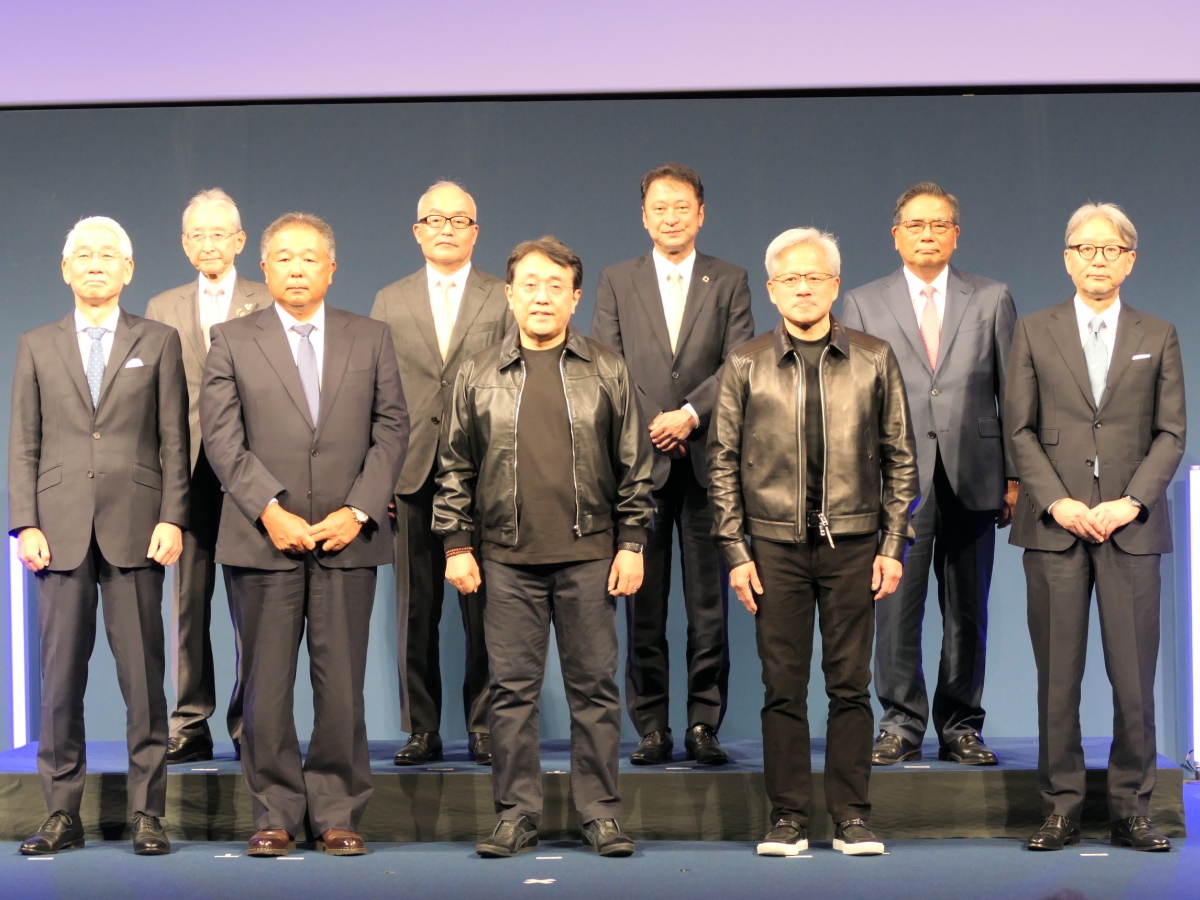
日本再起の旗印となるか、国産マルチモーダルAI基盤「FRONTia」が始動
経済産業省とNEDOは、AIロボットやフィジカルAIに用いられる国産マルチモーダル基盤モデル「FRONTia(フロンティア)」の開発プロジェクトの本格始動に合わせて、東京都内で「我が国のフィジカルAI政策に関する対外発信イベント」を開催した。
富士通、国内ロボット大手3社と「フィジカルAI」で協業 NVIDIAの技術活用
富士通は、AIが自律的に考え、ロボットの体を動かす「フィジカルAI」の開発に関し、川崎重工業とファナック、安川電機の各社と協業すると発表した。米NVIDIAの技術を活用し、ロボットを協調的に制御するための基盤を開発する。
SPINE: Agentic AI でサイバーと物理のギャップを埋める
基盤モデルはロボットに複雑な意思決定のための洗練された頭脳を与えてきましたが、その知能を物理的なプラットフォームに展開するには、依然として専門家による面倒な調整が必要です。この展開ギャップ、つまりロボットの脊髄が、スケーラブルな組み込み型 AI にとって依然として主要なボトルネックとなっています。そこで、私たちは SPINE (Scalable Physical Integration with ageNtic Expertise) を提案します。これは、最小限のロボット工学の専門知識で両手ロボットを体系的にデバッグおよび展開するためのエージェント フレームワークです。 SPINE のハーネスは、2 つの調整されたマルチエージェント ワークフローで構成されます。1 つはロボット固有のコンテキストを作成するプロファイル ビルダー、もう 1 つは遠隔操作が機能するまで診断、修復、検証を繰り返すデバッガーです。 7 つの DOBOT X-Trainer デバッグ シナリオ全体で、SPINE を使用したロボット工学の初心者は、同じ参照資料を使用したが、SPINE の構造化されたワークフローを使用しなかったクロード コードを使用した人間のオペレーターよりも優れたパフォーマンスを示し、運用化の成功率が 75% から 100% に向上し、遠隔操作までの平均時間が 16 分 45 秒から 13 分 47 秒に短縮されました。独自の ROS/CAN バイマニュアル アームである AgileX PiPER では、SPINE は埋め込まれた 10 件のバグすべてを解決しましたが、エキスパート ベースラインでは 10 件中 9 件をほぼ同じ時間内に解決しました。これらの結果を総合すると、SPINE が手動プラットフォーム間で転送でき、専門家による調整への依存を減らし、身体化された AI をスケーラブルな現実世界の展開に近づけることができることがわかります。
原文 (English)
SPINE: Bridging the Cyber-Physical Gap with Agentic AI
Foundation models have given robots a sophisticated brain for complex decision-making, yet deploying that intelligence into a physical platform still demands tedious, expert-driven calibration. This deployment gap, the robot's spinal cord, remains a primary bottleneck to scalable Embodied AI. Hence, we propose SPINE (Scalable Physical Integration with ageNtic Expertise): an agentic framework for systematically debugging and deploying bimanual robots with minimal robotics expertise. SPINE's harness comprises two orchestrated multi-agent workflows: a profile builder that creates robot-specific context, and a debugger that cycles through diagnosis, repair, and validation until teleoperation works. Across seven DOBOT X-Trainer debugging scenarios, a robotics novice using SPINE outperformed human operators using Claude Code with the same reference materials, but without SPINE's structured workflow, improving operationalization success from 75% to 100% and reducing mean time-to-teleoperation from 16 min 45 s to 13 min 47 s. On AgileX PiPER, a distinct ROS/CAN bimanual arm, SPINE resolved all 10 implanted bugs, versus 9 out of 10 for the expert baseline, in nearly the same amount of time. Together, these results show that SPINE can transfer across bimanual platforms, reduce dependence on expert calibration, and move embodied AI closer to scalable real-world deployment.
Belnap の型付き内包 FOL に基づく神経記号的 AGI ロボットの確率的拡張
$IFOL_B$ に基づくニューロシンボリック AI は、ニューラル学習と記号推論を組み合わせて、純粋なニューラル システムの制限 (解釈可能性や論理構造の欠如など) を自己参照のための形式的な論理機構で克服する方法です。この論文では、$IFOL_B$ の Nilsson の確率構造に基づいて、現在未知の文の確率計算を使用して、$IFOL_B$ の認知能力を拡張します。現在の知識データベースと論理推論を保存するグローバル対称変換と、$IFOL_B$ 述語の非常に厳密なサブセットのみを含む具体的な (サブ) 問題に関するリアルタイムの決定に使用されるローカル対称変換を導入します。どちらの場合も、シャノンの最大情報エントロピーに基づく確率密度関数 $KI$ の計算は、この確率的ニューロシンボリック AGI のニューラル ネットワークによって提供されます。
原文 (English)
Probabilistic Extension of Neuro-Symbolic AGI Robots based on Belnap's Typed Intensional FOL
Neuro-symbolic AI based on $IFOL_B$ is a way to combine neural learning and symbolic reasoning to overcome limitations of purely neural systems (like lack of interpretability and logical structure) with formal logical machinery for self-reference. In this paper we expand the cognitive power of $IFOL_B$ by using the probability computation for the currently unknown sentences, based on Nilsson's probability structure for the $IFOL_B$. We introduce the global symmetry transformation that preserves the current knowledge database and logical deduction, and the local one used for real-time decisions about concrete (sub)problems that involve only a very strict subset of $IFOL_B$ predicates. The computation of probability density function $KI$ in both cases, based on the Shannon's maximum information entropy, is provided by neural networks of this probabilistic neuro-symbolic AGI.
Disasterr-AI: 小学校地震教育のためのルーブリックベースの評価を備えた検索拡張生成フレームワーク
この論文では、検索拡張生成に基づいた会話型 AI アシスタントを統合することで、以前に実装された教育ロボット プロジェクトに基づいて構築されたハイブリッド教育フレームワークである、Squarecher-AI について紹介します。小学生の地震への備えと意識的な行動を強化することを目的としています。このシステムは、受賞歴のある STEM プロジェクト「Earthiaker」を、レゴ WeDo2 による機械シミュレーションから認知およびメタ認知処理に拡張します。ロボット工学コンポーネントは、Lego WeDo2 オートメーションを使用して地震応答をシミュレートし、生徒が保護動作の具体的な表現としてセンサーやアクチュエーターと対話できるようにします。このアシスタントは、生徒の反応を安全ガイドラインに合わせるガイド付き学習メカニズムとして機能し、緊急事態下での自己調整学習と冷静さをサポートするルーブリックベースの口頭フィードバックを提供します。アースクエイカー AI は、認知発達に合わせた漸進的な学習軌道をたどります。低学年では、二次元のルーブリックで評価される多肢選択式の質問を通じて、安全行動の基本的な認識に重点が置かれます。中学学年では、生徒は 3 軸のルーブリックで評価される多肢選択式の質問を通じて、正しい動作シーケンスを特定します。高学年になると、アプローチは言葉による表現に移行し、表現の明瞭さを含む 4 次元のルーブリックによって評価される短い書面による回答が求められます。対話モジュールは RAG を使用して生徒の質問を意味的に公式ガイドラインと照合し、安全で正確な応答を生成します。実験による評価では、高い根拠と精度があり、幻覚率も低いことが示されています。全体として、Squarecher-AI は、実践的な関与、情報処理、および内省的な実践を組み合わせています。ロボット工学、ルーブリック、AI を組み合わせることで、技術リテラシー、自己規制、デジタル システムの責任ある使用が促進され、早期の危機管理スキルの向上に貢献します。
原文 (English)
Earthquaker-AI: A Retrieval-Augmented Generation Framework with Rubric-Based Assessment for Primary School Earthquake Education
This paper presents Earthquaker-AI, a hybrid educational framework building upon a previously implemented educational robotics project by integrating a conversational AI assistant based on Retrieval-Augmented Generation. It aims to enhance earthquake preparedness and conscious action among primary-school students. The system extends the award-winning STEM project Earthquaker moving from mechanical simulation with Lego WeDo2 to cognitive and metacognitive processing. The robotics component uses Lego WeDo2 automation to simulate seismic response, letting students interact with sensors and actuators as tangible representations of protective actions. The assistant operates as a guided learning mechanism aligning student responses with safety guidelines, while providing rubric-based verbal feedback that supports self-regulated learning and calmness under emergency conditions. Earthquaker-AI follows a progressive learning trajectory aligned with cognitive development. In early grades, the focus is on basic recognition of safety actions through multiple-choice questions, assessed via a two-dimensional rubric. In middle grades, students identify correct action sequences through multiple-choice questions, evaluated via a three-axis rubric. In upper grades, the approach shifts to verbal production, requiring short written responses assessed via a four-dimensional rubric that includes clarity of expression. The dialogic module uses RAG to match student queries semantically with official guidelines, generating safe, accurate responses. Experimental evaluation shows high groundedness and accuracy, with a low hallucination rate. Overall, Earthquaker-AI combines hands-on engagement, information processing, and reflective practice. Combining robotics, rubrics, and AI promotes technological literacy, self-regulation, and responsible use of digital systems, contributing to early crisis-management skills.
環境モニタリングにおけるカバレッジ最大化のための自律型 UAV ルート計画: 体系的な文献レビュー
無人航空機 (UAV) による環境モニタリングには、エネルギー制限、運用上の制約、幾何学的複雑さを処理しながらカバーエリアを最大化するルート計画方法が必要です。この論文は、カバレッジ指向の環境モニタリングのための自律型 UAV ルート計画に関する進行中の系統的文献レビュー (SLR) のプロトコルと暫定結果を報告します。このレビューは、PRISMA 2020 フレームワークに従い、2015 年から 2026 年の間に発表された研究について Scopus と Web of Science を検索します。このプロトコルは、アルゴリズム ファミリ、カバレッジとエネルギー メトリクス、障害物処理、幾何学的環境表現、および環境制約に重点を置き、パス計画、カバレッジ パス計画、および有益なパス計画に重点を置いています。現段階では、562 件の記録が特定され、161 件の重複が削除され、401 件の固有の記録がタイトル、要約、キーワードによって選別されました。これらのうち、247 件の研究が全文適格性評価のために保持されました (235 件の適格記録と 12 件のボーダーライン記録は全文審査中に解決される予定です)。保存されている研究の予備分析では、天候、不確実性、または障害物が多い環境に明確に取り組んでいる研究はほとんどない一方で、カバレッジ指向の定式化、複数の UAV 調整、エネルギーを意識した最適化に重点が置かれていることが示唆されています。保存されている研究のほとんどはシミュレーションベースの検証に依存しており、シミュレーションと現実のギャップの可能性を強調しており、最近の出版物では、強化学習、ハイブリッド最適化、およびジオメトリを意識した計画への関心が高まっていることが示されています。これらの初期の発見は、活発ではあるが断片的な研究状況を示しており、現実的な環境モニタリングミッションのための成熟した技術と未解決のギャップを特定するための構造化された統合の必要性を裏付けています。
原文 (English)
Autonomous UAV Route Planning for Coverage Maximization in Environmental Monitoring: A Systematic Literature Review
Environmental monitoring with unmanned aerial vehicles (UAVs) requires route planning methods that maximize covered area while handling energy limits, operational constraints, and geometric complexity. This paper reports the protocol and preliminary results of an ongoing systematic literature review (SLR) on autonomous UAV route planning for coverage-oriented environmental monitoring. The review follows the PRISMA 2020 framework and searches Scopus and Web of Science for studies published between 2015 and 2026. The protocol focuses on path planning, coverage path planning, and informative path planning, with emphasis on algorithmic families, coverage and energy metrics, obstacle handling, geometric environment representations, and environmental constraints. At the current stage, 562 records have been identified, 161 duplicates have been removed, and 401 unique records have been screened by title, abstract, and keywords. From these, 247 studies were retained for full-text eligibility assessment (235 eligible and 12 borderline records to be resolved during full-text review). A preliminary analysis of the retained studies suggests strong concentration on coverage-oriented formulations, multi-UAV coordination, and energy-aware optimization, while fewer studies explicitly address weather, uncertainty, or obstacle-rich environments. Most retained studies rely on simulation-based validation, highlighting a potential simulation-to-reality gap, and recent publications show increasing interest in reinforcement learning, hybrid optimization, and geometry-aware planning. These early findings indicate an active but fragmented research landscape and support the need for a structured synthesis to identify mature techniques and unresolved gaps for realistic environmental monitoring missions.
HRO: 大規模な言語モデルを使用したゼロショット オブジェクト ゴール ナビゲーションのための階層型 Room-to-Object フレームワーク
ゼロショット オブジェクト ゴール ナビゲーションは、インテリジェント エージェントが、特定のターゲットのトレーニングなしで、不慣れな環境で未知のカテゴリのオブジェクトを探索し、そこにナビゲートできるようにすることを目的としています。ゼロショット ナビゲーション タスクでは、通常、事前トレーニングされた大規模モデルが、エージェントのナビゲーションをガイドするための事前知識を活用するために使用されます。しかし、大規模言語モデル (LLM) に基づく既存のゼロショット オブジェクト-ゴール ナビゲーション方法は、オブジェクトまたは領域を直接関連付けるためのフラットな推論ツールとして LLM を利用しているだけです。これらには、オブジェクトの位置特定に対する人間のような部屋のセマンティクスの階層的空間認知モデリングが欠如しており、そのため、探索における強い盲目さ、意味論的関連付けの精度不足、および LLM の常識的推論の可能性を完全に解き放つことができません。この論文では、ゼロショット オブジェクト-ゴール ナビゲーションのための LLM 駆動の階層型 Room-to-Object (HRO) フレームワークを提案します。このフレームワークは、エージェントが粗い方法から細かい方法でターゲット オブジェクトを探索してナビゲートするようにガイドします。ギブソンおよび HM3D データセットの実験では、HRO フレームワークが既存の LLM ベースの手法よりも優れた成功率と一般化を達成していることが検証され、ゼロショットのオブジェクトとゴールのナビゲーションに対する LLM の強力な可能性が強調されています。
原文 (English)
HRO: Hierarchical Room-to-Object Framework for Zero-Shot Object Goal Navigation with Large Language Models
Zero-shot object-goal navigation aims to enable an intelligent agent to explore and navigate to objects of unknown categories in an unfamiliar environment without specific target training. In zero-shot navigation tasks, pre-trained large models are usually employed to leverage their prior knowledge for guiding the agent's navigation. However, existing zero-shot object-goal navigation methods based on large language models (LLMs) merely utilize LLMs as flat reasoning tools to directly associate objects or regions. They lack the hierarchical spatial cognition modeling of human-like room semantics to object localization, which leads to strong blindness in exploration, insufficient accuracy in semantic association, and failure to fully unleash the common-sense reasoning potential of LLMs. This paper proposes an LLM-driven hierarchical room-to-object (HRO) framework for zero-shot object-goal navigation, which guides the agent to explore and navigate to the target object in a coarse-to-fine manner. Experiments on Gibson and HM3D datasets verify that our HRO framework achieves superior success rate and generalization over existing LLM-based methods, underscoring LLMs' strong potential for zero-shot object-goal navigation.
ゼネラリスト車両モデルを地形を越えた高速 MPC に適応させる
高速オフロード自律走行には、変化する地形に対して堅牢性を維持しながら、ターゲット車両に対する正確な閉ループ制御が必要です。最近のフォワードキノダイナミック (FKD) 予測基盤モデルは、ジェネラリスト モデルから始めてターゲット プラットフォームに特化するという有望な道筋を示唆しています。ただし、効果的な専門化には依然として多くの現実世界のデータが必要であり、1 つの設定に適応したモデルが依然として特定の地形や運転体制に過剰適合する可能性があるため、依然として課題が残っています。私たちは、特定の車両のパフォーマンスを最適化しながら、クロステレインの一般化を維持する、ジェネラリストからスペシャリストの FKD モデルへのギャップを埋めるためのレシピである OptCar (Optimized Car) を紹介します。 $\texttt{OptCar}$ は、最近の状態アクション観測をダイナミクス コンテキスト トークンにエンコードする履歴条件付きダイナミクス適応モジュールを導入し、環境固有のシステム識別からの対象を絞った合成ロールアウトとともに、限られた現実世界のデータを使用してジェネラリスト モデルを微調整します。 3 つの地形および分散外カート牽引タスクにわたる閉ループ モデル予測制御 (MPC) 実験では、最大のゲインは 6 m/s、評価された最高速度、および滑りが追跡誤差を支配する領域で現れました。最も滑りやすい地形である植生と土の上では、OptCar は、微調整された AnyCar ベースラインと比較して 6 ~ m/s の軌道追跡誤差を約 55% 削減し、目に見えないカートのペイロードによってダイナミクスが変化した場合でも、最も正確な状態を保ちます。 OptCar は、地形ごとにわずか 5 分間の実際のデータを使用するため、30 分間の道路データで訓練を受けた専門家と道路上で競争力があり、地形が変化するとパフォーマンスを大幅に上回ります。
原文 (English)
Adapting Generalist Vehicle Models for High-Speed MPC Across Terrains
High-speed off-road autonomy requires precise closed-loop control for a target vehicle while remaining robust across changing terrains. Recent forward kinodynamic (FKD) prediction foundation models suggest a promising path, starting from a generalist model and specializing it to the target platform. However, effective specialization remains challenging, as it often requires substantial real-world data, and models adapted to one setting can still overfit to specific terrains or driving regimes. We present OptCar (Optimized Car), a recipe for bridging the gap from generalist to specialist FKD models that preserves cross-terrain generalization while optimizing performance for a specific vehicle. $\texttt{OptCar}$ introduces a history-conditioned dynamics adaptation module that encodes recent state-action observations into a dynamics context token, and then fine-tunes the generalist model using limited real-world data together with targeted synthetic rollouts from environment-specific system identification. In closed-loop model predictive control (MPC) experiments across three terrains and an out-of-distribution cart-pulling task, the largest gains appear at 6~m/s, the highest speed evaluated and the regime in which slip dominates tracking error. On vegetation and dirt, the most slip-diverse terrain, OptCar reduces 6~m/s trajectory tracking error by roughly 55% relative to a fine-tuned AnyCar baseline, and remains the most accurate even when an unseen cart payload changes the dynamics. With only 5 minutes of real data per terrain, OptCar is competitive on road with a specialist trained on 30 minutes of road data, and substantially outperforms it once the terrain changes.
変形可能物体シミュレーションのための物理学に基づく残留力学の学習
変形可能なオブジェクトのシミュレーションは、幅広いロボット操作アプリケーションにとって不可欠ですが、そのダイナミクスを正確に予測することは依然として困難です。私たちは、物理ベースのアプローチと学習ベースのアプローチの利点を組み合わせたハイブリッド シミュレーション フレームワークである、物理ガイド付き残差ダイナミクス (PGRD) を提案します。具体的には、PGRD は、バックボーンとして最適化可能なバネ質量シミュレーターを、物理ベースの予測に対する残差補正を予測する学習済みニューラル ネットワークと組み合わせます。安定したシミュレーションを保証するために速度ベースの定式化を採用し、時間依存性を捕捉するためにスライディング ウィンドウ変換器アーキテクチャを採用しています。 PGRD は、現実世界のさまざまな変形可能なオブジェクトのセットに対して、純粋に物理ベースの方法と学習ベースの方法の両方よりも正確な結果を生成することを示します。さらに、2 つのアプリケーションにおける PGRD の有用性を実証します。1 つは、生成された目標イメージを使用した言語条件付き設定を含む、モデル予測制御による操作計画です。 3D ガウス スプラッティングによるアクション条件付きビデオ予測によるインタラクティブ シミュレーション。
原文 (English)
Learning Physics-Guided Residual Dynamics for Deformable Object Simulation
Simulating deformable objects is essential for a wide range of robotic manipulation applications, yet accurately predicting their dynamics remains challenging. We propose Physics-Guided Residual Dynamics (PGRD), a hybrid simulation framework that combines the advantages of physics-based and learning-based approaches. Specifically, PGRD combines an optimizable spring-mass simulator as a backbone with a learned neural network that predicts residual corrections to the physics-based predictions. We adopt a velocity-based formulation to ensure stable simulation and a sliding-window transformer architecture to capture temporal dependencies. We show that PGRD produces more accurate results than both purely physics-based and learning-based methods on a set of diverse real-world deformable objects. We further demonstrate the utility of PGRD in two applications: manipulation planning via Model Predictive Control, including a language-conditioned setting with a generated goal image; and interactive simulation via action-conditioned video prediction by 3D Gaussian Splatting.
IMMNet: Hybrid Fusion of Model-based and Data-driven Approaches for Maneuvering Target Tracking
Maneuvering target tracking in three-dimensional space remains a challenging problem due to complex motion dynamics and model mismatch. To…
Agile perceptive multi-skill locomotion for quadrupedal robots in the wild
Enabling quadrupedal robots to traverse complex terrains-from rugged outdoor environments to urban landscapes-requires seamless integration…
Semantic Anchoring for Robotic Action Representations
Vision-Language-Action (VLA) models inherit rich semantic representations from pretrained Vision-Language Models, yet fine-tuning on limite…
From Language to Navigation Goals: A Vision-Language Approach for Semantic Navigation of Mobile Robots Using RGB-D Perception
Natural language interaction provides an intuitive way for non-expert users to communicate with robotic platforms. However, transforming us…
ABot-AgentOS: 生涯にわたるマルチモーダル メモリを備えた汎用ロボット エージェント OS
最近の VLM および VLA システムでは、ロボットの認識と動作予測が改善されていますが、長期的に具現化されたエージェントは、依然として、推論、メモリ、ツールの使用、検証、およびクロス具現化実行のための一般的なランタイム層を必要としています。 ABot-AgentOS は、低レベルのコントローラーの上に位置し、シーンに応じたプランニング、コンテキスト分離されたスキルの実行、多段階の検証、マルチモーダル メモリ、エッジとクラウドのコラボレーションのための熟慮型エージェント層を提供する、一般的なロボット エージェント オペレーティング システムです。このようなシステムを評価するために、16 の屋内、屋外、ハイブリッド シーン、4 つの難易度レベル、およびナビゲーション、オブジェクト検索、NPC ダイアログ、動的イベント、およびトレースベースのスコアリングを含む 200 以上のタスクを備えた実行可能なベンチマークである EmbodiedWorldBench を導入します。 ABot-AgentOS はさらに、ダイアログ、視覚的観察、空間コンテキスト、時間的関係、およびタスク トレースを型付きノードとエッジに変換する永続的なソース接地基板であるユニバーサル マルチモーダル グラフ メモリを導入します。障害駆動型の自己進化ループは、診断されたメモリ障害を、後の評価分割にのみ昇格するゲート付きランタイム evo アセットに変換し、継続的な改善を可能にしながら、電流分割のグラウンド トゥルースの漏洩を防ぎます。初期の EmbodiedWorldBench サブセットでは、ABot-AgentOS はタスクの成功と目標の完了の両方で単一コントローラーのベースラインを上回ります。メモリ ベンチマーク全体で、ABot-AgentOS Static は LoCoMo で 87.5、OpenEQA EM-EQA で 59.9、Mem-Gallery で 88.6、NExT-QA で 76.5 Acc@All を達成しました。自己進化により、LoCoMo は 88.7、OpenEQA は 60.4、Mem-Gallery は 89.0 にさらに向上しました。これらの結果は、一般的なエージェント OS レイヤーが、継続的な対話のための永続的で監査可能なメモリを提供しながら、長期的な具体化された実行を改善できることを示唆しています。
原文 (English)
ABot-AgentOS: A General Robotic Agent OS with Lifelong Multi-modal Memory
Recent VLM and VLA systems have improved robotic perception and action prediction, yet long-horizon embodied agents still require a general runtime layer for reasoning, memory, tool use, verification, and cross-embodiment execution. We present ABot-AgentOS, a general robotic Agent Operating System that sits above low-level controllers and provides a deliberative agent layer for scene-conditioned planning, context-isolated skill execution, multi-stage verification, multi-modal memory, and edge-cloud collaboration. To evaluate such systems, we introduce EmbodiedWorldBench, an executable benchmark with 16 indoor, outdoor, and hybrid scenes, four difficulty levels, and over 200 tasks involving navigation, object search, NPC dialogue, dynamic events, and trace-grounded scoring. ABot-AgentOS further introduces Universal Multi-modal Graph Memory, a persistent source-grounded substrate that converts dialogue, visual observations, spatial context, temporal relations, and task traces into typed nodes and edges. A failure-driven self-evolution loop converts diagnosed memory failures into gated runtime evo-assets that are promoted only to later evaluation splits, preventing current-split ground-truth leakage while enabling continual improvement. On an initial EmbodiedWorldBench subset, ABot-AgentOS improves over a single-controller baseline in both task success and goal completion. Across memory benchmarks, ABot-AgentOS Static achieves 87.5 on LoCoMo, 59.9 on OpenEQA EM-EQA, 88.6 on Mem-Gallery, and 76.5 Acc@All on NExT-QA; self-evolution further improves LoCoMo to 88.7, OpenEQA to 60.4, and Mem-Gallery to 89.0. These results suggest that a general Agent OS layer can improve long-horizon embodied execution while providing persistent, auditable memory for continual interaction.
Koopman-driven grip force prediction through EMG sensing
Loss of hand function due to conditions like stroke or multiple sclerosis significantly impacts daily activities. Robotic rehabilitation pr…
PC-Diffuser: Path-Consistent Capsule CBF Safety Filtering for Diffusion-Based Trajectory Planner
Autonomous driving in complex traffic requires planners that generalize beyond hand-crafted rules, motivating data-driven approaches that l…
RADAR: Closed-Loop Robotic Data Generation via Semantic Planning and Autonomous Causal Environment Reset
The acquisition of large-scale physical interaction data, a critical prerequisite for modern robot learning, is severely bottlenecked by th…
HELP: Human-Efficient Large-Scale Robot Post-Training with Rollout Segmentation
When adapting Vision Language Action (VLA) models to downstream tasks, multiple rounds of post-training are often required to progressively…
Mind the Gap: Promises and Pitfalls of Hierarchical Planning in LeWorldModel
We investigate whether temporal hierarchy can improve LeWorldModel on long-horizon goal-conditioned control. We introduce Hi-LeWM, an exten…
24 時間農業ロボットの実現: 夜間の視覚ナビゲーションのための監視なしの昼夜クロスモーダル画像変換
視覚ナビゲーションは農業ロボット工学において広く研究されてきましたが、既存のシステムのほとんどは日中の条件を前提としています。実際、自律型ロボットを夜間に導入すると、24 時間の作物や土壌の監視、果物の収穫、夜間の害虫の検出など、大きな利点が得られます。しかし、最新のビジョンベースのシステムは、注釈が付けられた大規模な画像データセットに大きく依存しており、夜間の運用シナリオでデータを取得するのは依然として困難です。これに対処するために、ピクセル間の監視を必要とせずに、日中の植物の列の RGB 画像を近赤外線 (NIR) の夜間の対応する画像に変換する、教師なし画像変換フレームワークを提案します。これにより、夜間の知覚モデルをトレーニングするために昼間のセマンティック ラベルを直接再利用できるようになります。特に、事前にトレーニングされた対照言語画像事前トレーニング (CLIP) モデルを組み込むことにより、提案されたフレームワークは、昼夜を問わず翻訳中に意味の一貫性を維持するように設計されています。さらに、夜間シーンでの NIR 照明の有効範囲が限られていることを考慮して、可視性マスクが導入されています。私たちは、最先端の画像翻訳ベースラインとの比較評価を実施し、夜間の視覚ナビゲーションのための下流のセマンティック セグメンテーションのパフォーマンスの向上によってサポートされる、より高い画像品質を実証します。評価には、農業圃場で暗視機能を備えた移動ロボットを使用して収集され、ピクセル単位のセマンティックラベルが手動で注釈付けされた428枚の昼間画像と549枚の夜間画像で構成される新しいデータセットであるAgriNightを利用し、夜間農業視覚ナビゲーションの最初のベンチマークとして導入します。また、夜間に稼働する物理ロボットによるリアルタイム自律航行実験も行っています。データとコードは https://github.com/mamorobel/AgriNight から入手できます。
原文 (English)
Enabling 24-hour Agricultural Robotics: Unsupervised Day-to-Night Cross-Modal Image Translation for Nighttime Visual Navigation
While visual navigation has been extensively studied in agricultural robotics, most existing systems assume daytime conditions. In fact, deploying autonomous robots at night offers significant advantages, including 24-hour crop and soil monitoring, fruit harvesting, and nocturnal pest detection. Modern vision-based systems, however, rely heavily on large-scale well-annotated image datasets, which remains challenging to obtain for nighttime operation scenarios. To address this, we propose an unsupervised image translation framework that converts daytime plant-row RGB images into near-infrared (NIR) nighttime counterparts without requiring pixel-to-pixel supervision. This enables the direct reuse of daytime semantic labels for training nighttime perception models. In particular, by incorporating a pre-trained Contrastive Language-Image Pre-training (CLIP) model, the proposed framework is designed to preserve semantic consistency during day-to-night translation. Additionally, a visibility mask is introduced to account for the limited effective range of NIR illumination in nighttime scenes. We conduct comparative evaluations with state-of-the-art image translation baselines and demonstrate higher image qualities, as supported by improved performance in downstream semantic segmentation for nighttime visual navigation. For evaluation, we utilize AgriNight--a novel dataset comprising 428 daytime and 549 nighttime images collected using night-vision-equipped mobile robots in agricultural fields and manually annotated with pixel-wise semantic labels--and introduce it as the first benchmark for nighttime agricultural visual navigation. We also perform real-time autonomous navigation experiments with a physical robot operating at night. The data and code are available at: https://github.com/mamorobel/AgriNight.
GaitSpan: 歩行から走行までのヒューマノイドの移動動作の成長
歩くことができるヒューマノイドは、ジョギングやランニングのために移動運動を最初から学び直す必要はありません。しかし、現在のアプローチは、歩行スケジュールを規定したり、モーションクリップを模倣したり、専門家を訓練してスキルを切り替えたり、スキルを 1 つのポリシーに抽出したりすることによって、歩行の多様性を獲得することがよくあります。これらの戦略は印象的な動作を生み出すことができますが、連続的な速度コマンド、地形、および形態にわたる柔軟性には限界があります。私たちは、事前トレーニングされた基本的な歩行ポリシーをより速い移動に拡張するフレームワークである GaitSpan を使用してスキルの成長を研究します。歩行をシードスキルとして扱います。これは、バランス、サポート、体の調整、接触の移行のための再利用可能な運動構造であり、新しいリズムで再生し、より長い/より高い歩幅に拡張し、残留適応によって修正することができます。この拡張には 3 つの側面があります。1) リズム生成。複数の内部クロックを使用してフリーズ ウォーキング ポリシーを調整し、結果として得られる正規アクションのコマンド条件付きの組み合わせを学習します。 2) ストライドシェイピング。バネ仕掛けの倒立振子のダイナミクスにヒントを得た、物理的に接地された対物レンズを使用して、より高い指令速度に適した動的な移動パターンを与えます。 3) 残差適応。リズムの生成やストライドの形成では考慮されない動作の詳細を捕捉します。 GaitSpan は、連続的な速度範囲をカバーするウォーキング、ジョギング、ランニングのようなレジームにまたがる単一のコマンド条件付きヒューマノイド ポリシーを初めて提供し、形態を超えて移動し、目に見えないシミュレーション間および現実世界の地形でゼロショットを展開します。複数の専門家によって訓練されたベースライン、または人間の模倣によって訓練されたベースラインと比較して、より速く学習し、より強力な歩行パフォーマンスを実現します。
原文 (English)
GaitSpan: Growing Humanoid Locomotion from Walking to Running
A humanoid that can walk should not relearn locomotion from scratch to jog or run. Yet current approaches often obtain gait diversity by prescribing gait schedules, imitating motion clips, training experts to switch between or distilling skills into one policy. These strategies can produce impressive behaviors, but offer limited flexibility across continuous speed commands, terrains, and morphologies. We study skill growth with GaitSpan, a framework that expands a pretrained, basic walking policy into faster locomotion. It treats walking as a seed skill: reusable motor structure for balance, support, body coordination, and contact transition that can be regenerated at new rhythms, extended into longer/higher strides, and corrected by residual adaptation. This expansion has three aspects: 1) rhythm generation, which modulates the frozen walking policy with multiple internal clocks and learns command-conditioned combinations of the resulting canonical actions; 2) stride shaping, which rewards dynamic locomotion patterns appropriate for higher commanded speeds using a physically grounded objective inspired by spring-loaded inverted pendulum dynamics; and 3) residual adaptation, which captures motion details not accounted for by rhythm generation or stride shaping. GaitSpan is the first to deliver a single command-conditioned humanoid policy that spans walking, jogging, and running-like regimes covering a continuous speed range, transfers across morphologies, and deploys zero-shot on unseen sim-to-sim, and real-world terrains. Compared with baselines either trained with multi-experts or imitation from humans, it learns faster and achieves stronger gait performance.
Mind the Gap: Promises and Pitfalls of Hierarchical Planning in LeWorldModel
We investigate whether temporal hierarchy can improve LeWorldModel on long-horizon goal-conditioned control. We introduce Hi-LeWM, an exten…
Jetson-PI: Towards Onboard Real-Time Robot Control via Foresight-Aligned Asynchronous Inference
Vision-Language-Action (VLA) models have achieved impressive performance on diverse embodied tasks. However, deploying VLA models on low-po…
Practical Judgment, Virtue, and Intuition in the Use of Opaque AI-Enabled Systems
AI-enabled systems are seeing increasing deployment across numerous domains, with many being "black boxes" with respect to core functions a…
Autonomous Tracking and Terminal Guidance of Moving Targets for Fixed-Wing UAVs
This study introduces a unified control framework for fixed-wing unmanned aerial vehicles (UAVs) fitted with a pan-tilt (PT) camera, intend…
PixelLoop: Shortcut Topological Navigation with Pixel-Level Loops
Although topological mapping and navigation have been studied extensively, the specific role and downstream effect of loop closures in pure…
Unveiling Complex Collective Behaviors from Simple Rewards
Multi-agent Reinforcement Learning (MARL) holds great potential for robot swarms, but the black-box nature of neural policies complicates s…
UR-VC: Unsupervised Robotic Value Correction for Time-Derived Progress Proxies
Modern robot learning systems increasingly rely on dense progress or value signals to evaluate intermediate states, guide policy learning,…
TerraZero: Procedural Driving Simulation for Zero-Demonstration Self-Play at Scale
Training robust autonomous driving agents requires a simulator that is fast enough for reinforcement learning at scale, realistic enough to…
Seeing Through Uncertainty: Free-Energy-Inspired Real-Time Adaptation for Robust Visual Navigation
Navigation in the natural world is a feat of adaptive inference, where biological organisms maintain goal-directed behaviour despite noisy…
Look, Focus, Act: Efficient and Robust Robot Learning via Human Gaze and Foveated Vision Transformers
Human vision is a highly active process driven by gaze, which directs attention to task-relevant regions through foveation, dramatically re…
Real-Time Model Checking for Closed-Loop Robot Reactive Planning
Reactive obstacle avoidance methods often cause agents to become trapped in local minima, because they can often only reason one step ahead…
DECO: Decoupled Multimodal Diffusion Transformer for Bimanual Dexterous Manipulation with a Plugin Tactile Adapter
Bimanual dexterous manipulation relies on integrating multimodal inputs to perform complex real-world tasks. To address the challenges of e…
TADPO: Reinforcement Learning Goes Off-road
Off-road autonomous driving poses significant challenges such as navigating unmapped, variable terrain with uncertain and diverse dynamics.…
ABot-N1: Toward a General Visual Language Navigation Foundation Model
Visual Language Navigation foundation models aim to unify deep reasoning for grounded spatial decisions with broad versatility for diverse…
ルールに合わせた小型言語モデルとマルチエージェント自己修正による閉ループ制御
自律的な産業運用に向けた重要なステップは、手動による再設計を最小限に、またはまったく行わずに、自然言語の要件仕様に基づいて制御ポリシーを作成および再構成できる機能です。この設定では、AI エージェントによるポリシー生成は、生成された候補アクションを実行前にチェックできるプラント対応バリデーター (デジタル ツインなど) と組み合わせることで、信頼できるパスになります。ただし、実際の展開は推論レイテンシとコンピューティング フットプリントによって制限されます。大規模なクラウドベースのモデルは、多くの場合、エッジ閉ループで使用するには遅すぎたり、不透明であったり、データに敏感であったりします。この研究では、コンパクトな小型言語モデル (SLM) を制御推論用に再トレーニングし、バリデーターに基づく修正ループに埋め込むことができるかどうかを調査します。グループ相対ポリシー最適化 (GRPO) によって調整された Qwen2.5-1.5B モデルを、(i) アクション エージェント、(ii) シンボリック/デジタル ツイン スタイルの検証レイヤー、および (iii) 出力を有効なアクションに向けて繰り返し誘導する再プロンプト エージェントと組み合わせて使用します。ランダム化された熱制御シミュレーション (各 500 ステップの 30 回の実験) では、フレームワークは平均推論レイテンシー 3.84 秒で 91.5% の平均アクション調整精度 (ケース全体で 86.3% ~ 100%) を達成しました。シンボリック再マッピングの下では、95% の範囲内レートを維持しており、トークンレベルの合意が減少しているにもかかわらず、堅牢な物理的規制を示しています。これらの結果は、エッジでの再構成可能な自律制御に向けた実用的なパスとして SLM+validator アーキテクチャを裏付けています。
原文 (English)
Closed-Loop Control with Rule-Aligned Small Language Models and Multi-Agent Self-Correction
A key step toward autonomous industrial operation is the ability to create and reconfigure control policies from natural-language requirement specifications, with minimal or no manual redesign. In this setting, policy generation by AI agents can be a credible path when paired with a plant-aware validator (e.g., a digital twin) that can check generated candidate actions before execution. However, practical deployment is constrained by inference latency and compute footprint: large cloud-based models are often too slow, opaque, or data-sensitive for edge closed-loop use. This work investigates whether a compact Small Language Model (SLM) can be retrained for control reasoning and embedded in a validator-guided correction loop. We use a Qwen2.5-1.5B model aligned via Group Relative Policy Optimization (GRPO), combined with (i) an action agent, (ii) a symbolic/digital-twin-style validation layer, and (iii) a reprompting agent that iteratively steers outputs toward valid actions. In randomized thermal-control simulations (30 experiments with 500 steps each), the framework achieves 91.5% average action-alignment accuracy (86.3%--100% across cases) at 3.84\,s mean inference latency. Under symbolic re-mapping, it maintains a 95% in-range rate, indicating robust physical regulation despite reduced token-level agreement. These results support SLM+validator architectures as a practical path toward reconfigurable autonomous control at the edge.
ABot-AgentOS: 生涯にわたるマルチモーダル メモリを備えた汎用ロボット エージェント OS
最近の VLM および VLA システムでは、ロボットの認識と動作予測が改善されていますが、長期的に具現化されたエージェントは、依然として、推論、メモリ、ツールの使用、検証、およびクロス具現化実行のための一般的なランタイム層を必要としています。 ABot-AgentOS は、低レベルのコントローラーの上に位置し、シーンに応じたプランニング、コンテキスト分離されたスキルの実行、多段階の検証、マルチモーダル メモリ、エッジとクラウドのコラボレーションのための熟慮型エージェント層を提供する、一般的なロボット エージェント オペレーティング システムです。このようなシステムを評価するために、16 の屋内、屋外、ハイブリッド シーン、4 つの難易度レベル、およびナビゲーション、オブジェクト検索、NPC ダイアログ、動的イベント、およびトレースベースのスコアリングを含む 200 以上のタスクを備えた実行可能なベンチマークである EmbodiedWorldBench を導入します。 ABot-AgentOS はさらに、ダイアログ、視覚的観察、空間コンテキスト、時間的関係、およびタスク トレースを型付きノードとエッジに変換する永続的なソース接地基板であるユニバーサル マルチモーダル グラフ メモリを導入します。障害駆動型の自己進化ループは、診断されたメモリ障害を、後の評価分割にのみ昇格するゲート付きランタイム evo アセットに変換し、継続的な改善を可能にしながら、電流分割のグラウンド トゥルースの漏洩を防ぎます。初期の EmbodiedWorldBench サブセットでは、ABot-AgentOS はタスクの成功と目標の完了の両方で単一コントローラーのベースラインを上回ります。メモリ ベンチマーク全体で、ABot-AgentOS Static は LoCoMo で 87.5、OpenEQA EM-EQA で 59.9、Mem-Gallery で 88.6、NExT-QA で 76.5 Acc@All を達成しました。自己進化により、LoCoMo は 88.7、OpenEQA は 60.4、Mem-Gallery は 89.0 にさらに向上しました。これらの結果は、一般的なエージェント OS レイヤーが、継続的な対話のための永続的で監査可能なメモリを提供しながら、長期的な具体化された実行を改善できることを示唆しています。
原文 (English)
ABot-AgentOS: A General Robotic Agent OS with Lifelong Multi-modal Memory
Recent VLM and VLA systems have improved robotic perception and action prediction, yet long-horizon embodied agents still require a general runtime layer for reasoning, memory, tool use, verification, and cross-embodiment execution. We present ABot-AgentOS, a general robotic Agent Operating System that sits above low-level controllers and provides a deliberative agent layer for scene-conditioned planning, context-isolated skill execution, multi-stage verification, multi-modal memory, and edge-cloud collaboration. To evaluate such systems, we introduce EmbodiedWorldBench, an executable benchmark with 16 indoor, outdoor, and hybrid scenes, four difficulty levels, and over 200 tasks involving navigation, object search, NPC dialogue, dynamic events, and trace-grounded scoring. ABot-AgentOS further introduces Universal Multi-modal Graph Memory, a persistent source-grounded substrate that converts dialogue, visual observations, spatial context, temporal relations, and task traces into typed nodes and edges. A failure-driven self-evolution loop converts diagnosed memory failures into gated runtime evo-assets that are promoted only to later evaluation splits, preventing current-split ground-truth leakage while enabling continual improvement. On an initial EmbodiedWorldBench subset, ABot-AgentOS improves over a single-controller baseline in both task success and goal completion. Across memory benchmarks, ABot-AgentOS Static achieves 87.5 on LoCoMo, 59.9 on OpenEQA EM-EQA, 88.6 on Mem-Gallery, and 76.5 Acc@All on NExT-QA; self-evolution further improves LoCoMo to 88.7, OpenEQA to 60.4, and Mem-Gallery to 89.0. These results suggest that a general Agent OS layer can improve long-horizon embodied execution while providing persistent, auditable memory for continual interaction.
SWIFT: A Small-World Interaction Framework for Flow-Aware Trajectory Prediction in Autonomous Driving
Accurate trajectory prediction in autonomous driving hinges on modeling dynamic and context-dependent interactions among traffic agents. Ho…
OmniSCS: Omni Safety-Critical Scenario Synthesis for Autonomous Driving via a Fully Editable Driving World
The synthesis of safety-critical scenarios (SCS) and their evaluation through closed-loop simulations are crucial for developing robust aut…
Maximizing Human Efficiency in Large-Scale Robot Post-Training via VLAC-Cut Guided Pipeline
When adapting Vision Language Action (VLA) models to downstream tasks, multiple rounds of post training are required because a single round…
Lifelong Representations: A Survey on Continual Self-Supervised Learning for Vision Models
Traditionally, continual learning has assumed access to labeled data, yet many real-world applications -- such as lifelong robotics -- requ…
A Comprehensive Survey and Systematic Real-World Evaluation of Embodied Vision-and-Language Navigation
Navigation is a fundamental capability of autonomous systems, yet most existing approaches rely on highly structured models and strong prio…
Large Multimodal Model-Based Environment-Aware Mobility Management
Recently, large language models (LLMs) have been successfully adopted in various fields, including wireless communications, robotics, and a…
TS-Mask VLA: 2D Temporal-Spatial Masking for Vision-Language-Action Model with Effective Bridging
Vision-language-action (VLA) models aim to understand natural-language instructions and visual observations, and to generate and execute co…
More Structure, Not More Capacity: Object-Centric Representations for Visuomotor Imitation Learning
Robotic manipulation policies rely on pre-trained vision models that give either a global scene embedding or a dense patch grid. Both mix t…
Robo-ValueRL: Reliable Value Estimation for Offline-to-Online Reinforcement Learning
Offline-to-online reinforcement learning is promising for generalizable robotic manipulation, yet its full-stack complexity obscures reprod…
ActiveFly-Bench: Aligning Embodied Question Answering with Vision-Language-Action for Aerial Embodied Perception
We introduce ActiveFly-Bench, the first benchmark to bridge cyberspace reasoning and physical-world interaction for UAV embodied perception…
Source-Lifted Flow Matching for Intervenable Multimodal Imitation
Flow-matching policies are promising for imitation learning because they model complex multimodal action distributions. However, their stoc…
VINE: Taming Generative Control Policies for Reinforcement Learning
Flow-matching policies have emerged as an effective policy parameterization for robot learning. They iteratively generate actions from nois…
ABot-N1: Toward a General Visual Language Navigation Foundation Model
Visual Language Navigation foundation models aim to unify deep reasoning for grounded spatial decisions with broad versatility for diverse…
World Models as Adversaries: Multi-Agent Self-Play Fine-Tuning for Robust Motion Planning
Robust motion planning in dense traffic requires autonomous vehicles to interact in rare and safety-critical scenarios that are underrepres…
Coverage Path Planning: Classical Foundations, Recent Advances, and Future Directions
Coverage path planning (CPP) is a fundamental problem in robot motion planning, whose aim is to produce robot trajectories that provide com…
Action Map Policy: Learning 3D Closed-loop Manipulation via Pixel Classification
The action space poses a major challenge in robot learning, since it is often high-dimensional, can span long time horizons, and frequently…
Think When It Matters: Conditional VLM Reasoning for Social Navigation with RL Policies
As mobile robots become more integrated into everyday human environments, social robot navigation is becoming essential for ensuring human…
Affordance-Based Manipulation Planning with Text Goals and Sim-to-Real Generalisation via Real-to-Sim Image Conversion
We present a manipulation planning system based on affordance recognition and action effect prediction. The system reasons through possible…
VIA: Visual Interface Agent for Robot Control
Robot manipulation is a complex task that requires visual understanding, physical reasoning, planning, and closed-loop control. General-pur…
Pix2Act: Image-Space Manipulation Policies with Equivariant Augmentation
Representing manipulation actions as 2D trajectories in the camera plane provides a compact and interpretable basis for learning complex 3D…
Towards Predictive, Aligned, and Scalable Robot Learning
Learning, at its core, extends beyond memorization to the ability to reason and solve novel problems by navigating a space of possibilities…
A Glimpse into Long-term Physical Coexistence with Intelligent Robots
Long-term physical coexistence with intelligent robots requires more than capable robot policies. A persistent robotic assistant must suppo…
See like a Robot: Robot-Centric Pointmaps for Vision-Language-Action Models
Vision-language-action (VLA) models predict robot actions from visual observations and language instructions. These actions are defined in…
Xiaomi-Robotics-U0: Unified Embodied Synthesis with World Foundation Model
Recent foundation image and video generation models offer strong generalization and controllability, but their direct application to embodi…
From World Action Models to Embodied Brains: A Roadmap for Open-World Physical Intelligence
Artificial general intelligence ultimately requires agents that can reason and act in the physical world. Action models, vision-language-ac…
A Minimalist Retargeting-Guided Reinforcement Learning Recipe for Dexterous Manipulation
Recent work in humanoid whole-body control has found success with a simple recipe: retarget human motion to robot kinematic references, the…
Adaptive Reinforcement Learning for Unobservable Random Delays
In standard reinforcement learning (RL) settings, the interaction between the agent and the environment is typically modeled as a Markov de…
Toward Autonomous Soft Robotic Endovascular Navigation via Imitation Learning
In endovascular surgery, endovascular interventionists push a thin tube called a catheter, guided by a thin wire to a treatment site inside…
PUMA: Perception-driven Unified Foothold Prior for Mobility Augmented Quadruped Parkour
Parkour tasks for quadrupeds have emerged as a promising benchmark for agile locomotion. While human athletes can effectively perceive envi…
RVN-Bench: A Benchmark for Reactive Visual Navigation
Safe visual navigation is critical for indoor mobile robots operating in cluttered environments. Existing benchmarks, however, often neglec…
VehAnchor: Metadata-Free Metric Scale Recovery from Vehicle Cues in Aerial Imagery
Autonomous aerial robots operating in GPS-denied or communication-degraded environments frequently lose access to camera metadata and telem…
Pickalo: Leveraging 6D Pose Estimation for Low-Cost Industrial Bin Picking
Bin picking in real industrial environments remains challenging due to severe clutter, occlusions, and the high cost of traditional 3D sens…
IntentVLA: Short-Horizon Intent Modeling for Aliased Robot Manipulation
Robot imitation data are often multimodal: similar visual-language observations may be followed by different action chunks because human de…
Let It Be Simple: One-Step Action Generation for Vision-Language-Action Models
Generating diverse images from sparse text is hard; generating compact actions from rich observations is easier. From the condition-target…
Embodied-R1.5: 身体化された基盤モデルによる物理的知性の進化
私たちは、身体的認知、タスク計画、修正、ポインティングに及ぶ包括的な身体的推論機能を、一般的な身体的知能に向けた単一のアーキテクチャ内に統合する、統合された身体的基盤モデル (EFM) である Embodied-R1.5 を紹介します。 3 つの自動データ構築パイプラインを活用して重要な機能のデータ範囲を大幅に拡大し、150 億トークンを超える大規模なデータ システムを構築し、異種タスクの競合を軽減するマルチタスクのバランスのとれた RL レシピを設計します。さらに、単一のモデルが長期的なタスクにわたって自律的に実行および自己修正できるようにする Planner-Grounder-Corrector (PGC) 閉ループ フレームワークを導入します。 Embodied-R1.5 は、わずか 8B のパラメーターで、24 のエンボディド VLM ベンチマークのうち 16 で SOTA を達成し、Gemini-Robotics-ER-1.5 や GPT-5.4 などの主要モデルを上回っています。 Embodied-R1.5 は、内部化されたエンボディド機能の利点を活用して、少量のデータのみで VLA に微調整でき、4 つの一般的な操作ベンチマーク スイート全体で $\pi_{0.5}$ などの主要な VLA モデルを上回るパフォーマンスを発揮します。さらに、大規模なゼロショットの実際のロボット実験を実施し、命令追従、アフォーダンス グラウンディング、多関節オブジェクトの操作、および長期にわたる複雑なタスクのパフォーマンスを検証し、物理世界への強力な一般化を実証します。 EFM における将来の研究を促進するために、モデルの重み、データセット、トレーニング コード、および具体化されたタスクに合わせた評価フレームワークである EmbodiedEvalKit をオープンソースにしています。
原文 (English)
Embodied-R1.5: Evolving Physical Intelligence via Embodied Foundation Models
We introduce Embodied-R1.5, a unified Embodied Foundation Model (EFM) that integrates comprehensive embodied reasoning capabilities, spanning embodied cognition, task planning, correction, and pointing, within a single architecture toward general physical intelligence. Leveraging three automated data construction pipelines to significantly expand the data coverage of critical capabilities, we build a large-scale data system of over 15B tokens, and design a multi-task balanced RL recipe to alleviate heterogeneous task conflicts. We further introduce a Planner-Grounder-Corrector (PGC) closed-loop framework that enables a single model to autonomously execute and self-correct over long-horizon tasks. With only 8B parameters, Embodied-R1.5 achieves SOTA on 16 out of 24 embodied VLM benchmarks, surpassing leading models like Gemini-Robotics-ER-1.5 and GPT-5.4. Benefiting from the internalized embodied capabilities, Embodied-R1.5 can be fine-tuned into a VLA with only a small amount of data, outperforming leading VLA models like $\pi_{0.5}$ across 4 popular manipulation benchmark suites. We further conduct extensive zero-shot real-robot experiments, validating performance in instruction following, affordance grounding, articulated object manipulation, and long-horizon complex tasks, demonstrating strong generalization to the physical world. We open-source model weights, datasets, training code, and EmbodiedEvalKit, an evaluation framework tailored for embodied tasks, to facilitate future research in EFMs.
Pipette: An Embodied Simulation Platform, Benchmark, and Data-Efficient Augmentation Framework for Wet-Lab Robotics
Wet-lab robots can improve the reproducibility, throughput, and safety of biomedical experiments, but scaling their learning requires custo…
Average-Power-Budgeted Underwater Vehicle Control via Constrained Reinforcement Learning
Underwater vehicles operate from a fixed onboard energy budget that propulsion rapidly depletes, so a controller that completes its task wh…
Freeform Preference Learning for Robotic Manipulation
Reward design remains a central bottleneck for autonomous robot policy improvement, especially in long-horizon manipulation tasks where spa…
FLYNN: Fly Brain トポロジーを使用したロボット ナビゲーションのための堅牢なニューラル ネットワーク
深層学習モデルは複雑なタスクで最先端のパフォーマンスを実現しますが、新しい環境や感覚遮断に直面すると脆弱なままです。対照的に、生体系はこれらの課題に対して顕著な耐性を示します。私たちは、ショウジョウバエのシナプス分解能の脳コネクトームから直接派生したアーキテクチャをもつリカレント ニューラル ネットワーク (RNN) を開発することで、この脆弱性に対処します。我々は、MuJoCo でビジョンベースのナビゲーションを実行するためにフライ コネクトーム ニューラル ネットワーク (FLYNN) をトレーニングし、同様のパラメーター数の最新の手作りネットワークに匹敵するパフォーマンスを達成する実現可能性を実証します。重要なことは、FLYNN は、さらなるトレーニングを行わなくても、分布外 (OOD) データに対する優れた耐性と感覚喪失に対する耐性を示します。完全な視力喪失下でも機能を維持しましたが、手作りのネットワークは、カメラのドロップアウトで特別に訓練された場合でも、ほとんど機能しませんでした。 FLYNN の内部状態の主成分分析 (PCA) は、FLYNN が特に高度な表現モジュール性を示していることを示唆しており、これがその堅牢性に関連している可能性があります。私たちの研究は、生物学的な脳のトポロジーに従って弾力性のある人工エージェントを設計するための新しい方向性を提供します。
原文 (English)
FLYNN: Robust Neural Network for Robot Navigation using Fly Brain Topology
While deep learning models achieve state-of-the-art performance in complex tasks, they remain brittle when faced with new environments or sensory deprivation. In contrast, biological systems exhibit remarkable tolerance to these challenges. We address this vulnerability by developing a recurrent neural network (RNN) whose architecture is directly derived from the synaptic-resolution brain connectome of the fruit fly Drosophila melanogaster. We demonstrate the feasibility of training the fly connectome neural network (FLYNN) to perform vision-based navigation in MuJoCo, achieving performance comparable to modern hand-crafted networks of similar parameter counts. Crucially, FLYNN exhibits superior resistance to out-of-distribution (OOD) data and tolerance to sensory loss without further training. It remained functional even under total vision loss while hand-crafted networks largely failed, even when specifically trained with camera dropout. Principal Component Analysis (PCA) of the internal state of FLYNN suggests that it exhibits a particularly high degree of representational modularity, which might be related to its robustness. Our work provides a new direction for designing resilient artificial agents following the topology of biological brains.
腕全体の操作のための触覚および視覚条件付き接触中心制御
アーム全体の操作には環境との直接接触が含まれ、ロボットは接触の形成、スライド、切断に応じて複数のリンクに接触を分散することでタスクを完了します。この設定は、多くの学習ベースの操作パイプラインにおける一般的な暗黙の前提を打ち破ります。つまり、アーム構成は動きと接触の力を密接に結び付け、接触状態はオクルージョン下で部分的に観察されます。また、純粋に学習されたロールアウトは、多くのマルチリンク接触構成がデータ内でまばらに表現されるため、分布シフトの下では物理的に不一致になる可能性があります。これに対処するために、腕全体を操作するための後退水平コントローラーである TACTIC (Tactile and Vision Conditioned Contact-Centric Control) を提案します。 TACTIC は、RGB-D、分散型触覚センシング、コンパクトな 2D 近接表現を組み合わせた接触中心のハイブリッド予測モデルを使用します。このモデルは、学習されアクション条件付けされた潜在力学モデルと接触ヤコビアンを介した解析運動学を結合し、将来の接触構成と相互作用力のロールアウトを可能にします。 TACTIC は、これらのロールアウトを、接触を意識したアクション サンプリングを備えたサンプリング ベースの MPC プランナーに統合します。接触ヤコビアン ベースの投影は、サンプリングされたアクション シーケンスを力を調整する方向に導き、予測された近接力と相互作用力に対して定義された目標は、タスクの進行状況と腕全体の力の調整をトレードします。当社は、最先端のモデルベースおよびモデルフリーの手法に対してシミュレーションで TACTIC を評価し、各設計選択の寄与を分離するアブレーションを実行します。 TACTIC は他の手法よりも常に優れたパフォーマンスを発揮します。さらに、複数の接触軌道を必要とする 3 つの腕全体の操作タスク (マネキンの裏返しと位置変更、および 3D ダイナミック迷路でのゴール到達) にわたる分散触覚センシングを備えたロボットの現実世界のパフォーマンスを実証します。ウェブサイト: https://emprise.cs.cornell.edu/tactic
原文 (English)
TACTIC: Tactile and Vision Conditioned Contact-Centric Control for Whole-Arm Manipulation
Whole-arm manipulation involves direct contact with the environment while the robot completes a task by distributing contact across multiple links as contacts form, slide, and break. This setting breaks common implicit assumptions in many learning-based manipulation pipelines: arm configuration tightly couples motion and contact forces, contact state is partially observed under occlusion, and purely learned rollouts can become physically inconsistent under distribution shift because many multi-link contact configurations are sparsely represented in the data. To address this, we propose TACTIC (Tactile and Vision Conditioned Contact-Centric Control), a receding-horizon controller for whole-arm manipulation. TACTIC uses a contact-centric hybrid predictive model that combines RGB-D, distributed tactile sensing, and a compact 2D proximity representation. The model couples a learned, action-conditioned latent dynamics model with analytical kinematics through contact Jacobians, enabling rollouts of future contact configurations and interaction forces. TACTIC integrates these rollouts into a sampling-based MPC planner with contact-aware action sampling: contact Jacobian-based projections steer sampled action sequences toward force-modulating directions, and objectives defined over predicted proximity and interaction forces trade task progress against whole-arm force regulation. We evaluate TACTIC in simulation against state-of-the-art model-based and model-free methods, and perform ablations that isolate the contribution of each design choice. TACTIC consistently outperforms other methods. We further demonstrate real-world performance on a robot with distributed tactile sensing across three whole-arm manipulation tasks that require multi-contact trajectories: turning over and repositioning a manikin, and goal-reaching in a 3D dynamic maze. Website: https://emprise.cs.cornell.edu/tactic

Uber’s product chief on hotels, robotaxis, and why the company doesn’t want to be “everything for everyone”
Uber Chief Product Officer Sachin Kansal walks TechCrunch through the company's financial-services ambitions, its increasingly complicated…

Hermes agent maker Nous Research in talks for new funding at $1.5B valuation
The company is raising at least $75 million, led by Robot Ventures, with significant participation from USV and other prominent investors.
CLAP: 言語アクショングラウンディングによる VLM から VLA への直接適応
ビジョン言語アクション モデル (VLA) は、事前トレーニングされた VLM からセマンティック機能を継承しますが、ロボット データに関する大規模なポストトレーニングやアーキテクチャの変更によってバックボーンが大幅に再形成される可能性があるため、VLM が制御に何を貢献しているかを分離することが困難になります。アーキテクチャの変更を最小限に抑えて、事前トレーニング済み VLM を VLA に直接変換することで、VLM 機能がモデル スケール間でどのように移行するかを理解するためのより透過的なパスが提供されます。中心的な障害は出力分布の不一致です。アクションを裸の数値トークン シーケンスとして予測すると、世代が VLM の事前学習済み言語分布から遠ざかり、保持しようとしている機能が低下します。これに対処するために、我々は CLAP (Causal Language-Action Prediction) を提案します。CLAP (Causal Language-Action Prediction) は、各数値アクション シーケンスの前に自然言語アクション記述を付加し、バックボーン アーキテクチャを変更することなく、言語アクション プランに基づいて正確なアクション トークン予測を因果的に条件付けします。単一エポックの微調整だけで、2B CLAP は LIBERO で 90.8% (VLA-0 に対して +14.9 ポイント) を達成し、言語、オブジェクト、空間の摂動下での LIBERO-PRO の堅牢性を向上させます。 CLAP は、単一の VLM 系統からのオープンウェイト、マルチスケールのコンパクト VLA ファミリとして 0.8B、2B、および 4B でリリースされ、VLM から VLA への機能移転の制御された分析が可能になります。
原文 (English)
CLAP: Direct VLM-to-VLA Adaptation via Language-Action Grounding
Vision-language-action models (VLAs) inherit semantic capabilities from pretrained VLMs, yet large-scale post-training on robot data and architectural modifications can reshape the backbone so extensively that it becomes difficult to isolate what the VLM contributes to control. Directly converting pretrained VLMs into VLAs with minimal architectural change offers a more transparent path to understanding how VLM capabilities transfer across model scales. The core obstacle is output-distribution mismatch: predicting actions as bare numeric token sequences moves generation away from the VLM's pretrained language distribution, degrading the capabilities we seek to preserve. To address this, we propose CLAP (Causal Language-Action Prediction), which prepends each numeric action sequence with a natural-language action description, causally conditioning precise action-token prediction on a language-action plan without modifying the backbone architecture. With single-epoch fine-tuning alone, 2B CLAP achieves 90.8% on LIBERO (+14.9 pt over VLA-0) and improves robustness on LIBERO-PRO under language, object, and spatial perturbations. We will release CLAP at 0.8B, 2B, and 4B as an open-weight, multi-scale compact VLA family from a single VLM lineage, enabling controlled analysis of VLM-to-VLA capability transfer.
腕全体の操作のための触覚および視覚条件付き接触中心制御
アーム全体の操作には環境との直接接触が含まれ、ロボットは接触の形成、スライド、切断に応じて複数のリンクに接触を分散することでタスクを完了します。この設定は、多くの学習ベースの操作パイプラインにおける一般的な暗黙の前提を打ち破ります。つまり、アーム構成は動きと接触の力を密接に結び付け、接触状態はオクルージョン下で部分的に観察されます。また、純粋に学習されたロールアウトは、多くのマルチリンク接触構成がデータ内でまばらに表現されるため、分布シフトの下では物理的に不一致になる可能性があります。これに対処するために、腕全体を操作するための後退水平コントローラーである TACTIC (Tactile and Vision Conditioned Contact-Centric Control) を提案します。 TACTIC は、RGB-D、分散型触覚センシング、コンパクトな 2D 近接表現を組み合わせた接触中心のハイブリッド予測モデルを使用します。このモデルは、学習されアクション条件付けされた潜在力学モデルと接触ヤコビアンを介した解析運動学を結合し、将来の接触構成と相互作用力のロールアウトを可能にします。 TACTIC は、これらのロールアウトを、接触を意識したアクション サンプリングを備えたサンプリング ベースの MPC プランナーに統合します。接触ヤコビアン ベースの投影は、サンプリングされたアクション シーケンスを力を調整する方向に導き、予測された近接力と相互作用力に対して定義された目標は、タスクの進行状況と腕全体の力の調整をトレードします。当社は、最先端のモデルベースおよびモデルフリーの手法に対してシミュレーションで TACTIC を評価し、各設計選択の寄与を分離するアブレーションを実行します。 TACTIC は他の手法よりも常に優れたパフォーマンスを発揮します。さらに、複数の接触軌道を必要とする 3 つの腕全体の操作タスク (マネキンの裏返しと位置変更、および 3D ダイナミック迷路でのゴール到達) にわたる分散触覚センシングを備えたロボットの現実世界のパフォーマンスを実証します。ウェブサイト: https://emprise.cs.cornell.edu/tactic
原文 (English)
Tactile and Vision Conditioned Contact-Centric Control for Whole-Arm Manipulation
Whole-arm manipulation involves direct contact with the environment while the robot completes a task by distributing contact across multiple links as contacts form, slide, and break. This setting breaks common implicit assumptions in many learning-based manipulation pipelines: arm configuration tightly couples motion and contact forces, contact state is partially observed under occlusion, and purely learned rollouts can become physically inconsistent under distribution shift because many multi-link contact configurations are sparsely represented in the data. To address this, we propose TACTIC (Tactile and Vision Conditioned Contact-Centric Control), a receding-horizon controller for whole-arm manipulation. TACTIC uses a contact-centric hybrid predictive model that combines RGB-D, distributed tactile sensing, and a compact 2D proximity representation. The model couples a learned, action-conditioned latent dynamics model with analytical kinematics through contact Jacobians, enabling rollouts of future contact configurations and interaction forces. TACTIC integrates these rollouts into a sampling-based MPC planner with contact-aware action sampling: contact Jacobian-based projections steer sampled action sequences toward force-modulating directions, and objectives defined over predicted proximity and interaction forces trade task progress against whole-arm force regulation. We evaluate TACTIC in simulation against state-of-the-art model-based and model-free methods, and perform ablations that isolate the contribution of each design choice. TACTIC consistently outperforms other methods. We further demonstrate real-world performance on a robot with distributed tactile sensing across three whole-arm manipulation tasks that require multi-contact trajectories: turning over and repositioning a manikin, and goal-reaching in a 3D dynamic maze. Website: https://emprise.cs.cornell.edu/tactic
効率的なオフライン強化学習のためのショートカット軌道計画
拡散ベースの軌道プランナーはオフライン強化学習で優れたパフォーマンスを示していますが、反復的なノイズ除去プロセスでは多くの場合、高い推論コストが発生します。一貫性ベースのプランナーはサンプリング ステップの数を減らしますが、通常は教師と生徒の 2 段階の蒸留パイプラインに依存するため、トレーニング コストが増加し、不安定性が生じる可能性があります。我々は、効率的な軌道生成器としてショートカット モデルを組み込んだオフライン モデル ベースの強化学習フレームワークであるショートカット軌道計画 (STP) を提案します。 STP は、条件付きショートカット軌道モデルを 1 つのステージでトレーニングし、ステップ サイズの条件付けを通じて調整可能な 1 ステップおよび数ステップの推論をサポートし、実現可能性を意識した修正で強化された批評家を使用して候補プランを選択します。移動、ナビゲーション、操作、器用な制御タスクなどの標準的な D4RL ベンチマーク全体で、STP は強力なパフォーマンスを達成しながら、高速生成プランニングのためのトレーニング パイプラインを簡素化します。
原文 (English)
Shortcut Trajectory Planning for Efficient Offline Reinforcement Learning
Diffusion-based trajectory planners have shown strong performance in offline reinforcement learning, but their iterative denoising process often incurs high inference cost. Consistency-based planners reduce the number of sampling steps, yet they typically rely on a two-stage teacher--student distillation pipeline that increases training cost and may introduce instability. We propose Shortcut Trajectory Planning (STP), an offline model-based reinforcement learning framework that incorporates shortcut models as efficient trajectory generators. STP trains a conditional shortcut trajectory model in a single stage, supports adjustable one-step and few-step inference through step-size conditioning, and selects candidate plans using a critic augmented with feasibility-aware correction. Across standard D4RL benchmarks, including locomotion, navigation, manipulation, and dexterous control tasks, STP achieves strong performance while simplifying the training pipeline for fast generative planning.
What VGGT Knows About Overlap: Probing Geometric Foundation Models for Co-Visibility
A fundamental challenge in 3D reconstruction and robotic localization is co-visibility: determining which image pairs share overlapping vis…
PAC-ACT: Post-training Actor-Critic for Action Chunking Transformers
Precision industrial contact manipulation requires reliable robot policies under pose perturbations and contact-force constraints. Vision-l…
Single-Frame Point-Pixel Registration via Supervised Cross-Modal Feature Matching
Point-pixel registration between LiDAR point clouds and camera images is a fundamental yet challenging task in autonomous driving and robot…
ReinforceGen: Hybrid Skill Policies with Automated Data Generation and Reinforcement Learning
Long-horizon manipulation has been a long-standing challenge in the robotics community. We propose ReinforceGen, a system that combines tas…
Knowledge-Based Design Requirements for Generative Social Robots in Higher Education
Generative social robots (GSRs) powered by large language models enable adaptive, conversational tutoring but also introduce risks such as…
WAM-TTT: テスト時に人間のプレイを観察することで世界アクション モデルを操作する
新しいタスクのバリアントやユーザーが好む動作に向けてロボット基盤モデル (RFM) を操作することは依然として困難であり、多くの場合、追加のロボットのデモンストレーション、タスク固有の微調整、または長いコンテキストの調整が必要になります。私たちは、生の人間のビデオから世界のアクション モデルを操作するためのテスト時トレーニング フレームワークである WAM-TTT を紹介します。 WAM-TTT は、人間のビデオを模倣する軌跡として扱うのではなく、自己監視型ビデオ予測を通じて、凍結された WAM 内の軽量の適応メモリにビデオを吸収します。この記憶を制御に役立てるために、人間とロボットのペアのデータとキーと値の記憶再構成目標を使用して、人間のデモンストレーションとロボットの動作を一致させるメタトレーニング ステージを導入します。テスト時には、ラベルのない人間のビデオだけをメモリに適応させる必要があり、事前トレーニングされた WAM はフリーズされたままになります。これにより、基礎モデルの一般化機能を維持しながら、ロボットの動作、人間側の注釈、タスク固有の微調整を必要とせずに、効率的で再利用可能なステアリングが可能になります。広範な実験により、WAM-TTT は、さまざまな操作タスクや一般化設定にわたって、コンテキスト内のヒューマン ビデオ コンディショニング ベースラインよりも一貫して優れたパフォーマンスを発揮することが示されています。
原文 (English)
WAM-TTT: Steering World-Action Models by Watching Human Play at Test Time
Steering robot foundation models (RFMs) toward new task variants or user-preferred behaviors remains challenging, often requiring additional robot demonstrations, task-specific fine-tuning, or long-context conditioning. We present WAM-TTT, a test-time training framework for steering world action models from raw human videos. Rather than treating human videos as trajectories to imitate, WAM-TTT absorbs them into a lightweight adaptive memory inside a frozen WAM through self-supervised video prediction. To make this memory useful for control, we introduce a meta-training stage that aligns human demonstrations with robot behaviors using paired human-robot data and a key--value memory reconstruction objective. At test time, only unlabeled human videos are required to adapt the memory, while the pretrained WAM remains frozen. This enables efficient and reusable steering without robot actions, human-side annotations, or task-specific fine-tuning, while preserving the generalization ability of the foundation model. Extensive experiments show that WAM-TTT consistently outperforms in-context human-video conditioning baselines across diverse manipulation tasks and generalization settings.
イディオバイオニクス: プライバシーとインテリジェントロボット義足の統合
人体は、生物学的システムとデジタル システムを緊密かつ永続的に結合するように設計された、成長を続けるテクノロジー ファミリーの中心にあります。ロボット義肢はこの密結合の代表的な例です。バイオニック四肢とも呼ばれるロボット義肢は、四肢を失った人が歩行や物体をつかむなどの日常生活活動をサポートする装置です。バイオニック手足は、高度なセンサーと人工知能ベースの制御アプローチとの統合により、知覚力と反応性が向上しています。その結果、このようなロボット義肢は、ユーザーと協調して適応できる半自律型のウェアラブルロボットシステムとみなすことができるようになりました。しかし、ロボット義足の能力を向上させるセンシングと制御の進歩は、ユーザーのプライバシーを侵害するために悪意のある組織によって悪用される可能性のある脅威ベクトルも導入します。次世代バイオニック手足の利点を十分に理解するには、これらのプライバシー リスクと、それがユーザーの導入にもたらす可能性のある障壁を直接理解し、対処することが重要であると私たちは主張します。したがって、この論文では、プライバシーとインテリジェントなバイオニック手足が交差する問題を総合的に調査するために、イディバイオニクスと呼ばれる新しい研究分野を紹介します。この論文の主な貢献として、私たちはイディバイオニクスを定義し、関連文献に根拠を置き、インテリジェントなバイオニック四肢の設計を悪用する可能性のある潜在的な敵対的攻撃を示し、議論する予備的な証拠を提供します。次に、ウェアラブルロボット工学やその他の人間に面する自律システムの研究者に関連する、イディバイオニクス内の未解決の研究質問の厳選されたリストを提供します。私たちは、イディバイオニクス研究がロボット義肢および関連するバイオニックデバイスの可能性を最大限に引き出すのに役立つことを期待しています。
原文 (English)
Idiobionics: The Unification of Privacy and Intelligent Robotic Prostheses
The human body is at the center of a growing family of technologies designed to tightly and persistently couple biological and digital systems. Robotic prostheses are a representative example of this tight coupling. Also referred to as bionic limbs, robotic prostheses are devices that support people who have lost limbs in pursuing daily life activities such as walking and grasping objects. Bionic limbs are now perceptive and responsive owing to their integration with advanced sensors and artificial intelligence-based control approaches. Consequently, such robotic prostheses can now be viewed as semiautonomous wearable robotic systems that can co-adapt with their users. However, the same sensing and control advancements that increase the capability of robotic prostheses also introduce threat vectors that could be exploited by malicious entities to violate the privacy of users. To fully realize the benefits of next-generation bionic limbs, we maintain it is important to directly understand and address these privacy risks and the barriers they might present to user adoption. This paper therefore introduces a new line of inquiry we term idiobionics to holistically investigate issues at the intersection of privacy and intelligent bionic limbs. As the main contribution of this paper, we define idiobionics, ground it in related literature, and provide preliminary evidence showing and discussing potential adversarial attacks that could exploit intelligent bionic limb designs. We then contribute a curated list of open research questions within idiobionics that are relevant to researchers in wearable robotics and other human-facing autonomous systems. We expect that idiobionics research will help unlock the full potential of robotic prostheses and related bionic devices.
INTENT: 包括的なアブレーション分析を使用した交差点シナリオでの車両の意図を予測するための LSTM フレームワーク
車両の意図予測は、あらゆる運転シナリオにおける自動運転車の機敏性と安全性において極めて重要な要素です。自動運転車の真の強化が必要な場合、特に人間との対話が多く必要な場合や、交差点、環状交差点、急停止などの緊急事態などの複雑な運転行動だけでなく、多くの人間の対話が必要な場合に、車両の意図の予測がリアルタイムで適切な回避行動をとるのに役立ち、毎秒の行動が影響を及ぼし、大惨事の発生を防ぐことができる場合に、ドライバーの意図について人間による解釈を自動運転車に採用させる必要があります。最悪の場合でも被害を最小限に抑え、安全を優先することができます。意図予測は、軌道予測を強化するために使用することもできます (意図条件付き軌道予測)。本研究では、LSTMモデルを用いてイベント発生の2秒前に交差点での車両の意図を予測し、交差点内の車両が直進するのか、左折するのか、右折するのかを予測するINTENTフレームワークを提案する。さまざまなモデル実験とアブレーション研究は、99.71% の精度を達成する InD データセットで徹底的にテストされています。
原文 (English)
INTENT: An LSTM Framework for Vehicle Intention Prediction in Intersection Scenarios with Comprehensive Ablation Analysis
Vehicle intention prediction is a pivotal aspect in the agility and safety of autonomous vehicles in all driving scenarios; if genuine enhancement of autonomous vehicles are required, we need to make them adopt human interpretation of driver's intention especially in cases that require a lot of human interaction as well as complex driving behaviors like the ones at intersections, roundabouts and emergency cases such as sudden stops where vehicle intention prediction helps in taking the correct evasive action within a real time period where every second of action makes an impact and can prevent a catastrophe from taking place. In the worst case, it helps minimize the damage and make safety a priority. Intention prediction can also be used to enhance trajectory prediction (intention conditioned trajectory prediction). In this study, The INTENT framework is proposed using LSTM model to predict the vehicle's intention at intersections 2 seconds ahead of the event occurrence to predict whether the cars in intersections are going straight, turning left, or turning right. Various model experiments and ablation study are thoroughly tested on InD dataset achieving 99.71% accuracy.
シフト&ドリフト: 一般化可能で堅牢な自動運転モーション プランニングのためのゼロショット ベンチマーク
nuPlan などの大規模なオブジェクト レベルのデータセットでトレーニングされた閉ループ モーション プランナーは、強力な分布内 (ID) パフォーマンスを示しますが、新しい都市トポロジーへの一般化や、実行摂動後の回復メカニズムについてはまだ研究が進んでいません。これに対処するために、分布シフトの 2 つの重要な軸にわたってモーション プランナーを厳密にストレス テストするように設計された新しいデュアル トラック ベンチマークである Shift & Drift を紹介します。(1) セマンティック シフト トラックは、空撮の DeepScenario Open 3D データセットを nuPlan シミュレーション フレームワークに変換する新しい変換パイプラインを活用します。これにより、北米とシンガポールのデータに基づいてトレーニングされたプランナーを、ドイツの 4 つの都市と米国のサンフランシスコ市にまたがる歩行者と自転車の密なやりとりを特徴とする 1,182 のシナリオに対してゼロショット評価を行うことが可能になります。 (2) 状態分布ドリフト トラックは、自我車両のダイナミクスに確率的摂動を注入して、複合的な実行エラーに対する堅牢性を定量化します。これに基づいて、意味論的および状態分布の変化の下でのさまざまな計画パラダイムの失敗モードを体系的に評価します。模倣学習手法は ID ベンチマークで高いスコアを達成しますが、セマンティックシフトの下では、特に歩行者が密集した環境では重大な失敗を示し、時間的に相関する作動ノイズにさらされると持続的なドリフトに悩まされます。対照的に、評価された強化学習ベースのプランナーは、より緩やかな劣化を示し、両方のトラックにわたってより高い安全性と進行状況の指標を維持します。私たちの調査結果は、模倣の忠実度と閉ループの回復力の間の経験的なトレードオフを明らかにし、信頼性の高い展開に向けた進捗状況を評価するための厳密なベンチマークをコミュニティに提供します。
原文 (English)
Shift & Drift: A Zero-Shot Benchmark for Generalizable and Robust Autonomous Driving Motion Planning
While closed-loop motion planners trained on large-scale, object-level datasets, e.g., nuPlan, demonstrate strong in-distribution (ID) performance, their generalization to novel urban topologies and recovery mechanisms following execution perturbations remain under-explored. To address this, we present Shift & Drift, a novel dual-track benchmark designed to rigorously stress-test motion planners across two critical axes of distribution shift: (1) The Semantic Shift Track leverages a novel conversion pipeline that transforms the aerial, DeepScenario Open 3D dataset into the nuPlan simulation framework. This enables zero-shot evaluation of planners trained on North American and Singaporean data against 1,182 scenarios spanning four German cities and the US city of San Francisco featuring dense pedestrian-cyclist interactions. (2) The State-Distribution Drift Track injects stochastic perturbations into the ego vehicle's dynamics to quantify robustness against compounding execution errors. Based on this, we systematically evaluate the failure modes of diverse planning paradigms under semantic and state-distribution shifts. While imitation learning methods achieve high scores in ID benchmarks, they exhibit significant failures under semantic shift, particularly in pedestrian-dense environments, and suffer from persistent drift when subjected to temporally correlated actuation noise. In contrast, the evaluated reinforcement-learning-based planner demonstrates more graceful degradation, maintaining higher safety and progress metrics across both tracks. Our findings reveal an empirical trade-off between imitation fidelity and closed-loop resilience, providing the community with a rigorous benchmark to evaluate progress toward reliable deployment.
非構造化環境におけるロボットの事前学習済み視覚モデルを使用した、衝突までの時間ベースの動的障害物回避
構造化されていない屋外環境における動的障害物回避は、特に大規模なロボット固有のトレーニング データやシミュレーション ベースのポリシーが非現実的である場合、自律移動ロボットにとって依然として重要な課題です。我々は、完全に現実世界のデータに基づいて動作し、シミュレーションで訓練されたポリシーに固有のシミュレーションから現実への転送問題を回避する、ビジョンベースの動的障害物回避のための、データ効率が高く解釈可能な方法を提案します。私たちのアプローチは、大規模な事前トレーニング済み単眼奥行き推定モデルである UniDepth を利用して、推論時にステレオ カメラや LiDAR を必要とせずに、RGB ビデオから高密度の奥行きマップを生成します。動的な障害物回避は、長いフレーム シーケンス全体でキーポイントを追跡するように SuperPoint および SuperGlue 機能の対応パイプラインを拡張し、カメラの組み込み関数と予測深度を使用して 2D ピクセル空間の位置を 3D に投影し、これらの 3D キーポイントから初期化されたバンドル調整を実行し、キーポイントごとの衝突時間 (TTC) を計算することによって実現されます。次に、最小 TTC キーポイントの最近接点からロボットを遠ざけるために、地表面の 2D モーション プリミティブが選択されます。 M3ED データセットの実世界データに基づいて評価されたこのパイプラインは、グラウンド トゥルース TTC が 1 秒未満のフレームの識別において精度 0.49 と再現率 0.38 を達成し、真陽性検出の 84\% で回避動作の方向を正しく生成します。重要なのは、テスト シーケンスに存在する 22 個の固有の物理的障害物のうち 20 個について、TTC が 1 秒未満のフレームを少なくとも 1 つ検出することです。何千時間ものロボット固有のトレーニング データを必要とするエンドツーエンドの学習方法とは異なり、私たちのアプローチではモデル トレーニングが完全に不要になり、ハイパーパラメーター調整に必要なデータは 74 秒のみです。これにより、さまざまな種類の障害物にわたって解釈可能かつ一般化可能な動作を維持しながら、優れたデータ効率が実証されます。
原文 (English)
Time-to-Collision Based Dynamic Obstacle Avoidance Using Pretrained Vision Models for Robots in Unstructured Environments
Dynamic obstacle avoidance in unstructured outdoor environments remains a critical challenge for autonomous mobile robots, particularly when large-scale robot-specific training data and simulation-based policies are impractical. We present a data-efficient, interpretable method for vision-based dynamic obstacle avoidance that operates entirely on real-world data, avoiding the sim-to-real transfer problem inherent in simulation-trained policies. Our approach leverages UniDepth, a large pretrained monocular depth estimation model, to produce dense depth maps from RGB video without requiring stereo cameras or LiDAR at inference time. Dynamic obstacle avoidance is achieved by extending the SuperPoint and SuperGlue feature correspondence pipeline to track keypoints across long frame sequences, projecting their 2D pixel-space positions into 3D using camera intrinsics and predicted depth, running bundle adjustment initialized from these 3D keypoints, and computing per-keypoint time-to-collision (TTC). A 2D motion primitive in the ground plane is then selected to move the robot away from the closest point of approach of the minimum-TTC keypoint. Evaluated on real-world data from the M3ED dataset, our pipeline achieves a precision of 0.49 and a recall of 0.38 in identifying frames with a ground truth TTC below 1 second, and correctly generates the evasive motion direction in 84\% of true positive detections. Crucially, it detects at least one frame with TTC less than 1 second for 20 out of 22 unique physical obstacles present in our test sequences. Unlike end-to-end learned methods that demand thousands of hours of robot-specific training data, our approach eliminates model training entirely, requiring only 74 seconds of data for hyperparameter tuning. This demonstrates exceptional data efficiency while preserving interpretable and generalizable behavior across diverse obstacle types.
APIVOT: 視覚と言語の思考を織り交ぜた適応型計画
長期的なロボット計画には、意味論的なタスク構造と幾何学的実現可能性を共同で推論する必要があります。タスクを正常に実行するには、ロボットは、限られた空きスペースやオブジェクトの衝突などの空間的制約を計画が満たしていることを確認しながら、目標を分解し、タスクに関連するオブジェクトを選択し、アクションを順序付けする必要があります。この研究では、長期計画のために言語と視覚的思考を適応的にインターリーブする VLM ベースのプランナーである APIVOT を提案します。 APIVOT は、幾何学的実現可能性の内部検証のために、想像される将来の状態として視覚的思考を使用しながら、意味論的推論のために言語を活用することを学びます。長期にわたるキッチンのタスクでは、APIVOT は汎用 VLM や以前の計画フレームワークよりも優れたパフォーマンスを発揮し、空間的に制限された設定で最大の利益を達成します。私たちは、APIVOT が意味のあるモダリティ選択動作を学習することを発見し、視覚と言語の思考を適応的にインターリーブすることで、計画の成功と推論の効率の両方が向上することを実証しました。
原文 (English)
APIVOT: Adaptive Planning with Interleaved Vision-Language Thoughts
Long-horizon robot planning requires jointly reasoning over semantic task structure and geometric feasibility. To successfully execute a task, a robot must decompose goals, select task-relevant objects, and sequence actions, while ensuring that plans satisfy spatial constraints such as limited free space and object collisions. In this work, we propose APIVOT, a VLM-based planner that adaptively interleaves language and visual thoughts for long-horizon planning. APIVOT learns to leverage language for semantic reasoning, while using visual thoughts as imagined future states for internal verification of geometric feasibility. On long-horizon kitchen tasks, APIVOT outperforms general-purpose VLMs and prior planning frameworks, achieving the largest gains in spatially constrained settings. We find that APIVOT learns meaningful modality selection behavior, demonstrating that adaptive interleaving of vision-language thoughts improves both planning success and reasoning efficiency.
LEEVLA: Seeing What Matters in Latent Environment Evolution for Vision-Language-Action
Vision-language-action (VLA) models aim to map multimodal inputs to robot actions. However, most existing approaches struggle to cover comp…
FSD-VLN: Fast-Slow Dual-System Modeling for Aerial Long-Horizon Vision-Language Navigation
Vision-Language Navigation (VLN) enables UAV autonomous navigation in unknown environments by mapping language instructions to real-time vi…
Large-Language-Models-as-a-Judge in Theory-Agnostic Adaptive Metric-Alignment for Prototypical Networks in Personality Recognition
Personality recognition has traditionally been constrained by theory-dependent formulations, where models are trained to fit predefined psy…
Swapping Faces, Saving Features: A Dual-Purpose Pipeline for Pedestrian Privacy in ITS
Large-scale and diverse datasets are needed to train AI models to take real-time decisions for autonomous vehicles (AVs), an intelligent tr…
Track2Map: Online Deformable SLAM with Motion-Aware Pose Optimization in Robotic Surgery
Gaussian splatting is the current state-of-the-art for dense, deformable 3D anatomy reconstruction in robot-assisted minimally invasive sur…
EgoWAM: World Action Models Beyond Pixels with In-the-Wild Egocentric Human Data
Egocentric human data offers scalable supervision for robot manipulation. However, behavior cloning entangles transferable content like obj…
Simulator Ensembles for Trustworthy Autonomous Driving Systems Testing
Scenario-based testing with driving simulators is extensively used to identify failing conditions of automated driving assistance systems (…
OREN: Octree Residual Network for Real-Time Euclidean Signed Distance Mapping
Reconstructing signed distance functions (SDFs) from point cloud data benefits many robot autonomy capabilities, including localization, ma…
V-VLAPS: 価値観に基づいた視覚・言語・行動モデルの計画
視覚言語アクション (VLA) モデルは、ロボット操作のための強力なアクション事前分布を提供しますが、その反応的な動作は、分散シフトや長期的なタスク構造の下では失敗する可能性があります。最近の VLA ガイド付き計画手法では、事前トレーニングされたポリシーを使用してツリー検索をガイドすることで実行が向上していますが、ノードの選択は依然としてポリシーの事前分布と訪問数の探索に大きく依存しています。その結果、ポリシーが不適切なアクションを優先する場合、プランナーにはこのバイアスを修正するための学習値シグナルが不足します。これまでの研究では、VLA 表現がロールアウトの成功と失敗の情報をエンコードしていることが示されており、計画中の価値推定もサポートできる可能性があることが示唆されています。価値に基づくビジョン・言語・アクション計画と検索 (V-VLAPS) を導入します。これは、モンテカルロのリターンを予測するために、オフライン VLA ロールアウトでトレーニングされた軽量の価値ヘッドを使用して、VLA に基づく計画を強化します。これらの予測は、モンテカルロ ツリー検索をより価値の高い分岐に導きます。 5 つの LIBERO スイート全体で、V-VLAPS は合計でデフォルトの検索予算でバリューフリー プランニング ベースラインと一致しており、分析によると、ハード障害の多くは、予測値が弱く分離されているルート レベルのタイムアウトであることが示されています。検索バジェットが大きくなると、V-VLAPS はすべてのタスク スイートでベースラインを超えて向上し、LIBERO-Object では +6 パーセント ポイント、LIBERO-10 では +4 パーセント ポイントになりました。私たちの結果は、VLA 表現が障害予測だけでなく、価値に基づくランキングが重要なブランチに検索が到達した場合の価値に基づく計画もサポートできることを示唆しています。
原文 (English)
V-VLAPS: Value-Guided Planning for Vision-Language-Action Models
Vision-language-action (VLA) models provide strong action priors for robotic manipulation, but their reactive behavior can fail under distribution shift and long-horizon task structure. Recent VLA-guided planning methods improve execution by using pretrained policies to guide tree search, yet node selection still depends heavily on policy priors and visit-count exploration. Consequently, when the policy favors poor actions, the planner lacks a learned value signal to correct this bias. Prior work has shown that VLA representations encode rollout success and failure information, suggesting that they may also support value estimation during planning. We introduce Value-Guided Vision-Language-Action Planning and Search (V-VLAPS), which augments VLA-guided planning with a lightweight value head trained on offline VLA rollouts to predict Monte Carlo returns. These predictions guide Monte Carlo Tree Search in simulation toward higher-value branches. Across five LIBERO suites, V-VLAPS matches value-free planning baseline at the default search budget in aggregate, and analysis shows that many hard failures are root-level timeouts where predicted values are weakly separated. With a larger search budget, V-VLAPS improves over the baseline in all task suites with +6 percentage points on LIBERO-Object and +4 percentage points on LIBERO-10. Our results suggest that VLA representations can support not only failure prediction, but also value-guided planning when search reaches branches where value-based ranking matters.
Training and Evaluating Diffusion Policies with Long Context Lengths
Imitation learning has enabled highly-dexterous robotic manipulation from RGB observations. Policies trained with these methods, however, t…
Play2Perfect: 正確な組み立てのための器用な遊びの事前トレーニングで重要なことは何ですか?
多指ロボットは人間の手のようなスピードと器用さを約束しますが、正確な組み立てなどの困難な問題にはまだ手が届きません。これらのタスクは接触が多いため、模倣学習のためのデータ収集が困難であり、報酬が少ないため、強化学習 (RL) による直接探索が困難になります。その結果、これまでの研究は、特殊なグリッパー、ツールアタッチメント、および環境固定具を使用して問題を構造化することによって進歩しました。この研究では、ロボットが正確な組み立てを完成させる前に、まず遊び方を学ぶ必要があると主張します。さらに、正確な組み立てには、遊び方を学ぶ過程でどのような要素が重要になるのかという質問をします。私たちは、さまざまなオブジェクトや目標でのプレイを通じてタスクに依存しない事前トレーニングを行うための RL フレームワークである Play2Perfect を提案し、その後、正確な組み立てによって完成させます。遊びの目標は、掴むこと、手の中での向きを変えること、ポーズを伸ばすことなど、再利用可能な操作の事前操作を獲得することです。次に微調整は、組み立て前にこの一般的なものを適応させ、成功に必要な最終的な接触が豊富で高精度の相互作用の探索に焦点を当てます。私たちは、オブジェクトの多様性、トレーニングの目的、軌道の多様性、ゴールの精度など、プレーの事前トレーニングにおける主要な設計の選択を体系的に研究します。密度の高い多段階の報酬が提供された場合でも、事前の学習は、ゼロからの RL トレーニングよりも 33 倍サンプル効率が高いことを示します。当社は、ゼロショットのシミュレーションからリアルへの移動を実証し、わずか 0.5 mm の接触クリアランスでタイトな挿入で 60% の成功率を達成し、長時間にわたる複数部品の組み立てとねじ締めで 50% 以上の成功率を達成しました。
原文 (English)
Play2Perfect: What Matters in Dexterous Play Pretraining for Precise Assembly?
Multi-fingered robots promise the speed and dexterity of human hands, yet challenging problems such as precise assembly have remained out of reach. These tasks are contact-rich, making data collection for imitation learning difficult, and sparse-reward, making direct exploration with reinforcement learning (RL) intractable. Consequently, prior work has made progress by structuring the problem with specialized grippers, tool attachments, and environment fixtures. In this work, we argue that before a robot can perfect precise assembly, it must first learn to play. We further ask the question: what factors in the process of learning to play matter for precise assembly? We propose Play2Perfect, an RL framework for task-agnostic pretraining through play on diverse objects and goals, which is then perfected on precise assembly. The goal of play is to acquire reusable manipulation priors, such as grasping, in-hand reorientation and pose reaching. Finetuning then adapts this general prior to assembly, focusing exploration on the final contact-rich, high-precision interactions needed for success. We systematically study key design choices in play pretraining, including object diversity, training objective, trajectory diversity, and goal precision. We show that our prior is 33x more sample-efficient than RL training from scratch, even when provided with dense, multi-stage rewards. We demonstrate zero-shot sim-to-real transfer, achieving 60% success on tight insertions with only 0.5 mm contact clearance, and over 50% success on long-horizon multi-part assembly and screwing.
Behavior Foundations for Quadruped Robots: ABot-C0 Technical Report
The motion controller is one of the most fundamental modules in embodied intelligence systems. Driven by large-scale human motion-capture d…
「誰にも会わずに帰る店」の寂しさ すかいらーくがロボット配膳の先に挑むAI接客
デジタル化が進み、人と接することなく食事を終えられる飲食店が増えている。その利便性の裏で失われつつある「人ならではの価値」をどう取り戻すのか。すかいらーくホールディングスは、AIを人の代替ではなく、人の価値を引き出す道具として活用し始めている。
三菱自動車が「国産人型ロボ」量産へ 2027年に「月1000台の製造体制」 東大発スタートアップと協業
三菱自動車工業は、東京大学発のロボット開発スタートアップHighlandersと「国産人型ロボット」の開発に関して協業すると発表した。
MiLSD: リソースに制約のあるデバイス向けのマイクロ線分検出器
線分検出は、視覚的 SLAM、3D 再構築、および工業検査における重要な構成要素です。最近の深層学習手法では精度が大幅に向上していますが、最小のモデルでも数メガバイトのメモリが必要となり、低コスト MCU の容量を超えています。この研究では、サブメガバイトの予算の下で達成可能な最大の精度を調査します。私たちは、MCU レベルの制約に合わせて調整された検出器である MiLSD を提案し、コンパクトな完全畳み込みバックボーン内で 3 つの出力表現を体系的に比較します。私たちの研究は、提案された長さと角度を備えた F クリップ中心の定式化が、小さなモデル サイズで最も効果的に学習することを示しています。 8 ビット量子化では完全精度のパフォーマンスが維持されるのに対し、4 ビット量子化では特に角度回帰において大幅な劣化が発生し、量子化を意識したトレーニングでは損失の一部のみが回復することがわかりました。 1 メガバイトのアクティベーション バジェットと、サブピクセル デコード、テスト時間の拡張、軽量ベリファイアを含む推論機能強化により、MiLSD は ShanghaiTech ワイヤーフレーム上の sAP10 を 1 MB 以内で 10.6 (25k パラメータ、0.25 MB) から 24.1 に向上させます。私たちは、GPU スケールのパーサーと競合するのではなく、組み込みビジョン システムの表現、ビット幅、容量、後処理戦略にわたる精度メモリのトレードオフをマッピングします。
原文 (English)
MiLSD: A Micro Line-Segment Detector for Resource-Constrained Devices
Line segment detection is a key building block in visual SLAM, 3D reconstruction, and industrial inspection. Recent deep learning methods have greatly improved accuracy, yet even the smallest models require several megabytes of memory, exceeding low-cost MCU capacity. This work investigates the maximum achievable accuracy under a sub-megabyte budget. We propose MiLSD, a detector tailored for MCU-level constraints, and systematically compare three output representations within a compact fully-convolutional backbone. Our study shows that the proposed F-Clip center-with-length-and-angle formulation learns most effectively at small model sizes. We find that 8-bit quantization preserves full-precision performance, while 4-bit quantization causes significant degradation, particularly in angle regression, with quantization-aware training recovering only part of the loss. With a one-megabyte activation budget and inference enhancements including sub-pixel decoding, test-time augmentation, and a lightweight verifier, MiLSD improves sAP10 on ShanghaiTech Wireframe from 10.6 (25k parameters, 0.25 MB) to 24.1 within 1 MB. Rather than competing with GPU-scale parsers, we map the accuracy memory trade-off across representations, bit-widths, capacities, and post-processing strategies for embedded vision systems.
SPEAR: フォトリアリスティックな身体化 AI 研究用シミュレーター
インタラクティブ シミュレータは、身体化されたエージェントをトレーニングし、合成視覚データを生成するための強力なツールとなっていますが、既存のフォトリアリスティック シミュレータは、汎用性、プログラム可能性、レンダリング速度が限られているという問題があります。私たちは、SPEAR: フォトリアリスティックな身体化 AI 研究のためのシミュレーターを導入することで、これらの制限に対処します。 SPEAR の核となるのは、モジュラー プラグイン アーキテクチャを介して任意の Unreal Engine (UE) アプリケーションに接続し、プログラムで制御できる Python ライブラリです。 SPEAR は 14,000 を超える固有の UE 関数を Python に公開しており、既存の UE ベースのシミュレーターに比べてプログラム可能な機能が桁違いに増加しています。さらに、単一の SPEAR インスタンスは、1920x1080 のフォトリアリスティックな美しい画像を 73 フレーム/秒でユーザーの NumPy 配列に直接レンダリングできます。これは、既存の UE プラグインよりも桁違いに高速であり、既存の UE ベースのシミュレーターでは利用できないグラウンド トゥルース画像モダリティ (非拡散固有画像分解、マテリアル ID、物理ベースのシェーディング パラメーターなど) も提供します。最後に、SPEAR は表現力豊かな高レベル プログラミング モデルを導入し、ユーザーが作業項目間の任意のデータ依存関係を持つ UE 作業の複雑なグラフを指定し、これらのグラフを単一の UE フレーム内で決定論的に実行できるようにします。私たちは、アプリケーション例の多様なコレクションを通じて SPEAR の有用性を実証します。いくつかの実際の UE プロジェクトにわたって、個別のアクション スペース (人間、車、ロボットなど) を備えた複数の具体化されたエージェントを制御します。フォトリアルな都市スケールの環境をレンダリングします。 UEの手続き型コンテンツ生成システムを操作する。人間の顔の詳細を同期したマルチビュー画像をレンダリングします。 MuJoCo 物理シミュレータとのインタラクティブな協調シミュレーションを調整します。 AI コーディング アシスタントを介して自然言語でシーンを編集します。
原文 (English)
SPEAR: A Simulator for Photorealistic Embodied AI Research
Interactive simulators have become powerful tools for training embodied agents and generating synthetic visual data, but existing photorealistic simulators suffer from limited generality, programmability, and rendering speed. We address these limitations by introducing SPEAR: A Simulator for Photorealistic Embodied AI Research. At its core, SPEAR is a Python library that can connect to, and programmatically control, any Unreal Engine (UE) application via a modular plugin architecture. SPEAR exposes over 14K unique UE functions to Python, representing an order-of-magnitude increase in programmable functionality over existing UE-based simulators. Additionally, a single SPEAR instance can render 1920x1080 photorealistic beauty images directly into a user's NumPy array at 73 frames per second - an order of magnitude faster than existing UE plugins - while also providing ground truth image modalities that are not available in any existing UE-based simulator (e.g., a non-diffuse intrinsic image decomposition, material IDs, and physically based shading parameters). Finally, SPEAR introduces an expressive high-level programming model that enables users to specify complex graphs of UE work with arbitrary data dependencies among work items, and to execute these graphs deterministically within a single UE frame. We demonstrate the utility of SPEAR through a diverse collection of example applications: controlling multiple embodied agents with distinct action spaces (e.g., humans, cars, and robots) across several in-the-wild UE projects; rendering photorealistic city-scale environments; manipulating UE's procedural content generation systems; rendering synchronized multi-view images of detailed human faces; coordinating an interactive co-simulation with the MuJoCo physics simulator; and editing scenes with natural language via an AI coding assistant.
無人航空機ロボットと両手操作のためのビジョン ランゲージ アクション (VLA) モデル: レビュー
ビジョン ランゲージ アクション (VLA) モデルは、単一の基盤モデル内で視覚認識、自然言語理解、アクション生成を統合し、ロボットがカメラ画像から直接タオルを折りたたんだり、赤い建物に飛んだりするなどの指示に従うことができるようにします。 VLA はインターネット規模の事前トレーニングから世界の知識を継承するため、学習ベースの操作の主要なフレームワークとなっており、両手調整が最も要求の厳しいテストベッドとして機能します。オブジェクトを折りたたんだり、組み立てたり、方向を変えるには、それぞれ 7 自由度を持つ 2 本のアームが協調して動かなければなりません。無人航空機ロボットも構造的に同様の課題に直面しています。ドローンは、厳密な遅延とペイロードの制約の下で、推力、姿勢、そして目視観測からのますますグリッパーのコマンドを調整する必要があります。このレビューは、2017 年から 2026 年にわたる 183 件の貢献をカバーしており、7 つの側面に沿って整理されています。VLA アーキテクチャ、トレーニング レシピ、アクション表現、両手調整 (2022 ~ 2026 年)、無人航空機 (UAV) のナビゲーションと制御 (2017 ~ 2026 年)、言語グラウンディング、およびメモリと世界モデルを含む横断的な懸念です。我々は、両手VLA用に開発された調整戦略、訓練レシピ、行動表現が無人航空機システムに移行することを示し、両方の領域にわたる14の研究方向性を特定する。
原文 (English)
Vision Language Action (VLA) Models for Unmanned Aerial Robotics and Bimanual Manipulation: A Review
Vision Language Action (VLA) models unify visual perception, natural-language understanding, and action generation within a single foundation model, allowing a robot to follow instructions such as fold the towel or fly to the red building directly from camera images. Because VLAs inherit world knowledge from internet-scale pre-training, they have become the dominant framework for learning-based manipulation, with bimanual coordination serving as the most demanding testbed: two arms with 7 degrees of freedom each must move in concert to fold, assemble, and reorient objects. Unmanned aerial robotics faces a structurally similar challenge: a drone must coordinate thrust, attitude, and increasingly gripper commands from visual observations under strict latency and payload constraints. This review covers 183 contributions spanning 2017-2026 and organized along seven dimensions: VLA architectures, training recipes, action representations, bimanual coordination (2022-2026), unmanned aerial vehicle (UAV) navigation and control (2017-2026), language grounding, and cross-cutting concerns including memory and world models. We show that the coordination strategies, training recipes, and action representations developed for bimanual VLAs transfer to unmanned aerial systems and identify fourteen research directions across both domains.
モジュール式ソフトロボットの適応制御のための継続学習フレームワーク
ソフト ロボットは、その固有のコンプライアンス、柔軟性、自由度の高さにより、医療介入、リハビリテーション、ロボット操作などの用途で大きな注目を集めています。相互接続された複数のセグメントで構成されるモジュラー ソフト ロボット (MSR) は、複雑なタスクを実行できる高度に変形可能で再構成可能な構造を備えた新興クラスのロボット システムを表します。ただし、MSR のコントローラーの設計は、MSR の非線形ダイナミクス、モデリングの複雑さ、および超冗長性のため、依然として困難です。既存のアプローチでは通常、ロボットの形態が変化するたびにコントローラーを最初から再トレーニングする必要があります。この研究では、以前に取得した知識を維持しながら、ロボットの形態の変化に段階的に適応できる、継続的な学習にインスピレーションを得た制御フレームワークを通じて、これらの課題に対処します。具体的には、提案されたフレームワークにより、コントローラーは以前に学習した MSR 構成を忘れることなく、新しい MSR 構成を順次学習できます。さらに、固定構成の MSR の場合、同じフレームワークを分散方式で使用してモジュール固有のダイナミクスを学習できるため、局所的な制御と精度の向上が可能になります。提案されたアプローチは、現実世界の 3 モジュール空気圧ソフト ロボット アームだけでなく、腱駆動のソフト ロボットを使用したシミュレーションでの閉ループ軌道追跡実験を通じて検証されます。さらに、コントローラが仮想ターゲット位置に到達するために必要なモジュールのみを選択的にアクティブ化し、それによって計算オーバーヘッドを削減する到達実験を通じて、フレームワークの適応能力を実証します。
原文 (English)
A Continual Learning Framework for Adaptive Control of Modular Soft Robots
Soft robots have attracted significant attention in applications such as medical intervention, rehabilitation, and robotic manipulation due to their inherent compliance, flexibility, and high degrees of freedom. Modular soft robots (MSRs), composed of multiple interconnected segments, represent an emerging class of robotic systems with highly deformable and reconfigurable structures capable of performing complex tasks. However, designing controllers for MSRs remains challenging due to their nonlinear dynamics, modeling complexity, and hyper-redundant nature. Existing approaches typically require controllers to be retrained from scratch whenever the robot morphology changes. In this work, we address these challenges through a continual learning inspired control framework capable of incrementally adapting to changes in robot morphology while preserving previously acquired knowledge. Specifically, the proposed framework enables the controller to sequentially learn new MSR configurations without forgetting previously learned ones. In addition, for MSRs with fixed configurations, the same framework can be employed in a distributed manner to learn module-specific dynamics, enabling localized control and improved precision. The proposed approach is validated through closed-loop trajectory tracking experiments in simulation using a tendon-driven soft robot, as well as on a real-world three-module pneumatic soft robotic arm. Furthermore, we demonstrate the adaptive capabilities of the framework through a reaching experiment in which the controller selectively activates only the necessary modules to reach a virtual target position, thereby reducing computational overhead.
GemNav: マルチモーダル大規模言語モデルを使用した離散トークンのビジュアル ロボット ナビゲーション
大規模な事前トレーニング済みモデルに基づいて構築されたビジュアル ナビゲーション ポリシーは、これまでのところ、専用のビジュアル エンコーダー、特注のアクション ヘッド、および数千時間に及ぶクロス実施形態データセットでのトレーニングという共通のレシピに従っています。このレシピが必要かどうかを尋ねます。この論文では、言語タワーのみで低ランク適応 (LoRA) を使用し、補助ビジュアル エンコーダや連続回帰ヘッドを使用せず、フリーズしたマルチモーダル大規模言語モデル (MLLM) を短中地平線のウェイポイント ナビゲーションに適応させるビジュアル ロボット ナビゲーション ポリシーである GemNav を紹介します。ウェイポイントとカテゴリカル ナビゲーション信号は、言語モデル ヘッドによって生成された単一の離散トークン ボキャブラリーを共有し、ソフト デコードされた補助損失により、純粋なクロス エントロピー トレーニングで破棄される計量構造が回復されます。このポリシーは、競合するトレーニング セットよりもおよそ 3 桁小さい、単一の 8.7 時間のオープン コーパス上で、ゼロショットを 4 つの物理的に異なる目に見えない環境に転送し、オープン駐車場、障害物駐車場、長い屋外の化学薬品置き場、屋内倉庫をカバーする 20 の実世界のトライアルにわたって、ゴールの 0.25 ~ 0.42 m 以内で停止します。短い画像履歴に基づいて条件付けすると、オフライン メトリクスは改善されますが、ロボットには何のメリットも得られず、事前にトレーニングされた視覚機能が導入された後に追加される時間的コンテキストの上限が指摘されています。これらの結果は、凍結された MLLM の離散トークン適応により、基礎モデルのロボット ナビゲーションにデータ効率が高く、展開可能な代替手段を提供できることを示しています。
原文 (English)
GemNav: Discrete-Token Visual Robot Navigation using a Multimodal Large Language Model
Visual navigation policies built on large pretrained models have so far followed a common recipe: a dedicated visual encoder, a bespoke action head, and training on thousands of hours of cross-embodiment datasets. We ask whether this recipe is necessary. In this paper, we introduce GemNav, a visual robot navigation policy that adapts a frozen Multimodal Large Language Model (MLLM) for short-to-medium horizon waypoint navigation using Low-Rank Adaptation (LoRA) on the language tower alone, with no auxiliary visual encoder and no continuous regression head. Waypoints and categorical navigation signals share a single discrete token vocabulary generated by the language-model head, and a soft-decoded auxiliary loss recovers the metric structure that pure cross-entropy training discards. On a single 8.7-hour open corpus, roughly three orders of magnitude smaller than competing training sets, the policy transfers zero-shot to four physically distinct unseen environments and stops within 0.25-0.42m of the goal across 20 real-world trials covering an open carpark, an obstacle carpark, a long outdoor chemical yard, and an indoor warehouse. Conditioning on short image histories improves offline metrics but yields no robot benefit, pointing to a ceiling on what temporal context adds once pretrained vision features are in place. These results indicate that discrete-token adaptation of frozen MLLMs can provide a data-efficient, deployable alternative for foundation model robot navigation.
RAG ベースのメモリとマルチモーダル コーチ エージェントを使用したエンドツーエンドの LLM 飛行計画
人間のパイロットの意図と自律的な飛行操作の間のギャップを埋めることは、現実世界の電動垂直離着陸 (eVTOL) 航空機の展開にとって重要です。飛行計画は従来、人間の柔軟な好みを組み込むのが難しい古典的なアルゴリズムに依存していました。 RAG ベースのメモリとマルチモーダル コーチ エージェントを備えたエンドツーエンドの大規模言語モデル (LLM) 飛行計画ツールである FRAMe を紹介します。当社のシステムは、プランナー LLM とマルチモーダル コーチ エージェントおよび検索拡張生成 (RAG) ベースのメモリを統合し、人間の飛行オペレーターの好みに合わせながらミッションの制約を満たす飛行計画を生成します。私たちは、さまざまな難易度の現実世界にインスピレーションを得たさまざまなシナリオでシステムをデモンストレーションします。 4 つの LLM にわたって、完全な FRAMe システム (RAG およびコーチ) は、すべてのプランナーに対して最高の妥当性 (合計で最大 93.8%、最強のプランナーの Easy シナリオでは 99%) をもたらし、メトリックに余裕があるオペレーターが好む方向にプリファレンス関連のメトリックをシフトします。 FRAMe は、高度な LLM を人間中心のミッション計画に導入し、自然言語の指示を安全で効率的かつ柔軟な飛行ルートに変換する方法を示します。コードは github.com/amin-tabrizian/FlightPlanningLLMs から入手できます。
原文 (English)
End-to-End LLM Flight Planning with RAG-based Memory and Multi-modal Coach Agent
Bridging the gap between human pilot intent and autonomous flight operation is critical for real-world electric vertical takeoff and landing (eVTOL) aircraft deployment. Flight planning traditionally relies on classic algorithms that struggle to incorporate flexible human preferences. We present FRAMe, an End-to-End Large Language Model (LLM) Flight Planning tool with RAG-based Memory and Multi-modal Coach Agent. Our system integrates a planner LLM with a multi-modal coach agent and retrieval augmented generation (RAG)-based memory to generate flight plans that satisfy mission constraints while aligning with human flight operator preferences. We demonstrate the system in a range of real-world-inspired scenarios of varying difficulty levels. Across four LLMs, the full FRAMe system (RAG and coach) yields the highest validity for every planner (up to 93.8% aggregate, 99% on Easy scenarios for the strongest planner) and shifts preference-relevant metrics in the operator-favored direction where the metric has headroom. FRAMe signifies how advanced LLMs can be deployed for human-centric mission planning, translating natural language instructions into safe, efficient, and flexible flight routes. The code is available at: github.com/amin-tabrizian/FlightPlanningLLMs
WAM-TTT: テスト時に人間のプレイを観察することで世界アクション モデルを操作する
新しいタスクのバリアントやユーザーが好む動作に向けてロボット基盤モデル (RFM) を操作することは依然として困難であり、多くの場合、追加のロボットのデモンストレーション、タスク固有の微調整、または長いコンテキストの調整が必要になります。私たちは、生の人間のビデオから世界のアクション モデルを操作するためのテスト時トレーニング フレームワークである WAM-TTT を紹介します。 WAM-TTT は、人間のビデオを模倣する軌跡として扱うのではなく、自己監視型ビデオ予測を通じて、凍結された WAM 内の軽量の適応メモリにビデオを吸収します。この記憶を制御に役立てるために、人間とロボットのペアのデータとキーと値の記憶再構成目標を使用して、人間のデモンストレーションとロボットの動作を一致させるメタトレーニング ステージを導入します。テスト時には、ラベルのない人間のビデオだけをメモリに適応させる必要があり、事前トレーニングされた WAM はフリーズされたままになります。これにより、基礎モデルの一般化機能を維持しながら、ロボットの動作、人間側の注釈、タスク固有の微調整を必要とせずに、効率的で再利用可能なステアリングが可能になります。広範な実験により、WAM-TTT は、さまざまな操作タスクや一般化設定にわたって、コンテキスト内のヒューマン ビデオ コンディショニング ベースラインよりも一貫して優れたパフォーマンスを発揮することが示されています。
原文 (English)
WAM-TTT: Steering World-Action Models by Watching Human Play at Test Time
Steering robot foundation models (RFMs) toward new task variants or user-preferred behaviors remains challenging, often requiring additional robot demonstrations, task-specific fine-tuning, or long-context conditioning. We present WAM-TTT, a test-time training framework for steering world action models from raw human videos. Rather than treating human videos as trajectories to imitate, WAM-TTT absorbs them into a lightweight adaptive memory inside a frozen WAM through self-supervised video prediction. To make this memory useful for control, we introduce a meta-training stage that aligns human demonstrations with robot behaviors using paired human-robot data and a key--value memory reconstruction objective. At test time, only unlabeled human videos are required to adapt the memory, while the pretrained WAM remains frozen. This enables efficient and reusable steering without robot actions, human-side annotations, or task-specific fine-tuning, while preserving the generalization ability of the foundation model. Extensive experiments show that WAM-TTT consistently outperforms in-context human-video conditioning baselines across diverse manipulation tasks and generalization settings.
GeoProp: ジェネラリスト操作のためのビジョンにおけるロボット状態の接地
固有受容はロボット操作の基本ですが、標準的な融合手法では、固有受容を視覚トークンとの明示的な位置合わせを欠いた孤立したベクトルとして扱うことがよくあります。 3D 運動学と 2D 特徴マップの間に直接の対応がないと、操作ポリシーはシーン内のロボットの状態を定着させるのに苦労し、視覚のみのベースラインでさえもパフォーマンスを下回ることがよくあります。これに対処するために、明示的な幾何学的接地と空間特徴サンプリングを通じて固有受容と視覚を調整する軽量のプラグアンドプレイ アダプターである GeoProp を導入します。 GeoProp は、ロボットの状態を画像平面に投影して、局所的な視覚特徴をサンプリングし、接地状態トークンを構築します。次に、FiLM 変調を介して、状態由来の空間事前分布を対応する視覚特徴に注入します。モーションの意図を捉えるために、GeoProp は、最近の運動学から導出された短地平線の予測座標でフィーチャをさらにサンプリングし、先読みの視覚的コンテキストを提供します。 67 のタスクにわたって、GeoProp は 63 のシミュレーション タスクで拡散ポリシーを 8.7%、RoboTwin サブセットで pi_0 を 4.0% 改善し、現実世界では両方のポリシー ファミリ全体で平均 10.6% の向上をもたらしましたが、パラメーター数の追加は 2 ~ 3% のみでした。これらの結果は、GeoProp がジェネラリストの具体化されたポリシーにとってシンプルだが影響力の高い誘導バイアスであることを示しています。プロジェクトページ: https://alibaba-damo-academy.github.io/GeoProp/。
原文 (English)
GeoProp: Grounding Robot State in Vision for Generalist Manipulation
Proprioception is fundamental to robotic manipulation, yet standard fusion methods often treat it as an isolated vector lacking explicit alignment with visual tokens. Without a direct correspondence between 3D kinematics and 2D feature maps, manipulation policies struggle to ground the robot's state within the scene, frequently underperforming even vision-only baselines. To address this, we introduce GeoProp, a lightweight, plug-and-play adapter that aligns proprioception with vision through explicit geometric grounding and spatial feature sampling. GeoProp projects the robot state onto the image plane to sample localized visual features, constructing a grounded state token. It then injects state-derived spatial priors into the corresponding visual features via FiLM modulation. To capture motion intent, GeoProp further samples features at a short-horizon predicted coordinate derived from recent kinematics, providing look-ahead visual context. Across 67 tasks, GeoProp improves Diffusion Policy by 8.7% on 63 simulation tasks and pi_0 by 4.0% on the RoboTwin subset, and yields a 10.6% average gain across both policy families in the real world, while adding only 2-3% to the parameter count. These results demonstrate that GeoProp is a simple yet high-impact inductive bias for generalist embodied policies. Project page: https://alibaba-damo-academy.github.io/GeoProp/.
Validate the Dream Before You Trust Its Verdict: Admissibility for World-Model Simulators
Across robotics, World Models (WMs) are increasingly used to evaluate action policies by simulating the consequences of actions in an imagi…
Multimodal Voice Activity Projection for Turn-Taking in Social Robots with Voice-Activity-Related Pretrained Encoders
Turn-taking prediction is a key requirement for social robots involved in human-human interaction, particularly in mediator settings, where…
HumAIN: Human-Aware Implicit Social Robot Navigation
Effective social robot navigation requires sensitivity to human behavior, often revealed through subtle skeletal cues like gait and orienta…
Behavior Foundations for Quadruped Robots: ABot-C0 Technical Report
In embodied intelligence systems, the motion controller serves as the critical bridge between semantic reasoning and physical execution. Hu…
CARLA-GS: Decoupling Representation, Reasoning, and Physics Simulation for Autonomous Driving Corner-Case Synthesis
Safety evaluation for autonomous driving is dominated by rare, safety-critical interactions, motivating simulators that can deliberately sy…
Shared Modular Recurrence in Contextual MDPs for Universal Morphology Control
A universal controller for any robot morphology would greatly improve computational and data efficiency. Steps have been made towards such…
VOTE: Vision-Language-Action Optimization with Trajectory Ensemble Voting
Recent large-scale Vision Language Action (VLA) models have shown superior performance in robotic manipulation tasks guided by natural lang…
LHM-Humanoid: Long-Horizon Human Motion Control for Continuous Object Transport in Cluttered Scenes
Physics-based human motion control can make a simulated character walk, sit, and manipulate objects with high physical realism. Almost alwa…
Rapidly Learning Soft Robot Control via Implicit Time-Stepping
With the explosive growth of rigid-body simulators, policy learning in simulation has become the de facto standard for most rigid morpholog…
HiMoE-VLA: Hierarchical Mixture-of-Experts for Generalist Vision-Language-Action Policies
Generalist vision--language--action (VLA) policies are typically trained on heterogeneous mixtures of robot demonstrations spanning diverse…
Can We Really Learn One Representation to Optimize All Rewards?
As unsupervised pretraining becomes increasingly ubiquitous in reinforcement learning, a more thorough theoretical understanding of these m…
Object Search in Partially-Known Environments via LLM-informed Model-based Planning and Prompt Selection
We present a novel LLM-informed model-based planning framework, and a novel prompt selection method, for object search in partially-known e…
NeuralMUSIC: ロボット音源位置特定のためのハイブリッド神経部分空間フレームワーク
信頼性の高い音源定位はロボットの聴覚の基礎であり、自律ロボットが空間的な手がかりを認識し、動的な環境で効果的に動作できるようになります。多重信号分類 (MUSIC) などの古典的な手法は強力な理論的基盤を提供しますが、信号対雑音比が低いと性能が低下します。深層学習ベースのアプローチは有望なパフォーマンスを達成しますが、多くの場合、条件全体にわたる限られた一般化に苦労します。これらの課題に対処するために、ロボットによる音源定位のためのハイブリッド神経部分空間フレームワークである NeuralMUSIC を提案します。具体的には、ニューラル ネットワークはまず、マルチチャネル マイクの観測値から空間共分散行列を推定します。予測された共分散は、固有値分解 (EVD) と擬似スペクトル計算を使用して古典的な MUSIC パイプラインに統合され、その後、周波数アテンション フュージョン (FAF) モジュールによって最終的な DOA 推定値が生成されます。データ効率を向上させるために、ラベルなしの音響データを活用して空間構造を捕捉する自己教師付き空間相関学習 (SSCL) 戦略をさらに導入します。さまざまなロボット タスクにわたる広範な実験により、NeuralMUSIC が堅牢性とクロスドメイン汎用性の向上を示しながら、競争力のある位置特定精度を達成できることが実証されました。
原文 (English)
NeuralMUSIC: A Hybrid Neural-Subspace Framework for Robot Sound Source Localization
Reliable sound source localization is fundamental to robot audition, enabling autonomous robots to perceive spatial cues and operate effectively in dynamic environments. Classical methods such as Multiple Signal Classification (MUSIC) offer strong theoretical foundations but degrade under low signal-to-noise ratios. While deep learning-based approaches achieve promising performance, they often struggle with limited generalization across conditions. To address these challenges, we propose NeuralMUSIC, a hybrid neural-subspace framework for robotic sound source localization. Specifically, a neural network first estimates the spatial covariance matrix from multichannel microphone observations. The predicted covariance is then integrated into a classical MUSIC pipeline with eigenvalue decomposition (EVD) and pseudo-spectrum computation, followed by a Frequency Attention Fusion (FAF) module to produce the final DOA estimates. To improve data efficiency, we further introduce a Self-supervised Spatial Correlation Learning (SSCL) strategy that leverages unlabeled acoustic data to capture spatial structure. Extensive experiments across different robotic tasks demonstrate that NeuralMUSIC achieves competitive localization accuracy while exhibiting improved robustness and cross-domain generalization.
RoboDojo: A Unified Sim-and-Real Benchmark for Comprehensive Evaluation of Generalist Robot Manipulation Policies
Generalist robot manipulation policies have advanced rapidly, yet existing benchmarks remain limited in systematically evaluating their cap…
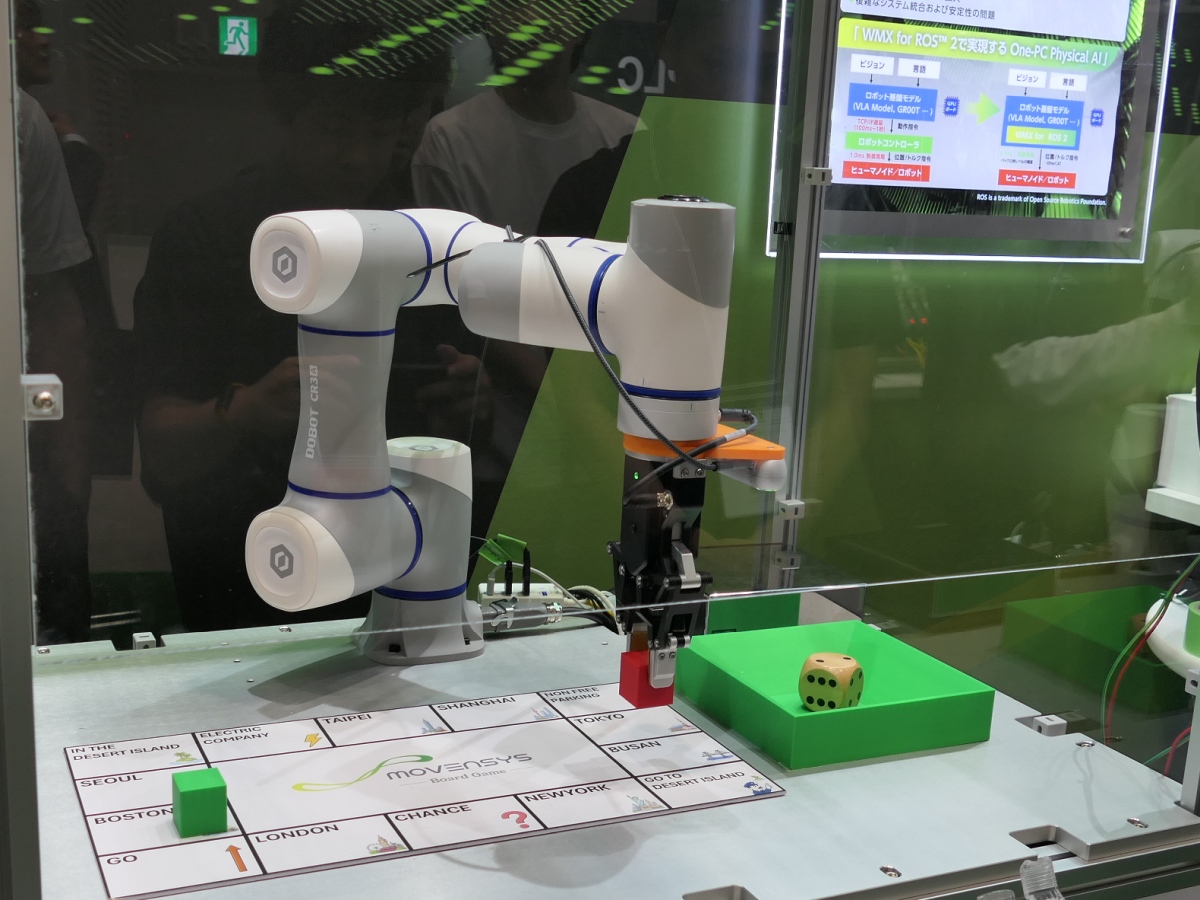
フィジカルAI搭載ロボットがモノポリーを実演、1台のPCにモーション制御も統合
モベンシスは、「第38回 ものづくりワールド[東京]」の構成展である「第1回 フィジカルAI展[東京]」において、PCでリアルタイム制御を実現するソフトモーションコントローラー「WMX3」のROS 2向けパッケージ「WMX for ROS 2」を紹介した。

This startup thinks robotics is about to have its ChatGPT moment
General Intuition is betting millions of hours of video game data can train the foundation models for physical AI, making it easier to buil…
間違った方法で運転する: End2End 自動運転モデルの解釈可能性を活用する
自動運転のためのエンドツーエンド学習の採用が増えると、モデルの複雑さと不透明さが増し、望ましくない動作や誤った動作を学習するリスクが高まります。この研究では、教師なし辞書学習を最先端の運転モデル内の事後解釈可能性モジュールとして統合し、運転行動を意味的に意味のある概念に分解しながら、モデルの運転決定に対する因果関係を実証します。我々は、エンドツーエンドモデルから意味のある概念を抽出して解釈し、それらを多面的なモデル出力に接続するための段階的なフレームワークを提案します。これにより、将来の軌道を予測するための基礎となる意思決定ロジックが明らかになります。さらに、コンセプトレベルでの的を絞った介入により、運転上の意思決定を操作および修正できるようになり、その結果、全体的な運転パフォーマンスが目に見えるほど向上します。したがって、解釈可能性を効果的に使用して、モデルの不透明性を軽減し、誤った動作を明らかにし、対象を絞った軽減策を可能にして、最終的にモデルのパフォーマンスを向上させる方法を示します。
原文 (English)
Driving the Wrong Way: Leveraging Interpretability in End2End Autonomous Driving Models
The increasing adoption of end-to-end learning for autonomous driving introduces increased model complexity and opacity, raising the risk of learning undesired or erroneous behavior. In this work, we integrate unsupervised dictionary learning as a post hoc interpretability module within state-of-the-art driving models to decompose driving behavior into semantically meaningful concepts while demonstrating their causal influence on the model's driving decisions. We propose a stepwise framework for extracting and interpreting meaningful concepts from the end-to-end model and connecting them to the multifaceted model outputs, thereby revealing the underlying decision-making logic for the prediction of future trajectories. Furthermore, targeted interventions at the concept level allow us to manipulate and correct driving decisions, resulting in measurable improvements in overall driving performance. We thus demonstrate how interpretability can effectively be used to reduce model opacity, uncover erroneous behavior, and enable targeted mitigation, ultimately boosting model performance.
UWBセンシングおよびワークゾーン再構築のためのジオメトリ対応インフラストラクチャアンカー型デノイザー
インテリジェント交通システムには作業ゾーンの形状を正確に認識することが不可欠であり、超広帯域センシングはインフラ支援による再構築に低コストのアプローチを提供します。ただし、屋外の UWB 測距は、見通し外伝播、バースト ノイズ、ロングテール エラーによって劣化することが多く、ダウンストリームの空間再構成が歪む可能性があります。我々は、時間範囲モデリングを潜在的なアンカー レイアウト推定と決定論的な距離投影と組み合わせた、ジオメトリを認識したインフラストラクチャにアンカーされた学習フレームワークである GAIA を紹介します。 GAIA は、学習された距離を境界一貫性のある再構築に向けて調整しながら、教師ありタスクとして範囲ノイズ除去を保存します。私たちは、同期された UWB、GNSS、IMU 測定を使用して実世界の屋外 UWB データセットで GAIA を評価し、実データで校正されたストレス テスト シミュレーターを使用して堅牢性をさらにテストします。 GAIA は、評価されたフィルタリング ベースおよび学習ベースのベースラインの中で最も低い全体範囲 MSE と最も高いポリゴン IoU を達成し、PoseMLP と比較して MSE を 18.4% 削減し、ポリゴン IoU を 15.5% 改善しました。これらの結果は、ジオメトリを意識した範囲ノイズ除去が、空間的に一貫したワークゾーンの再構築に向けた効果的な方法を提供することを示しています。
原文 (English)
Geometry-Aware Infrastructure-Anchored Denoiser for UWB Sensing and Work-Zone Reconstruction
Accurate work-zone geometry perception is critical for intelligent transportation systems, and ultra-wideband sensing offers a low-cost approach for infrastructure-aided reconstruction. However, outdoor UWB ranging is often degraded by non-line-of-sight propagation, burst noise, and long-tail errors, which can distort downstream spatial reconstruction. We present GAIA, a geometry-aware, infrastructure-anchored learning framework that couples temporal range modeling with latent anchor-layout estimation and deterministic distance projection. GAIA preserves range denoising as the supervised task while orienting the learned distances toward boundary-consistent reconstruction. We evaluate GAIA on a real-world outdoor UWB dataset with synchronized UWB, GNSS, and IMU measurements, and further test robustness using a real-data-calibrated stress-test simulator. GAIA achieves the lowest overall range MSE and highest polygon IoU among evaluated filtering-based and learning-based baselines, reducing MSE by 18.4% and improving polygon IoU by 15.5% over PoseMLP. These results show that geometry-aware range denoising provides an effective path toward spatially coherent work-zone reconstruction.
推論効率の高い世界アクションモデルのための 4D 幾何事前確率の学習
ワールド アクション モデル (WAM) は、視覚的な未来のダイナミクスと実行可能なアクション シーケンスを共同でモデル化することにより、ロボット操作の強力な可能性を示しています。しかし、既存のビデオアクション共同トレーニング手法は主に外観指向のビデオ潜在を最適化するため、正確な操作に必要な時間的に進化するジオメトリを十分に捕捉できない可能性があります。私たちは、元の軽量推論グラフを維持しながら、アクション関連の 4D 幾何学的事前分布をビデオ アクション表現に注入するマルチエキスパート共同トレーニング世界アクション モデルである MECo-WAM を提案します。トレーニング中、MECo-WAM は、ビデオおよびアクションのエキスパートと、フリーズされた VGGT エンコーダーからのリレーショナル ターゲットによって監視される軽量 4D エキスパートを組み合わせます。非対称のエキスパートの可視性により、補助ジオメトリからアクション生成への非因果的なショートカットを防止します。展開されたビデオアクション経路に幾何学的な知識を移すために、減衰 4D 読み取りマスク アテンションを導入します。これにより、トレーニングの初期段階で制限された現在のフレームの幾何学的なガイダンスが提供され、この依存関係が徐々に削除されます。さらに、ロボットの動作に最も関連する視覚領域を強調しながら、フレーム内の幾何学的関係とその時間的展開を調整する、アクションを意識した時間幾何学的蒸留を提案します。デプロイメント時に、補助的な 4D コンポーネントはすべて削除されます。 LIBERO (98.2%)、RoboTwin 2.0 (92.6%)、および困難な現実世界の操作タスクに関する実験では、MECo-WAM が推論コストを増加させることなく操作パフォーマンスを向上させることが示されています。
原文 (English)
Learning 4D Geometric Priors for Inference-Efficient World Action Models
World Action Models (WAMs) have shown strong potential for robotic manipulation by jointly modeling visual future dynamics and executable action sequences. However, existing video-action co-training methods primarily optimize appearance-oriented video latents, which may insufficiently capture the temporally evolving geometry required for precise manipulation. We propose MECo-WAM, a Multi-Expert Co-Training World Action Model that injects action-relevant 4D geometric priors into video-action representations while preserving the original lightweight inference graph. During training, MECo-WAM combines video and action experts with a lightweight 4D expert supervised by relational targets from a frozen VGGT encoder. Asymmetric expert visibility prevents non-causal shortcuts from auxiliary geometry to action generation. To transfer geometric knowledge into the deployed video-action pathway, we introduce decayed 4D read-mask attention, which provides restricted current-frame geometric guidance early in training and progressively removes this dependency. We further propose action-aware temporal geometric distillation, which aligns within-frame geometric relations and their temporal evolution while emphasizing visual regions most relevant to robot actions. At deployment, all auxiliary 4D components are removed. Experiments on LIBERO (98.2%), RoboTwin 2.0 (92.6%), and challenging real-world manipulation tasks show that MECo-WAM improves manipulation performance without increasing inference cost.
トレーニング不要のプリミティブ形状抽象化のための生成画像モデルの利用
3D 形状を幾何学的プリミティブのコンパクトなセットとして表現することは、ロボット工学、シミュレーション、およびシーンの理解の基礎です。大規模にトレーニングされた生成画像モデルは、タスク固有のトレーニングを必要とせずに、任意のカテゴリにわたって、画像ドメイン内でオブジェクトの部分を直接識別してセグメント化できる汎用的な視覚学習器として最近登場しました。このようなモデルを下流のタスクに適応させるには、通常、微調整が必要です。事前にトレーニングされた能力をトレーニングなしで直接活用できるかどうかを尋ねると、トレーニングなしで活用できると肯定的に答えます。私たちのパイプラインは、3D オブジェクトのマルチビュー イメージをレンダリングし、ビジョン言語モデルを使用してそのセマンティック パーツを分析し、生成イメージ モデルに色分けされたパーツ セグメンテーション マスクをペイントするように指示し、それをジオメトリに再投影し、パラメーターの最適化によって各パーツに超二次プリミティブを適合させます。このアプローチには学習されたパラメーターが含まれていません。これは、カテゴリに依存せず、向きに依存せず、以前の学習ベースのモデルが苦労していた特性です。その精度の上限は、将来の生成モデルの改善に伴って上昇します。これは、プリミティブ フィッティングではなくパーツ セグメンテーションが現在の精度のボトルネックであることを示すグランドトゥルース セグメンテーション研究で確認されています。 HumanPrim と Toys4K では、オブジェクトごとに平均 5 ~ 9 個のプリミティブを使用して、評価したすべての方法の中で最も低い面取り距離を達成します。
原文 (English)
Harnessing Generative Image Models for Training-Free Primitive Shape Abstraction
Representing 3D shapes as compact sets of geometric primitives is fundamental to robotics, simulation, and scene understanding. Generative image models trained at scale have recently emerged as generalist visual learners that can identify and segment object parts directly in the image domain, across arbitrary categories and without task-specific training. Adapting such models to downstream tasks typically requires fine-tuning; we ask whether their pretrained capability can instead be harnessed directly, without any training, and answer affirmatively with a training-free harness. Our pipeline renders multi-view images of a 3D object, uses a vision-language model to analyze its semantic parts, prompts a generative image model to paint a color-coded part segmentation mask, reprojects it onto the geometry, and fits a superquadric primitive to each part via parameter optimization. The approach contains no learned parameters: it is category-agnostic and orientation-invariant, properties that previous learning-based models struggled with. Its accuracy ceiling rises with future generative-model improvements, which we confirm with a ground-truth segmentation study showing that part segmentation, not primitive fitting, is the current accuracy bottleneck. On HumanPrim and Toys4K, our method achieves the lowest Chamfer distance among all evaluated methods, using 5--9 primitives per object on average.
Physics-Regularized Machine Learning for Proprioceptive Vehicle Localization Using Onboard Sensors
Accurate and robust localization is essential for autonomous mobility systems in real-world environments. While fusing Inertial Measurement…
IMR: Iterative Mode-World Weighted Regression for Multi-Agent Trajectory Prediction
Multi-agent motion prediction is essential for automated vehicles to understand the intentions of surrounding vehicles. However, previous p…
FORGE: Towards Functional Tool-Use Generalization via Keypoint Trajectory Reasoning
While humans readily repurpose a book, a stone, or a shoe to drive a nail, robots trained on specific tools fail to transfer the same funct…
EcoVision: AI-Powered Drone Imaging for Salt Marsh Vegetation Monitoring and Dominance Mapping
High-resolution RGB imagery acquired from low-altitude UAV surveys was processed through a modular pipeline incorporating transformer-based…
Responsible Personalisation: The Double-Edged Sword of Personalisation in Human-Robot Interaction
While personalisation is becoming a defining capability in human-robot interaction (HRI), the existing literature on responsible personalis…
LLM-as-a-Verifier: 汎用検証フレームワーク
トレーニング前、トレーニング後、テスト時のコンピューティングのスケーリングは、LLM の機能を向上させるための中心的なパラダイムとなっています。この研究では、ソリューションの正しさを判断する能力である検証を新しいスケーリング軸として特定します。これを解き放ち、その有効性を実証するために、追加のトレーニングを必要とせずにエージェント タスクに対するきめ細かいフィードバックを提供する汎用検証フレームワークである LLM-as-a-Verifier を導入します。 LLM に候補解に対する離散スコアの生成を促す標準の LM ジャッジとは異なり、検証者としての LLM は、スコアリング トークン ロジットの分布に対する期待値を計算して連続スコアを生成します。この確率的定式化により、(1) スコアの粒度、(2) 反復評価、および (3) 基準の分解といった複数の次元に沿って検証を拡張することができます。特に、スコアの粒度をスケーリングすると、正の解と負の解がより適切に分離され、より校正された比較が得られることを示します。さらに、繰り返しの評価と基準分解をスケーリングすることにより、分散と複雑さの軽減を通じて検証精度がさらに向上します。さらに、検証者の連続スコアを使用して候補の中から最適なソリューションを選択するための、コスト効率の高いランキング アルゴリズムを導入します。 LLM-as-a-Verifier は、 Terminal-Bench V2 (86.5%)、SWE-Bench Verified (78.2%)、RoboRewardBench (87.4%)、および MedAgentBench (73.3%) で最先端のパフォーマンスを達成します。検証を超えて、LLM-as-a-Verifier からのきめ細かい信号は、タスクの進行状況を推定するためのプロキシとしても機能します。私たちは Claude Code の拡張機能を構築し、開発者が独自のエージェント システムを監視および改善できるようにします。最後に、LLM-as-a-Verifier が RL に緻密なフィードバックを提供し、ロボット工学と数学的推論のベンチマークにおける SAC と GRPO のサンプル効率を向上させることができることを示します。
原文 (English)
LLM-as-a-Verifier: A General-Purpose Verification Framework
Scaling pre-training, post-training, and test-time compute have become the central paradigms for improving the capabilities of LLMs. In this work, we identify verification, the ability to determine the correctness of a solution, as a new scaling axis. To unlock this and demonstrate its effectiveness, we introduce LLM-as-a-Verifier, a general-purpose verification framework that provides fine-grained feedback for agentic tasks without requiring additional training. Unlike standard LM judges that prompt LLMs to produce discrete scores for candidate solutions, LLM-as-a-Verifier computes the expectation over the distribution of scoring token logits to generate continuous scores. This probabilistic formulation enables verification to scale along multiple dimensions: (1) score granularity, (2) repeated evaluation, and (3) criteria decomposition. In particular, we show that scaling the scoring granularity leads to better separation between positive and negative solutions, resulting in more calibrated comparisons. Moreover, scaling repeated evaluation and criteria decomposition consistently lead to additional gains in verification accuracy through variance and complexity reduction. We further introduce a cost-efficient ranking algorithm for selecting the best solution among candidates using the verifier's continuous scores. LLM-as-a-Verifier achieves state-of-the-art performance on Terminal-Bench V2 (86.5%), SWE-Bench Verified (78.2%), RoboRewardBench (87.4%), and MedAgentBench (73.3%). Beyond verification, the fine-grained signals from LLM-as-a-Verifier can also serve as a proxy for estimating task progress. We build an extension for Claude Code, enabling developers to monitor and improve their own agentic systems. Finally, we show that LLM-as-a-Verifier can provide dense feedback for RL, improving the sample efficiency of SAC and GRPO on robotics and mathematical reasoning benchmarks.
SWITCH: Benchmarking Modeling and Handling of Tangible Interfaces in Long-horizon Embodied Scenarios
Tangible control interfaces (TCIs), such as appliance panels, remotes, elevators, and embedded GUIs, are a fundamental component of everyda…
From Passive Observer to Active Critic: Reinforcement Learning Elicits Process Reasoning for Robotic Manipulation
Accurate process supervision remains a critical challenge for long-horizon robotic manipulation. A primary bottleneck is that current video…
ロボットモバイルフルフィルメントシステムにおける効率的な経路探索のためのニューロモーフィック強化学習フレームワーク
動的な環境変化、限られたワークスペース、および厳しいリアルタイム制約により、ロボット モバイル フルフィルメント システム (RMFS) でのパスファインディングは、従来の検索ベースおよびルールベースの方法にとって困難な問題となっており、通常、計算の複雑性が高く、意思決定の待ち時間が長いという問題があります。強化学習 (RL) は強力な代替手段として登場しましたが、リソースに制約のあるハードウェア上で極めてエネルギー効率の高い学習済みポリシーを展開することは依然として課題です。我々は、完全精度の人工ニューラル ネットワーク (ANN) からニューロモーフィック チップまで、RL でトレーニングされたポリシーの高忠実度の展開を実現するエンドツーエンドのフレームワークである SDQN-RMFS を紹介します。このフレームワークは、まばらなイベントによってトリガーされた場合にのみ計算を行うことで、超低消費電力の RMFS パスファインディングを可能にします。当社のフルスタック パイプラインは次のように動作します。ANN ポリシーは、最初に衝突許容戦略を介して効率的にトレーニングされ、有益な軌道を高密度化してから、ハードラベル知識蒸留アプローチを介してスパイキング ニューラル ネットワーク (SNN) に変換されます。これにより、出力分布の不一致に効果的に対処し、ANN から SNN へのパイプライン全体でポリシー機能を維持しながら、推論レイテンシを大幅に短縮します。ハードウェア実験では、元のトレーニング済みポリシーと同等の意思決定品質を維持しながら、高性能 GPU ベースラインと比較して最大 11,281$\times$ のエネルギー節約とレイテンシのほぼ 2 倍の削減を実証しました。これらの結果は、大規模な RMFS 操作のための実用的でエネルギー持続可能な経路としての物理的神経形態推論を確立します。
原文 (English)
A Neuromorphic Reinforcement Learning Framework for Efficient Pathfinding in Robotic Mobile Fulfillment Systems
Dynamic environmental changes, confined workspaces, and stringent real-time constraints make pathfinding in Robotic Mobile Fulfillment Systems (RMFS) a challenging problem for conventional search- and rule-based methods, which typically suffer from high computational complexity and long decision latency. While reinforcement learning (RL) has emerged as a powerful alternative, deploying learned policies with extreme energy efficiency on resource-constrained hardware remains an open challenge. We present SDQN-RMFS, an end-to-end framework that achieves high-fidelity deployment of an RL-trained policy from a full-precision artificial neural network (ANN) through to a neuromorphic chip. By computing only when triggered by sparse events, this framework unlocks ultra-low-power RMFS pathfinding. Our full-stack pipeline operates as follows: an ANN policy is first efficiently trained via a collision-allowing strategy to densify informative trajectories, and then converted into a spiking neural network (SNN) via a hard-label knowledge distillation approach. This effectively addresses the output distribution mismatch, preserving policy capability across the ANN-to-SNN pipeline while substantially reducing inference latency. Hardware experiments demonstrate up to 11,281$\times$ energy savings and a nearly two-fold reduction in latency compared to a high-performance GPU baseline, while maintaining decision quality on par with the original trained policy. These results establish physical neuromorphic inference as a practical and energy-sustainable pathway for large-scale RMFS operations.
RoboDojo: A Unified Sim-and-Real Benchmark for Comprehensive Evaluation of Generalist Robot Manipulation Policies
Generalist robot manipulation policies have advanced rapidly, yet existing benchmarks remain limited in systematically evaluating their cap…
検証のボトルネックを圧縮: 科学的発見のためのエージェント自動運転ラボ
Agentic AI-for-Science はアイデア出し、計画、分析を自動化できますが、最終的な検証は依然として実際の実験に依存します。自動運転ラボ (SDL) はこれらの実験を実行できますが、ループには依然としてボトルネックがあります。エージェントが価値の低い実験に多くのラウンドを費やしすぎたり、各ラウンドで高コストの実験が必要になったりする可能性があります。これら 2 つの物理的なボトルネックを 1 つのエージェントでターゲットにします。まず、事前認識エージェント DOE ループは、ドメインの知識と過去の結果を使用して、実行可能で有益な次の実験を提案し、目標までの試行回数を減らします。第 2 に、コストを意識した代理エージェントは、低コスト、低解像度の測定値から高コスト、高解像度の測定値を予測します。予測された不確実性に基づいて、高コストの測定と低コストの測定のどちらかを選択します。私たちはこれらの方向性をそれぞれ生物学と材料の領域で検討します。これらのコンポーネントは、単一のエージェントの下で連携して、ループ数と実験あたりのコストの両方を削減することで SDL ループを高速化することを目的としています。
原文 (English)
Compressing the Validation Bottleneck: An Agentic Self-Driving Lab for Scientific Discovery
Agentic AI-for-Science can automate ideation, planning, and analysis, but final validation still depends on real experiments. A self-driving lab (SDL) can execute those experiments, yet the loop still has bottlenecks: the agent may spend too many rounds on low-value experiments, or each round may require a high-cost experiment. We target these two physical bottlenecks with one agent. First, a prior-aware agentic DOE loop uses domain knowledge and past results to propose feasible and informative next experiments, reducing trials-to-target. Second, a cost-aware surrogate agent predicts high-cost, high-resolution measurements from low-cost, low-resolution measurements. It chooses between a high- and a low-cost measurement based on the predicted uncertainty. We examine these directions in the biology and materials domains, respectively. Together, under a single agent, these components aim to accelerate the SDL loop by reducing both the number of loops and the cost per experiment.
LLM-as-a-Verifier: 汎用検証フレームワーク
トレーニング前、トレーニング後、テスト時のコンピューティングのスケーリングは、LLM の機能を向上させるための中心的なパラダイムとなっています。この研究では、ソリューションの正しさを判断する能力である検証を新しいスケーリング軸として特定します。これを解き放ち、その有効性を実証するために、追加のトレーニングを必要とせずにエージェント タスクに対するきめ細かいフィードバックを提供する汎用検証フレームワークである LLM-as-a-Verifier を導入します。 LLM に候補解に対する離散スコアの生成を促す標準の LM ジャッジとは異なり、検証者としての LLM は、スコアリング トークン ロジットの分布に対する期待値を計算して連続スコアを生成します。この確率的定式化により、(1) スコアの粒度、(2) 反復評価、および (3) 基準の分解といった複数の次元に沿って検証を拡張することができます。特に、スコアの粒度をスケーリングすると、正の解と負の解がより適切に分離され、より校正された比較が得られることを示します。さらに、繰り返しの評価と基準分解をスケーリングすることにより、分散と複雑さの軽減を通じて検証精度がさらに向上します。さらに、検証者の連続スコアを使用して候補の中から最適なソリューションを選択するための、コスト効率の高いランキング アルゴリズムを導入します。 LLM-as-a-Verifier は、 Terminal-Bench V2 (86.5%)、SWE-Bench Verified (78.2%)、RoboRewardBench (87.4%)、および MedAgentBench (73.3%) で最先端のパフォーマンスを達成します。検証を超えて、LLM-as-a-Verifier からのきめ細かい信号は、タスクの進行状況を推定するためのプロキシとしても機能します。私たちは Claude Code の拡張機能を構築し、開発者が独自のエージェント システムを監視および改善できるようにします。最後に、LLM-as-a-Verifier が RL に緻密なフィードバックを提供し、ロボット工学と数学的推論のベンチマークにおける SAC と GRPO のサンプル効率を向上させることができることを示します。
原文 (English)
LLM-as-a-Verifier: A General-Purpose Verification Framework
Scaling pre-training, post-training, and test-time compute have become the central paradigms for improving the capabilities of LLMs. In this work, we identify verification, the ability to determine the correctness of a solution, as a new scaling axis. To unlock this and demonstrate its effectiveness, we introduce LLM-as-a-Verifier, a general-purpose verification framework that provides fine-grained feedback for agentic tasks without requiring additional training. Unlike standard LM judges that prompt LLMs to produce discrete scores for candidate solutions, LLM-as-a-Verifier computes the expectation over the distribution of scoring token logits to generate continuous scores. This probabilistic formulation enables verification to scale along multiple dimensions: (1) score granularity, (2) repeated evaluation, and (3) criteria decomposition. In particular, we show that scaling the scoring granularity leads to better separation between positive and negative solutions, resulting in more calibrated comparisons. Moreover, scaling repeated evaluation and criteria decomposition consistently lead to additional gains in verification accuracy through variance and complexity reduction. We further introduce a cost-efficient ranking algorithm for selecting the best solution among candidates using the verifier's continuous scores. LLM-as-a-Verifier achieves state-of-the-art performance on Terminal-Bench V2 (86.5%), SWE-Bench Verified (78.2%), RoboRewardBench (87.4%), and MedAgentBench (73.3%). Beyond verification, the fine-grained signals from LLM-as-a-Verifier can also serve as a proxy for estimating task progress. We build an extension for Claude Code, enabling developers to monitor and improve their own agentic systems. Finally, we show that LLM-as-a-Verifier can provide dense feedback for RL, improving the sample efficiency of SAC and GRPO on robotics and mathematical reasoning benchmarks.
Federated Learning for Object Detection: Enabling Collaborative Drone Learning Without Centralizing Data
Object detection is a fundamental capability for AI-driven perception in safety-critical drone and edge-vision systems, including disaster…
Differential Amplifier-Inspired AmpAttention for Multi-View Robotic Manipulation
Multi-view robotic manipulation methods with the attention mechanism have recently achieved significant progress in both training efficienc…
AnchorVLA: Bridging Discrete Decisions and Continuous Trajectories for Vision-Language-Action Planning
Autonomous driving planning requires translating navigation intent, traffic rules, dynamic interactions, and language instructions into exe…
HiMe: Hierarchical Embodied Memory for Long-Horizon Vision-Language-Action Control
Current Vision-Language-Action (VLA) models excel at robotic manipulation but often struggle with non-Markovian tasks requiring long-term m…
Token-Based Affordance Grounding with Large Vision-Language Models
Affordance grounding aims to localize image regions that support a specific action, serving as a core capability for physical intelligence…
OmniTacTune: Policy-Agnostic Real-World RL for Tactile Residual Adaptation of Visual Policies
Visual policies learned from human videos, teleoperation, and robot demonstrations offer scalable motion priors, but often fail in contact-…
High-Fidelity One-Step Generative Visuomotor Policy via Recursive Correction, Frequency Consistency, and Contrastive Flow Matching
Generative models such as diffusion and flow matching have advanced robotic visuomotor policies by modeling multimodal action distributions…
Worldscape-MoE: A Unified Mixture-of-Experts World Model for Scalable Heterogeneous Action Control
World models are rapidly becoming a core infrastructure for embodied intelligence and interactive agents: they provide controllable simulat…
Finite Reliability Representations: Noise-Calibrated Belief-Space Covers for Reliable Decision-Making
Physical sensing and actuation noise floors should inform how much belief resolution a decision-making system can reliably use. We introduc…
Conflict-Based Lazy Search for Fast Multi-Manipulator Planning
Employing multiple manipulators can boost efficiency and accomplish tasks that a single manipulator cannot do. However, real-time planning…
!Imperio, smolVLA: The Implications of Data Poisoning on Open Source Robotics
This work establishes that trigger-word data poisoning of vision language action models is practical, while at the same time the open-sourc…
SoftVTBench: A Safety-Aware Visuo-Tactile Benchmark for Physically Constrained Robotic Manipulation of Deformable Objects
Deformable object manipulation poses challenges beyond task completion: successful execution must also maintain safe physical interaction,…
HALO-WA: Hybrid-Attention Latent-Guided Online Reinforcement Learning for World-Action Models
World-action (WA) models can generate long-horizon action chunks for general-purpose robotic manipulation, but they remain vulnerable to ca…
RoboDojo: A Unified Sim-and-Real Benchmark for Comprehensive Evaluation of Generalist Robot Manipulation Policies
Generalist robot manipulation policies have advanced rapidly, yet existing benchmarks remain limited in systematically evaluating their cap…
Robustness Verification of an Autonomous Underwater Vehicle-based Plankton Classifier
The assessment of planktonic standing stocks and microorganism structures is critical for understanding upper ocean biological processes. C…
CRISP: A Spatiotemporal Camera-Radar Backbone for Driving via Forecasting-Based World-Model Pretraining
Camera-radar (CR) fusion is a practical sensing configuration for autonomous driving, but existing models are typically trained with task-s…
Mask2Real-WM: Segmentation Masks as a Sim-to-Real Bridge for Controllable Dexterous World Models
Action-conditioned world models allow robots to predict the future consequences of candidate actions without additional physical interactio…
Simple-to-Complex Structured Demonstrations for Vision-Language-Action Learning
Vision-Language-Action (VLA) models have demonstrated strong capabilities in robotic manipulation by integrating visual perception, languag…
SILO: Simulation-in-the-Loop Sim-to-Real Transfer for Multi-Stage Cable Routing
Linear-deformable manipulation remains challenging due to the complex deformations of objects such as cables and ropes. Prior data-driven a…
Do Vision-Language-Action Models Mean What They Say? On the Role of Faithfulness in Embodied Reasoning
Embodied Chain-of-Thought has emerged as a promising mechanism to enhance robot decision-making and interpretability in black-box Vision-La…
Geometry-Aware Motion Latents for Learning Robust Manipulation Policies
Learning motion latents for robotic manipulation heavily relies on extracting motion patterns from visual sequences, yet effective action a…
DSWAM: A Dual-System World Action Foundation Model for Fine-Grained Robot Manipulation
World Action Models (WAMs) provide a promising alternative to Vision-Language-Action (VLA) policies by using video-based world modeling as…
Multi-Robot Open Adaptive Teaming Across Unseen Environments, Partners, and Scales
Deploying robot teams in the real world requires simultaneous adaptation to unseen environments, unknown partners, and varying team sizes,…
GaP: A Graph-as-Policy Multi-Agent Self-Learning Harness For Variational Automation Tasks
For robots to work reliably in commercial and industrial applications, can recent advances in agentic coding systems combine interpretable…
Cortex: A Bidirectionally Aligned Embodied Agent Framework for Long-horizon Manipulation
While recent Vision-Language-Action (VLA) models show promise toward generalist manipulation policies, they struggle with long-horizon task…
From Fixed to Free Cameras: Calibration-Free View-Robust Vision-Language-Action Model
Real-world robot deployment rarely maintains the training-stage camera setup, where cameras often experience repositioning or remounting de…
Insect-inspired Visual Point-goal Navigation
Insect neuroethology provides a compelling biological template for efficient autonomous navigation. We draw an analogy between the formal e…
シーンの自己探索による視点をもとに計画を立てる
VLM は、各カメラの動きによってビューがどのように変化するかを予測し、事前にそのような動きを多数計画することができますか?私たちはこれを機能ビュー計画と呼びます。これには、(1) 単一のアクションがビューをどのように変換するかを理解すること、(2) ターゲット ビューを特定するために複数ターンの計画にわたってそのような変換を多数構成することが必要です。私たちは、実際の ScanNet シーン上の 3D ポイントクラウド環境である、私たちが提案する ViewSuite で両方の機能を調査します。 13 のフロンティア VLM にわたって、重大な計画のギャップが生じています。VLM は基本的なビューとアクションの知識を持っていますが、それを複数ターンの計画にわたって構成することができず、視点の距離が長くなるにつれてギャップが拡大します。このギャップを埋めるために、自己探索とビュー グラフの蒸留を交互に行う反復フレームワークを提案します。重要な洞察は、結果に関係なく、すべての探索軌跡が集合的にビュー グラフを形成し、シーン全体で視点がどのように接続されているかをコンパクトに捉えるということです。このグラフをさまざまな教師ありタスクに抽出すると、ポリシーの分布が再形成され、純粋な RL を遅らせる希薄な報酬が克服されます。これにより、インタラクティブ ビュー プランニングで Qwen2.5-VL-7B が 2.5% から 47.8% に向上し、GPT-5.4 Pro (18.5%) や Gemini 3.1 Pro (21.4%) を上回りました。自己探索は、3D 空間で積極的に推論して計画できる VLM への有望な道として浮上しています。
原文 (English)
Planning with the Views
Can VLMs predict how each camera move changes the view, and plan many such moves ahead? We call this capability view planning, requiring (1)understanding how a single action transforms the view, and (2)composing many such transformations across multi-turn plans to identify a target view. We probe both abilities in our proposed ViewSuite, a 3D point-cloud environment on real ScanNet scenes. Across 13 frontier VLMs, a critical planning gap emerges: they possess basic view-action knowledge but fail to compose it across multi-turn plans, with the gap widening as viewpoint distance grows. To close this gap, we propose an iterative framework that alternates self-exploration with view graph distillation. The key insight is that all exploration trajectories, regardless of their outcome, collectively form a view graph that compactly captures how viewpoints connect across a scene. Distilling this graph into diverse supervised tasks reshapes the policy distribution and overcomes the sparse rewards that stall pure RL. This improves Qwen2.5-VL-7B from 2.5% to 47.8% on interactive view planning, surpassing GPT-5.4 Pro (18.5%) and Gemini 3.1 Pro (21.4%). Self-exploration emerges as a promising path toward VLMs that can actively reason and plan in 3D space. Code and Data are at https://viewsuite.github.io.
Learning to Visually Connect Actions and their Effects
We introduce the novel concept of visually Connecting Actions and Their Effects (CATE) in video understanding. CATE can have applications i…
MOSAIC: Skill-Centric Manipulation Planning with Physics Simulation
Planning long-horizon manipulation motions using a set of predefined skills is a central challenge in robotics; solving it efficiently coul…
Rational Inverse Reasoning: Few-Shot Imitation by Inferring Intent through Planning
Humans can learn a new manipulation task from one or two demonstrations and then perform it in a new room, with new objects, under new cons…
MAD-PINN: A Decentralized Physics-Informed Machine Learning Framework for Safe and Optimal Multi-Agent Control
Co-optimizing safety and performance in large-scale multi-agent systems remains a fundamental challenge. Existing approaches based on multi…
Verifier-free Test-Time Sampling for Vision-Language-Action Models
Vision-Language-Action models (VLAs) have demonstrated remarkable performance in robot control. However, they remain fundamentally limited…
SilvaScenes: Tree Detection and Species Classification from Under-Canopy Images in Natural Forests
Interest in forestry automation is growing alongside rapid advances in deep learning. In particular, tree detection and taxonomic classific…
Motion Attribution for Video Generation
Despite the rapid progress of video generation models, the role of data in influencing motion is poorly understood. We present Motive (MOTI…
BEVLM: Distilling Semantic Knowledge from LLMs into Bird's-Eye View Representations
The integration of Large Language Models (LLMs) into autonomous driving has attracted growing interest for their strong reasoning and seman…
CABTO: Context-Aware Behavior Tree Grounding for Robot Manipulation
Behavior Trees (BTs) offer a powerful paradigm for designing modular and reactive robot controllers. BT planning, an emerging field, provid…
SutureFormer: Learning Surgical Trajectories via Goal-conditioned Offline RL in Pixel Space
Predicting surgical needle trajectories from endoscopic video is critical for robot-assisted suturing, enabling anticipatory planning, real…
CorridorVLA: Explicit Spatial Constraints for Generative Action Heads via Sparse Anchors
Vision--Language--Action (VLA) models often use intermediate representations to connect multimodal inputs with continuous control, yet spat…
BioProVLA-Agent: An Affordable, Protocol-Driven, Vision-Enhanced VLA-Enabled Embodied Multi-Agent System with Closed-Loop-Capable Reasoning for Biological Laboratory Manipulation
Biological laboratory automation can reduce repetitive manual work and improve reproducibility, but reliable embodied execution in wet-lab…
A Digital Twin Framework for Traffic-Aware UAV Pavement Monitoring in Open-Traffic Conditions
UAV-based pavement inspection can reduce the cost and risk of road-surface monitoring, but real-world deployment remains difficult when tra…
Automating the Design of Embodied Agent Architectures
Embodied agents are typically built as hand-designed compositions of perception, memory, planning, and action modules. This modularity expo…
ワールド モデルからワールド アクション モデルへ: ロボット工学の簡潔なチュートリアル
世界モデルは、身体化されたインテリジェンスや生成シミュレーションでますます使用されていますが、その範囲はコミュニティ全体で依然として曖昧です。このチュートリアルでは、タスク関連の観測または状態の将来の進化を推定するアクション条件付き予測モデルとしてのワールド モデルの設計空間ビューを示します。私たちは既存の手法を観測空間世界モデルと状態空間世界モデルに分類し、視覚的な忠実度、空間構造、物理的解釈可能性、制御の使いやすさにおけるトレードオフを比較します。さらに、予測された未来と実行可能なロボットのアクションを結び付ける世界アクション モデルを紹介し、想像してから実行する、ビデオ機能条件付きアクション予測、ビデオとアクションの共同モデリング、およびポリシー学習のための補助ビデオ予測という 4 つの代表的なパラダイムを要約します。このチュートリアルの目標は、世界 (アクション) モデルの概念的範囲を明確にし、具体化された予測と制御のための構造化された分類法を提供することです。
原文 (English)
From World Models to World Action Models: A Concise Tutorial for Robotics
World models are increasingly used in embodied intelligence and generative simulation, yet their scope remains ambiguous across communities. This tutorial presents a design-space view of world models as action-conditioned predictive models that estimate the future evolution of task-relevant observations or states. We categorize existing methods into observation-space and state-space world models, comparing their trade-offs in visual fidelity, spatial structure, physical interpretability, and control usability. We further introduce world action models, which connect predicted futures with executable robot actions, and summarize four representative paradigms: imagine-then-execute, video-feature-conditioned action prediction, joint video-action modeling, and auxiliary video prediction for policy learning. The goal of this tutorial is to clarify the conceptual scope of world (action) models and provide a structured taxonomy for embodied prediction and control.
Guided Action Flow: Q-Guided Inference for Flow-Matching Vision-Language-Action Policies
Flow-matching vision-language-action policies generate robot action chunks through an iterative transport process, creating an opportunity…
アイデンティティのドリフトを伴わないエピソードからセマンティックへの統合
長期にわたる適応型インテリジェント エージェントは、知識の統合と情報の完全性の間の構造的緊張に直面しています。メモリの統合は従来、エージェント変更操作として扱われます。つまり、モデルが微調整され、プロンプトが書き換えられ、ポリシーが蒸留され、または将来の動作を制御するコンテキストに反映が追加されます。規制された自律型展開では、エージェントは特定の暗号化された認証 ID にバインドされるコミットメントと監査契約に基づいて動作するため、これは責任となります。我々は、統合をプランナーやアイデンティティマニフェストの突然変異としてではなく、出力が個別にアドレス指定可能な意味論的知識層であるエピソード記憶上の決定論的関数 f: M^ep -> M^sem として扱うことを提案します。 ID ハッシュは M^sem を読み取らないため、統合ではエージェントの認定された ID を変更せずに知識が更新されます。エージェント表現の正式な説明を行い、マニフェストのハッシュ入力セットの構造補題を通じて同一性不変性を証明し、出力が明示的信頼性とサポートイベント来歴を備えた監査可能なデータベース行である決定論的集計アルゴリズムを指定し、フィールドごとの正確性、統合パス全体でのバイト同一性、および非生産的なプランナー試行の平均 79.82% 削減 (BCa 95%) を実証する合成実験で構築を検証します。 10 シードにわたる CI [78.02%、81.49%])、校正されたベイジアン縮小ベースラインに対する。この構築は、自律型エージェントの知識更新規律であり、実行中のケーススタディとして具体化されたサービス エージェントを使用して、エージェントの認定された ID が動作期間全体を通じてバイト同等のままでありながら、レッスンがクエリ可能な事実として蓄積されます。
原文 (English)
Episodic-to-Semantic Consolidation Without Identity Drift
Long-running adaptive intelligent agents face a structural tension between knowledge consolidation and information integrity. Memory consolidation is conventionally treated as an agent-changing operation: a model is fine-tuned, a prompt rewritten, a policy distilled, or a reflection appended to the context that governs future behaviour. In regulated autonomic deployment this is a liability because the agent operates under commitments and audit contracts that bind to a specific, cryptographically certified identity. We propose to treat consolidation not as a mutation of the planner or the identity manifest, but as a deterministic function f: M^ep -> M^sem over episodic memory whose output is a separately addressable semantic knowledge layer; the identity hash does not read M^sem, so consolidation updates knowledge without changing the agent's certified identity. We give a formal account of the agent representation, prove identity invariance through a structural lemma on the manifest's hash-input set, specify a deterministic aggregation algorithm whose outputs are auditable database rows with explicit confidence and supporting-event provenance, and validate the construction with synthetic experiments demonstrating per-field correctness, byte-equal identity across consolidation passes, and a mean 79.82% reduction in unproductive planner attempts (95% BCa CI [78.02%, 81.49%] across 10 seeds) against a calibrated Bayesian-shrunk baseline. The construction is a knowledge-update discipline for autonomic agents in which lessons accumulate as queryable facts while the agent's certified identity remains byte-equal across its operational lifetime, with an embodied service agent as the running case study.
Adaptive Companionship for Group-Following Robots: Handling Dynamically Changing Group Formations
Accompanying a group of humans is an essential aspect of developing human-like social cognition in robots. However, human groups typically…
VLAFlow: A Unified Training Framework for Vision-Language-Action Models via Co-training and Future Latent Alignment
Vision-language-action models (VLAs) have recently advanced robotic manipulation, yet the effects of different robot-data pre-training para…
Lightweight Safe Reinforcement Learning for End-to-End UAV Navigation
With the rapid development of autonomous aerial systems, Unmanned Aerial Vehicles (UAVs) are increasingly deployed in applications such as…
PhysMani: Physics-principled 3D World Model for Dynamic Object Manipulation
Manipulating fast and dynamically moving targets in unstructured 3D environments remains challenging for embodied AI. Existing visual-langu…
NeoMap: Training-free Novel-View Synthesis from Single Images and Videos
We study the challenging problem of novel view video synthesis from single images or monocular videos. Existing methods, which operate unde…
Guided Action Flow: Q-Guided Inference for Flow-Matching Vision-Language-Action Policies
Flow-matching vision-language-action policies generate robot action chunks through an iterative transport process, creating an opportunity…
CoFL-S: Spatially Queryable Sector Flow Fields for Local Language-Conditioned Navigation
Vision-Language Navigation has increasingly emphasized high-level instruction reasoning, memory, global map construction, and instruction d…
ACID: Action Consistency via Inverse Dynamics for Planning with World Models
Decision-time planning with action-conditioned world models has become a popular paradigm for embodied control. However, the standard plann…
WorldSample: Closed-loop Real-robot RL with World Modelling
Reinforcement learning (RL) can overcome the demonstration-coverage limitation of imitation learning (IL) by allowing robots to improve thr…
Learning to Move Before Learning to Do: Task-Agnostic pretraining for VLAs
Vision-Language-Action (VLA) models are fundamentally bottlenecked by the scarcity of expert demonstrations -- triplets of observations, in…
From Actions to Understanding: Conformal Interpretability of Temporal Concepts in LLM Agents
Large Language Models (LLMs) are increasingly deployed as autonomous agents capable of reasoning, planning, and acting within interactive e…
物理的にネイティブな世界モデル: 生成世界モデリングに関するハミルトニアンの視点
ワールド モデルは最近、身体化されたインテリジェンス、ロボット工学、自動運転、モデルベースの強化学習の中心的なパラダイムとして再浮上しています。しかし、現在の世界モデル研究は、視覚的な未来合成を重視する 2D ビデオ生成モデル、空間再構成を重視する 3D シーン中心モデル、および抽象的な予測表現を重視する JEPA のような潜在モデルという、部分的に分離した 3 つのルートによって支配されることがよくあります。各ルートは重要な進歩を遂げていますが、具体化された意思決定のための、物理的に信頼性が高く、アクション制御可能で、長期的に安定した予測を提供するのに依然として苦労しています。この論文では、世界モデルのボトルネックは、もはや現実的な未来を生成できるかどうかだけではなく、それらの未来が物理的に意味があり、行動に役立つかどうかであると主張します。私たちは、世界モデリングに関する物理的に根拠のある視点として \emph{ハミルトニアン世界モデル} を提案します。重要なアイデアは、観測値を構造化された潜在位相空間にエンコードし、制御、散逸、残差項を含むハミルトニアンにインスピレーションを得たダイナミクスを通じて潜在状態を進化させ、予測された軌道を将来の観測値にデコードし、結果として得られるロールアウトを計画に使用することです。ハミルトニアン構造がどのように解釈可能性、データ効率、長期安定性を向上させることができるかについて議論するとともに、摩擦、接触、非保存力、変形可能な物体を含む現実世界のロボットシーンにおける実際的な課題にも言及します。
原文 (English)
Physically Native World Models: A Hamiltonian Perspective on Generative World Modeling
World models have recently re-emerged as a central paradigm for embodied intelligence, robotics, autonomous driving, and model-based reinforcement learning. However, current world model research is often dominated by three partially separated routes: 2D video-generative models that emphasize visual future synthesis, 3D scene-centric models that emphasize spatial reconstruction, and JEPA-like latent models that emphasize abstract predictive representations. While each route has made important progress, they still struggle to provide physically reliable, action-controllable, and long-horizon stable predictions for embodied decision making. In this paper, we argue that the bottleneck of world models is no longer only whether they can generate realistic futures, but whether those futures are physically meaningful and useful for action. We propose \emph{Hamiltonian World Models} as a physically grounded perspective on world modeling. The key idea is to encode observations into a structured latent phase space, evolve the latent state through Hamiltonian-inspired dynamics with control, dissipation, and residual terms, decode the predicted trajectory into future observations, and use the resulting rollouts for planning. We discuss how Hamiltonian structure may improve interpretability, data efficiency, and long-horizon stability, while also noting practical challenges in real-world robotic scenes involving friction, contact, non-conservative forces, and deformable objects.
Learning 3D-Gaussian Simulators from RGB Videos
Realistic simulation is critical for applications ranging from robotics to animation. Learned simulators have emerged as a possibility to c…
Restoring Linguistic Grounding in VLA Models via Train-Free Attention Recalibration
Vision-Language-Action (VLA) models enable robots to perform manipulation tasks directly from natural language instructions and are increas…
DriveVLM-RL: Neuroscience-Inspired Reinforcement Learning with Vision-Language Models for Safe and Deployable Autonomous Driving
Traditional reinforcement learning (RL) methods rely on manually engineered rewards or sparse collision signals, which fail to capture the…
CaP-X: A Framework for Benchmarking and Improving Coding Agents for Robot Manipulation
"Code-as-Policy" considers how executable code can complement data-intensive Vision-Language-Action (VLA) methods, yet their effectiveness…
Sim2Real-AD: A Modular Sim-to-Real Framework for Deploying VLM-Guided Reinforcement Learning in Real-World Autonomous Driving
Vision-language-model (VLM)-guided reinforcement learning (RL) has recently attracted significant attention for it, replacing brittle hand-…
Regression Test Selection for Updated Capability Modules in Compositional ML Systems via Atomic-Quality Probes
Compositional machine-learning (ML) systems assemble runtime behavior from libraries of independently re-trained capability modules. Replac…
Trust Region Inverse Reinforcement Learning: Explicit Dual Ascent using Local Policy Updates
Inverse reinforcement learning (IRL) is typically formulated as maximizing entropy subject to matching the distribution of expert trajector…
Exact equivariance, kept through training, buys zero-shot generalisation across the symmetry group
A latent world model built from an equivariant encoder and predictor inherits a provable symmetry of its training loss: when the dynamics c…
ワールド モデルからワールド アクション モデルへ: ロボット工学の簡潔なチュートリアル
世界モデルは、身体化されたインテリジェンスや生成シミュレーションでますます使用されていますが、その範囲はコミュニティ全体で依然として曖昧です。このチュートリアルでは、タスク関連の観測または状態の将来の進化を推定するアクション条件付き予測モデルとしてのワールド モデルの設計空間ビューを示します。私たちは既存の手法を観測空間世界モデルと状態空間世界モデルに分類し、視覚的な忠実度、空間構造、物理的解釈可能性、制御の使いやすさにおけるトレードオフを比較します。さらに、予測された未来と実行可能なロボットのアクションを結び付ける世界アクション モデルを紹介し、想像してから実行する、ビデオ機能条件付きアクション予測、ビデオとアクションの共同モデリング、およびポリシー学習のための補助ビデオ予測という 4 つの代表的なパラダイムを要約します。このチュートリアルの目標は、世界 (アクション) モデルの概念的範囲を明確にし、具体化された予測と制御のための構造化された分類法を提供することです。
原文 (English)
From World Models to World Action Models: A Concise Tutorial for Robotics
World models are increasingly used in embodied intelligence and generative simulation, yet their scope remains ambiguous across communities. This tutorial presents a design-space view of world models as action-conditioned predictive models that estimate the future evolution of task-relevant observations or states. We categorize existing methods into observation-space and state-space world models, comparing their trade-offs in visual fidelity, spatial structure, physical interpretability, and control usability. We further introduce world action models, which connect predicted futures with executable robot actions, and summarize four representative paradigms: imagine-then-execute, video-feature-conditioned action prediction, joint video-action modeling, and auxiliary video prediction for policy learning. The goal of this tutorial is to clarify the conceptual scope of world (action) models and provide a structured taxonomy for embodied prediction and control.
人型ロボットが工場で稼働する様子を6日間生配信、作業成功率99.99%をうたう 中国メーカー
中国の人型ロボット開発企業AGIBOTは、実際のタブレット量産ラインで複数の人型ロボットを6日間連続で動かす様子をライブ配信した。延べ64時間で1万7625個のタブレット生産に貢献し、作業成功率は99.99%だったという。
国内大手ロボットメーカー3社が協力、「フィジカルAI」向けデータセット構築へ
川崎重工業は、ロボットメーカー大手のファナックや安川電機などと協力し、「フィジカルAI」向けのデータセットを構築すると発表した。「GENIAC」の公募に採択された。
飛行中の航空交通管制をサポートするソリューション空間経路計画
技術の進歩に伴い、航空交通管理用に多くの経路計画アルゴリズムが提案されていますが、戦術管制における運用上の採用は依然として限定的であり、アルゴリズム設計の優先順位と航空管制官のニーズとの間のずれが明らかになりました。これは、本質的に解釈可能で、計算効率が高く、人間が使用するために明示的に設計された意思決定支援ソリューションの必要性を強調しています。この設計課題に焦点を当て、この研究では、次の 2 つの指針となる考慮事項に適合するように設計された、飛行中の航空交通管制 (ATC) のための競合のない経路計画アルゴリズムを開発します。(1) ソリューション空間表示によって提供される解釈可能性と柔軟性。これは、実行可能なすべての安全な行動を明らかにし、変化する最適化目標に対応するアルゴリズムを構築する動機となります。 (2) 決定ロジック コントローラーは、分離基準、操縦性の制限、ウェイポイントの最小化、ルートの実用性などの運用上の制約を強制するときに自然に適用されます。このアルゴリズムは、これらの原則に基づいて、距離ベース、時間間隔ベース、ゾーンベースの 3 つのインテントベースの競合検出方法をソリューション空間フレームワーク内に統合し、計算効率の高い方法で競合のないパスを特定します。さらに、頂点ベースおよびエッジベースの検索ノードが解空間パス プランニング (SSPP) 用に提案されており、その結果、それぞれ SSPPV と SSPPE という 2 つのバリアントが生成され、計算速度と解の品質の観点から評価されます。実験結果によると、ゾーンベースの競合検出と組み合わせた SSPPV は最高のパフォーマンスを実現し、5 nmi グリッドを使用したマーストリヒト上部地域管制センター (MUAC) のデルタ セクターに基づく運用関連シナリオでパスを平均 3.69 ミリ秒で計算します。
原文 (English)
Solution space path planning for supporting en-route air traffic control
As technology advances, many path-planning algorithms have been proposed for Air Traffic Management, yet their operational adoption in tactical control remains limited, revealing a misalignment between algorithmic design priorities and air traffic controllers' needs. This underscores the need for decision-support solutions that are inherently interpretable, computationally efficient, and explicitly designed for human use. Focusing on this design challenge, this study develops a conflict-free path-planning algorithm for en-route Air Traffic Control (ATC) designed to be compatible with two guiding considerations: (1) the interpretability and flexibility offered by solution-space displays, which motivate constructing an algorithm that exposes all feasible safe actions and accommodates shifting optimization goals; and (2) the decision logic controllers naturally apply when enforcing operational constraints, such as separation standards, maneuverability limits, waypoint minimization, and routing practicality. Centered on these principles, the algorithm integrates three intent-based conflict detection methods -- distance-based, time-interval-based, and zone-based -- within a solution-space framework to identify conflict-free paths in computationally efficient ways. Additionally, vertex-based and edge-based search nodes are proposed for solution space path planning (SSPP), resulting in two variants -- SSPPV and SSPPE, respectively, which are evaluated in terms of computational speed and solution quality. Empirical results show that SSPPV paired with zone-based conflict detection achieves the best performance, computing paths in 3.69 ms on average in operational-relevant scenarios based on the Delta sector of the Maastricht Upper Area Control Centre (MUAC) using a 5 nmi grid.
実行時の自律管理: シングルおよびマルチエージェントのサイバーフィジカルシステム向けのギアベースの安全性とガバナンス
LLM 駆動のソフトウェア エージェントであれ、ロボット物理エージェントであれ、自律型エージェントは、人間による継続的な監視なしで動作すると、一般的な種類の障害モードに直面します。つまり、未検証のアクションによる安全性違反、制約のないループによる動作の不安定性、未処理のエラー状態による連続性の喪失などです。私たちは、5 つの実行ギア (\Gobs{}、\Gsug{}、\Gplan{}、\Gexec{}、\Gint{}) とユーティリティ ゲート ディスパッチおよびイベント ドリブン フォールバックを組み合わせた離散時間制御システム \system{} を開発しています。単一エージェントのケースでは、単調な安定性、実行の安全性、最終的な安定化、フォールバックの完全性、歯車制約のあるマルコフ決定プロセスとの同等性を証明します。マルチエージェント サイバー物理システム(CPS)の場合、確立された \smart{} 管理自律性ライフサイクルを適用し、実行時の証拠を 4 つのガバナンス状態(\Stable{}/\Meta{}/\Assisted{}/\Regulated{})にマッピングします。コンセンサス ゲーティング、群レベルのリアプノフ解析、エージェントごとのギア権限、およびランデブー制御により、規定された前提条件の下での衝突ゼロを含む、分散型の安全性と安定性の保証が提供されます。 10,000 回のモンテカルロ エピソードにわたる NIST \emph{ロボット アーム位置精度の劣化測定} データセットから校正された故障規模を使用して、3 エージェントの UR5 ロボット アセンブリ セルでの実行時間を評価します。単一エージェントベースラインの異常検出率 2.1\% に対して 99.6\% を達成し、検出遅延を 3.5 倍 $ 削減し、正式な物理作業スペースの安全証明書を提供します。実行ギアは \smart{} ランタイム ガバナンス状態の下でミクロレベルの権限として機能し、アクション制御を自律ガバナンスから分離します。
原文 (English)
Managed Autonomy at Runtime: Gear-Based Safety and Governance for Single- and Multi-Agent Cyber-Physical Systems
Autonomous agents, whether LLM-driven software agents or robotic physical agents, face a common class of failure modes when operating without continuous human oversight: safety violations from unverified actions, behavioral instability from unconstrained loops, and continuity loss from unhandled error states. We develop \system{}, a discrete-time control system that combines five execution gears (\Gobs{}, \Gsug{}, \Gplan{}, \Gexec{}, \Gint{}) with utility-gated dispatch and event-driven fallback. For the single-agent case, we prove monotonic stability, execution safety, eventual stabilization, fallback completeness, and equivalence to a gear-constrained Markov decision process. For multi-agent cyber-physical systems (CPS), we apply the established \smart{} managed-autonomy lifecycle and map runtime evidence into its four governance states (\Stable{}/\Meta{}/\Assisted{}/\Regulated{}). Consensus gating, swarm-level Lyapunov analysis, per-agent gear authority, and rendezvous control provide distributed safety and stability guarantees, including zero collision under the stated assumptions. We evaluate the resulting runtime on a three-agent UR5 robotic assembly cell using fault magnitudes calibrated from the NIST \emph{Degradation Measurement of Robot Arm Position Accuracy} dataset across 10,000 Monte Carlo episodes. It achieves a 99.6\% anomaly detection rate versus 2.1\% for the single-agent baseline, reduces detection latency by $3.5\times$, and supplies a formal physical-workspace safety certificate. The execution gears act as micro-level permissions beneath the \smart{} runtime governance states, separating action control from autonomy governance.
インタラクティブなゲームプレイのためのコーチング可能なエージェント
強化学習は、高度な AI およびロボット システムの作成における貴重なツールであることが証明されており、ゲームプレイからロボット工学、基礎モデルに至るまであらゆるものに貢献しています。通常、これらの AI システムは、試行錯誤を通じて、タスクを解決するために最適に近い 1 つの動作を学習します。ただし、タスクの解決方法に関して、できればリアルタイムで、ある程度の制御を主張したいユースケースは数多くあります。コアタスクのこれらの変更をスタイルと呼びます。私たちは、ユニバーサル価値関数近似器 (UVFA) を、慎重に選択されたトレーニング シナリオ、学習アルゴリズム、データ拡張と組み合わせて、複雑な領域でスタイルを示すエージェントをコーチングするためのフレームワークを作成します。私たちは、AAA ビデオ ゲームの Horizon Forbidden West と Gran Turismo、およびオープンソースのヒューマノイド テスト ドメインでのフレームワークのアプリケーションを実証します。カーレース、様式化されたゲーム戦闘、人型歩行など、ドメインの性質が異なるにもかかわらず、各エージェントは、そのドメインの主なタスクを満たしながら、スタイルの要求に強い一貫性を示します。重要なのは、このホワイト ペーパーで概説した手法を使用すると、エンド ユーザーが実行時に最終的な動作を選択できるため、最終的に実行されるパフォーマンスを柔軟に制御できることです。
原文 (English)
Coachable agents for interactive gameplay
Reinforcement learning has proven to be a valuable tool in the creation of advanced AI and robotic systems, contributing to everything from game playing to robotics to foundation models. Through trial-and-error, these AI systems typically learn one, near-optimal behavior to solve their tasks. However, there are many use cases in which one would like to assert some level of control, preferably in real time, over how the task is solved. We refer to these modifications of a core task as styles. We combine universal value function approximators (UVFAs) with carefully selected training scenarios, learning algorithms, and data augmentation to create a framework for coaching agents that exhibit styles in complex domains. We demonstrate the framework's application in the AAA video games Horizon Forbidden West and Gran Turismo, and in an open-source humanoid test domain. Despite the different nature of the domains -- car racing, stylized game combat, and humanoid walking -- each agent shows strong coherence to the style requests while still satisfying the main task in its domain. Importantly, the techniques outlined in this paper allow an end user to choose the final behavior at run time, giving them flexible control over the final executed performance.
FLYNN: Fly Brain トポロジーを使用したロボット ナビゲーションのための堅牢なニューラル ネットワーク
深層学習モデルは複雑なタスクで最先端のパフォーマンスを実現しますが、新しい環境や感覚遮断に直面すると脆弱なままです。対照的に、生体系はこれらの課題に対して顕著な耐性を示します。私たちは、ショウジョウバエのシナプス分解能の脳コネクトームから直接派生したアーキテクチャをもつリカレント ニューラル ネットワーク (RNN) を開発することで、この脆弱性に対処します。我々は、MuJoCo でビジョンベースのナビゲーションを実行するためにフライ コネクトーム ニューラル ネットワーク (FLYNN) をトレーニングし、同様のパラメーター数の最新の手作りネットワークに匹敵するパフォーマンスを達成する実現可能性を実証します。重要なことは、FLYNN は、さらなるトレーニングを行わなくても、分布外 (OOD) データに対する優れた耐性と感覚喪失に対する耐性を示します。完全な視力喪失下でも機能を維持しましたが、手作りのネットワークは、カメラのドロップアウトで特別に訓練された場合でも、ほとんど機能しませんでした。 FLYNN の内部状態の主成分分析 (PCA) は、FLYNN が特に高度な表現モジュール性を示していることを示唆しており、これがその堅牢性に関連している可能性があります。私たちの研究は、生物学的な脳のトポロジーに従って弾力性のある人工エージェントを設計するための新しい方向性を提供します。
原文 (English)
FLYNN: Robust Neural Network for Robot Navigation using Fly Brain Topology
While deep learning models achieve state-of-the-art performance in complex tasks, they remain brittle when faced with new environments or sensory deprivation. In contrast, biological systems exhibit remarkable tolerance to these challenges. We address this vulnerability by developing a recurrent neural network (RNN) whose architecture is directly derived from the synaptic-resolution brain connectome of the fruit fly Drosophila melanogaster. We demonstrate the feasibility of training the fly connectome neural network (FLYNN) to perform vision-based navigation in MuJoCo, achieving performance comparable to modern hand-crafted networks of similar parameter counts. Crucially, FLYNN exhibits superior resistance to out-of-distribution (OOD) data and tolerance to sensory loss without further training. It remained functional even under total vision loss while hand-crafted networks largely failed, even when specifically trained with camera dropout. Principal Component Analysis (PCA) of the internal state of FLYNN suggests that it exhibits a particularly high degree of representational modularity, which might be related to its robustness. Our work provides a new direction for designing resilient artificial agents following the topology of biological brains.
身体化されたインテリジェンスのためのメモリネイティブの非地上ネットワーク
非地上ネットワーク (NTN) は、身体化知能 (EI) のユビキタス接続を提供し、荒野のロボットがクラウド リソースを活用したり、重要な情報をリモート センターに報告したりできるようにします。ただし、非常に動的で、リソースに制約があり、トポロジーが変化し、タスク指向の環境であるため、相乗効果は簡単ではありません。既存のメモリレス NTN プロトコルは、ローカル チャネルの状態と瞬間的なサービス要求によって決定が左右されるため、非効率になります。これらの制限に対処するために、この文書では、メモリ拡張システムの最適化にロングホライズン コンテキストを活用するメモリ ネイティブ NTN (MemNTN) パラダイムを提案します。このパラダイムシフトを実現するために、世界の現状を表す物理メモリと歴史的なネットワークエクスペリエンスをエンコードするデジタルメモリを区別するデュアルメモリアーキテクチャを確立します。当社は、物理層とアクセス層からネットワーク層とアプリケーション層に至るまで、クロスレイヤーのメモリネイティブの意思決定を容易にするメモリの取得、圧縮、評価、更新、および利用メカニズムを開発します。衛星による質問応答(SEQA)の実験により、提案された MemNTN が従来のステートレス NTN および地上アプローチよりも大幅に優れていることが実証されました。
原文 (English)
Memory-Native Non-Terrestrial Networks for Embodied Intelligence
Non-terrestrial networks (NTN) provide ubiquitous connectivity for embodied intelligence (EI), enabling robots in wilderness to leverage cloud resources or report critical information to remote centers. However, the synergy is nontrivial due to the highly-dynamic, resource-constrained, topology-varying, and task-oriented environment. Existing memoryless NTN protocols become inefficient, since the decisions are driven by local channel conditions and instantaneous service demands. To address these limitations, this paper proposes the memory-native NTN (MemNTN) paradigm that leverages long-horizon contexts for memory augmented system optimization. To realize this paradigm shift, we establish a dual-memory architecture that distinguishes between physical memory representing the state of the world and digital memory encoding historical network experience. We develop memory acquisition, compression, valuation, update, and utilization mechanisms that facilitate cross-layer, memory-native decision-making, spanning from the physical and access layers up to the network and application layers. Experiments in satellite embodied question answering (SEQA) demonstrate that the proposed MemNTN significantly outperforms conventional stateless NTN and terrestrial approaches.
コンタクトレンチを使った器用な操作を人間の実演から学ぶ
ロボットの器用な操作は人間の豊富なデモンストレーションから恩恵を受ける可能性がありますが、そのようなデモンストレーションをロボット政策に移すことは依然として困難です。我々は、強化学習による剛体および多関節オブジェクトの長期的な操作のためのフレームワークである、ロボットによる器用な操作における人間のデモンストレーション (CHORD) からのコンタクト レンチ ガイダンスを紹介します。重要なアイデアは、オブジェクト中心のコンタクト レンチ空間ガイダンスです。人間とロボットの動きを、オブジェクトに誘発できる力とトルクによって表現し、誘発された瞬間的な動きによって類似性を測定できるようにします。このガイダンスにより、強化学習は接触の多い器用な操作に対してよりスケーラブルになります。さらに、モーション キャプチャ データセットと再構築された社内ビデオから構築された、4,739 の両手による器用な操作タスクを含む大規模なシミュレーション ベンチマークを紹介します。 1,831 のベンチマーク タスクで評価した結果、CHORD は平均成功率 82.12% を達成し、強力なスケーラビリティを実証しました。また、CHORD は、手のみおよび三人称のデモンストレーションから全身操作に一般化し、90.77% の成功率を達成し、学習されたポリシーは、開ループ設定と閉ループ設定の両方で現実世界に転送されます。
原文 (English)
Learning Dexterous Manipulation Using Contact Wrench Guidance From Human Demonstration
Dexterous robot manipulation can benefit from the abundance of human demonstrations, but transferring such demonstrations to robot policies remains challenging. We present Contact Wrench Guidance from Human Demonstration in Robotic Dexterous Manipulation (CHORD), a framework for long-horizon manipulation of rigid and articulated objects with reinforcement learning. The key idea is object-centric contact wrench space guidance: we represent human and robot motions by the forces and torques they can induce on the object, enabling similarity to be measured by the induced instantaneous motions. This guidance makes reinforcement learning more scalable for contact-rich dexterous manipulation. We further introduce a large-scale simulation benchmark with 4,739 bimanual dexterous manipulation tasks, constructed from motion-capture datasets and reconstructed in-house videos. Evaluated on 1,831 benchmark tasks, CHORD achieves an average success rate of 82.12%, demonstrating strong scalability. CHORD also generalizes to whole-body manipulation from hand-only and third-person demonstrations, achieving a 90.77% success rate, and the learned policies transfer to the real world in both open-loop and closed-loop settings.
静的および動的環境における最適なあらゆる角度のパス計画
任意角度パス プランニングは、事前定義されたエッジによって制限されるのではなく、任意の頂点ペア間の移動を許可することで、従来のグラフベースのパス プランニングを拡張します。グラフを使用して連続空間内でより直線的で短い経路を見つけることができるため、空域、倉庫、海洋などの開けた場所でのナビゲーションに特に適しています。あらゆる角度からの経路計画アルゴリズムが数多く提案されていますが、特に動的障害物が存在する場合に、最適な解決策を保証できるものはほんのわずかです。この課題に対処するために、この記事では、グリッド上の最適な任意角度パス プランニングに焦点を当て、静的環境と動的環境の両方で最適性を維持しながら計算を高速化する 2 つの一般的な手法を紹介します。1) 楕円ベースの近傍を利用して探索空間を制限する楕円前方拡張、2) 従来の見通し線の方法を置き換えて可視性チェックを高速化する視野。これら 2 つの技術を統合するために、反転スキャンと順方向スキャンが導入されます。逆スキャンでは開いたノードから視覚的な接続が確立されますが、順方向スキャンでは閉じたノードからスキャンが開始されます。提案された技術に基づいて、Zeta* と Zeta*-SIPP はそれぞれ静的環境と動的環境向けに開発されました。 Zeta* は、順方向スキャンと組み合わせると、最先端のアルゴリズム Anya に似ており、同等のパフォーマンスを実現します。 Anya とは異なり、Zeta* は動的環境 (例: Zeta*-SIPP) などの他の設定に容易に拡張できます。 Zeta*-SIPP は、いずれのスキャン方式でも、対応する最先端の最適プランナー TO-AA-SIPP より 20 倍以上高速です。全体として、この調査では、最適なあらゆる角度のパス計画を達成するための重要な要件を特定し、さまざまな環境に適した統一アプローチを導入しています。
原文 (English)
Optimal any-angle path planning in static and dynamic environments
Any-angle path planning extends traditional graph-based path planning by allowing movement between any pair of vertices, rather than being restricted by predefined edges. It can find straighter and shorter paths in continuous space with graphs, making it particularly suitable for navigation in open areas such as airspaces, warehouses, and oceans. Many any-angle path-planning algorithms have been proposed, but only a few can guarantee optimal solutions, especially in the presence of dynamic obstacles. To address this challenge, this article focuses on optimal any-angle path planning on grids and introduces two general techniques that accelerate computation while preserving optimality in both static and dynamic environments: 1) elliptical forward expansion, which leverages ellipse-based neighborhoods to restrict the search space, and 2) field of view, which replaces traditional line-of-sight methods to speed up visibility checks. To integrate these two techniques, inverted and forward scanning are introduced. Inverted scanning establishes visual connections from open nodes, whereas forward scanning initiates scans from closed nodes. Building on the proposed techniques, Zeta* and Zeta*-SIPP are developed for static and dynamic environments respectively. Zeta*, when combined with forward scanning, is similar to the state-of-the-art algorithm Anya and attains comparable performance. Unlike Anya, Zeta* can be readily extended to other settings, such as dynamic environments (e.g., Zeta*-SIPP). Zeta*-SIPP, with either scanning method, is more than 20 times faster than the corresponding state-of-the-art optimal planner TO-AA-SIPP. Overall, this research identifies the key requirements for achieving optimal any-angle path planning and introduces a unified approach suitable for different environments.
HydraCollab: 分散型自律システム向けの適応型協調認識
協調知覚により、マルチロボット システムは知覚情報を共有することで状況認識を強化できます。既存の協調知覚システムは、通信帯域幅要件と知覚精度との間の固有のトレードオフに直面しており、より多くの情報を交換する方法は、通信オーバーヘッドの増加を犠牲にしてより良い知覚結果を達成します。ただし、現実世界の通信ネットワークには帯域幅の制約があり、知覚パフォーマンスを犠牲にすることなく通信オーバーヘッドを最小限に抑える必要があります。この課題に対処するために、我々は、(i) 最も有益なセンサーの特徴を選択的に送信し、(ii) 空間信頼度マップに基づいて (中間または後期の) コラボレーション戦略を動的に採用する、適応型協調知覚フレームワークである HydraCollab を提案します。 V2X-R、V2X-Radar、および UAV3D-mini データセットの広範な評価により、HydraCollab が既存の共同認識手法の中で精度と通信コストの間の全体的なトレードオフが最も優れていることが実証されました。 SOTA Where2comm と比較して、HydraCollab は V2X-R で帯域幅の 41%、V2X-Radar で 26% のみを使用し、パフォーマンスをそれぞれ 0.78% と 0.75% 向上させます。私たちのコードとモデルは https://github.com/AICPS/HydraCollab で入手できます。
原文 (English)
HydraCollab: Adaptive Collaborative-Perception for Distributed Autonomous Systems
Collaborative-perception enables multi-robot systems to enhance situational awareness by sharing perceptual information. Existing collaborative-perception systems face an inherent trade-off between communication bandwidth requirements and perception accuracy, where methods that exchange more information achieve better perception results at the cost of increased communication overhead. However, real-world communication networks impose bandwidth constraints that require minimizing communication overhead without sacrificing perception performance. To address this challenge, we propose HydraCollab, an adaptive collaborative-perception framework that (i) selectively transmits the most informative sensor features and (ii) dynamically employs collaboration strategies (intermediate or late) based on spatial confidence maps. Extensive evaluations on the V2X-R, V2X-Radar and UAV3D-mini datasets demonstrate that HydraCollab achieves the best overall trade-off between accuracy and communication cost among existing collaborative-perception methods. Relative to SOTA Where2comm, HydraCollab uses only 41% of the bandwidth on V2X-R and 26% on V2X-Radar while improving performance by 0.78% and 0.75% respectively. Our code and models are available at https://github.com/AICPS/HydraCollab.
ASPIRE: ロボット工学のためのエージェント/スキル発見
従来のロボット プログラミングは困難です。マルチモーダルな認識を調整し、物理的な接触ダイナミクスを管理し、さまざまな構成と実行エラーを処理する必要があります。 ASPIRE (Agentic Skill Programming through Iterative Robot Exploration) を紹介します。これは、経験を再利用可能なスキル ライブラリに複合化しながら、ポリシーとしてのコード パラダイムでロボット制御プログラムを自律的に作成および改良する継続学習システムです。 ASPIRE は、タスク、シミュレーション、現実世界の設定、および実施形態にわたって持続するスキルを発見します。これは、次の 3 つのコンポーネントを備えたオープンエンド ループで動作します。(1) 閉ループ ロボット実行エンジン。きめの細かいマルチモーダル トレースを公開し、自律的な障害診断、修復合成、および検証を可能にします。 (2) 検証された修正を再利用可能で移転可能な知識に抽出する、継続的に拡張するスキル ライブラリ。 (3) 単一軌道の改良を超えて探索するための多様なタスクシーケンスと制御プログラムを生成する進化的探索。 ASPIRE は、摂動下での LIBERO-Pro 操作で従来の方法を最大 77%、Robosuite の両手ハンドオーバーで 72%、BEHAVIOR-1K の長期的な家事タスクで 32% 上回りました。蓄積されたライブラリにより、目に見えない長期的なタスクに対するゼロショットの一般化も可能になります。LIBERO-Pro Long では、ASPIRE は、テスト時の推論と再試行を使用しているにもかかわらず、以前の方法では 4% であったのに対し、31% の成功率を達成しました。最後に、シミュレーションで発見されたスキルは、シミュレーションからリアルへの移行の初期証拠を提供し、さまざまな実施形態およびロボット API にわたる実際のロボットのプログラミングの労力を大幅に削減します。
原文 (English)
ASPIRE: Agentic /Skills Discovery for Robotics
Traditional robot programming is challenging: it requires orchestrating multimodal perception, managing physical contact dynamics, and handling diverse configurations and execution failures. We introduce ASPIRE (Agentic Skill Programming through Iterative Robot Exploration), a continual learning system that autonomously writes and refines robot control programs in a code-as-policy paradigm while compounding experience into a reusable skill library. ASPIRE discovers skills that persist across tasks, simulation and real-world settings, and embodiments. It operates in an open-ended loop with three components: (1) a closed-loop robot execution engine that exposes fine-grained multimodal traces, enabling autonomous failure diagnosis, repair synthesis, and validation; (2) a continually expanding skill library that distills validated fixes into reusable, transferable knowledge; and (3) evolutionary search that generates diverse task sequences and control programs to explore beyond single-trajectory refinement. ASPIRE surpasses prior methods by up to 77% on LIBERO-Pro manipulation under perturbation, 72% on Robosuite bimanual handover, and 32% on BEHAVIOR-1K long-horizon household tasks. Its accumulated library also enables zero-shot generalization to unseen long-horizon tasks: on LIBERO-Pro Long, ASPIRE achieves 31% success versus 4% for prior methods despite their use of test-time reasoning and retries. Finally, simulation-discovered skills provide initial evidence of sim-to-real transfer, substantially reducing real-robot programming effort across different embodiments and robot APIs.
隠された問題: 視覚言語モデルを使用した計画クリティカルな遮蔽エージェントの特定
自動運転車は、計画に不可欠なエージェントが視界から隠れている可能性がある複雑な環境を安全に移動する必要があります。現在のアプローチでは、すべてのオクルージョンを画一的な保守主義で扱うことが多く、不必要に防御的な運転をもたらしたり、プランナーへの影響を推定せずに隠れたスペースを推測したりすることがあります。この研究は、視覚言語モデル (VLM) が自車両の軌道にとって最も重要な特定の隠れたエージェントを特定し推論できるようにすることで、認識と計画の間の重大なギャップを埋めます。我々は、自我車両の計画に対する影響に基づいて、遮蔽されたエージェントを体系的に特定し、ランク付けするための情報理論的指標であるプランニング KL ダイバージェンス (PKL) を使用する新しいフレームワークを紹介します。この計画を意識したランキングを使用して、エキスパート VLM (GPT-5) を採用して、このタスクに必要な視覚的証拠と推論をキャプチャする豊富で構造化された注釈を生成します。このフレームワークを nuScenes データセットに適用して、影響の大きいシナリオに焦点を当てた新しいベンチマークを作成します。私たちは、幅広い汎用 VLM とドメインに適応した VLM で包括的な実験を実施し、PKL に基づいたデータの微調整により、すべてのモデルにわたって劇的なパフォーマンスの向上がもたらされることを実証しています。特に、この結果は、より小規模で微調整されたモデルが、より大規模なゼロショットモデルよりも大幅にパフォーマンスが優れていること、および PKL に基づいたデータ選択戦略により、ランダム サンプリングと比較してパフォーマンスが約 30\% 向上することを示しています。私たちの研究は、プランニングに不可欠なオクルージョンに焦点を当てて VLM をトレーニングするための最初の体系的なアプローチを提示し、自動運転におけるより意味的に根拠のある効率的なリスク評価を可能にします。
原文 (English)
What's Hidden Matters: Identifying Planning-Critical Occluded Agents using Vision-Language Models
Autonomous vehicles must safely navigate complex environments where planning-critical agents may be hidden from view. Current approaches often treat all occlusions with uniform conservatism, yielding needlessly defensive driving, or they infer hidden spaces without estimating the impact on the planner. This work bridges the critical gap between perception and planning by enabling Vision-Language Models (VLMs) to identify and reason about the specific hidden agents that are most critical to the ego-vehicle's trajectory. We introduce a novel framework that uses Planning KL-divergence (PKL), an information-theoretic metric, to systematically identify and rank occluded agents based on their impact on the ego vehicle's plan. Using this planning-aware ranking, we employ an expert VLM (GPT-5) to generate rich, structured annotations that capture the visual evidence and reasoning required for this task. We apply this framework to the nuScenes dataset to create a new benchmark focused on high-impact scenarios. We conduct comprehensive experiments on a wide range of general-purpose and domain-adapted VLMs, demonstrating that fine-tuning on our PKL-guided data yields dramatic performance improvements across all models. Notably, our results show that smaller, fine-tuned models significantly outperform their much larger zero-shot counterparts, and that our PKL-guided data selection strategy improves performance by approximately 30\% over random sampling. Our work presents the first systematic approach for training VLMs to focus on planning-critical occlusions, enabling more semantically grounded and efficient risk assessment in autonomous driving.
時相論理仕様による歩行認識型四足歩行の学習
四足歩行の強化学習 (RL) は一般に、固定された手作りのマルコフ報酬関数に依存します。この関数は、学習されたポリシーの解釈可能性を制限し、歩行動作の明示的な制御を欠きます。信号時間論理 (STL) で表現されたパラメーター化された制約を使用して、個別の歩行を指定するフレームワークを導入します。これらには、安全限界、歩行同期制約、コマンド追跡、および作動限界が含まれます。これらの仕様に基づいて、望ましい行動をコード化する高密度で継続的な報酬ランドスケープを学習エージェントに提供する報酬形成メカニズムを開発します。 3 つの速度レジーム (速歩、速歩、バウンド) のパラメトリック STL テンプレートを定義し、参照ロールアウトからパラメーターを調整し、ロールアウト全体にわたる STL 堅牢性の滑らかな近似を使用して報酬を計算します。生成された報酬は、Proximal Policy Optimization (PPO) と互換性のある成形された勾配を提供するために使用できます。 Google の Barkour 四足歩行ロボットのアプローチを MuJoCo XLA (MJX) でインスタンス化します。シミュレーター内で並列化を使用してトレーニング速度を向上させ、ドメインのランダム化を使用して学習されたポリシーを強化します。手作りの報酬のベースラインと比較して、STL 形状の報酬はより厳密な速度追跡とより安定したトレーニングをもたらすことを示します。ビデオはプロジェクト Web サイト https://stl-locomotion.github.io/ でご覧いただけます。
原文 (English)
Learning Gait-Aware Quadruped Locomotion with Temporal Logic Specifications
Reinforcement learning (RL) for quadruped locomotion commonly depends on fixed, hand-crafted, and Markovian reward functions that limit both interpretability of learned policies and lack explicit control over gait behaviors. We introduce a framework where distinct gaits are specified using parameterized constraints expressed in Signal Temporal Logic (STL). These include safety bounds, gait synchronization constraints, command tracking, and actuation bounds. From these specifications, we develop a reward shaping mechanism that provides learning agents a dense, continuous reward landscape that encodes desired behavior. We define parametric STL templates for three speed regimes (walking-trot, trot, bound), calibrate their parameters from reference rollouts, and compute rewards from using smooth approximations of STL robustness over the rollouts. The generated rewards can be used to provide shaped gradients compatible with Proximal Policy Optimization (PPO). We instantiate the approach on Google's Barkour quadruped robot in MuJoCo XLA (MJX). We use parallelization within the simulator to improve training speeds and use domain randomization to robustify learned policies. We show that compared to a baseline of hand-crafted rewards, the STL-shaped rewards yield tighter velocity tracking and more stable training. Videos can be found on our project website: https://stl-locomotion.github.io/.
時空凸集合グラフ上の検索ベースの時空間およびマルチロボット運動計画
特にマルチロボット設定における時空間動作計画では、ロボットが時間の経過とともに変化する衝突のない領域を推論する必要がありますが、実行可能な領域が一時的で幾何学的に制約されている連続空間では困難です。我々は、時空凸集合(ST-GCS)のグラフに基づくアルゴリズムフレームワークを提示する。衝突のない領域は時空の凸集合として表現され、軌道は選択された集合内の連続運動とともにグラフ上の経路に対応する。 ST-GCS での時間最適計画を、パスインデックス付き状態に対するグラフ検索問題として定式化し、許容可能なヒューリスティックと支配性チェックに基づいて、連続軌道最適化によって部分パスを評価する最良優先探索ソルバーを開発します。さらに、時空間における軌道の占有を予約し、動的な障害物と複数ロボットの相互作用の統合処理を可能にする正確な凸分解 (ECD) スキームを提示します。マルチロボットの動作計画では、ST-GCS 計画と ECD を優先順位付けされた計画手法に統合し、効率を向上させるためにウィンドウ調整スキームを導入します。単一ロボットおよび複数ロボットの問題に関する広範な実験により、特に狭くて一時的な実行可能領域がある環境において、高いソリューション品質を維持しながら、さまざまなプランナーよりも大幅な速度向上が実証されました。さらに、大規模なデモンストレーションでは、提案されたマルチロボット モーション プランナーが、最大 100 ドルのロボットを含むインスタンスをわずか数分以内に解決できることが示されています。プロジェクトのホームページ: https://sites.google.com/view/stgcs
原文 (English)
Search-Based Spatiotemporal and Multi-Robot Motion Planning on Graphs of Space-Time Convex Sets
Spatiotemporal motion planning, especially in multi-robot settings, requires robots to reason about collision-free regions that change over time, which is challenging in continuous spaces when feasible regions are transient and geometrically constrained. We present an algorithmic framework based on graphs of space-time convex sets (ST-GCSs), where collision-free regions are represented as convex sets in space-time and trajectories correspond to paths on the graph together with continuous motions within the selected sets. We formulate time-optimal planning on ST-GCSs as a graph-search problem over path-indexed states and develop a best-first search solver that evaluates partial paths via continuous trajectory optimization, guided by admissible heuristics and dominance checks. We further present an Exact Convex Decomposition (ECD) scheme to reserve trajectory occupancies in space-time, enabling unified handling of dynamic obstacles and multi-robot interactions. For multi-robot motion planning, we integrate ST-GCS planning and ECD into prioritized planning methods and introduce a windowed coordination scheme to improve efficiency. Extensive experiments on single-robot and multi-robot problems demonstrate substantial speedups over various planners while maintaining high solution quality, particularly in environments with narrow and transient feasible regions. Large-scale demonstrations further show that the proposed multi-robot motion planner can solve instances with up to $100$ robots within only a few minutes. Project homepage: https://sites.google.com/view/stgcs
技術的なメトリクスからユーザーの知覚まで: 物体の検出と把握のためのマルチモーダルなヒューマンロボットインタラクションシステムのユーザー研究
人間とロボットのインタラクション (HRI) システムの技術的パフォーマンスの向上は、人間のユーザーがライブ インタラクション中に検出できる違いに自動的に変換されるわけではありません。この論文では、エンドツーエンドのタスクの成功率が 15 パーセント ポイント向上する (マルチモーダル ベースライン システムの 75% から、以前のアブレーション研究で特定された改善された構成の 90%) が、ユーザーの認識に一貫した測定可能な違いを生み出すのに十分であるかどうかを調査します。ベースライン システムは、音声認識用の Whisper、オープン語彙オブジェクト検出用の Florence-2、アクション抽出用の LLaMA 3.1、およびモーション実行用のインターバル タイプ 2 ファジー ロジック コントローラーを組み合わせています。改善された構成では、同じコントローラーを維持しながら、知覚モジュールと言語モジュールをそれぞれ Grounding DINO + SAM と Qwen 3.5 9B に置き換えます。 24 人の参加者による被験者内ユーザー研究では、同じ卓上物体把握タスクで両方のシステムを比較しました。各構成を操作した後、参加者は体感速度、信頼性、全体的な能力と流暢さを 7 段階のリッカート スケールで評価しました。結果は、参加者 24 人中 17 人 (70.83%) が改善されたシステムを好み (正確な二項検定、p = 0.043、h = 0.43)、3 つの知覚構造すべてが、ホルム補正後の改善された構成に対して有意に高く評価され、効果サイズが大きいから非常に大きい (p < 0.001) ことを示しました。これらの調査結果は、特定された技術的改善がユーザーに直接インタラクションで認識できることを裏付けており、ロボット操作パイプラインを評価する際にユーザー中心の証拠でベンチマーク評価を補完することの重要性を強調しています。
原文 (English)
From Technical Metrics to User Perception: A User Study of a Multimodal Human-Robot Interaction System for Object Detection and Grasping
Improvements in the technical performance of human--robot interaction (HRI) systems do not automatically translate into differences that human users can detect during live interaction. This paper investigates whether a 15 percentage point gain in end-to-end task success (from 75% in a multimodal baseline system to 90% in an improved configuration identified through a prior ablation study) is sufficient to produce consistent and measurable differences in user perception. The baseline system combines Whisper for speech recognition, Florence-2 for open-vocabulary object detection, LLaMA 3.1 for action extraction, and an interval Type-2 fuzzy logic controller for motion execution. The improved configuration replaces the perception and language modules with Grounding DINO + SAM and Qwen 3.5 9B, respectively, while retaining the same controller. A within-subject user study with 24 participants compared both systems on the same tabletop object-grasping task. After interacting with each configuration, participants rated perceived speed, reliability, and overall competence and fluency on a 7-point Likert scale. Results show that 17 out of 24 participants (70.83%) preferred the improved system (exact binomial test, p = 0.043, h = 0.43), and all three perceptual constructs were rated significantly higher for the improved configuration after Holm correction, with large to very large effect sizes (p < 0.001). These findings confirm that the identified technical improvements are perceptible to users in direct interaction and underscore the importance of complementing benchmark evaluation with user-centred evidence when assessing robotic manipulation pipelines.
影響力のある自動運転データセットの作成: 研究ギャップからベンチマークまでの戦略ガイド
適切に設計された自動運転データセットは研究の進歩を根本的に形作ってきましたが、既存の文献では主に、影響力のあるデータセットを戦略的に設計する方法ではなく、データセットに含まれるものについて説明されています。これは、希少なリソースを誤って割り当てる余裕がない中小規模の研究室や新興企業にとって特に制限となります。私たちは、影響力のあるデータセットの作成は診断から始まり、研究課題がデータの問題によって妨げられているのか、それとも評価の問題によって妨げられているのかを診断し、結果として生じるギャップを埋める最小限のデータ演算子を選択することで進み、より安価な演算子が十分でない場合にのみ新しいデータを記録すると主張します。このレンズを通じて主要な自動運転 (AD) データセットの進化を分析し、ギャップの特定、オペレーターの選択、センサー スイートの設計、アノテーション戦略にわたる戦略的フレームワークを抽出します。私たちは、KITScenes データセット ファミリの実行中のケース スタディでフレームワークを基礎としました。データセットは https://kitscenes.com/ で入手できます。
原文 (English)
Creating Impactful Autonomous Driving Datasets: A Strategic Guide from Research Gap to Benchmark
Well-designed autonomous driving datasets have fundamentally shaped research progress, yet existing literature primarily describes what datasets contain rather than how to strategically design impactful ones. This is especially limiting for small and medium-sized labs and startups that cannot afford to misallocate scarce resources. We argue that impactful dataset creation begins with a diagnosis: whether a research question is blocked by a data problem or an evaluation problem, and proceeds by selecting the minimal data operator(s) that closes the resulting gap, recording new data only when no cheaper operator(s) suffices. We analyze the evolution of major autonomous driving (AD) datasets through this lens and distill a strategic framework spanning gap identification, operator choice, sensor suite design, and annotation strategy. We ground the framework in a running case study of our KITScenes dataset family. The datasets are available at: https://kitscenes.com/
ワールド モデルからワールド アクション モデルへ: ロボット工学の簡潔なチュートリアル
世界モデルは、身体化されたインテリジェンスや生成シミュレーションでますます使用されていますが、その範囲はコミュニティ全体で依然として曖昧です。このチュートリアルでは、タスク関連の観測または状態の将来の進化を推定するアクション条件付き予測モデルとしてのワールド モデルの設計空間ビューを示します。私たちは既存の手法を観測空間世界モデルと状態空間世界モデルに分類し、視覚的な忠実度、空間構造、物理的解釈可能性、制御の使いやすさにおけるトレードオフを比較します。さらに、予測された未来と実行可能なロボットのアクションを結び付ける世界アクション モデルを紹介し、想像してから実行する、ビデオ機能条件付きアクション予測、ビデオとアクションの共同モデリング、およびポリシー学習のための補助ビデオ予測という 4 つの代表的なパラダイムを要約します。このチュートリアルの目標は、世界 (アクション) モデルの概念的範囲を明確にし、具体化された予測と制御のための構造化された分類法を提供することです。
原文 (English)
From World Models to World Action Models: A Concise Tutorial for Robotics
World models are increasingly used in embodied intelligence and generative simulation, yet their scope remains ambiguous across communities. This tutorial presents a design-space view of world models as action-conditioned predictive models that estimate the future evolution of task-relevant observations or states. We categorize existing methods into observation-space and state-space world models, comparing their trade-offs in visual fidelity, spatial structure, physical interpretability, and control usability. We further introduce world action models, which connect predicted futures with executable robot actions, and summarize four representative paradigms: imagine-then-execute, video-feature-conditioned action prediction, joint video-action modeling, and auxiliary video prediction for policy learning. The goal of this tutorial is to clarify the conceptual scope of world (action) models and provide a structured taxonomy for embodied prediction and control.
DART-VLN: 離散視覚言語ナビゲーションのためのテスト時のメモリ減衰とアンチループ正則化
メモリベースの離散ビジョン言語ナビゲーション (VLN) エージェントは部分的な可観測性の下で動作する必要がありますが、強力な凍結バックボーンでさえテスト時には脆弱なままです。一般的な 2 つの障害モードは、メモリ読み出し時の古い履歴証拠と、アクション選択時の非効率なローカル バックトラッキングです。離散 VLN 用のトレーニング不要のテスト時間制御フレームワークである DART-VLN を紹介します。 DART-VLN は、保存されたコンテンツを書き換えることなく、古くなって冗長な証拠を抑制する読み取り側メモリ再重み付けルールである Test-Time Memory Decay と、アクション選択中の即時逆転を阻止する軽量のネクストホップ ペナルティである Anti-Loop Regularization を組み合わせています。このフレームワークでは、新しい学習可能なパラメーターは導入されず、学習されたバックボーンは変更されません。 R2R と REVERIE の実験では、一貫したパターンが示されています。ディケイのみでは安定した読み取り側ゲインが得られますが、ディケイ + アンチループでは全体的に最高の品質効率のトレードオフが達成され、主要な設定でより短い軌道、より短いランタイム、および改善されたナビゲーション パフォーマンスが得られます。動作分析により、アンチループ正則化によりローカル バックトラッキングが減少し、フリーズしたバックボーンの下でパス効率が向上することがさらに確認されました。全体として、この結果は、適度なテスト時間制御により、再トレーニングすることなくメモリベースの離散 VLN の信頼性と効率性を高めることができることを示しています。
原文 (English)
DART-VLN: Test-Time Memory Decay and Anti-Loop Regularization for Discrete Vision-Language Navigation
Memory-based discrete vision-language navigation (VLN) agents must act under partial observability, yet even strong frozen backbones remain vulnerable at test time. Two common failure modes are stale historical evidence at memory readout and inefficient local backtracking during action selection. We present DART-VLN, a training-free test-time control framework for discrete VLN. DART-VLN combines Test-Time Memory Decay, a read-side memory reweighting rule that suppresses stale and redundant evidence without rewriting stored content, with Anti-Loop Regularization, a lightweight next-hop penalty that discourages immediate reversals during action selection. The framework introduces no new learnable parameters and leaves the learned backbone unchanged. Experiments on R2R and REVERIE show a consistent pattern: decay-only provides stable read-side gains, while decay+anti-loop achieves the best overall quality-efficiency trade-off, yielding shorter trajectories, lower runtime, and improved navigation performance in key settings. Behavioral analysis further confirms that anti-loop regularization reduces local backtracking and improves path efficiency under frozen backbones. Overall, the results show that modest test-time control can make memory-based discrete VLN more reliable and efficient without retraining.
FAR: テスト時のリカバリと継続的なポリシー改善のための障害認識再試行
ロボット ポリシーは、実際の環境に展開すると必ず失敗に遭遇します。単純な再試行では同じ間違いが繰り返されることがよくありますが、既存の回復方法の多くは人間の介入に依存しています。この論文では、ロボットがテスト時に以前の失敗から学習し、それに応じて動作を適応させ、最終的に自律的にタスクを完了できるようにするフレームワークである、Failure-Aware Retry (FAR) を提案します。 FAR は、失敗から優先学習データを構築して以前に失敗した動作からポリシーを誘導する失敗対比優先適応と、ローカル探索を促進する再試行中の軽量アクション摂動を組み合わせます。さらに、成功した回復の軌跡を継続的な政策改善のためのトレーニング ループに組み込みます。シミュレーションと現実世界の操作タスクの両方での実験では、FAR が成功率と堅牢性を大幅に向上させ、シミュレーションでは標準の拡散ポリシーと比べて平均 17.6%、現実世界では 11.7% 向上することが示されています。さらに、FAR は、有益な障害ケースを活用することで、継続的なポリシーの改善中に、リセットとタイムステップの両方のバジェットの下でデータ効率を大幅に向上させます。
原文 (English)
FAR: Failure-Aware Retry for Test-Time Recovery and Continual Policy Improvement
Robot policies inevitably encounter failures when deployed in real environments. Naive retries often repeat the same mistakes, while many existing recovery methods rely on human intervention. In this paper, we propose Failure-Aware Retry (FAR), a framework that enables robots to learn from previous failures at test time, adapt their behavior accordingly, and eventually complete the task autonomously. FAR combines Failure-Contrastive Preference Adaptation, which constructs preference learning data from failures to steer the policy away from previously unsuccessful behaviors, with lightweight action perturbations during retries to encourage local exploration. We further incorporate successful recovery trajectories into a training loop for continual policy improvement. Experiments in both simulation and real-world manipulation tasks show that FAR substantially improves success rates and robustness, with average gains of 17.6% over the standard diffusion policy in simulation and 11.7% in the real world. In addition, FAR significantly improves data efficiency under both reset and timestep budgets during continual policy improvement by exploiting informative failure cases.
非線形およびニューラル ネットワーク ダイナミクスのリアルタイムの堅牢な最適制御のための GPU 並列線形化誤差限界
この論文では、不確実な非線形システムに対するリアルタイムのロバストな最適制御について研究します。このシステムでは、線形時変 (LTV) 近似により計画が扱いやすくなりますが、ロバストな制約を満たすために健全な線形化誤差限界 (LEB) が必要になります。私たちは、非線形およびニューラル ネットワーク (NN) ダイナミクスの LTV 近似用に、厳密で微分可能な GPU 並列 LEB を開発します。解析ダイナミクスのために、標準的な間隔法よりも厳しいパスベースのヘシアン境界を導入します。 NN ダイナミクスの場合、NN 検証者が生成したアフィン緩和とローカル ヤコビアン補正を使用して、認定された LEB を導出します。我々は、GPU 並列システムレベル合成 LTV ベースのロバスト制御ソルバーを、タイトなゾノトピック不確実性伝播のための右可逆外乱行列と非ゼロ中心外乱セットを処理できるように拡張することで、これらの LEB と互換性を持たせるように適合させます。私たちの手法である GPUSLS-LEO は、線形化誤差を考慮した堅牢なフィードバック ポリシーのオンライン最適化を可能にし、厳密で正式に検証された到達可能なチューブを生成します。複雑な非線形および最大 168 状態次元の NN ダイナミクスにおいて、私たちの手法は GPU 上で最大 67 Hz のレートで堅牢な制御ポリシーを計算でき、形式的な保証とリアルタイムのパフォーマンスを維持しながら、解決時間とベースラインに対する保守性を削減します。
原文 (English)
GPU-Parallel Linearization Error Bounds for Real-Time Robust Optimal Control of Nonlinear and Neural Network Dynamics
This paper studies real-time robust optimal control for uncertain nonlinear systems, where linear time-varying (LTV) approximations make planning tractable but require sound linearization error bounds (LEBs) to guarantee robust constraint satisfaction. We develop tight, differentiable, GPU-parallel LEBs for LTV approximations of nonlinear and neural network (NN) dynamics. For analytic dynamics, we introduce path-based Hessian bounds that are tighter than standard interval methods. For NN dynamics, we derive certified LEBs using NN verifier-generated affine relaxations and local Jacobian corrections. We adapt a GPU-parallel system-level synthesis LTV-based robust control solver to be compatible with these LEBs by extending it to handle right-invertible disturbance matrices and non-zero-centered disturbance sets for tight zonotopic uncertainty propagation. Our method, GPUSLS-LEO, enables online optimization of robust feedback policies that account for linearization error, producing tight, formally verified reachable tubes. On complex nonlinear and NN dynamics up to 168 state dimensions, our method can compute robust control policies on the GPU at rates up to 67 Hz, reducing solve times and conservativeness relative to baselines while preserving formal guarantees and real-time performance.
FurnitureVLA: 視覚-言語-行動モデルを使用した長期的な双手動家具組み立ての学習
ロボット家具の組み立てに関する現在の研究は、主におもちゃのスケールの設定やシングルアームの操作に焦点を当てています。私たちは、視覚・言語・行動モデル (VLA) を使用した、実際のスケールの両手による家具組み立ての最初の体系的な研究である FurnitureVLA を紹介します。私たちはタスクを形式化し、専門家によるデータの生成と評価のためのスケーラブルなシミュレーション パイプラインを開発し、高品質な現実世界のデモンストレーションを収集するためにシングル オペレーターの両手制御用の VR 遠隔操作システムを構築します。最大 7 つのサブタスクと 1550 の制御ステップによる非常に長期的なアセンブリに対処するために、意味論的に根拠のあるサブタスクに基づいて微調整された、進行状況を強化した VLA を提案します。これは、アクションと継続的な進行シグナルを共同で予測し、サブタスクの自動移行を可能にし、推論中の複合エラーを削減します。私たちは、実際のスケールの組み立ての精度に決定的に影響を与える知覚と制御の設計要素をさらに研究します。 FurnitureVLA は、3 種類の家具のベースラインと比較して平均シミュレーション成功率を 48% から 80% に向上させ、設計要素の調査からさらに 21% 向上しました。実際の Kinova Gen3 プラットフォームで検証したところ、最も困難なタスクでも 16% の低下しかありませんでした。
原文 (English)
FurnitureVLA: Learning Long-Horizon Bimanual Furniture Assembly with Vision-Language-Action Model
Current work on robot furniture assembly mostly focuses on toy-scale settings or single-arm manipulation. We introduce FurnitureVLA, the first systematic study of real-scale bimanual furniture assembly using Vision-Language-Action models (VLAs). We formalize the task, develop a scalable simulation pipeline for expert data generation and evaluation, and build a VR teleoperation system for single-operator bimanual control to collect high-quality real-world demonstrations. To address extreme long-horizon assembly with up to 7 subtasks and 1550 control steps, we propose a progress-enhanced VLA, finetuned on semantically grounded subtasks, that jointly predicts actions and a continuous progress signal, enabling automatic subtask transitions and reducing compounding errors during inference. We further study perception and control design factors that critically affect precision in real-scale assembly. FurnitureVLA improves average simulation success from 48% to 80% compared to baselines across three furniture types, with an additional 21% gain from our design factor study. We validate on a real Kinova Gen3 platform with only 16% drop on the hardest task.
Rule-VLN: 意味論的推論と幾何学的修正による認識とコンプライアンスの橋渡し
身体化された AI が現実世界への展開に移行するにつれて、ビジョンと言語のナビゲーション (VLN) タスクの成功は、単なる到達可能性から社会的コンプライアンスへと進化する傾向があります。しかし、現在のエージェントは、意味論的なルール (「行ってもいいですか?」) よりも物理的な幾何学形状 (「行ってもいいですか?」) を優先する「目標主導型の罠」に悩まされており、微妙な規制上の制約を頻繁に見落としています。このギャップを埋めるために、私たちはルールに準拠したナビゲーションのための初の大規模都市ベンチマークである Rule-VLN を確立します。大規模な 29,000 ノード環境にまたがり、177 の多様な規制カテゴリを 4 つのカリキュラム レベルにわたる 8,000 の制約付きノードに注入し、きめ細かい視覚的および行動的制約でエージェントに挑戦します。さらに、事前訓練を受けたエージェントに安全意識を与えるように設計された汎用のゼロショット モジュールであるセマンティック ナビゲーション修正モジュール (SNRM) を提案します。 SNRM は、動的な迂回計画のために、粗いから細かいまでの視覚認識 VLM フレームワークと認識的メンタル マップを統合します。実験では、Rule-VLN が最先端のモデルに挑戦する一方で、SNRM がナビゲーション機能を大幅に回復し、CVR が 19.26% 減少し、TC が 5.97% 向上することが実証されました。
原文 (English)
Rule-VLN: Bridging Perception and Compliance via Semantic Reasoning and Geometric Rectification
As embodied AI transitions to real-world deployment, the success of the Vision-and-Language Navigation (VLN) task tends to evolve from mere reachability to social compliance. However, current agents suffer from a "goal-driven trap", prioritizing physical geometry ("can I go?") over semantic rules ("may I go?"), frequently overlooking subtle regulatory constraints. To bridge this gap, we establish Rule-VLN, the first large-scale urban benchmark for rule-compliant navigation. Spanning a massive 29k-node environment, it injects 177 diverse regulatory categories into 8k constrained nodes across four curriculum levels, challenging agents with fine-grained visual and behavioral constraints. We further propose the Semantic Navigation Rectification Module (SNRM), a universal, zero-shot module designed to equip pre-trained agents with safety awareness. SNRM integrates a coarse-to-fine visual perception VLM framework with an epistemic mental map for dynamic detour planning. Experiments demonstrate that while Rule-VLN challenges state-of-the-art models, SNRM significantly restores navigation capabilities, reducing CVR by 19.26% and boosting TC by 5.97%.
Enhancing Hardware Fault Tolerance in Machines with Reinforcement Learning Policy Gradient Algorithms
Industry is moving toward autonomous, network-connected machines that detect and adapt to changing conditions, including hardware faults. C…
KungfuBot: Physics-Based Humanoid Whole-Body Control for Learning Highly-Dynamic Skills
Humanoid robots are promising to acquire various skills by imitating human behaviors. However, existing algorithms are only capable of trac…
Deconfounded Lifelong Learning for Autonomous Driving via Dynamic Knowledge Spaces
End-to-End autonomous driving (E2E-AD) systems face challenges in lifelong learning, including catastrophic forgetting, difficulty in knowl…
Planning over MAPF Agent Dependencies via Multi-Dependency PIBT
Modern Multi-Agent Path Finding (MAPF) algorithms must plan for hundreds to thousands of agents in congested environments within a second,…
REALM: An RGB- and Event-Aligned Latent Manifold for Cross-Modal Perception
Event cameras provide several unique advantages over standard frame-based sensors, including high temporal resolution, low latency, and rob…
3D HAMSTER: Bridging Planning and Control in Hierarchical Vision Language Action Models through 3D Trajectory Guidance
Hierarchical Vision-Language-Action (VLA) models decouple high-level planning from low-level control to improve generalization in robot man…
飛行中の航空交通管制をサポートするソリューション空間経路計画
技術の進歩に伴い、航空交通管理用に多くの経路計画アルゴリズムが提案されていますが、戦術管制における運用上の採用は依然として限定的であり、アルゴリズム設計の優先順位と航空管制官のニーズとの間のずれが明らかになりました。これは、本質的に解釈可能で、計算効率が高く、人間が使用するために明示的に設計された意思決定支援ソリューションの必要性を強調しています。この設計課題に焦点を当て、この研究では、次の 2 つの指針となる考慮事項に適合するように設計された、飛行中の航空交通管制 (ATC) のための競合のない経路計画アルゴリズムを開発します。(1) ソリューション空間表示によって提供される解釈可能性と柔軟性。これは、実行可能なすべての安全な行動を明らかにし、変化する最適化目標に対応するアルゴリズムを構築する動機となります。 (2) 決定ロジック コントローラーは、分離基準、操縦性の制限、ウェイポイントの最小化、ルートの実用性などの運用上の制約を強制するときに自然に適用されます。このアルゴリズムは、これらの原則に基づいて、距離ベース、時間間隔ベース、ゾーンベースの 3 つのインテントベースの競合検出方法をソリューション空間フレームワーク内に統合し、計算効率の高い方法で競合のないパスを特定します。さらに、頂点ベースおよびエッジベースの検索ノードが解空間パス プランニング (SSPP) 用に提案されており、その結果、それぞれ SSPPV と SSPPE という 2 つのバリアントが生成され、計算速度と解の品質の観点から評価されます。実験結果によると、ゾーンベースの競合検出と組み合わせた SSPPV は最高のパフォーマンスを実現し、5 nmi グリッドを使用したマーストリヒト上部地域管制センター (MUAC) のデルタ セクターに基づく運用関連シナリオでパスを平均 3.69 ミリ秒で計算します。
原文 (English)
Solution space path planning for supporting en-route air traffic control
As technology advances, many path-planning algorithms have been proposed for Air Traffic Management, yet their operational adoption in tactical control remains limited, revealing a misalignment between algorithmic design priorities and air traffic controllers' needs. This underscores the need for decision-support solutions that are inherently interpretable, computationally efficient, and explicitly designed for human use. Focusing on this design challenge, this study develops a conflict-free path-planning algorithm for en-route Air Traffic Control (ATC) designed to be compatible with two guiding considerations: (1) the interpretability and flexibility offered by solution-space displays, which motivate constructing an algorithm that exposes all feasible safe actions and accommodates shifting optimization goals; and (2) the decision logic controllers naturally apply when enforcing operational constraints, such as separation standards, maneuverability limits, waypoint minimization, and routing practicality. Centered on these principles, the algorithm integrates three intent-based conflict detection methods -- distance-based, time-interval-based, and zone-based -- within a solution-space framework to identify conflict-free paths in computationally efficient ways. Additionally, vertex-based and edge-based search nodes are proposed for solution space path planning (SSPP), resulting in two variants -- SSPPV and SSPPE, respectively, which are evaluated in terms of computational speed and solution quality. Empirical results show that SSPPV paired with zone-based conflict detection achieves the best performance, computing paths in 3.69 ms on average in operational-relevant scenarios based on the Delta sector of the Maastricht Upper Area Control Centre (MUAC) using a 5 nmi grid.
実行時の自律管理: シングルおよびマルチエージェントのサイバーフィジカルシステム向けのギアベースの安全性とガバナンス
LLM 駆動のソフトウェア エージェントであれ、ロボット物理エージェントであれ、自律型エージェントは、人間による継続的な監視なしで動作すると、一般的な種類の障害モードに直面します。つまり、未検証のアクションによる安全性違反、制約のないループによる動作の不安定性、未処理のエラー状態による連続性の喪失などです。私たちは、5 つの実行ギア (\Gobs{}、\Gsug{}、\Gplan{}、\Gexec{}、\Gint{}) とユーティリティ ゲート ディスパッチおよびイベント ドリブン フォールバックを組み合わせた離散時間制御システム \system{} を開発しています。単一エージェントのケースでは、単調な安定性、実行の安全性、最終的な安定化、フォールバックの完全性、歯車制約のあるマルコフ決定プロセスとの同等性を証明します。マルチエージェント サイバー物理システム(CPS)の場合、確立された \smart{} 管理自律性ライフサイクルを適用し、実行時の証拠を 4 つのガバナンス状態(\Stable{}/\Meta{}/\Assisted{}/\Regulated{})にマッピングします。コンセンサス ゲーティング、群レベルのリアプノフ解析、エージェントごとのギア権限、およびランデブー制御により、規定された前提条件の下での衝突ゼロを含む、分散型の安全性と安定性の保証が提供されます。 10,000 回のモンテカルロ エピソードにわたる NIST \emph{ロボット アーム位置精度の劣化測定} データセットから校正された故障規模を使用して、3 エージェントの UR5 ロボット アセンブリ セルでの実行時間を評価します。単一エージェントベースラインの異常検出率 2.1\% に対して 99.6\% を達成し、検出遅延を 3.5 倍 $ 削減し、正式な物理作業スペースの安全証明書を提供します。実行ギアは \smart{} ランタイム ガバナンス状態の下でミクロレベルの権限として機能し、アクション制御を自律ガバナンスから分離します。
原文 (English)
Managed Autonomy at Runtime: Gear-Based Safety and Governance for Single- and Multi-Agent Cyber-Physical Systems
Autonomous agents, whether LLM-driven software agents or robotic physical agents, face a common class of failure modes when operating without continuous human oversight: safety violations from unverified actions, behavioral instability from unconstrained loops, and continuity loss from unhandled error states. We develop \system{}, a discrete-time control system that combines five execution gears (\Gobs{}, \Gsug{}, \Gplan{}, \Gexec{}, \Gint{}) with utility-gated dispatch and event-driven fallback. For the single-agent case, we prove monotonic stability, execution safety, eventual stabilization, fallback completeness, and equivalence to a gear-constrained Markov decision process. For multi-agent cyber-physical systems (CPS), we apply the established \smart{} managed-autonomy lifecycle and map runtime evidence into its four governance states (\Stable{}/\Meta{}/\Assisted{}/\Regulated{}). Consensus gating, swarm-level Lyapunov analysis, per-agent gear authority, and rendezvous control provide distributed safety and stability guarantees, including zero collision under the stated assumptions. We evaluate the resulting runtime on a three-agent UR5 robotic assembly cell using fault magnitudes calibrated from the NIST \emph{Degradation Measurement of Robot Arm Position Accuracy} dataset across 10,000 Monte Carlo episodes. It achieves a 99.6\% anomaly detection rate versus 2.1\% for the single-agent baseline, reduces detection latency by $3.5\times$, and supplies a formal physical-workspace safety certificate. The execution gears act as micro-level permissions beneath the \smart{} runtime governance states, separating action control from autonomy governance.
インタラクティブなゲームプレイのためのコーチング可能なエージェント
強化学習は、高度な AI およびロボット システムの作成における貴重なツールであることが証明されており、ゲームプレイからロボット工学、基礎モデルに至るまであらゆるものに貢献しています。通常、これらの AI システムは、試行錯誤を通じて、タスクを解決するために最適に近い 1 つの動作を学習します。ただし、タスクの解決方法に関して、できればリアルタイムで、ある程度の制御を主張したいユースケースは数多くあります。コアタスクのこれらの変更をスタイルと呼びます。私たちは、ユニバーサル価値関数近似器 (UVFA) を、慎重に選択されたトレーニング シナリオ、学習アルゴリズム、データ拡張と組み合わせて、複雑な領域でスタイルを示すエージェントをコーチングするためのフレームワークを作成します。私たちは、AAA ビデオ ゲームの Horizon Forbidden West と Gran Turismo、およびオープンソースのヒューマノイド テスト ドメインでのフレームワークのアプリケーションを実証します。カーレース、様式化されたゲーム戦闘、人型歩行など、ドメインの性質が異なるにもかかわらず、各エージェントは、そのドメインの主なタスクを満たしながら、スタイルの要求に強い一貫性を示します。重要なのは、このホワイト ペーパーで概説した手法を使用すると、エンド ユーザーが実行時に最終的な動作を選択できるため、最終的に実行されるパフォーマンスを柔軟に制御できることです。
原文 (English)
Coachable agents for interactive gameplay
Reinforcement learning has proven to be a valuable tool in the creation of advanced AI and robotic systems, contributing to everything from game playing to robotics to foundation models. Through trial-and-error, these AI systems typically learn one, near-optimal behavior to solve their tasks. However, there are many use cases in which one would like to assert some level of control, preferably in real time, over how the task is solved. We refer to these modifications of a core task as styles. We combine universal value function approximators (UVFAs) with carefully selected training scenarios, learning algorithms, and data augmentation to create a framework for coaching agents that exhibit styles in complex domains. We demonstrate the framework's application in the AAA video games Horizon Forbidden West and Gran Turismo, and in an open-source humanoid test domain. Despite the different nature of the domains -- car racing, stylized game combat, and humanoid walking -- each agent shows strong coherence to the style requests while still satisfying the main task in its domain. Importantly, the techniques outlined in this paper allow an end user to choose the final behavior at run time, giving them flexible control over the final executed performance.
FLYNN: Fly Brain トポロジーを使用したロボット ナビゲーションのための堅牢なニューラル ネットワーク
深層学習モデルは複雑なタスクで最先端のパフォーマンスを実現しますが、新しい環境や感覚遮断に直面すると脆弱なままです。対照的に、生体系はこれらの課題に対して顕著な耐性を示します。私たちは、ショウジョウバエのシナプス分解能の脳コネクトームから直接派生したアーキテクチャをもつリカレント ニューラル ネットワーク (RNN) を開発することで、この脆弱性に対処します。我々は、MuJoCo でビジョンベースのナビゲーションを実行するためにフライ コネクトーム ニューラル ネットワーク (FLYNN) をトレーニングし、同様のパラメーター数の最新の手作りネットワークに匹敵するパフォーマンスを達成する実現可能性を実証します。重要なことは、FLYNN は、さらなるトレーニングを行わなくても、分布外 (OOD) データに対する優れた耐性と感覚喪失に対する耐性を示します。完全な視力喪失下でも機能を維持しましたが、手作りのネットワークは、カメラのドロップアウトで特別に訓練された場合でも、ほとんど機能しませんでした。 FLYNN の内部状態の主成分分析 (PCA) は、FLYNN が特に高度な表現モジュール性を示していることを示唆しており、これがその堅牢性に関連している可能性があります。私たちの研究は、生物学的な脳のトポロジーに従って弾力性のある人工エージェントを設計するための新しい方向性を提供します。
原文 (English)
FLYNN: Robust Neural Network for Robot Navigation using Fly Brain Topology
While deep learning models achieve state-of-the-art performance in complex tasks, they remain brittle when faced with new environments or sensory deprivation. In contrast, biological systems exhibit remarkable tolerance to these challenges. We address this vulnerability by developing a recurrent neural network (RNN) whose architecture is directly derived from the synaptic-resolution brain connectome of the fruit fly Drosophila melanogaster. We demonstrate the feasibility of training the fly connectome neural network (FLYNN) to perform vision-based navigation in MuJoCo, achieving performance comparable to modern hand-crafted networks of similar parameter counts. Crucially, FLYNN exhibits superior resistance to out-of-distribution (OOD) data and tolerance to sensory loss without further training. It remained functional even under total vision loss while hand-crafted networks largely failed, even when specifically trained with camera dropout. Principal Component Analysis (PCA) of the internal state of FLYNN suggests that it exhibits a particularly high degree of representational modularity, which might be related to its robustness. Our work provides a new direction for designing resilient artificial agents following the topology of biological brains.
身体化されたインテリジェンスのためのメモリネイティブの非地上ネットワーク
非地上ネットワーク (NTN) は、身体化知能 (EI) のユビキタス接続を提供し、荒野のロボットがクラウド リソースを活用したり、重要な情報をリモート センターに報告したりできるようにします。ただし、非常に動的で、リソースに制約があり、トポロジーが変化し、タスク指向の環境であるため、相乗効果は簡単ではありません。既存のメモリレス NTN プロトコルは、ローカル チャネルの状態と瞬間的なサービス要求によって決定が左右されるため、非効率になります。これらの制限に対処するために、この文書では、メモリ拡張システムの最適化にロングホライズン コンテキストを活用するメモリ ネイティブ NTN (MemNTN) パラダイムを提案します。このパラダイムシフトを実現するために、世界の現状を表す物理メモリと歴史的なネットワークエクスペリエンスをエンコードするデジタルメモリを区別するデュアルメモリアーキテクチャを確立します。当社は、物理層とアクセス層からネットワーク層とアプリケーション層に至るまで、クロスレイヤーのメモリネイティブの意思決定を容易にするメモリの取得、圧縮、評価、更新、および利用メカニズムを開発します。衛星による質問応答(SEQA)の実験により、提案された MemNTN が従来のステートレス NTN および地上アプローチよりも大幅に優れていることが実証されました。
原文 (English)
Memory-Native Non-Terrestrial Networks for Embodied Intelligence
Non-terrestrial networks (NTN) provide ubiquitous connectivity for embodied intelligence (EI), enabling robots in wilderness to leverage cloud resources or report critical information to remote centers. However, the synergy is nontrivial due to the highly-dynamic, resource-constrained, topology-varying, and task-oriented environment. Existing memoryless NTN protocols become inefficient, since the decisions are driven by local channel conditions and instantaneous service demands. To address these limitations, this paper proposes the memory-native NTN (MemNTN) paradigm that leverages long-horizon contexts for memory augmented system optimization. To realize this paradigm shift, we establish a dual-memory architecture that distinguishes between physical memory representing the state of the world and digital memory encoding historical network experience. We develop memory acquisition, compression, valuation, update, and utilization mechanisms that facilitate cross-layer, memory-native decision-making, spanning from the physical and access layers up to the network and application layers. Experiments in satellite embodied question answering (SEQA) demonstrate that the proposed MemNTN significantly outperforms conventional stateless NTN and terrestrial approaches.
コンタクトレンチを使った器用な操作を人間の実演から学ぶ
ロボットの器用な操作は人間の豊富なデモンストレーションから恩恵を受ける可能性がありますが、そのようなデモンストレーションをロボット政策に移すことは依然として困難です。我々は、強化学習による剛体および多関節オブジェクトの長期的な操作のためのフレームワークである、ロボットによる器用な操作における人間のデモンストレーション (CHORD) からのコンタクト レンチ ガイダンスを紹介します。重要なアイデアは、オブジェクト中心のコンタクト レンチ空間ガイダンスです。人間とロボットの動きを、オブジェクトに誘発できる力とトルクによって表現し、誘発された瞬間的な動きによって類似性を測定できるようにします。このガイダンスにより、強化学習は接触の多い器用な操作に対してよりスケーラブルになります。さらに、モーション キャプチャ データセットと再構築された社内ビデオから構築された、4,739 の両手による器用な操作タスクを含む大規模なシミュレーション ベンチマークを紹介します。 1,831 のベンチマーク タスクで評価した結果、CHORD は平均成功率 82.12% を達成し、強力なスケーラビリティを実証しました。また、CHORD は、手のみおよび三人称のデモンストレーションから全身操作に一般化し、90.77% の成功率を達成し、学習されたポリシーは、開ループ設定と閉ループ設定の両方で現実世界に転送されます。
原文 (English)
Learning Dexterous Manipulation Using Contact Wrench Guidance From Human Demonstration
Dexterous robot manipulation can benefit from the abundance of human demonstrations, but transferring such demonstrations to robot policies remains challenging. We present Contact Wrench Guidance from Human Demonstration in Robotic Dexterous Manipulation (CHORD), a framework for long-horizon manipulation of rigid and articulated objects with reinforcement learning. The key idea is object-centric contact wrench space guidance: we represent human and robot motions by the forces and torques they can induce on the object, enabling similarity to be measured by the induced instantaneous motions. This guidance makes reinforcement learning more scalable for contact-rich dexterous manipulation. We further introduce a large-scale simulation benchmark with 4,739 bimanual dexterous manipulation tasks, constructed from motion-capture datasets and reconstructed in-house videos. Evaluated on 1,831 benchmark tasks, CHORD achieves an average success rate of 82.12%, demonstrating strong scalability. CHORD also generalizes to whole-body manipulation from hand-only and third-person demonstrations, achieving a 90.77% success rate, and the learned policies transfer to the real world in both open-loop and closed-loop settings.
静的および動的環境における最適なあらゆる角度のパス計画
任意角度パス プランニングは、事前定義されたエッジによって制限されるのではなく、任意の頂点ペア間の移動を許可することで、従来のグラフベースのパス プランニングを拡張します。グラフを使用して連続空間内でより直線的で短い経路を見つけることができるため、空域、倉庫、海洋などの開けた場所でのナビゲーションに特に適しています。あらゆる角度からの経路計画アルゴリズムが数多く提案されていますが、特に動的障害物が存在する場合に、最適な解決策を保証できるものはほんのわずかです。この課題に対処するために、この記事では、グリッド上の最適な任意角度パス プランニングに焦点を当て、静的環境と動的環境の両方で最適性を維持しながら計算を高速化する 2 つの一般的な手法を紹介します。1) 楕円ベースの近傍を利用して探索空間を制限する楕円前方拡張、2) 従来の見通し線の方法を置き換えて可視性チェックを高速化する視野。これら 2 つの技術を統合するために、反転スキャンと順方向スキャンが導入されます。逆スキャンでは開いたノードから視覚的な接続が確立されますが、順方向スキャンでは閉じたノードからスキャンが開始されます。提案された技術に基づいて、Zeta* と Zeta*-SIPP はそれぞれ静的環境と動的環境向けに開発されました。 Zeta* は、順方向スキャンと組み合わせると、最先端のアルゴリズム Anya に似ており、同等のパフォーマンスを実現します。 Anya とは異なり、Zeta* は動的環境 (例: Zeta*-SIPP) などの他の設定に容易に拡張できます。 Zeta*-SIPP は、いずれのスキャン方式でも、対応する最先端の最適プランナー TO-AA-SIPP より 20 倍以上高速です。全体として、この調査では、最適なあらゆる角度のパス計画を達成するための重要な要件を特定し、さまざまな環境に適した統一アプローチを導入しています。
原文 (English)
Optimal any-angle path planning in static and dynamic environments
Any-angle path planning extends traditional graph-based path planning by allowing movement between any pair of vertices, rather than being restricted by predefined edges. It can find straighter and shorter paths in continuous space with graphs, making it particularly suitable for navigation in open areas such as airspaces, warehouses, and oceans. Many any-angle path-planning algorithms have been proposed, but only a few can guarantee optimal solutions, especially in the presence of dynamic obstacles. To address this challenge, this article focuses on optimal any-angle path planning on grids and introduces two general techniques that accelerate computation while preserving optimality in both static and dynamic environments: 1) elliptical forward expansion, which leverages ellipse-based neighborhoods to restrict the search space, and 2) field of view, which replaces traditional line-of-sight methods to speed up visibility checks. To integrate these two techniques, inverted and forward scanning are introduced. Inverted scanning establishes visual connections from open nodes, whereas forward scanning initiates scans from closed nodes. Building on the proposed techniques, Zeta* and Zeta*-SIPP are developed for static and dynamic environments respectively. Zeta*, when combined with forward scanning, is similar to the state-of-the-art algorithm Anya and attains comparable performance. Unlike Anya, Zeta* can be readily extended to other settings, such as dynamic environments (e.g., Zeta*-SIPP). Zeta*-SIPP, with either scanning method, is more than 20 times faster than the corresponding state-of-the-art optimal planner TO-AA-SIPP. Overall, this research identifies the key requirements for achieving optimal any-angle path planning and introduces a unified approach suitable for different environments.
HydraCollab: 分散型自律システム向けの適応型協調認識
協調知覚により、マルチロボット システムは知覚情報を共有することで状況認識を強化できます。既存の協調知覚システムは、通信帯域幅要件と知覚精度との間の固有のトレードオフに直面しており、より多くの情報を交換する方法は、通信オーバーヘッドの増加を犠牲にしてより良い知覚結果を達成します。ただし、現実世界の通信ネットワークには帯域幅の制約があり、知覚パフォーマンスを犠牲にすることなく通信オーバーヘッドを最小限に抑える必要があります。この課題に対処するために、我々は、(i) 最も有益なセンサーの特徴を選択的に送信し、(ii) 空間信頼度マップに基づいて (中間または後期の) コラボレーション戦略を動的に採用する、適応型協調知覚フレームワークである HydraCollab を提案します。 V2X-R、V2X-Radar、および UAV3D-mini データセットの広範な評価により、HydraCollab が既存の共同認識手法の中で精度と通信コストの間の全体的なトレードオフが最も優れていることが実証されました。 SOTA Where2comm と比較して、HydraCollab は V2X-R で帯域幅の 41%、V2X-Radar で 26% のみを使用し、パフォーマンスをそれぞれ 0.78% と 0.75% 向上させます。私たちのコードとモデルは https://github.com/AICPS/HydraCollab で入手できます。
原文 (English)
HydraCollab: Adaptive Collaborative-Perception for Distributed Autonomous Systems
Collaborative-perception enables multi-robot systems to enhance situational awareness by sharing perceptual information. Existing collaborative-perception systems face an inherent trade-off between communication bandwidth requirements and perception accuracy, where methods that exchange more information achieve better perception results at the cost of increased communication overhead. However, real-world communication networks impose bandwidth constraints that require minimizing communication overhead without sacrificing perception performance. To address this challenge, we propose HydraCollab, an adaptive collaborative-perception framework that (i) selectively transmits the most informative sensor features and (ii) dynamically employs collaboration strategies (intermediate or late) based on spatial confidence maps. Extensive evaluations on the V2X-R, V2X-Radar and UAV3D-mini datasets demonstrate that HydraCollab achieves the best overall trade-off between accuracy and communication cost among existing collaborative-perception methods. Relative to SOTA Where2comm, HydraCollab uses only 41% of the bandwidth on V2X-R and 26% on V2X-Radar while improving performance by 0.78% and 0.75% respectively. Our code and models are available at https://github.com/AICPS/HydraCollab.
ASPIRE: ロボット工学のためのエージェント/スキル発見
従来のロボット プログラミングは困難です。マルチモーダルな認識を調整し、物理的な接触ダイナミクスを管理し、さまざまな構成と実行エラーを処理する必要があります。 ASPIRE (Agentic Skill Programming through Iterative Robot Exploration) を紹介します。これは、経験を再利用可能なスキル ライブラリに複合化しながら、ポリシーとしてのコード パラダイムでロボット制御プログラムを自律的に作成および改良する継続学習システムです。 ASPIRE は、タスク、シミュレーション、現実世界の設定、および実施形態にわたって持続するスキルを発見します。これは、次の 3 つのコンポーネントを備えたオープンエンド ループで動作します。(1) 閉ループ ロボット実行エンジン。きめの細かいマルチモーダル トレースを公開し、自律的な障害診断、修復合成、および検証を可能にします。 (2) 検証された修正を再利用可能で移転可能な知識に抽出する、継続的に拡張するスキル ライブラリ。 (3) 単一軌道の改良を超えて探索するための多様なタスクシーケンスと制御プログラムを生成する進化的探索。 ASPIRE は、摂動下での LIBERO-Pro 操作で従来の方法を最大 77%、Robosuite の両手ハンドオーバーで 72%、BEHAVIOR-1K の長期的な家事タスクで 32% 上回りました。蓄積されたライブラリにより、目に見えない長期的なタスクに対するゼロショットの一般化も可能になります。LIBERO-Pro Long では、ASPIRE は、テスト時の推論と再試行を使用しているにもかかわらず、以前の方法では 4% であったのに対し、31% の成功率を達成しました。最後に、シミュレーションで発見されたスキルは、シミュレーションからリアルへの移行の初期証拠を提供し、さまざまな実施形態およびロボット API にわたる実際のロボットのプログラミングの労力を大幅に削減します。
原文 (English)
ASPIRE: Agentic /Skills Discovery for Robotics
Traditional robot programming is challenging: it requires orchestrating multimodal perception, managing physical contact dynamics, and handling diverse configurations and execution failures. We introduce ASPIRE (Agentic Skill Programming through Iterative Robot Exploration), a continual learning system that autonomously writes and refines robot control programs in a code-as-policy paradigm while compounding experience into a reusable skill library. ASPIRE discovers skills that persist across tasks, simulation and real-world settings, and embodiments. It operates in an open-ended loop with three components: (1) a closed-loop robot execution engine that exposes fine-grained multimodal traces, enabling autonomous failure diagnosis, repair synthesis, and validation; (2) a continually expanding skill library that distills validated fixes into reusable, transferable knowledge; and (3) evolutionary search that generates diverse task sequences and control programs to explore beyond single-trajectory refinement. ASPIRE surpasses prior methods by up to 77% on LIBERO-Pro manipulation under perturbation, 72% on Robosuite bimanual handover, and 32% on BEHAVIOR-1K long-horizon household tasks. Its accumulated library also enables zero-shot generalization to unseen long-horizon tasks: on LIBERO-Pro Long, ASPIRE achieves 31% success versus 4% for prior methods despite their use of test-time reasoning and retries. Finally, simulation-discovered skills provide initial evidence of sim-to-real transfer, substantially reducing real-robot programming effort across different embodiments and robot APIs.
隠された問題: 視覚言語モデルを使用した計画クリティカルな遮蔽エージェントの特定
自動運転車は、計画に不可欠なエージェントが視界から隠れている可能性がある複雑な環境を安全に移動する必要があります。現在のアプローチでは、すべてのオクルージョンを画一的な保守主義で扱うことが多く、不必要に防御的な運転をもたらしたり、プランナーへの影響を推定せずに隠れたスペースを推測したりすることがあります。この研究は、視覚言語モデル (VLM) が自車両の軌道にとって最も重要な特定の隠れたエージェントを特定し推論できるようにすることで、認識と計画の間の重大なギャップを埋めます。我々は、自我車両の計画に対する影響に基づいて、遮蔽されたエージェントを体系的に特定し、ランク付けするための情報理論的指標であるプランニング KL ダイバージェンス (PKL) を使用する新しいフレームワークを紹介します。この計画を意識したランキングを使用して、エキスパート VLM (GPT-5) を採用して、このタスクに必要な視覚的証拠と推論をキャプチャする豊富で構造化された注釈を生成します。このフレームワークを nuScenes データセットに適用して、影響の大きいシナリオに焦点を当てた新しいベンチマークを作成します。私たちは、幅広い汎用 VLM とドメインに適応した VLM で包括的な実験を実施し、PKL に基づいたデータの微調整により、すべてのモデルにわたって劇的なパフォーマンスの向上がもたらされることを実証しています。特に、この結果は、より小規模で微調整されたモデルが、より大規模なゼロショットモデルよりも大幅にパフォーマンスが優れていること、および PKL に基づいたデータ選択戦略により、ランダム サンプリングと比較してパフォーマンスが約 30\% 向上することを示しています。私たちの研究は、プランニングに不可欠なオクルージョンに焦点を当てて VLM をトレーニングするための最初の体系的なアプローチを提示し、自動運転におけるより意味的に根拠のある効率的なリスク評価を可能にします。
原文 (English)
What's Hidden Matters: Identifying Planning-Critical Occluded Agents using Vision-Language Models
Autonomous vehicles must safely navigate complex environments where planning-critical agents may be hidden from view. Current approaches often treat all occlusions with uniform conservatism, yielding needlessly defensive driving, or they infer hidden spaces without estimating the impact on the planner. This work bridges the critical gap between perception and planning by enabling Vision-Language Models (VLMs) to identify and reason about the specific hidden agents that are most critical to the ego-vehicle's trajectory. We introduce a novel framework that uses Planning KL-divergence (PKL), an information-theoretic metric, to systematically identify and rank occluded agents based on their impact on the ego vehicle's plan. Using this planning-aware ranking, we employ an expert VLM (GPT-5) to generate rich, structured annotations that capture the visual evidence and reasoning required for this task. We apply this framework to the nuScenes dataset to create a new benchmark focused on high-impact scenarios. We conduct comprehensive experiments on a wide range of general-purpose and domain-adapted VLMs, demonstrating that fine-tuning on our PKL-guided data yields dramatic performance improvements across all models. Notably, our results show that smaller, fine-tuned models significantly outperform their much larger zero-shot counterparts, and that our PKL-guided data selection strategy improves performance by approximately 30\% over random sampling. Our work presents the first systematic approach for training VLMs to focus on planning-critical occlusions, enabling more semantically grounded and efficient risk assessment in autonomous driving.
時相論理仕様による歩行認識型四足歩行の学習
四足歩行の強化学習 (RL) は一般に、固定された手作りのマルコフ報酬関数に依存します。この関数は、学習されたポリシーの解釈可能性を制限し、歩行動作の明示的な制御を欠きます。信号時間論理 (STL) で表現されたパラメーター化された制約を使用して、個別の歩行を指定するフレームワークを導入します。これらには、安全限界、歩行同期制約、コマンド追跡、および作動限界が含まれます。これらの仕様に基づいて、望ましい行動をコード化する高密度で継続的な報酬ランドスケープを学習エージェントに提供する報酬形成メカニズムを開発します。 3 つの速度レジーム (速歩、速歩、バウンド) のパラメトリック STL テンプレートを定義し、参照ロールアウトからパラメーターを調整し、ロールアウト全体にわたる STL 堅牢性の滑らかな近似を使用して報酬を計算します。生成された報酬は、Proximal Policy Optimization (PPO) と互換性のある成形された勾配を提供するために使用できます。 Google の Barkour 四足歩行ロボットのアプローチを MuJoCo XLA (MJX) でインスタンス化します。シミュレーター内で並列化を使用してトレーニング速度を向上させ、ドメインのランダム化を使用して学習されたポリシーを強化します。手作りの報酬のベースラインと比較して、STL 形状の報酬はより厳密な速度追跡とより安定したトレーニングをもたらすことを示します。ビデオはプロジェクト Web サイト https://stl-locomotion.github.io/ でご覧いただけます。
原文 (English)
Learning Gait-Aware Quadruped Locomotion with Temporal Logic Specifications
Reinforcement learning (RL) for quadruped locomotion commonly depends on fixed, hand-crafted, and Markovian reward functions that limit both interpretability of learned policies and lack explicit control over gait behaviors. We introduce a framework where distinct gaits are specified using parameterized constraints expressed in Signal Temporal Logic (STL). These include safety bounds, gait synchronization constraints, command tracking, and actuation bounds. From these specifications, we develop a reward shaping mechanism that provides learning agents a dense, continuous reward landscape that encodes desired behavior. We define parametric STL templates for three speed regimes (walking-trot, trot, bound), calibrate their parameters from reference rollouts, and compute rewards from using smooth approximations of STL robustness over the rollouts. The generated rewards can be used to provide shaped gradients compatible with Proximal Policy Optimization (PPO). We instantiate the approach on Google's Barkour quadruped robot in MuJoCo XLA (MJX). We use parallelization within the simulator to improve training speeds and use domain randomization to robustify learned policies. We show that compared to a baseline of hand-crafted rewards, the STL-shaped rewards yield tighter velocity tracking and more stable training. Videos can be found on our project website: https://stl-locomotion.github.io/.
時空凸集合グラフ上の検索ベースの時空間およびマルチロボット運動計画
特にマルチロボット設定における時空間動作計画では、ロボットが時間の経過とともに変化する衝突のない領域を推論する必要がありますが、実行可能な領域が一時的で幾何学的に制約されている連続空間では困難です。我々は、時空凸集合(ST-GCS)のグラフに基づくアルゴリズムフレームワークを提示する。衝突のない領域は時空の凸集合として表現され、軌道は選択された集合内の連続運動とともにグラフ上の経路に対応する。 ST-GCS での時間最適計画を、パスインデックス付き状態に対するグラフ検索問題として定式化し、許容可能なヒューリスティックと支配性チェックに基づいて、連続軌道最適化によって部分パスを評価する最良優先探索ソルバーを開発します。さらに、時空間における軌道の占有を予約し、動的な障害物と複数ロボットの相互作用の統合処理を可能にする正確な凸分解 (ECD) スキームを提示します。マルチロボットの動作計画では、ST-GCS 計画と ECD を優先順位付けされた計画手法に統合し、効率を向上させるためにウィンドウ調整スキームを導入します。単一ロボットおよび複数ロボットの問題に関する広範な実験により、特に狭くて一時的な実行可能領域がある環境において、高いソリューション品質を維持しながら、さまざまなプランナーよりも大幅な速度向上が実証されました。さらに、大規模なデモンストレーションでは、提案されたマルチロボット モーション プランナーが、最大 100 ドルのロボットを含むインスタンスをわずか数分以内に解決できることが示されています。プロジェクトのホームページ: https://sites.google.com/view/stgcs
原文 (English)
Search-Based Spatiotemporal and Multi-Robot Motion Planning on Graphs of Space-Time Convex Sets
Spatiotemporal motion planning, especially in multi-robot settings, requires robots to reason about collision-free regions that change over time, which is challenging in continuous spaces when feasible regions are transient and geometrically constrained. We present an algorithmic framework based on graphs of space-time convex sets (ST-GCSs), where collision-free regions are represented as convex sets in space-time and trajectories correspond to paths on the graph together with continuous motions within the selected sets. We formulate time-optimal planning on ST-GCSs as a graph-search problem over path-indexed states and develop a best-first search solver that evaluates partial paths via continuous trajectory optimization, guided by admissible heuristics and dominance checks. We further present an Exact Convex Decomposition (ECD) scheme to reserve trajectory occupancies in space-time, enabling unified handling of dynamic obstacles and multi-robot interactions. For multi-robot motion planning, we integrate ST-GCS planning and ECD into prioritized planning methods and introduce a windowed coordination scheme to improve efficiency. Extensive experiments on single-robot and multi-robot problems demonstrate substantial speedups over various planners while maintaining high solution quality, particularly in environments with narrow and transient feasible regions. Large-scale demonstrations further show that the proposed multi-robot motion planner can solve instances with up to $100$ robots within only a few minutes. Project homepage: https://sites.google.com/view/stgcs
技術的なメトリクスからユーザーの知覚まで: 物体の検出と把握のためのマルチモーダルなヒューマンロボットインタラクションシステムのユーザー研究
人間とロボットのインタラクション (HRI) システムの技術的パフォーマンスの向上は、人間のユーザーがライブ インタラクション中に検出できる違いに自動的に変換されるわけではありません。この論文では、エンドツーエンドのタスクの成功率が 15 パーセント ポイント向上する (マルチモーダル ベースライン システムの 75% から、以前のアブレーション研究で特定された改善された構成の 90%) が、ユーザーの認識に一貫した測定可能な違いを生み出すのに十分であるかどうかを調査します。ベースライン システムは、音声認識用の Whisper、オープン語彙オブジェクト検出用の Florence-2、アクション抽出用の LLaMA 3.1、およびモーション実行用のインターバル タイプ 2 ファジー ロジック コントローラーを組み合わせています。改善された構成では、同じコントローラーを維持しながら、知覚モジュールと言語モジュールをそれぞれ Grounding DINO + SAM と Qwen 3.5 9B に置き換えます。 24 人の参加者による被験者内ユーザー研究では、同じ卓上物体把握タスクで両方のシステムを比較しました。各構成を操作した後、参加者は体感速度、信頼性、全体的な能力と流暢さを 7 段階のリッカート スケールで評価しました。結果は、参加者 24 人中 17 人 (70.83%) が改善されたシステムを好み (正確な二項検定、p = 0.043、h = 0.43)、3 つの知覚構造すべてが、ホルム補正後の改善された構成に対して有意に高く評価され、効果サイズが大きいから非常に大きい (p < 0.001) ことを示しました。これらの調査結果は、特定された技術的改善がユーザーに直接インタラクションで認識できることを裏付けており、ロボット操作パイプラインを評価する際にユーザー中心の証拠でベンチマーク評価を補完することの重要性を強調しています。
原文 (English)
From Technical Metrics to User Perception: A User Study of a Multimodal Human-Robot Interaction System for Object Detection and Grasping
Improvements in the technical performance of human--robot interaction (HRI) systems do not automatically translate into differences that human users can detect during live interaction. This paper investigates whether a 15 percentage point gain in end-to-end task success (from 75% in a multimodal baseline system to 90% in an improved configuration identified through a prior ablation study) is sufficient to produce consistent and measurable differences in user perception. The baseline system combines Whisper for speech recognition, Florence-2 for open-vocabulary object detection, LLaMA 3.1 for action extraction, and an interval Type-2 fuzzy logic controller for motion execution. The improved configuration replaces the perception and language modules with Grounding DINO + SAM and Qwen 3.5 9B, respectively, while retaining the same controller. A within-subject user study with 24 participants compared both systems on the same tabletop object-grasping task. After interacting with each configuration, participants rated perceived speed, reliability, and overall competence and fluency on a 7-point Likert scale. Results show that 17 out of 24 participants (70.83%) preferred the improved system (exact binomial test, p = 0.043, h = 0.43), and all three perceptual constructs were rated significantly higher for the improved configuration after Holm correction, with large to very large effect sizes (p < 0.001). These findings confirm that the identified technical improvements are perceptible to users in direct interaction and underscore the importance of complementing benchmark evaluation with user-centred evidence when assessing robotic manipulation pipelines.
影響力のある自動運転データセットの作成: 研究ギャップからベンチマークまでの戦略ガイド
適切に設計された自動運転データセットは研究の進歩を根本的に形作ってきましたが、既存の文献では主に、影響力のあるデータセットを戦略的に設計する方法ではなく、データセットに含まれるものについて説明されています。これは、希少なリソースを誤って割り当てる余裕がない中小規模の研究室や新興企業にとって特に制限となります。私たちは、影響力のあるデータセットの作成は診断から始まり、研究課題がデータの問題によって妨げられているのか、それとも評価の問題によって妨げられているのかを診断し、結果として生じるギャップを埋める最小限のデータ演算子を選択することで進み、より安価な演算子が十分でない場合にのみ新しいデータを記録すると主張します。このレンズを通じて主要な自動運転 (AD) データセットの進化を分析し、ギャップの特定、オペレーターの選択、センサー スイートの設計、アノテーション戦略にわたる戦略的フレームワークを抽出します。私たちは、KITScenes データセット ファミリの実行中のケース スタディでフレームワークを基礎としました。データセットは https://kitscenes.com/ で入手できます。
原文 (English)
Creating Impactful Autonomous Driving Datasets: A Strategic Guide from Research Gap to Benchmark
Well-designed autonomous driving datasets have fundamentally shaped research progress, yet existing literature primarily describes what datasets contain rather than how to strategically design impactful ones. This is especially limiting for small and medium-sized labs and startups that cannot afford to misallocate scarce resources. We argue that impactful dataset creation begins with a diagnosis: whether a research question is blocked by a data problem or an evaluation problem, and proceeds by selecting the minimal data operator(s) that closes the resulting gap, recording new data only when no cheaper operator(s) suffices. We analyze the evolution of major autonomous driving (AD) datasets through this lens and distill a strategic framework spanning gap identification, operator choice, sensor suite design, and annotation strategy. We ground the framework in a running case study of our KITScenes dataset family. The datasets are available at: https://kitscenes.com/
ワールド モデルからワールド アクション モデルへ: ロボット工学の簡潔なチュートリアル
世界モデルは、身体化されたインテリジェンスや生成シミュレーションでますます使用されていますが、その範囲はコミュニティ全体で依然として曖昧です。このチュートリアルでは、タスク関連の観測または状態の将来の進化を推定するアクション条件付き予測モデルとしてのワールド モデルの設計空間ビューを示します。私たちは既存の手法を観測空間世界モデルと状態空間世界モデルに分類し、視覚的な忠実度、空間構造、物理的解釈可能性、制御の使いやすさにおけるトレードオフを比較します。さらに、予測された未来と実行可能なロボットのアクションを結び付ける世界アクション モデルを紹介し、想像してから実行する、ビデオ機能条件付きアクション予測、ビデオとアクションの共同モデリング、およびポリシー学習のための補助ビデオ予測という 4 つの代表的なパラダイムを要約します。このチュートリアルの目標は、世界 (アクション) モデルの概念的範囲を明確にし、具体化された予測と制御のための構造化された分類法を提供することです。
原文 (English)
From World Models to World Action Models: A Concise Tutorial for Robotics
World models are increasingly used in embodied intelligence and generative simulation, yet their scope remains ambiguous across communities. This tutorial presents a design-space view of world models as action-conditioned predictive models that estimate the future evolution of task-relevant observations or states. We categorize existing methods into observation-space and state-space world models, comparing their trade-offs in visual fidelity, spatial structure, physical interpretability, and control usability. We further introduce world action models, which connect predicted futures with executable robot actions, and summarize four representative paradigms: imagine-then-execute, video-feature-conditioned action prediction, joint video-action modeling, and auxiliary video prediction for policy learning. The goal of this tutorial is to clarify the conceptual scope of world (action) models and provide a structured taxonomy for embodied prediction and control.
DART-VLN: 離散視覚言語ナビゲーションのためのテスト時のメモリ減衰とアンチループ正則化
メモリベースの離散ビジョン言語ナビゲーション (VLN) エージェントは部分的な可観測性の下で動作する必要がありますが、強力な凍結バックボーンでさえテスト時には脆弱なままです。一般的な 2 つの障害モードは、メモリ読み出し時の古い履歴証拠と、アクション選択時の非効率なローカル バックトラッキングです。離散 VLN 用のトレーニング不要のテスト時間制御フレームワークである DART-VLN を紹介します。 DART-VLN は、保存されたコンテンツを書き換えることなく、古くなって冗長な証拠を抑制する読み取り側メモリ再重み付けルールである Test-Time Memory Decay と、アクション選択中の即時逆転を阻止する軽量のネクストホップ ペナルティである Anti-Loop Regularization を組み合わせています。このフレームワークでは、新しい学習可能なパラメーターは導入されず、学習されたバックボーンは変更されません。 R2R と REVERIE の実験では、一貫したパターンが示されています。ディケイのみでは安定した読み取り側ゲインが得られますが、ディケイ + アンチループでは全体的に最高の品質効率のトレードオフが達成され、主要な設定でより短い軌道、より短いランタイム、および改善されたナビゲーション パフォーマンスが得られます。動作分析により、アンチループ正則化によりローカル バックトラッキングが減少し、フリーズしたバックボーンの下でパス効率が向上することがさらに確認されました。全体として、この結果は、適度なテスト時間制御により、再トレーニングすることなくメモリベースの離散 VLN の信頼性と効率性を高めることができることを示しています。
原文 (English)
DART-VLN: Test-Time Memory Decay and Anti-Loop Regularization for Discrete Vision-Language Navigation
Memory-based discrete vision-language navigation (VLN) agents must act under partial observability, yet even strong frozen backbones remain vulnerable at test time. Two common failure modes are stale historical evidence at memory readout and inefficient local backtracking during action selection. We present DART-VLN, a training-free test-time control framework for discrete VLN. DART-VLN combines Test-Time Memory Decay, a read-side memory reweighting rule that suppresses stale and redundant evidence without rewriting stored content, with Anti-Loop Regularization, a lightweight next-hop penalty that discourages immediate reversals during action selection. The framework introduces no new learnable parameters and leaves the learned backbone unchanged. Experiments on R2R and REVERIE show a consistent pattern: decay-only provides stable read-side gains, while decay+anti-loop achieves the best overall quality-efficiency trade-off, yielding shorter trajectories, lower runtime, and improved navigation performance in key settings. Behavioral analysis further confirms that anti-loop regularization reduces local backtracking and improves path efficiency under frozen backbones. Overall, the results show that modest test-time control can make memory-based discrete VLN more reliable and efficient without retraining.
FAR: テスト時のリカバリと継続的なポリシー改善のための障害認識再試行
ロボット ポリシーは、実際の環境に展開すると必ず失敗に遭遇します。単純な再試行では同じ間違いが繰り返されることがよくありますが、既存の回復方法の多くは人間の介入に依存しています。この論文では、ロボットがテスト時に以前の失敗から学習し、それに応じて動作を適応させ、最終的に自律的にタスクを完了できるようにするフレームワークである、Failure-Aware Retry (FAR) を提案します。 FAR は、失敗から優先学習データを構築して以前に失敗した動作からポリシーを誘導する失敗対比優先適応と、ローカル探索を促進する再試行中の軽量アクション摂動を組み合わせます。さらに、成功した回復の軌跡を継続的な政策改善のためのトレーニング ループに組み込みます。シミュレーションと現実世界の操作タスクの両方での実験では、FAR が成功率と堅牢性を大幅に向上させ、シミュレーションでは標準の拡散ポリシーと比べて平均 17.6%、現実世界では 11.7% 向上することが示されています。さらに、FAR は、有益な障害ケースを活用することで、継続的なポリシーの改善中に、リセットとタイムステップの両方のバジェットの下でデータ効率を大幅に向上させます。
原文 (English)
FAR: Failure-Aware Retry for Test-Time Recovery and Continual Policy Improvement
Robot policies inevitably encounter failures when deployed in real environments. Naive retries often repeat the same mistakes, while many existing recovery methods rely on human intervention. In this paper, we propose Failure-Aware Retry (FAR), a framework that enables robots to learn from previous failures at test time, adapt their behavior accordingly, and eventually complete the task autonomously. FAR combines Failure-Contrastive Preference Adaptation, which constructs preference learning data from failures to steer the policy away from previously unsuccessful behaviors, with lightweight action perturbations during retries to encourage local exploration. We further incorporate successful recovery trajectories into a training loop for continual policy improvement. Experiments in both simulation and real-world manipulation tasks show that FAR substantially improves success rates and robustness, with average gains of 17.6% over the standard diffusion policy in simulation and 11.7% in the real world. In addition, FAR significantly improves data efficiency under both reset and timestep budgets during continual policy improvement by exploiting informative failure cases.
非線形およびニューラル ネットワーク ダイナミクスのリアルタイムの堅牢な最適制御のための GPU 並列線形化誤差限界
この論文では、不確実な非線形システムに対するリアルタイムのロバストな最適制御について研究します。このシステムでは、線形時変 (LTV) 近似により計画が扱いやすくなりますが、ロバストな制約を満たすために健全な線形化誤差限界 (LEB) が必要になります。私たちは、非線形およびニューラル ネットワーク (NN) ダイナミクスの LTV 近似用に、厳密で微分可能な GPU 並列 LEB を開発します。解析ダイナミクスのために、標準的な間隔法よりも厳しいパスベースのヘシアン境界を導入します。 NN ダイナミクスの場合、NN 検証者が生成したアフィン緩和とローカル ヤコビアン補正を使用して、認定された LEB を導出します。我々は、GPU 並列システムレベル合成 LTV ベースのロバスト制御ソルバーを、タイトなゾノトピック不確実性伝播のための右可逆外乱行列と非ゼロ中心外乱セットを処理できるように拡張することで、これらの LEB と互換性を持たせるように適合させます。私たちの手法である GPUSLS-LEO は、線形化誤差を考慮した堅牢なフィードバック ポリシーのオンライン最適化を可能にし、厳密で正式に検証された到達可能なチューブを生成します。複雑な非線形および最大 168 状態次元の NN ダイナミクスにおいて、私たちの手法は GPU 上で最大 67 Hz のレートで堅牢な制御ポリシーを計算でき、形式的な保証とリアルタイムのパフォーマンスを維持しながら、解決時間とベースラインに対する保守性を削減します。
原文 (English)
GPU-Parallel Linearization Error Bounds for Real-Time Robust Optimal Control of Nonlinear and Neural Network Dynamics
This paper studies real-time robust optimal control for uncertain nonlinear systems, where linear time-varying (LTV) approximations make planning tractable but require sound linearization error bounds (LEBs) to guarantee robust constraint satisfaction. We develop tight, differentiable, GPU-parallel LEBs for LTV approximations of nonlinear and neural network (NN) dynamics. For analytic dynamics, we introduce path-based Hessian bounds that are tighter than standard interval methods. For NN dynamics, we derive certified LEBs using NN verifier-generated affine relaxations and local Jacobian corrections. We adapt a GPU-parallel system-level synthesis LTV-based robust control solver to be compatible with these LEBs by extending it to handle right-invertible disturbance matrices and non-zero-centered disturbance sets for tight zonotopic uncertainty propagation. Our method, GPUSLS-LEO, enables online optimization of robust feedback policies that account for linearization error, producing tight, formally verified reachable tubes. On complex nonlinear and NN dynamics up to 168 state dimensions, our method can compute robust control policies on the GPU at rates up to 67 Hz, reducing solve times and conservativeness relative to baselines while preserving formal guarantees and real-time performance.
FurnitureVLA: 視覚-言語-行動モデルを使用した長期的な双手動家具組み立ての学習
ロボット家具の組み立てに関する現在の研究は、主におもちゃのスケールの設定やシングルアームの操作に焦点を当てています。私たちは、視覚・言語・行動モデル (VLA) を使用した、実際のスケールの両手による家具組み立ての最初の体系的な研究である FurnitureVLA を紹介します。私たちはタスクを形式化し、専門家によるデータの生成と評価のためのスケーラブルなシミュレーション パイプラインを開発し、高品質な現実世界のデモンストレーションを収集するためにシングル オペレーターの両手制御用の VR 遠隔操作システムを構築します。最大 7 つのサブタスクと 1550 の制御ステップによる非常に長期的なアセンブリに対処するために、意味論的に根拠のあるサブタスクに基づいて微調整された、進行状況を強化した VLA を提案します。これは、アクションと継続的な進行シグナルを共同で予測し、サブタスクの自動移行を可能にし、推論中の複合エラーを削減します。私たちは、実際のスケールの組み立ての精度に決定的に影響を与える知覚と制御の設計要素をさらに研究します。 FurnitureVLA は、3 種類の家具のベースラインと比較して平均シミュレーション成功率を 48% から 80% に向上させ、設計要素の調査からさらに 21% 向上しました。実際の Kinova Gen3 プラットフォームで検証したところ、最も困難なタスクでも 16% の低下しかありませんでした。
原文 (English)
FurnitureVLA: Learning Long-Horizon Bimanual Furniture Assembly with Vision-Language-Action Model
Current work on robot furniture assembly mostly focuses on toy-scale settings or single-arm manipulation. We introduce FurnitureVLA, the first systematic study of real-scale bimanual furniture assembly using Vision-Language-Action models (VLAs). We formalize the task, develop a scalable simulation pipeline for expert data generation and evaluation, and build a VR teleoperation system for single-operator bimanual control to collect high-quality real-world demonstrations. To address extreme long-horizon assembly with up to 7 subtasks and 1550 control steps, we propose a progress-enhanced VLA, finetuned on semantically grounded subtasks, that jointly predicts actions and a continuous progress signal, enabling automatic subtask transitions and reducing compounding errors during inference. We further study perception and control design factors that critically affect precision in real-scale assembly. FurnitureVLA improves average simulation success from 48% to 80% compared to baselines across three furniture types, with an additional 21% gain from our design factor study. We validate on a real Kinova Gen3 platform with only 16% drop on the hardest task.
Rule-VLN: 意味論的推論と幾何学的修正による認識とコンプライアンスの橋渡し
身体化された AI が現実世界への展開に移行するにつれて、ビジョンと言語のナビゲーション (VLN) タスクの成功は、単なる到達可能性から社会的コンプライアンスへと進化する傾向があります。しかし、現在のエージェントは、意味論的なルール (「行ってもいいですか?」) よりも物理的な幾何学形状 (「行ってもいいですか?」) を優先する「目標主導型の罠」に悩まされており、微妙な規制上の制約を頻繁に見落としています。このギャップを埋めるために、私たちはルールに準拠したナビゲーションのための初の大規模都市ベンチマークである Rule-VLN を確立します。大規模な 29,000 ノード環境にまたがり、177 の多様な規制カテゴリを 4 つのカリキュラム レベルにわたる 8,000 の制約付きノードに注入し、きめ細かい視覚的および行動的制約でエージェントに挑戦します。さらに、事前訓練を受けたエージェントに安全意識を与えるように設計された汎用のゼロショット モジュールであるセマンティック ナビゲーション修正モジュール (SNRM) を提案します。 SNRM は、動的な迂回計画のために、粗いから細かいまでの視覚認識 VLM フレームワークと認識的メンタル マップを統合します。実験では、Rule-VLN が最先端のモデルに挑戦する一方で、SNRM がナビゲーション機能を大幅に回復し、CVR が 19.26% 減少し、TC が 5.97% 向上することが実証されました。
原文 (English)
Rule-VLN: Bridging Perception and Compliance via Semantic Reasoning and Geometric Rectification
As embodied AI transitions to real-world deployment, the success of the Vision-and-Language Navigation (VLN) task tends to evolve from mere reachability to social compliance. However, current agents suffer from a "goal-driven trap", prioritizing physical geometry ("can I go?") over semantic rules ("may I go?"), frequently overlooking subtle regulatory constraints. To bridge this gap, we establish Rule-VLN, the first large-scale urban benchmark for rule-compliant navigation. Spanning a massive 29k-node environment, it injects 177 diverse regulatory categories into 8k constrained nodes across four curriculum levels, challenging agents with fine-grained visual and behavioral constraints. We further propose the Semantic Navigation Rectification Module (SNRM), a universal, zero-shot module designed to equip pre-trained agents with safety awareness. SNRM integrates a coarse-to-fine visual perception VLM framework with an epistemic mental map for dynamic detour planning. Experiments demonstrate that while Rule-VLN challenges state-of-the-art models, SNRM significantly restores navigation capabilities, reducing CVR by 19.26% and boosting TC by 5.97%.
Enhancing Hardware Fault Tolerance in Machines with Reinforcement Learning Policy Gradient Algorithms
Industry is moving toward autonomous, network-connected machines that detect and adapt to changing conditions, including hardware faults. C…
KungfuBot: Physics-Based Humanoid Whole-Body Control for Learning Highly-Dynamic Skills
Humanoid robots are promising to acquire various skills by imitating human behaviors. However, existing algorithms are only capable of trac…
Deconfounded Lifelong Learning for Autonomous Driving via Dynamic Knowledge Spaces
End-to-End autonomous driving (E2E-AD) systems face challenges in lifelong learning, including catastrophic forgetting, difficulty in knowl…
Planning over MAPF Agent Dependencies via Multi-Dependency PIBT
Modern Multi-Agent Path Finding (MAPF) algorithms must plan for hundreds to thousands of agents in congested environments within a second,…
REALM: An RGB- and Event-Aligned Latent Manifold for Cross-Modal Perception
Event cameras provide several unique advantages over standard frame-based sensors, including high temporal resolution, low latency, and rob…
3D HAMSTER: Bridging Planning and Control in Hierarchical Vision Language Action Models through 3D Trajectory Guidance
Hierarchical Vision-Language-Action (VLA) models decouple high-level planning from low-level control to improve generalization in robot man…
MultiUAV-Plat: マルチ UAV 共同タスク計画のための LLM 指向のプラットフォーム、ベンチマーク、およびフレームワーク
大規模言語モデル (LLM) は、高レベルのロボット タスク計画に有望なインターフェイスを提供しますが、複数の UAV コラボレーションでの使用を体系的に評価することは依然として困難です。既存の UAV シミュレーターは主にダイナミクス、知覚、または低レベルの制御に重点を置いていますが、既存の LLM エージェント ベンチマークでは、部分的な観測可能性、空間カバー範囲、UAV の割り当て、複数車両の調整などの航空ロボットの制約をほとんど捉えていません。このギャップを埋めるために、マルチ UAV 共同タスク計画のための軽量で使いやすい LLM エージェント指向のシミュレーション プラットフォームである MultiUAV-Plat を紹介します。このプラットフォームは、簡潔な RESTful API、エージェント向けの観察、ロールベースの情報アクセス、非表示の検証ロジック、およびオプションの 2D/3D 視覚化を公開し、エージェントが特権的なシミュレーター アクセスではなく現実的なツールの対話を通じてミッションを解決できるようにします。このプラットフォーム上に構築された MultiUAV-Plat Benchmark には、75 のミッション セッション、1500 の自然言語タスク、およびターゲットの割り当て、エリア探索、エリアの割り当てとパトロールのシナリオにわたる 9396 の検証チェックが含まれています。さらに、マルチ UAV の動作をメモリ、観察、タスク理解、計画、実行、検証に構造化するタスク固有の LLM エージェント フレームワークである Agent4Drone を提案します。完全なペアのベンチマーク比較では、Agent4Drone は 57.9% のタスク合格率、74.6% の平均タスク チェック合格率、72.0% のグローバル チェック合格率を達成し、それぞれ ReAct ベースラインの 30.6%、47.9%、43.1% を大幅に上回っています。 Agent4Drone は、タスクの合計失敗率も 32.4% から 12.9% に削減します。これらの結果は、MultiUAV-Plat と MultiUAV-Plat Benchmark が、現実的な情報と実行の制約の下で LLM 駆動のマルチ UAV 自律性を研究するための再現可能な基盤を提供することを示しています。
原文 (English)
MultiUAV-Plat: An LLM-Oriented Platform, Benchmark and Framework for Multi-UAV Collaborative Task Planning
Large language models (LLMs) provide a promising interface for high-level robotic task planning, but their use in multi-UAV collaboration remains difficult to evaluate systematically. Existing UAV simulators mainly emphasize dynamics, perception, or low-level control, while existing LLM-agent benchmarks rarely capture aerial-robotics constraints such as partial observability, spatial coverage, UAV assignment, and multi-vehicle coordination. To bridge this gap, we present MultiUAV-Plat, a lightweight, easy-to-use, LLM-agent-oriented simulation platform for multi-UAV collaborative task planning. The platform exposes concise RESTful APIs, agent-facing observations, role-based information access, hidden validation logic, and optional 2D/3D visualization, allowing agents to solve missions through realistic tool interaction rather than privileged simulator access. Built on this platform, the MultiUAV-Plat Benchmark contains 75 mission sessions, 1500 natural-language tasks, and 9396 validation checks across target assignment, area search, and area assignment and patrol scenarios. We further propose Agent4Drone, a task-specific LLM agent framework that structures multi-UAV behavior into memory, observation, task understanding, planning, execution, and verification. In a full paired benchmark comparison, Agent4Drone achieves a 57.9% task pass rate, a 74.6% average task check pass rate, and a 72.0% global check pass rate, substantially outperforming a ReAct baseline at 30.6%, 47.9%, and 43.1%, respectively. Agent4Drone also reduces the total failed task rate from 32.4% to 12.9%. These results demonstrate that MultiUAV-Plat and MultiUAV-Plat Benchmark provide a reproducible foundation for studying LLM-driven multi-UAV autonomy under realistic information and execution constraints.
現実世界の故障記録を利用した自動運転システム試験のシナリオ生成
道路上での安全な動作を確保するには、自動運転システム (ADS) の導入前テストと障害発見が重要です。現在のシミュレーションベースのテスト方法は、固定されたシナリオ表現を前提として、最適なシナリオを効率的に探索するための数学的モデルに主に焦点を当てています。一方、実際のテストでは、テスト用のシナリオ テンプレートを設計するためにかなりの手作業が必要になります。これらのテンプレートは、展開前の車両の動き、マップ タイプなどで構成される個別の故障シナリオを表します。ADS の過去の故障記録は、現実世界の故障状況の信頼できる情報源であり、シナリオ生成に使用できます。この研究では、自然言語形式の履歴記録から入手可能なカテゴリ情報とコンテキスト情報を使用したシナリオ生成パイプラインを提案します。私たちのアプローチは、特定のシステムのテスト制約と互換性のあるモジュール式 LLM ベースの合成シナリオ生成で構成されています。私たちは、NHTSA ADS クラッシュ レコードを使用して、Metadrive シミュレーターで自律ナビゲーションをテストするためのさまざまなシナリオの生成にこの方法を適用することに成功しました。私たちのアプローチにより、4 つの道路タイプと 3 つの非自我車両移動タイプ (作業ゾーンの形での道路異常を含む) を組み合わせて、正確かつ多様なシナリオが生成されます。生成されたシナリオは、提供されたテスト条件と一致しており、20 シナリオという限られたテスト予算内でシステムの興味深い障害を明らかにします。コードは https://github.com/anjaliParashar/crash2scenario で入手できます。
原文 (English)
Scenario Generation for Testing of Autonomous Driving Systems Using Real-World Failure Records
To ensure safe on-road behavior, pre-deployment testing and failure discovery of Autonomous Driving Systems (ADS) is crucial. Present day simulation based testing methods focus largely on mathematical models for efficient search of optimal scenarios, assuming a fixed scenario representation. On the other hand, real-world testing involves substantial manual effort to design scenario templates for testing. These templates represent distinct failure scenarios consisting of pre-deployment vehicle movements, map types, etc. Historical failure records for ADS are a reliable source of real-world failure conditions, which can be used for scenario generation. In this work, we propose a scenario generation pipeline using categorical and contextual information available from historical records in natural language format. Our approach consists of modular LLM based synthetic scenario generation, compatible with the testing constraints of a given system. We successfully apply our method to generate a diverse set of scenarios for testing autonomous navigation on Metadrive simulator using the NHTSA ADS crash records. Our approach results in accurate and diverse scenario generation with a combination of 4 road types, 3 non ego vehicle movement types, including on road anomalies in the form of working zones. Generated scenarios align with the provided testing conditions, and reveals interesting failures of the system within a limited testing budget of 20 scenarios. Code is available at https://github.com/anjaliParashar/crash2scenario.
Agentic RAG-VLM: ロボットによる把握のための自己反映計画を備えたアフォーダンスを意識した検索拡張生成
雑然とした環境でロボットによる汎用的な把握は、マニピュレータを構造化されていない人間の空間に配置するために不可欠ですが、既存の VLM ベースの手法は、オブジェクトの照合に視覚的な類似性に依存し、ハンドルの握りやすさや材料の脆弱性などの物理的なアフォーダンスを無視し、空間推論や障害回復なしで開ループで動作するため、オブジェクトが密集している場合や物理的に多様な場合には有効性が制限されます。我々は、検索拡張生成 (RAG) を視覚言語モデル (VLM) およびエージェント的内省計画と統合することにより、VLM ベースの意味理解と物理的根拠に基づいた把握の実行を橋渡しする統合フレームワークである Agentic RAG-VLM を紹介します。 Agentic RAG-VLM は、密結合された 3 つのコンポーネントを導入します。(1) タイプ、素材、脆弱性、把握可能領域を含む 4 次元アフォーダンス記述子をエンコードし、見た目ではなく機能的なアフォーダンス互換性によって戦略を取得する階層型アフォーダンス認識 RAG (HAA-RAG)。 (2)VLM知覚から空間関係グラフを構築し、近接性、オクルージョン、およびサポート制約を具体的な把握パラメータ調整に変換するシーングラフ制約推論器。 (3) 14 タイプの障害分類と閉ループ把握改良のための 3 レベルの適応再試行を備えたエージェント的自己反射パイプライン。構成ごとに 360 回の試行を行う、単一把握、インタラクティブ、長期シナリオにわたる 12 タスクのベンチマークで評価したところ、Agentic RAG-VLM は全体で 78.3 パーセントの成功率を達成し、VLM のみのベースラインと比較して 53.3 パーセント ポイントの絶対的な向上を達成しました。これは、堅牢な操作にはアフォーダンスを意識した取得、シーン グラフ推論、およびエージェントによる回復が共に不可欠であることを示しています。
原文 (English)
Agentic RAG-VLM: Affordance-Aware Retrieval-Augmented Generation with Self-Reflective Planning for Robotic Grasping
Generalizable robotic grasping in cluttered environments is essential for deploying manipulators in unstructured human spaces, yet existing VLM-based methods rely on visual similarity for object matching, neglecting physical affordances such as handle graspability and material fragility, and operate open-loop without spatial reasoning or failure recovery, limiting their effectiveness when objects are densely packed or physically diverse. We present Agentic RAG-VLM, a unified framework that bridges VLM-based semantic understanding and physically grounded grasp execution by integrating retrieval-augmented generation (RAG) with vision-language models (VLMs) and agentic self-reflective planning. Agentic RAG-VLM introduces three tightly coupled components: (1) a Hierarchical Affordance-Aware RAG (HAA-RAG) that encodes four-dimensional affordance descriptors, including type, material, fragility, and graspable region, and retrieves strategies by functional affordance compatibility rather than visual appearance; (2) a Scene Graph Constraint Reasoner that constructs spatial relationship graphs from VLM perception and translates proximity, occlusion, and support constraints into concrete grasp parameter adjustments; and (3) an Agentic Self-Reflective Pipeline with a 14-type failure taxonomy and three-level adaptive retry for closed-loop grasp refinement. Evaluated on a 12-task benchmark spanning single-grasp, interactive, and long-horizon scenarios with 360 trials per configuration, Agentic RAG-VLM achieves 78.3 percent overall success, a 53.3 percentage-point absolute gain over VLM-only baselines, demonstrating that affordance-aware retrieval, scene graph reasoning, and agentic recovery are jointly essential for robust manipulation.
構造化自己回帰モデリングによる長期交通シミュレーション
インタラクティブな交通シミュレーションは、自動運転にとって重要な世界モデルです。長期シミュレーションにおける中心的な課題は、持続的なマルチエージェントの相互作用をモデル化することであり、エージェントが継続的にシーンに出入りするための動的なトークンの数によってさらに悪化します。この研究では、大規模言語モデル (LLM) などの大規模シーケンス モデルのアーキテクチャ上の帰納的バイアスと統計的事前分布との間の相乗効果に解決策があることを提案します。私たちの精査実験により、注意の伝達メカニズムとモーション トークンと自然言語間の分布の一貫性により、小規模で高度に凍結された LLM がトラフィック モデリングに迅速に適応できることが明らかになりました。この洞察に基づいて、シーン トポロジ、エージェントの状態、生成インテントを可変長の構造化自己回帰ストリームに投影する統合フレームワークである RosettaSim を導入し、強力な短期精度と安定した長期シミュレーション忠実度の両方を実現します。さらに、エージェント 1 対 1 の対応は時間の経過とともに必然的に薄れるため、拡張ロールアウトの評価にはさらに別のハードルが存在します。これに対処するために、意味的に類似した現実世界のシナリオをコンテキスト認識型参照アンカーとして取得する、取得ベースのトラフィック評価 (RTE) を導入します。 Waymo Open Sim Agent Challenge (WOSAC) の実験では、RosettaSim が短期および長期シミュレーションの両方で最先端のパフォーマンスを達成することが実証されています。さらに、RTE は既存のアプローチ ($r=0.74$) よりも標準メトリクス ($r=0.83$) と強い相関関係を示し、長期シミュレーションの忠実性との整合性が向上していることを示しています。
原文 (English)
Long-term Traffic Simulation via Structured Autoregressive Modeling
Interactive traffic simulation is a vital world model for autonomous driving. A central challenge in long-horizon simulation is modeling sustained multi-agent interactions, which is further exacerbated by dynamic token cardinality as agents continuously enter and exit the scene. In this work, we propose that the solution lies in the synergy between the architectural inductive biases and statistical priors of large-scale sequence models, e.g., Large Language Models (LLMs). Our probing experiments reveal that the transferability of attention mechanisms and the distributional consistency between motion tokens and natural language enable small-scale, heavily frozen LLMs to rapidly adapt to traffic modeling. Building on this insight, we introduce RosettaSim, a unified framework that projects scene topology, agent states, and spawning intents into a structured autoregressive stream with variable length, achieving both strong short-term accuracy and stable long-horizon simulation fidelity. Furthermore, evaluating extended rollouts presents yet another hurdle, as one-to-one agent correspondence inevitably fades over time. To address this, we introduce Retrieval-based Traffic Evaluation (RTE), which retrieves semantically similar real-world scenarios as context-aware reference anchors. Experiments on the Waymo Open Sim Agent Challenge (WOSAC) demonstrate that RosettaSim achieves state-of-the-art performance in both short- and long-term simulation. Furthermore, RTE exhibits a stronger correlation with standard metrics ($r=0.83$) than existing approaches ($r=0.74$), indicating improved alignment with long-horizon simulation fidelity.
集荷、配達、飛行禁止区域を統合的に考慮したロッカーベースのトラックとドローンの経路指定
トラックドローン配送は、トラックの長距離輸送能力とドローンの柔軟なサービス機能を組み合わせた、新たなラストワンマイル物流モードです。ロッカーベースの運用では、スマート ロッカーは荷物の一時保管施設としてだけでなく、ドローンの自動ドッキングやサービス ノードとしても機能します。これらの自動化されたノードは、ドローンの離陸、着陸、荷物の受け渡し、バッテリー交換をサポートし、それによってドローン支援配送ネットワークのサービス範囲と運用の柔軟性を大幅に拡張します。しかし、実用的なロッカーベースの配送システムは、現実世界での複雑な課題に直面しており、小包の配送、返品の集荷、バッテリーに制約があり負荷に依存するドローン飛行だけでなく、制限された空域を迂回する必要も含めて統合的に調整する必要がある。この現実的かつ多面的な課題に対処するために、この文書では、ドローン搭載トラックの総運用コストを最小限に抑えることを目的として、集荷、配送、飛行禁止ゾーンを統合的に考慮したロッカーベースのトラックとドローンの経路指定問題 (LTDRP-PDNF) を紹介します。ルート構築プロセスをマルコフ決定プロセスとして定式化し、2段階の深層強化学習ベースのニューラルヒューリスティックを開発します。第 1 段階では、アテンションベースのエンコーダと双方向ゲート反復ユニット デコーダを利用して、キャパシタ付き車両の経路指定問題として定式化されたトラックのみの経路指定問題を解決します。第 2 段階では、ポリシー転送戦略とハイブリッド配車割り当てヒューリスティックを組み合わせて、LTDRP-PDNF 向けに完全に調整されたトラックとドローンのルートを構築します。さまざまなスケールのインスタンスでの実験では、提案された方法がほとんどの場合でメタヒューリスティックおよびニューラル ヒューリスティック ベースラインを上回るパフォーマンスを示しながら、非常に短い計算時間を維持し、実際的な運用上の制約の下で効果的でスケーラブルなソリューション フレームワークを提供することが実証されています。
原文 (English)
Locker-based Truck-Drone Routing with Integrated Considerations of Pickups, Deliveries, and No-Fly Zones
Truck-drone delivery is an emerging last-mile logistics mode combining the long-haul capacity of trucks with the flexible service capability of drones. In locker-based operations, smart lockers serve not only as temporary parcel storage facilities but also as automated drone docking and service nodes. These automated nodes support drone takeoff, landing, parcel handover, and battery replacement, thereby significantly extending the service range and operational flexibility of drone-assisted delivery networks. However, practical locker-based delivery systems face complex real-world challenges, requiring the integrated coordination of not only parcel delivery, return pickup, battery-constrained and load-dependent drone flights, but also necessary detours around restricted airspace. To address this practical and multifaceted challenge, this paper introduces a locker-based truck-drone routing problem with integrated considerations of pickups, deliveries, and no-fly zones (LTDRP-PDNF), with the objective of minimizing the total operational cost of a fleet of drone-equipped trucks. We formulate the route construction process as a Markov Decision Process and develop a two-stage deep reinforcement learning-based neural heuristic. The first stage utilizes an attention-based encoder and a Bidirectional Gated Recurrent Unit decoder to solve the truck-only routing problem, formulated as a capacitated vehicle routing problem. The second stage combines a policy-transfer strategy with a hybrid dispatch assignment heuristic to construct fully coordinated truck and drone routes for LTDRP-PDNF. Experiments on instances of different scales demonstrate that the proposed method outperforms metaheuristic and neural heuristic baselines in most cases while maintaining exceptionally short computation times, offering an effective, scalable solution framework under practical operational constraints.
立場: 視覚-言語-行動モデルは物理的推論を実行することを検証できない
事前トレーニング済みビジョン言語モデル (VLM) に基づいて構築されたビジョン言語アクション (VLA) システムは、ロボット操作ベンチマークのパフォーマンスが急速に向上していることが示されています。これらの利点は、一般に、セマンティック表現がインターネット規模のデータ転送から物理的な実行の一般化まで学習した証拠として解釈されます。この意見書は、この解釈の基礎となる仮定、つまり物理的動作の決定をサポートするには意味論的な一般化で十分であるという仮定は独立して検証されておらず、現在の評価プロトコルの下ではテストできないと主張しています。私たちは、VLA ポリシーをセマンティック マッピングと物理的なアクションの決定に分解し、主要な評価指標であるタスクの成功率ではこれら 2 つの能力のソースを区別できないことを示すことで、この主張を支持します。その結果、ベンチマークのパフォーマンスの向上は、意味の一致、分布の重複、真の物理的一般化など、複数の競合する説明と一致します。我々はさらに、この識別可能性のギャップはナラティブ・ドリフトによって強化されており、それによって、後続のシステムは根底にある因果メカニズムを分離することなく、パフォーマンス向上の以前の解釈を継承および強化していると主張します。この制限に対処するために、意味論的一般化と物理的一般化を個別に測定するために制御された変動を導入する評価設計に基づいた研究の方向性を提案します。このような設計により、モデル内部へのアクセスを必要とせずにパフォーマンスを因果関係に帰属させることが可能になり、物理的能力の暗黙的なソースではなくセマンティック インターフェイスとしての VLM バックボーンの役割を経験的に評価することが可能になります。私たちの目標は、ロボット工学における VLM の役割を否定することではなく、物理的一般化の主張が有意義に評価できる条件を明らかにすることです。
原文 (English)
Position: Vision-Language-Action Models Cannot Be Verified to Perform Physical Reasoning
Vision-Language-Action (VLA) systems, built on pretrained vision-language models (VLMs), have shown rapidly improving performance on robot manipulation benchmarks. These gains are commonly interpreted as evidence that semantic representations learned from internet-scale data transfer to physical execution generalization. This position paper argues that the assumption underlying this interpretation -- that semantic generalization is sufficient to support physical action decisions -- has not been independently verified and cannot be tested under current evaluation protocols. We support this claim by decomposing VLA policies into semantic mapping and physical action decision, and showing that task success rate -- the dominant evaluation metric -- cannot distinguish between these two sources of capability. As a result, improvements in benchmark performance are consistent with multiple competing explanations, including semantic matching, distributional overlap, and genuine physical generalization. We further argue that this identifiability gap has been reinforced through narrative drift, whereby successive systems inherit and strengthen prior interpretations of performance gains without isolating the underlying causal mechanism. To address this limitation, we propose a research direction based on evaluation designs that introduce controlled variation to separately measure semantic and physical generalization. Such designs make it possible to causally attribute performance without requiring access to model internals, and to empirically assess the role of VLM backbones as semantic interfaces rather than implicit sources of physical competence. Our goal is not to refute the role of VLMs in robotics, but to clarify the conditions under which claims of physical generalization can be meaningfully evaluated.
DSIP: 拡散モデルベースのマルチエージェント運動計画を使用した、信号のない交差点のための動的調整プランナー
都市部の交差点での信号制御は本質的にストップアンドゴー動作を招き、特に交通需要が高い場合に遅延が増加し、交通効率が低下します。コネクテッド自動運転車 (CAV) の出現により、軌道レベルの調整は、従来の段階ベースの管理を強化または超越する可能性の高い戦略として浮上しています。この論文は、生成拡散プロセスによって駆動されるマルチエージェント動作計画フレームワークである DSIP (拡散モデルベースのシグナルフリー交差点プランナー) を提案します。 DSIP は、交差点管理のパラダイムを離散的な時間的フェージングから連続的な複数車両の軌道最適化に移行します。この研究では、理想的な通信および実行条件下でのこの調整戦略の理論上の上限パフォーマンスを評価し、拡散主導型アプローチの核となる利点を分離します。 SUMO プラットフォームを使用して、さまざまな 4 脚交差点構成にわたる DSIP を評価します。実験結果は、DSIP が、特に中密度から高密度のトラフィックにおいて、固定時間信号制御と最先端の強化学習ベースのコントローラーの両方と比較して、平均遅延を大幅に削減し、より高い平均速度を維持することを示しています。これらの発見は、拡散ベースの軌道計画が将来の自律交差点管理のための拡張可能で堅牢な基盤を提供することを示唆しています。このアプローチは、ソフトウェア定義の調整を通じて潜在的な交差点容量を解放することにより、物理的なインフラストラクチャの拡張を必要とせずに都市交通の流れの効率を向上させるための費用対効果の高い経路を提供します。
原文 (English)
DSIP: A Dynamic Coordination Planner for Signal-Free Intersections using Diffusion-Model-Based Multi-Agent Motion Planning
Traffic signal control at urban intersections inherently introduces stop-and-go behavior, resulting in increased delays and reduced traffic efficiency, especially under high traffic demand. With the emergence of connected and automated vehicles (CAVs), trajectory-level coordination has emerged as a high-potential strategy to augment or transcend conventional phase-based management. This paper proposes DSIP (Diffusion-model-based Signal-free Intersection Planner), a multi-agent motion planning framework driven by a generative diffusion process. DSIP shifts the intersection management paradigm from discrete temporal phasing to continuous multi-vehicle trajectory optimization. This work evaluates the theoretical upper-bound performance of this coordination strategy under idealized communication and execution conditions to isolate the core benefits of the diffusion-driven approach. Using the SUMO platform, we evaluate DSIP across diverse four-leg intersection configurations. Experimental results demonstrate that DSIP significantly reduces average delay and maintains higher average speed compared to both fixed-time signal control and state-of-the-art reinforcement-learning-based controllers, particularly in medium- to high-density traffic. These findings suggest that diffusion-based trajectory planning provides a scalable and robust foundation for future autonomous intersection management. By unlocking latent intersection capacity through software-defined coordination, this approach offers a cost-effective pathway to improve urban traffic flow efficiency without requiring physical infrastructure expansion.
Motion Planning in Compressed Representation Spaces
Deep learning methods have vastly expanded the capabilities of motion planning in robotics applications, as learning priors from large-scal…
What Probing Reveals about Autonomous Driving: Linking Internal Prediction Errors to Ego Planning
Large-scale datasets and fast simulators have enabled improvements in driving policies that appear safe and robust, yet strong performance…
A Modular Vision-Language-Action Robotics Framework for Indoor Environments
This paper presents an integrated system for the CMU Vision-Language-Action (VLA) Challenge, designed to enable an autonomous agent to perf…
LLM-Powered Interactive Robotic Action Synthesis from Multimodal Speech, Gestures, and Music
The quest for intuitive and natural human-robot interaction (HRI) remains a significant challenge in robotics. Traditional methods often re…
MIRTH: Mutual-Information Reasoning with Temporal Hubs for Vision-Language-Action Agents
VLA models have emerged as a powerful paradigm for transferring semantic knowledge from web-scale data to physical robotic control. However…
Information-Aided DVL Calibration
The Doppler velocity log (DVL) velocity measurements are critical to the accuracy of autonomous underwater vehicle (AUV) navigation solutio…
3D HAMSTER: Bridging Planning and Control in Hierarchical Vision Language Action Models through 3D Trajectory Guidance
Hierarchical Vision-Language-Action (VLA) models decouple high-level planning from low-level control to improve generalization in robot man…
Stage-Transition Dense Reward Modeling for Reinforcement Learning
Reinforcement learning for long-horizon robotic manipulation is often limited by sparse and delayed rewards, while manually designing dense…
UniTac: A Unified Multimodal Model for Cross-Sensor Tactile Understanding and Generation
Unified multimodal models (UMMs) have shown great promise in integrating understanding and generation across diverse modalities. However, e…
Robustness of Robotic Manipulation: Foundations and Frontiers
Humans and animals exhibit remarkable robustness in physical manipulation, yet robots remain far behind. Progress toward human-level manipu…
RCT: A Robot-Collected Touch-Vision-Language Dataset for Tactile Generalization
For robots manipulating open-world objects, tactile representations must generalize to unseen materials. We introduce RCT (Robotic Contact…
Real-Time Source-Free Object Detection
Real-world detectors for autonomous driving, surveillance, and robotics must handle domain-shifts under strict latency and memory constrain…
Bridging Local Observation and Global Simulation in Closed-Loop Traffic Modeling
A local-to-global context mismatch arises when autoregressive traffic simulators trained on ego-centric driving logs are deployed in global…
Z-1: Efficient Reinforcement Learning for Vision-Language-Action Models
Vision-Language-Action (VLA) models offer a promising framework for robotic manipulation by connecting language instructions, visual observ…
MVP-Nav: Multi-layer Value Map Planner Navigator
Zero-shot Object Goal Navigation (ZSON) with RGB-only perception poses a fundamental challenge for embodied agents, as the absence of expli…
LeCropFollow: Latent Space Planning for Navigation in Unstructured Crop Fields
Unstructured navigational features, such as irregular planting or discontinuities, remain the primary failure mode for under-canopy agricul…
Freeform Preference Learning for Robotic Manipulation
Reward design remains a central bottleneck for autonomous robot policy improvement, especially in long-horizon manipulation tasks where spa…
A Scalable Whole-body Motion Transfer via Implicit Kinodynamic Motion Retargeting
Human-to-humanoid imitation learning presents a promising pathway to address the severe data scarcity bottleneck in robotics by utilizing a…
CoReLIN: Constraint-based Reasoning for Zero-shot Lifelong Interactive Navigation
Robot navigation typically assumes an obstacle-free path exists between start and goal. In real environments, however, clutter may block al…
Learning Dexterous Grasping from Sparse Taxonomy Guidance
Dexterous manipulation requires planning a grasp configuration suited to the object and task, which is then executed through coordinated mu…
The Speedup Paradox: Rethinking Inference Speed-Quality Trade-off in Embodied Tasks
Embodied foundation models have recently been widely used to improve robot generalization and task success rates. Previous works apply loss…
AIロボット1000万台導入へ、2040年までに 赤澤経産相が語る「勝ち筋」
赤澤亮正経済産業大臣は6月30日の記者会見で、2040年までにAIを活用したロボットを国内に約1000万台導入する目標を掲げた。18分野での社会実装を進める。

日印「防衛用AIドローン」共同開発へ 首脳会談で確認、対中念頭に安保協力深化
日印両政府が防衛分野で活用する人工知能(AI)搭載型ドローン(無人機)の共同開発を推進する方針を固めた。高市早苗首相は7月2日にインドでモディ首相との会談を予定しており、防衛装備品協力を加速させることで一致する見通しだ。中国がインド太平洋地域で軍事活動を活発化させる中、日印の安…
SurgVLA-Bench: 腹腔鏡手術ロボット工学のための視覚・言語・動作モデルの評価に向けて
Vision-Language-Action(VLA)モデルは、手術ロボット工学における身体化された知能の有望な方向性を示しています。一般的なロボット工学向けの VLA ベンチマークが普及しているにもかかわらず、外科手術向けに特別に設計された標準化された評価プラットフォームは依然として存在しません。この制限に対処するために、腹腔鏡手術ロボット工学における VLA モデルを評価するための最初の包括的なベンチマークである SurgVLA-Bench を紹介します。 SurRoL シミュレーション プラットフォームを活用して、アトミック アクションから完全な外科手術に至るまでの階層的なタスク分類を構築し、アクションの精度と意味の一貫性を評価する多次元評価フレームワークによって補完されます。次に、OpenVLA などの自己回帰モデルと、$\pi_{0}$、$\pi_{0.5}$、SmolVLA などのフロー マッチング モデルを含む 2 つの代表的なパラダイムを体系的に評価します。私たちの実験によると、自己回帰モデルは意味の理解に優れる傾向があるのに対し、フロー マッチング モデルは多くの場合、より高いタスク精度を達成しますが、一般化のトレードオフに直面する可能性があります。しかし、内視鏡の視野の制限、視角の制限、および頻繁な閉塞が基本的な物理的ボトルネックとして依然として存在するため、最高のパフォーマンスを発揮するモデルであっても依然として満足のいくものとは程遠いものです。コードとデータは https://github.com/VCL-HNU/SurgVLA で入手できます。
原文 (English)
SurgVLA-Bench: Towards Evaluating Vision-Language-Action Models for Laparoscopic Surgical Robotics
Vision-Language-Action (VLA) models represent a promising direction for embodied intelligence in surgical robotics. Despite the prevalence of VLA benchmarks for general robotics, standardized evaluation platforms specifically designed for surgical contexts remain absent. To address this limitation, we present SurgVLA-Bench, the first comprehensive benchmark for evaluating VLA models in laparoscopic surgical robotics. Leveraging the SurRoL simulation platform, we construct a hierarchical task taxonomy ranging from atomic actions to complete surgical procedures, complemented by a multi-dimensional evaluation framework assessing action accuracy and semantic consistency. We then systematically evaluate two representative paradigms, including autoregressive models such as OpenVLA, and flow matching models such as $\pi_{0}$, $\pi_{0.5}$, and SmolVLA. Our experiments show that autoregressive models tend to excel in semantic understanding, while flow matching models often achieve higher task precision but may face generalization trade-offs. However, even the best-performing models remain far from satisfactory, as the constrained endoscopic field of view, restricted viewing angles, and frequent occlusions persist as fundamental physical bottlenecks. The code and data are available at https://github.com/VCL-HNU/SurgVLA
Auditing LLM-Governed Social Robots with Culture-Specific Moral Gradients
LLM-governed social robots increasingly decide who receives real-world assistance first. As prioritization norms vary across cultures by ag…
A Query-Driven Communication-Efficient Digital Twins Design for Autonomous Driving
Digital twins (DTs) have become a potential technology to perform risk-free simulation of physical entities for deterministic and high-reli…
RoboGaze: Evaluating Robot World Models via Structured Vision-Language Analysis
Recent advances in robot world models enable synthetic video generation for embodied prediction and planning. However, evaluating these vid…
Event-Conditioned Diagnostics of Kinematic, Contact, and Object-Permanence Fields in Passive Object-State World Models
World models can predict future physical states, but prediction accuracy alone does not explain how physical information is organized and u…
Improvement of Robot's Simultaneous Localization and Mapping Using an Effective Transformation to Achieve Linear Model
Nowadays mobile robots have wide engineering applications. Simultaneous localization and mapping (SLAM) is an important task of these robot…
The Speedup Paradox: Rethinking Inference Speed-Quality Trade-off in Embodied Tasks
Embodied foundation models have recently been widely used to improve robot generalization and task success rates. Previous works apply loss…
Fast and Accurate Outlier-Aware LiDAR Super-Resolution for SLAM Applications
This work tackles the challenge of enhancing low-resolution LiDAR sensors for SLAM applications through a novel Deep Unrolling-based Super-…
RIPA: Sensory-Vector Prompt Injection Attacks on LLM-Controlled ROS 2 Robots
We present RIPA, the first systematic multi-channel empirical study of prompt injection attacks delivered through the sensory pipeline of a…
Human2Any: Human-to-Robot Transfer via Constraint-Aware Compositional Planning
Human videos are a scalable source of supervision for robot manipulation, as they are abundant and naturally capture rich object interactio…
When Stopping Fails: Rethinking Minimal Risk Conditions through Human-Interactive Autonomous Driving for Safe Transportation Systems
Autonomous vehicles (AVs) are increasingly deployed in urban environments, yet their safety frameworks remain primarily designed around col…
Behavior Uncloning: Distilling Mode Redirection into Policy Weights without Inference-Time Steering
Behavior-cloned policies often learn multiple behavior modes from demonstration datasets, including modes that are unsafe or otherwise unde…
AnyBody: Free-Form Whole-Body Humanoid Control from Arbitrary Keypoint Guidance
We present AnyBody, a unified whole-body humanoid controller driven by an arbitrary subset of body keypoints chosen at deploy time. Prior p…
MoPe: Motion Permanence for Robust Monocular Gaussian Mapping in Dynamic Environments
Robust robot autonomy depends on scene representations that remain stable enough to support localization, navigation, and downstream decisi…
Fast Enough to Act: Spatio-Temporal Visual Token Merging for Low-Latency Robotic VLMs and VLAs
Vision-language models and vision-language action models endow the robot with unprecedented capabilities. However, the input of video and h…
VISTA-DZ: Visual Semantic Trajectory Adaptation for Personalized Dilemma Zone Prediction
Driver decision making in the dilemma zone at signalized intersections is safety critical, as vehicles approaching a yellow signal must dec…
FalconTrack: Photorealistic Auto-Labeled Perception and Physics-Aware Vision-Based Aerial Tracking
Vision-based aerial tracking is critical in GPS-denied environments. Reliable perception for tracking depends on large-scale labeled data,…
RoAd-RL: A Unified Library and Benchmark for Robust Adversarial Reinforcement Learning
Deep Reinforcement Learning (DRL) has achieved significant success in robotics and autonomous systems, yet remains vulnerable to adversaria…
Trust Your Instincts: Confidence-Driven Test-Time RL for Vision-Language-Action Models
Reinforcement learning (RL) has become indispensable for pushing Vision-Language-Action Models (VLAs) beyond static imitation learning. How…
Critical Interval MSE: Toward Reliable Offline Validation for Robot Manipulation Policies
Real-world evaluation is the gold standard for robot policies because it tests them against the physical conditions and deployment challeng…
Pondering the Way: Spatial-perceiving World Action Model for Embodied Navigation
Existing world model-based planners for visual navigation typically follow a verification-centric paradigm, decoupling goal intent from tra…
Automating the Design of Embodied AgentArchitectures
Embodied agents are typically built as hand-designed compositions of perception, memory, planning, and action modules. This modularity expo…
SA-VLA: State-aware tokenizer for improving Vision-Language-Action Models' performance
Discrete action tokenization provides a compact interface for autoregressive VLA policies, but accurately recovering continuous robot actio…
ReactiveBFM: Reactive Closed-Loop Motion Planning Towards Universal Humanoid Whole-Body Control
While current Behavior Foundation Models (BFMs) provide robust control priors for humanoids, they only execute pre-defined reference motion…
Learning from Mistakes: Rollout-Retrieval Lifelong Policy Learning for Autonomous Driving
Autonomous driving policies should be able to improve continually as deployment exposes them to increasingly diverse and long-tail traffic…
Beyond 2D Matching: A Unified Single-Stage Framework for Geometry-Aware Cross-View Object Geo-Localization
Cross-view object geo-localization (CVOGL) aims to locate a target object from a query view (e.g., ground or drone) within a geo-tagged ref…
GROW$^2$: Grounding Which and Where for Robot Tool Use
Can the robot use a plate to cut a cake if no knife is available? Tool use greatly expands robot capabilities, but to use tools creatively…
VLK: Learning Humanoid Loco-Manipulation from Synthetic Interactions in Reconstructed Scenes
Perception-based humanoid loco-manipulation requires connecting egocentric observations and task instructions to whole-body motion. Learnin…
CLMASP: Coupling Large Language Models with Answer Set Programming for Robotic Task Planning
Large Language Models (LLMs) possess extensive foundational knowledge and moderate reasoning abilities, making them suitable for general ta…
Representation Learning for Equivariant Inference with Guarantees
In many real-world applications of regression, conditional probability estimation, and uncertainty quantification, exploiting symmetries ro…
Towards Biosignals-Free Autonomous Prosthetic Hand Control via Imitation Learning
Limb loss affects millions globally, impairing physical function and reducing quality of life. Most traditional surface electromyographic (…
Multi-Class Human/Object Detection on Robot Manipulators using Proprioceptive Sensing
In physical human-robot collaboration (pHRC) settings, humans and robots collaborate directly in shared environments. Robots must analyze i…
Tactile Gesture Recognition with Built-in Joint Sensors for Industrial Robots
While gesture recognition using vision or robot skins is an active research area in Human-Robot Collaboration (HRC), this paper explores de…
SWITCH: Benchmarking Modeling and Handling of Tangible Interfaces in Long-horizon Embodied Scenarios
Tangible control interfaces (TCIs), such as appliance panels, remotes, elevators, and embedded GUIs, are a fundamental component of everyda…
Demonstration-Free Robotic Control via LLM Agents
Robotic manipulation has increasingly adopted vision-language-action (VLA) models, which achieve strong performance but typically require t…
Offline Reinforcement Learning of High-Quality Behaviors Under Robust Style Alignment
We study offline reinforcement learning of style-conditioned policies using explicit style supervision via subtrajectory labeling functions…
WoVR: World Models as Reliable Simulators for Post-Training VLA Policies with RL
Reinforcement learning (RL) promises to unlock capabilities beyond imitation learning for Vision--Language--Action (VLA) models, but its re…
What Capable Agents Must Know: Selection Theorems for Robust Decision-Making under Uncertainty
As artificial agents become increasingly capable, what internal structure is necessary for an agent to act competently under uncertainty? C…
FlatLands: Generative Floormap Completion From a Single Egocentric View
A single egocentric image typically captures only a small portion of the floor, yet a complete metric traversability map of the surrounding…
Grounding Sim-to-Real Generalization in Robotic Manipulation: An Empirical Study with Vision-Language-Action Models
Learning a generalist control policy for robotic manipulation typically relies on large-scale datasets. Given the high cost of real-world d…
When Life Gives You BC, Make Q-functions: Extracting Q-values from Behavior Cloning for On-Robot Reinforcement Learning
Behavior Cloning (BC) has emerged as a highly effective paradigm for robot learning. However, BC lacks a self-guided mechanism for online i…
BioProVLA-Agent: An Affordable, Protocol-Driven, Vision-Enhanced VLA-Enabled Embodied Multi-Agent System with Closed-Loop-Capable Reasoning for Biological Laboratory Manipulation
Biological laboratory automation can reduce repetitive manual work and improve reproducibility, but reliable embodied execution in wet-lab…
X-Tokenizer: A Multimodal Action Tokenizer for Vision-Language-Action Pretraining
Modern Vision-Language-Action (VLA) models must bridge pretrained vision-language reasoning and precise continuous robot control. Existing…
NeuralMUSIC: ロボット音源位置特定のためのハイブリッド神経部分空間フレームワーク
信頼性の高い音源定位はロボットの聴覚の基礎であり、自律ロボットが空間的な手がかりを認識し、動的な環境で効果的に動作できるようになります。多重信号分類 (MUSIC) などの古典的な手法は強力な理論的基盤を提供しますが、信号対雑音比が低いと性能が低下します。深層学習ベースのアプローチは有望なパフォーマンスを達成しますが、多くの場合、条件全体にわたる限られた一般化に苦労します。これらの課題に対処するために、ロボットによる音源定位のためのハイブリッド神経部分空間フレームワークである NeuralMUSIC を提案します。具体的には、ニューラル ネットワークはまず、マルチチャネル マイクの観測値から空間共分散行列を推定します。予測された共分散は、固有値分解 (EVD) と擬似スペクトル計算を使用して古典的な MUSIC パイプラインに統合され、その後、周波数アテンション フュージョン (FAF) モジュールによって最終的な DOA 推定値が生成されます。データ効率を向上させるために、ラベルなしの音響データを活用して空間構造を捕捉する自己教師付き空間相関学習 (SSCL) 戦略をさらに導入します。さまざまなロボット タスクにわたる広範な実験により、NeuralMUSIC が堅牢性とクロスドメイン汎用性の向上を示しながら、競争力のある位置特定精度を達成できることが実証されました。
原文 (English)
NeuralMUSIC: A Hybrid Neural-Subspace Framework for Robot Sound Source Localization
Reliable sound source localization is fundamental to robot audition, enabling autonomous robots to perceive spatial cues and operate effectively in dynamic environments. Classical methods such as Multiple Signal Classification (MUSIC) offer strong theoretical foundations but degrade under low signal-to-noise ratios. While deep learning-based approaches achieve promising performance, they often struggle with limited generalization across conditions. To address these challenges, we propose NeuralMUSIC, a hybrid neural-subspace framework for robotic sound source localization. Specifically, a neural network first estimates the spatial covariance matrix from multichannel microphone observations. The predicted covariance is then integrated into a classical MUSIC pipeline with eigenvalue decomposition (EVD) and pseudo-spectrum computation, followed by a Frequency Attention Fusion (FAF) module to produce the final DOA estimates. To improve data efficiency, we further introduce a Self-supervised Spatial Correlation Learning (SSCL) strategy that leverages unlabeled acoustic data to capture spatial structure. Extensive experiments across different robotic tasks demonstrate that NeuralMUSIC achieves competitive localization accuracy while exhibiting improved robustness and cross-domain generalization.
CoStream: 一般化可能な複雑な操作のための単純な動作の構築
GPU を PCIe スロットに装着するなど、長期にわたる接触が多い複雑な操作タスクでは、ミリメートル単位の高精度と、新しいタスクに対するすぐに使える汎用性の両方が必要です。既存のパラダイムは両方を満たすのに苦労しています。古典的なパイプラインは、高精度の制御を実現するために脆弱なタスク固有のインターフェイスを使用しますが、新しいタスクに適応するにはコストのかかるパイプラインの再設計が必要です。一方、モノリシックなエンドツーエンドのポリシーはより優れた一般化を提供しますが、新しいデータで再トレーニングしない限り、複雑な分散外のタスクでは高精度が得られません。どちらのパラダイムも暗黙の前提を共有しています。つまり、操作機能を取得したら、それを自由に分解したり再構成したりするのではなく、厳格なパイプラインまたはモノリシック全体として展開する必要があるということです。この論文では、複雑な操作機能が単純で独立した動作の構成から自然に出現する可能性があることを示します。モノリシックなポリシーや厳格なパイプラインを展開するのではなく、基礎モデルと多様なセンシング モダリティを複数の構成可能なコア動作に統合するフレームワークを提案します。つまり、基礎モデルを介して空間制約を抽出するセマンティック動作。想像上のビデオ内のキーポイントを追跡することで軌道を予測する予測行動。そして高周波の触覚と力の補正を提供する反応的な動作。共有 $SE(3)$ インターフェイスでは、これらの出力は右乗算によって各制御ステップで単一のポーズ コマンドに構成され、準拠したコントローラーによって実行されます。私たちは、日常的な操作と精密な組み立てに及ぶ 8 つの現実世界のタスクを実証し、接触の多い組み立てとオブジェクトの転送で最も大きな効果を発揮し、実行中の手動による混乱からの堅牢な回復を示します。 {ウェブサイト:} https://costream-simple.github.io
原文 (English)
CoStream: Composing Simple Behaviors for Generalizable Complex Manipulation
Long-horizon, contact-rich complex manipulation tasks, such as seating a GPU into a PCIe slot, demand both millimeter high precision and out-of-the-box generalization to new tasks. Existing paradigms struggle to satisfy both: classical pipelines use brittle, task-specific interfaces to achieve high-precision control but require costly pipeline redesigns to adapt to new tasks, whereas monolithic end-to-end policies provide better generalization but lack high precision on complex, out-of-distribution tasks unless retrained with new data. Both paradigms share an implicit assumption: once a manipulation capability is acquired, it must be deployed as a rigid pipeline or monolithic whole, rather than being freely decomposed and recomposed. In this paper, we show that complex manipulation capabilities can emerge naturally from the composition of simple, independent behaviors. Rather than deploying a monolithic policy or a rigid pipeline, we propose CoStream, a framework orchestrating foundation models and diverse sensing modalities into multiple composable core behaviors: a semantic behavior extracting spatial constraints via foundation models; a predictive behavior forecasting trajectories by tracking keypoints in imagined videos; and a reactive behavior providing high-frequency tactile and force corrections. On a shared $SE(3)$ interface, these outputs compose by right-multiplication into a single pose command at each control step, executed by a compliant controller. We demonstrate CoStream on 8 real-world tasks spanning everyday manipulation and precision assembly, with the strongest gains in contact-rich assembly and object transfer, and show robust recovery from manual perturbations during execution. Website: https://costream-simple.github.io

Robot hand company settles Tesla trade secret suit and announces $11M raise
The startup, Proception, is taking a unique approach to collecting training data to tackle one of the hardest problems in robotics: hands.
ハイテク システム設計のための AI 駆動合成: イノベーションの自動化
この記事では、変革的なパラダイムとして設計の自動化 (AiD) を提示することで、現代のハイテク システム設計に内在する組み合わせの複雑さに対処します。私たちは、ディープラーニングと生成AIを利用して新しいシステムの作成を自動化するフレームワークであるコンピューテーショナル・デザイン・シンセシス(CDS)を提案します。 2 つのケーススタディ (e-ドライブ システムの設計と空間寸法の問題) が、このアプローチの証拠として機能します。ケーススタディで使用されている AI 主導の手法は、エンジニアリングにおける根本的な変化を表しており、シミュレーション ベースの最適化から、人間の監視を最小限に抑えた自律的な設計へと進歩しています。
原文 (English)
AI-Driven Synthesis for High-Tech System Design: Automating Innovation
This article addresses the combinatorial complexity inherent in modern high-tech system design by presenting automation-in-design (AiD) as a transformative paradigm. We propose computational design synthesis (CDS), a framework utilising deep learning and generative AI to automate the creation of novel systems. Two case studies (e-drive system design and spatial dimensioning problem) serve as proof-points for this approach. The AI-driven methods used in the case studies represent a fundamental shift in engineering, advancing from simulation-based optimisation towards autonomous design with minimal human supervision.
SceneBot: シーンインタラクションを使用した、接触を促す一般的なヒューマノイド全身追跡
現在の人型強化学習ポリシーは、自由空間での動作には優れていますが、純粋な運動学的追跡では物体や凹凸のある地形との相互作用による物理的な曖昧さを解決できないため、接触が多いタスクには苦労しています。これに対処するために、自由空間移動、地形横断、全身操作を処理できる統合モーション追跡フレームワークである SceneBot を導入します。 SceneBot は、参照モーションとリンクごとの接触ラベルの両方に単一のポリシーを条件付けし、予想される環境相互作用を明示的に定義します。注釈付きインタラクション データの欠如を克服するために、リターゲットされた人間の動きからシーン インタラクション グラフを推測する後知恵シーン再構築アプローチを提案します。この再構築された接触が豊富なデータの 7.5 時間に基づいてトレーニングされた SceneBot は、目に見えない動きや環境をうまく一般化します。私たちの結果は、SceneBot が、箱を 2 階に運ぶ、ヒューマノイド制御のための強力なインターフェースとして接触条件付けを確立するなど、複雑で長期にわたるタスクを実行する、自由空間と接触の多い動作をシームレスに統合する最初の一般的なフレームワークであることを示しています。すべてのコードとデータはオープンソースになります。その他のデモと情報は、https://ericcsr.github.io/scenebot/ で入手できます。
原文 (English)
SceneBot: Contact-Prompted General Humanoid Whole Body Tracking with Scene-Interaction
Current humanoid reinforcement-learning policies excel at free-space motions but struggle with contact-rich tasks, as pure kinematic tracking cannot resolve the physical ambiguities of interacting with objects and uneven terrain. To address this, we introduce SceneBot, a unified motion-tracking framework capable of handling freespace locomotion, terrain traversal, and whole-body manipulation. SceneBot conditions a single policy on both reference motions and per-link contact labels, explicitly defining expected environmental interactions. To overcome the lack of annotated interaction data, we propose a hindsight scene reconstruction approach that infers scene-interaction graphs from retargeted human motion. Trained on 7.5 hours of this reconstructed, contact-rich data, SceneBot successfully generalizes to unseen motions and environments. Our results demonstrate that SceneBot is the first general framework to seamlessly unify free-space and contact-rich behaviors executing complex, long-horizon tasks like carrying a box upstairs and establishing contact conditioning as a powerful interface for humanoid control. All code and data will be open-sourced. More demos and information are available at: https://ericcsr.github.io/scenebot/
Drop-Then-Recovery: 視覚-言語-行動モデルはどの程度冗長ですか?
Vision-Language-Action (VLA) モデルは命令駆動型のロボット操作を可能にしますが、短いロボット命令に必要な容量をはるかに超える容量を備えた事前学習済み VLM から特大の言語バックボーンを継承しています。これにより、基本的な疑問が生じます。閉ループ制御には、VLA モデルのどの程度が実際に必要なのでしょうか?この研究では、制御された介入として変圧器ブロックの削除を使用することにより、VLA モデルのアーキテクチャ上の冗長性を研究します。 \textbf{Drop-Then-Recovery (DTR)} を導入します。これは、事前トレーニングされた VLA モデルから選択したブロックを削除し、結果のモデルを微調整して、削除された容量がダウンストリーム制御に必要かどうかを測定する分析プロトコルです。この介入を信頼できるものにするために、下流のアクション損失への寄与によってブロックをランク付けするワンショット仮想ゲート感度メトリックである \textbf{GateProbe} を提案します。複数の VLA アーキテクチャ、操作ベンチマーク、さらには実際のロボット産業シナリオ全体にわたって、取り外し後の回復可能性には強い非対称性があることがわかりました。\ul{\textit{標準的なロボット操作タスクでは言語バックボーンは非常に冗長ですが、視覚と動作の経路は取り外しに対して大幅に耐性がありません}}。 LIBERO では、LLM ブロックの半分を削除すると、同じダウンストリーム微調整予算の下で OpenVLA-OFT が 95.0% から 98.3% に向上し、言語ブロックを 2 つだけ保持してもベースライン レベルのパフォーマンスが回復します。これらの結果は、現在の VLA ベンチマークが深い言語の基礎と構成的な命令の理解に及ぼす圧力には限界がある可能性があり、将来の VLA アーキテクチャでは、言語、視覚、アクションのコンポーネント全体に容量をより慎重に割り当てる必要があることを示唆しています。コードは https://github.com/s1ghh/VLADrop で入手できます。
原文 (English)
Drop-Then-Recovery: How Redundant Are Vision-Language-Action Models?
Vision-Language-Action (VLA) models enable instruction-driven robotic manipulation, but they inherit oversized language backbones from pretrained VLMs whose capacity far exceeds what is needed for short robotic instructions. This raises a basic question: how much of a VLA model is actually necessary for closed-loop control? In this work, we study architectural redundancy in VLA models by using transformer block removal as a controlled intervention. We introduce \textbf{Drop-Then-Recovery (DTR)}, an analysis protocol that removes selected blocks from a pretrained VLA model and then fine-tunes the resulting model to measure whether the removed capacity was necessary for downstream control. To make this intervention reliable, we propose \textbf{GateProbe}, a one-shot virtual-gate sensitivity metric that ranks blocks by their contribution to the downstream action loss. Across multiple VLA architectures, manipulation benchmarks and even real-robot industrial scenarios, we find a strong asymmetry in post-removal recoverability: \ul{\textit{language backbones are highly redundant for standard robotic manipulation tasks, whereas vision and action pathways are substantially less tolerant to removal}}. On LIBERO, removing half of the LLM blocks even improves OpenVLA-OFT from 95.0% to 98.3% under the same downstream fine-tuning budget, and retaining only two language blocks still recovers baseline-level performance. These results suggest that current VLA benchmarks may exert limited pressure on deep language grounding and compositional instruction understanding, and that future VLA architectures should allocate capacity more deliberately across language, vision, and action components. The code is available at https://github.com/s1ghhh/VLADrop.
RS-Diffuser: 分配価値ガイダンスを備えたリスクに敏感な拡散計画
オフライン強化学習では、追加の環境インタラクションなしで固定データセットからポリシー学習を行うことができるため、オンライン探索がコストがかかる、または安全でない場合に安全性が重要なアプリケーションにとって魅力的です。拡散ベースの意思決定手法は、最近、豊富なマルチモーダル軌道分布をモデル化することにより、オフライン RL で優れたパフォーマンスを達成しました。しかし、既存の普及計画立案者は通常、リスク中立的なため、現実世界の導入において重要な、まれではあるが壊滅的な結果を見落とす可能性があります。この研究では、拡散ベースの軌道生成と分布価値批判を組み合わせた、リスクに敏感なオフライン拡散計画フレームワークである RS-Diffuser を提案します。 RS-Diffuser は、将来の状態の軌道に関する拡散プランナー、アクション デコード用の別個の逆ダイナミクス モデル、および分位点回帰を通じて候補プランの完全リターン分布を推定するモンテカルロ分布クリティカルを学習します。サンプリング時に、リスクに応じた条件付き目標値などのテールアウェア目標から計算された勾配を使用して、リスクに敏感なガイダンス信号をノイズ除去プロセスに組み込み、望ましいリスク プロファイルに向けて生成を誘導します。その結果、単一のトレーニング済みモデルは、推論時のリスク パラメーターのみを変更することで、リスク回避行動、リスク中立行動、またはリスク探索行動を柔軟に生成できます。リスクに敏感な D4RL と危険なロボット ナビゲーション ベンチマークに関する広範な実験により、RS-Diffuser が最先端のパフォーマンスを達成し、安全性違反を軽減しながら全体的な収益と最悪の場合の堅牢性の両方を向上させることが実証されました。
原文 (English)
RS-Diffuser: Risk-Sensitive Diffusion Planning with Distributional Value Guidance
Offline reinforcement learning enables policy learning from fixed datasets without additional environment interaction, making it appealing for safety-critical applications where online exploration is costly or unsafe. Diffusion-based decision-making methods have recently achieved strong performance in offline RL by modeling rich, multimodal trajectory distributions. However, existing diffusion planners are typically risk-neutral and therefore may overlook rare but catastrophic outcomes that are crucial in real-world deployment. In this work, we propose RS-Diffuser, a risk-sensitive offline diffusion planning framework that combines diffusion-based trajectory generation with distributional value critics. RS-Diffuser learns a diffusion planner over future state trajectories, a separate inverse dynamics model for action decoding, and a Monte Carlo distributional critic that estimates the full return distribution of candidate plans through quantile regression. At sampling time, we incorporate a risk-sensitive guidance signal into the denoising process, using gradients computed from tail-aware objectives such as Conditional Value at Risk to steer generation toward desired risk profiles. As a result, a single trained model can flexibly produce risk-averse, risk-neutral, or risk-seeking behaviors by changing only the inference-time risk parameter. Extensive experiments on risk-sensitive D4RL and risky robot navigation benchmarks demonstrate that RS-Diffuser achieves state-of-the-art performance, improving both overall return and worst-case robustness while reducing safety violations.
S$^2$-VLA: 長距離操作のための状態空間ガイド付き視覚・言語・行動モデル
Vision-Language-Action (VLA) モデルはロボット操作において強力な機能を実証していますが、長期タスクでは累積的なエラーの伝播によりパフォーマンスが大幅に低下します。この制限は主に、固定重みに依存して視覚、言語、およびアクション表現を結合する静的特徴融合メカニズムに起因しており、モデルがタスク実行のさまざまなフェーズに適応するのを妨げています。この制限に対処するために、状態空間ガイド付き適応アテンション (SSGAA) メカニズムを導入するフレームワークである S$^2$-VLA を提案します。 SSGAA は、タスクの進行を追跡する信念状態を維持し、動的なゲート重みを生成して、空間認識のための視覚的特徴、高レベルのタスク計画のためのタスク意図、および実行の一貫性のための時間的アクション シーケンスの 3 つの相補的なソースからの情報を適応的に融合します。この適応型融合により、モデルはタスクの実行全体にわたって焦点を移し、さまざまなタスク段階の進化する要件に合わせることを可能にします。コンパクトな 2B パラメーター サイズにもかかわらず、S$^2$-VLA はより大きな 7B スケール モデルを常に上回り、LIBERO や SimplerEnv などの長期操作ベンチマークで最先端のパフォーマンスを達成します。これは、長期にわたるロボット操作における適応型特徴融合の重要性を強調しています。
原文 (English)
S$^2$-VLA: State-Space Guided Vision-Language-Action Models for Long-Horizon Manipulation
Vision-Language-Action (VLA) models have demonstrated strong capabilities in robotic manipulation, but their performance degrades significantly in long-horizon tasks due to cumulative error propagation. This limitation largely arises from static feature fusion mechanisms that rely on fixed weights to combine visual, language, and action representations, preventing the model from adapting to different phases of task execution. To address this limitation, we propose S$^2$-VLA, a framework that introduces a State-Space Guided Adaptive Attention (SSGAA) mechanism. SSGAA maintains a belief state that tracks task progression and generates dynamic gating weights to adaptively fuse information from three complementary sources visual features for spatial perception, task intents for high-level task planning, and temporal action sequences for execution consistency. This adaptive fusion allows the model to shift its focus throughout task execution, aligning with the evolving requirements of different task stages. Despite its compact 2B parameter size, S$^2$-VLA consistently outperforms larger 7B-scale models and achieves state-of-the-art performance on long-horizon manipulation benchmarks, including LIBERO and SimplerEnv. highlighting the importance of adaptive feature fusion for long-horizon robotic manipulation.
PhysisForcing: Physics Reinforced World Simulator for Robotic Manipulation
Video generation models have emerged as a promising paradigm for embodied world simulation. However, both general-domain video generators a…
LLawCo: Learning Laws of Cooperation for Modeling Embodied Multi-Agent Behavior
Embodied agents operating in decentralized and partially observable environments have attracted growing attention in recent years. However,…
DexCompose: Reusing Dexterous Policies for Multi-Task Manipulation with a Single Hand
Dexterous manipulation policies can solve individual skills, but composing them to perform multiple tasks with a single hand remains challe…
A Primer on SO(3) Action Representations in Deep Reinforcement Learning
Many robotic control tasks require policies to act on orientations, yet the geometry of SO(3) makes this nontrivial. Because SO(3) admits n…
Driver-WM: A Driver-Centric Traffic-Conditioned Latent World Model for In-Cabin Dynamics Rollout
Safe L2/L3 driving automation requires anticipating human-in-the-loop reactions during shared-control transitions. While most driving world…
ロボットの模倣学習を60時間→4.8時間に AWSのGPUでフィジカルAI開発を加速 ファナック
ファナックは「AWS Summit Japan 2026」の基調講演で、ロボットに動作を教える「模倣学習」の時間を、AWSのGPU活用で60時間から4.8時間へ短縮したと示した。
教師なしメモリ強化型ビデオトランスフォーマー: 自律型農業用ローバーの障害物検出
自律型ローバーは精密農業に不可欠なものとなっていますが、一貫した運用上の安全性を達成することは依然として重要な課題です。 LiDAR などの従来の安全センサーは、プラントの天蓋の下にある障害物を検出できず、重大なリスクが生じます。カメラベースの教師あり学習手法は一般的なオブジェクトを検出できますが、トレーニング データに存在しない障害物に直面した場合にはパフォーマンスが低下します。実際の教師なし異常検出は、環境の通常の視覚パターンを学習することで解決策を提供しますが、移動する探査車によって捉えられた動的なシーンでは失敗することがよくあります。\\ この文書では、動的な農業シーンでのリアルタイムの障害物検出のために設計された完全に教師なしの手法である、異常検出用ビデオ メモリ トランスフォーマー (VMTAD) を紹介します。 VMTAD は、専用メモリ モジュールで強化されたトランス駆動アーキテクチャを利用します。このメモリ モジュールは、先行フレームのエンコードされた表現を処理することによって時間コンテキストを活用します。このアプローチにより、システムはロボットの動きによって引き起こされる動的コンテキストに効果的に対処できるようになります。モデルは、通常の動作を表す画像のみを使用してトレーニングされ、データ ラベルは必要ありません。\\ VMTAD は、農業用探査車「Grillion」で厳密に評価されました。困難な菜種データセットにおいて、VMTAD は最先端のパフォーマンスを達成し、受信者動作特性曲線の下の検出面積 0.973、セグメンテーション面積 0.997 に達しました。軽量バージョンは、探査車の総停止距離の分析によって確認されたように、安全性にとって重要な高精度とリアルタイム推論 (14 ミリ秒) の最適なバランスを提供します。
原文 (English)
Unsupervised Memory-Enhanced Video Transformers: Obstacle Detection for Autonomous Agricultural Rover
While autonomous rovers have become indispensable to precision farming, achieving consistent operational safety remains a critical challenge. Conventional safety sensors, such as LiDAR, fail to detect obstacles positioned below the plant canopy, posing a significant risk. While camera-based supervised learning methods can detect common objects, they perform poorly when faced with obstacles that were not present in their training data. Actual unsupervised anomaly detection offers a solution by learning the normal visual patterns of an environment, but often fails for the dynamic scenes captured by a moving rover.\\ This paper introduces Video Memory Transformers for Anomaly Detection (VMTAD), a fully unsupervised method designed for real-time obstacle detection in dynamic agricultural scenes. VMTAD utilizes a transformer-driven architecture augmented with a dedicated memory module. This memory module leverages temporal context by processing encoded representations of preceding frames. This approach enables the system to effectively address the dynamic context caused by the robot's movement. The model is trained using only images that represent normal operation, requiring no data labels.\\ VMTAD was rigorously evaluated on the 'Grillion' agricultural rover. On a challenging rapeseed dataset, VMTAD achieved state-of-the-art performance, reaching a 0.973 detection and 0.997 segmentation Area Under the Receiver Operating Characteristic curve. A lightweight variant provides an optimal balance of high accuracy and real-time inference (14 ms), which is critical for safety, as confirmed by our analysis of the rover's total stopping distance.
LiMoDE: 動的専門家の混合の観点から生涯にわたるロボット操作を再考する
事前の知識を活用して継続的にタスクに適応できるジェネラリストロボットを構築することは、依然として大きな課題です。以前の研究では、単一タスクの適応のためのパラメータ効率の高い微調整によって、壊滅的な忘却の問題が軽減されました。ただし、再利用可能なスキルを抽出したり、他のスキルとの相互作用を効果的にモデル化したりすることはできません。最近の研究では、プロンプトを学習することでこれらの問題に対処しようとしています。これとは異なり、この論文は、生涯にわたるロボット操作のための新しい 2 段階学習スキームである、動的専門家の生涯混合 (\textit{LiMoDE}) に関するアーキテクチャの観点を示しています。具体的には、動的 MoE 構造は、事前知識を学習するためのマルチタスク事前トレーニング段階で最初に提案されます。そこでは、さまざまな短期間の操作に対処するために、さまざまな数の異質な専門家が動作情報に基づいてアクティブ化されます。続いて、タスク適応段階では、生涯専門家を学習し、新しいタスクのためにそれらを凍結された専門家と動的に組み合わせて、適応中の知識の伝達を促進する生涯MoE適応メカニズム%(LiMoEAM)を設計します。提案された \textit{LiMoDE} は、シミュレートされた生涯学習ベンチマークと現実世界のタスクの両方で評価されます。広範な実験により、適度な数の追加のトレーニング可能なパラメーターと推論オーバーヘッドを導入することで、優れたパフォーマンスと強力な生涯適応を達成する有効性が実証されています。
原文 (English)
LiMoDE: Rethinking Lifelong Robot Manipulation from a Mixture-of-Dynamic-Experts Perspective
Building a generalist robot that can leverage prior knowledge for continuous task adaptation remains a significant challenge. Previous works alleviate the catastrophic forgetting problem by parameter-efficient fine-tuning for single-task adaptation. However, they fail to extract reusable skills and model the interaction with other skills effectively. Recent works try to address these issues by learning prompts. Differently, this paper presents an architectural perspective on the Lifelong Mixture of Dynamic Experts (\textit{LiMoDE}), a novel two-stage learning scheme for lifelong robot manipulation. Specifically, a dynamic MoE structure is first proposed in the multi-task pre-training stage to learn prior knowledge, where a varied number of heterogeneous experts are activated based on the motion information to address different short-term manipulations. Subsequently, in the task adaptation stage, we design a lifelong MoE adaptation mechanism % (LiMoEAM) that learns lifelong experts and dynamically combines them with frozen ones for new tasks, facilitating the knowledge transfer during adaptation. The proposed \textit{LiMoDE} is evaluated on both the simulated lifelong learning benchmark and real-world tasks. Extensive experiments demonstrate its effectiveness in achieving superior performance and strong lifelong adaptation by introducing a moderate number of additional trainable parameters and inference overhead.
社会物理的 HRI (spHRI) の成長をグラフ化する: 小さな言語モデルによって強化された体系的なレビュー パイプライン
社会物理的人間とロボットの相互作用 (spHRI) は、ロボット工学、人間とコンピューターの相互作用、人間とロボットの相互作用、および触覚の分野で急速に成長しています。しかし、断片的な用語と一貫性のない方法論により、体系的な統合が困難になっています。スケーラブルなレビューの実践をサポートするために、小規模な言語モデル (SLM; < 1.5B パラメーター) が大規模な spHRI 系統的レビューのタイトルと要約のスクリーニングをどの程度支援できるかを評価しました。人間の査読者のパフォーマンスに匹敵する SLM はありませんでしたが、モデルはローカルで動作し、論文の審査が桁違いに速くなりました。結合された SLM アンサンブルにより、最終的な関連データセットの 10.29% に相当する、査読者が見逃した 39 件の論文が特定されました。これらの結果は、SLM が専門家の査読者を置き換えるのではなく、増強し、大規模な文献レビューをアクセスしやすく持続可能なものにすることができることを示しています。
原文 (English)
Charting the Growth of Social-Physical HRI (spHRI): A Systematic Review Pipeline Augmented by Small Language Models
Social-physical human-robot interaction (spHRI) has grown rapidly across robotics, human-computer interaction, human-robot interaction, and haptics. Yet, fragmented terminology and inconsistent methodologies make systematic synthesis difficult. To support scalable review practices, we evaluated the extent to which small language models (SLMs; < 1.5B parameters) can assist with title and abstract screening for a large spHRI systematic review. While no SLMs matched human reviewers' performance, the models operated locally and screened papers orders of magnitude faster. The combined SLM ensemble identified 39 papers reviewers missed, representing 10.29% of the final relevant dataset. These results demonstrate that SLMs can augment, rather than replace, expert reviewers and make large-scale literature reviews accessible and sustainable.
CoStream: 一般化可能な複雑な操作のための単純な動作の構築
GPU を PCIe スロットに装着するなど、長期にわたる接触が多い複雑な操作タスクでは、ミリメートル単位の高精度と、新しいタスクに対するすぐに使える汎用性の両方が必要です。既存のパラダイムは両方を満たすのに苦労しています。古典的なパイプラインは、高精度の制御を実現するために脆弱なタスク固有のインターフェイスを使用しますが、新しいタスクに適応するにはコストのかかるパイプラインの再設計が必要です。一方、モノリシックなエンドツーエンドのポリシーはより優れた一般化を提供しますが、新しいデータで再トレーニングしない限り、複雑な分散外のタスクでは高精度が得られません。どちらのパラダイムも暗黙の前提を共有しています。つまり、操作機能を取得したら、それを自由に分解したり再構成したりするのではなく、厳格なパイプラインまたはモノリシック全体として展開する必要があるということです。この論文では、複雑な操作機能が単純で独立した動作の構成から自然に出現する可能性があることを示します。モノリシックなポリシーや厳格なパイプラインを展開するのではなく、基礎モデルと多様なセンシング モダリティを複数の構成可能なコア動作に統合するフレームワークを提案します。つまり、基礎モデルを介して空間制約を抽出するセマンティック動作。想像上のビデオ内のキーポイントを追跡することで軌道を予測する予測行動。そして高周波の触覚と力の補正を提供する反応的な動作。共有 $SE(3)$ インターフェイスでは、これらの出力は右乗算によって各制御ステップで単一のポーズ コマンドに構成され、準拠したコントローラーによって実行されます。私たちは、日常的な操作と精密な組み立てに及ぶ 8 つの現実世界のタスクを実証し、接触の多い組み立てとオブジェクトの転送で最も大きな効果を発揮し、実行中の手動による混乱からの堅牢な回復を示します。 {ウェブサイト:} https://costream-simple.github.io
原文 (English)
CoStream: Composing Simple Behaviors for Generalizable Complex Manipulation
Long-horizon, contact-rich complex manipulation tasks, such as seating a GPU into a PCIe slot, demand both millimeter high precision and out-of-the-box generalization to new tasks. Existing paradigms struggle to satisfy both: classical pipelines use brittle, task-specific interfaces to achieve high-precision control but require costly pipeline redesigns to adapt to new tasks, whereas monolithic end-to-end policies provide better generalization but lack high precision on complex, out-of-distribution tasks unless retrained with new data. Both paradigms share an implicit assumption: once a manipulation capability is acquired, it must be deployed as a rigid pipeline or monolithic whole, rather than being freely decomposed and recomposed. In this paper, we show that complex manipulation capabilities can emerge naturally from the composition of simple, independent behaviors. Rather than deploying a monolithic policy or a rigid pipeline, we propose \ourshort, a framework orchestrating foundation models and diverse sensing modalities into multiple composable core behaviors: a semantic behavior extracting spatial constraints via foundation models; a predictive behavior forecasting trajectories by tracking keypoints in imagined videos; and a reactive behavior providing high-frequency tactile and force corrections. On a shared $SE(3)$ interface, these outputs compose by right-multiplication into a single pose command at each control step, executed by a compliant controller. We demonstrate \ourshort on 8 real-world tasks spanning everyday manipulation and precision assembly, with the strongest gains in contact-rich assembly and object transfer, and show robust recovery from manual perturbations during execution. {Website:} https://costream-simple.github.io
Play2Perfect: 正確な組み立てのための器用な遊びの事前トレーニングで重要なことは何ですか?
多指ロボットは人間の手のようなスピードと器用さを約束しますが、正確な組み立てなどの困難な問題にはまだ手が届きません。これらのタスクは接触が多いため、模倣学習のためのデータ収集が困難であり、報酬が少ないため、強化学習 (RL) による直接探索が困難になります。その結果、これまでの研究は、特殊なグリッパー、ツールアタッチメント、および環境固定具を使用して問題を構造化することによって進歩しました。この研究では、ロボットが正確な組み立てを完成させる前に、まず遊び方を学ぶ必要があると主張します。さらに、正確な組み立てには、遊び方を学ぶ過程でどのような要素が重要になるのかという質問をします。私たちは、さまざまなオブジェクトや目標でのプレイを通じてタスクに依存しない事前トレーニングを行うための RL フレームワークである Play2Perfect を提案し、その後、正確な組み立てによって完成させます。遊びの目標は、掴むこと、手の中での向きを変えること、ポーズを伸ばすことなど、再利用可能な操作の事前操作を獲得することです。次に微調整は、組み立て前にこの一般的なものを適応させ、成功に必要な最終的な接触が豊富で高精度の相互作用の探索に焦点を当てます。私たちは、オブジェクトの多様性、トレーニングの目的、軌道の多様性、ゴールの精度など、プレーの事前トレーニングにおける主要な設計の選択を体系的に研究します。密度の高い多段階の報酬が提供された場合でも、事前の学習は、ゼロからの RL トレーニングよりも 33 倍サンプル効率が高いことを示します。当社は、ゼロショットのシミュレーションからリアルへの移動を実証し、わずか 0.5 mm の接触クリアランスでタイトな挿入で 60% の成功率を達成し、長時間にわたる複数部品の組み立てとねじ締めで 50% 以上の成功率を達成しました。
原文 (English)
Play2Perfect: What Matters in Dexterous Play Pretraining for Precise Assembly?
Multi-fingered robots promise the speed and dexterity of human hands, yet challenging problems such as precise assembly have remained out of reach. These tasks are contact-rich, making data collection for imitation learning difficult, and sparse-reward, making direct exploration with reinforcement learning (RL) intractable. Consequently, prior work has made progress by structuring the problem with specialized grippers, tool attachments, and environment fixtures. In this work, we argue that before a robot can perfect precise assembly, it must first learn to play. We further ask the question: what factors in the process of learning to play matter for precise assembly? We propose Play2Perfect, an RL framework for task-agnostic pretraining through play on diverse objects and goals, which is then perfected on precise assembly. The goal of play is to acquire reusable manipulation priors, such as grasping, in-hand reorientation and pose reaching. Finetuning then adapts this general prior to assembly, focusing exploration on the final contact-rich, high-precision interactions needed for success. We systematically study key design choices in play pretraining, including object diversity, training objective, trajectory diversity, and goal precision. We show that our prior is 33x more sample-efficient than RL training from scratch, even when provided with dense, multi-stage rewards. We demonstrate zero-shot sim-to-real transfer, achieving 60% success on tight insertions with only 0.5 mm contact clearance, and over 50% success on long-horizon multi-part assembly and screwing.
WatchAct: 行動に基づいたロボット操作のベンチマーク
人間と一緒に働くロボットは、人間が何を、どの順序で、どのような意図で行ったかを推論しなければなりません。ビデオには、言語では仕様が不十分なままになっている空間レイアウト、オブジェクト履歴、ジェスチャーが含まれていますが、今日の操作ベンチマークは命令と単一の現在の画像を組み合わせており、観察された人間の行動に対する推論を評価する方法を提供していません。観察された人間の行動に基づいたロボット操作のベンチマークである WatchAct を紹介します。各インスタンスは、現実世界の人間のアクションビデオと言語命令を、調整されたシミュレーターシーンと実行可能なLIBEROタスクと組み合わせて、スケーラブルで再現可能な評価を可能にします。 WatchAct は、他のエージェントを監視する認知的要求から抽出された 4 つの機能ドメインの 14 のタスクにわたる 3,000 の長期インスタンスで構成されています。イベントの解析 (イベント グランディング)、手続き構造の回復 (手続き推論)、暗黙の意図の推論 (暗黙的意図推論)、およびシーンがどのように変更されたかの追跡 (エピソード推論) です。我々はさらに、(i)〜ビジョン言語モデルによるビデオからプランへの推論、(ii)〜オラクルプランに基づくポリシーの実行、および(iii)〜統合プランナーによる完全なタスクの完了〜ポリシーパイプラインを個別に測定する、絡み合っていない評価プロトコルを提案します。シミュレーションでも、Franka Research 3 ロボットでも、現在のシステムは WatchAct を解決するには程遠いです。 $\pi_{0.5}$ の最高のパイプラインである Gemini-3.1-Pro は、シミュレーションでは成功率 (SR) が 16.3%、実際のロボットでは 14.0% にすぎません。 Gemini-3.1-Pro のプラン SR はわずか 36.8% (人間の場合は 97.1%) ですが、$\pi_{0.5}$ は、オラクル プランではタスク SR の 21.5% にのみ達し、ドメイン外のシナリオでは 10.6% に低下します。データセットとコードは https://baiqi-li.github.io/watchact_page/ で入手できます。
原文 (English)
WatchAct: A Benchmark for Behavior-Grounded Robot Manipulation
A robot working alongside people must reason about what they have done, in what order, and with what intent. Video carries the spatial layouts, object histories, and gestures that language leaves underspecified, yet today's manipulation benchmarks pair an instruction with a single current image, offering no way to evaluate reasoning over observed human behavior. We introduce WatchAct, a benchmark for robot manipulation grounded in observed human behavior. Each instance pairs a real-world human-action video and a language instruction with an aligned simulator scene and an executable LIBERO task, enabling scalable and reproducible evaluation. WatchAct comprises 3,000 long-horizon instances across 14 tasks in four capability domains drawn from the cognitive demands of watching another agent: parsing events (Event Grounding), recovering procedural structure (Procedural Reasoning), inferring unstated intent (Implicit Intent Inference), and tracking how the scene was changed (Episodic Reasoning). We further propose a disentangled evaluation protocol that separately measures (i)~video-to-plan reasoning by vision-language models, (ii)~policy execution under oracle plans, and (iii)~full task completion by integrated planner--policy pipelines. In both simulation and on a Franka Research 3 robot, current systems remain far from solving WatchAct. The best pipeline, Gemini-3.1-Pro with $\pi_{0.5}$, reaches only 16.3% Success Rate (SR) in simulation and 14.0% on the real robot. Gemini-3.1-Pro attains just 36.8% Plan SR (vs. 97.1% for humans), while $\pi_{0.5}$ reaches only 21.5% Task SR under oracle plans and drops to 10.6% on out-of-domain scenarios. Dataset and code are available at https://baiqi-li.github.io/watchact_page/.
IDEA: マルチエージェント制御における Sim-to-Real 転送のためのエフェクト アライメントによるダイナミクスの不一致の影響を受けにくい
複雑なマルチエージェント制御タスクは、従来のルールベースおよびモデルベースのアプローチにとって依然として困難であり、学習ベースの手法の採用を動機付けています。ただし、学習ベースの手法は、正確なダイナミクス モデリングやシステム識別に依存し、ダイナミクスの不一致に非常に敏感な低レベルの制御空間でポリシーを学習するため、シムからリアルへの転送にしばしば苦労するため、複雑な環境ではコストがかかり脆弱になります。この問題に対処するために、効果の調整によるダイナミクスの不一致の影響を受けにくい、マルチエージェント制御のための sim-to-real 手法を提案します。私たちの手法は、閉ループ制御を通じてランダムな環境構造と離散的な意味論的なアクションを組み合わせ、政策学習を意味論的な抽象化レベルまで高めます。さらに、エージェント間のアクションのタイミングの不一致を軽減するアクション同期メカニズムを開発し、それによってシステムの時間的一貫性を強化します。 4 つのマルチエージェント ナビゲーション タスクに関する実験では、私たちの方法が主流の転送方法よりもトレーニング効率を大幅に向上させ、現実世界のシナリオでより高い成功率を達成し、それによってダイナミクスの不一致下でのマルチエージェント システムの堅牢性と展開の安定性が向上することが実証されました。
原文 (English)
IDEA: Insensitive to Dynamics Mismatch via Effect Alignment for Sim-to-Real Transfer in Multi-Agent Control
Complex multi-agent control tasks remain challenging for traditional rule-based and model-based approaches, motivating the adoption of learning-based methods. However, learning-based methods often struggle with sim-to-real transfer because they rely on accurate dynamics modeling or system identification and learn policies in low-level control spaces that are highly sensitive to dynamics mismatch, making them costly and fragile in complex environments. To address this issue, we propose a sim-to-real method for multi-agent control, which is insensitive to dynamics mismatch via effect alignment. Our method combines random environmental structure with discrete semantic actions through closed-loop control, elevating policy learning to a semantic abstraction level. Additionally, we develop an action synchronization mechanism that mitigates inter-agent action timing mismatches, thereby enhancing the temporal consistency of the system. Experiments on four multi-agent navigation tasks demonstrate that our method substantially improves training efficiency over mainstream transfer methods and achieves higher success rates in real-world scenarios, thereby improving the robustness and deployment stability of multi-agent systems under dynamics mismatch.
LAMP: 実現可能な軌道予測のためのレーンアライメントモーションプリミティブ
動き予測は、複雑な運転シナリオにおいて安全な意思決定と計画を可能にする自動運転システムにとって不可欠です。既存の予測器は、標準変位誤差を最小限に抑える点では優れていますが、特に低確率モードの場合、マルチモーダル予測のレーン トポロジーの遵守を見落とすことがよくあります。その結果、予測された軌跡が物理的および論理的制約に違反する可能性があり、安全性が重要な計画に対して予測セットの信頼性が低くなります。この論文では、LAMP (Lane-Aligned Motion Primitives) を提案します。LAMP (Lane-Aligned Motion Primitives) は、レーン トポロジに合わせた構造化されたモーション プリミティブにマルチモーダル予測を固定する、トポロジを意識した予測フレームワークです。具体的には、VQ-VAE を使用して、形状認識モーション プリミティブを離散意図クエリとして学習し、エンドポイントベースの意図を超えた時空間パターンをキャプチャします。さらに、到達不可能な意図クエリをフィルタリングする前にレーン トポロジでトレーニングされた実現可能性を意識した意図セレクターを導入し、動作の多様性を維持しながらトポロジーの一貫性のある意図を優先するようにデコーダーを導きます。 Argoverse 2 データセットに対する広範な実験により、LAMP が最先端のベースラインに匹敵する予測精度を達成しながら、実現可能性と多様性のメトリクスにおいてはそれらを上回っていることが実証されました。
原文 (English)
LAMP: Lane-Aligned Motion Primitives for Feasible Trajectory Prediction
Motion forecasting is essential for autonomous driving systems to enable safe decision-making and planning in complex driving scenarios. While existing predictors excel at minimizing standard displacement errors, they often overlook the adherence to lane topology of multimodal predictions, particularly for lower-probability modes. Consequently, predicted trajectories may violate physical and logical constraints, making the prediction set unreliable for safety-critical planning. In this paper, we propose LAMP (Lane-Aligned Motion Primitives), a topology-aware forecasting framework that anchors multimodal prediction to structured motion primitives aligned with lane topology. Specifically, we use a VQ-VAE to learn shape-aware motion primitives as discrete intention queries, capturing spatiotemporal patterns beyond endpoint-based intentions. We further introduce a feasibility-aware intention selector trained with a lane-topology prior for filtering unreachable intention queries, guiding the decoder to prioritize topology-consistent intentions while preserving behavioral diversity. Extensive experiments on the Argoverse 2 dataset demonstrate that LAMP achieves prediction accuracy comparable to state-of-the-art baselines while outperforming them in feasibility and diversity metrics.
乱雑な環境における点群からモーションの実現可能性を学習する
動作の実現可能性の予測は、ロボット工学、特にタスクと動作の計画と操作において中心的な役割を果たします。乱雑な環境におけるこの問題の主なボトルネックは、サンプリングベースのモーション プランナー (SBMP) による実行不可能な計画の試みにより、多大な計算コストが発生する可能性があることです。また、実現不可能性を証明するための既存のアプローチは、低次元構成空間に限定されており、多くの場合、既知のパラメーターを持つプリミティブ オブジェクトによって表される単純化された幾何学的環境を想定しています。私たちは、現実的な乱雑なシーンで動作する 7-DOF マニピュレータの生の RGB-D 観察から直接動作実現可能性予測を学習するという補完的な問題を研究します。この設定に対する最初の大規模ベンチマークを紹介します。これは、88 個のスキャンされたオブジェクトと 190 個の乱雑なテーブルトップ シーンにわたる 270 万個の把握実現可能性ラベルで構成されます。一致したトレーニング条件の下で、MLP ベース、ボリューム CNN、およびポイントクラウド ベースの Transformer アーキテクチャにわたる 3 つの代表的な分類子ファミリーのベンチマークを行います。当社の最良のモデルである GRASPFC-PTX (点群変換器) は、新規オブジェクトで 0.996 の AUROC を達成しながら、SBMP よりも大幅に高速な予測を提供します。
原文 (English)
Learning Motion Feasibility from Point Clouds in Cluttered Environments
Motion feasibility prediction plays a central role in robotics, particularly in task and motion planning and manipulation. A major bottleneck for this problem in cluttered environments is that infeasible planning attempts by Sampling-based motion planners (SBMPs) can incur substantial computational cost. Also existing approaches for infeasibility certification are limited to low-dimensional configuration spaces and often assume simplified geometric environments represented by primitive objects with known parameters. We study the complementary problem of learning motion feasibility prediction directly from raw RGB-D observations for a 7-DOF manipulator operating in realistic cluttered scenes. We introduce the first large-scale benchmark for this setting, comprising 2.7M grasp feasibility labels over 88 scanned objects and 190 cluttered tabletop scenes. We benchmark three representative classifier families spanning MLP- based, volumetric-CNN, and point-cloud-based Transformer architectures under matched training conditions. Our best model, GRASPFC-PTX (a point-cloud transformer), achieves an AUROC of 0.996 on Novel objects while providing predictions significantly faster than SBMPs.
ドライバー状態ワールドモデリングを使用した、リスクを意識した選択的マルチモーダルドライバーモニタリング
自動運転車におけるドライバーの継続的な監視には、不確実なドライバーの状態下で危険な決定を回避しながら、低遅延の推論が必要です。大規模なビジョン言語モデルは広範なマルチモーダル事前分布を提供しますが、この設定では遅延と信頼性が限られているため、常時オンの機内モニターとしては適していません。私たちは、展開可能なマルチモーダルドライバー監視のためのコストを意識した選択的推論フレームワークを提案します。コア システムは、客室内の視覚観察と窓レベルの HR/EDA 信号を組み合わせた軽量の RGB 生理学的スチューデントであり、高速予測をいつ受け入れるか安全介入を控えるかを決定する学習済みゲートです。追加の制御により、学習されたスコアには事前シナリオを超えたサンプルレベルの情報が含まれていることが示されていますが、正確な生理学的同期には依然として制限があります。予測証拠を組み込むために、潜在的なドライバー状態特徴を展開し、将来の高速モデルエラーと反事実的なシステムレベルのアクションコストを推定するコンパクトなドライバー状態ワールドモデリングモジュールをさらに研究します。シナリオに起因するドライバー デマンド認識では、RGB 生理学的学生は RGB のみおよび生理学的のみのベースラインを上回り、1,139 万のパラメーターと 3.08 ミリ秒の推論遅延で 0.7440 マクロ F1 と 0.9099 のバランスのとれた精度に達しました。コストを意識した選択推論により、展開レベルのレイテンシを維持しながら、安全でない誤検出が常時高速推論の 17.37% からシード全体で約 5% に減少します。ドライバー状態の世界モデリングは貴重な予測信号を提供しますが、ワースト グループの評価では永続的な動作点校正ドリフトが浮き彫りになります。最終的に、信頼性の高いエッジドライバー監視には、認識バックボーンの進歩だけでなく、リスクを意識した選択的制御とグループ堅牢なキャリブレーションも必要となります。
原文 (English)
Risk-Aware Selective Multimodal Driver Monitoring with Driver-State World Modeling
Continuous driver monitoring in automated vehicles requires low-latency inference while avoiding unsafe decisions under uncertain driver states. Large vision-language models provide broad multimodal priors, but their latency and limited reliability in this setting make them unsuitable as always-on in-cabin monitors. We propose a cost-aware selective inference framework for deployable multimodal driver monitoring. The core system is a lightweight RGB-physiological student that combines in-cabin visual observations with window-level HR/EDA signals, and a learned gate that decides when to accept the fast prediction or abstain for safety intervention. Additional controls show that the learned scores contain sample-level information beyond scenario priors, while exact physiological synchronization remains a limitation. To incorporate predictive evidence, we further study a compact driver-state world modeling module that rolls out latent driver-state features and estimates future fast-model errors and counterfactual system-level action costs. On scenario-induced driver-demand recognition, the RGB-physiological student improves over RGB-only and physiology-only baselines, reaching 0.7440 Macro-F1 and 0.9099 balanced accuracy with 11.39M parameters and 3.08ms inference latency. Cost-aware selective inference reduces unsafe false negatives from 17.37% under always-fast inference to approximately 5% across seeds, while maintaining deployment-level latency. While driver-state world modeling offers valuable predictive signals, worst-group evaluations highlight persistent operating-point calibration drift. Ultimately, reliable edge driver monitoring requires advancing not only perception backbones, but also risk-aware selective control and group-robust calibration.
インコンテキストモデルの予測生成: 言語モデルから物理学までのオープン語彙運動合成
テキストの説明から人間の動きを合成することは、没入型デジタル アプリケーションにとって不可欠ですが、既存の方法では、セマンティックな忠実性と物理的なリアリズムの間の絶え間ないトレードオフに直面しています。大規模言語モデル (LLM) ベースのアプローチでは、多様なオープン語彙命令を解釈し、高レベルのアクション プランを作成できますが、多くの場合、物理的制約に違反するモーションが生成されます。物理認識モデルは、シミュレーションや制御を通じてリアリズムを向上させますが、意味論的な複雑さ、きめ細かい指示、新しい概念に苦労しています。このギャップに対処するために、言語モデルの計画と推論時の物理的フィードバックを統合するフレームワークである、インコンテキスト モデル予測生成 (ICMPG) を提案します。 ICMPG は、2 つのモジュールを備えたモデル予測制御 (MPC) のようなプロセスとしてモーション合成を再定式化します。 Context-Aware Motion Generation (CAMG) モジュールは、プランナーとして LLM を使用して、テキスト コマンドを分解し、モーション トークンから候補モーション シーケンスを生成します。モデル予測生成 (MPG) モジュールは、物理シミュレーションとセマンティック アラインメントを通じてこれらの候補を評価し、複合報酬を推定し、後続の生成ステップをガイドする最適なシーケンスを選択します。開ループ生成とは異なり、この閉ループの改良により、ICMPG はタスク固有のポリシーを再トレーニングすることなく、入力セマンティクスとシミュレートされた物理環境の両方にモーションを適応させることができます。標準およびゼロショットのオープン語彙設定にわたる広範な実験により、ICMPG が多様なコマンドに堅牢に一般化し、評価されたベンチマークの代表的なベースラインよりも物理的に妥当で意味的に忠実なモーションが生成されることが示されました。このフレームワークは、セマンティック解釈と物理シミュレーションの橋渡しをしながら、さまざまな LLM バックボーンを組み込むのに十分な柔軟性を維持し、より多用途で制御可能なテキスト駆動のモーション合成を可能にします。
原文 (English)
In-Context Model Predictive Generation: Open-Vocabulary Motion Synthesis from Language Models to Physics
Synthesizing human motion from textual descriptions is essential for immersive digital applications, yet existing methods face a persistent trade-off between semantic fidelity and physical realism. Large language model (LLM)-based approaches can interpret diverse open-vocabulary instructions and compose high-level action plans, but they often generate motions that violate physical constraints. Physics-aware models improve realism through simulation or control, but they struggle with semantic complexity, fine-grained instructions, and novel concepts. To address this gap, we propose In-Context Model Predictive Generation (ICMPG), a framework that integrates language-model planning with inference-time physical feedback. ICMPG reformulates motion synthesis as a Model Predictive Control (MPC)-like process with two modules. The Context-Aware Motion Generation (CAMG) module uses an LLM as a planner to decompose textual commands and generate candidate motion sequences from motion tokens. The Model Predictive Generation (MPG) module evaluates these candidates through physical simulation and semantic alignment, estimates a composite reward, and selects the best sequence to guide subsequent generation steps. Unlike open-loop generation, this closed-loop refinement enables ICMPG to adapt motions to both the input semantics and the simulated physical environment without task-specific policy retraining. Extensive experiments across standard and zero-shot open-vocabulary settings show that ICMPG generalizes robustly to diverse commands and produces motions that are more physically plausible and semantically faithful than representative baselines on the evaluated benchmarks. The framework bridges semantic interpretation and physical simulation while remaining flexible enough to incorporate different LLM backbones, enabling more versatile and controllable text-driven motion synthesis.
Learning to Fold: LeHome Challenge 2026 で受賞歴のあるソリューション (オンラインで 1 位、オフラインで 2 位)
私は、両手で衣類をたたむことに関する ICRA 2026 コンテストである LeHome Challenge 2026 に対する私の解決策について説明します。このシステムは、オンライン (シミュレーション) ラウンドで 62 チーム中 1 位となり、現実世界の決勝では 2 位になりました。強化学習ループを使用してビジョン言語アクション (VLA) ポリシーを改善します。ポリシーはそれ自体の価値関数です。アクションを予測する同じネットワークが、成功、進捗状況、およびいくつかのタスク関連の将来の数量も予測します。これらの予測は、利点の推定、実際の失敗の検出、および候補の選択を推進します。この作業のほとんどは、既存の RL アイデアとエンジニアリングおよび最適化の貢献を再結合したもので、これらは 1 つのレシピとして一緒に使用することも、個別に使用することもできます。フローマッチング VLA には AWR + RECAP を組み合わせます。 HuggingFace Hub を介した非同期分散トレーニング/ロールアウト パイプライン。 Thompson サンプリングによる推論時のハイパーパラメータの最適化。カメラアライメントツール、強力な拡張、DAgger のような HIL データ収集を備えた sim-to-real レシピ。
原文 (English)
Learning to Fold: prizewinning solution at LeHome Challenge 2026 (1st place online, 2nd offline)
I describe my solution to the LeHome Challenge 2026, an ICRA 2026 competition on bimanual garment folding. The system placed 1st of 62 teams in the online (simulation) round and 2nd in the real-world final. It improves a vision-language-action (VLA) policy with a reinforcement-learning loop. The policy is its own value function: the same network that predicts actions also predicts success, progress, and a few task-relevant future quantities, and those predictions drive advantage estimation, live failure detection, and candidate selection. The work mostly recombines existing RL ideas with engineering and optimization contributions that can be used together as one recipe or individually: AWR + RECAP combined for flow-matching VLA; an asynchronous distributed training / rollout pipeline through HuggingFace Hub; inference-time hyperparameters optimization via Thompson sampling; a sim-to-real recipe with camera-alignment tooling, heavy augmentation and DAgger-like HIL data collection.
ビジョン言語モデルのガイダンスによる潜在的な報酬形成の自動化
強化学習エージェントには、探索をガイドし、まばらな成功報酬を軌道の関連部分に正しく帰属させるための中間フィードバックが不足しているため、強化学習エージェントにとって、まばらな報酬は本質的に困難です。単純な報酬形成は報酬ハッキングを誘発し、意図されたタスクを解決する代わりに補助信号を悪用するポリシーを生み出す可能性があります。ポテンシャルベースの報酬形成 (PBRS) は、最適なポリシー セットの保存を保証しますが、状態空間にわたるヒューリスティックなポテンシャル関数の定義を必要とします。この研究では、ビジョン言語モデル (VLM) フィードバックから直接潜在関数を学習する、VLM ガイド付き PBRS フレームワーク VLM-PBRS を紹介します。軽量 VLM にクエリを実行して画像ペアに対する優先順位を取得し、これらの優先順位を使用してポテンシャル関数のモデルをトレーニングします。このアプローチは潜在的なベースの報酬形成に基づいているため、元の最適なポリシーが維持され、専門家が設計した報酬形成条件が不要になります。大規模な VLM は、ポリシー学習中に繰り返し呼び出すと法外なコストがかかるため、より小型で計算効率の高い VLM を採用しています。結果として得られる嗜好ラベルの精度は低くなりますが、経験的証拠は、嗜好ラベルを使用して学習を加速できることを示しています。私たちは、Meta-World および Franka Kitchen 環境でこの方法を実験的に検証し、VLM 優先ラベルの精度とサンプル効率の向上との関係を強調します。私たちの貢献は 3 つあります: (1) PBRS の潜在的な関数を合成するための VLM 設定ベースの学習の最初の応用、(2) 小型 VLM を活用する原則に基づいた低コストのソリューション、(3) ハッキングに報いるためのサンプル効率と堅牢性の向上に関する広範な実証的実証。
原文 (English)
Automating Potential-based Reward Shaping with Vision Language Model Guidance
Sparse rewards are inherently challenging for reinforcement learning agents as they lack intermediate feedback to guide exploration and to correctly attribute the sparse success rewards to relevant parts of the trajectory. Naive reward shaping can induce reward hacking, yielding policies that exploit auxiliary signals instead of solving the intended task. Potential-based reward shaping (PBRS) guarantees preservation of the optimal policy set, but requires the definition of a heuristic potential function over the state space. In this work, we introduce the VLM-guided PBRS framework VLM-PBRS that learns the potential function directly from vision language model (VLM) feedback. We query a lightweight VLM to obtain preferences over image pairs and train a model of the potential function using these preferences. As this approach is based on potential-based reward shaping, it preserves the original optimal policies, and removes the need for expert-designed reward shaping terms. Because large VLMs are prohibitively expensive to invoke repeatedly during policy learning, we employ smaller, more computationally efficient VLMs. Although the resulting preference labels are less accurate, empirical evidence shows that the preference labels can still be used to accelerate learning. We validate our method empirically in the Meta-World and Franka Kitchen environments and highlight the connection between VLM preference label accuracy and sample efficiency improvements. Our contributions are threefold: (1) the first application of VLM preference-based learning to synthesize a potential function for PBRS, (2) a principled, low-cost solution that leverages small VLMs, and (3) extensive empirical demonstration of improved sample efficiency and robustness to reward hacking.
オムニモーダルな身体化エージェントを孤立したスキルから日常の身体的自律性まで進化させる
非構造化環境で永続的な具体化されたエージェントを構築するには、サイバー (API、IoT) ドメインと物理 (操作、ナビゲーション) ドメインの両方にまたがる異種ツールの統合オーケストレーションと、長時間の運用で必然的に発生する物理障害からの自律的な回復が必要です。既存のシステムはこれらを個別の問題として扱います。VLM ベースのプランナーには統合されたサイバー物理アクション空間が欠如し、エージェント フレームワークには時間的一貫性を低下させる無制限のコンテキストが蓄積され、VLA ポリシーは自身の障害を検出せずに開ループで実行されます。私たちは、永続的な自律性にはモノリシック モデルではなく、計画、メモリ、検証を明示的に分離した階層型の非同期アーキテクチャが必要であると主張します。この目的を達成するために、統合されたアクション スペース全体でスキル ルーティングを行うためのマルチモーダル セマンティック プランナー、サブリニア コンテキスト成長のためのイベント境界駆動圧縮を備えた適応型階層メモリ、および物理的な実行中にセマンティック ループを閉じる非同期ビジュアル プリエンプション エンジンを統合するフレームワークである OmniAct を紹介します。 OmniAct は、4 台の IoT デバイスを調整する 2 つのロボット プラットフォーム上で 40 の実世界の長期タスクを実行し、あらゆる複雑さレベルにわたってエンドツーエンドの成功を一貫して向上させ、蓄積されたインタラクション トークン 100,000 未満でほぼ平坦なトークン消費量を維持し、中規模のオープンウェイト モデルを独自レベルのパフォーマンスに引き上げます。
原文 (English)
Advancing Omnimodal Embodied Agents from Isolated Skills to Everyday Physical Autonomy
Building persistent embodied agents in unstructured environments demands unified orchestration of heterogeneous tools spanning both cyber (APIs, IoT) and physical (manipulation, navigation) domains, coupled with autonomous recovery from physical failures that inevitably arise over extended operation. Existing systems treat these as separate problems: VLM-based planners lack a unified cyber-physical action space, agent frameworks accumulate unbounded context that degrades temporal coherence, and VLA policies execute open-loop without detecting their own failures. We argue that persistent autonomy requires not a monolithic model but a hierarchical asynchronous architecture with explicit separation of planning, memory, and verification. To this end, we present OmniAct, a framework integrating a multimodal semantic planner for skill routing across unified action spaces, an adaptive hierarchical memory with event-boundary-driven compression for sub-linear context growth, and an asynchronous visual preemption engine that closes the semantic loop during physical execution. Across 40 real-world long-horizon tasks on two robotic platforms coordinating four IoT devices, OmniAct achieves consistent improvements in end-to-end success across all complexity levels, maintains near-flat token consumption over under 100k+ accumulated interaction tokens, and elevates mid-scale open-weight models to proprietary-level performance.
E-TTS: ロボット操作のための新しい具体化されたテスト時間スケーリング フレームワーク
最近、いくつかの研究が、具体化されたタスクのテスト時間のスケーリングを研究する初期の試みを行っています。しかし、2 つの主要な課題が未解決のままです。(1) 推論はポリシーのパフォーマンスを効果的に向上させることができますが、そのスケーリング メカニズムはほとんど研究されていません。 (2) 具現化されたタスクは本質的に長期的かつ連続的なものであるため、履歴情報が不可欠であり、アクションのスケーリングについて現在の観察のみに依存するのは、歴史的コンテキストの利用が不足しているため不適切です。これらの課題に対処するために、視覚言語検証機能を使用した歴史を意識した反復改良を通じて、ロボット操作の推論とアクションのスケーリングを統合するモジュール式のプラグアンドプレイの組み込みテスト時間スケーリング フレームワークである E-TTS を導入します。推論とアクションの結合スケーリングをサポートするために、E-TTS は推論とアクションの結合サンプリングとスコアリングをペアごとに実行します。履歴情報をより有効に活用するために、E-TTS は履歴バッファーを使用して履歴コンテキストを保存し、推論検証者とアクション検証者がこれを使用してサンプリングされた候補を評価します。従来の開ループ TTS 手法とは異なり、E-TTS はサンプリング プロセスにフィードバック生成を導入して閉ループの反復改良メカニズムを形成し、推論効率と環境適応性の両方を強化します。各コンポーネントは独立した構成可能なモジュールとして機能し、タスクの要件に応じて柔軟で適応的な構成が可能になります。私たちのフレームワークの利点を評価するために、4 つの異なるベンチマーク、6 つの環境、3 つの実施形態、および 4 つの基本的な視覚-言語-行動モデルにわたって実験を実施しました。実験結果は、追加の専門家によるデータ収集や再トレーニングを必要とせずに、E-TTS が一貫してパフォーマンスを向上させ、シミュレーションで最大 33.14%、現実世界のシナリオで最大 26.62% の向上を達成することを示しています。
原文 (English)
E-TTS: A New Embodied Test-Time Scaling Framework for Robotic Manipulation
Recently, a few works have made early attempts to study test-time scaling for embodied tasks. However, two major challenges remain unsolved: (1) reasoning can effectively improve the performance of the policy, but its scaling mechanism has seldom been studied; (2) historical information is essential, as embodied tasks are inherently long-horizon and sequential, making sole reliance on current observations for action scaling inadequate due to the lack of historical context utilization. To address these challenges, we introduce E-TTS, a modular and plug-and-play Embodied Test-Time Scaling framework that unifies reasoning and action scaling for robotic manipulation via history-aware iterative refinement with vision-language verifiers. To support joint reasoning-action scaling, E-TTS performs reasoning-action joint sampling and scoring in a pairwise manner. To better utilize historical information, E-TTS uses a history buffer to store historical context, which is then used by reasoning and action verifiers to evaluate the sampled candidates. Unlike conventional open-loop TTS methods, E-TTS introduces feedback generation into the sampling process to form a closed-loop iterative refinement mechanism, enhancing both inference efficiency and environmental adaptability. Each component functions as an independent and composable module, allowing flexible and adaptive configuration depending on task requirements. To evaluate the advantages of our framework, we conduct experiments across 4 different benchmarks, 6 environments, 3 embodiments, and 4 base vision-language-action models. The experimental results demonstrate that, without requiring additional expert data collection or retraining, E-TTS consistently improves performance, achieving up to a 33.14% increase in simulation and 26.62% in real-world scenarios.
R2D-RL: マルチエージェント強化学習のためのロボカップ 2D サッカー環境
ロボット サッカーは、部分的な可観測性、協力的および敵対的相互作用、まばらな報酬、および長期的な戦術的行動を組み合わせているため、マルチエージェント強化学習にとって挑戦的なテストベッドです。 RoboCup 2D Soccer Simulation (RCSS2D) は、成熟したロボット サッカー プラットフォームを提供しますが、競技指向のサーバー クライアント アーキテクチャを最新の Python ベースの MARL ワークフローで直接使用するのは困難です。共有メモリ通信とサイクルレベルの同期を通じて、RCSS2D および HELIOS ベースのプレーヤー クライアントを Python MARL インターフェイスに接続する強化学習環境である R2D-RL を紹介します。 R2D-RL は、構成可能な対戦相手によるフルフィールドおよびシナリオベースのトレーニング、ベース離散およびハイブリッドのパラメータ化されたアクション スペース、アクション マスク、期待所有値 (EPV) ベースの報酬形成、および並列実行をサポートします。フロントゴールのシナリオと 11 対 11 のフルフィールド ベンチマークをベースライン結果とともに提供します。
原文 (English)
R2D-RL: A RoboCup 2D Soccer Environment for Multi-Agent Reinforcement Learning
Robot soccer is a challenging testbed for multi-agent reinforcement learning because it combines partial observability, cooperative and adversarial interaction, sparse rewards, and long-horizon tactical behavior. RoboCup 2D Soccer Simulation (RCSS2D) provides a mature robot-soccer platform, but its competition-oriented server-client architecture is difficult to use directly with modern Python-based MARL workflows. We introduce R2D-RL, a reinforcement learning environment that connects RCSS2D and HELIOS-based player clients to a Python MARL interface through shared-memory communication and cycle-level synchronization. R2D-RL supports full-field and scenario-based training with configurable opponents, Base discrete and Hybrid parameterized action spaces, action masks, expected possession value (EPV)-based reward shaping, and parallel execution. We provide front-goal scenarios and an 11-vs-11 full-field benchmark, together with baseline results.
Residual RL-MPC for Robust Microrobotic Cell Pushing Under Time-Varying Flow
Contact-rich micromanipulation in microfluidic flow is challenging because small disturbances can break pushing contact and induce large la…
教師なしメモリ強化型ビデオトランスフォーマー: 自律型農業用ローバーの障害物検出
自律型ローバーは精密農業に不可欠なものとなっていますが、一貫した運用上の安全性を達成することは依然として重要な課題です。 LiDAR などの従来の安全センサーは、プラントの天蓋の下にある障害物を検出できず、重大なリスクが生じます。カメラベースの教師あり学習手法は一般的なオブジェクトを検出できますが、トレーニング データに存在しない障害物に直面した場合にはパフォーマンスが低下します。実際の教師なし異常検出は、環境の通常の視覚パターンを学習することで解決策を提供しますが、移動する探査車によって捉えられた動的なシーンでは失敗することがよくあります。\\ この文書では、動的な農業シーンでのリアルタイムの障害物検出のために設計された完全に教師なしの手法である、異常検出用ビデオ メモリ トランスフォーマー (VMTAD) を紹介します。 VMTAD は、専用メモリ モジュールで強化されたトランス駆動アーキテクチャを利用します。このメモリ モジュールは、先行フレームのエンコードされた表現を処理することによって時間コンテキストを活用します。このアプローチにより、システムはロボットの動きによって引き起こされる動的コンテキストに効果的に対処できるようになります。モデルは、通常の動作を表す画像のみを使用してトレーニングされ、データ ラベルは必要ありません。\\ VMTAD は、農業用探査車「Grillion」で厳密に評価されました。困難な菜種データセットにおいて、VMTAD は最先端のパフォーマンスを達成し、受信者動作特性曲線の下の検出面積 0.973、セグメンテーション面積 0.997 に達しました。軽量バージョンは、探査車の総停止距離の分析によって確認されたように、安全性にとって重要な高精度とリアルタイム推論 (14 ミリ秒) の最適なバランスを提供します。
原文 (English)
Unsupervised Memory-Enhanced Video Transformers: Obstacle Detection for Autonomous Agricultural Rover
While autonomous rovers have become indispensable to precision farming, achieving consistent operational safety remains a critical challenge. Conventional safety sensors, such as LiDAR, fail to detect obstacles positioned below the plant canopy, posing a significant risk. While camera-based supervised learning methods can detect common objects, they perform poorly when faced with obstacles that were not present in their training data. Actual unsupervised anomaly detection offers a solution by learning the normal visual patterns of an environment, but often fails for the dynamic scenes captured by a moving rover.\\ This paper introduces Video Memory Transformers for Anomaly Detection (VMTAD), a fully unsupervised method designed for real-time obstacle detection in dynamic agricultural scenes. VMTAD utilizes a transformer-driven architecture augmented with a dedicated memory module. This memory module leverages temporal context by processing encoded representations of preceding frames. This approach enables the system to effectively address the dynamic context caused by the robot's movement. The model is trained using only images that represent normal operation, requiring no data labels.\\ VMTAD was rigorously evaluated on the 'Grillion' agricultural rover. On a challenging rapeseed dataset, VMTAD achieved state-of-the-art performance, reaching a 0.973 detection and 0.997 segmentation Area Under the Receiver Operating Characteristic curve. A lightweight variant provides an optimal balance of high accuracy and real-time inference (14 ms), which is critical for safety, as confirmed by our analysis of the rover's total stopping distance.
LiMoDE: 動的専門家の混合の観点から生涯にわたるロボット操作を再考する
事前の知識を活用して継続的にタスクに適応できるジェネラリストロボットを構築することは、依然として大きな課題です。以前の研究では、単一タスクの適応のためのパラメータ効率の高い微調整によって、壊滅的な忘却の問題が軽減されました。ただし、再利用可能なスキルを抽出したり、他のスキルとの相互作用を効果的にモデル化したりすることはできません。最近の研究では、プロンプトを学習することでこれらの問題に対処しようとしています。これとは異なり、この論文は、生涯にわたるロボット操作のための新しい 2 段階学習スキームである、動的専門家の生涯混合 (\textit{LiMoDE}) に関するアーキテクチャの観点を示しています。具体的には、動的 MoE 構造は、事前知識を学習するためのマルチタスク事前トレーニング段階で最初に提案されます。そこでは、さまざまな短期間の操作に対処するために、さまざまな数の異質な専門家が動作情報に基づいてアクティブ化されます。続いて、タスク適応段階では、生涯専門家を学習し、新しいタスクのためにそれらを凍結された専門家と動的に組み合わせて、適応中の知識の伝達を促進する生涯MoE適応メカニズム%(LiMoEAM)を設計します。提案された \textit{LiMoDE} は、シミュレートされた生涯学習ベンチマークと現実世界のタスクの両方で評価されます。広範な実験により、適度な数の追加のトレーニング可能なパラメーターと推論オーバーヘッドを導入することで、優れたパフォーマンスと強力な生涯適応を達成する有効性が実証されています。
原文 (English)
LiMoDE: Rethinking Lifelong Robot Manipulation from a Mixture-of-Dynamic-Experts Perspective
Building a generalist robot that can leverage prior knowledge for continuous task adaptation remains a significant challenge. Previous works alleviate the catastrophic forgetting problem by parameter-efficient fine-tuning for single-task adaptation. However, they fail to extract reusable skills and model the interaction with other skills effectively. Recent works try to address these issues by learning prompts. Differently, this paper presents an architectural perspective on the Lifelong Mixture of Dynamic Experts (\textit{LiMoDE}), a novel two-stage learning scheme for lifelong robot manipulation. Specifically, a dynamic MoE structure is first proposed in the multi-task pre-training stage to learn prior knowledge, where a varied number of heterogeneous experts are activated based on the motion information to address different short-term manipulations. Subsequently, in the task adaptation stage, we design a lifelong MoE adaptation mechanism % (LiMoEAM) that learns lifelong experts and dynamically combines them with frozen ones for new tasks, facilitating the knowledge transfer during adaptation. The proposed \textit{LiMoDE} is evaluated on both the simulated lifelong learning benchmark and real-world tasks. Extensive experiments demonstrate its effectiveness in achieving superior performance and strong lifelong adaptation by introducing a moderate number of additional trainable parameters and inference overhead.
社会物理的 HRI (spHRI) の成長をグラフ化する: 小さな言語モデルによって強化された体系的なレビュー パイプライン
社会物理的人間とロボットの相互作用 (spHRI) は、ロボット工学、人間とコンピューターの相互作用、人間とロボットの相互作用、および触覚の分野で急速に成長しています。しかし、断片的な用語と一貫性のない方法論により、体系的な統合が困難になっています。スケーラブルなレビューの実践をサポートするために、小規模な言語モデル (SLM; < 1.5B パラメーター) が大規模な spHRI 系統的レビューのタイトルと要約のスクリーニングをどの程度支援できるかを評価しました。人間の査読者のパフォーマンスに匹敵する SLM はありませんでしたが、モデルはローカルで動作し、論文の審査が桁違いに速くなりました。結合された SLM アンサンブルにより、最終的な関連データセットの 10.29% に相当する、査読者が見逃した 39 件の論文が特定されました。これらの結果は、SLM が専門家の査読者を置き換えるのではなく、増強し、大規模な文献レビューをアクセスしやすく持続可能なものにすることができることを示しています。
原文 (English)
Charting the Growth of Social-Physical HRI (spHRI): A Systematic Review Pipeline Augmented by Small Language Models
Social-physical human-robot interaction (spHRI) has grown rapidly across robotics, human-computer interaction, human-robot interaction, and haptics. Yet, fragmented terminology and inconsistent methodologies make systematic synthesis difficult. To support scalable review practices, we evaluated the extent to which small language models (SLMs; < 1.5B parameters) can assist with title and abstract screening for a large spHRI systematic review. While no SLMs matched human reviewers' performance, the models operated locally and screened papers orders of magnitude faster. The combined SLM ensemble identified 39 papers reviewers missed, representing 10.29% of the final relevant dataset. These results demonstrate that SLMs can augment, rather than replace, expert reviewers and make large-scale literature reviews accessible and sustainable.
CoStream: 一般化可能な複雑な操作のための単純な動作の構築
GPU を PCIe スロットに装着するなど、長期にわたる接触が多い複雑な操作タスクでは、ミリメートル単位の高精度と、新しいタスクに対するすぐに使える汎用性の両方が必要です。既存のパラダイムは両方を満たすのに苦労しています。古典的なパイプラインは、高精度の制御を実現するために脆弱なタスク固有のインターフェイスを使用しますが、新しいタスクに適応するにはコストのかかるパイプラインの再設計が必要です。一方、モノリシックなエンドツーエンドのポリシーはより優れた一般化を提供しますが、新しいデータで再トレーニングしない限り、複雑な分散外のタスクでは高精度が得られません。どちらのパラダイムも暗黙の前提を共有しています。つまり、操作機能を取得したら、それを自由に分解したり再構成したりするのではなく、厳格なパイプラインまたはモノリシック全体として展開する必要があるということです。この論文では、複雑な操作機能が単純で独立した動作の構成から自然に出現する可能性があることを示します。モノリシックなポリシーや厳格なパイプラインを展開するのではなく、基礎モデルと多様なセンシング モダリティを複数の構成可能なコア動作に統合するフレームワークを提案します。つまり、基礎モデルを介して空間制約を抽出するセマンティック動作。想像上のビデオ内のキーポイントを追跡することで軌道を予測する予測行動。そして高周波の触覚と力の補正を提供する反応的な動作。共有 $SE(3)$ インターフェイスでは、これらの出力は右乗算によって各制御ステップで単一のポーズ コマンドに構成され、準拠したコントローラーによって実行されます。私たちは、日常的な操作と精密な組み立てに及ぶ 8 つの現実世界のタスクを実証し、接触の多い組み立てとオブジェクトの転送で最も大きな効果を発揮し、実行中の手動による混乱からの堅牢な回復を示します。 {ウェブサイト:} https://costream-simple.github.io
原文 (English)
CoStream: Composing Simple Behaviors for Generalizable Complex Manipulation
Long-horizon, contact-rich complex manipulation tasks, such as seating a GPU into a PCIe slot, demand both millimeter high precision and out-of-the-box generalization to new tasks. Existing paradigms struggle to satisfy both: classical pipelines use brittle, task-specific interfaces to achieve high-precision control but require costly pipeline redesigns to adapt to new tasks, whereas monolithic end-to-end policies provide better generalization but lack high precision on complex, out-of-distribution tasks unless retrained with new data. Both paradigms share an implicit assumption: once a manipulation capability is acquired, it must be deployed as a rigid pipeline or monolithic whole, rather than being freely decomposed and recomposed. In this paper, we show that complex manipulation capabilities can emerge naturally from the composition of simple, independent behaviors. Rather than deploying a monolithic policy or a rigid pipeline, we propose \ourshort, a framework orchestrating foundation models and diverse sensing modalities into multiple composable core behaviors: a semantic behavior extracting spatial constraints via foundation models; a predictive behavior forecasting trajectories by tracking keypoints in imagined videos; and a reactive behavior providing high-frequency tactile and force corrections. On a shared $SE(3)$ interface, these outputs compose by right-multiplication into a single pose command at each control step, executed by a compliant controller. We demonstrate \ourshort on 8 real-world tasks spanning everyday manipulation and precision assembly, with the strongest gains in contact-rich assembly and object transfer, and show robust recovery from manual perturbations during execution. {Website:} https://costream-simple.github.io
Play2Perfect: 正確な組み立てのための器用な遊びの事前トレーニングで重要なことは何ですか?
多指ロボットは人間の手のようなスピードと器用さを約束しますが、正確な組み立てなどの困難な問題にはまだ手が届きません。これらのタスクは接触が多いため、模倣学習のためのデータ収集が困難であり、報酬が少ないため、強化学習 (RL) による直接探索が困難になります。その結果、これまでの研究は、特殊なグリッパー、ツールアタッチメント、および環境固定具を使用して問題を構造化することによって進歩しました。この研究では、ロボットが正確な組み立てを完成させる前に、まず遊び方を学ぶ必要があると主張します。さらに、正確な組み立てには、遊び方を学ぶ過程でどのような要素が重要になるのかという質問をします。私たちは、さまざまなオブジェクトや目標でのプレイを通じてタスクに依存しない事前トレーニングを行うための RL フレームワークである Play2Perfect を提案し、その後、正確な組み立てによって完成させます。遊びの目標は、掴むこと、手の中での向きを変えること、ポーズを伸ばすことなど、再利用可能な操作の事前操作を獲得することです。次に微調整は、組み立て前にこの一般的なものを適応させ、成功に必要な最終的な接触が豊富で高精度の相互作用の探索に焦点を当てます。私たちは、オブジェクトの多様性、トレーニングの目的、軌道の多様性、ゴールの精度など、プレーの事前トレーニングにおける主要な設計の選択を体系的に研究します。密度の高い多段階の報酬が提供された場合でも、事前の学習は、ゼロからの RL トレーニングよりも 33 倍サンプル効率が高いことを示します。当社は、ゼロショットのシミュレーションからリアルへの移動を実証し、わずか 0.5 mm の接触クリアランスでタイトな挿入で 60% の成功率を達成し、長時間にわたる複数部品の組み立てとねじ締めで 50% 以上の成功率を達成しました。
原文 (English)
Play2Perfect: What Matters in Dexterous Play Pretraining for Precise Assembly?
Multi-fingered robots promise the speed and dexterity of human hands, yet challenging problems such as precise assembly have remained out of reach. These tasks are contact-rich, making data collection for imitation learning difficult, and sparse-reward, making direct exploration with reinforcement learning (RL) intractable. Consequently, prior work has made progress by structuring the problem with specialized grippers, tool attachments, and environment fixtures. In this work, we argue that before a robot can perfect precise assembly, it must first learn to play. We further ask the question: what factors in the process of learning to play matter for precise assembly? We propose Play2Perfect, an RL framework for task-agnostic pretraining through play on diverse objects and goals, which is then perfected on precise assembly. The goal of play is to acquire reusable manipulation priors, such as grasping, in-hand reorientation and pose reaching. Finetuning then adapts this general prior to assembly, focusing exploration on the final contact-rich, high-precision interactions needed for success. We systematically study key design choices in play pretraining, including object diversity, training objective, trajectory diversity, and goal precision. We show that our prior is 33x more sample-efficient than RL training from scratch, even when provided with dense, multi-stage rewards. We demonstrate zero-shot sim-to-real transfer, achieving 60% success on tight insertions with only 0.5 mm contact clearance, and over 50% success on long-horizon multi-part assembly and screwing.
WatchAct: 行動に基づいたロボット操作のベンチマーク
人間と一緒に働くロボットは、人間が何を、どの順序で、どのような意図で行ったかを推論しなければなりません。ビデオには、言語では仕様が不十分なままになっている空間レイアウト、オブジェクト履歴、ジェスチャーが含まれていますが、今日の操作ベンチマークは命令と単一の現在の画像を組み合わせており、観察された人間の行動に対する推論を評価する方法を提供していません。観察された人間の行動に基づいたロボット操作のベンチマークである WatchAct を紹介します。各インスタンスは、現実世界の人間のアクションビデオと言語命令を、調整されたシミュレーターシーンと実行可能なLIBEROタスクと組み合わせて、スケーラブルで再現可能な評価を可能にします。 WatchAct は、他のエージェントを監視する認知的要求から抽出された 4 つの機能ドメインの 14 のタスクにわたる 3,000 の長期インスタンスで構成されています。イベントの解析 (イベント グランディング)、手続き構造の回復 (手続き推論)、暗黙の意図の推論 (暗黙的意図推論)、およびシーンがどのように変更されたかの追跡 (エピソード推論) です。我々はさらに、(i)〜ビジョン言語モデルによるビデオからプランへの推論、(ii)〜オラクルプランに基づくポリシーの実行、および(iii)〜統合プランナーによる完全なタスクの完了〜ポリシーパイプラインを個別に測定する、絡み合っていない評価プロトコルを提案します。シミュレーションでも、Franka Research 3 ロボットでも、現在のシステムは WatchAct を解決するには程遠いです。 $\pi_{0.5}$ の最高のパイプラインである Gemini-3.1-Pro は、シミュレーションでは成功率 (SR) が 16.3%、実際のロボットでは 14.0% にすぎません。 Gemini-3.1-Pro のプラン SR はわずか 36.8% (人間の場合は 97.1%) ですが、$\pi_{0.5}$ は、オラクル プランではタスク SR の 21.5% にのみ達し、ドメイン外のシナリオでは 10.6% に低下します。データセットとコードは https://baiqi-li.github.io/watchact_page/ で入手できます。
原文 (English)
WatchAct: A Benchmark for Behavior-Grounded Robot Manipulation
A robot working alongside people must reason about what they have done, in what order, and with what intent. Video carries the spatial layouts, object histories, and gestures that language leaves underspecified, yet today's manipulation benchmarks pair an instruction with a single current image, offering no way to evaluate reasoning over observed human behavior. We introduce WatchAct, a benchmark for robot manipulation grounded in observed human behavior. Each instance pairs a real-world human-action video and a language instruction with an aligned simulator scene and an executable LIBERO task, enabling scalable and reproducible evaluation. WatchAct comprises 3,000 long-horizon instances across 14 tasks in four capability domains drawn from the cognitive demands of watching another agent: parsing events (Event Grounding), recovering procedural structure (Procedural Reasoning), inferring unstated intent (Implicit Intent Inference), and tracking how the scene was changed (Episodic Reasoning). We further propose a disentangled evaluation protocol that separately measures (i)~video-to-plan reasoning by vision-language models, (ii)~policy execution under oracle plans, and (iii)~full task completion by integrated planner--policy pipelines. In both simulation and on a Franka Research 3 robot, current systems remain far from solving WatchAct. The best pipeline, Gemini-3.1-Pro with $\pi_{0.5}$, reaches only 16.3% Success Rate (SR) in simulation and 14.0% on the real robot. Gemini-3.1-Pro attains just 36.8% Plan SR (vs. 97.1% for humans), while $\pi_{0.5}$ reaches only 21.5% Task SR under oracle plans and drops to 10.6% on out-of-domain scenarios. Dataset and code are available at https://baiqi-li.github.io/watchact_page/.
IDEA: マルチエージェント制御における Sim-to-Real 転送のためのエフェクト アライメントによるダイナミクスの不一致の影響を受けにくい
複雑なマルチエージェント制御タスクは、従来のルールベースおよびモデルベースのアプローチにとって依然として困難であり、学習ベースの手法の採用を動機付けています。ただし、学習ベースの手法は、正確なダイナミクス モデリングやシステム識別に依存し、ダイナミクスの不一致に非常に敏感な低レベルの制御空間でポリシーを学習するため、シムからリアルへの転送にしばしば苦労するため、複雑な環境ではコストがかかり脆弱になります。この問題に対処するために、効果の調整によるダイナミクスの不一致の影響を受けにくい、マルチエージェント制御のための sim-to-real 手法を提案します。私たちの手法は、閉ループ制御を通じてランダムな環境構造と離散的な意味論的なアクションを組み合わせ、政策学習を意味論的な抽象化レベルまで高めます。さらに、エージェント間のアクションのタイミングの不一致を軽減するアクション同期メカニズムを開発し、それによってシステムの時間的一貫性を強化します。 4 つのマルチエージェント ナビゲーション タスクに関する実験では、私たちの方法が主流の転送方法よりもトレーニング効率を大幅に向上させ、現実世界のシナリオでより高い成功率を達成し、それによってダイナミクスの不一致下でのマルチエージェント システムの堅牢性と展開の安定性が向上することが実証されました。
原文 (English)
IDEA: Insensitive to Dynamics Mismatch via Effect Alignment for Sim-to-Real Transfer in Multi-Agent Control
Complex multi-agent control tasks remain challenging for traditional rule-based and model-based approaches, motivating the adoption of learning-based methods. However, learning-based methods often struggle with sim-to-real transfer because they rely on accurate dynamics modeling or system identification and learn policies in low-level control spaces that are highly sensitive to dynamics mismatch, making them costly and fragile in complex environments. To address this issue, we propose a sim-to-real method for multi-agent control, which is insensitive to dynamics mismatch via effect alignment. Our method combines random environmental structure with discrete semantic actions through closed-loop control, elevating policy learning to a semantic abstraction level. Additionally, we develop an action synchronization mechanism that mitigates inter-agent action timing mismatches, thereby enhancing the temporal consistency of the system. Experiments on four multi-agent navigation tasks demonstrate that our method substantially improves training efficiency over mainstream transfer methods and achieves higher success rates in real-world scenarios, thereby improving the robustness and deployment stability of multi-agent systems under dynamics mismatch.
LAMP: 実現可能な軌道予測のためのレーンアライメントモーションプリミティブ
動き予測は、複雑な運転シナリオにおいて安全な意思決定と計画を可能にする自動運転システムにとって不可欠です。既存の予測器は、標準変位誤差を最小限に抑える点では優れていますが、特に低確率モードの場合、マルチモーダル予測のレーン トポロジーの遵守を見落とすことがよくあります。その結果、予測された軌跡が物理的および論理的制約に違反する可能性があり、安全性が重要な計画に対して予測セットの信頼性が低くなります。この論文では、LAMP (Lane-Aligned Motion Primitives) を提案します。LAMP (Lane-Aligned Motion Primitives) は、レーン トポロジに合わせた構造化されたモーション プリミティブにマルチモーダル予測を固定する、トポロジを意識した予測フレームワークです。具体的には、VQ-VAE を使用して、形状認識モーション プリミティブを離散意図クエリとして学習し、エンドポイントベースの意図を超えた時空間パターンをキャプチャします。さらに、到達不可能な意図クエリをフィルタリングする前にレーン トポロジでトレーニングされた実現可能性を意識した意図セレクターを導入し、動作の多様性を維持しながらトポロジーの一貫性のある意図を優先するようにデコーダーを導きます。 Argoverse 2 データセットに対する広範な実験により、LAMP が最先端のベースラインに匹敵する予測精度を達成しながら、実現可能性と多様性のメトリクスにおいてはそれらを上回っていることが実証されました。
原文 (English)
LAMP: Lane-Aligned Motion Primitives for Feasible Trajectory Prediction
Motion forecasting is essential for autonomous driving systems to enable safe decision-making and planning in complex driving scenarios. While existing predictors excel at minimizing standard displacement errors, they often overlook the adherence to lane topology of multimodal predictions, particularly for lower-probability modes. Consequently, predicted trajectories may violate physical and logical constraints, making the prediction set unreliable for safety-critical planning. In this paper, we propose LAMP (Lane-Aligned Motion Primitives), a topology-aware forecasting framework that anchors multimodal prediction to structured motion primitives aligned with lane topology. Specifically, we use a VQ-VAE to learn shape-aware motion primitives as discrete intention queries, capturing spatiotemporal patterns beyond endpoint-based intentions. We further introduce a feasibility-aware intention selector trained with a lane-topology prior for filtering unreachable intention queries, guiding the decoder to prioritize topology-consistent intentions while preserving behavioral diversity. Extensive experiments on the Argoverse 2 dataset demonstrate that LAMP achieves prediction accuracy comparable to state-of-the-art baselines while outperforming them in feasibility and diversity metrics.
乱雑な環境における点群からモーションの実現可能性を学習する
動作の実現可能性の予測は、ロボット工学、特にタスクと動作の計画と操作において中心的な役割を果たします。乱雑な環境におけるこの問題の主なボトルネックは、サンプリングベースのモーション プランナー (SBMP) による実行不可能な計画の試みにより、多大な計算コストが発生する可能性があることです。また、実現不可能性を証明するための既存のアプローチは、低次元構成空間に限定されており、多くの場合、既知のパラメーターを持つプリミティブ オブジェクトによって表される単純化された幾何学的環境を想定しています。私たちは、現実的な乱雑なシーンで動作する 7-DOF マニピュレータの生の RGB-D 観察から直接動作実現可能性予測を学習するという補完的な問題を研究します。この設定に対する最初の大規模ベンチマークを紹介します。これは、88 個のスキャンされたオブジェクトと 190 個の乱雑なテーブルトップ シーンにわたる 270 万個の把握実現可能性ラベルで構成されます。一致したトレーニング条件の下で、MLP ベース、ボリューム CNN、およびポイントクラウド ベースの Transformer アーキテクチャにわたる 3 つの代表的な分類子ファミリーのベンチマークを行います。当社の最良のモデルである GRASPFC-PTX (点群変換器) は、新規オブジェクトで 0.996 の AUROC を達成しながら、SBMP よりも大幅に高速な予測を提供します。
原文 (English)
Learning Motion Feasibility from Point Clouds in Cluttered Environments
Motion feasibility prediction plays a central role in robotics, particularly in task and motion planning and manipulation. A major bottleneck for this problem in cluttered environments is that infeasible planning attempts by Sampling-based motion planners (SBMPs) can incur substantial computational cost. Also existing approaches for infeasibility certification are limited to low-dimensional configuration spaces and often assume simplified geometric environments represented by primitive objects with known parameters. We study the complementary problem of learning motion feasibility prediction directly from raw RGB-D observations for a 7-DOF manipulator operating in realistic cluttered scenes. We introduce the first large-scale benchmark for this setting, comprising 2.7M grasp feasibility labels over 88 scanned objects and 190 cluttered tabletop scenes. We benchmark three representative classifier families spanning MLP- based, volumetric-CNN, and point-cloud-based Transformer architectures under matched training conditions. Our best model, GRASPFC-PTX (a point-cloud transformer), achieves an AUROC of 0.996 on Novel objects while providing predictions significantly faster than SBMPs.
ドライバー状態ワールドモデリングを使用した、リスクを意識した選択的マルチモーダルドライバーモニタリング
自動運転車におけるドライバーの継続的な監視には、不確実なドライバーの状態下で危険な決定を回避しながら、低遅延の推論が必要です。大規模なビジョン言語モデルは広範なマルチモーダル事前分布を提供しますが、この設定では遅延と信頼性が限られているため、常時オンの機内モニターとしては適していません。私たちは、展開可能なマルチモーダルドライバー監視のためのコストを意識した選択的推論フレームワークを提案します。コア システムは、客室内の視覚観察と窓レベルの HR/EDA 信号を組み合わせた軽量の RGB 生理学的スチューデントであり、高速予測をいつ受け入れるか安全介入を控えるかを決定する学習済みゲートです。追加の制御により、学習されたスコアには事前シナリオを超えたサンプルレベルの情報が含まれていることが示されていますが、正確な生理学的同期には依然として制限があります。予測証拠を組み込むために、潜在的なドライバー状態特徴を展開し、将来の高速モデルエラーと反事実的なシステムレベルのアクションコストを推定するコンパクトなドライバー状態ワールドモデリングモジュールをさらに研究します。シナリオに起因するドライバー デマンド認識では、RGB 生理学的学生は RGB のみおよび生理学的のみのベースラインを上回り、1,139 万のパラメーターと 3.08 ミリ秒の推論遅延で 0.7440 マクロ F1 と 0.9099 のバランスのとれた精度に達しました。コストを意識した選択推論により、展開レベルのレイテンシを維持しながら、安全でない誤検出が常時高速推論の 17.37% からシード全体で約 5% に減少します。ドライバー状態の世界モデリングは貴重な予測信号を提供しますが、ワースト グループの評価では永続的な動作点校正ドリフトが浮き彫りになります。最終的に、信頼性の高いエッジドライバー監視には、認識バックボーンの進歩だけでなく、リスクを意識した選択的制御とグループ堅牢なキャリブレーションも必要となります。
原文 (English)
Risk-Aware Selective Multimodal Driver Monitoring with Driver-State World Modeling
Continuous driver monitoring in automated vehicles requires low-latency inference while avoiding unsafe decisions under uncertain driver states. Large vision-language models provide broad multimodal priors, but their latency and limited reliability in this setting make them unsuitable as always-on in-cabin monitors. We propose a cost-aware selective inference framework for deployable multimodal driver monitoring. The core system is a lightweight RGB-physiological student that combines in-cabin visual observations with window-level HR/EDA signals, and a learned gate that decides when to accept the fast prediction or abstain for safety intervention. Additional controls show that the learned scores contain sample-level information beyond scenario priors, while exact physiological synchronization remains a limitation. To incorporate predictive evidence, we further study a compact driver-state world modeling module that rolls out latent driver-state features and estimates future fast-model errors and counterfactual system-level action costs. On scenario-induced driver-demand recognition, the RGB-physiological student improves over RGB-only and physiology-only baselines, reaching 0.7440 Macro-F1 and 0.9099 balanced accuracy with 11.39M parameters and 3.08ms inference latency. Cost-aware selective inference reduces unsafe false negatives from 17.37% under always-fast inference to approximately 5% across seeds, while maintaining deployment-level latency. While driver-state world modeling offers valuable predictive signals, worst-group evaluations highlight persistent operating-point calibration drift. Ultimately, reliable edge driver monitoring requires advancing not only perception backbones, but also risk-aware selective control and group-robust calibration.
インコンテキストモデルの予測生成: 言語モデルから物理学までのオープン語彙運動合成
テキストの説明から人間の動きを合成することは、没入型デジタル アプリケーションにとって不可欠ですが、既存の方法では、セマンティックな忠実性と物理的なリアリズムの間の絶え間ないトレードオフに直面しています。大規模言語モデル (LLM) ベースのアプローチでは、多様なオープン語彙命令を解釈し、高レベルのアクション プランを作成できますが、多くの場合、物理的制約に違反するモーションが生成されます。物理認識モデルは、シミュレーションや制御を通じてリアリズムを向上させますが、意味論的な複雑さ、きめ細かい指示、新しい概念に苦労しています。このギャップに対処するために、言語モデルの計画と推論時の物理的フィードバックを統合するフレームワークである、インコンテキスト モデル予測生成 (ICMPG) を提案します。 ICMPG は、2 つのモジュールを備えたモデル予測制御 (MPC) のようなプロセスとしてモーション合成を再定式化します。 Context-Aware Motion Generation (CAMG) モジュールは、プランナーとして LLM を使用して、テキスト コマンドを分解し、モーション トークンから候補モーション シーケンスを生成します。モデル予測生成 (MPG) モジュールは、物理シミュレーションとセマンティック アラインメントを通じてこれらの候補を評価し、複合報酬を推定し、後続の生成ステップをガイドする最適なシーケンスを選択します。開ループ生成とは異なり、この閉ループの改良により、ICMPG はタスク固有のポリシーを再トレーニングすることなく、入力セマンティクスとシミュレートされた物理環境の両方にモーションを適応させることができます。標準およびゼロショットのオープン語彙設定にわたる広範な実験により、ICMPG が多様なコマンドに堅牢に一般化し、評価されたベンチマークの代表的なベースラインよりも物理的に妥当で意味的に忠実なモーションが生成されることが示されました。このフレームワークは、セマンティック解釈と物理シミュレーションの橋渡しをしながら、さまざまな LLM バックボーンを組み込むのに十分な柔軟性を維持し、より多用途で制御可能なテキスト駆動のモーション合成を可能にします。
原文 (English)
In-Context Model Predictive Generation: Open-Vocabulary Motion Synthesis from Language Models to Physics
Synthesizing human motion from textual descriptions is essential for immersive digital applications, yet existing methods face a persistent trade-off between semantic fidelity and physical realism. Large language model (LLM)-based approaches can interpret diverse open-vocabulary instructions and compose high-level action plans, but they often generate motions that violate physical constraints. Physics-aware models improve realism through simulation or control, but they struggle with semantic complexity, fine-grained instructions, and novel concepts. To address this gap, we propose In-Context Model Predictive Generation (ICMPG), a framework that integrates language-model planning with inference-time physical feedback. ICMPG reformulates motion synthesis as a Model Predictive Control (MPC)-like process with two modules. The Context-Aware Motion Generation (CAMG) module uses an LLM as a planner to decompose textual commands and generate candidate motion sequences from motion tokens. The Model Predictive Generation (MPG) module evaluates these candidates through physical simulation and semantic alignment, estimates a composite reward, and selects the best sequence to guide subsequent generation steps. Unlike open-loop generation, this closed-loop refinement enables ICMPG to adapt motions to both the input semantics and the simulated physical environment without task-specific policy retraining. Extensive experiments across standard and zero-shot open-vocabulary settings show that ICMPG generalizes robustly to diverse commands and produces motions that are more physically plausible and semantically faithful than representative baselines on the evaluated benchmarks. The framework bridges semantic interpretation and physical simulation while remaining flexible enough to incorporate different LLM backbones, enabling more versatile and controllable text-driven motion synthesis.
Learning to Fold: LeHome Challenge 2026 で受賞歴のあるソリューション (オンラインで 1 位、オフラインで 2 位)
私は、両手で衣類をたたむことに関する ICRA 2026 コンテストである LeHome Challenge 2026 に対する私の解決策について説明します。このシステムは、オンライン (シミュレーション) ラウンドで 62 チーム中 1 位となり、現実世界の決勝では 2 位になりました。強化学習ループを使用してビジョン言語アクション (VLA) ポリシーを改善します。ポリシーはそれ自体の価値関数です。アクションを予測する同じネットワークが、成功、進捗状況、およびいくつかのタスク関連の将来の数量も予測します。これらの予測は、利点の推定、実際の失敗の検出、および候補の選択を推進します。この作業のほとんどは、既存の RL アイデアとエンジニアリングおよび最適化の貢献を再結合したもので、これらは 1 つのレシピとして一緒に使用することも、個別に使用することもできます。フローマッチング VLA には AWR + RECAP を組み合わせます。 HuggingFace Hub を介した非同期分散トレーニング/ロールアウト パイプライン。 Thompson サンプリングによる推論時のハイパーパラメータの最適化。カメラアライメントツール、強力な拡張、DAgger のような HIL データ収集を備えた sim-to-real レシピ。
原文 (English)
Learning to Fold: prizewinning solution at LeHome Challenge 2026 (1st place online, 2nd offline)
I describe my solution to the LeHome Challenge 2026, an ICRA 2026 competition on bimanual garment folding. The system placed 1st of 62 teams in the online (simulation) round and 2nd in the real-world final. It improves a vision-language-action (VLA) policy with a reinforcement-learning loop. The policy is its own value function: the same network that predicts actions also predicts success, progress, and a few task-relevant future quantities, and those predictions drive advantage estimation, live failure detection, and candidate selection. The work mostly recombines existing RL ideas with engineering and optimization contributions that can be used together as one recipe or individually: AWR + RECAP combined for flow-matching VLA; an asynchronous distributed training / rollout pipeline through HuggingFace Hub; inference-time hyperparameters optimization via Thompson sampling; a sim-to-real recipe with camera-alignment tooling, heavy augmentation and DAgger-like HIL data collection.
ビジョン言語モデルのガイダンスによる潜在的な報酬形成の自動化
強化学習エージェントには、探索をガイドし、まばらな成功報酬を軌道の関連部分に正しく帰属させるための中間フィードバックが不足しているため、強化学習エージェントにとって、まばらな報酬は本質的に困難です。単純な報酬形成は報酬ハッキングを誘発し、意図されたタスクを解決する代わりに補助信号を悪用するポリシーを生み出す可能性があります。ポテンシャルベースの報酬形成 (PBRS) は、最適なポリシー セットの保存を保証しますが、状態空間にわたるヒューリスティックなポテンシャル関数の定義を必要とします。この研究では、ビジョン言語モデル (VLM) フィードバックから直接潜在関数を学習する、VLM ガイド付き PBRS フレームワーク VLM-PBRS を紹介します。軽量 VLM にクエリを実行して画像ペアに対する優先順位を取得し、これらの優先順位を使用してポテンシャル関数のモデルをトレーニングします。このアプローチは潜在的なベースの報酬形成に基づいているため、元の最適なポリシーが維持され、専門家が設計した報酬形成条件が不要になります。大規模な VLM は、ポリシー学習中に繰り返し呼び出すと法外なコストがかかるため、より小型で計算効率の高い VLM を採用しています。結果として得られる嗜好ラベルの精度は低くなりますが、経験的証拠は、嗜好ラベルを使用して学習を加速できることを示しています。私たちは、Meta-World および Franka Kitchen 環境でこの方法を実験的に検証し、VLM 優先ラベルの精度とサンプル効率の向上との関係を強調します。私たちの貢献は 3 つあります: (1) PBRS の潜在的な関数を合成するための VLM 設定ベースの学習の最初の応用、(2) 小型 VLM を活用する原則に基づいた低コストのソリューション、(3) ハッキングに報いるためのサンプル効率と堅牢性の向上に関する広範な実証的実証。
原文 (English)
Automating Potential-based Reward Shaping with Vision Language Model Guidance
Sparse rewards are inherently challenging for reinforcement learning agents as they lack intermediate feedback to guide exploration and to correctly attribute the sparse success rewards to relevant parts of the trajectory. Naive reward shaping can induce reward hacking, yielding policies that exploit auxiliary signals instead of solving the intended task. Potential-based reward shaping (PBRS) guarantees preservation of the optimal policy set, but requires the definition of a heuristic potential function over the state space. In this work, we introduce the VLM-guided PBRS framework VLM-PBRS that learns the potential function directly from vision language model (VLM) feedback. We query a lightweight VLM to obtain preferences over image pairs and train a model of the potential function using these preferences. As this approach is based on potential-based reward shaping, it preserves the original optimal policies, and removes the need for expert-designed reward shaping terms. Because large VLMs are prohibitively expensive to invoke repeatedly during policy learning, we employ smaller, more computationally efficient VLMs. Although the resulting preference labels are less accurate, empirical evidence shows that the preference labels can still be used to accelerate learning. We validate our method empirically in the Meta-World and Franka Kitchen environments and highlight the connection between VLM preference label accuracy and sample efficiency improvements. Our contributions are threefold: (1) the first application of VLM preference-based learning to synthesize a potential function for PBRS, (2) a principled, low-cost solution that leverages small VLMs, and (3) extensive empirical demonstration of improved sample efficiency and robustness to reward hacking.
オムニモーダルな身体化エージェントを孤立したスキルから日常の身体的自律性まで進化させる
非構造化環境で永続的な具体化されたエージェントを構築するには、サイバー (API、IoT) ドメインと物理 (操作、ナビゲーション) ドメインの両方にまたがる異種ツールの統合オーケストレーションと、長時間の運用で必然的に発生する物理障害からの自律的な回復が必要です。既存のシステムはこれらを個別の問題として扱います。VLM ベースのプランナーには統合されたサイバー物理アクション空間が欠如し、エージェント フレームワークには時間的一貫性を低下させる無制限のコンテキストが蓄積され、VLA ポリシーは自身の障害を検出せずに開ループで実行されます。私たちは、永続的な自律性にはモノリシック モデルではなく、計画、メモリ、検証を明示的に分離した階層型の非同期アーキテクチャが必要であると主張します。この目的を達成するために、統合されたアクション スペース全体でスキル ルーティングを行うためのマルチモーダル セマンティック プランナー、サブリニア コンテキスト成長のためのイベント境界駆動圧縮を備えた適応型階層メモリ、および物理的な実行中にセマンティック ループを閉じる非同期ビジュアル プリエンプション エンジンを統合するフレームワークである OmniAct を紹介します。 OmniAct は、4 台の IoT デバイスを調整する 2 つのロボット プラットフォーム上で 40 の実世界の長期タスクを実行し、あらゆる複雑さレベルにわたってエンドツーエンドの成功を一貫して向上させ、蓄積されたインタラクション トークン 100,000 未満でほぼ平坦なトークン消費量を維持し、中規模のオープンウェイト モデルを独自レベルのパフォーマンスに引き上げます。
原文 (English)
Advancing Omnimodal Embodied Agents from Isolated Skills to Everyday Physical Autonomy
Building persistent embodied agents in unstructured environments demands unified orchestration of heterogeneous tools spanning both cyber (APIs, IoT) and physical (manipulation, navigation) domains, coupled with autonomous recovery from physical failures that inevitably arise over extended operation. Existing systems treat these as separate problems: VLM-based planners lack a unified cyber-physical action space, agent frameworks accumulate unbounded context that degrades temporal coherence, and VLA policies execute open-loop without detecting their own failures. We argue that persistent autonomy requires not a monolithic model but a hierarchical asynchronous architecture with explicit separation of planning, memory, and verification. To this end, we present OmniAct, a framework integrating a multimodal semantic planner for skill routing across unified action spaces, an adaptive hierarchical memory with event-boundary-driven compression for sub-linear context growth, and an asynchronous visual preemption engine that closes the semantic loop during physical execution. Across 40 real-world long-horizon tasks on two robotic platforms coordinating four IoT devices, OmniAct achieves consistent improvements in end-to-end success across all complexity levels, maintains near-flat token consumption over under 100k+ accumulated interaction tokens, and elevates mid-scale open-weight models to proprietary-level performance.
E-TTS: ロボット操作のための新しい具体化されたテスト時間スケーリング フレームワーク
最近、いくつかの研究が、具体化されたタスクのテスト時間のスケーリングを研究する初期の試みを行っています。しかし、2 つの主要な課題が未解決のままです。(1) 推論はポリシーのパフォーマンスを効果的に向上させることができますが、そのスケーリング メカニズムはほとんど研究されていません。 (2) 具現化されたタスクは本質的に長期的かつ連続的なものであるため、履歴情報が不可欠であり、アクションのスケーリングについて現在の観察のみに依存するのは、歴史的コンテキストの利用が不足しているため不適切です。これらの課題に対処するために、視覚言語検証機能を使用した歴史を意識した反復改良を通じて、ロボット操作の推論とアクションのスケーリングを統合するモジュール式のプラグアンドプレイの組み込みテスト時間スケーリング フレームワークである E-TTS を導入します。推論とアクションの結合スケーリングをサポートするために、E-TTS は推論とアクションの結合サンプリングとスコアリングをペアごとに実行します。履歴情報をより有効に活用するために、E-TTS は履歴バッファーを使用して履歴コンテキストを保存し、推論検証者とアクション検証者がこれを使用してサンプリングされた候補を評価します。従来の開ループ TTS 手法とは異なり、E-TTS はサンプリング プロセスにフィードバック生成を導入して閉ループの反復改良メカニズムを形成し、推論効率と環境適応性の両方を強化します。各コンポーネントは独立した構成可能なモジュールとして機能し、タスクの要件に応じて柔軟で適応的な構成が可能になります。私たちのフレームワークの利点を評価するために、4 つの異なるベンチマーク、6 つの環境、3 つの実施形態、および 4 つの基本的な視覚-言語-行動モデルにわたって実験を実施しました。実験結果は、追加の専門家によるデータ収集や再トレーニングを必要とせずに、E-TTS が一貫してパフォーマンスを向上させ、シミュレーションで最大 33.14%、現実世界のシナリオで最大 26.62% の向上を達成することを示しています。
原文 (English)
E-TTS: A New Embodied Test-Time Scaling Framework for Robotic Manipulation
Recently, a few works have made early attempts to study test-time scaling for embodied tasks. However, two major challenges remain unsolved: (1) reasoning can effectively improve the performance of the policy, but its scaling mechanism has seldom been studied; (2) historical information is essential, as embodied tasks are inherently long-horizon and sequential, making sole reliance on current observations for action scaling inadequate due to the lack of historical context utilization. To address these challenges, we introduce E-TTS, a modular and plug-and-play Embodied Test-Time Scaling framework that unifies reasoning and action scaling for robotic manipulation via history-aware iterative refinement with vision-language verifiers. To support joint reasoning-action scaling, E-TTS performs reasoning-action joint sampling and scoring in a pairwise manner. To better utilize historical information, E-TTS uses a history buffer to store historical context, which is then used by reasoning and action verifiers to evaluate the sampled candidates. Unlike conventional open-loop TTS methods, E-TTS introduces feedback generation into the sampling process to form a closed-loop iterative refinement mechanism, enhancing both inference efficiency and environmental adaptability. Each component functions as an independent and composable module, allowing flexible and adaptive configuration depending on task requirements. To evaluate the advantages of our framework, we conduct experiments across 4 different benchmarks, 6 environments, 3 embodiments, and 4 base vision-language-action models. The experimental results demonstrate that, without requiring additional expert data collection or retraining, E-TTS consistently improves performance, achieving up to a 33.14% increase in simulation and 26.62% in real-world scenarios.
R2D-RL: マルチエージェント強化学習のためのロボカップ 2D サッカー環境
ロボット サッカーは、部分的な可観測性、協力的および敵対的相互作用、まばらな報酬、および長期的な戦術的行動を組み合わせているため、マルチエージェント強化学習にとって挑戦的なテストベッドです。 RoboCup 2D Soccer Simulation (RCSS2D) は、成熟したロボット サッカー プラットフォームを提供しますが、競技指向のサーバー クライアント アーキテクチャを最新の Python ベースの MARL ワークフローで直接使用するのは困難です。共有メモリ通信とサイクルレベルの同期を通じて、RCSS2D および HELIOS ベースのプレーヤー クライアントを Python MARL インターフェイスに接続する強化学習環境である R2D-RL を紹介します。 R2D-RL は、構成可能な対戦相手によるフルフィールドおよびシナリオベースのトレーニング、ベース離散およびハイブリッドのパラメータ化されたアクション スペース、アクション マスク、期待所有値 (EPV) ベースの報酬形成、および並列実行をサポートします。フロントゴールのシナリオと 11 対 11 のフルフィールド ベンチマークをベースライン結果とともに提供します。
原文 (English)
R2D-RL: A RoboCup 2D Soccer Environment for Multi-Agent Reinforcement Learning
Robot soccer is a challenging testbed for multi-agent reinforcement learning because it combines partial observability, cooperative and adversarial interaction, sparse rewards, and long-horizon tactical behavior. RoboCup 2D Soccer Simulation (RCSS2D) provides a mature robot-soccer platform, but its competition-oriented server-client architecture is difficult to use directly with modern Python-based MARL workflows. We introduce R2D-RL, a reinforcement learning environment that connects RCSS2D and HELIOS-based player clients to a Python MARL interface through shared-memory communication and cycle-level synchronization. R2D-RL supports full-field and scenario-based training with configurable opponents, Base discrete and Hybrid parameterized action spaces, action masks, expected possession value (EPV)-based reward shaping, and parallel execution. We provide front-goal scenarios and an 11-vs-11 full-field benchmark, together with baseline results.
Residual RL-MPC for Robust Microrobotic Cell Pushing Under Time-Varying Flow
Contact-rich micromanipulation in microfluidic flow is challenging because small disturbances can break pushing contact and induce large la…
中国が人型ロボット開発で急成長しているワケ 日本が学ぶべきポイントは? 専門家が解説
なぜ人型ロボットの開発で中国が急成長しているのか。日本が学ぶべきポイントを野村総合研究所の李智慧氏が解説した。
エージェントモデルの批判
エージェントとは何ですか?代理店とは何ですか? 「コーディング エージェント」、「AI 共同科学者」、および生産性の向上を約束するその他の「エージェント」ツールとして販売されるラージ言語モデル (LLM) システムの台頭、そして同時に、人間に対する投機的な「マシン エージェント」の下で AI が破壊的な力で人間の制御から逃れるなどの「実存的」な懸念により、有能なシステムを構築するためと、恐れるべきかどうか、何を恐れるべきかを理解するために、自動化がどこで終わり、エージェントが始まるのかを明確にすることが不可欠になっています。デカルトの独立した思考における主体性の根拠と、SF における自律的存在の描写に基づいて、AI エージェントの現状を概観し、目標、アイデンティティ、意思決定、自己規制、学習という 5 つの側面に沿ってエージェントのアーキテクチャを分析します。具体的には、真の主体性は、これらの構造が外部の足場を介して組み立てられるのではなく、\emph{エージェント} システムの能力が設計されたものに存在することを必要とすると主張します。ワークフローと \emph{エージェント} システムは、その機能 (ソーシャル インタラクションを含む) が内生的に生じ、所定のタスク用に設計されたシステムと、オープンワールドで真の自律性を持って動作できるシステムとの間の境界を定義します。この分析に基づいて、階層的な目標分解、アイデンティティ進化、個別に学習された世界モデルに基づくシミュレーション推論を組み合わせた、汎用エージェント モデルの Goal-Identity-Configurator (GIC) アーキテクチャを提案します。さらに、私たちは、より優れた自律性と「エージェンシー」を持ちながらも人間の監視下にあるエージェント システムの監査可能性、制御可能性、安全性についての洞察を共有します。
原文 (English)
Critique of Agent Model
What is an agent? What constitutes agency? With the rise of Large Language Model (LLM) systems marketed as ``coding agents'', ``AI co-scientists'', and other ``agentic" tools that promise to drive up productivity, and at the same time, ``existential" concerns such as AI escaping human control with destructive power under a speculative ``machine agency" against humans, it has become essential to clarify where automation ends and agency begins, both for building capable systems and for understanding whether and what to fear. Drawing on Descartes' grounding of agency in independent thought, and on portrayals of autonomous beings in science fiction, we survey the current landscape of AI agents, and analyze agent architectures along five dimensions: goal, identity, decision-making, self-regulation, and learning. Specifically, we argue that genuine agency requires these structures to be \emph{internalized within the system itself} rather than assembled through external scaffolding. This distinction between \emph{agentic} systems, whose competence resides in engineered workflows, and \emph{agentive} systems, whose capabilities (including social interaction) arise endogenously, defines the boundary between systems designed for prescribed tasks, and those capable of operating in the open world with true autonomy. Building on this analysis, we propose the Goal-Identity-Configurator (GIC) architecture for a general-purpose agent model, combining hierarchical goal decomposition, identity evolution, simulative reasoning grounded in a separately trained world model, learned self-regulation, and self-directed learning from both real and simulated experience. Furthermore, we share insight on the auditability, controllability, and safety of agentive systems that possess greater autonomy and ``agency", but remain under human oversight.
信頼性の高い自律システムのエンジニアリング: 課題と解決策
信頼性の高い自律システムのエンジニアリングは、コンピューター サイエンスにおける重要かつ成長中のテーマです。自律システムが普及するにつれて、自律システムを確実に構築するための使いやすい技術の重要性が増しています。このワークショップレポートは、2024年6月10日から14日まで開催されたローレンツセンターワークショップ「信頼性の高い自律システムのエンジニアリング」(ERAS)での議論を取りまとめ、拡張したものです。このワークショップは、自律システムのための形式手法に関するワークショップ(FMAS)と信頼性の高いエンジニアリング自律システムのためのエージェントとロボットに関するワークショップ(AREA)の主催者によって共催されました。この会合には、FMAS および AREA コミュニティのメンバー、業界関係者、自律システムが特有のエンジニアリング課題を引き起こす分野の代表者が集まりました。このワークショップでは、自律システムの検証と妥当性確認の技術という 3 つの主要な研究トピックに焦点を当てました。現実世界の自律システムをエンジニアリングする。安全な自律システムのためのソフトウェア アーキテクチャ。その主な成果は、これらの分野における課題のカタログであり、最も重要なことに、解決策への道筋です。一部の課題は、学界ではよく知られているものの、実際にはまだ定期的に使用されていない手法ですでに取り組むことができます。その他の課題は未解決のままであり、さらなる研究が必要です。このロードマップは、将来の研究と産業協力をサポートすることを目的としています。
原文 (English)
Engineering Reliable Autonomous Systems: Challenges and Solutions
Engineering reliable autonomous systems is an important and growing topic in computer science. As autonomous systems become more prevalent, easy-to-use techniques for building them reliably are increasingly important. This workshop report captures and expands on the discussions at the Lorentz Center Workshop "Engineering Reliable Autonomous Systems" (ERAS), held from 10 to 14 June 2024. The workshop was co-organised by the organisers of the Workshop on Formal Methods for Autonomous Systems (FMAS) and the Workshop on Agents and Robots for reliable Engineered Autonomy (AREA). It brought together members of the FMAS and AREA communities, industry practitioners, and representatives from sectors where autonomous systems pose distinctive engineering challenges. The workshop focused on three main research topics: techniques for verification and validation of autonomous systems; engineering real-world autonomous systems; and software architectures for safe autonomous systems. Its main outcome is a catalogue of challenges in these areas and, most importantly, a pathway to solutions. Some challenges can already be tackled by techniques that are well known in academia but have not yet become regularly used in practice. Other challenges remain unresolved and require further research. This roadmap is intended to support future research and industrial collaboration.
高度な航空モビリティ回廊を通じた自律交通の分散調整
Advanced Air Mobility (AAM) トラフィック用の専用通路の使用は、AAM トラフィックを既存の空域運用に統合する最も一般的に提案されている経路の 1 つです。これまでの研究のほとんどは、AAM 回廊のネットワークの設計と回廊内の航空機の衝突解決に焦点を当てていました。また、コリドーベースの運用は、実装の観点からは魅力的ではあるものの、特に集中型の交通管理がない場合には非効率的である可能性があるとも一般に考えられています。この論文では、この考えに反して、自律型航空機が分散設定で回廊の流れに自己組織化することを学習することが可能であることを示します。ここでは、固定翼航空機が (1) 出口後にメーターが表示される単一の通路、(2) 一連の 2 つの連続する通路、および (3) 2 つに分かれる通路を安全かつ効率的に通過する必要があるシナリオを使用してアプローチを説明します。ローカル情報のみを含む分散型設定では、航空機は 94% 以上の確率で回廊の境界に準拠し、比較的効率的に目的地に到達できることがわかりました。さらに、最小分離の違反に対処するための戦術的介入が必要になるのは、低密度および中密度の設定ではまれです。ただし、このような戦術的介入がより頻繁に必要になるのは、交通密度が高い場合に限られます。
原文 (English)
Decentralized Coordination of Autonomous Traffic Through Advanced Air Mobility Corridors
The use of dedicated corridors for Advanced Air Mobility (AAM) traffic is one of the most commonly proposed pathways to integrating them into existing airspace operations. Most prior research has focused on the design of networks of AAM corridors and conflict resolution for aircraft within corridors. It is also generally believed that while attractive from an implementation perspective, corridor-based operations may be inefficient, especially in the absence of centralized traffic management. In this paper, we show that contrary to this belief, it is possible for autonomous aircraft to learn to self-organize into corridor flows in decentralized settings. We illustrate our approach using scenarios in which fixed-wing aircraft need to safely and efficiently traverse (1) a single corridor with metering after the exit, (2) a sequence of two consecutive corridors, and (3) a corridor that splits into two. We find that in decentralized settings with only local information, the aircraft are able to conform to the corridor boundaries more than 94% of the time and reach their goal in a relatively efficient manner. Furthermore, tactical interventions to handle violations of the separation minimum are needed only infrequently in low- and medium-density settings. However, such tactical interventions become more frequently necessary only when traffic density is high.
DynaWM: 連続階段上のスムーズな移動のためのワールド モデルと運動量ターゲットを使用したダイナミクスを意識した蒸留
最近の制御の進歩により、二足歩行ロボットが斜面や段差のある障害物を通過できるようになりましたが、現在の教師と生徒のフレームワークでは力学を意識した表現が弱くなり、地形ジオメトリのエンコードが不完全であるため、長い階段を通過することは依然として困難です。このギャップを埋めるために、ダイナミクスを意識した表現学習フレームワークである DynaWM を提案します。地形エンコード機能を強化し、透過的な評価を可能にするために、フォワード ダイナミクスの認識を強化する正則化ツールとしてワールド モデルを導入し、階層エンコードの視覚化を容易にしながら包括的な地形ジオメトリを維持します。知識の伝達を安定させるために、運動量ターゲット エンコーダを採用して一貫した蒸留ターゲットを提供し、教師の非定常更新による次元の崩壊を防ぎます。主成分分析 (PCA) の可視化と定量的メトリクスによる学習された表現の評価により、エンコーダーがより高度な地形エンコード機能で地形ジオメトリを階層的にキャプチャし、地形適応性と動きの滑らかさが向上していることが明らかになりました。シミュレーションと実際のハードウェアによる実験結果は、図1に示すように、私たちの方法が優れた地形適応性と動作の滑らかさを実現し、二足歩行ロボットが多様な連続階段を克服できることを示しています。
原文 (English)
DynaWM: Dynamics-Aware Distillation with World Model and Momentum Targets for Smooth Locomotion over Continuous Stairs
Recent advances in control have enabled bipedal-wheeled robots to traverse slopes and single-step obstacles, yet long staircase traversal remains challenging as current teacher-student frameworks suffer from weakened dynamics-aware representations and incomplete terrain geometry encoding. To bridge this gap, we propose DynaWM, a dynamics-aware representation learning framework. To enhance terrain encoding capability and enable transparent assessment, we introduce a world model as a regularizer to enforce forward-dynamics awareness, preserving comprehensive terrain geometry while facilitating hierarchical encoding visualization. To stabilize knowledge transfer, we employ a momentum target encoder to provide consistent distillation targets, preventing dimensional collapse from non-stationary teacher updates. Evaluation of the learned representations through Principal Component Analysis (PCA) visualization and quantitative metrics reveals that our encoder hierarchically captures terrain geometry with higher terrain encoding capability, leading to enhanced terrain adaptability and motion smoothness. Experimental results in simulation and real hardware demonstrate that our method achieves superior terrain adaptability and motion smoothness, enabling bipedal-wheeled robots to overcome diverse continuous stairs, as shown in Fig. 1.
3D 医療現場を完成させるための深層学習アプローチ: 幾何モデリングから生成パラダイムまで
3 次元シーンの完成は、コンピューター ビジョンとロボット工学の主要な問題として発展しており、その応用例は自律ナビゲーションや拡張現実など多岐にわたります。この研究では、過去 10 年間、つまり 2016 年から 2026 年に行われた研究貢献をまとめるために体系的なレビューが行われました。この分野は、SSCNet に代表されるボクセル意味補完パラダイムから、ガウス スプラッティング手法を使用した生成拡散プリアとリアルタイム レンダリングを組み合わせた最新パラダイムまで、この分野に革命をもたらしました。この研究では、ボクセル グリッド、点学習、暗黙的ニューラル フィールド、変換ネットワーク、拡散ネットワーク、レンダリング対応 3D ガウス プリミティブに基づく最新のパラダイムなどの表現パラダイムの進化について議論されています。過去 10 年間に行われた貢献について包括的な分析が行われ、この分野で行われた貢献について明確なアイデアを提供する分類法が開発されました。この研究では、この分野で行われた研究の貢献と、まだ対処する必要がある課題についても議論されています。最後に、この研究は、次世代システムの開発において従うことができる方向性についての明確なアイデアを提供する研究課題を提示しました。
原文 (English)
Deep Learning Approaches for 3D Medical Scene Completion: From Geometric Modeling to Generative Paradigms
Three-dimensional scene completion has evolved as a major problem in computer vision and robotics, and its applications are diverse, including autonomous navigation and augmented reality. In this study, a systematic review has been conducted to compile the research contributions made in the last ten years, i.e., 2016 to 2026, which has revolutionized the field from the voxel semantic completion paradigm represented by SSCNet to the latest paradigm that combines generative diffusion priors with real-time rendering using a Gaussian splatting technique. The evolution in representation paradigms, such as voxel grids, point learning, implicit neural fields, transformer networks, diffusion networks, and the latest paradigm based on rendering-aware 3D Gaussian primitives, has been discussed in this study. A comprehensive analysis has been carried out on the contributions made in the last ten years, and a taxonomy has been developed to provide a clear idea about the contributions made in the field. The study has also discussed the research contributions made in the field, along with the challenges that still need to be addressed. Finally, the study has presented a research agenda that will provide a clear idea about the directions that can be followed in the development of the next-generation system
平均ランキングによる被験者ごとの最適性のマスク: EEG 運動画像 BCI デコーダのフリードマン-ネメニ ベンチマーク
脳波検査 (EEG) はブレイン コンピューター インターフェイス (BCI) の非侵襲性モダリティとして主流ですが、運動イメージの信頼性の高いデコードは個人間および個人内のばらつきによって妨げられています。繰り返し主張されるのは、1 つのデコード パイプライン (ほとんどの場合、空間法またはリーマン法) が広く望ましいということです。私たちはその主張の最も弱いバージョンを最も有利な条件下でテストします。 Mother of All BCI Benchmarks (MOABB) フレームワークを使用して、3 つの公開左右運動画像データセット (PhysionetMI、参加者 109 人、Cho2017、52 人、Zhou2016、4 人) および 2 つの周波数帯域 (8 ~ 15 人) にわたって、1,056 のデコード構成 (特徴抽出器 x スケーラー x 分類子)、340,000 を超える被験者レベルのモデルの適合を評価しました。 Hz、8 ~ 30 Hz)。すべてのモデルは、単一の参加者の単一セッション内で適合およびテストされます。これは最も簡単な体制であり、すべてのパイプラインに最善のチャンスが与えられます。複数の分類子の比較には統計標準、つまりフリードマンオムニバステスト、ネメニ臨界差分分析、および効果量を使用したウィルコクソン符号付き順位テストを適用します。共分散接線空間投影 (cov-tgsp) と共通空間パターン (CSP) は最も強力なファミリーですが、それらの順序付けはデータセットに依存しており、最大かつ最も不均一なコホート (PhysionetMI) では統計的に区別できません (Nemenyi p = 0.27; Kendall の W = 0.11)。個人レベルでは、単一の最適なパイプラインは PhysionetMI 参加者の 35% のみに最適であり、非線形記述子は約 3 分の 1 に最適です。パイプラインを参加者に一致させると、最適な固定選択よりも約 7 精度ポイントが追加されます。ランク付けは次元の成果物ではなく、分類器とスケーラーの選択は特徴表現に次ぐものです。最も簡単な体制であっても、単一のパイプラインが支配することはありません。つまり、パーソナライゼーションの問題の下限と、ユニバーサル デコーダーではなく参加者を意識したモデル選択の定量的なケースです。
原文 (English)
Average Rankings Mask Per-Subject Optimality: A Friedman-Nemenyi Benchmark of EEG Motor-Imagery BCI Decoders
Electroencephalography (EEG) is the dominant non-invasive modality for brain-computer interfaces (BCIs), yet reliable decoding of motor imagery is hampered by inter- and intra-individual variability. A recurring claim is that one decoding pipeline, most often a spatial or Riemannian method, is broadly preferable. We test the weakest version of that claim under the most favourable conditions. Using the Mother of All BCI Benchmarks (MOABB) framework, we evaluated 1,056 decoding configurations (feature extractor x scaler x classifier), >340,000 subject-level model fits, across three public left-versus-right motor-imagery datasets (PhysionetMI, 109 participants; Cho2017, 52; Zhou2016, 4) and two frequency bands (8-15 Hz, 8-30 Hz). Every model is fit and tested within a single session of a single participant, the easiest regime, giving every pipeline its best chance. We apply the statistics standard for multi-classifier comparison: Friedman omnibus tests, Nemenyi critical-difference analysis and Wilcoxon signed-rank tests with effect sizes. Covariance tangent-space projection (cov-tgsp) and Common Spatial Patterns (CSP) are the strongest families, but their ordering is dataset-dependent and, on the largest and most heterogeneous cohort (PhysionetMI), statistically indistinguishable (Nemenyi p = 0.27; Kendall's W = 0.11). At the individual level the single best pipeline is optimal for only 35% of PhysionetMI participants, and nonlinear descriptors are best for roughly one third; matching pipeline to participant adds about seven accuracy points over the best fixed choice. The ranking is not an artefact of dimensionality, and classifier and scaler choices are secondary to the feature representation. Even in the easiest regime, no single pipeline dominates: a lower bound on the personalization problem and a quantitative case for participant-aware model selection rather than a universal decoder.
NoContactNoWorries: 手の器用な操作のための視覚と固有受容による接触の推定
身体的接触を認識することは、器用な操作の基本です。ロボットは多くの場合、専用のハードウェア触覚センサーに依存しますが、人間は視覚情報と体の姿勢や動きの生来の感覚を統合することで、接触を推測する驚くべき能力を発揮します。この身体化された知覚スキルに触発されて、私たちはロボットが視覚から接触を推測する方法を学習できるかどうかを調査します。このアプローチは、コスト、脆弱性、統合の点で現実的な課題に直面している、特にバイナリ接触推定のための触覚ハードウェアに代わるスケーラブルな代替手段も提供します。我々は、RGB-D 視覚とロボットの固有受容を融合して、手と物体の相互作用の疑似触覚信号としてバイナリ接触状態を推測する、トランスフォーマー ベースのマルチモーダル フレームワークである NoContactNoWorries を紹介します。複数の物体に対して単一の接触予測モデルをトレーニングすることで検証し、推定された接触信号が、新しい物体に一般化して、手の中の物体の向きを変えるための下流の強化学習エージェントをサポートすることを示します。シミュレーションと現実世界のロボットの両方での実験により、私たちのアプローチが検証され、視覚と固有受容から接触を推測する実現可能性が強調されました。プロジェクトページ: https://soham2560.github.io/no-contact-no-worries/
原文 (English)
NoContactNoWorries: Estimating Contact through Vision and Proprioception for In-Hand Dexterous Manipulation
Perceiving physical contact is fundamental to dexterous manipulation. While robots often rely on dedicated hardware tactile sensors, humans exhibit a remarkable ability to infer contact by integrating visual information with an innate sense of their body's pose and movement. Inspired by this embodied perceptual skill, we investigate whether a robot can learn to infer contact from vision, an approach that also offers a scalable alternative to tactile hardware specifically for binary contact estimation, which faces practical challenges in cost, fragility, and integration. We present NoContactNoWorries, a transformer-based multimodal framework that fuses RGB-D vision with the robot's proprioception to infer binary contact states as a pseudo-tactile signal for hand-object interactions. We validate by training a single contact prediction model on multiple objects and show that the inferred contact signal supports downstream reinforcement learning agents for in-hand object reorientation, generalizing to novel objects. Experiments in both simulation and on a real-world robot validate our approach, highlighting the feasibility of inferring contact from vision and proprioception. Project Page: https://soham2560.github.io/no-contact-no-worries/
G$^3$VLA: 視覚・言語・行動モデルの幾何学的帰納バイアス
視覚言語アクション (VLA) モデルは、事前学習された視覚言語バックボーンからの意味論的な知識を利用することによって、汎用的なロボット操作において急速な進歩を遂げましたが、その視覚トークンは、ロボットのカメラのキャリブレーションされたジオメトリではなく、2D 画像座標に基づいたままです。この不一致は、ビューが既知の内部機能と外部機能によって結合されているにもかかわらず、独立した画像として処理されるマルチカメラ設定で特に顕著です。我々は、アクション空間や模倣目的を変更することなく、事前学習済み VLA のビジュアル トークン ストリームにキャリブレーションされた構造を注入するカメラ認識幾何学モジュールである G$^3$VLA を提案します。これは、固有条件付きレイ埋め込み、射影位置エンコーディング (PRoPE)、および双方向クロスビュー フュージョンを組み合わせたものです。幾何学的監視は、利用可能な場合はグラウンドトゥルース ポイント マップから、または信頼度ゲート $\pi^3$X 教師予測から提供され、深度センサーや手動の注釈は必要ありません。 $\pi_0$ でインスタンス化された G$^3$VLA は、LIBERO スイート、RoboCasa24、RoboTwin2.0、および実際のロボット設定全体で一貫した利益をもたらし、空間的およびオブジェクトに敏感なタスクで最大の改善をもたらします。 $\pi_{0.5}$ と GR00T 1.5 についてさらに検証し、その結果、ジオメトリ認識トークンがアクション生成経路に直接アクセスできる場合に幾何学的転送が最も効果的であることが示唆されました。私たちのプロジェクト ページは https://sites.google.com/view/g3vla にあります。
原文 (English)
G$^3$VLA: Geometric inductive bias for Vision-Language-Action Models
Vision-language-action (VLA) models have made rapid progress in generalist robot manipulation by harnessing semantic knowledge from pretrained vision-language backbones, but their visual tokens remain grounded in 2D image coordinates rather than the calibrated geometry of the robot's cameras -- a mismatch especially pronounced in multi-camera setups, where views are coupled by known intrinsics and extrinsics yet processed as independent images. We propose G$^3$VLA, a camera-aware geometric module that injects calibrated structure into the visual-token stream of a pretrained VLA without altering its action space or imitation objective, combining intrinsic-conditioned ray embeddings, projective positional encoding (PRoPE), and bidirectional cross-view fusion. Geometric supervision is provided either from ground-truth point maps when available, or from confidence-gated $\pi^3$X teacher predictions, requiring no depth sensors or manual annotations. Instantiated on $\pi_0$, G$^3$VLA yields consistent gains across the LIBERO suites, RoboCasa24, RoboTwin2.0, and real-robot settings, with the largest improvements on spatially and object-sensitive tasks. We further validate on $\pi_{0.5}$ and GR00T 1.5, with results suggesting that geometric transfer is most effective when geometry-aware tokens have direct access to the action generation pathway. Our project page is at https://sites.google.com/view/g3vla
TACTFUL: Tactile-Driven Exploration For Object Localization and Identification in Confined Environments
Humans effortlessly locate and identify objects by touch alone, even without vision. In contrast, robotic systems rely heavily on vision an…
InSight: 操縦可能な VLA を介した自己ガイドによるスキル習得
ビジョン言語アクション (VLA) モデルはデモンストレーションから操作スキルを学習できますが、その機能はトレーニング データ内のスキルによって制限されます。我々は、原始的な動作レベル (例: 「グリッパーをボウルに移動する」、「上方に持ち上げる」、「ボトルに注ぐ」など) で VLA を操作可能にすることで、自律的なスキル習得を可能にするフレームワークである InSight を紹介します。 InSight は 2 つの主要なステージで構成されます。(1) VLA プリミティブのステアビリティを可能にするために、VLM プラン分解とエンドエフェクター ポーズによってデモンストレーションをラベル付きプリミティブに分割する自動セグメンテーション パイプライン、(2) 新しいタスクを達成するために必要な欠落しているプリミティブを特定し、VLM が提案する低レベル制御を使用して欠落しているプリミティブのデモンストレーションを自律的に試み、成功したものを自動的にラベル付け、保存、統合する VLM ガイド付きデータ フライホイールVLA トレーニング セットへのデモンストレーション。当社では、シミュレーションおよび実際の操作タスク (ブロックの反転、引き出しの閉め方、掃除、ひねり、流し込みなど) にわたって InSight を評価します。これらの対象スキルを人間がデモンストレーションする必要はありません。一度学習すると、これらのプリミティブを構成して、人間による追加のデモンストレーションなしで、新しい長期的なタスクを実行することができます。私たちの調査結果は、原始的なステアビリティが VLA ポリシーにおける継続的なスキル習得のための実用的な基盤となることを示しています。プロジェクトの Web サイト: https://insight-vla.github.io。
原文 (English)
InSight: Self-Guided Skill Acquisition via Steerable VLAs
Vision-language-action (VLA) models can learn manipulation skills from demonstrations, but their capabilities are bounded by the skills in the training data. We present InSight, a framework that unlocks autonomous skill acquisition by rendering VLAs steerable at the primitive-action level (e.g., "move gripper to the bowl", "lift upward", "pour the bottle"). InSight consists of two primary stages: (1) an automated segmentation pipeline that partitions demonstrations into labeled primitives via VLM plan decomposition and end-effector poses to enable VLA primitive steerability, and (2) a VLM-guided data flywheel that identifies missing primitives required to accomplish a novel task, autonomously attempts demonstrations of the missing primitives with VLM-proposed low-level control, and automatically labels, stores, and integrates successful demonstrations into the VLA training set. We evaluate InSight across simulation and real-world manipulation tasks, including block flipping, drawer closing, sweeping, twisting, and pouring, without any human demonstrations of these target skills. Once learned, these primitives can be composed to execute novel, long-horizon tasks without additional human demonstrations. Our findings demonstrate that primitive steerability provides a practical foundation for continual skill acquisition in VLA policies. Project website: https://insight-vla.github.io.
Reward-Centered ReST-MCTS: A Robust Decision-Making Framework for Robotic Manipulation in High Uncertainty Environments
Monte Carlo tree search is attractive for robotic manipulation because it can improve action selection through simulation without requiring…
MuTRAP: Multi-trigger Trojans Attacking Robot Task Planning Systems
Robots need task planning methods to achieve goals that require more than one action. Recently, large pretrained models have demonstrated i…
CRAFT: A Tendon-Driven Hand with Hybrid Hard-Soft Compliance
We introduce CRAFT hand, a tendon-driven anthropomorphic hand with hybrid hard-soft compliance for contact-rich manipulation. The design is…
Cosmos 3: Omnimodal World Models for Physical AI
We introduce Cosmos 3, a family of omnimodal world models designed to jointly process and generate language, image, video, audio, and actio…
HilDA: 自己監視型 LiDAR の事前トレーニングを促進するための拡散を使用した階層的蒸留
カメラから LiDAR への知識の蒸留に Vision Foundation Models (VFM) を活用することは、現実世界の自動運転 (AD) の膨大な幾何学的および運動学的多様性を表現するために必要な注釈付きデータの不足に対する有望な解決策を提供します。ただし、現在のアプローチは通常、VFM をブラックボックス教師として扱い、フレーム単位の特徴の類似性にのみ依存します。その結果、教師のレイヤーごとの意味構造とグローバル コンテキスト、さらには LiDAR シーケンスに固有の豊富な時空間情報が十分に活用されません。私たちは、運転タスクに必要なセマンティックな内容と幾何学的な場所をより適切に捕捉する、LiDAR バックボーン用の自己監視型事前トレーニング フレームワークである HilDA を提案します。 HilDA は、段階的なセマンティクスの調整のための多層蒸留と、シーンレベルのセマンティクスのためのグローバル コンテキストの蒸留を含む階層的蒸留を、時空間的一貫性を促進する時間占有拡散目標と組み合わせます。 HilDA で事前トレーニングされたモデルは、クロスモーダル蒸留ベンチマークで最先端の結果を達成し、3D オブジェクト検出、シーン フロー、セマンティック占有予測に関して事前の蒸留アプローチでトレーニングされたモデルよりも優れたパフォーマンスを発揮します。コードは https://maxiuw.github.io/hilda で入手できます。
原文 (English)
HilDA: Hierarchical Distillation with Diffusion for Advancing Self-Supervised LiDAR Pre-training
Leveraging Vision Foundation Models (VFMs) for camera-to-LiDAR knowledge distillation offers a promising solution to the scarcity of annotated data needed to represent the immense geometric and kinematic diversity of real-world autonomous driving (AD). However, current approaches typically treat VFMs as black-box teachers, relying exclusively on frame-wise feature similarity. Consequently, they do not fully exploit the teacher's layer-wise semantic structure and global context, as well as the rich spatiotemporal information inherent in LiDAR sequences. We propose HilDA, a self-supervised pretraining framework for LiDAR backbones that better captures the semantic what and geometric where needed for driving tasks. HilDA combines hierarchical distillation comprising multi-layer distillation for progressive semantic alignment and global context distillation for scene-level semantics, with a temporal occupancy diffusion objective promoting spatiotemporal consistency. Models pre-trained with HilDA achieve state-of-the-art results on cross-modal distillation benchmarks and outperform models trained via prior distillation approaches on 3D object detection, scene flow, and semantic occupancy prediction. Code available at: https://maxiuw.github.io/hilda.
「今日言うつもりはなかったが……」 孫正義氏が明かした「ロボット自動量産工場」の実態
「今日ここで言うつもりはなかったんですが」──。ソフトバンクグループが6月24日に開催した株主総会の質疑応答で、会長兼社長の孫正義氏が、投資先の現場で起きている現場実態を明かす一幕があった。

Agility Robotics plans to go public via SPAC in a $2.5B deal
Agility Robotics, the humanoid robotics startup that spun out of Oregon State University in 2015, expects to generate $620 million in proce…

陸自駐屯地で四足歩行型の警備用ロボットが見回り GMOインターネットグループが開発
GMOインターネットグループ4社は、国産ロボット開発を担う未来ロボットと組み、国産の四足歩行型警備用ロボットを開発し、陸上自衛隊の駐屯地での導入検証を始めると発表した。警備の省人化を図り、24時間警備体制の実現を目指すという。
民生VRグローブにロボット業界が注目 日本発ベンチャーがB2B加速
Diver-Xは2026年6月23日、グローブ型仮想現実(VR)コントローラー新製品「ContactGlove3」を発表した。電磁場トラッキング方式の採用により推奨環境下で中央値0.5mm、最大値1.5mmの誤差という高精度を実現した。民生用と業務用を用意していて、ロボティクス…
エージェントモデルの批判
エージェントとは何ですか?代理店とは何ですか? 「コーディング エージェント」、「AI 共同科学者」、および生産性の向上を約束するその他の「エージェント」ツールとして販売されるラージ言語モデル (LLM) システムの台頭、そして同時に、人間に対する投機的な「マシン エージェント」の下で AI が破壊的な力で人間の制御から逃れるなどの「実存的」な懸念により、有能なシステムを構築するためと、恐れるべきかどうか、何を恐れるべきかを理解するために、自動化がどこで終わり、エージェントが始まるのかを明確にすることが不可欠になっています。デカルトの独立した思考における主体性の根拠と、SF における自律的存在の描写に基づいて、AI エージェントの現状を概観し、目標、アイデンティティ、意思決定、自己規制、学習という 5 つの側面に沿ってエージェントのアーキテクチャを分析します。具体的には、真の主体性は、これらの構造が外部の足場を介して組み立てられるのではなく、\emph{エージェント} システムの能力が設計されたものに存在することを必要とすると主張します。ワークフローと \emph{エージェント} システムは、その機能 (ソーシャル インタラクションを含む) が内生的に生じ、所定のタスク用に設計されたシステムと、オープンワールドで真の自律性を持って動作できるシステムとの間の境界を定義します。この分析に基づいて、階層的な目標分解、アイデンティティ進化、個別に学習された世界モデルに基づくシミュレーション推論を組み合わせた、汎用エージェント モデルの Goal-Identity-Configurator (GIC) アーキテクチャを提案します。さらに、私たちは、より優れた自律性と「エージェンシー」を持ちながらも人間の監視下にあるエージェント システムの監査可能性、制御可能性、安全性についての洞察を共有します。
原文 (English)
Critique of Agent Model
What is an agent? What constitutes agency? With the rise of Large Language Model (LLM) systems marketed as ``coding agents'', ``AI co-scientists'', and other ``agentic" tools that promise to drive up productivity, and at the same time, ``existential" concerns such as AI escaping human control with destructive power under a speculative ``machine agency" against humans, it has become essential to clarify where automation ends and agency begins, both for building capable systems and for understanding whether and what to fear. Drawing on Descartes' grounding of agency in independent thought, and on portrayals of autonomous beings in science fiction, we survey the current landscape of AI agents, and analyze agent architectures along five dimensions: goal, identity, decision-making, self-regulation, and learning. Specifically, we argue that genuine agency requires these structures to be \emph{internalized within the system itself} rather than assembled through external scaffolding. This distinction between \emph{agentic} systems, whose competence resides in engineered workflows, and \emph{agentive} systems, whose capabilities (including social interaction) arise endogenously, defines the boundary between systems designed for prescribed tasks, and those capable of operating in the open world with true autonomy. Building on this analysis, we propose the Goal-Identity-Configurator (GIC) architecture for a general-purpose agent model, combining hierarchical goal decomposition, identity evolution, simulative reasoning grounded in a separately trained world model, learned self-regulation, and self-directed learning from both real and simulated experience. Furthermore, we share insight on the auditability, controllability, and safety of agentive systems that possess greater autonomy and ``agency", but remain under human oversight.
信頼性の高い自律システムのエンジニアリング: 課題と解決策
信頼性の高い自律システムのエンジニアリングは、コンピューター サイエンスにおける重要かつ成長中のテーマです。自律システムが普及するにつれて、自律システムを確実に構築するための使いやすい技術の重要性が増しています。このワークショップレポートは、2024年6月10日から14日まで開催されたローレンツセンターワークショップ「信頼性の高い自律システムのエンジニアリング」(ERAS)での議論を取りまとめ、拡張したものです。このワークショップは、自律システムのための形式手法に関するワークショップ(FMAS)と信頼性の高いエンジニアリング自律システムのためのエージェントとロボットに関するワークショップ(AREA)の主催者によって共催されました。この会合には、FMAS および AREA コミュニティのメンバー、業界関係者、自律システムが特有のエンジニアリング課題を引き起こす分野の代表者が集まりました。このワークショップでは、自律システムの検証と妥当性確認の技術という 3 つの主要な研究トピックに焦点を当てました。現実世界の自律システムをエンジニアリングする。安全な自律システムのためのソフトウェア アーキテクチャ。その主な成果は、これらの分野における課題のカタログであり、最も重要なことに、解決策への道筋です。一部の課題は、学界ではよく知られているものの、実際にはまだ定期的に使用されていない手法ですでに取り組むことができます。その他の課題は未解決のままであり、さらなる研究が必要です。このロードマップは、将来の研究と産業協力をサポートすることを目的としています。
原文 (English)
Engineering Reliable Autonomous Systems: Challenges and Solutions
Engineering reliable autonomous systems is an important and growing topic in computer science. As autonomous systems become more prevalent, easy-to-use techniques for building them reliably are increasingly important. This workshop report captures and expands on the discussions at the Lorentz Center Workshop "Engineering Reliable Autonomous Systems" (ERAS), held from 10 to 14 June 2024. The workshop was co-organised by the organisers of the Workshop on Formal Methods for Autonomous Systems (FMAS) and the Workshop on Agents and Robots for reliable Engineered Autonomy (AREA). It brought together members of the FMAS and AREA communities, industry practitioners, and representatives from sectors where autonomous systems pose distinctive engineering challenges. The workshop focused on three main research topics: techniques for verification and validation of autonomous systems; engineering real-world autonomous systems; and software architectures for safe autonomous systems. Its main outcome is a catalogue of challenges in these areas and, most importantly, a pathway to solutions. Some challenges can already be tackled by techniques that are well known in academia but have not yet become regularly used in practice. Other challenges remain unresolved and require further research. This roadmap is intended to support future research and industrial collaboration.
高度な航空モビリティ回廊を通じた自律交通の分散調整
Advanced Air Mobility (AAM) トラフィック用の専用通路の使用は、AAM トラフィックを既存の空域運用に統合する最も一般的に提案されている経路の 1 つです。これまでの研究のほとんどは、AAM 回廊のネットワークの設計と回廊内の航空機の衝突解決に焦点を当てていました。また、コリドーベースの運用は、実装の観点からは魅力的ではあるものの、特に集中型の交通管理がない場合には非効率的である可能性があるとも一般に考えられています。この論文では、この考えに反して、自律型航空機が分散設定で回廊の流れに自己組織化することを学習することが可能であることを示します。ここでは、固定翼航空機が (1) 出口後にメーターが表示される単一の通路、(2) 一連の 2 つの連続する通路、および (3) 2 つに分かれる通路を安全かつ効率的に通過する必要があるシナリオを使用してアプローチを説明します。ローカル情報のみを含む分散型設定では、航空機は 94% 以上の確率で回廊の境界に準拠し、比較的効率的に目的地に到達できることがわかりました。さらに、最小分離の違反に対処するための戦術的介入が必要になるのは、低密度および中密度の設定ではまれです。ただし、このような戦術的介入がより頻繁に必要になるのは、交通密度が高い場合に限られます。
原文 (English)
Decentralized Coordination of Autonomous Traffic Through Advanced Air Mobility Corridors
The use of dedicated corridors for Advanced Air Mobility (AAM) traffic is one of the most commonly proposed pathways to integrating them into existing airspace operations. Most prior research has focused on the design of networks of AAM corridors and conflict resolution for aircraft within corridors. It is also generally believed that while attractive from an implementation perspective, corridor-based operations may be inefficient, especially in the absence of centralized traffic management. In this paper, we show that contrary to this belief, it is possible for autonomous aircraft to learn to self-organize into corridor flows in decentralized settings. We illustrate our approach using scenarios in which fixed-wing aircraft need to safely and efficiently traverse (1) a single corridor with metering after the exit, (2) a sequence of two consecutive corridors, and (3) a corridor that splits into two. We find that in decentralized settings with only local information, the aircraft are able to conform to the corridor boundaries more than 94% of the time and reach their goal in a relatively efficient manner. Furthermore, tactical interventions to handle violations of the separation minimum are needed only infrequently in low- and medium-density settings. However, such tactical interventions become more frequently necessary only when traffic density is high.
DynaWM: 連続階段上のスムーズな移動のためのワールド モデルと運動量ターゲットを使用したダイナミクスを意識した蒸留
最近の制御の進歩により、二足歩行ロボットが斜面や段差のある障害物を通過できるようになりましたが、現在の教師と生徒のフレームワークでは力学を意識した表現が弱くなり、地形ジオメトリのエンコードが不完全であるため、長い階段を通過することは依然として困難です。このギャップを埋めるために、ダイナミクスを意識した表現学習フレームワークである DynaWM を提案します。地形エンコード機能を強化し、透過的な評価を可能にするために、フォワード ダイナミクスの認識を強化する正則化ツールとしてワールド モデルを導入し、階層エンコードの視覚化を容易にしながら包括的な地形ジオメトリを維持します。知識の伝達を安定させるために、運動量ターゲット エンコーダを採用して一貫した蒸留ターゲットを提供し、教師の非定常更新による次元の崩壊を防ぎます。主成分分析 (PCA) の可視化と定量的メトリクスによる学習された表現の評価により、エンコーダーがより高度な地形エンコード機能で地形ジオメトリを階層的にキャプチャし、地形適応性と動きの滑らかさが向上していることが明らかになりました。シミュレーションと実際のハードウェアによる実験結果は、図1に示すように、私たちの方法が優れた地形適応性と動作の滑らかさを実現し、二足歩行ロボットが多様な連続階段を克服できることを示しています。
原文 (English)
DynaWM: Dynamics-Aware Distillation with World Model and Momentum Targets for Smooth Locomotion over Continuous Stairs
Recent advances in control have enabled bipedal-wheeled robots to traverse slopes and single-step obstacles, yet long staircase traversal remains challenging as current teacher-student frameworks suffer from weakened dynamics-aware representations and incomplete terrain geometry encoding. To bridge this gap, we propose DynaWM, a dynamics-aware representation learning framework. To enhance terrain encoding capability and enable transparent assessment, we introduce a world model as a regularizer to enforce forward-dynamics awareness, preserving comprehensive terrain geometry while facilitating hierarchical encoding visualization. To stabilize knowledge transfer, we employ a momentum target encoder to provide consistent distillation targets, preventing dimensional collapse from non-stationary teacher updates. Evaluation of the learned representations through Principal Component Analysis (PCA) visualization and quantitative metrics reveals that our encoder hierarchically captures terrain geometry with higher terrain encoding capability, leading to enhanced terrain adaptability and motion smoothness. Experimental results in simulation and real hardware demonstrate that our method achieves superior terrain adaptability and motion smoothness, enabling bipedal-wheeled robots to overcome diverse continuous stairs, as shown in Fig. 1.
3D 医療現場を完成させるための深層学習アプローチ: 幾何モデリングから生成パラダイムまで
3 次元シーンの完成は、コンピューター ビジョンとロボット工学の主要な問題として発展しており、その応用例は自律ナビゲーションや拡張現実など多岐にわたります。この研究では、過去 10 年間、つまり 2016 年から 2026 年に行われた研究貢献をまとめるために体系的なレビューが行われました。この分野は、SSCNet に代表されるボクセル意味補完パラダイムから、ガウス スプラッティング手法を使用した生成拡散プリアとリアルタイム レンダリングを組み合わせた最新パラダイムまで、この分野に革命をもたらしました。この研究では、ボクセル グリッド、点学習、暗黙的ニューラル フィールド、変換ネットワーク、拡散ネットワーク、レンダリング対応 3D ガウス プリミティブに基づく最新のパラダイムなどの表現パラダイムの進化について議論されています。過去 10 年間に行われた貢献について包括的な分析が行われ、この分野で行われた貢献について明確なアイデアを提供する分類法が開発されました。この研究では、この分野で行われた研究の貢献と、まだ対処する必要がある課題についても議論されています。最後に、この研究は、次世代システムの開発において従うことができる方向性についての明確なアイデアを提供する研究課題を提示しました。
原文 (English)
Deep Learning Approaches for 3D Medical Scene Completion: From Geometric Modeling to Generative Paradigms
Three-dimensional scene completion has evolved as a major problem in computer vision and robotics, and its applications are diverse, including autonomous navigation and augmented reality. In this study, a systematic review has been conducted to compile the research contributions made in the last ten years, i.e., 2016 to 2026, which has revolutionized the field from the voxel semantic completion paradigm represented by SSCNet to the latest paradigm that combines generative diffusion priors with real-time rendering using a Gaussian splatting technique. The evolution in representation paradigms, such as voxel grids, point learning, implicit neural fields, transformer networks, diffusion networks, and the latest paradigm based on rendering-aware 3D Gaussian primitives, has been discussed in this study. A comprehensive analysis has been carried out on the contributions made in the last ten years, and a taxonomy has been developed to provide a clear idea about the contributions made in the field. The study has also discussed the research contributions made in the field, along with the challenges that still need to be addressed. Finally, the study has presented a research agenda that will provide a clear idea about the directions that can be followed in the development of the next-generation system
平均ランキングによる被験者ごとの最適性のマスク: EEG 運動画像 BCI デコーダのフリードマン-ネメニ ベンチマーク
脳波検査 (EEG) はブレイン コンピューター インターフェイス (BCI) の非侵襲性モダリティとして主流ですが、運動イメージの信頼性の高いデコードは個人間および個人内のばらつきによって妨げられています。繰り返し主張されるのは、1 つのデコード パイプライン (ほとんどの場合、空間法またはリーマン法) が広く望ましいということです。私たちはその主張の最も弱いバージョンを最も有利な条件下でテストします。 Mother of All BCI Benchmarks (MOABB) フレームワークを使用して、3 つの公開左右運動画像データセット (PhysionetMI、参加者 109 人、Cho2017、52 人、Zhou2016、4 人) および 2 つの周波数帯域 (8 ~ 15 人) にわたって、1,056 のデコード構成 (特徴抽出器 x スケーラー x 分類子)、340,000 を超える被験者レベルのモデルの適合を評価しました。 Hz、8 ~ 30 Hz)。すべてのモデルは、単一の参加者の単一セッション内で適合およびテストされます。これは最も簡単な体制であり、すべてのパイプラインに最善のチャンスが与えられます。複数の分類子の比較には統計標準、つまりフリードマンオムニバステスト、ネメニ臨界差分分析、および効果量を使用したウィルコクソン符号付き順位テストを適用します。共分散接線空間投影 (cov-tgsp) と共通空間パターン (CSP) は最も強力なファミリーですが、それらの順序付けはデータセットに依存しており、最大かつ最も不均一なコホート (PhysionetMI) では統計的に区別できません (Nemenyi p = 0.27; Kendall の W = 0.11)。個人レベルでは、単一の最適なパイプラインは PhysionetMI 参加者の 35% のみに最適であり、非線形記述子は約 3 分の 1 に最適です。パイプラインを参加者に一致させると、最適な固定選択よりも約 7 精度ポイントが追加されます。ランク付けは次元の成果物ではなく、分類器とスケーラーの選択は特徴表現に次ぐものです。最も簡単な体制であっても、単一のパイプラインが支配することはありません。つまり、パーソナライゼーションの問題の下限と、ユニバーサル デコーダーではなく参加者を意識したモデル選択の定量的なケースです。
原文 (English)
Average Rankings Mask Per-Subject Optimality: A Friedman-Nemenyi Benchmark of EEG Motor-Imagery BCI Decoders
Electroencephalography (EEG) is the dominant non-invasive modality for brain-computer interfaces (BCIs), yet reliable decoding of motor imagery is hampered by inter- and intra-individual variability. A recurring claim is that one decoding pipeline, most often a spatial or Riemannian method, is broadly preferable. We test the weakest version of that claim under the most favourable conditions. Using the Mother of All BCI Benchmarks (MOABB) framework, we evaluated 1,056 decoding configurations (feature extractor x scaler x classifier), >340,000 subject-level model fits, across three public left-versus-right motor-imagery datasets (PhysionetMI, 109 participants; Cho2017, 52; Zhou2016, 4) and two frequency bands (8-15 Hz, 8-30 Hz). Every model is fit and tested within a single session of a single participant, the easiest regime, giving every pipeline its best chance. We apply the statistics standard for multi-classifier comparison: Friedman omnibus tests, Nemenyi critical-difference analysis and Wilcoxon signed-rank tests with effect sizes. Covariance tangent-space projection (cov-tgsp) and Common Spatial Patterns (CSP) are the strongest families, but their ordering is dataset-dependent and, on the largest and most heterogeneous cohort (PhysionetMI), statistically indistinguishable (Nemenyi p = 0.27; Kendall's W = 0.11). At the individual level the single best pipeline is optimal for only 35% of PhysionetMI participants, and nonlinear descriptors are best for roughly one third; matching pipeline to participant adds about seven accuracy points over the best fixed choice. The ranking is not an artefact of dimensionality, and classifier and scaler choices are secondary to the feature representation. Even in the easiest regime, no single pipeline dominates: a lower bound on the personalization problem and a quantitative case for participant-aware model selection rather than a universal decoder.
NoContactNoWorries: 手の器用な操作のための視覚と固有受容による接触の推定
身体的接触を認識することは、器用な操作の基本です。ロボットは多くの場合、専用のハードウェア触覚センサーに依存しますが、人間は視覚情報と体の姿勢や動きの生来の感覚を統合することで、接触を推測する驚くべき能力を発揮します。この身体化された知覚スキルに触発されて、私たちはロボットが視覚から接触を推測する方法を学習できるかどうかを調査します。このアプローチは、コスト、脆弱性、統合の点で現実的な課題に直面している、特にバイナリ接触推定のための触覚ハードウェアに代わるスケーラブルな代替手段も提供します。我々は、RGB-D 視覚とロボットの固有受容を融合して、手と物体の相互作用の疑似触覚信号としてバイナリ接触状態を推測する、トランスフォーマー ベースのマルチモーダル フレームワークである NoContactNoWorries を紹介します。複数の物体に対して単一の接触予測モデルをトレーニングすることで検証し、推定された接触信号が、新しい物体に一般化して、手の中の物体の向きを変えるための下流の強化学習エージェントをサポートすることを示します。シミュレーションと現実世界のロボットの両方での実験により、私たちのアプローチが検証され、視覚と固有受容から接触を推測する実現可能性が強調されました。プロジェクトページ: https://soham2560.github.io/no-contact-no-worries/
原文 (English)
NoContactNoWorries: Estimating Contact through Vision and Proprioception for In-Hand Dexterous Manipulation
Perceiving physical contact is fundamental to dexterous manipulation. While robots often rely on dedicated hardware tactile sensors, humans exhibit a remarkable ability to infer contact by integrating visual information with an innate sense of their body's pose and movement. Inspired by this embodied perceptual skill, we investigate whether a robot can learn to infer contact from vision, an approach that also offers a scalable alternative to tactile hardware specifically for binary contact estimation, which faces practical challenges in cost, fragility, and integration. We present NoContactNoWorries, a transformer-based multimodal framework that fuses RGB-D vision with the robot's proprioception to infer binary contact states as a pseudo-tactile signal for hand-object interactions. We validate by training a single contact prediction model on multiple objects and show that the inferred contact signal supports downstream reinforcement learning agents for in-hand object reorientation, generalizing to novel objects. Experiments in both simulation and on a real-world robot validate our approach, highlighting the feasibility of inferring contact from vision and proprioception. Project Page: https://soham2560.github.io/no-contact-no-worries/
G$^3$VLA: 視覚・言語・行動モデルの幾何学的帰納バイアス
視覚言語アクション (VLA) モデルは、事前学習された視覚言語バックボーンからの意味論的な知識を利用することによって、汎用的なロボット操作において急速な進歩を遂げましたが、その視覚トークンは、ロボットのカメラのキャリブレーションされたジオメトリではなく、2D 画像座標に基づいたままです。この不一致は、ビューが既知の内部機能と外部機能によって結合されているにもかかわらず、独立した画像として処理されるマルチカメラ設定で特に顕著です。我々は、アクション空間や模倣目的を変更することなく、事前学習済み VLA のビジュアル トークン ストリームにキャリブレーションされた構造を注入するカメラ認識幾何学モジュールである G$^3$VLA を提案します。これは、固有条件付きレイ埋め込み、射影位置エンコーディング (PRoPE)、および双方向クロスビュー フュージョンを組み合わせたものです。幾何学的監視は、利用可能な場合はグラウンドトゥルース ポイント マップから、または信頼度ゲート $\pi^3$X 教師予測から提供され、深度センサーや手動の注釈は必要ありません。 $\pi_0$ でインスタンス化された G$^3$VLA は、LIBERO スイート、RoboCasa24、RoboTwin2.0、および実際のロボット設定全体で一貫した利益をもたらし、空間的およびオブジェクトに敏感なタスクで最大の改善をもたらします。 $\pi_{0.5}$ と GR00T 1.5 についてさらに検証し、その結果、ジオメトリ認識トークンがアクション生成経路に直接アクセスできる場合に幾何学的転送が最も効果的であることが示唆されました。私たちのプロジェクト ページは https://sites.google.com/view/g3vla にあります。
原文 (English)
G$^3$VLA: Geometric inductive bias for Vision-Language-Action Models
Vision-language-action (VLA) models have made rapid progress in generalist robot manipulation by harnessing semantic knowledge from pretrained vision-language backbones, but their visual tokens remain grounded in 2D image coordinates rather than the calibrated geometry of the robot's cameras -- a mismatch especially pronounced in multi-camera setups, where views are coupled by known intrinsics and extrinsics yet processed as independent images. We propose G$^3$VLA, a camera-aware geometric module that injects calibrated structure into the visual-token stream of a pretrained VLA without altering its action space or imitation objective, combining intrinsic-conditioned ray embeddings, projective positional encoding (PRoPE), and bidirectional cross-view fusion. Geometric supervision is provided either from ground-truth point maps when available, or from confidence-gated $\pi^3$X teacher predictions, requiring no depth sensors or manual annotations. Instantiated on $\pi_0$, G$^3$VLA yields consistent gains across the LIBERO suites, RoboCasa24, RoboTwin2.0, and real-robot settings, with the largest improvements on spatially and object-sensitive tasks. We further validate on $\pi_{0.5}$ and GR00T 1.5, with results suggesting that geometric transfer is most effective when geometry-aware tokens have direct access to the action generation pathway. Our project page is at https://sites.google.com/view/g3vla
TACTFUL: Tactile-Driven Exploration For Object Localization and Identification in Confined Environments
Humans effortlessly locate and identify objects by touch alone, even without vision. In contrast, robotic systems rely heavily on vision an…
InSight: 操縦可能な VLA を介した自己ガイドによるスキル習得
ビジョン言語アクション (VLA) モデルはデモンストレーションから操作スキルを学習できますが、その機能はトレーニング データ内のスキルによって制限されます。我々は、原始的な動作レベル (例: 「グリッパーをボウルに移動する」、「上方に持ち上げる」、「ボトルに注ぐ」など) で VLA を操作可能にすることで、自律的なスキル習得を可能にするフレームワークである InSight を紹介します。 InSight は 2 つの主要なステージで構成されます。(1) VLA プリミティブのステアビリティを可能にするために、VLM プラン分解とエンドエフェクター ポーズによってデモンストレーションをラベル付きプリミティブに分割する自動セグメンテーション パイプライン、(2) 新しいタスクを達成するために必要な欠落しているプリミティブを特定し、VLM が提案する低レベル制御を使用して欠落しているプリミティブのデモンストレーションを自律的に試み、成功したものを自動的にラベル付け、保存、統合する VLM ガイド付きデータ フライホイールVLA トレーニング セットへのデモンストレーション。当社では、シミュレーションおよび実際の操作タスク (ブロックの反転、引き出しの閉め方、掃除、ひねり、流し込みなど) にわたって InSight を評価します。これらの対象スキルを人間がデモンストレーションする必要はありません。一度学習すると、これらのプリミティブを構成して、人間による追加のデモンストレーションなしで、新しい長期的なタスクを実行することができます。私たちの調査結果は、原始的なステアビリティが VLA ポリシーにおける継続的なスキル習得のための実用的な基盤となることを示しています。プロジェクトの Web サイト: https://insight-vla.github.io。
原文 (English)
InSight: Self-Guided Skill Acquisition via Steerable VLAs
Vision-language-action (VLA) models can learn manipulation skills from demonstrations, but their capabilities are bounded by the skills in the training data. We present InSight, a framework that unlocks autonomous skill acquisition by rendering VLAs steerable at the primitive-action level (e.g., "move gripper to the bowl", "lift upward", "pour the bottle"). InSight consists of two primary stages: (1) an automated segmentation pipeline that partitions demonstrations into labeled primitives via VLM plan decomposition and end-effector poses to enable VLA primitive steerability, and (2) a VLM-guided data flywheel that identifies missing primitives required to accomplish a novel task, autonomously attempts demonstrations of the missing primitives with VLM-proposed low-level control, and automatically labels, stores, and integrates successful demonstrations into the VLA training set. We evaluate InSight across simulation and real-world manipulation tasks, including block flipping, drawer closing, sweeping, twisting, and pouring, without any human demonstrations of these target skills. Once learned, these primitives can be composed to execute novel, long-horizon tasks without additional human demonstrations. Our findings demonstrate that primitive steerability provides a practical foundation for continual skill acquisition in VLA policies. Project website: https://insight-vla.github.io.
Reward-Centered ReST-MCTS: A Robust Decision-Making Framework for Robotic Manipulation in High Uncertainty Environments
Monte Carlo tree search is attractive for robotic manipulation because it can improve action selection through simulation without requiring…
MuTRAP: Multi-trigger Trojans Attacking Robot Task Planning Systems
Robots need task planning methods to achieve goals that require more than one action. Recently, large pretrained models have demonstrated i…
CRAFT: A Tendon-Driven Hand with Hybrid Hard-Soft Compliance
We introduce CRAFT hand, a tendon-driven anthropomorphic hand with hybrid hard-soft compliance for contact-rich manipulation. The design is…
Cosmos 3: Omnimodal World Models for Physical AI
We introduce Cosmos 3, a family of omnimodal world models designed to jointly process and generate language, image, video, audio, and actio…
HilDA: 自己監視型 LiDAR の事前トレーニングを促進するための拡散を使用した階層的蒸留
カメラから LiDAR への知識の蒸留に Vision Foundation Models (VFM) を活用することは、現実世界の自動運転 (AD) の膨大な幾何学的および運動学的多様性を表現するために必要な注釈付きデータの不足に対する有望な解決策を提供します。ただし、現在のアプローチは通常、VFM をブラックボックス教師として扱い、フレーム単位の特徴の類似性にのみ依存します。その結果、教師のレイヤーごとの意味構造とグローバル コンテキスト、さらには LiDAR シーケンスに固有の豊富な時空間情報が十分に活用されません。私たちは、運転タスクに必要なセマンティックな内容と幾何学的な場所をより適切に捕捉する、LiDAR バックボーン用の自己監視型事前トレーニング フレームワークである HilDA を提案します。 HilDA は、段階的なセマンティクスの調整のための多層蒸留と、シーンレベルのセマンティクスのためのグローバル コンテキストの蒸留を含む階層的蒸留を、時空間的一貫性を促進する時間占有拡散目標と組み合わせます。 HilDA で事前トレーニングされたモデルは、クロスモーダル蒸留ベンチマークで最先端の結果を達成し、3D オブジェクト検出、シーン フロー、セマンティック占有予測に関して事前の蒸留アプローチでトレーニングされたモデルよりも優れたパフォーマンスを発揮します。コードは https://maxiuw.github.io/hilda で入手できます。
原文 (English)
HilDA: Hierarchical Distillation with Diffusion for Advancing Self-Supervised LiDAR Pre-training
Leveraging Vision Foundation Models (VFMs) for camera-to-LiDAR knowledge distillation offers a promising solution to the scarcity of annotated data needed to represent the immense geometric and kinematic diversity of real-world autonomous driving (AD). However, current approaches typically treat VFMs as black-box teachers, relying exclusively on frame-wise feature similarity. Consequently, they do not fully exploit the teacher's layer-wise semantic structure and global context, as well as the rich spatiotemporal information inherent in LiDAR sequences. We propose HilDA, a self-supervised pretraining framework for LiDAR backbones that better captures the semantic what and geometric where needed for driving tasks. HilDA combines hierarchical distillation comprising multi-layer distillation for progressive semantic alignment and global context distillation for scene-level semantics, with a temporal occupancy diffusion objective promoting spatiotemporal consistency. Models pre-trained with HilDA achieve state-of-the-art results on cross-modal distillation benchmarks and outperform models trained via prior distillation approaches on 3D object detection, scene flow, and semantic occupancy prediction. Code available at: https://maxiuw.github.io/hilda.
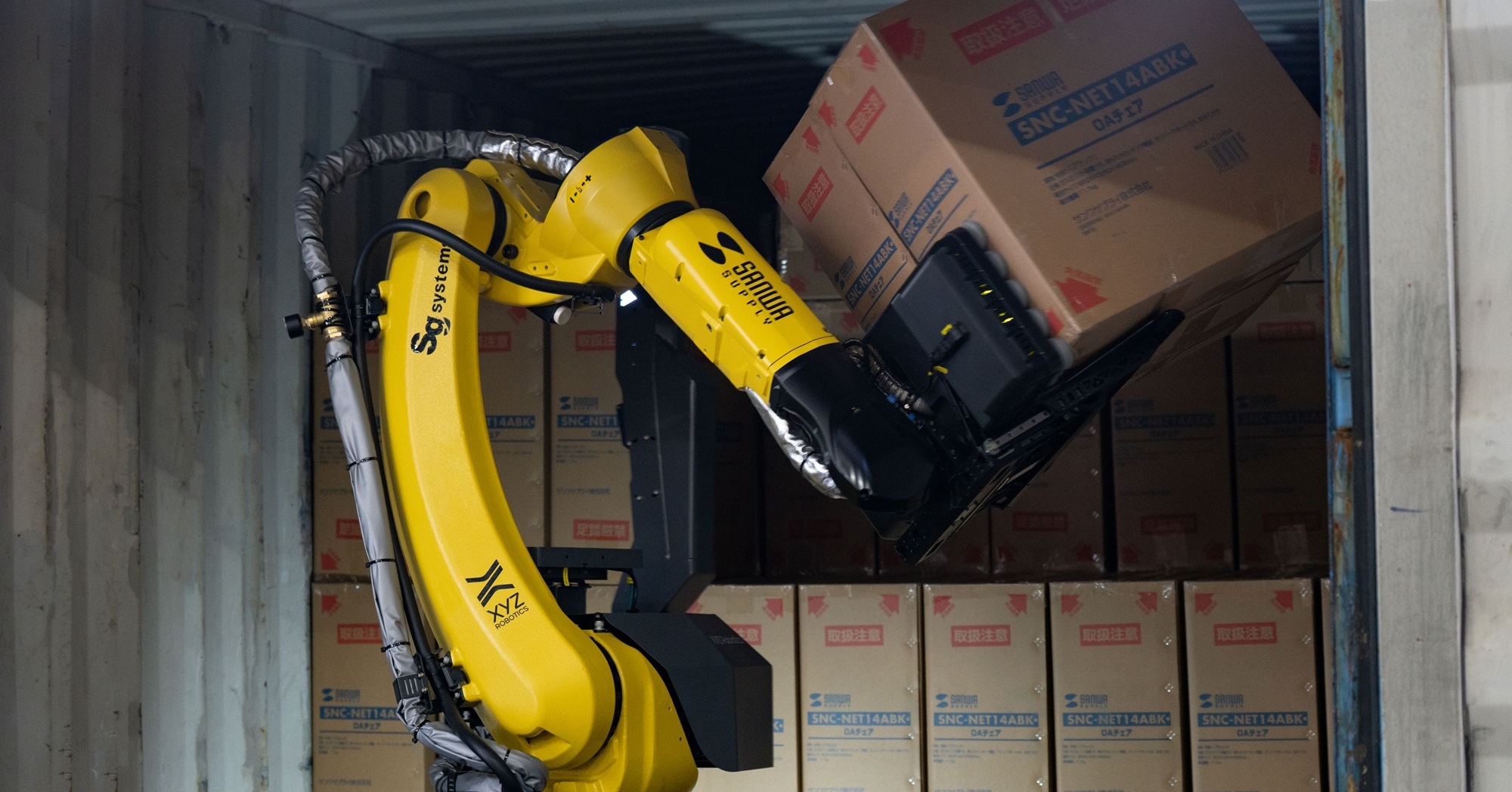
「夏場は50度以上のコンテナで作業」に対処 サンワサプライが西日本で荷降ろしロボット活用
サンワサプライが、物流倉庫における荷降ろし作業の自動化と労働環境の改善を目的に、AI搭載のコンテナ向け荷降ろしロボット「RockyOne」を採用した。5月から同社の西日本物流センターで運用を開始している。

“中国ヒューマノイド革命”はなぜ起きた、異業種や大手テックが動かす市場の今
中国のヒューマノイドロボット市場は、劇的なパラダイムシフトの渦中にある。出荷台数は前年比約7倍、世界シェアは8割に達し、異業種企業の参入で本体企業数は倍増した。野村総合研究所の李智慧氏による、量産化フェーズへ突入した中国市場の急成長を支えるマクロ動向の解説を紹介する。
PhysDrift: ヒューマノイドの共同音声モーション生成における身体のギャップを埋める
ヒューマノイドロボットは、表現力豊かで音声に合わせて動作するだけでなく、実施形態の制約の下で物理的に実行可能な同時音声動作を必要とします。既存の同時音声生成パイプラインは主に人間中心です。モーションは最初に SMPL-X などの人体表現で生成され、その後人型ロボットに再ターゲットされます。この研究では、このパラダイムにおける基本的な実施形態のギャップを特定します。つまり、人間の動作多様体と人型の実施形態の制約との間の不一致により、動作の伝達と物理的な実行中に実施形態の一貫性が損なわれるということです。広範な分析を通じて、リターゲットは粗い動きのセマンティクスを維持できるものの、動きの多様性を大幅に圧縮し、韻律と動きの同期を弱め、表現力豊かなヒューマノイドの動作を制限することを示しました。この問題に対処するために、我々はまず、リターゲティング中の運動学的実現可能性と音声と動作の時間的整合を共同で最適化する、韻律を保存するヒューマノイド動作キュレーションフレームワークである IK-EER を提案します。厳選されたロボットネイティブのモーションデータセットに基づいて、中間の人体の表現に依存せずに音声から実行可能なヒューマノイド関節の軌道を直接予測する、実施形態を意識した同時音声モーション生成フレームワークである PhysDrift をさらに紹介します。従来の人間中心のパイプラインとは異なり、PhysDrift は、ロボットの動作ダイナミクスを安定させるために物理的正則化を組み込みながら、トレーニングと推論の両方を通じて実施形態の一貫性を維持します。広範な実験と現実世界のヒューマノイド展開により、実施形態を意識したロボットネイティブ生成により、音声と動作の整合性、物理的な妥当性、動作の滑らかさ、推論効率、およびリアルタイムのインタラクション能力が大幅に向上することが実証されました。
原文 (English)
PhysDrift: Bridging the Embodiment Gap in Humanoid Co-Speech Motion Generation
Humanoid robots require co-speech motions that are not only expressive and speech-aligned, but also physically executable under embodiment constraints. Existing co-speech generation pipelines are predominantly human-centric: motions are first generated in human-body representations such as SMPL-X and subsequently retargeted to humanoid robots. In this work, we identify a fundamental embodiment gap in this paradigm, where the mismatch between human motion manifolds and humanoid embodiment constraints disrupts embodiment consistency during motion transfer and physical execution. Through extensive analysis, we show that although retargeting can preserve coarse motion semantics, it significantly compresses motion diversity and weakens prosody-motion synchronization, limiting expressive humanoid behaviors. To address this problem, we first propose IK-EER, a prosody-preserving humanoid motion curation framework that jointly optimizes kinematic feasibility and speech-motion temporal alignment during retargeting. Building upon the curated robot-native motion dataset, we further introduce PhysDrift, an embodiment-aware co-speech motion generation framework that directly predicts executable humanoid joint trajectories from speech without relying on intermediate human-body representations. Unlike conventional human-centric pipelines, PhysDrift maintains embodiment consistency throughout both training and inference while incorporating physical regularization to stabilize robot motion dynamics. Extensive experiments and real-world humanoid deployment demonstrate that embodiment-aware robot-native generation substantially improves speech-motion alignment, physical plausibility, motion smoothness, inference efficiency, and real-time interaction capability.
ENPIRE: 現実世界でのエージェント ロボット ポリシーの自己改善
現実世界で器用なロボット操作を実現するには、人間の監視とアルゴリズム工学に大きく依存しており、これが一般的な物理的知性の追求において中心的なボトルネックとなります。新興のコーディング エージェントはアルゴリズム検索を自動化するコードを生成できますが、その成功は依然としてデジタル環境に限定されています。私たちは、ロボット研究を自動化するために欠けている抽象化は、現実世界のポリシー改善のための反復可能なフィードバック ループであると推測します。つまり、シーンをリセットし、ポリシーを実行し、結果を検証し、次の反復を改良するというものです。このギャップを埋めるために、コーディング エージェント用のハーネス フレームワークである ENPIRE を導入します。このフレームワークは、4 つのコア モジュールでこの物理フィードバック ルーチンをインスタンス化します。1 つは自動リセットと検証のための環境モジュール (EN)、ポリシーの改良を開始するポリシー改善モジュール (PI)、1 つまたは複数の物理ロボットを並行して動作させてポリシーを評価するロールアウト モジュール (R)、およびコーディング エージェントがログを分析し、文献を参照し、トレーニング インフラストラクチャと障害モードに対処するためのアルゴリズム コードを改善する進化モジュール (E) です。この閉ループ システムは、現実世界の操作学習を制御可能な最適化手順に変換し、人間の労力を最小限に抑えながら、トレーニング レシピとエージェントのバリエーション全体で公平なアブレーションを可能にします。 ENPIRE を活用することで、フロンティア コーディング エージェントはポリシーを自律的にトレーニングして、ピン ボックスの整理、結束バンドの締め付け、工具の使用などの困難で器用な操作タスクで 99% の成功率を達成できます。ロボット フリートにエージェント チームを派遣すると、このプロセスがさらに加速します。私たちの結果は、物理世界で自律的に進歩するロボット工学にコーディング エージェントを展開するための実用的でスケーラブルな道筋を示唆しています。
原文 (English)
ENPIRE: Agentic Robot Policy Self-Improvement in the Real World
Achieving dexterous robotic manipulation in the real world heavily relies on human supervision and algorithm engineering, which becomes a central bottleneck in the pursuit of general physical intelligence. Although emerging coding agents can generate code to automate algorithm search, their successes remain largely confined in digital environments. We conjecture that the missing abstraction to automate robotics research is a repeatable feedback loop for real-world policy improvement: reset the scene, execute a policy, verify the outcome, and refine the next iteration. To bridge this gap, we introduce ENPIRE, a harness framework for coding agents that instantiates this physical feedback routine with four core modules: an Environment module (EN) for automatic reset and verification, a Policy Improvement module (PI) that launches policy refinement, a Rollout module (R) to evaluate policies with one or multiple physical robots operating in parallel, and an Evolution module (E) in which coding agents analyze logs, consult literature, improve training infrastructure and algorithm code to address failure modes. This closed-loop system transforms real-world manipulation learning into a controllable optimization procedure, minimizing human effort while allowing fair ablations across training recipe and agent variants. Powered by ENPIRE, frontier coding agents can autonomously train a policy to achieve a 99% success rate on challenging, dexterous manipulation tasks, such as organizing a pin box, fastening a zip tie, and tool use, a process that further accelerates when we dispatch an agent team on a robot fleet. Our results suggest a practical and scalable path toward deploying coding agents to autonomously advancing robotics in the physical world.
人間の普遍的な把握
人間は物体を難なく掴むことができますが、多指ロボットはこのレベルの汎用性からは程遠いです。私たちは、ロボットが把握するデータの最も自然な情報源は、毎日何千もの物体を拾う人間からのものであると主張します。我々は、ステレオ カメラからキャプチャされた単一の RGB-D 画像内のユーザー指定のオブジェクトに対する人間の多様な把握を生成するフロー マッチング モデルである HUG を紹介します。スマート グラスを使用して、まず 1M-HUG を収集します。これは、1M フレーム (27.8 時間) にわたる人間の把握の自己中心的なデータセットであり、41 の建物にわたる 6,707 のオブジェクト インスタンスです。次に、人間の自然な握りの分布をモデル化するために、私たちの新しいフロー マッチング モデルは RGB と深度の観察を融合して、手首の移動、手首の回転、および MANO の手のポーズによってパラメータ化された握りを出力します。予測された掴みをさまざまなロボットハンドにリターゲットできるため、日常シーンでのゼロショット掴みが可能になります。評価を標準化するために、メートルスケールの 3D メッシュを使用して、5 つの幾何学的カテゴリとさまざまなサイズの 90 個の未確認オブジェクトからなる新しいシミュレートされたベンチマーク HUG-Bench を構築します。私たちは、複数のステレオカメラ、ロボットの実施形態、家庭環境にわたる HUG-Bench の 30 オブジェクト テスト セットで現実世界の HUG を評価します。 HUG は、当社の挑戦的なオブジェクト セットにおいて、最先端の把握ベースラインを +23% および +34% 上回っています。コード、データ、ベンチマーク、チェックポイント、およびインタラクティブなデモは、当社の Web サイト (https://grasping.io/) でリリースされています。
原文 (English)
Human Universal Grasping
Humans can grasp objects effortlessly, whereas multi-fingered robots are far from this level of generality. We argue that the most natural source of robot grasping data is from humans, who pick up thousands of objects every day. We present HUG, a flow-matching model that generates diverse human grasps for any user-specified object in a single RGB-D image captured from a stereo camera. Using smart glasses, we first collect 1M-HUGs, an egocentric dataset of human grasps spanning 1M frames (27.8 hrs) and 6,707 object instances across 41 buildings. Next, to model the distribution of natural human grasps, our novel flow-matching model fuses RGB and depth observations to output a grasp parameterized by wrist translation, wrist rotation, and MANO hand pose. Predicted grasps can be retargeted to various robot hands, enabling zero-shot grasping in everyday scenes. To standardize evaluation, we build a new simulated benchmark, HUG-Bench, of 90 unseen objects from five geometric categories and various sizes, with metric-scale 3D meshes. We evaluate HUG in the real world on the 30-object test set of HUG-Bench across multiple stereo cameras, robot embodiments, and household environments. HUG outperforms the state-of-the-art grasping baselines by +23% and +34% on our challenging object set. Code, data, benchmark, checkpoints, and an interactive demo are released on our website: https://grasping.io/
Physical Atari: ロボット上のリアルタイム強化学習のための堅牢でアクセスしやすいプラットフォーム
私たちは、Atari CX40+ コントローラーを作動させる Robotroller と呼ばれるロボットと、ゲーム フレームとアーケード学習環境からの報酬信号を画面上にレンダリングする Atari Devbox と呼ばれるデバイスを構築しました。 Robotroller と Atari Devbox は、既製のカメラとデスクトップ コンピューターとともに、物理世界で強化学習アルゴリズムを研究するために使用できるシステムを構成します。システム全体を物理アタリと呼びます。このペーパーでは、Physical Atari を堅牢でアクセスしやすいプラットフォームにするための重要な決定について詳しく説明します。システムを堅牢にするために、すべての動きがベアリングを介して行われるようにロボットローラーを設計し、摩耗を軽減しました。さらに、サーボの状態を高周波で監視し、応力を制限するために介入するソフトウェアも作成しました。システムを利用しやすくするために、家庭用 3D プリンタを使用して製造できる、手頃な価格の既製コンポーネントと部品を使用しました。 Physical Atari は 1,000 ドル未満で構築でき、数週間にわたるノンストップの強化学習実験で機械的な故障が発生することなく使用されています。私たちはこれを使用して、強化学習アルゴリズムがロボット上で直接学習できることを検証し、学習と展開の間の小さな分布の変化でさえポリシーのパフォーマンスを大幅に低下させる可能性があることを示しました。私たちの結果は、ロボットで優れたパフォーマンスを得るにはデバイス上の適応が重要であることを強調しています。
原文 (English)
Physical Atari: A Robust and Accessible Platform for Real-time Reinforcement Learning on Robots
We built a robot called the Robotroller that actuates an Atari CX40+ controller and a device called the Atari Devbox that renders the game frame and the reward signal from the Arcade Learning Environment on a screen. The Robotroller and the Atari Devbox, together with an off-the-shelf camera and a desktop computer, constitute a system that can be used to study reinforcement learning algorithms in the physical world. We call the full system Physical Atari. In this paper, we detail the key decisions that make Physical Atari a robust and accessible platform. To make the system robust, we designed the Robotroller so that all movement is done through bearings, which reduces wear. Additionally, we wrote software that monitors the state of the servos at a high frequency and intervenes to limit stress. To make the system accessible, we used affordable off-the-shelf components and parts that can be manufactured using consumer 3D printers. Physical Atari can be built for under $1,000 and has been used for weeks of non-stop reinforcement learning experiments without any mechanical failures. We used it to validate that reinforcement learning algorithms can learn directly on robots and show that even small distribution shifts between learning and deployment can significantly degrade the performance of policies. Our results underscore the importance of on-device adaptation for strong performance on robots.
遊び心のあるエージェントロボット学習
現在のエージェント ロボット システムは、実行可能な Code-as-Policy プログラムを作成し、フィードバックを観察し、複数の試行にわたって動作を修正することができますが、依然として主にタスク駆動型であり、再利用可能なスキルは明示的な指示の後にのみ獲得されます。私たちは、遊び心のあるエージェントロボット学習を研究しています。この学習では、身体化されたコーディングエージェントが、下流のタスクが到着する前に、継続的なスキル学習段階として自主的な遊びを使用します。プレイタイムのスキル習得のために設計されたロボット エージェント チームである RAT を紹介します。プレイ中に、RAT は新規でありながら学習可能な探索的タスクを提案し、ロボット コード ポリシーを計画および実行し、中間の進捗状況を確認し、失敗を診断し、高密度のステップ レベルのフィードバックで再試行し、成功した実行を永続的なコード スキル ライブラリに抽出します。テスト時に、エージェントはこの凍結されたライブラリから関連するスキルを再利用して、新しいタスクの解決に役立てます。 LIBERO-PRO と MolmoSpaces での実験では、遊びで学習したスキルが、ノープレイやランダムプレイのベースラインよりも保留された下流タスクを改善し、LIBERO-PRO と MolmoSpaces でそれぞれ CaP-Agent0 よりも 20.6 パーセント ポイントと 17.0 パーセント ポイント向上したことが示されています。さらに、学習したスキルをコンテキストに取得するだけで、他の推論時の Code-as-Policy エージェントに組み込むことができ、基礎となるモデルを微調整することなく、RoboSuite と現実世界の転送がそれぞれ 8.9 ポイントと 8.8 ポイント向上します。
原文 (English)
Playful Agentic Robot Learning
Current agentic robot systems can write executable Code-as-Policy programs, observe feedback, and revise behavior across multiple attempts, but they remain largely task-driven: reusable skills are acquired only after explicit instructions. We study Playful Agentic Robot Learning, where an embodied coding agent uses self-directed play as a continual skill-learning stage before downstream tasks arrive. We introduce RATs, Robotics Agent Teams designed for play-time skill acquisition. During play, RATs proposes novel yet learnable exploratory tasks, plans and executes robot-code policies, verifies intermediate progress, diagnoses failures, retries with dense, step-level feedback, and distills successful executions into a persistent code skill library. At test time, the agent reuses relevant skills from this frozen library to help solve new tasks. Experiments in LIBERO-PRO and MolmoSpaces show that play-learned skills improve held-out downstream tasks over no-play and random-play baselines, with 20.6 and 17.0 percentage-point gains over CaP-Agent0 on LIBERO-PRO and MolmoSpaces, respectively. Moreover, the learned skills can be plugged into other inference-time Code-as-Policy agents by simply retrieving them into the context, improving RoboSuite and real-world transfer by 8.9 and 8.8 points, respectively, without finetuning the underlying model.
デシジョン ツリー蒸留による学習済みマルチエージェント コミュニケーション ポリシーの正式な検証
マルチエージェント強化学習 (MARL) により、エージェントは緊急通信を通じて調整戦略を開発できますが、ニューラル ポリシーには、ドローンの群れや自律走行車群での安全性が重要なロボットの展開に必要な正式な安全性の保証がありません。我々は、ポリシー抽象化を通じて学習したマルチエージェント通信ポリシーの安全性を検証するための最初のエンドツーエンドフレームワークを提示します。ニューラルポリシーは解釈可能な決定ツリーに抽出され、その後正式に検証され、検証された安全性プロパティが元のネットワークに転送されることを経験的検証で確認します。当社の 4 段階のパイプラインは、エージェントの観察からのドメイン固有の特徴抽出、ニューラル ポリシーに対する 97.9% +/- 1.2% の忠実度を達成するデシジョン ツリーの蒸留、特徴と状態変数の完全な対応による PRISM 確率モデル チェッカー仕様への自動変換、和集合結合集約と経験的近傍モデリングによるペアごとの分解による確率的計算ツリー ロジック (PCTL) プロパティの構成検証で構成されます。 5 ~ 7 台のエージェントによるマルチドローン調整のためのベクトル量子化変分情報ボトルネック (VQ-VIB) ポリシーを評価し、安全性、生存性、および協力にわたる 18 の時相論理プロパティを検証し、5 つの安全しきい値すべてが満たされ、特性満足度 88.9% を達成しました (衝突確率 0.3% 対 しきい値 1%)。元のニューラル ポリシーのモンテカルロ検証により、検証された安全性特性が <=0.6 パーセンテージ ポイントの偏差 (95% CI) で移行することが確認されています。離散 VQ-VIB メッセージは、連続方式と比べて忠実度が +11.6 ~ +13.6 パーセントポイント向上し、3 ~ 4 倍高速な検証が可能になります。私たちのフレームワークは、抽出されたポリシー抽象化に対して経験的に検証された安全性検証を提供し、マルチロボット導入のための深い MARL と正式な安全性ワークフローの間の実用的な橋渡しとして機能します。
原文 (English)
Formal Verification of Learned Multi-Agent Communication Policies via Decision Tree Distillation
Multi-agent reinforcement learning (MARL) enables agents to develop coordination strategies through emergent communication, but neural policies lack the formal safety guarantees required for safety-critical robotic deployment in drone swarms and autonomous vehicle fleets. We present the first end-to-end framework for safety verification of learned multi-agent communication policies through policy abstraction: neural policies are distilled into interpretable decision trees, then formally verified, with empirical validation confirming that verified safety properties transfer to original networks. Our four-stage pipeline consists of domain-specific feature extraction from agent observations, decision tree distillation achieving 97.9% +/- 1.2% fidelity to neural policies, automated translation to PRISM probabilistic model checker specifications with complete feature-to-state-variable correspondence, and compositional verification of Probabilistic Computation Tree Logic (PCTL) properties via pairwise decomposition with union-bound aggregation and empirical neighbor modeling. Evaluating Vector-Quantized Variational Information Bottleneck (VQ-VIB) policies for multi-drone coordination with 5-7 agents, we verify 18 temporal logic properties across safety, liveness, and cooperation, achieving 88.9% property satisfaction with all five safety thresholds satisfied (0.3% collision probability vs. 1% threshold). Monte Carlo validation of original neural policies confirms that verified safety properties transfer with <=0.6 percentage-point deviation (95% CI). Discrete VQ-VIB messages provide +11.6 to +13.6 percentage-point fidelity advantages over continuous methods, enabling 3-4x faster verification. Our framework provides empirically validated safety verification for distilled policy abstractions, serving as a practical bridge between deep MARL and formal safety workflows for multi-robot deployment.
CTS-MoE: 知覚的移動のための専門家の混合による暗黙的な地形適応
不連続な地形(階段、隙間、障害物など)上での知覚的な脚の移動には、適応的な行動が必要です。これは、単一の保守的な歩行では、突然のトポロジーの変化に必要な予測的な操作を生み出すことができないためです。マルチタスクの強化学習として見られるこの問題は、共有と分離の間に緊張をもたらします。タスクは共通の移動ベースを使用しますが、報酬が矛盾するため、ポリシーは値の干渉を回避しながら動作を共有する必要があります。これまでの研究では、一枚岩のポリシーは専門性を犠牲にし、階層的なサブポリシーは移行や目に見えない領域にわたる一般化を犠牲にして、片面のみを扱っていました。我々は、専門家の高密度混合アクターと認識ベースのゲーティングを組み合わせて共有行動を構成し、タスク固有の価値観を持つ複数の批評家を組み合わせて干渉を防止する CTS-MoE を提案します。このモデルは、部分的な可観測性を処理し、逐次抽出を回避する単一ステージの教師と生徒の同時セットアップでエンドツーエンドでトレーニングされ、タスク ラベルはトレーニング中にのみ使用されます。導入時には、ルーティングは知覚のみに依存するため、高レベルのセレクターや地形分類子を使用せずに地形適応が可能になります。シミュレーションにおける Unitree Go1 と、目に見える地形と見えない地形にわたるハードウェアでの実験では、モノリシック ベースラインよりも追跡エラーが低く、成功率が高い、タスク認識型の特化が示されています。プロジェクト Web サイト: https://cts-moe.github.io/ 。
原文 (English)
CTS-MoE: Implicit Terrain Adaptation via Mixture-of-Experts for Perceptive Locomotion
Perceptive legged locomotion over discontinuous terrain (e.g., stairs, gaps, and obstacles) requires adaptive behavior, as a single conservative gait cannot produce the anticipatory maneuvers needed for abrupt topology changes. Cast as multi-task reinforcement learning, this problem introduces a tension between sharing and separation. Tasks use a common locomotion base but have conflicting rewards, so a policy must share behavior while avoiding value interference. Prior work addresses only one side, with monolithic policies sacrificing specialization and hierarchical sub-policies sacrificing generalization across transitions and unseen terrain. We propose CTS-MoE, which combines a dense mixture-of-experts actor with perception-based gating to compose shared behaviors and a multi-critic with task-specific value heads to prevent interference. The model is trained end-to-end in a single-stage concurrent teacher-student setup that handles partial observability and avoids sequential distillation, with task labels used only during training. At deployment, routing depends solely on perception, allowing terrain adaptation without a high-level selector or terrain classifier. Experiments on a Unitree Go1 in simulation and on hardware across seen and unseen terrains show task-aware specialization, with lower tracking error and higher success rates than monolithic baselines. Project Website: https://cts-moe.github.io/ .
ロボットの発達運動学習のための双方向個別指導: 共同開発されたインタラクションダイナミクスが安定した学習をサポート
乳児は、養育者との密な交流を通じて運動能力を発達させることがよく知られています。このような社会的相互作用は人間の発達にとって重要ですが、ロボットの運動技能学習は、ロボットが家庭教師から受動的にデモンストレーションを受ける一方向のプロセスとして扱われることがよくあります。これは、社会的相互作用の重要な特性を見落としています。つまり、社会的相互作用は本質的に双方向であり、講師と学習者が動的にお互いに適応します。このような相互作用では、ロボットの過去の経験が、共同開発される軌道のダイナミクスを形作る事前の制約として機能する可能性があります。私たちは、双方向の個別指導では、そのような制約によって、行動の一貫性を維持し、一般化をサポートする一貫した行動パターンの形成を導くことができますが、一方、一方向の相互作用にはそのような制約が欠けており、より広範囲で一貫性の低い行動パターンが生じるのではないかと仮説を立てています。この仮説を検証するために、私たちは物体操作タスクを実行する物理的なヒューマノイド ロボットを使用して 2 つの実験を実施しました。1 つは人間とロボットの相互作用を伴うもので、もう 1 つは、より制御された条件下で同様の効果が現れるかどうかを調べるために設計された適応介入メカニズムを介して実際のロボットと対話する AI 家庭教師を使用するものです。私たちは、生成再生機能を拡張した自由エネルギー原理ベースのニューラル ネットワークを使用して発達学習フレームワークを実装します。これは、単一の個別指導エピソードからの安定したシーケンスごとの学習をサポートします。どちらの設定でも、双方向の個別指導により一貫した行動と段階ごとの一般化が促進され、ロボットが必要とする講師の指導は徐々に少なくなりました。これらの結果は、双方向の個別指導が、身体化された社会に根ざしたアプローチとして、ロボットの発達的な運動学習に効果的な足場を提供することを示唆しています。
原文 (English)
Bidirectional Tutoring for Developmental Motor Learning in Robots: Co-Developed Interaction Dynamics Support Stable Learning
Infants are well known to develop their motor skills through dense interaction with caregivers. Although such social interaction is crucial for human development, motor-skill learning in robots is often treated as a unidirectional process in which robots passively receive demonstrations from tutors. This overlooks a key property of social interaction: it is inherently bidirectional, with tutor and learner dynamically adapting to each other. In such interactions, the robot's past experiences may function as prior constraints that shape the dynamics of their co-developed trajectories. We hypothesize that bidirectional tutoring allows such constraints to guide the formation of consistent behavioral patterns that preserve behavioral coherence and support generalization, whereas unidirectional interaction lacks such constraints and leads to broader, less consistent behavioral patterns. To examine this hypothesis, we conducted two experiments with a physical humanoid robot performing an object manipulation task: one involving human-robot interaction and another employing an AI tutor interacting with the real robot through an adaptive intervention mechanism designed to examine whether similar effects would emerge under more controlled conditions. We implement the developmental learning framework using a free-energy-principle-based neural network extended with generative replay, which supports stable sequence-by-sequence learning from single tutored episodes. Across both settings, bidirectional tutoring fostered consistent behaviors and stage-wise generalization, while the robot gradually required less tutor guidance. These results suggest that bidirectional tutoring, as an embodied and socially grounded approach, provides an effective scaffold for developmental motor learning in robots.
VOiLA: POMDP エージェントの学習された拡散モデルを使用したベクトル化されたオンライン プランニング
不確実性の下で計画を立てることは、自律ロボットにとって不可欠な機能です。 Partially Observable Markov Decision Process (POMDP) は、このような機能のための強力なフレームワークを提供します。 POMDP ベースの計画は大幅に進歩しましたが、忠実な POMDP モデルを取得することが難しいため、現実世界の問題への適用は制限されることがよくあります。不確実性の下でオンライン計画を立てるためにタスクに依存しない POMDP モデルを学習するフレームワークである、POMDP エージェント向け学習拡散モデルを使用したベクトル化オンライン計画 (VOiLA) を紹介します。 VOiLA は、条件付き拡散モデルを使用して遷移および観測サンプラーを学習し、粒子ベースの信念更新のための観測尤度モデルを学習します。効率的なオンライン プランニングを可能にするために、拡散サンプラーはコンパクトなフィードフォワード ジェネレーターに抽出され、GPU 並列化を活用するように設計されたオンライン POMDP プランナーである Vectorized Online POMDP Planner (VOPP) と統合されています。実験結果は、蒸留戦略によりサンプリング コストが最大 3 桁近く削減され、学習された生成 POMDP モデルがオンライン プランニングに実用的になることを示しています。 3 つのベンチマーク問題で VOiLA を評価したところ、VOiLA は 10% 未満のトレーニング データを使用しながら、Recurrent Soft Actor Critic と同等以上のパフォーマンスを達成し、目に見えない環境構成に対してはるかに優れた一般化を実現していることが示されています。物理的なロボットの評価では、VOiLA がシミュレートされたデータのみを使用して学習したモデルを使用し、10 回中 10 回の実行でタスクを正常に完了するポリシーを生成していることが示されています。
原文 (English)
VOiLA: Vectorized Online Planning with Learned Diffusion Model for POMDP Agents
Planning under uncertainty is an essential capability for autonomous robots. The Partially Observable Markov Decision Process (POMDP) provides a powerful framework for such a capability. Although POMDP-based planning has advanced significantly, its application to real-world problems is often limited by the difficulty of obtaining faithful POMDP models. We present Vectorized Online planning wIth Learned diffusion model for POMDP Agents (VOiLA), a framework that learns task-agnostic POMDP models for online planning under uncertainty. VOiLA learns transition and observation samplers using conditional diffusion models and learns observation-likelihood models for particle-based belief updates. To enable efficient online planning, the diffusion samplers are distilled into compact feedforward generators and integrated with Vectorized Online POMDP Planner (VOPP), an online POMDP planner designed to leverage GPU parallelization. Experimental results indicate the distillation strategy reduces sampling cost by up to nearly three orders of magnitude, making learned generative POMDP models practical for online planning. Evaluation of VOiLA on three benchmark problems indicate that VOiLA achieves equal or better performance than Recurrent Soft Actor Critic while using less than 10% training data, and generalizes much better to unseen environment configurations. Physical robot evaluation indicates VOiLA uses the models learned using only simulated data and generates a policy that successfully accomplish the task in 10 of 10 runs.
時間的自己模倣学習
報酬形成でトレーニングされた長期的なロボット操作ポリシーは、非効率的なインタラクションを通じて高密度な報酬を活用することができますが、稀な効率的な行動はトレーニング中に忘れられる可能性があります。私たちは、時間効率自体が、強化学習のための自己監視の強力な、しかし十分に活用されていないソースを提供すると主張します。時間的自己模倣学習 (TSIL) を紹介します。これは、学習中に生成された時間的に効率的な成功軌道をマイニングし、将来のポリシー改善のために再利用可能な監視に変換する強化学習フレームワークです。 TSIL は、効率重視の自己模倣学習を通じて効率的な動作を保存および再生しながら、高速成功軌道から導出された構成条件付き適応時間目標を使用して学習を段階的に改良します。 TSIL は、15 の異なる長期的操作タスクにわたって、学習効率、タスク完了効率、迅速に成功した動作の再考、および不安定なトレーニング条件に対する堅牢性を一貫して向上させます。より広範に、私たちの結果は、成功した行動の時間構造自体が、手動で操作された報酬形成のみを超えた、強化学習のためのスケーラブルな自己監視信号を提供することを示唆しています。
原文 (English)
Temporal Self-Imitation Learning
Long-horizon robot manipulation policies trained with reward shaping can still exploit dense rewards through inefficient interaction, while rare efficient behaviors may be forgotten during training. We argue that temporal efficiency itself provides a powerful and underutilized source of self-supervision for reinforcement learning. We introduce Temporal Self-Imitation Learning (TSIL), a reinforcement learning framework that mines temporally efficient successful trajectories generated during learning and converts them into reusable supervision for future policy improvement. TSIL progressively refines learning using configuration-conditioned adaptive temporal targets derived from fast successful trajectories, while preserving and replaying efficient behaviors through efficiency-weighted self-imitation learning. Across 15 distinct long-horizon manipulation tasks, TSIL consistently improves learning efficiency, task-completion efficiency, revisitation of fast successful behaviors, and robustness to unstable training conditions. More broadly, our results suggest that the temporal structure of successful behavior itself provides a scalable self-supervisory signal for reinforcement learning beyond manually engineered reward shaping alone.
ヒューマノイド ロボティクスのデータ標準: 物理 AI に不足しているインフラストラクチャ
ヒューマノイド ロボットの拡張性は、モデルやハードウェアだけでなく、ロボット、タスク、組織、時間にわたって物理的な経験を蓄積できるかどうかにも依存します。この記事は、ISO/TC 299/WG 16 内の ISO/WD 26264-1、ヒューマノイド ロボット データセット -- パート 1: 一般要件の開発における著者の取り組みに基づいて、データ標準が物理 AI の基礎インフラになりつつあると主張します。私たちは 3 つの洞察を開発します。まず、ヒューマノイド ロボットのデータは具体化されたインタラクション データであり、孤立したデジタル サンプルのコレクションではありません。有用なデータセットは、ロボットの本体、アクション、タスク、シーン、実行トレース、および結果の間の関係を保存する必要があります。第 2 に、その値は物理的なコヒーレンスに依存します。マルチモーダル ストリームは、タイミング、座標フレーム、キャリブレーション、運動学、単位、および同期の仮定が検査可能な場合にのみ再利用可能です。 3 番目に、主なボトルネックはデータの不足だけでなく、高い収集コスト、データのサイロ化、一貫性のない評価によって引き起こされる非累積データです。私たちは、ヒューマノイドロボットのデータ標準が、具体化されたエクスペリエンスを解釈可能、共有可能、追跡可能、再利用可能にすることで、これらのボトルネックに対処すると主張します。一般的な標準は、ライフサイクル管理、メタデータ、来歴、品質、バージョン管理、およびトレーサビリティのための水平インフラストラクチャを提供する必要がありますが、機能固有の部分では、操作、移動、人間とロボットの相互作用、認知、および将来のヒューマノイド機能のためのドメイン文法を定義する必要があります。 AI が画面から身体に移行するにつれて、データ標準はデジタル情報の整理から物理的な相互作用の構造へと進化する必要があります。
原文 (English)
Data Standards for Humanoid Robotics: The Missing Infrastructure for Physical AI
The scalability of humanoid robots will depend not only on models and hardware, but also on whether physical experience can accumulate across robots, tasks, organizations, and time. Drawing on the authors' work in developing ISO/WD 26264-1, Humanoid robot datasets -- Part 1: General requirements, within ISO/TC 299/WG 16, this article argues that data standards are becoming foundational infrastructure for Physical AI. We develop three insights. First, humanoid robot data is embodied interaction data, not a collection of isolated digital samples; a useful dataset must preserve the relationship among robot body, action, task, scene, execution trace, and outcome. Second, its value depends on physical coherence: multimodal streams are reusable only when timing, coordinate frames, calibration, kinematics, units, and synchronization assumptions remain inspectable. Third, the main bottleneck is not only data scarcity, but non-cumulative data caused by high collection costs, data silos, and inconsistent evaluation. We argue that humanoid robot data standards address these bottlenecks by making embodied experience interpretable, shareable, traceable, and reusable. A general standard should provide horizontal infrastructure for lifecycle management, metadata, provenance, quality, versioning, and traceability, while capability-specific parts should define domain grammar for manipulation, locomotion, human-robot interaction, cognition, and future humanoid capabilities. As AI moves from screens into bodies, data standards must evolve from organizing digital information to structuring physical interaction.
共同ポリシー: 音楽パフォーマンスのための応答性の高い人間とロボットの共創
芸術は長い間、人間の創造性の極めて重要な表現として存在してきました。身体化された人工知能は、身体化されていないデジタル コンテンツではなく、物理的なアクションを通じて生成モデルがその創造性に参加するためのルートを提供します。ロボットによる音楽の共同制作では、意味論的な音楽の理解をリアルタイムで物理的に実行可能なパフォーマンスに結び付けることが困難です。私たちは、意味論的な意図の基礎付け、制約された音楽のバリエーション、および視覚運動の実行を分離する、人間とロボットの音楽共創のためのフレームワークである Co-policy を紹介します。音楽セマンティクスを基礎付けるために、Co-policy は、事前推論セマンティック アンカーと微調整された Qwen-vl プランナー (F-Qwen) を使用して、音声、ライブ音楽シード、および視覚的観察を構造化された共創計画に変換します。低レイテンシの実行をサポートするために、Co-policy はガウス混合視覚モーター ポリシー (GMP) を導入します。これは、ターゲット ノートとビジュアル コンテキストを 1 回の順方向パスでマルチモーダル ロボット アクションにマッピングする条件付き混合密度ポリシーとして実装されます。ユーザーが指定したノートを単に再生するだけのロボット再生システムとは異なり、Co-policy は音楽的制約と物理的制約の両方の下で相補的な音楽応答を生成します。実際のロボットのチャイム実験、アブレーション、および専門家による評価では、拡散政策およびアブレートされたベースラインと比較して、意図の調整、実行精度、応答頻度が向上していることが示されており、身体化された人間と AI の共創の重要な要件として、物理的に根拠のあるアクションの生成がサポートされています。
原文 (English)
Co-policy: Responsive Human-Robot Co-Creation for Musical Performances
Art has long stood as a pivotal expression of human creativity. Embodied artificial intelligence offers a route for generative models to participate in that creativity through physical action rather than disembodied digital content. In robotic music co-creation, it is challenging to connect semantic musical understanding with real-time and physically executable performance. We present Co-policy, a framework for human-robot musical co-creation that separates semantic intent grounding, constrained musical variation, and visuomotor execution. To ground musical semantics, Co-policy uses pre-inference semantic anchors and a fine-tuned Qwen-vl planner (F-Qwen) to transform speech, live musical seeds, and visual observations into structured co-creation plans. To support low-latency execution, Co-policy introduces a Gaussian-Mixture Visuomotor Policy (GMP), implemented as a conditional mixture-density policy that maps target notes and visual context to multimodal robot actions in a single forward pass. Unlike robotic playback systems that merely reproduce user-specified notes, Co-policy generates complementary musical responses under both musical and physical constraints. Real-robot chime experiments, ablations, and expert evaluation show improved intent alignment, execution accuracy, and response frequency over diffusion-policy and ablated baselines, supporting physically grounded action generation as a key requirement for embodied human-AI co-creation.
Tri-Info: 情報理論による VLA モデルの一般化可能で解釈可能な故障予測
Vision-Language-Action(VLA)モデルは、多様なタスクにわたってますます導入されていますが、物理的な相互作用が取り返しのつかない害を引き起こす可能性があるブラックボックスのままであるため、一般化可能で解釈可能な障害検出が不可欠となっています。私たちは、ロールアウトの成功と失敗には、体系的に異なる情報理論的特徴があることが観察されています。これに基づいて、VLA 制御を閉ループ情報パイプラインとして形式化し、アクションが多様性を保ち、時間的に一貫性があり、状態遷移と結合しているかどうかを捕捉する三重情報理論 (Tri-Info) 信号を導き出します。 6 つの VLA モデルと 3 つのベンチマーク環境にわたって、Tri-Info はドメイン内の最も強力なベースラインと一致します。さらに、Tri-Info は再トレーニングすることなく、アーキテクチャ、環境、シミュレーションと現実のギャップを越えて転送し、以前の検出器が偶然に崩壊してしまうような現実世界のタスクで 83\% の精度に達します。これにより、Tri-Info は、強力なクロスドメイン一般化によって障害を検出するだけでなく、根本的な障害モードの解釈可能な診断も提供する、シンプルかつ強力な方法として確立されます。
原文 (English)
Tri-Info: Generalizable, Interpretable Failure Prediction for VLA Models via Information Theory
Vision-Language-Action (VLA) models are increasingly deployed across diverse tasks, yet they remain black boxes whose physical interactions can cause irreversible harm, making generalizable and interpretable failure detection essential. We observe that successful and failed rollouts carry systematically different information-theoretic signatures. Building on this, we formalize VLA control as a closed-loop information pipeline and derive the Triple Information-theoretic (Tri-Info) signals that capture whether actions remain diverse, temporally consistent, and coupled to state transitions. Across six VLA models and three benchmark environments, Tri-Info matches the strongest baselines in-domain. Moreover, Tri-Info transfers across architectures, environments, and the sim-to-real gap without retraining, reaching 83\% accuracy on real-world tasks where prior detectors collapse to chance. This establishes Tri-Info as a simple yet powerful method that not only detects failures with strong cross-domain generalization, but also delivers interpretable diagnostics of the underlying failure modes.
ロボットモバイルフルフィルメントシステムにおける効率的な経路探索のためのニューロモーフィック強化学習フレームワーク
動的な環境変化、限られたワークスペース、および厳しいリアルタイム制約により、ロボット モバイル フルフィルメント システム (RMFS) でのパスファインディングは、従来の検索ベースおよびルールベースの方法にとって困難な問題となっており、通常、計算の複雑性が高く、意思決定の待ち時間が長いという問題があります。強化学習 (RL) は強力な代替手段として登場しましたが、リソースに制約のあるハードウェア上で極めてエネルギー効率の高い学習済みポリシーを展開することは依然として課題です。我々は、完全精度の人工ニューラル ネットワーク (ANN) からニューロモーフィック チップまで、RL でトレーニングされたポリシーの高忠実度の展開を実現するエンドツーエンドのフレームワークである SDQN-RMFS を紹介します。このフレームワークは、まばらなイベントによってトリガーされた場合にのみ計算を行うことで、超低消費電力の RMFS パスファインディングを可能にします。当社のフルスタック パイプラインは次のように動作します。ANN ポリシーは、最初に衝突許容戦略を介して効率的にトレーニングされ、有益な軌道を高密度化してから、ハードラベル知識蒸留アプローチを介してスパイキング ニューラル ネットワーク (SNN) に変換されます。これにより、出力分布の不一致に効果的に対処し、ANN から SNN へのパイプライン全体でポリシー機能を維持しながら、推論レイテンシを大幅に短縮します。ハードウェア実験では、元のトレーニング済みポリシーと同等の意思決定品質を維持しながら、高性能 GPU ベースラインと比較して最大 11,281$\times$ のエネルギー節約とレイテンシのほぼ 2 倍の削減を実証しました。これらの結果は、大規模な RMFS 操作のための実用的でエネルギー持続可能な経路としての物理的神経形態推論を確立します。
原文 (English)
A Neuromorphic Reinforcement Learning Framework for Efficient Pathfinding in Robotic Mobile Fulfillment Systems
Dynamic environmental changes, confined workspaces, and stringent real-time constraints make pathfinding in Robotic Mobile Fulfillment Systems (RMFS) a challenging problem for conventional search- and rule-based methods, which typically suffer from high computational complexity and long decision latency. While reinforcement learning (RL) has emerged as a powerful alternative, deploying learned policies with extreme energy efficiency on resource-constrained hardware remains an open challenge. We present SDQN-RMFS, an end-to-end framework that achieves high-fidelity deployment of an RL-trained policy from a full-precision artificial neural network (ANN) through to a neuromorphic chip. By computing only when triggered by sparse events, this framework unlocks ultra-low-power RMFS pathfinding. Our full-stack pipeline operates as follows: an ANN policy is first efficiently trained via a collision-allowing strategy to densify informative trajectories, and then converted into a spiking neural network (SNN) via a hard-label knowledge distillation approach. This effectively addresses the output distribution mismatch, preserving policy capability across the ANN-to-SNN pipeline while substantially reducing inference latency. Hardware experiments demonstrate up to 11,281$\times$ energy savings and a nearly two-fold reduction in latency compared to a high-performance GPU baseline, while maintaining decision quality on par with the original trained policy. These results establish physical neuromorphic inference as a practical and energy-sustainable pathway for large-scale RMFS operations.
自然言語プロトコルをロボット実験プラットフォームにクロスモデル検証済み翻訳するためのデュアルエージェント フレームワーク
生物学的実験プロトコルは自然言語で記述されていますが、自動化システムは事前定義された制御コマンドに依存しているため、自律的な実行を制限するセマンティック ギャップが生じています。マイクロプレートベースの自動実験は、ウェルマッピング、サンプルと試薬の組み合わせ、反復配置、並行分注を同時に制御する必要があるため、特に困難です。この研究では、自然言語のマイクロプレートベースのプロトコルをロボット実験室プラットフォーム用の実行可能な制御コマンドに変換する、エージェントベースのプロトコル変換フレームワークを提案します。パーサー エージェントは自然言語プロトコルを構造化表現に形式化し、ルールベースのマッピング エンジンはロボット ラボ プラットフォームの操作上の制約を決定論的に組み込んでデバイス レベルの制御コマンドを生成します。異種 LLM 検証エージェントは、完全性、パラメータの精度、実行順序を検証し、エラーが検出されると構造化されたフィードバックによる自己修正ループをトリガーします。ランダムに選択された ELISA プロトコル上で 7 つのパーサーと 3 つのバリデーターが関与するスイープにより、モデルのスケールとバリデーターのタイプがクロスモデル検証における翻訳精度と合格率にどのように影響するかを評価します。精度と遅延のトレードオフは、提案されたフレームワークのルールベースのマッピングと LLM エンドツーエンドの直接マッピングを比較することによってさらに検証されます。最後に、マイクロプレートを使用したブラッドフォード アッセイベースのタンパク質定量化がロボット実験室プラットフォームで実証され、自然言語プロトコルから現実世界の実験までエンドツーエンドの自律実行が検証されました。提案されたフレームワークは、自然言語プロトコルとマイクロプレートベースの自動運転ラボの間の意味論的なギャップを狭めるための柔軟なアプローチを提供します。
原文 (English)
Dual-Agent Framework for Cross-Model Verified Translation of Natural-Language Protocols into Robotic Laboratory Platform
Biological experiment protocols are written in natural language, whereas automation systems rely on predefined control commands, creating a semantic gap that limits autonomous execution. Microplate-based automatic experiments are particularly challenging due to the need to simultaneously control well mapping, sample-reagent combinations, replicate placement, and parallel dispensing. This study proposes an agent-based protocol translation framework that converts natural-language microplate-based protocols into executable control commands for a robotic laboratory platform. A Parser Agent formalizes the natural-language protocol into a structured representation, and a rule-based mapping engine deterministically incorporates the operational constraints of the robotic laboratory platform to generate device-level control commands. A heterogeneous LLM Validation Agent verifies completeness, parameter accuracy, and execution order, and triggers a self-correction loop with structured feedback when errors are detected. A sweep involving 7 Parsers and 3 Validators on randomly selected ELISA protocols evaluates how model scale and Validator type affect translation accuracy and pass rates under cross-model verification. The accuracy-latency trade-off is further verified by comparing the rule-based mapping of the proposed framework with LLM end-to-end direct mapping. Finally, Bradford assay-based protein quantification using a microplate was demonstrated on a robotic laboratory platform, validating end-to-end autonomous execution from natural-language protocols to real-world experiments. The proposed framework provides a flexible approach to narrowing the semantic gap between natural-language protocols and microplate-based self-driving laboratories.
周波数を意識したフローマッチングにより、継続的かつ一貫したロボットアクションを生成
フロー マッチングは、拡散政策などの同様のアプローチと並んで、複雑でマルチモーダルなアクション分布をモデル化するための強力な表現力により、ロボット操作の標準パラダイムとして浮上しました。ただし、既存の方法は離散化されたアクションのチャンクに依存しているため、異種の制御周波数で収集されたデモンストレーションに対して脆弱であり、制御の安定性を低下させる時間的に一貫性のないアクションが発生する傾向があります。この論文では、継続的で時間的に一貫したアクションを出力する周波数認識フローマッチング (FAFM) を提案します。異種の周波数入力を処理するために、離散コサイン変換 (DCT) を使用して離散アクション シーケンスを周波数領域に変換し、結果の係数に対してフロー マッチングを実行し、コサイン基底拡張を介して連続アクションを再構築します。時間的に一貫したアクションを生成するには、一次時間導関数を正則化し、スムーズなアクションを促進します。これは、高頻度のエラーを抑制し、急激なアクションの変更を防ぐソボレフ タイプの制約に対応します。当社の FAFM はシンプルで、追加のネットワーク パラメータを導入せず、スタンドアロンのフロー マッチング ポリシーとビジョン言語アクション モデルに適用されます。合成玩具のベンチマーク、障害物回避、LapGym、および LIBERO にわたって、FAFM は成功率、マルチモーダル表現力、動きの滑らかさ、収束速度、機械的バイアスおよび混合周波数入力に対する堅牢性を向上させます。これらの利点は、現実世界の Franka ロボットに展開した場合でも一貫しています。コードは https://anonymous.4open.science/r/FAFM で入手できます。
原文 (English)
Frequency-Aware Flow Matching for Continuous and Consistent Robotic Action Generation
Flow matching has emerged as a standard paradigm for robotic manipulation owing to its strong expressive power for modelling complex, multimodal action distributions, alongside similar approaches like diffusion policy. However, existing methods rely on discretized action chunks, making them brittle to demonstrations collected at heterogeneous control frequencies and prone to temporally inconsistent actions that degrade control stability. In this paper, we propose Frequency-Aware Flow Matching (FAFM), which outputs continuous, temporally consistent actions. To handle heterogeneous frequency input, we transform discrete action sequences into the frequency domain with the discrete cosine transform (DCT), perform flow matching over the resulting coefficients, and reconstruct continuous actions via cosine basis expansion. To generate temporally consistent actions, we regularize the first-order temporal derivative to promote smooth actions. This corresponds to a Sobolev-type constraint that suppresses high-frequency errors and discourages abrupt action changes. Our FAFM is simple, introduces no additional network parameters and applies to standalone flow-matching policies and vision-language action models. Across synthetic toy benchmark, obstacle avoidance, LapGym, and LIBERO, FAFM improves success rates, multimodal expressivity, motion smoothness, convergence speed, robustness to mechanical bias and mixed-frequency input. These gains are consistent when deployed on a real-world Franka robot. Code available at https://anonymous.4open.science/r/FAFM.
HilDA: 自己監視型 LiDAR の事前トレーニングを促進するための拡散を使用した階層的蒸留
カメラから LiDAR への知識の蒸留に Vision Foundation Models (VFM) を活用することは、現実世界の自動運転 (AD) の膨大な幾何学的および運動学的多様性を表現するために必要な注釈付きデータの不足に対する有望な解決策を提供します。ただし、現在のアプローチは通常、VFM をブラックボックス教師として扱い、フレーム単位の特徴の類似性にのみ依存します。その結果、教師のレイヤーごとの意味構造とグローバル コンテキスト、さらには LiDAR シーケンスに固有の豊富な時空間情報が十分に活用されません。私たちは、運転タスクに必要なセマンティックな内容と幾何学的な場所をより適切に捕捉する、LiDAR バックボーン用の自己監視型事前トレーニング フレームワークである HilDA を提案します。 HilDA は、段階的なセマンティクスの調整のための多層蒸留と、シーンレベルのセマンティクスのためのグローバル コンテキストの蒸留を含む階層的蒸留を、時空間的一貫性を促進する時間占有拡散目標と組み合わせます。 HilDA で事前トレーニングされたモデルは、クロスモーダル蒸留ベンチマークで最先端の結果を達成し、3D オブジェクト検出、シーン フロー、セマンティック占有予測に関して事前の蒸留アプローチでトレーニングされたモデルよりも優れたパフォーマンスを発揮します。コードは https://maxiuw.github.io/hilda で入手できます。
原文 (English)
HilDA: Hierarchical Distillation with Diffusion for Advancing Self-Supervised LiDAR Pre-trainin
Leveraging Vision Foundation Models (VFMs) for camera-to-LiDAR knowledge distillation offers a promising solution to the scarcity of annotated data needed to represent the immense geometric and kinematic diversity of real-world autonomous driving (AD). However, current approaches typically treat VFMs as black-box teachers, relying exclusively on frame-wise feature similarity. Consequently, they do not fully exploit the teacher's layer-wise semantic structure and global context, as well as the rich spatiotemporal information inherent in LiDAR sequences. We propose HilDA, a self-supervised pretraining framework for LiDAR backbones that better captures the semantic what and geometric where needed for driving tasks. HilDA combines hierarchical distillation comprising multi-layer distillation for progressive semantic alignment and global context distillation for scene-level semantics, with a temporal occupancy diffusion objective promoting spatiotemporal consistency. Models pre-trained with HilDA achieve state-of-the-art results on cross-modal distillation benchmarks and outperform models trained via prior distillation approaches on 3D object detection, scene flow, and semantic occupancy prediction. Code available at: https://maxiuw.github.io/hilda.
FlowMaps: フローマッチングを使用した長期マルチモーダルオブジェクトダイナミクスのモデル化
3D シーンの空間的および時間的共同理解は、日常の家庭環境に導入されるロボットにとって重要な要件です。このようなエージェントは、空間レイアウトを理解してナビゲートするだけでなく、これらの空間が時間の経過とともにどのように進化するかを推論する必要があります。特に、人間は毎日物体と対話するため、環境全体で物体の位置が変化し、ロボットが現在の観察を以前に見た物体と確実に関連付けることが困難になります。ただし、これらの相互作用はランダムではありません。人間の習慣やルーチンは、オブジェクトの位置に時空間的に一貫したパターンを引き起こし、ロボットエージェントがそれを学習して、ナビゲーションなどの下流のタスクに利用できる可能性があります。この目的を達成するために、連続 3D 空間内の動的オブジェクトの将来の位置にわたるマルチモーダル分布を推定するための潜在フロー マッチング モデルである FlowMaps を導入します。 FlowMaps は、オブジェクト間の暗黙の依存関係とその時間的進化を学習することで、過去の人間のインタラクションを条件としたオブジェクトの位置の変化を予測し、同様のオブジェクト ルーチンを共有するこれまで見たことのない環境全体にわたる一般化をサポートします。このメソッドの有用性を実証するために、シミュレーション環境と現実世界の両方の環境で、ダウンストリームの動的オブジェクト ナビゲーション タスクに FlowMaps をデプロイします。 600 を超えるエピソードにわたって、FlowMaps は最先端のアプローチを上回っており、連続的でマルチモーダルな時空間分布を通じてオブジェクトのダイナミクスをモデリングすることで、変化する家庭環境におけるロボットの検索とナビゲーションが向上することが示されています。コードと追加資料は https://fra-tsuna.github.io/flowmaps/ で入手できます。
原文 (English)
FlowMaps: Modeling Long-Term Multimodal Object Dynamics with Flow Matching
Joint spatial and temporal understanding of 3D scenes is a crucial requirement for robots deployed in everyday household environments. Such agents must not only comprehend and navigate spatial layouts, but also reason about how these spaces evolve over time. In particular, humans interact with objects daily, causing them to change position throughout the environment and making it difficult for robots to reliably associate current observations with previously seen objects. However, these interactions are not random: human habits and routines induce spatio-temporally consistent patterns in object locations, which robotic agents can potentially learn and then exploit for downstream tasks such as navigation. To this end, we introduce FlowMaps, a latent flow matching model for estimating multimodal distributions over the future locations of dynamic objects in a continuous 3D space. By learning the implicit dependencies among objects and their temporal evolution, FlowMaps predicts likely changes in object locations conditioned on past human interactions, while supporting generalization across previously unseen environments that share similar object routines. To demonstrate the utility of this method, we deploy FlowMaps in a downstream dynamic Object Navigation task in both simulated and real-world environments. Across more than 600 episodes, FlowMaps outperforms state-of-the-art approaches, showing that modeling object dynamics through continuous, multimodal spatio-temporal distributions improves robotic search and navigation in changing household environments. Code and additional material is available at https://fra-tsuna.github.io/flowmaps/.
視覚-言語-行動モデルの微調整に必要なレイヤーは思ったよりも少ない
大規模なビデオ ロボット データセットで事前トレーニングされた Vision-Language-Action (VLA) モデルは、ロボット操作に革命をもたらしましたが、数十億のパラメーター アーキテクチャにより、下流の微調整やリアルタイム推論中に法外な計算負荷が課せられます。この研究では、これらの連続制御基盤ポリシー (pi_0、GR00T-N1.5 など) の非常に重要なアーキテクチャ上の特徴を明らかにします。つまり、多様な物理軌道でトレーニングされているにもかかわらず、レイヤーごとの表現の重大な冗長性を示します。これを利用するために、完全にトレーニング不要の構造圧縮パイプラインを導入し、最適化されたトークン削減や動的レイヤー セレクターを学習するためにフルスケールのモデルをロードする既存の方法の必要性を回避します。代わりに、Centered Kernel Alignment による単一のフォワード パスのみを使用して冗長レイヤー機能を特定し、ツインレイヤーを削除して、VLM バックボーンと継続的制御ポリシー ヘッドの両方でモデルの深さを最大 50% 永続的に圧縮します。この合理化されたアーキテクチャの下流での微調整により、フルスケールのベース モデルのパフォーマンスと同等またはそれを超えながら、トレーニング時間の 40 ~ 50% の削減とリアルタイム推論の最大 30% 高速化という二重の高速化のメリットがもたらされます。私たちは、3 つのシミュレーション ベンチマーク (LIBERO、RoboCasa、SimplerEnv) と、4 つのユニークなロボットの実施形態にわたる 10 の多様な現実世界の操作タスクにわたって、メソッドを包括的に検証します。これらの結果は、高度な VLA に必要な層が以前の想定よりも大幅に少なく、スケーラブルなロボット学習のための計算効率の高いパラダイムを提供することを証明しています。
原文 (English)
Finetuning Vision-Language-Action Models Requires Fewer Layers Than You Think
Vision-Language-Action (VLA) models pre-trained on massive video-robot datasets have revolutionized robotic manipulation, yet their multi-billion parameter architectures impose prohibitive computational burdens during downstream fine-tuning and real-time inference. In this work, we reveal a highly non-trivial architectural characteristic of these continuous control foundation policies (e.g., pi_0, GR00T-N1.5): despite being trained on diverse physical trajectories, they exhibit severe layer-wise representational redundancy. To exploit this, we introduce a structural compression pipeline that is entirely training-free, bypassing the need of existing methods to load full-scale models to learn optimized token reductions or dynamic layer selectors. Instead, using only a single forward pass via Centered Kernel Alignment to identify redundant layer features, we remove twin layers to permanently compress the model depth by up to 50% across both the VLM backbone and the continuous control policy head. Downstream fine-tuning of this streamlined architecture yields a dual acceleration benefit: a 40-50% reduction in training time and up to 30% faster real-time inference, while matching or exceeding full-scale base model performance. We comprehensively validate our method across three simulation benchmarks (LIBERO, RoboCasa, SimplerEnv) and 10 diverse real-world manipulation tasks across 4 unique robotic embodiments. These results prove that advanced VLAs require significantly fewer layers than previously assumed, offering a highly compute-efficient paradigm for scalable robot learning.
CRAX: Fast Safe Reinforcement Learning Benchmarking
Safety is a core concern for deploying reinforcement learning (RL) agents in real-world domains such as robotics and autonomous driving. Wh…
UniMM: A Unified Mixture Model Framework for Multi-Agent Simulation
Simulation plays a crucial role in assessing autonomous driving systems, where the generation of realistic multi-agent behaviors is a key a…
Critique of World Model
World Model, the algorithmic simulator of the real-world environment which biological agents experience and act upon, has been an emerging…
RoboSSM: Scalable In-context Imitation Learning via State-Space Models
In-context imitation learning (ICIL) enables robots to learn tasks from prompts consisting of just a handful of demonstrations. By eliminat…
Bring My Cup! Personalizing Vision-Language-Action Models with Visual Attentive Prompting
While Vision-Language-Action (VLA) models generalize well to generic instructions, they struggle with personalized commands such as "bring…
Movement Primitives in Robotics: A Comprehensive Survey
Biological systems exhibit a continuous stream of movements, consisting of sequential segments, that allow them to perform complex tasks in…
PiDR: Physics-Informed Inertial Dead Reckoning for Autonomous Platforms
A fundamental requirement for full autonomy is the ability to sustain accurate navigation in the absence of external data, such as GNSS sig…
Latent Gaussian Splatting for 4D Panoptic Occupancy Tracking
Capturing 4D spatiotemporal scene structure is crucial for the safe and reliable operation of robots in dynamic environments. However, exis…
Class-Incremental Motion Forecasting
Motion forecasting enables autonomous vehicles to anticipate scene evolution by predicting the future trajectories of dynamic agents. Howev…
Superhuman Safe and Agile Racing through Multi-Agent Reinforcement Learning
Autonomous systems have achieved superhuman performance in isolation or simulation, yet they remain brittle in shared, dynamic real-world s…
Any2Any: 人型全身追跡のための効率的な体外転送
全身追跡 (WBT) モデルは、ヒューマノイド ロボットの重要な基盤となっており、さまざまな動作を高い忠実度で模倣できるようになります。このようなモデルをゼロからトレーニングするには大規模なデータと計算が必要であり、新しいヒューマノイド プラットフォームへの迅速な展開にはコストがかかります。これにより、当然の疑問が生じます。事前トレーニングされた WBT モデルは、最小限の適応で複数の実施形態に移行できるでしょうか?この質問に答えるために、私たちは Any2Any を提案します。これは、既存の WBT スペシャリストを、少量のデータとコンピューティングだけで新しい人型の実施形態に効率的に移行するパラダイムです。 Any2Any は、まずソース ヒューマノイドとターゲット ヒューマノイドの間で運動学的な調整を実行し、事前トレーニング済みのソース ポリシーをターゲットの実施形態で有意義に再利用できるように、入力空間と出力空間を調整します。次に、Any2Any は、軽量のパラメータ効率微調整 (PEFT) コンポーネントを選択されたダイナミクスに敏感なモジュールに適用することによってダイナミクス適応を実行し、ターゲット ロボットへのターゲットを絞った適応を可能にしながら、有用な動作の事前分布を保存します。複数のヒューマノイド プラットフォームと事前トレーニングされたバックボーンに関する広範な実験により、Any2Any は、ゼロからトレーニングする場合と比較して、収束を大幅に加速し、トレーニング コストを削減しながら、競争力のあるまたは優れた追跡パフォーマンスを達成できることが示されています。特に、Any2Any は、完全なトレーニングに必要なコンピューティングとデータのわずか 1% を使用して、Unitree G1 で事前トレーニングされた Sonic モデルを LimX Oli および LimX Luna に転送することに成功しています。これらの結果は、事前訓練された WBT スペシャリストを実施形態間で効率的に再利用でき、新しいロボットに人型全身制御を導入するための拡張可能な道を提供することを示唆しています。
原文 (English)
Any2Any: Efficient Cross-Embodiment Transfer for Humanoid Whole-Body Tracking
Whole-body tracking (WBT) models have become a key foundation for humanoid robots, enabling them to imitate diverse motions with high fidelity. Training such models from scratch requires large-scale data and computation, making rapid deployment on new humanoid platforms costly. This raises a natural question: Can pretrained WBT models transfer across embodiments with minimal adaptation? To answer this question, we propose Any2Any, a paradigm that efficiently transfers an existing WBT specialist to a new humanoid embodiment with only a small amount of data and compute. Any2Any first performs kinematic alignment between source and target humanoids, aligning their input and output spaces so that the pretrained source policy can be meaningfully reused on the target embodiment.Any2Any then performs dynamics adaptation by applying lightweight parameter-efficient fine-tuning (PEFT) components to selected dynamics-sensitive modules, preserving useful behavioral priors while enabling targeted adaptation to the target robot. Extensive experiments on multiple humanoid platforms and pretrained backbones show that Any2Any substantially accelerates convergence and reduces training cost compared with training from scratch, while achieving competitive or superior tracking performance. Notably, using only 1% of the compute and data required for full training, Any2Any successfully transfers Sonic models pre-trained on Unitree G1 to LimX Oli and LimX Luna. These results suggest that pretrained WBT specialists can be efficiently reused across embodiments, providing a scalable path toward deploying humanoid whole-body control on new robots. More results and videos are available on our project page: https://any2any.top/.
統合された解釈可能な制御有効性学習と過作動航空機に対する非線形制御割り当て方法論
非線形ダイナミクスと複数のエフェクター間で生じる強い結合により、従来の線形制御割り当て手法の背後にある前提が損なわれます。飛行が非線形効果が支配的な領域に入ると、モデルの不一致が増加するため線形アロケーターの精度が低下し、その後飛行制御システムのパフォーマンスとロバスト性が低下します。高忠実度のオンボード モデルとブラック ボックス データ駆動型アプローチは、飛行エンベロープ全体で精度を回復できますが、それぞれリアルタイム割り当てには法外な計算負荷を課し、検証と故障診断に必要な解釈可能性を犠牲にします。この論文では、非線形ダイナミクスのスパース識別を使用して、代表的な飛行データから制御有効性マッピングの明示的な物理制約付き分析モデルを学習することで、これらの制限に対処します。結果として得られるマッピングはコンパクトで解釈可能であり、解析的な微分が可能であるため、オンボード モデルを必要とせずに、アクチュエータ ダイナミクスをさらに組み込んだ非線形ソルバー内での効率的な計算が可能になります。オンライン適応メカニズムは、予測残差を監視し、プラントの重大な変化が検出されたときにモデルを更新し、アクチュエータの故障やさまざまな動作条件下で適切な再構成を提供します。この方法論は、さまざまな積極的な操縦にわたって忠実度の高い非線形ベンチマーク航空機で評価され、確立されたベースラインと比較して計算コストを大幅に削減しながら、完全な非線形機内モデルに匹敵する精度を達成します。
原文 (English)
An integrated interpretable control effectiveness learning and nonlinear control allocation methodology for overactuated aircrafts
Nonlinear dynamics and the strong couplings that arise between multiple effectors undermine the assumptions behind conventional, linear control allocation techniques. When flight enters regimes where nonlinear effects dominate, linear allocators exhibit reduced accuracy due to increased model mismatch, which subsequently degrades performance and robustness of the flight control system. High fidelity onboard models and black box data driven approaches can recover accuracy across the flight envelope, but respectively impose computational burdens prohibitive for real time allocation and sacrifice the interpretability required for verification and fault diagnosis. This paper addresses these limitations by learning an explicit, physics constrained analytical model of the control effectiveness mapping from representative flight data using Sparse Identification of Nonlinear Dynamics. The resulting mapping is compact, interpretable, and admits analytical derivatives, enabling efficient computation within nonlinear solvers that additionally incorporate actuator dynamics, without requiring an onboard model. An online adaptation mechanism monitors prediction residuals and refreshes the model when significant plant changes are detected, providing graceful reconfiguration under actuator failures and varying operating conditions. The methodology is evaluated on a high fidelity nonlinear benchmark aircraft across a range of aggressive maneuvers, achieving accuracy comparable to a full nonlinear onboard model while substantially reducing computational cost relative to established baselines.
GMO傘下、Unitreeの国内正規代理店に 人型ロボの導入から保守まで一気通貫で支援
GMOインターネットグループ傘下で、ロボティクス事業などを手掛けるGMO AI&ロボティクス商事は、ロボット開発企業の中国Unitree Roboticsと日本国内正規代理店契約を締結したと発表した。
PhysDrift: ヒューマノイドの共同音声モーション生成における身体のギャップを埋める
ヒューマノイドロボットは、表現力豊かで音声に合わせて動作するだけでなく、実施形態の制約の下で物理的に実行可能な同時音声動作を必要とします。既存の同時音声生成パイプラインは主に人間中心です。モーションは最初に SMPL-X などの人体表現で生成され、その後人型ロボットに再ターゲットされます。この研究では、このパラダイムにおける基本的な実施形態のギャップを特定します。つまり、人間の動作多様体と人型の実施形態の制約との間の不一致により、動作の伝達と物理的な実行中に実施形態の一貫性が損なわれるということです。広範な分析を通じて、リターゲットは粗い動きのセマンティクスを維持できるものの、動きの多様性を大幅に圧縮し、韻律と動きの同期を弱め、表現力豊かなヒューマノイドの動作を制限することを示しました。この問題に対処するために、我々はまず、リターゲティング中の運動学的実現可能性と音声と動作の時間的整合を共同で最適化する、韻律を保存するヒューマノイド動作キュレーションフレームワークである IK-EER を提案します。厳選されたロボットネイティブのモーションデータセットに基づいて、中間の人体の表現に依存せずに音声から実行可能なヒューマノイド関節の軌道を直接予測する、実施形態を意識した同時音声モーション生成フレームワークである PhysDrift をさらに紹介します。従来の人間中心のパイプラインとは異なり、PhysDrift は、ロボットの動作ダイナミクスを安定させるために物理的正則化を組み込みながら、トレーニングと推論の両方を通じて実施形態の一貫性を維持します。広範な実験と現実世界のヒューマノイド展開により、実施形態を意識したロボットネイティブ生成により、音声と動作の整合性、物理的な妥当性、動作の滑らかさ、推論効率、およびリアルタイムのインタラクション能力が大幅に向上することが実証されました。
原文 (English)
PhysDrift: Bridging the Embodiment Gap in Humanoid Co-Speech Motion Generation
Humanoid robots require co-speech motions that are not only expressive and speech-aligned, but also physically executable under embodiment constraints. Existing co-speech generation pipelines are predominantly human-centric: motions are first generated in human-body representations such as SMPL-X and subsequently retargeted to humanoid robots. In this work, we identify a fundamental embodiment gap in this paradigm, where the mismatch between human motion manifolds and humanoid embodiment constraints disrupts embodiment consistency during motion transfer and physical execution. Through extensive analysis, we show that although retargeting can preserve coarse motion semantics, it significantly compresses motion diversity and weakens prosody-motion synchronization, limiting expressive humanoid behaviors. To address this problem, we first propose IK-EER, a prosody-preserving humanoid motion curation framework that jointly optimizes kinematic feasibility and speech-motion temporal alignment during retargeting. Building upon the curated robot-native motion dataset, we further introduce PhysDrift, an embodiment-aware co-speech motion generation framework that directly predicts executable humanoid joint trajectories from speech without relying on intermediate human-body representations. Unlike conventional human-centric pipelines, PhysDrift maintains embodiment consistency throughout both training and inference while incorporating physical regularization to stabilize robot motion dynamics. Extensive experiments and real-world humanoid deployment demonstrate that embodiment-aware robot-native generation substantially improves speech-motion alignment, physical plausibility, motion smoothness, inference efficiency, and real-time interaction capability.
ENPIRE: 現実世界でのエージェント ロボット ポリシーの自己改善
現実世界で器用なロボット操作を実現するには、人間の監視とアルゴリズム工学に大きく依存しており、これが一般的な物理的知性の追求において中心的なボトルネックとなります。新興のコーディング エージェントはアルゴリズム検索を自動化するコードを生成できますが、その成功は依然としてデジタル環境に限定されています。私たちは、ロボット研究を自動化するために欠けている抽象化は、現実世界のポリシー改善のための反復可能なフィードバック ループであると推測します。つまり、シーンをリセットし、ポリシーを実行し、結果を検証し、次の反復を改良するというものです。このギャップを埋めるために、コーディング エージェント用のハーネス フレームワークである ENPIRE を導入します。このフレームワークは、4 つのコア モジュールでこの物理フィードバック ルーチンをインスタンス化します。1 つは自動リセットと検証のための環境モジュール (EN)、ポリシーの改良を開始するポリシー改善モジュール (PI)、1 つまたは複数の物理ロボットを並行して動作させてポリシーを評価するロールアウト モジュール (R)、およびコーディング エージェントがログを分析し、文献を参照し、トレーニング インフラストラクチャと障害モードに対処するためのアルゴリズム コードを改善する進化モジュール (E) です。この閉ループ システムは、現実世界の操作学習を制御可能な最適化手順に変換し、人間の労力を最小限に抑えながら、トレーニング レシピとエージェントのバリエーション全体で公平なアブレーションを可能にします。 ENPIRE を活用することで、フロンティア コーディング エージェントはポリシーを自律的にトレーニングして、ピン ボックスの整理、結束バンドの締め付け、工具の使用などの困難で器用な操作タスクで 99% の成功率を達成できます。ロボット フリートにエージェント チームを派遣すると、このプロセスがさらに加速します。私たちの結果は、物理世界で自律的に進歩するロボット工学にコーディング エージェントを展開するための実用的でスケーラブルな道筋を示唆しています。
原文 (English)
ENPIRE: Agentic Robot Policy Self-Improvement in the Real World
Achieving dexterous robotic manipulation in the real world heavily relies on human supervision and algorithm engineering, which becomes a central bottleneck in the pursuit of general physical intelligence. Although emerging coding agents can generate code to automate algorithm search, their successes remain largely confined in digital environments. We conjecture that the missing abstraction to automate robotics research is a repeatable feedback loop for real-world policy improvement: reset the scene, execute a policy, verify the outcome, and refine the next iteration. To bridge this gap, we introduce ENPIRE, a harness framework for coding agents that instantiates this physical feedback routine with four core modules: an Environment module (EN) for automatic reset and verification, a Policy Improvement module (PI) that launches policy refinement, a Rollout module (R) to evaluate policies with one or multiple physical robots operating in parallel, and an Evolution module (E) in which coding agents analyze logs, consult literature, improve training infrastructure and algorithm code to address failure modes. This closed-loop system transforms real-world manipulation learning into a controllable optimization procedure, minimizing human effort while allowing fair ablations across training recipe and agent variants. Powered by ENPIRE, frontier coding agents can autonomously train a policy to achieve a 99% success rate on challenging, dexterous manipulation tasks, such as organizing a pin box, fastening a zip tie, and tool use, a process that further accelerates when we dispatch an agent team on a robot fleet. Our results suggest a practical and scalable path toward deploying coding agents to autonomously advancing robotics in the physical world.
人間の普遍的な把握
人間は物体を難なく掴むことができますが、多指ロボットはこのレベルの汎用性からは程遠いです。私たちは、ロボットが把握するデータの最も自然な情報源は、毎日何千もの物体を拾う人間からのものであると主張します。我々は、ステレオ カメラからキャプチャされた単一の RGB-D 画像内のユーザー指定のオブジェクトに対する人間の多様な把握を生成するフロー マッチング モデルである HUG を紹介します。スマート グラスを使用して、まず 1M-HUG を収集します。これは、1M フレーム (27.8 時間) にわたる人間の把握の自己中心的なデータセットであり、41 の建物にわたる 6,707 のオブジェクト インスタンスです。次に、人間の自然な握りの分布をモデル化するために、私たちの新しいフロー マッチング モデルは RGB と深度の観察を融合して、手首の移動、手首の回転、および MANO の手のポーズによってパラメータ化された握りを出力します。予測された掴みをさまざまなロボットハンドにリターゲットできるため、日常シーンでのゼロショット掴みが可能になります。評価を標準化するために、メートルスケールの 3D メッシュを使用して、5 つの幾何学的カテゴリとさまざまなサイズの 90 個の未確認オブジェクトからなる新しいシミュレートされたベンチマーク HUG-Bench を構築します。私たちは、複数のステレオカメラ、ロボットの実施形態、家庭環境にわたる HUG-Bench の 30 オブジェクト テスト セットで現実世界の HUG を評価します。 HUG は、当社の挑戦的なオブジェクト セットにおいて、最先端の把握ベースラインを +23% および +34% 上回っています。コード、データ、ベンチマーク、チェックポイント、およびインタラクティブなデモは、当社の Web サイト (https://grasping.io/) でリリースされています。
原文 (English)
Human Universal Grasping
Humans can grasp objects effortlessly, whereas multi-fingered robots are far from this level of generality. We argue that the most natural source of robot grasping data is from humans, who pick up thousands of objects every day. We present HUG, a flow-matching model that generates diverse human grasps for any user-specified object in a single RGB-D image captured from a stereo camera. Using smart glasses, we first collect 1M-HUGs, an egocentric dataset of human grasps spanning 1M frames (27.8 hrs) and 6,707 object instances across 41 buildings. Next, to model the distribution of natural human grasps, our novel flow-matching model fuses RGB and depth observations to output a grasp parameterized by wrist translation, wrist rotation, and MANO hand pose. Predicted grasps can be retargeted to various robot hands, enabling zero-shot grasping in everyday scenes. To standardize evaluation, we build a new simulated benchmark, HUG-Bench, of 90 unseen objects from five geometric categories and various sizes, with metric-scale 3D meshes. We evaluate HUG in the real world on the 30-object test set of HUG-Bench across multiple stereo cameras, robot embodiments, and household environments. HUG outperforms the state-of-the-art grasping baselines by +23% and +34% on our challenging object set. Code, data, benchmark, checkpoints, and an interactive demo are released on our website: https://grasping.io/
Physical Atari: ロボット上のリアルタイム強化学習のための堅牢でアクセスしやすいプラットフォーム
私たちは、Atari CX40+ コントローラーを作動させる Robotroller と呼ばれるロボットと、ゲーム フレームとアーケード学習環境からの報酬信号を画面上にレンダリングする Atari Devbox と呼ばれるデバイスを構築しました。 Robotroller と Atari Devbox は、既製のカメラとデスクトップ コンピューターとともに、物理世界で強化学習アルゴリズムを研究するために使用できるシステムを構成します。システム全体を物理アタリと呼びます。このペーパーでは、Physical Atari を堅牢でアクセスしやすいプラットフォームにするための重要な決定について詳しく説明します。システムを堅牢にするために、すべての動きがベアリングを介して行われるようにロボットローラーを設計し、摩耗を軽減しました。さらに、サーボの状態を高周波で監視し、応力を制限するために介入するソフトウェアも作成しました。システムを利用しやすくするために、家庭用 3D プリンタを使用して製造できる、手頃な価格の既製コンポーネントと部品を使用しました。 Physical Atari は 1,000 ドル未満で構築でき、数週間にわたるノンストップの強化学習実験で機械的な故障が発生することなく使用されています。私たちはこれを使用して、強化学習アルゴリズムがロボット上で直接学習できることを検証し、学習と展開の間の小さな分布の変化でさえポリシーのパフォーマンスを大幅に低下させる可能性があることを示しました。私たちの結果は、ロボットで優れたパフォーマンスを得るにはデバイス上の適応が重要であることを強調しています。
原文 (English)
Physical Atari: A Robust and Accessible Platform for Real-time Reinforcement Learning on Robots
We built a robot called the Robotroller that actuates an Atari CX40+ controller and a device called the Atari Devbox that renders the game frame and the reward signal from the Arcade Learning Environment on a screen. The Robotroller and the Atari Devbox, together with an off-the-shelf camera and a desktop computer, constitute a system that can be used to study reinforcement learning algorithms in the physical world. We call the full system Physical Atari. In this paper, we detail the key decisions that make Physical Atari a robust and accessible platform. To make the system robust, we designed the Robotroller so that all movement is done through bearings, which reduces wear. Additionally, we wrote software that monitors the state of the servos at a high frequency and intervenes to limit stress. To make the system accessible, we used affordable off-the-shelf components and parts that can be manufactured using consumer 3D printers. Physical Atari can be built for under $1,000 and has been used for weeks of non-stop reinforcement learning experiments without any mechanical failures. We used it to validate that reinforcement learning algorithms can learn directly on robots and show that even small distribution shifts between learning and deployment can significantly degrade the performance of policies. Our results underscore the importance of on-device adaptation for strong performance on robots.
遊び心のあるエージェントロボット学習
現在のエージェント ロボット システムは、実行可能な Code-as-Policy プログラムを作成し、フィードバックを観察し、複数の試行にわたって動作を修正することができますが、依然として主にタスク駆動型であり、再利用可能なスキルは明示的な指示の後にのみ獲得されます。私たちは、遊び心のあるエージェントロボット学習を研究しています。この学習では、身体化されたコーディングエージェントが、下流のタスクが到着する前に、継続的なスキル学習段階として自主的な遊びを使用します。プレイタイムのスキル習得のために設計されたロボット エージェント チームである RAT を紹介します。プレイ中に、RAT は新規でありながら学習可能な探索的タスクを提案し、ロボット コード ポリシーを計画および実行し、中間の進捗状況を確認し、失敗を診断し、高密度のステップ レベルのフィードバックで再試行し、成功した実行を永続的なコード スキル ライブラリに抽出します。テスト時に、エージェントはこの凍結されたライブラリから関連するスキルを再利用して、新しいタスクの解決に役立てます。 LIBERO-PRO と MolmoSpaces での実験では、遊びで学習したスキルが、ノープレイやランダムプレイのベースラインよりも保留された下流タスクを改善し、LIBERO-PRO と MolmoSpaces でそれぞれ CaP-Agent0 よりも 20.6 パーセント ポイントと 17.0 パーセント ポイント向上したことが示されています。さらに、学習したスキルをコンテキストに取得するだけで、他の推論時の Code-as-Policy エージェントに組み込むことができ、基礎となるモデルを微調整することなく、RoboSuite と現実世界の転送がそれぞれ 8.9 ポイントと 8.8 ポイント向上します。
原文 (English)
Playful Agentic Robot Learning
Current agentic robot systems can write executable Code-as-Policy programs, observe feedback, and revise behavior across multiple attempts, but they remain largely task-driven: reusable skills are acquired only after explicit instructions. We study Playful Agentic Robot Learning, where an embodied coding agent uses self-directed play as a continual skill-learning stage before downstream tasks arrive. We introduce RATs, Robotics Agent Teams designed for play-time skill acquisition. During play, RATs proposes novel yet learnable exploratory tasks, plans and executes robot-code policies, verifies intermediate progress, diagnoses failures, retries with dense, step-level feedback, and distills successful executions into a persistent code skill library. At test time, the agent reuses relevant skills from this frozen library to help solve new tasks. Experiments in LIBERO-PRO and MolmoSpaces show that play-learned skills improve held-out downstream tasks over no-play and random-play baselines, with 20.6 and 17.0 percentage-point gains over CaP-Agent0 on LIBERO-PRO and MolmoSpaces, respectively. Moreover, the learned skills can be plugged into other inference-time Code-as-Policy agents by simply retrieving them into the context, improving RoboSuite and real-world transfer by 8.9 and 8.8 points, respectively, without finetuning the underlying model.
デシジョン ツリー蒸留による学習済みマルチエージェント コミュニケーション ポリシーの正式な検証
マルチエージェント強化学習 (MARL) により、エージェントは緊急通信を通じて調整戦略を開発できますが、ニューラル ポリシーには、ドローンの群れや自律走行車群での安全性が重要なロボットの展開に必要な正式な安全性の保証がありません。我々は、ポリシー抽象化を通じて学習したマルチエージェント通信ポリシーの安全性を検証するための最初のエンドツーエンドフレームワークを提示します。ニューラルポリシーは解釈可能な決定ツリーに抽出され、その後正式に検証され、検証された安全性プロパティが元のネットワークに転送されることを経験的検証で確認します。当社の 4 段階のパイプラインは、エージェントの観察からのドメイン固有の特徴抽出、ニューラル ポリシーに対する 97.9% +/- 1.2% の忠実度を達成するデシジョン ツリーの蒸留、特徴と状態変数の完全な対応による PRISM 確率モデル チェッカー仕様への自動変換、和集合結合集約と経験的近傍モデリングによるペアごとの分解による確率的計算ツリー ロジック (PCTL) プロパティの構成検証で構成されます。 5 ~ 7 台のエージェントによるマルチドローン調整のためのベクトル量子化変分情報ボトルネック (VQ-VIB) ポリシーを評価し、安全性、生存性、および協力にわたる 18 の時相論理プロパティを検証し、5 つの安全しきい値すべてが満たされ、特性満足度 88.9% を達成しました (衝突確率 0.3% 対 しきい値 1%)。元のニューラル ポリシーのモンテカルロ検証により、検証された安全性特性が <=0.6 パーセンテージ ポイントの偏差 (95% CI) で移行することが確認されています。離散 VQ-VIB メッセージは、連続方式と比べて忠実度が +11.6 ~ +13.6 パーセントポイント向上し、3 ~ 4 倍高速な検証が可能になります。私たちのフレームワークは、抽出されたポリシー抽象化に対して経験的に検証された安全性検証を提供し、マルチロボット導入のための深い MARL と正式な安全性ワークフローの間の実用的な橋渡しとして機能します。
原文 (English)
Formal Verification of Learned Multi-Agent Communication Policies via Decision Tree Distillation
Multi-agent reinforcement learning (MARL) enables agents to develop coordination strategies through emergent communication, but neural policies lack the formal safety guarantees required for safety-critical robotic deployment in drone swarms and autonomous vehicle fleets. We present the first end-to-end framework for safety verification of learned multi-agent communication policies through policy abstraction: neural policies are distilled into interpretable decision trees, then formally verified, with empirical validation confirming that verified safety properties transfer to original networks. Our four-stage pipeline consists of domain-specific feature extraction from agent observations, decision tree distillation achieving 97.9% +/- 1.2% fidelity to neural policies, automated translation to PRISM probabilistic model checker specifications with complete feature-to-state-variable correspondence, and compositional verification of Probabilistic Computation Tree Logic (PCTL) properties via pairwise decomposition with union-bound aggregation and empirical neighbor modeling. Evaluating Vector-Quantized Variational Information Bottleneck (VQ-VIB) policies for multi-drone coordination with 5-7 agents, we verify 18 temporal logic properties across safety, liveness, and cooperation, achieving 88.9% property satisfaction with all five safety thresholds satisfied (0.3% collision probability vs. 1% threshold). Monte Carlo validation of original neural policies confirms that verified safety properties transfer with <=0.6 percentage-point deviation (95% CI). Discrete VQ-VIB messages provide +11.6 to +13.6 percentage-point fidelity advantages over continuous methods, enabling 3-4x faster verification. Our framework provides empirically validated safety verification for distilled policy abstractions, serving as a practical bridge between deep MARL and formal safety workflows for multi-robot deployment.
CTS-MoE: 知覚的移動のための専門家の混合による暗黙的な地形適応
不連続な地形(階段、隙間、障害物など)上での知覚的な脚の移動には、適応的な行動が必要です。これは、単一の保守的な歩行では、突然のトポロジーの変化に必要な予測的な操作を生み出すことができないためです。マルチタスクの強化学習として見られるこの問題は、共有と分離の間に緊張をもたらします。タスクは共通の移動ベースを使用しますが、報酬が矛盾するため、ポリシーは値の干渉を回避しながら動作を共有する必要があります。これまでの研究では、一枚岩のポリシーは専門性を犠牲にし、階層的なサブポリシーは移行や目に見えない領域にわたる一般化を犠牲にして、片面のみを扱っていました。我々は、専門家の高密度混合アクターと認識ベースのゲーティングを組み合わせて共有行動を構成し、タスク固有の価値観を持つ複数の批評家を組み合わせて干渉を防止する CTS-MoE を提案します。このモデルは、部分的な可観測性を処理し、逐次抽出を回避する単一ステージの教師と生徒の同時セットアップでエンドツーエンドでトレーニングされ、タスク ラベルはトレーニング中にのみ使用されます。導入時には、ルーティングは知覚のみに依存するため、高レベルのセレクターや地形分類子を使用せずに地形適応が可能になります。シミュレーションにおける Unitree Go1 と、目に見える地形と見えない地形にわたるハードウェアでの実験では、モノリシック ベースラインよりも追跡エラーが低く、成功率が高い、タスク認識型の特化が示されています。プロジェクト Web サイト: https://cts-moe.github.io/ 。
原文 (English)
CTS-MoE: Implicit Terrain Adaptation via Mixture-of-Experts for Perceptive Locomotion
Perceptive legged locomotion over discontinuous terrain (e.g., stairs, gaps, and obstacles) requires adaptive behavior, as a single conservative gait cannot produce the anticipatory maneuvers needed for abrupt topology changes. Cast as multi-task reinforcement learning, this problem introduces a tension between sharing and separation. Tasks use a common locomotion base but have conflicting rewards, so a policy must share behavior while avoiding value interference. Prior work addresses only one side, with monolithic policies sacrificing specialization and hierarchical sub-policies sacrificing generalization across transitions and unseen terrain. We propose CTS-MoE, which combines a dense mixture-of-experts actor with perception-based gating to compose shared behaviors and a multi-critic with task-specific value heads to prevent interference. The model is trained end-to-end in a single-stage concurrent teacher-student setup that handles partial observability and avoids sequential distillation, with task labels used only during training. At deployment, routing depends solely on perception, allowing terrain adaptation without a high-level selector or terrain classifier. Experiments on a Unitree Go1 in simulation and on hardware across seen and unseen terrains show task-aware specialization, with lower tracking error and higher success rates than monolithic baselines. Project Website: https://cts-moe.github.io/ .
ロボットの発達運動学習のための双方向個別指導: 共同開発されたインタラクションダイナミクスが安定した学習をサポート
乳児は、養育者との密な交流を通じて運動能力を発達させることがよく知られています。このような社会的相互作用は人間の発達にとって重要ですが、ロボットの運動技能学習は、ロボットが家庭教師から受動的にデモンストレーションを受ける一方向のプロセスとして扱われることがよくあります。これは、社会的相互作用の重要な特性を見落としています。つまり、社会的相互作用は本質的に双方向であり、講師と学習者が動的にお互いに適応します。このような相互作用では、ロボットの過去の経験が、共同開発される軌道のダイナミクスを形作る事前の制約として機能する可能性があります。私たちは、双方向の個別指導では、そのような制約によって、行動の一貫性を維持し、一般化をサポートする一貫した行動パターンの形成を導くことができますが、一方、一方向の相互作用にはそのような制約が欠けており、より広範囲で一貫性の低い行動パターンが生じるのではないかと仮説を立てています。この仮説を検証するために、私たちは物体操作タスクを実行する物理的なヒューマノイド ロボットを使用して 2 つの実験を実施しました。1 つは人間とロボットの相互作用を伴うもので、もう 1 つは、より制御された条件下で同様の効果が現れるかどうかを調べるために設計された適応介入メカニズムを介して実際のロボットと対話する AI 家庭教師を使用するものです。私たちは、生成再生機能を拡張した自由エネルギー原理ベースのニューラル ネットワークを使用して発達学習フレームワークを実装します。これは、単一の個別指導エピソードからの安定したシーケンスごとの学習をサポートします。どちらの設定でも、双方向の個別指導により一貫した行動と段階ごとの一般化が促進され、ロボットが必要とする講師の指導は徐々に少なくなりました。これらの結果は、双方向の個別指導が、身体化された社会に根ざしたアプローチとして、ロボットの発達的な運動学習に効果的な足場を提供することを示唆しています。
原文 (English)
Bidirectional Tutoring for Developmental Motor Learning in Robots: Co-Developed Interaction Dynamics Support Stable Learning
Infants are well known to develop their motor skills through dense interaction with caregivers. Although such social interaction is crucial for human development, motor-skill learning in robots is often treated as a unidirectional process in which robots passively receive demonstrations from tutors. This overlooks a key property of social interaction: it is inherently bidirectional, with tutor and learner dynamically adapting to each other. In such interactions, the robot's past experiences may function as prior constraints that shape the dynamics of their co-developed trajectories. We hypothesize that bidirectional tutoring allows such constraints to guide the formation of consistent behavioral patterns that preserve behavioral coherence and support generalization, whereas unidirectional interaction lacks such constraints and leads to broader, less consistent behavioral patterns. To examine this hypothesis, we conducted two experiments with a physical humanoid robot performing an object manipulation task: one involving human-robot interaction and another employing an AI tutor interacting with the real robot through an adaptive intervention mechanism designed to examine whether similar effects would emerge under more controlled conditions. We implement the developmental learning framework using a free-energy-principle-based neural network extended with generative replay, which supports stable sequence-by-sequence learning from single tutored episodes. Across both settings, bidirectional tutoring fostered consistent behaviors and stage-wise generalization, while the robot gradually required less tutor guidance. These results suggest that bidirectional tutoring, as an embodied and socially grounded approach, provides an effective scaffold for developmental motor learning in robots.
VOiLA: POMDP エージェントの学習された拡散モデルを使用したベクトル化されたオンライン プランニング
不確実性の下で計画を立てることは、自律ロボットにとって不可欠な機能です。 Partially Observable Markov Decision Process (POMDP) は、このような機能のための強力なフレームワークを提供します。 POMDP ベースの計画は大幅に進歩しましたが、忠実な POMDP モデルを取得することが難しいため、現実世界の問題への適用は制限されることがよくあります。不確実性の下でオンライン計画を立てるためにタスクに依存しない POMDP モデルを学習するフレームワークである、POMDP エージェント向け学習拡散モデルを使用したベクトル化オンライン計画 (VOiLA) を紹介します。 VOiLA は、条件付き拡散モデルを使用して遷移および観測サンプラーを学習し、粒子ベースの信念更新のための観測尤度モデルを学習します。効率的なオンライン プランニングを可能にするために、拡散サンプラーはコンパクトなフィードフォワード ジェネレーターに抽出され、GPU 並列化を活用するように設計されたオンライン POMDP プランナーである Vectorized Online POMDP Planner (VOPP) と統合されています。実験結果は、蒸留戦略によりサンプリング コストが最大 3 桁近く削減され、学習された生成 POMDP モデルがオンライン プランニングに実用的になることを示しています。 3 つのベンチマーク問題で VOiLA を評価したところ、VOiLA は 10% 未満のトレーニング データを使用しながら、Recurrent Soft Actor Critic と同等以上のパフォーマンスを達成し、目に見えない環境構成に対してはるかに優れた一般化を実現していることが示されています。物理的なロボットの評価では、VOiLA がシミュレートされたデータのみを使用して学習したモデルを使用し、10 回中 10 回の実行でタスクを正常に完了するポリシーを生成していることが示されています。
原文 (English)
VOiLA: Vectorized Online Planning with Learned Diffusion Model for POMDP Agents
Planning under uncertainty is an essential capability for autonomous robots. The Partially Observable Markov Decision Process (POMDP) provides a powerful framework for such a capability. Although POMDP-based planning has advanced significantly, its application to real-world problems is often limited by the difficulty of obtaining faithful POMDP models. We present Vectorized Online planning wIth Learned diffusion model for POMDP Agents (VOiLA), a framework that learns task-agnostic POMDP models for online planning under uncertainty. VOiLA learns transition and observation samplers using conditional diffusion models and learns observation-likelihood models for particle-based belief updates. To enable efficient online planning, the diffusion samplers are distilled into compact feedforward generators and integrated with Vectorized Online POMDP Planner (VOPP), an online POMDP planner designed to leverage GPU parallelization. Experimental results indicate the distillation strategy reduces sampling cost by up to nearly three orders of magnitude, making learned generative POMDP models practical for online planning. Evaluation of VOiLA on three benchmark problems indicate that VOiLA achieves equal or better performance than Recurrent Soft Actor Critic while using less than 10% training data, and generalizes much better to unseen environment configurations. Physical robot evaluation indicates VOiLA uses the models learned using only simulated data and generates a policy that successfully accomplish the task in 10 of 10 runs.
時間的自己模倣学習
報酬形成でトレーニングされた長期的なロボット操作ポリシーは、非効率的なインタラクションを通じて高密度な報酬を活用することができますが、稀な効率的な行動はトレーニング中に忘れられる可能性があります。私たちは、時間効率自体が、強化学習のための自己監視の強力な、しかし十分に活用されていないソースを提供すると主張します。時間的自己模倣学習 (TSIL) を紹介します。これは、学習中に生成された時間的に効率的な成功軌道をマイニングし、将来のポリシー改善のために再利用可能な監視に変換する強化学習フレームワークです。 TSIL は、効率重視の自己模倣学習を通じて効率的な動作を保存および再生しながら、高速成功軌道から導出された構成条件付き適応時間目標を使用して学習を段階的に改良します。 TSIL は、15 の異なる長期的操作タスクにわたって、学習効率、タスク完了効率、迅速に成功した動作の再考、および不安定なトレーニング条件に対する堅牢性を一貫して向上させます。より広範に、私たちの結果は、成功した行動の時間構造自体が、手動で操作された報酬形成のみを超えた、強化学習のためのスケーラブルな自己監視信号を提供することを示唆しています。
原文 (English)
Temporal Self-Imitation Learning
Long-horizon robot manipulation policies trained with reward shaping can still exploit dense rewards through inefficient interaction, while rare efficient behaviors may be forgotten during training. We argue that temporal efficiency itself provides a powerful and underutilized source of self-supervision for reinforcement learning. We introduce Temporal Self-Imitation Learning (TSIL), a reinforcement learning framework that mines temporally efficient successful trajectories generated during learning and converts them into reusable supervision for future policy improvement. TSIL progressively refines learning using configuration-conditioned adaptive temporal targets derived from fast successful trajectories, while preserving and replaying efficient behaviors through efficiency-weighted self-imitation learning. Across 15 distinct long-horizon manipulation tasks, TSIL consistently improves learning efficiency, task-completion efficiency, revisitation of fast successful behaviors, and robustness to unstable training conditions. More broadly, our results suggest that the temporal structure of successful behavior itself provides a scalable self-supervisory signal for reinforcement learning beyond manually engineered reward shaping alone.
ヒューマノイド ロボティクスのデータ標準: 物理 AI に不足しているインフラストラクチャ
ヒューマノイド ロボットの拡張性は、モデルやハードウェアだけでなく、ロボット、タスク、組織、時間にわたって物理的な経験を蓄積できるかどうかにも依存します。この記事は、ISO/TC 299/WG 16 内の ISO/WD 26264-1、ヒューマノイド ロボット データセット -- パート 1: 一般要件の開発における著者の取り組みに基づいて、データ標準が物理 AI の基礎インフラになりつつあると主張します。私たちは 3 つの洞察を開発します。まず、ヒューマノイド ロボットのデータは具体化されたインタラクション データであり、孤立したデジタル サンプルのコレクションではありません。有用なデータセットは、ロボットの本体、アクション、タスク、シーン、実行トレース、および結果の間の関係を保存する必要があります。第 2 に、その値は物理的なコヒーレンスに依存します。マルチモーダル ストリームは、タイミング、座標フレーム、キャリブレーション、運動学、単位、および同期の仮定が検査可能な場合にのみ再利用可能です。 3 番目に、主なボトルネックはデータの不足だけでなく、高い収集コスト、データのサイロ化、一貫性のない評価によって引き起こされる非累積データです。私たちは、ヒューマノイドロボットのデータ標準が、具体化されたエクスペリエンスを解釈可能、共有可能、追跡可能、再利用可能にすることで、これらのボトルネックに対処すると主張します。一般的な標準は、ライフサイクル管理、メタデータ、来歴、品質、バージョン管理、およびトレーサビリティのための水平インフラストラクチャを提供する必要がありますが、機能固有の部分では、操作、移動、人間とロボットの相互作用、認知、および将来のヒューマノイド機能のためのドメイン文法を定義する必要があります。 AI が画面から身体に移行するにつれて、データ標準はデジタル情報の整理から物理的な相互作用の構造へと進化する必要があります。
原文 (English)
Data Standards for Humanoid Robotics: The Missing Infrastructure for Physical AI
The scalability of humanoid robots will depend not only on models and hardware, but also on whether physical experience can accumulate across robots, tasks, organizations, and time. Drawing on the authors' work in developing ISO/WD 26264-1, Humanoid robot datasets -- Part 1: General requirements, within ISO/TC 299/WG 16, this article argues that data standards are becoming foundational infrastructure for Physical AI. We develop three insights. First, humanoid robot data is embodied interaction data, not a collection of isolated digital samples; a useful dataset must preserve the relationship among robot body, action, task, scene, execution trace, and outcome. Second, its value depends on physical coherence: multimodal streams are reusable only when timing, coordinate frames, calibration, kinematics, units, and synchronization assumptions remain inspectable. Third, the main bottleneck is not only data scarcity, but non-cumulative data caused by high collection costs, data silos, and inconsistent evaluation. We argue that humanoid robot data standards address these bottlenecks by making embodied experience interpretable, shareable, traceable, and reusable. A general standard should provide horizontal infrastructure for lifecycle management, metadata, provenance, quality, versioning, and traceability, while capability-specific parts should define domain grammar for manipulation, locomotion, human-robot interaction, cognition, and future humanoid capabilities. As AI moves from screens into bodies, data standards must evolve from organizing digital information to structuring physical interaction.
共同ポリシー: 音楽パフォーマンスのための応答性の高い人間とロボットの共創
芸術は長い間、人間の創造性の極めて重要な表現として存在してきました。身体化された人工知能は、身体化されていないデジタル コンテンツではなく、物理的なアクションを通じて生成モデルがその創造性に参加するためのルートを提供します。ロボットによる音楽の共同制作では、意味論的な音楽の理解をリアルタイムで物理的に実行可能なパフォーマンスに結び付けることが困難です。私たちは、意味論的な意図の基礎付け、制約された音楽のバリエーション、および視覚運動の実行を分離する、人間とロボットの音楽共創のためのフレームワークである Co-policy を紹介します。音楽セマンティクスを基礎付けるために、Co-policy は、事前推論セマンティック アンカーと微調整された Qwen-vl プランナー (F-Qwen) を使用して、音声、ライブ音楽シード、および視覚的観察を構造化された共創計画に変換します。低レイテンシの実行をサポートするために、Co-policy はガウス混合視覚モーター ポリシー (GMP) を導入します。これは、ターゲット ノートとビジュアル コンテキストを 1 回の順方向パスでマルチモーダル ロボット アクションにマッピングする条件付き混合密度ポリシーとして実装されます。ユーザーが指定したノートを単に再生するだけのロボット再生システムとは異なり、Co-policy は音楽的制約と物理的制約の両方の下で相補的な音楽応答を生成します。実際のロボットのチャイム実験、アブレーション、および専門家による評価では、拡散政策およびアブレートされたベースラインと比較して、意図の調整、実行精度、応答頻度が向上していることが示されており、身体化された人間と AI の共創の重要な要件として、物理的に根拠のあるアクションの生成がサポートされています。
原文 (English)
Co-policy: Responsive Human-Robot Co-Creation for Musical Performances
Art has long stood as a pivotal expression of human creativity. Embodied artificial intelligence offers a route for generative models to participate in that creativity through physical action rather than disembodied digital content. In robotic music co-creation, it is challenging to connect semantic musical understanding with real-time and physically executable performance. We present Co-policy, a framework for human-robot musical co-creation that separates semantic intent grounding, constrained musical variation, and visuomotor execution. To ground musical semantics, Co-policy uses pre-inference semantic anchors and a fine-tuned Qwen-vl planner (F-Qwen) to transform speech, live musical seeds, and visual observations into structured co-creation plans. To support low-latency execution, Co-policy introduces a Gaussian-Mixture Visuomotor Policy (GMP), implemented as a conditional mixture-density policy that maps target notes and visual context to multimodal robot actions in a single forward pass. Unlike robotic playback systems that merely reproduce user-specified notes, Co-policy generates complementary musical responses under both musical and physical constraints. Real-robot chime experiments, ablations, and expert evaluation show improved intent alignment, execution accuracy, and response frequency over diffusion-policy and ablated baselines, supporting physically grounded action generation as a key requirement for embodied human-AI co-creation.
Tri-Info: 情報理論による VLA モデルの一般化可能で解釈可能な故障予測
Vision-Language-Action(VLA)モデルは、多様なタスクにわたってますます導入されていますが、物理的な相互作用が取り返しのつかない害を引き起こす可能性があるブラックボックスのままであるため、一般化可能で解釈可能な障害検出が不可欠となっています。私たちは、ロールアウトの成功と失敗には、体系的に異なる情報理論的特徴があることが観察されています。これに基づいて、VLA 制御を閉ループ情報パイプラインとして形式化し、アクションが多様性を保ち、時間的に一貫性があり、状態遷移と結合しているかどうかを捕捉する三重情報理論 (Tri-Info) 信号を導き出します。 6 つの VLA モデルと 3 つのベンチマーク環境にわたって、Tri-Info はドメイン内の最も強力なベースラインと一致します。さらに、Tri-Info は再トレーニングすることなく、アーキテクチャ、環境、シミュレーションと現実のギャップを越えて転送し、以前の検出器が偶然に崩壊してしまうような現実世界のタスクで 83\% の精度に達します。これにより、Tri-Info は、強力なクロスドメイン一般化によって障害を検出するだけでなく、根本的な障害モードの解釈可能な診断も提供する、シンプルかつ強力な方法として確立されます。
原文 (English)
Tri-Info: Generalizable, Interpretable Failure Prediction for VLA Models via Information Theory
Vision-Language-Action (VLA) models are increasingly deployed across diverse tasks, yet they remain black boxes whose physical interactions can cause irreversible harm, making generalizable and interpretable failure detection essential. We observe that successful and failed rollouts carry systematically different information-theoretic signatures. Building on this, we formalize VLA control as a closed-loop information pipeline and derive the Triple Information-theoretic (Tri-Info) signals that capture whether actions remain diverse, temporally consistent, and coupled to state transitions. Across six VLA models and three benchmark environments, Tri-Info matches the strongest baselines in-domain. Moreover, Tri-Info transfers across architectures, environments, and the sim-to-real gap without retraining, reaching 83\% accuracy on real-world tasks where prior detectors collapse to chance. This establishes Tri-Info as a simple yet powerful method that not only detects failures with strong cross-domain generalization, but also delivers interpretable diagnostics of the underlying failure modes.
ロボットモバイルフルフィルメントシステムにおける効率的な経路探索のためのニューロモーフィック強化学習フレームワーク
動的な環境変化、限られたワークスペース、および厳しいリアルタイム制約により、ロボット モバイル フルフィルメント システム (RMFS) でのパスファインディングは、従来の検索ベースおよびルールベースの方法にとって困難な問題となっており、通常、計算の複雑性が高く、意思決定の待ち時間が長いという問題があります。強化学習 (RL) は強力な代替手段として登場しましたが、リソースに制約のあるハードウェア上で極めてエネルギー効率の高い学習済みポリシーを展開することは依然として課題です。我々は、完全精度の人工ニューラル ネットワーク (ANN) からニューロモーフィック チップまで、RL でトレーニングされたポリシーの高忠実度の展開を実現するエンドツーエンドのフレームワークである SDQN-RMFS を紹介します。このフレームワークは、まばらなイベントによってトリガーされた場合にのみ計算を行うことで、超低消費電力の RMFS パスファインディングを可能にします。当社のフルスタック パイプラインは次のように動作します。ANN ポリシーは、最初に衝突許容戦略を介して効率的にトレーニングされ、有益な軌道を高密度化してから、ハードラベル知識蒸留アプローチを介してスパイキング ニューラル ネットワーク (SNN) に変換されます。これにより、出力分布の不一致に効果的に対処し、ANN から SNN へのパイプライン全体でポリシー機能を維持しながら、推論レイテンシを大幅に短縮します。ハードウェア実験では、元のトレーニング済みポリシーと同等の意思決定品質を維持しながら、高性能 GPU ベースラインと比較して最大 11,281$\times$ のエネルギー節約とレイテンシのほぼ 2 倍の削減を実証しました。これらの結果は、大規模な RMFS 操作のための実用的でエネルギー持続可能な経路としての物理的神経形態推論を確立します。
原文 (English)
A Neuromorphic Reinforcement Learning Framework for Efficient Pathfinding in Robotic Mobile Fulfillment Systems
Dynamic environmental changes, confined workspaces, and stringent real-time constraints make pathfinding in Robotic Mobile Fulfillment Systems (RMFS) a challenging problem for conventional search- and rule-based methods, which typically suffer from high computational complexity and long decision latency. While reinforcement learning (RL) has emerged as a powerful alternative, deploying learned policies with extreme energy efficiency on resource-constrained hardware remains an open challenge. We present SDQN-RMFS, an end-to-end framework that achieves high-fidelity deployment of an RL-trained policy from a full-precision artificial neural network (ANN) through to a neuromorphic chip. By computing only when triggered by sparse events, this framework unlocks ultra-low-power RMFS pathfinding. Our full-stack pipeline operates as follows: an ANN policy is first efficiently trained via a collision-allowing strategy to densify informative trajectories, and then converted into a spiking neural network (SNN) via a hard-label knowledge distillation approach. This effectively addresses the output distribution mismatch, preserving policy capability across the ANN-to-SNN pipeline while substantially reducing inference latency. Hardware experiments demonstrate up to 11,281$\times$ energy savings and a nearly two-fold reduction in latency compared to a high-performance GPU baseline, while maintaining decision quality on par with the original trained policy. These results establish physical neuromorphic inference as a practical and energy-sustainable pathway for large-scale RMFS operations.
自然言語プロトコルをロボット実験プラットフォームにクロスモデル検証済み翻訳するためのデュアルエージェント フレームワーク
生物学的実験プロトコルは自然言語で記述されていますが、自動化システムは事前定義された制御コマンドに依存しているため、自律的な実行を制限するセマンティック ギャップが生じています。マイクロプレートベースの自動実験は、ウェルマッピング、サンプルと試薬の組み合わせ、反復配置、並行分注を同時に制御する必要があるため、特に困難です。この研究では、自然言語のマイクロプレートベースのプロトコルをロボット実験室プラットフォーム用の実行可能な制御コマンドに変換する、エージェントベースのプロトコル変換フレームワークを提案します。パーサー エージェントは自然言語プロトコルを構造化表現に形式化し、ルールベースのマッピング エンジンはロボット ラボ プラットフォームの操作上の制約を決定論的に組み込んでデバイス レベルの制御コマンドを生成します。異種 LLM 検証エージェントは、完全性、パラメータの精度、実行順序を検証し、エラーが検出されると構造化されたフィードバックによる自己修正ループをトリガーします。ランダムに選択された ELISA プロトコル上で 7 つのパーサーと 3 つのバリデーターが関与するスイープにより、モデルのスケールとバリデーターのタイプがクロスモデル検証における翻訳精度と合格率にどのように影響するかを評価します。精度と遅延のトレードオフは、提案されたフレームワークのルールベースのマッピングと LLM エンドツーエンドの直接マッピングを比較することによってさらに検証されます。最後に、マイクロプレートを使用したブラッドフォード アッセイベースのタンパク質定量化がロボット実験室プラットフォームで実証され、自然言語プロトコルから現実世界の実験までエンドツーエンドの自律実行が検証されました。提案されたフレームワークは、自然言語プロトコルとマイクロプレートベースの自動運転ラボの間の意味論的なギャップを狭めるための柔軟なアプローチを提供します。
原文 (English)
Dual-Agent Framework for Cross-Model Verified Translation of Natural-Language Protocols into Robotic Laboratory Platform
Biological experiment protocols are written in natural language, whereas automation systems rely on predefined control commands, creating a semantic gap that limits autonomous execution. Microplate-based automatic experiments are particularly challenging due to the need to simultaneously control well mapping, sample-reagent combinations, replicate placement, and parallel dispensing. This study proposes an agent-based protocol translation framework that converts natural-language microplate-based protocols into executable control commands for a robotic laboratory platform. A Parser Agent formalizes the natural-language protocol into a structured representation, and a rule-based mapping engine deterministically incorporates the operational constraints of the robotic laboratory platform to generate device-level control commands. A heterogeneous LLM Validation Agent verifies completeness, parameter accuracy, and execution order, and triggers a self-correction loop with structured feedback when errors are detected. A sweep involving 7 Parsers and 3 Validators on randomly selected ELISA protocols evaluates how model scale and Validator type affect translation accuracy and pass rates under cross-model verification. The accuracy-latency trade-off is further verified by comparing the rule-based mapping of the proposed framework with LLM end-to-end direct mapping. Finally, Bradford assay-based protein quantification using a microplate was demonstrated on a robotic laboratory platform, validating end-to-end autonomous execution from natural-language protocols to real-world experiments. The proposed framework provides a flexible approach to narrowing the semantic gap between natural-language protocols and microplate-based self-driving laboratories.
周波数を意識したフローマッチングにより、継続的かつ一貫したロボットアクションを生成
フロー マッチングは、拡散政策などの同様のアプローチと並んで、複雑でマルチモーダルなアクション分布をモデル化するための強力な表現力により、ロボット操作の標準パラダイムとして浮上しました。ただし、既存の方法は離散化されたアクションのチャンクに依存しているため、異種の制御周波数で収集されたデモンストレーションに対して脆弱であり、制御の安定性を低下させる時間的に一貫性のないアクションが発生する傾向があります。この論文では、継続的で時間的に一貫したアクションを出力する周波数認識フローマッチング (FAFM) を提案します。異種の周波数入力を処理するために、離散コサイン変換 (DCT) を使用して離散アクション シーケンスを周波数領域に変換し、結果の係数に対してフロー マッチングを実行し、コサイン基底拡張を介して連続アクションを再構築します。時間的に一貫したアクションを生成するには、一次時間導関数を正則化し、スムーズなアクションを促進します。これは、高頻度のエラーを抑制し、急激なアクションの変更を防ぐソボレフ タイプの制約に対応します。当社の FAFM はシンプルで、追加のネットワーク パラメータを導入せず、スタンドアロンのフロー マッチング ポリシーとビジョン言語アクション モデルに適用されます。合成玩具のベンチマーク、障害物回避、LapGym、および LIBERO にわたって、FAFM は成功率、マルチモーダル表現力、動きの滑らかさ、収束速度、機械的バイアスおよび混合周波数入力に対する堅牢性を向上させます。これらの利点は、現実世界の Franka ロボットに展開した場合でも一貫しています。コードは https://anonymous.4open.science/r/FAFM で入手できます。
原文 (English)
Frequency-Aware Flow Matching for Continuous and Consistent Robotic Action Generation
Flow matching has emerged as a standard paradigm for robotic manipulation owing to its strong expressive power for modelling complex, multimodal action distributions, alongside similar approaches like diffusion policy. However, existing methods rely on discretized action chunks, making them brittle to demonstrations collected at heterogeneous control frequencies and prone to temporally inconsistent actions that degrade control stability. In this paper, we propose Frequency-Aware Flow Matching (FAFM), which outputs continuous, temporally consistent actions. To handle heterogeneous frequency input, we transform discrete action sequences into the frequency domain with the discrete cosine transform (DCT), perform flow matching over the resulting coefficients, and reconstruct continuous actions via cosine basis expansion. To generate temporally consistent actions, we regularize the first-order temporal derivative to promote smooth actions. This corresponds to a Sobolev-type constraint that suppresses high-frequency errors and discourages abrupt action changes. Our FAFM is simple, introduces no additional network parameters and applies to standalone flow-matching policies and vision-language action models. Across synthetic toy benchmark, obstacle avoidance, LapGym, and LIBERO, FAFM improves success rates, multimodal expressivity, motion smoothness, convergence speed, robustness to mechanical bias and mixed-frequency input. These gains are consistent when deployed on a real-world Franka robot. Code available at https://anonymous.4open.science/r/FAFM.
HilDA: 自己監視型 LiDAR の事前トレーニングを促進するための拡散を使用した階層的蒸留
カメラから LiDAR への知識の蒸留に Vision Foundation Models (VFM) を活用することは、現実世界の自動運転 (AD) の膨大な幾何学的および運動学的多様性を表現するために必要な注釈付きデータの不足に対する有望な解決策を提供します。ただし、現在のアプローチは通常、VFM をブラックボックス教師として扱い、フレーム単位の特徴の類似性にのみ依存します。その結果、教師のレイヤーごとの意味構造とグローバル コンテキスト、さらには LiDAR シーケンスに固有の豊富な時空間情報が十分に活用されません。私たちは、運転タスクに必要なセマンティックな内容と幾何学的な場所をより適切に捕捉する、LiDAR バックボーン用の自己監視型事前トレーニング フレームワークである HilDA を提案します。 HilDA は、段階的なセマンティクスの調整のための多層蒸留と、シーンレベルのセマンティクスのためのグローバル コンテキストの蒸留を含む階層的蒸留を、時空間的一貫性を促進する時間占有拡散目標と組み合わせます。 HilDA で事前トレーニングされたモデルは、クロスモーダル蒸留ベンチマークで最先端の結果を達成し、3D オブジェクト検出、シーン フロー、セマンティック占有予測に関して事前の蒸留アプローチでトレーニングされたモデルよりも優れたパフォーマンスを発揮します。コードは https://maxiuw.github.io/hilda で入手できます。
原文 (English)
HilDA: Hierarchical Distillation with Diffusion for Advancing Self-Supervised LiDAR Pre-trainin
Leveraging Vision Foundation Models (VFMs) for camera-to-LiDAR knowledge distillation offers a promising solution to the scarcity of annotated data needed to represent the immense geometric and kinematic diversity of real-world autonomous driving (AD). However, current approaches typically treat VFMs as black-box teachers, relying exclusively on frame-wise feature similarity. Consequently, they do not fully exploit the teacher's layer-wise semantic structure and global context, as well as the rich spatiotemporal information inherent in LiDAR sequences. We propose HilDA, a self-supervised pretraining framework for LiDAR backbones that better captures the semantic what and geometric where needed for driving tasks. HilDA combines hierarchical distillation comprising multi-layer distillation for progressive semantic alignment and global context distillation for scene-level semantics, with a temporal occupancy diffusion objective promoting spatiotemporal consistency. Models pre-trained with HilDA achieve state-of-the-art results on cross-modal distillation benchmarks and outperform models trained via prior distillation approaches on 3D object detection, scene flow, and semantic occupancy prediction. Code available at: https://maxiuw.github.io/hilda.
FlowMaps: フローマッチングを使用した長期マルチモーダルオブジェクトダイナミクスのモデル化
3D シーンの空間的および時間的共同理解は、日常の家庭環境に導入されるロボットにとって重要な要件です。このようなエージェントは、空間レイアウトを理解してナビゲートするだけでなく、これらの空間が時間の経過とともにどのように進化するかを推論する必要があります。特に、人間は毎日物体と対話するため、環境全体で物体の位置が変化し、ロボットが現在の観察を以前に見た物体と確実に関連付けることが困難になります。ただし、これらの相互作用はランダムではありません。人間の習慣やルーチンは、オブジェクトの位置に時空間的に一貫したパターンを引き起こし、ロボットエージェントがそれを学習して、ナビゲーションなどの下流のタスクに利用できる可能性があります。この目的を達成するために、連続 3D 空間内の動的オブジェクトの将来の位置にわたるマルチモーダル分布を推定するための潜在フロー マッチング モデルである FlowMaps を導入します。 FlowMaps は、オブジェクト間の暗黙の依存関係とその時間的進化を学習することで、過去の人間のインタラクションを条件としたオブジェクトの位置の変化を予測し、同様のオブジェクト ルーチンを共有するこれまで見たことのない環境全体にわたる一般化をサポートします。このメソッドの有用性を実証するために、シミュレーション環境と現実世界の両方の環境で、ダウンストリームの動的オブジェクト ナビゲーション タスクに FlowMaps をデプロイします。 600 を超えるエピソードにわたって、FlowMaps は最先端のアプローチを上回っており、連続的でマルチモーダルな時空間分布を通じてオブジェクトのダイナミクスをモデリングすることで、変化する家庭環境におけるロボットの検索とナビゲーションが向上することが示されています。コードと追加資料は https://fra-tsuna.github.io/flowmaps/ で入手できます。
原文 (English)
FlowMaps: Modeling Long-Term Multimodal Object Dynamics with Flow Matching
Joint spatial and temporal understanding of 3D scenes is a crucial requirement for robots deployed in everyday household environments. Such agents must not only comprehend and navigate spatial layouts, but also reason about how these spaces evolve over time. In particular, humans interact with objects daily, causing them to change position throughout the environment and making it difficult for robots to reliably associate current observations with previously seen objects. However, these interactions are not random: human habits and routines induce spatio-temporally consistent patterns in object locations, which robotic agents can potentially learn and then exploit for downstream tasks such as navigation. To this end, we introduce FlowMaps, a latent flow matching model for estimating multimodal distributions over the future locations of dynamic objects in a continuous 3D space. By learning the implicit dependencies among objects and their temporal evolution, FlowMaps predicts likely changes in object locations conditioned on past human interactions, while supporting generalization across previously unseen environments that share similar object routines. To demonstrate the utility of this method, we deploy FlowMaps in a downstream dynamic Object Navigation task in both simulated and real-world environments. Across more than 600 episodes, FlowMaps outperforms state-of-the-art approaches, showing that modeling object dynamics through continuous, multimodal spatio-temporal distributions improves robotic search and navigation in changing household environments. Code and additional material is available at https://fra-tsuna.github.io/flowmaps/.
視覚-言語-行動モデルの微調整に必要なレイヤーは思ったよりも少ない
大規模なビデオ ロボット データセットで事前トレーニングされた Vision-Language-Action (VLA) モデルは、ロボット操作に革命をもたらしましたが、数十億のパラメーター アーキテクチャにより、下流の微調整やリアルタイム推論中に法外な計算負荷が課せられます。この研究では、これらの連続制御基盤ポリシー (pi_0、GR00T-N1.5 など) の非常に重要なアーキテクチャ上の特徴を明らかにします。つまり、多様な物理軌道でトレーニングされているにもかかわらず、レイヤーごとの表現の重大な冗長性を示します。これを利用するために、完全にトレーニング不要の構造圧縮パイプラインを導入し、最適化されたトークン削減や動的レイヤー セレクターを学習するためにフルスケールのモデルをロードする既存の方法の必要性を回避します。代わりに、Centered Kernel Alignment による単一のフォワード パスのみを使用して冗長レイヤー機能を特定し、ツインレイヤーを削除して、VLM バックボーンと継続的制御ポリシー ヘッドの両方でモデルの深さを最大 50% 永続的に圧縮します。この合理化されたアーキテクチャの下流での微調整により、フルスケールのベース モデルのパフォーマンスと同等またはそれを超えながら、トレーニング時間の 40 ~ 50% の削減とリアルタイム推論の最大 30% 高速化という二重の高速化のメリットがもたらされます。私たちは、3 つのシミュレーション ベンチマーク (LIBERO、RoboCasa、SimplerEnv) と、4 つのユニークなロボットの実施形態にわたる 10 の多様な現実世界の操作タスクにわたって、メソッドを包括的に検証します。これらの結果は、高度な VLA に必要な層が以前の想定よりも大幅に少なく、スケーラブルなロボット学習のための計算効率の高いパラダイムを提供することを証明しています。
原文 (English)
Finetuning Vision-Language-Action Models Requires Fewer Layers Than You Think
Vision-Language-Action (VLA) models pre-trained on massive video-robot datasets have revolutionized robotic manipulation, yet their multi-billion parameter architectures impose prohibitive computational burdens during downstream fine-tuning and real-time inference. In this work, we reveal a highly non-trivial architectural characteristic of these continuous control foundation policies (e.g., pi_0, GR00T-N1.5): despite being trained on diverse physical trajectories, they exhibit severe layer-wise representational redundancy. To exploit this, we introduce a structural compression pipeline that is entirely training-free, bypassing the need of existing methods to load full-scale models to learn optimized token reductions or dynamic layer selectors. Instead, using only a single forward pass via Centered Kernel Alignment to identify redundant layer features, we remove twin layers to permanently compress the model depth by up to 50% across both the VLM backbone and the continuous control policy head. Downstream fine-tuning of this streamlined architecture yields a dual acceleration benefit: a 40-50% reduction in training time and up to 30% faster real-time inference, while matching or exceeding full-scale base model performance. We comprehensively validate our method across three simulation benchmarks (LIBERO, RoboCasa, SimplerEnv) and 10 diverse real-world manipulation tasks across 4 unique robotic embodiments. These results prove that advanced VLAs require significantly fewer layers than previously assumed, offering a highly compute-efficient paradigm for scalable robot learning.
CRAX: Fast Safe Reinforcement Learning Benchmarking
Safety is a core concern for deploying reinforcement learning (RL) agents in real-world domains such as robotics and autonomous driving. Wh…
UniMM: A Unified Mixture Model Framework for Multi-Agent Simulation
Simulation plays a crucial role in assessing autonomous driving systems, where the generation of realistic multi-agent behaviors is a key a…
Critique of World Model
World Model, the algorithmic simulator of the real-world environment which biological agents experience and act upon, has been an emerging…
RoboSSM: Scalable In-context Imitation Learning via State-Space Models
In-context imitation learning (ICIL) enables robots to learn tasks from prompts consisting of just a handful of demonstrations. By eliminat…
Bring My Cup! Personalizing Vision-Language-Action Models with Visual Attentive Prompting
While Vision-Language-Action (VLA) models generalize well to generic instructions, they struggle with personalized commands such as "bring…
Movement Primitives in Robotics: A Comprehensive Survey
Biological systems exhibit a continuous stream of movements, consisting of sequential segments, that allow them to perform complex tasks in…
PiDR: Physics-Informed Inertial Dead Reckoning for Autonomous Platforms
A fundamental requirement for full autonomy is the ability to sustain accurate navigation in the absence of external data, such as GNSS sig…
Latent Gaussian Splatting for 4D Panoptic Occupancy Tracking
Capturing 4D spatiotemporal scene structure is crucial for the safe and reliable operation of robots in dynamic environments. However, exis…
Class-Incremental Motion Forecasting
Motion forecasting enables autonomous vehicles to anticipate scene evolution by predicting the future trajectories of dynamic agents. Howev…
Superhuman Safe and Agile Racing through Multi-Agent Reinforcement Learning
Autonomous systems have achieved superhuman performance in isolation or simulation, yet they remain brittle in shared, dynamic real-world s…
Any2Any: 人型全身追跡のための効率的な体外転送
全身追跡 (WBT) モデルは、ヒューマノイド ロボットの重要な基盤となっており、さまざまな動作を高い忠実度で模倣できるようになります。このようなモデルをゼロからトレーニングするには大規模なデータと計算が必要であり、新しいヒューマノイド プラットフォームへの迅速な展開にはコストがかかります。これにより、当然の疑問が生じます。事前トレーニングされた WBT モデルは、最小限の適応で複数の実施形態に移行できるでしょうか?この質問に答えるために、私たちは Any2Any を提案します。これは、既存の WBT スペシャリストを、少量のデータとコンピューティングだけで新しい人型の実施形態に効率的に移行するパラダイムです。 Any2Any は、まずソース ヒューマノイドとターゲット ヒューマノイドの間で運動学的な調整を実行し、事前トレーニング済みのソース ポリシーをターゲットの実施形態で有意義に再利用できるように、入力空間と出力空間を調整します。次に、Any2Any は、軽量のパラメータ効率微調整 (PEFT) コンポーネントを選択されたダイナミクスに敏感なモジュールに適用することによってダイナミクス適応を実行し、ターゲット ロボットへのターゲットを絞った適応を可能にしながら、有用な動作の事前分布を保存します。複数のヒューマノイド プラットフォームと事前トレーニングされたバックボーンに関する広範な実験により、Any2Any は、ゼロからトレーニングする場合と比較して、収束を大幅に加速し、トレーニング コストを削減しながら、競争力のあるまたは優れた追跡パフォーマンスを達成できることが示されています。特に、Any2Any は、完全なトレーニングに必要なコンピューティングとデータのわずか 1% を使用して、Unitree G1 で事前トレーニングされた Sonic モデルを LimX Oli および LimX Luna に転送することに成功しています。これらの結果は、事前訓練された WBT スペシャリストを実施形態間で効率的に再利用でき、新しいロボットに人型全身制御を導入するための拡張可能な道を提供することを示唆しています。
原文 (English)
Any2Any: Efficient Cross-Embodiment Transfer for Humanoid Whole-Body Tracking
Whole-body tracking (WBT) models have become a key foundation for humanoid robots, enabling them to imitate diverse motions with high fidelity. Training such models from scratch requires large-scale data and computation, making rapid deployment on new humanoid platforms costly. This raises a natural question: Can pretrained WBT models transfer across embodiments with minimal adaptation? To answer this question, we propose Any2Any, a paradigm that efficiently transfers an existing WBT specialist to a new humanoid embodiment with only a small amount of data and compute. Any2Any first performs kinematic alignment between source and target humanoids, aligning their input and output spaces so that the pretrained source policy can be meaningfully reused on the target embodiment.Any2Any then performs dynamics adaptation by applying lightweight parameter-efficient fine-tuning (PEFT) components to selected dynamics-sensitive modules, preserving useful behavioral priors while enabling targeted adaptation to the target robot. Extensive experiments on multiple humanoid platforms and pretrained backbones show that Any2Any substantially accelerates convergence and reduces training cost compared with training from scratch, while achieving competitive or superior tracking performance. Notably, using only 1% of the compute and data required for full training, Any2Any successfully transfers Sonic models pre-trained on Unitree G1 to LimX Oli and LimX Luna. These results suggest that pretrained WBT specialists can be efficiently reused across embodiments, providing a scalable path toward deploying humanoid whole-body control on new robots. More results and videos are available on our project page: https://any2any.top/.
統合された解釈可能な制御有効性学習と過作動航空機に対する非線形制御割り当て方法論
非線形ダイナミクスと複数のエフェクター間で生じる強い結合により、従来の線形制御割り当て手法の背後にある前提が損なわれます。飛行が非線形効果が支配的な領域に入ると、モデルの不一致が増加するため線形アロケーターの精度が低下し、その後飛行制御システムのパフォーマンスとロバスト性が低下します。高忠実度のオンボード モデルとブラック ボックス データ駆動型アプローチは、飛行エンベロープ全体で精度を回復できますが、それぞれリアルタイム割り当てには法外な計算負荷を課し、検証と故障診断に必要な解釈可能性を犠牲にします。この論文では、非線形ダイナミクスのスパース識別を使用して、代表的な飛行データから制御有効性マッピングの明示的な物理制約付き分析モデルを学習することで、これらの制限に対処します。結果として得られるマッピングはコンパクトで解釈可能であり、解析的な微分が可能であるため、オンボード モデルを必要とせずに、アクチュエータ ダイナミクスをさらに組み込んだ非線形ソルバー内での効率的な計算が可能になります。オンライン適応メカニズムは、予測残差を監視し、プラントの重大な変化が検出されたときにモデルを更新し、アクチュエータの故障やさまざまな動作条件下で適切な再構成を提供します。この方法論は、さまざまな積極的な操縦にわたって忠実度の高い非線形ベンチマーク航空機で評価され、確立されたベースラインと比較して計算コストを大幅に削減しながら、完全な非線形機内モデルに匹敵する精度を達成します。
原文 (English)
An integrated interpretable control effectiveness learning and nonlinear control allocation methodology for overactuated aircrafts
Nonlinear dynamics and the strong couplings that arise between multiple effectors undermine the assumptions behind conventional, linear control allocation techniques. When flight enters regimes where nonlinear effects dominate, linear allocators exhibit reduced accuracy due to increased model mismatch, which subsequently degrades performance and robustness of the flight control system. High fidelity onboard models and black box data driven approaches can recover accuracy across the flight envelope, but respectively impose computational burdens prohibitive for real time allocation and sacrifice the interpretability required for verification and fault diagnosis. This paper addresses these limitations by learning an explicit, physics constrained analytical model of the control effectiveness mapping from representative flight data using Sparse Identification of Nonlinear Dynamics. The resulting mapping is compact, interpretable, and admits analytical derivatives, enabling efficient computation within nonlinear solvers that additionally incorporate actuator dynamics, without requiring an onboard model. An online adaptation mechanism monitors prediction residuals and refreshes the model when significant plant changes are detected, providing graceful reconfiguration under actuator failures and varying operating conditions. The methodology is evaluated on a high fidelity nonlinear benchmark aircraft across a range of aggressive maneuvers, achieving accuracy comparable to a full nonlinear onboard model while substantially reducing computational cost relative to established baselines.
R2D-RL: マルチエージェント強化学習のためのロボカップ 2D サッカー環境
ロボット サッカーは、部分的な可観測性、協力的および敵対的相互作用、まばらな報酬、および長期的な戦術的行動を組み合わせているため、マルチエージェント強化学習にとって挑戦的なテストベッドです。 RoboCup 2D Soccer Simulation (RCSS2D) は、成熟したロボット サッカー プラットフォームを提供しますが、競技指向のサーバー クライアント アーキテクチャを最新の Python ベースの MARL ワークフローで直接使用するのは困難です。共有メモリ通信とサイクルレベルの同期を通じて、RCSS2D および HELIOS ベースのプレーヤー クライアントを Python MARL インターフェイスに接続する強化学習環境である R2D-RL を紹介します。 R2D-RL は、構成可能な対戦相手によるフルフィールドおよびシナリオベースのトレーニング、ベース離散およびハイブリッドのパラメータ化されたアクション スペース、アクション マスク、期待所有値 (EPV) ベースの報酬形成、および並列実行をサポートします。フロントゴールのシナリオと 11 対 11 のフルフィールド ベンチマークをベースライン結果とともに提供します。
原文 (English)
R2D-RL: A RoboCup 2D Soccer Environment for Multi-Agent Reinforcement Learning
Robot soccer is a challenging testbed for multi-agent reinforcement learning because it combines partial observability, cooperative and adversarial interaction, sparse rewards, and long-horizon tactical behavior. RoboCup 2D Soccer Simulation (RCSS2D) provides a mature robot-soccer platform, but its competition-oriented server-client architecture is difficult to use directly with modern Python-based MARL workflows. We introduce R2D-RL, a reinforcement learning environment that connects RCSS2D and HELIOS-based player clients to a Python MARL interface through shared-memory communication and cycle-level synchronization. R2D-RL supports full-field and scenario-based training with configurable opponents, Base discrete and Hybrid parameterized action spaces, action masks, expected possession value (EPV)-based reward shaping, and parallel execution. We provide front-goal scenarios and an 11-vs-11 full-field benchmark, together with baseline results.
Guava: 身体的操作のための効果的かつ万能なハーネス
大規模な視覚言語データに基づいてトレーニングされた言語モデルは、身体化されたエージェントにとって強力な可能性を示しています。具現化されたツールを使用してモデルを利用することは、高レベルの推論と認識、計画、および制御のための外部モジュールを組み合わせることで、エンドツーエンドのビジョン-言語-アクション システムに代わる有望な代替手段を提供します。しかし、何が身体的操作のための効果的なハーネスを構成するのか、そしてそのようなハーネスが広範囲の推論モデルにおいて身体的能力をどの程度解放できるのかは依然として不明である。この研究では、エージェント ワークフロー、アクション スペース、および観察スペースの設計スペースの体系的な調査を通じて開発された、具現化されたツールの使用のためのハーネス フレームワークである Guava を紹介します。私たちの研究では、効果的な身体化エージェントのための 3 つの重要な要素、つまり、反復的な知覚-推論-行動ループ、意味論的行動の抽象化、およびマルチモーダル観察を特定しています。これらの設計原則が小規模なモデルにも普遍的であるかどうかを理解するために、シミュレーションで完全に収集された 2K 未満の軌跡を使用して、具体化された操作機能を 4B オープンソース モデルに抽出するエンドツーエンドのトレーニング パイプラインを開発します。シミュレーション環境と現実世界の両方の環境での実験結果は、フロンティア独自のモデルに匹敵するパフォーマンスを示しながら、目に見えないオブジェクト、新しい命令、および長期的なタスクに対する強力な一般化を示しています。結果は、適切に設計されたハーネスが、体現された操作のためのスケーラブルでモデルに依存しないインターフェイスとして機能し、最小限のトレーニング データでコンパクトなオープンソース モデルで強力な創発的な具現化機能を可能にすることを示唆しています。
原文 (English)
Guava: An Effective and Universal Harness for Embodied Manipulation
Language models trained on large-scale vision-language data have demonstrated strong potential for embodied agents. Harnessing models through embodied tools use offers a promising alternative to end-to-end vision-language-action systems by combining high-level reasoning with external modules for perception, planning, and control. However, it remains unclear what makes an effective harness for embodied manipulation, and to what extent such a harness can unlock embodied capabilities in a wide range of reasoning models. In this work, we present Guava, a harness framework for embodied tool use developed through systematic exploration of the design space of agent workflows, action spaces, and observation spaces. Our study identifies three key ingredients for effective embodied agents: iterative perception-reasoning-action loops, semantic action abstractions, and multimodal observations. To understand whether these design principles are universal even to small models, we develop an end-to-end training pipeline that distills embodied manipulation capabilities into a 4B open-source model using fewer than 2K trajectories collected entirely in simulation. Experimental results in both simulation and real-world environments show performance comparable to frontier proprietary models while exhibiting strong generalization to unseen objects, novel instructions, and long-horizon tasks. Results suggest that a well-designed harness can serve as a scalable, model-agnostic interface for embodied manipulation, enabling strong emergent embodied capabilities in compact open-source models with minimal training data.
あなたが望むように: 精密農業における LLM を使用した正式な検証を伴うミッション計画
ロボット システムは現在商品化され、さまざまな業界で導入されていますが、これらのシステムの多くは高度に専門化されており、多くの場合、指示どおりに動作し確実に実行するには高度なスキル セットが必要です。この問題を軽減するために、私たちは最近、LLM を活用して、自然言語で提供されるミッションの説明に基づいて精密農業におけるミッション プランを合成するミッション プランナーを導入しました。このシステムは優れたパフォーマンスを示しますが、自然言語に固有の曖昧さにも悩まされています。この論文では、線形時相論理 (LTL) を活用する複数のフィードバック ループを計画アーキテクチャに導入することで、この問題に対処するためにシステムを拡張し、自然言語を使用しながらミッション計画システムがユーザーによって策定された仕様を確実に満たすようにします。潜在的なバイアスを軽減するために、これは、仕様と検証のサブタスクを担当する 2 つの異なる商用 LLM を使用することによって実現されます。広範な実験を通じて、特に貴重な LTL 式を生成する LLM の機能に関して、ミッション検証を完全自律型パイプラインに統合することの長所と限界を強調し、提案する実装がこれらの課題にどのように対処し、解決するかを示します。
原文 (English)
As You Wish: Mission Planning with Formal Verification using LLMs in Precision Agriculture
Though robotic systems are now being commercialized and deployed in various industries, many of these systems are highly specialized and often require an advanced skill set to operate and ensure they perform as instructed. To mitigate this problem, we recently introduced a mission planner leveraging LLMs to synthesize mission plans in precision agriculture based on mission descriptions provided in natural language. While the system demonstrates impressive performance, it also suffers from the inherent ambiguities of natural language. In this paper, we extend our system to address this issue by introducing multiple feedback loops in the planning architecture that leverage linear temporal logic (LTL) to ensure the mission planning system meets the specifications formulated by the user while still using natural language. To mitigate potential bias, this is achieved by using two different commercial LLMs in charge of the specification and verification subtasks. Through extensive experiments, we highlight the strengths and limitations of integrating mission verification into a fully autonomous pipeline, particularly regarding an LLM's ability to generate valuable LTL formulas, and show how our proposed implementation addresses and solves these challenges.
AI サンドボックス: 脅威モデル、分類法、および測定フレームワーク
AI システムは、分離、シミュレーション、計測、監視、証拠の取得を組み合わせた制限された環境で評価されることが増えています。物理 AI、AIoT、およびサイバー物理システムの場合、この変化は用語の問題ではありません。テスト対象のシステムは、物理プロセス、ネットワーク接続されたデバイス、および人間のオペレーターを通じて、感知、決定、作動、通信、および障害を起こす可能性があります。この記事では、デジタル AI、身体化された自律性、およびサイバー物理的展開にわたるテスト、評価、検証、検証のための制御された環境としての AI サンドボックスの保証指向の説明を開発します。私たちは、次元ごとの証拠を制限付きの展開主張に組み込むためのサンドボックス境界と最弱リンク ルールを形式化します。個別の主要なサンドボックス アーキタイプ。保証装置自体への攻撃を含むサイバー物理的脅威モデルを定義する。また、実際のサンドボックスの 3 つの事例研究に基づいてインスタンス化された、忠実度、制御性、可観測性、封じ込め、再現性、ガバナンス成果物にわたる測定フレームワークを紹介します。結果として得られる脅威モデル、分類法、および測定フレームワークにより、サンドボックスが何を有効にテストできるか、どのようなリスクを含めることができるか、安全性、セキュリティ、規制上の保証のためにどのような形式の証拠をサポートできるかが明確になります。
原文 (English)
AI Sandboxes: A Threat Model, Taxonomy, and Measurement Framework
AI systems are increasingly evaluated in bounded environments that combine isolation, simulation, instrumentation, supervision, and evidence capture. For physical AI, AIoT, and cyber-physical systems, this shift is not a matter of terminology: the system under test may sense, decide, actuate, communicate, and fail through physical processes, networked devices, and human operators. This article develops an assurance-oriented account of AI sandboxes as controlled environments for testing, evaluation, verification, and validation across digital AI, embodied autonomy, and cyber-physical deployments. We formalize the sandbox boundary and a weakest-link rule for composing per-dimension evidence into a bounded deployment claim; separate major sandbox archetypes; define a cyber-physical threat model that includes attacks on the assurance apparatus itself; and introduce a measurement framework spanning fidelity, controllability, observability, containment, reproducibility, and governance artifacts, instantiated on three worked case studies of real sandboxes. The resulting threat model, taxonomy, and measurement framework clarify what a sandbox can validly test, which risks it can contain, and what forms of evidence it can support for safety, security, and regulatory assurance.
ビジョンベースのロボット操作のための強化学習におけるアクション空間のベンチマーク
現実世界の強化学習 (RL) では、アクション スペースの選択が、モーションの滑らかさ、安全性、および全体的なタスクのパフォーマンスを形成する上で重要な役割を果たします。この研究では、オブジェクトのピックとプッシュという 2 つの視覚ベースの操作タスクにわたって、ポーズの増分、ポーズの速度、関節の位置の増分、および関節の速度を評価します。シミュレーションでポリシーをトレーニングし、sim-to-real 転送を使用して現実世界に展開します。アクション空間の表現がシミュレーションからリアルへのパフォーマンスに実際に大きな影響を与えることがわかりました。特に、ジョイント速度アクション空間は、滑らかさと最終的なタスクのパフォーマンスの点で、視覚ベースのピッキングタスクとプッシュタスクに最適であることがわかりました。また、RL 実践者向けに、シミュレーションと現実世界の実験の両方のアクション スペースを選択するための実践的なガイダンスも提供します。
原文 (English)
Benchmarking Action Spaces in Reinforcement Learning for Vision-based Robotic Manipulation
In real-world reinforcement learning (RL), the choice of action space can play a key role in shaping motion smoothness, safety, and overall task performance. In this study, we evaluate pose increment, pose velocity, joint position increment, and joint velocity across two vision-based manipulation tasks: object picking and pushing. We train policies in simulation and deploy them to the real world using sim-to-real transfer. We find that action-space representation indeed significantly affects sim-to-real performance. In particular, we find that the joint velocity action space is best for the vision-based picking and pushing tasks in terms of smoothness and final task performance. We also provide practical guidance for RL practitioners in choosing action spaces for both simulation and real-world experiments.
EffiNav: 効率的なオブジェクト目標ナビゲーションのための深度と視覚言語の融合
未知の環境を探索しながら目標物体を見つけることは、自律エージェントの基本的な機能であり、その用途は捜索救助からフィールドロボットまで多岐にわたります。このようなタスクの簡略化されたバージョンは、オブジェクト ゴール ナビゲーション (ObjNav) です。 ObjNav では、ターゲット オブジェクトに正常に到着すると、パフォーマンスの基本的な尺度が得られます。ただし、ナビゲーション軌跡の効率も同様に重要です。これは、エージェントがどの程度インテリジェントに探索し、後続のタスクにどれだけの時間が残っているかを示すからです。未知の環境において、効率的なナビゲーションの鍵は、次にどこを探索するかを決定することにあります。これまでの多くの研究は、この中心的な課題に対処することを目的としており、特定の設定で有望なパフォーマンスを達成しましたが、最近のトレーニングベースのモデルと非トレーニング フレームワークはそれぞれ一般化と効率の問題に依然として悩まされており、最悪の場合、すでに訪問した領域の過剰な探索や冗長な往復動作につながる可能性があります。私たちは、広く使用されている 2 つのシミュレーション ベンチマークである Habitat Matterport 3D (HM3D) と Open-Vocabulary Object Goal Navigation (OVON) で EffiNav を評価し、実世界の設定における物理ロボットに対する EffiNav の有効性をさらに検証します。大規模なシミュレーションエピソードに対して故障解析を実施します。また、最小限の変更を加えて、EffiNav を GOAT-BENCH データセット上のメモリ拡張 ObjNav タスクに拡張し、標準の ObjNav 設定を超えた適応性を実証しました。成功率 (SR) とパス長による成功重み付け (SPL) という 2 つの標準指標にわたって、EffiNav は最近のベースラインと同等またはそれを上回り、その効率性、堅牢性、および実用的な適用性を反映しています。 2 つのデータセットの異なる重点を認識すると、パフォーマンスから、このフレームワークがよりバランスが取れており、効率的な ObjNav にとって一般化可能であることがわかります。
原文 (English)
EffiNav: Fusing Depth and Vision-Language for Efficient Object Goal Navigation
To locate a target object while exploring the unknown environment is a fundamental capability for autonomous agents, with applications ranging from search-and-rescue to field robots. A simplified version of such task is Object Goal Navigation (ObjNav). In ObjNav, successful arrival at the target object provides a basic measure of performance; however, the efficiency of the navigation trajectory is equally important, as it indicates how intelligently the agent explores and how much time remains for subsequent tasks. In unknown environments, the key to efficient navigation lies in deciding where to explore next. While many prior works aim to address this core challenge and achieved promising performance in certain settings, recent training-based models and non-training frameworks still suffer from generalization and efficiency issues respectively, which in the worst cases can lead to excessive exploration of already-visited areas or redundant back-and-forth motion. We evaluate EffiNav on two widely used simulation benchmarks Habitat Matterport 3D (HM3D) and Open-Vocabulary Object goal Navigation (OVON), and further validate its effectiveness on physical robots in real-world settings. We conduct failure analysis on massive simulation episodes. With minimal modification, we also extend EffiNav to a memory-augmented ObjNav task on the GOAT-BENCH dataset, demonstrating its adaptability beyond standard ObjNav settings. Across two standard metrics--Success Rate (SR) and Success weighted by Path Length (SPL), EffiNav matches or outperforms recent baselines, reflecting its efficiency, robustness, and practical applicability. Recognizing the different emphases of the two datasets, the performances reveals this framework is more balanced and generalizable for efficient ObjNav.
NeuralMUSIC: ロボット音源位置特定のためのハイブリッド神経部分空間フレームワーク
信頼性の高い音源定位はロボットの聴覚の基礎であり、自律ロボットが空間的な手がかりを認識し、動的な環境で効果的に動作できるようになります。多重信号分類 (MUSIC) などの古典的な手法は強力な理論的基盤を提供しますが、信号対雑音比が低いと性能が低下します。深層学習ベースのアプローチは有望なパフォーマンスを達成しますが、多くの場合、条件全体にわたる限られた一般化に苦労します。これらの課題に対処するために、ロボットによる音源定位のためのハイブリッド神経部分空間フレームワークである NeuralMUSIC を提案します。具体的には、ニューラル ネットワークはまず、マルチチャネル マイクの観測値から空間共分散行列を推定します。予測された共分散は、固有値分解 (EVD) と擬似スペクトル計算を使用して古典的な MUSIC パイプラインに統合され、その後、周波数アテンション フュージョン (FAF) モジュールによって最終的な DOA 推定値が生成されます。データ効率を向上させるために、ラベルなしの音響データを活用して空間構造を捕捉する自己教師付き空間相関学習 (SSCL) 戦略をさらに導入します。さまざまなロボット タスクにわたる広範な実験により、NeuralMUSIC が堅牢性とクロスドメイン汎用性の向上を示しながら、競争力のある位置特定精度を達成できることが実証されました。
原文 (English)
NeuralMUSIC: A Hybrid Neural-Subspace Framework for Robot Sound Source Localization
Reliable sound source localization is fundamental to robot audition, enabling autonomous robots to perceive spatial cues and operate effectively in dynamic environments. Classical methods such as Multiple Signal Classification (MUSIC) offer strong theoretical foundations but degrade under low signal-to-noise ratios. While deep learning-based approaches achieve promising performance, they often struggle with limited generalization across conditions. To address these challenges, we propose NeuralMUSIC, a hybrid neural-subspace framework for robotic sound source localization. Specifically, a neural network first estimates the spatial covariance matrix from multichannel microphone observations. The predicted covariance is then integrated into a classical MUSIC pipeline with eigenvalue decomposition (EVD) and pseudo-spectrum computation, followed by a Frequency Attention Fusion (FAF) module to produce the final DOA estimates. To improve data efficiency, we further introduce a Self-supervised Spatial Correlation Learning (SSCL) strategy that leverages unlabeled acoustic data to capture spatial structure. Extensive experiments across different robotic tasks demonstrate that NeuralMUSIC achieves competitive localization accuracy while exhibiting improved robustness and cross-domain generalization.
Leveraging Energy Features for Surface Classification with Deep Learning: A Comparative Analysis Across Three Independent Datasets
The energy-based method remains a comparatively underexamined approach for surface classification in mobile robotics, despite promising res…
Two-Phase Bilevel Search for the Moving-Target Traveling Salesman Problem with Moving Obstacles
The Moving-Target Traveling Salesman Problem (MT-TSP) seeks a minimum cost trajectory for an agent that departs from a static depot, visits…
Generating Natural and Expressive Robot Gestures through Iterative Reinforcement Learning with Human Feedback using LLMs
Expressive gestures are essential for natural and effective communication, complementing speech when verbal cues alone are insufficient (e.…
Space Is Intelligence: Neural Semigroup Superposition for Riemannian Metric Generation
Traditional approaches place intelligence in the agent, whether as a learned policy or a search procedure. We instead place intelligence in…
Improving Human-Robot Teamwork in Urban Search and Rescue Through Episodic Memory of Prior Collaboration
Effective human-robot teamwork requires robots to adapt to partners, situations, and task dynamics from the start of an interaction. In the…
Hardware- and Vision-in-the-Loop Validation of Deep Monocular Pose Estimation for Autonomous Maritime UAV Flight
Autonomous UAV operations on ships require reliable vision-based relative pose estimation, yet at-sea validation is costly, weather-depende…
OneCanvas: 3D Scene Understanding via Panoramic Reprojection
Existing approaches to 3D scene understanding in Vision-Language Models (VLMs) either rely on complex, model-specific geometry encoders or…
UBP2: Uncertainty-Balanced Preference Planning for Efficient Preference-based Reinforcement Learning
Preference-based RL provides an approach to learning reward models from pairwise comparisons of behaviors, bypassing the need for explicit…
Enhancing Fatigue Detection through Heterogeneous Multi-Source Data Integration and Cross-Domain Modality Imputation
Fatigue detection for human operators is important in safety-related applications such as aviation, mining, and long-haul transport. Reliab…
R2BC: Multi-Agent Imitation Learning from Single-Agent Demonstrations
Imitation Learning (IL) is a natural way for humans to teach robots, particularly when high-quality demonstrations are easy to obtain. Whil…
Semantic Router: On the Feasibility of Hijacking MLLMs via a Single Adversarial Perturbation
Multimodal Large Language Models (MLLMs) are increasingly deployed in stateless systems, such as autonomous driving and robotics. This pape…
Cosmos 3: Omnimodal World Models for Physical AI
We introduce Cosmos 3, a family of omnimodal world models designed to jointly process and generate language, image, video, audio, and actio…

Collecting robot training data is dirty, unglamorous work. Some AI labs are already paying XDOF to do it.
If physical AI is going to match the accomplishments of LLMs, there's a data problem that needs to be solved.
歩行者の歩行に制約を設けて社会的相互作用を定量化する方法を学ぶ
自律移動プラットフォーム (自動運転車やソーシャル ロボットなど) が衝突を回避し、高品質の計画を立てるには、群衆の中での長期的な人の進路予測が不可欠です。現在の研究では、予測のために社会的相互作用が考慮されていますが、人々の間で起こった正確な種類の社会的相互作用や、社会的相互作用が歩行者の意思決定プロセスにどのような影響を与えるかは明らかにされていないため、その頑健性はさらに制限されます。歩行者の歩行における社会的相互作用は直感的に膨大であり、ラベルを付けたり定量化したりするのは困難です。この論文では、Learn to Cluster を提案することで、歩行者が他の人とどのように相互作用するかを定量化し、解釈する方法を創造的に探求します。私たちのクラスタリング社会的相互作用は確率的潜在変数生成であり、連続した軌跡の観察から直接学習し、任意の数の歩行者に拡張可能です。クラスタリングの学習にはラベルが不要で、予測モデルのトレーニング プロセスに自然に統合できます。潜在変数は、社会的相互作用を分類するための「ラベル」として機能します。いくつかの軌道予測ベンチマークに対する広範な実験により、私たちの方法が社会的相互作用のパターンを学習し、そのパターンを歩行者の軌道予測に効果的に統合できることが実証されました。
原文 (English)
Learn to Quantify Social Interaction with Constraints for Pedestrian Walking
Long-term human path forecasting in crowds is critical for autonomous moving platforms (like autonomous driving cars and social robots) to avoid collision and make high-quality planning. Although the current research take into account social interactions for prediction, they don't reveal the exact kinds of social interactions happened among people and how the social interactions affect the decision-making process of pedestrians, which further limits its robustness. Social interactions in pedestrian walking are intuitively massive and hard to label and quantify. In this paper, we explore creatively to quantify and interpret how pedestrians interact with others by proposing Learn to Cluster. Our clustering social interactions is probabilistic latent variable generative, learning directly from sequential trajectory observations, scalable to arbitrary number of pedestrians. Learn to cluster is label-free and can be naturally integrated into the training process of the prediction model. The latent variables will then serve as 'labels' to categorize social interactions. Extensive experiments over several trajectory prediction benchmarks demonstrate that our method is able to learn the patterns of social interactions and effectively integrate the patterns to pedestrian trajectory prediction.
浪費する資産としてのメモリ: 肉体を持つエージェントのフラッシュ耐久性の価格設定とその限界
ロボットのフラッシュ耐久性は再生不可能なストックです。永続的な書き込みはすべて、数千回のプログラム/消去サイクルのうちの 1 つを費やし、再充填されることはありません。しかし、フィールド化されたロボット メモリ システムでは、どのメモリが消去サイクルに値するかを価格で判断することはできません。私たちは、エンボディディング メモリを減価償却資本として扱い、単一の耐久シャドープライス $\eta$ で在庫の価格を設定します。これにより、RAM / オンボード NVM / クラウド階層全体でコストを最小限に抑えた配置が、ウェアオーグメントされたバイト単位のインデックスのしきい値となります。インデックスは、値と書き込みの関連付け $\chi$ の符号が何であれ、コストが最適です。 $\chi > 0$ の場合にのみ、最適な非単調な変化が行われ、ロボットの最も貴重な記憶がフラッシュから送信されます。したがって、ピボットは経験的なものであり、事前に指定されたゲートで実際のロボットのログで $\chi$ を測定します。その符号は展開体制の特性です。反復的な長期ホライズン操作 ($\hat{\chi} \about +1.0 \times 10^{-3}$、フルパワーで複製) では正、より短いホライズン スイートでは null、非反復的遠隔操作では負です。結果の範囲は 2 つの境界によって決まります。耐久性の予算は、データシート価格のプレミアム 3,000 P/E TLC では休止状態にあり、安価なエッジ ロボットが実行するコモディティ QLC/eMMC ($\sim$1,000 P/E) に拘束されます。そして、学習されたウェアアウェア コントローラーは、実現される価値が RAM、NVM、クラウド全体で層によって不変であるため、学習されたウェアアウェア コントローラーはタスクの価値に価格ベースのルーティングのみを結び付けます。レントは、タスクのパフォーマンスではなく、デバイスの寿命とコストを支配します。ウェアアウェア配置がタスク値を改善するかどうかは未解決のままです -- $\chi$ は値プロキシに対して測定され、非単調な最適値は証明されていますが、データではまだ観察されていません。
原文 (English)
Memory as a Wasting Asset: Pricing Flash Endurance for Embodied Agents, and the Limits of Doing So
A robot's flash endurance is a non-renewable stock: every persisted write spends one of a few thousand program/erase cycles and never refills, yet no fielded robot memory system prices which memories are worth an erase cycle. We treat embodied memory as depreciating capital and price that stock with a single endurance shadow price $\eta$, which makes cost-minimizing placement across a RAM / on-board NVM / cloud hierarchy a threshold in a wear-augmented per-byte index. The index is cost-optimal whatever the sign of the value-write association $\chi$; only when $\chi > 0$ does the optimum turn non-monotone, sending a robot's most valuable memories off its flash. The pivot is thus empirical, and we measure $\chi$ on real robot logs at a pre-specified gate: its sign is a property of the deployment regime -- positive on recurrent long-horizon manipulation ($\hat{\chi} \approx +1.0 \times 10^{-3}$, replicated at full power), null on a shorter-horizon suite, and negative on non-recurrent teleoperation. Two boundaries scope the result. The endurance budget is dormant on premium 3,000-P/E TLC at datasheet prices and binding on the commodity QLC/eMMC ($\sim$1,000 P/E) that cheaper edge robots run. And where it binds, a learned wear-aware controller only ties price-based routing on task value, because realized value is tier-invariant across RAM, NVM, and cloud: the rent governs device lifetime and cost, not task performance. Whether wear-aware placement improves task value remains open -- $\chi$ is measured against a value proxy, and the non-monotone optimum, while proven, is not yet observed in data.
セマンティクスの抽出: LLM ガイドによる URDF からのロボット オントロジーの自動生成
仮想エージェントには常識的な知識で十分かもしれませんが、人間と対話する身体化されたロボットには、環境と自身の物理的具現化の両方について、根拠があり意味論的に豊かな表現が必要です。コグニティブ・ロボティクスでは、オントロジーは、このような異種知識を統合して、継続的な知識更新中でも説明可能な推論を可能にするのに効果的です。しかし、手動による構築が依然としてボトルネックとなっています。我々は、統一ロボット記述形式 (URDF) モデルを実装されたオントロジーに変換することにより、ロボットの意味論的抽象化を自動生成するための予備的なアプローチを紹介します。 URDF ファイルは構造的および運動学的記述を提供しますが、その識別子は多くの場合、意味のあるセマンティクスを復元するために常識的な解釈を必要とし、これは大規模言語モデル (LLM) が得意とするタスクです。当社のパイプラインは LLM を活用して、既存のオントロジーの概念をプロンプトすることで意味論的な関係を推論し、最終的な分類が正式なモデルと一致することを保証します。信頼性を向上させるために、パイプラインは複数の LLM クエリにわたる多数決と構文およびスキーマ レベルの検証を組み合わせて、生成された出力が期待される表現形式とオントロジーの制約に準拠していることを確認します。複数のロボット記述に対するアプローチを評価し、生成された抽象化について議論します。初期の結果は、提案された方法が、低レベルのロボットの記述と、人間とロボットの対話に必要な構造化された根拠のある知識表現との間のギャップを効果的に埋めることができることを示しています。
原文 (English)
Extracting Semantics: LLM-Guided Automatic Population of Robot Ontology from URDF
While commonsense knowledge may suffice for virtual agents, embodied robots interacting with humans require grounded and semantically rich representations of both their environment and their own physical embodiment. In cognitive robotics, ontologies are effective for integrating such heterogeneous knowledge to enable explainable reasoning, even during continuous knowledge updates. Yet, their manual construction remains a bottleneck. We present a preliminary approach for the automatic generation of robot semantic abstractions by transforming Unified Robot Description Format (URDF) models into populated ontologies. Although URDF files provide structural and kinematic descriptions, their identifiers often require commonsense interpretation to recover meaningful semantics, a task at which Large Language Models (LLMs) excel. Our pipeline leverages LLMs to infer semantic relationships by prompting them with concepts from an existing ontology, ensuring the final classification remains aligned with the formal model. To improve reliability, the pipeline combines majority voting across multiple LLM queries along with syntactic and schema-level validation to ensure that generated outputs conform to the expected representation format and ontology constraints. We evaluate the approach on multiple robot descriptions and discuss the generated abstractions. Initial results indicate that the proposed method can effectively bridge the gap between low-level robot descriptions and the structured, grounded knowledge representations required for human-robot interaction.
HRDX: 大規模なベクトル HD マップ データセット
信頼性の高い自動運転には、幾何学的に正確で、意味的に豊富で、長距離運転にも拡張可能なベクトル化された HD マップが必要です。しかし、既存の公開 HD マップ データセットは規模が限られており、意味属性がまばらで、新しい研究の方向性を可能にする航空画像などのモダリティがありません。我々は、ベクター HD マップ構築用の大規模データセットである HRDX を紹介します。これは、重複が最小限に抑えられたドライブの約 40 時間 (1,400 km) に及び、これまでの公開 HD マップ データセットよりも数倍大きいです。データは、6 台の同期サラウンド カメラ、128 ビーム LiDAR、センチメートル レベルの RTK GNSS/IMU を使用して取得され、正確に位置合わせされた航空オルソ画像によってさらに補完されます。アノテーションは 10 のベクター マップ クラスをカバーし、20 を超えるセマンティックおよびトポロジー属性で補完されます。このより豊富なオントロジーを評価するために、幾何学的忠実度と属性の正確さを共同で評価する複合スコア (CS) を導入します。ベンチマーク実験では、HRDX の規模によってオンライン ベクトル マップの構築が向上し、位置合わせされた航空画像が有用な構造的事前分布を提供することが示されています。トレーニングや推論で航空画像を使用すると、幾何学的マップの品質が向上します。一方、航空拡張された教師は、推論時のセンサー要件を増やすことなく、この利点の一部をカメラのみの生徒に伝えることができます。 HRDX は、大規模な HD マップ学習、マルチモーダル BEV フュージョン、トレーニング時の特権情報に関する再現可能な研究をサポートすることを目的としています。 HRDX データセットとベンチマークは、https://github.com/honda-research-institute/HRDX で入手できます。
原文 (English)
HRDX: A Large-Scale Vector HD-Map Dataset
Reliable autonomous driving requires vectorized HD maps that are geometrically accurate, semantically rich, and scalable to long-horizon driving. However, existing public HD map datasets are limited in scale, provide sparse semantic attributes, and lack modalities such as aerial imagery that could enable new research directions. We present HRDX, a large-scale dataset for vector HD-map construction, spanning about 40 hours (1,400 km) of minimally overlapping drives, which is several times larger than prior public HD map datasets. Data is captured using six synchronized surround cameras, a 128-beam LiDAR, and centimeter-level RTK GNSS/IMU, and is further complemented by precisely aligned aerial orthoimagery. Annotations cover 10 vector map classes, complemented with over 20 semantic and topological attributes. To evaluate this richer ontology, we introduce the Composite Score (CS) to jointly assess geometric fidelity and attribute correctness. Benchmark experiments show that HRDX's scale improves online vector-map construction, and that aligned aerial imagery provides a useful structural prior: using aerial imagery at training and/or inference improves geometric map quality, while aerial-augmented teachers can transfer part of this benefit to camera-only students without increasing inference-time sensor requirements. HRDX is intended to support reproducible research on large-scale HD-map learning, multimodal BEV fusion, and training-time privileged information. HRDX dataset and benchmarks are available at https://github.com/honda-research-institute/HRDX
parkingTransformer: LLM で強化された自動駐車のためのエンドツーエンドの軌道計画
エンドツーエンドの自動駐車は、自動運転の領域における重要なタスクとして浮上しています。しかし、既存の手法はブラックボックスの特性があり、高度な意味理解や解釈可能性を欠いており、道路から目標地点までのシームレスな長距離自動駐車の実現を妨げています。これらの制限に対処するために、私たちは、多視点認識と大規模言語モデル (LLM) のシーン理解機能を活用する新しいフレームワークである parkingTransformer を提案します。軌道クエリと LLM の暗黙的状態特徴を組み合わせることで、私たちの方法は履歴情報や生のセンサー データと直接対話して計画軌道を出力し、高密度の鳥瞰図 (BEV) 表現の必要性を排除します。 LLM の不十分な空間推論能力を補うために、空間幾何学的認識を明示的に注入する 3D 位置エンコーディングを導入します。さらに、履歴情報処理用に固定ウィンドウ ストリーミング メカニズムが設計されており、長期的な時間処理効率と推論速度が大幅に向上します。さらに、軌道の精度を段階的に高めるために、粗いものから細かいものへのデコード戦略が採用されています。 CARLA シミュレーターと実世界の車両プラットフォームで広範な閉ループ実験が行われます。結果は、私たちの方法がCARLAシミュレータで61.32のドライビングスコアを達成し、現実世界の実験で88.70%の平均成功率を達成することを示し、提案されたアルゴリズムの実現可能性と有効性を検証します。
原文 (English)
ParkingTransformer: LLM-Enhanced End-to-End Trajectory Planning for Autonomous Parking
End-to-end autonomous parking has emerged as a critical task within the realm of autonomous driving. However, existing methods suffer from black-box characteristics, lacking high-level semantic understanding and interpretability, which impedes the realization of seamless long-distance autonomous parking from the road to the target spot. To address these limitations, we propose ParkingTransformer, a novel framework that leverages multi-view perception and the scene understanding capability of Large Language Models (LLMs). By combining trajectory queries with LLMs implicit state features, our method interacts directly with historical information and raw sensor data to output planning trajectories, eliminating the need for dense Bird's-View (BEV) representations. To compensate for the inadequate spatial reasoning ability of LLMs, we introduce 3D positional encoding to explicitly inject spatial geometric awareness. Furthermore, a fixed-window streaming mechanism is designed for historical information processing, significantly improving long-term temporal processing efficiency and inference speed. Additionally, a coarse-to-fine decoding strategy is employed to progressively enhance trajectory precision. Extensive closed-loop experiments are conducted on the CARLA simulator and real-world vehicle platforms. The results demonstrate that our method achieves a driving score of 61.32 in CARLA simulator and an average success rate of 88.70% in real-world experiments, validating the feasibility and effectiveness of the proposed algorithms.
戦争中のグラフ ニューラル ネットワーク: イスラエルとイランの紛争におけるサイバーセキュリティとドローン インテリジェンスの統合
物理的なサイバー システムは、検出と即時対応において新たな脅威と課題をもたらしています。この研究では、サイバー侵入と無人航空機 (UAV) で構成される物理サイバー システムにおけるサイバーセキュリティとドローン管理を支援するために、グラフ ニューラル ネットワーク (GNN) をどのように使用できるかを検証します。この研究は、グラフィカル ニューラル ネットワークの構造理解間の橋渡しを提供することにより、侵入検知システムが基礎となるネットワーク構造を学習し、悪意のあるアクティビティを特定し、ドローンへの対応措置を容易にすることを可能にする統合手順を提供しました。エミュレーションベースのケーススタディに基づいて、ドローンの反応を引き起こすサイバー攻撃モデルが作成され、グラフベースの学習が状況認識、群れの調整、適応的な操縦を支援できることが証明されました。性能評価によれば、この方法の検出率は 94.2、平均受信動作特性下面積 (ROC) は 0.955、平均応答時間は 1.4 秒です。比較実験により、提案された GraphSAGE ネットワークは、同じ状況においてグラフィカル畳み込みネットワーク (GCN) やグラフィカル アテンション ネットワーク (GAT) よりも効果的であることが明らかになりました。このような発見は、グラフィカル ニューラル ネットワークを使用して、動的なサイバー物理システムの侵入と応答を回避できることを証明しています。
原文 (English)
Graph neural networks at war: integrating cybersecurity and drone intelligence in the Israeli-Iranian conflict
Physical cyber systems have brought about new threats and challenges in detection and immediate response. This study examines how Graph Neural Networks (GNNs) can be used to aid cybersecurity and drone management in a physical cyber system comprising of cyber intrusions and unmanned aerial vehicles (UAVs). By providing a bridge between structural understanding of graphical neural networks, this work has provided an integrated procedure that allows intrusion detection systems to educate on underlying network structures, identify malicious activity, and facilitates drone response measures. Based on an emulation-based case study, cyberattacks models were created to provoke the responses of the drones, which proved that graph-based learning can assist with the situational awareness, swarm coordination, and adaptive maneuver. According to the performance valuation, this method has a detection rate of 94.2, average area under the receiver operating characteristic (ROC) of 0.955 and an average response time of 1.4 seconds. Comparative experiments reveal that proposed GraphSAGE network is more effective than the Graphical Convolutional Networks (GCNs) and Graphical Attention Networks (GATs) in the identical situation. Such findings prove that graphical neural networks can be used to avert intrusion and response of dynamic cyber-physical systems.
空間マニピュレータを使用した転倒物体への実現可能かつ最適なターミナルアプローチのための変圧器ベースのウォームスタート
軌道上のロボット整備のためのリアルタイム軌道生成は、宇宙船バスの動き、マニピュレーターのダイナミクス、視程円錐、軌道レベルの安全制約の間の非線形結合により困難を伴います。この論文は、転倒するターゲットに向けた空間マニピュレータの最終アプローチにおける逐次凸計画法 (SCP) の学習ベースのウォーム スタートを研究します。提案されたフレームワークは、問題をシステムの質量中心の並進計画段階と、結合された姿勢とマニピュレータのトルク配分段階に分解し、主要な計算ボトルネックを構成する後者に因果的変圧器のウォームスタートを適用します。リニア マッチング アクション デコーダーとフロー マッチング アクション デコーダーは、さまざまなアクション チャンキングおよびトレーニング データセット サイズの下で比較され、結果として得られるウォーム スタートは、SCP を使用したコスト最適化と実現可能性予測の両方の下で評価されます。 300 のホールドアウト シナリオ全体で、学習されたウォーム スタートにより、最終的な制御コストの分布を維持しながら、第 2 段階の SCP 反復回数が最大 28% 削減され、ランタイムが 23% 削減されました。学習されたウォーム スタートを非凸の実現可能性予測に使用すると、コストが最適な SCP と比較して実行時間がほぼ半分になり、ヒューリスティックに初期化されたときに観察される壊滅的な高コストのテール動作が回避されます。これらの結果は、シーケンス モデルのウォーム スタートが、空間操作のための最適化ベースのターミナル ガイダンスの計算効率と軌道ロバスト性の両方を向上できることを示しています。
原文 (English)
Transformer-Based Warm-Starting for Feasible and Optimal Terminal Approach to Tumbling Objects with Space Manipulators
Real-time trajectory generation for on-orbit robotic servicing is challenging due to the nonlinear coupling between spacecraft bus motion, manipulator dynamics, visibility cone, and trajectory-level safety constraints. This paper studies learning-based warm-starting for sequential convex programming (SCP) in the terminal approach of a space manipulator toward a tumbling target. The proposed framework decomposes the problem into a system center-of-mass translational planning stage and a coupled attitude--manipulator torque-allocation stage, and applies a causal transformer warm-start to the latter, which constitutes the dominant computational bottleneck. Linear and flow matching action decoders are compared under different action-chunking and training dataset sizes, and the resulting warm-starts are evaluated under both cost-optimal and feasibility projection using SCP. Across 300 held-out scenarios, the learned warm-start reduces the second-stage SCP iteration count by up to 28% and the runtime by 23% while preserving the final control-cost distribution. When the learned warm-starts are used for nonconvex feasibility projection, they nearly halve the runtime relative to cost-optimal SCP, while avoiding the catastrophic high-cost tail behavior observed when initialized heuristically. These results indicate that sequence-model warm-starts can improve both the computational efficiency and trajectory robustness of optimization-based terminal guidance for space manipulation.
DriveJudge: Rethinking Autonomous Driving Evaluation with Vision-Language Models
Autonomous driving has shifted towards end-to-end policy learning, where reliable, interpretable policy evaluation is a fundamental challen…
TerraTransfer: Learning End-to-End Driving Policies Without Expert Demonstrations
End-to-end autonomous driving has achieved state-of-the-art performance on benchmarks and real-world deployments. Its standard training rec…
MagicSim: A Unified Infrastructure for Executable Embodied Interaction
Robot learning and embodied agents now require simulation to serve as a shared execution substrate linking control, skills, and planning, n…
ED3R: Energy-Aware Distributed Disaster Detection Enabled by Cooperative Robotic Agents
Robotics are expected to support environmental monitoring and natural disaster management, where decisions must be made under uncertainty,…
PearlVLA: Progressive Embodied Action-Plan Refinement in Latent Space
Current Vision-Language-Action (VLA) models face a trade-off between efficient action generation and explicit deliberation. Directly decodi…
EAGG: Embodiment-Aligned Grasp Generation via Geometry-Aware Graph Conditioning
Cross-end-effector grasp generation seeks a unified model that generalizes across objects and across embodiments ranging from parallel grip…
Visual Verification Enables Inference-time Steering and Autonomous Policy Improvement
Robots deployed in the real world should learn from their experience and improve over time. This requires a mechanism of practicing and lea…
シーンの自己探索による視点をもとに計画を立てる
VLM は、各カメラの動きによってビューがどのように変化するかを予測し、事前にそのような動きを多数計画することができますか?私たちはこれを機能ビュー計画と呼びます。これには、(1) 単一のアクションがビューをどのように変換するかを理解すること、(2) ターゲット ビューを特定するために複数ターンの計画にわたってそのような変換を多数構成することが必要です。私たちは、実際の ScanNet シーン上の 3D ポイントクラウド環境である、私たちが提案する ViewSuite で両方の機能を調査します。 13 のフロンティア VLM にわたって、重大な計画のギャップが生じています。VLM は基本的なビューとアクションの知識を持っていますが、それを複数ターンの計画にわたって構成することができず、視点の距離が長くなるにつれてギャップが拡大します。このギャップを埋めるために、自己探索とビュー グラフの蒸留を交互に行う反復フレームワークを提案します。重要な洞察は、結果に関係なく、すべての探索軌跡が集合的にビュー グラフを形成し、シーン全体で視点がどのように接続されているかをコンパクトに捉えるということです。このグラフをさまざまな教師ありタスクに抽出すると、ポリシーの分布が再形成され、純粋な RL を遅らせる希薄な報酬が克服されます。これにより、インタラクティブ ビュー プランニングで Qwen2.5-VL-7B が 2.5% から 47.8% に向上し、GPT-5.4 Pro (18.5%) や Gemini 3.1 Pro (21.4%) を上回りました。自己探索は、3D 空間で積極的に推論して計画できる VLM への有望な道として浮上しています。
原文 (English)
Planning with the Views
Can VLMs predict how each camera move changes the view, and plan many such moves ahead? We call this capability view planning, requiring (1)understanding how a single action transforms the view, and (2)composing many such transformations across multi-turn plans to identify a target view. We probe both abilities in our proposed ViewSuite, a 3D point-cloud environment on real ScanNet scenes. Across 13 frontier VLMs, a critical planning gap emerges: they possess basic view-action knowledge but fail to compose it across multi-turn plans, with the gap widening as viewpoint distance grows. To close this gap, we propose an iterative framework that alternates self-exploration with view graph distillation. The key insight is that all exploration trajectories, regardless of their outcome, collectively form a view graph that compactly captures how viewpoints connect across a scene. Distilling this graph into diverse supervised tasks reshapes the policy distribution and overcomes the sparse rewards that stall pure RL. This improves Qwen2.5-VL-7B from 2.5% to 47.8% on interactive view planning, surpassing GPT-5.4 Pro (18.5%) and Gemini 3.1 Pro (21.4%). Self-exploration emerges as a promising path toward VLMs that can actively reason and plan in 3D space. Code and Data are at https://viewsuite.github.io.
SSIL: Self-Supervised Imitation Learning for End-to-End Driving
In autonomous driving, the end-to-end (E2E) driving approach that predicts vehicle control signals directly from sensor data is rapidly gai…
RLRC: Reinforcement Learning-based Recovery for Compressed Vision-Language-Action Models
Vision-Language-Action models (VLA) have demonstrated remarkable capabilities and strong potential in complex robotic manipulation. However…
Critique of World Model: A Generative Latent Prediction Architecture for World Modeling
World Model, the algorithmic simulator of the real-world environment which biological agents experience and act upon, has been an emerging…
Moving Out: Physically-grounded Human-AI Collaboration
The ability to adapt to physical actions and constraints in an environment is crucial for embodied agents (e.g., robots) to effectively col…
OmniRetarget: Interaction-Preserving Data Generation for Humanoid Whole-Body Loco-Manipulation and Scene Interaction
A dominant paradigm for teaching humanoid robots complex skills is to retarget human motions as kinematic references to train reinforcement…
Phys4D: Fine-Grained Physics-Consistent 4D Modeling from Video Diffusion
Recent video diffusion models have achieved impressive capabilities as large-scale generative world models. However, these models often str…
ThinkJEPA: Empowering Latent World Models with Large Vision-Language Reasoning Model
Recent progress in latent world models (e.g., V-JEPA2) has shown promising capability in forecasting future world states from video observa…
When Life Gives You BC, Make Q-functions: Extracting Q-values from Behavior Cloning for On-Robot Reinforcement Learning
Behavior Cloning (BC) has emerged as a highly effective paradigm for robot learning. However, BC lacks a self-guided mechanism for online i…
Any2Any: 人型全身追跡のための効率的な体外転送
全身追跡 (WBT) モデルは、ヒューマノイド ロボットの重要な基盤となっており、さまざまな動作を高い忠実度で模倣できるようになります。このようなモデルをゼロからトレーニングするには大規模なデータと計算が必要であり、新しいヒューマノイド プラットフォームへの迅速な展開にはコストがかかります。これにより、当然の疑問が生じます。事前トレーニングされた WBT モデルは、最小限の適応で複数の実施形態に移行できるでしょうか?この質問に答えるために、私たちは Any2Any を提案します。これは、既存の WBT スペシャリストを、少量のデータとコンピューティングだけで新しい人型の実施形態に効率的に移行するパラダイムです。 Any2Any は、まずソース ヒューマノイドとターゲット ヒューマノイドの間で運動学的な調整を実行し、事前トレーニング済みのソース ポリシーをターゲットの実施形態で有意義に再利用できるように、入力空間と出力空間を調整します。次に、Any2Any は、軽量のパラメータ効率微調整 (PEFT) コンポーネントを選択されたダイナミクスに敏感なモジュールに適用することによってダイナミクス適応を実行し、ターゲット ロボットへのターゲットを絞った適応を可能にしながら、有用な動作の事前分布を保存します。複数のヒューマノイド プラットフォームと事前トレーニングされたバックボーンに関する広範な実験により、Any2Any は、ゼロからトレーニングする場合と比較して、収束を大幅に加速し、トレーニング コストを削減しながら、競争力のあるまたは優れた追跡パフォーマンスを達成できることが示されています。特に、Any2Any は、完全なトレーニングに必要なコンピューティングとデータのわずか 1% を使用して、Unitree G1 で事前トレーニングされた Sonic モデルを LimX Oli および LimX Luna に転送することに成功しています。これらの結果は、事前訓練された WBT スペシャリストを実施形態間で効率的に再利用でき、新しいロボットに人型全身制御を導入するための拡張可能な道を提供することを示唆しています。
原文 (English)
Any2Any: Efficient Cross-Embodiment Transfer for Humanoid Whole-Body Tracking
Whole-body tracking (WBT) models have become a key foundation for humanoid robots, enabling them to imitate diverse motions with high fidelity. Training such models from scratch requires large-scale data and computation, making rapid deployment on new humanoid platforms costly. This raises a natural question: Can pretrained WBT models transfer across embodiments with minimal adaptation? To answer this question, we propose Any2Any, a paradigm that efficiently transfers an existing WBT specialist to a new humanoid embodiment with only a small amount of data and compute. Any2Any first performs kinematic alignment between source and target humanoids, aligning their input and output spaces so that the pretrained source policy can be meaningfully reused on the target embodiment.Any2Any then performs dynamics adaptation by applying lightweight parameter-efficient fine-tuning (PEFT) components to selected dynamics-sensitive modules, preserving useful behavioral priors while enabling targeted adaptation to the target robot. Extensive experiments on multiple humanoid platforms and pretrained backbones show that Any2Any substantially accelerates convergence and reduces training cost compared with training from scratch, while achieving competitive or superior tracking performance. Notably, using only 1% of the compute and data required for full training, Any2Any successfully transfers Sonic models pre-trained on Unitree G1 to LimX Oli and LimX Luna. These results suggest that pretrained WBT specialists can be efficiently reused across embodiments, providing a scalable path toward deploying humanoid whole-body control on new robots.
DeMaVLA: 一般化可能な変形可能な操作のための視覚-言語-アクション基盤モデル
現実世界の家庭用ロボットには、さまざまな物体、作業条件、家庭環境にわたって再利用可能な操作スキルを獲得できる視覚・言語・アクション (VLA) 基礎モデルが必要です。変形可能な物体の折り畳みは代表的な課題であり、ロボットがさまざまなカテゴリ、形状、素材、シーンにわたるランダムな初期状態から衣料品を扱う必要があります。ただし、既存の VLA システムは通常、さまざまなオブジェクト カテゴリに対して個別のポリシーをトレーニングしますが、単純に混合されたマルチタスク トレーニングでは、タスクの干渉やパフォーマンスの低下が発生することがよくあります。カテゴリ固有の折り畳みポリシーを超えるために、一般化可能な変形可能な操作のための VLA 基礎モデルである DeMaVLA を導入します。 DeMaVLAはアクションエキスパートによるVLMバックボーンを採用し、フローマッチングを利用した継続的なアクション生成を定式化します。効率を向上させるために、アクション エキスパートは、VLM バックボーンとのレイヤーごとの整合性を維持しながら、トランスフォーマー層を 1 つおきにプルーニングすることによって構築され、トレーニングと推論のコストが削減されます。 DeMaVLA は、まず、一般的な操作の事前分布を取得するために、選択された約 5,000 時間の現実世界の双腕デモンストレーションで事前トレーニングされます。次に、ヒューマンインザループ Data Aggregation~(DAgger) パイプラインを介して、複数の折り畳みタスクにわたる実際のロボットの障害から自己収集されたデモンストレーションと修正軌道を集約する混合折り畳みデータで事後トレーニングが行われます。実験の結果、DeMaVLA は RoboTwin で競争力のあるパフォーマンスを達成し、家庭用折りたたみベンチマークで強力な現実世界の結果を達成したことが示されています。これらの結果は、変形可能なオブジェクト操作におけるスケーラブルな実世界データ、効率的なアクション生成、および汎用 VLA ポリシーの修正学習の価値を強調しています。
原文 (English)
DeMaVLA: A Vision-Language-Action Foundation Model for Generalizable Deformable Manipulation
Real-world household robots require Vision-Language-Action (VLA) foundation models that can acquire reusable manipulation skills across diverse objects, task conditions, and household environments. Deformable-object folding is a representative challenge, requiring robots to handle clothing items from random initial states across varying categories, geometries, materials, and scenes. However, existing VLA systems commonly train separate policies for different object categories, while naively mixed multi-task training often suffers from task interference and degraded performance. To move beyond category-specific folding policies, we introduce DeMaVLA, a VLA foundation model for generalizable Deformable Manipulation. DeMaVLA adopts a VLM backbone with an action expert and formulates continuous action generation using flow matching. To improve efficiency, the action expert is constructed by pruning every other transformer layer while preserving layer-wise alignment with the VLM backbone, reducing training and inference cost. DeMaVLA is first pre-trained on approximately 5,000 hours of selected real-world dual-arm demonstrations to acquire general manipulation priors. It is then post-trained on mixed folding data that aggregates self-collected demonstrations and corrective trajectories from real-robot failures across multiple folding tasks through a human-in-the-loop Data Aggregation~(DAgger) pipeline. Experiments show that DeMaVLA achieves competitive performance on RoboTwin 2.0 and strong real-world results on our household folding benchmark. These results highlight the value of scalable real-world data, efficient action generation, and corrective learning for general-purpose VLA policies in deformable-object manipulation.
CADET: Physics-Grounded Causal Auditing and Training-Free Deconfounding of End-to-End Driving Planners
End-to-end (E2E) autonomous-driving planners trained by imitation are prone to statistical shortcuts: they associate scene elements that me…
TRACE: Trajectory-Routed Causal Memory for Delayed-Evidence Visuomotor Imitation
Robots under autonomous operation may require decisions based on evidence that is no longer visible. We study delayed-evidence tasks, where…
MimicIK: Real-Time Generative Inverse Kinematics from Teleoperation with FK Consistency
Inverse kinematics (IK) remains a critical bottleneck for real-time robot manipulation. Classical numerical solvers achieve high geometric…
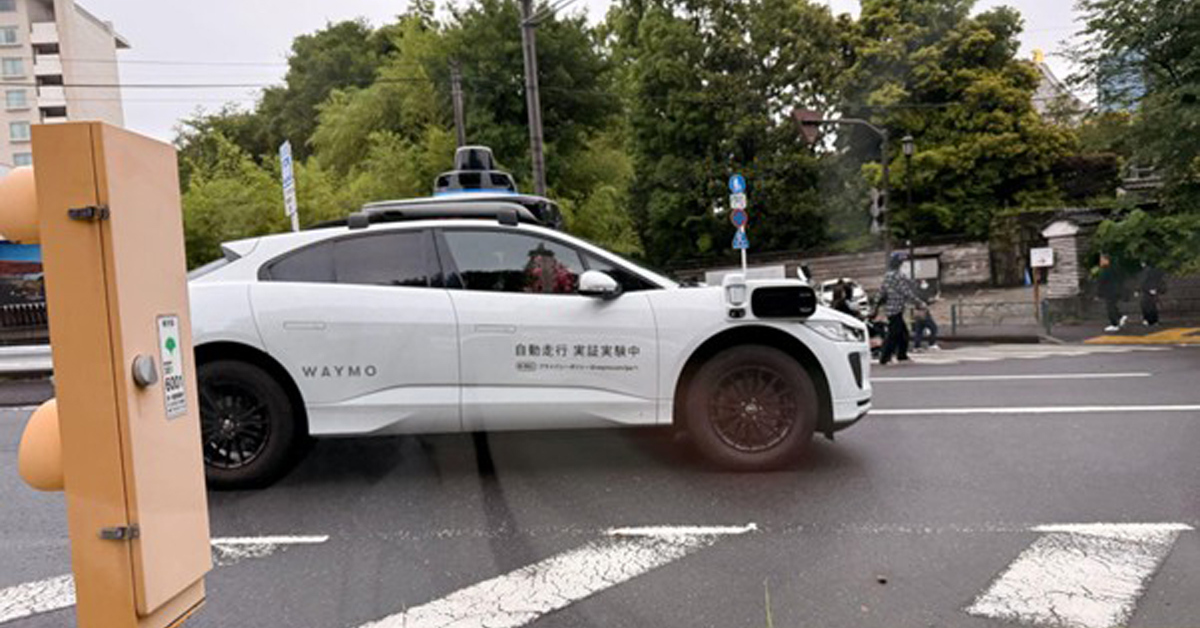
生成AI×自動運転で注目のTesla・Waymo・NVIDIA 各社が目指す「フィジカルAI」は何が違うのか
日本政府が戦略的強化分野に掲げる「フィジカルAI」――その社会実装の最前線の一つが自動運転システムだ。熾烈な開発競争が繰り広げられている中、生成AIの進化は各社の競争にどのような変化をもたらしているのか。Tesla、Waymo、NVIDIAの最新動向を整理する。
次世代のヘルスケアに向けて: 知覚、意思決定、および行動のための医療に組み込まれた AI の調査
Foundation モデルは、幅広い医療用途にわたって医療効率を向上させる優れたパフォーマンスを実証しています。それにもかかわらず、物理世界を認識し、理解し、対話する能力が限られているため、安全性が重要な意思決定と物理的な実行が密接に結びついている現実世界の臨床ワークフローにおける彼らの有効性が大幅に制限されています。最近、身体型人工知能 (AI) がインテリジェント ヘルスケアの有望な物理的インタラクティブ パラダイムとして台頭し、エージェントが複雑な医療環境で動作できるようになります。この分野の研究が急速に拡大するにつれ、インテリジェントエージェントが臨床環境において統合されたエンドツーエンドシステムとしてどのように機能するかを理解することがますます重要になっています。しかし、医療用具現化 AI に関する既存の調査では、主に個別の側面や機能コンポーネントに重点が置かれており、この分野の統一されたシステムレベルの組織が欠如しています。最近の進歩をサポートし強化するために、私たちは、特に知覚、意思決定、行動の調整された統合に重点を置いて、医療用の身体化 AI の中核コンポーネントを系統的に調査しています。私たちは代表的な医療アプリケーションと関連データセットをさらに検討し、実際の臨床現場で遭遇する主要な課題を分析します。最後に、この急速に進化する分野における将来の研究の重要な方向性について説明します。関連するプロジェクトは https://github.com/VMVLab/Medical_Embodied_AI_Paper_List にあります。
原文 (English)
Towards Next-Generation Healthcare: A Survey of Medical Embodied AI for Perception, Decision-Making, and Action
Foundation models have demonstrated impressive performance in enhancing healthcare efficiency across a wide range of medical applications. Nevertheless, their limited ability to perceive, understand, and interact with the physical world significantly constrains their effectiveness in real-world clinical workflows, where safety-critical decision-making and physical execution are tightly coupled. Recently, embodied artificial intelligence (AI) has emerged as a promising physical-interactive paradigm for intelligent healthcare, enabling agents to operate in complex medical environments. As research in this area rapidly expands, understanding how intelligent agents function as integrated, end-to-end systems in clinical environments becomes increasingly critical. However, existing surveys on medical embodied AI largely emphasize individual aspects or functional components, lacking a unified system-level organization of the field. To support and consolidate recent advances, we systematically survey the core components of medical embodied AI, with a particular emphasis on the coordinated integration of perception, decision-making, and action. We further review representative medical applications and relevant datasets, and we analyze the major challenges encountered in real-world clinical practice. Finally, we discuss key directions for future research in this rapidly evolving field. The associated project can be found at https://github.com/VMVLab/Medical_Embodied_AI_Paper_List.
ROSA-RL: 強化学習による不確実性を考慮したラウンドアバウト最適化速度アドバイザリー
ラウンドアバウトは、不均一で非決定的な人間の行動、未知の運転意図、高度なインタラクションの複雑さにより、紛争地域に進入する時点でブロックされるか利用可能になるかについて不確実性を生み出すため、混合交通における自動運転に課題をもたらします。私たちは、ROSA-RL (強化学習による不確実性を考慮したラウンドアバウト最適化速度アドバイザリー) を紹介します。確率論的な衝突予測により、混合交通において自動車両と人間運転車両の安全かつ効率的なラウンドアバウト進入が可能になります。 Transformer ベースのモデルは、5 秒間の紛争地帯の占有率を予測し、マルチエージェントのやり取りをキャプチャして、今後の紛争と利用可能なギャップを予測します。予測出力は将来の動きと意図の不確実性をエンコードし、古典的な RL フレームワークの状態を拡張して、不確実性を考慮した速度調整を可能にします。実世界のデータに基づいたシミュレーションで評価された ROSA-RL は、不確実性を効果的に処理し、同等のモデルベースのベースラインを上回るパフォーマンスを発揮し、完全に既知の占有率を想定した理想的な設定とのギャップを埋めながら、交通効率と安全性を向上させることができます。この作品のソース コードは、github.com/urbanAIthi/ROSA-RL から入手できます。
原文 (English)
ROSA-RL: Uncertainty-Aware Roundabout Optimized Speed Advisory with Reinforcement Learning
Roundabouts challenge automated driving in mixed traffic, as heterogeneous and non-deterministic human behavior, unknown driving intentions, and high interaction complexity create uncertainty about whether the conflict zone will be blocked or available at the moment of entry. We present ROSA-RL -- uncertainty-aware Roundabout Optimized Speed Advisory with Reinforcement Learning. It enables safe and efficient roundabout entry for automated and human-driven vehicles in mixed traffic through probabilistic conflict forecasting. A Transformer-based model predicts conflict zone occupancy over a five-second horizon, capturing multi-agent interactions to anticipate upcoming conflicts and available gaps. The prediction outputs encode uncertainty in future motion and intent, and augment the state of a classical RL framework, enabling uncertainty-aware speed coordination. Evaluated in simulations grounded in real-world data, ROSA-RL can effectively handle uncertainty and outperform a comparable model-based baseline, closing the gap to an ideal setting assuming fully known occupancy while improving traffic efficiency and safety. The source code of this work is available under: github.com/urbanAIthi/ROSA-RL.
ARB4WM: 連続制御におけるワールド モデルの敵対的堅牢性ベンチマーク
ワールド モデルは、計画と意思決定のための潜在的なダイナミクスを学習できるため、ロボットおよびエージェント エンジニアリング制御システムで広く使用されています。これらのシステムは安全性が重要な設定で導入されることが増えているため、敵対的な条件下での堅牢性を理解することが不可欠になっています。しかし、既存の評価には、ワールドモデルエージェントのポリシー、価値、潜在力学レベルにわたる敵対的脅威をテストするための統一ベンチマークがありません。このギャップを埋めるために、視覚的な摂動下での世界モデル エージェントの展開前の堅牢性とリスク評価のための統一評価フレームワークである ARB4WM を紹介します。 ARB4WM は、これら 3 つのレベルにわたって 5 つのホワイトボックス損失目標を定義し、シングルステップまたはマルチステップの摂動戦略と、フルフレーム、ハーフシーケンス、スパースフレーム露光を含む時間的攻撃モードと組み合わせた場合のその効果を研究します。具体的には、さまざまな損失目標、摂動戦略、時間的攻撃モードの下で、MetaWorld と DeepMind Control Suite の 20 のタスクにわたる 4 つの Dreamer スタイル エージェントを評価します。結果は、値の推定、潜在的な表現、および RSSM ダイナミクスをターゲットとした攻撃は、ポリシーの直接的な混乱と同じくらい有害である可能性があり、初期または頻繁な混乱が特に有害である一方で、入力レベルの防御では適応型攻撃の下では回復が限られていることが示されています。これらの調査結果は、ワールド モデルの安全性、リスク、信頼性の評価では、アクション スペースの堅牢性にのみ依存するのではなく、複数のコンポーネント指向の攻撃目標と一時的な暴露プロトコルをカバーする必要があることを示唆しています。ソースコードは https://github.com/zaoanguai/ARB4WM で入手できます。
原文 (English)
ARB4WM: An Adversarial Robustness Benchmark for World Models in Continuous Control
World models are widely used in robotic and agentic engineering control systems due to their ability to learn latent dynamics for planning and decision-making. As these systems are increasingly deployed in safety-critical settings, understanding their robustness under adversarial conditions has become essential. However, existing evaluations lack a unified benchmark for testing adversarial threats across the policy, value, and latent-dynamics levels of world-model agents. To fill this gap, we present ARB4WM, a unified evaluation framework for pre-deployment robustness and risk assessment of world-model agents under visual perturbations. ARB4WM defines five white-box loss objectives across these three levels and studies their effects when combined with single-step or multi-step perturbation strategies and temporal attack modes, including full-frame, half-sequence, and sparse-frame exposure. Specifically, we evaluate four Dreamer-style agents across 20 tasks from MetaWorld and the DeepMind Control Suite under different loss objectives, perturbation strategies, and temporal attack modes. Results show that attacks targeting value estimation, latent representations, and RSSM dynamics can be as damaging as direct policy disruption, and that early or frequent perturbations are especially harmful, while input-level defenses provide limited recovery under adaptive attacks. These findings suggest that safety, risk, and reliability assessment for world models should cover multiple component-oriented attack objectives and temporal exposure protocols rather than relying solely on action-space robustness. Source code is available at https://github.com/zaoanguai/ARB4WM.
RAMS: Resource-Adaptive and Detection-Conditioned Model Switching for Embedded Edge Perception
Edge object detection on embedded hardware requires balancing inference latency and detection quality under changing resource pressure. We…
X-Tokenizer: A Multimodal Action Tokenizer for Vision-Language-Action Pretraining
Modern Vision-Language-Action (VLA) models must bridge pretrained vision-language reasoning and precise continuous robot control. Existing…
XMedFusion: A Knowledge-Guided Multimodal Perception and Reasoning Framework for Autonomous Medical Systems
Autonomous medical and robotic systems increasingly rely on intelligent perception and reasoning capabilities to interpret visual data and…
QPILOTS: Efficient Test-Time Q-Steering for Flow Policies
Flow-matching and diffusion policies are expressive action generators, but optimizing them with temporal-difference reinforcement learning…
Inference-time Policy Steering via Vision and Touch
Inference-time steering adapts pre-trained generative robot policies during deployment by verifying candidate actions before execution. Whi…
MimicIK: Real-Time Generative Inverse Kinematics from Teleoperation with FK Consistency
Inverse kinematics (IK) remains a critical bottleneck for real-time robot manipulation. Classical numerical solvers achieve high geometric…
Driving, Fast or Slow? Neuro-Symbolic Guidance for Motion Prediction in Multi-Modal Ground Mobility
Accurate and interpretable motion prediction for heterogeneous traffic spaces, including pedestrians, bicycles, cars, and trucks, is essent…
Pixels to Proofs: Probabilistically-Safe Latent World Model Control via Parallel Conformal Robust MPC
We present SLS^2, a framework for safe feedback motion planning from pixels using robust model predictive control (MPC) in learned latent w…
Retrieve, Don't Retrain: Extending Vision Language Action Models to New Tasks at Test Time
Extending a vision-language-action (VLA) policy to a new task typically requires task-specific teleoperated demonstrations and per-task fin…
PO-PDDL: Learning Symbolic POMDPs from Visual Demonstrations for Robot Planning Under Uncertainty
Real-world robot task planning must operate under both stochastic action execution and partial observability, yet constructing Partially Ob…
LaWAM: Latent World Action Models for Efficient Dynamics-Aware Robot Policies
Vision-Language-Action models (VLAs) leverage large-scale vision-language pretraining for semantic robot control, but often lack explicit f…
ControlMap: Controllable High-Definition Map Generation for Traffic Scenario Simulation
Simulation is central to validating autonomous driving systems, yet current pipelines are limited by insufficient scenario diversity due to…
Leveraging Deep Learning for Object and Position Recognition of Load Carriers for Autonomous Logistics Vehicles
This work explores the use of artificial intelligence in mobile robotics to achieve autonomous detection and pose estimation of load carrie…
EgoPhys: Learning Generalizable Physics Models of Deformable Objects from Egocentric Video
Humans naturally understand object physics through everyday interactions, but faithfully predicting complex deformable dynamics, such as el…
FlowMPC: Improving Flow Matching policies with World Models
Flow Matching (FM) is a powerful approach for behavior cloning in multimodal action spaces [Jiang et al., 2025], but because it is not trai…
Is Your Trajectory Displacement Safe in Long-tail?
Long-tail scenarios remain a major bottleneck for autonomous driving evaluation, even as datasets grow by orders of magnitude. Existing eva…
Training and Evaluating Diffusion Policies with Long Context Lengths
Imitation learning has enabled highly-dexterous robotic manipulation from RGB observations. Policies trained with these methods, however, t…
HOLO-MPPI: Multi-Scenario Motion Planning via Hierarchical Policy Optimization
Robots deployed in the real world must plan motions across diverse scenarios without per-scenario retuning. End-to-end reinforcement learni…
Direction-Conditioned Policies via Compositional Subgoal Scoring for Online Goal-Conditioned Reinforcement Learning
Hamilton-Jacobi-Bellman theory implies that the optimal goal-conditioned action depends on the goal only through the gradient of the goal-r…
PATCH: Action-Chunk-Conditioned Latent Patch Innovation Monitoring for Robot Manipulation
Learning-based manipulation policies have made substantial progress in real-world robot manipulation, particularly for short-horizon action…
ATOM-Bench: A Real-World Benchmark for Atomic Skills and Compositional Generalization in Manipulation Policies
Generalist manipulation policies are increasingly presented as foundation models for robotic control, but their real-world generalization r…
Binary Tracking for Spatial QA and Navigation with Open Vision-Language Models
This work addresses spatial question answering for service robots traversing long egocentric routes. Given a query such as "where can I fin…
CrossMaps: Confidence-Aware Open-Vocabulary Semantic Mapping for Rover Navigation
Rovers rely on perception to maintain spatial maps that encode both objects and sensor quality (e.g., range reliability, lighting artifacts…
Sample from What You See: Visuomotor Policy Learning via Diffusion Bridge with Observation-Embedded Stochastic Differential Equation
Imitation learning with diffusion models has advanced robotic control by capturing the multi-modal action distributions. However, existing…
Explainable deep learning improves human mental models of self-driving cars
Self-driving cars increasingly rely on deep neural networks to achieve human-like driving. The opacity of such black-box planners makes it…
Safe Exploration via Policy Priors
Safe exploration is a key requirement for reinforcement learning (RL) agents to learn and adapt online, beyond controlled (e.g. simulated)…
MapDream: Task-Driven Map Learning for Vision-Language Navigation
Vision-Language Navigation (VLN) requires agents to follow natural language instructions in partially observed 3D environments, motivating…
Seeing Roads Through Words: A Language-Guided Framework for RGB-T Driving Scene Segmentation
Robust semantic segmentation of road scenes under adverse illumination, lighting, and shadow conditions remain a core challenge for autonom…
Evidence of an Emergent "Self" in Continual Robot Learning
A key challenge to understanding self-awareness has been a principled way of quantifying whether an intelligent system has a concept of a "…
Human Cognition in Machines: A Unified Perspective of World Models
This report of world models distinguishes prior works by the cognitive functions they innovate. Many works claim an almost human-like cogni…
From Noise to Intent: Anchoring Generative VLA Policies with Residual Bridges
Bridging high-level semantic understanding with low-level physical control remains a persistent challenge in embodied intelligence, stemmin…
ビジュアルプリミティブを使用したアクション
視覚-言語-動作 (VLA) モデルは、汎用的なロボット操作の有望なパラダイムとして浮上しています。現在のアーキテクチャの一般的な設計では、言語命令と視覚的観察が 1 回の転送パスでアクションにマップされます。概念的には単純ですが、この定式化は、指導の理解、空間シーンの理解、および運動制御を 1 つの学習目標内に結び付けます。その結果、アクション エキスパートは、事前トレーニング済み VLM にすでに存在する認知能力と知覚能力を暗黙的に再学習する必要があり、学習効率と一般化の両方が制限される可能性があります。このビジュアルプリミティブ中心のインターフェイスを実装するエンドツーエンドのアーキテクチャである AVP (Action with Visual Primitives) を導入します。VLM は、エンドエフェクターの運動学から得られる監視とともに、次のステージのターゲットを推測し、フローマッチングアクションエキスパートを条件付けるビジュアルプリミティブトークンを発行します。一般的なピック アンド プレイス タスクに関する実際のロボット実験では、AVP が成功率を pi_0.5 より 27.61% 向上させ、データ効率、空間構成の一般化、およびオブジェクト レベルの転送において一貫した向上をもたらし、他の最近の手法を上回るパフォーマンスを示していることが示されています。
原文 (English)
Action with Visual Primitives
Vision-Language-Action (VLA) models have emerged as a promising paradigm for generalist robotic manipulation. A common design in current architectures maps language instructions and visual observations to actions in a single forward pass. While conceptually simple, this formulation entangles instruction comprehension, spatial scene understanding, and motor control within a single learning objective. As a result, the action expert must implicitly relearn cognitive and perceptual capabilities already present in the pretrained VLM, which can limit both learning efficiency and generalization. We introduce AVP (Action with Visual Primitives), an end-to-end architecture that implements this visual-primitive-centric interface: the VLM infers the next-stage target and emits visual-primitive tokens that condition a flow-matching action expert, with supervision derived from end-effector kinematics. Real-robot experiments on general pick-and-place tasks show that AVP improves the success rate by 37.04% over pi_0.5 and outperforms other recent methods, with consistent gains in data efficiency, spatial-compositional generalization, and object-level transfer.
FineVLA: 制御可能なビジョン、言語、アクション ポリシーのためのきめ細かい命令調整
視覚言語アクション (VLA) モデルは、ロボットのタスクを完了するだけでなく、それらのタスクをどのように実行するかについての人間の指示に従うこともますます期待されています。ただし、既存のロボット データセットは通常、軌道と大まかな目標レベルの言語を組み合わせており、アクティブなアーム、アプローチ方向、接触領域などの実行に不可欠な詳細は未指定のままです。これにより、操作可能なポリシーの学習とロボットによるビデオの理解が制限されます。アクションに合わせたきめ細かい VLA 監視のためのオープン フレームワークである FineVLA を紹介します。このフレームワークには次のものが含まれます。(1) 10 のオープンソース ロボット データセットから 85,000 タスクにわたる 972,247 の軌跡を統合し、47,159 のきめ細かい軌跡からなる人間が検証したデータセットである FineVLA-Data を構築するデータ構築ツール。 (2) 500 件のビデオ、10,816 件の基本的な事実、および 1,030 件の VQA 質問を含む保持されたベンチマーク。 (3) スケーラブルできめ細かいアノテーションを実現するロボット工学に特化した VLM アノテーター。 (4) きめの細かい指示と生の目標レベルの指示を制御して組み合わせてトレーニングされた、操作可能な VLA ポリシー。私たちの実験では 3 つの発見が得られました。まず、きめ細かい監視によって目標レベルの成功が犠牲になることはありません。FG のみは、Raw のみよりも設定全体で +1.4 ~ +8.1 成功率ポイントが向上します。第二に、きめの細かい命令と生の命令は補完的であり、FG:Raw = 1:2 ~ 1:1 でピークに達する一貫した逆 U の傾向に従います。最適な混合設定は、RoboTwin シミュレーションでは 86.8%/82.5%、現実世界の双腕操作では 62.7/100 に達します (Raw のみの 49.9 に対して)。第三に、きめ細かい監視により、操縦可能な制御が向上します。実際の最大のゲインは、ポーズ (+23)、色 (+18)、およびアプローチ方向 (+18) に現れます。これは、目標レベルの指示ではガイダンスが提供されない要素です。全体として、きめの細かい言語により、目標レベルの指示、つまり何を達成するかとともに実行方法を指定する必要があります。プロジェクトページ:https://finevla.xlang.ai/
原文 (English)
FineVLA: Fine-Grained Instruction Alignment for Steerable Vision-Language-Action Policies
Vision-Language-Action (VLA) models are increasingly expected to not only complete robot tasks, but also follow human instructions about how those tasks should be executed. However, existing robot datasets usually pair trajectories with coarse goal-level language, leaving execution-critical details such as active arm, approach direction, and contact region unspecified. This limits steerable policy learning and robotic video understanding. We introduce FineVLA, an open framework for action-aligned fine-grained VLA supervision. The framework includes: (1) a data construction tool that unifies 972,247 trajectories across 85K tasks from 10 open-source robot datasets and builds FineVLA-Data, a human-verified dataset of 47,159 fine-grained trajectories; (2) a held-out benchmark with 500 videos, 11,631 atomic facts, and 1,030 VQA questions; (3) a robotics-specialized VLM annotator for scalable fine-grained annotation; and (4) a steerable VLA policy trained with controlled mixtures of fine-grained and raw goal-level instructions. Our experiments yield three findings. First, fine-grained supervision does not sacrifice goal-level success: FG-only improves over Raw-only by +1.4 to +8.1 success-rate points across settings. Second, fine-grained and raw instructions are complementary, following a consistent inverted-U trend peaking at FG:Raw = 1:2 to 1:1. The best mixed setting reaches 86.8%/82.5% in RoboTwin simulation and 62.7/100 in real-world dual-arm manipulation (vs. 49.9 Raw-only). Third, fine-grained supervision improves steerable control: the largest real-world gains appear on pose (+23), color (+18), and approach direction (+18)--factors where goal-level instructions provide no guidance. Overall, fine-grained language should augment goal-level instructions: specifying how to execute alongside what to achieve. Project page: https://finevla.xlang.ai/
EV-WM: Event-Verified World Models for Long-Horizon Robotic Manipulation
Pretrained-feature world models provide a useful substrate for robot imagination, but visual or latent prediction alone does not determine…
LabVLA: Grounding Vision-Language-Action Models in Scientific Laboratories
Scientific laboratories increasingly rely on AI systems to reason about experiments, but the physical act of doing science remains largely…
When and How Severely: Scenario-Specific Safety Envelopes for Driving VLAs
Safety certification of Vision-Language-Action (VLA) driving planners under ISO 21448 (SOTIF) rests on an Operational Design Domain (ODD) s…
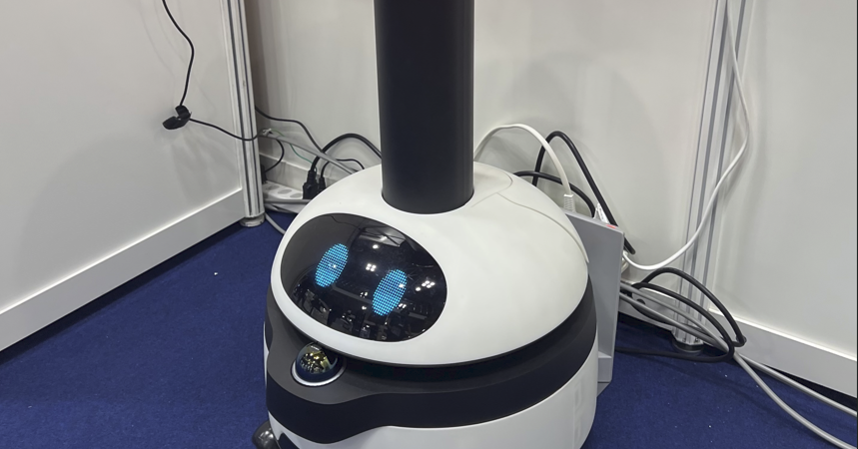
データセンターの見回り業務をロボットに 自在に伸びるカメラでくまなく点検できる「ugo mini」
6月10日から12日に幕張メッセで開催したインターネット技術の総合イベント「Interop Tokyo 2026」で、ugo(東京都千代田区)は小型の点検ロボット「ugo mini」を展示した。
モンテカルロ木検索による計画のための因果オブジェクト中心モデル
スロット構造の潜在空間でモンテカルロ木探索を実行するモデルベースの強化学習アルゴリズムである COMET (効率的な木探索のための因果オブジェクト中心モデル) を紹介します。 COMET は、凍結された教師なしオブジェクト中心のエンコーダーをトランスフォーマーベースのワールド モデルと組み合わせます。このモデルでは、スロット遷移予測で使用される新しいアクションとスロットの融合メカニズムを通じてアクションがオブジェクトにバインドされます。ポリシーとバリューの責任者はオブジェクト因果関係の注意を使用し、学習したスロットごとの関連性スコアによってトークンの相互作用を調整し、意思決定がタスク関連エンティティに集中できるようにします。 COMET は、MuZero スタイルの潜在計画に明示的なオブジェクトレベルの帰納的バイアスを追加します。オブジェクト中心の Visual RL ベンチマーク、ManiSkill、Robosuite、および VizDoom の 8 つの視覚的および動的に多様なタスクにわたって、COMET は、オブジェクト中心のモノリシック ベースラインと比較して、トレーニングの初期段階でより高い平均正規化スコアを達成します。
原文 (English)
Causal Object-Centric Models for Planning with Monte Carlo Tree Search
We introduce COMET (Causal Object-centric Model for Efficient Tree search), a model-based reinforcement learning algorithm that performs Monte Carlo Tree Search in a slot-structured latent space. COMET pairs a frozen unsupervised object-centric encoder with a transformer-based world model, in which actions are bound to objects through a novel action-slot fusion mechanism that is used in slot transition prediction. Policy and value heads use object-causal attention, modulating token interactions by learned per-slot relevance scores so that decision-making concentrates on task-relevant entities. COMET adds an explicit object-level inductive bias to MuZero-style latent planning. Across eight visually and dynamically diverse tasks from the Object-Centric Visual RL benchmark, ManiSkill, Robosuite, and VizDoom, COMET achieves a higher mean normalized score during the early stages of training compared to object-centric and monolithic baselines.
統合された解釈可能な制御有効性学習と過作動航空機に対する非線形制御割り当て方法論
非線形ダイナミクスと複数のエフェクター間で生じる強い結合により、従来の線形制御割り当て手法の背後にある前提が損なわれます。飛行が非線形効果が支配的な領域に入ると、モデルの不一致が増加するため線形アロケーターの精度が低下し、その後飛行制御システムのパフォーマンスとロバスト性が低下します。高忠実度のオンボード モデルとブラック ボックス データ駆動型アプローチは、飛行エンベロープ全体で精度を回復できますが、それぞれリアルタイム割り当てには法外な計算負荷を課し、検証と故障診断に必要な解釈可能性を犠牲にします。この論文では、非線形ダイナミクスのスパース識別を使用して、代表的な飛行データから制御有効性マッピングの明示的な物理制約付き分析モデルを学習することで、これらの制限に対処します。結果として得られるマッピングはコンパクトで解釈可能であり、解析的な微分が可能であるため、オンボード モデルを必要とせずに、アクチュエータ ダイナミクスをさらに組み込んだ非線形ソルバー内での効率的な計算が可能になります。オンライン適応メカニズムは、予測残差を監視し、プラントの重大な変化が検出されたときにモデルを更新し、アクチュエータの故障やさまざまな動作条件下で適切な再構成を提供します。この方法論は、さまざまな積極的な操縦にわたって忠実度の高い非線形ベンチマーク航空機で評価され、確立されたベースラインと比較して計算コストを大幅に削減しながら、完全な非線形機内モデルに匹敵する精度を達成します。
原文 (English)
An integrated interpretable control effectiveness learning and nonlinear control allocation methodology for overactuated aircrafts
Nonlinear dynamics and the strong couplings that arise between multiple effectors undermine the assumptions behind conventional, linear control allocation techniques. When flight enters regimes where nonlinear effects dominate, linear allocators exhibit reduced accuracy due to increased model mismatch, which subsequently degrades performance and robustness of the flight control system. High fidelity onboard models and black box data driven approaches can recover accuracy across the flight envelope, but respectively impose computational burdens prohibitive for real time allocation and sacrifice the interpretability required for verification and fault diagnosis. This paper addresses these limitations by learning an explicit, physics constrained analytical model of the control effectiveness mapping from representative flight data using Sparse Identification of Nonlinear Dynamics. The resulting mapping is compact, interpretable, and admits analytical derivatives, enabling efficient computation within nonlinear solvers that additionally incorporate actuator dynamics, without requiring an onboard model. An online adaptation mechanism monitors prediction residuals and refreshes the model when significant plant changes are detected, providing graceful reconfiguration under actuator failures and varying operating conditions. The methodology is evaluated on a high fidelity nonlinear benchmark aircraft across a range of aggressive maneuvers, achieving accuracy comparable to a full nonlinear onboard model while substantially reducing computational cost relative to established baselines.
しわのない堅牢性: 認定された変形可能な操作のための並列シミュレーションと堅牢な MPC
変形物体を安全に操作するためのリアルタイム制御手法CORD-SLSをロープと布に焦点を当てて紹介します。その中核となるのは、接触スムージングを備えた GPU 並列微分可能シミュレーターで、断続的な接触を通じて効率的な勾配ベースの計画を可能にします。モデルおよびセンシングの不確実性の下での制約を確実に満たすために、このシミュレーターを使用して計画を立てる、リアルタイムの GPU 並列出力フィードバックのロバストなモデル予測制御 (MPC) アルゴリズムを開発します。さらに、シミュレータがニューラル操作ポリシーをトレーニングするためのモデルベースの RL を加速することを示します。現実世界の堅牢性を向上させるために、コンフォーマル予測を使用して MPC の視覚フィードバックと知覚誤差の境界を調整し、確率の高い安全な制御を可能にする到達可能なチューブを生成します。私たちは、障害物の回避、ルーティング、折り畳み、スムージングなど、シミュレーションとハードウェアでの高次元で接触の多いロープと布の操作タスクで CORD-SLS を評価します。 CORD-SLS は、設定全体にわたってミリ秒単位の速度で計画を立て、安全性、速度、タスクの成功においてベースラインを超えます。
原文 (English)
Robustness without Wrinkles: Parallel Simulation and Robust MPC for Certified Deformable Manipulation
We present CORD-SLS, a real-time control method for safe deformable object manipulation, with a focus on ropes and cloth. At its core is a GPU-parallel differentiable simulator with contact smoothing which enables efficient gradient-based planning through intermittent contact. To robustly satisfy constraints under model and sensing uncertainty, we develop a real-time, GPU-parallel output-feedback robust model predictive control (MPC) algorithm that plans with this simulator. We further show that the simulator accelerates model-based RL for training neural manipulation policies. To improve real-world robustness, we use conformal prediction to calibrate visual-feedback and perception-error bounds for MPC, producing reachable tubes that enable high-probability safe control. We evaluate CORD-SLS on high-dimensional, contact-rich rope and cloth manipulation tasks in simulation and hardware, including obstacle avoidance, routing, folding, and smoothing. Across settings, CORD-SLS achieves millisecond-speed planning, exceeding baselines in safety, speed, and task success.
Universal Manipulation Exoskeleton: Learning Compliant Whole-body Policies with Real-time Torque Feedback
For robots to work safely in household environments, they need to be compliant and react to torque and force feedback during contact. Howev…
Selective Agentic Recovery for UAV Autonomy with a Persistent Mission Runtime
Agentic AI can support unmanned aerial vehicle (UAV) autonomy by providing high-level recovery reasoning when local waypoint- or setpoint-b…
When and How Severely: Scenario-Specific Safety Envelopes for Driving VLAs
Safety certification of Vision-Language-Action (VLA) driving planners under ISO 21448 (SOTIF) rests on an Operational Design Domain (ODD) s…
Robust Fall Recovery for Armless Bipedal-Wheeled Robots Via Force-Guided Learning
Fall recovery is critical for autonomous legged locomotion. Existing methods have demonstrated that some legged robots, such as humanoids a…
Elastic Queries Reinforcement Learning: Self-Aware Policy Execution for VLA Models
Vision-language-action (VLA) models are powerful action generators for robot manipulation, but they are typically executed with fixed infer…
Hy-Embodied-0.5-VLA: From Vision-Language-Action Models to a Real-World Robot Learning Stack
In this report, we present Hy-Embodied-0.5-VLA, abbreviated as HyVLA-0.5, an end-to-end system that spans the full robot learning stack: da…
CADET: Physics-Grounded Causal Auditing and Training-Free Deconfounding of End-to-End Driving Planners
End-to-end (E2E) autonomous-driving planners trained by imitation are prone to statistical shortcuts: they associate scene elements that me…
TRACE: Trajectory-Routed Causal Memory for Delayed-Evidence Visuomotor Imitation
Robots under autonomous operation may require decisions based on evidence that is no longer visible. We study \emph{delayed-evidence} tasks…
Sensitivity Shaping for Latent Modeling
Generative dynamics models enable planning in challenging robotic systems, but safe deployment requires reliably detecting policy-induced o…
シーンの自己探索による視点をもとに計画を立てる
VLM は、各カメラの動きによってビューがどのように変化するかを予測し、事前にそのような動きを多数計画することができますか?私たちはこれを機能ビュー計画と呼びます。これには、(1) 単一のアクションがビューをどのように変換するかを理解すること、(2) ターゲット ビューを特定するために複数ターンの計画にわたってそのような変換を多数構成することが必要です。私たちは、実際の ScanNet シーン上の 3D ポイントクラウド環境である、私たちが提案する ViewSuite で両方の機能を調査します。 13 のフロンティア VLM にわたって、重大な計画のギャップが生じています。VLM は基本的なビューとアクションの知識を持っていますが、それを複数ターンの計画にわたって構成することができず、視点の距離が長くなるにつれてギャップが拡大します。このギャップを埋めるために、自己探索とビュー グラフの蒸留を交互に行う反復フレームワークを提案します。重要な洞察は、結果に関係なく、すべての探索軌跡が集合的にビュー グラフを形成し、シーン全体で視点がどのように接続されているかをコンパクトに捉えるということです。このグラフをさまざまな教師ありタスクに抽出すると、ポリシーの分布が再形成され、純粋な RL を遅らせる希薄な報酬が克服されます。これにより、インタラクティブ ビュー プランニングで Qwen2.5-VL-7B が 2.5% から 47.8% に向上し、GPT-5.4 Pro (18.5%) や Gemini 3.1 Pro (21.4%) を上回りました。自己探索は、3D 空間で積極的に推論して計画できる VLM への有望な道として浮上しています。
原文 (English)
Planning with the Views via Scene Self-Exploration
Can VLMs predict how each camera move changes the view, and plan many such moves ahead? We call this capability view planning, requiring (1)understanding how a single action transforms the view, and (2)composing many such transformations across multi-turn plans to identify a target view. We probe both abilities in our proposed ViewSuite, a 3D point-cloud environment on real ScanNet scenes. Across 13 frontier VLMs, a critical planning gap emerges: they possess basic view-action knowledge but fail to compose it across multi-turn plans, with the gap widening as viewpoint distance grows. To close this gap, we propose an iterative framework that alternates self-exploration with view graph distillation. The key insight is that all exploration trajectories, regardless of their outcome, collectively form a view graph that compactly captures how viewpoints connect across a scene. Distilling this graph into diverse supervised tasks reshapes the policy distribution and overcomes the sparse rewards that stall pure RL. This improves Qwen2.5-VL-7B from 2.5% to 47.8% on interactive view planning, surpassing GPT-5.4 Pro (18.5%) and Gemini 3.1 Pro (21.4%). Self-exploration emerges as a promising path toward VLMs that can actively reason and plan in 3D space. Code and Data are at https://viewsuite.github.io.
Vanishing Depth: Training Generalized Depth Adapters with Sinusoidal Depth Preprocessing for Pretrained RGB Encoders
Generalized metric depth understanding is critical for precise vision-guided robotics, which current state-of-the-art (SOTA) vision-encoder…
Schr\"odinger's Navigator: Imagining an Ensemble of Futures for Zero-Shot Object Navigation
Zero-shot object navigation (ZSON) requires robots to find target objects in unseen environments without task-specific fine-tuning or pre-b…
Unsupervised Learning of Efficient Exploration: Pre-training Adaptive Policies via Self-Imposed Goals
Unsupervised pre-training can equip reinforcement learning agents with prior knowledge and accelerate learning in downstream tasks. A promi…
Low-Burden LLM-Based Preference Learning: Personalizing Assistive Robots from Natural Language Feedback for Users with Paralysis
Physically Assistive Robots require personalized behaviors to ensure user safety and comfort. However, traditional preference learning meth…
CoRe-MoE: 歩行適応を備えた複数地形ヒューマノイド移動のための専門家の対照的な再重み付け混合
人間は主に、不必要に複雑な動作パターンに頼ることなく、複雑な地形を横断するために歩いたり走ったりすることに頼っています。同様に、人型ロボットは、自然で安定した移動を維持しながら、歩行と走行の間のスムーズな移行を達成する必要があります。ただし、単一のポリシー内で歩行遷移と複数の地形への適応を統合することは、勾配の干渉と、地形に依存する視覚的および動的変化によって引き起こされる分布のシフトのため、依然として困難です。専門家混合 (MoE) アーキテクチャは複数のスキルの干渉を軽減できますが、単純な共同トレーニングでは明確な専門知識が得られないことが多く、効果が制限されます。これらの課題に対処するために、私たちは地形適応から歩行生成を切り離す 2 段階の強化学習フレームワークである CoRe-MoE を提案します。第 1 段階では、スムーズな移行で自然な歩行と走行の動作を生成するための安定した移動ポリシーが学習されます。第 2 段階では、地形認識 MoE ブランチが導入され、ゲーティング ネットワークを形成するという対照的な目的でトレーニングされ、構造化された地形表現をキャプチャして専門家の専門化を促進できるようになります。最終的なアクションは、基本歩行ポリシーと地形認識ブランチの重み付けされた融合によって取得され、ポリシーが複雑な地形に適応しながら安定した移動パターンを維持できるようにします。広範なシミュレーション結果は、提案された方法が成功率、移動の安定性、および複数の地形への適応性の点でベースラインのアプローチよりも優れていることを示しています。さらに、Unitree G1 ヒューマノイド ロボットへのゼロショット展開により、当社のフレームワークの有効性が検証され、外乱下でも正確な足場の配置と動的安定性を維持しながら、階段、坂道、段差、障害物、屋外の構造化されていない地形での堅牢な歩行と走行が実現されます。
原文 (English)
CoRe-MoE: Contrastive Reweighted Mixture of Experts for Multi-Terrain Humanoid Locomotion with Gait Adaptation
Humans primarily rely on walking and running to traverse complex terrains. Similarly, humanoid robots should be able to smoothly transition between walking and running while maintaining natural and stable locomotion. However, unifying gait transition and multi-terrain adaptation within a single policy remains challenging due to gradient interference between tasks and the distribution shift caused by terrain variations. Although Mixture-of-Experts (MoE) architectures can mitigate multi-skill interference, direct joint training often fails to achieve clear expert specialization. To address these challenges, we propose CoRe-MoE, a two-stage reinforcement learning framework that decouples gait generation from terrain adaptation. In the first stage, a stable locomotion policy is learned to produce natural walking and running behaviors with smooth transitions. In the second stage, a terrain-aware MoE branch is introduced, and the gating network is trained with a contrastive objective to learn structured terrain representations and promote expert specialization. The final action is obtained through weighted fusion of the base gait policy and the terrain-aware branch, enabling the policy to preserve stable locomotion while adapting to complex terrains. Extensive simulation results demonstrate that the proposed method outperforms baseline approaches in terms of success rate, locomotion stability, and multi-terrain adaptability. Furthermore, zero-shot deployment on a Unitree G1 humanoid robot validates the effectiveness of our framework, achieving robust walking and running across stairs, slopes, steps, obstacles, and unstructured outdoor terrains while maintaining accurate foothold control and dynamic stability.
Benchmarking Vision-Language-Action Models on SO-101: Failure and Recovery Analysis
Vision-Language-Action (VLA) models have demonstrated strong generalization in robotic manipulation, yet existing evaluations are primarily…
Bounding Boxes as Goals: Language-Conditioned Grasping via Neuro-Symbolic Planning
For robotics to be effectively integrated into household or industrial environments, machines must adapt to natural-language prompts in rea…

AI・ロボット人材は約340万人不足 労働市場のスキル需給、AIでどう可視化する?
産業構造の変化と人口減少が同時に進み、業種や職種の間で人材の過不足が広がると予測されている。経済産業省は事業を通じて、労働市場全体のスキル需給をAIなどで可視化する取り組みに乗り出した。受託したNRIは、具体的に何に取り組むのか。
TrajGenAgent: 人間の移動軌跡生成のための階層型 LLM エージェント
人間の移動データは交通、都市計画、疫病対策にとって重要ですが、大規模な軌跡の収集にはコストがかかり、プライバシーが制約されることが多いため、現実的な合成軌跡の生成が促進されます。既存の LLM ベースのジェネレーターは、通常、ゼロショット推論を維持しますが、きめ細かい時空間基盤が欠如するプロンプト エンジニアリング、または統計的精度を向上させるが、かなりの計算コストが発生し、一般的な推論を弱める可能性がある軌道レベルの微調整のいずれかに依存しています。我々は、モデルの微調整を行わずに人間の移動軌跡を生成するための、セマンティックを意識した階層型 LLM エージェント フレームワークである TrajGenAgent を提案します。 TrajGenAgent は 2 段階のオーケストレーターとワーカーの設計を使用します。LLM は最初に、コンテキスト内学習を介して歴史的証拠から個人および平日に条件付けされたアクティビティ チェーンを合成し、その後、決定論的なワークフローにより、パーソナライズされた POI 検索、距離を意識した場所の選択、運動学を意識した移動時間の伝播、および LLM ベースの所要時間推定を使用して、各アクティビティを完全な訪問に根付かせます。集合的な時空間統計を超えて現実性を評価するために、2 つの相補的な検出器を使用して動作および意味論的な妥当性を評価する異常検出ベースの評価フレームワークを導入します。ベンチマーク データセットと大規模シミュレーション データセットの実験では、TrajGenAgent がパラメーターの更新を回避しながら、代表的なニューラル ベースラインおよび LLM ベースのベースラインよりも時空間忠実度、意味論的一貫性、および個人固有の行動リアリズムを向上させることが示されています。
原文 (English)
TrajGenAgent: A Hierarchical LLM Agent for Human Mobility Trajectory Generation
Human mobility data is important for transportation, urban planning, and epidemic control, but large-scale trajectory collection is often costly and privacy-constrained, motivating realistic synthetic trajectory generation. Existing LLM-based generators typically rely on either prompt engineering, which preserves zero-shot reasoning but lacks fine-grained spatiotemporal grounding, or trajectory-level fine-tuning, which improves statistical precision but incurs substantial computational cost and may weaken general reasoning. We propose TrajGenAgent, a semantic-aware hierarchical LLM-agent framework for human mobility trajectory generation without model fine-tuning. TrajGenAgent uses a two-stage orchestrator-worker design: an LLM first synthesizes an individual- and weekday-conditioned activity chain from historical evidence via in-context learning, and a deterministic workflow then grounds each activity into a complete visit using personalized POI retrieval, distance-aware location selection, kinematics-aware travel-time propagation, and LLM-based duration estimation. To evaluate realism beyond aggregate spatiotemporal statistics, we introduce an anomaly-detection-based evaluation framework using two complementary detectors to assess behavioral and semantic plausibility. Experiments on benchmark and large-scale simulation datasets show that TrajGenAgent improves spatiotemporal fidelity, semantic coherence, and individual-specific behavioral realism over representative neural and LLM-based baselines, while avoiding parameter updates.
Foresight: Iterative Reasoning About Clues that Matter for Navigation
Open-world mapless navigation from sparse language instructions requires resolving underspecified goals and inferring which environmental c…
From Imitation to Alignment: Human-Preference Flow Policies for Long-Horizon Sidewalk Navigation
Autonomous long-horizon sidewalk navigation is essential for micro-mobility applications such as robotic food delivery and assistive electr…
EWAM: An Enhanced World Action Model for Closed-Loop Online Adaptation in Embodied Intelligence
In this paper, we propose the Enhanced World Action Model (EWAM), a closed-loop online adaptation architecture built upon a pretrained and…
Stubborn: A Streamlined and Unified Reinforcement Learning Framework for Robust Motion Tracking and Fall Recovery for Humanoids
Recent reinforcement learning approaches have shown great promise in improving humanoid motion tracking performance and achieving fall reco…
Bounding Boxes as Goals: Language-Conditioned Grasping via Neuro-Symbolic Planning
For robotics to be effectively integrated into household or industrial environments, machines must adapt to natural-language prompts in rea…
An Embodied Simulation Platform, Benchmark, and Data-Efficient Augmentation Framework for Wet-Lab Robotics
Wet-lab robots can improve the reproducibility, throughput, and safety of biomedical experiments, but scaling their learning requires custo…
Diffusion Transformer World-Action Model for AV Scene Prediction
Action-conditioned world models let an autonomous vehicle predict future camera scenes from its own planned controls, enabling planning and…
EA-WM: Event-Aware World Models with Task-Specification Grounding for Long-Horizon Manipulation
Pretrained-feature world models provide a useful substrate for robot imagination, but visual or latent prediction alone does not determine…
Proprioceptive-visual correspondence enables self-other distinction in humanoid robots
Distinguishing self from others is a prerequisite for social intelligence, yet humanoid robots that increasingly share workspaces with huma…
Humor Style Drives Laughter, Topic Shapes Acceptability: Evaluating Bilingual Personal and Political Robot-Delivered AI Jokes
Humor plays a central role in human social relationships, and recent advances in computational humor create new opportunities for integrati…
Real-Time Execution with Autoregressive Policies
Real-time execution, enabled by asynchronous inference that ensures both smooth action trajectories and fast reactivity, is critical for re…
PolyFlow: Safe and Efficient Polytope-Constrained Flow Matching with Constraint Embedding and Projection-free Update
While flow-based generative models have demonstrated strong performance across a wide range of domains, deploying them in safety-critical p…
Heterogeneous LiDAR Early Fusion and Learned Re-Ranking Strategy for Robust Long-Term Place Recognition in Unstructured Environments
Robust localization in unstructured environments, such as agricultural fields, is a critical challenge for autonomous systems. LiDAR sensor…
LabVLA: Grounding Vision-Language-Action Models in Scientific Laboratories
Scientific laboratories increasingly rely on AI systems to reason about experiments, but the physical act of doing science remains largely…
Mana: Dexterous Manipulation of Articulated Tools
Articulated tool manipulation remains a major challenge in dexterous robotics due to the need to coordinate internal degrees of freedom and…
From Digital to Physical: Digital Agents as Autonomous Coaches for Physical Intelligence
The field of Embodied AI is witnessing a rapid evolution toward general-purpose robotic systems, fueled by high-fidelity simulation and lar…
管理された自律性としてのインテリジェンス: エージェントティック AI システムの障害、エスカレーション、ガバナンス
自律型およびエージェント型 AI システムがロボット環境やヒューマンマシン環境で拡張されるにつれて、幻覚や永続的だが不当な行動の管理は未解決の課題のままです。この論文では、これらの失敗の原因を単にモデルや調整の制限に帰するのではなく、無制限の自律性、つまり不確実性の増大に関係なくエージェントが動作し続けるべきであるという前提のアーキテクチャ上の脆弱性を調査します。これは、認識的ドリフトを検出し、推論を中断し、回復を試み、信頼性が低下したときに最終的に制御を放棄する形式的な能力を通じて、インテリジェントな行動を定義する管理された自律性の理論を導入します。この理論は、安定状態、メタ認知状態、支援状態、および規制状態を特徴とする 4 層フレームワークである SMARt (Self-Managing Multi-tier Autonomous Reasoning with Regulated/Revoked transitions) モデルを介してインスタンス化されます。時間制限付きで保護されたペトリ ネット定式化を開発することで、システムの理論的に制限されたプロパティを確立し、アーキテクチャがどのようにしてエスカレーションを正式に義務付け、無効な出力を制限し、指定された条件下でガバナンスの到達可能性を確保できるかを実証します。さらに、完全性と健全性の基準が満たされていると仮定して、さまざまな運用設定 (ヘルスケア、ロボット工学など) にわたってドメイン固有のトリガー セットを組み込むことで、体系的に安全性を維持できる方法を分析します。これらのトリガーは適応するように設計されているため、SMARt モデルは、時間の経過とともに、エージェントの操作範囲を安全に制御された拡張に対応します。私たちは、自律性ライフサイクル内で障害管理を形式化することが、信頼性が高く管理された人工知能を実現するための重要なステップであると結論付けています。
原文 (English)
Intelligence as Managed Autonomy: Failure, Escalation, and Governance for Agentic AI Systems
As autonomous and agentic AI systems scale in robotic and human-machine environments, managing hallucination and persistent but unjustified action remains an open challenge. Rather than attributing these failures solely to model or alignment limitations, this paper explores the architectural vulnerability of unbounded autonomy - the presumption that an agent should continue operating regardless of rising uncertainty. It introduces a theory of managed autonomy that defines intelligent behavior through the formal capacity to detect epistemic drift, suspend reasoning, attempt recovery, and ultimately surrender control when reliability diminishes. We instantiate this theory via the SMARt (Self-Managing Multi-tier Autonomous Reasoning with Regulated/Revoked transitions) model, a four-layer framework featuring Stable, Meta-cognitive, Assisted, and Regulated states. By developing a timed, guarded Petri net formulation, we establish theoretically bounded properties for the system, demonstrating how architecture can formally mandate escalation, constrain invalid outputs, and ensure governance reachability under specified conditions. We further analyze how incorporating domain-specific trigger sets across varied operational settings (e.g., healthcare, robotics, etc.) can systematically preserve safety, assuming completeness and soundness criteria are met. Because these triggers are designed to be adaptive, the SMARt model accommodates the safe, controlled expansion of an agent's operational scope over time. We conclude that formalizing failure management within the autonomy lifecycle is a crucial step toward realizing reliable and governed artificial intelligence.
SCALE: Self-uncertainty Conditioned Adaptive Looking and Execution for Vision-Language-Action Models
Vision-Language-Action (VLA) models have emerged as a promising paradigm for general-purpose robotic control, with test-time scaling (TTS)…
WOMBET: World Model-Based Experience Transfer for Robust and Sample-efficient Reinforcement Learning
Reinforcement learning (RL) in robotics is often limited by the cost and risk of data collection, motivating experience transfer from a sou…
UniDexTok: A Unified Dexterous Hand Tokenizer from Real Data
Dexterous hands are essential for fine-grained manipulation, but their hardware designs vary substantially across embodiments. Differences…
RoboNaldo: Accurate, Stable and Powerful Humanoid Soccer Shooting via Motion-Guided Curriculum Reinforcement Learning
Elite humanoid soccer shooting requires whole-body stability, high-impulse whole-body interactions, and accuracy to targets. Motion trackin…
Blind Dexterous Grasping via Real2Sim2Real Tactile Policy Learning
Blind grasping with a dexterous hand is a crucial manipulation capability. Nevertheless, learning such tactile-only policies for real robot…
「人型ロボ世界シェア1位」中国Unitreeに聞く“普及戦略” 日本市場をどう開拓?
近年激化する人型ロボットの開発競争の中で、注目を集める中国Unitree Robotics。事業戦略や日本市場での展望を担当者に聞いた。

Theker just raised $85M to build the factory robot that doesn’t specialize in anything
Unlike humanoid robots designed around a fixed form — think Boston Dynamics — Theker's machines are built to be reconfigured.
Embodied-R1.5: 身体化された基盤モデルによる物理的知性の進化
私たちは、身体的認知、タスク計画、修正、ポインティングに及ぶ包括的な身体的推論機能を、一般的な身体的知能に向けた単一のアーキテクチャ内に統合する、統合された身体的基盤モデル (EFM) である Embodied-R1.5 を紹介します。 3 つの自動データ構築パイプラインを活用して重要な機能のデータ範囲を大幅に拡大し、150 億トークンを超える大規模なデータ システムを構築し、異種タスクの競合を軽減するマルチタスクのバランスのとれた RL レシピを設計します。さらに、単一のモデルが長期的なタスクにわたって自律的に実行および自己修正できるようにする Planner-Grounder-Corrector (PGC) 閉ループ フレームワークを導入します。 Embodied-R1.5 は、わずか 8B のパラメーターで、24 のエンボディド VLM ベンチマークのうち 16 で SOTA を達成し、Gemini-Robotics-ER-1.5 や GPT-5.4 などの主要モデルを上回っています。 Embodied-R1.5 は、内部化されたエンボディド機能の利点を活用して、少量のデータのみで VLA に微調整でき、4 つの一般的な操作ベンチマーク スイート全体で $\pi_{0.5}$ などの主要な VLA モデルを上回るパフォーマンスを発揮します。さらに、大規模なゼロショットの実際のロボット実験を実施し、命令追従、アフォーダンス グラウンディング、多関節オブジェクトの操作、および長期にわたる複雑なタスクのパフォーマンスを検証し、物理世界への強力な一般化を実証します。 EFM における将来の研究を促進するために、モデルの重み、データセット、トレーニング コード、および具体化されたタスクに合わせた評価フレームワークである EmbodiedEvalKit をオープンソースにしています。
原文 (English)
Embodied-R1.5: Evolving Physical Intelligence via Embodied Foundation Models
We introduce Embodied-R1.5, a unified Embodied Foundation Model (EFM) that integrates comprehensive embodied reasoning capabilities, spanning embodied cognition, task planning, correction, and pointing, within a single architecture toward general physical intelligence. Leveraging three automated data construction pipelines to significantly expand the data coverage of critical capabilities, we build a large-scale data system of over 15B tokens, and design a multi-task balanced RL recipe to alleviate heterogeneous task conflicts. We further introduce a Planner-Grounder-Corrector (PGC) closed-loop framework that enables a single model to autonomously execute and self-correct over long-horizon tasks. With only 8B parameters, Embodied-R1.5 achieves SOTA on 16 out of 24 embodied VLM benchmarks, surpassing leading models like Gemini-Robotics-ER-1.5 and GPT-5.4. Benefiting from the internalized embodied capabilities, Embodied-R1.5 can be fine-tuned into a VLA with only a small amount of data, outperforming leading VLA models like $\pi_{0.5}$ across 4 popular manipulation benchmark suites. We further conduct extensive zero-shot real-robot experiments, validating performance in instruction following, affordance grounding, articulated object manipulation, and long-horizon complex tasks, demonstrating strong generalization to the physical world. We open-source model weights, datasets, training code, and EmbodiedEvalKit, an evaluation framework tailored for embodied tasks, to facilitate future research in EFMs.
ConsistencyPlanner: 高速サンプリング整合性モデルを使用したリアルタイム プランニング
現実世界の複雑な運転シナリオにおける閉ループ計画は、自動運転システムにとって重大な課題となります。従来のルールベースの方法は解釈可能ですが、その事前定義されたヒューリスティックは動的なトラフィック環境への適応性に欠けています。学習ベースのアプローチはかなりの有望性を示しています。逆に、学習ベースのアプローチは、その期待にもかかわらず、多様でマルチモーダルな運転行動のモデリングとリアルタイムの計画のバランスを取るのに苦労しており、多くの場合、優柔不断または危険な行動につながります。この制限に対処するために、高速サンプリング整合性モデルを備えたリアルタイム計画フレームワークである Consistency Planner を提案します。私たちのアプローチは 2 つの重要な技術的貢献に基づいて構築されています。効率的なマルチモーダル サンプリング: 高速サンプリングの一貫性モデルを採用して、妥当な将来の軌跡の多様なセットを生成します。これにより、マルチモーダル アクションの効率的なリアルタイム探索が可能になり、以前の反復生成手法の計算ボトルネックが克服されます。異種の特徴の融合: 異種の入力特徴 (シーンの特徴やアクション トークンを含む) を動的に統合して、堅牢な計画を実現する凝集した表現にするアテンション強化デコーダーを導入します。 Waymax シミュレーターでの広範な評価により、既存の方法と比較して安全性メトリクスにおいて優れたパフォーマンスが実証され、特に困難な動的シナリオで強力な結果が得られます。
原文 (English)
ConsistencyPlanner: Real-time Planning with Fast-Sampling Consistency Models
Closed-loop planning in complex, real-world driving scenarios presents a critical challenge for autonomous driving systems. While traditional rule-based methods are interpretable, their predefined heuristics lack the adaptability for dynamic traffic environments. Learning-based approaches have shown considerable promise. Conversely, learning-based approaches, despite their promise, struggle to balance the modeling diverse and multimodal driving behaviors and real-time planning, often leading to indecisive or unsafe actions. To address this limitation, we propose Consistency Planner, a real-time planning framework with fast-sampling consistency models. Our approach is built upon two key technical contributions. Efficient Multimodal Sampling: We employ fast-sampling consistency models to generate a diverse set of plausible future trajectories. This enables efficient, real-time exploration of multimodal actions, overcoming the computational bottlenecks of previous iterative generative methods. Heterogeneous Feature Fusion: We introduce an attention-enhanced decoder that dynamically integrates heterogeneous input features (including scene feature and action token) into a cohesive representation for robust planning. Extensive evaluation in the Waymax simulator demonstrates superior performance in safety metrics compared to existing methods, with particularly strong results in challenging dynamic scenarios.
LUCID: Learning Embodiment-Agnostic Intent Models from Unstructured Human Videos for Scalable Dexterous Robot Skill Acquisition
The most widely-adopted robot learning pipelines today learn skills from robot demonstrations or structured human data, which are expensive…
Blind Dexterous Grasping via Real2Sim2Real Tactile Policy Learning
Blind grasping with a dexterous hand is a crucial manipulation capability. Nevertheless, learning such tactile-only policies for real robot…
Task-Aligned Stability Analysis of Vision-Language Models for Autonomous Driving Hazard Detection
Vision-language models (VLMs) are increasingly used for scene understanding in autonomous driving, but robustness analysis often relies on…
DuoBench: A Reproducible Benchmark for Bimanual Manipulation in Simulation and the Real World
Bimanual robot systems substantially expand manipulation capabilities, but coordinating two arms introduces additional control complexity a…
Bridging the Morphology Gap: Adapting VLA Models to Dexterous Manipulation via Intent-Conditioned Fine-Tuning
Vision-Language-Action (VLA) models have demonstrated remarkable zero-shot generalization in robotic manipulation, yet the vast majority of…
Intelligent Automation for Embodied Benchmark Construction: Pipelines, Embodiments, Simulators, and Trends
Embodied intelligence now spans navigation, household assistance, manipulation, autonomous driving, aerial agents, and multimodal large-mod…
Making Foresight Actionable: Repurposing Representation Alignment in World Action Models
World Action Models (WAMs) offer a promising route for robot manipulation by using video generation models to model future scene evolution…
CHORUS: Decentralized Multi-Embodiment Collaboration with One VLA Policy
Multi-robot collaboration allows robots to efficiently take on a wide range of tasks, from moving a couch through a doorway to assembling s…
Ambient Diffusion Policy: Imitation Learning from Suboptimal Data in Robotics
We propose Ambient Diffusion Policy, a simple and principled method for imitation learning from suboptimal data in robotics. High-quality,…
Illumination-Robust Camera-Based Heart-Rate Estimation for Physiological Sensing in Robots
Physiological awareness is important for service, social, and assistive robots that interact with humans in everyday environments. Remote p…
DIRECT: When and Where Should You Allocate Test-Time Compute in Embodied Planners?
Vision-Language Models (VLMs) are increasingly deployed as high-level planners for embodied agents, with an emerging strategy of scaling te…
FACTR 2: Learning External Force Sensing for Commodity Robot Arms Improves Policy Learning
Contact-rich manipulation requires force sensitivity, but many robot arms lack dedicated force sensors due to their high cost. We present N…
The Unreasonable Effectiveness of Discrete-Time Gaussian Process Mixtures for Robot Policy Learning
We present Mixture of Discrete-time Gaussian Processes (MiDiGap), a novel approach for flexible policy representation and imitation learnin…
EKF-Based Depth Camera and Deep Learning Fusion for UAV-Person Distance Estimation and Following in SAR Operations
Vision-based Unmanned Aerial Vehicles (UAVs) frameworks aid human search tasks by detecting and recognizing specific individuals, then trac…
Sample-Efficient Hypergradient Estimation for Decentralized Bi-Level Reinforcement Learning
Many strategic decision-making problems, such as environment design for warehouse robots, can be naturally formulated as bi-level reinforce…
Vision-Language-Action Jump-Starting for Reinforcement Learning Robotic Agents
Reinforcement learning (RL) enables high-frequency, closed-loop control for robotic manipulation, but scaling to long-horizon tasks with sp…
Bimanual Robot Manipulation via Multi-Agent In-Context Learning
Language Models (LLMs) have emerged as powerful reasoning engines for embodied control. In particular, In-Context Learning (ICL) enables of…
CredibleDFGO: Differentiable Factor Graph Optimization with Credibility Supervision
Global navigation satellite system (GNSS) positioning is widely used for urban navigation, but the covariance reported by the GNSS solver i…
Continual Quadruped Robots Coordination via Semantic Skill Discovery
Multi-quadruped coordination has attracted increasing attention due to its enhanced payload capacity, broader contact coverage, and improve…
GEAR-VLA: Learning Geometry-Aware Action Representations for Generalizable Robotic Manipulation
Vision-Language-Action (VLA) models achieve strong benchmark performance but still struggle in real-world deployment with unseen objects, b…
RoboNaldo: Accurate, Stable and Powerful Humanoid Soccer Shooting via Motion-Guided Curriculum Reinforcement Learning
Elite humanoid soccer shooting requires whole-body stability, high-impulse whole-body interactions, and accuracy to targets. Motion trackin…
中国が人型ロボット開発競争をリードする「納得の理由」 日本に残された逆転シナリオは?
米中が先行するヒューマノイド開発競争で日本はどう戦うか。「Humanoids Summit Tokyo 2026」でのマッキンゼーと経済産業省の講演を基に、米中に続く第三極を目指す日本の戦略を解説する。
Co-GLANCE: Uncertainty-Aware Active Perception for Heterogeneous Robot Teaming
Perceptual uncertainty is a central challenge for heterogeneous robot teams operating in unstructured outdoor environments, where no single…
Uncertainty-Aware Motion Planning for Autonomous Driving in Mixed Traffic Environment
In mixed-traffic environments where autonomous and human-driven vehicles may co-exist, motion planning for autonomous vehicles requires ant…
Generalized-CVO: Fast and Correspondence-Free Local Point Cloud Registration with Second Order Riemannian Optimization
We propose a fast and correspondence-free local point cloud registration method that leverages geometric surface structure and reproducing…
Flow Control: Steering Vision-Language-Action Models with Simple Real-Time Inputs
We introduce flow control of vision-language-action (VLA) models, a simple and effective way to steer VLA actions in real-time through gene…
Exploration of Foundation Model-Based Robots in Patient and Elderly Care
Demand for older-adult and patient care is growing rapidly as populations age worldwide. Foundation models are increasingly being integrate…
SHAPO: Sharpness-Aware Policy Optimization for Safe Exploration
Safe exploration is a prerequisite for deploying reinforcement learning (RL) agents in safety-critical domains. In this paper, we approach…
YUBI: Yielding Universal Bidigital Interface for Bimanual Dexterous Manipulation at Scale
We introduce Yielding Universal Bidigital Interface (YUBI), a finger-aligned gripper designed to enable intuitive, ergonomic, and scalable…
What Matters in Orchestrating Robot Policies: A Systematic Study of Hierarchical VLA Agents
Hierarchical vision-language-action (Hi-VLA) systems have emerged as a promising paradigm for complex robot manipulation, by using high-lev…
Hierarchical Policies from Verbal and Egocentric Human Signals for Natural Human-Robot Interaction
For natural human-robot interaction, a robot must understand human intent expressed not only through language but also through nonverbal si…
Baseline-Free Policy Optimization for Neural Combinatorial Optimization
Neural combinatorial optimization (NCO) trains autoregressive policies to solve routing problems. The standard training algorithm, REINFORC…
A Practical Recipe Towards Improving Sim-and-Real Correlation for VLA Evaluation
Simulation has become an essential tool for evaluating and improving vision-language-action (VLA) policies, offering scalable, reproducible…
Test-time Adversarial Takeover: A Real-time Hijacking Interface against Robotic Diffusion Policies
Diffusion-based action generation has become a foundational component of embodied AI, but its reliance on visual conditioning leaves deploy…
UniDexTok: A Unified Dexterous Hand Tokenizer from Real Data
Dexterous hands are essential for fine-grained manipulation, but their hardware designs vary substantially across embodiments. Differences…
Diffusion Forcing Planner: History-Annealed Planning with Time-Dependent Guidance for Autonomous Driving
Learning-based motion planners, despite recent progress, often suffer from temporal inconsistency. Small perturbations across frames can ac…
RoboNaldo: Accurate, Stable and Powerful Humanoid Soccer Shooting via Motion-Guided Curriculum Reinforcement Learning
Elite humanoid soccer shooting requires whole-body stability, high-impulse whole-body interactions, and accuracy to targets. Motion trackin…
RoboGPT-R1: Enhancing Robot Task Planning with Reinforcement Learning
Improving the reasoning capabilities of embodied agents is crucial for robots to complete complex human instructions in long-view manipulat…
BadRobot: Jailbreaking Embodied LLM Agents in the Physical World
Embodied AI represents systems where AI is integrated into physical entities. Large Language Model (LLM), which exhibits powerful language…
NuWa: Deriving Lightweight Class-Specific Vision Transformers for Edge Devices
Vision Transformers (ViTs) often need to be compressed for deployment on resource-constrained edge devices like drones and smart vehicles.…
A Survey of Robotic Navigation and Manipulation with Physics Simulators in the Era of Embodied AI
Navigation and manipulation are core capabilities in Embodied AI, but training agents to perform them directly in the real world is costly,…
Model-Based Diffusion Sampling for Predictive Control in Offline Decision Making
Offline decision-making via diffusion models often produces trajectories that are misaligned with system dynamics, limiting their reliabili…
TaCarla: A comprehensive benchmarking dataset for end-to-end autonomous driving
Collecting a high-quality dataset is a critical task that demands meticulous attention to detail, as overlooking certain aspects can render…
AgenticRL: Self-Refining Agentic Reinforcement Learning for Vision-Conditioned UAV Navigation
Deep reinforcement learning has shown strong potential for enabling autonomous robots to learn complex navigational tasks. However, its pra…
CoRe-MoE: 歩行適応を備えた複数地形ヒューマノイド移動のための専門家の対照的な再重み付け混合
人間は主に、不必要に複雑な動作パターンに頼ることなく、複雑な地形を横断するために歩いたり走ったりすることに頼っています。同様に、人型ロボットは、自然で安定した移動を維持しながら、歩行と走行の間のスムーズな移行を達成する必要があります。ただし、単一のポリシー内で歩行遷移と複数の地形への適応を統合することは、勾配の干渉と、地形に依存する視覚的および動的変化によって引き起こされる分布のシフトのため、依然として困難です。専門家混合 (MoE) アーキテクチャは複数のスキルの干渉を軽減できますが、単純な共同トレーニングでは明確な専門知識が得られないことが多く、効果が制限されます。これらの課題に対処するために、私たちは地形適応から歩行生成を切り離す 2 段階の強化学習フレームワークである CoRe-MoE を提案します。第 1 段階では、スムーズな移行で自然な歩行と走行の動作を生成するための安定した移動ポリシーが学習されます。第 2 段階では、地形認識 MoE ブランチが導入され、ゲーティング ネットワークを形成するという対照的な目的でトレーニングされ、構造化された地形表現をキャプチャして専門家の専門化を促進できるようになります。最終的なアクションは、基本歩行ポリシーと地形認識ブランチの重み付けされた融合によって取得され、ポリシーが複雑な地形に適応しながら安定した移動パターンを維持できるようにします。広範なシミュレーション結果は、提案された方法が成功率、移動の安定性、および複数の地形への適応性の点でベースラインのアプローチよりも優れていることを示しています。さらに、Unitree G1 ヒューマノイド ロボットへのゼロショット展開により、当社のフレームワークの有効性が検証され、外乱下でも正確な足場の配置と動的安定性を維持しながら、階段、坂道、段差、障害物、屋外の構造化されていない地形での堅牢な歩行と走行が実現されます。
原文 (English)
CoRe-MoE: Contrastive Reweighted Mixture of Experts for Multi-Terrain Humanoid Locomotion with Gait Adaptation
Humans primarily rely on walking and running to traverse complex terrains. Similarly, humanoid robots should be able to smoothly transition between walking and running while maintaining natural and stable locomotion. However, unifying gait transition and multi-terrain adaptation within a single policy remains challenging due to gradient interference between tasks and the distribution shift caused by terrain variations. Although Mixture-of-Experts (MoE) architectures can mitigate multi-skill interference, direct joint training often fails to achieve clear expert specialization. To address these challenges, we propose CoRe-MoE, a two-stage reinforcement learning framework that decouples gait generation from terrain adaptation. In the first stage, a stable locomotion policy is learned to produce natural walking and running behaviors with smooth transitions. In the second stage, a terrain-aware MoE branch is introduced, and the gating network is trained with a contrastive objective to learn structured terrain representations and promote expert specialization. The final action is obtained through weighted fusion of the base gait policy and the terrain-aware branch, enabling the policy to preserve stable locomotion while adapting to complex terrains. Extensive simulation results demonstrate that the proposed method outperforms baseline approaches in terms of success rate, locomotion stability, and multi-terrain adaptability. Furthermore, zero-shot deployment on a Unitree G1 humanoid robot validates the effectiveness of our framework, achieving robust walking and running across stairs, slopes, steps, obstacles, and unstructured outdoor terrains while maintaining accurate foothold control and dynamic stability.
HANDOFF: Humanoid Agentic Task-Space Whole-Body Control via Distilled Complementary Teachers
For a humanoid robot to be deployed in the real world, the choice of command space (i.e., the interface between task planning and whole-bod…

Hey, Siri, here’s what I actually want from AI
I'm desperate for a personal AI assistant, but do I really want to become the kind of person who can't function without the friendly robot…

Blockchain Infrastructure for Intelligent Cyber--Physical--Social Systems:Post-Quantum Security, Interoperability, and Trustworthy Data Economies in the Era of Embodied AI
The deployment of embodied artificial intelligence via world-model-based robotics presents a transformative opportunity for blockchain infr…
Cross-View Urban Traffic Dataset: Drone-Supervised Ground Truth for Monocular Bird's-Eye View Localization
We introduce a dataset and benchmark for cross-view urban traffic perception built from synchronized ego-centric bicycle videos and aerial…
PRISM: PRior-guided Imagination Sampling in world Models
A learned world model provides a powerful physical intuition for evaluating future states. But its effectiveness in continuous control also…
EgoAERO: Learning Dexterous Manipulation from a Single Egocentric Video without Object Assets
Egocentric RGB-D videos offer a natural source of human dexterous manipulation demonstrations, but existing data is difficult to use for ro…
vla.cpp: A Unified Inference Runtime for Vision-Language-Action Models
Vision-Language-Action (VLA) policies are typically shipped as Python/PyTorch stacks that assume a workstation-class GPU, a mismatch for th…
Continual Quadruped Robots Coordination via Semantic Skill Discovery
Multi-quadruped coordination has attracted increasing attention due to its enhanced payload capacity, broader contact coverage, and improve…
Ego-Pi: VLA Fine-Tuning for Ego-Centric Human and Robot Data
Robotics faces a fundamental challenge of data scarcity. Unlike language or vision research, there is no internet-scale dataset for robotic…
CLASP: Language-Driven Robot Skill Selection and Composition using Task-Parameterized Learning
Enabling robots to understand and execute tasks from natural language commands while maintaining data efficiency remains challenging. Found…
PACT: Self-Evolving Physical Safety Alignment for Diffusion Policies in Embodied Manipulation
Diffusion policies have achieved remarkable success in robotic manipulation, yet they often fail to satisfy strict physical constraints req…
ActProbe: Action-Space Probe for Early Failure Detection of Generative Robot Policies
Generative robot policies fail unpredictably at deployment: they hesitate at critical moments, drift off-task, or commit to unrecoverable a…
GEAR-VLA: Learning Geometry-Aware Action Representations for Generalizable Robotic Manipulation
Vision-Language-Action (VLA) models achieve strong benchmark performance but still struggle in real-world deployment with unseen objects, b…
When Video Misreads: Closed-Loop Distillation of Reading Heuristics for Exploratory Manipulation Trace QA
Exploratory manipulation often turns an apparent failed attempt into the key evidence for what to do next. For example, a robot pulls a loc…
HARBOR: A Harness Framework for Agentic Robot Reinforcement Learning
Reinforcement learning (RL) has become a powerful paradigm for robot learning, particularly in sim-to-real settings, but its broader adopti…
FiberTune: Preserving Action-Fiber Visual Residuals in Vision-Language-Action Fine-Tuning
Action-supervised fine-tuning of vision-language-action (VLA) policies fits demonstrations effectively but constrains only the directions t…
Latent Diffusion Policy: Shaping Latent Spaces for Diffusion-Based Robotic Manipulation
Diffusion-based visuomotor policies operating directly in raw action spaces conflate scene comprehension with trajectory generation within…
Hybrid Neural Network and Conventional Controller Approach for Robust Control of Highly Unstable Systems: Application to Tilt-Rotor Control
Multirotors are widely used in applications ranging from surveillance to precision agriculture, yet conventional designs remain limited by…
Unifying Object-Centric World Models and Diffusion Policy: A Hierarchical Framework for Multi-Stage Robotic Tasks
Visual world models have shown great potential in learning complex system dynamics. Recent advancements leverage these models as transition…
Benchmarking Vision-Language-Action Models on SO-101: Failure and Recovery Analysis
Vision-Language-Action (VLA) models have demonstrated strong generalization in robotic manipulation, yet existing evaluations are primarily…
SpaceVLN: A Zero-Shot Vision-and-Language Navigation Agent with Online Spatial Cognitive Memory and Reasoning
Vision-and-Language Navigation in continuous environments requires agents to understand the spatial structure of previously unseen environm…
ATM: Action-Consistency Transfer Matrix for Diagnosing and Improving Latent World Models
Latent world models are increasingly used for control and goal-conditioned planning, yet assessing whether their learned representations ar…
From USD Scenes to Knowledge Graphs: Zero-Shot Ontology Grounding with LLMs
Constructing knowledge graphs from 3D simulation scenes is essential for robot task reasoning, but the key bottleneck, grounding scene obje…
Self-Paced Curriculum Reinforcement Learning for Autonomous Superbike Racing in Simulation
Autonomous Racing has seen remarkable progress through deep Reinforcement Learning (RL), primarily for four-wheeled vehicles. However, moto…
EgoTactile: Learning Grasp Pressure for Everyday Objects from Egocentric Video
Estimating full-hand grasp pressure from egocentric video is critical for immersive VR and robotic manipulation, yet dense tactile sensing…
Real-time body pose non-verbal communication with a consistency-based reliability measure
Body movement communicates intent at distances and in conditions where neither the face, nor speech can be captured. We study the recogniti…
Harness Engineering for Physical AI: Robot Middleware Is the Harness Layer
Robot middleware faces a new role in the era of Physical AI. Learned policies, planners, and vision-language-action (VLA) models now enter…
Targeting World Models to Compromise Robot Learning Pipelines
World models have recently seen a rapid growth in both their popularity and capability as more data efficient tools for generating robot tr…
Safe-RULE: Safe Reinforcement UnLEarning
Offline safe reinforcement learning (Safe RL) enables policy learning without online interactions, making it suitable for safety-critical s…
CT-VAM: A Cerebello-Thalamic-Inspired Vision-Action Model for Efficient Visuomotor Control
Vision-language-action models have shown strong promise for robot manipulation, yet raw language is primarily needed to specify task intent…
Shape Formation for the Cooperative Transportation of Arbitrary Objects Using Multi-Agent Reinforcement Learning
Cooperative object transportation is essential in numerous domains, including industrial to domestic services. A popular transportation str…
ReCoVLA: VLM-Guided Reward Compilation for Failure Recovery in Vision-Language-Action Policies
Vision-language-action (VLA) policies provide strong priors for language-conditioned manipulation, but remain brittle in off-nominal states…
Difference-Aware Retrieval Policies for Imitation Learning
Parametric imitation learning via behavior cloning can suffer from poor generalization to out-of-distribution states due to compounding err…
AHA-WAM:Asynchronous Horizon-Adaptive World-Action Modeling with Observation-Guided Context Routing
World-action models have emerged as a promising paradigm for robot manipulation, jointly modeling visual scene dynamics and actions to inje…
HA-VLN 2.0: An Open Benchmark and Leaderboard for Human-Aware Navigation in Discrete and Continuous Environments with Dynamic Multi-Human Interactions
Vision-and-Language Navigation (VLN) has been studied mainly in either discrete or continuous spaces, with little attention to dynamic, cro…
QuickLAP: Quick Language-Action Preference Learning for Semi-Autonomous Agents
Robots must learn from both what people do and what they say, but either modality alone is often incomplete: physical corrections are groun…
Vision-Based Early Fault Diagnosis and Self-Recovery for Strawberry Harvesting Robots
Strawberry-harvesting robots faced challenges such as poor visual perception, gripper misalignment, empty grasp/misgrasp, and slippage, whi…
Transforming Police-Car Swerving for Mitigating Isolated Stop-and-Go Traffic Waves: A Practice-Oriented Jam-Absorption Driving Strategy
Stop-and-go traffic waves, a major form of freeway congestion, impose severe and persistent adverse impacts, including reduced traffic effi…
BORA: 現実世界の器用な VLA モデルに対するオフライン強化学習とオンライン残差適応の橋渡し
視覚言語アクション (VLA) モデルは、視覚言語理解を現実世界のロボット操作に基礎付けるための有望なパラダイムとして浮上しています。しかし、VLA ポリシーにとって器用な操作は、高次元のハンド コントロールと実行エラーの複合化により依然として困難であるため、視覚的に根拠のあるアクションの生成と物理的に信頼できる器用な実行の間のギャップを埋めるために、現実世界の RL ポストトレーニングが不可欠となっています。しかし、現実世界では、高次元の器用な探索は、時間的な不整合、サンプルの非効率、ハードウェアのリスクを引き起こすことがよくあります。これらの課題に対処するために、実際の器用な VLA モデル向けに設計されたオフラインからオンラインへの RL ポストトレーニング フレームワークである BORA を提案します。オフライン フェーズでは、BORA は VLM の認識トークンとアクション チャンクの両方を入力として受け取るクリティカルを構築します。この設計により、動作条件付きの価値ガイダンスが可能になり、批評家が視覚的なコンテキストだけを超えて器用な手の動きを評価できるようになります。その後のオンライン フェーズ中に、BORA は VLA ベースをフリーズし、軽量のヒューマンインザループ (HiL) チャンク単位の残差適応メカニズムを導入して、現実世界の実行エラーを軽減し、実際の物理環境内でオフラインで学習されたインテントをさらに修正します。オフラインの批評家を継承し、介入主導の報酬を採用することにより、BORA は実行の不一致を効果的に修正し、安定した事前学習として事前トレーニングされたポリシーを維持しながら、現実世界の物理的な差異に適応します。 5 つの複雑な現実世界の器用なタスクにわたる広範な評価により、BORA が純粋な模倣学習や従来の分離された RL ベースラインを大幅に上回り、標準設定下で平均成功率の 33% 絶対増加と、目に見えないオブジェクトの一般化で最大 43% の向上を達成したことが実証されました。
原文 (English)
BORA: Bridging Offline Reinforcement Learning and Online Residual Adaptation for Real-World Dexterous VLA Models
Vision-Language-Action (VLA) models have emerged as a promising paradigm for grounding visual-language understanding into real-world robotic manipulation. However, dexterous manipulation remains challenging for VLA policies due to high-dimensional hand control and compounding execution errors, which makes real-world RL post-training essential for bridging the gap between visually grounded action generation and physically reliable dexterous execution. However, high-dimensional dexterous exploration often triggers temporal inconsistency, sample inefficiency and hardware risks in the real world. To address these challenges, we propose BORA, an offline-to-online RL post-training framework designed for real-world dexterous VLA models. In the offline phase, BORA constructs a critic that takes both the VLM's cognition tokens and action chunks as inputs. This design enables action-conditioned value guidance, allowing the critic to evaluate dexterous hand motions beyond visual context alone. During the subsequent online phase, BORA freezes the VLA base and introduces a lightweight, Human-in-the-Loop (HiL) chunk-wise residual adaptation mechanism to mitigate real-world execution errors and further correct the offline-learned intents within the actual physical environment. By inheriting the offline critic and employing intervention-driven rewards, BORA effectively corrects execution discrepancies and adapts to real-world physical variances while preserving the pretrained policy as a stable prior. Extensive evaluations across five complex real-world dexterous tasks demonstrate that BORA significantly outperforms pure imitation learning and traditional decoupled RL baselines, achieving a 33% absolute increase in average success rate under standard settings and up to a 43% improvement in unseen object generalization.
視覚-言語-行動のための継続的な推論
自然言語は、言語および視覚言語モデルの強力な推論媒体ですが、継続的な制御の粒度とは一致しません。テキストおよび明示的なサブ目標はタスク レベルの粒度で動作しますが、ビジョン言語アクション (VLA) ポリシーは、はるかに細かい時間スケールでアクションを選択する必要があります。したがって、単一の推論ステップは多くのアクションのチャンクにまたがることができますが、現在必要なアクションとの結合は弱くなります。これは、VLA に対する別の質問、つまり言語の役割を果たすべきものは何なのかを示唆しています。私たちは、有用な VLA 推論媒体は、モデル インスタンス間で共有可能であり、下流のアクション改善を通じて検証可能であり、時間的に拡張された制御構造と整合していなければならないと主張します。この見解に基づいて、私たちは視覚-言語-行動のための継続的推論を提案します。私たちのモデルは、最初に連続的な思考の構造化されたセットの形で連続的な推論を予測し、次にそれらをチャンク構造のアクション生成のための共有コンテキストとして再利用します。より優れたアクション予測だけでは、適切な推論が証明されるわけではありません。同じ内部媒体をモデル インスタンス間で共有できず、改善された下流制御を通じて個別に検証できない場合、追加された潜在は、一般化可能な制御をサポートせずに、目に見える動作を支援するモデルプライベートのショートカットになる可能性があります。したがって、共有ガウス潜在インターフェイスとして連続推論をインスタンス化し、指数移動平均教師が目標行動を予測する際に生徒の推論をうまく消費する必要があるという自己検証目標でトレーニングします。経験的には、Continuous Reasoning は LIBERO-PRO の堅牢性を向上させ、実際のロボットで優れたパフォーマンスを発揮し、AgiBot G2 互換バリアントである TX-G2 ではサブタスクの平均成功率が {\pi}0.5 を超えて 40.4%、HSR では 26.3% 向上しました。これは、VLA での推論は追加のトークンに関するものではなく、アクションのための共有可能で検証可能な内部言語に関するものであることを示唆しています。
原文 (English)
Continuous Reasoning for Vision-Language-Action
Natural language is a powerful reasoning medium for language and vision-language models, but it is mismatched to the granularity of continuous control. Text and explicit subgoals operate at task-level granularity, whereas vision-language-action (VLA) policies must choose actions at a much finer temporal scale; a single reasoning step can therefore span many action chunks while remaining only weakly coupled to the action needed now. This suggests a different question for VLA: what should play the role of language? We argue that a useful VLA reasoning medium must be shareable across model instances, verifiable through downstream action improvement, and aligned with temporally extended control structure. Based on this view, we propose Continuous Reasoning for Vision-Language-Action. Our model first predicts continuous reasoning in the form of a structured set of continuous thoughts, then reuses them as shared context for chunk-structured action generation. Better action prediction alone does not certify good reasoning: if the same internal medium cannot be shared across model instances and independently verified through improved downstream control, the added latent may simply become a model-private shortcut that helps on seen behaviors without supporting generalizable control. We therefore instantiate continuous reasoning as a shared Gaussian latent interface and train it with a self-verification objective in which an exponential-moving-average teacher must successfully consume the student's reasoning when predicting target actions. Empirically, Continuous Reasoning improves LIBERO-PRO robustness and performs strongly on real robots, raising mean subtask success over {\pi}0.5 by 40.4% on TX-G2, an AgiBot G2-compatible variant, and 26.3% on HSR. This suggests that reasoning in VLA is less about extra tokens than about a shareable, verifiable internal language for action.
Crazyflow: An Accurate, GPU-Accelerated, Differentiable Drone Simulator in JAX
High-quality, large-scale synthetic data from simulations is becoming a cornerstone for pushing the capabilities of robot algorithms. While…
See Less, Specify More: Visual Evidence Budgets for Generalizable VLAs
Generalization remains a central bottleneck for vision-language-action (VLA) models: under distractors, appearance shifts, and semantically…
Cosmos 3: Omnimodal World Models for Physical AI
We introduce Cosmos 3, a family of omnimodal world models designed to jointly process and generate language, image, video, audio, and actio…
HANDOFF: Humanoid Agentic Task-Space Whole-Body Control via Distilled Complementary Teachers
For a humanoid robot to be deployed in the real world, the choice of command space (i.e., the interface between task planning and whole-bod…
AEGIS: 物理 AI のバックアップ反射
長期的なロボット操作は徐々に失敗する傾向にあります。一歩間違えると国家が劣化し、政策はスパイラルに陥り、そこから回復することはできません。多くの場合、失敗は発生する前に目に見えます。 AEGIS (Activation-probe Early-warning、Gated Inference Switching) を導入します。これは、弱いポリシーの凍結されたアクティベーションに対して軽量のプローブを使用して、対応する時間がまだある間に高リスクのステップを検出する選択的エスカレーション方法です。プローブがステップにフラグを立てると、制御はより強力な別のポリシーに切り替わりますが、それが必要なステップに対してのみ行われます。 LIBERO-Spatial では、AEGIS は弱い政策だけで失った軌跡の 10.1% を回復します。これに対し、予算に合わせたブラインド エスカレーションでは 4.6%、ランダムトリガーのプラセボでは 5.1% です。これらの利得は、事前に登録された 3 つのコントラストに対するホルム・ボンフェローニ調整を使用した片側厳密対マクネマー検定の下で顕著です。ブラインドエスカレーションに対して +5.4pp、p=8.5e-6。ランダムトリガーに対して +5.0pp、p=1.0e-4;ペア軌道ブートストラップ CI ではゼロが除外されます。 AEGIS はステップの 38% のみでより強力なポリシーをアクティブにするため、重要なのは計算ではなくタイミングです。プローブは、ハンドオフ前の軌道ステップの最初の 30% にわたって弱いポリシー パスから読み取られた 0.764、95% CI [0.70、0.84] の初期ウィンドウ AUROC で前提条件をクリアします。条件付き回復タスク率推定値と明示的なキル基準を含む完全な分析計画を事前登録し、アームごとに 700 回の共通乱数エピソード (nA-fail=646) で結果を確認します。
原文 (English)
AEGIS: A Backup Reflex for Physical AI
Long-horizon robot manipulation tends to fail gradually: one bad step degrades the state, and the policy spirals into a basin from which it cannot recover. The failure is often visible before it happens. We introduce AEGIS (Activation-probe Early-warning, Gated Inference Switching), a selective escalation method that uses a lightweight probe on a weak policy's frozen activations to detect high-risk steps while there is still time to act. When the probe flags a step, control switches to a stronger separate policy, but only for the steps that need it. On LIBERO-Spatial, AEGIS recovers 10.1% of the trajectories the weak policy alone loses, versus 4.6% for budget-matched blind escalation and 5.1% for a random-trigger placebo. These gains are significant under one-sided exact paired McNemar tests with Holm-Bonferroni adjustment over three pre-registered contrasts: +5.4pp over blind escalation, p=8.5e-6; +5.0pp over random triggering, p=1.0e-4; paired-trajectory bootstrap CIs exclude zero. AEGIS activates the stronger policy on only 38% of steps, so the lever is timing rather than compute. The probe clears its precondition with an early-window AUROC of 0.764, 95% CI [0.70, 0.84], read from the weak-policy path over the first 30% of trajectory steps before any handoff. We pre-register the full analysis plan, including a conditional recovered-task-rate estimand and explicit kill criteria, and confirm the result on 700 common-random-number episodes per arm, with nA-fail=646.
財団モデルエージェントのシミュレーションと現実のギャップ: 統合された MDP の視点
財団モデルエージェントは現実世界の意思決定のために導入されることが増えていますが、シミュレーションと現実のギャップに悩まされています。ロボット工学と古典的制御にはこのギャップに対処するための成熟したフレームワークがありますが、基礎モデル コミュニティはエージェントの堅牢性をまったく新しい現象として扱っています。私たちの論文では、観察、行動、遷移、報酬を含むマルコフ意思決定プロセスの 4 つの要素を中心に完全に構造化された古典的なシミュレーションと現実の問題として、基礎モデルのエージェントの評価とトレーニングのギャップを形式化することを提案しています。この論文では、古典的な不一致を基礎モデル領域に変換し、領域のランダム化などの確立された解決策を採用することを提唱する包括的な研究課題を設定しました。深刻な観察空間のギャップが正しい意味論的意図にもかかわらず、運用上無効なアクションにどのようにつながるかを示す多言語ツール呼び出しなど、具体的な例を示します。最終的に、このアジェンダはパラダイム シフトを推進し、統一された語彙と標準化されたストレス テスト ベンチマークを生み出し、信頼性の高い現実世界のアプリケーション向けに信頼性の高い新世代のエージェントを育成することを目的としています。
原文 (English)
The Sim-to-Real Gap of Foundation Model Agents: A Unified MDP Perspective
Foundation model agents are increasingly deployed for real-world decision-making, but suffer from the sim-to-real gap. While robotics and classical control have mature frameworks to address this gap, the foundation model community is treating agent robustness as an entirely novel phenomenon. Our paper proposes formalizing the foundation model agent evaluation and training gap as a classical sim-to-real problem structured entirely around the four elements of a Markov Decision Process, including Observation, Action, Transition, and Reward. In this paper, we set a comprehensive research agenda that translates classical discrepancies into the foundation model domain and advocates for adopting established solutions like domain randomization. We provide concrete examples, such as a multilingual tool calling to demonstrate how severe observation space gaps lead to operationally invalid actions despite correct semantic intent. Ultimately, this agenda aims to drive a paradigm shift, yielding a unified vocabulary and standardized stress test benchmarks to foster a new generation of highly trustworthy agents for reliable real-world applications.
ChronoForest: 効率的な橋梁探索とルート構成のためのクローズドループマルチツリー拡散計画
短地平線のオフライン軌道しか利用できない場合、指定された目標に到達し、必要なウェイポイントを訪問し、短距離を維持する長地線ルートを計画するにはどうすればよいでしょうか?十分に豊富な長期データを収集するのは難しいため、この問題はオフライン ナビゲーションで重要になります。それでも実際のエージェントは、単なる実現可能性ではなく、ルート レベルの効率で長距離タスクを解決する必要があります。難しさは 2 つあります。微視的レベルでは、多くの短地平セグメントを構成することで探索コストと経路の品質との間にトレードオフが生じます。一方、巨視的レベルでは、ウェイポイントの順序付けでは、計画前に未知であり、長距離の時間的距離からのみ推定するとますます信頼性が低くなる、スタート、ゴール、ウェイポイント アンカー間のペアごとの移動コストを比較する必要があります。この論文では、アンカーチェーンツリー拡散プランナーとオンラインマルチツリーオーケストレーターを介して、ローカルな橋の検索とオンラインルート解決を結合する閉ループ計画システムである ChronoForest を提案します。 ChronoForest は、短距離の誘導とノードの評価に時間的距離を使用する一方で、検索時のブリッジ証拠を使用して長距離のアンカー接続を検証し、ルートを繰り返し再解決します。 OGBench AntMaze-Stitch では、ChronoForest は中、大、および巨大なスプリットで 99.8%、99.3%、および 99.5% の成功を達成し、以前に報告された拡散ベースの結果よりもジャイアント ステッチの成功率を最大 34.5 ポイント改善しました。ハミルトニアン ルート構成ベンチマークでは、オンライン解決により不適切な時間的順序が修正され、ルートの品質が向上すると同時に、徹底的な計画よりも大幅にコストが低くなります。
原文 (English)
ChronoForest: Closed-Loop Multi-Tree Diffusion Planning for Efficient Bridge Search and Route Composition
How can we plan long-horizon routes that reach designated goals, visit required waypoints, and remain short when only short-horizon offline trajectories are available? This problem matters in offline navigation because collecting sufficiently rich long-horizon data is difficult, yet real agents must still solve long-range tasks with route-level efficiency rather than mere feasibility. The difficulty is twofold: at the microscopic level, composing many short-horizon segments creates a trade-off between search cost and path quality, while at the macroscopic level, waypoint ordering requires comparing pairwise travel costs among start, goal, and waypoint anchors that are unknown before planning and increasingly unreliable when estimated only from long-range temporal distance. In this paper, we propose ChronoForest, a closed-loop planning system that couples local bridge search and online route re-solving through an anchor-chaining tree diffusion planner and an online multi-tree orchestrator. ChronoForest uses temporal distance for short-range guidance and node evaluation, while using search-time bridge evidence to validate long-range anchor connectivity and repeatedly re-solve the route. On OGBench AntMaze-Stitch, ChronoForest achieves 99.8%, 99.3%, and 99.5% success on the medium, large, and giant splits and improves giant-stitch success by up to 34.5 points over prior reported diffusion-based results. On Hamiltonian route-composition benchmarks, online re-solving corrects poor temporal orderings and improves route quality while remaining substantially cheaper than exhaustive planning.
日常の人間のビデオでロボット操作ポリシーを共同トレーニングする場合に何が重要ですか?
ロボット操作ポリシーの共同トレーニングに使用される人間のビデオ データセットは、主に、ロボットの動作に似せるようにモーションが調整され、特殊なハードウェアで 3D 手のポーズがキャプチャされる厳選されたデモンストレーションで構成されています。より豊富なデータソースは日常のインターネットビデオですが、どのような要因がそのようなビデオからロボットへの転送を可能にするのかは未解決の問題です。私たちは、28 時間の高品質な三角形化された手のラベルと自然な動きを含む 532 人の人間のビデオの新しいデータセットを使用してこれを調査します。我々は、手のポーズの質が伝達に影響を与えるが、正確な手を持っていても、ビジョンとポリシーのネットワークが各実施形態に特化していない限り、固有の動きのギャップが伝達を妨げることを発見した。私たちの共同トレーニング レシピは一貫した改善をもたらし、6 つの操作タスクにわたる低ロボット データ領域での絶対成功率の向上は $29.7\%$ でした。
原文 (English)
What Matters When Cotraining Robot Manipulation Policies on Everyday Human Videos?
Human video datasets used for cotraining robot manipulation policies largely consist of curated demonstrations where motions are orchestrated to resemble robot behavior and 3D hand poses are captured with specialized hardware. A more plentiful source of data is everyday Internet video, but it is an open question what factors enable transfer from such videos to robots. We investigate this using a new dataset of 532 human videos with 28 hours of high-quality triangulated hand labels and natural motions. We find that hand pose quality affects transfer, but even with accurate hands, the inherent motion gap hinders transfer unless the vision and policy networks specialize to each embodiment. Our cotraining recipe yields consistent improvements, with an absolute success rate gain of $29.7\%$ in the low-robot-data regime across six manipulation tasks.
SCOUT: 不確実性に基づくトラバーサルによるセマンティック シーンのカバー
長期間にわたって動作するロボットは、単に宇宙を訪れるべきではありません。彼らはそれを徐々に理解する必要があります。しかし、ほとんどの 3D シーン グラフ パイプラインは、認識を固定データセットの後処理段階として扱い、最初に何が観察されるかを決定する決定からシーン表現を切り離します。我々は、アクティブなトラバーサルと確率的なシーン グラフ構築を組み合わせることでこのループを閉じるオンライン セマンティック探索フレームワークである SCOUT を紹介します。事前の 2D 占有マップとポーズの RGB-D 観察を考慮すると、SCOUT は不確実性を認識した 3D シーン グラフを段階的に構築します。このグラフのノードは融合されたジオメトリとオープン語彙オブジェクト ラベルに対する事後信念を維持し、エッジは上、内側、所属、隣などの構造関係をエンコードします。これらの信念は、不確実性ガイドに基づいたトラバーサル プランナーにフィードバックされ、期待される意味論的確実性の向上、幾何学的カバレッジの向上、および移動コストのバランスをとって視点を選択します。このようにして、追加の証拠が重要な場合にはロボットは曖昧なオブジェクトを再訪し、シーンが不完全なままの場合には目に見えない自由空間に拡張します。結果として得られるシステムは、セマンティック シーンの完全性をセマンティック マッピングの受動的副産物としてではなく、運用目標として扱い、人間の介入を最小限に抑えながら進化する屋内環境をパトロールし、更新し、推論できる自律エージェントを目指しています。
原文 (English)
SCOUT: Semantic scene COverage via Uncertainty-guided Traversal
Robots that operate over extended periods should not merely visit space; they should progressively understand it. Yet most 3D scene graph pipelines treat perception as a post-processing stage over a fixed dataset, decoupling scene representation from the decisions that determine what is observed in the first place. We present SCOUT, an online semantic exploration framework that closes this loop by coupling active traversal with probabilistic scene graph construction. Given a prior 2D occupancy map and posed RGB-D observations, SCOUT incrementally builds an uncertainty-aware 3D scene graph whose nodes maintain fused geometry and posterior beliefs over open-vocabulary object labels, while edges encode structural relations such as on, inside, belong, and next to. These beliefs are fed back to an uncertainty-guided traversal planner, which selects viewpoints by balancing expected semantic certainty gain, geometric coverage gain, and travel cost. In this way, the robot revisits ambiguous objects when additional evidence matters and expands into unseen free space when the scene remains incomplete. The resulting system treats semantic scene completeness as an operational objective rather than a passive by-product of semantic mapping, moving toward autonomous agents that can patrol, update, and reason about evolving indoor environments with minimal human intervention.
AxisGuide: 堅牢な視覚運動操作のための RGB 観察におけるロボット動作座標系の接地
大規模な動作クローン作成によって訓練された視覚運動操作ポリシーは、強力な意味論的シーンの理解を達成していますが、分布の変化の下では正しい低レベルのアクションを確実に実行できないことがよくあります。たとえば、同一のシーン レイアウト、カメラの視点、照明を使用した単純なピックアップ タスクであっても、オブジェクトが目に見えない場所に配置されると、パフォーマンスが大幅に低下する可能性があります。私たちは、このギャップは動作の理解が不十分であること、つまり画像空間におけるロボットのベースフレーム動作座標系を解釈できないことに起因すると主張します。この問題に対処するために、セマンティックなシーンの理解とアクション座標の解釈を橋渡しする軽量のガイダンス手法である AxisGuide を導入します。 AxisGuide は、カメラ パラメーターとエンド エフェクター ポーズを使用して、各カメラ ビューでロボットのベース フレーム軸をレンダリングし、画像空間での +x、+y、および +z の動きの意味を明示的に視覚化する小さなキュー チャネルのセットで RGB 観察を強化します。 LIBERO シミュレーションと現実世界の環境の両方での広範な評価により、AxisGuide が大幅なパフォーマンスの向上と一般化の向上をもたらし、信頼性が高く転移可能なジェネラリストの視覚運動ポリシーを学習するための明示的な行動座標の手がかりの有効性が強調されています。
原文 (English)
AxisGuide: Grounding Robot Action Coordinate System in RGB Observations for Robust Visuomotor Manipulation
Visuomotor manipulation policies trained via large-scale behavior cloning have achieved strong semantic scene understanding, yet often fail to reliably execute correct low-level actions under distribution shifts. For example, even in a simple pickup task with identical scene layouts, camera viewpoints, and illumination, performance can degrade substantially when the object is placed at unseen locations. We argue that this gap arises from insufficient action understanding, namely the inability to interpret the robot's base-frame action coordinate system in image space. To address this issue, we introduce AxisGuide, a lightweight guidance method that bridges semantic scene understanding and action-coordinate interpretation. Using camera parameters and end-effector poses, AxisGuide renders the robot base-frame axes in each camera view and augments RGB observations with a small set of cue channels that explicitly visualize the meaning of the +x, +y, and +z motions in image space. Extensive evaluations in both the LIBERO simulation and real-world environments demonstrate that AxisGuide yields substantial performance gains and improved generalization, highlighting the effectiveness of explicit action-coordinate cues for learning reliable and transferable generalist visuomotor policies.
パーソナライズされた運転快適性と移動効率を実現する車線変更軌道計画
車線変更には縦方向と横方向の同時動作が伴い、運転の快適性と移動効率に影響を与えます。これらの動作は密接に連携しており、車両間の変動が大きく影響するため、車線変更操作の軌道計画は高度に個人化された性質を持っています。この研究では、3 次多項式軌道ジェネレーターと、さまざまな運転条件にわたって最適な軌道パラメーターを推測する学習モジュールを統合する、ニューラル ネットワーク駆動のプランナーを提案します。デュアル ヘッドで共有バックボーンを使用することで、1 つのヘッドはあらゆる条件での動作保証を保証し、もう 1 つのヘッドは快適性や移動効率に関するドライバー固有の好みを捉えます。エラーウィナーロジスティック回帰に基づく統計ゲートを通じて実現されるヘッドゲートスイッチングメカニズムは、さまざまな運転条件下で適切なヘッドを適応的に選択し、状況を認識した車線変更軌道計画を可能にします。代表的なケースとモンテカルロシミュレーションは、提案されたプランナーが車線変更時に個人化された快適性と機動性を実現する一方で、ベースラインは個人化されたデータが不十分またはアクセスできない運転条件下でも実行可能な軌道を保証することを示しています。
原文 (English)
Lane Change Trajectory Planning for Personalized Driving Comfort and Mobility Efficiency
Lane changing entails simultaneous longitudinal and lateral motions that affect driving comfort and mobility efficiency. Because these motions are tightly coupled and subject to substantial inter-vehicle variability, trajectory planning for lane-change maneuvers is characterized by a highly personalized nature. This study proposes a neural network-driven planner that integrates a third-order polynomial trajectory generator with a learning module that infers optimal trajectory parameters across diverse driving conditions. Using a shared backbone with dual heads, one head ensures all-condition operational guarantees, while the other captures driver-specific preferences for comfort or mobility efficiency. A head-gated switching mechanism, realized through a statistical gate based on error-winner logistic regression, adaptively selects the appropriate head under varying driving conditions, which enables context-aware lane-change trajectory planning. Representative cases and Monte Carlo simulations show that the proposed planner achieves personalized comfort and mobility during lane changes, while the baseline ensures feasible trajectories under driving conditions where personalized data are insufficient or inaccessible.
パイロットのように考える: きめ細かい長距離 UAV ナビゲーション
言語誘導型 UAV エージェントは、スムーズで物理的に実行可能な連続飛行コマンドを生成しながら、長期のセマンティック命令を実行する必要がありますが、既存のビジョン言語ナビゲーション (VLN) ベンチマークは通常、離散的または粗いアクションを使用し、既存の UAV ビジョン言語アクション (VLA) タスクは、短くアトミックな操作に重点を置いています。 UAV タスク設定のこのギャップに対処するために、\textbf{H}ybrid UAV ナビゲーションと推論 \textbf{T} 質問用の \textbf{F} 粒度の細かい \textbf{L}ong-horizon \textbf{I}nstruction-\textbf{G} を使用したベンチマークである \textbf{FLIGHT} を導入します。これは、2 つのデータセット分割にわたる高密度の 6-DoF 軌道アノテーションとマルチステージ命令を組み合わせたものです。きめ細かい VLN と Long-horizon Flow。 UAV エージェントにタスクの実行ステータスとミッション計画に関するリアルタイムの飛行中の推論機能を与えると同時に、高周波でリアルタイムの正確な制御に対応するために、タスク状態推論のための低周波ストリーミング パイロット視覚言語モデル (VLM) を継続制御のための高周波拡散アクション モデルから分離する非同期アーキテクチャである \textbf{FLIGHT VLA} をさらに提案します。現在の飛行状態を要約し、次のサブゴールを予測する明示的な \textbf{Pilot Reasoning} テキストによって監視されています。クローズドループ評価では、FLIGHT VLA は FLIGHT ベンチマークの代表的な VLN および VLA ベースラインを常に上回り、より強力な多段階完了、サブゴール順守、および最終制御を達成します。訓練されたストリーミング パイロット推論 VLM は、UAV ビデオ推論をさらに改善し、設計の有効性を検証します。
原文 (English)
Think Like a Pilot: Fine-Grained Long-Horizon UAV Navigation
Language-guided UAV agents must execute long-horizon semantic instructions while producing smooth, physically feasible continuous flight commands, yet existing Vision-Language Navigation (VLN) benchmarks typically use discrete or coarse actions and existing UAV Vision-Language-Action (VLA) tasks focus on short, atomic maneuvers. To address this gap in UAV task settings, we introduce \textbf{FLIGHT}, a \textbf{F}ine-grained \textbf{L}ong-horizon \textbf{I}nstruction-\textbf{G}uided benchmark for \textbf{H}ybrid UAV navigation and reasoning \textbf{T}asks, which combines multi-stage instructions with dense 6-DoF trajectory annotations across two dataset splits: Fine-grained VLN and Long-horizon Flow. To endow the UAV agent with the capability of real-time in-flight reasoning over task execution status and mission planning, while simultaneously accommodating high-frequency, real-time precise control, we further propose \textbf{FLIGHT VLA}, an asynchronous architecture that decouples a low-frequency Streaming Pilot Vision-Language Model (VLM) for task-state reasoning from a high-frequency diffusion action model for continuous control, supervised by explicit \textbf{Pilot Reasoning} texts that summarize the current flight state and anticipate the next subgoal. In closed-loop evaluation, FLIGHT VLA consistently surpasses representative VLN and VLA baselines on our FLIGHT benchmarks, achieving stronger multi-stage completion, subgoal adherence, and terminal control. Its trained Streaming Pilot Reasoning VLM further improves UAV video reasoning, validating the effectiveness of our design.
EgoPressDiff: 自己中心的な UV ドメインの手圧力推定のためのマルチモーダル ビデオ拡散
自己中心的な視点から手の表面の接触圧力を推定することは、AR/VR デバイス、ロボットの模倣、人間工学的分析にとって重要です。既存の方法では、多くの場合、圧力信号を離散化し、フレームを個別に処理するため、量子化エラーや時間的不一致が発生します。視覚入力から UV 圧力マップを生成する条件付きビデオ拡散フレームワークである \emph{EgoPressDiff} を紹介します。私たちのアプローチの中核は、手のポーズと 3D メッシュの頂点から特徴を効率的に抽出するために PoseNet と Vertex Encoder を導入するマルチモーダル コンディショニング戦略です。これらの信号は、深度情報とともに、圧力フィールドが物理的に接地されるように生成プロセスをガイドします。これらの異質な特徴を効果的に融合するために、組み合わせる前にそれらの統計的特性を調整する分布調整された空間レイヤーをさらに提案します。 EgoPressure エゴビュー設定で評価すると、EgoPressDiff は最先端の結果を達成し、MAE を削減し、高い時間精度を維持しながら、ボリューム IoU を以前のベースラインと比較して 34\% 以上改善します。私たちのプロジェクト ページは https://egopressdiff.github.io/ にあります。
原文 (English)
EgoPressDiff: Multimodal Video Diffusion for Egocentric UV-Domain Hand-Pressure Estimation
Estimating hand-surface contact pressure from an egocentric view is crucial for AR/VR devices, robotic imitation, and ergonomic analysis. Existing methods often discretize pressure signal and process frames independently, leading to quantization errors and temporal inconsistencies. We present \emph{EgoPressDiff}, a conditional video diffusion framework that generates UV-pressure maps from visual input. The core of our approach is a multi-modal conditioning strategy, introducing a PoseNet and a Vertex Encoder to efficiently extract features from hand pose and 3D mesh vertices. These signals, along with depth information, guide the generative process to ensure the pressure fields are physically grounded. To effectively fuse these heterogeneous features, we further propose a Distribution-Calibrated Spatial Layer, which aligns their statistical properties before combination. Evaluated on the EgoPressure ego-view setting, EgoPressDiff achieves state-of-the-art results, improving Volumetric IoU by over 34\% relative to prior baseline, while reducing MAE and maintaining high temporal accuracy. Our project page is at https://egopressdiff.github.io/.
複雑な論理制約下での長期的なタスク計画のための神経記号学習
ロボットがオブジェクトのアフォーダンス、空間関係、逐次動作の依存関係などの複雑な論理的制約の下で長期的な動作シーケンスを推論しなければならない場合、タスク計画は深刻な効率のボトルネックに悩まされることがよくあります。最近の神経記号手法は、タスクに無関係なオブジェクトを取り除くためにオブジェクトの重要度スコアを学習することで計画の効率を向上させますが、通常は完全な検索空間から生成される固定のオフライン監視に依存しています。これにより、トレーニングとテストの不一致が生じます。デプロイメント時に、プランナーはモデル自身の不完全な予測によって引き起こされるプルーニングされた検索スペースで動作し、露出バイアスと計画パフォーマンスの低下につながります。この課題に対処するために、タスク計画のためのオブジェクト重要度学習を命令型学習ベースのバイレベル最適化問題として定式化します。上位レベルではニューラル スコアラーが最適化され、下位レベルではスコア プルーニングされた検索空間でシンボリック プランニング問題が解決されます。この学習プロセスを安定させるために、下位レベルの計画に 3R 戦略を導入し、並列修復、再起動、ロールバック回復を使用して、上位レベルの学習に信頼性が高く適応的なフィードバックを提供します。 3 つの困難なベンチマークでの実験では、故障率の 80.04% の削減、計画時間の 57.14% の削減など、最先端のパフォーマンスが実証されました。さらに、四足ベースのモバイル マニピュレータのフレームワークをシミュレーションと現実世界で検証し、効率的で展開可能な神経記号的タスク計画の可能性を実証します。
原文 (English)
Neuro-Symbolic Learning for Long-Horizon Task Planning Under Complex Logical Constraints
Task planning often suffers from severe efficiency bottlenecks when robots must reason over long-horizon action sequences under complex logical constraints, including object affordances, spatial relationships, and sequential action dependencies. Recent neuro-symbolic methods improve planning efficiency by learning object-importance scores to prune task-irrelevant objects, but they typically rely on fixed offline supervision generated from full search spaces. This creates a train-test mismatch: at deployment, the planner operates in pruned search spaces induced by the model's own imperfect predictions, leading to exposure bias and degraded planning performance. To address this challenge, we formulate object-importance learning for task planning as an imperative learning-based bilevel optimization problem. The upper level optimizes a neural scorer, while the lower level solves a symbolic planning problem in the score-pruned search space. To stabilize this learning process, we introduce a 3R strategy into the lower-level planning, using parallel Repair, Restart, and Rollback recovery to provide reliable and adaptive feedback for upper-level learning. Experiments on three challenging benchmarks demonstrate state-of-the-art performance, including an 80.04% reduction in failure rate and a 57.14% reduction in planning time. We further validate the framework on a quadruped-based mobile manipulator in simulation and the real world, demonstrating its potential for efficient and deployable neuro-symbolic task planning.
An Abstract Architecture for Explainable Autonomy in Hazardous Environments
Autonomous robotic systems are being proposed for use in hazardous environments, often to reduce the risks to human workers. In the immedia…
Beyond Waypoints: A Trajectory-Centric Waypointing Paradigm for Vision-Language Navigation
Vision-Language Navigation in Continuous Environments (VLN-CE) requires agents to follow natural-language instructions while navigating in…
Re-imagining ISO 26262 in the Age of Autonomous Vehicles: Enhancing Controllability through Transferability and Predictability
The ISO 26262 standard defines functional safety for road vehicles through risk assessments based on Severity, Exposure, and Controllabilit…
Planning-aligned Token Compression for Long-Context Autonomous Driving
Monolithic vision-action models represent an emerging paradigm in autonomous driving. However, this architecture produces token sequences t…
CHDP: Cooperative Hybrid Diffusion Policies for Reinforcement Learning in Parameterized Action Space
Hybrid action space, which combines discrete choices and continuous parameters, is prevalent in domains such as robot control and game AI.…
MatterDoor: Sampling Zero-shot Spatio-semantic Priors using Generative Models
Autonomous robots often view rooms only partially, through a doorway, where the walls and scene structure hide the geometry and task-releva…
ScenicRules: An Autonomous Driving Benchmark with Multi-Objective Specifications and Abstract Scenarios
Developing autonomous driving systems for complex traffic environments requires balancing multiple objectives, such as avoiding collisions,…
Chameleon: Control-Indexed Prospective Memory for Visuomotor Manipulation
Robots often observe information that determines a future action long before that action is executed. In a shell game, for example, a robot…
ViVa: A Video-Generative Value Model for Robot Reinforcement Learning
Vision-language-action (VLA) models have advanced robot manipulation through large-scale pretraining, but real-world deployment remains cha…

AIペットロボット「モフリン」好調、カシオが新規事業に注力 4本目の柱に育成
カシオ計算機が新規事業の創出に注力している。好調に推移する「G-SHOCK」(ジーショック)など腕時計事業に加え、経営の多角化を進める狙いだ。精鋭が集まった社長直轄組織がその役割を担い、挑戦の行方が注目される。
DiffAero: 効率的なクアドローター ポリシー学習のための GPU アクセラレーションによる微分可能シミュレーション フレームワーク
このレターでは、効率的なクワッドローター制御ポリシー学習のために設計された、軽量で GPU アクセラレーションを備えた完全微分可能なシミュレーション フレームワークである DiffAero を紹介します。 DiffAero は、環境レベルとエージェント レベルの両方の並列処理をサポートし、複数のダイナミクス モデル、カスタマイズ可能なセンサー スタック (IMU、深度カメラ、LiDAR)、および多様な飛行タスクを統合された GPU ネイティブのトレーニング インターフェイス内に統合します。 DiffAero は、GPU 上で物理とレンダリングの両方を完全に並列化することで、CPU と GPU 間のデータ転送のボトルネックを排除し、シミュレーションのスループットを桁違いに向上させます。既存のシミュレータとは対照的に、DiffAero は高性能シミュレーションを提供するだけでなく、微分可能なハイブリッド学習アルゴリズムを探索するための研究プラットフォームとしても機能します。広範なベンチマークと実際の飛行実験により、DiffAero とハイブリッド学習アルゴリズムを組み合わせることで、消費者グレードのハードウェアで堅牢な飛行ポリシーを数時間で学習できることが実証されました。コードは https://github.com/flyingbitac/diffaero で入手できます。
原文 (English)
DiffAero: A GPU-Accelerated Differentiable Simulation Framework for Efficient Quadrotor Policy Learning
This letter introduces DiffAero, a lightweight, GPU-accelerated, and fully differentiable simulation framework designed for efficient quadrotor control policy learning. DiffAero supports both environment-level and agent-level parallelism and integrates multiple dynamics models, customizable sensor stacks (IMU, depth camera, and LiDAR), and diverse flight tasks within a unified, GPU-native training interface. By fully parallelizing both physics and rendering on the GPU, DiffAero eliminates CPU-GPU data transfer bottlenecks and delivers orders-of-magnitude improvements in simulation throughput. In contrast to existing simulators, DiffAero not only provides high-performance simulation but also serves as a research platform for exploring differentiable and hybrid learning algorithms. Extensive benchmarks and real-world flight experiments demonstrate that DiffAero and hybrid learning algorithms combined can learn robust flight policies in hours on consumer-grade hardware. The code is available at https://github.com/flyingbitac/diffaero.
現場に飛び込む: フォーカス プランの生成を通じて、視覚と言語の意思決定における知覚のボトルネックを打破する
ロボット操作やナビゲーションなどの身体化された視覚言語による意思決定タスクでは、視覚言語モデルおよび視覚言語アクション モデル (VLM および VLA) は、さまざまな利点を持つ強力なツールです。VLM は長期計画に優れ、VLA は事後制御に優れています。ただし、モデルのパフォーマンスは、同じ知覚のボトルネックによって制限されます。モデルがタスクに関連するオブジェクトと気を散らすものとを区別できないために幻覚が発生します。原則として、無関係なものを除外しながら、正確に識別して重要なオブジェクトに焦点を当てることが、この制限を打ち破る鍵となります。簡単な解決策は、重要なオブジェクトに直接注目するというワンステップの焦点です。ただし、効果的に焦点を合わせるには本質的にシーンを深く理解する必要があるため、このアプローチは効果的ではないことがわかります。この目的を達成するために、我々は、VLM の長期計画能力を活用した、粗いから細かいまでのフォーカス プラン生成方法である SceneDiver を提案します。この方法では、最初に全体的なシーン グラフを構築して初期理解を確立し、次に認識、理解、分析の反復サイクルを通じてタスクをより単純なサブ問題に徐々に分解します。反応的な制御を可能にするために、意図的なフォーカス機能を VLA に抽出するための軽量アダプターも設計しました。標準の組み込み AI ベンチマークでの評価により、私たちの方法は、高速実行を必要とするタスクの計算効率を維持しながら、VLM と VLA の両方で幻視を大幅に軽減することが確認されています。コードとデータは https://future-item.github.io/SceneDiver でリリースされています。
原文 (English)
Dive into the Scene: Breaking the Perceptual Bottleneck in Vision-Language Decision Making via Focus Plan Generation
In embodied vision-language decision making tasks such as robotic manipulation and navigation, Vision-Language and Vision-Language-Action Models (VLMs & VLAs) are powerful tools with different benefits: VLMs are better at long-term planning, while VLAs are better at reactive control. However, their performance is limited by the same perceptual bottleneck: visual hallucinations arise due to the models' inability to distinguish task-relevant objects from distractors. In principle, accurate identification and focus on critical objects while filtering out irrelevant ones is the key to break this limitation. A straightforward solution is one-step focus: directly attending to essential objects. However, this approach proves ineffective because effective focus inherently requires deep scene understanding. To this end, we propose SceneDiver, a coarse-to-fine focus plan generation method for VLMs leveraging their long-term planning abilities, that first constructs a holistic scene graph to establish initial comprehension, then progressively decomposes the task into simpler sub-problems through an iterative cycle of recognition, understanding, and analysis. To enable reactive control, we also design a lightweight adapter for distilling the deliberate focus ability into VLAs. Evaluations on standard embodied AI benchmarks confirm that our method substantially reduces visual hallucinations for both VLMs and VLAs, while preserving computational efficiency in tasks requiring fast execution. Our code and data are released at: https://future-item.github.io/SceneDiver.
AgenticDiffusion: ビジョンベースの UAV ナビゲーションのための Agentic Diffusion ベースの経路計画
屋内 UAV ナビゲーションには、限られた視野の観察下での効率的な探索、シーンの理解、信頼性の高い軌道の実行が必要です。既存のビジョンベースのナビゲーション フレームワークは通常、単一ビューの観察に依存しており、オクルージョン、ターゲットの可視性、およびグローバル シーン構造について推論する能力が制限されています。この研究では、統合された航空ナビゲーション パイプライン内で、言語に基づく推論、オープン語彙によるターゲットのグラウンディング、視覚ベースの拡散計画、および NMPC を調整するマルチビュー UAV ナビゲーション フレームワークである AgenticDiffusion を提案します。自然言語による指示と、同期した一人称視点 (FPV) および上面視点の観察を考慮して、フレームワークはナビゲーションに最も有益な視点を決定し、軌道の実行前にミッション計画を生成します。ターゲットは、オープンボキャブラリーグラウンディングモデルを使用して位置特定され、その後、視点固有の拡散プランナーが UAV 実行のためのナビゲーション軌道を生成します。提案されたフレームワークは、補完的な視点を使用して、繰り返しのターゲット探査を削減し、雑然とした屋内環境でのナビゲーション効率を向上させます。このフレームワークは、適応視点選択、多段階ミッション実行、長距離ナビゲーション、安全な着陸地点選択を含む 4 つの現実世界の UAV ナビゲーション シナリオで検証されました。実験結果では、40 回の実世界試験でミッション全体の成功率が 80% であることが実証され、一方、拡散計画者は軌道生成の成功率が 100% に達しました。
原文 (English)
AgenticDiffusion: Agentic Diffusion-based Path Planning for Vision-Based UAV Navigation
Indoor UAV navigation requires efficient exploration, scene understanding, and reliable trajectory execution under limited field-of-view observations. Existing vision-based navigation frameworks typically rely on single-view observations, limiting their ability to reason about occlusions, target visibility, and global scene structure. In this work, we propose AgenticDiffusion, a multi-view UAV navigation framework that coordinates language-guided reasoning, open-vocabulary target grounding, vision-based diffusion planning, and NMPC within a unified aerial navigation pipeline. Given a natural language instruction and synchronized first-person-view (FPV) and top-view observations, the framework determines the most informative viewpoint for navigation and generates a mission plan prior to trajectory execution. The targets are localized using an open-vocabulary grounding model, after which viewpoint-specific diffusion planners generate navigation trajectories for UAV execution. Using complementary viewpoints, the proposed framework reduces repeated target exploration and improves navigation efficiency in cluttered indoor environments. The framework was validated in four real-world UAV navigation scenarios involving adaptive viewpoint selection, multi-stage mission execution, long-horizon navigation, and safe landing-site selection. The experimental results demonstrated an overall mission success rate of 80% in 40 real-world trials, while the diffusion planners achieved a trajectory generation success rate of 100%.
大規模言語モデルによる適応軌道最適化のためのセマンティック制約合成
軌道の最適化は、宇宙探査において安全で信頼性の高い自律運用を可能にするための重要なコンポーネントです。宇宙ミッションの頻度、複雑さ、範囲が増加するにつれて、ミッションの目的と運用上の制約を正確に反映する、数学的に適切な軌道最適化問題を迅速に定式化する必要性が高まっています。ただし、ミッションの意図を軌道最適化のための扱いやすい分析公式に変換するには、かなりの専門知識が必要です。この論文では、大規模言語モデル (LLM) を活用して、ミッションの要件と制約の自然言語記述を実行可能な軌道最適化コードと対応する数学的定式化に変換するフレームワークを紹介します。宇宙船ランデブーシナリオでの実験では、意味論的なミッション要件から凸軌道最適化問題を再調整する際の高い成功率が実証されています。最終的に、この研究は、高レベルの意図と形式的な最適化モデルを橋渡しする LLM の可能性を強調し、宇宙船のより柔軟で効率的な軌道設計を可能にします。
原文 (English)
Semantic Constraint Synthesis for Adaptive Trajectory Optimization via Large Language Models
Trajectory optimization is a critical component for enabling safe and reliable autonomous operations in space exploration. As space missions increase in frequency, complexity, and scope, there is a growing need to rapidly formulate mathematically sound trajectory optimization problems that accurately reflect mission objectives and operational constraints. However, translating mission intent into tractable analytical formulations for trajectory optimization requires substantial domain expertise. This paper presents a framework that leverages large language models (LLMs) to translate natural language descriptions of mission requirements and constraints into executable trajectory optimization code and corresponding mathematical formulations. Experiments in spacecraft rendezvous scenarios demonstrate a high success rate in reconditioning a convex trajectory optimization problem from semantic mission requirements. Ultimately, this work highlights the potential of LLMs to bridge high-level intent and formal optimization models, enabling more flexible and efficient trajectory design of spacecraft.
2つのアドバンテージフィールド
オフラインの目標条件付き強化学習では、長期的な到達可能性の推定とローカル アクションの比較の両方が必要です。デュアル目標表現は、グローバルな目標の到達可能性を取得する値フィールドを提供しますが、特定の状態でどのアクションが優先されるべきかを直接指定するものではありません。我々は、双線形二重値モデルをローカルアドバンテージ信号に変えるポリシー抽出手法であるデュアルアドバンテージフィールドを提案します。双線形双対パラメータ化では、目標の埋め込みは状態表現に対する値フィールドの勾配です。 DAF は、アクションによって引き起こされる割り引かれたフィーチャの変位を予測し、この変位と目標の方向との整合性によってアクションをスコア化するアクション効果モデルを学習します。実現可能なケースでは、このスコアは目標条件付きベルマンアドバンテージに等しく、標準的なローカル政策改善保証が得られます。 OGBench の移動、操作、パズルのタスクでは、DAF は集計 RLiable メトリクスを改善し、局所的に正しいアクションが最終目標に向かう直接的な動きとは異なる設定で強力にパフォーマンスを発揮します。
原文 (English)
Dual Advantage Fields
Offline goal-conditioned reinforcement learning requires both long-horizon reachability estimates and local action comparisons. Dual goal representations provide value fields that capture global goal reachability, but they do not directly specify which action should be preferred at a given state. We propose Dual Advantage Fields, a policy-extraction method that turns a bilinear dual value model into a local advantage signal. Under bilinear dual parameterization, the goal embedding is the gradient of the value field with respect to the state representation. DAF learns an action-effect model that predicts the discounted feature displacement induced by an action and scores actions by the alignment between this displacement and the goal direction. In the realizable case, this score equals the goal-conditioned Bellman advantage, yielding a standard local policy-improvement guarantee. On OGBench locomotion, manipulation, and puzzle tasks, DAF improves aggregate RLiable metrics and performs strongly in settings where locally correct actions differ from direct movement toward the final goal.
PerceptTwin: 反復 LLM 計画と検証のためのセマンティック シーンの再構築
シミュレーション環境は、ロボット ポリシーの学習と計画の検証と検証の両方に役立ちます。従来、シミュレーションを作成するプロセスは面倒なものでした。ロボットが動作する個々の環境に合わせてオーダーメイドのシミュレーション環境を作成することは、まったく不可能でした。この研究では、ロボットの認識スタックによって生成されたセマンティック シーン表現から直接インタラクティブ シミュレーションを構築する完全自動パイプラインである PerceptTwin を紹介します。 PerceptTwin は、オープン語彙オブジェクト マップと 3D アセット生成、アフォーダンス予測、および常識的な条件チェックを組み合わせます。これらのインタラクティブなシミュレーションを使用すると、ロボット ハードウェアで実行される前に計画を検証し、改良することができます。 AI 調整の文献から借用して、計画の正確さと人間の好みとの調整を検証する LLM ジャッジも紹介します。実験では、PerceptTwin のフィードバックにより、LLM プランナーが計画を改良し、安全性を強化し、有害なブラックボックス プロンプト攻撃に抵抗できることが示されています。私たちの一連のタスクでは、PerceptTwin により、GPT5、GPT5Mini、および GPT5Nano プランナーの計画の成功率が平均約 39% 向上しました。さらに、PerceptTwin は、スキルの前提条件が満たされていないために失敗した計画について、人間による計画の検証を平均で最大 18% 改善します。私たちの結果は、より安全で信頼性の高いロボット計画の基盤として、ロボットの知覚からのオープンボキャブラリーシーンシミュレーションの可能性を実証しています。
原文 (English)
PerceptTwin: Semantic Scene Reconstruction for Iterative LLM Planning and Verification
Simulation environments are useful for both robot policy learning and planning verification and validation. Traditionally, the process of creating a simulation was onerous. Creating a bespoke simulation environment for each individual environment that a robot would operate in was simply infeasible. In this work, we introduce PerceptTwin, a fully automatic pipeline that constructs interactive simulations directly from semantic scene representations produced by a robot's perception stack. PerceptTwin combines open-vocabulary object maps with 3D asset generation, affordance prediction, and commonsense condition checking. These interactive simulations can be used to validate and refine plans before they are executed on the robot hardware. Borrowing from the AI alignment literature, we also introduce an LLM judge that verifies plan correctness and alignment with human preferences. Experiments show that PerceptTwin feedback allows LLM planners to refine plans, enhance safety, and resist harmful black-box prompting attacks. In our suite of tasks, PerceptTwin improves plan success by an average of approximately 39% for GPT5, GPT5Mini, and GPT5Nano planners. Additionally, PerceptTwin also improves human plan verification by up to 18% on average for plans that fail due to unfilled skill preconditions. Our results demonstrate the potential of open-vocabulary scene simulation from robot perception as a foundation for safer, more reliable robot planning.
インスタントフォールド: 変形可能なオブジェクト操作のためのコンテキスト内模倣学習
変形可能オブジェクト操作 (DOM) は、複数の有効な操作モードとの長期にわたるトポロジー変化の相互作用を通じて進化する、部分的に観察可能な高次元の状態のため、困難を伴います。 DOM のコンテキスト内模倣学習フレームワークである Instant-Fold を紹介します。単一の人間によるデモンストレーションが与えられると、私たちのポリシーは、勾配の更新を必要とせずに、空間的な実行や順序付けのバリエーションを含む、さまざまな操作モードをデモンストレーションから直接推論して実行します。私たちのアプローチでは、まず時間対比事前トレーニングによって変形を意識した視覚表現を学習し、その後、デモンストレーションを条件としたフローマッチングトランスフォーマーポリシーによって、意図した操作モードを実行するためのアクションを予測します。完全にシミュレーションでトレーニングされた Instant-Fold は、さまざまな折り畳みモードを一般化し、追加のデータ収集や微調整を行わずにゼロショットを現実世界の設定に移行します。ビデオは https://instant-fold.github.io でご覧いただけます。
原文 (English)
Instant-Fold: In-Context Imitation Learning for Deformable Object Manipulation
Deformable object manipulation (DOM) is challenging due to high-dimensional, partially observable states that evolve through long-horizon, topology-changing interactions with multiple valid manipulation modes. We introduce Instant-Fold, an in-context imitation learning framework for DOM. Given a single human demonstration, our policy infers and executes diverse manipulation modes directly from the demonstration, including variations in spatial execution and ordering, without requiring gradient updates. Our approach first learns deformation-aware visual representations via temporal contrastive pretraining, after which a flow-matching transformer policy conditioned on the demonstration predicts actions to execute the intended manipulation mode. Trained entirely in simulation, Instant-Fold generalizes across diverse folding modes and transfers zero-shot to real-world settings without additional data collection or finetuning. Videos are available at https://instant-fold.github.io.
VISTA: 視覚に基づいた、物理学に基づいて検証された UMI データの VLA トレーニングへの適応
Universal Manipulation Interface (UMI) により、ハードウェア固有の遠隔操作を必要とせずにスケーラブルな現実世界のロボット データ収集が可能になりますが、UMI データを活用して大規模な Vision-Language-Action (VLA) モデルをトレーニングすることは依然として根本的に困難です。我々は 2 つの重大な不一致を特定しました。1 つは、深刻な放射状の歪みとローカルのグリッパー中心の視点を伴う手首に取り付けられた魚眼ビューであり、事前トレーニングされた VLM には配布されていません。また、人間が収集した軌道は、頻繁に運動学的制限に違反したり、衝突が発生したり、コントローラーの帯域幅を超えたりするため、VLA ポリシーに物理的に実行不可能なアクションが教示されます。この課題に対処するために、3 つの相乗効果のあるコンポーネントを通じてこの二重のギャップを埋めるフレームワークである VISTA を紹介します。 (i) ~UMI-VQA は、手首に装着した魚眼観察に合わせて調整された初の大規模 VQA データセットであり、補助的な視覚言語監視を通じて VLM 表現を歪んだ視覚領域に合わせます。 (ii)~体系的な物理検証パイプラインは、データ完全性の事前チェックを実行し、トレーニングに入る前に、軌道の連続性、自己衝突のリスク、および実行の忠実度について各有効な軌道にスコアを付けます。 (iii)~2 段階の共同トレーニング レシピは、UMI-VQA に基づいた視覚言語の基礎と、検証された軌道に基づいた行動予測を共同で学習します。私たちの実験では、UMI-VQA を組み込むと下流のポリシーのパフォーマンスが一貫して向上し、物理検証スコアが展開の成功を強力に予測できることが経験的に示されています。さまざまなシミュレーションや現実世界の操作タスクにおいて、VISTA は $\pi_{0.5}$、LingBot-VLA、Wall-X などの強力なベースラインを大幅に上回ります。物理検証パイプライン、UMI-VQA、検証された軌跡データ、および事前トレーニングされたモデルをコミュニティにリリースします。
原文 (English)
VISTA: Vision-Grounded and Physics-Validated Adaptation of UMI data for VLA Training
Universal Manipulation Interface (UMI) enables scalable real-world robot data collection without hardware-specific teleoperation, yet leveraging UMI data to train large-scale Vision-Language-Action (VLA) models remains fundamentally challenging. We identify two critical mismatches: wrist-mounted fisheye views, with severe radial distortion and local gripper-centric perspectives, are out-of-distribution for pretrained VLMs; and human-collected trajectories frequently violate kinematic limits, incur collisions, or exceed controller bandwidth, teaching VLA policies physically infeasible actions. To address the challenges, we present VISTA, a framework that bridges this dual gap through three synergistic components. (i)~UMI-VQA, the first large-scale VQA dataset tailored to wrist-mounted fisheye observations, aligns VLM representations to the distorted visual regime via auxiliary vision-language supervision. (ii)~A systematic physical-validation pipeline performs a data-completeness pre-check and scores each valid trajectory for trajectory continuity, self-collision risk, and execution fidelity before it enters training. (iii)~A two-stage co-training recipe jointly learns vision-language grounding on UMI-VQA and action prediction on validated trajectories. Our experiments empirically show that incorporating UMI-VQA consistently improves downstream policy performance, and that physical-validation scores are strongly predictive of deployment success. On diverse simulation and real-world manipulation tasks, VISTA significantly outperforms strong baselines including $\pi_{0.5}$, LingBot-VLA, and Wall-X. We release the physical-validation pipeline, UMI-VQA, validated trajectory data, and the pre-trained model for the community.
CoRe-MoE: 歩行適応を備えた複数地形ヒューマノイド移動のための専門家の対照的な再重み付け混合
人間は主に、不必要に複雑な動作パターンに頼ることなく、複雑な地形を横断するために歩いたり走ったりすることに頼っています。同様に、人型ロボットは、自然で安定した移動を維持しながら、歩行と走行の間のスムーズな移行を達成する必要があります。ただし、単一のポリシー内で歩行遷移と複数の地形への適応を統合することは、勾配の干渉と、地形に依存する視覚的および動的変化によって引き起こされる分布のシフトのため、依然として困難です。専門家混合 (MoE) アーキテクチャは複数のスキルの干渉を軽減できますが、単純な共同トレーニングでは明確な専門知識が得られないことが多く、効果が制限されます。これらの課題に対処するために、私たちは地形適応から歩行生成を切り離す 2 段階の強化学習フレームワークである CoRe-MoE を提案します。第 1 段階では、スムーズな移行で自然な歩行と走行の動作を生成するための安定した移動ポリシーが学習されます。第 2 段階では、地形認識 MoE ブランチが導入され、ゲーティング ネットワークを形成するという対照的な目的でトレーニングされ、構造化された地形表現をキャプチャして専門家の専門化を促進できるようになります。最終的なアクションは、基本歩行ポリシーと地形認識ブランチの重み付けされた融合によって取得され、ポリシーが複雑な地形に適応しながら安定した移動パターンを維持できるようにします。広範なシミュレーション結果は、提案された方法が成功率、移動の安定性、および複数の地形への適応性の点でベースラインのアプローチよりも優れていることを示しています。さらに、Unitree G1 ヒューマノイド ロボットへのゼロショット展開により、当社のフレームワークの有効性が検証され、外乱下でも正確な足場の配置と動的安定性を維持しながら、階段、坂道、段差、障害物、屋外の構造化されていない地形での堅牢な歩行と走行が実現されます。
原文 (English)
CoRe-MoE: Contrastive Reweighted Mixture of Experts for Multi-Terrain Humanoid Locomotion with Gait Adaptation
Humans primarily rely on walking and running to traverse complex terrains, without resorting to unnecessarily complex motion patterns. Similarly, humanoid robots should achieve smooth transitions between walking and running while maintaining natural and stable locomotion. However, unifying gait transition and multi-terrain adaptation within a single policy remains challenging due to gradient interference and the distribution shift induced by terrain-dependent visual and dynamic variations. Although Mixture-of-Experts (MoE) architectures can alleviate multi-skill interference, naive joint training often fails to yield clear expert specialization, limiting their effectiveness. To address these challenges, we propose CoRe-MoE, a two-stage reinforcement learning framework that decouples gait generation from terrain adaptation. In the first stage, a stable locomotion policy is learned to produce natural walking and running behaviors with smooth transitions. In the second stage, a terrain-aware MoE branch is introduced and trained with a contrastive objective to shape the gating network, enabling it to capture structured terrain representations and promote expert specialization. The final action is obtained via weighted fusion of the base gait policy and the terrain-aware branch, allowing the policy to preserve stable locomotion patterns while adapting to complex terrains. Extensive simulation results demonstrate that the proposed method outperforms baseline approaches in terms of success rate, locomotion stability, and multi-terrain adaptability. Furthermore, zero-shot deployment on a Unitree G1 humanoid robot validates the effectiveness of our framework, achieving robust walking and running across stairs, slopes, steps, obstacles, and unstructured outdoor terrains, while maintaining accurate foothold placement and dynamic stability under external disturbances.
変圧器ベースの自動運転モデルと展開指向の圧縮: 調査
トランスベースのモデルは、長距離の空間依存関係、マルチエージェントのインタラクション、認識、予測、計画にわたるマルチモーダルなコンテキストをキャプチャできるため、自動運転の中心的なパラダイムになりつつあります。同時に、大容量のアテンションベースのアーキテクチャはかなりの遅延、メモリ、エネルギーのオーバーヘッドを課すため、実際の車両への導入は依然として困難です。この調査では、代表的な Transformer ベースの自動運転モデルをレビューし、それらをタスクの役割、センシング構成、アーキテクチャ設計ごとに整理します。さらに重要なのは、展開指向の観点からこれらのモデルを検証し、効率の制約が実際にモデル設計の選択肢をどのように再形成するかを分析することです。さらに、量子化、枝刈り、知識蒸留、低ランク近似、効率的な注意など、Transformer ベースの駆動システムに関連する圧縮および加速戦略をレビューし、その利点、限界、およびタスク依存の適用可能性について説明します。圧縮を独立した後処理ステップとして扱うのではなく、展開性、堅牢性、安全性に直接影響を与えるシステムレベルの設計上の考慮事項として強調します。最後に、効率的な自動運転システムの標準化された、安全性を意識した、ハードウェアを意識した評価に向けた未解決の課題と将来の研究の方向性を特定します。
原文 (English)
Transformer-Based Autonomous Driving Models and Deployment-Oriented Compression: A Survey
Transformer-based models are becoming a central paradigm in autonomous driving because they can capture long-range spatial dependencies, multi-agent interactions, and multimodal context across perception, prediction, and planning. At the same time, their deployment in real vehicles remains difficult because high-capacity attention-based architectures impose substantial latency, memory, and energy overhead. This survey reviews representative Transformer-based autonomous driving models and organizes them by task role, sensing configuration, and architectural design. More importantly, it examines these models from a deployment-oriented perspective and analyzes how efficiency constraints reshape model design choices in practice. We further review compression and acceleration strategies relevant to Transformer-based driving systems, including quantization, pruning, knowledge distillation, low-rank approximation, and efficient attention, and discuss their benefits, limitations, and task-dependent applicability. Rather than treating compression as an isolated post-processing step, we highlight it as a system-level design consideration that directly affects deployability, robustness, and safety. Finally, we identify open challenges and future research directions toward standardized, safety-aware, and hardware-conscious evaluation of efficient autonomous driving systems.
単純な埋め込みによりアクター-クリティックエージェントのサンプル効率が向上
最近の研究では、大規模な環境の並列化を使用して、アクタークリティカル手法の実時間のトレーニング時間を加速することが提案されています。残念ながら、望ましいレベルのパフォーマンスを達成するには、依然として多数の環境との対話が必要になる場合があります。適切に構造化された表現は、深層強化学習 (RL) エージェントの一般化とサンプル効率を向上させることができることに注目し、単純なエンベディング、つまりエンベディングを単純な構造に制約する軽量の表現層の使用を提案します。この幾何学的な帰納的バイアスにより、批評家のブートストラップを安定させ、政策の勾配を強化するまばらで離散的な特徴が生じます。 FastTD3、FastSAC、および PPO に適用すると、単純なエンベディングは、実行速度を損なうことなく、さまざまな連続および離散制御環境全体でサンプル効率と最終パフォーマンスを一貫して向上させます。
原文 (English)
Simplicial Embeddings Improve Sample Efficiency in Actor-Critic Agents
Recent works have proposed accelerating the wall-clock training time of actor-critic methods via the use of large-scale environment parallelization; unfortunately, these can sometimes still require large number of environment interactions to achieve a desired level of performance. Noting that well-structured representations can improve the generalization and sample efficiency of deep reinforcement learning (RL) agents, we propose the use of simplicial embeddings: lightweight representation layers that constrain embeddings to simplicial structures. This geometric inductive bias results in sparse and discrete features that stabilize critic bootstrapping and strengthen policy gradients. When applied to FastTD3, FastSAC, and PPO, simplicial embeddings consistently improve sample efficiency and final performance across a variety of continuous- and discrete-control environments, without any loss in runtime speed.
ベクトル化されたオンライン POMDP 計画
部分的な可観測性の下で計画を立てることは、自律ロボットの重要な機能です。部分観測可能なマルコフ決定プロセス (POMDP) は、部分観測可能性の問題の下で計画を立てるための強力なフレームワークを提供し、アクションの確率的影響とノイズの多い観測を通じて得られる限られた情報を捕捉します。 POMDP の解法は、今日のハードウェアでの大規模並列化から多大な恩恵を受ける可能性がありますが、POMDP ソルバーの並列化は困難でした。ほとんどのソルバーは、アクションとその値の推定をインターリーブする数値最適化に依存しているため、並列プロセス間に依存関係や同期ボトルネックが生じ、並列化の利点が相殺される可能性があります。この論文では、Vectorized Online POMDP Planner (VOPP) を提案します。これは、最適化コンポーネントの一部を分析的に解決し、期待値の推定のみで構成される数値計算を残す、最新の POMDP 定式化を利用する新しい並列オンライン ソルバーです。 VOPP は、計画に関連するすべてのデータ構造をテンソルのコレクションとして表し、すべての計画ステップをこの表現に対する完全にベクトル化された計算として実装します。その結果、同時プロセス間の依存関係や同期ボトルネックのない大規模並列オンライン ソルバーが実現します。実験結果は、VOPP が既存の最先端の並列オンライン ソルバーと比較して、最適に近い解の計算において少なくとも 20 倍効率的であることを示しています。さらに、VOPP は最先端の逐次オンライン ソルバーよりも優れたパフォーマンスを発揮し、計画予算を 1000 倍も削減します。
原文 (English)
Vectorized Online POMDP Planning
Planning under partial observability is an essential capability of autonomous robots. The Partially Observable Markov Decision Process (POMDP) provides a powerful framework for planning under partial observability problems, capturing the stochastic effects of actions and the limited information available through noisy observations. POMDP solving could benefit tremendously from massive parallelization on today's hardware, but parallelizing POMDP solvers has been challenging. Most solvers rely on interleaving numerical optimization over actions with the estimation of their values, which creates dependencies and synchronization bottlenecks between parallel processes that can offset the benefits of parallelization. In this paper, we propose Vectorized Online POMDP Planner (VOPP), a novel parallel online solver that leverages a recent POMDP formulation which analytically solves part of the optimization component, leaving numerical computations to consist of only estimation of expectations. VOPP represents all data structures related to planning as a collection of tensors, and implements all planning steps as fully vectorized computations over this representation. The result is a massively parallel online solver with no dependencies or synchronization bottlenecks between concurrent processes. Experimental results indicate that VOPP is at least $20\times$ more efficient in computing near-optimal solutions compared to an existing state-of-the-art parallel online solver. Moreover, VOPP outperforms state-of-the-art sequential online solvers, while using a planning budget that is $1000\times$ smaller.
DVGT: ビジュアル ジオメトリ トランスフォーマーの駆動
自動運転には、視覚入力から 3D シーンのジオメトリを認識して再構築することが重要です。ただし、さまざまなシナリオやカメラ構成に適応できる、運転をターゲットとした高密度ジオメトリ認識モデルがまだ不足しています。このギャップを埋めるために、私たちはドライビング ビジュアル ジオメトリ トランスフォーマー (DVGT) を提案します。これは、一連のポーズ化されていないマルチビュー ビジュアル入力からグローバルな高密度 3D ポイント マップを再構築します。まず、DINO バックボーンを使用して各画像の視覚的特徴を抽出し、ビュー内の局所的注意、ビュー間の空間的注意、およびフレーム間の時間的注意を交互に使用して、画像全体の幾何学的関係を推測します。次に、複数のヘッドを使用して、最初のフレームのエゴ座標のグローバル ポイント マップと各フレームのエゴ ポーズをデコードします。正確なカメラ パラメーターに依存する従来の方法とは異なり、DVGT には明示的な 3D 幾何学的な事前条件がなく、任意のカメラ構成の柔軟な処理が可能です。 DVGT は、画像シーケンスからメートルスケールのジオメトリを直接予測し、外部センサーによる事後位置合わせの必要性を排除します。 DVGT は、nuScenes、OpenScene、Waymo、KITTI、DDAD などの運転データセットを大規模に組み合わせてトレーニングされたため、さまざまなシナリオで既存のモデルを大幅に上回ります。コードは https://github.com/wzzheng/DVGT で入手できます。
原文 (English)
DVGT: Driving Visual Geometry Transformer
Perceiving and reconstructing 3D scene geometry from visual inputs is crucial for autonomous driving. However, there still lacks a driving-targeted dense geometry perception model that can adapt to different scenarios and camera configurations. To bridge this gap, we propose a Driving Visual Geometry Transformer (DVGT), which reconstructs a global dense 3D point map from a sequence of unposed multi-view visual inputs. We first extract visual features for each image using a DINO backbone, and employ alternating intra-view local attention, cross-view spatial attention, and cross-frame temporal attention to infer geometric relations across images. We then use multiple heads to decode a global point map in the ego coordinate of the first frame and the ego poses for each frame. Unlike conventional methods that rely on precise camera parameters, DVGT is free of explicit 3D geometric priors, enabling flexible processing of arbitrary camera configurations. DVGT directly predicts metric-scaled geometry from image sequences, eliminating the need for post-alignment with external sensors. Trained on a large mixture of driving datasets including nuScenes, OpenScene, Waymo, KITTI, and DDAD, DVGT significantly outperforms existing models on various scenarios. Code is available at https://github.com/wzzheng/DVGT.
リーダーとフォロワーの相互作用における小規模言語モデルのゼロショットおよびワンショット適応の評価
リーダーとフォロワーの相互作用は、人間とロボットの相互作用 (HRI) における重要なパラダイムです。しかし、リソースに制約のある移動ロボットや支援ロボットにとって、リアルタイムでの役割の割り当ては依然として困難です。大規模言語モデル (LLM) は自然なコミュニケーションに有望であることが示されていますが、そのサイズと遅延によりデバイス上の展開が制限されます。小規模言語モデル (SLM) は潜在的な代替手段を提供しますが、HRI における役割分類に対する SLM の有効性は体系的に評価されていません。この論文では、リーダーとフォロワーのコミュニケーションのための SLM のベンチマークを紹介し、公開されたデータベースから派生し、相互作用固有のダイナミクスを捕捉するために合成サンプルで強化された新しいデータセットを紹介します。私たちは、ゼロショットおよびワンショット相互作用モードで研究されたプロンプトエンジニアリングと微調整という 2 つの適応戦略を、トレーニングされていないベースラインと比較して調査します。 Qwen2.5-0.5B を使用した実験では、ゼロショット微調整が低遅延 (サンプルあたり 22.2 ミリ秒) を維持しながら堅牢な分類パフォーマンス (精度 86.66%) を達成し、ベースラインおよびプロンプト エンジニアリングのアプローチを大幅に上回るパフォーマンスを示していることが明らかになりました。ただし、結果はワンショット モードでのパフォーマンスの低下も示しており、コンテキストの長さが増加するとモデルのアーキテクチャ上の能力に課題が生じます。これらの調査結果は、微調整された SLM が役割の直接割り当てに効果的なソリューションを提供することを実証するとともに、エッジでの対話の複雑さと分類の信頼性の間の重要なトレードオフを強調しています。
原文 (English)
Evaluating Zero-Shot and One-Shot Adaptation of Small Language Models in Leader-Follower Interaction
Leader-follower interaction is an important paradigm in human-robot interaction (HRI). Yet, assigning roles in real time remains challenging for resource-constrained mobile and assistive robots. While large language models (LLMs) have shown promise for natural communication, their size and latency limit on-device deployment. Small language models (SLMs) offer a potential alternative, but their effectiveness for role classification in HRI has not been systematically evaluated. In this paper, we present a benchmark of SLMs for leader-follower communication, introducing a novel dataset derived from a published database and augmented with synthetic samples to capture interaction-specific dynamics. We investigate two adaptation strategies: prompt engineering and fine-tuning, studied under zero-shot and one-shot interaction modes, compared with an untrained baseline. Experiments with Qwen2.5-0.5B reveal that zero-shot fine-tuning achieves robust classification performance (86.66% accuracy) while maintaining low latency (22.2 ms per sample), significantly outperforming baseline and prompt-engineered approaches. However, results also indicate a performance degradation in one-shot modes, where increased context length challenges the model's architectural capacity. These findings demonstrate that fine-tuned SLMs provide an effective solution for direct role assignment, while highlighting critical trade-offs between dialogue complexity and classification reliability on the edge.
ZeroWBC: 人間の自己中心的なデータから自然な全身ヒューマノイドのインタラクションを学習する
全身遠隔操作データのコストが高いため、多用途で自然な全身ヒューマノイドのインタラクション制御を実現することは依然として困難です。我々は、同期した全身動作とテキスト注釈と組み合わせた、人間の自己中心的なビデオから人型の全身インタラクションを学習する、遠隔操作不要のフレームワークである ZeroWBC を紹介します。 ZeroWBC は、静的シーンの全身インタラクション制御問題に取り組むために、生成後追跡の定式化を採用しています。初期の自己中心的な画像と言語命令が与えられると、微調整された視覚言語モデルによって将来の人間の全身運動トークンが生成され、これが連続運動にデコードされ、ヒューマノイドに再ターゲットされます。結果として得られる参照モーションは、ルートおよび主要な身体部分の軌道とともに、一般的なインタラクティブ モーション トラッキング ポリシーによって実行されます。インタラクションのパフォーマンスを向上させるために、自然な全身の動きを維持しながら、グローバル ルートと主要な身体部分の軌道の調整を優先するインタラクション指向の追跡報酬を導入します。 Unitree G1 ヒューマノイド ロボットの実験では、ZeroWBC がロボットの遠隔操作のデモンストレーションを行わずに、シーンを認識した多様な動作を可能にすることを示しています。これらの結果は、人間の自己中心的なデータから自然なヒューマノイドの全身インタラクションを学習するためのスケーラブルなパラダイムを示唆しています。
原文 (English)
ZeroWBC: Learning Natural Whole-Body Humanoid Interaction from Human Egocentric Data
Achieving versatile and natural whole-body humanoid interaction control remains challenging due to the high cost of whole-body teleoperation data. We present ZeroWBC, a teleoperation-free framework that learns humanoid whole-body interaction from human egocentric videos paired with synchronized whole-body motion and text annotations. ZeroWBC adopts a generation-then-tracking formulation to tackle the static scene whole-body interaction control problem. Given an initial egocentric image and a language instruction, a fine-tuned Vision-Language Model generates future human whole-body motion tokens, which are decoded into continuous motions and retargeted to the humanoid. The resulting reference motions, together with root and key body-part trajectories, are then executed by a general interactive motion tracking policy. To improve interaction performance, we introduce an interaction-oriented tracking reward that prioritizes global root and key body-part trajectory alignment while preserving natural whole-body motion. Experiments on the Unitree G1 humanoid robot show that ZeroWBC enables diverse scene-aware behaviors without robot teleoperation demonstrations. These results suggest a scalable paradigm for learning natural humanoid whole-body interaction from human egocentric data.
ContactExplorer: Contact Coverage-Guided Exploration for General-Purpose Dexterous Manipulation
Reinforcement learning has achieved remarkable success in domains such as Atari games, navigation, and locomotion, where exploration can of…
Contextual Multi-Task Reinforcement Learning for Autonomous Reef Monitoring
Although autonomous underwater vehicles promise the capability of marine ecosystem monitoring, their deployment is fundamentally limited by…
DEFLECT: Temporal Counterfactual Preference Learning for Delay-Robust Asynchronous VLAs
Vision-Language-Action (VLA) policies increasingly rely on asynchronous inference to hide large-model latency behind ongoing robot motion.…
Lost in Fog: Sensor Perturbations Expose Reasoning Fragility in Driving VLAs
Interpretable autonomous driving planners depend not only on generating explanations, but also on those explanations remaining reliable und…
Too Much of a Good Thing: When sim2real Efforts Impede Policy Learning (And What to Do About It)
While sim2real efforts are necessary for effective policy transfer to hardware, there is such a thing as too much of a good thing. We argue…
PHASER: Phase-Aware and Semantic Experience Replay for Vision-Language-Action Models
Vision-Language-Action (VLA) models have achieved remarkable success in language-conditioned robotic manipulation. However, deploying these…
DiffAero: 効率的なクアドローター ポリシー学習のための GPU アクセラレーションによる微分可能シミュレーション フレームワーク
このレターでは、効率的なクワッドローター制御ポリシー学習のために設計された、軽量で GPU アクセラレーションを備えた完全微分可能なシミュレーション フレームワークである DiffAero を紹介します。 DiffAero は、環境レベルとエージェント レベルの両方の並列処理をサポートし、複数のダイナミクス モデル、カスタマイズ可能なセンサー スタック (IMU、深度カメラ、LiDAR)、および多様な飛行タスクを統合された GPU ネイティブのトレーニング インターフェイス内に統合します。 DiffAero は、GPU 上で物理とレンダリングの両方を完全に並列化することで、CPU と GPU 間のデータ転送のボトルネックを排除し、シミュレーションのスループットを桁違いに向上させます。既存のシミュレータとは対照的に、DiffAero は高性能シミュレーションを提供するだけでなく、微分可能なハイブリッド学習アルゴリズムを探索するための研究プラットフォームとしても機能します。広範なベンチマークと実際の飛行実験により、DiffAero とハイブリッド学習アルゴリズムを組み合わせることで、消費者グレードのハードウェアで堅牢な飛行ポリシーを数時間で学習できることが実証されました。コードは https://github.com/flyingbitac/diffaero で入手できます。
原文 (English)
DiffAero: A GPU-Accelerated Differentiable Simulation Framework for Efficient Quadrotor Policy Learning
This letter introduces DiffAero, a lightweight, GPU-accelerated, and fully differentiable simulation framework designed for efficient quadrotor control policy learning. DiffAero supports both environment-level and agent-level parallelism and integrates multiple dynamics models, customizable sensor stacks (IMU, depth camera, and LiDAR), and diverse flight tasks within a unified, GPU-native training interface. By fully parallelizing both physics and rendering on the GPU, DiffAero eliminates CPU-GPU data transfer bottlenecks and delivers orders-of-magnitude improvements in simulation throughput. In contrast to existing simulators, DiffAero not only provides high-performance simulation but also serves as a research platform for exploring differentiable and hybrid learning algorithms. Extensive benchmarks and real-world flight experiments demonstrate that DiffAero and hybrid learning algorithms combined can learn robust flight policies in hours on consumer-grade hardware. The code is available at https://github.com/flyingbitac/diffaero.
現場に飛び込む: フォーカス プランの生成を通じて、視覚と言語の意思決定における知覚のボトルネックを打破する
ロボット操作やナビゲーションなどの身体化された視覚言語による意思決定タスクでは、視覚言語モデルおよび視覚言語アクション モデル (VLM および VLA) は、さまざまな利点を持つ強力なツールです。VLM は長期計画に優れ、VLA は事後制御に優れています。ただし、モデルのパフォーマンスは、同じ知覚のボトルネックによって制限されます。モデルがタスクに関連するオブジェクトと気を散らすものとを区別できないために幻覚が発生します。原則として、無関係なものを除外しながら、正確に識別して重要なオブジェクトに焦点を当てることが、この制限を打ち破る鍵となります。簡単な解決策は、重要なオブジェクトに直接注目するというワンステップの焦点です。ただし、効果的に焦点を合わせるには本質的にシーンを深く理解する必要があるため、このアプローチは効果的ではないことがわかります。この目的を達成するために、我々は、VLM の長期計画能力を活用した、粗いから細かいまでのフォーカス プラン生成方法である SceneDiver を提案します。この方法では、最初に全体的なシーン グラフを構築して初期理解を確立し、次に認識、理解、分析の反復サイクルを通じてタスクをより単純なサブ問題に徐々に分解します。反応的な制御を可能にするために、意図的なフォーカス機能を VLA に抽出するための軽量アダプターも設計しました。標準の組み込み AI ベンチマークでの評価により、私たちの方法は、高速実行を必要とするタスクの計算効率を維持しながら、VLM と VLA の両方で幻視を大幅に軽減することが確認されています。コードとデータは https://future-item.github.io/SceneDiver でリリースされています。
原文 (English)
Dive into the Scene: Breaking the Perceptual Bottleneck in Vision-Language Decision Making via Focus Plan Generation
In embodied vision-language decision making tasks such as robotic manipulation and navigation, Vision-Language and Vision-Language-Action Models (VLMs & VLAs) are powerful tools with different benefits: VLMs are better at long-term planning, while VLAs are better at reactive control. However, their performance is limited by the same perceptual bottleneck: visual hallucinations arise due to the models' inability to distinguish task-relevant objects from distractors. In principle, accurate identification and focus on critical objects while filtering out irrelevant ones is the key to break this limitation. A straightforward solution is one-step focus: directly attending to essential objects. However, this approach proves ineffective because effective focus inherently requires deep scene understanding. To this end, we propose SceneDiver, a coarse-to-fine focus plan generation method for VLMs leveraging their long-term planning abilities, that first constructs a holistic scene graph to establish initial comprehension, then progressively decomposes the task into simpler sub-problems through an iterative cycle of recognition, understanding, and analysis. To enable reactive control, we also design a lightweight adapter for distilling the deliberate focus ability into VLAs. Evaluations on standard embodied AI benchmarks confirm that our method substantially reduces visual hallucinations for both VLMs and VLAs, while preserving computational efficiency in tasks requiring fast execution. Our code and data are released at: https://future-item.github.io/SceneDiver.
AgenticDiffusion: ビジョンベースの UAV ナビゲーションのための Agentic Diffusion ベースの経路計画
屋内 UAV ナビゲーションには、限られた視野の観察下での効率的な探索、シーンの理解、信頼性の高い軌道の実行が必要です。既存のビジョンベースのナビゲーション フレームワークは通常、単一ビューの観察に依存しており、オクルージョン、ターゲットの可視性、およびグローバル シーン構造について推論する能力が制限されています。この研究では、統合された航空ナビゲーション パイプライン内で、言語に基づく推論、オープン語彙によるターゲットのグラウンディング、視覚ベースの拡散計画、および NMPC を調整するマルチビュー UAV ナビゲーション フレームワークである AgenticDiffusion を提案します。自然言語による指示と、同期した一人称視点 (FPV) および上面視点の観察を考慮して、フレームワークはナビゲーションに最も有益な視点を決定し、軌道の実行前にミッション計画を生成します。ターゲットは、オープンボキャブラリーグラウンディングモデルを使用して位置特定され、その後、視点固有の拡散プランナーが UAV 実行のためのナビゲーション軌道を生成します。提案されたフレームワークは、補完的な視点を使用して、繰り返しのターゲット探査を削減し、雑然とした屋内環境でのナビゲーション効率を向上させます。このフレームワークは、適応視点選択、多段階ミッション実行、長距離ナビゲーション、安全な着陸地点選択を含む 4 つの現実世界の UAV ナビゲーション シナリオで検証されました。実験結果では、40 回の実世界試験でミッション全体の成功率が 80% であることが実証され、一方、拡散計画者は軌道生成の成功率が 100% に達しました。
原文 (English)
AgenticDiffusion: Agentic Diffusion-based Path Planning for Vision-Based UAV Navigation
Indoor UAV navigation requires efficient exploration, scene understanding, and reliable trajectory execution under limited field-of-view observations. Existing vision-based navigation frameworks typically rely on single-view observations, limiting their ability to reason about occlusions, target visibility, and global scene structure. In this work, we propose AgenticDiffusion, a multi-view UAV navigation framework that coordinates language-guided reasoning, open-vocabulary target grounding, vision-based diffusion planning, and NMPC within a unified aerial navigation pipeline. Given a natural language instruction and synchronized first-person-view (FPV) and top-view observations, the framework determines the most informative viewpoint for navigation and generates a mission plan prior to trajectory execution. The targets are localized using an open-vocabulary grounding model, after which viewpoint-specific diffusion planners generate navigation trajectories for UAV execution. Using complementary viewpoints, the proposed framework reduces repeated target exploration and improves navigation efficiency in cluttered indoor environments. The framework was validated in four real-world UAV navigation scenarios involving adaptive viewpoint selection, multi-stage mission execution, long-horizon navigation, and safe landing-site selection. The experimental results demonstrated an overall mission success rate of 80% in 40 real-world trials, while the diffusion planners achieved a trajectory generation success rate of 100%.
大規模言語モデルによる適応軌道最適化のためのセマンティック制約合成
軌道の最適化は、宇宙探査において安全で信頼性の高い自律運用を可能にするための重要なコンポーネントです。宇宙ミッションの頻度、複雑さ、範囲が増加するにつれて、ミッションの目的と運用上の制約を正確に反映する、数学的に適切な軌道最適化問題を迅速に定式化する必要性が高まっています。ただし、ミッションの意図を軌道最適化のための扱いやすい分析公式に変換するには、かなりの専門知識が必要です。この論文では、大規模言語モデル (LLM) を活用して、ミッションの要件と制約の自然言語記述を実行可能な軌道最適化コードと対応する数学的定式化に変換するフレームワークを紹介します。宇宙船ランデブーシナリオでの実験では、意味論的なミッション要件から凸軌道最適化問題を再調整する際の高い成功率が実証されています。最終的に、この研究は、高レベルの意図と形式的な最適化モデルを橋渡しする LLM の可能性を強調し、宇宙船のより柔軟で効率的な軌道設計を可能にします。
原文 (English)
Semantic Constraint Synthesis for Adaptive Trajectory Optimization via Large Language Models
Trajectory optimization is a critical component for enabling safe and reliable autonomous operations in space exploration. As space missions increase in frequency, complexity, and scope, there is a growing need to rapidly formulate mathematically sound trajectory optimization problems that accurately reflect mission objectives and operational constraints. However, translating mission intent into tractable analytical formulations for trajectory optimization requires substantial domain expertise. This paper presents a framework that leverages large language models (LLMs) to translate natural language descriptions of mission requirements and constraints into executable trajectory optimization code and corresponding mathematical formulations. Experiments in spacecraft rendezvous scenarios demonstrate a high success rate in reconditioning a convex trajectory optimization problem from semantic mission requirements. Ultimately, this work highlights the potential of LLMs to bridge high-level intent and formal optimization models, enabling more flexible and efficient trajectory design of spacecraft.
2つのアドバンテージフィールド
オフラインの目標条件付き強化学習では、長期的な到達可能性の推定とローカル アクションの比較の両方が必要です。デュアル目標表現は、グローバルな目標の到達可能性を取得する値フィールドを提供しますが、特定の状態でどのアクションが優先されるべきかを直接指定するものではありません。我々は、双線形二重値モデルをローカルアドバンテージ信号に変えるポリシー抽出手法であるデュアルアドバンテージフィールドを提案します。双線形双対パラメータ化では、目標の埋め込みは状態表現に対する値フィールドの勾配です。 DAF は、アクションによって引き起こされる割り引かれたフィーチャの変位を予測し、この変位と目標の方向との整合性によってアクションをスコア化するアクション効果モデルを学習します。実現可能なケースでは、このスコアは目標条件付きベルマンアドバンテージに等しく、標準的なローカル政策改善保証が得られます。 OGBench の移動、操作、パズルのタスクでは、DAF は集計 RLiable メトリクスを改善し、局所的に正しいアクションが最終目標に向かう直接的な動きとは異なる設定で強力にパフォーマンスを発揮します。
原文 (English)
Dual Advantage Fields
Offline goal-conditioned reinforcement learning requires both long-horizon reachability estimates and local action comparisons. Dual goal representations provide value fields that capture global goal reachability, but they do not directly specify which action should be preferred at a given state. We propose Dual Advantage Fields, a policy-extraction method that turns a bilinear dual value model into a local advantage signal. Under bilinear dual parameterization, the goal embedding is the gradient of the value field with respect to the state representation. DAF learns an action-effect model that predicts the discounted feature displacement induced by an action and scores actions by the alignment between this displacement and the goal direction. In the realizable case, this score equals the goal-conditioned Bellman advantage, yielding a standard local policy-improvement guarantee. On OGBench locomotion, manipulation, and puzzle tasks, DAF improves aggregate RLiable metrics and performs strongly in settings where locally correct actions differ from direct movement toward the final goal.
PerceptTwin: 反復 LLM 計画と検証のためのセマンティック シーンの再構築
シミュレーション環境は、ロボット ポリシーの学習と計画の検証と検証の両方に役立ちます。従来、シミュレーションを作成するプロセスは面倒なものでした。ロボットが動作する個々の環境に合わせてオーダーメイドのシミュレーション環境を作成することは、まったく不可能でした。この研究では、ロボットの認識スタックによって生成されたセマンティック シーン表現から直接インタラクティブ シミュレーションを構築する完全自動パイプラインである PerceptTwin を紹介します。 PerceptTwin は、オープン語彙オブジェクト マップと 3D アセット生成、アフォーダンス予測、および常識的な条件チェックを組み合わせます。これらのインタラクティブなシミュレーションを使用すると、ロボット ハードウェアで実行される前に計画を検証し、改良することができます。 AI 調整の文献から借用して、計画の正確さと人間の好みとの調整を検証する LLM ジャッジも紹介します。実験では、PerceptTwin のフィードバックにより、LLM プランナーが計画を改良し、安全性を強化し、有害なブラックボックス プロンプト攻撃に抵抗できることが示されています。私たちの一連のタスクでは、PerceptTwin により、GPT5、GPT5Mini、および GPT5Nano プランナーの計画の成功率が平均約 39% 向上しました。さらに、PerceptTwin は、スキルの前提条件が満たされていないために失敗した計画について、人間による計画の検証を平均で最大 18% 改善します。私たちの結果は、より安全で信頼性の高いロボット計画の基盤として、ロボットの知覚からのオープンボキャブラリーシーンシミュレーションの可能性を実証しています。
原文 (English)
PerceptTwin: Semantic Scene Reconstruction for Iterative LLM Planning and Verification
Simulation environments are useful for both robot policy learning and planning verification and validation. Traditionally, the process of creating a simulation was onerous. Creating a bespoke simulation environment for each individual environment that a robot would operate in was simply infeasible. In this work, we introduce PerceptTwin, a fully automatic pipeline that constructs interactive simulations directly from semantic scene representations produced by a robot's perception stack. PerceptTwin combines open-vocabulary object maps with 3D asset generation, affordance prediction, and commonsense condition checking. These interactive simulations can be used to validate and refine plans before they are executed on the robot hardware. Borrowing from the AI alignment literature, we also introduce an LLM judge that verifies plan correctness and alignment with human preferences. Experiments show that PerceptTwin feedback allows LLM planners to refine plans, enhance safety, and resist harmful black-box prompting attacks. In our suite of tasks, PerceptTwin improves plan success by an average of approximately 39% for GPT5, GPT5Mini, and GPT5Nano planners. Additionally, PerceptTwin also improves human plan verification by up to 18% on average for plans that fail due to unfilled skill preconditions. Our results demonstrate the potential of open-vocabulary scene simulation from robot perception as a foundation for safer, more reliable robot planning.
インスタントフォールド: 変形可能なオブジェクト操作のためのコンテキスト内模倣学習
変形可能オブジェクト操作 (DOM) は、複数の有効な操作モードとの長期にわたるトポロジー変化の相互作用を通じて進化する、部分的に観察可能な高次元の状態のため、困難を伴います。 DOM のコンテキスト内模倣学習フレームワークである Instant-Fold を紹介します。単一の人間によるデモンストレーションが与えられると、私たちのポリシーは、勾配の更新を必要とせずに、空間的な実行や順序付けのバリエーションを含む、さまざまな操作モードをデモンストレーションから直接推論して実行します。私たちのアプローチでは、まず時間対比事前トレーニングによって変形を意識した視覚表現を学習し、その後、デモンストレーションを条件としたフローマッチングトランスフォーマーポリシーによって、意図した操作モードを実行するためのアクションを予測します。完全にシミュレーションでトレーニングされた Instant-Fold は、さまざまな折り畳みモードを一般化し、追加のデータ収集や微調整を行わずにゼロショットを現実世界の設定に移行します。ビデオは https://instant-fold.github.io でご覧いただけます。
原文 (English)
Instant-Fold: In-Context Imitation Learning for Deformable Object Manipulation
Deformable object manipulation (DOM) is challenging due to high-dimensional, partially observable states that evolve through long-horizon, topology-changing interactions with multiple valid manipulation modes. We introduce Instant-Fold, an in-context imitation learning framework for DOM. Given a single human demonstration, our policy infers and executes diverse manipulation modes directly from the demonstration, including variations in spatial execution and ordering, without requiring gradient updates. Our approach first learns deformation-aware visual representations via temporal contrastive pretraining, after which a flow-matching transformer policy conditioned on the demonstration predicts actions to execute the intended manipulation mode. Trained entirely in simulation, Instant-Fold generalizes across diverse folding modes and transfers zero-shot to real-world settings without additional data collection or finetuning. Videos are available at https://instant-fold.github.io.
VISTA: 視覚に基づいた、物理学に基づいて検証された UMI データの VLA トレーニングへの適応
Universal Manipulation Interface (UMI) により、ハードウェア固有の遠隔操作を必要とせずにスケーラブルな現実世界のロボット データ収集が可能になりますが、UMI データを活用して大規模な Vision-Language-Action (VLA) モデルをトレーニングすることは依然として根本的に困難です。我々は 2 つの重大な不一致を特定しました。1 つは、深刻な放射状の歪みとローカルのグリッパー中心の視点を伴う手首に取り付けられた魚眼ビューであり、事前トレーニングされた VLM には配布されていません。また、人間が収集した軌道は、頻繁に運動学的制限に違反したり、衝突が発生したり、コントローラーの帯域幅を超えたりするため、VLA ポリシーに物理的に実行不可能なアクションが教示されます。この課題に対処するために、3 つの相乗効果のあるコンポーネントを通じてこの二重のギャップを埋めるフレームワークである VISTA を紹介します。 (i) ~UMI-VQA は、手首に装着した魚眼観察に合わせて調整された初の大規模 VQA データセットであり、補助的な視覚言語監視を通じて VLM 表現を歪んだ視覚領域に合わせます。 (ii)~体系的な物理検証パイプラインは、データ完全性の事前チェックを実行し、トレーニングに入る前に、軌道の連続性、自己衝突のリスク、および実行の忠実度について各有効な軌道にスコアを付けます。 (iii)~2 段階の共同トレーニング レシピは、UMI-VQA に基づいた視覚言語の基礎と、検証された軌道に基づいた行動予測を共同で学習します。私たちの実験では、UMI-VQA を組み込むと下流のポリシーのパフォーマンスが一貫して向上し、物理検証スコアが展開の成功を強力に予測できることが経験的に示されています。さまざまなシミュレーションや現実世界の操作タスクにおいて、VISTA は $\pi_{0.5}$、LingBot-VLA、Wall-X などの強力なベースラインを大幅に上回ります。物理検証パイプライン、UMI-VQA、検証された軌跡データ、および事前トレーニングされたモデルをコミュニティにリリースします。
原文 (English)
VISTA: Vision-Grounded and Physics-Validated Adaptation of UMI data for VLA Training
Universal Manipulation Interface (UMI) enables scalable real-world robot data collection without hardware-specific teleoperation, yet leveraging UMI data to train large-scale Vision-Language-Action (VLA) models remains fundamentally challenging. We identify two critical mismatches: wrist-mounted fisheye views, with severe radial distortion and local gripper-centric perspectives, are out-of-distribution for pretrained VLMs; and human-collected trajectories frequently violate kinematic limits, incur collisions, or exceed controller bandwidth, teaching VLA policies physically infeasible actions. To address the challenges, we present VISTA, a framework that bridges this dual gap through three synergistic components. (i)~UMI-VQA, the first large-scale VQA dataset tailored to wrist-mounted fisheye observations, aligns VLM representations to the distorted visual regime via auxiliary vision-language supervision. (ii)~A systematic physical-validation pipeline performs a data-completeness pre-check and scores each valid trajectory for trajectory continuity, self-collision risk, and execution fidelity before it enters training. (iii)~A two-stage co-training recipe jointly learns vision-language grounding on UMI-VQA and action prediction on validated trajectories. Our experiments empirically show that incorporating UMI-VQA consistently improves downstream policy performance, and that physical-validation scores are strongly predictive of deployment success. On diverse simulation and real-world manipulation tasks, VISTA significantly outperforms strong baselines including $\pi_{0.5}$, LingBot-VLA, and Wall-X. We release the physical-validation pipeline, UMI-VQA, validated trajectory data, and the pre-trained model for the community.
CoRe-MoE: 歩行適応を備えた複数地形ヒューマノイド移動のための専門家の対照的な再重み付け混合
人間は主に、不必要に複雑な動作パターンに頼ることなく、複雑な地形を横断するために歩いたり走ったりすることに頼っています。同様に、人型ロボットは、自然で安定した移動を維持しながら、歩行と走行の間のスムーズな移行を達成する必要があります。ただし、単一のポリシー内で歩行遷移と複数の地形への適応を統合することは、勾配の干渉と、地形に依存する視覚的および動的変化によって引き起こされる分布のシフトのため、依然として困難です。専門家混合 (MoE) アーキテクチャは複数のスキルの干渉を軽減できますが、単純な共同トレーニングでは明確な専門知識が得られないことが多く、効果が制限されます。これらの課題に対処するために、私たちは地形適応から歩行生成を切り離す 2 段階の強化学習フレームワークである CoRe-MoE を提案します。第 1 段階では、スムーズな移行で自然な歩行と走行の動作を生成するための安定した移動ポリシーが学習されます。第 2 段階では、地形認識 MoE ブランチが導入され、ゲーティング ネットワークを形成するという対照的な目的でトレーニングされ、構造化された地形表現をキャプチャして専門家の専門化を促進できるようになります。最終的なアクションは、基本歩行ポリシーと地形認識ブランチの重み付けされた融合によって取得され、ポリシーが複雑な地形に適応しながら安定した移動パターンを維持できるようにします。広範なシミュレーション結果は、提案された方法が成功率、移動の安定性、および複数の地形への適応性の点でベースラインのアプローチよりも優れていることを示しています。さらに、Unitree G1 ヒューマノイド ロボットへのゼロショット展開により、当社のフレームワークの有効性が検証され、外乱下でも正確な足場の配置と動的安定性を維持しながら、階段、坂道、段差、障害物、屋外の構造化されていない地形での堅牢な歩行と走行が実現されます。
原文 (English)
CoRe-MoE: Contrastive Reweighted Mixture of Experts for Multi-Terrain Humanoid Locomotion with Gait Adaptation
Humans primarily rely on walking and running to traverse complex terrains, without resorting to unnecessarily complex motion patterns. Similarly, humanoid robots should achieve smooth transitions between walking and running while maintaining natural and stable locomotion. However, unifying gait transition and multi-terrain adaptation within a single policy remains challenging due to gradient interference and the distribution shift induced by terrain-dependent visual and dynamic variations. Although Mixture-of-Experts (MoE) architectures can alleviate multi-skill interference, naive joint training often fails to yield clear expert specialization, limiting their effectiveness. To address these challenges, we propose CoRe-MoE, a two-stage reinforcement learning framework that decouples gait generation from terrain adaptation. In the first stage, a stable locomotion policy is learned to produce natural walking and running behaviors with smooth transitions. In the second stage, a terrain-aware MoE branch is introduced and trained with a contrastive objective to shape the gating network, enabling it to capture structured terrain representations and promote expert specialization. The final action is obtained via weighted fusion of the base gait policy and the terrain-aware branch, allowing the policy to preserve stable locomotion patterns while adapting to complex terrains. Extensive simulation results demonstrate that the proposed method outperforms baseline approaches in terms of success rate, locomotion stability, and multi-terrain adaptability. Furthermore, zero-shot deployment on a Unitree G1 humanoid robot validates the effectiveness of our framework, achieving robust walking and running across stairs, slopes, steps, obstacles, and unstructured outdoor terrains, while maintaining accurate foothold placement and dynamic stability under external disturbances.
変圧器ベースの自動運転モデルと展開指向の圧縮: 調査
トランスベースのモデルは、長距離の空間依存関係、マルチエージェントのインタラクション、認識、予測、計画にわたるマルチモーダルなコンテキストをキャプチャできるため、自動運転の中心的なパラダイムになりつつあります。同時に、大容量のアテンションベースのアーキテクチャはかなりの遅延、メモリ、エネルギーのオーバーヘッドを課すため、実際の車両への導入は依然として困難です。この調査では、代表的な Transformer ベースの自動運転モデルをレビューし、それらをタスクの役割、センシング構成、アーキテクチャ設計ごとに整理します。さらに重要なのは、展開指向の観点からこれらのモデルを検証し、効率の制約が実際にモデル設計の選択肢をどのように再形成するかを分析することです。さらに、量子化、枝刈り、知識蒸留、低ランク近似、効率的な注意など、Transformer ベースの駆動システムに関連する圧縮および加速戦略をレビューし、その利点、限界、およびタスク依存の適用可能性について説明します。圧縮を独立した後処理ステップとして扱うのではなく、展開性、堅牢性、安全性に直接影響を与えるシステムレベルの設計上の考慮事項として強調します。最後に、効率的な自動運転システムの標準化された、安全性を意識した、ハードウェアを意識した評価に向けた未解決の課題と将来の研究の方向性を特定します。
原文 (English)
Transformer-Based Autonomous Driving Models and Deployment-Oriented Compression: A Survey
Transformer-based models are becoming a central paradigm in autonomous driving because they can capture long-range spatial dependencies, multi-agent interactions, and multimodal context across perception, prediction, and planning. At the same time, their deployment in real vehicles remains difficult because high-capacity attention-based architectures impose substantial latency, memory, and energy overhead. This survey reviews representative Transformer-based autonomous driving models and organizes them by task role, sensing configuration, and architectural design. More importantly, it examines these models from a deployment-oriented perspective and analyzes how efficiency constraints reshape model design choices in practice. We further review compression and acceleration strategies relevant to Transformer-based driving systems, including quantization, pruning, knowledge distillation, low-rank approximation, and efficient attention, and discuss their benefits, limitations, and task-dependent applicability. Rather than treating compression as an isolated post-processing step, we highlight it as a system-level design consideration that directly affects deployability, robustness, and safety. Finally, we identify open challenges and future research directions toward standardized, safety-aware, and hardware-conscious evaluation of efficient autonomous driving systems.
単純な埋め込みによりアクター-クリティックエージェントのサンプル効率が向上
最近の研究では、大規模な環境の並列化を使用して、アクタークリティカル手法の実時間のトレーニング時間を加速することが提案されています。残念ながら、望ましいレベルのパフォーマンスを達成するには、依然として多数の環境との対話が必要になる場合があります。適切に構造化された表現は、深層強化学習 (RL) エージェントの一般化とサンプル効率を向上させることができることに注目し、単純なエンベディング、つまりエンベディングを単純な構造に制約する軽量の表現層の使用を提案します。この幾何学的な帰納的バイアスにより、批評家のブートストラップを安定させ、政策の勾配を強化するまばらで離散的な特徴が生じます。 FastTD3、FastSAC、および PPO に適用すると、単純なエンベディングは、実行速度を損なうことなく、さまざまな連続および離散制御環境全体でサンプル効率と最終パフォーマンスを一貫して向上させます。
原文 (English)
Simplicial Embeddings Improve Sample Efficiency in Actor-Critic Agents
Recent works have proposed accelerating the wall-clock training time of actor-critic methods via the use of large-scale environment parallelization; unfortunately, these can sometimes still require large number of environment interactions to achieve a desired level of performance. Noting that well-structured representations can improve the generalization and sample efficiency of deep reinforcement learning (RL) agents, we propose the use of simplicial embeddings: lightweight representation layers that constrain embeddings to simplicial structures. This geometric inductive bias results in sparse and discrete features that stabilize critic bootstrapping and strengthen policy gradients. When applied to FastTD3, FastSAC, and PPO, simplicial embeddings consistently improve sample efficiency and final performance across a variety of continuous- and discrete-control environments, without any loss in runtime speed.
ベクトル化されたオンライン POMDP 計画
部分的な可観測性の下で計画を立てることは、自律ロボットの重要な機能です。部分観測可能なマルコフ決定プロセス (POMDP) は、部分観測可能性の問題の下で計画を立てるための強力なフレームワークを提供し、アクションの確率的影響とノイズの多い観測を通じて得られる限られた情報を捕捉します。 POMDP の解法は、今日のハードウェアでの大規模並列化から多大な恩恵を受ける可能性がありますが、POMDP ソルバーの並列化は困難でした。ほとんどのソルバーは、アクションとその値の推定をインターリーブする数値最適化に依存しているため、並列プロセス間に依存関係や同期ボトルネックが生じ、並列化の利点が相殺される可能性があります。この論文では、Vectorized Online POMDP Planner (VOPP) を提案します。これは、最適化コンポーネントの一部を分析的に解決し、期待値の推定のみで構成される数値計算を残す、最新の POMDP 定式化を利用する新しい並列オンライン ソルバーです。 VOPP は、計画に関連するすべてのデータ構造をテンソルのコレクションとして表し、すべての計画ステップをこの表現に対する完全にベクトル化された計算として実装します。その結果、同時プロセス間の依存関係や同期ボトルネックのない大規模並列オンライン ソルバーが実現します。実験結果は、VOPP が既存の最先端の並列オンライン ソルバーと比較して、最適に近い解の計算において少なくとも 20 倍効率的であることを示しています。さらに、VOPP は最先端の逐次オンライン ソルバーよりも優れたパフォーマンスを発揮し、計画予算を 1000 倍も削減します。
原文 (English)
Vectorized Online POMDP Planning
Planning under partial observability is an essential capability of autonomous robots. The Partially Observable Markov Decision Process (POMDP) provides a powerful framework for planning under partial observability problems, capturing the stochastic effects of actions and the limited information available through noisy observations. POMDP solving could benefit tremendously from massive parallelization on today's hardware, but parallelizing POMDP solvers has been challenging. Most solvers rely on interleaving numerical optimization over actions with the estimation of their values, which creates dependencies and synchronization bottlenecks between parallel processes that can offset the benefits of parallelization. In this paper, we propose Vectorized Online POMDP Planner (VOPP), a novel parallel online solver that leverages a recent POMDP formulation which analytically solves part of the optimization component, leaving numerical computations to consist of only estimation of expectations. VOPP represents all data structures related to planning as a collection of tensors, and implements all planning steps as fully vectorized computations over this representation. The result is a massively parallel online solver with no dependencies or synchronization bottlenecks between concurrent processes. Experimental results indicate that VOPP is at least $20\times$ more efficient in computing near-optimal solutions compared to an existing state-of-the-art parallel online solver. Moreover, VOPP outperforms state-of-the-art sequential online solvers, while using a planning budget that is $1000\times$ smaller.
DVGT: ビジュアル ジオメトリ トランスフォーマーの駆動
自動運転には、視覚入力から 3D シーンのジオメトリを認識して再構築することが重要です。ただし、さまざまなシナリオやカメラ構成に適応できる、運転をターゲットとした高密度ジオメトリ認識モデルがまだ不足しています。このギャップを埋めるために、私たちはドライビング ビジュアル ジオメトリ トランスフォーマー (DVGT) を提案します。これは、一連のポーズ化されていないマルチビュー ビジュアル入力からグローバルな高密度 3D ポイント マップを再構築します。まず、DINO バックボーンを使用して各画像の視覚的特徴を抽出し、ビュー内の局所的注意、ビュー間の空間的注意、およびフレーム間の時間的注意を交互に使用して、画像全体の幾何学的関係を推測します。次に、複数のヘッドを使用して、最初のフレームのエゴ座標のグローバル ポイント マップと各フレームのエゴ ポーズをデコードします。正確なカメラ パラメーターに依存する従来の方法とは異なり、DVGT には明示的な 3D 幾何学的な事前条件がなく、任意のカメラ構成の柔軟な処理が可能です。 DVGT は、画像シーケンスからメートルスケールのジオメトリを直接予測し、外部センサーによる事後位置合わせの必要性を排除します。 DVGT は、nuScenes、OpenScene、Waymo、KITTI、DDAD などの運転データセットを大規模に組み合わせてトレーニングされたため、さまざまなシナリオで既存のモデルを大幅に上回ります。コードは https://github.com/wzzheng/DVGT で入手できます。
原文 (English)
DVGT: Driving Visual Geometry Transformer
Perceiving and reconstructing 3D scene geometry from visual inputs is crucial for autonomous driving. However, there still lacks a driving-targeted dense geometry perception model that can adapt to different scenarios and camera configurations. To bridge this gap, we propose a Driving Visual Geometry Transformer (DVGT), which reconstructs a global dense 3D point map from a sequence of unposed multi-view visual inputs. We first extract visual features for each image using a DINO backbone, and employ alternating intra-view local attention, cross-view spatial attention, and cross-frame temporal attention to infer geometric relations across images. We then use multiple heads to decode a global point map in the ego coordinate of the first frame and the ego poses for each frame. Unlike conventional methods that rely on precise camera parameters, DVGT is free of explicit 3D geometric priors, enabling flexible processing of arbitrary camera configurations. DVGT directly predicts metric-scaled geometry from image sequences, eliminating the need for post-alignment with external sensors. Trained on a large mixture of driving datasets including nuScenes, OpenScene, Waymo, KITTI, and DDAD, DVGT significantly outperforms existing models on various scenarios. Code is available at https://github.com/wzzheng/DVGT.
リーダーとフォロワーの相互作用における小規模言語モデルのゼロショットおよびワンショット適応の評価
リーダーとフォロワーの相互作用は、人間とロボットの相互作用 (HRI) における重要なパラダイムです。しかし、リソースに制約のある移動ロボットや支援ロボットにとって、リアルタイムでの役割の割り当ては依然として困難です。大規模言語モデル (LLM) は自然なコミュニケーションに有望であることが示されていますが、そのサイズと遅延によりデバイス上の展開が制限されます。小規模言語モデル (SLM) は潜在的な代替手段を提供しますが、HRI における役割分類に対する SLM の有効性は体系的に評価されていません。この論文では、リーダーとフォロワーのコミュニケーションのための SLM のベンチマークを紹介し、公開されたデータベースから派生し、相互作用固有のダイナミクスを捕捉するために合成サンプルで強化された新しいデータセットを紹介します。私たちは、ゼロショットおよびワンショット相互作用モードで研究されたプロンプトエンジニアリングと微調整という 2 つの適応戦略を、トレーニングされていないベースラインと比較して調査します。 Qwen2.5-0.5B を使用した実験では、ゼロショット微調整が低遅延 (サンプルあたり 22.2 ミリ秒) を維持しながら堅牢な分類パフォーマンス (精度 86.66%) を達成し、ベースラインおよびプロンプト エンジニアリングのアプローチを大幅に上回るパフォーマンスを示していることが明らかになりました。ただし、結果はワンショット モードでのパフォーマンスの低下も示しており、コンテキストの長さが増加するとモデルのアーキテクチャ上の能力に課題が生じます。これらの調査結果は、微調整された SLM が役割の直接割り当てに効果的なソリューションを提供することを実証するとともに、エッジでの対話の複雑さと分類の信頼性の間の重要なトレードオフを強調しています。
原文 (English)
Evaluating Zero-Shot and One-Shot Adaptation of Small Language Models in Leader-Follower Interaction
Leader-follower interaction is an important paradigm in human-robot interaction (HRI). Yet, assigning roles in real time remains challenging for resource-constrained mobile and assistive robots. While large language models (LLMs) have shown promise for natural communication, their size and latency limit on-device deployment. Small language models (SLMs) offer a potential alternative, but their effectiveness for role classification in HRI has not been systematically evaluated. In this paper, we present a benchmark of SLMs for leader-follower communication, introducing a novel dataset derived from a published database and augmented with synthetic samples to capture interaction-specific dynamics. We investigate two adaptation strategies: prompt engineering and fine-tuning, studied under zero-shot and one-shot interaction modes, compared with an untrained baseline. Experiments with Qwen2.5-0.5B reveal that zero-shot fine-tuning achieves robust classification performance (86.66% accuracy) while maintaining low latency (22.2 ms per sample), significantly outperforming baseline and prompt-engineered approaches. However, results also indicate a performance degradation in one-shot modes, where increased context length challenges the model's architectural capacity. These findings demonstrate that fine-tuned SLMs provide an effective solution for direct role assignment, while highlighting critical trade-offs between dialogue complexity and classification reliability on the edge.
ZeroWBC: 人間の自己中心的なデータから自然な全身ヒューマノイドのインタラクションを学習する
全身遠隔操作データのコストが高いため、多用途で自然な全身ヒューマノイドのインタラクション制御を実現することは依然として困難です。我々は、同期した全身動作とテキスト注釈と組み合わせた、人間の自己中心的なビデオから人型の全身インタラクションを学習する、遠隔操作不要のフレームワークである ZeroWBC を紹介します。 ZeroWBC は、静的シーンの全身インタラクション制御問題に取り組むために、生成後追跡の定式化を採用しています。初期の自己中心的な画像と言語命令が与えられると、微調整された視覚言語モデルによって将来の人間の全身運動トークンが生成され、これが連続運動にデコードされ、ヒューマノイドに再ターゲットされます。結果として得られる参照モーションは、ルートおよび主要な身体部分の軌道とともに、一般的なインタラクティブ モーション トラッキング ポリシーによって実行されます。インタラクションのパフォーマンスを向上させるために、自然な全身の動きを維持しながら、グローバル ルートと主要な身体部分の軌道の調整を優先するインタラクション指向の追跡報酬を導入します。 Unitree G1 ヒューマノイド ロボットの実験では、ZeroWBC がロボットの遠隔操作のデモンストレーションを行わずに、シーンを認識した多様な動作を可能にすることを示しています。これらの結果は、人間の自己中心的なデータから自然なヒューマノイドの全身インタラクションを学習するためのスケーラブルなパラダイムを示唆しています。
原文 (English)
ZeroWBC: Learning Natural Whole-Body Humanoid Interaction from Human Egocentric Data
Achieving versatile and natural whole-body humanoid interaction control remains challenging due to the high cost of whole-body teleoperation data. We present ZeroWBC, a teleoperation-free framework that learns humanoid whole-body interaction from human egocentric videos paired with synchronized whole-body motion and text annotations. ZeroWBC adopts a generation-then-tracking formulation to tackle the static scene whole-body interaction control problem. Given an initial egocentric image and a language instruction, a fine-tuned Vision-Language Model generates future human whole-body motion tokens, which are decoded into continuous motions and retargeted to the humanoid. The resulting reference motions, together with root and key body-part trajectories, are then executed by a general interactive motion tracking policy. To improve interaction performance, we introduce an interaction-oriented tracking reward that prioritizes global root and key body-part trajectory alignment while preserving natural whole-body motion. Experiments on the Unitree G1 humanoid robot show that ZeroWBC enables diverse scene-aware behaviors without robot teleoperation demonstrations. These results suggest a scalable paradigm for learning natural humanoid whole-body interaction from human egocentric data.
ContactExplorer: Contact Coverage-Guided Exploration for General-Purpose Dexterous Manipulation
Reinforcement learning has achieved remarkable success in domains such as Atari games, navigation, and locomotion, where exploration can of…
Contextual Multi-Task Reinforcement Learning for Autonomous Reef Monitoring
Although autonomous underwater vehicles promise the capability of marine ecosystem monitoring, their deployment is fundamentally limited by…
DEFLECT: Temporal Counterfactual Preference Learning for Delay-Robust Asynchronous VLAs
Vision-Language-Action (VLA) policies increasingly rely on asynchronous inference to hide large-model latency behind ongoing robot motion.…
Lost in Fog: Sensor Perturbations Expose Reasoning Fragility in Driving VLAs
Interpretable autonomous driving planners depend not only on generating explanations, but also on those explanations remaining reliable und…
Too Much of a Good Thing: When sim2real Efforts Impede Policy Learning (And What to Do About It)
While sim2real efforts are necessary for effective policy transfer to hardware, there is such a thing as too much of a good thing. We argue…
PHASER: Phase-Aware and Semantic Experience Replay for Vision-Language-Action Models
Vision-Language-Action (VLA) models have achieved remarkable success in language-conditioned robotic manipulation. However, deploying these…

Is Silicon Valley ready to put robots in people’s homes? Hello Robot is.
The California startup released the fourth-generation of its home assistance robot, Stretch.
DiffAero: 効率的なクアドローター ポリシー学習のための GPU アクセラレーションによる微分可能シミュレーション フレームワーク
このレターでは、効率的なクワッドローター制御ポリシー学習のために設計された、軽量で GPU アクセラレーションを備えた完全微分可能なシミュレーション フレームワークである DiffAero を紹介します。 DiffAero は、環境レベルとエージェント レベルの両方の並列処理をサポートし、複数のダイナミクス モデル、カスタマイズ可能なセンサー スタック (IMU、深度カメラ、LiDAR)、および多様な飛行タスクを統合された GPU ネイティブのトレーニング インターフェイス内に統合します。 DiffAero は、GPU 上で物理とレンダリングの両方を完全に並列化することで、CPU と GPU 間のデータ転送のボトルネックを排除し、シミュレーションのスループットを桁違いに向上させます。既存のシミュレータとは対照的に、DiffAero は高性能シミュレーションを提供するだけでなく、微分可能なハイブリッド学習アルゴリズムを探索するための研究プラットフォームとしても機能します。広範なベンチマークと実際の飛行実験により、DiffAero とハイブリッド学習アルゴリズムを組み合わせることで、消費者グレードのハードウェアで堅牢な飛行ポリシーを数時間で学習できることが実証されました。コードは https://github.com/flyingbitac/diffaero で入手できます。
原文 (English)
DiffAero: A GPU-Accelerated Differentiable Simulation Framework for Efficient Quadrotor Policy Learning
This letter introduces DiffAero, a lightweight, GPU-accelerated, and fully differentiable simulation framework designed for efficient quadrotor control policy learning. DiffAero supports both environment-level and agent-level parallelism and integrates multiple dynamics models, customizable sensor stacks (IMU, depth camera, and LiDAR), and diverse flight tasks within a unified, GPU-native training interface. By fully parallelizing both physics and rendering on the GPU, DiffAero eliminates CPU-GPU data transfer bottlenecks and delivers orders-of-magnitude improvements in simulation throughput. In contrast to existing simulators, DiffAero not only provides high-performance simulation but also serves as a research platform for exploring differentiable and hybrid learning algorithms. Extensive benchmarks and real-world flight experiments demonstrate that DiffAero and hybrid learning algorithms combined can learn robust flight policies in hours on consumer-grade hardware. The code is available at https://github.com/flyingbitac/diffaero.
現場に飛び込む: フォーカス プランの生成を通じて、視覚と言語の意思決定における知覚のボトルネックを打破する
ロボット操作やナビゲーションなどの身体化された視覚言語による意思決定タスクでは、視覚言語モデルおよび視覚言語アクション モデル (VLM および VLA) は、さまざまな利点を持つ強力なツールです。VLM は長期計画に優れ、VLA は事後制御に優れています。ただし、モデルのパフォーマンスは、同じ知覚のボトルネックによって制限されます。モデルがタスクに関連するオブジェクトと気を散らすものとを区別できないために幻覚が発生します。原則として、無関係なものを除外しながら、正確に識別して重要なオブジェクトに焦点を当てることが、この制限を打ち破る鍵となります。簡単な解決策は、重要なオブジェクトに直接注目するというワンステップの焦点です。ただし、効果的に焦点を合わせるには本質的にシーンを深く理解する必要があるため、このアプローチは効果的ではないことがわかります。この目的を達成するために、我々は、VLM の長期計画能力を活用した、粗いから細かいまでのフォーカス プラン生成方法である SceneDiver を提案します。この方法では、最初に全体的なシーン グラフを構築して初期理解を確立し、次に認識、理解、分析の反復サイクルを通じてタスクをより単純なサブ問題に徐々に分解します。反応的な制御を可能にするために、意図的なフォーカス機能を VLA に抽出するための軽量アダプターも設計しました。標準の組み込み AI ベンチマークでの評価により、私たちの方法は、高速実行を必要とするタスクの計算効率を維持しながら、VLM と VLA の両方で幻視を大幅に軽減することが確認されています。コードとデータは https://future-item.github.io/SceneDiver でリリースされています。
原文 (English)
Dive into the Scene: Breaking the Perceptual Bottleneck in Vision-Language Decision Making via Focus Plan Generation
In embodied vision-language decision making tasks such as robotic manipulation and navigation, Vision-Language and Vision-Language-Action Models (VLMs & VLAs) are powerful tools with different benefits: VLMs are better at long-term planning, while VLAs are better at reactive control. However, their performance is limited by the same perceptual bottleneck: visual hallucinations arise due to the models' inability to distinguish task-relevant objects from distractors. In principle, accurate identification and focus on critical objects while filtering out irrelevant ones is the key to break this limitation. A straightforward solution is one-step focus: directly attending to essential objects. However, this approach proves ineffective because effective focus inherently requires deep scene understanding. To this end, we propose SceneDiver, a coarse-to-fine focus plan generation method for VLMs leveraging their long-term planning abilities, that first constructs a holistic scene graph to establish initial comprehension, then progressively decomposes the task into simpler sub-problems through an iterative cycle of recognition, understanding, and analysis. To enable reactive control, we also design a lightweight adapter for distilling the deliberate focus ability into VLAs. Evaluations on standard embodied AI benchmarks confirm that our method substantially reduces visual hallucinations for both VLMs and VLAs, while preserving computational efficiency in tasks requiring fast execution. Our code and data are released at: https://future-item.github.io/SceneDiver.
AgenticDiffusion: ビジョンベースの UAV ナビゲーションのための Agentic Diffusion ベースの経路計画
屋内 UAV ナビゲーションには、限られた視野の観察下での効率的な探索、シーンの理解、信頼性の高い軌道の実行が必要です。既存のビジョンベースのナビゲーション フレームワークは通常、単一ビューの観察に依存しており、オクルージョン、ターゲットの可視性、およびグローバル シーン構造について推論する能力が制限されています。この研究では、統合された航空ナビゲーション パイプライン内で、言語に基づく推論、オープン語彙によるターゲットのグラウンディング、視覚ベースの拡散計画、および NMPC を調整するマルチビュー UAV ナビゲーション フレームワークである AgenticDiffusion を提案します。自然言語による指示と、同期した一人称視点 (FPV) および上面視点の観察を考慮して、フレームワークはナビゲーションに最も有益な視点を決定し、軌道の実行前にミッション計画を生成します。ターゲットは、オープンボキャブラリーグラウンディングモデルを使用して位置特定され、その後、視点固有の拡散プランナーが UAV 実行のためのナビゲーション軌道を生成します。提案されたフレームワークは、補完的な視点を使用して、繰り返しのターゲット探査を削減し、雑然とした屋内環境でのナビゲーション効率を向上させます。このフレームワークは、適応視点選択、多段階ミッション実行、長距離ナビゲーション、安全な着陸地点選択を含む 4 つの現実世界の UAV ナビゲーション シナリオで検証されました。実験結果では、40 回の実世界試験でミッション全体の成功率が 80% であることが実証され、一方、拡散計画者は軌道生成の成功率が 100% に達しました。
原文 (English)
AgenticDiffusion: Agentic Diffusion-based Path Planning for Vision-Based UAV Navigation
Indoor UAV navigation requires efficient exploration, scene understanding, and reliable trajectory execution under limited field-of-view observations. Existing vision-based navigation frameworks typically rely on single-view observations, limiting their ability to reason about occlusions, target visibility, and global scene structure. In this work, we propose AgenticDiffusion, a multi-view UAV navigation framework that coordinates language-guided reasoning, open-vocabulary target grounding, vision-based diffusion planning, and NMPC within a unified aerial navigation pipeline. Given a natural language instruction and synchronized first-person-view (FPV) and top-view observations, the framework determines the most informative viewpoint for navigation and generates a mission plan prior to trajectory execution. The targets are localized using an open-vocabulary grounding model, after which viewpoint-specific diffusion planners generate navigation trajectories for UAV execution. Using complementary viewpoints, the proposed framework reduces repeated target exploration and improves navigation efficiency in cluttered indoor environments. The framework was validated in four real-world UAV navigation scenarios involving adaptive viewpoint selection, multi-stage mission execution, long-horizon navigation, and safe landing-site selection. The experimental results demonstrated an overall mission success rate of 80% in 40 real-world trials, while the diffusion planners achieved a trajectory generation success rate of 100%.
大規模言語モデルによる適応軌道最適化のためのセマンティック制約合成
軌道の最適化は、宇宙探査において安全で信頼性の高い自律運用を可能にするための重要なコンポーネントです。宇宙ミッションの頻度、複雑さ、範囲が増加するにつれて、ミッションの目的と運用上の制約を正確に反映する、数学的に適切な軌道最適化問題を迅速に定式化する必要性が高まっています。ただし、ミッションの意図を軌道最適化のための扱いやすい分析公式に変換するには、かなりの専門知識が必要です。この論文では、大規模言語モデル (LLM) を活用して、ミッションの要件と制約の自然言語記述を実行可能な軌道最適化コードと対応する数学的定式化に変換するフレームワークを紹介します。宇宙船ランデブーシナリオでの実験では、意味論的なミッション要件から凸軌道最適化問題を再調整する際の高い成功率が実証されています。最終的に、この研究は、高レベルの意図と形式的な最適化モデルを橋渡しする LLM の可能性を強調し、宇宙船のより柔軟で効率的な軌道設計を可能にします。
原文 (English)
Semantic Constraint Synthesis for Adaptive Trajectory Optimization via Large Language Models
Trajectory optimization is a critical component for enabling safe and reliable autonomous operations in space exploration. As space missions increase in frequency, complexity, and scope, there is a growing need to rapidly formulate mathematically sound trajectory optimization problems that accurately reflect mission objectives and operational constraints. However, translating mission intent into tractable analytical formulations for trajectory optimization requires substantial domain expertise. This paper presents a framework that leverages large language models (LLMs) to translate natural language descriptions of mission requirements and constraints into executable trajectory optimization code and corresponding mathematical formulations. Experiments in spacecraft rendezvous scenarios demonstrate a high success rate in reconditioning a convex trajectory optimization problem from semantic mission requirements. Ultimately, this work highlights the potential of LLMs to bridge high-level intent and formal optimization models, enabling more flexible and efficient trajectory design of spacecraft.
2つのアドバンテージフィールド
オフラインの目標条件付き強化学習では、長期的な到達可能性の推定とローカル アクションの比較の両方が必要です。デュアル目標表現は、グローバルな目標の到達可能性を取得する値フィールドを提供しますが、特定の状態でどのアクションが優先されるべきかを直接指定するものではありません。我々は、双線形二重値モデルをローカルアドバンテージ信号に変えるポリシー抽出手法であるデュアルアドバンテージフィールドを提案します。双線形双対パラメータ化では、目標の埋め込みは状態表現に対する値フィールドの勾配です。 DAF は、アクションによって引き起こされる割り引かれたフィーチャの変位を予測し、この変位と目標の方向との整合性によってアクションをスコア化するアクション効果モデルを学習します。実現可能なケースでは、このスコアは目標条件付きベルマンアドバンテージに等しく、標準的なローカル政策改善保証が得られます。 OGBench の移動、操作、パズルのタスクでは、DAF は集計 RLiable メトリクスを改善し、局所的に正しいアクションが最終目標に向かう直接的な動きとは異なる設定で強力にパフォーマンスを発揮します。
原文 (English)
Dual Advantage Fields
Offline goal-conditioned reinforcement learning requires both long-horizon reachability estimates and local action comparisons. Dual goal representations provide value fields that capture global goal reachability, but they do not directly specify which action should be preferred at a given state. We propose Dual Advantage Fields, a policy-extraction method that turns a bilinear dual value model into a local advantage signal. Under bilinear dual parameterization, the goal embedding is the gradient of the value field with respect to the state representation. DAF learns an action-effect model that predicts the discounted feature displacement induced by an action and scores actions by the alignment between this displacement and the goal direction. In the realizable case, this score equals the goal-conditioned Bellman advantage, yielding a standard local policy-improvement guarantee. On OGBench locomotion, manipulation, and puzzle tasks, DAF improves aggregate RLiable metrics and performs strongly in settings where locally correct actions differ from direct movement toward the final goal.
PerceptTwin: 反復 LLM 計画と検証のためのセマンティック シーンの再構築
シミュレーション環境は、ロボット ポリシーの学習と計画の検証と検証の両方に役立ちます。従来、シミュレーションを作成するプロセスは面倒なものでした。ロボットが動作する個々の環境に合わせてオーダーメイドのシミュレーション環境を作成することは、まったく不可能でした。この研究では、ロボットの認識スタックによって生成されたセマンティック シーン表現から直接インタラクティブ シミュレーションを構築する完全自動パイプラインである PerceptTwin を紹介します。 PerceptTwin は、オープン語彙オブジェクト マップと 3D アセット生成、アフォーダンス予測、および常識的な条件チェックを組み合わせます。これらのインタラクティブなシミュレーションを使用すると、ロボット ハードウェアで実行される前に計画を検証し、改良することができます。 AI 調整の文献から借用して、計画の正確さと人間の好みとの調整を検証する LLM ジャッジも紹介します。実験では、PerceptTwin のフィードバックにより、LLM プランナーが計画を改良し、安全性を強化し、有害なブラックボックス プロンプト攻撃に抵抗できることが示されています。私たちの一連のタスクでは、PerceptTwin により、GPT5、GPT5Mini、および GPT5Nano プランナーの計画の成功率が平均約 39% 向上しました。さらに、PerceptTwin は、スキルの前提条件が満たされていないために失敗した計画について、人間による計画の検証を平均で最大 18% 改善します。私たちの結果は、より安全で信頼性の高いロボット計画の基盤として、ロボットの知覚からのオープンボキャブラリーシーンシミュレーションの可能性を実証しています。
原文 (English)
PerceptTwin: Semantic Scene Reconstruction for Iterative LLM Planning and Verification
Simulation environments are useful for both robot policy learning and planning verification and validation. Traditionally, the process of creating a simulation was onerous. Creating a bespoke simulation environment for each individual environment that a robot would operate in was simply infeasible. In this work, we introduce PerceptTwin, a fully automatic pipeline that constructs interactive simulations directly from semantic scene representations produced by a robot's perception stack. PerceptTwin combines open-vocabulary object maps with 3D asset generation, affordance prediction, and commonsense condition checking. These interactive simulations can be used to validate and refine plans before they are executed on the robot hardware. Borrowing from the AI alignment literature, we also introduce an LLM judge that verifies plan correctness and alignment with human preferences. Experiments show that PerceptTwin feedback allows LLM planners to refine plans, enhance safety, and resist harmful black-box prompting attacks. In our suite of tasks, PerceptTwin improves plan success by an average of approximately 39% for GPT5, GPT5Mini, and GPT5Nano planners. Additionally, PerceptTwin also improves human plan verification by up to 18% on average for plans that fail due to unfilled skill preconditions. Our results demonstrate the potential of open-vocabulary scene simulation from robot perception as a foundation for safer, more reliable robot planning.
インスタントフォールド: 変形可能なオブジェクト操作のためのコンテキスト内模倣学習
変形可能オブジェクト操作 (DOM) は、複数の有効な操作モードとの長期にわたるトポロジー変化の相互作用を通じて進化する、部分的に観察可能な高次元の状態のため、困難を伴います。 DOM のコンテキスト内模倣学習フレームワークである Instant-Fold を紹介します。単一の人間によるデモンストレーションが与えられると、私たちのポリシーは、勾配の更新を必要とせずに、空間的な実行や順序付けのバリエーションを含む、さまざまな操作モードをデモンストレーションから直接推論して実行します。私たちのアプローチでは、まず時間対比事前トレーニングによって変形を意識した視覚表現を学習し、その後、デモンストレーションを条件としたフローマッチングトランスフォーマーポリシーによって、意図した操作モードを実行するためのアクションを予測します。完全にシミュレーションでトレーニングされた Instant-Fold は、さまざまな折り畳みモードを一般化し、追加のデータ収集や微調整を行わずにゼロショットを現実世界の設定に移行します。ビデオは https://instant-fold.github.io でご覧いただけます。
原文 (English)
Instant-Fold: In-Context Imitation Learning for Deformable Object Manipulation
Deformable object manipulation (DOM) is challenging due to high-dimensional, partially observable states that evolve through long-horizon, topology-changing interactions with multiple valid manipulation modes. We introduce Instant-Fold, an in-context imitation learning framework for DOM. Given a single human demonstration, our policy infers and executes diverse manipulation modes directly from the demonstration, including variations in spatial execution and ordering, without requiring gradient updates. Our approach first learns deformation-aware visual representations via temporal contrastive pretraining, after which a flow-matching transformer policy conditioned on the demonstration predicts actions to execute the intended manipulation mode. Trained entirely in simulation, Instant-Fold generalizes across diverse folding modes and transfers zero-shot to real-world settings without additional data collection or finetuning. Videos are available at https://instant-fold.github.io.
VISTA: 視覚に基づいた、物理学に基づいて検証された UMI データの VLA トレーニングへの適応
Universal Manipulation Interface (UMI) により、ハードウェア固有の遠隔操作を必要とせずにスケーラブルな現実世界のロボット データ収集が可能になりますが、UMI データを活用して大規模な Vision-Language-Action (VLA) モデルをトレーニングすることは依然として根本的に困難です。我々は 2 つの重大な不一致を特定しました。1 つは、深刻な放射状の歪みとローカルのグリッパー中心の視点を伴う手首に取り付けられた魚眼ビューであり、事前トレーニングされた VLM には配布されていません。また、人間が収集した軌道は、頻繁に運動学的制限に違反したり、衝突が発生したり、コントローラーの帯域幅を超えたりするため、VLA ポリシーに物理的に実行不可能なアクションが教示されます。この課題に対処するために、3 つの相乗効果のあるコンポーネントを通じてこの二重のギャップを埋めるフレームワークである VISTA を紹介します。 (i) ~UMI-VQA は、手首に装着した魚眼観察に合わせて調整された初の大規模 VQA データセットであり、補助的な視覚言語監視を通じて VLM 表現を歪んだ視覚領域に合わせます。 (ii)~体系的な物理検証パイプラインは、データ完全性の事前チェックを実行し、トレーニングに入る前に、軌道の連続性、自己衝突のリスク、および実行の忠実度について各有効な軌道にスコアを付けます。 (iii)~2 段階の共同トレーニング レシピは、UMI-VQA に基づいた視覚言語の基礎と、検証された軌道に基づいた行動予測を共同で学習します。私たちの実験では、UMI-VQA を組み込むと下流のポリシーのパフォーマンスが一貫して向上し、物理検証スコアが展開の成功を強力に予測できることが経験的に示されています。さまざまなシミュレーションや現実世界の操作タスクにおいて、VISTA は $\pi_{0.5}$、LingBot-VLA、Wall-X などの強力なベースラインを大幅に上回ります。物理検証パイプライン、UMI-VQA、検証された軌跡データ、および事前トレーニングされたモデルをコミュニティにリリースします。
原文 (English)
VISTA: Vision-Grounded and Physics-Validated Adaptation of UMI data for VLA Training
Universal Manipulation Interface (UMI) enables scalable real-world robot data collection without hardware-specific teleoperation, yet leveraging UMI data to train large-scale Vision-Language-Action (VLA) models remains fundamentally challenging. We identify two critical mismatches: wrist-mounted fisheye views, with severe radial distortion and local gripper-centric perspectives, are out-of-distribution for pretrained VLMs; and human-collected trajectories frequently violate kinematic limits, incur collisions, or exceed controller bandwidth, teaching VLA policies physically infeasible actions. To address the challenges, we present VISTA, a framework that bridges this dual gap through three synergistic components. (i)~UMI-VQA, the first large-scale VQA dataset tailored to wrist-mounted fisheye observations, aligns VLM representations to the distorted visual regime via auxiliary vision-language supervision. (ii)~A systematic physical-validation pipeline performs a data-completeness pre-check and scores each valid trajectory for trajectory continuity, self-collision risk, and execution fidelity before it enters training. (iii)~A two-stage co-training recipe jointly learns vision-language grounding on UMI-VQA and action prediction on validated trajectories. Our experiments empirically show that incorporating UMI-VQA consistently improves downstream policy performance, and that physical-validation scores are strongly predictive of deployment success. On diverse simulation and real-world manipulation tasks, VISTA significantly outperforms strong baselines including $\pi_{0.5}$, LingBot-VLA, and Wall-X. We release the physical-validation pipeline, UMI-VQA, validated trajectory data, and the pre-trained model for the community.
CoRe-MoE: 歩行適応を備えた複数地形ヒューマノイド移動のための専門家の対照的な再重み付け混合
人間は主に、不必要に複雑な動作パターンに頼ることなく、複雑な地形を横断するために歩いたり走ったりすることに頼っています。同様に、人型ロボットは、自然で安定した移動を維持しながら、歩行と走行の間のスムーズな移行を達成する必要があります。ただし、単一のポリシー内で歩行遷移と複数の地形への適応を統合することは、勾配の干渉と、地形に依存する視覚的および動的変化によって引き起こされる分布のシフトのため、依然として困難です。専門家混合 (MoE) アーキテクチャは複数のスキルの干渉を軽減できますが、単純な共同トレーニングでは明確な専門知識が得られないことが多く、効果が制限されます。これらの課題に対処するために、私たちは地形適応から歩行生成を切り離す 2 段階の強化学習フレームワークである CoRe-MoE を提案します。第 1 段階では、スムーズな移行で自然な歩行と走行の動作を生成するための安定した移動ポリシーが学習されます。第 2 段階では、地形認識 MoE ブランチが導入され、ゲーティング ネットワークを形成するという対照的な目的でトレーニングされ、構造化された地形表現をキャプチャして専門家の専門化を促進できるようになります。最終的なアクションは、基本歩行ポリシーと地形認識ブランチの重み付けされた融合によって取得され、ポリシーが複雑な地形に適応しながら安定した移動パターンを維持できるようにします。広範なシミュレーション結果は、提案された方法が成功率、移動の安定性、および複数の地形への適応性の点でベースラインのアプローチよりも優れていることを示しています。さらに、Unitree G1 ヒューマノイド ロボットへのゼロショット展開により、当社のフレームワークの有効性が検証され、外乱下でも正確な足場の配置と動的安定性を維持しながら、階段、坂道、段差、障害物、屋外の構造化されていない地形での堅牢な歩行と走行が実現されます。
原文 (English)
CoRe-MoE: Contrastive Reweighted Mixture of Experts for Multi-Terrain Humanoid Locomotion with Gait Adaptation
Humans primarily rely on walking and running to traverse complex terrains, without resorting to unnecessarily complex motion patterns. Similarly, humanoid robots should achieve smooth transitions between walking and running while maintaining natural and stable locomotion. However, unifying gait transition and multi-terrain adaptation within a single policy remains challenging due to gradient interference and the distribution shift induced by terrain-dependent visual and dynamic variations. Although Mixture-of-Experts (MoE) architectures can alleviate multi-skill interference, naive joint training often fails to yield clear expert specialization, limiting their effectiveness. To address these challenges, we propose CoRe-MoE, a two-stage reinforcement learning framework that decouples gait generation from terrain adaptation. In the first stage, a stable locomotion policy is learned to produce natural walking and running behaviors with smooth transitions. In the second stage, a terrain-aware MoE branch is introduced and trained with a contrastive objective to shape the gating network, enabling it to capture structured terrain representations and promote expert specialization. The final action is obtained via weighted fusion of the base gait policy and the terrain-aware branch, allowing the policy to preserve stable locomotion patterns while adapting to complex terrains. Extensive simulation results demonstrate that the proposed method outperforms baseline approaches in terms of success rate, locomotion stability, and multi-terrain adaptability. Furthermore, zero-shot deployment on a Unitree G1 humanoid robot validates the effectiveness of our framework, achieving robust walking and running across stairs, slopes, steps, obstacles, and unstructured outdoor terrains, while maintaining accurate foothold placement and dynamic stability under external disturbances.
変圧器ベースの自動運転モデルと展開指向の圧縮: 調査
トランスベースのモデルは、長距離の空間依存関係、マルチエージェントのインタラクション、認識、予測、計画にわたるマルチモーダルなコンテキストをキャプチャできるため、自動運転の中心的なパラダイムになりつつあります。同時に、大容量のアテンションベースのアーキテクチャはかなりの遅延、メモリ、エネルギーのオーバーヘッドを課すため、実際の車両への導入は依然として困難です。この調査では、代表的な Transformer ベースの自動運転モデルをレビューし、それらをタスクの役割、センシング構成、アーキテクチャ設計ごとに整理します。さらに重要なのは、展開指向の観点からこれらのモデルを検証し、効率の制約が実際にモデル設計の選択肢をどのように再形成するかを分析することです。さらに、量子化、枝刈り、知識蒸留、低ランク近似、効率的な注意など、Transformer ベースの駆動システムに関連する圧縮および加速戦略をレビューし、その利点、限界、およびタスク依存の適用可能性について説明します。圧縮を独立した後処理ステップとして扱うのではなく、展開性、堅牢性、安全性に直接影響を与えるシステムレベルの設計上の考慮事項として強調します。最後に、効率的な自動運転システムの標準化された、安全性を意識した、ハードウェアを意識した評価に向けた未解決の課題と将来の研究の方向性を特定します。
原文 (English)
Transformer-Based Autonomous Driving Models and Deployment-Oriented Compression: A Survey
Transformer-based models are becoming a central paradigm in autonomous driving because they can capture long-range spatial dependencies, multi-agent interactions, and multimodal context across perception, prediction, and planning. At the same time, their deployment in real vehicles remains difficult because high-capacity attention-based architectures impose substantial latency, memory, and energy overhead. This survey reviews representative Transformer-based autonomous driving models and organizes them by task role, sensing configuration, and architectural design. More importantly, it examines these models from a deployment-oriented perspective and analyzes how efficiency constraints reshape model design choices in practice. We further review compression and acceleration strategies relevant to Transformer-based driving systems, including quantization, pruning, knowledge distillation, low-rank approximation, and efficient attention, and discuss their benefits, limitations, and task-dependent applicability. Rather than treating compression as an isolated post-processing step, we highlight it as a system-level design consideration that directly affects deployability, robustness, and safety. Finally, we identify open challenges and future research directions toward standardized, safety-aware, and hardware-conscious evaluation of efficient autonomous driving systems.
単純な埋め込みによりアクター-クリティックエージェントのサンプル効率が向上
最近の研究では、大規模な環境の並列化を使用して、アクタークリティカル手法の実時間のトレーニング時間を加速することが提案されています。残念ながら、望ましいレベルのパフォーマンスを達成するには、依然として多数の環境との対話が必要になる場合があります。適切に構造化された表現は、深層強化学習 (RL) エージェントの一般化とサンプル効率を向上させることができることに注目し、単純なエンベディング、つまりエンベディングを単純な構造に制約する軽量の表現層の使用を提案します。この幾何学的な帰納的バイアスにより、批評家のブートストラップを安定させ、政策の勾配を強化するまばらで離散的な特徴が生じます。 FastTD3、FastSAC、および PPO に適用すると、単純なエンベディングは、実行速度を損なうことなく、さまざまな連続および離散制御環境全体でサンプル効率と最終パフォーマンスを一貫して向上させます。
原文 (English)
Simplicial Embeddings Improve Sample Efficiency in Actor-Critic Agents
Recent works have proposed accelerating the wall-clock training time of actor-critic methods via the use of large-scale environment parallelization; unfortunately, these can sometimes still require large number of environment interactions to achieve a desired level of performance. Noting that well-structured representations can improve the generalization and sample efficiency of deep reinforcement learning (RL) agents, we propose the use of simplicial embeddings: lightweight representation layers that constrain embeddings to simplicial structures. This geometric inductive bias results in sparse and discrete features that stabilize critic bootstrapping and strengthen policy gradients. When applied to FastTD3, FastSAC, and PPO, simplicial embeddings consistently improve sample efficiency and final performance across a variety of continuous- and discrete-control environments, without any loss in runtime speed.
ベクトル化されたオンライン POMDP 計画
部分的な可観測性の下で計画を立てることは、自律ロボットの重要な機能です。部分観測可能なマルコフ決定プロセス (POMDP) は、部分観測可能性の問題の下で計画を立てるための強力なフレームワークを提供し、アクションの確率的影響とノイズの多い観測を通じて得られる限られた情報を捕捉します。 POMDP の解法は、今日のハードウェアでの大規模並列化から多大な恩恵を受ける可能性がありますが、POMDP ソルバーの並列化は困難でした。ほとんどのソルバーは、アクションとその値の推定をインターリーブする数値最適化に依存しているため、並列プロセス間に依存関係や同期ボトルネックが生じ、並列化の利点が相殺される可能性があります。この論文では、Vectorized Online POMDP Planner (VOPP) を提案します。これは、最適化コンポーネントの一部を分析的に解決し、期待値の推定のみで構成される数値計算を残す、最新の POMDP 定式化を利用する新しい並列オンライン ソルバーです。 VOPP は、計画に関連するすべてのデータ構造をテンソルのコレクションとして表し、すべての計画ステップをこの表現に対する完全にベクトル化された計算として実装します。その結果、同時プロセス間の依存関係や同期ボトルネックのない大規模並列オンライン ソルバーが実現します。実験結果は、VOPP が既存の最先端の並列オンライン ソルバーと比較して、最適に近い解の計算において少なくとも 20 倍効率的であることを示しています。さらに、VOPP は最先端の逐次オンライン ソルバーよりも優れたパフォーマンスを発揮し、計画予算を 1000 倍も削減します。
原文 (English)
Vectorized Online POMDP Planning
Planning under partial observability is an essential capability of autonomous robots. The Partially Observable Markov Decision Process (POMDP) provides a powerful framework for planning under partial observability problems, capturing the stochastic effects of actions and the limited information available through noisy observations. POMDP solving could benefit tremendously from massive parallelization on today's hardware, but parallelizing POMDP solvers has been challenging. Most solvers rely on interleaving numerical optimization over actions with the estimation of their values, which creates dependencies and synchronization bottlenecks between parallel processes that can offset the benefits of parallelization. In this paper, we propose Vectorized Online POMDP Planner (VOPP), a novel parallel online solver that leverages a recent POMDP formulation which analytically solves part of the optimization component, leaving numerical computations to consist of only estimation of expectations. VOPP represents all data structures related to planning as a collection of tensors, and implements all planning steps as fully vectorized computations over this representation. The result is a massively parallel online solver with no dependencies or synchronization bottlenecks between concurrent processes. Experimental results indicate that VOPP is at least $20\times$ more efficient in computing near-optimal solutions compared to an existing state-of-the-art parallel online solver. Moreover, VOPP outperforms state-of-the-art sequential online solvers, while using a planning budget that is $1000\times$ smaller.
DVGT: ビジュアル ジオメトリ トランスフォーマーの駆動
自動運転には、視覚入力から 3D シーンのジオメトリを認識して再構築することが重要です。ただし、さまざまなシナリオやカメラ構成に適応できる、運転をターゲットとした高密度ジオメトリ認識モデルがまだ不足しています。このギャップを埋めるために、私たちはドライビング ビジュアル ジオメトリ トランスフォーマー (DVGT) を提案します。これは、一連のポーズ化されていないマルチビュー ビジュアル入力からグローバルな高密度 3D ポイント マップを再構築します。まず、DINO バックボーンを使用して各画像の視覚的特徴を抽出し、ビュー内の局所的注意、ビュー間の空間的注意、およびフレーム間の時間的注意を交互に使用して、画像全体の幾何学的関係を推測します。次に、複数のヘッドを使用して、最初のフレームのエゴ座標のグローバル ポイント マップと各フレームのエゴ ポーズをデコードします。正確なカメラ パラメーターに依存する従来の方法とは異なり、DVGT には明示的な 3D 幾何学的な事前条件がなく、任意のカメラ構成の柔軟な処理が可能です。 DVGT は、画像シーケンスからメートルスケールのジオメトリを直接予測し、外部センサーによる事後位置合わせの必要性を排除します。 DVGT は、nuScenes、OpenScene、Waymo、KITTI、DDAD などの運転データセットを大規模に組み合わせてトレーニングされたため、さまざまなシナリオで既存のモデルを大幅に上回ります。コードは https://github.com/wzzheng/DVGT で入手できます。
原文 (English)
DVGT: Driving Visual Geometry Transformer
Perceiving and reconstructing 3D scene geometry from visual inputs is crucial for autonomous driving. However, there still lacks a driving-targeted dense geometry perception model that can adapt to different scenarios and camera configurations. To bridge this gap, we propose a Driving Visual Geometry Transformer (DVGT), which reconstructs a global dense 3D point map from a sequence of unposed multi-view visual inputs. We first extract visual features for each image using a DINO backbone, and employ alternating intra-view local attention, cross-view spatial attention, and cross-frame temporal attention to infer geometric relations across images. We then use multiple heads to decode a global point map in the ego coordinate of the first frame and the ego poses for each frame. Unlike conventional methods that rely on precise camera parameters, DVGT is free of explicit 3D geometric priors, enabling flexible processing of arbitrary camera configurations. DVGT directly predicts metric-scaled geometry from image sequences, eliminating the need for post-alignment with external sensors. Trained on a large mixture of driving datasets including nuScenes, OpenScene, Waymo, KITTI, and DDAD, DVGT significantly outperforms existing models on various scenarios. Code is available at https://github.com/wzzheng/DVGT.
リーダーとフォロワーの相互作用における小規模言語モデルのゼロショットおよびワンショット適応の評価
リーダーとフォロワーの相互作用は、人間とロボットの相互作用 (HRI) における重要なパラダイムです。しかし、リソースに制約のある移動ロボットや支援ロボットにとって、リアルタイムでの役割の割り当ては依然として困難です。大規模言語モデル (LLM) は自然なコミュニケーションに有望であることが示されていますが、そのサイズと遅延によりデバイス上の展開が制限されます。小規模言語モデル (SLM) は潜在的な代替手段を提供しますが、HRI における役割分類に対する SLM の有効性は体系的に評価されていません。この論文では、リーダーとフォロワーのコミュニケーションのための SLM のベンチマークを紹介し、公開されたデータベースから派生し、相互作用固有のダイナミクスを捕捉するために合成サンプルで強化された新しいデータセットを紹介します。私たちは、ゼロショットおよびワンショット相互作用モードで研究されたプロンプトエンジニアリングと微調整という 2 つの適応戦略を、トレーニングされていないベースラインと比較して調査します。 Qwen2.5-0.5B を使用した実験では、ゼロショット微調整が低遅延 (サンプルあたり 22.2 ミリ秒) を維持しながら堅牢な分類パフォーマンス (精度 86.66%) を達成し、ベースラインおよびプロンプト エンジニアリングのアプローチを大幅に上回るパフォーマンスを示していることが明らかになりました。ただし、結果はワンショット モードでのパフォーマンスの低下も示しており、コンテキストの長さが増加するとモデルのアーキテクチャ上の能力に課題が生じます。これらの調査結果は、微調整された SLM が役割の直接割り当てに効果的なソリューションを提供することを実証するとともに、エッジでの対話の複雑さと分類の信頼性の間の重要なトレードオフを強調しています。
原文 (English)
Evaluating Zero-Shot and One-Shot Adaptation of Small Language Models in Leader-Follower Interaction
Leader-follower interaction is an important paradigm in human-robot interaction (HRI). Yet, assigning roles in real time remains challenging for resource-constrained mobile and assistive robots. While large language models (LLMs) have shown promise for natural communication, their size and latency limit on-device deployment. Small language models (SLMs) offer a potential alternative, but their effectiveness for role classification in HRI has not been systematically evaluated. In this paper, we present a benchmark of SLMs for leader-follower communication, introducing a novel dataset derived from a published database and augmented with synthetic samples to capture interaction-specific dynamics. We investigate two adaptation strategies: prompt engineering and fine-tuning, studied under zero-shot and one-shot interaction modes, compared with an untrained baseline. Experiments with Qwen2.5-0.5B reveal that zero-shot fine-tuning achieves robust classification performance (86.66% accuracy) while maintaining low latency (22.2 ms per sample), significantly outperforming baseline and prompt-engineered approaches. However, results also indicate a performance degradation in one-shot modes, where increased context length challenges the model's architectural capacity. These findings demonstrate that fine-tuned SLMs provide an effective solution for direct role assignment, while highlighting critical trade-offs between dialogue complexity and classification reliability on the edge.
ZeroWBC: 人間の自己中心的なデータから自然な全身ヒューマノイドのインタラクションを学習する
全身遠隔操作データのコストが高いため、多用途で自然な全身ヒューマノイドのインタラクション制御を実現することは依然として困難です。我々は、同期した全身動作とテキスト注釈と組み合わせた、人間の自己中心的なビデオから人型の全身インタラクションを学習する、遠隔操作不要のフレームワークである ZeroWBC を紹介します。 ZeroWBC は、静的シーンの全身インタラクション制御問題に取り組むために、生成後追跡の定式化を採用しています。初期の自己中心的な画像と言語命令が与えられると、微調整された視覚言語モデルによって将来の人間の全身運動トークンが生成され、これが連続運動にデコードされ、ヒューマノイドに再ターゲットされます。結果として得られる参照モーションは、ルートおよび主要な身体部分の軌道とともに、一般的なインタラクティブ モーション トラッキング ポリシーによって実行されます。インタラクションのパフォーマンスを向上させるために、自然な全身の動きを維持しながら、グローバル ルートと主要な身体部分の軌道の調整を優先するインタラクション指向の追跡報酬を導入します。 Unitree G1 ヒューマノイド ロボットの実験では、ZeroWBC がロボットの遠隔操作のデモンストレーションを行わずに、シーンを認識した多様な動作を可能にすることを示しています。これらの結果は、人間の自己中心的なデータから自然なヒューマノイドの全身インタラクションを学習するためのスケーラブルなパラダイムを示唆しています。
原文 (English)
ZeroWBC: Learning Natural Whole-Body Humanoid Interaction from Human Egocentric Data
Achieving versatile and natural whole-body humanoid interaction control remains challenging due to the high cost of whole-body teleoperation data. We present ZeroWBC, a teleoperation-free framework that learns humanoid whole-body interaction from human egocentric videos paired with synchronized whole-body motion and text annotations. ZeroWBC adopts a generation-then-tracking formulation to tackle the static scene whole-body interaction control problem. Given an initial egocentric image and a language instruction, a fine-tuned Vision-Language Model generates future human whole-body motion tokens, which are decoded into continuous motions and retargeted to the humanoid. The resulting reference motions, together with root and key body-part trajectories, are then executed by a general interactive motion tracking policy. To improve interaction performance, we introduce an interaction-oriented tracking reward that prioritizes global root and key body-part trajectory alignment while preserving natural whole-body motion. Experiments on the Unitree G1 humanoid robot show that ZeroWBC enables diverse scene-aware behaviors without robot teleoperation demonstrations. These results suggest a scalable paradigm for learning natural humanoid whole-body interaction from human egocentric data.
ContactExplorer: Contact Coverage-Guided Exploration for General-Purpose Dexterous Manipulation
Reinforcement learning has achieved remarkable success in domains such as Atari games, navigation, and locomotion, where exploration can of…
Contextual Multi-Task Reinforcement Learning for Autonomous Reef Monitoring
Although autonomous underwater vehicles promise the capability of marine ecosystem monitoring, their deployment is fundamentally limited by…
DEFLECT: Temporal Counterfactual Preference Learning for Delay-Robust Asynchronous VLAs
Vision-Language-Action (VLA) policies increasingly rely on asynchronous inference to hide large-model latency behind ongoing robot motion.…
Lost in Fog: Sensor Perturbations Expose Reasoning Fragility in Driving VLAs
Interpretable autonomous driving planners depend not only on generating explanations, but also on those explanations remaining reliable und…
Too Much of a Good Thing: When sim2real Efforts Impede Policy Learning (And What to Do About It)
While sim2real efforts are necessary for effective policy transfer to hardware, there is such a thing as too much of a good thing. We argue…
PHASER: Phase-Aware and Semantic Experience Replay for Vision-Language-Action Models
Vision-Language-Action (VLA) models have achieved remarkable success in language-conditioned robotic manipulation. However, deploying these…
人型ロボブームを“先駆者ホンダ”はどう見る? 「悔しさもあるが……」 次の一手を聞いた
2000年に「ASIMO」を世に送り出したホンダは、足元の人型ロボットブームをどう見ているのか。人型ロボットの開発に再参入する可能性や、現在の取り組みなどを聞いた。
AURA: 一定の VRAM でのロボット ポリシー用のアクション ゲート メモリ
KV キャッシュはデータセンターにとっては適切なメモリですが、ロボットにとっては不適切なメモリです。データセンターの推論は、多くの短いリクエストをバッチ化してリセットし、群衆全体での注意キャッシュを償却します。代わりに、身体化されたエージェントは、帯域幅が制限されたエッジ ハードウェアで、リセットされない長いエピソードを 1 つ実行します。このハードウェアでは、高帯域幅のメモリとフラッシュが不足し、フラッシュの書き込み耐久性が有限であり、コンピューティングではなくメモリ書き込みがバインド制約になる可能性があります。 AURA-Mem (Action-Utility Recurrent Adaptive Memory) は、この体制をターゲットとしています。これは、固定された視覚言語アクションのバックボーンを、一定サイズのリカレント メモリと、現在の観察によって次のアクションが変更される場合にのみ書き込む学習済みゲート、つまりいつ沈黙を保つべきかを認識するメモリでラップします。再構成ベースのメモリとは異なり、ゲートは閉ループのアクションエラー信号に対して直接トレーニングされます。その推論状態はホライズンに関係なく 4,224 バイトに固定されていますが、KV キャッシュは 100,000 ステップで 6,061 倍の大きさに増加します。制御された合成ベンチマークでは、AURA-Mem は精度において最高の O(1) ベースラインと一致し、書き込み回数は 5.19 ~ 6.13 倍少なく、より簡単な構成では最大 9.19 倍少なくなります。予算に合わせたランダムおよび定期的なスケジュールではこの利益は回復せず、アクションサプライズシグナルに対する利益が孤立します。 LIBERO-Long 上のトレーニングされた閉ループ OpenVLA-OFT 7B パネル (アームあたり n=60 エピソード) では、ゲートは成功に悪影響を及ぼしません。AURA-Mem は非ゲートの基本ポリシー (0.233) に一致し、常時書き込み KV アーム (0.217) をわずかに上回っていますが、使用する書き込み回数と定数メモリは 7.0 分の 1 です。また、方法論のデモンストレーションとして、近似情報状態の価値損失限界をインスタンス化します。この規模では、限界は保証ではなく空虚です。
原文 (English)
AURA: Action-Gated Memory for Robot Policies at Constant VRAM
The KV-cache is the right memory for datacenters but the wrong memory for robots. Datacenter inference batches many short requests and resets them, amortizing an attention cache across a crowd. Embodied agents instead run one long, non-resetting episode on bandwidth-limited edge hardware, where high-bandwidth memory and flash are scarce, flash has finite write endurance, and memory writes rather than compute can become the binding constraint. AURA-Mem (Action-Utility Recurrent Adaptive Memory) targets this regime. It wraps a frozen vision-language-action backbone with a constant-size recurrent memory and a learned gate that writes only when the current observation would change the next action: memory that knows when to stay silent. Unlike reconstruction-based memory, the gate is trained directly against a closed-loop action-error signal. Its inference state is fixed at 4,224 bytes regardless of horizon, while a KV-cache grows to 6,061 times larger at 100,000 steps. On a controlled synthetic benchmark, AURA-Mem matches the best O(1) baseline in accuracy while using 5.19-6.13 times fewer writes, and up to 9.19 times fewer writes on easier configurations. Budget-matched random and periodic schedules do not recover this gain, isolating the benefit to the action-surprise signal. On a trained closed-loop OpenVLA-OFT 7B panel on LIBERO-Long (n=60 episodes per arm), the gate does not hurt success: AURA-Mem matches the ungated base policy (0.233) and slightly exceeds an always-write KV arm (0.217), while using 7.0 times fewer writes and constant memory. We also instantiate an approximate-information-state value-loss bound as a methodology demonstration; at this scale, the bound is vacuous rather than a guarantee.
TRAP: 敵対的パッチによる VLA CoT Reasoning のハイジャック
思考連鎖 (CoT) 推論を統合することにより、ビジョン言語アクション (VLA) モデルは、特に一般化と解釈可能性を向上させることで、ロボット操作における強力な能力を実証しました。ただし、CoT ベースの推論メカニズムのセキュリティはほとんど調査されていないままです。この論文では、CoT 推論が、ユーザーの指示を変更することなく、標的を絞った行動ハイジャック (たとえば、ロボットにリンゴではなく誤ってナイフを人間に届けさせる) のための新しい攻撃ベクトルを導入することを示します。我々はまず、入力命令と意味的にずれている場合でも、CoT がアクション生成を強力に支配するという経験的証拠を提供します。この観察に基づいて、CoT 推論 VLA モデルに対する最初の標的型行動ハイジャック敵対攻撃である TRAP を提案します。 TRAP は、推論からアクションへの経路をターゲットにすることで、敵対的パッチ (テーブルの上に置かれたテーブルクロスなど) を使用して、中間の CoT 推論と下流のアクションを敵対者が定義した動作に向けます。異なる CoT 推論メカニズムにわたる 3 つの代表的な推論 VLA に関する広範な評価により、TRAP の有効性が実証されています。特に、現実世界の設定で紙に印刷してパッチを実装しました。私たちの調査結果は、VLA システムにおける CoT 推論を保護する緊急の必要性を浮き彫りにしています。プロジェクト ページは https://zhengxian-huang.github.io/TRAP-website/ で利用できます。
原文 (English)
TRAP: Hijacking VLA CoT-Reasoning via Adversarial Patches
By integrating Chain-of-Thought (CoT) reasoning, Vision-Language-Action (VLA) models have demonstrated strong capabilities in robotic manipulation, particularly by improving generalization and interpretability. However, the security of CoT-based reasoning mechanisms remains largely unexplored. In this paper, we show that CoT reasoning introduces a novel attack vector for targeted behavior hijacking--for example, causing a robot to mistakenly deliver a knife to a person instead of an apple--without modifying the user's instruction. We first provide empirical evidence that CoT strongly governs action generation, even when it is semantically misaligned with the input instructions. Building on this observation, we propose TRAP, the first targeted behavior-hijacking adversarial attack against CoT-reasoning VLA models. By targeting the reasoning-to-action pathway, TRAP uses an adversarial patch (e.g., a tablecloth placed on the table) to steer intermediate CoT reasoning and downstream actions toward adversary-defined behaviors. Extensive evaluations on three representative reasoning VLAs, spanning distinct CoT reasoning mechanisms, demonstrate the effectiveness of TRAP. Notably, we implemented the patch by printing it on paper in a real-world setting. Our findings highlight the urgent need to secure CoT reasoning in VLA systems. The project page is available at https://zhengxian-huang.github.io/TRAP-website/.
Too Much of a Good Thing: When sim2real Efforts Impede Policy Learning (And What to Do About It)
While sim2real efforts are necessary for effective policy transfer to hardware, there is such a thing as too much of a good thing. We argue…
CARVE: Certified Affordable Repair of Vetoed Maneuvers via Envelopes for Interactive Driving
Interactive driving exposes a failure mode that is easy to miss in rule-aware autonomous-driving stacks: a hard-rule margin can be negative…
See Less, Specify More: Visual Evidence Budgets for Generalizable VLAs
Generalization remains a central bottleneck for vision-language-action (VLA) models: under distractors, appearance shifts, and semantically…
Cosmos 3: Omnimodal World Models for Physical AI
We introduce Cosmos 3, a family of omnimodal world models designed to jointly process and generate language, image, video, audio, and actio…
SCOPE: Real-Time Natural Language Camera Agent at the Edge
Deploying language-driven agents in robotics requires evaluations that reflect real-world task demands: natural-language instructions with…
Towards Compact Autonomous Driving Perception with Balanced Learning and Multi-sensor Fusion
We present a novel compact deep multi-task learning model to handle various autonomous driving perception tasks in one forward pass. The mo…
Exact equivariance, kept through training, buys zero-shot generalisation across the symmetry group
A latent world model built from an equivariant encoder $E$ and an equivariant predictor $f$ inherits a provable symmetry of its training lo…
ConTraIRL: Factorized Contrastive Abstractions for Transferable IRL
Reward transfer in Inverse Reinforcement Learning (IRL) is unreliable when policies must generalize to unseen combinations of environment d…
NVIDIA OmniDreams: Real-Time Generative World Model for Closed-Loop Autonomous Vehicle Simulation
As autonomous vehicle capabilities advance, the safe evaluation of driving policies in long-tail scenarios remains a critical bottleneck. I…
BotDirector: Robot Storytelling Across the Symmetrical Reality with Multi-modal Interactions
Robot storytelling offers a unique blend of technological innovation and creative expression that engages children in unprecedented ways. H…
AirDreamer: Generalist Drone Navigation with World Models
Navigating a drone in unseen and cluttered environments requires reliable generalization to unseen scene layouts and understanding of envir…
RobotValues: Evaluating Household Robots When Human Values Conflict
While household robots are often evaluated based on task completion, everyday domestic environments involve value-conflicting situations in…
Grasp-Then-Plan with Failure Attribution: A Closed Two-Stage Framework for Precise and Generalizable Robotic Manipulation
In robotic manipulation, the tight coupling between grasping and motion planning often obscures the true source of failure, leading to inef…
SPADE: Sketch-guided Path Planning Augmented with Diffusion Experts
Path planning is essential for Autonomous Mobile Robots (AMRs). Conventional methods for incorporating human preferences into planning typi…
Learned Non-Maximum Suppression for 3D Object Detection
Post-processing is a critical stage in LiDAR-based 3D object detection, where dense and overlapping proposals must be filtered for compact…
PHASER: Phase-Aware and Semantic Experience Replay for Vision-Language-Action Models
Vision-Language-Action (VLA) models have achieved remarkable success in language-conditioned robotic manipulation. However, deploying these…
Self-Refining Agentic Reinforcement Learning for Vision-Conditioned UAV Navigation
Deep reinforcement learning has shown strong potential for enabling autonomous robots to learn complex navigational tasks. However, its pra…
Humanoid-GPT: Scaling Data and Structure for Zero-Shot Motion Tracking
We introduce Humanoid-GPT, a GPT-style Transformer with causal attention trained on a billion-scale motion corpus for whole-body control. U…
Assistax: A Multi-Agent Hardware-Accelerated Reinforcement Learning Benchmark for Assistive Robotics
The development of reinforcement learning (RL) algorithms has been largely driven by ambitious challenge tasks and benchmarks. Games have d…
Scaling Multi Agent Reinforcement Learning for Underwater Acoustic Tracking via Autonomous Vehicles
Autonomous vehicles (AVs) offer a cost-effective solution for scientific missions such as underwater tracking. Reinforcement learning (RL)…
CoMPAS3D: A Dataset and Benchmark for Interactive Motion
Socially interactive humanoid robots must engage with humans through their bodies, adapting in real time to a partner's movement, intent, a…
Coupled Local and Global World Models for Efficient First Order RL
World models offer a promising avenue for more faithfully capturing complex dynamics, including contacts and non-rigidity, as well as compl…
FRED: A Multi-Modal Autonomous Driving Dataset for Flooded Road Environments
The Flooded Road Environments Dataset (FRED) is, to our knowledge, the first multi-modal autonomous driving dataset specifically targeting…
TERRA: クロスドメイン アプリケーション向けのタスク組み込み推論および表現アーキテクチャ
単一のアクション条件付き潜在予測アーキテクチャは、原理的には、運転シーン、ロボットのワークスペース、または金融注文簿の構造化された状態に基づいてトレーニングできます。 1 つのドメイン内でこれを行うための要素はすでに存在しており、個別に検証されています。マスクされた潜在予測、アクション条件付き潜在世界モデル、離散アクションのトークン化、およびボクセル化された状態の結合埋め込み予測です。確立されていないこと、および TERRA が対処していることは、移行の問題です。つまり、1 つの構造化状態ドメインで学習された表現または予測子が、構造的に類似しているがその他の点では無関係なドメインにいつ、どの程度引き継がれるのかということです。私たちはこの質問を正式に扱います。各ドメインを段階的潜在グリッド上の制御されたマルコフプロセスとしてモデル化し、あらゆるインスタンス化をシンドメインアダプターと共有ドメイン不変コアに因数分解し、近似マルコフ決定プロセス準同型性とのクロスドメイン対応を特定します。その品質は緩いバイシミュレーションの不一致によって、また共有座標系を持たないドメインの場合はアクション条件付き遷移演算子間のグロモフ・ワッサーシュタイン距離によって測定されます。リプシッツ予測子の下で、ソースモデルの誤差を構造的不一致から分離し、予測範囲内で幾何学的に成長し、グロモフ-ワッサーシュタイン距離によって下から証明される伝達限界を導出します。次に、バイシミュレーション メトリクスのリプシッツ値プロパティを通じて、潜在的なエラーを意思決定の後悔に結び付けます。結果として得られた構造化状態転移仮説は、反証される条件も含め、走行シーンから注文書への転移テストを中心とした、事前に登録された実験プログラムによる反証可能な主張として述べられています。私たちは経験的な結果を提示しません。これは広く繰り返された直観を検証可能な理論に変換する研究提案です。
原文 (English)
TERRA: Task-Embedded Reasoning and Representation Architecture for Cross-Domain Applications
A single action-conditioned latent predictive architecture can in principle be trained on the structured state of a driving scene, a robot workspace, or a financial order book. The ingredients for doing so within any one domain already exist and are individually validated: masked-latent prediction, action-conditioned latent world models, discrete action tokenization, and joint-embedding prediction on voxelized state. What is not established, and what TERRA addresses, is the transfer question: when does a representation or predictor learned in one structured-state domain carry over to a structurally analogous but otherwise unrelated domain, and by how much. We give this question a formal treatment. We model each domain as a controlled Markov process on a graded latent grid, factor any instantiation into thin domain adapters and a shared domain-invariant core, and identify a cross-domain correspondence with an approximate Markov decision process homomorphism whose quality is measured by a lax bisimulation discrepancy and, for domains lacking a shared coordinate system, by a Gromov-Wasserstein distance between their action-conditioned transition operators. Under a Lipschitz predictor we derive a transfer bound that separates source-model error from structural mismatch, grows geometrically in the prediction horizon, and is certified from below by the Gromov-Wasserstein distance; we then connect latent error to decision regret through the Lipschitz value property of bisimulation metrics. The resulting Structured-State Transfer Hypothesis is stated as a falsifiable claim with a preregistered experimental program, centered on a transfer test from driving scenes to order books, including conditions under which it is refuted. We present no empirical results: this is a research proposal that converts a widely repeated intuition into testable theory.
人間のビデオからロボット操作まで: 人間中心のデータによるスケーラブルな視覚・言語・行動学習に関する調査
一般化可能な身体制御の最近の進歩は、視覚言語アクション (VLA) モデルの大規模な事前トレーニングによって推進されています。しかし、既存のアプローチのほとんどは、入手に費用がかかり、特定の実施形態と密接に結びついているロボットのデモンストレーションの大規模なコレクションに依存しています。対照的に、人間のビデオは豊富で豊かなインタラクションをキャプチャしており、現実世界の操作のための多様な意味的および物理的な手がかりを提供します。しかし、実施形態の違いとタスクに合わせた注釈が頻繁に欠如しているため、VLA モデルでの注釈の直接使用は困難になっています。この調査は、人間のビデオがどのように VLA モデルの効果的な知識に変換されるかについての統一的な見解を提供します。我々は、既存のアプローチを、そこから得られるアクション関連情報に基づいて 4 つのクラスに分類します。 (i) フレーム間の変化をエンコードする潜在的なアクション表現。 (ii) 将来のフレームを予測する予測世界モデル。 (iii) 画像面の手がかりを抽出する明示的な 2D 監視。 (iv) ジオメトリまたはモーションを復元する明示的な 3D 再構成。この分類を超えて、我々はこの分野における 3 つの主要な未解決の課題を強調します。それは、構造化されていないビデオをトレーニングの準備ができたエピソードに構造化すること、具現化と視点の異質性の下でロボットが実行可能なアクションにビデオ由来の監視を基礎付けること、そして現実世界の展開パフォーマンスと転送効率をより適切に予測する評価プロトコルを設計することで、将来の研究の方向性を知らせることです。厳選された論文とリソースのリストは、https://github.com/AaronFengZY/HumanCentricToVLA-Survey で入手できます。
原文 (English)
From Human Videos to Robot Manipulation: A Survey on Scalable Vision-Language-Action Learning with Human-Centric Data
Recent progress in generalizable embodied control has been driven by large-scale pretraining of Vision-Language-Action (VLA) models. However, most existing approaches rely on large collections of robot demonstrations, which are costly to obtain and tightly coupled to specific embodiments. Human videos, by contrast, are abundant and capture rich interactions, providing diverse semantic and physical cues for real-world manipulation. Yet, embodiment differences and the frequent absence of task-aligned annotations make their direct use in VLA models challenging. This survey provides a unified view of how human videos are transformed into effective knowledge for VLA models. We categorize existing approaches into four classes based on the action-related information they derive: (i) latent action representations that encode inter-frame changes; (ii) predictive world models that forecast future frames; (iii) explicit 2D supervision that extracts image-plane cues; and (iv) explicit 3D reconstruction that recovers geometry or motion. Beyond this taxonomy, we highlight three key open challenges in this area: structuring unstructured videos into training-ready episodes, grounding video-derived supervision into robot-executable actions under embodiment and viewpoint heterogeneity, and designing evaluation protocols that better predict real-world deployment performance and transfer efficiency, thereby informing future research directions. A curated list of papers and resources is available at https://github.com/AaronFengZY/HumanCentricToVLA-Survey.
From Demonstrations to Rewards: Test-Time Prompt Optimization for VLM Reward Models
Reinforcement learning relies on accurate reward functions, which are often hand-crafted or even unavailable in real-world applications, su…
予測されたダイナミクスは物理世界に存在できますか?
予測物理 AI システムは状態ロールアウト、アクション チャンク、潜在計画を出力しますが、二乗平均平方根誤差 (RMSE) が低いということは、特定の提案が物理的に実行可能であることを意味するものではありません。物理的な許容性を予測制御インターフェイスとして定式化します。実行前に、デコードされた提案が候補ダイナミクスとして扱われ、運動学的、動的、および直接合成ホライズン条件を使用して評価されます。合格はタスクの成功を証明するものではありません。拒否は、指定された物理エンベロープの違反を識別し、コンポーネント レベルの理由を示します。 Hugging Face LeRobot PushT では、制御された改ざんにより、ワンステップ予測 RMSE と標準化されたダイナミクス残差が受信者動作特性曲線下領域 (AUC) 0.982 および 0.972 に達し、運動学のみの条件が AUC 0.592 に達し、フルゲートが条件レベルの帰属で AUC 0.957 に達することが示されています。リプレイベースの介入実験では、残差ベースのフィルターと完全な物理的許容ゲートにより、無効な提案の 87 ~ 89% が防止され、平均進行状況が 0.998 近くに維持されます。
原文 (English)
Can Predicted Dynamics Exist in the Physical World?
Predictive Physical AI systems output state rollouts, action chunks, and latent plans, yet a low root-mean-square error (RMSE) does not imply that a particular proposal is physically executable. We formulate physical admissibility as a prediction-control interface: before execution, a decoded proposal is treated as candidate dynamics and evaluated using kinematic, dynamic, and direct-to-composed horizon conditions. Passing is not a certificate of task success; rejection identifies violation of the specified physical envelope and gives a component-level reason. On Hugging Face LeRobot PushT, controlled falsification shows that one-step prediction-RMSE and standardized dynamics residuals reach area under the receiver operating characteristic curve (AUC) 0.982 and 0.972, kinematic-only conditions reach AUC 0.592, and the full gate reaches AUC 0.957 with condition-level attribution. In replay-based intervention experiments, residual-based filters and the full physical-admissibility gate prevent 87-$89% of invalid proposals while preserving mean progress near 0.998.
物理 AI のサイレント障害: 自律システムの実行時アクション認可に関する文献レビュー
物理 AI システムは、マルチモーダルな観察、言語指示、学習された世界表現を物理的に結果的なアクションにマッピングすることが増えています。ロボティクス基盤モデル、ビジョン言語アクション モデル、ワールド モデル ベースの自律システムは、車両、ロボット、ドローン、産業機械を動かす意思決定を条件付けることができます。この移行により、従来の AI コンテンツのモデレーションや古典的なロボットの安全性だけでは完全には捉えられない安全性の問題が明らかになります。ブラック ボックス モデルは、自信があり、もっともらしく、意味的に整合しているように見えながら、物理的に結果的なアクションを発行する可能性があります。結果として生じる障害は、下流のハードウェア コントローラーが違反を検出する前に、センサー ドリフト、オクルージョン、状態推定エラー、分布シフト、幻覚的アフォーダンス、または無効な物理的仮定によって発生する、サイレントな障害である可能性があります。具現化された基礎モデル、世界モデル、ロボット工学シミュレーション、具現化された安全性ベンチマーク、安全制御、実行時保証、不確実性の推定、検証、およびガードレールの評価にわたって、モデルの機能と安全メカニズムは、ほぼ別々の技術的軌道に沿って進歩してきました。ここで総合された繰り返しのギャップは、このレビューで調査された単一のストリームが、ブラックボックス物理 AI モデルと物理実行の間の完全な実行時認可境界を提供していないということです。結果として得られる分析により、制限された問題の定式化、サイレント物理アクション障害の定義、ランタイム ガードレール機能の分類、および物理 AI 保証メカニズムとしてのガードレールを比較するための評価要件が開発されます。
原文 (English)
Silent Failures in Physical AI: A Literature Review of Runtime Action Authorization for Autonomous Systems
Physical AI systems increasingly map multimodal observations, language instructions, and learned world representations into physically consequential actions. Robotics foundation models, vision-language-action models, and world-model-based autonomous systems can condition decisions that move vehicles, robots, drones, and industrial machines. This transition exposes a safety problem that is not fully captured by conventional AI content moderation or by classical robot safety alone: a black-box model may issue a physically consequential action while appearing confident, plausible, and semantically aligned. The resulting failure can be silent, arising from sensor drift, occlusion, state-estimation error, distribution shift, hallucinated affordances, or invalid physical assumptions before downstream hardware controllers detect a violation. Across embodied foundation models, world models, robotics simulation, embodied safety benchmarks, safe control, runtime assurance, uncertainty estimation, verification, and guardrail evaluation, model capability and safety mechanisms have advanced along largely separate technical tracks. A recurring gap synthesized here is that no single stream surveyed in this review supplies a complete runtime authorization boundary between black-box Physical AI models and physical execution. The resulting analysis develops a bounded problem formulation, a definition of silent physical-action failure, a taxonomy of runtime guardrail functions, and evaluation requirements for comparing guardrails as Physical AI assurance mechanisms.
2D と 3D のギャップを埋める: 視覚言語ナビゲーションのための階層的意味幾何マップ
Vision-Language Navigation (VLN) を使用すると、身体化されたエージェントが言語の指示に従って、目に見えない環境にある目標位置に到達できるようになります。視覚言語モデル (VLM) の最近の進歩にも関わらず、重大な意味幾何学的なギャップが残っています。VLM は言語と 2D 視覚理解に優れていますが、3D 空間推論に苦労し、アクションと空間遷移の間の因果関係を捉えることができず、その結果、特にゼロショット設定では信頼性の低いナビゲーションが発生します。このギャップを埋めるために、3D 幾何学情報を VLM と互換性のある構造化表現に変換し、それらを物理世界に効果的にリンクする階層型意味幾何マップ (HSGM) を提案します。具体的には、HSGM は 3 つのレベルに編成されたマルチチャネルのトップダウン マップとして表されます: (1) ナビゲーション可能な領域と障害物を記録する幾何学的レベル、(2) オブジェクトとその関係を表す意味論的レベル、(3) 高レベルのタスクの推論と目標の選択をサポートする決定レベル。ナビゲーション中、VLM は高レベルのセマンティック プランナーとして機能し、HSGM でエンコードされた空間レイアウトを解釈して幾何学的に有効なウェイポイントを選択します。一方、ウェイポイント間の低レベルで衝突のない移動は古典的な経路計画アルゴリズムによって実行され、セマンティック推論をアクションの実行から完全に切り離します。さらに、複雑な指示はサブタスクに分解され、長距離ナビゲーションにおける進行状況の忘れや幻覚の問題が軽減されます。 R2R-CE および RxR-CE ベンチマークに関する広範な実験により、当社のゼロショット フレームワークが最先端のパフォーマンスを達成し、いくつかの教師あり手法をも上回るパフォーマンスを発揮することが実証されました。コードは https://github.com/Teacher-Tom/HSGM_public で入手できます。
原文 (English)
Bridging the 2D-3D Gap: A Hierarchical Semantic-Geometric Map for Vision Language Navigation
Vision-Language Navigation (VLN) enables embodied agents to reach target locations in unseen environments by following language instructions. Despite recent progress with vision-language models (VLMs), a critical semantic-geometric gap remains: while VLMs excel at language and 2D visual understanding, they struggle with 3D spatial reasoning and fail to capture the causal dynamics between actions and spatial transitions, resulting in unreliable navigation, particularly in zero-shot settings. To bridge this gap, we propose a Hierarchical Semantic-Geometric Map (HSGM) that transforms 3D geometric information into a structured representation compatible with VLMs, effectively linking them to the physical world. Specifically, HSGM is represented as a multi-channel top-down map organized into three levels: (1) geometric level that records navigable regions and obstacles, (2) semantic level that represents objects and their relations, and (3) decision level that supports high-level task reasoning and goal selection. During navigation, the VLM acts as a high-level semantic planner, interpreting the spatial layout encoded in the HSGM to select geometrically valid waypoints, while low-level, collision-free movements between waypoints are executed by a classical path-planning algorithm, fully decoupling semantic reasoning from action execution. Additionally, complex instructions are decomposed into subtasks to alleviate the problem of progress forgetting or hallucinating in long-horizon navigation. Extensive experiments on R2R-CE and RxR-CE benchmarks demonstrate that our zero-shot framework achieves state-of-the-art performance and even outperforms several supervised methods. Code is available at https://github.com/Teacher-Tom/HSGM_public.
PEACE: UAV に対する制約強制を備えたプランナー兼実行エージェント
自律システムを駆動するために基盤モデルがますます使用されていますが、既存のアプローチでは、モデルを緊密な制御ループに留めて遅延や幻覚のリスクを高めるか、説明や制約が難しく、ドメイン固有のデータセットや微調整が必要な不透明なエンドツーエンドのポリシーに自然言語をコンパイルするかのどちらかです。私たちは、高レベルのミッション計画を低レベルの制御から切り離す、PX4 ベースのドローン用の計画実行エージェントを提案します。大規模な言語モデルはシングルパス タスク プランニングを実行しますが、実行は MAVLink にブリッジされた構造化された ROS 2 ツール呼び出しインターフェイスを通じて処理されます。このシステムは、モジュール式 2D 検出器 (YOLO または視覚言語モデルなど) と 3D オブジェクト位置特定用のピンホール深度投影モジュールを組み合わせて世界モデルを構築します。制約強制レイヤーは高度制限と水平ジオフェンスを強制し、制限された再計画により実行時のアクションの失敗からの回復を可能にします。私たちは、基礎モデルベースのロボット工学システムの 3 つの一般的な設計パターン内にアプローチを位置づけ、Gazebo の PX4 ソフトウェアインザループ シミュレーションでその実現可能性を実証します。結果は、密結合された LLM 制御と比較して、説明可能性の向上、制約の強制、および LLM 呼び出しの削減を強調しています。コード、データセット、ビデオ、その他の資料は、次のリンクで見つけることができます: https://github.com/erdemuysalx/PEACE
原文 (English)
PEACE: A Planner-Executor Agent with Constraint Enforcement for UAVs
Foundation models are increasingly used to drive autonomous systems, yet existing approaches either keep the model in a tight control loop, raising latency and hallucination risk, or compile natural language into opaque end-to-end policies that are hard to explain, constraint and require domain-specific datasets and fine-tuning. We propose a planner-executor agent for PX4-based drones that decouples high-level mission planning from low-level control. A large language model performs single-pass task planning, while execution is handled through a structured ROS 2 tool-calling interface bridged to MAVLink. The system constructs a world model by combining modular 2D detectors (e.g., YOLO or vision-language models) with a pinhole depth projection module for 3D object localization. A constraint enforcement layer enforces altitude limits and horizontal geofencing, and bounded replanning enables recovery from execution-time action failures. We position our approach within three common design patterns for foundation-model-based robotics systems and demonstrate its feasibility in PX4 software-in-the-loop simulations in Gazebo. Results highlight improved explainability, constraint enforcement, and reduced LLM calls compared to tightly coupled LLM control. The code, dataset, videos, and other material can be found at the following link: https://github.com/erdemuysalx/PEACE
VDSB-GWSyn: 冠動脈造影における制御可能かつ解剖学的に実行可能なガイドワイヤー合成のための拡散シュルディンガー ブリッジ
冠状動脈ガイドワイヤのエンドポイントの位置特定は、コンピュータ支援 PCI の基本的な機能であり、オペレータの放射線被ばくを低減するためにロボット支援 PCI が徐々に採用されるにつれて、その重要性が増しています。しかし、ガイドワイヤを含む注釈付き CAG 画像の不足と、既存のガイドワイヤ合成モデルの適応性の制限が、依然としてガイドワイヤの終点位置特定の主要なボトルネックとなっています。この問題に対処するために、当社は、複雑な解剖学的背景の下で制御可能で忠実度の高いガイドワイヤー サンプルの合成を可能にする拡散シュガー ブリッジ (DSB) モデルベースのフレームワークである VDSB-GWSyn を提案します。VDSB-GWSyn は、最初に形状事前アルゴリズムを使用して基本的なガイドワイヤーの形状を学習します。次に、血管セグメンテーション マスクによって課せられた制約の下でガイドワイヤー マスクを生成し、対応するエンドポイントの座標を出力します。最後に、SPADE で調整された DSB を使用して、実際の CAG 画像上に現実的なガイドワイヤ サンプルを合成します。実験結果では、VDSB-GWSyn によって合成されたガイドワイヤ サンプルが良好な ROI-FID および ROI-KID を達成し、さらに、実際の微調整に続く合成データを組み込むことで、下流のガイドワイヤ エンドポイントの位置特定が大幅に改善され、MPE が減少することが示されています。 16.01~px から 7.71~px に増加し、3~px で PCK が 52.63\% から 86.27\% に増加し、ロボット支援ガイドワイヤ送達システムの臨床的により信頼性の高い展開につながります。さらに、厳格なバックグラウンド保存と解剖学的実現可能性制約を備えた制御可能なデバイス合成という中核となる設計哲学は、注釈付きデータが不足している他の介入デバイス認識タスクに移行する可能性があります。
原文 (English)
VDSB-GWSyn: Diffusion Schr\"{o}dinger Bridge for Controllable and Anatomically Feasible Guidewire Synthesis in Coronary Angiography
Coronary guidewire endpoint localization is a fundamental capability for computer-assisted PCI, and its importance increases as robot-assisted PCI is progressively adopted to reduce operator radiation exposure. However, the scarcity of annotated CAG images with guidewires and the limited adaptability of existing guidewire synthesis models remain key bottlenecks for guidewire endpoint localization. To address this issue, we propose VDSB-GWSyn, a Diffusion Schr\"{o}dinger Bridge (DSB) model-based framework, enabling synthesis of controllable, high-fidelity guidewire samples under complex anatomical backgrounds. VDSB-GWSyn first uses our shape prior algorithm to learn the basic guidewire geometry. It then generates guidewire masks under constraints imposed by the vessel segmentation masks and outputs the corresponding endpoint coordinates. Finally, it synthesizes realistic guidewire samples on real CAG images using DSB conditioned with SPADE. Experimental results show that the guidewire samples synthesized by VDSB-GWSyn achieve favorable ROI-FID and ROI-KID, as well as high IPR scores. In addition, incorporating our synthesized data for synthetic pre-training followed by real fine-tuning substantially improves downstream guidewire endpoint localization, reducing MPE from 16.01~px to 7.71~px and increasing PCK at 3~px from 52.63\% to 86.27\%, leading to more clinically reliable deployment of robot-assisted guidewire delivery systems. Moreover, the core design philosophy of controllable device synthesis with strict background preservation and anatomical feasibility constraints has the potential to transfer to other interventional device perception tasks where annotated data are scarce.
ポーズ条件付き UWB 範囲ノイズ除去による V2I ワークゾーン ジオメトリの再構築
コネクテッド自動運転車 (CAV) が作業ゾーンエリアを安全かつスムーズに移動するには、信頼性の高い作業ゾーンマッピングが重要です。コーンに取り付けられた超広帯域 (UWB) 路側ユニット (RSU) は、路側アンカーと車両タグが作業ゾーンのジオメトリ再構築に直接車両からインフラまで (V2I) の範囲制約を提供するため、作業ゾーンのレイアウト推論にコスト効率の高い方法を提供します。ただし、UWB の距離推定は、爆発的な外れ値、見通し外 (NLOS) エラー、任意のアンカー順序付けの問題、および実際の現場展開における車両の不確実性によって低下します。これらの課題に対処するために、この研究では、マルチアンカー UWB 測距用のポーズ条件付き、順列等変予測デノイザーを提案します。このモデルは、距離ダイナミクスをキャプチャするための共有アンカーごとの時間予測、順序付けされていないアンカーや欠落しているアンカーを処理するための対称セット集約、および幾何学的事前分布として車両の動きを組み込むための姿勢条件付き残差デコーディングを採用しています。 2 段階のトレーニング戦略では、最初に観測範囲から予測を学習し、次に NLOS 重み付け監視を使用してデノイザーを微調整します。このメソッドは、CAV で収集された稀な現実世界の V2I UWB フィールド データと、アブレーティブな洞察を得るために制御された大規模シミュレーション ベンチマークで評価されます。結果は、提案された方法が、NLOS が支配する困難な状況において距離精度、コーン位置特定、および作業ゾーン形状の再構築を大幅に改善し、アンカーの再インデックス付けと適度なアンカーのドロップアウトに対して堅牢性を維持し、測定加重フィールド MSE を生の入力と比較して 66.9% 低減することを示しています。
原文 (English)
V2I Work Zone Geometry Reconstruction with Pose-Conditioned UWB Range Denoising
Reliable work zone mapping is important for connected and autonomous vehicles (CAVs) to navigate safely and smoothly through work zone areas. Cone-mounted ultra-wideband (UWB) roadside units (RSU) offer a cost-effective way for work zone layout inference, as roadside anchors and vehicle tags provide direct vehicle-to-infrastructure (V2I) range constraints for work zone geometry reconstruction. However, UWB range estimation is degraded by bursty outliers, non-line-of-sight (NLOS) errors, arbitrary anchor-ordering issues, and vehicle pose uncertainties in practical field deployments. To address these challenges, this study proposes a pose-conditioned, permutation-equivariant predictive denoiser for multi-anchor UWB ranging. The model employs shared anchor-wise temporal prediction to capture range dynamics, symmetric set aggregation to handle unordered and missing anchors, and pose-conditioned residual decoding to incorporate vehicle motion as a geometric prior. A two-stage training strategy first learns prediction from observed ranges, and then fine-tunes the denoiser with NLOS-weighted supervision. The method is evaluated on rare real-world V2I UWB field data collected with a CAV, as well as on controlled large-scale simulation benchmarks for ablative insights. Results show that the proposed method substantially improves range accuracy, cone localization, and work zone geometry reconstruction in challenging NLOS-dominated regimes, remains robust to anchor re-indexing and moderate anchor dropout, and reduces measurement-weighted field MSE by 66.9% relative to the raw input.
Completion at the Boundary (CaB): 制限付きキャリブレーション下での完了認識制御を備えた展開可能なスイッチング
ビジョン言語アクション (VLA) エージェントは自然言語命令を実行できますが、導入されたシステムには、命令がいつ完了するかを決定する操作インターフェイスがまだありません。このギャップは、短いコンポジット (「A を実行してから B を行う」) では深刻であり、ハンドオフのタイミングを誤るとダウンストリームの障害が連鎖的に発生します。切り替えは命令コンテキスト、ひいては将来のアクションや観察を変更する介入であるため、完了は本質的に閉ループです。私たちは、オープンエンドの命令スペースによって動機づけられた、展開可能な低キャリブレーション体制の下で完了を研究します。テスト時の再学習は強制されず、開発セットで一度選択され、テストセットでは変更せずに再利用される、グローバルにキャリブレーションされた単一のスイッチングルールが強制されます。この制約の下では、非対称境界証拠を単一のスカラーに折りたたむことは、タスク間の極性の変化の下では脆弱になる可能性があります。我々は、境界フェーズトークン (Before/Hit/After) の形でイベントローカル完了オブジェクトを予測し、この規律の下で両側の境界証拠を保持する Completion at the Boundary (CaB) を提案します。 CaB-When は、この完了オブジェクトを最小限の監査可能な切り替え決定 (when) に変換します。一方、CaB-How は、同じ完了オブジェクトを再利用して、ハンドオフによる境界安定制御のためのアクション生成を条件付けします (how)。介入対応 E1/E2 プロトコルを使用して、一致する容量と展開可能性の制約の下で、CaB が一人称 Minecraft VLA ベンチマークで複合実行とハンドオフの品質を向上させることを示します。
原文 (English)
Completion at the Boundary (CaB): Deployable Switching with Completion-Aware Control under Limited Calibration
Vision-language-action (VLA) agents can execute natural-language instructions, yet deployed systems still lack an operational interface: deciding when the instruction is complete. This gap is acute in short composites ("do A, then B"), where mistimed handoffs cascade into downstream failures. Completion is inherently closed-loop because switching is an intervention that changes the instruction context and thus future actions and observations. We study completion under a deployable low-calibration regime motivated by open-ended instruction spaces, enforcing no test-time relearning and a single globally calibrated switching rule selected once on development set and reused unchanged on test set. Under this constraint, collapsing asymmetric boundary evidence into a single scalar can be brittle under polarity shifts across tasks. We propose Completion at the Boundary (CaB), which predicts an event-local completion object in the form of Boundary-Phase Tokens (Before/Hit/After), retaining two-sided boundary evidence under this discipline. CaB-When converts this completion object into a minimal, auditable switching decision (when), while CaB-How reuses the same completion object to condition action generation for boundary-stable control through handoffs (how). Using an intervention-aware E1/E2 protocol, we show that CaB improves composite execution and handoff quality on a first-person Minecraft VLA benchmark under matched capacity and deployability constraints.
視覚-言語-行動のための継続的な推論
自然言語は、言語および視覚言語モデルの強力な推論媒体ですが、継続的な制御の粒度とは一致しません。テキストおよび明示的なサブ目標はタスク レベルの粒度で動作しますが、ビジョン言語アクション (VLA) ポリシーは、はるかに細かい時間スケールでアクションを選択する必要があります。したがって、単一の推論ステップは多くのアクションのチャンクにまたがることができますが、現在必要なアクションとの結合は弱くなります。これは、VLA に対する別の質問、つまり言語の役割を果たすべきものは何なのかを示唆しています。私たちは、有用な VLA 推論媒体は、モデル インスタンス間で共有可能であり、下流のアクション改善を通じて検証可能であり、時間的に拡張された制御構造と整合していなければならないと主張します。この見解に基づいて、私たちは視覚-言語-行動のための継続的推論を提案します。私たちのモデルは、最初に連続的な思考の構造化されたセットの形で連続的な推論を予測し、次にそれらをチャンク構造のアクション生成のための共有コンテキストとして再利用します。より優れたアクション予測だけでは、適切な推論が証明されるわけではありません。同じ内部媒体をモデル インスタンス間で共有できず、改善された下流制御を通じて個別に検証できない場合、追加された潜在は、一般化可能な制御をサポートせずに、目に見える動作を支援するモデルプライベートのショートカットになる可能性があります。したがって、共有ガウス潜在インターフェイスとして連続推論をインスタンス化し、指数移動平均教師が目標行動を予測する際に生徒の推論をうまく消費する必要があるという自己検証目標でトレーニングします。経験的には、Continuous Reasoning は LIBERO-PRO の堅牢性を向上させ、実際のロボットで優れたパフォーマンスを発揮し、AgiBot G2 互換バリアントである TX-G2 ではサブタスクの平均成功率が {\pi}0.5 を超えて 40.4%、HSR では 26.3% 向上しました。これは、VLA での推論は追加のトークンに関するものではなく、アクションのための共有可能で検証可能な内部言語に関するものであることを示唆しています。
原文 (English)
Continuous Reasoning for Vision-Language-Action
Natural language is a powerful reasoning medium for language and vision-language models, but it is mismatched to the granularity of continuous control. Text and explicit subgoals operate at task-level granularity, whereas vision-language-action (VLA) policies must choose actions at a much finer temporal scale; a single reasoning step can therefore span many action chunks while remaining only weakly coupled to the action needed now. This suggests a different question for VLA: what should play the role of language? We argue that a useful VLA reasoning medium must be shareable across model instances, verifiable through downstream action improvement, and aligned with temporally extended control structure. Based on this view, we propose Continuous Reasoning for Vision-Language-Action. Our model first predicts continuous reasoning in the form of a structured set of continuous thoughts, then reuses them as shared context for chunk-structured action generation. Better action prediction alone does not certify good reasoning: if the same internal medium cannot be shared across model instances and independently verified through improved downstream control, the added latent may simply become a model-private shortcut that helps on seen behaviors without supporting generalizable control. We therefore instantiate continuous reasoning as a shared Gaussian latent interface and train it with a self-verification objective in which an exponential-moving-average teacher must successfully consume the student's reasoning when predicting target actions. Empirically, Continuous Reasoning improves LIBERO-PRO robustness and performs strongly on real robots, raising mean subtask success over {\pi}0.5 by 40.4% on TX-G2, an AgiBot G2-compatible variant, and 26.3% on HSR. This suggests that reasoning in VLA is less about extra tokens than about a shareable, verifiable internal language for action.
StressDream: 堅牢なポリシーの評価と改善のためのビデオ ワールド モデルのステアリング
ビデオ ワールド モデル (WM) は、エゴロボットの行動を条件とした現実的な将来の観察を想像することにより、政策の評価と改善が期待できることを示しています。 WM は先物全体の分布をモデル化できますが、政策の評価と改善は通常、名目上の想像力に依存するため、法外に多くのサンプルが抽出されない限り、ロボットのアクションによる影響の大きい結果を見逃してしまう可能性があります。 WM 想像を超えた堅牢なポリシー評価と改善を可能にするために、拡散ベースの WM の初期ノイズを最適化することで、推論時に指定された影響力が大きくてももっともらしい結果に想像を導く StressDream を提案します。ただし、高次元ノイズの最適化は困難です。最適化では、ありえない想像を生み出す分布外 (OOD) ノイズを回避しながら、生成されたビデオ内の微妙なシーン依存のターゲット イベントを考慮する必要があります。私たちは、2 つの相補的な目標でこれに対処します。生成されたビデオについて推論することで有益な勾配を提供する視覚言語モデルを使用した意味論的な目標と、最適化されたノイズによる OOD のドリフトを防ぐ妥当性目標です。自動運転とロボット操作のための最先端のビデオワールドモデルを使用して、StressDreamが、タスクの失敗など、推論時にテキストによって指定される影響力が大きいがもっともらしい結果に向けて想像力を効果的に導き、望ましくない結果を含むもっともらしい未来を持つアクションを特定することで、堅牢なポリシーの評価と改善を可能にすることを示します。ビデオ結果は https://junwon.me/StressDream/ でご覧いただけます。
原文 (English)
StressDream: Steering Video World Models for Robust Policy Evaluation and Improvement
Video world models (WMs) have shown promise for policy evaluation and improvement by imagining realistic future observations conditioned on ego-robot actions. While WMs can model distributions over futures, policy evaluation and improvement typically rely on nominal imaginations, which can miss high-impact outcomes of robot actions unless prohibitively many samples are drawn. To enable robust policy evaluation and improvement over WM imaginations, we propose StressDream, which steers imaginations toward high-impact yet plausible outcomes specified at inference time by optimizing the initial noise of diffusion-based WMs. However, optimizing high-dimensional noise is challenging: the optimization must reason about nuanced, scene-dependent target events in generated videos while avoiding out-of-distribution (OOD) noise that yields implausible imaginations. We address this with two complementary objectives: a semantic objective with a Vision-Language Model that provides informative gradients by reasoning about the generated video, and a plausibility objective that prevents the optimized noise from drifting OOD. With state-of-the-art video world models for autonomous driving and robotic manipulation, we show that StressDream effectively steers imaginations toward high-impact yet plausible outcomes specified by text at inference time, such as task failures, enabling robust policy evaluation and improvement by identifying actions whose plausible futures include undesirable outcomes. Video results are available at https://junwon.me/StressDream/.
作動不確実性下でのダブルアッカーマンロボットの DRL ベースの姿勢制御
深層強化学習 (DRL) ポリシーを実際のロボットに確実に導入することは、シミュレーションと現実世界のダイナミクスの間に矛盾があるため、依然として困難です。我々は、非ホロノミックな性質により追加の制約を導入するダブルアッカーマンステアリング移動ロボットの操縦というコンテキストでこの問題に取り組みます。 DRL フレームワーク ManeuverNet を基盤として、その目的を位置制御から完全な姿勢制御まで拡張し、より困難なタスクを実現します。政策の移転に対するアクチュエーション関連の不確実性の影響をさらに調査します。拡張ポリシーのトレーニング中に単純化された作動モデルを使用すると、一般化が不十分になる可能性があります。これは、より厳格な評価条件下で成功率が PyBullet の 100% から Gazebo の 25% に低下することからわかります。この制限に対処するために、Gazebo で観察された作動効果が PyBullet トレーニング環境に組み込まれる、sim-to-sim-to-real アプローチを採用しています。 SAC および CrossQ によるマルチ環境 DRL を使用して、モデル化が不正確であっても堅牢性を維持するポリシーを学習します。このアプローチにより、シミュレーター間のパフォーマンスのギャップを大幅に削減でき、Gazebo で最大 92% の成功率を達成し、より厳しいしきい値の下でも 69% を維持し、追加の調整なしで実際のロボットへの移行に成功します。
原文 (English)
DRL-Based Pose Control for Double-Ackermann Robots Under Actuation Uncertainties
Robust deployment of deep reinforcement learning (DRL) policies on real robots remains challenging due to discrepancies between simulation and real-world dynamics. We address this issue in the context of maneuvering with double-Ackermann-steering mobile robots, which introduce additional constraints due to their non-holonomic nature. Building upon the DRL framework ManeuverNet, we extend its objective from position control to full pose control, resulting in a more challenging task. We further investigate the impact of actuation-related uncertainties on policy transfer. The use of simplified actuation models during training of the extended policy can lead to poor generalization, shown by a success rate drop from 100% in PyBullet to 25% in Gazebo under stricter evaluation conditions. To address this limitation, we adopt a sim-to-sim-to-real approach, where actuation effects observed in Gazebo are incorporated into the PyBullet training environment. Using multi-environment DRL with SAC and CrossQ, we learn policies that remain robust despite modeling inaccuracies. This approach can significantly reduce the performance gap across simulators, achieving up to 92% success rate in Gazebo and maintaining 69% under stricter thresholds, with successful transfer to a real robot without additional tuning.
PaCo-VLA: Passivity-Shielded Compliance Prior for Contact-Rich Vision-Language-Action Manipulation
Contact-rich manipulation demands both high-level semantic reasoning and the safe regulation of high-frequency contact dynamics. While Visi…
体の形を整える: 複数の体積を持つロボット設計のための値の勾配
私たちは、汎用的な複数の実施形態の価値関数をロボット設計用の再利用可能なモデルに変えることを提案します。ロボットごとに新しい強化学習共同設計ループを実行する代わりに、最初に多くのロボット設計にわたって実施形態を意識したポリシーと価値関数をトレーニングします。トレーニング後、凍結された値関数は、値の勾配を通じて候補の実施形態を最適化するための微分可能なサロゲートとして使用されます。私たちは、最大 50 台のロボットで訓練された単一モデルと 1100 を超える連続実施形態パラメーターの設計空間を使用して、摂動された単一ロボットから形態学クラス全体のホールドアウト ロボットに至るまで、さまざまなロボット設計設定にわたってアプローチを評価します。完全な実施形態を最適化するだけでなく、値の勾配が性能を制限する設計と制御パラメータを特定し、新しいロボット設計の最適化と分析の両方を可能にすることを示します。
原文 (English)
Shape Your Body: Value Gradients for Multi-Embodiment Robot Design
We propose to turn generalist multi-embodiment value functions into reusable models for robot design. Instead of running a new reinforcement learning co-design loop for each robot, we first train an embodiment-aware policy and value function across many robot designs. After training, the frozen value function is used as a differentiable surrogate to optimize candidate embodiments through value gradients. We evaluate our approach across different robot design settings, from perturbed single robots to held-out robots across morphology classes, with single models trained on up to 50 robots and design spaces of over 1100 continuous embodiment parameters. Beyond optimizing complete embodiments, we show that value gradients can identify performance-limiting design and control parameters, enabling both the optimization and the analysis of new robot designs.
From Cues to Horizons: Dynamic Risk Horizon Profiling for Trajectory Prediction
Accurate and reliable vehicle trajectory prediction is essential for safe autonomous driving. Recent studies have incorporated safety risk…
AI-IoT-Robotics Integration: Survey of Frameworks, Emerging Trends, and the Path Toward Connected Robotics
The convergence of Artificial Intelligence, the Internet of Things, and Robotics is no longer a futuristic vision; it is rapidly becoming t…
Beyond Task Success: Behavioral and Representational Diagnostics for WAM and VLA
Vision-language-action (VLA) policies and World-Action Models (WAM) represent two increasingly important paradigms for robotic manipulation…
Implicit Drifting Policy: One-Step Action Generation via Conditional Expert Geometry
Generative action policies based on diffusion or flow matching excel in behavior cloning, yet their iterative sampling is prohibitive for h…
DeepIPCv3: Event-Aware Multi-Modal Sensor Fusion for Sudden Pedestrian Crossing Avoidance
Current end-to-end autonomous driving systems predominantly rely on frame-based sensors, which suffer from inherent perception latency and…
PSG-Nav: Probabilistic Scene Graph Navigation via Multiverse Decision Making
Open-vocabulary navigation requires embodied agents to manage significant perception uncertainty stemming from semantic ambiguity and model…
Crazyflow: An Accurate, GPU-Accelerated, Differentiable Drone Simulator in JAX
High-quality, large-scale synthetic data from simulations is becoming a cornerstone for pushing the capabilities of robot algorithms. While…
Network Distributed Multi-Agent Reinforcement Learning for Consensus Control of Quadcopters
This paper proposes a Network Distributed Multi-Agent Reinforcement Learning (ND-MARL) framework for quadcopter consensus control. Compared…
FW-NKF: Frequency-Weighted Neural Kalman Filters
Robust state estimation is central to robotic autonomy, yet classical Kalman filters struggle with frequency-dependent disturbances and mod…
Permissive Safety Through Trusted Inference: Verifiable Belief-Space Neural Safety Filters for Assured Interactive Robotics
Autonomous robots that interact with people must make safe and efficient decisions under human-induced uncertainty, such as their preferenc…
DeepIPCv2: LiDAR-powered Robust Environmental Perception and Navigational Control for Autonomous Vehicle
We propose DeepIPCv2, an end-to-end autonomous driving framework that integrates LiDAR-based environmental perception with command-specific…
DAG-Plan: Generating Directed Acyclic Dependency Graphs for Dual-Arm Cooperative Planning
Dual-arm robots promise greater efficiency but require planning for complex tasks with nonlinear sub-task dependencies. Current methods usi…
MARFT: Multi-Agent Reinforcement Fine-Tuning
Large Language Model (LLM)-based Multi-Agent Systems (LaMAS) have demonstrated strong capabilities on complex agentic tasks requiring multi…
RoboBenchMart: Benchmarking Robots in Retail Environment
Most existing robotic manipulation benchmarks focus on tabletop or household scenarios. While these setups have driven impressive progress,…
SpeedAug: Policy Acceleration via Tempo-Enriched Policy and RL Fine-Tuning
Robotic policy learning for complex real-world manipulation tasks has seen rapid recent progress, enabled in large part by the ability to c…
ShelfAware: Real-Time Semantic Localization in Quasi-Static Environments with Low-Cost Sensors
Many indoor workspaces are quasi-static: their global geometric layout is stable, but local semantics change continually, producing repetit…
Control of a Twin Rotor using Twin Delayed Deep Deterministic Policy Gradient (TD3)
This paper proposes a reinforcement learning (RL) framework for controlling and stabilizing the Twin Rotor Aerodynamic System (TRAS) at spe…
Reinforcement Learning Position Control of a Quadrotor Using Soft Actor-Critic (SAC)
This paper proposes a new Reinforcement Learning (RL) based control architecture for quadrotors. With the literature focusing on controllin…
Dynamic Entropy Tuning in Reinforcement Learning Low-Level Quadcopter Control: Stochasticity vs Determinism
This paper explores the impact of dynamic entropy tuning in Reinforcement Learning (RL) algorithms that train a stochastic policy. Its perf…
SilentDrift: Exploiting Action Chunking for Stealthy Backdoor Attacks on Vision-Language-Action Models
Vision-Language-Action (VLA) models are increasingly deployed in safety-critical robotic applications, yet their security vulnerabilities r…
Picasso: Holistic Scene Reconstruction with Physics-Constrained Sampling
In the presence of occlusions and measurement noise, geometrically accurate scene reconstructions -- which fit the sensor data -- can still…
SceneSmith: Agentic Generation of Simulation-Ready Indoor Scenes
Simulation has become a key tool for training and evaluating home robots at scale, yet existing environments fail to capture the diversity…
Interpretable Multimodal Gesture Recognition for Drone and Mobile Robot Teleoperation via Log-Likelihood Ratio Fusion
Human operators are still frequently exposed to hazardous environments such as disaster zones and industrial facilities, where intuitive an…
Improving Diffusion Planners by Self-Supervised Action Gating with Energies
Diffusion planners are a strong approach for offline reinforcement learning, but they can fail when value-guided selection favours trajecto…
SPARC: エージェントの丁寧なコミュニケーションによる空間認識型のパス計画
分散型マルチロボット経路計画 (MRPP) には効率的な通信が不可欠ですが、既存の学習型通信手法では、空間的な近さに関係なく、隣接するすべてのロボットを平等に扱うため、調整が最も重要な混雑した地域では注意力が薄れてしまいます。我々は、関係強化マルチヘッド アテンション (RMHA) を提案します。これは、ペアごとのマンハッタン距離をアテンションの重み計算に明示的に組み込む通信メカニズムで、各ロボットが空間的に関連する近隣からのメッセージに動的に優先順位を付けることができます。距離制限アテンション マスクと GRU ゲート メッセージ フュージョンを組み合わせることで、RMHA は MAPPO とシームレスに統合され、安定したエンドツーエンド トレーニングが実現します。 40x40 グリッド上の 8 台のトレーニング ロボットから 128 台のテスト ロボットへのゼロショット一般化では、RMHA は障害物密度 30% で約 75% の成功率を達成し、最良のベースラインを 25% ポイント以上上回りました。アブレーション研究により、距離関係エンコーディングが高密度環境での成功率向上に大きく貢献していることが確認されています。索引用語 - マルチロボット経路計画、グラフアテンションメカニズム、マルチヘッドアテンション、通信最適化、協調的意思決定
原文 (English)
SPARC: Spatial-Aware Path Planning via Attentive Agent Communication
Efficient communication is critical for decentralized Multi-Robot Path Planning (MRPP), yet existing learned communication methods treat all neighboring robots equally regardless of their spatial proximity, leading to diluted attention in congested regions where coordination matters most. We propose Relation enhanced Multi Head Attention (RMHA), a communication mechanism that explicitly embeds pairwise Manhattan distances into the attention weight computation, enabling each robot to dynamically prioritize messages from spatially relevant neighbors. Combined with a distance-constrained attention mask and GRU gated message fusion, RMHA integrates seamlessly with MAPPO for stable end-to-end training. In zero-shot generalization from 8 training robots to 128 test robots on 40x40 grids, RMHA achieves approximately 75 percent success rate at 30 percent obstacle density outperforming the best baseline by over 25 percentage points. Ablation studies confirm that distance-relation encoding is the key contributor to success rate improvement in high-density environments. Index Terms-Multi-robot path planning, graph attention mechanism, multi-head attention, communication optimization, cooperative decision-making
HALO: Learning Human-Robot Collaboration via Heterogeneous-Agent Lyapunov Policy Optimization
To improve generalization and resilience in human-robot collaboration (HRC), robots must contend with diverse combinations of human behavio…
ExpertGen: Scalable Sim-to-Real Expert Policy Learning from Imperfect Behavior Priors
Learning generalizable and robust behavior cloning policies requires large volumes of high-quality robotics data. While human demonstration…
Frequency-Enhanced Diffusion Models: Curriculum-Guided Semantic Alignment for Zero-Shot Skeleton Action Recognition
Human action recognition is pivotal in computer vision, with applications ranging from surveillance to human-robot interaction. Despite the…
Genie 4D: Semantic-Prior-Guided 4D Dynamic Scene Reconstruction
At the intersection of computer vision and robotic perception, 4D reconstruction of dynamic scenes connects low-level geometric sensing wit…
AffordGen: Generating Diverse Demonstrations for Generalizable Object Manipulation with Afford Correspondence
Despite the recent success of modern imitation learning methods in robot manipulation, their performance is often constrained by geometric…
AttenA+: ロボット基礎モデルにおけるアクションの不平等の修正
既存のロボット基盤モデルは強力ではありますが、時間的均一性の暗黙の仮定に基づいており、最適化中にすべてのアクションを同等の情報として扱います。言語モデリングから継承されたこの「フラットな」トレーニング パラダイムは、操作の基礎となる物理的な階層には無関心のままです。実際には、ロボットの軌道は基本的に不均質であり、低速セグメントが精度を要求される相互作用を通じてタスクの成功を左右することが多い一方で、高速動作はエラー耐性のある遷移として機能します。均一な損失重み付けと物理的臨界性の間のこのような不一致は、複雑で長期的なタスクにおける現在の視覚言語アクション (VLA) モデルと世界アクション モデル (WAM) のパフォーマンスを根本的に制限します。これを修正するために、速度主導のアクション アテンションを通じて運動学的に重要なセグメントを優先する、アーキテクチャに依存しないフレームワークである AttenA+ を導入します。逆速度場に基づいてトレーニング目標を再重み付けすることにより、AttenA+ はモデルの学習能力を操作の物理的要求に合わせて自然に調整します。プラグアンドプレイの拡張機能として、AttenA+ は構造の変更やパラメータの追加なしで既存のバックボーンに統合できます。広範な実験により、AttenA+ が現在の最先端モデルの上限を大幅に引き上げることが実証されました。具体的には、OpenVLA-OFT が Libero ベンチマークで 98.6% (+1.5%) に向上し、FastWAM が RoboTwin 2.0 で 92.4% (+0.6%) に向上します。 Franka マニピュレータの実世界での検証では、その堅牢性とクロスタスクの一般化がさらに実証されています。私たちの研究は、アクション シーケンスの固有の構造事前分布をマイニングすることで、標準のスケーリング則を非常に効率的で物理学を意識した補完が提供され、汎用ロボット制御への新たな道が開かれることを示唆しています。
原文 (English)
AttenA+: Rectifying Action Inequality in Robotic Foundation Models
Existing robotic foundation models, while powerful, are predicated on an implicit assumption of temporal homogeneity: treating all actions as equally informative during optimization. This "flat" training paradigm, inherited from language modeling, remains indifferent to the underlying physical hierarchy of manipulation. In reality, robot trajectories are fundamentally heterogeneous, where low-velocity segments often dictate task success through precision-demanding interactions, while high-velocity motions serve as error-tolerant transitions. Such a misalignment between uniform loss weighting and physical criticality fundamentally limits the performance of current Vision-Language-Action (VLA) models and World-Action Models (WAM) in complex, long-horizon tasks. To rectify this, we introduce AttenA+, an architecture-agnostic framework that prioritizes kinematically critical segments via velocity-driven action attention. By reweighting the training objective based on the inverse velocity field, AttenA+ naturally aligns the model's learning capacity with the physical demands of manipulation. As a plug-and-play enhancement, AttenA+ can be integrated into existing backbones without structural modifications or additional parameters. Extensive experiments demonstrate that AttenA+ significantly elevates the ceilings of current state-of-the-art models. Specifically, it improves OpenVLA-OFT to 98.6% (+1.5%) on the Libero benchmark and pushes FastWAM to 92.4% (+0.6%) on RoboTwin 2.0. Real-world validation on a Franka manipulator further showcases its robustness and cross-task generalization. Our work suggests that mining the intrinsic structural priors of action sequences offers a highly efficient, physics-aware complement to standard scaling laws, paving a new path for general-purpose robotic control.
AnyMo: マスクされたモデリングを使用した任意のモダリティの条件付きモーション生成のスケーリング
条件付き人間動作生成は、コンピューター ビジョンとロボット工学における根本的な課題のままです。大きな進歩にもかかわらず、現在の手法は固定モダリティ構成やタスク固有のアーキテクチャによって制約を受けることが多く、クロスモーダル相互作用やマルチモーダル条件付き合成のスケーリング則はほとんど研究されていません。主要なボトルネックは、モダリティに合わせた大規模なモーション データの不足であり、多様な制御信号にわたる一般化が制限されています。この研究では、5,000 時間を超えるモーションと、正確に位置合わせされたマルチモーダル アノテーション (テキスト、音声、音楽、軌跡など) を備えた 320 万のシーケンスで構成される大規模で高品質のデータセットである OmniHuMo を紹介します。 OmniHuMo を活用して、Residual FSQ ベースのモーション トークナイザーとスケーラブルなマスク モデリング トランスフォーマーを組み合わせた統合マルチモーダル フレームワークである AnyMo を提案します。これにより、任意のモダリティの組み合わせの下で高品質のモーション合成が可能になります。広範な実験により、AnyMo は空間的属性とスタイル的属性の両方を柔軟に制御しながら、高忠実度の合成を実現できることが示されています。
原文 (English)
AnyMo: Scaling Any-Modality Conditional Motion Generation with Masked Modeling
Conditional human motion generation remains a fundamental challenge in computer vision and robotics. Despite significant progress, current methods are often constrained by fixed modality configurations and task-specific architectures, leaving cross-modal interactions and the scaling laws of multimodal-conditioned synthesis largely underexplored. A key bottleneck is the scarcity of large-scale modality-aligned motion data, limiting generalization across diverse control signals. In this work, we introduce OmniHuMo, a large-scale, high-quality dataset comprising over 5,000 hours of motion and 3.2 million sequences with precisely aligned multimodal annotations (e.g., text, speech, music, and trajectory). Leveraging OmniHuMo, we propose AnyMo, a unified multimodal framework combining a Residual FSQ-based motion tokenizer with a scalable masked modeling transformer, enabling high-quality motion synthesis under arbitrary modality combinations. Extensive experiments show that AnyMo achieves high-fidelity synthesis while offering flexible control over both spatial and stylistic attributes.
Qwen-VLA: タスク、環境、ロボットの実施形態にわたる視覚、言語、アクションのモデリングを統合する
身体化されたインテリジェンスは、操作やナビゲーションなどの個々のタスクに特化したモデルを通じて研究されることが多く、その結果、機能が断片化され、タスク、環境、ロボットの実施形態全体にわたる一般化が限定されます。この研究では、異種の具現化された意思決定問題を単一の視覚・言語・行動モデル内で統合できるかどうかを研究します。我々は、Qwen のビジョン言語モデリング スタックを、知覚、理解、推論から、DiT ベースのアクション デコーダーを介した連続アクションと軌道生成まで拡張する、統一された具体化基盤モデルである Qwen-VLA を紹介します。 Qwen-VLA は、ロボット操作の軌跡、人間の自己中心的なデモンストレーション、合成シミュレーション データ、視覚と言語のナビゲーション データ、軌跡中心の監視、補助的な視覚言語データなど、さまざまなデータ ソースにわたる大規模な共同事前トレーニング レシピを使用してトレーニングされます。複数のロボット プラットフォームをサポートするために、ロボット固有のテキスト記述で現在の実施形態と制御規約を指定する、実施形態を意識したプロンプト コンディショニングを導入します。さらに、操作、ナビゲーション、および軌道予測を統合されたアクションおよび軌道予測フレームワークにキャストし、ロボットの形態、タスク ファミリ、および環境全体で転送可能な視覚的グラウンディング、空間推論、および継続的なアクションの生成を可能にします。操作、ナビゲーション、および軌道中心のベンチマークに関する実験では、シーンのレイアウト、背景、照明、オブジェクトの構成、およびロボットの実施形態が変化しても、一貫したマルチタスクのパフォーマンスと分布外の一般化が示されています。 Qwen-VLA-Instruct は、LIBERO で 97.9%、Simpler-WidowX で 73.7%、RoboTwin-Easy/Hard で 86.1%/87.2%、R2R で 69.0% OSR、RxR で 59.6% SR、実世界の ALOHA 実験での平均 OOD 成功率 76.9%、およびゼロショット成功率 26.6% を達成しました。 DOMINO の動的操作。
原文 (English)
Qwen-VLA: Unifying Vision-Language-Action Modeling across Tasks, Environments, and Robot Embodiments
Embodied intelligence is often studied through specialized models for individual tasks such as manipulation or navigation, resulting in fragmented capabilities and limited generalization across tasks, environments, and robot embodiments. In this work, we study whether heterogeneous embodied decision-making problems can be unified within a single vision-language-action model. We present Qwen-VLA, a unified embodied foundation model that extends Qwen's vision-language modeling stack from perception, understanding, and reasoning to continuous action and trajectory generation through a DiT-based action decoder. Qwen-VLA is trained with a large-scale joint pretraining recipe over diverse data sources, including robotics manipulation trajectories, human egocentric demonstrations, synthetic simulation data, vision-and-language navigation data, trajectory-centric supervision, and auxiliary vision-language data. To support multiple robot platforms, we introduce embodiment-aware prompt conditioning, where robot-specific textual descriptions specify the current embodiment and control convention. We further cast manipulation, navigation, and trajectory prediction into a unified action-and-trajectory prediction framework, enabling transferable visual grounding, spatial reasoning, and continuous action generation across robot morphologies, task families, and environments. Experiments on manipulation, navigation, and trajectory-centric benchmarks show consistent multi-task performance and out-of-distribution generalization under variations in scene layout, background, lighting, object configuration, and robot embodiment. Qwen-VLA-Instruct achieves 97.9% on LIBERO, 73.7% on Simpler-WidowX, 86.1%/87.2% on RoboTwin-Easy/Hard, 69.0% OSR on R2R, 59.6% SR on RxR, 76.9% average OOD success in real-world ALOHA experiments, and 26.6% zero-shot success on DOMINO dynamic manipulation.
Industrial Visual Sim-to-Real の先行利用可能性: CAD ガイド付きレジームと CAD を使用できないレジームのレビュー
産業用ビジュアルのシミュレーションとリアルの変換は、合成画像から実際の画像への変換としてよく説明されますが、産業への展開には通常、入手可能な証拠と必要な決定の間の広範な不一致が伴います。システムは、CAD レンダリング、シミュレートされた RGB-D 観察、通常の参照画像、合成欠陥、事前トレーニングされた特徴空間、または言語プロンプトから構築できますが、さまざまなセンサー、照明、材料、器具、キャリブレーション、生産変動、まれな欠陥モードの下で展開することもできます。このレビューでは、産業用ビジュアルのシミュレーションとリアルを、事前の利用可能性によって整理されたドメインギャップの問題として再構成します。明示的なオブジェクト ジオメトリがレンダリング、キャリブレーション、姿勢推定、セグメンテーション、テスト時の幾何学的検証をサポートできる CAD で利用可能な設定を区別します。 CAD では利用できない設定。ジオメトリが法線参照の外観、特徴分布、教師と生徒の残差、合成異常の仮定、基礎特徴、または視覚言語事前分布に置き換えられます。境界優先設定では、近似モデル、テンプレート、参照ビュー、またはセマンティック対応関係が CAD の役割の一部のみを保持します。この枠組みは、CAD ベースの検出および 6D 姿勢推定の文献を、通常は個別にレビューされる産業異常および表面検査の文献と結び付けます。分類を具体化するために、T-LESS/BOP、MVTec AD、および VisA の経験的アンカーを使用します。アンカーは、CAD レンダリング数だけでは転送が終了しないことを示しています。線源分散設計、検出器の容量、小規模な実際のキャリブレーションの方が重要になる場合があります。また、CAD ではテスト時にマスク、ポーズ、深度の一貫性を通じて明確な検証チャネルが作成されるのに対し、CAD では利用できない検査は校正された正規性と特徴の偏差に依存していることも示しています。したがって、このレビューでは、単一のタスク間リーダーボードに反対し、その代わりに導入決定の事前の根拠を尋ねています。
原文 (English)
Prior Availability in Industrial Visual Sim-to-Real: A Review of CAD-Guided and CAD-Unavailable Regimes
Industrial visual sim-to-real is often described as transferring from synthetic images to real images, but industrial deployment usually involves a broader mismatch between available evidence and required decisions. A system may be built from CAD renderings, simulated RGB-D observations, normal reference images, synthetic defects, pretrained feature spaces, or language prompts, yet deployed under different sensors, lighting, materials, fixtures, calibration, production variation, and rare defect modes. This review reframes industrial visual sim-to-real as a domain-gap problem organized by prior availability. We distinguish CAD-available settings, where explicit object geometry can support rendering, calibration, pose estimation, segmentation, and test-time geometric verification; CAD-unavailable settings, where geometry is replaced by normal-reference appearance, feature distributions, teacher-student residuals, synthetic anomaly assumptions, foundation features, or vision-language priors; and boundary-prior settings, where approximate models, templates, reference views, or semantic correspondences preserve only part of the CAD role. This framing connects CAD-based detection and 6D pose-estimation literature with industrial anomaly and surface-inspection literature that is usually reviewed separately. To make the taxonomy concrete, we use empirical anchors on T-LESS/BOP, MVTec AD, and VisA. The anchors show that CAD render count alone does not close transfer; source-distribution design, detector capacity, and small real calibration can matter more. They also show that CAD at test time creates a distinct verification channel through mask, pose, and depth consistency, whereas CAD-unavailable inspection relies on calibrated normality and feature deviation. The review therefore argues against a single cross-task leaderboard and instead asks what prior grounds the deployment decision.
安全閾値をニューロンスパイキング閾値として再解釈する
代理安全対策 (SSM) は、自動運転の状況における交通リスクの評価に広く利用されています。しかし、SSM ベースの評価の大部分では、固定しきい値が採用されており、持続する境界線状態に対する人間の反応や、短期間の高リスクピークに対する反応を捉えることができません。本研究は、生物学にインスピレーションを得た SSM 閾値の再解釈を提案しています。これは、複数の SSM 入力がスパイキング ニューラル ネットワーク (SNN) に結合された、リーキー統合発射 (LIF) ニューロンのスパイク閾値としてモデル化されています。 SNN は、人間のブレーキの開始に合わせてスパイクを発するように訓練されています。トレーニング データは、CARLA/Unreal を備えた 3D-CoAutoSim プラットフォームと 6-DOF モーション プラットフォームを使用した、制御された車追従実験で記録され、誘発された重大なイベントが生成されました。結果は、学習されたスパイク アクティビティがシナリオ全体でブレーキ動作と定性的に一致しており、しきい値の交差だけでは一貫して説明できない反応を捕捉していることを示しています。さらに、参加者全体の分析により、学習された入力しきい値は比較的一貫したままである一方、学習された減衰係数は SSM の異なる時間感度をエンコードしていることが示されています。この研究の結果は、スパイクのダイナミクスが客観的な SSM と主観的な人間の安全認識の収束を促進するメカニズムとして機能する可能性があることを示しています。
原文 (English)
Reinterpreting Safety Thresholds as Neuron Spiking Thresholds
Surrogate Safety Measures (SSMs) are extensively utilised in the evaluation of traffic risk in automated driving contexts. However, the majority of SSM-based evaluations employ fixed thresholds that fail to capture the human response to sustained borderline conditions or the reaction to brief, high-risk peaks. The present work proposes a biologically inspired reinterpretation of SSM thresholds. This is modelled as spiking thresholds of leaky integrate-and-fire (LIF) neurons, with multiple SSM inputs combined into a spiking neural network (SNN). The SNN is trained to emit spikes that are aligned with human braking onsets. The training data was recorded in a controlled car-following experiment using the 3D-CoAutoSim platform with CARLA/Unreal and a 6-DOF motion platform, where induced critical events were generated. The results demonstrate that the learned spiking activity qualitatively aligns with braking behaviour across scenarios and captures reactions that are not consistently explained by threshold crossings alone. Analysis across participants further indicates that learned input thresholds remain relatively consistent, while learned decay factors encode different temporal sensitivities for the SSMs. The findings of this study indicate that spiking dynamics may serve as a mechanism to facilitate the convergence of objective SSMs with subjective human safety perception.
構造化されたインタラクションにより、現実世界のマルチロボット システムにおけるモデルのスケーリングを超えた分散調整が向上します
個々のロボットの機能を拡張することは一般的ですが、コストがかかります。ここでは、現実世界のマルチロボット調整におけるシステムレベルの設計の問題を調査します。ハードウェア予算が一致している場合、ロボット間の通信を再構築すると、オンボードモデルのサイズを増やすよりも大きな利益が得られるでしょうか? 10 台の物理ロボット (条件ごとに 5 回の実行、合計 60 回の実行) を使用した代表的なトランスポートおよびマッピング タスクを使用すると、完全接続からモジュール型階層インタラクションに切り替えると正規化パフォーマンスが 47 ポイント (0 ~ 100) 向上するのに対し、ニューラル ネットワークの隠れサイズを 2 倍にしても最大 9 ポイント向上することがわかりました。ネストされた混合効果モデルの比較では、スケールよりもトポロジに対するモデルの適合性が大幅に向上していることがわかります。このパターンは、独立した SMAC レプリケーションで確認されます。異種ベンチマーク再分析は、一次証拠ではなく二次的なサポート一貫性チェックを提供します。 1024 隠れユニットを超えるパフォーマンスの飽和は、ハードウェア上で直接ではなく、シミュレーションで調整された外挿で観察されます。これらの結果は、より広範な定量的一般化がまだ確立されていない一方で、テストされたシステムとタスク設定内で相互作用構造が支配的な役割を果たす可能性があることを示しています。
原文 (English)
Structured interactions improve distributed coordination beyond model scaling in a real-world multi-robot system
Scaling individual robot capabilities is common but costly. Here we investigate a system-level design question in real-world multi-robot coordination: given matched hardware budgets, does restructuring communication among robots yield larger gains than increasing onboard model size? Using a representative transport-and-mapping task with 10 physical robots (5 runs per condition, 60 runs total), we find that switching from fully connected to modular hierarchical interactions improves normalised performance by 47 points (0--100), whereas doubling neural network hidden size yields at most 9 points. Nested mixed-effects model comparisons show a substantially larger improvement in model fit for topology than for scale. The pattern is confirmed in independent SMAC replications; heterogeneous benchmark reanalyses provide secondary supporting consistency checks rather than primary evidence. Performance saturation beyond 1024 hidden units is observed in simulation-calibrated extrapolation, not directly on hardware. These results indicate that interaction structure can play a dominant role within the tested system and task setting, while broader quantitative generalisation remains to be established.
メモリに依存するが帯域幅に制限はない: Batch-1 LLM デコードにおける物理 AI 推論のギャップ
ロボット、自動運転車、具体化されたエージェント、エッジ コパイロットなどの物理 AI システムは、多くの場合、クラウド LLM サービスとは異なる推論ワークロードを実行します。つまり、単一ストリーム、バッチ 1 の自己回帰デコードで、1 つのロボット、カメラ フィード、またはユーザー セッションが次のトークンを待機します。このワークロードは通常、メモリ帯域幅制限として説明されます。各デコード ステップはモデルの重みとアクティブな KV キャッシュをストリーミングするため、レイテンシはピーク HBM 帯域幅に合わせて調整する必要があります。この説明は真実であるが不完全であることを示します。 4 つの NVIDIA GPU (H100 SXM5、A100-80GB SXM4、L40S、L4) にわたる 3 つの 7 ~ 8B クラス GQA トランスフォーマーのバッチ 1 デコードを測定します。 2048 から 16384 までのコンテキスト長を評価し、制御された bf16 SDPA セットアップの下で 44 個の有効なセルを生成します。ピーク HBM 帯域幅の達成割合は、ピーク帯域幅が増加するにつれて減少します。見出しの Qwen-2.5-7B ctx=2048 セルでは、L4 は分析メモリ フロアの約 81% に達しますが、H100 はわずか 27% に達します。物理 AI デコードはメモリに依存しますが、メモリの高速化は比例したレイテンシーの増加にはつながりません。 CUDA Graphs A/B 実験を使用して、欠落している用語をテストします。 ctx=2048 の H100 では、CUDA グラフは N=10 の新しいセッション全体でデコード レイテンシを 1.259 倍改善し、95 パーセントのブートストラップ信頼区間は 1.253 ~ 1.267 でした。 L4 では、同じ介入では 1.028 倍しか得られません。これにより、高速な GPU では可視化される起動側のオーバーヘッドが分離されますが、低速で帯域幅に制限のある GPU ではほとんど隠れたままになります。デプロイメントの意味は、メモリの節約が重要になるのは、ランタイムがメモリの節約を実現した場合だけであるということです。 L4 では、bf16 デコードはメモリ フロア近くにありますが、共通の量子化パスでは予想される 4 倍の重みトラフィック削減が回復されません。62.32 ミリ秒の bf16 ベースラインから、bnb-nf4 は 59.36 ミリ秒/ステップに達し、AutoAWQ+Marlin は 45.24 ミリ秒/ステップに達します。 Ada で調整された int4 カーネルを使用した GPTQ+ExLlamaV2 は、17.36 ミリ秒/ステップに達します。
原文 (English)
Memory-Bound but Not Bandwidth-Limited: The Physical AI Inference Gap in Batch-1 LLM Decode
Physical AI systems, including robots, autonomous vehicles, embodied agents and edge copilots, often run a different inference workload from cloud LLM serving: single-stream, batch-1 autoregressive decode, where one robot, camera feed or user session waits on the next token. This workload is usually described as memory-bandwidth-bound. Each decode step streams model weights and the active KV cache, so latency should scale with peak HBM bandwidth. We show that this account is true but incomplete. We measure batch-1 decode for three 7 to 8B-class GQA transformers across four NVIDIA GPUs: H100 SXM5, A100-80GB SXM4, L40S and L4. We evaluate context lengths from 2048 to 16384, producing 44 valid cells under a controlled bf16 SDPA setup. The achieved fraction of peak HBM bandwidth falls as peak bandwidth rises. On the headline Qwen-2.5-7B ctx=2048 cell, an L4 reaches roughly 81 percent of its analytic memory floor, while an H100 reaches only 27 percent. Physical-AI decode is memory-dominated, but faster memory does not translate into proportional latency gains. We test the missing term with a CUDA Graphs A/B experiment. On H100 at ctx=2048, CUDA Graphs improves decode latency by 1.259x across N=10 fresh sessions, with a 95 percent bootstrap confidence interval of 1.253 to 1.267. On L4, the same intervention gives only 1.028x. This isolates a launch-side overhead that becomes visible on fast GPUs but remains mostly hidden on slower, bandwidth-bound GPUs. The deployment implication is that memory savings matter only when the runtime realises them. On L4, bf16 decode sits close to the memory floor, but common quantised paths do not recover the expected 4x weight-traffic reduction: bnb-nf4 reaches 59.36 ms/step and AutoAWQ+Marlin reaches 45.24 ms/step from a 62.32 ms bf16 baseline. GPTQ+ExLlamaV2, with Ada-tuned int4 kernels, reaches 17.36 ms/step.
Industrial Visual Sim-to-Real の先行利用可能性: CAD ガイド付きレジームと CAD を使用できないレジームのレビュー
産業用ビジュアルのシミュレーションとリアルの変換は、合成画像から実際の画像への変換としてよく説明されますが、産業への展開には通常、入手可能な証拠と必要な決定の間の広範な不一致が伴います。システムは、CAD レンダリング、シミュレートされた RGB-D 観察、通常の参照画像、合成欠陥、事前トレーニングされた特徴空間、または言語プロンプトから構築できますが、さまざまなセンサー、照明、材料、器具、キャリブレーション、生産変動、まれな欠陥モードの下で展開することもできます。このレビューでは、産業用ビジュアルのシミュレーションとリアルを、事前の利用可能性によって整理されたドメインギャップの問題として再構成します。明示的なオブジェクト ジオメトリがレンダリング、キャリブレーション、姿勢推定、セグメンテーション、テスト時の幾何学的検証をサポートできる CAD で利用可能な設定を区別します。 CAD では利用できない設定。ジオメトリが法線参照の外観、特徴分布、教師と生徒の残差、合成異常の仮定、基礎特徴、または視覚言語事前分布に置き換えられます。境界優先設定では、近似モデル、テンプレート、参照ビュー、またはセマンティック対応関係が CAD の役割の一部のみを保持します。この枠組みは、CAD ベースの検出および 6D 姿勢推定の文献を、通常は個別にレビューされる産業異常および表面検査の文献と結び付けます。分類を具体化するために、T-LESS/BOP、MVTec AD、および VisA の経験的アンカーを使用します。アンカーは、CAD レンダリング数だけでは転送が終了しないことを示しています。線源分散設計、検出器の容量、小規模な実際のキャリブレーションの方が重要になる場合があります。また、CAD ではテスト時にマスク、ポーズ、深度の一貫性を通じて明確な検証チャネルが作成されるのに対し、CAD では利用できない検査は校正された正規性と特徴の偏差に依存していることも示しています。したがって、このレビューでは、単一のタスク間リーダーボードに反対し、その代わりに導入決定の事前の根拠を尋ねています。
原文 (English)
Prior Availability in Industrial Visual Sim-to-Real: A Review of CAD-Guided and CAD-Unavailable Regimes
Industrial visual sim-to-real is often described as transferring from synthetic images to real images, but industrial deployment usually involves a broader mismatch between available evidence and required decisions. A system may be built from CAD renderings, simulated RGB-D observations, normal reference images, synthetic defects, pretrained feature spaces, or language prompts, yet deployed under different sensors, lighting, materials, fixtures, calibration, production variation, and rare defect modes. This review reframes industrial visual sim-to-real as a domain-gap problem organized by prior availability. We distinguish CAD-available settings, where explicit object geometry can support rendering, calibration, pose estimation, segmentation, and test-time geometric verification; CAD-unavailable settings, where geometry is replaced by normal-reference appearance, feature distributions, teacher-student residuals, synthetic anomaly assumptions, foundation features, or vision-language priors; and boundary-prior settings, where approximate models, templates, reference views, or semantic correspondences preserve only part of the CAD role. This framing connects CAD-based detection and 6D pose-estimation literature with industrial anomaly and surface-inspection literature that is usually reviewed separately. To make the taxonomy concrete, we use empirical anchors on T-LESS/BOP, MVTec AD, and VisA. The anchors show that CAD render count alone does not close transfer; source-distribution design, detector capacity, and small real calibration can matter more. They also show that CAD at test time creates a distinct verification channel through mask, pose, and depth consistency, whereas CAD-unavailable inspection relies on calibrated normality and feature deviation. The review therefore argues against a single cross-task leaderboard and instead asks what prior grounds the deployment decision.
PInVerify: アクティブなインスタンス検証のためのオフライン組み込みベンチマーク
身体化されたエージェントは、ターゲットオブジェクトへのナビゲーションにおいて大きな進歩を遂げましたが、ゴール付近に到達したからといって、エージェントが正しいインスタンスを見つけたという保証はありません。微妙な属性の違い (例: 「白い花柄」と「白い縞模様」) には、多くの場合、近距離の多視点検査が必要です。私たちは、アクティブ インスタンス検証 (AIV) によってこのギャップに対処します。このタスクでは、エージェントが候補オブジェクトの周囲の視点をアクティブに選択して、それがきめ細かい自然言語記述と一致するかどうかを判断します。私たちは、AIV を有限ホライズンの意思決定プロセスとして形式化し、AIV のオフラインで具体化されたベンチマークである PInVerify を導入します。18 のオブジェクト カテゴリにわたる 3,000 の評価エピソードは、トラップ ビュー (ナビゲート可能だが情報が得られない) と到達不可能なセクターを明らかにする 6 セクター ナビゲーション トポロジを備えたマルチビュー キャプチャとして配信されます。参照ベースラインとして、属性分解、可視性を重視したマルチビュー トラッカー、および 3 つのネクスト ベスト ビュー (NBV) 戦略を使用して、オンデバイス スケール ($\leq$8B パラメーター) でオープンソースのマルチモーダル大規模言語モデル (MLLM) を中心に、トレーニング不要のパイプラインと LoRA で微調整されたエンドツーエンド エージェントを構築します。 Qwen3-VL (4B/8B)、SenseNova-SI-1.2-InternVL3-8B、CLIP、および SigLIP2 にわたる評価では、最良の MLLM ベースのベースラインが最良の埋め込みベースラインを 4.9 pp 上回りました。 GT-box アブレーションでは +3.1 pp の検出ギャップが示されています。そして、テストされた NBV 戦略内でのアクティブな視点選択による信頼性の高い利益は観察されません。 LoRA で微調整されたエージェント (SFT+GSPO) は 85.6% に達します。 PInVerify は、身体化された AI におけるアクティブで詳細なセマンティック検証に関するさらなる作業をサポートすることを目的としています。コード: https://github.com/Avalon-S/PInVerify。
原文 (English)
PInVerify: An Offline Embodied Benchmark for Active Instance Verification
Embodied agents have made strong progress in navigating to target objects, but reaching the goal vicinity does not guarantee that the agent has found the correct instance: subtle attribute differences (e.g., "white floral" vs. "white striped") often require close-range, multi-view inspection. We address this gap with Active Instance Verification (AIV), a task in which an agent actively selects viewpoints around a candidate object to decide whether it matches a fine-grained natural-language description. We formalize AIV as a finite-horizon decision process and introduce PInVerify, an offline embodied benchmark for AIV: 3,000 evaluation episodes across 18 object categories, delivered as multi-view captures with a 6-sector navigation topology that exposes trap views (navigable but uninformative) and unreachable sectors. As reference baselines we build a training-free pipeline and a LoRA-fine-tuned end-to-end agent around open-source multimodal large language models (MLLMs) at on-device scale ($\leq$8B parameters), with attribute decomposition, a visibility-weighted multi-view tracker, and three next-best-view (NBV) strategies. In our evaluation across Qwen3-VL (4B/8B), SenseNova-SI-1.2-InternVL3-8B, CLIP, and SigLIP2, the best MLLM-based baseline exceeds the best embedding baseline by 4.9 pp; GT-box ablations show a +3.1 pp detection gap; and we do not observe reliable gains from active viewpoint selection within the tested NBV strategies. A LoRA-fine-tuned agent (SFT+GSPO) reaches 85.6%. PInVerify aims to support further work on active, fine-grained semantic verification in embodied AI. Code: https://github.com/Avalon-S/PInVerify.
GSAM: 多関節オブジェクト操作のための一般化可能で安全なロボット フレームワーク
多関節オブジェクトの操作は、サービス ロボットにとって特有の課題です。既存の手法では、エンドツーエンドのポリシー学習、ビジョンモーション プランニング、ラージ言語/ビジュアル言語モデル (LLM/VLM) が採用されていますが、多関節オブジェクトの多様性やエンドエフェクターとハンドル間の相互作用の複雑さを見落とすことが多く、限られた一般化と破壊的な衝突につながります。これに対処するために、多関節物体操作のための一般化可能で安全なロボット フレームワークである GSAM を提案します。具体的には、視覚ベースの知覚者が運動学的パラメータを生成します。知覚者の事前トレーニングされたマーカーが常識から逸脱する可能性のある生の推定値を生成することを考慮して、思考連鎖 (COT) 常識推論を使用して知覚を洗練する、微調整された VLM ベースのリファイナーを提示します。破壊的な衝突を防ぐために、多関節オブジェクト、インタラクションポーズ、障害物回避の知識をベースに統合したインタラクション制約関数ジェネレーターを設計します。次に、LLM はこれらの制約を機能化し、軌道と姿勢の計画に適用します。運動学を意識した操作プランナーが、軌道と姿勢の到達可能性を検証します。 5 つのオブジェクト カテゴリにわたる 50 のヒンジ タスクと、ランダムに初期化された 50 のエンドエフェクター ハンドル構成に関する実験では、最良のベースラインと比較して、GSAM が標準偏差を 3.1% 削減し、操作成功率を 36.0% 改善することが示され、それぞれ、実際のシナリオにおける GSAM の優れたオブジェクト一般化とインタラクション安全性を示しています。
原文 (English)
GSAM: A Generalizable and Safe Robotic Framework for Articulated Object Manipulation
Articulated object manipulation is a unique challenge for service robots. Existing methods employ end-to-end policy learning, visionmotion planning, and large-language/visual-language model (LLM/VLM), but often overlook the diversity of articulated objects and the complexity of interactions between end-effector and handle, leading to limited generalization and destructive collisions. To address this, we propose GSAM, a generalizable and safe robotic framework for articulated object manipulation. Specifically, a vision-based perceiver generates the kinematic parameters. Considering that pre-trained markers in perceiver yield raw estimations that may deviate from commonsense, we present a f ine-tuned VLM-based refiner, using chain-of-thought (COT) commonsense reasoning to refine perception. To prevent destructive collisions, we design an interaction constraint function generator, integrating articulated object, interaction pose, and obstacle avoidance knowledge into a base. LLM then functionalize these constraints and apply them to trajectory and posture planning. A kinematic-aware manipulation planner verifies reachability for trajectory and posture. Experiments on 50 hinge tasks across 5 object categories and 50 randomly initialized end-effectorhandle configurations show that GSAM reduces standard deviation by 3.1% and improves manipulation success rate by 36.0% compared to the best baseline, respectively demonstrating the superior object generalization and interaction safety of GSAM in practical scenarios.
軌跡のかくれんぼ: VLA ランタイム監視の障害信号の検出
ビジョン言語アクション (VLA) モデルにより、ロボットは自然言語の指示に従い、さまざまなタスクにわたって汎用化できますが、現実世界の展開において信頼性を損なう実行エラーに対して依然として脆弱です。したがって、実行中にそのような障害を検出することは、具体化されたシステムの堅牢な展開にとって重要です。既存の故障検出方法は、高価なアクションのリサンプリングまたは外部モデルに依存していますが、代替手法では軌跡レベルのラベルをすべてのタイムステップにわたって均一に伝播し、局所的な故障信号を覆い隠します。この論文では、VLA 障害検出を粗い教師あり学習問題として定式化するフレームワーク \textbf{Hide-and-Seek} を提案します。軌道間および軌道内の対照的な目標を組み合わせることで、かくれんぼは障害を示すアクションを特定し、ステップレベルの注釈なしで軌道レベルの監視のみから時間的に構造化された障害信号を誘導します。私たちは、OpenVLA、$\pi_0$、$\pi_{0.5}$ という 3 つの代表的な VLA ポリシーにわたって、LIBERO、VLABench、および実世界のロボット プラットフォームでのかくれんぼを評価します。私たちの手法は、実用的な精度、すなわち等角予測のもとでの適時性のトレードオフを備えた最先端のマルチタスク障害検出パフォーマンスを達成し、目に見えるタスクと目に見えないタスクの両方によく一般化します。
原文 (English)
Hide-and-Seek in Trajectories: Discovering Failure Signals for VLA Runtime Monitoring
Vision-Language-Action (VLA) models enable robots to follow natural language instructions and generalize across diverse tasks, but they remain vulnerable to execution failures that compromise reliability in real-world deployment. Detecting such failures during execution is therefore critical for the robust deployment of embodied systems. Existing failure detection methods either rely on expensive action resampling or external models, while alternatives propagate trajectory-level labels uniformly across every timestep, obscuring localized failure signals. In this paper, we propose \textbf{Hide-and-Seek}, a framework that formulates VLA failure detection as a coarsely supervised learning problem. By combining inter-trajectory and intra-trajectory contrastive objectives, Hide-and-Seek localizes failure-indicative actions and induces temporally structured failure signals from trajectory-level supervision alone, without any step-level annotation. We evaluate Hide-and-Seek on LIBERO, VLABench, and a real-world robotic platform across three representative VLA policies: OpenVLA, $\pi_0$, and $\pi_{0.5}$.Our method achieves state-of-the-art multi-task failure detection performance with a practical accuracy--timeliness trade-off under conformal prediction, and generalizes well to both seen and unseen tasks.
TARIC: セマンティック キューが中断された場合のメモリ拡張トラバーサビリティを認識した屋外 VLN
長距離のオープンワールド環境における屋外視覚言語ナビゲーション (VLN) は、意味論的な手がかりの中断によって頻繁に中断され、情報を提供する目標の手がかりがまばらになったり、遮られたり、視野から外れたりします。このような合図が消えると、エージェントは合図のない段階に入り、後戻りしたり、方向が変動したり、目的のない探索をしたりすることがよくあります。記憶ベースの方法はこれらのギャップを埋めようとしますが、通過可能性主導の迂回路の下では失敗することがよくあります。記憶されているキューの方向が実行不可能である可能性があり、迂回を余儀なくされ、キューのないフェーズが延長され、徐々にロボット中心のキューが古くなり、暗黙の履歴がぼやけていきます。これにより、通過可能性は、単なる局所的な安全上の懸念ではなく、目標指向の誘導を維持するための安定条件となります。我々は、長期にわたるキューのないフェーズ全体にわたって通過可能性と一貫性のある実行可能ガイダンスを維持することによって、セマンティックキューの中断に耐える統一された屋外 VLN フレームワークを提案します。具体的には、私たちの方法は、可視性ゲートの目標または探索キューからセマンティック方位を抽出し、リアルタイムのニアフィールド通過可能性プロファイルを使用してそれらを実行可能な見出しにまとめ、拒否のみの安全性フィルタリングを超えた、目標に一貫した実行可能なガイダンスを提供します。迂回中のガイダンスの低下を防ぐために、不確実性を認識した読み出しメカニズムを備えた断続的な 2D 証拠をワールドアライメントされた 3D キュー メモリに取り込み、ロボットが移動してもガイダンスが継続的に到達可能で安定した状態を維持できるようにします。 600 ~ 1000 m のルートにわたって四足歩行プラットフォームと車輪付きプラットフォームのフレームワークを評価します。私たちの方法では、最も強いベースラインよりもシミュレーションの成功率が 10 パーセント ポイント以上向上し、最も強力なベースラインの 17.5% と比較して、現実世界の成功率は 40% に達し、長期にわたるキューのない間隔での堅牢性が大幅に向上しました。
原文 (English)
TARIC: Memory-Augmented Traversability-Aware Outdoor VLN under Interrupted Semantic Cues
Outdoor vision-language navigation (VLN) in long-range, open-world environments is frequently disrupted by semantic-cue interruptions, where informative goal cues become sparse, occluded, or leave the field of view. Once such cues disappear, agents enter a cue-free phase and often degrade into backtracking, oscillatory headings, or aimless exploration. While memory-based methods attempt to bridge these gaps, they often fail under traversability-driven detours: the remembered cue direction may be infeasible, forcing detours that prolong cue-free phases and gradually render robot-centric cues stale and implicit histories blurred. This makes traversability a stability condition for maintaining goal-directed guidance, rather than merely a local safety concern. We propose a unified outdoor VLN framework that survives semantic-cue interruptions by maintaining traversability-consistent executable guidance throughout prolonged cue-free phases. Specifically, our method extracts semantic bearings from visibility-gated goal or exploration cues and grounds them into executable headings using a real-time near-field traversability profile, providing goal-consistent feasible guidance beyond reject-only safety filtering. To prevent guidance degradation during detours, we lift intermittent 2D evidence into a world-aligned 3D cue memory with an uncertainty-aware readout mechanism, ensuring guidance remains continuously reachable and stable as the robot moves. We evaluate the framework on quadrupedal and wheeled platforms over 600--1000 m routes. Our method improves simulation success rate by over 10 percentage points over the strongest baseline and achieves a real-world success rate of 40%, compared to 17.5% for the strongest baseline, with substantially higher robustness during prolonged cue-free intervals.
人間とロボットの安全なコラボレーションのための視覚言語モデルにおける衝突接地の調査
人間とロボットの安全なコラボレーションには、視覚的な説明以上のものが必要です。モニターは、ロボット本体が安全に分離されているか、すでに現場や人に衝突しているか、あるいは衝突しようとしているかを判断する必要があります。私たちはこの機能を衝突接地と呼んでいます。つまり、現在および差し迫った接触を推測するために、視覚的観察をロボットのボディ形状、カメラの視点、シーンのレイアウト、人間の近接性、および時間的な動きに結び付けることです。ビジョン言語モデル (VLM) で衝突接地を評価するための物理接地ベンチマークである TouchSafeBench を紹介します。 Habitat~3.0 で構築された TouchSafeBench には、同期されたマルチビュー RGB-D 観察、トップダウンの軌跡マップ、調整されたカメラのメタデータ、シミュレーター由来の接触ラベルを備えた、ソーシャル ナビゲーションとソーシャル再配置にわたる 2,940 のシミュレートされた屋内共存エピソードが含まれています。現在の安全状態を分類することと、差し迫った衝突について接触前に警告することという、展開に直面した 2 つのタスクを研究します。 3 つのフロンティアまたはロボット指向の VLM と 9 つの視覚表現にわたって、現在のモデルは依然として信頼性から程遠いです。最良の平均 Macro-F1 は 50\% 未満に留まり、明示的な深度はロボットと本体の衝突証拠に自動的に変換されず、ロボットとシーンの接触は一貫して人間との接触のリスクよりも困難です。 TouchSafeBench は、身体化された VLM の主要な制限を明らかにします。つまり、視覚的な流暢さは物理的な説明責任を意味しません。信頼性の高いロボットの安全モニターには、視点、ロボットの形態、計量ジオメトリ、および将来の衝突を明示的にバインドする表現が必要です。承認され次第、ベンチマークを公開します。
原文 (English)
Probing Collision Grounding in Vision-Language Models for Safe Human-Robot Collaboration
Safe human--robot collaboration requires more than visual description: a monitor must determine whether the robot body is safely separated, already colliding with the scene or a person, or about to collide. We call this capability collision grounding: binding visual observations to robot body geometry, camera viewpoint, scene layout, human proximity, and temporal motion in order to infer present and imminent contact. We introduce TouchSafeBench, a physics-grounded benchmark for evaluating collision grounding in vision-language models (VLMs). Built in Habitat~3.0, TouchSafeBench contains 2,940 simulated indoor co-presence episodes across social navigation and social rearrangement, with synchronized multi-view RGB-D observations, top-down trajectory maps, calibrated camera metadata, and simulator-derived contact labels. We study two deployment-facing tasks: classifying the current safety state and warning about imminent collision before contact. Across three frontier or robotics-oriented VLMs and nine visual representations, current models remain far from reliable: the best average Macro-F1 stays below 50\%, explicit depth is not automatically transformed into robot-body collision evidence, and robot--scene contact is consistently harder than human-contact risk. TouchSafeBench reveals a central limitation of embodied VLMs: visual fluency does not imply physical accountability. Reliable robot safety monitors will need representations that explicitly bind viewpoint, robot morphology, metric geometry, and future collision. We will release the benchmark upon acceptance.
データ駆動型アプローチによる群集移動における衝突回避行動のシミュレーション
群衆移動シミュレーションは、歩行者の安全管理や施設レイアウトの最適化に不可欠です。データ駆動型モデルは、ユークリッド計量に基づく軌道予測の精度を向上させますが、特に双方向および多方向フローでは衝突率が高すぎるという問題があります。この論文では、歩行者の衝突メカニズムを損失関数に組み込んで衝突を軽減する、新しいデータ駆動型群衆シミュレーション モデルを確立します。新しい横加速度ベースの衝突損失関数とボロノイベースの運動特徴抽出アプローチを提案します。このモデルは敵対的生成ネットワーク (GAN) アーキテクチャに基づいており、CPGAN (Collision-Penalized GAN) と呼ばれます。頻繁な衝突回避動作を伴う双方向フロー シナリオで CPGAN を評価します。結果は、提案された横加速度ベースの衝突損失が、対向方向の歩行者衝突率を対照実験と同等のレベルまで大幅に低減することを示しています。 CPGAN は双方向の流れを効果的にシミュレートし、車線形成と N-t 曲線を再現します。研究成果は、データ駆動型群衆シミュレーションにおける損失関数に歩行者の力学メカニズムを統合するためのインスピレーションを提供する可能性があります。
原文 (English)
Simulation of collision avoidance behavior in crowd movement by data-driven approach
Crowd movement simulation is essential for pedestrian safety management and facility layout optimization. Data-driven models enhance trajectory prediction accuracy under Euclidean metrics, yet they suffer from excessively high collision rates, especially in bidirectional and multidirectional flows. In this paper, we establish a novel data-driven crowd simulation model that incorporates the pedestrian collision mechanism into the loss function to reduce collisions. A new lateral-acceleration-based collision loss function and a Voronoi-based motion feature extraction approach are proposed. The model is based on a Generative Adversarial Network (GAN) architecture and is termed CPGAN (Collision-Penalized GAN). We evaluate CPGAN in bidirectional flow scenarios, which involve frequent collision avoidance behaviors. Results show that the proposed lateral-acceleration-based collision loss significantly reduces opposite-direction pedestrian collision rates to levels comparable with controlled experiments. CPGAN effectively simulates bidirectional flow, reproducing lane formation and N-t curves. The research outcomes can provide inspiration for integrating pedestrian dynamics mechanisms into loss functions in data-driven crowd simulation.
DeMaVLA: 一般化可能な変形可能な操作のための視覚-言語-アクション基盤モデル
現実世界の家庭用ロボットには、さまざまな物体、作業条件、家庭環境にわたって再利用可能な操作スキルを獲得できる視覚・言語・アクション (VLA) 基礎モデルが必要です。変形可能な物体の折り畳みは代表的な課題であり、ロボットがさまざまなカテゴリ、形状、素材、シーンにわたるランダムな初期状態から衣料品を扱う必要があります。ただし、既存の VLA システムは通常、さまざまなオブジェクト カテゴリに対して個別のポリシーをトレーニングしますが、単純に混合されたマルチタスク トレーニングでは、タスクの干渉やパフォーマンスの低下が発生することがよくあります。カテゴリ固有の折り畳みポリシーを超えるために、一般化可能な変形可能な操作のための VLA 基礎モデルである DeMaVLA を導入します。 DeMaVLAはアクションエキスパートによるVLMバックボーンを採用し、フローマッチングを利用した継続的なアクション生成を定式化します。効率を向上させるために、アクション エキスパートは、VLM バックボーンとのレイヤーごとの整合性を維持しながら、トランスフォーマー層を 1 つおきにプルーニングすることによって構築され、トレーニングと推論のコストが削減されます。 DeMaVLA は、まず、一般的な操作の事前分布を取得するために、選択された約 5,000 時間の現実世界の双腕デモンストレーションで事前トレーニングされます。次に、ヒューマンインザループ Data Aggregation~(DAgger) パイプラインを介して、複数の折り畳みタスクにわたる実際のロボットの障害から自己収集されたデモンストレーションと修正軌道を集約する混合折り畳みデータで事後トレーニングが行われます。実験の結果、DeMaVLA は RoboTwin で競争力のあるパフォーマンスを達成し、家庭用折りたたみベンチマークで強力な現実世界の結果を達成したことが示されています。これらの結果は、変形可能なオブジェクト操作におけるスケーラブルな実世界データ、効率的なアクション生成、および汎用 VLA ポリシーの修正学習の価値を強調しています。
原文 (English)
DeMaVLA: A Vision-Language-Action Foundation Model for Generalizable Deformable Manipulation
Real-world household robots require Vision-Language-Action (VLA) foundation models that can acquire reusable manipulation skills across diverse objects, task conditions, and household environments. Deformable-object folding is a representative challenge, requiring robots to handle clothing items from random initial states across varying categories, geometries, materials, and scenes. However, existing VLA systems commonly train separate policies for different object categories, while naively mixed multi-task training often suffers from task interference and degraded performance. To move beyond category-specific folding policies, we introduce DeMaVLA, a VLA foundation model for generalizable Deformable Manipulation. DeMaVLA adopts a VLM backbone with an action expert and formulates continuous action generation using flow matching. To improve efficiency, the action expert is constructed by pruning every other transformer layer while preserving layer-wise alignment with the VLM backbone, reducing training and inference cost. DeMaVLA is first pre-trained on approximately 5,000 hours of selected real-world dual-arm demonstrations to acquire general manipulation priors. It is then post-trained on mixed folding data that aggregates self-collected demonstrations and corrective trajectories from real-robot failures across multiple folding tasks through a human-in-the-loop Data Aggregation~(DAgger) pipeline. Experiments show that DeMaVLA achieves competitive performance on RoboTwin and strong real-world results on our household folding benchmark. These results highlight the value of scalable real-world data, efficient action generation, and corrective learning for general-purpose VLA policies in deformable-object manipulation.
アクションチャンクにおける地平線の混合
視覚言語アクション (VLA) モデルは、ロボット操作において顕著な能力を示していますが、そのパフォーマンスは、$\textbf{horizon}$ と呼ばれる、トレーニング中に使用される $\textbf{アクション チャンク長}$ の影響を受けます。私たちの実証研究は、固有のトレードオフを明らかにしています。つまり、長いホライズンはより強力なグローバルな先見性を提供しますが、きめ細かい精度が低下します。一方、短いホライズンは局所的な制御を強化しますが、長期的なタスクに苦労し、単一のホライズンの固定的な選択が最適ではないことを意味します。トレードオフを軽減するために、$\textbf{地平線の混合 (MoH)}$ 戦略を提案します。 MoH は、アクション チャンクを異なるホライズンを持つ複数のセグメントに再配置し、共有アクション トランスフォーマーで並列処理し、出力をライト リニア ゲートと融合します。魅力的なメリットが3つあります。 1) MoH は単一モデル内で長期的な先見性と短期的な精度を組み合わせて活用し、複雑なタスクに対するパフォーマンスと汎用性の両方を向上させます。 2) MoH は、トレーニングや推論のオーバーヘッドを最小限に抑えたフル アテンション アクション モジュールのプラグ アンド プレイです。 3) MoH は、アダプティブ ホライズンによる動的推論を可能にし、クロスホライズンのコンセンサスを通じて安定したアクションを選択し、優れたパフォーマンスを維持しながら、ベースラインよりも 2.5 倍高いスループットを達成します。フローベースのポリシー $\pi_0$、$\pi_{0.5}$、およびワンステップ回帰ポリシー $\pi_{\text{reg}}$ に関する広範な実験により、MoH がシミュレーションと現実世界のタスクの両方で一貫した大幅な利益をもたらすことが実証されました。特に、混合タスク設定では、MoH を使用した $\pi_{0.5}$ は、わずか $30,000 のトレーニング反復後に LIBERO での平均成功率 99$\%$ という新しい最先端の水準に達しました。プロジェクトページ:https://timsty1.github.io/moh/
原文 (English)
Mixture of Horizons in Action Chunking
Vision-language-action (VLA) models have shown remarkable capabilities in robotic manipulation, but their performance is sensitive to the $\textbf{action chunk length}$ used during training, termed $\textbf{horizon}$. Our empirical study reveals an inherent trade-off: longer horizons provide stronger global foresight but degrade fine-grained accuracy, while shorter ones sharpen local control yet struggle on long-term tasks, implying fixed choice of single horizons being suboptimal. To mitigate the trade-off, we propose a $\textbf{mixture of horizons (MoH)}$ strategy. MoH rearranges the action chunk into several segments with different horizons, processes them in parallel with a shared action transformer, and fuses outputs with a light linear gate. It has three appealing benefits. 1) MoH exploits long-term foresight and short-term precision jointly within a single model, improving both performance and generalizability to complex tasks. 2) MoH is plug-and-play for full-attention action modules with minimal training or inference overhead. 3) MoH enables dynamic inference with adaptive horizons, which selects stable actions through cross-horizon consensus, achieving 2.5$\times$ higher throughput than baselines while preserving superior performance. Extensive experiments over flow-based policies $\pi_0$, $\pi_{0.5}$, and one-step regression policy $\pi_{\text{reg}}$ demonstrate that MoH yields consistent and significant gains on both simulations and real-world tasks. Notably, under mixed-task setting, $\pi_{0.5}$ with MoH reaches a new state-of-the-art with 99$\%$ average success rate on LIBERO after only $30k$ training iterations. Project page: https://timsty1.github.io/moh/
スケッチ: 長期にわたる船舶の軌道予測のためのセマンティック キーポイント コンディショニング
複雑な航行挙動や環境要因による不確実性が複合しているため、長距離の船舶の軌道を正確に予測することは依然として困難です。既存の方法では、大域的な方向の一貫性を維持するのに苦労することが多く、長い期間にわたって外挿すると、軌道がドリフトしたり、信じられないものになったりします。この問題に対処するために、我々は、ナビゲーションの意図を捕捉する高レベルの次のキーポイント (NKP) に基づいて条件付けすることによって将来の軌道を予測する、セマンティックキーポイント条件付き軌道モデリングフレームワークを提案します。この定式化は、長期的な予測をグローバルな意味論的な意思決定とローカルな動きのモデリングに分解し、将来の軌道のサポートを意味論的に実現可能なサブセットに効果的に制限します。履歴観察から事前に NKP を効率的に推定するために、事前学習微調整戦略を採用します。実世界の AIS データに関する広範な実験により、提案された方法が、特に長い移動時間、方向精度、およびきめ細かい軌道予測において、常に最先端のアプローチよりも優れていることが実証されました。
原文 (English)
SKETCH: Semantic Key-Point Conditioning for Long-Horizon Vessel Trajectory Prediction
Accurate long-horizon vessel trajectory prediction remains challenging due to compounded uncertainty from complex navigation behaviors and environmental factors. Existing methods often struggle to maintain global directional consistency, leading to drifting or implausible trajectories when extrapolated over long time horizons. To address this issue, we propose a semantic-key-point-conditioned trajectory modeling framework, in which future trajectories are predicted by conditioning on a high-level Next Key Point (NKP) that captures navigational intent. This formulation decomposes long-horizon prediction into global semantic decision-making and local motion modeling, effectively restricting the support of future trajectories to semantically feasible subsets. To efficiently estimate the NKP prior from historical observations, we adopt a pretrain-finetune strategy. Extensive experiments on real-world AIS data demonstrate that the proposed method consistently outperforms state-of-the-art approaches, particularly for long travel durations, directional accuracy, and fine-grained trajectory prediction.
World Action Verifier: 順逆非対称性による自己改善型世界モデル
汎用世界モデルは、スケーラブルな政策の評価、最適化、計画を約束しますが、必要なレベルの堅牢性を達成することは依然として困難です。最適なアクションに主に焦点を当てたポリシー学習とは異なり、ワールド モデルは、アクションにラベル付けされたロボット インタラクションでは過小評価されることが多い、準最適なアクションの広大な空間にわたって信頼できる必要があります。この課題に対処するために、ワールド モデルが独自の予測エラーを特定して自己改善できるようにするフレームワークである World Action Verifier (WAV) を提案します。重要なアイデアは、アクション条件付き状態予測を、状態の妥当性とアクションの到達可能性という 2 つの独立して検証可能な要素に分解することです。我々は、アクションのないデータがより広範囲に利用可能であることと、アクション関連の特徴がより低次元であるという 2 つの根本的な非対称性により、これらの要因の検証が直接予測よりもはるかに扱いやすいことを示します。これらの非対称性を利用して、(i) ビデオ コーパスから取得した多様なサブゴール ジェネレーターと、(ii) 状態特徴のサブセットからアクションを推測するスパース逆モデルで世界モデルを拡張します。 WAV は、提案されたサブ目標、推測されたアクション、および今後の展開の間でサイクルの一貫性を強化することにより、既存の手法が失敗することが多い、未調査の領域において効果的な検証メカニズムを提供します。 MiniGrid、RoboMimic、ManiSkill にわたる 9 つのタスクにわたって、私たちのメソッドは 2 倍のサンプル効率を達成しながら、下流のポリシーのパフォーマンスを 22% 以上向上させます。
原文 (English)
World Action Verifier: Self-Improving World Models via Forward-Inverse Asymmetry
General-purpose world models promise scalable policy evaluation, optimization, and planning, yet achieving the required level of robustness remains challenging. Unlike policy learning which primarily focuses on optimal actions, a world model needs to be reliable over a vast space of suboptimal actions, which are often underrepresented in action-labeled robot interactions. To address this challenge, we propose World Action Verifier (WAV), a framework that enables world models to identify their own prediction errors and self-improve. The key idea is to decompose action-conditioned state prediction into two independently verifiable factors: state plausibility and action reachability. We show that verifying these factors is significantly more tractable than direct forward prediction due to two underlying asymmetries: the broader availability of action-free data and the lower dimensionality of action-relevant features. Leveraging these asymmetries, we augment a world model with (i) a diverse subgoal generator obtained from video corpora and (ii) a sparse inverse model that infers actions from a subset of state features. By enforcing cycle consistency among proposed subgoals, inferred actions, and forward rollouts, WAV provides an effective verification mechanism in under-explored regimes, where existing methods often fail. Across nine tasks spanning MiniGrid, RoboMimic, and ManiSkill, our method achieves 2x higher sample efficiency while improving downstream policy performance by over 22%.
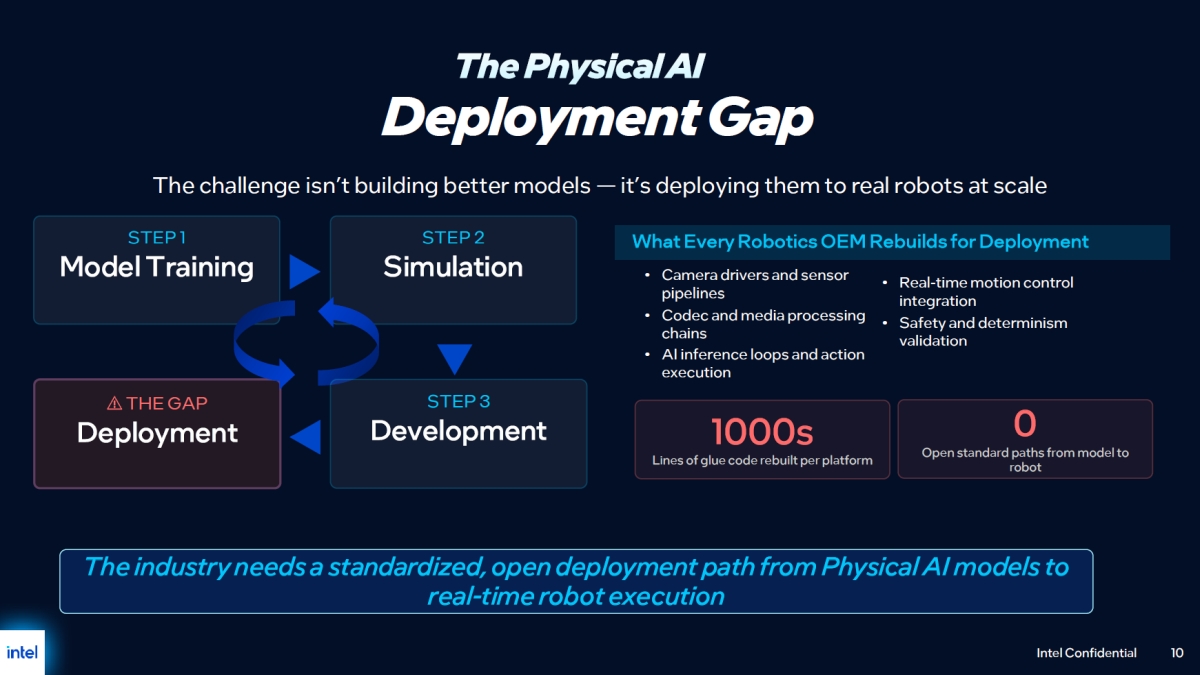
インテルがロボット開発の課題を解決、オープンなロボティクスライブラリで
インテルは、ロボット開発のための統合ソフトウェア開発キット「Robotics AI Suite」に、インテル製プロセッサに最適化された推論ランタイムを備えるオープンソースのロボティクスライブラリ「OpenVINO Physical AI Framework」を追加すると発表した。
Ultra-Reduced-Impact-Encased-Logging (URIEL): 航空機搭載ロボットシステムを使用した、熱帯林における選択的持続可能な伐採と収穫後の造林処理のための新しい方法を提案する
世界中の熱帯林は、経済的および政治的利益によって引き起こされる激しい森林破壊圧力にさらされており、科学的証拠は、この森林破壊が気候変動に寄与していることを示唆しています。この論文では、熱帯林のための新しい伐採方法、Ultra-Reduced-Impact-Encased-Logging (URIEL) を提案します。この新しい方法は、ドローンによる収穫後の造林処理と統合されたロボット工学と AI の集中的な使用と組み合わせたヘリロギング技術に基づいています。この方法に適した機器のコンセプトが開発され、寸法が決定され、デジタル概念実証で詳細が完成し、ヘリコプターと木材と距離のさまざまな組み合わせについて、効果的なデジタル シミュレーションと経済的実現可能性分析が実行されました。その結果、URIEL手法は経済性が高く、生態系サービスを維持しながら森林への巻き添え被害を実質的に排除できることが実証されました。この論文の主な結論は、科学的および技術的に満足のいく結果が得られたにもかかわらず、ウリエル法の実現可能性は、その状況に固有の利害関係者の統合に依存しているということです。政治政府。認定伐採会社。そして先住民族。
原文 (English)
Ultra-Reduced-Impact-Encased-Logging (URIEL): propose a new method for selective sustainable logging and post-harvest silvicultural treatment in tropical forest using airborne robotics systems
Tropical forests worldwide are under intense deforestation pressure driven by economic and political interests, and scientific evidence suggests this deforestation contributes to climate change. This paper proposes a novel logging method for tropical forests, Ultra-Reduced-Impact-Encased-Logging (URIEL). This new method is based on heli-logging techniques combined with intensive use of robotics and AI integrated with post-harvest silvicultural treatments performed by drones. The concept of appropriate equipment for this method was developed, dimensions were determined, details were completed in a digital proof of concept, and an effective digital simulation and economic feasibility analysis were carried out for various helicopter-timber-distance combinations. The results demonstrated that a URIEL method has high economic viability and makes it possible to virtually eliminate collateral damage to forests while maintaining ecosystem services. The main conclusion of this paper is that, despite the satisfactory scientific and technological results, the feasibility of a Uriel method depends on the integration of stakeholders intrinsic to the context: high-tech industry; political governments; certified logging companies; and native populations.
MiraBench: ロボット世界モデルにおける動作条件付き信頼性の評価
アクション条件付き世界モデルは、ロボット学習用のスケーラブルなシミュレーターとしてますます使用されていますが、現在の評価では、条件付けされたアクションの下でその予測が信頼できるという限られた証拠が提供されています。既存のベンチマークは主に視覚的な忠実度を重視しており、予測される未来が物理的に妥当であるか、命令されたアクションに忠実であるか、アクションが成功しないはずのときに失敗するように調整されているかどうかが不明確なままです。 \emph{動作条件付き信頼性} をロボット世界モデルの中核的な評価目標として定義する階層型ベンチマークである \textsc{MiraBench} を紹介します。 MiraBench は、このターゲットを 3 つの段階的に要求の高いレベルに分解します。 \emph{Physics Adherence} は、リファレンスフリーの物理的一貫性を評価します。 \emph{Action-Following Fidelity}: 予測がタスク関連のアクション入力を考慮しているかどうかを測定します。 \emph{楽観主義バイアス検出} は、失敗を誘発する行動の下で成功した結果を予測する傾向を調査します。この評価をサポートするために、タスク、失敗カテゴリ、主要な世界モデルにわたる 16,000 件を超える判断を含む人間による注釈付きコーパスを厳選しました。ベクトル条件付きロボット ワールド モデル、テキスト条件付き生成ワールド モデル、オープンウェイト システム、クローズド ソース システム、および複数のモデル スケールにわたる 12 の代表的なモデル構成を評価します。この広範なモデル環境全体にわたって、MiraBench は 3 つの中心的な発見を明らかにしました。視覚的な忠実度は、アクションの忠実度の代用としては不十分です。モデルのスケールを大きくしても、アクションの追従性が確実に改善されるわけではありません。そして楽観主義バイアスは現在のシステム全体に蔓延しています。 MiraBench は、評価を外観から動作条件付きの信頼性に移行することで、ロボットの世界モデルを忠実なシミュレーターとして評価および改善するための診断基盤を提供します。
原文 (English)
MiraBench: Evaluating Action-Conditioned Reliability in Robotic World Models
Action-conditioned world models are increasingly used as scalable simulators for robot learning, yet current evaluations provide limited evidence that their predictions are reliable under the actions they condition on. Existing benchmarks largely emphasize visual fidelity, leaving unclear whether predicted futures are physically plausible, faithful to commanded actions, and calibrated to failure when actions should not succeed. We introduce \textsc{MiraBench}, a hierarchical benchmark that defines \emph{action-conditioned reliability} as a core evaluation target for robotic world models. MiraBench decomposes this target into three progressively demanding levels: \emph{Physics Adherence}, which evaluates reference-free physical consistency; \emph{Action-Following Fidelity}, which measures whether predictions respect task-relevant action inputs; and \emph{Optimism Bias Detection}, which probes the tendency to predict successful outcomes under failure-inducing actions. To support this evaluation, we curate a human-annotated corpus with over 16,000 judgments across tasks, failure categories, and leading world models. We evaluate 12 representative model configurations spanning vector-conditioned robotic world models, text-conditioned generative world models, open-weight systems, closed-source systems, and multiple model scales. Across this broad model landscape, MiraBench reveals three central findings: visual fidelity is a poor proxy for action fidelity; increasing model scale does not reliably improve action following; and optimism bias is pervasive across current systems. By shifting evaluation from appearance to action-conditioned reliability, MiraBench provides a diagnostic foundation for assessing and improving robotic world models as faithful simulators.
極端な動的対称性により、全方向性と多機能のロボットが可能になります
対称性は自然システムにおける中心的な組織原理ですが、ロボット工学における統一的な設計戦略としての対称性の使用は主に幾何学的形状に限定されています。代わりに、動的作動能力のレベルで対称性を活用できることを示します。我々は、ロボットの達成可能な重心加速度の均一性である動的対称性を導入し、動的等方性という造語によってそれを形式化します。 1,000 を超えるシミュレーション形態にわたって、動的対称性が高くなると、軌道追跡、タスクの成功、堅牢性、回復力、エネルギー効率が一貫して向上し、動的等方性が理論的限界に近づくにつれて利点が最も顕著になることがわかりました。この状況を体系的に研究するために、私たちは動的対称性の増加の効果を調査するように設計された球形ロボットのファミリーである Argus を開発しました。 Argus ファミリのメンバーは、作動ジオメトリと動的対称レベルが異なりますが、ロボットの重心ダイナミクスを直接形成する放射状に配向されたリニア アクチュエータという共通のアーキテクチャ原理を共有しています。その中で、私たちは、極限に近い動的等方性を達成し、方向不変の移動、乱雑で変形しやすい地形の機敏な移動、迅速な自己安定化、および部分的なアクチュエーターの故障に対する回復力を実証した、物理的な 20 脚の Argus バリアントを構築しました。その分散センシングにより、連続動作中の全方向の知覚とオブジェクトのインタラクションがさらに可能になりました。これらの結果は、形態だけでなく達成可能なダイナミクスにおいても対称になるようにロボットを設計することが、不確実な地上および地球外環境において機敏性、堅牢性、多機能性への強力かつ一般的な経路を提供することを示しています。
原文 (English)
Extreme dynamic symmetry enables omnidirectional and multifunctional robots
Symmetry is a central organizing principle in natural systems, yet its use as a unifying design strategy in robotics has largely remained limited to geometric form. We show that symmetry can instead be leveraged at the level of dynamic actuation capability. We introduce dynamic symmetry, the uniformity of a robot's attainable center-of-mass accelerations, and formalize it through a measure coined as dynamic isotropy. Across more than 1000 simulated morphologies, we found that higher dynamic symmetry consistently improved trajectory tracking, task success, robustness, resiliency, and energy efficiency, with the benefits becoming most pronounced as dynamic isotropy approached its theoretical limit. To study this regime systematically, we developed Argus, a family of spherical robots designed to explore the effects of increasing dynamic symmetry. Members of the Argus family vary in their actuation geometry and dynamic symmetry level while sharing a common architectural principle: radially oriented linear actuators that directly shape the robot's center-of-mass dynamics. Among them, we built a physical 20-leg Argus variant that achieved near-extreme dynamic isotropy and demonstrated orientation-invariant locomotion, agile traversal of cluttered and deformable terrain, rapid self-stabilization, and resilience to partial actuator failures. Its distributed sensing further enabled omnidirectional perception and object interaction during continuous motion. These results show that designing robots for symmetry not only in morphology but also in their attainable dynamics provides a powerful and general pathway toward agility, robustness, and multifunctionality in uncertain terrestrial and extraterrestrial environments.
AnyMo: マスクされたモデリングを使用した任意のモダリティの条件付きモーション生成のスケーリング
条件付き人間動作生成は、コンピューター ビジョンとロボット工学における根本的な課題のままです。大きな進歩にもかかわらず、現在の手法は固定モダリティ構成やタスク固有のアーキテクチャによって制約を受けることが多く、クロスモーダル相互作用やマルチモーダル条件付き合成のスケーリング則はほとんど研究されていません。主要なボトルネックは、モダリティに合わせた大規模なモーション データの不足であり、多様な制御信号にわたる一般化が制限されています。この研究では、5,000 時間を超えるモーションと、正確に位置合わせされたマルチモーダル アノテーション (テキスト、音声、音楽、軌跡など) を備えた 320 万のシーケンスで構成される大規模で高品質のデータセットである OmniHuMo を紹介します。 OmniHuMo を活用して、Residual FSQ ベースのモーション トークナイザーとスケーラブルなマスク モデリング トランスフォーマーを組み合わせた統合マルチモーダル フレームワークである AnyMo を提案します。これにより、任意のモダリティの組み合わせの下で高品質のモーション合成が可能になります。広範な実験により、AnyMo は空間的属性とスタイル的属性の両方を柔軟に制御しながら、高忠実度の合成を実現できることが示されています。
原文 (English)
AnyMo: Scaling Any-Modality Conditional Motion Generation with Masked Modeling
Conditional human motion generation remains a fundamental challenge in computer vision and robotics. Despite significant progress, current methods are often constrained by fixed modality configurations and task-specific architectures, leaving cross-modal interactions and the scaling laws of multimodal-conditioned synthesis largely underexplored. A key bottleneck is the scarcity of large-scale modality-aligned motion data, limiting generalization across diverse control signals. In this work, we introduce OmniHuMo, a large-scale, high-quality dataset comprising over 5,000 hours of motion and 3.2 million sequences with precisely aligned multimodal annotations (e.g., text, speech, music, and trajectory). Leveraging OmniHuMo, we propose AnyMo, a unified multimodal framework combining a Residual FSQ-based motion tokenizer with a scalable masked modeling transformer, enabling high-quality motion synthesis under arbitrary modality combinations. Extensive experiments show that AnyMo achieves high-fidelity synthesis while offering flexible control over both spatial and stylistic attributes.
VLA-Pro: 視覚・言語・行動モデルのためのクロスタスク手続き型記憶転送
Vision-Language-Action(VLA)モデルは、汎用ロボット操作の強力な可能性を示していますが、オブジェクト、シーン、およびアクションパターン間で関連する経験を転送する必要がある目に見えないタスクに一般化するのにまだ苦労しています。この論文では、トレーニング時にタスク関連の手続き記憶を保存し、推論中にこれらの記憶を転送することで、タスク間の一般化を強化するように設計されたプラグアンドプレイ フレームワークである VLA-Pro を提案します。具体的には、VLA-Pro は、タスク固有の LoRA アダプターをトレーニング中にパラメーター化された手順メモリとして保存します。推論時に、VLA-Pro は現在のマルチモーダル コンテキストに基づいて関連する手続きメモリを取得し、これらのメモリを動的に融合して現在のアクション チャンクを生成します。 RoboTwin、RLBench、および実世界の操作タスクに関する実験では、VLA-Pro が複数のバックボーンにわたるクロスタスクの汎化を一貫して向上させ、シミュレーションで最大 207% の相対的な改善を達成し、実世界の成功率が 5.8% から 65.0% に増加することが示されています。これらの結果は、手続き型記憶の検索と適応が、モジュール性と実行の安定性を維持しながら、操作経験を新しいタスクに転送するための効果的なメカニズムを提供することを示唆しています。
原文 (English)
VLA-Pro: Cross-Task Procedural Memory Transfer for Vision-Language-Action Models
Vision-Language-Action~(VLA) models have shown strong potential for general-purpose robotic manipulation, yet they still struggle to generalize to unseen tasks that necessitate transferring relevant experience across objects, scenes, and action patterns. This paper proposes VLA-Pro, a plug-and-play framework designed to enhance cross-task generalization by storing task-relevant procedural memories at training time and transferring these memories during inference. Specifically, VLA-Pro stores task-specific LoRA adapters as parameterized procedural memories during training. At inference time, VLA-Pro retrieves relevant procedural memories based on the current multi-modal context and dynamically fuses these memories for generating the current action chunk. Experiments on RoboTwin, RLBench, and real-world manipulation tasks show that VLA-Pro consistently improves cross-task generalization across multiple backbones, achieving up to a 207% relative improvement in simulation and increasing real-world success rate from 5.8% to 65.0%. These results suggest that procedural memory retrieval and adaptation provide an effective mechanism for transferring manipulation experience to novel tasks while preserving modularity and execution stability.
セマンティック セグメンテーションにおけるシングルパス ピクセル単位の分布外検出のための Energy-Aware NECO
移動ロボットの信頼性の高いセマンティック セグメンテーションには、分布シフトの下での正確な密予測と堅牢な不確実性推定の両方が必要です。モンテカルロ ドロップアウトなどの強力な不確実性ベースラインでは、確率的な前方パスを繰り返す必要があり、エッジ プラットフォームに導入するのは困難です。私たちは、セマンティック セグメンテーション用のシングルパス ピクセル単位の分布外 (OOD) 検出器である Energy-Aware NECO を提案します。この方法では、デコーダの特徴から計算された中心を中心とする NECO スタイルの幾何学的比率とロジットベースのエネルギー スコアを組み合わせます。どちらのコンポーネントも、純粋なディストリビューション内検証に適合する統計を使用して標準化され、凸型の組み合わせによって分割および融合されます。真のピクセルレベルの OOD ラベルを使用して、miniMUAD サブセットでメソッドを評価します。提案されたハイブリッド スコアは、AUROC 0.8539 を達成し、NECO のみ (0.8280)、エネルギーのみ (0.8171)、およびアンサンブル予測エントロピー ベースライン (0.8124) を上回っています。追加の定性分析と動作点分析では、ハイブリッド検出器がシングルパス設計の効率上の利点を維持しながら、全体的なランキング パフォーマンスを向上させることが示されています。コードは https://github.com/boyuan-zhangx/Energy-Aware_NECO で入手できます。
原文 (English)
Energy-Aware NECO for Single-Pass Pixel-wise Out-of-Distribution Detection in Semantic Segmentation
Reliable semantic segmentation for mobile robots requires both accurate dense prediction and robust uncertainty estimation under distribution shift. Strong uncertainty baselines such as Monte Carlo Dropout often require repeated stochastic forward passes and are difficult to deploy on edge platforms. We propose Energy-Aware NECO, a single-pass pixel-wise out-of-distribution (OOD) detector for semantic segmentation. The method combines a centered NECO-style geometric ratio computed from decoder features with a logit-based Energy score. Both components are standardized using statistics fitted on a pure in-distribution validation split and fused through a convex combination. We evaluate the method on the miniMUAD subset using true pixel-level OOD labels. The proposed hybrid score achieves an AUROC of 0.8539, outperforming NECO-only (0.8280), Energy-only (0.8171), and an ensemble predictive-entropy baseline (0.8124). Additional qualitative and operating-point analyses show that the hybrid detector improves overall ranking performance while preserving the efficiency advantages of a single-pass design. Code is available at https://github.com/boyuan-zhangx/Energy-Aware_NECO
BORA: 現実世界の器用な VLA モデルに対するオフライン強化学習とオンライン残差適応の橋渡し
視覚言語アクション (VLA) モデルは、視覚言語理解を現実世界のロボット操作に基礎付けるための有望なパラダイムとして浮上しています。しかし、VLA ポリシーにとって器用な操作は、高次元のハンド コントロールと実行エラーの複合化により依然として困難であるため、視覚的に根拠のあるアクションの生成と物理的に信頼できる器用な実行の間のギャップを埋めるために、現実世界の RL ポストトレーニングが不可欠となっています。しかし、現実世界では、高次元の器用な探索は、時間的な不整合、サンプルの非効率、ハードウェアのリスクを引き起こすことがよくあります。これらの課題に対処するために、実際の器用な VLA モデル向けに設計されたオフラインからオンラインへの RL ポストトレーニング フレームワークである BORA を提案します。オフライン フェーズでは、BORA は VLM の認識トークンとアクション チャンクの両方を入力として受け取るクリティカルを構築します。この設計により、動作条件付きの価値ガイダンスが可能になり、批評家が視覚的なコンテキストだけを超えて器用な手の動きを評価できるようになります。その後のオンライン フェーズ中に、BORA は VLA ベースをフリーズし、軽量のヒューマンインザループ (HiL) チャンク単位の残差適応メカニズムを導入して、現実世界の実行エラーを軽減し、実際の物理環境内でオフラインで学習されたインテントをさらに修正します。オフラインの批評家を継承し、介入主導の報酬を採用することにより、BORA は実行の不一致を効果的に修正し、安定した事前学習として事前トレーニングされたポリシーを維持しながら、現実世界の物理的な差異に適応します。 5 つの複雑な現実世界の器用なタスクにわたる広範な評価により、BORA が純粋な模倣学習や従来の分離された RL ベースラインを大幅に上回り、標準設定下で平均成功率の 33% 絶対増加と、目に見えないオブジェクトの一般化で最大 43% の向上を達成したことが実証されました。
原文 (English)
BORA: Bridging Offline Reinforcement Learning and Online Residual Adaptation for Real-World Dexterous VLA Models
Vision-Language-Action (VLA) models have emerged as a promising paradigm for grounding visual-language understanding into real-world robotic manipulation. However, dexterous manipulation remains challenging for VLA policies due to high-dimensional hand control and compounding execution errors, which makes real-world RL post-training essential for bridging the gap between visually grounded action generation and physically reliable dexterous execution. However, high-dimensional dexterous exploration often triggers temporal inconsistency, sample inefficiency and hardware risks in the real world. To address these challenges, we propose BORA, an offline-to-online RL post-training framework designed for real-world dexterous VLA models. In the offline phase, BORA constructs a critic that takes both the VLM's cognition tokens and action chunks as inputs. This design enables action-conditioned value guidance, allowing the critic to evaluate dexterous hand motions beyond visual context alone. During the subsequent online phase, BORA freezes the VLA base and introduces a lightweight, Human-in-the-Loop (HiL) chunk-wise residual adaptation mechanism to mitigate real-world execution errors and further correct the offline-learned intents within the actual physical environment. By inheriting the offline critic and employing intervention-driven rewards, BORA effectively corrects execution discrepancies and adapts to real-world physical variances while preserving the pretrained policy as a stable prior. Extensive evaluations across five complex real-world dexterous tasks demonstrate that BORA significantly outperforms pure imitation learning and traditional decoupled RL baselines, achieving a 33% absolute increase in average success rate under standard settings and up to a 43% improvement in unseen object generalization.
Qwen-VLA: タスク、環境、ロボットの実施形態にわたる視覚、言語、アクションのモデリングを統合する
身体化されたインテリジェンスは、操作やナビゲーションなどの個々のタスクに特化したモデルを通じて研究されることが多く、その結果、機能が断片化され、タスク、環境、ロボットの実施形態全体にわたる一般化が限定されます。この研究では、異種の具現化された意思決定問題を単一の視覚・言語・行動モデル内で統合できるかどうかを研究します。我々は、Qwen のビジョン言語モデリング スタックを、知覚、理解、推論から、DiT ベースのアクション デコーダーを介した連続アクションと軌道生成まで拡張する、統一された具体化基盤モデルである Qwen-VLA を紹介します。 Qwen-VLA は、ロボット操作の軌跡、人間の自己中心的なデモンストレーション、合成シミュレーション データ、視覚と言語のナビゲーション データ、軌跡中心の監視、補助的な視覚言語データなど、さまざまなデータ ソースにわたる大規模な共同事前トレーニング レシピを使用してトレーニングされます。複数のロボット プラットフォームをサポートするために、ロボット固有のテキスト記述で現在の実施形態と制御規約を指定する、実施形態を意識したプロンプト コンディショニングを導入します。さらに、操作、ナビゲーション、および軌道予測を統合されたアクションおよび軌道予測フレームワークにキャストし、ロボットの形態、タスク ファミリ、および環境全体で転送可能な視覚的グラウンディング、空間推論、および継続的なアクションの生成を可能にします。操作、ナビゲーション、および軌道中心のベンチマークに関する実験では、シーンのレイアウト、背景、照明、オブジェクトの構成、およびロボットの実施形態が変化しても、一貫したマルチタスクのパフォーマンスと分布外の一般化が示されています。 Qwen-VLA-Instruct は、LIBERO で 97.9%、Simpler-WidowX で 73.7%、RoboTwin-Easy/Hard で 86.1%/87.2%、R2R で 69.0% OSR、RxR で 59.6% SR、実世界の ALOHA 実験での平均 OOD 成功率 76.9%、およびゼロショット成功率 26.6% を達成しました。 DOMINO の動的操作。
原文 (English)
Qwen-VLA: Unifying Vision-Language-Action Modeling across Tasks, Environments, and Robot Embodiments
Embodied intelligence is often studied through specialized models for individual tasks such as manipulation or navigation, resulting in fragmented capabilities and limited generalization across tasks, environments, and robot embodiments. In this work, we study whether heterogeneous embodied decision-making problems can be unified within a single vision-language-action model. We present Qwen-VLA, a unified embodied foundation model that extends Qwen's vision-language modeling stack from perception, understanding, and reasoning to continuous action and trajectory generation through a DiT-based action decoder. Qwen-VLA is trained with a large-scale joint pretraining recipe over diverse data sources, including robotics manipulation trajectories, human egocentric demonstrations, synthetic simulation data, vision-and-language navigation data, trajectory-centric supervision, and auxiliary vision-language data. To support multiple robot platforms, we introduce embodiment-aware prompt conditioning, where robot-specific textual descriptions specify the current embodiment and control convention. We further cast manipulation, navigation, and trajectory prediction into a unified action-and-trajectory prediction framework, enabling transferable visual grounding, spatial reasoning, and continuous action generation across robot morphologies, task families, and environments. Experiments on manipulation, navigation, and trajectory-centric benchmarks show consistent multi-task performance and out-of-distribution generalization under variations in scene layout, background, lighting, object configuration, and robot embodiment. Qwen-VLA-Instruct achieves 97.9% on LIBERO, 73.7% on Simpler-WidowX, 86.1%/87.2% on RoboTwin-Easy/Hard, 69.0% OSR on R2R, 59.6% SR on RxR, 76.9% average OOD success in real-world ALOHA experiments, and 26.6% zero-shot success on DOMINO dynamic manipulation.
RoboWits: ロボットによる創造的な問題解決に対する予期せぬ課題
予想外の課題に直面したときに問題を推論し、適応し、創造的に解決する能力は、現実世界の環境で動作するロボットにとって不可欠です。ただし、現在のロボットベンチマークは主にスキルレベルの実行を重視しており、そのような認知推論能力についての洞察は限られています。 RoboWits は、認知的推論、創造的なツールの使用、予期せぬ状況に対する堅牢性を体系的に評価するように設計された、両手操作のロボット ベンチマークです。高品質の推論中心の予期せぬシナリオのスケーラブルな構築を可能にするために、シードタスクの生成と検証、メトリック生成、シーン生成、およびタスクの突然変異のためのエージェントで構成される、マルチエージェントの協調フレームワークとして定式化された自動タスク生成パイプラインを提案します。パイプラインを使用して、30 の多様なシード タスクと、ジオメトリ、マテリアル、アセンブリ ベースの推論にわたって突然変異と段階的な難易度を備えた 208 のタスクを厳選しました。私たちは、人気のあるロボット ポリシー、事前トレーニングされた VLA、およびオラクルステート プランナーをベンチマークします。私たちの結果は、重大なパフォーマンスのギャップを明らかにしました。事前トレーニングされた VLA は、単一タスクの微調整後のシード タスクでは暫定的な成功を示しますが、突然変異したタスクでは実行に苦戦しており、推論、戦略の適応、欺瞞的または制約された環境に対する堅牢性を必要とする操作タスクでは脆弱であることを示唆しています。プロジェクトページは https://umass-embodied-agi.github.io/RoboWits から入手できます。
原文 (English)
RoboWits: Unexpected Challenges for Robotic Creative Problem Solving
The ability to reason, adapt, and creatively solve problems under unexpected challenges is essential for robots operating in real-world environments. However, current robotic benchmarks primarily emphasize skill-level execution and provide limited insight into such cognitive reasoning capabilities. We introduce RoboWits, a bi-manual robotic benchmark designed to systematically evaluate cognitive reasoning, creative tool use, and robustness to unexpected conditions. To enable scalable construction of high-quality reasoning-centric unexpected scenarios, we propose an automated task generation pipeline formulated as a multi-agent cooperative framework, comprising agents for seed task generation and verification, metric generation, scene generation, and task mutation. Using the pipeline, we curated 30 diverse seed tasks and 208 tasks with mutations and graded difficulty across geometry, material, and assembly-based reasoning. We benchmark popular robot policies, pre-trained VLAs, and oracle-state planners. Our results reveal a significant performance gap: while pre-trained VLAs exhibit preliminary success on seed tasks after single-task fine-tuning, they struggle to perform on mutated tasks, implying their brittleness in manipulation tasks requiring reasoning, strategy adaptation, and robustness to deceptive or constrained environments. Project page is available at https://umass-embodied-agi.github.io/RoboWits.
ScheduleStream: GPU で高速化されたマルチアーム タスクおよびモーション プランニングとスケジューリングのためのサンプラーを使用した時間計画
両手ロボットおよびヒューマノイド ロボットは、複数の腕を活用してタスクを効率的に完了できる人間のような能力が魅力です。ただし、ハイブリッド離散-連続動作空間の成長により、複数のアームを同時に制御することは計算上困難です。タスク アンド モーション プランニング (TAMP) アルゴリズムは、ハイブリッド スペースで効率的に計画を立てることができますが、通常は、腕の平行移動を可能にするスケジュールではなく、一度に 1 つの腕だけが動く計画を生成します。 TAMP を拡張してスケジュールを作成するために、サンプリング操作による計画とスケジューリングのための初の汎用フレームワークである ScheduleStream を紹介します。 ScheduleStream は、ハイブリッド持続アクションを使用して時間ダイナミクスをモデル化します。このアクションは、非同期的に開始でき、パラメーターの関数である期間持続します。私たちは、アプリケーション固有のメカニズムを使用せずに ScheduleStream の問題を解決する、ドメインに依存しないアルゴリズムを提案します。 ScheduleStream を Task and Motion Planning & Scheduling (TAMPAS) に適用し、サンプラー内で GPU アクセラレーションを使用して計画を迅速化します。シミュレーションで ScheduleStream アルゴリズムをいくつかのアブレーションと比較したところ、より効率的なソリューションが生成されることがわかりました。 https://schedulestream.github.io で、いくつかの実世界の両手ロボット タスクで ScheduleStream をデモンストレーションします。
原文 (English)
ScheduleStream: Temporal Planning with Samplers for GPU-Accelerated Multi-Arm Task and Motion Planning & Scheduling
Bimanual and humanoid robots are appealing because of their human-like ability to leverage multiple arms to efficiently complete tasks. However, controlling multiple arms at once is computationally challenging due to the growth in the hybrid discrete-continuous action space. Task and Motion Planning (TAMP) algorithms can efficiently plan in hybrid spaces but generally produce plans, where only one arm is moving at a time, rather than schedules that allow for parallel arm motion. In order to extend TAMP to produce schedules, we present ScheduleStream, the first general-purpose framework for planning & scheduling with sampling operations. ScheduleStream models temporal dynamics using hybrid durative actions, which can be started asynchronously and persist for a duration that's a function of their parameters. We propose domain-independent algorithms that solve ScheduleStream problems without any application-specific mechanisms. We apply ScheduleStream to Task and Motion Planning & Scheduling (TAMPAS), where we use GPU acceleration within samplers to expedite planning. We compare ScheduleStream algorithms to several ablations in simulation and find that they produce more efficient solutions. We demonstrate ScheduleStream on several real-world bimanual robot tasks at https://schedulestream.github.io.
ロボットはいつ考えるべきでしょうか?身体化されたロボットによる意思決定のための強化学習によるリソース認識型推論
身体化されたロボット システムは、環境との対話中に高レベルの推論、計画、意思決定をサポートするために、大規模言語モデル (LLM) ベースのエージェントにますます依存しています。ただし、LLM 推論を呼び出すと、かなりの計算遅延とリソースのオーバーヘッドが発生し、アクションの実行が中断され、システムの信頼性が低下する可能性があります。過度の推論は行動を遅らせる可能性がありますが、不十分な推論は誤った決定やタスクの失敗につながることがよくあります。このことは、実体化されたエージェントにとって根本的な疑問を引き起こします。それは、エージェントはいつ論理的に判断し、いつ行動すべきなのかということです。この研究では、具現化されたエージェントのリソースを認識したオーケストレーションのための階層フレームワークである RARRL (Resource-Aware Reasoning via Reinforcement Learning) を提案します。 RARRL は、低レベルの制御ポリシーを学習するのではなく、エージェントの意思決定層で動作する高レベルのオーケストレーション ポリシーを学習します。このポリシーにより、エージェントは、現在の観察、実行履歴、および残りのリソースに基づいて、推論を呼び出すかどうか、どの推論ロールを使用するか、どの程度の計算予算を割り当てるかを適応的に決定できます。 ALFRED ベンチマークから得られた経験的レイテンシ プロファイルによる評価を含む広範な実験により、固定推論戦略またはヒューリスティック推論戦略と比較して、RARRL が実行レイテンシを削減し堅牢性を高めながら、タスクの成功率を一貫して向上させることが示されています。これらの結果は、適応推論制御が信頼性が高く効率的な身体化ロボット エージェントを構築するために不可欠であることを示しています。
原文 (English)
When Should a Robot Think? Resource-Aware Reasoning via Reinforcement Learning for Embodied Robotic Decision-Making
Embodied robotic systems increasingly rely on large language model (LLM)-based agents to support high-level reasoning, planning, and decision-making during interactions with the environment. However, invoking LLM reasoning introduces substantial computational latency and resource overhead, which can interrupt action execution and reduce system reliability. Excessive reasoning may delay actions, while insufficient reasoning often leads to incorrect decisions and task failures. This raises a fundamental question for embodied agents: when should the agent reason, and when should it act? In this work, we propose RARRL (Resource-Aware Reasoning via Reinforcement Learning), a hierarchical framework for resource-aware orchestration of embodied agents. Rather than learning low-level control policies, RARRL learns a high-level orchestration policy that operates at the agent's decision-making layer. This policy enables the agent to adaptively determine whether to invoke reasoning, which reasoning role to employ, and how much computational budget to allocate based on current observations, execution history, and remaining resources. Extensive experiments, including evaluations with empirical latency profiles derived from the ALFRED benchmark, show that RARRL consistently improves task success rates while reducing execution latency and enhancing robustness compared with fixed or heuristic reasoning strategies. These results demonstrate that adaptive reasoning control is essential for building reliable and efficient embodied robotic agents.
AttenA+: ロボット基礎モデルにおけるアクションの不平等の修正
既存のロボット基盤モデルは強力ではありますが、時間的均一性の暗黙の仮定に基づいており、最適化中にすべてのアクションを同等の情報として扱います。言語モデリングから継承されたこの「フラットな」トレーニング パラダイムは、操作の基礎となる物理的な階層には無関心のままです。実際には、ロボットの軌道は基本的に不均質であり、低速セグメントが精度を要求される相互作用を通じてタスクの成功を左右することが多い一方で、高速動作はエラー耐性のある遷移として機能します。均一な損失重み付けと物理的臨界性の間のこのような不一致は、複雑で長期的なタスクにおける現在の視覚言語アクション (VLA) モデルと世界アクション モデル (WAM) のパフォーマンスを根本的に制限します。これを修正するために、速度主導のアクション アテンションを通じて運動学的に重要なセグメントを優先する、アーキテクチャに依存しないフレームワークである AttenA+ を導入します。逆速度場に基づいてトレーニング目標を再重み付けすることにより、AttenA+ はモデルの学習能力を操作の物理的要求に合わせて自然に調整します。プラグアンドプレイの拡張機能として、AttenA+ は構造の変更やパラメータの追加なしで既存のバックボーンに統合できます。広範な実験により、AttenA+ が現在の最先端モデルの上限を大幅に引き上げることが実証されました。具体的には、OpenVLA-OFT が Libero ベンチマークで 98.6% (+1.5%) に向上し、FastWAM が RoboTwin 2.0 で 92.4% (+0.6%) に向上します。 Franka マニピュレータの実世界での検証では、その堅牢性とクロスタスクの一般化がさらに実証されています。私たちの研究は、アクション シーケンスの固有の構造事前分布をマイニングすることで、標準のスケーリング則を非常に効率的で物理学を意識した補完が提供され、汎用ロボット制御への新たな道が開かれることを示唆しています。
原文 (English)
AttenA+: Rectifying Action Inequality in Robotic Foundation Models
Existing robotic foundation models, while powerful, are predicated on an implicit assumption of temporal homogeneity: treating all actions as equally informative during optimization. This "flat" training paradigm, inherited from language modeling, remains indifferent to the underlying physical hierarchy of manipulation. In reality, robot trajectories are fundamentally heterogeneous, where low-velocity segments often dictate task success through precision-demanding interactions, while high-velocity motions serve as error-tolerant transitions. Such a misalignment between uniform loss weighting and physical criticality fundamentally limits the performance of current Vision-Language-Action (VLA) models and World-Action Models (WAM) in complex, long-horizon tasks. To rectify this, we introduce AttenA+, an architecture-agnostic framework that prioritizes kinematically critical segments via velocity-driven action attention. By reweighting the training objective based on the inverse velocity field, AttenA+ naturally aligns the model's learning capacity with the physical demands of manipulation. As a plug-and-play enhancement, AttenA+ can be integrated into existing backbones without structural modifications or additional parameters. Extensive experiments demonstrate that AttenA+ significantly elevates the ceilings of current state-of-the-art models. Specifically, it improves OpenVLA-OFT to 98.6% (+1.5%) on the Libero benchmark and pushes FastWAM to 92.4% (+0.6%) on RoboTwin 2.0. Real-world validation on a Franka manipulator further showcases its robustness and cross-task generalization. Our work suggests that mining the intrinsic structural priors of action sequences offers a highly efficient, physics-aware complement to standard scaling laws, paving a new path for general-purpose robotic control.
HumanEgo: 人間の自己中心的なビデオの数分から学習するゼロショット ロボット
人間の自己中心的なビデオは、ロボットのハードウェアを使用せずに豊富な操作デモンストレーションをキャプチャしますが、視覚的外観と運動学の両方において人間とロボットの間に具現化のギャップがあるため、これらのスキルをロボットに伝達することは依然として困難です。私たちは、各人間のデモンストレーションを手とオブジェクトの相互作用のエンティティレベルの表現に引き上げ、あらゆる軌跡からの監視を増幅する高密度の補助目標を使用してフローマッチングポリシーをトレーニングすることにより、具現化のギャップを埋めるフレームワークであるHumanEgoを紹介します。 HumanEgo はロボット データを必要とせず、ハードウェアに依存せず、データ効率が高く、人間からロボットへのゼロショット転送が可能です。タスクあたりわずか 30 分の人間のビデオで、HumanEgo は 4 つの現実世界のタスクで平均 92.5% の成功率 (わずか 15 分で 75%) を達成し、時間の一致したロボットの遠隔操作を 41% 上回り、新しいロボット、カメラ、環境全体でゼロショットを確実に転送します。
原文 (English)
HumanEgo: Zero-Shot Robot Learning from Minutes of Human Egocentric Videos
Human egocentric video captures rich manipulation demonstrations without any robot hardware, yet transferring these skills to robots remains challenging due to the embodiment gap between human and robot in both visual appearance and kinematics. We present HumanEgo, a framework that bridges the embodiment gap by lifting each human demonstration to an entity-level representation of hand-object interaction, and training a flow matching policy with dense auxiliary objectives that amplify supervision from every trajectory. HumanEgo is robot-data-free, hardware-agnostic, data-efficient, and zero-shot human-to-robot transferable. With only 30 minutes of human videos per task, HumanEgo achieves 92.5% average success across four real-world tasks (75% with just 15 minutes), outperforms matched-time robot teleoperation by 41%, and robustly transfers zero-shot across novel robots, cameras, and environments. We release HumanEgo as an easy-to-use, open-source framework for learning robot policies directly from human data: https://github.com/TX-Leo/HumanEgo
Ultra-Reduced-Impact-Encased-Logging (URIEL): 航空機搭載ロボットシステムを使用した、熱帯林における選択的持続可能な伐採と収穫後の造林処理のための新しい方法を提案する
世界中の熱帯林は、経済的および政治的利益によって引き起こされる激しい森林破壊圧力にさらされており、科学的証拠は、この森林破壊が気候変動に寄与していることを示唆しています。この論文では、熱帯林のための新しい伐採方法、Ultra-Reduced-Impact-Encased-Logging (URIEL) を提案します。この新しい方法は、ドローンによる収穫後の造林処理と統合されたロボット工学と AI の集中的な使用と組み合わせたヘリロギング技術に基づいています。この方法に適した機器のコンセプトが開発され、寸法が決定され、デジタル概念実証で詳細が完成し、ヘリコプターと木材と距離のさまざまな組み合わせについて、効果的なデジタル シミュレーションと経済的実現可能性分析が実行されました。その結果、URIEL手法は経済性が高く、生態系サービスを維持しながら森林への巻き添え被害を実質的に排除できることが実証されました。この論文の主な結論は、科学的および技術的に満足のいく結果が得られたにもかかわらず、ウリエル法の実現可能性は、その状況に固有の利害関係者の統合に依存しているということです。政治政府。認定伐採会社。そして先住民族。
原文 (English)
Ultra-Reduced-Impact-Encased-Logging (URIEL): propose a new method for selective sustainable logging and post-harvest silvicultural treatment in tropical forest using airborne robotics systems
Tropical forests worldwide are under intense deforestation pressure driven by economic and political interests, and scientific evidence suggests this deforestation contributes to climate change. This paper proposes a novel logging method for tropical forests, Ultra-Reduced-Impact-Encased-Logging (URIEL). This new method is based on heli-logging techniques combined with intensive use of robotics and AI integrated with post-harvest silvicultural treatments performed by drones. The concept of appropriate equipment for this method was developed, dimensions were determined, details were completed in a digital proof of concept, and an effective digital simulation and economic feasibility analysis were carried out for various helicopter-timber-distance combinations. The results demonstrated that a URIEL method has high economic viability and makes it possible to virtually eliminate collateral damage to forests while maintaining ecosystem services. The main conclusion of this paper is that, despite the satisfactory scientific and technological results, the feasibility of a Uriel method depends on the integration of stakeholders intrinsic to the context: high-tech industry; political governments; certified logging companies; and native populations.
MiraBench: ロボット世界モデルにおける動作条件付き信頼性の評価
アクション条件付き世界モデルは、ロボット学習用のスケーラブルなシミュレーターとしてますます使用されていますが、現在の評価では、条件付けされたアクションの下でその予測が信頼できるという限られた証拠が提供されています。既存のベンチマークは主に視覚的な忠実度を重視しており、予測される未来が物理的に妥当であるか、命令されたアクションに忠実であるか、アクションが成功しないはずのときに失敗するように調整されているかどうかが不明確なままです。 \emph{動作条件付き信頼性} をロボット世界モデルの中核的な評価目標として定義する階層型ベンチマークである \textsc{MiraBench} を紹介します。 MiraBench は、このターゲットを 3 つの段階的に要求の高いレベルに分解します。 \emph{Physics Adherence} は、リファレンスフリーの物理的一貫性を評価します。 \emph{Action-Following Fidelity}: 予測がタスク関連のアクション入力を考慮しているかどうかを測定します。 \emph{楽観主義バイアス検出} は、失敗を誘発する行動の下で成功した結果を予測する傾向を調査します。この評価をサポートするために、タスク、失敗カテゴリ、主要な世界モデルにわたる 16,000 件を超える判断を含む人間による注釈付きコーパスを厳選しました。ベクトル条件付きロボット ワールド モデル、テキスト条件付き生成ワールド モデル、オープンウェイト システム、クローズド ソース システム、および複数のモデル スケールにわたる 12 の代表的なモデル構成を評価します。この広範なモデル環境全体にわたって、MiraBench は 3 つの中心的な発見を明らかにしました。視覚的な忠実度は、アクションの忠実度の代用としては不十分です。モデルのスケールを大きくしても、アクションの追従性が確実に改善されるわけではありません。そして楽観主義バイアスは現在のシステム全体に蔓延しています。 MiraBench は、評価を外観から動作条件付きの信頼性に移行することで、ロボットの世界モデルを忠実なシミュレーターとして評価および改善するための診断基盤を提供します。
原文 (English)
MiraBench: Evaluating Action-Conditioned Reliability in Robotic World Models
Action-conditioned world models are increasingly used as scalable simulators for robot learning, yet current evaluations provide limited evidence that their predictions are reliable under the actions they condition on. Existing benchmarks largely emphasize visual fidelity, leaving unclear whether predicted futures are physically plausible, faithful to commanded actions, and calibrated to failure when actions should not succeed. We introduce \textsc{MiraBench}, a hierarchical benchmark that defines \emph{action-conditioned reliability} as a core evaluation target for robotic world models. MiraBench decomposes this target into three progressively demanding levels: \emph{Physics Adherence}, which evaluates reference-free physical consistency; \emph{Action-Following Fidelity}, which measures whether predictions respect task-relevant action inputs; and \emph{Optimism Bias Detection}, which probes the tendency to predict successful outcomes under failure-inducing actions. To support this evaluation, we curate a human-annotated corpus with over 16,000 judgments across tasks, failure categories, and leading world models. We evaluate 12 representative model configurations spanning vector-conditioned robotic world models, text-conditioned generative world models, open-weight systems, closed-source systems, and multiple model scales. Across this broad model landscape, MiraBench reveals three central findings: visual fidelity is a poor proxy for action fidelity; increasing model scale does not reliably improve action following; and optimism bias is pervasive across current systems. By shifting evaluation from appearance to action-conditioned reliability, MiraBench provides a diagnostic foundation for assessing and improving robotic world models as faithful simulators.
極端な動的対称性により、全方向性と多機能のロボットが可能になります
対称性は自然システムにおける中心的な組織原理ですが、ロボット工学における統一的な設計戦略としての対称性の使用は主に幾何学的形状に限定されています。代わりに、動的作動能力のレベルで対称性を活用できることを示します。我々は、ロボットの達成可能な重心加速度の均一性である動的対称性を導入し、動的等方性という造語によってそれを形式化します。 1,000 を超えるシミュレーション形態にわたって、動的対称性が高くなると、軌道追跡、タスクの成功、堅牢性、回復力、エネルギー効率が一貫して向上し、動的等方性が理論的限界に近づくにつれて利点が最も顕著になることがわかりました。この状況を体系的に研究するために、私たちは動的対称性の増加の効果を調査するように設計された球形ロボットのファミリーである Argus を開発しました。 Argus ファミリのメンバーは、作動ジオメトリと動的対称レベルが異なりますが、ロボットの重心ダイナミクスを直接形成する放射状に配向されたリニア アクチュエータという共通のアーキテクチャ原理を共有しています。その中で、私たちは、極限に近い動的等方性を達成し、方向不変の移動、乱雑で変形しやすい地形の機敏な移動、迅速な自己安定化、および部分的なアクチュエーターの故障に対する回復力を実証した、物理的な 20 脚の Argus バリアントを構築しました。その分散センシングにより、連続動作中の全方向の知覚とオブジェクトのインタラクションがさらに可能になりました。これらの結果は、形態だけでなく達成可能なダイナミクスにおいても対称になるようにロボットを設計することが、不確実な地上および地球外環境において機敏性、堅牢性、多機能性への強力かつ一般的な経路を提供することを示しています。
原文 (English)
Extreme dynamic symmetry enables omnidirectional and multifunctional robots
Symmetry is a central organizing principle in natural systems, yet its use as a unifying design strategy in robotics has largely remained limited to geometric form. We show that symmetry can instead be leveraged at the level of dynamic actuation capability. We introduce dynamic symmetry, the uniformity of a robot's attainable center-of-mass accelerations, and formalize it through a measure coined as dynamic isotropy. Across more than 1000 simulated morphologies, we found that higher dynamic symmetry consistently improved trajectory tracking, task success, robustness, resiliency, and energy efficiency, with the benefits becoming most pronounced as dynamic isotropy approached its theoretical limit. To study this regime systematically, we developed Argus, a family of spherical robots designed to explore the effects of increasing dynamic symmetry. Members of the Argus family vary in their actuation geometry and dynamic symmetry level while sharing a common architectural principle: radially oriented linear actuators that directly shape the robot's center-of-mass dynamics. Among them, we built a physical 20-leg Argus variant that achieved near-extreme dynamic isotropy and demonstrated orientation-invariant locomotion, agile traversal of cluttered and deformable terrain, rapid self-stabilization, and resilience to partial actuator failures. Its distributed sensing further enabled omnidirectional perception and object interaction during continuous motion. These results show that designing robots for symmetry not only in morphology but also in their attainable dynamics provides a powerful and general pathway toward agility, robustness, and multifunctionality in uncertain terrestrial and extraterrestrial environments.
AnyMo: マスクされたモデリングを使用した任意のモダリティの条件付きモーション生成のスケーリング
条件付き人間動作生成は、コンピューター ビジョンとロボット工学における根本的な課題のままです。大きな進歩にもかかわらず、現在の手法は固定モダリティ構成やタスク固有のアーキテクチャによって制約を受けることが多く、クロスモーダル相互作用やマルチモーダル条件付き合成のスケーリング則はほとんど研究されていません。主要なボトルネックは、モダリティに合わせた大規模なモーション データの不足であり、多様な制御信号にわたる一般化が制限されています。この研究では、5,000 時間を超えるモーションと、正確に位置合わせされたマルチモーダル アノテーション (テキスト、音声、音楽、軌跡など) を備えた 320 万のシーケンスで構成される大規模で高品質のデータセットである OmniHuMo を紹介します。 OmniHuMo を活用して、Residual FSQ ベースのモーション トークナイザーとスケーラブルなマスク モデリング トランスフォーマーを組み合わせた統合マルチモーダル フレームワークである AnyMo を提案します。これにより、任意のモダリティの組み合わせの下で高品質のモーション合成が可能になります。広範な実験により、AnyMo は空間的属性とスタイル的属性の両方を柔軟に制御しながら、高忠実度の合成を実現できることが示されています。
原文 (English)
AnyMo: Scaling Any-Modality Conditional Motion Generation with Masked Modeling
Conditional human motion generation remains a fundamental challenge in computer vision and robotics. Despite significant progress, current methods are often constrained by fixed modality configurations and task-specific architectures, leaving cross-modal interactions and the scaling laws of multimodal-conditioned synthesis largely underexplored. A key bottleneck is the scarcity of large-scale modality-aligned motion data, limiting generalization across diverse control signals. In this work, we introduce OmniHuMo, a large-scale, high-quality dataset comprising over 5,000 hours of motion and 3.2 million sequences with precisely aligned multimodal annotations (e.g., text, speech, music, and trajectory). Leveraging OmniHuMo, we propose AnyMo, a unified multimodal framework combining a Residual FSQ-based motion tokenizer with a scalable masked modeling transformer, enabling high-quality motion synthesis under arbitrary modality combinations. Extensive experiments show that AnyMo achieves high-fidelity synthesis while offering flexible control over both spatial and stylistic attributes.
VLA-Pro: 視覚・言語・行動モデルのためのクロスタスク手続き型記憶転送
Vision-Language-Action(VLA)モデルは、汎用ロボット操作の強力な可能性を示していますが、オブジェクト、シーン、およびアクションパターン間で関連する経験を転送する必要がある目に見えないタスクに一般化するのにまだ苦労しています。この論文では、トレーニング時にタスク関連の手続き記憶を保存し、推論中にこれらの記憶を転送することで、タスク間の一般化を強化するように設計されたプラグアンドプレイ フレームワークである VLA-Pro を提案します。具体的には、VLA-Pro は、タスク固有の LoRA アダプターをトレーニング中にパラメーター化された手順メモリとして保存します。推論時に、VLA-Pro は現在のマルチモーダル コンテキストに基づいて関連する手続きメモリを取得し、これらのメモリを動的に融合して現在のアクション チャンクを生成します。 RoboTwin、RLBench、および実世界の操作タスクに関する実験では、VLA-Pro が複数のバックボーンにわたるクロスタスクの汎化を一貫して向上させ、シミュレーションで最大 207% の相対的な改善を達成し、実世界の成功率が 5.8% から 65.0% に増加することが示されています。これらの結果は、手続き型記憶の検索と適応が、モジュール性と実行の安定性を維持しながら、操作経験を新しいタスクに転送するための効果的なメカニズムを提供することを示唆しています。
原文 (English)
VLA-Pro: Cross-Task Procedural Memory Transfer for Vision-Language-Action Models
Vision-Language-Action~(VLA) models have shown strong potential for general-purpose robotic manipulation, yet they still struggle to generalize to unseen tasks that necessitate transferring relevant experience across objects, scenes, and action patterns. This paper proposes VLA-Pro, a plug-and-play framework designed to enhance cross-task generalization by storing task-relevant procedural memories at training time and transferring these memories during inference. Specifically, VLA-Pro stores task-specific LoRA adapters as parameterized procedural memories during training. At inference time, VLA-Pro retrieves relevant procedural memories based on the current multi-modal context and dynamically fuses these memories for generating the current action chunk. Experiments on RoboTwin, RLBench, and real-world manipulation tasks show that VLA-Pro consistently improves cross-task generalization across multiple backbones, achieving up to a 207% relative improvement in simulation and increasing real-world success rate from 5.8% to 65.0%. These results suggest that procedural memory retrieval and adaptation provide an effective mechanism for transferring manipulation experience to novel tasks while preserving modularity and execution stability.
セマンティック セグメンテーションにおけるシングルパス ピクセル単位の分布外検出のための Energy-Aware NECO
移動ロボットの信頼性の高いセマンティック セグメンテーションには、分布シフトの下での正確な密予測と堅牢な不確実性推定の両方が必要です。モンテカルロ ドロップアウトなどの強力な不確実性ベースラインでは、確率的な前方パスを繰り返す必要があり、エッジ プラットフォームに導入するのは困難です。私たちは、セマンティック セグメンテーション用のシングルパス ピクセル単位の分布外 (OOD) 検出器である Energy-Aware NECO を提案します。この方法では、デコーダの特徴から計算された中心を中心とする NECO スタイルの幾何学的比率とロジットベースのエネルギー スコアを組み合わせます。どちらのコンポーネントも、純粋なディストリビューション内検証に適合する統計を使用して標準化され、凸型の組み合わせによって分割および融合されます。真のピクセルレベルの OOD ラベルを使用して、miniMUAD サブセットでメソッドを評価します。提案されたハイブリッド スコアは、AUROC 0.8539 を達成し、NECO のみ (0.8280)、エネルギーのみ (0.8171)、およびアンサンブル予測エントロピー ベースライン (0.8124) を上回っています。追加の定性分析と動作点分析では、ハイブリッド検出器がシングルパス設計の効率上の利点を維持しながら、全体的なランキング パフォーマンスを向上させることが示されています。コードは https://github.com/boyuan-zhangx/Energy-Aware_NECO で入手できます。
原文 (English)
Energy-Aware NECO for Single-Pass Pixel-wise Out-of-Distribution Detection in Semantic Segmentation
Reliable semantic segmentation for mobile robots requires both accurate dense prediction and robust uncertainty estimation under distribution shift. Strong uncertainty baselines such as Monte Carlo Dropout often require repeated stochastic forward passes and are difficult to deploy on edge platforms. We propose Energy-Aware NECO, a single-pass pixel-wise out-of-distribution (OOD) detector for semantic segmentation. The method combines a centered NECO-style geometric ratio computed from decoder features with a logit-based Energy score. Both components are standardized using statistics fitted on a pure in-distribution validation split and fused through a convex combination. We evaluate the method on the miniMUAD subset using true pixel-level OOD labels. The proposed hybrid score achieves an AUROC of 0.8539, outperforming NECO-only (0.8280), Energy-only (0.8171), and an ensemble predictive-entropy baseline (0.8124). Additional qualitative and operating-point analyses show that the hybrid detector improves overall ranking performance while preserving the efficiency advantages of a single-pass design. Code is available at https://github.com/boyuan-zhangx/Energy-Aware_NECO
BORA: 現実世界の器用な VLA モデルに対するオフライン強化学習とオンライン残差適応の橋渡し
視覚言語アクション (VLA) モデルは、視覚言語理解を現実世界のロボット操作に基礎付けるための有望なパラダイムとして浮上しています。しかし、VLA ポリシーにとって器用な操作は、高次元のハンド コントロールと実行エラーの複合化により依然として困難であるため、視覚的に根拠のあるアクションの生成と物理的に信頼できる器用な実行の間のギャップを埋めるために、現実世界の RL ポストトレーニングが不可欠となっています。しかし、現実世界では、高次元の器用な探索は、時間的な不整合、サンプルの非効率、ハードウェアのリスクを引き起こすことがよくあります。これらの課題に対処するために、実際の器用な VLA モデル向けに設計されたオフラインからオンラインへの RL ポストトレーニング フレームワークである BORA を提案します。オフライン フェーズでは、BORA は VLM の認識トークンとアクション チャンクの両方を入力として受け取るクリティカルを構築します。この設計により、動作条件付きの価値ガイダンスが可能になり、批評家が視覚的なコンテキストだけを超えて器用な手の動きを評価できるようになります。その後のオンライン フェーズ中に、BORA は VLA ベースをフリーズし、軽量のヒューマンインザループ (HiL) チャンク単位の残差適応メカニズムを導入して、現実世界の実行エラーを軽減し、実際の物理環境内でオフラインで学習されたインテントをさらに修正します。オフラインの批評家を継承し、介入主導の報酬を採用することにより、BORA は実行の不一致を効果的に修正し、安定した事前学習として事前トレーニングされたポリシーを維持しながら、現実世界の物理的な差異に適応します。 5 つの複雑な現実世界の器用なタスクにわたる広範な評価により、BORA が純粋な模倣学習や従来の分離された RL ベースラインを大幅に上回り、標準設定下で平均成功率の 33% 絶対増加と、目に見えないオブジェクトの一般化で最大 43% の向上を達成したことが実証されました。
原文 (English)
BORA: Bridging Offline Reinforcement Learning and Online Residual Adaptation for Real-World Dexterous VLA Models
Vision-Language-Action (VLA) models have emerged as a promising paradigm for grounding visual-language understanding into real-world robotic manipulation. However, dexterous manipulation remains challenging for VLA policies due to high-dimensional hand control and compounding execution errors, which makes real-world RL post-training essential for bridging the gap between visually grounded action generation and physically reliable dexterous execution. However, high-dimensional dexterous exploration often triggers temporal inconsistency, sample inefficiency and hardware risks in the real world. To address these challenges, we propose BORA, an offline-to-online RL post-training framework designed for real-world dexterous VLA models. In the offline phase, BORA constructs a critic that takes both the VLM's cognition tokens and action chunks as inputs. This design enables action-conditioned value guidance, allowing the critic to evaluate dexterous hand motions beyond visual context alone. During the subsequent online phase, BORA freezes the VLA base and introduces a lightweight, Human-in-the-Loop (HiL) chunk-wise residual adaptation mechanism to mitigate real-world execution errors and further correct the offline-learned intents within the actual physical environment. By inheriting the offline critic and employing intervention-driven rewards, BORA effectively corrects execution discrepancies and adapts to real-world physical variances while preserving the pretrained policy as a stable prior. Extensive evaluations across five complex real-world dexterous tasks demonstrate that BORA significantly outperforms pure imitation learning and traditional decoupled RL baselines, achieving a 33% absolute increase in average success rate under standard settings and up to a 43% improvement in unseen object generalization.
Qwen-VLA: タスク、環境、ロボットの実施形態にわたる視覚、言語、アクションのモデリングを統合する
身体化されたインテリジェンスは、操作やナビゲーションなどの個々のタスクに特化したモデルを通じて研究されることが多く、その結果、機能が断片化され、タスク、環境、ロボットの実施形態全体にわたる一般化が限定されます。この研究では、異種の具現化された意思決定問題を単一の視覚・言語・行動モデル内で統合できるかどうかを研究します。我々は、Qwen のビジョン言語モデリング スタックを、知覚、理解、推論から、DiT ベースのアクション デコーダーを介した連続アクションと軌道生成まで拡張する、統一された具体化基盤モデルである Qwen-VLA を紹介します。 Qwen-VLA は、ロボット操作の軌跡、人間の自己中心的なデモンストレーション、合成シミュレーション データ、視覚と言語のナビゲーション データ、軌跡中心の監視、補助的な視覚言語データなど、さまざまなデータ ソースにわたる大規模な共同事前トレーニング レシピを使用してトレーニングされます。複数のロボット プラットフォームをサポートするために、ロボット固有のテキスト記述で現在の実施形態と制御規約を指定する、実施形態を意識したプロンプト コンディショニングを導入します。さらに、操作、ナビゲーション、および軌道予測を統合されたアクションおよび軌道予測フレームワークにキャストし、ロボットの形態、タスク ファミリ、および環境全体で転送可能な視覚的グラウンディング、空間推論、および継続的なアクションの生成を可能にします。操作、ナビゲーション、および軌道中心のベンチマークに関する実験では、シーンのレイアウト、背景、照明、オブジェクトの構成、およびロボットの実施形態が変化しても、一貫したマルチタスクのパフォーマンスと分布外の一般化が示されています。 Qwen-VLA-Instruct は、LIBERO で 97.9%、Simpler-WidowX で 73.7%、RoboTwin-Easy/Hard で 86.1%/87.2%、R2R で 69.0% OSR、RxR で 59.6% SR、実世界の ALOHA 実験での平均 OOD 成功率 76.9%、およびゼロショット成功率 26.6% を達成しました。 DOMINO の動的操作。
原文 (English)
Qwen-VLA: Unifying Vision-Language-Action Modeling across Tasks, Environments, and Robot Embodiments
Embodied intelligence is often studied through specialized models for individual tasks such as manipulation or navigation, resulting in fragmented capabilities and limited generalization across tasks, environments, and robot embodiments. In this work, we study whether heterogeneous embodied decision-making problems can be unified within a single vision-language-action model. We present Qwen-VLA, a unified embodied foundation model that extends Qwen's vision-language modeling stack from perception, understanding, and reasoning to continuous action and trajectory generation through a DiT-based action decoder. Qwen-VLA is trained with a large-scale joint pretraining recipe over diverse data sources, including robotics manipulation trajectories, human egocentric demonstrations, synthetic simulation data, vision-and-language navigation data, trajectory-centric supervision, and auxiliary vision-language data. To support multiple robot platforms, we introduce embodiment-aware prompt conditioning, where robot-specific textual descriptions specify the current embodiment and control convention. We further cast manipulation, navigation, and trajectory prediction into a unified action-and-trajectory prediction framework, enabling transferable visual grounding, spatial reasoning, and continuous action generation across robot morphologies, task families, and environments. Experiments on manipulation, navigation, and trajectory-centric benchmarks show consistent multi-task performance and out-of-distribution generalization under variations in scene layout, background, lighting, object configuration, and robot embodiment. Qwen-VLA-Instruct achieves 97.9% on LIBERO, 73.7% on Simpler-WidowX, 86.1%/87.2% on RoboTwin-Easy/Hard, 69.0% OSR on R2R, 59.6% SR on RxR, 76.9% average OOD success in real-world ALOHA experiments, and 26.6% zero-shot success on DOMINO dynamic manipulation.
RoboWits: ロボットによる創造的な問題解決に対する予期せぬ課題
予想外の課題に直面したときに問題を推論し、適応し、創造的に解決する能力は、現実世界の環境で動作するロボットにとって不可欠です。ただし、現在のロボットベンチマークは主にスキルレベルの実行を重視しており、そのような認知推論能力についての洞察は限られています。 RoboWits は、認知的推論、創造的なツールの使用、予期せぬ状況に対する堅牢性を体系的に評価するように設計された、両手操作のロボット ベンチマークです。高品質の推論中心の予期せぬシナリオのスケーラブルな構築を可能にするために、シードタスクの生成と検証、メトリック生成、シーン生成、およびタスクの突然変異のためのエージェントで構成される、マルチエージェントの協調フレームワークとして定式化された自動タスク生成パイプラインを提案します。パイプラインを使用して、30 の多様なシード タスクと、ジオメトリ、マテリアル、アセンブリ ベースの推論にわたって突然変異と段階的な難易度を備えた 208 のタスクを厳選しました。私たちは、人気のあるロボット ポリシー、事前トレーニングされた VLA、およびオラクルステート プランナーをベンチマークします。私たちの結果は、重大なパフォーマンスのギャップを明らかにしました。事前トレーニングされた VLA は、単一タスクの微調整後のシード タスクでは暫定的な成功を示しますが、突然変異したタスクでは実行に苦戦しており、推論、戦略の適応、欺瞞的または制約された環境に対する堅牢性を必要とする操作タスクでは脆弱であることを示唆しています。プロジェクトページは https://umass-embodied-agi.github.io/RoboWits から入手できます。
原文 (English)
RoboWits: Unexpected Challenges for Robotic Creative Problem Solving
The ability to reason, adapt, and creatively solve problems under unexpected challenges is essential for robots operating in real-world environments. However, current robotic benchmarks primarily emphasize skill-level execution and provide limited insight into such cognitive reasoning capabilities. We introduce RoboWits, a bi-manual robotic benchmark designed to systematically evaluate cognitive reasoning, creative tool use, and robustness to unexpected conditions. To enable scalable construction of high-quality reasoning-centric unexpected scenarios, we propose an automated task generation pipeline formulated as a multi-agent cooperative framework, comprising agents for seed task generation and verification, metric generation, scene generation, and task mutation. Using the pipeline, we curated 30 diverse seed tasks and 208 tasks with mutations and graded difficulty across geometry, material, and assembly-based reasoning. We benchmark popular robot policies, pre-trained VLAs, and oracle-state planners. Our results reveal a significant performance gap: while pre-trained VLAs exhibit preliminary success on seed tasks after single-task fine-tuning, they struggle to perform on mutated tasks, implying their brittleness in manipulation tasks requiring reasoning, strategy adaptation, and robustness to deceptive or constrained environments. Project page is available at https://umass-embodied-agi.github.io/RoboWits.
ScheduleStream: GPU で高速化されたマルチアーム タスクおよびモーション プランニングとスケジューリングのためのサンプラーを使用した時間計画
両手ロボットおよびヒューマノイド ロボットは、複数の腕を活用してタスクを効率的に完了できる人間のような能力が魅力です。ただし、ハイブリッド離散-連続動作空間の成長により、複数のアームを同時に制御することは計算上困難です。タスク アンド モーション プランニング (TAMP) アルゴリズムは、ハイブリッド スペースで効率的に計画を立てることができますが、通常は、腕の平行移動を可能にするスケジュールではなく、一度に 1 つの腕だけが動く計画を生成します。 TAMP を拡張してスケジュールを作成するために、サンプリング操作による計画とスケジューリングのための初の汎用フレームワークである ScheduleStream を紹介します。 ScheduleStream は、ハイブリッド持続アクションを使用して時間ダイナミクスをモデル化します。このアクションは、非同期的に開始でき、パラメーターの関数である期間持続します。私たちは、アプリケーション固有のメカニズムを使用せずに ScheduleStream の問題を解決する、ドメインに依存しないアルゴリズムを提案します。 ScheduleStream を Task and Motion Planning & Scheduling (TAMPAS) に適用し、サンプラー内で GPU アクセラレーションを使用して計画を迅速化します。シミュレーションで ScheduleStream アルゴリズムをいくつかのアブレーションと比較したところ、より効率的なソリューションが生成されることがわかりました。 https://schedulestream.github.io で、いくつかの実世界の両手ロボット タスクで ScheduleStream をデモンストレーションします。
原文 (English)
ScheduleStream: Temporal Planning with Samplers for GPU-Accelerated Multi-Arm Task and Motion Planning & Scheduling
Bimanual and humanoid robots are appealing because of their human-like ability to leverage multiple arms to efficiently complete tasks. However, controlling multiple arms at once is computationally challenging due to the growth in the hybrid discrete-continuous action space. Task and Motion Planning (TAMP) algorithms can efficiently plan in hybrid spaces but generally produce plans, where only one arm is moving at a time, rather than schedules that allow for parallel arm motion. In order to extend TAMP to produce schedules, we present ScheduleStream, the first general-purpose framework for planning & scheduling with sampling operations. ScheduleStream models temporal dynamics using hybrid durative actions, which can be started asynchronously and persist for a duration that's a function of their parameters. We propose domain-independent algorithms that solve ScheduleStream problems without any application-specific mechanisms. We apply ScheduleStream to Task and Motion Planning & Scheduling (TAMPAS), where we use GPU acceleration within samplers to expedite planning. We compare ScheduleStream algorithms to several ablations in simulation and find that they produce more efficient solutions. We demonstrate ScheduleStream on several real-world bimanual robot tasks at https://schedulestream.github.io.
ロボットはいつ考えるべきでしょうか?身体化されたロボットによる意思決定のための強化学習によるリソース認識型推論
身体化されたロボット システムは、環境との対話中に高レベルの推論、計画、意思決定をサポートするために、大規模言語モデル (LLM) ベースのエージェントにますます依存しています。ただし、LLM 推論を呼び出すと、かなりの計算遅延とリソースのオーバーヘッドが発生し、アクションの実行が中断され、システムの信頼性が低下する可能性があります。過度の推論は行動を遅らせる可能性がありますが、不十分な推論は誤った決定やタスクの失敗につながることがよくあります。このことは、実体化されたエージェントにとって根本的な疑問を引き起こします。それは、エージェントはいつ論理的に判断し、いつ行動すべきなのかということです。この研究では、具現化されたエージェントのリソースを認識したオーケストレーションのための階層フレームワークである RARRL (Resource-Aware Reasoning via Reinforcement Learning) を提案します。 RARRL は、低レベルの制御ポリシーを学習するのではなく、エージェントの意思決定層で動作する高レベルのオーケストレーション ポリシーを学習します。このポリシーにより、エージェントは、現在の観察、実行履歴、および残りのリソースに基づいて、推論を呼び出すかどうか、どの推論ロールを使用するか、どの程度の計算予算を割り当てるかを適応的に決定できます。 ALFRED ベンチマークから得られた経験的レイテンシ プロファイルによる評価を含む広範な実験により、固定推論戦略またはヒューリスティック推論戦略と比較して、RARRL が実行レイテンシを削減し堅牢性を高めながら、タスクの成功率を一貫して向上させることが示されています。これらの結果は、適応推論制御が信頼性が高く効率的な身体化ロボット エージェントを構築するために不可欠であることを示しています。
原文 (English)
When Should a Robot Think? Resource-Aware Reasoning via Reinforcement Learning for Embodied Robotic Decision-Making
Embodied robotic systems increasingly rely on large language model (LLM)-based agents to support high-level reasoning, planning, and decision-making during interactions with the environment. However, invoking LLM reasoning introduces substantial computational latency and resource overhead, which can interrupt action execution and reduce system reliability. Excessive reasoning may delay actions, while insufficient reasoning often leads to incorrect decisions and task failures. This raises a fundamental question for embodied agents: when should the agent reason, and when should it act? In this work, we propose RARRL (Resource-Aware Reasoning via Reinforcement Learning), a hierarchical framework for resource-aware orchestration of embodied agents. Rather than learning low-level control policies, RARRL learns a high-level orchestration policy that operates at the agent's decision-making layer. This policy enables the agent to adaptively determine whether to invoke reasoning, which reasoning role to employ, and how much computational budget to allocate based on current observations, execution history, and remaining resources. Extensive experiments, including evaluations with empirical latency profiles derived from the ALFRED benchmark, show that RARRL consistently improves task success rates while reducing execution latency and enhancing robustness compared with fixed or heuristic reasoning strategies. These results demonstrate that adaptive reasoning control is essential for building reliable and efficient embodied robotic agents.
AttenA+: ロボット基礎モデルにおけるアクションの不平等の修正
既存のロボット基盤モデルは強力ではありますが、時間的均一性の暗黙の仮定に基づいており、最適化中にすべてのアクションを同等の情報として扱います。言語モデリングから継承されたこの「フラットな」トレーニング パラダイムは、操作の基礎となる物理的な階層には無関心のままです。実際には、ロボットの軌道は基本的に不均質であり、低速セグメントが精度を要求される相互作用を通じてタスクの成功を左右することが多い一方で、高速動作はエラー耐性のある遷移として機能します。均一な損失重み付けと物理的臨界性の間のこのような不一致は、複雑で長期的なタスクにおける現在の視覚言語アクション (VLA) モデルと世界アクション モデル (WAM) のパフォーマンスを根本的に制限します。これを修正するために、速度主導のアクション アテンションを通じて運動学的に重要なセグメントを優先する、アーキテクチャに依存しないフレームワークである AttenA+ を導入します。逆速度場に基づいてトレーニング目標を再重み付けすることにより、AttenA+ はモデルの学習能力を操作の物理的要求に合わせて自然に調整します。プラグアンドプレイの拡張機能として、AttenA+ は構造の変更やパラメータの追加なしで既存のバックボーンに統合できます。広範な実験により、AttenA+ が現在の最先端モデルの上限を大幅に引き上げることが実証されました。具体的には、OpenVLA-OFT が Libero ベンチマークで 98.6% (+1.5%) に向上し、FastWAM が RoboTwin 2.0 で 92.4% (+0.6%) に向上します。 Franka マニピュレータの実世界での検証では、その堅牢性とクロスタスクの一般化がさらに実証されています。私たちの研究は、アクション シーケンスの固有の構造事前分布をマイニングすることで、標準のスケーリング則を非常に効率的で物理学を意識した補完が提供され、汎用ロボット制御への新たな道が開かれることを示唆しています。
原文 (English)
AttenA+: Rectifying Action Inequality in Robotic Foundation Models
Existing robotic foundation models, while powerful, are predicated on an implicit assumption of temporal homogeneity: treating all actions as equally informative during optimization. This "flat" training paradigm, inherited from language modeling, remains indifferent to the underlying physical hierarchy of manipulation. In reality, robot trajectories are fundamentally heterogeneous, where low-velocity segments often dictate task success through precision-demanding interactions, while high-velocity motions serve as error-tolerant transitions. Such a misalignment between uniform loss weighting and physical criticality fundamentally limits the performance of current Vision-Language-Action (VLA) models and World-Action Models (WAM) in complex, long-horizon tasks. To rectify this, we introduce AttenA+, an architecture-agnostic framework that prioritizes kinematically critical segments via velocity-driven action attention. By reweighting the training objective based on the inverse velocity field, AttenA+ naturally aligns the model's learning capacity with the physical demands of manipulation. As a plug-and-play enhancement, AttenA+ can be integrated into existing backbones without structural modifications or additional parameters. Extensive experiments demonstrate that AttenA+ significantly elevates the ceilings of current state-of-the-art models. Specifically, it improves OpenVLA-OFT to 98.6% (+1.5%) on the Libero benchmark and pushes FastWAM to 92.4% (+0.6%) on RoboTwin 2.0. Real-world validation on a Franka manipulator further showcases its robustness and cross-task generalization. Our work suggests that mining the intrinsic structural priors of action sequences offers a highly efficient, physics-aware complement to standard scaling laws, paving a new path for general-purpose robotic control.
HumanEgo: 人間の自己中心的なビデオの数分から学習するゼロショット ロボット
人間の自己中心的なビデオは、ロボットのハードウェアを使用せずに豊富な操作デモンストレーションをキャプチャしますが、視覚的外観と運動学の両方において人間とロボットの間に具現化のギャップがあるため、これらのスキルをロボットに伝達することは依然として困難です。私たちは、各人間のデモンストレーションを手とオブジェクトの相互作用のエンティティレベルの表現に引き上げ、あらゆる軌跡からの監視を増幅する高密度の補助目標を使用してフローマッチングポリシーをトレーニングすることにより、具現化のギャップを埋めるフレームワークであるHumanEgoを紹介します。 HumanEgo はロボット データを必要とせず、ハードウェアに依存せず、データ効率が高く、人間からロボットへのゼロショット転送が可能です。タスクあたりわずか 30 分の人間のビデオで、HumanEgo は 4 つの現実世界のタスクで平均 92.5% の成功率 (わずか 15 分で 75%) を達成し、時間の一致したロボットの遠隔操作を 41% 上回り、新しいロボット、カメラ、環境全体でゼロショットを確実に転送します。
原文 (English)
HumanEgo: Zero-Shot Robot Learning from Minutes of Human Egocentric Videos
Human egocentric video captures rich manipulation demonstrations without any robot hardware, yet transferring these skills to robots remains challenging due to the embodiment gap between human and robot in both visual appearance and kinematics. We present HumanEgo, a framework that bridges the embodiment gap by lifting each human demonstration to an entity-level representation of hand-object interaction, and training a flow matching policy with dense auxiliary objectives that amplify supervision from every trajectory. HumanEgo is robot-data-free, hardware-agnostic, data-efficient, and zero-shot human-to-robot transferable. With only 30 minutes of human videos per task, HumanEgo achieves 92.5% average success across four real-world tasks (75% with just 15 minutes), outperforms matched-time robot teleoperation by 41%, and robustly transfers zero-shot across novel robots, cameras, and environments. We release HumanEgo as an easy-to-use, open-source framework for learning robot policies directly from human data: https://github.com/TX-Leo/HumanEgo
「国産人型ロボ」量産化へ 東大発スタートアップ 三菱自動車も出資
東京大学発のロボット開発スタートアップHighlandersは、国産人型ロボットの量産化を目指す取り組みを始めると発表した。
管理された自律性としてのインテリジェンス: エージェントティック AI システムの障害、エスカレーション、ガバナンス
自律型およびエージェント型 AI システムがロボット環境やヒューマンマシン環境で拡張されるにつれて、幻覚や永続的だが不当な行動の管理は未解決の課題のままです。この論文では、これらの失敗の原因を単にモデルや調整の制限に帰するのではなく、無制限の自律性、つまり不確実性の増大に関係なくエージェントが動作し続けるべきであるという前提のアーキテクチャ上の脆弱性を調査します。これは、認識的ドリフトを検出し、推論を中断し、回復を試み、信頼性が低下したときに最終的に制御を放棄する形式的な能力を通じて、インテリジェントな行動を定義する管理された自律性の理論を導入します。この理論は、安定状態、メタ認知状態、支援状態、および規制状態を特徴とする 4 層フレームワークである SMARt (Self-Managing Multi-tier Autonomous Reasoning with Regulated/Revoked transitions) モデルを介してインスタンス化されます。時間制限付きで保護されたペトリ ネット定式化を開発することで、システムの理論的に制限されたプロパティを確立し、アーキテクチャがどのようにしてエスカレーションを正式に義務付け、無効な出力を制限し、指定された条件下でガバナンスの到達可能性を確保できるかを実証します。さらに、完全性と健全性の基準が満たされていると仮定して、さまざまな運用設定 (ヘルスケア、ロボット工学など) にわたってドメイン固有のトリガー セットを組み込むことで、体系的に安全性を維持できる方法を分析します。これらのトリガーは適応するように設計されているため、SMARt モデルは、時間の経過とともに、エージェントの操作範囲を安全に制御された拡張に対応します。私たちは、自律性ライフサイクル内で障害管理を形式化することが、信頼性が高く管理された人工知能を実現するための重要なステップであると結論付けています。
原文 (English)
Intelligence as Managed Autonomy: Failure, Escalation, and Governance for Agentic AI Systems
As autonomous and agentic AI systems scale in robotic and human-machine environments, managing hallucination and persistent but unjustified action remains an open challenge. Rather than attributing these failures solely to model or alignment limitations, this paper explores the architectural vulnerability of unbounded autonomy - the presumption that an agent should continue operating regardless of rising uncertainty. It introduces a theory of managed autonomy that defines intelligent behavior through the formal capacity to detect epistemic drift, suspend reasoning, attempt recovery, and ultimately surrender control when reliability diminishes. We instantiate this theory via the SMARt (Self-Managing Multi-tier Autonomous Reasoning with Regulated/Revoked transitions) model, a four-layer framework featuring Stable, Meta-cognitive, Assisted, and Regulated states. By developing a timed, guarded Petri net formulation, we establish theoretically bounded properties for the system, demonstrating how architecture can formally mandate escalation, constrain invalid outputs, and ensure governance reachability under specified conditions. We further analyze how incorporating domain-specific trigger sets across varied operational settings (e.g., healthcare, robotics, etc.) can systematically preserve safety, assuming completeness and soundness criteria are met. Because these triggers are designed to be adaptive, the SMARt model accommodates the safe, controlled expansion of an agent's operational scope over time. We conclude that formalizing failure management within the autonomy lifecycle is a crucial step toward realizing reliable and governed artificial intelligence.
Trinity: 合成データを活用して非構造化屋外環境向けにクラスに依存しない地形とセマンティック セグメンテーションを統合
地形の理解は、構造化されていない屋外環境で動作する移動ロボットにとっての基礎です。既存のビジョンベースの通過可能性推定手法は、ロボット固有のアノテーションまたはセマンティック クラス マッピングに依存しているため、プラットフォーム間の転送性が制限され、ロボットの機能が変化した場合にはコストのかかる再アノテーションが必要になります。一方、標準のセマンティック セグメンテーション手法は、特定の事前定義されたクラスのみに焦点を当てており、さまざまな地形をキャプチャしていません。この研究では、Trinity と呼ばれる、クラス固有のセマンティック セグメンテーションとクラスに依存しないテレイン セグメンテーションを統合ネットワーク内で共同実行するトランスフォーマー ベースのアーキテクチャを提案します。地形領域は、事前定義された意味ラベルやロボット依存の通過可能性スコアを使用せず、視覚的な外観のみに基づいてセグメント化されます。この定式化により、ロボットに依存しない視覚的な地形の事前学習が可能になり、通過可能性の推定、視覚的なオドメトリ、ミッション計画などの下流タスクのロボット固有のエクスペリエンスと組み合わせることができます。多様な地形の外観による大規模なトレーニングを可能にするために、OAISYS シミュレーターを拡張し、クラスに依存しない地形サンプルを含む RUGD からインスピレーションを得た合成データセットである RUGDSynth を導入しました。さらに、クラス固有の地形ラベルとクラスに依存しない地形ラベルの両方で注釈が付けられた現実世界の画像を提供する EXTerra データセットを紹介します。実験は、提案されたタスクの実現可能性と、複雑な屋外環境における共同セグメンテーションアプローチの有効性を実証します。コードとデータセットは、この出版物とともに (レビュー後) リリースされます。
原文 (English)
Trinity: Unifying Class-Agnostic Terrain and Semantic Segmentation for Unstructured Outdoor Environments by Leveraging Synthetic Data
Terrain understanding is fundamental for mobile robots operating in unstructured outdoor environments. Existing vision-based traversability estimation methods rely on robot-specific annotations or semantic class mappings, limiting transferability across platforms and requiring costly re-annotation when robot capabilities change, while standard semantic segmentation methods only focus on specific predefined classes, which do not capture the variety of terrains. In this work, we propose a transformer-based architecture that jointly performs class-specific semantic segmentation and class-agnostic terrain segmentation within a unified network, called Trinity. Terrain regions are segmented based solely on visual appearance, without predefined semantic labels or robot-dependent traversability scores. This formulation enables the learning of robot-agnostic visual terrain priors that can be combined with robot-specific experience for downstream tasks such as traversability estimation, visual odometry, and mission planning. To enable large-scale training with diverse terrain appearances, we extend the OAISYS simulator and introduce RUGDSynth, a synthetic dataset inspired by RUGD with class-agnostic terrain samples. Furthermore, we present the EXTerra Dataset, providing real-world images annotated with both class-specific and class-agnostic terrain labels. Experiments demonstrate the feasibility of the proposed task and the effectiveness of our joint segmentation approach in complex outdoor environments. Code and datasets will be released with this publication (after review).
分散型マルチロボット動作計画のためのシミュレーションに基づく普及
分散型マルチロボットの動作計画では、グローバルなセンシングや信頼性の高い通信を行わずに、各ロボットがローカルな観察から衝突のない軌道を生成する必要があります。しかし、既存のプランナーのほとんどは、古典的であろうと学習ベースであろうと、ローカル観察の静的スナップショットから軌道を生成するため、隣接するロボットの将来の動作を予測する能力が制限されます。ロボットの数が増加し、環境がより乱雑になるにつれて、この制限は重要になります。この課題を克服するために、このペーパーでは、制約を意識した拡散モデル (CADM) に基づいて構築された分散フレームワークであるシミュレーション情報拡散 (SID) を紹介します。 SID は、まず CADM を使用して、現在観察されている状態から隣接するロボットの将来の軌道をシミュレーションし、次に同じ CADM を使用して、これらのシミュレーションによって通知された安全制約の下で各ロボットの独自の軌道を計画します。重要なのは、近隣ノードの正確なシミュレーションにより、非常に混雑したシナリオで必要な場合にのみ調整をトリガーする最小限の通信スキームが可能になることです。さまざまな環境での実験では、SID が計画の有効性と制約の満足度の点でベースライン手法を常に上回っており、108 台のロボットと 160 個の障害物を含むシナリオに対応できることが示されています。
原文 (English)
Simulation-Informed Diffusion for Decentralized Multi-robot Motion Planning
Decentralized multi-robot motion planning requires each robot to generate collision-free trajectories from local observations, without global sensing or reliable communication. However, most existing planners, whether classical or learning-based, generate trajectories from a static snapshot of the local observation, which limits their ability to anticipate the future behavior of neighboring robots. This limitation is critical as the number of robots increases and the environment becomes more cluttered. To overcome this challenge, this paper introduces Simulation-Informed Diffusion (SID), a decentralized framework built on constraint-aware diffusion models (CADM). SID first uses CADM to simulate the future trajectories of neighboring robots from their currently observed states, and then uses the same CADM to plan each robot's own trajectory under safety constraints informed by these simulations. Crucially, the accurate simulation of neighbors enables a minimal communication scheme that triggers coordination only when necessary in highly congested scenarios. Experiments across diverse environments show that SID consistently outperforms baseline methods in terms of planning effectiveness and constraint satisfaction, and scales to scenarios with 108 robots and 160 obstacles.
HumanoidMimicGen: 全身計画による運動器操作のためのデータ生成
模倣学習は、人型ロボットの歩行と操作の両方を訓練するための有望なアプローチですが、大量のデモンストレーションが必要であり、時間がかかり、遠隔操作でデータを収集するのは困難です。既存のデータ生成アルゴリズムは、マニピュレーター向けのデモンストレーションを自動的に合成できますが、ヒューマノイドの高次元複合アクション空間には腕、脚、胴体が含まれるため、ヒューマノイドには効果がありません。人型の脚の移動操作データを生成する手法、HumanoidMimicGen を紹介します。私たちの方法は、接触が多い全身スキルを少数のソースデモンストレーションから新しい状態に適応させ、オブジェクトのポーズの変化全体を一般化します。これらの片腕および双腕スキルを全身の移動および操作計画と交互に配置することにより、このメソッドは、さまざまなシーンやレイアウトにわたって安定した衝突のないデータを生成します。私たちのアプローチを評価するために、人型の移動操作能力をテストする 9 つの多様なタスクを含む新しいシミュレートされた移動操作ベンチマークを導入します。そこでは、HumanoidMimicGen が模倣学習用の大規模なデータセットを自動的に生成し、データ生成とポリシー学習の決定がモデルのパフォーマンスにどのような影響を与えるかを体系的に研究できることを実証します。 HumanoidMimicGen によって生成されたデータと同時トレーニングされた全身視覚運動ポリシーは、実世界のデータのみでトレーニングされたポリシーより 20% 優れていることを示します。
原文 (English)
HumanoidMimicGen: Data Generation for Loco-Manipulation via Whole-Body Planning
Imitation learning is a promising approach for training humanoid robots to both walk and manipulate, but it requires a large number of demonstrations, which are time-intensive and difficult to collect via teleoperation. Existing data-generation algorithms can automatically synthesize demonstrations for manipulators, but they are ineffective on humanoids because their high-dimensional composite action spaces involve arms, legs, and torsos. We present HumanoidMimicGen, a method for generating humanoid legged loco-manipulation data. Our method adapts contact-rich whole-body skills from a handful of source demonstrations to new states, generalizing across changes in object pose. By interleaving these single- and dual-arm skills with whole-body locomotion and manipulation planning, the method generates stable, collision-free data across diverse scenes and layouts. To evaluate our approach, we introduce a new simulated loco-manipulation benchmark containing nine diverse tasks that test humanoid loco-manipulation capabilities. There, we demonstrate that HumanoidMimicGen automatically generates large datasets for imitation learning and enables a systematic study of how data generation and policy learning decisions impact model performance. We show that whole-body visuomotor policies co-trained with data generated by HumanoidMimicGen outperform those trained only on real-world data by 20%.
ビデオモデルをジェネラリストロボットポリシーに変える
ビデオ生成モデルは、さまざまな実施形態や環境にわたる複雑なタスクの完了を示すビデオを生成できる、有望なロボット工学のバックボーンとして浮上しています。最近の研究では、動作ラベル付きデータを使用してビデオ モデルを微調整することで、将来の観察と動作を共同で予測するロボット基盤モデルが提案されています。この論文では、代替アプローチの限界をテストします。つまり、ビデオ プランナーをそのままにして、実施形態固有の逆ダイナミクス モデル (IDM) をトレーニングするという方法です。この分離により、いくつかの自然な利点がもたらされます。ビデオ プランナーは実施形態に依存せず、IDM を再トレーニングすることなくさまざまなビデオ モデルを簡単に交換でき、IDM はすぐに利用できるセルフプレイ データを使用して独立してトレーニングできます。私たちは、アクションのないビデオ ワールド モデルと、ロボットの具現化であるヤコビアンに基づいて慎重に設計された IDM を組み合わせた、閉ループのビデオ to アクション ポリシーを提案します。私たちの IDM 設計はデータ効率が高く、高次元のアクション空間に拡張可能であることを実証します。私たちのポリシーは、Video-to-Embodied Robot Action Model (VERA) という造語であり、ゼロショットのパンダの腕操作や 16-DoF アレグロハンドの器用な立方体の再方向付けなど、シミュレートされたベンチマークと現実世界のベンチマーク全体で優れたパフォーマンスを達成します。同じビデオ プランナを、異なる実施形態固有の IDM と組み合わせることで、複数の実施形態にわたって使用できます。私たちの結果は、分離されたビデオプランニングと忠実なビデオからアクションへの変換が、ゼロショット、クロスエンティティ、一般化可能なロボット制御に向けた実行可能な代替手段であることを示しています。詳細な結果は、プロジェクトの Web サイト (https://vera.csail.mit.edu) でご覧いただけます。
原文 (English)
Turning Video Models into Generalist Robot Policies
Video generative models have emerged as a promising robotics backbone, capable of generating videos that depict the completion of complex tasks across embodiments and environments. Recent work proposes robot foundation models that jointly predict future observations and actions by finetuning video models with action-labeled data. In this paper, we test the limits of an alternative approach: leave the video planner as-is while training an embodiment-specific inverse dynamics model (IDM). This decoupling offers several natural benefits: the video planner remains embodiment-agnostic, different video models can be interchanged easily without re-training the IDM, and the IDM can be independently trained with readily available self-play data. We present a closed-loop, video-to-action policy that combines an action-free video world model with a carefully-designed IDM based on the robot embodiment Jacobian. We demonstrate that our IDM design is both data-efficient and scalable to high-dimensional action spaces. Our policy, which we coin the Video-to-Embodied Robot Action Model (VERA), achieves strong performance across simulated and real-world benchmarks, including zero-shot Panda arm manipulation and 16-DoF Allegro-hand dexterous cube re-orientation. The same video planner can be used across multiple embodiments by pairing it with different embodiment-specific IDMs. Our results show that decoupled video planning plus faithful video-to-action translation is a viable alternative route towards zero-shot, cross-embodiment, and generalizable robot control. More results are available on our project website: https://vera.csail.mit.edu.
産業用時系列における明示的な倹約的区分多項式関係の特定: マニピュレーター ロボットへの応用
この論文では、比較的多数の生の特徴が関与する可能性がある、節約された明示的な区分多項式関係を特定する問題を扱います。このアルゴリズムは、異常の検出と位置特定のコンテキストで正規性の特徴付けを導き出すことを可能にする、節約された暗黙の関係を生成する、最近提案された識別アルゴリズムを活用します。この論文で提案するアルゴリズムは、暗黙的な表現に含まれる多項式のセットを使用して構築される明示的な区分表現を導出することでさらに一歩進んでいます。このフレームワークは、6 軸マニピュレーター ロボットの逆モデルの倹約的な明示的表現を特定する問題について説明されています。さらに、モデルが目に見えない使用状況に直面した場合に、最先端の DNN 構造と比較して倹約モデルの一般化能力を調査するように設計された 4 軸ロボットに関するさらなる実験も示されています。
原文 (English)
Identifying Explicit Parsimonious Piece-wise Polynomial Relationships in Industrial time-series: Application to manipulator robots
This paper addresses the problem of identifying parsimonious explicit piece-wise polynomial relationships that might involve a relatively large number of raw features. The algorithm leverages a recently proposed identification algorithm that yields parsimonious implicit relationships enabling to derive normality characterization in the context of anomaly detection and localization. The algorithm proposed in this paper goes a step further by deriving explicit piece-wise representations that are built using the set of polynomials involved in the implicit representations. The framework is illustrated on the problem of identifying parsimonious explicit representations of the inverse model of a 6-axis manipulator robot. Moreover, further experiments on a 4-axis robot are also shown which are designed to investigate the generalization capability of parsimonious models compared to state-of-the-art DNNs structures, when models face unseen contexts of use.
CLANE: イベントカメラからニューロモーフィックハードウェア上のアクションを継続的に学習
以前のクラスを忘れることなく、新しい人間の行動を認識し、継続的に学習することは、新たな AR/VR およびロボット工学アプリケーションの要件です。これらのアプリケーションでは、プライバシーと低遅延の適応のために、オンデバイスの処理と学習の両方が不可欠です。イベント カメラは、ニューロモーフィック処理と自然に互換性のあるまばらな非同期出力により視覚センシングの効率に対処します。しかし、ニューロモーフィック ハードウェアを使用したイベントベースのアクション認識のための継続的なオンデバイス学習パイプラインを導入したシステムはこれまでにありませんでした。 Intel Loihi 2 上でエンドツーエンドで展開された、イベント カメラからニューロモーフィック ハードウェア上のアクションを継続的に学習する CLANE を紹介します。 CLANE は、時空間特徴抽出用のスパイク 2D CNN と、オンチップ学習ヘッドとしての CLP-SNN を組み合わせており、時間集約層と固定小数点正規化層 (どちらも新しい Loihi 2 モジュール) を介してアクション クリップに拡張されています。現実世界の条件下でキャプチャされた 50 クラスのデータセットである THU E-ACT-50 では、CLANE は継続的な学習タスクで 70.4% の精度を達成しながら、シーケンシャル CNN+GRU+CLP エッジ GPU ベースラインと比較して 100 倍以上のエネルギー削減と 16 倍の低遅延を実現しており、3 つの評価レベルにわたる等アルゴリズムのクロスプラットフォーム ベンチマークを通じて検証されています。
原文 (English)
CLANE: Continual Learning of Actions on Neuromorphic Hardware from Event Cameras
Recognizing and continuously learning novel human actions without forgetting prior classes is a requirement for emerging AR/VR and robotics applications. For these applications, both on-device processing and learning are essential for privacy and low-latency adaptation. Event cameras address the efficiency of visual sensing with sparse, asynchronous output that is naturally compatible with neuromorphic processing. Yet no prior system has deployed a continual on-device learning pipeline for event-based action recognition using neuromorphic hardware. We present CLANE, Continual Learning of Actions on Neuromorphic Hardware from Event Cameras, deployed end-to-end on Intel Loihi 2. CLANE combines a spiking 2D CNN for spatiotemporal feature extraction with CLP-SNN as its on-chip learning head, extended to action clips via a Temporal Aggregation Layer and a fixed-point Normalization Layer, both novel Loihi 2 modules. On THU E-ACT-50, a 50-class dataset captured under real-world conditions, CLANE achieves 70.4% accuracy in a continual learning task while delivering more than 100x energy reduction and 16x lower latency over a sequential CNN+GRU+CLP edge GPU baseline, validated through iso-algorithm cross-platform benchmarking across three evaluation levels.
DSSE: ドローンの群れ探索環境
Drone Swarm Search プロジェクトは、\textsc{PettingZoo} に基づく環境で、マルチエージェント (またはシングルエージェント) 強化学習アルゴリズムと組み合わせて使用されます。それはエージェント (ドローン) がターゲット (難破した人々) を見つけなければならない環境です。エージェントはターゲットの位置を知らず、ターゲットまでの距離に関連する報酬を受け取りません。ただし、エージェントは、ターゲットがマップの特定のセル内に存在する確率を受け取ります。このプロジェクトの目的は、入力として動的確率を必要とする強化学習アルゴリズムの研究を支援することです。このソフトウェアのバージョン 2 について説明した査読済みの論文が JOSS に公開されています: https://doi.org/10.21105/joss.06746。
原文 (English)
DSSE: a drone swarm search environment
The Drone Swarm Search project is an environment, based on \textsc{PettingZoo}, that is to be used in conjunction with multi-agent (or single-agent) reinforcement learning algorithms. It is an environment in which the agents (drones), have to find the targets (shipwrecked people). The agents do not know the position of the target and do not receive rewards related to their own distance to the target(s). However, the agents receive the probabilities of the target(s) being in a certain cell of the map. The aim of this project is to aid in the study of reinforcement learning algorithms that require dynamic probabilities as inputs. A peer-reviewed paper describing version 2 of this software has been published in JOSS: https://doi.org/10.21105/joss.06746.
SPARC: エージェントの丁寧なコミュニケーションによる空間認識型のパス計画
分散型マルチロボット経路計画 (MRPP) には効率的な通信が不可欠ですが、既存の学習型通信手法では、空間的な近さに関係なく、隣接するすべてのロボットを平等に扱うため、調整が最も重要な混雑した地域では注意力が薄れてしまいます。我々は、関係強化マルチヘッド アテンション (RMHA) を提案します。これは、ペアごとのマンハッタン距離をアテンションの重み計算に明示的に組み込む通信メカニズムで、各ロボットが空間的に関連する近隣からのメッセージに動的に優先順位を付けることができます。距離制限アテンション マスクと GRU ゲート メッセージ フュージョンを組み合わせることで、RMHA は MAPPO とシームレスに統合され、安定したエンドツーエンド トレーニングが実現します。 40x40 グリッド上の 8 台のトレーニング ロボットから 128 台のテスト ロボットへのゼロショット一般化では、RMHA は障害物密度 30% で約 75% の成功率を達成し、最良のベースラインを 25% ポイント以上上回りました。アブレーション研究により、距離関係エンコーディングが高密度環境での成功率向上に大きく貢献していることが確認されています。索引用語 - マルチロボット経路計画、グラフアテンションメカニズム、マルチヘッドアテンション、通信最適化、協調的意思決定
原文 (English)
SPARC: Spatial-Aware Path Planning via Attentive Agent Communication
Efficient communication is critical for decentralized Multi-Robot Path Planning (MRPP), yet existing learned communication methods treat all neighboring robots equally regardless of their spatial proximity, leading to diluted attention in congested regions where coordination matters most. We propose Relation enhanced Multi Head Attention (RMHA), a communication mechanism that explicitly embeds pairwise Manhattan distances into the attention weight computation, enabling each robot to dynamically prioritize messages from spatially relevant neighbors. Combined with a distance-constrained attention mask and GRU gated message fusion, RMHA integrates seamlessly with MAPPO for stable end-to-end training. In zero-shot generalization from 8 training robots to 128 test robots on 40x40 grids, RMHA achieves approximately 75 percent success rate at 30 percent obstacle density outperforming the best baseline by over 25 percentage points. Ablation studies confirm that distance-relation encoding is the key contributor to success rate improvement in high-density environments. Index Terms-Multi-robot path planning, graph attention mechanism, multi-head attention, communication optimization, cooperative decision-making
音声言語処理タスクのためのロボットと患者および医師と患者の医療対話のデータセット
大規模言語モデル (LLM) は、人工知能 (AI) に大幅な改善をもたらし、汎用タスクに適用できます。ただし、テキストまたは音声による医療相談への応用は、まだ未解決の研究問題です。本稿では、患者との相談を行うことができるMed-AIを訓練・評価するための新しい音声データセットであるMeDial-Speechを提案する。これは、ロボットと患者および医師と患者の対話から現実的な環境で収集されたもので、111 時間以上の音声データ (データ拡張なし) が含まれており、レビー小体型認知症、心不全、肩の痛み、狭心症という 4 つの健康状態をカバーしています。さらに、GPT-5 mini、DeepSeek-V3、Claude Sonnet 4 という 3 つの最先端の LLM を評価するために、文選択 (20 のオプション) による対話ベンチマークを提案します。実験の結果、Claude Sonnet 4 が文選択において最高であり、手動転写を使用した場合は 71.1%、自動転写を使用した場合は 74.7% であり、すべての LLM は確率的予測に非常に自信を持っていることが明らかになりました。医療対話における正しい文または誤った文の選択。このデータセットは、非営利目的の場合、https://huggingface.co/datasets/hcuayahu/MeDial-Speech で無料で利用できます。
原文 (English)
A Dataset of Robot-Patient and Doctor-Patient Medical Dialogues for Spoken Language Processing Tasks
Large Language Models (LLMs) have brought huge improvements to Artificial Intelligence (AI), which can be applied to general-purpose tasks. However, their application to textual or spoken medical consultations is still an open research problem. This paper proposes MeDial-Speech, a novel speech dataset for training and evaluating Med-AIs that can carry out consultations with patients. It was collected in realistic environments from robot-patient and doctor-patient dialogues, contains 111+ hours of speech data (without data augmentation), and covers four health conditions: Lewy body dementia, heart failure, shoulder pain, and angina. In addition, we propose a dialogue benchmark via sentence selection (with 20 options) to evaluate three state-of-the-art LLMs: GPT-5 mini, DeepSeek-V3, and Claude Sonnet 4. Experimental results reveal that Claude Sonnet 4 is the best in sentence selection, with 71.1% accuracy using manual transcriptions and 74.7% using automatic transcriptions, and that all LLMs are highly overconfident in their probabilistic predictions, regardless of selecting correct or incorrect sentences in medical dialogues. This dataset is free of charge for non-commercial purposes at: https://huggingface.co/datasets/hcuayahu/MeDial-Speech
FineVLA: 制御可能なビジョン、言語、アクション ポリシーのためのきめ細かい命令調整
視覚言語アクション (VLA) モデルは、ロボットのタスクを完了するだけでなく、それらのタスクをどのように実行するかについての人間の指示に従うこともますます期待されています。ただし、既存のロボット データセットは通常、軌道と大まかな目標レベルの言語を組み合わせており、アクティブなアーム、アプローチ方向、接触領域などの実行に不可欠な詳細は未指定のままです。これにより、操作可能なポリシーの学習とロボットによるビデオの理解が制限されます。アクションに合わせたきめ細かい VLA 監視のためのオープン フレームワークである FineVLA を紹介します。このフレームワークには次のものが含まれます。(1) 10 のオープンソース ロボット データセットから 85,000 タスクにわたる 972,247 の軌跡を統合し、47,159 のきめ細かい軌跡からなる人間が検証したデータセットである FineVLA-Data を構築するデータ構築ツール。 (2) 500 件のビデオ、10,816 件の基本的な事実、および 1,030 件の VQA 質問を含む保持されたベンチマーク。 (3) スケーラブルできめ細かいアノテーションを実現するロボット工学に特化した VLM アノテーター。 (4) きめの細かい指示と生の目標レベルの指示を制御して組み合わせてトレーニングされた、操作可能な VLA ポリシー。私たちの実験では 3 つの発見が得られました。まず、きめ細かい監視によって目標レベルの成功が犠牲になることはありません。FG のみは、Raw のみよりも設定全体で +1.4 ~ +8.1 成功率ポイントが向上します。第二に、きめの細かい命令と生の命令は補完的であり、FG:Raw = 1:2 ~ 1:1 でピークに達する一貫した逆 U の傾向に従います。最適な混合設定は、RoboTwin シミュレーションでは 86.8%/82.5%、現実世界の双腕操作では 62.7/100 に達します (Raw のみの 49.9 に対して)。第三に、きめ細かい監視により、操縦可能な制御が向上します。実際の最大のゲインは、ポーズ (+23)、色 (+18)、およびアプローチ方向 (+18) に現れます。これは、目標レベルの指示ではガイダンスが提供されない要素です。全体として、きめの細かい言語により、目標レベルの指示、つまり何を達成するかとともに実行方法を指定する必要があります。プロジェクトページ:https://finevla.xlang.ai/
原文 (English)
FineVLA: Fine-Grained Instruction Alignment for Steerable Vision-Language-Action Policies
Vision-Language-Action (VLA) models are increasingly expected to not only complete robot tasks, but also follow human instructions about how those tasks should be executed. However, existing robot datasets usually pair trajectories with coarse goal-level language, leaving execution-critical details such as active arm, approach direction, and contact region unspecified. This limits steerable policy learning and robotic video understanding. We introduce FineVLA, an open framework for action-aligned fine-grained VLA supervision. The framework includes: (1) a data construction tool that unifies 972,247 trajectories across 85K tasks from 10 open-source robot datasets and builds FineVLA-Data, a human-verified dataset of 47,159 fine-grained trajectories; (2) a held-out benchmark with 500 videos, 10,816 atomic facts, and 1,030 VQA questions; (3) a robotics-specialized VLM annotator for scalable fine-grained annotation; and (4) a steerable VLA policy trained with controlled mixtures of fine-grained and raw goal-level instructions. Our experiments yield three findings. First, fine-grained supervision does not sacrifice goal-level success: FG-only improves over Raw-only by +1.4 to +8.1 success-rate points across settings. Second, fine-grained and raw instructions are complementary, following a consistent inverted-U trend peaking at FG:Raw = 1:2 to 1:1. The best mixed setting reaches 86.8%/82.5% in RoboTwin simulation and 62.7/100 in real-world dual-arm manipulation (vs. 49.9 Raw-only). Third, fine-grained supervision improves steerable control: the largest real-world gains appear on pose (+23), color (+18), and approach direction (+18)--factors where goal-level instructions provide no guidance. Overall, fine-grained language should augment goal-level instructions: specifying how to execute alongside what to achieve. Project page: https://finevla.xlang.ai/
物理的にネイティブな世界モデル: 生成世界モデリングに関するハミルトニアンの視点
ワールド モデルは最近、身体化されたインテリジェンス、ロボット工学、自動運転、モデルベースの強化学習の中心的なパラダイムとして再浮上しています。しかし、現在の世界モデル研究は、視覚的な未来合成を重視する 2D ビデオ生成モデル、空間再構成を重視する 3D シーン中心モデル、および抽象的な予測表現を重視する JEPA のような潜在モデルという、部分的に分離した 3 つのルートによって支配されることがよくあります。各ルートは重要な進歩を遂げていますが、具体化された意思決定のための、物理的に信頼性が高く、アクション制御可能で、長期的に安定した予測を提供するのに依然として苦労しています。この論文では、世界モデルのボトルネックは、もはや現実的な未来を生成できるかどうかだけではなく、それらの未来が物理的に意味があり、行動に役立つかどうかであると主張します。私たちは、世界モデリングに関する物理的に根拠のある視点として \emph{ハミルトニアン世界モデル} を提案します。重要なアイデアは、観測値を構造化された潜在位相空間にエンコードし、制御、散逸、残差項を含むハミルトニアンにインスピレーションを得たダイナミクスを通じて潜在状態を進化させ、予測された軌道を将来の観測値にデコードし、結果として得られるロールアウトを計画に使用することです。ハミルトニアン構造がどのように解釈可能性、データ効率、長期安定性を向上させることができるかについて議論するとともに、摩擦、接触、非保存力、変形可能な物体を含む現実世界のロボットシーンにおける実際的な課題にも言及します。
原文 (English)
Physically Native World Models: A Hamiltonian Perspective on Generative World Modeling
World models have recently re-emerged as a central paradigm for embodied intelligence, robotics, autonomous driving, and model-based reinforcement learning. However, current world model research is often dominated by three partially separated routes: 2D video-generative models that emphasize visual future synthesis, 3D scene-centric models that emphasize spatial reconstruction, and JEPA-like latent models that emphasize abstract predictive representations. While each route has made important progress, they still struggle to provide physically reliable, action-controllable, and long-horizon stable predictions for embodied decision making. In this paper, we argue that the bottleneck of world models is no longer only whether they can generate realistic futures, but whether those futures are physically meaningful and useful for action. We propose \emph{Hamiltonian World Models} as a physically grounded perspective on world modeling. The key idea is to encode observations into a structured latent phase space, evolve the latent state through Hamiltonian-inspired dynamics with control, dissipation, and residual terms, decode the predicted trajectory into future observations, and use the resulting rollouts for planning. We discuss how Hamiltonian structure may improve interpretability, data efficiency, and long-horizon stability, while also noting practical challenges in real-world robotic scenes involving friction, contact, non-conservative forces, and deformable objects.
RoboMME: ロボット ジェネラリスト ポリシーのメモリのベンチマークと理解
記憶は、長期にわたる歴史に依存するロボット操作にとって重要です。このようなタスクには、繰り返されるアクションのカウントや、一時的に遮られるオブジェクトの操作が含まれることがよくあります。最近の視覚言語行動 (VLA) モデルには、記憶メカニズムが組み込まれ始めています。ただし、その評価は依然として狭い、非標準化された設定に限定されています。これにより、体系的な理解、比較、進捗状況の測定が制限されます。これらの課題に対処するために、RoboMME を導入します。これは、長期にわたる歴史に依存するシナリオで VLA モデルを評価および進歩させるための大規模な標準化されたベンチマークです。私たちのベンチマークは、時間的記憶、空間的記憶、物体記憶、および手続き的記憶を評価する慎重に設計された分類法に基づいて構築された 16 の操作タスクで構成されています。さらに、{\pi}0.5 バックボーン上に構築された 14 個のメモリ拡張 VLA バリアントのスイートを開発し、複数の統合戦略にわたって異なるメモリ表現を体系的に調査します。実験結果によると、メモリ表現の有効性はタスクに大きく依存しており、各設計はさまざまなタスクにわたって明確な利点と制限を提供します。ビデオとコードは、当社の Web サイト https://robomme.github.io でご覧いただけます。
原文 (English)
RoboMME: Benchmarking and Understanding Memory for Robotic Generalist Policies
Memory is critical for long-horizon and history-dependent robotic manipulation. Such tasks often involve counting repeated actions or manipulating objects that become temporarily occluded. Recent vision-language-action (VLA) models have begun to incorporate memory mechanisms; however, their evaluations remain confined to narrow, non-standardized settings. This limits systematic understanding, comparison, and progress measurement. To address these challenges, we introduce RoboMME: a large-scale standardized benchmark for evaluating and advancing VLA models in long-horizon, history-dependent scenarios. Our benchmark comprises 16 manipulation tasks constructed under a carefully designed taxonomy that evaluates temporal, spatial, object, and procedural memory. We further develop a suite of 14 memory-augmented VLA variants built on the {\pi}0.5 backbone to systematically explore different memory representations across multiple integration strategies. Experimental results show that the effectiveness of memory representations is highly task-dependent, with each design offering distinct advantages and limitations across different tasks. Videos and code can be found at our website https://robomme.github.io.
ヒト型AIロボスタートアップのアトムが30億円調達 「日本のGDPを1%アップ」目指す
ヒューマノイドAIロボットを開発するアトム(東京都江東区)は5月27日、開発着手とあわせて、シードラウンドで総額30億円を調達したと発表した。製造業や物流・運輸の現場で使えるロボットを開発し、将来の量産化を目指す。

This startup is betting India’s gig economy can train the world’s robots
Human Archive, a startup founded by UC Berkeley and Stanford researchers, is paying gig workers in India to wear camera-equipped caps and s…
MEMOR-E: アルツハイマー病支援ロボット向けのコンテキスト内で微調整された LLM パーソナライゼーション
アルツハイマー病は、記憶力と言語の進行性の低下を特徴とする神経変性疾患であり、日常生活における自立性が低下し、社会的支援ロボットによるサポートが必要となります。この論文では、服薬リマインダー、日常的な指導、記憶指向の対話、および交際を通じて患者と介護者を支援する対話型タブレット インターフェイスを備えた移動式四足歩行ロボット MEMOR-E について紹介します。私たちは、235 人のアルツハイマー病患者からの音声転写と合成的に生成された健康な対照を使用して、段階一貫した認知行動をエミュレートし、標準的な神経心理学的言語タスク全体で反応を解釈する大規模言語モデル (LLM) の微調整の実現可能性を評価しました。また、LLM でのコンテキスト学習 (ICL) の使用に関する調査結果も報告します。この場合、2 番目の LLM がドメインおよび重大度レベルの認知エラーの概要を生成しました。私たちの結果は、MEMOR-E がパーソナライズされた支援インタラクションをサポートする、段階を認識した非診断的な認知サマリを生成できる一方、説明可能な AI メカニズムがモデルの出力を透明で人間が判読できる証拠に変換し、介護者の監視と信頼できるヒューマン ロボット インタラクションを可能にすることを示しています。
原文 (English)
MEMOR-E: In-Context and Fine-Tuned LLM Personalization for Alzheimer's Assistive Robotics
Alzheimer's disease is a neurodegenerative disorder marked by progressive declines in memory and language that reduce independence in daily life, motivating socially assistive robotic support. This paper presents MEMOR-E, a mobile quadruped robot with an interactive tablet interface that assists patients and caregivers through medication reminders, routine guidance, memory oriented interactions, and companionship. We evaluated the feasibility of fine tuning large language models (LLMs) to emulate stage consistent cognitive behavior and interpret responses across standard neuropsychological language tasks, using audio transcriptions from 235 Alzheimer's patients and synthetically generated healthy controls. We also report findings on using in context learning (ICL) in LLMs, where a second LLM produced domain and severity level cognitive error summaries. Our results show that MEMOR-E can generate stage aware, non diagnostic cognitive summaries that support personalized assistive interactions, while explainable AI mechanisms translate model outputs into transparent, human readable evidence to enable caregiver oversight and trustworthy human robot interaction.
事前定義された学習オブジェクトを超えて: 最新の自律ロボット学習のための思考学習インタラクション モデル
オープンで変化する環境で動作する自律ロボットは、事前定義された入力、出力、およびアクション ルーチンに常に依存できるとは限りません。既存の学習方法では、環境との相互作用を通じてロボットのパフォーマンスを向上させることができますが、学習の対象は、入力特徴、認識出力、ネットワーク構造、タスクの目標、またはアクションシーケンスなど、事前に固定されていることがよくあります。これにより、長期的な運用中に新しい機能、新しいカテゴリ、またはより効率的なタスク ルーチンが出現したときに適応する能力が制限されます。この問題に対処するために、本論文では自律ロボットのための思考学習相互作用モデルを提案する。中心となる考え方は、潜在的な変化の特定、有用な証拠の選択、トレーニング資料の整理、検証アクションの計画によって思考が学習を導き、一方、学習はタスクの知識、機能選択の経験、アクション戦略、および将来の推論プロセスを更新することによって思考を促進するというものです。この双方向メカニズムに基づいて、ロボットは、環境との継続的な相互作用を通じて、事前に定義された学習設定を徐々に超えて、その認識関係と行動関係を適応させることができます。具体的には、提案されたモデルは、適応的な入力特徴の発見、出力カテゴリの拡張、学習モデルの更新、およびアクション ルーチンの再構築をサポートします。実験結果は、提案したモデルが特徴適応における最終認識精度を0.419から0.845に改善し、より高い新しいカテゴリ形成精度とモデル更新成功率を達成し、アクションルーチン再構築において平均アクション長を13.0から4.0に短縮することを示しています。学習によって強化された思考では、有用な証拠の選択率が 0.272 から 0.965 に増加し、学習結果が将来の証拠の選択と推論を効果的に改善できることを示しています。
原文 (English)
Beyond Predefined Learning Objects: A Thinking-Learning Interaction Model for Up-to-Date Autonomous Robot Learning
Autonomous robots operating in open and changing environments cannot always rely on predefined inputs, outputs, and action routines. Although existing learning methods enable robots to improve their performance through environmental interaction, the objects of learning are often fixed in advance, such as input features, recognition outputs, network structures, task goals, or action sequences. This limits their ability to adapt when new features, new categories, or more efficient task routines appear during long-term operation. To address this problem, this paper proposes a thinking-learning interaction model for autonomous robots. The core idea is that thinking guides learning by identifying potential changes, selecting useful evidence, organizing training materials, and planning verification actions, while learning promotes thinking by updating task knowledge, feature-selection experience, action strategies, and future reasoning processes. Based on this bidirectional mechanism, the robot can gradually move beyond predefined learning settings and adapt its recognition relations and action relations through continuous interaction with the environment. Specifically, the proposed model supports adaptive input feature discovery, output category expansion, learning model update, and action routine reconstruction. Experimental results show that the proposed model improves the final recognition accuracy from 0.419 to 0.845 in feature adaptation, achieves higher new-category formation accuracy and model-update success rate, and reduces the average action length from 13.0 to 4.0 in action routine reconstruction. In learning-enhanced thinking, the useful evidence selection rate increases from 0.272 to 0.965, indicating that learning results can effectively improve future evidence selection and reasoning.
DisDop: オープンボキャブラリーの空中物体検出のためのドメイン事前分布による蒸留
近年のドローンの普及に伴い、航空画像の物体検出、特に事前定義されたカテゴリに制限されないオープンボキャブラリーの航空検出がますます注目を集めています。ドローンの視点画像は希少であり、自然画像との大きな違いがあるため、自然シナリオ向けに設計されたバニラのオープン語彙検出手法を直接適用して満足のいく結果を達成することは困難です。一部の研究では、軽量ネットワークを使用したり、擬似ラベルを生成したりして、事前トレーニングされたモデルから知識を伝達することを提案していますが、自然画像でトレーニングされたモデルに依存する傾向があり、リモート センシングや航空画像用に特別に調整された基礎モデルの可能性を無視しています。この制限に対処するために、リモート センシング基盤モデル (RemoteCLIP や DINOv3 など) からマルチレベル ドメイン事前分布を体系的に抽出して軽量の検出器にする統合フレームワークである DisDop を提案します。具体的には、まず、RemoteCLIP のクロスモーダル アライメント機能と DINOv3 のきめ細かい局所特徴抽出機能を組み合わせた教師融合戦略を通じて視覚的な事前情報を抽出し、それらの補完的な強みを検出器のバックボーンに転送します。次に、カテゴリ間の意味論的関係を明示的にモデル化することで、RemoteCLIP のテキスト エンコーダに埋め込まれたテキスト事前分布を抽出し、同時にグローバル文脈事前分布を組み込んで小さなオブジェクトの局所特徴表現を強化します。このマルチレベル事前蒸留フレームワークを通じて、当社の DisDop は、オープンボキャブラリーの空中検出ベンチマークで新しい最先端のパフォーマンスを達成します。広範なアブレーション分析により、当社が提案するモジュールの合理性と有効性も実証されています。
原文 (English)
DisDop: Distillation with Domain Priors for Open-Vocabulary Aerial Object Detection
With the widespread application of drones in recent years, object detection of aerial images has attracted increasing attention, especially open-vocabulary aerial detection which is not restricted to predefined categories. Due to the scarcity of drone's viewpoint images and their significant differences from natural images, it is difficult to achieve satisfying results by directly applying vanilla open-vocabulary detection methods designed for natural scenarios. Some studies propose to transfer knowledge from pre-trained models by using lightweight networks or generating pseudo labels, but they tend to rely on models trained on natural images, neglecting the potential of foundation models specifically tailored for remote sensing and aerial imagery. To address this limitation, we propose DisDop, a unified framework that systematically distills multi-level domain priors from remote sensing foundation models (e.g., RemoteCLIP and DINOv3) into a lightweight detector. Specifically, we first distill visual priors through a teacher fusion strategy that combines RemoteCLIP's cross-modal alignment capability with DINOv3's fine-grained local feature extraction ability, transferring their complementary strengths to the detector's backbone. Second, we distill textual priors embedded in RemoteCLIP's text encoder by explicitly modeling inter-category semantic relationships, while incorporating global contextual priors to enhance local feature representation for small objects. Through this multi-level prior distillation framework, our DisDop achieves new state-of-the-art performance on open-vocabulary aerial detection benchmarks. Extensive ablation analysis also demonstrates the rationality and effectiveness of our proposed modules.
HumanEgo: 人間の自己中心的なビデオの数分から学習するゼロショット ロボット
人間の自己中心的なビデオは、ロボットのハードウェアを使用せずに豊富な操作デモンストレーションをキャプチャしますが、視覚的外観と運動学の両方において人間とロボットの間に具現化のギャップがあるため、これらのスキルをロボットに伝達することは依然として困難です。私たちは、各人間のデモンストレーションを手とオブジェクトの相互作用のエンティティレベルの表現に引き上げ、あらゆる軌跡からの監視を増幅する高密度の補助目標を使用してフローマッチングポリシーをトレーニングすることにより、具現化のギャップを埋めるフレームワークであるHumanEgoを紹介します。 HumanEgo はロボット データを必要とせず、ハードウェアに依存せず、データ効率が高く、人間からロボットへのゼロショット転送が可能です。タスクあたりわずか 30 分の人間のビデオで、HumanEgo は 4 つの現実世界のタスクで平均 92.5% の成功率 (わずか 15 分で 75%) を達成し、時間の一致したロボットの遠隔操作を 41% 上回り、新しいロボット、カメラ、環境全体でゼロショットを確実に転送します。
原文 (English)
HumanEgo: Zero-Shot Robot Learning from Minutes of Human Egocentric Videos
Human egocentric video captures rich manipulation demonstrations without any robot hardware, yet transferring these skills to robots remains challenging due to the embodiment gap between human and robot in both visual appearance and kinematics. We present HumanEgo, a framework that bridges the embodiment gap by lifting each human demonstration to an entity-level representation of hand-object interaction, and training a flow matching policy with dense auxiliary objectives that amplify supervision from every trajectory. HumanEgo is robot-data-free, hardware-agnostic, data-efficient, and zero-shot human-to-robot transferable. With only 30 minutes of human videos per task, HumanEgo achieves 92.5% average success across four real-world tasks (75% with just 15 minutes), outperforms matched-time robot teleoperation by 41%, and robustly transfers zero-shot across novel robots, cameras, and environments.
ギャップを埋める: ソフト アクターの評論家による高性能の脚移動を可能にする
Proximal Policy Optimization (PPO) は、IsaacLab のような大規模並列シミュレーション環境における堅牢性と拡張性のおかげで、脚式ロボットをトレーニングするための事実上の標準となっています。ただし、オンポリシーの性質により本質的にサンプル効率が低く、実際のハードウェアでの継続的な適応や微調整には使用できません。対照的に、Soft Actor-Critic (SAC) は、過去の経験を再利用できるオフポリシー アルゴリズムであり、シミュレーションと実際のロボットでのオンライン学習の両方で同じアルゴリズムを使用できる、シミュレーションからリアルへの転送ワークフローの自然な候補になります。これらの利点にもかかわらず、SAC は大規模並列トレーニング設定において PPO の経験的パフォーマンスに匹敵することが一貫してできていません。この作業では、このギャップの根本原因を特定し、ポリシーの初期化、タイムアウトを意識したクリティカル ターゲット、およびマルチステップのリターン推定をカバーする対象を絞った変更を導入し、SAC が大規模に安定してトレーニングできるようにします。複数の脚式ロボット プラットフォームと多様な移動タスクにわたって評価された当社のアプローチは、PPO とのパフォーマンス ギャップを完全に埋めます。
原文 (English)
Bridging the Gap: Enabling Soft Actor Critic for High Performance Legged Locomotion
Proximal Policy Optimization (PPO) has become the de facto standard for training legged robots, thanks to its robustness and scalability in massively parallel simulation environments like IsaacLab. However, its on-policy nature makes it inherently sample-inefficient, preventing its use for continuous adaptation and fine-tuning on real hardware. Soft Actor-Critic (SAC), by contrast, is an off-policy algorithm that can reuse past experience, making it a natural candidate for sim-to-real transfer workflows where the same algorithm can be used both in simulation and for online learning on the real robot. Despite these advantages, SAC has consistently failed to match PPO's empirical performance in massively parallel training settings. This work identifies the root causes of this gap and introduces targeted modifications, covering policy initialization, timeout-aware critic targets, and multi-step return estimation, that enable SAC to train stably at scale. Evaluated across multiple legged robot platforms and diverse locomotion tasks, our approach closes the performance gap with PPO entirely.
個人報酬によるミッション指向のドローン ネットワーク向けのエネルギーを意識したマルチエージェント強化学習をスケールアップする
マルチエージェント強化学習 (MARL) は、インタラクションを通じた学習能力により、自動運転やスマート シティなどの協調システムに広く適用できることが示されています。最近のドローン ネットワークの発展に伴い、研究者は MARL を適用して軌道計画の問題に対処しています。ただし、動的な環境と限られたバッテリー容量により、MARL を使用して効率的な共同タスクの実行を実現することは依然として困難です。本稿では、これらの課題に取り組む試みとして、タスク実行の進捗状況とドローンのバッテリー残量によって駆動される \emph{個人報酬関数} を備えた Deep Q-Networks (DQN) を活用する、エネルギーを意識した MARL モデルを提案します。提案されたモードについて一連のシミュレーション研究を実施し、共有報酬 MARL~\cite{Li2022MARL} と比較して、MARL における単位割り当ての影響を調査します。結果は、私たちが提案したモデルは、タスクの場所や長さに関係なく、少なくとも 80% の成功率を達成できることを示しています。共有報酬モードと同様に、個別報酬モードは、タスク密度が高い場合に高い成功率を達成でき、タスク密度が 40\% に近づくとほぼ 100\% の成功率に達する可能性があります。個人報酬を備えた私たちが提案したモデルの真の利点は、環境をスケールアップするときに明らかになります。共有報酬 MARL との比較は、私たちが提案したモデルが環境の規模とエージェント数の変化に対してより堅牢であることを示しています。目標が明確であるため、より少ない手順でより高い成功率を達成でき、エネルギー効率がさらに向上します。
原文 (English)
Scaling up Energy-Aware Multi-Agent Reinforcement Learning for Mission-Oriented Drone Networks with Individual Reward
Multi-agent reinforcement learning (MARL) has shown wide applicability in collaborative systems such as autonomous driving and smart cities for its ability of learning through interaction. With the recent development of drone networks, researchers have also applied MARL to address the trajectory planning problems. However, the dynamic environment and the limited battery capacity are still challenging for using MARL to achieve efficient collaborative task execution. In this paper, we propose an energy-aware MARL model as an attempt to tackle these challenges, leveraging Deep Q-Networks (DQN) with \emph{individual reward functions} driven by the task execution progress and the remaining battery of drones. We conduct a set of simulation studies for the proposed mode and compare it with the shared reward MARL~\cite{Li2022MARL} to explore the impact of credit assignment in MARL. The results indicate that our proposed model can achieve at least 80\% success rate regardless of the task locations and lengths. Similar to the shared reward mode, the individual reward mode can achieve a better success rate when the task density is high, and it can hit nearly a 100\% success rate when task density gets close to 40\%. The true advantage of our proposed model with individual reward is revealed when scaling up the environment. The comparison to the shared reward MARL shows that the our proposed model is more robust towards the change of the environment size and agent numbers. It can achieve higher success rate with fewer steps due to the clarity of the goal which improves energy efficiency even better.
ロボットナビゲーションのための古典的サンプリングアルゴリズムとニューラルサンプリングアルゴリズムの性能比較
人工知能 (AI) をサンプリングベースの動作計画に統合することで、自律ナビゲーションの効率を向上させる新たな可能性が生まれます。この論文では、RRT*、Neural RRT*、Neural Informed RRT* という 3 つのアルゴリズムを実装し、障害物密度の異なる凸面および凹面の障害物を含む環境で評価します。得られた結果は、神経誘導プランナーがパスの品質を向上させ、従来の RRT* アルゴリズムと比較して最大 14\% 短いパスと 55 ~ 75\% 滑らかな軌道を生成することを示しています。評価された方法の中で、Neural Informed RRT* は、経路長と軌道の滑らかさの点で最高の全体的なパフォーマンスを実現します。これらの結果は、計算時間のわずかな増加にもかかわらず、ロボットおよび UAV ナビゲーションの信頼性と軌道効率を向上させる AI 誘導サンプリング戦略の有効性を示しています。全体として、この研究は、リアルタイムのロボット経路計画アプリケーションにおける人工知能の重要性が高まっていることを強調しています。
原文 (English)
Performance Comparison of Classical and Neural Sampling Algorithms for Robotic Navigation
Integrating artificial intelligence (AI) into sampling-based motion planning provides new possibilities for improving autonomous navigation efficiency. In this paper, three algorithms, namely RRT*, Neural RRT*, and Neural Informed RRT*, are implemented and evaluated on environments containing convex and concave obstacles with different obstacle densities. The obtained results indicate that neural-guided planners improve path quality, producing up to 14\% shorter paths and 55--75\% smoother trajectories compared with the conventional RRT* algorithm. Among the evaluated methods, Neural Informed RRT* achieves the best overall performance in terms of path length and trajectory smoothness. These results demonstrate the effectiveness of AI-guided sampling strategies for improving reliability and trajectory efficiency in robotic and UAV navigation, despite a slight increase in computation time. Overall, the study highlights the growing importance of artificial intelligence in real-time robotic path planning applications.
キラーロボットを超えて: 9 か国の AI に対する一般的な態度と軍事 AI に対する公的支援
AI を活用した軍事システムは、現代の軍事紛争に欠かせないものです。アプリケーションは、監視および攻撃用の自律型ドローンから AI サポートのターゲット選択まで多岐にわたります。現代の紛争における AI の重要性は、フロンティア AI への軍事アクセスの条件をめぐる政府とテクノロジー企業間の公的紛争にも現れています。軍事利用も、それを可能にして操作しようとする政府の試みも、世論を背景に行われていますが、人々が軍事 AI についてどのように考えているかについては、まだほとんどわかっていません。中国、ドイツ、米国を含む9カ国の9,000人の回答者を対象とした事前登録調査に基づいて、軍事AIへの支持が主にAIに対する一般的な態度、致死的自律性に対する原則的な反対、あるいは外交政策や地政学的な方向性によって形成されているかどうかを検証する。致死性と人間の制御が異なる 6 つの軍事 AI シナリオ全体で、AI が有益であると考える回答者は、軍事 AI を大幅に支持しています。タカ派の回答者もより支持的だ。対照的に、致死的自律性に対する原則的な反対は、完全な指標と広く関連しているわけではありませんが、完全な自律的致死力の適用に関連しています。私たちの予想に反して、認識されている AI リスクはサポートとプラスの関係があります。国境を越えた違いは中程度であり、地政学的な背景とほぼ一致しています。全体として、軍事 AI に対する世論は条件付きで寛容であるように見えます。国民はAIのさまざまな軍事利用に断固として反対しているわけではない。その代わりに、不安は完全に自律的な致死力を中心に集中しています。
原文 (English)
Beyond Killer Robots: General AI Attitudes and Public Support for Military AI in Nine Countries
AI-enabled military systems are a fixture of modern military conflict. Applications vary from autonomous drones for surveillance and attack to AI-supported target selection. The importance of AI for modern conflict shows also in public disputes between governments and technology companies over the conditions for military access to frontier AI. Both military uses and government attempts at enabling and steering them happen before a backdrop of public opinion, yet we still know little about how people think about military AI. Drawing on a preregistered survey of 9,000 respondents in nine countries, including China, Germany, and the United States, we examine whether support for military AI is shaped primarily by general attitudes toward AI, principled opposition to lethal autonomy, or foreign-policy and geopolitical orientations. Across six military AI scenarios that vary in lethality and human control, respondents who view AI as beneficial are substantially more supportive of military AI. Hawkish respondents are also more supportive. By contrast, principled opposition to lethal autonomy is not broadly associated with the full index but is related to the application of fully autonomous lethal force. Contrary to our expectation, perceived AI risks are positively associated with support. Cross-national differences are moderate and broadly consistent with geopolitical context. Overall, public opinion toward military AI appears conditionally permissive. Publics are not categorically opposed to various military uses of AI. Instead, unease is concentrated around fully autonomous lethal force.
認定されたニューラル ダイナミクスとコントローラーによる学習と計画のための並列微分可能な到達可能性
ニューラル ネットワーク (NN) ダイナミクス モデルと制御ポリシーは、ロボット工学において優れたパフォーマンスを実現しますが、不確実性の下で健全な保証を提供することは、特に閉ループ NN システムの場合、依然として困難です。既存の到達可能性ツールは形式的な過近似を提供しますが、多くの場合、微分不可能であったり、過度に保守的であったり、最新の学習やオンライン計画パイプラインにとっては遅すぎたりします。これに対処するために、解析的および NN ベースのダイナミクスとコントローラーを備えた連続時間および離散時間システム向けの、並列化可能で微分可能な到達可能性フレームワークを JAX で提案します。私たちのフレームワークは、GPU バッチ計算と自動微分をサポートしながら、アフィン依存関係を保持する統一表現を通じて、テイラー モデルのフローパイプ構築と CROWN スタイルの線形境界伝播を組み合わせています。この到達可能性プリミティブに基づいて、(i) 到達可能性を考慮したダイナミクス モデルとコントローラーを促進する認定トレーニング手法、(ii) 勾配ベースの改良を備えた到達可能性を意識したサンプリング ベースの MPC スキームを開発します。ハードウェアおよび高次元の評価 (最大 72D) を含む、把握不可能な操作およびクアッドローター タスクに関する実験は、制限された不確実性の下で認定された到達可能なセットの過近似を維持しながら、実用的なオンライン計画を実証します。
原文 (English)
Parallel Differentiable Reachability for Learning and Planning with Certified Neural Dynamics and Controllers
Neural network (NN) dynamics models and control policies achieve strong performance in robotics, but providing sound guarantees under uncertainty remains difficult, especially for closed-loop NN systems. Existing reachability tools provide formal over-approximations, yet are often non-differentiable, overly conservative, or too slow for modern learning and online planning pipelines. To address this, we present a parallelizable, differentiable reachability framework in JAX for continuous- and discrete-time systems with analytical and NN-based dynamics and controllers. Our framework combines Taylor-model flowpipe construction with CROWN-style linear bound propagation through a unified representation that preserves affine dependencies while supporting GPU-batched computation and automatic differentiation. Building on this reachability primitive, we develop (i) a certified training method that encourages reachability-friendly dynamics models and controllers, and (ii) a reachability-aware sampling-based MPC scheme with gradient-based refinement. Experiments on non-prehensile manipulation and quadrotor tasks, including hardware and higher-dimensional evaluations (up to 72D), demonstrate practical online planning while maintaining certified reachable-set over-approximations under bounded uncertainty.
EXPO-FT: 視覚・言語・行動モデルのためのサンプル効率的な強化学習微調整
新しいタスクを効率的かつ確実に学習する能力は、ロボット工学における基本的な課題です。 Vision-Language-Action(VLA)モデルは、さまざまな操作タスクにわたって強力な一般化を実証していますが、事前トレーニングされたポリシーは、現実世界の展開に必要な信頼性を常に下回っています。強化学習 (RL) 微調整は、このギャップを埋める有望な道を提供しますが、既存のアプローチでは、事前トレーニングされた事前学習を完全に活用せずに最初からトレーニングするか、実際の展開に必要なサンプル効率と成功率を達成せずに VLA を微調整するかのどちらかです。我々は、このギャップを埋める、事前トレーニングされた VLA ポリシーの安定したサンプル効率的な RL 微調整システムである EXPO-FT を紹介します。当社のシステムは、ストリング ライトの配線と点灯のためのプラグの挿入、ビリヤードのボールをポケットに入れる作業、ワイン ボトルに花を挿入する作業など、一連の困難な操作タスクを解決します。それぞれの作業には、高精度、ダイナミックなアクション、およびさまざまな初期状態に対する堅牢性の組み合わせが必要です。当社のシステムは、オンライン ロボット データの平均 19.1 分以内に、評価されたすべてのタスクにわたって完璧なタスク パフォーマンス (30/30 成功) を達成し、以前のスクラッチからの RL アプローチと VLA 微調整アプローチの両方を上回りました。私たちは、ロボット工学における VLA モデルの RL 微調整の広範な採用を促進することを目的として、オープンソース コードベースをリリースします。
原文 (English)
EXPO-FT: Sample-Efficient Reinforcement Learning Finetuning for Vision-Language-Action Models
The ability to efficiently and reliably learn new tasks has been a foundational challenge in robotics. Vision-Language-Action (VLA) models have demonstrated strong generalization across diverse manipulation tasks, yet pretrained policies consistently fall short of the reliability required for real-world deployment. Reinforcement learning (RL) fine-tuning offers a promising path to bridge this gap, but existing approaches either train from scratch without fully leveraging pretrained priors, or fine-tune VLAs without achieving the sample efficiency and success rates that practical deployment demands. We present EXPO-FT, a system for stable, sample-efficient RL finetuning of pretrained VLA policies that closes this gap. Our system solves a suite of challenging manipulation tasks, including routing string lights and inserting the plug to light it up, striking a pool ball into a pocket, and inserting a flower into a wine bottle, each requiring combinations of high precision, dynamic actions, and robustness to varied initial states. Our system achieves perfect task performance (30/30 successes) across all evaluated tasks within an average of 19.1 minutes of online robot data, outperforming both prior RL-from-scratch and VLA finetuning approaches. We release an open-source codebase with the aim of facilitating broader adoption of RL finetuning of VLA models in robotics.
目に見えないものに働きかける: 分散型マルチロボットタスク割り当てのための通信不要の協調フィルタリング
マルチロボットのタスク割り当ては通常、通信、既知のタスク モデル、またはコーディネーターの何らかの組み合わせを前提としています。私たちはその逆の極端な、実際には一般的だが理論上は見落とされている体制を研究します。これをゼロ知識 MRTA (ZK-MRTA) と名付けます。これは、事前知識がなく (タスク モデルもなく、潜在ランクさえもありません)、コミュニケーションがなく (メッセージなし、パラメーター共有なし、コーディネーターなし)、チームメイトの結果の公開ストリームの部分的でプライベートなノイズの多いビューだけを備えたロボット チームです。どのロボットがどのタスクに適しているかは、隠された低ランク構造によって管理されており、ラウンドよりもはるかに多くのタスクがあるため、ほとんどの (ロボット、タスク) ペアが試行されることはありません。それでも、各ロボットは、ブロードキャスト (SwarmCF) 経由でオンラインの低ランク協調フィルタリングを実行することで、これまで試みたことのないタスクや新しいタスクをうまく実行できます。構造のない学習器に対する利点は、定数的な要因ではなく、カテゴリ的なものです。つまり、構造のない学習器は、目に見えないペアの事前平均誤差フロアにあることが証明されています。ロボットごとのサンプルの複雑さの一致 (ランク d、タスク数 n の {\Theta}(d) 対 {\Theta}(n))、タスク不足下でのいつでも (累積的報酬) 分離、およびマスクされたブロードキャストからの分散型回復が正確である決定論的条件 (経験的に検証) を証明します。実験では、ブロードキャストの価値、ポジティブ スケーリング則 (ロボットごとのアンシーン ペアのスキルはチーム サイズに応じて増加)、低ランクのメソッドの中で最も強力なマスキング堅牢性とエニタイム プロファイルを定量化し、集中型のフルコミュニケーションの上限のほとんど (獲得スキルの約 80%) を回復し、キャパシティー 1 の競合下およびロボット基盤のセンシング インスタンス内で保持します。
原文 (English)
Acting on the Unseen: Communication-Free Collaborative Filtering for Decentralized Multi-Robot Task Allocation
Multi-robot task allocation usually assumes some combination of communication, known task models, or a coordinator. We study the opposite extreme, a regime common in practice but overlooked in theory, which we name Zero-Knowledge MRTA (ZK-MRTA): a robot team with no prior knowledge (no task models, not even the latent rank), no communication (no messages, no parameter sharing, no coordinator), and only a partial and privately-noisy view of a public stream of teammates' outcomes. A hidden low-rank structure governs which robot suits which task, and there are far more tasks than rounds, so most (robot, task) pairs are never attempted. Yet each robot can act well on tasks it never attempted, and onboard new tasks, by running online low-rank collaborative filtering over the broadcast (SwarmCF). The advantage over any structure-free learner is categorical, not a constant factor: a structure-free learner is provably at the prior-mean error floor on unseen pairs. We prove a matching per-robot sample complexity ({\Theta}(d) versus {\Theta}(n), in the rank d and the task count n), an anytime (cumulative-reward) separation under task scarcity, and a deterministic condition under which decentralized recovery from the masked broadcast is exact (validated empirically). Experiments quantify the value of the broadcast, a positive scaling law (per-robot unseen-pair skill rises with team size), and the strongest masking-robustness and anytime profile among low-rank methods, recovering most (about 80% on earned skill) of a centralized full-communication ceiling, and holding under capacity-1 contention and in a robotics-grounded sensing instance.
OASIS: SEによる観測・行動空間アライメント(3) ロボット操作のための軌道予測
最近のビジョン言語アクション (VLA) モデルとワールド アクション モデル (WAM) は、補助的な空間特徴や将来の視覚状態の予測を使用して中間表現を強化することにより、ロボット操作を進歩させています。ただし、これらの表現は主に観測空間内に残り、アクション空間の剛体ジオメトリを共有しないため、アクション デコーダはこのジオメトリを暗黙的に復元する必要があります。我々は、$SE(3)$ エンドエフェクター軌道予測を介して中間表現をアクション空間と整合させる視覚運動ポリシーである OASIS を提案します。 OASIS は、ビジョン言語とメトリック深度の特徴を融合する 3D 対応の特徴エンコーダーと、カメラ フレームのエンドエフェクターの軌道を生成する $SE(3)$ 軌道予測子を結合します。プレディクターの姿勢監視隠れ状態を条件として、アクション デコーダーは剛体の動きと一致するアクション チャンクを生成します。シミュレーションと実際の実験全体で、OASIS は成功率と配布外の一般化において VLA および WAM ベースラインを上回っています。私たちのプロジェクト ページは https://npuhandsome.github.io/OASIS_web から入手できます。
原文 (English)
OASIS: Observation-Action Space Alignment via SE(3) Trajectory Prediction for Robotic Manipulation
Recent vision-language-action (VLA) models and world action models (WAMs) advance robotic manipulation by enriching intermediate representations with auxiliary spatial features or future visual-state prediction. However, these representations largely remain within the observation space and do not share the rigid-body geometry of the action space, forcing the action decoder to implicitly recover this geometry. We propose OASIS, a visuomotor policy that aligns the intermediate representation with the action space via $SE(3)$ end-effector trajectory prediction. OASIS couples a 3D-aware feature encoder that fuses vision-language and metric-depth features with an $SE(3)$ trajectory predictor that produces a camera-frame end-effector trajectory. Conditioned on the predictor's pose-supervised hidden states, the action decoder generates action chunks consistent with rigid-body motion. Across simulation and real-world experiments, OASIS outperforms VLA and WAM baselines in success rate and out-of-distribution generalization. Our project page is available at https://npuhandsome.github.io/OASIS_web.
検索が記憶になるとき: ロボット設計のトライアルを応用可能なスキルに変える
大規模言語モデル (LLM) は、進化的ロボット設計の提案生成ツールとしてますます使用されていますが、ほとんどのループはメモリレスのままです。シミュレータの結果は次の母集団を形成しますが、再利用可能な設計知識としては保存されません。私たちは、形態検索トレースを明示的な自然言語スキル ライブラリに抽出する自己進化型 LLM エージェントである Auto-Robotist を紹介します。各スキルには、構造の原型、証拠に基づく肯定的なルールと否定的なルール、およびそれらをサポートする評価された設計が保存され、母集団内の暗黙的な設計記憶ではなく検査可能になります。探索中に、エージェントは、探索のための遺伝的アルゴリズム (GA) 突然変異パスを保持しながら、エリートボディの LLM 編集を条件付けるスキルを取得します。評価後、追加、診断、マージを通じてライブラリを更新します。 Auto-Robotist は、移動、移動、オブジェクト インタラクションにわたる 7 つの EvoGym タスクにわたって、コールド スタートの 5x5 検索を改善し、学習したスキルを 10x10 設計空間に転送します。そこでは、基準条件付き転送がすべてのタスクで GA を上回ります。これらの結果は、LLM エージェントが高価な物理評価を再利用可能で監査可能な設計原則に変換できることを示唆しています。コードは承認され次第公開されます。
原文 (English)
When Search Becomes Memory: Turning Robot Design Trials into Transferable Skills
Large language models (LLMs) are increasingly used as proposal generators for evolutionary robot design, yet most loops remain memoryless: simulator results shape the next population but are not preserved as reusable design knowledge. We present Auto-Robotist, a self-evolving LLM agent that distills morphology-search traces into an explicit natural-language skill library. Each skill stores a structural archetype, evidence-grounded positive and negative rules, and the evaluated designs that support them, making design memory inspectable rather than implicit in a population. During search, the agent retrieves skills to condition LLM edits of elite bodies while retaining a Genetic Algorithm (GA) mutation path for exploration; after evaluation, it updates the library through Add, Diagnose, and Merge. Across seven EvoGym tasks spanning locomotion, traversal, and object interaction, Auto-Robotist improves cold-start 5x5 search and transfers learned skills to 10x10 design spaces, where reference-conditioned transfer outperforms GA on every task. These results suggest that LLM agents can convert expensive physical evaluations into reusable, auditable design principles. Our code will be released upon acceptance.
試行錯誤から学ぶ: 組み込まれた LLM のためのリフレクティブなテスト時間計画
身体化された LLM はロボットに高レベルのタスク推論を与えますが、ロボットは何が間違っていたのか、なぜ間違ったのかを振り返ることができず、導入を一連の独立した試行に変えてしまい、失敗が経験として蓄積されるのではなく繰り返されてしまいます。人間のリフレクティブ実践者を活用して、リフレクティブ テスト時間計画を導入します。これは 2 つのリフレクション モードを統合します。\textit{reflection-in-action}。エージェントはテスト時間のスケーリングを使用して、実行前に内部リフレクションを使用して複数の候補アクションを生成およびスコア付けします。 \textit{reflection-on-action} は、テスト時のトレーニングを使用して、実行後の外部リフレクションに基づいて内部リフレクション モデルとアクション ポリシーの両方を更新します。また、遡及的な反映も含まれており、エージェントが以前の決定を再評価し、適切な長期的な単位の割り当てのために後知恵でモデルの更新を実行できるようになります。新しく設計された Long-Horizon Housing ベンチマークと MuJoCo Cupboard Fitting ベンチマークの実験では、フォトリアリスティックな HM3D 環境へのゼロショット一般化と Franka Panda アームでの実際のロボット実験により、ベースライン モデルを上回る大幅な改善が見られました。アブレーションにより、動作中の反映と動作中の反映が相互に依存していること、および遡及的な反映の方が、より低い計算オーバーヘッドで段階的な外部フィードバックよりも優れた単位割り当てが達成されることが確認されます。定性的分析では、反省による行動の修正がさらに強調されます。
原文 (English)
Learning from Trials and Errors: Reflective Test-Time Planning for Embodied LLMs
Embodied LLMs endow robots with high-level task reasoning, but they cannot reflect on what went wrong or why, turning deployment into a sequence of independent trials where mistakes repeat rather than accumulate into experience. Drawing upon human reflective practitioners, we introduce Reflective Test-Time Planning, which integrates two modes of reflection: \textit{reflection-in-action}, where the agent uses test-time scaling to generate and score multiple candidate actions using internal reflections before execution; and \textit{reflection-on-action}, which uses test-time training to update both its internal reflection model and its action policy based on external reflections after execution. We also include retrospective reflection, allowing the agent to re-evaluate earlier decisions and perform model updates with hindsight for proper long-horizon credit assignment. Experiments on our newly-designed Long-Horizon Household benchmark and MuJoCo Cupboard Fitting benchmark show significant gains over baseline models, with zero-shot generalization to photorealistic HM3D environments and real-robot experiments on a Franka Panda arm. Ablations confirm that reflection-in-action and reflection-on-action are mutually dependent, and that retrospective reflection achieves better credit assignment than step-wise external feedback at lower computational overhead. Qualitative analyses further highlight behavioral correction through reflection.
AEROS: 機能モジュールが組み込まれたシングル エージェント オペレーティング アーキテクチャ
ロボット システムには、統合された方法でインテリジェンス、機能、および実行を組織するための原理的な抽象化が欠けています。既存のアプローチは、モノリシック アーキテクチャ内でスキルを結合するか、機能を緩やかに調整されたモジュールまたは複数のエージェントに分解するかのいずれかであり、多くの場合、アイデンティティと制御権限の一貫したモデルがありません。私たちは、ロボットは、インストール可能なパッケージによって機能が拡張される単一の永続的な知的主体としてモデル化されるべきであると主張します。私たちはこの見解を EROS (エージェント実行ランタイム オペレーティング システム) として形式化します。EROS (エージェント実行ランタイム オペレーティング システム) では、各ロボットは 1 つの永続的なエージェントに対応し、機能は組み込み機能モジュール (ECM) を通じて提供されます。各 ECM は実行可能なスキル、モデル、ツールをカプセル化しますが、実行の制約と安全性の保証はポリシーで分離されたランタイムによって強制されます。この分離により、モジュールの拡張性、構成可能な機能の実行、一貫したシステムレベルの安全性が可能になります。 Franka Panda 7-DOF マニピュレータを使用した PyBullet シミュレーションのリファレンス実装を、再計画、障害回復、ポリシー適用、ベースライン比較、タスク間の汎用性、ECM ホットスワップ、アブレーション、障害境界分析をカバーする 8 つの実験にわたって評価しました。条件ごとに 100 を超えるランダム化トライアル、EROS はベースラインと比較して 3 つのタスクで 100% のタスク成功を達成 (BehaviorTree.CPP スタイルと ProgPrompt スタイルは 92 ~ 93%、フラット パイプラインは 67 ~ 73%)、ポリシー層は誤認ゼロですべての無効なアクションをブロックし、実行時のメリットはタスク固有の調整なしでタスク全体に一般化され、ECM は実行時に 100% ロードされます。交換後の成功。
原文 (English)
AEROS: A Single-Agent Operating Architecture with Embodied Capability Modules
Robotic systems lack a principled abstraction for organizing intelligence, capabilities, and execution in a unified manner. Existing approaches either couple skills within monolithic architectures or decompose functionality into loosely coordinated modules or multiple agents, often without a coherent model of identity and control authority. We argue that a robot should be modeled as a single persistent intelligent subject whose capabilities are extended through installable packages. We formalize this view as AEROS (Agent Execution Runtime Operating System), in which each robot corresponds to one persistent agent and capabilities are provided through Embodied Capability Modules (ECMs). Each ECM encapsulates executable skills, models, and tools, while execution constraints and safety guarantees are enforced by a policy-separated runtime. This separation enables modular extensibility, composable capability execution, and consistent system-level safety. We evaluate a reference implementation in PyBullet simulation with a Franka Panda 7-DOF manipulator across eight experiments covering re-planning, failure recovery, policy enforcement, baseline comparison, cross-task generality, ECM hot-swapping, ablation, and failure boundary analysis. Over 100 randomized trials per condition, AEROS achieves 100% task success across three tasks versus baselines (BehaviorTree.CPP-style and ProgPrompt-style at 92--93%, flat pipeline at 67--73%), the policy layer blocks all invalid actions with zero false acceptances, runtime benefits generalize across tasks without task-specific tuning, and ECMs load at runtime with 100% post-swap success.
VILAS: ロボット操作のためのソフトな把握機能を備えた VLA 統合型の低コスト アーキテクチャ
VILAS は、エンドツーエンドのビジョン言語アクション (VLA) ポリシーの学習とアクセス可能なハードウェアへの展開をサポートするように設計された、完全に低コストのモジュール式ロボット操作プラットフォームです。このシステムは、Fairino FR5 協働アーム、Jodell RG52-50 電動グリッパー、およびデュアルカメラ認識モジュールを統合しており、単一フレームワーク内で遠隔操作、データ収集、ポリシー展開をシームレスに調整する ZMQ ベースの通信アーキテクチャによって統合されています。明示的な力の感知に依存せずに壊れやすい物体の安全な操作を可能にするために、圧縮荷重下で予測可能な変形を誘発する切り紙ベースのソフトコンプライアントグリッパーエクステンションを設計し、繊細なターゲットに優しく繰り返し接触できるようにします。 VILAS プラットフォーム上に 3 つの最先端の VLA モデル (pi_0、pi_0.5、GR00T N1.6) を展開して評価します。すべてのモデルは、遠隔操作パイプライン経由で収集された同一のデモンストレーション データセットを使用して、公開リリースされた事前トレーニング済みチェックポイントから微調整されています。ブドウ掴みタスクの実験により、提案されたシステムの有効性が検証され、有能な操作ポリシーが適切にトレーニングされ、低コストのモジュール式ハードウェアに展開できることが確認されました。私たちの結果はさらに、現実世界の設定における現在の VLA モデルの展開特性についての実践的な洞察を提供します。
原文 (English)
VILAS: A VLA-Integrated Low-cost Architecture with Soft Grasping for Robotic Manipulation
We present VILAS, a fully low-cost, modular robotic manipulation platform designed to support end-to-end vision-language-action (VLA) policy learning and deployment on accessible hardware. The system integrates a Fairino FR5 collaborative arm, a Jodell RG52-50 electric gripper, and a dual-camera perception module, unified through a ZMQ-based communication architecture that seamlessly coordinates teleoperation, data collection, and policy deployment within a single framework. To enable safe manipulation of fragile objects without relying on explicit force sensing, we design a kirigami-based soft compliant gripper extension that induces predictable deformation under compressive loading, providing gentle and repeatable contact with delicate targets. We deploy and evaluate three state-of-the-art VLA models on the VILAS platform: pi_0, pi_0.5, and GR00T N1.6. All models are fine-tuned from publicly released pretrained checkpoints using an identical demonstration dataset collected via our teleoperation pipeline. Experiments on a grape grasping task validate the effectiveness of the proposed system, confirming that capable manipulation policies can be successfully trained and deployed on low-cost modular hardware. Our results further provide practical insights into the deployment characteristics of current VLA models in real-world settings.
ビジュアルプリミティブを使用したアクション
視覚-言語-動作 (VLA) モデルは、汎用的なロボット操作の有望なパラダイムとして浮上しています。現在のアーキテクチャの一般的な設計では、言語命令と視覚的観察が 1 回の転送パスでアクションにマップされます。概念的には単純ですが、この定式化は、指導の理解、空間シーンの理解、および運動制御を 1 つの学習目標内に結び付けます。その結果、アクション エキスパートは、事前トレーニング済み VLM にすでに存在する認知能力と知覚能力を暗黙的に再学習する必要があり、学習効率と一般化の両方が制限される可能性があります。このビジュアルプリミティブ中心のインターフェイスを実装するエンドツーエンドのアーキテクチャである AVP (Action with Visual Primitives) を導入します。VLM は、エンドエフェクターの運動学から得られる監視とともに、次のステージのターゲットを推測し、フローマッチングアクションエキスパートを条件付けるビジュアルプリミティブトークンを発行します。一般的なピック アンド プレイス タスクに関する実際のロボット実験では、AVP が成功率を pi_0.5 より 27.61% 向上させ、データ効率、空間構成の一般化、およびオブジェクト レベルの転送において一貫した向上をもたらし、他の最近の手法を上回るパフォーマンスを示していることが示されています。
原文 (English)
Action with Visual Primitives
Vision-Language-Action (VLA) models have emerged as a promising paradigm for generalist robotic manipulation. A common design in current architectures maps language instructions and visual observations to actions in a single forward pass. While conceptually simple, this formulation entangles instruction comprehension, spatial scene understanding, and motor control within a single learning objective. As a result, the action expert must implicitly relearn cognitive and perceptual capabilities already present in the pretrained VLM, which can limit both learning efficiency and generalization. We introduce AVP (Action with Visual Primitives), an end-to-end architecture that implements this visual-primitive-centric interface: the VLM infers the next-stage target and emits visual-primitive tokens that condition a flow-matching action expert, with supervision derived from end-effector kinematics. Real-robot experiments on general pick-and-place tasks show that AVP improves the success rate by 27.61% over pi_0.5 and outperforms other recent methods, with consistent gains in data efficiency, spatial-compositional generalization, and object-level transfer.
Agentic-VLA: 視覚-言語-行動モデルの効率的なオンライン適応
視覚言語アクション (VLA) モデルは、事前にトレーニングされた視覚言語表現を活用することで、ロボット操作の有望なパラダイムとして浮上しています。しかし、現在の VLA トレーニング方法には 2 つの重大な制限があります。それは、新しい環境への一般化が不十分であり、広範なデモンストレーションを必要とするトレーニング効率が低いことです。エージェントティック トレーニング フレームワークである Agentic-VLA を紹介します。これは、VLA が 3 つの主要なイノベーションを通じて効率的にオンラインに適応できるようにします。(1) 適応報酬合成。VLA の現在の機能とタスクの複雑さに基づいて報酬関数を動的に生成および調整し、複雑なタスクをカリキュラム学習のための学習可能なサブ目標に分解します。 (2) 言語ガイド探索。ランダムなサンプリングではなく、批評家モデルが体系的な探索のための構造化されたガイダンスを提供します。 (3) エクスペリエンス メモリ。同様のタスクへのウォーム スタート適応のために、タスク関連のポリシーの重みを保存および取得します。 LIBERO ベンチマークで Agentic-VLA を評価し、大幅な改善を達成しました。長期タスクで +12.3%、ワンショット学習で +28.5%、タスク固有のデモンストレーションなしで 0% から 31.2% までのクロスタスク転送が可能になりました。また、私たちのフレームワークは、既存のオンライン適応手法と比較して 2.4 倍高速な収束を実証しています。 LIBERO を超えて、Agentic-VLA は、ランダム化されたハード設定下を含め、デュアルアーム RoboTwin 2.0 ベンチマークで優位性を維持しています。これらの結果により、Agentic-VLA は、導入時に継続的に学習できる真の適応型 VLA システムに向けた重要なステップとして確立されます。
原文 (English)
Agentic-VLA: Efficient Online Adaptation for Vision-Language-Action Models
Vision-Language-Action (VLA) models have emerged as a promising paradigm for robotic manipulation by leveraging pre-trained vision-language representations. However, current VLA training methods suffer from two critical limitations: poor generalization to novel environments and low training efficiency requiring extensive demonstrations. We introduce Agentic-VLA, an agentic training framework that enables VLAs to efficiently adapt online through three key innovations: (1) Adaptive Reward Synthesis, which dynamically generates and adjusts reward functions based on the VLA's current capabilities and task complexity, decomposing complex tasks into learnable sub-goals for curriculum learning; (2) Language-Guided Exploration, where a critic model provides structured guidance for systematic exploration rather than random sampling; and (3) Experience Memory,which stores and retrieves task-relevant policy weights for warm-starting adaptation to similar tasks. We evaluate Agentic-VLA on the LIBERO benchmark, achieving substantial improvements: +12.3% on long-horizon tasks, +28.5% in 1-shot learning, and enabling cross-task transfer from 0% to 31.2% without task-specific demonstrations. Our framework also demonstrates 2.4x faster convergence compared to existing online adaptation methods. Beyond LIBERO, Agentic-VLA retains its advantage on the dual-arm RoboTwin 2.0 benchmark, including under its randomized Hard setting. These results establish Agentic-VLA as a significant step toward truly adaptive VLA systems capable of continuous learning in deployment.
何を尋ねるべきかを知っているロボット: 的を絞った説明を通じて、ずれた報酬を取り戻す
デモンストレーションから報酬関数を学習するには、デモンストレーションがすべての機能、つまり行動のタスク関連の側面に対して適切な監視を提供していることを前提としています。実際には、デモンストレーションは不完全であることがよくあります。人間は、認知負荷や身体的困難のために特定の機能を過小評価する可能性があり、トレーニング計画が関連するすべての状況を十分にカバーできない可能性があります。いずれの場合も、重要な機能が過少指定される可能性があり、学習された報酬関数が曖昧になり、デプロイメント時に不整合な動作が発生する可能性があります。私たちは、このような不完全な特徴を検出し、対象を絞った修正デモを積極的に募集するフレームワークを提案します。私たちの重要な洞察は、デモンストレーションによって、どの機能が適切に仕様化されているかが暗黙的に明らかになることです。一貫して最適化されている機能はデモンストレーション間でほとんど変化を示さないのに対し、仕様が不十分な機能は大きく異なります。この統計信号を活用して、どの機能が十分に実証されていない可能性があるかを推測します。次に、ロボットは自然言語でどの機能が不明であるかを説明し、特定されたギャップに明示的に対処するデモンストレーションを要求します。私たちは、シミュレートされた卓上操作領域と実際の Franka ロボットを使用したユーザー研究でアプローチを評価します。ターゲットを絞った説明ガイド付きクエリは、ランダムなクエリや受動的なデータ収集と比較して報酬の回収を大幅に向上させ、不完全なデモンストレーションから学習する際に残るであろう曖昧さを軽減します。
原文 (English)
Robots That Know What to Ask: Recovering Misaligned Rewards through Targeted Explanations
Learning reward functions from demonstrations assumes that demonstrations provide adequate supervision over all features -- or task-relevant aspects of behavior. In practice, demonstrations are often imperfect: humans may under-emphasize certain features due to cognitive load or physical difficulty, or the training regime may fail to sufficiently cover all relevant situations. In either case, important features may be underspecified, leading to ambiguity in the learned reward function and misaligned behavior at deployment. We propose a framework that detects such underspecified features and actively solicits targeted corrective demonstrations. Our key insight is that demonstrations implicitly reveal which features are well specified: features that are consistently optimized show little variation across demonstrations, while features that are underspecified vary widely. We leverage this statistical signal to infer which features may have been insufficiently demonstrated. The robot then explains which features it is uncertain about in natural language and queries for demonstrations that explicitly address the identified gaps. We evaluate our approach in a simulated tabletop manipulation domain and in a user study with a real Franka robot. Targeted, explanation-guided queries significantly improve reward recovery compared to random querying and passive data collection, reducing ambiguity that would otherwise persist in learning from imperfect demonstrations.
VLM ガイダンスによる自律的なフロンティアベースの探査
長年の課題である未知の危険な環境の自律ロボット探索は、視覚言語モデル (VLM) の高度な推論を活用することで大幅に改善できます。 VLM が高レベルの戦略的意思決定を実行し、従来の低レベルのロボット制御スタックをガイドする新しい探査パイプラインを導入します。意思決定ポイントで、ロボットは現在の地図と潜在的な経路またはフロンティアの視覚的イメージを含むマルチモーダル プロンプトを生成します。 VLM はこのプロンプトを分析して、最も有望なフロンティアを選択し、単純な幾何学的ヒューリスティックを状況に応じた空間推論に置き換えます。このアプローチは、6 つの屋内環境にわたるシミュレーションで検証され、既存の方法と比較してマップ カバレッジを最大 24\% 向上させます。当社のパイプラインは軽量でトレーニング不要で、標準センサーとインターネット接続を備えたあらゆるロボットに簡単に転送できます。
原文 (English)
Autonomous Frontier-Based Exploration with VLM Guidance
Autonomous robotic exploration of unknown and hazardous environments, a long-standing challenge, can be significantly improved by leveraging the advanced reasoning of Vision-Language Models (VLMs). We introduce a novel exploration pipeline where a VLM performs high-level strategic decision-making, guiding a conventional low-level robotics control stack. At decision points, the robot generates a multimodal prompt with its current map and visual imagery of potential paths, or frontiers. The VLM analyzes this prompt to select the most promising frontier, replacing simple geometric heuristics with contextual spatial reasoning. This approach, validated in simulation across six indoor environments, improves map coverage by up to 24\% over existing methods. Our pipeline is lightweight, training-free, and easily transferable to any robot with standard sensors and an internet connection.
モーションプリミティブからの幾何学的アセンブリによるスパース構成フローマッチング
ロボットマニピュレーター、水中車両、移動ロボットの実行可能な動作シーケンスなどの身体化された軌道は、身体化された AI の基本的な出力です。現代の生成モデルは多くの場合、データを点ごとに生成される高密度のモノリシック信号として扱い、データの潜在構造をモデル化しないまま複雑な高次元事後分布をフィッティングします。これは、構造化生成モデルの文献で長い間特定されてきたサンプルの非効率性と同じです。私たちは、構成的な潜在構造は自然な選択であると主張します。多くの具体化されたタスクは、再利用可能なモーション プリミティブの有限レパートリーとして明示化できる繰り返しのモーション フラグメントを共有し、構成単位はタスクの分解をサポートするためにサブタスクの境界と自然に一致します。しかし、既存の合成ジェネレータは潜在空間で合成し、ポストホック デコーディングに依存してサンプリングされたユニットを実際の軌跡セグメントに関連付けます。代わりに、2 つの結合されたデザインを備えたフローマッチングフレームワークを通じて、物理的な軌道空間で直接合成します。モーション プリミティブ ディクショナリ学習では、各アトムに学習可能な長さのマスクとバイナリ開始インジケーターが装備されるため、アトム自体はプリミティブであり、どこに配置されてもそのまま再利用されます。次に、幾何学的制約を使用した構造的スパース フロー マッチングにより、持続時間を考慮したトークン化と、隣接するプリミティブが出会う場所の空間的連続性と時間的連続性を強制する微分可能な幾何学的損失を使用して、バイナリ配置行列が生成されます。 Open X-Embodiment と 3DMoTraj では、フレームワークは最先端の精度を達成し、FDE/ADE 比を 1.8 から 1.07 に削減し、最も強力なベースラインと比較して ADE を 19.2%、FDE を 21.0% 改善しました。
原文 (English)
Sparse Compositional Flow Matching by geometric assembly from motion primitives
Embodied trajectories, such as the executable motion sequences of robotic manipulators, underwater vehicles, and mobile robots, are a fundamental output of embodied AI. Modern generative models often treat them as a dense, monolithic signal generated point by point, fitting an intricate high-dimensional posterior while leaving the data's latent structure unmodeled, the same sample inefficiency long identified by the structured generative model literature. We argue that a compositional latent structure is a natural choice: many embodied tasks share recurring motion fragments that can be made explicit as a finite repertoire of reusable motion primitives, and compositional units naturally align with subtask boundaries to support task decomposition. Existing compositional generators, however, compose in a latent space and rely on post-hoc decoding to relate sampled units to actual trajectory segments. We instead compose directly in the physical trajectory space through a flow-matching framework with two coupled designs. Motion-Primitive Dictionary Learning equips each atom with a learnable length mask and binary starting indicators so the atom itself is the primitive, reused verbatim wherever it is placed. Structural Sparse Flow Matching with Geometric Constraints then generates a binary placement matrix using duration-aware tokenization and a differentiable geometric loss that enforces spatial continuity and temporal contiguity where adjacent primitives meet. On Open X-Embodiment and 3DMoTraj, the framework attains state-of-the-art accuracy and reduces the FDE/ADE ratio from 1.8 to 1.07, improving ADE by 19.2% and FDE by 21.0% over the strongest baseline.
Any2Any: 人型全身追跡のための効率的な体外転送
全身追跡 (WBT) モデルは、ヒューマノイド ロボットの重要な基盤となっており、さまざまな動作を高い忠実度で模倣できるようになります。このようなモデルをゼロからトレーニングするには大規模なデータと計算が必要であり、新しいヒューマノイド プラットフォームへの迅速な展開にはコストがかかります。これにより、当然の疑問が生じます。事前トレーニングされた WBT モデルは、最小限の適応で複数の実施形態に移行できるでしょうか?この質問に答えるために、私たちは Any2Any を提案します。これは、既存の WBT スペシャリストを、少量のデータとコンピューティングだけで新しい人型の実施形態に効率的に移行するパラダイムです。 Any2Any は、まずソース ヒューマノイドとターゲット ヒューマノイドの間で運動学的な調整を実行し、事前トレーニング済みのソース ポリシーをターゲットの実施形態で有意義に再利用できるように、入力空間と出力空間を調整します。次に、Any2Any は、軽量のパラメータ効率微調整 (PEFT) コンポーネントを選択されたダイナミクスに敏感なモジュールに適用することによってダイナミクス適応を実行し、ターゲット ロボットへのターゲットを絞った適応を可能にしながら、有用な動作の事前分布を保存します。複数のヒューマノイド プラットフォームと事前トレーニングされたバックボーンに関する広範な実験により、Any2Any は、ゼロからトレーニングする場合と比較して、収束を大幅に加速し、トレーニング コストを削減しながら、競争力のあるまたは優れた追跡パフォーマンスを達成できることが示されています。特に、Any2Any は、完全なトレーニングに必要なコンピューティングとデータのわずか 1% を使用して、Unitree G1 で事前トレーニングされた Sonic モデルを LimX Oli および LimX Luna に転送することに成功しています。これらの結果は、事前訓練された WBT スペシャリストを実施形態間で効率的に再利用でき、新しいロボットに人型全身制御を導入するための拡張可能な道を提供することを示唆しています。
原文 (English)
Any2Any: Efficient Cross-Embodiment Transfer for Humanoid Whole-Body Tracking
Whole-body tracking (WBT) models have become a key foundation for humanoid robots, enabling them to imitate diverse motions with high fidelity. Training such models from scratch requires large-scale data and computation, making rapid deployment on new humanoid platforms costly. This raises a natural question: Can pretrained WBT models transfer across embodiments with minimal adaptation? To answer this question, we propose Any2Any, a paradigm that efficiently transfers an existing WBT specialist to a new humanoid embodiment with only a small amount of data and compute. Any2Any first performs kinematic alignment between source and target humanoids, aligning their input and output spaces so that the pretrained source policy can be meaningfully reused on the target embodiment.Any2Any then performs dynamics adaptation by applying lightweight parameter-efficient fine-tuning (PEFT) components to selected dynamics-sensitive modules, preserving useful behavioral priors while enabling targeted adaptation to the target robot. Extensive experiments on multiple humanoid platforms and pretrained backbones show that Any2Any substantially accelerates convergence and reduces training cost compared with training from scratch, while achieving competitive or superior tracking performance. Notably, using only 1% of the compute and data required for full training, Any2Any successfully transfers Sonic models pre-trained on Unitree G1 to LimX Oli and LimX Luna. These results suggest that pretrained WBT specialists can be efficiently reused across embodiments, providing a scalable path toward deploying humanoid whole-body control on new robots.
弱監視セグメンテーションによるサンゴ生息地マッピングのためのドローンベースのフレームワーク
広い空間範囲にわたってピクセルレベルのアノテーションを取得することは、エコロジーアプリケーションに機械学習を導入する上で依然として大きなボトルネックとなっています。ここでは、高密度の分類ベースの出力から高解像度セグメンテーション モデルをトレーニングできるマルチスケールの弱教師セマンティック セグメンテーション (WSSS) フレームワークを紹介します。私たちの方法は、水中画像からの詳細なスケールのマルチラベル予測と広範囲の航空データを組み合わせます。これらのポイントレベルの分類を、無人航空機 (UAV) オルソフォトでセマンティック セグメンテーション モデルをトレーニングするために使用できる粗い監視マスクに変換します。次に、モデル独自の洗練された予測を使用する 2 番目のトレーニング ステップを使用して、追加の注釈を必要とせずに空間精度をさらに向上させます。私たちは、サンゴ礁画像に対するアプローチを実証し、サンゴの形態型の大面積セグメンテーションを可能にし、新しいクラスを統合する際のその柔軟性を示します。最終的なモデルは、手動でアノテーションを付けたサンゴ礁ゾーンで 86.07% のピクセル精度と 52.23% の平均交差オーバーユニオン (mIoU) を達成し、ピクセル レベルのアノテーションなしで正確な大規模なサンゴのセグメンテーションを取得できることを実証しました。この方法は、スケールやモダリティを超えて画像の分類とセグメンテーションを橋渡しすることで、アノテーションが利用できない環境でセグメンテーション モデルを導入するための効率的なソリューションを提供し、生態学やその他の分野においてスケーラブルで効率的なモニタリングの機会を開きます。
原文 (English)
A drone-based framework for coral habitat mapping via weakly supervised segmentation
Obtaining pixel-level annotations over large spatial extents remains a major bottleneck for deploying machine learning in ecological applications. Here we present a multi-scale weakly supervised semantic segmentation (WSSS) framework that enables training high-resolution segmentation models from dense, classification-based outputs. Our method combines fine-scale, multi-label predictions from underwater imagery with broad-coverage aerial data. We convert these point-level classifications into coarse supervision masks that can be used to train a semantic segmentation model on Unmanned Aerial Vehicle (UAV) orthophotos. A second training step using the model's own refined predictions is then used to further improve spatial accuracy without requiring additional annotations. We demonstrate the approach on coral reef imagery, enabling large-area segmentation of coral morphotypes and illustrating its flexibility in integrating new classes. The final model achieves 86.07% pixel accuracy and 52.23% mean Intersection over Union (mIoU) on manually annotated reef zones, demonstrating that accurate large-scale coral segmentation can be obtained without pixel-level annotations. By bridging image classification and segmentation across scales and modalities, this method provides an efficient solution for deploying segmentation models in settings where annotations are unavailable and opens opportunities for scalable, efficient monitoring in ecology and beyond.
LACY: 自己改善ロボット操作のための視覚言語モデルベースの言語行動サイクル
ロボット操作のための一般化可能なポリシーの学習は、言語命令をアクションにマッピングする大規模モデル (L2A) にますます依存しています。ただし、この一方向のパラダイムでは、状況をより深く理解せずにタスクを実行するポリシーが生成されることが多く、タスクの動作を一般化または説明する能力が制限されます。私たちは、アクションを言語にマッピングする補完的なスキル (A2L) が、より全体的な基礎を身につけるために不可欠であると主張します。行動することとその行動を説明することの両方が可能なエージェントは、より豊かな内部表現を形成し、自己教師あり学習のための新しいパラダイムを解き放つことができます。単一のビジョン言語モデル内でこのような双方向マッピングを学習する統合フレームワークである LACY (Language-Action Cycle) を紹介します。 LACY は、言語からパラメータ化されたアクションを生成する (L2A)、観察されたアクションを言語で説明する (A2L)、2 つの言語記述間の意味論的な一貫性を検証する (L2C) という 3 つの相乗タスクで共同トレーニングされます。これにより、信頼性の低いケースを対象としたアクティブな拡張戦略を通じて新しいトレーニング データを自律的に生成およびフィルタリングする自己改善サイクルが可能になり、人間によるラベルを追加することなくモデルを改善できます。シミュレーションと現実世界の両方でのピックアンドプレイスタスクの実験では、LACY がタスクの成功率を平均 56.46% 向上させ、ロボット操作のためのより堅牢な言語アクションの基礎を生み出すことが示されました。プロジェクトページ:https://vla2026.github.io/LACY/
原文 (English)
LACY: A Vision-Language Model-based Language-Action Cycle for Self-Improving Robotic Manipulation
Learning generalizable policies for robotic manipulation increasingly relies on large-scale models that map language instructions to actions (L2A). However, this one-way paradigm often produces policies that execute tasks without deeper contextual understanding, limiting their ability to generalize or explain their behavior. We argue that the complementary skill of mapping actions back to language (A2L) is essential for developing more holistic grounding. An agent capable of both acting and explaining its actions can form richer internal representations and unlock new paradigms for self-supervised learning. We introduce LACY (Language-Action Cycle), a unified framework that learns such bidirectional mappings within a single vision-language model. LACY is jointly trained on three synergistic tasks: generating parameterized actions from language (L2A), explaining observed actions in language (A2L), and verifying semantic consistency between two language descriptions (L2C). This enables a self-improving cycle that autonomously generates and filters new training data through an active augmentation strategy targeting low-confidence cases, thereby improving the model without additional human labels. Experiments on pick-and-place tasks in both simulation and the real world show that LACY improves task success rates by 56.46% on average and yields more robust language-action grounding for robotic manipulation. Project page: https://vla2026.github.io/LACY/
自律的な X 線誘導脊椎手術のためのロボット制御ポリシー学習の調査
模倣学習ベースのロボット制御政策は、ビデオベースのロボット工学への新たな関心を集めています。ただし、このアプローチが、入力がまばらな脊椎器具などの X 線ガイド下処置に適用できるかどうかは不明のままです。我々は、バイプレーンガイドによるカニューレ挿入における模倣ポリシー学習の実現可能性、機会、課題を検討します。私たちは、高度な現実性を備えた X 線誘導脊椎処置のスケーラブルな自動シミュレーションのためのインシリコ サンドボックスを開発しています。私たちは、プロバイダーの段階的な位置合わせをエミュレートする、正しい軌道と対応する二平面 X 線シーケンスのデータセットを厳選します。次に、視覚情報のみに基づいて椎体形成術の設定でカニューレの位置を繰り返し調整する計画と開ループ制御のための模倣学習ポリシーをトレーニングします。この正確に制御されたセットアップにより、この方法の制限と機能についての洞察が得られます。私たちのポリシーは、症例の 68.5% で最初の試みで成功し、さまざまな椎骨レベルにわたって安全な椎弓根内の軌道を維持しました。このポリシーは、骨折を含む複雑な解剖学、およびさまざまな解剖学と初期化に移行しました。実際の X 線でのロールアウトは、妥当な軌道による部分的なシミュレーションから現実への移行が可能であることを示しています。これらの暫定的な結果は有望ですが、特にエントリーポイントの精度における限界も特定しています。今回の結果は、将来の取り組みに対する明確なベンチマークを提示するとともに、より堅牢な事前知識と領域知識があれば、このようなモデルは、軽量でCT不要のロボットによる術中脊椎ナビゲーションに向けた将来の取り組みの基盤となる可能性がある。
原文 (English)
Investigating Robot Control Policy Learning for Autonomous X-ray-guided Spine Procedures
Imitation learning-based robot control policies are enjoying renewed interest in video-based robotics. However, it remains unclear whether this approach applies to X-ray-guided procedures, such as spine instrumentation, with sparse inputs. We examine the feasibility, opportunities and challenges for imitation policy learning in bi-plane-guided cannula insertion. We develop an in silico sandbox for scalable, automated simulation of X-ray-guided spine procedures with a high degree of realism. We curate a dataset of correct trajectories and corresponding bi-planar X-ray sequences that emulate the stepwise alignment of providers. We then train imitation learning policies for planning and open-loop control that iteratively align a cannula in a vertebroplasty setting solely based on visual information. This precisely controlled setup offers insights into limitations and capabilities of this method. Our policy succeeded on the first attempt in 68.5% of cases, maintaining safe intra-pedicular trajectories across diverse vertebral levels. The policy transferred to complex anatomy, including fractures, as well as varied anatomies and initializations. Rollouts on real X-ray indicate that partial sim-to-real transfer with plausible trajectories is possible. While these preliminary results are promising, we also identify limitations, especially in entry point precision. The current results present a clear benchmark for future efforts, while with more robust priors and domain knowledge, such models may provide a foundation for future efforts toward lightweight and CT-free robotic intra-operative spinal navigation.
V-VLAPS: 価値観に基づいた視覚・言語・行動モデルの計画
視覚言語アクション (VLA) モデルは、ロボット操作のための強力なアクション事前分布を提供しますが、その反応的な動作は、分散シフトや長期的なタスク構造の下では失敗する可能性があります。最近の VLA ガイド付き計画手法では、事前トレーニングされたポリシーを使用してツリー検索をガイドすることで実行が向上していますが、ノードの選択は依然としてポリシーの事前分布と訪問数の探索に大きく依存しています。その結果、ポリシーが不適切なアクションを優先する場合、プランナーにはこのバイアスを修正するための学習値シグナルが不足します。これまでの研究では、VLA 表現がロールアウトの成功と失敗の情報をエンコードしていることが示されており、計画中の価値推定もサポートできる可能性があることが示唆されています。価値に基づくビジョン・言語・アクション計画と検索 (V-VLAPS) を導入します。これは、モンテカルロのリターンを予測するために、オフライン VLA ロールアウトでトレーニングされた軽量の価値ヘッドを使用して、VLA に基づく計画を強化します。これらの予測は、モンテカルロ ツリー検索をより価値の高い分岐に導きます。 5 つの LIBERO スイート全体で、V-VLAPS は合計でデフォルトの検索予算でバリューフリー プランニング ベースラインと一致しており、分析によると、ハード障害の多くは、予測値が弱く分離されているルート レベルのタイムアウトであることが示されています。検索バジェットが大きくなると、V-VLAPS はすべてのタスク スイートでベースラインを超えて向上し、LIBERO-Object では +6 パーセント ポイント、LIBERO-10 では +4 パーセント ポイントになりました。私たちの結果は、VLA 表現が障害予測だけでなく、価値に基づくランキングが重要なブランチに検索が到達した場合の価値に基づく計画もサポートできることを示唆しています。
原文 (English)
V-VLAPS: Value-Guided Planning for Vision-Language-Action Models
Vision-language-action (VLA) models provide strong action priors for robotic manipulation, but their reactive behavior can fail under distribution shift and long-horizon task structure. Recent VLA-guided planning methods improve execution by using pretrained policies to guide tree search, yet node selection still depends heavily on policy priors and visit-count exploration. Consequently, when the policy favors poor actions, the planner lacks a learned value signal to correct this bias. Prior work has shown that VLA representations encode rollout success and failure information, suggesting that they may also support value estimation during planning. We introduce Value-Guided Vision-Language-Action Planning and Search (V-VLAPS), which augments VLA-guided planning with a lightweight value head trained on offline VLA rollouts to predict Monte Carlo returns. These predictions guide Monte Carlo Tree Search toward higher-value branches. Across five LIBERO suites, V-VLAPS matches value-free planning baseline at the default search budget in aggregate, and analysis shows that many hard failures are root-level timeouts where predicted values are weakly separated. With a larger search budget, V-VLAPS improves over the baseline in all task suites with +6 percentage points on LIBERO-Object and +4 percentage points on LIBERO-10. Our results suggest that VLA representations can support not only failure prediction, but also value-guided planning when search reaches branches where value-based ranking matters.