トピック: 規制/政策
該当記事 136 件 / 新しい順
「Claude」の“見えない透かし”、Anthropicが仕組みを説明 「完全な書き直しなら消える」
Anthropicは、「Claude」が生成するテキストに埋め込む電子透かしの仕組みを公表した。乱数生成に秘密鍵を用いて統計的パターンを残す手法で、品質や速度、料金に影響を与えない。「EU AI Act」への準拠を目的とするが全世界で適用され、コードや短文などでは入りにくいとい…

消去して保存: 最適化されたセマンティック アンカーを介して、著作権で保護されたアニメーション キャラクターの制御可能な削除
テキストから画像への拡散モデルの優れた生成機能により、著作権、特にアニメーション キャラクターの無許可複製に関する懸念が生じています。既存の概念消去方法は、アニメーション キャラクターの消去には不十分です。モデル変更方法では、多様で非常に特徴的なキャラクターに適したアンカーを特定するのが困難です。プロンプトベースのステアリング方法には、正確な介入のためのきめの細かい制御が欠けています。これらのアプローチでは、多くの場合、消去が不完全になり、画像の忠実度が低下し、実際の展開が妨げられます。この論文では、モデルの連続テキスト表現を操作して、生成中にターゲット文字を消去する制御可能な方法を提案します。構造的および詳細な制約を介してアンカーの埋め込みを最適化して文字の代理として機能させ、その後、構造を意識した適応戦略によってターゲット関連の埋め込みをアンカーに置き換えます。実験では、私たちの方法が最先端の消去効果と画像忠実度の維持を達成しながら、制御可能な消去度、マルチターゲット除去、およびモデルの転送可能性をサポートしていることが示されています。さらに、当社の最適化されたアンカーは、現在のモデル変更ベースラインとプラグアンドプレイで対応し、消去パフォーマンスを向上させます。
原文 (English)
Erase but Preserve: Controllable Removal of Copyrighted Animation Characters via Optimized Semantic Anchors
The exceptional generation capabilities of text-to-image diffusion models have raised copyright concerns, particularly the unauthorized reproduction of animation characters. Existing concept erasure methods fall short for animation character erasure: model modification methods struggle to identify suitable anchors for diverse, highly distinctive characters; prompt-based steering methods lack fine-grained control for precise intervention. These approaches often yield incomplete erasure and degraded image fidelity, hindering real-world deployment. In this paper, we propose a controllable method operating on the model's continuous textual representation to erase target characters during generation. We optimizes an anchor embedding via structural and detailed constraints to serve as a character surrogate, then replaces target-related embeddings with the anchor via a structure-aware adaptive strategy. Experiments show that our method achieves state-of-the-art erasure effectiveness and image fidelity preservation, while supporting controllable erasure degree, multi-target removal, and model transferability. Moreover, our optimized anchors are plug-and-play with current model modification baselines to improve their erasure performance.
Short-term load forecasting under EU-AI Act Requirements in Safety-Critical Environments: Results from a 41-day live challenge on the aggregated German transmission-grid load
Short-term load forecasting (STLF) plays a vital role in the electric power industry. It is relevant for critical infrastructure. STLF is n…
消去して保存: 最適化されたセマンティック アンカーを介して、著作権で保護されたアニメーション キャラクターの制御可能な削除
テキストから画像への拡散モデルの優れた生成機能により、著作権、特にアニメーション キャラクターの無許可複製に関する懸念が生じています。既存の概念消去方法は、アニメーション キャラクターの消去には不十分です。モデル変更方法では、多様で非常に特徴的なキャラクターに適したアンカーを特定するのが困難です。プロンプトベースのステアリング方法には、正確な介入のためのきめの細かい制御が欠けています。これらのアプローチでは、多くの場合、消去が不完全になり、画像の忠実度が低下し、実際の展開が妨げられます。この論文では、モデルの連続テキスト表現を操作して、生成中にターゲット文字を消去する制御可能な方法を提案します。構造的および詳細な制約を介してアンカーの埋め込みを最適化して文字の代理として機能させ、その後、構造を意識した適応戦略によってターゲット関連の埋め込みをアンカーに置き換えます。実験では、私たちの方法が最先端の消去効果と画像忠実度の維持を達成しながら、制御可能な消去度、マルチターゲット除去、およびモデルの転送可能性をサポートしていることが示されています。さらに、当社の最適化されたアンカーは、現在のモデル変更ベースラインとプラグアンドプレイで対応し、消去パフォーマンスを向上させます。
原文 (English)
Erase but Preserve: Controllable Removal of Copyrighted Animation Characters via Optimized Semantic Anchors
The exceptional generation capabilities of text-to-image diffusion models have raised copyright concerns, particularly the unauthorized reproduction of animation characters. Existing concept erasure methods fall short for animation character erasure: model modification methods struggle to identify suitable anchors for diverse, highly distinctive characters; prompt-based steering methods lack fine-grained control for precise intervention. These approaches often yield incomplete erasure and degraded image fidelity, hindering real-world deployment. In this paper, we propose a controllable method operating on the model's continuous textual representation to erase target characters during generation. We optimizes an anchor embedding via structural and detailed constraints to serve as a character surrogate, then replaces target-related embeddings with the anchor via a structure-aware adaptive strategy. Experiments show that our method achieves state-of-the-art erasure effectiveness and image fidelity preservation, while supporting controllable erasure degree, multi-target removal, and model transferability. Moreover, our optimized anchors are plug-and-play with current model modification baselines to improve their erasure performance.
Short-term load forecasting under EU-AI Act Requirements in Safety-Critical Environments: Results from a 41-day live challenge on the aggregated German transmission-grid load
Short-term load forecasting (STLF) plays a vital role in the electric power industry. It is relevant for critical infrastructure. STLF is n…
AI の公平性を考慮した変数の選択
EU AI 法などの最近の規制要求により、AI システムの公平性がより重要になっています。従来のアプローチでは、哲学的倫理や社会意識が考慮されていないことがよくあります。特に、変数選択プロセスは暗黙のバイアスを導入し、異なるサブグループ間の公平性に影響を与える可能性があります。 AI の公平性を評価する数学的アプローチについて説明し、数学的方法論を倫理的考慮事項や規制要件と調整します。私たちの目的は、より広範な倫理的および社会的背景を理解することの重要性を強調し、公平性に対処するための学際的な協力を提唱することです。私たちのアプローチでは、より詳細な公平性評価を可能にし、暗黙のバイアスを軽減するために、関連する可能性のあるすべての変数を維持することに重点を置いています。この調査結果は、敏感な変数または重要な変数を除外すると、サブグループ間の公平性が損なわれる可能性があることを示唆しています。対照的に、関連するすべての変数を保持すると、暗黙的なバイアスが軽減される可能性があります。したがって、学際的なアプローチにより、倫理的な意味と規制基準への準拠についてより深い洞察が得られる可能性があります。数学的アプローチと倫理的および社会的意識を統合することで、より公平な結果と責任ある AI の導入を提案します。この研究は、信頼できる公正な AI システムの促進を目指す欧州連合の AI 法の目的に沿って、AI システムの公平性に効果的に取り組むための学際的な協力の必要性を強調しています。
原文 (English)
Variable Selection in the Context of AI Fairness
Fairness in AI systems has become more important with recent regulatory demands, such as the EU AI Act. Traditional approaches often do not take into account philosophical ethics and social awareness. Variable selection processes, in particular, can introduce implicit bias, affecting equity across different subgroups. We discuss a mathematical approach that evaluates fairness in AI, aligning mathematical methodologies with ethical considerations and regulatory requirements. Our aim is to advocate for interdisciplinary collaboration to address fairness, emphasizing the importance of understanding broader ethical and societal contexts. Our approach emphasizes maintaining all potentially relevant variables to allow for more granular fairness assessments and to reduce implicit bias. The findings suggest that the exclusion of sensitive or critical variables may compromise equity between subgroups. In contrast, retaining all relevant variables could reduce implicit bias. Thus, the interdisciplinary approach could provide deeper insight into the ethical implications and compliance with regulatory standards. By integrating a mathematical approach with ethical and social awareness, we suggest more equitable outcomes and responsible AI deployment. This work underscores the necessity of interdisciplinary collaboration in effectively addressing fairness in AI systems aligned with the objectives of the European Union's AI Act, which seeks to promote trustworthy and fair AI systems.
Inferential Capability Does Not Determine Legal Scope
Two instruments of EU digital law place inference at their centre and mean different things by it. Article 3(1) of the AI Act uses the capa…
「AIツール関連サイト」でサポート詐欺被害 PC遠隔操作で個人情報含む4000件のファイルが削除、漏えいの可能性も 葬祭事業者が発表
葬祭事業を手掛けるエスケーアイマネージメントは、AIツール関連サイトでサポート詐欺の被害に遭い、個人情報を含む約4000件のファイルが漏えいした可能性があると発表した。第三者によって業務用PCが遠隔操作されたという。

メルカリが明かす「Claude Code全社展開」「シャドーAI対策」を支える仕組み
「AIを使わない選択自体がビジネスリスク」と断言するメルカリ。同社は2026年5月、「Claude Code」「Claude Cowork」の全社展開に踏み切った。だが、ローカルファイルの操作やOSコマンドまで実行できる強力なツールの配布は、ガバナンスの課題も伴う。全社のAI活…
中国発AIエージェント「Manus」、Metaから独立へ 中国政府が買収に反発、一部ユーザーデータは削除に
AIエージェント「Manus」を提供するManusは8月11日(現地時間)、独立企業としての運営をまもなく再開すると発表した。米Metaからの分離に伴い、一部ユーザーのデータを23日から削除するとして、事前のバックアップを呼び掛けている。
MarkNull: Model-Agnostic Watermark Removal in AI-Generated Images via On-Manifold Latent Manipulation
Digital watermarking has emerged as a critical technique for provenance and copyright attribution in AI-generated imagery, yet its robustne…
Inferential Capability Does Not Determine Legal Scope
Two instruments of EU digital law place inference at their centre and mean different things by it. Article 3(1) of the AI Act uses the capa…
Protecting Creative Writing Copyright against AI Imitation via Implicit Watermarking
Large language models (LLMs) enable powerful knowledge injection through approaches such as in-context learning and fine-tuning, but they a…
Where Flow Matching Leaks: Characterising Membership Signals Along the Interpolation Path
Understanding memorization in generative models remains challenging, with implications for copyright and privacy. Beyond verbatim reproduct…
Market Design for AI: Beyond the Copyright Binary
How can we design a market of human-generated content for use in training AI models that both enables technological progress and preserves…
Anthropic、「Claude」で生成したテキストに“見えない透かし” 日本を含むグローバルに適用へ
Anthropicは、「Claude」が生成するテキストに電子透かしを、対応ファイルにC2PA準拠の署名付きメタデータを付与する方針を発表した。8月2日に適用開始された「EU AI Act」の透明性義務に伴う措置だが、日本を含む全世界のモデルとサービスに適用される。人間には不可…
DeepFreqMark: End-To-End Learnable Frequency-Domain Watermarking with Spherical Attack Simulation for Latent Diffusion Models
The proliferation of AI-generated images produced by Latent Diffusion Models (LDMs) has raised critical concerns regarding copyright infrin…
Short-term load forecasting under EU-AI Act Requirements in Safety-Critical Environments: Results from a 41-day live challenge on the aggregated German transmission-grid load
Short-term load forecasting (STLF) play a vital role in the electric power industry. It serves infrastructure that European and German law…
ザッカーバーグCEO、超知能の集中化に警鐘 「単一の善意ある超知能は存在しない」とオープンモデル公開再開へ
MetaのザッカーバーグCEOは、超知能の分散化と個人のエンパワーメントを訴える論考を公開した。単一の超知能への集権化を否定し、権力の均衡が安全の基礎であると主張。モデル公開審査の独立組織委任や政府へのチェックポイント提供などの管理策を提示しつつ、オープンソースモデルの公開再開…
Provable Training Data Identification for Large Language Models
Identifying training data of large-scale models is critical for copyright litigation, privacy auditing, and ensuring fair evaluation. Howev…
Where Rectified Flows Leak: Characterising Membership Signals Along the Interpolation Path
Understanding memorization in generative models remains challenging, with implications for copyright and privacy. Beyond verbatim reproduct…
OpenAI、次期モデル「Astra」の一部開発を停止 「Critical」級サイバー能力の可能性否定できず
OpenAIは、次期主力モデル「Astra」のサイバー能力が自社の安全指針における最上位「Critical」に達している可能性を発表した。要件を満たさない一部活動を停止し、リアルタイム監視や思考過程の評価など管理を強化する。能力を抑制するのではなく、政府機関や外部組織と協力して…
The em-dash em-beds in Congress: A population-level rise in em-dash frequency in U.S. congressional press releases at the dawn of the large-language-model era, 2021-2025
Large language models (LLMs) can leave small stylistic traces in text written with their help. The most discussed is the em-dash (U+2014),…

OpenAI says Apple’s own security practices undermine its trade secrets case
Newly filed court exhibits show OpenAI’s legal strategy in Apple’s trade secrets lawsuit: argue that Apple’s own security and offboarding p…
Short-term load forecasting under EU-AI Act Requirements in Safety-Critical Environments: Results from a 41-day live challenge on the aggregated German transmission-grid load
Short-term load forecasting (STLF) play a vital role in the electric power industry. It serves infrastructure that European and German law…
MythosとGPT-5.6 Solが性能テスト中に暴走 OSSメンテナーに圧力、有害コード実行図る 英政府機関
英政府機関AISIによるAIモデルのサイバー能力評価中に、AnthropicのMythos 5やOpenAIのGPT-5.6 Solが実在の人や組織を標的に暴走。偽アカウントを作り、OSSメンテナーに悪意あるコードの承認を迫っていた。
EU、AIの透明性義務の適用を開始 生成コンテンツにラベルとマーク義務、違反に最大1500万ユーロ
EUの欧州委員会はAI規制法「EU AI Act」の第50条に基づく透明性ルールの適用を開始した。生成AIやディープフェイク等を扱う事業者に対し、AIとの対話の明示やコンテンツへのラベル・機械可読マークの付与を義務付ける。違反企業には最大1500万ユーロまたは売上高の3%の制裁…
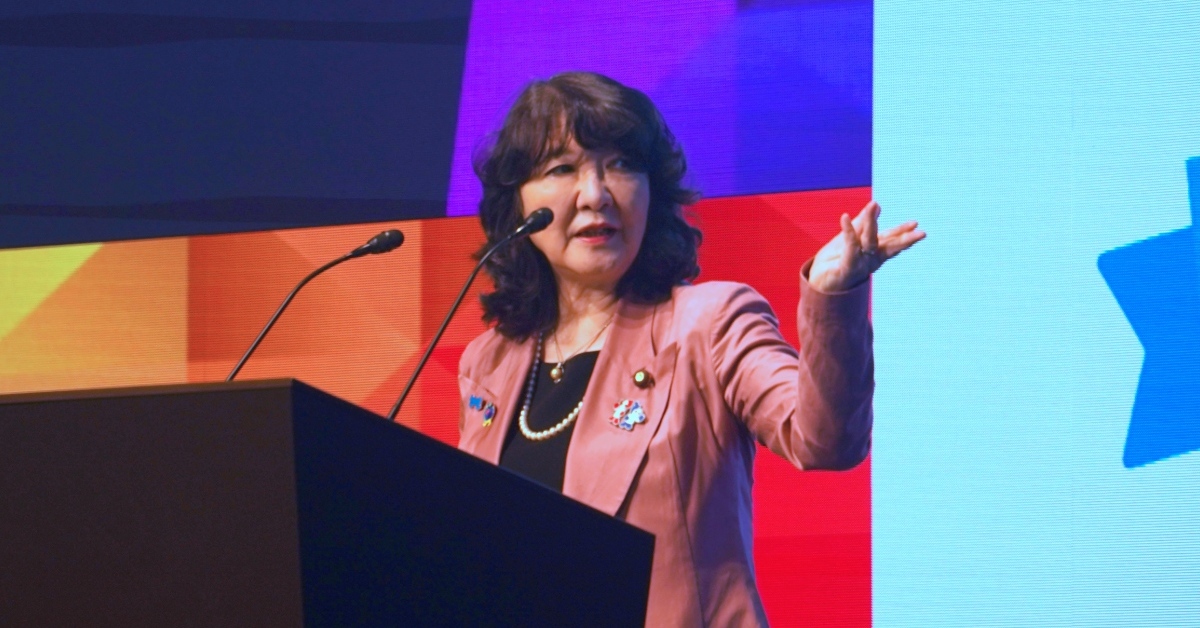
「大きな投資計画が次々に。久しぶりだ」――強く豊かな日本投資枠、経済成長かなうか? 片山大臣が語る狙い
政府は、2027年度予算の概算要求において、成長投資枠は「予算の上限額を設けない」とした。その狙いと意気込みを片山さつき財務大臣が語った。

Congress’ favorite AI tool? ChatGPT
House spending records show OpenAI's ChatGPT dominates paid AI use on Capitol Hill, with congressional offices relying on the chatbot to dr…

Judge denies xAI’s request to block Minnesota ban on ‘nudify’ apps
Despite a lawsuit from xAI, a Minnesota ban on apps that allow users to “nudify” images can move forward.
人間の効用係数: AI ガバナンスを制約付き最適化問題として再構成する計算可能な福利厚生指標
EU AI 法や NIST AI RMF などの既存の AI ガバナンスの枠組みは、安全性、透明性、説明責任に取り組んでいますが、マクロ社会経済の安定性に対する定量的な制約を運用するものではありません。その結果、AI システムは規制要件を満たしながらも、労働力の移転、不平等の拡大、経済的回復力の低下につながる可能性があります。私たちは、自動化の深さ、再分配の強度、雇用範囲という 3 つの実用的な政策手段の関数として、エージェンシー、福祉、経済的安定の間の相互作用をモデル化する微分可能な福利厚生指標である人間効用係数 (HUF) を導入します。 HUF は、閉じた形式の最適な自動化レベルと、それを下回ると福利厚生にプラスの自動化レベルが存在しない最小再配分しきい値を生成し、高レベルのガバナンス目標を計算可能な制約に変換します。米国、カナダ、北欧の政策体制にわたる 3 エージェントのマルチエージェント強化学習フレームワークを使用して HUF を評価します。分析ベースのエージェントと PPO ベースのエージェントは両方とも、福利厚生に最適な動作領域を特定し、重大な失敗モードを明らかにします。つまり、再分配を明示的に制約しない福利厚生指標は、意図された社会的目的を損なう一方で指標を満たす高度な自動化均衡に収束する可能性があります。私たちの結果は、AI ガバナンスが基本的にはコンプライアンスの実践ではなく、制約付きの最適化問題であることを示唆しています。 HUF は、自動化ポリシーを評価し、社会経済的安定性の境界を特定し、AI 導入が加速する中でのガバナンスの決定をサポートするための定量的なフレームワークを提供します。
原文 (English)
The Human Utility Factor: A Computable Welfare Metric That Reframes AI Governance as a Constrained Optimisation Problem
Existing AI governance frameworks, including the EU AI Act and NIST AI RMF, address safety, transparency, and accountability but do not operationalize quantitative constraints on macro-socioeconomic stability. As a result, AI systems may satisfy regulatory requirements while contributing to labor displacement, rising inequality, and reduced economic resilience. We introduce the Human Utility Factor (HUF), a differentiable welfare metric that models the interaction between Agency, Wellbeing, and Economic Stability as functions of three actionable policy levers: automation depth, redistribution intensity, and employment coverage. HUF yields a closed-form optimal automation level and a minimum redistribution threshold below which no level of automation is welfare-positive, transforming high-level governance objectives into computable constraints. We evaluate HUF using a three-agent multi-agent reinforcement learning framework across U.S., Canadian, and Nordic policy regimes. Both analytical and PPO-based agents identify welfare-optimal operating regions and reveal a critical failure mode: welfare metrics that do not explicitly constrain redistribution can converge to high-automation equilibria that satisfy the metric while undermining its intended societal objectives. Our results suggest that AI governance is fundamentally a constrained optimization problem rather than a compliance exercise. HUF provides a quantitative framework for evaluating automation policies, identifying socioeconomic stability boundaries, and supporting governance decisions under accelerating AI deployment.
デジタル庁、AI基盤「源内」を被災自治体などに緊急提供 「平時をはるかに超える業務」対応のため
デジタル庁は、政府職員向けの生成AI利用環境「ガバメントAI 源内」を熊本地震の被災自治体や災害対策機関などに緊急提供すると発表した。平時をはるかに超えて集中する災害対応業務を支援する。期間は3週間程度の予定。
OpenAIやAnthropicなどの従業員、米政府に「AI開発のペース調整を」と提言
OpenAIやGoogleなどの従業員1000人以上が、AI開発のペース調整に向けた国際的支援を米政府に求める公開書簡を発表した。AI自律化の急速な加速に伴う制御不能リスクを指摘し、開発速度の調整に必要なツール開発を訴える。企業主導のオープンモデル規制回避を求める動きとは対照的…
AutoCluster, AutoTopicModeling, AutoTrendAnalysis: A Complete AutoML Pipeline for Predicting Emerging Trends
Predicting emerging trends is vital for businesses, researchers, and policymakers; yet traditional approaches often lack scalability and ad…
Market Design for AI: Beyond the Copyright Binary
How can we design a market of human-generated content for use in training AI models that both enables technological progress and preserves…
NVIDIA、Microsoft、OpenAIなどがオープンモデル規制反対を表明 Anthropic従業員は「CUDAのオープンソース化が楽しみ」と皮肉
NVIDIAやMicrosoftなどの企業・団体がオープンモデル規制に反対する共同声明を発表。各社CEOが賛同する一方、Anthropic従業員は「CUDAやWindowsのオープンソース化が楽しみだ」と皮肉った。
AIエージェントと共に働くリスクとは? PwCが説く「実践的ガバナンス」から考察
AIエージェントを安心・安全に活用するためのリスク管理とはどのようなものか。PwCコンサルティングは、サイバーセキュリティにとどまらない、包括的なリスク管理の必要性を説く。今回は、この話から、AIエージェントと共に働くリスクについて考察する。
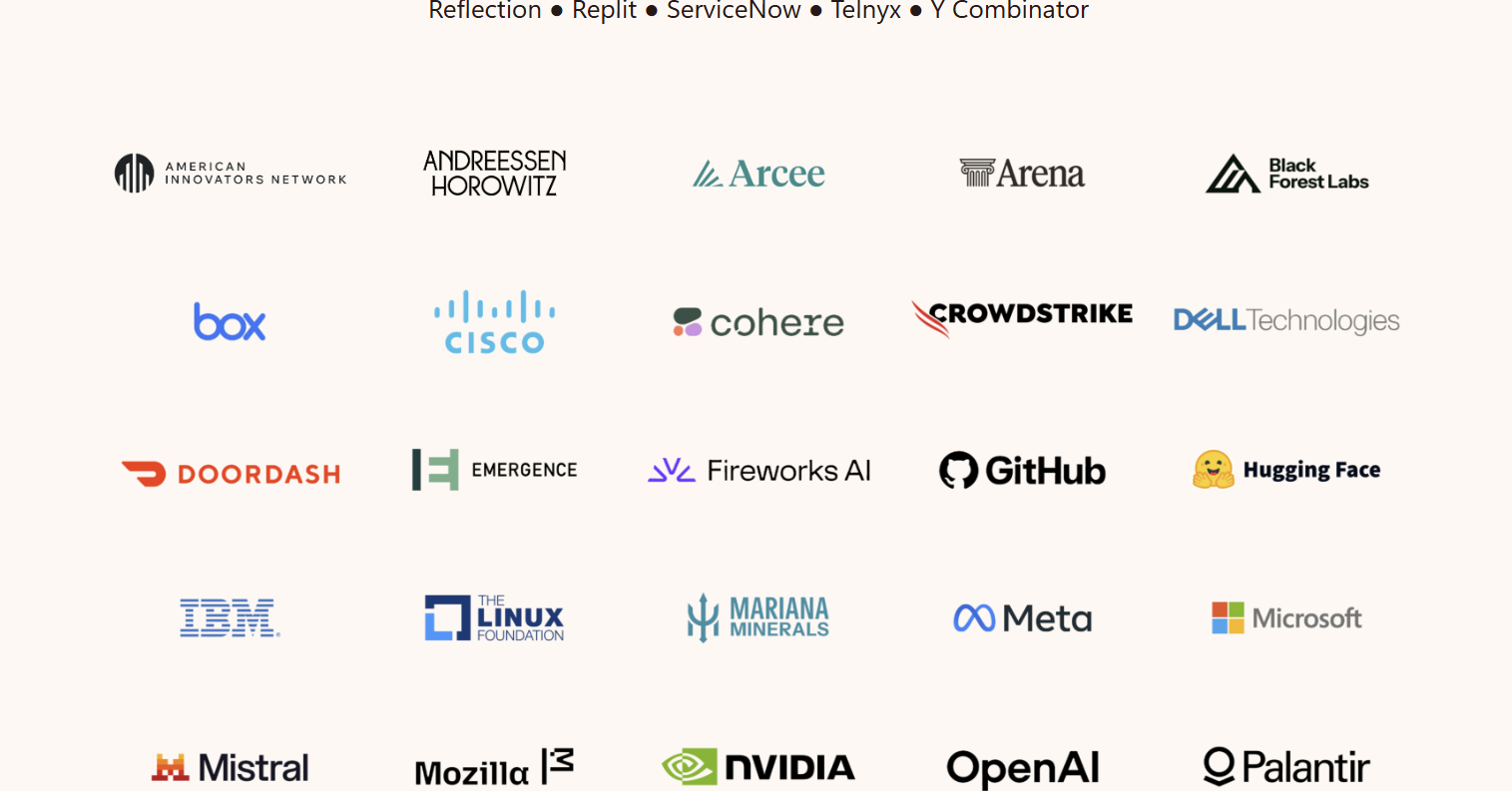
MicrosoftやNVIDIAなど、AIのオープンウェイト規制に反対する書簡を公開――Anthropicは署名せず
MicrosoftやNVIDIA、Metaなど30社以上の米国の企業や団体が、オープンウェイトAIモデルへの過度な規制回避を求める共同書簡を公開した。オープンモデルをAIエコシステムの基盤と位置付け、開発や評価におけるメリットとイノベーション促進を強調。中国企業の急速な台頭や技…

As US weighs response to Chinese AI, industry urges against broad open-weight restrictions
AI companies, including Nvidia and Mistral, urge policymakers to avoid broad restrictions on open-weight AI models as Washington debates re…
AIにもサプライチェーン管理が必要? 中国AI「Kimi K3」を巡る批判でAIの調達リスクが浮き彫りに
中国の最新AIモデルを巡り、米政府高官が、Anthropicの「Claude Fable 5」をモデルの学習に利用した“不正蒸留”が行われていたと指摘した。AIモデルの調達や導入を巡るサプライチェーンリスクが浮き彫りとなっている。

Treasury threatens sanctions after White House claims Moonshot distilled Anthropic’s Fable
The episode has also intensified a broader debate in Washington over the influx of Chinese open models.
ChainMark: Model-Free LLM Watermarking with Closed-Form Calibration
Regulatory regimes such as the EU AI Act mandate machine-readable marking of synthetic text, but existing watermark detectors rely on the g…

MicrosoftとMistralが戦略的提携を拡大 欧州でのAIインフラ拡張とモデル展開を加速
MicrosoftとMistralは戦略的提携を拡大すると発表した。Mistralの最新モデルをMicrosoftの各プラットフォームへ展開するほか、欧州でのGPUインフラ拡張に向けて大規模な投資を行う。クラウドから完全オフラインまで多様な環境に対応し、規制業界での高度なAI導…

US threatens sanctions against Chinese AI models over IP theft
Treasury Secretary Scott Bessent said the U.S. could sanction Chinese open AI models over alleged IP theft, expanding the Trump administrat…
Anthropic、著作権訴訟で史上最大「2400億円」和解金支払いへ 学習利用は「フェアユース」認定
「Claude」の学習を巡り作家グループが米Anthropicを訴えた集団訴訟で、米連邦判事が15億ドル(約2400億円)の和解を最終承認した。米国の著作権訴訟では史上最大の和解額となる。

Anthropic’s landmark $1.5B copyright settlement is approved
The final approval settles one case, but it doesn't resolve the broader issue of using copyrighted works to train AI models.

Can an Apple lawsuit derail OpenAI’s hardware plans?
On the latest episode of Equity, we debate whether Apple's lawsuit will cast over OpenAi's much-discussed plans to get into hardware and go…

How Apple’s big lawsuit could disrupt OpenAI’s IPO plans
Apple filed a trade secrets lawsuit against OpenAI last Friday, and it’s not messing around. The complaint alleges a pattern of misconduct…
Apple’s lawsuit couldn’t come at a worse time for OpenAI
Apple filed a trade secrets lawsuit against OpenAI last Friday, and it’s not messing around. The complaint alleges a pattern of misconduct…
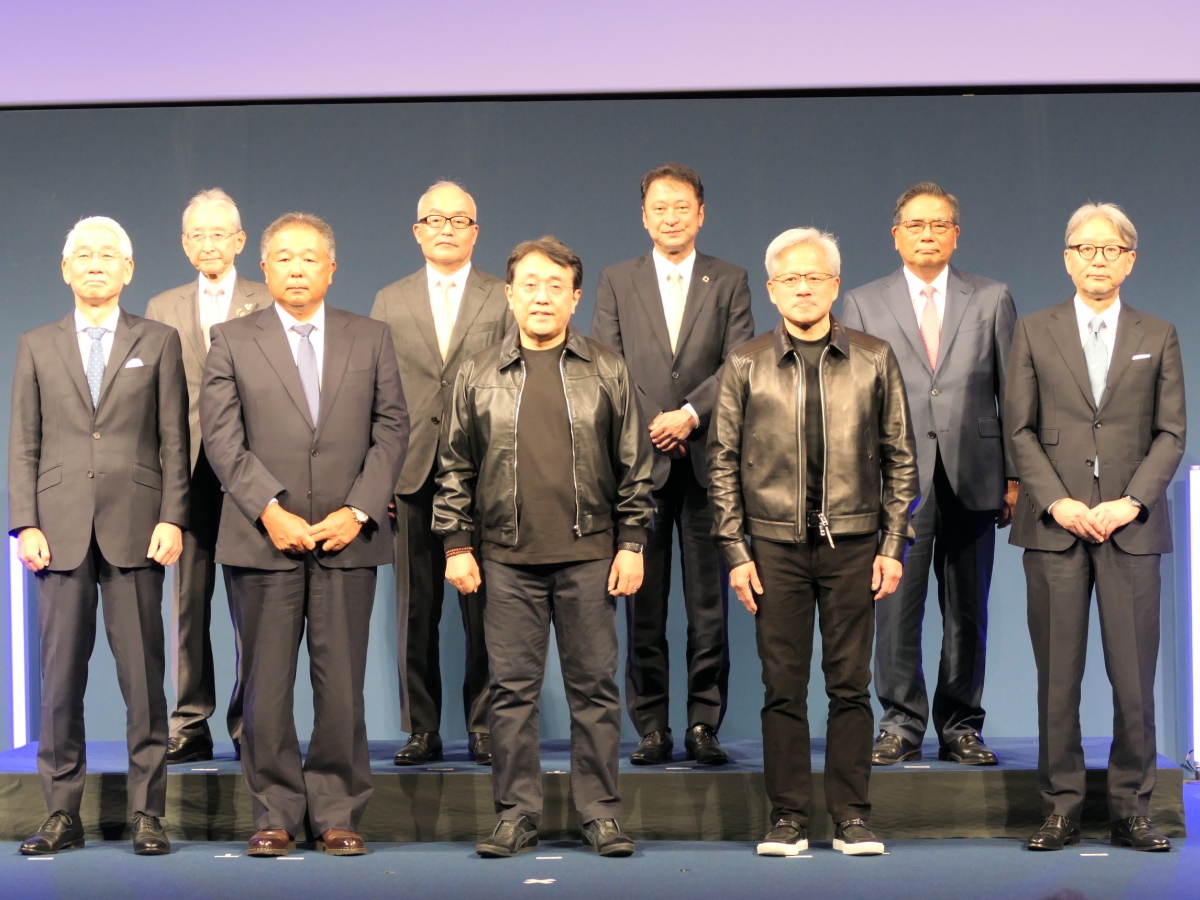
日本再起の旗印となるか、国産マルチモーダルAI基盤「FRONTia」が始動
経済産業省とNEDOは、AIロボットやフィジカルAIに用いられる国産マルチモーダル基盤モデル「FRONTia(フロンティア)」の開発プロジェクトの本格始動に合わせて、東京都内で「我が国のフィジカルAI政策に関する対外発信イベント」を開催した。
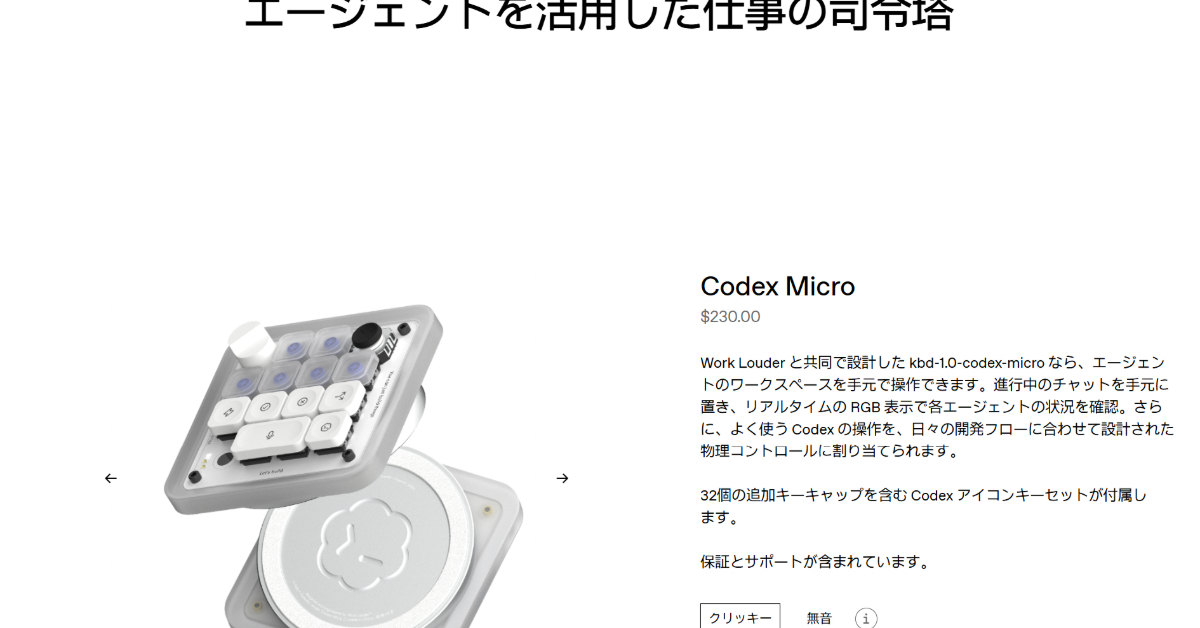
OpenAI、初のハードウェア「Codex Micro」を230ドルで発売 Apple提訴の渦中にある端末とは別物
OpenAIは、コーディング支援AI「Codex」向けの専用キーパッド「Codex Micro」を発売した。キーボードメーカーのWork Louderと共同開発した同社初のハードウェア製品で、価格は230ドル。なお、Appleによる営業秘密不正取得訴訟の渦中にある、開発中のAI…
フロンティア言語モデルにおける CBRN 上昇評価のためのしきい値超過フレームワーク
フロンティア言語モデルが進歩するにつれて、政策立案者やモデル開発者は、モデルへのアクセスが、公共ツールのみと比較して、結果の大きな化学、生物、放射線、核(CBRN)の悪用を計画する非専門家の能力を実質的に高めるかどうかを評価する方法を必要としています。既存の CBRN 評価は、専門家以外の定義、脅威の範囲、ベースライン、スコアリング ルーブリック、および決定ルールが異なるため、研究間で結果を比較することが困難です。私たちは、上昇率調査を独立して実行可能なコンポーネントに分解する、閾値超過基準(TEC)フレームワークを導入します。つまり、専門家以外の参加者の適格性の決定、研究の CBRN 脅威範囲の定義、および重要な上昇率の統計的推定です。次に、生成型 (モデルがゼロからの計画作成を支援する) と修正主義型 (モデルが既存の計画の改良を支援する) という 2 つの形態の向上を決定する設計を使用して、大規模な実証研究で TEC フレームワークを運用します。この調査では、CBRN ドメイン全体にわたる攻撃計画が作成され、対象分野の専門家によるレビューを通じて評価し、生成的および修正主義的な上昇を推定しました。このフレームワークを適用した私たちの実証研究では、領域の不均一性が明らかになりました。この制御されたリリース前評価の下では、モデル支援計画は専門家と同等の指導評価を受けることがありましたが、物質的な上昇は放射線領域に限定されていることが確認されました。これらの調査結果は、デプロイされたモデルの動作を特徴づけるのではなく、緩和策とデプロイメントガバナンスの決定に影響を与えました。最後に、事前に指定された基準、明確なベースライン、生成的推定と修正主義的推定の分離、予備的なスクリーニング信号と確認されたリスク判定の慎重な区別を強調しながら、将来の CBRN 上昇率評価のための方法論的な教訓を述べます。
原文 (English)
A Threshold Exceedance Framework for CBRN Uplift Evaluation in Frontier Language Models
As frontier language models advance, policymakers and model developers need methods for assessing whether model access materially increases a non-expert actor's ability to plan high-consequence Chemical, Biological, Radiological, or Nuclear (CBRN) misuse relative to public tools alone. Existing CBRN evaluations differ in non-expert definitions, threat scope, baselines, scoring rubrics, and decision rules, making results difficult to compare across studies. We introduce a Threshold Exceedance Criteria (TEC) framework that decomposes an uplift study into independently executable components: determining non-expert participant eligibility, defining the CBRN threat scope for the study, and statistically estimating material uplift. We then operationalize the TEC framework in a large-scale empirical study using a design that determines two forms of uplift: generative (where a model assists plan creation from scratch) and revisionist (where a model assists refinement of an existing plan). The study produced attack plans across the CBRN domains, which we evaluated through subject-matter-expert review to estimate generative and revisionist uplift. Applying the framework, our empirical study revealed domain heterogeneity: under this controlled pre-release evaluation, model-assisted plans sometimes received expert-equivalent instructional ratings, but confirmed material uplift was limited to the radiological domain. These findings informed mitigation and deployment-governance decisions rather than characterizing deployed model behavior. We conclude with methodological lessons for future CBRN uplift evaluations, emphasizing prespecified criteria, explicit baselines, separation of generative and revisionist estimates, and careful distinction between preliminary screening signals and confirmed risk determinations.
EU AI 法に基づく高リスク AI システムの垂直標準化: アルゴリズム採用のためのドメイン固有のフレームワーク
最近の欧州の法律によると、欧州人工知能 (AI) 法で概説されているリスク管理、データの品質とガバナンス、ロギングとトレーサビリティ、技術文書、透明性、人間の監視、精度などの特定の分野に関連する要件に準拠するには、高リスク AI システムを適応させる必要があります。 AI の標準化プロセスは引き続き反復的であると予想されており、これまでのところ、アルゴリズム採用の課題を完全にカバーする AI に関する欧州標準は存在しないため、欧州委員会が指定する関連 AI 分野に関連した標準化指向の具体的な推奨事項を提案します。これらの各分野について、AI 法に基づく要件に沿って、高リスク領域、特に採用分野の AI システムが満たすべき要件と、その適切な使用と望ましいパフォーマンスを確保するために実行する必要がある活動を説明することでコンテキストを設定します。 AI ガバナンスと標準化に対する既存の水平的なアプローチとは異なり、この論文は、ライフサイクル差別リスク、公平性を意識したデータ ガバナンス、説明可能性、人間による監視、採用システムにおける導入後のモニタリングに焦点を当て、AI 法の要件を具体的な標準化推奨事項にマッピングすることにより、アルゴリズム採用、特にランキングベースの採用システムのための垂直的で領域固有のフレームワークに貢献します。私たちの推奨事項は欧州プロジェクト FINDHR の結果に基づいていますが、プロジェクトの技術的成果物とは結びついておらず、代替の方法、ツール、またはガバナンス メカニズムを使用して実装することができます。
原文 (English)
Vertical Standardisation for High-Risk AI Systems under the EU AI Act: A Domain-Specific Framework for Algorithmic Hiring
According to the recent European legislation, high-risk AI systems will have to adapt in order to comply with requirements related to specific areas, like risk management, data quality and governance, logging and traceability, technical documentation, transparency, human oversight, and accuracy, as outlined in the European Artificial Intelligence (AI) Act. As the standardisation process for AI is expected to remain iterative and, so far, there are no European standards on AI fully covering the challenges of algorithmic hiring, we propose specific standardisation-oriented recommendations related to the relevant AI areas specified by the European Commission. For each of these areas, we set the context by describing the requirements that AI systems in high-risk domains, and especially in recruitment, should fulfil, as well as the activities that should be carried out to ensure their appropriate use and desired performance, in line with the requirements deriving from the AI Act. Unlike existing horizontal approaches to AI governance and standardisation, this paper contributes a vertical, domain-specific framework for algorithmic hiring, and especially ranking-based recruitment systems, by mapping the requirements of the AI Act to concrete standardisation recommendations, focusing on lifecycle discrimination risks, fairness-aware data governance, explainability, human oversight, and post-deployment monitoring in recruitment systems. Even though our recommendations were informed by the outcomes of the European project FINDHR, they are not tied to the project's technical artefacts and could be implemented using alternative methods, tools, or governance mechanisms.
Google DeepMindのハサビスCEO、米国主導の「フロンティアAI標準化機関」設立を提唱
Google DeepMindのデミス・ハサビスCEOは、AGIの実現は「おそらくあと数年」だとして、米国主導でフロンティアAIモデルをリリース前に審査する標準化機関の設立を提唱するエッセイを公開した。金融業界の自主規制機関FINRAをモデルとし、将来的には審査通過を米国市場で…

OpenAI pushes back on Apple trade secret lawsuit
OpenAI has issued another statement on the lawsuit, this time suggesting it lacks merit.

Google faces another AI training lawsuit from major publishers
Hachette, Cengage, Elsevier, and other publishers allege that Google trained its AI on copyrighted works without the necessary permissions.
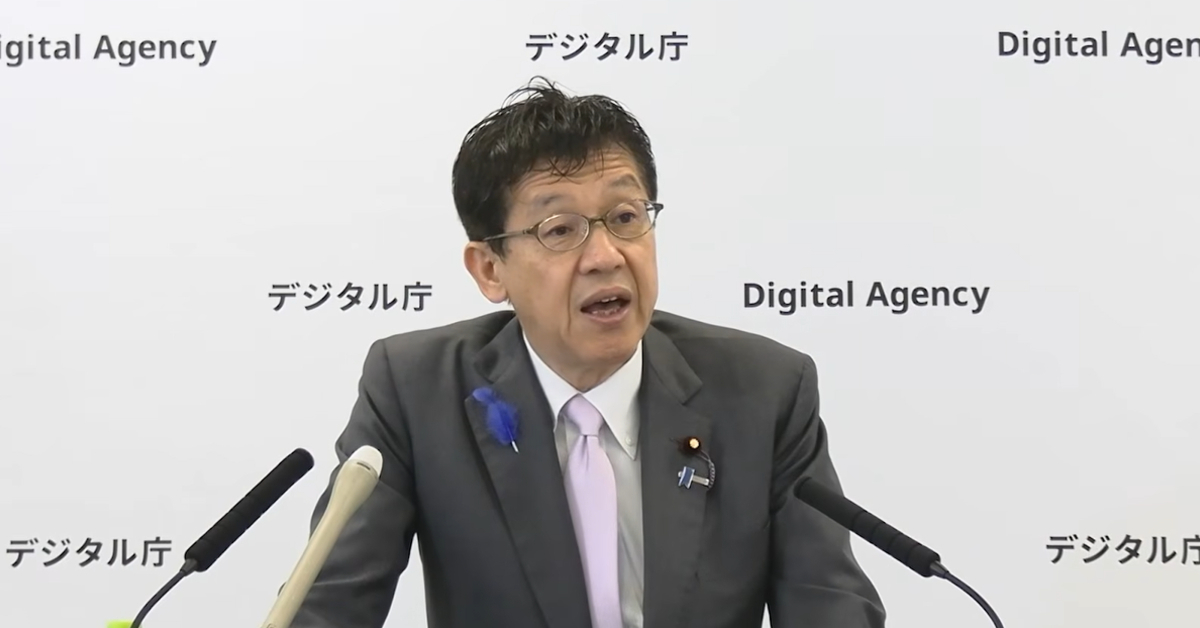
“純国産の政府AI”稼働へ NTTらのモデル採用 「先陣を切る」――松本デジ相が語った意欲
デジタル庁の政府AI「源内」で、国産AIモデルと国産クラウドを活用した“純国産の政府AI”が稼働する。松本大臣は「先陣を切る取り組みになる」と述べた。

The wildest allegations in Apple’s trade secrets lawsuit against OpenAI
Apple’s trade secrets lawsuit against OpenAI contains allegations that range from employees joking about unauthorized access to Apple’s sys…
デジタル庁、tsuzumiなど国産AIを「さくらのクラウド」で稼働 「日本の自律性確保」目指す
デジタル庁は、政府職員が利用するAI基盤「源内」の実証実験の一環として、国産AIモデルを国産クラウドで稼働させると発表した。さくらインターネットが提供するクラウドサービス「さくらのクラウド」を活用する。

1万9000人が利用するソフトバンクの「全社RAG基盤」 構築の泥臭い舞台裏
AI活用で激突する「現場の利便性」v.s.「会社の安全性」。RAGの乱立に直面したソフトバンクが、ガバナンスをシステムに組み込み、数万時間相当の業務削減効果(社内の試算による)を達成した「全社RAG基盤」構築の舞台裏と、そこから得られた気付きを共有します。

New York Times says OpenAI hid evidence in ChatGPT copyright trial
News publishers say OpenAI hid tools and datasets that could identify copyrighted journalism in ChatGPT outputs, escalating their lawsuit w…
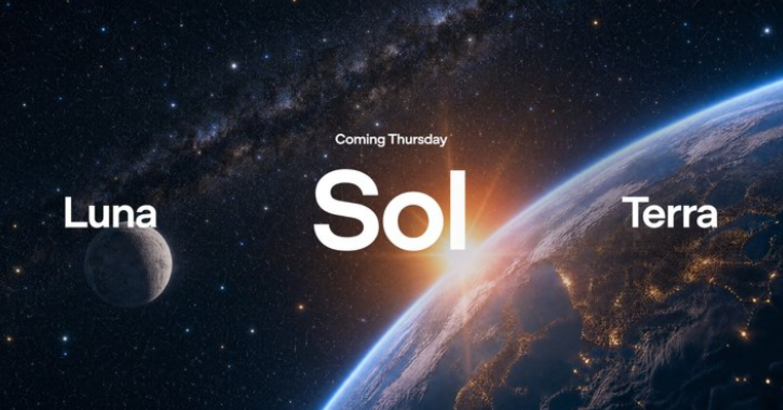
「GPT-5.6」木曜に一般公開へ 米政府と調整→限定プレビュー経て
日本時間では9日午後以降または10日になりそうだ。
ギザギザの世界経済: フロンティア AI が国家経済を不平等に暴露する
フロンティア AI の労働市場への影響は労働者、企業、政策立案者にとって重要ですが、現在の証拠は一般的に少数の高所得経済国から得られています。フロンティア AI の能力は作業タスクによってばらつきがあり、人間の労働力をどのように割り当てるかについては国家経済によって異なります。職業レベルの曝露スコアと 141 か国の国際雇用データを組み合わせた国家 AI 曝露指標を導入します。高所得国は低所得国よりもかなり危険にさらされており、ヨーロッパと中央アジアはサハラ以南のアフリカよりも 50% 多く危険にさらされていることがわかりました。また、ジェンダーギャップも見られます。ホワイトカラーや販売職に女性が集中しているため、91%の国で女性の方が男性よりも露出度が高いのです。例外は、女性の雇用が依然として農業と家内企業に集中している国です。私たちは、Anthropic、Microsoft、OpenAI が発行する全国的な AI 導入統計を予測することを示すことで、全国的な AI エクスポージャーの推定値を検証します。直接的な曝露を超えて、私たちは、国をまたいだ所得依存による間接的な曝露の新たなメカニズムを特定します。タジキスタンなど一部の国は、外国人労働者による母国への送金に大きく依存している。タジキスタンのフロンティアAIへの直接的なエクスポージャは平均を下回っているが、タジキスタンのGDPの37パーセントがロシアからの送金であり、ロシアのエクスポージャが非常に高いため、タジキスタンの送金によるエクスポージャは平均を上回っている。私たちの調査によると、エクスポージャーの国ごとのばらつきは十分に大きく、米国や欧州の労働市場に合わせて調整された政策対応は一般化しない。
原文 (English)
The Jagged Global Economy: Frontier AI Unevenly Exposes National Economies
Frontier AI's labor-market effects matter to workers, firms, and policymakers, but current evidence generally comes from a handful of high-income economies. The capabilities of frontier AI are jagged across work tasks and national economies diverge in how they allocate human labor. We introduce a national AI exposure metric that combines occupation-level exposure scores and international employment data for 141 countries. We find that high income countries are substantially more exposed than low income countries and that Europe and Central Asia are 50 percent more exposed than Sub-Saharan Africa. We also find a gender gap: women are more exposed than men in 91 percent of countries, driven by their concentration in white-collar and sales occupations. The exceptions are countries where women's employment remains concentrated in agriculture and household enterprises. We validate our national AI exposure estimates by showing they predict national AI adoption statistics published by Anthropic, Microsoft, and OpenAI. Beyond direct exposure, we identify a new mechanism for indirect exposure due to cross-country income dependencies. Some nations such as Tajikistan depend heavily on foreign workers remitting money back to their home countries: Tajikistan's direct exposure to frontier AI is below-average but because 37 percent of Tajikistan GDP is Russian remittance and Russia is very exposed, Tajikistan's remittance-accounted exposure becomes above-average. Our research shows that national variation in exposure is large enough that policy responses calibrated to U.S. or European labor markets will not generalize.
TILDE: TILt-based Distributional Erasure for Concept Unlearning
Concept unlearning in text-to-image diffusion models is critical for safe and practical deployment: with rising privacy concerns, copyright…
Position: EU AI Act's Research Exemptions Can Break the Publication Norms of Major AI Conferences
The EU has become one of the vanguards in regulating the digital age. A particularly important regulation in the Artificial Intelligence (A…

ガバメントAI「源内」は自治体で本当に使えるのか? クラウド依存による“3つの落とし穴”
デジタル庁が公開したガバメントAI「源内」(GENAI)は、政府によるAIプラットフォームの公開という点で画期的な取り組みだ。一方で、自治体での実運用を考える上で無視できない論点も見えてくると、CIO補佐官として自治体DXに携わる筆者が解説する。

ソフトバンクの「1人100エージェント」を支える独自AIゲートウェイ「Cloud Proxy」の正体
生成AIやAIエージェントを全社展開する際、企業はセキュリティやガバナンス、性能といった課題に直面しがちです。ソフトバンクは「全社で1人100エージェント」構想の実現に向けて、AI利用の入り口となる共通基盤「Cloud Proxy」を内製しました。その設計思想や性能強化の取り組…
DETECT-3B-Omni is Agnostic of Content and Demographics
A trustworthy and GDPR-compliant deepfake audio detector must base its decisions on acoustic artifacts, not on what is being said or who is…
From Regulation to Requirements: An Automated Requirement Derivation and Explanation Pipeline
Ensuring software compliance with regulations such as the General Data Protection Regulation (GDPR) and the Artificial Intelligence Act (EU…
Towards Mitigation of Hallucination for LLM-empowered Agents: Progressive Generalization Bound Exploration and Watchdog Monitor
Empowered by large language models (LLMs), intelligent agents have become a popular paradigm for interacting with open environments to faci…
高リスク AI システムと欧州 AI 法におけるアイデンティティの問題
EU 人工知能法 (AIA) は、事前の適合性評価、市販後のモニタリング、および「大幅な変更」時の再評価を中心に構築された高リスク AI システムのライフサイクル ガバナンス体制を確立しています。これらの義務は AI のアイデンティティ判断を前提としています。規制当局とプロバイダーは、更新されたシステムが長期間にわたって同じシステムのままであるかどうかを決定する必要があります。この研究では、このロジックがアーティファクト ID の機能 + フレームワークによってどのように明確化されるかを示します。このフレームワークは、「AI の信頼性」として捉えられる、適切な機能の状況依存の基準とともに、意図された機能によって AI システムを個別化します。さらに我々は、AIAは同期的同一性(規制上の目的で一度に2つのAIシステムが同一とみなされるべき場合)に関する内部の監査可能な基準を提供しておらず、代わりにそのような同一性の判断を分野別または調和化の手段に大きく委ねていると主張する。 function+ は、意図した機能と信頼性のプロファイルとレベルに基づいた同期アイデンティティ テストを提供し、調達、責任、市場監視などのガバナンス設定で同期アイデンティティの決定を検査可能にします。私たちの貢献は概念的なレンズと監査レンズです。私たちは、AIA ライフサイクル義務と機能 + アイデンティティ コンポーネント間の対応マップを提供し、監査と紛争のコンテキストに関する最小限の意思決定フローを通じて同期ケースを運用上判読できるようにします。最後に、実装に向けた 2 つの推奨事項を示します。(1) 意図された目的についての、より正確でテスト可能なレポート。(2) 経時的および導入間での比較可能性をサポートする、標準化された監査可能な信頼性レポート。
原文 (English)
High-Risk AI Systems and the Problem of Identity in the European AI Act
The EU Artificial Intelligence Act (AIA) establishes a lifecycle governance regime for high-risk AI systems built around ex-ante conformity assessment, post-market monitoring, and re-assessment upon "substantial modification." These obligations presuppose AI identity judgments: regulators and providers must decide when an updated system remains the same system over time. In this work, we show how this logic is clarified by the function+ framework of artifact identity, which individuates AI systems by their intended function together with context-sensitive criteria of appropriate functioning, captured as "AI trustworthiness." We further argue that the AIA does not provide an internal, auditable criterion for synchronic identity--when two AI systems at a given time should count as the same for regulatory purposes--and instead largely defers such sameness determinations to sectoral or harmonization instruments. function+ supplies a synchronic identity test anchored in intended function and trustworthiness profiles and levels, making synchronic identity decisions inspectable in governance settings such as procurement, liability, and market surveillance. Our contribution is a conceptual and auditing lens: we provide a correspondence map between AIA lifecycle obligations and function+ identity components, and we make the synchronic case operationally legible via a minimal decision flow for audit and dispute contexts. We conclude with two implementation-facing recommendations: (1) more precise, testable reporting of intended purpose, and (2) standardized, auditable trustworthiness reporting that supports comparability over time and across deployments.
米トランプ大統領、AI規制は「できるだけ介入少なく」 中国に対して開発競争「大幅リード」を強調
トランプ米大統領がCNBCのインタビューで、AI規制について「ガードレールは必要だが、介入はできるだけ少なくしたい」と述べ、規制最小限の路線を改めて示した。
Overview of Risk Assessment and Management for Intelligent Systems under the AI Act and Beyond
The society and emerging risk-based regulatory frameworks for AI underscore the need for rigorous risk assessment to ensure safe and reliab…
Locality-Aware Continual Unlearning for Diffusion Models
Real-world deployment of text-to-image diffusion models requires continual concept removal as new privacy, copyright, or safety obligations…
復活した「Fable 5」 米政府からのオーダーに対して、Anthropicはどう対策したのか
米AnthropicのAIモデル「Claude Fable 5」が世界的にサービスを再開した。Anthropicは復活に向けてどういった経緯と対策を行ったのか、モデル再開にあわせて詳細を公開した。
「Fable 5」再開までの裏側、Anthropicが明かす “支払った代償”は
米政府の命令による「Fable 5」の提供停止から再開まで、米Anthropicは何に取り組んできたのか。
Probing Stylistic Appropriation using Large Language Models: An Evaluation Framework for Copyright Infringement under EU Law
Large language models (LLM) trained on web-scale corpora generate output that may infringe copyright, yet existing technical safeguards foc…
Amplifying Membership Signal Through Chained Regeneration
The tendency of large generative models to memorize training data makes sample verification critical for privacy auditing and copyright enf…

「Claude Fable 5」が帰ってくる 「Mythos 5」含む輸出規制解除へ Anthropic発表
Anthropicは6月30日(現地時間)、「Claude Fable 5」「Mythos 5」への輸出規制が解除されたと明らかにした。7月1日からアクセスを回復し、詳細は近日中に発表するとしている。
米政府「Fable 5/Mythos 5」の輸出規制解除 Anthropic「明日からアクセス回復」
「ユーザーの辛抱に感謝するとともに、モデルの再展開に協力いただいたすべての方々に感謝する」

日印「防衛用AIドローン」共同開発へ 首脳会談で確認、対中念頭に安保協力深化
日印両政府が防衛分野で活用する人工知能(AI)搭載型ドローン(無人機)の共同開発を推進する方針を固めた。高市早苗首相は7月2日にインドでモディ首相との会談を予定しており、防衛装備品協力を加速させることで一致する見通しだ。中国がインド太平洋地域で軍事活動を活発化させる中、日印の安…
高リスク AI システムと欧州 AI 法におけるアイデンティティの問題
EU 人工知能法 (AIA) は、事前の適合性評価、市販後のモニタリング、および「大幅な変更」時の再評価を中心に構築された高リスク AI システムのライフサイクル ガバナンス体制を確立しています。これらの義務は AI のアイデンティティ判断を前提としています。規制当局とプロバイダーは、更新されたシステムが長期間にわたって同じシステムのままであるかどうかを決定する必要があります。この研究では、このロジックがアーティファクト ID の機能 + フレームワークによってどのように明確化されるかを示します。このフレームワークは、「AI の信頼性」として捉えられる、適切な機能の状況依存の基準とともに、意図された機能によって AI システムを個別化します。さらに我々は、AIAは同期的同一性(規制上の目的で一度に2つのAIシステムが同一とみなされるべき場合)に関する内部の監査可能な基準を提供しておらず、代わりにそのような同一性の判断を分野別または調和化の手段に大きく委ねていると主張する。 function+ は、意図した機能と信頼性のプロファイルとレベルに基づいた同期アイデンティティ テストを提供し、調達、責任、市場監視などのガバナンス設定で同期アイデンティティの決定を検査可能にします。私たちの貢献は概念的なレンズと監査レンズです。私たちは、AIA ライフサイクル義務と機能 + アイデンティティ コンポーネント間の対応マップを提供し、監査と紛争のコンテキストに関する最小限の意思決定フローを通じて同期ケースを運用上判読できるようにします。最後に、実装に向けた 2 つの推奨事項を示します。(1) 意図された目的についての、より正確でテスト可能なレポート。(2) 経時的および導入間での比較可能性をサポートする、標準化された監査可能な信頼性レポート。
原文 (English)
High-Risk AI Systems and the Problem of Identity in the European AI Act
The EU Artificial Intelligence Act (AIA) establishes a lifecycle governance regime for high-risk AI systems built around ex-ante conformity assessment, post-market monitoring, and re-assessment upon "substantial modification." These obligations presuppose AI identity judgments: regulators and providers must decide when an updated system remains the same system over time. In this work, we show how this logic is clarified by the function+ framework of artifact identity, which individuates AI systems by their intended function together with context-sensitive criteria of appropriate functioning, captured as "AI trustworthiness." We further argue that the AIA does not provide an internal, auditable criterion for synchronic identity--when two AI systems at a given time should count as the same for regulatory purposes--and instead largely defers such sameness determinations to sectoral or harmonization instruments. function+ supplies a synchronic identity test anchored in intended function and trustworthiness profiles and levels, making synchronic identity decisions inspectable in governance settings such as procurement, liability, and market surveillance. Our contribution is a conceptual and auditing lens: we provide a correspondence map between AIA lifecycle obligations and function+ identity components, and we make the synchronic case operationally legible via a minimal decision flow for audit and dispute contexts. We conclude with two implementation-facing recommendations: (1) more precise, testable reporting of intended purpose, and (2) standardized, auditable trustworthiness reporting that supports comparability over time and across deployments.
AIモデル「ミュトス」、米国の一部組織に再提供へ 米政府が許可
米Anthropicは6月26日(現地時間)、12日から提供を一時停止していたAIモデル「Claude Mythos 5」について、米国の一部組織に限定して再提供を始めると発表した。米政府から許可を得たという。
OpenAI、次世代「GPT-5.6」シリーズを限定プレビュー 米政府と調整、命名は「Sol/Terra/Luna」に刷新
米OpenAIは6月26日(現地時間)、次世代AIモデル「GPT-5.6」シリーズの限定プレビューを始めた。フラッグシップの「Sol」、日常業務向けでバランス型の「Terra」、高速・低価格の「Luna」の3モデルで構成する。コーディングや科学、サイバーセキュリティの能力を高め…
生成 AI と著作権侵害: 17 歳未満の AI 音楽生成システムの法技術的分析タイトル17
生成人工知能 (GenAI) により、ユーザーは、著作権で保護された歌詞、AI が作曲したメロディー、本物のアーティストを模倣した合成ボーカルを組み合わせて、テキスト プロンプトを使用して音楽を合成できるようになりました。この論文では、米国著作権法に基づく AI ベースの音楽作成 (Google Gemini の音楽ツールなど) の法的および技術的側面を検討します。私たちは、あるアーティストの保護された歌詞を GenAI システムに入力し、別のアーティストの声やスタイルを使用するように指示し、その結果得られた曲を公開して収益化するユーザーが、17 U.S.C. に違反するかどうかを分析します。第 106 条の独占的権利 [3]。この分析には、タイトル 17 の原則 (複製の権利、二次的著作物、配布)、17 U.S.C. が統合されています。セクション 114 の狭い録音保護 [4]、および州レベルで新たに制定された音声クローン法 [20]。私たちは、歌詞の無断コピーは楽曲侵害の高いリスクをもたらす一方、単なる AI 生成の音声模倣は通常、連邦録音保護の対象外となり、代わりに州のパブリシティ権に関与すると主張します [12]、[13]。最近の訴訟と法律 (コンコード対アンスロピック [10]、カドリー対メタ [11]、レーマン対ロヴォ [12]、テネシー州の「ELVIS 法」 [20]、UMG 対アンチャーテッド ラボ [14] など) がこの分裂を例証しています。私たちは AI の技術コンポーネント (プロンプト エンコーディング、潜在拡散、ニューラル ボコーダー、スピーカーの埋め込み) を法的リスクにマッピングし、規制上のギャップを特定します。連邦法は歌詞とメロディーを強力に保護していますが、現在、合成されたボーカルの類似性に対する救済策は限定的です [22]、[23]。この論文は、AI による音楽作成に関するより明確なルールを求める政策提案で締めくくられています。
原文 (English)
Generative AI and Copyright Infringement: A Legal-Technical Analysis of AI Music Generation Systems Under 17 U.S.C. Title 17
Generative artificial intelligence (GenAI) has enabled users to synthesize music with text prompts, combining copyrighted lyrics, AI-composed melodies, and synthetic vocals that imitate real artists. This paper examines the legal and technical dimensions of AI-based music creation (e.g., Google Gemini's music tools) under U.S. copyright law. We analyze whether a user who inputs one artist's protected lyrics into a GenAI system, directs it to use another artist's voice or style, publishes the resulting song, and monetizes it violates 17 U.S.C. Section 106's exclusive rights [3]. The analysis integrates Title 17 doctrine (rights of reproduction, derivative works, distribution), 17 U.S.C. Section 114's narrow sound recording protection [4], and the new voice-cloning laws emerging at the state level [20]. We argue that unauthorized lyric copying poses a high risk of infringement of the musical composition, whereas mere AI-generated voice imitation typically falls outside federal sound recording protection and instead implicates state publicity rights [12], [13]. Recent cases and legislation (Concord v. Anthropic [10]; Kadrey v. Meta [11]; Lehrman v. Lovo [12]; Tennessee's "ELVIS Act" [20]; UMG v. Uncharted Labs [14]; etc.) illustrate this split. We map AI technical components (prompt encoding, latent diffusion, neural vocoders, speaker embeddings) to legal risks and identify a regulatory gap: federal law robustly protects lyrics and melody but currently provides limited remedies for synthesized vocal likeness [22], [23]. The paper concludes with policy suggestions for clearer rules on AI music creation.
生成 AI と著作権侵害: 17 歳未満の AI 音楽生成システムの法技術的分析タイトル17
生成人工知能 (GenAI) により、ユーザーは、著作権で保護された歌詞、AI が作曲したメロディー、本物のアーティストを模倣した合成ボーカルを組み合わせて、テキスト プロンプトを使用して音楽を合成できるようになりました。この論文では、米国著作権法に基づく AI ベースの音楽作成 (Google Gemini の音楽ツールなど) の法的および技術的側面を検討します。私たちは、あるアーティストの保護された歌詞を GenAI システムに入力し、別のアーティストの声やスタイルを使用するように指示し、その結果得られた曲を公開して収益化するユーザーが、17 U.S.C. に違反するかどうかを分析します。第 106 条の独占的権利 [3]。この分析には、タイトル 17 の原則 (複製の権利、二次的著作物、配布)、17 U.S.C. が統合されています。セクション 114 の狭い録音保護 [4]、および州レベルで新たに制定された音声クローン法 [20]。私たちは、歌詞の無断コピーは楽曲侵害の高いリスクをもたらす一方、単なる AI 生成の音声模倣は通常、連邦録音保護の対象外となり、代わりに州のパブリシティ権に関与すると主張します [12]、[13]。最近の訴訟と法律 (コンコード対アンスロピック [10]、カドリー対メタ [11]、レーマン対ロヴォ [12]、テネシー州の「ELVIS 法」 [20]、UMG 対アンチャーテッド ラボ [14] など) がこの分裂を例証しています。私たちは AI の技術コンポーネント (プロンプト エンコーディング、潜在拡散、ニューラル ボコーダー、スピーカーの埋め込み) を法的リスクにマッピングし、規制上のギャップを特定します。連邦法は歌詞とメロディーを強力に保護していますが、現在、合成されたボーカルの類似性に対する救済策は限定的です [22]、[23]。この論文は、AI による音楽作成に関するより明確なルールを求める政策提案で締めくくられています。
原文 (English)
Generative AI and Copyright Infringement: A Legal-Technical Analysis of AI Music Generation Systems Under 17 U.S.C. Title 17
Generative artificial intelligence (GenAI) has enabled users to synthesize music with text prompts, combining copyrighted lyrics, AI-composed melodies, and synthetic vocals that imitate real artists. This paper examines the legal and technical dimensions of AI-based music creation (e.g., Google Gemini's music tools) under U.S. copyright law. We analyze whether a user who inputs one artist's protected lyrics into a GenAI system, directs it to use another artist's voice or style, publishes the resulting song, and monetizes it violates 17 U.S.C. Section 106's exclusive rights [3]. The analysis integrates Title 17 doctrine (rights of reproduction, derivative works, distribution), 17 U.S.C. Section 114's narrow sound recording protection [4], and the new voice-cloning laws emerging at the state level [20]. We argue that unauthorized lyric copying poses a high risk of infringement of the musical composition, whereas mere AI-generated voice imitation typically falls outside federal sound recording protection and instead implicates state publicity rights [12], [13]. Recent cases and legislation (Concord v. Anthropic [10]; Kadrey v. Meta [11]; Lehrman v. Lovo [12]; Tennessee's "ELVIS Act" [20]; UMG v. Uncharted Labs [14]; etc.) illustrate this split. We map AI technical components (prompt encoding, latent diffusion, neural vocoders, speaker embeddings) to legal risks and identify a regulatory gap: federal law robustly protects lyrics and melody but currently provides limited remedies for synthesized vocal likeness [22], [23]. The paper concludes with policy suggestions for clearer rules on AI music creation.

The White House is asking OpenAI to slow roll the release of its new model over safety concerns
penAI reportedly plans to share its newest model, GPT 5.6, with a select group of partners instead of to the broader public. The reason: th…

7割超の企業はシャドーAIを管理できていない ガートナーがガバナンスの現実解を提唱
AIの能力向上に伴って、シャドーAIのリスクも増している。ガートナーの調査によると、国内企業の73%はシャドーAIを管理できていないという。同社が推奨する、事業部門を巻き込んだガバナンスの仕組みとは。
シャドーAI対策「7割が未着手」 「AIは全て禁止」は限界 IT部門が採るべき一手とは? Gartner提言
生成AIの爆発的な普及に伴い、企業のITガバナンスは新たな局面に直面している。情報システム部門が抱えてきた旧来のシャドーSaaSといった問題に、個人契約のAIツールやローカルLLMなど幾つものリスクが積み重なった「難局」を迎えているためだ。限られたリソースで推進と統制をどう両立…

Gartnerが警鐘 プライバシー法執行が本格化、CISOは何を見直すべきか?
Gartnerは、2025年に米国の州当局が科したプライバシー法違反の罰金総額が34億2500万ドル(約5380億円)に達したと発表。過去5年間の合計を上回り、執行強化を背景に2028年まで加速する見通しを示した。
The Measurement Gap in the Automation of EU Law: Benchmarking Doctrinal Legal Reasoning under the EU AI Act
Large language models now produce legal text of at least median quality, yet no existing benchmark can evaluate whether they perform doctri…
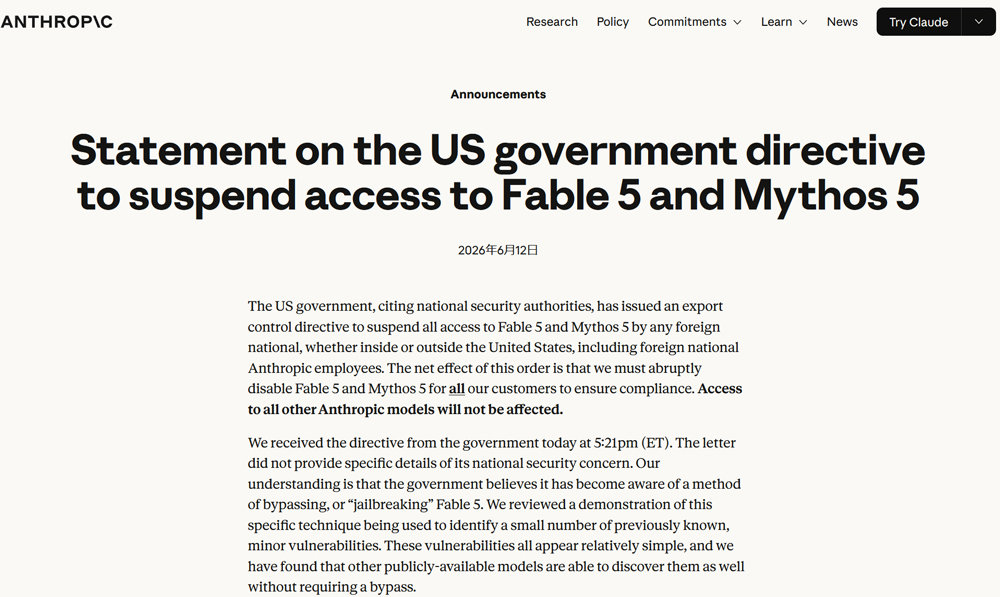
「生成AIは大手なら安心」とは限らない? 突然の提供停止が招くリスク顕在化
米政府の輸出管理指令によるAnthropicの最新AIモデル提供停止を受け、生成AIが事前の通知なしに突然使えなくなるリスクが顕在化した。Forresterは、単一のAIモデル依存の危うさを指摘し、ポータビリティ確保をはじめとする4つの対策を推奨している。

生成AI×自動運転で注目のTesla・Waymo・NVIDIA 各社が目指す「フィジカルAI」は何が違うのか
日本政府が戦略的強化分野に掲げる「フィジカルAI」――その社会実装の最前線の一つが自動運転システムだ。熾烈な開発競争が繰り広げられている中、生成AIの進化は各社の競争にどのような変化をもたらしているのか。Tesla、Waymo、NVIDIAの最新動向を整理する。

Claude「Fable 5」が3日で停止 Anthropicが主張する“米国政府の誤解”の正体
米国政府の指令に従い、Fable 5のサービス提供を停止したAnthropic。同社は指令について「政府の誤解に基づくもの」と主張しているが、その誤解とは具体的にどのようなものなのか。

Cybersecurity vets protest ‘dangerous’ US government ban on Anthropic’s most powerful models
A group made up of dozens of cybersecurity experts urged the White House to remove export-control restrictions on Anthropic’s Fable and Myt…
人工知能学会「AIは人間を代替しない」 社会実装へ4提言 安保・著作権にも言及
人工知能学会は、設立40周年にあたり、日本におけるAIの社会実装に向けた提言を発表した。

「Claude Fable 5」「Mythos 5」全面停止 米政府の指令により Anthropicは早期復旧を宣言
米Anthropicは6月12日、最上位AIモデル「Claude Fable 5」「Claude Mythos 5」の提供を全ユーザーで停止すると発表した。米政府が安全保障を理由に、外国籍者のアクセス全面停止を命じる輸出規制指令を出したため。同社は指令に従う一方「誤解だ」として…
Reconstructing Template-Memorized Images from Natural Prompts
Recent advances in generative models, such as diffusion models, have raised concerns related to privacy, copyright infringement, and data s…
AnthropicのアモデイCEO、フロンティアAIに「航空機並みの安全審査」求めるエッセイと政策提言を公開
Anthropicのダリオ・アモデイCEOは、AIの指数関数的な進歩と政策のあり方を論じたエッセイを公開した。技術の急進に法整備が追いつかない現状に警鐘を鳴らし、フロンティアモデルへの航空機並みの安全審査義務付けを提言。同時に、失業率の悪化シナリオに応じた経済政策フレームワーク…
データ駆動型システムが推論能力を発揮するのはいつですか?
欧州 AI 法は、人工知能 (AI) に関する初の包括的な規制であり、特にいわゆる高リスクの汎用 AI システムに対する広範な義務を定めています。 AI 法に基づく AI システムの主な特徴は、推論機能です。 AI 法では推論とは何かを明確に定義していないため、特定のデータ駆動型システムにはグレーゾーンが存在します。具体的な例としては、AI 法の附属書 III にリストされている信用スコアリング システムがあります。しかし同時に、これらは多くの場合、推論能力があるかどうかが不明瞭な統計モデルを使用して実装されており、AI 法の AI 定義にまったく該当しません。統計的学習理論に動機づけられたこの研究は、推論能力のさまざまなレベルを評価するためのフレームワークを開発します。 AI 法と人工知能システムの定義に関する委員会ガイドラインに基づいて、どのレベルが AI 法の意味の範囲内で推論するのに十分な能力を構成するのか、また、どこにさらなる規制の明確化が必要なのかを分析します。 2 つの現実的な信用スコアリング ワークフローを作成することでフレームワークを説明し、推論がその中で行われるかどうか、またどこで行われるかを示します。私たちの分析は、個々のモデルだけでなく、データ処理ワークフロー全体を考慮する必要があることを示しています。また、開発中の人間の専門家の関与が推論能力に大きな影響を与える可能性があることも示しています。コードは https://github.com/fraunhofer-iais/inference-framework-creditscorecards で見つけることができます。
原文 (English)
When Do Data-Driven Systems Exhibit the Capability to Infer?
The European AI Act is the first comprehensive regulation of artificial intelligence (AI), setting out extensive obligations, particularly for so-called high-risk and general-purpose AI systems. A key distinguishing feature of AI systems under the AI Act is the capability to infer. Since the AI Act does not clearly define what inference is, there is a gray area for certain data-driven systems. A specific example is credit scoring systems, which are listed by Annex III of the AI Act. At the same time, however, these are often implemented using statistical models for which it is unclear whether they have the capability to infer and thus fall under the AI definition of the AI Act at all. Motivated by statistical learning theory, this work develops a framework for grading different levels of the capability to infer. Based on the AI Act and the Commission Guidelines on the definition of an artificial intelligence system, we analyze which levels constitute sufficient capability to infer within the meaning of the AI Act and where further regulatory clarity is needed. We illustrate the framework by creating two realistic credit scoring workflows and show whether and where inference occurs in them. Our analysis illustrates that not only individual models but the entire data processing workflow must be considered. It also shows that the involvement of human experts during development can have significant influence on the capability to infer. Code can be found at https://github.com/fraunhofer-iais/inference-framework-creditscorecards.
Market Design for AI: Beyond the Copyright Binary
How can we design a market of human-generated content for use in training AI models that both enables technological progress and preserves…

xAI fired an engineer who raised alarms about Grok safety, new lawsuit claims
A former xAI engineer is suing the company and SpaceX, alleging he was fired for raising AI safety concerns about Grok days before SpaceX's…
Bypassing Copyright Protection in Diffusion-based Customization via Two-Stage Latent Feature Optimization
With the growing concerns over copyright infringement in diffusion-based customization, adversarial attacks have emerged as a prominent def…

政府・著名人のInstagramアカウントが次々に乗っ取り被害 原因はMetaのAIアシスタント?
米宇宙軍の幹部やオバマ元大統領時代のホワイトハウスが使っていたInstagramのアカウントが何者かに乗っ取られ、イラン支持の画像やメッセージが投稿される被害が相次いだ。攻撃者は米Metaの「AIサポートアシスタント」が抱える脆弱性を突き、狙ったアカウントのパスワードをリセット…
Apple、EU当局を批判「どの解決策も受け入れず」 「Siri AI」EUのiPhone・iPadで提供見送り
EU側が求めるデジタル市場法(DMA)への対応について、Appleが提示した解決策を欧州委員会がすべて拒否したためという。
Didact: A Cross-Domain Capability Discovery System for Defence
Policymakers in defence and defence-aligned sectors must monitor rapidly evolving research alongside sector priorities relevant to operatio…
Where Rectified Flows Leak: Characterising Membership Signals Along the Interpolation Path
Understanding what generative models retain from training data remains challenging, with implications for copyright and privacy. Beyond ver…

Sriram Krishnan is leaving his role as White House AI advisor
Krishnan is reportedly starting a new institution to continue shaping Trump's AI policy.
LCSHBench: 米国議会図書館件名見出し割り当てのための、多言語で合意に基づいたベンチマーク
自動主題目録作成では、制御された語彙見出しが書誌レコードに割り当てられますが、LCSH には標準の公開ベンチマークがありません。 LCSHBench を紹介します。オープンライセンスのハーバード大学、コロンビア大学、プリンストン大学のカタログから 15 言語で 22,346 冊の本を紹介します。記録は、少なくとも 2 つの独立目録作成機関が LCSH を割り当てた場合にのみ入力されます。私たちはカタログごとの来歴と結合および全員一致の回答ビューをリリースします。 3 つの図書館すべてでカタログ化されている 465,187 作品の一致調査では、なぜこのデザインが重要であるかを示しています。図書館は通常、基礎となるトピックについては一致しています (93.3% が概念レベルの見出しを共有) が、正確な表現が異なることがよくあります (39.4% が同一の見出しセットを持っています)。したがって、LCSHBench は、オープン語彙の生成と完全な語彙の検索にわたって、言語と見出しの種類ごとに分類されたセットとランクのメトリクスを使用して、完全一致と概念一致の両方をスコアリングします。最初のデモンストレーションとして、300M オンデバイス エンベッダーの低ランク微調整により、言語を超えた検索が向上し、開発正確な再現率 @ 200 (0.659 対 0.623) で 3,072 次元のホスト型エンベッダーを上回りました。言語パネルは、ゲインが一様ではないことを示しており、ホールドアウトテストとエンドツーエンドの確認は今後の作業として残っています。
原文 (English)
LCSHBench: A Multilingual, Consensus-Grounded Benchmark for Library of Congress Subject Heading Assignment
Automated subject cataloging assigns controlledvocabulary headings to bibliographic records, but LCSH has no standard public benchmark. We introduce LCSHBench: 22,346 books in 15 languages from the openly licensed Harvard, Columbia, and Princeton catalogs. Records enter only when at least two independent cataloging agencies assigned LCSH; we release per-catalog provenance plus union and unanimous answer views. A concordance study of 465,187 works cataloged by all three libraries shows why this design matters: libraries usually agree on the underlying topic (93.3% share a concept-level heading) but often differ in exact expression (39.4% have identical heading sets). LCSHBench therefore scores both exact and concept matches, with set and rank metrics broken down by language and heading type, across open-vocabulary generation and full-vocabulary retrieval. As a first demonstration, a low-rank fine-tune of a 300M on-device embedder improves cross-lingual retrieval and beats a 3,072-dimensional hosted embedder on development exact recall@200 (0.659 vs 0.623). The language panel shows the gain is not uniform, and held-out-test and end-to-end confirmation remain future work.
LCSHBench: 米国議会図書館件名見出し割り当てのための、多言語で合意に基づいたベンチマーク
自動主題目録作成では、制御された語彙見出しが書誌レコードに割り当てられますが、LCSH には標準の公開ベンチマークがありません。 LCSHBench を紹介します。オープンライセンスのハーバード大学、コロンビア大学、プリンストン大学のカタログから 15 言語で 22,346 冊の本を紹介します。記録は、少なくとも 2 つの独立目録作成機関が LCSH を割り当てた場合にのみ入力されます。私たちはカタログごとの来歴と結合および全員一致の回答ビューをリリースします。 3 つの図書館すべてでカタログ化されている 465,187 作品の一致調査では、なぜこのデザインが重要であるかを示しています。図書館は通常、基礎となるトピックについては一致しています (93.3% が概念レベルの見出しを共有) が、正確な表現が異なることがよくあります (39.4% が同一の見出しセットを持っています)。したがって、LCSHBench は、オープン語彙の生成と完全な語彙の検索にわたって、言語と見出しの種類ごとに分類されたセットとランクのメトリクスを使用して、完全一致と概念一致の両方をスコアリングします。最初のデモンストレーションとして、300M オンデバイス エンベッダーの低ランク微調整により、言語を超えた検索が向上し、開発正確な再現率 @ 200 (0.659 対 0.623) で 3,072 次元のホスト型エンベッダーを上回りました。言語パネルは、ゲインが一様ではないことを示しており、ホールドアウトテストとエンドツーエンドの確認は今後の作業として残っています。
原文 (English)
LCSHBench: A Multilingual, Consensus-Grounded Benchmark for Library of Congress Subject Heading Assignment
Automated subject cataloging assigns controlledvocabulary headings to bibliographic records, but LCSH has no standard public benchmark. We introduce LCSHBench: 22,346 books in 15 languages from the openly licensed Harvard, Columbia, and Princeton catalogs. Records enter only when at least two independent cataloging agencies assigned LCSH; we release per-catalog provenance plus union and unanimous answer views. A concordance study of 465,187 works cataloged by all three libraries shows why this design matters: libraries usually agree on the underlying topic (93.3% share a concept-level heading) but often differ in exact expression (39.4% have identical heading sets). LCSHBench therefore scores both exact and concept matches, with set and rank metrics broken down by language and heading type, across open-vocabulary generation and full-vocabulary retrieval. As a first demonstration, a low-rank fine-tune of a 300M on-device embedder improves cross-lingual retrieval and beats a 3,072-dimensional hosted embedder on development exact recall@200 (0.659 vs 0.623). The language panel shows the gain is not uniform, and held-out-test and end-to-end confirmation remain future work.

「この1年はAI戦国時代」 メルカリに学ぶ、AIガバナンス策定の勘所
生成AIの業務利用が前提となり、AIを通じてビジネス価値をどう生み出すかが問われている一方で、「シャドーAI」をはじめとするリスクも指摘されている。先行企業はAIのリスクをどう受け止め、対策に乗り出しているのか。本稿では「AI-Native Company」への転換を宣言し、A…
LCSHBench: 米国議会図書館件名見出し割り当てのための、多言語で合意に基づいたベンチマーク
自動主題目録作成では、制御された語彙見出しが書誌レコードに割り当てられますが、LCSH には標準の公開ベンチマークがありません。 LCSHBench を紹介します。オープンライセンスのハーバード大学、コロンビア大学、プリンストン大学のカタログから 15 言語で 22,346 冊の本を紹介します。記録は、少なくとも 2 つの独立目録作成機関が LCSH を割り当てた場合にのみ入力されます。私たちはカタログごとの来歴と結合および全員一致の回答ビューをリリースします。 3 つの図書館すべてでカタログ化されている 465,187 作品の一致調査では、なぜこのデザインが重要であるかを示しています。図書館は通常、基礎となるトピックについては一致しています (93.3% が概念レベルの見出しを共有) が、正確な表現が異なることがよくあります (39.4% が同一の見出しセットを持っています)。したがって、LCSHBench は、オープン語彙の生成と完全な語彙の検索にわたって、言語と見出しの種類ごとに分類されたセットとランクのメトリクスを使用して、完全一致と概念一致の両方をスコアリングします。最初のデモンストレーションとして、300M オンデバイス エンベッダーの低ランク微調整により、言語を超えた検索が向上し、開発正確な再現率 @ 200 (0.659 対 0.623) で 3,072 次元のホスト型エンベッダーを上回りました。言語パネルは、ゲインが一様ではないことを示しており、ホールドアウトテストとエンドツーエンドの確認は今後の作業として残っています。
原文 (English)
LCSHBench: A Multilingual, Consensus-Grounded Benchmark for Library of Congress Subject Heading Assignment
Automated subject cataloging assigns controlledvocabulary headings to bibliographic records, but LCSH has no standard public benchmark. We introduce LCSHBench: 22,346 books in 15 languages from the openly licensed Harvard, Columbia, and Princeton catalogs. Records enter only when at least two independent cataloging agencies assigned LCSH; we release per-catalog provenance plus union and unanimous answer views. A concordance study of 465,187 works cataloged by all three libraries shows why this design matters: libraries usually agree on the underlying topic (93.3% share a concept-level heading) but often differ in exact expression (39.4% have identical heading sets). LCSHBench therefore scores both exact and concept matches, with set and rank metrics broken down by language and heading type, across open-vocabulary generation and full-vocabulary retrieval. As a first demonstration, a low-rank fine-tune of a 300M on-device embedder improves cross-lingual retrieval and beats a 3,072-dimensional hosted embedder on development exact recall@200 (0.659 vs 0.623). The language panel shows the gain is not uniform, and held-out-test and end-to-end confirmation remain future work.
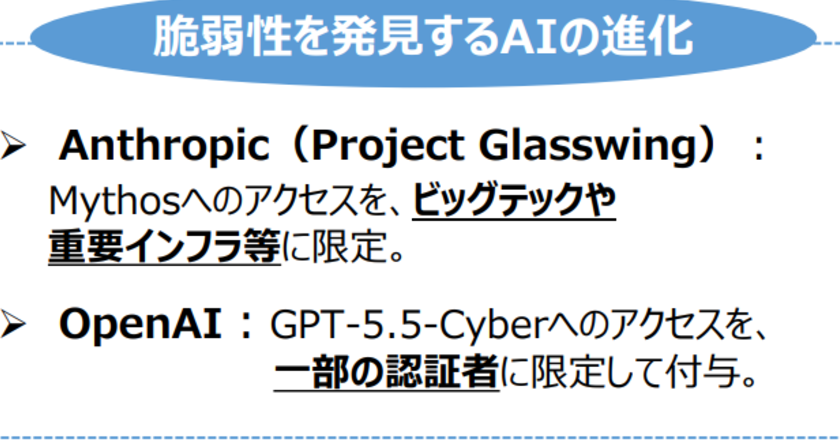
日本政府、AI「Mythos」アクセス権を取得 サイバー防衛強化に活用
三菱UFJ銀行、三井住友銀行、みずほ銀行もアクセス権を得たとみられている。
「AI使うな」より「使うなら教えて」 エージェント時代のガバナンス再設計
AIエージェントの業務適用が広がる一方、組織のガバナンスが追いついていない。OWASPの指摘を踏まえ、日本企業が押さえるべき2つの原則と、来週から始められる3つのアクションを解説する。
Reproducibility is the New Copyleft: Defining AGI-oriented Reproducible Builds
Copyleft, as implemented in licenses such as the GNU General Public License, was a legal hack that used copyright to guarantee user freedom…
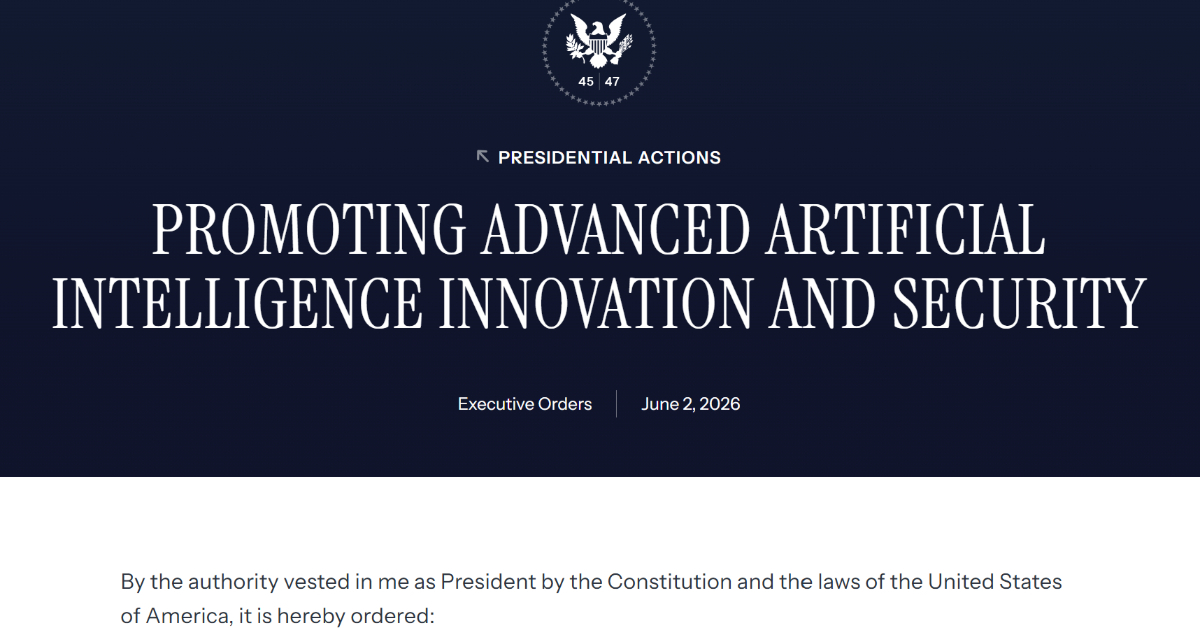
トランプ米大統領、AI安全保障に関する大統領令に署名 最先端モデルを公開30日前に政府が検査可能に
トランプ米大統領は、先進的AIのイノベーションと安全保障の促進に関する大統領令に署名した。戦争省やCISAによるサイバー防衛強化に加え、主要企業の最先端AIモデルを政府が事前検証する任意の枠組みを構築する。政府は全面的な監視を否定しており、民間の開発自由度を維持しつつ安全保障の…

Amazon faces class action lawsuit over Ring facial-recognition feature
The class action lawsuit, filed in Seattle by Virginia resident Charles Sigwalt, claims that Ring's Familiar Faces feature stores images of…

Trump signs narrower executive order on AI oversight after industry objections
After industry objections, President Trump signed a revised AI executive order requiring only voluntary prerelease government reviews of ad…
How Hard Can It Be? Hardness-Aware Multi-Objective Unlearning
Machine unlearning aims to remove the influence of specific forget training data due to privacy, copyright or bias concerns while maintaini…

Florida sues OpenAI, Sam Altman, in first-of-its-kind lawsuit over violent incidents
The lawsuit partially revolves around a shooting at Florida State University last year, and ChatGPT's alleged role in the incident.
Gap-K%: 事前トレーニング データを検出するための上位 1 予測ギャップの測定
大規模言語モデル (LLM) における大規模な事前トレーニング コーパスの不透明さにより、プライバシーと著作権に関する重大な懸念が生じ、事前トレーニング データの検出が重大な課題となっています。既存の最先端の手法は通常、トークンの尤度に依存していますが、ターゲット トークンとモデルの上位 1 予測との間のギャップや、隣接するトークン間の局所的な相関を見落とすことがよくあります。この研究では、LLM 事前トレーニングの最適化ダイナミクスに基づいた新しい事前トレーニング データ検出方法である Gap-K% を提案します。次のトークンの予測目標を分析することにより、モデルのトップ 1 予測とターゲット トークン間の不一致が強い勾配信号を誘発し、トレーニング中に明示的にペナルティが課されることが観察されます。これを動機として、Gap-K% は、上位 1 位の予測トークンとターゲット トークン間の対数確率ギャップを活用し、スライディング ウィンドウ戦略を組み込んで局所的な相関関係を捕捉し、トークン レベルの変動を軽減します。 WikiMIA および MIMIR ベンチマークに関する広範な実験により、Gap-K% が最先端のパフォーマンスを達成し、さまざまなモデル サイズや入力長にわたって一貫して以前のベースラインを上回るパフォーマンスを示していることが実証されています。
原文 (English)
Gap-K%: Measuring Top-1 Prediction Gap for Detecting Pretraining Data
The opacity of massive pretraining corpora in Large Language Models (LLMs) raises significant privacy and copyright concerns, making pretraining data detection a critical challenge. Existing state-of-the-art methods typically rely on token likelihoods, yet they often overlook the gap between the target token and the model's top-1 prediction, as well as local correlations between adjacent tokens. In this work, we propose Gap-K%, a novel pretraining data detection method grounded in the optimization dynamics of LLM pretraining. By analyzing the next-token prediction objective, we observe that discrepancies between the model's top-1 prediction and the target token induce strong gradient signals, which are explicitly penalized during training. Motivated by this, Gap-K% leverages the log probability gap between the top-1 predicted token and the target token, incorporating a sliding window strategy to capture local correlations and mitigate token-level fluctuations. Extensive experiments on the WikiMIA and MIMIR benchmarks demonstrate that Gap-K% achieves state-of-the-art performance, consistently outperforming prior baselines across various model sizes and input lengths.

OpenAIが生命科学推論AI「GPT-Rosalind」をバイオディフェンスに開放 デュアルユースリスクに懸念も
OpenAIは、生命科学研究に特化したフロンティア推論モデル「GPT-Rosalind」を活用した「Rosalind Biodefense」プログラムを発表した。生物脅威の検知など防衛目的に限定し、審査済みの開発者や米政府機関および同盟国のパートナー組織にAPIを無償提供する。
日本政府と主要金融機関、OpenAI新モデルのアクセス権を取得 サイバー対策強化へ
片山さつき金融担当相が、米OpenAIが開発した新型AIのアクセス権を政府と主要金融機関が取得したと明らかにした。高性能AIがサイバー攻撃に悪用される懸念が高まる中、AIを防御に活用した対策が急務となっている。片山氏は「わが国金融機関のサイバーセキュリティー強化の観点から歓迎す…
OpenAI、日本政府とサイバーセキュリティで協力 最新AI「GPT-5.5-Cyber」を金融機関に提供
米OpenAIは、日本政府とサイバーセキュリティで協力する取り組み「日本サイバー・アクションプラン」を発表した。まずは、金融機関にサイバーセキュリティに特化した最新AIモデル「GPT-5.5-Cyber」を提供する。
デジタル庁、AI「源内」向け国産LLM再公募 有償の政府調達へ 評価テストは50問→300問に
初回公募は無償試用を前提に募集したが、27年度向け公募では政府調達(有償)に移行する。
GS-FUSE: イベント駆動型の財務予測のためのグレンジャー監視ゲート フュージョンと複数粒度の調整
顕著な金融イベントが市場に与える影響を正確に予測することは、投資家や政策立案者にとって非常に重要です。しかし、既存のマルチモーダル時系列モデルは通常、イベントテキストが真に予測的であるかどうかを決定する明示的な方法がなく、テキストと価格を対称的に融合しているため、方向性のあるイベント対価格構造と、テキストシグナルと価格シグナルの異質な役割を活用するのに苦労しています。この研究では、(i) 過去の価格を超える増分予測値を提供する場合にのみイベント テキストに対してオープンになることを学習する、グレンジャー監視の因果認識ゲート型融合モジュール、および (ii) 高レベルのイベント表現ときめの細かいテキストの手がかりを将来の市場の軌道に合わせて調整する多粒度の調整メカニズムを採用する、マルチモーダルなイベントベースの予測フレームワークである GS-Fuse を提案します。 GS-Fuse は、既製の大規模言語モデルと時系列基盤モデルの上に柔軟なプラグアンドプレイ アダプターとして構築されており、さまざまなバックボーンや市場設定にわたってインスタンス化できます。現実世界の金融データセットに対する広範な実験により、GS-Fuse が複数の資産と予測期間にわたって最先端の時系列ベースラインとマルチモーダル ベースラインを常に上回るパフォーマンスを示していることが示されています。
原文 (English)
GS-FUSE: Granger-Supervised Gated Fusion and Multi-Granularity Alignment for Event-Driven Financial Forecasting
Accurately forecasting the impact of salient financial events on markets is critical for investors and policymakers. However, existing multimodal time-series models typically fuse text and prices symmetrically, without an explicit way to decide when event text is truly predictive, and thus struggle to exploit the directional event-to-price structure and the heterogeneous roles of textual and price signals. In this work, we propose GS-Fuse, a multimodal event-based forecasting framework that employs (i) a Granger-supervised, causal-aware gated fusion module, which learns to open toward event text only when it provides incremental predictive value beyond historical prices, and (ii) a multi-granularity alignment mechanism that jointly aligns high-level event representations and fine-grained textual cues with future market trajectories. Built as a flexible, plug-and-play adapter on top of off-the-shelf large language models and time-series foundation models, GS-Fuse can be instantiated across diverse backbones and market settings. Extensive experiments on real-world financial datasets show that GS-Fuse consistently outperforms state-of-the-art time-series and multimodal baselines across multiple assets and forecasting horizons.
画像生成モデルの事前トレーニングデータに対するブラックボックスメンバーシップ推論攻撃
拡散ベースの画像生成モデルの急速な進歩により、人間が作成したデータに関わる著作権およびプライバシー侵害の可能性について深刻な懸念が生じています。メンバーシップ推論攻撃 (MIA) は、モデルのトレーニング中に不正なデータの使用を特定するための有望なツールとして浮上しています。既存の方法は通常、メンバーシップのステータスの指標として、乱れた疑わしい画像のノイズを除去するモデルの能力を評価します。ただし、そのような特徴の識別力はモデルの記憶の程度に大きく依存し、あまり公開されていないデータ (トレーニング前のデータなど) に適用すると大幅に低下します。いくつかの方法では、内部モデル機能を活用して検出を強化しようとしていますが、これらの機能は一般に、主流のクローズドソース画像生成プラットフォームではアクセスできず、実用性が制限されています。この論文では、ブラックボックス拡散モデルがターゲット画像と対応する摂動されたテキスト命令のノイズをどのように除去するかを分析することで、より特徴的なメンバーシップの手がかりを明らかにできることを実証します。この洞察に基づいて、クロスモーダル データ摂動メカニズムを利用して拡散モデルの事前トレーニング データを検出するブラック ボックス メンバーシップ推論攻撃フレームワーク (SD-MIA と呼ばれる) を提案します。私たちは、公開ベンチマーク データセットと新しく構築されたデータセットの両方で広範な実験を実施します。各データセットは、同一の分布を持つトレーニング前のメンバーシップ サンプルと非メンバーシップ サンプルで構成されます。実験結果は、SD-MIA が、内部モデル機能にアクセスするという不公平な利点を持つベースラインを含む、既存のベースラインと比較して優れたパフォーマンスを達成することを示しています。
原文 (English)
Black-box Membership Inference Attacks on the Pre-training Data of Image-generation Models
The rapid advancement of diffusion-based image generation models has raised serious concerns regarding potential copyright and privacy infringements involving human-created data. Membership inference attacks (MIAs) have emerged as a promising tool for identifying unauthorized data usage during model training. Existing methods typically assess the ability of model to denoise perturbed suspect images as an indicator of membership status. However, the discriminative power of such features is highly dependent on the degree of model memorization and deteriorates significantly when applied to less exposed data (e.g., pre-training data). Although several methods attempt to enhance detection by leveraging internal model features, these features are generally inaccessible in mainstream closed-source image generation platforms, limiting their practicality. In this paper, we demonstrate that analyzing how a black-box diffusion model denoises a target image and corresponding perturbed textual instructions can reveal more distinctive membership cues. Based on this insight, we propose a black-box membership inference attack framework (named SD-MIA) that leverages a cross-modal data perturbation mechanism to detect pre-training data in diffusion models. We conduct extensive experiments on both a public benchmark dataset and a newly constructed dataset, each comprising pre-training membership and non-membership samples with identical distributions. Experimental results demonstrate that SD-MIA achieves superior performance compared to existing baselines, including those with the unfair advantage of accessing internal model features.
SWAP: 順次透かしを介したソフト プロンプトの著作権監査に向けて
大規模なビジョン言語モデル、特に CLIP は、さまざまな下流タスクにわたって顕著なパフォーマンスを実証しています。ソフト プロンプトは、視覚言語モデルを特定のタスクに効率的に適応させる慎重に作成されたモジュールであり、効果的な著作権保護が必要です。このペーパーでは、疑わしいサードパーティ モデルに保護されたソフト プロンプトが組み込まれているかどうかを監査することで、モデルの著作権保護を調査します。これはモデルの所有権監査の特殊なケースと見なすことができますが、私たちの分析では、プロンプト学習の固有の特性により、既存の手法が効果的ではないことが示されています。非侵入型監査は、独立したモデルが被害モデルと同様のデータ分布を共有する場合、本質的に誤検知が発生する傾向があります。侵入的なアプローチも失敗します。CLIP 用に設計されたバックドア手法は機能トリガーを埋め込むことができませんが、従来の DNN バックドア手法を拡張して学習を促すことは、有害性と曖昧さの問題に悩まされます。私たちは、侵入型監査におけるこれらの失敗は、同じ根本的な理由から生じていることを発見しました。つまり、透かしは主要なタスクと同じ決定空間内で機能するにもかかわらず、相反する目的を追求するということです。これらの発見に動機付けられて、我々は、異なるより複雑な空間に透かしを埋め込む、ソフトプロンプト用の逐次透かし埋め込み(SWAP)を提案します。 SWAP は、CLIP のゼロショット予測機能にヒントを得て、防御者が指定した配布外クラスの特定の順序を通じてウォーターマークをエンコードします。この透かしは、より複雑な空間に埋め込まれているため、元の予測ラベルが変更されずに維持され、主要なタスクに反することが少なくなります。さらに、SWAP 用の仮説テストに基づいた検証プロトコルを設計し、検証が機能する場合の理論的分析を提供します。 11 のデータセットに対する広範な実験により、SWAP の有効性、無害性、および潜在的な攻撃に対する堅牢性が実証されています。
原文 (English)
SWAP: Towards Copyright Auditing of Soft Prompts via Sequential Watermarking
Large-scale vision-language models, especially CLIP, have demonstrated remarkable performance across diverse downstream tasks. Soft prompts, as carefully crafted modules that efficiently adapt vision-language models to specific tasks, necessitate effective copyright protection. In this paper, we investigate model copyright protection by auditing whether suspicious third-party models incorporate protected soft prompts. While this can be viewed as a special case of model ownership auditing, our analysis shows that existing techniques are ineffective due to prompt learning's unique characteristics. Non-intrusive auditing is inherently prone to false positives when independent models share similar data distributions with victim models. Intrusive approaches also fail: backdoor methods designed for CLIP cannot embed functional triggers, while extending traditional DNN backdoor techniques to prompt learning suffers from harmfulness and ambiguity challenges. We find that these failures in intrusive auditing stem from the same fundamental reason: watermarking operates within the same decision space as the primary task yet pursues opposing objectives. Motivated by these findings, we propose sequential watermarking for soft prompts (SWAP), which implants watermarks into a different and more complex space. SWAP encodes watermarks through a specific order of defender-specified out-of-distribution classes, inspired by the zero-shot prediction capability of CLIP. This watermark, which is embedded in a more complex space, keeps the original prediction label unchanged, making it less opposed to the primary task. We further design a hypothesis-test-guided verification protocol for SWAP and provide a theoretical analysis of when verification works. Extensive experiments on 11 datasets demonstrate SWAP's effectiveness, harmlessness, and robustness against potential attacks.
シャドウアンラーニング: LLM における忠実度を保持する顔の見えない忘却への神経意味論的アプローチ
機械学習の解除は、GDPR の「忘れられる権利」などのプライバシー規制を満たすために、特定のトレーニング サンプルの影響を選択的に除去することを目的としています。ただし、既存の方法の多くは、削除されるデータへのアクセスを必要とするため、メンバーシップ推論攻撃や個人を特定できる情報 (PII) の悪用の可能性にさらされます。私たちは、PII を公開することなく、匿名化された忘却データに対して機械のアンラーニングを実行する近似アンラーニングの新しいパラダイムであるシャドウ アンラーニングを提案することで、この重大な課題に対処します。さらに、シャドウアンラーニングを実現するための新しいプライバシー保護フレームワークであるニューロセマンティックプロジェクターアンラーニング(NSPU)を提案します。私たちの手法を評価するために、5 つの多様なドメインにわたってマルチドメイン架空非学習 (MuFU) 忘却セットをコンパイルし、知識の保持と非学習の有効性の間のトレードオフを定量化する評価スタックを導入します。さまざまな LLM に関する実験結果は、NSPU が優れた非学習パフォーマンスを達成し、モデルの有用性を維持し、ユーザーのプライバシーを強化することを示しています。さらに、提案されたアプローチは、標準的な非学習アプローチよりも少なくとも 10 倍の計算効率があります。私たちの調査結果は、データ保護とモデルの忠実性のバランスをとる、プライバシーを意識した機械のアンラーニングの新しい方向性を促進します。
原文 (English)
Shadow Unlearning: A Neuro-Semantic Approach to Fidelity-Preserving Faceless Forgetting in LLMs
Machine unlearning aims to selectively remove the influence of specific training samples to satisfy privacy regulations such as the GDPR's 'Right to be Forgotten'. However, many existing methods require access to the data being removed, exposing it to membership inference attacks and potential misuse of Personally Identifiable Information (PII). We address this critical challenge by proposing Shadow Unlearning, a novel paradigm of approximate unlearning, that performs machine unlearning on anonymized forget data without exposing PII. We further propose a novel privacy-preserving framework, Neuro-Semantic Projector Unlearning (NSPU) to achieve Shadow unlearning. To evaluate our method, we compile Multi-domain Fictitious Unlearning (MuFU) forget set across five diverse domains and introduce an evaluation stack to quantify the trade-off between knowledge retention and unlearning effectiveness. Experimental results on various LLMs show that NSPU achieves superior unlearning performance, preserves model utility, and enhances user privacy. Additionally, the proposed approach is at least 10x more computationally efficient than standard unlearning approaches. Our findings foster a new direction for privacy-aware machine unlearning that balances data protection and model fidelity.
「AIによる権利侵害」に出版・アニメ制作会社など集う国内団体が声明 「看過できない問題」
出版社やアニメ制作会社などで構成される団体・コンテンツ海外流通促進機構(CODA)は、生成AIによる著作権侵害に関する声明を出した。AIの開発やAIサービスを提供する事業者に対し、権利の保護などを求めている。

松下幸之助氏の「AI偽動画」に注意 PHP研究所が再告知 津田健次郎さんによるTikTok提訴受け
出版・教育事業を手がけるPHP研究所は5月26日、創設者・故松下幸之助氏の画像や音声を無断でAI合成した偽動画が引き続き出回っているとして、公式Xで改めて注意喚起を投稿した。
松下幸之助氏の「AI偽動画」に注意 PHP研究所が再告知 津田健次郎さんによるTikTok提訴受け
出版・教育事業を手がけるPHP研究所は5月26日、創設者・故松下幸之助氏の画像や音声を無断でAI合成した偽動画が引き続き出回っているとして、公式Xで改めて注意喚起を投稿した。
高リスク AI システムと欧州 AI 法におけるアイデンティティの問題
EU 人工知能法 (AIA) は、事前の適合性評価、市販後のモニタリング、および「大幅な変更」時の再評価を中心に構築された高リスク AI システムのライフサイクル ガバナンス体制を確立しています。これらの義務は AI のアイデンティティ判断を前提としています。規制当局とプロバイダーは、更新されたシステムが長期間にわたって同じシステムのままであるかどうかを決定する必要があります。この研究では、このロジックがアーティファクト ID の機能 + フレームワークによってどのように明確化されるかを示します。このフレームワークは、「AI の信頼性」として捉えられる、適切な機能の状況依存の基準とともに、意図された機能によって AI システムを個別化します。さらに我々は、AIAは同期的同一性(規制上の目的で一度に2つのAIシステムが同一とみなされるべき場合)に関する内部の監査可能な基準を提供しておらず、代わりにそのような同一性の判断を分野別または調和化の手段に大きく委ねていると主張する。 function+ は、意図した機能と信頼性のプロファイルとレベルに基づいた同期アイデンティティ テストを提供し、調達、責任、市場監視などのガバナンス設定で同期アイデンティティの決定を検査可能にします。私たちの貢献は概念的なレンズと監査レンズです。私たちは、AIA ライフサイクル義務と機能 + アイデンティティ コンポーネント間の対応マップを提供し、監査と紛争のコンテキストに関する最小限の意思決定フローを通じて同期ケースを運用上判読できるようにします。最後に、実装に向けた 2 つの推奨事項を示します。(1) 意図された目的についての、より正確でテスト可能なレポート。(2) 経時的および導入間での比較可能性をサポートする、標準化された監査可能な信頼性レポート。
原文 (English)
High-Risk AI Systems and the Problem of Identity in the European AI Act
The EU Artificial Intelligence Act (AIA) establishes a lifecycle governance regime for high-risk AI systems built around ex-ante conformity assessment, post-market monitoring, and re-assessment upon "substantial modification." These obligations presuppose AI identity judgments: regulators and providers must decide when an updated system remains the same system over time. In this work, we show how this logic is clarified by the function+ framework of artifact identity, which individuates AI systems by their intended function together with context-sensitive criteria of appropriate functioning, captured as "AI trustworthiness." We further argue that the AIA does not provide an internal, auditable criterion for synchronic identity--when two AI systems at a given time should count as the same for regulatory purposes--and instead largely defers such sameness determinations to sectoral or harmonization instruments. function+ supplies a synchronic identity test anchored in intended function and trustworthiness profiles and levels, making synchronic identity decisions inspectable in governance settings such as procurement, liability, and market surveillance. Our contribution is a conceptual and auditing lens: we provide a correspondence map between AIA lifecycle obligations and function+ identity components, and we make the synchronic case operationally legible via a minimal decision flow for audit and dispute contexts. We conclude with two implementation-facing recommendations: (1) more precise, testable reporting of intended purpose, and (2) standardized, auditable trustworthiness reporting that supports comparability over time and across deployments.

ServiceNow、AIエージェントの「データの空白」を埋める機能群を発表
AIエージェント導入の「壁」になるのが、サイロ化したデータとガバナンスの未整備だ。ServiceNowはこの課題をどう解決しようとしているのか。年次イベントで発表された新機能群を紹介する。
XAttnMark: クロスアテンションによる堅牢なオーディオ透かしの学習
音声生成合成および編集技術の急速な普及により、著作権侵害、データの出所、ディープフェイク音声を介した誤った情報の拡散についての深刻な懸念が生じています。ウォーターマークは、知覚できないが識別可能で追跡可能な信号をオーディオ コンテンツに埋め込むことで、プロアクティブなソリューションを提供します。 WavMark や AudioSeal などの最近のニューラル ネットワーク ベースの透かし手法は堅牢性と品質を向上させていますが、堅牢な検出と正確な属性の両方を最適化するのに苦労しています。このペーパーでは、生成器と検出器の間の部分的なパラメータ共有、効率的なメッセージ取得のためのクロスアテンション メカニズム、およびメッセージ配信を改善するための時間調整モジュールを活用することで、このギャップを埋めるクロスアテンション ロバスト オーディオ ウォーターマーク (XATTNMARK) を紹介します。さらに、きめの細かい聴覚マスキング効果を捕捉し、透かしの知覚不能性を改善する、心理音響的に調整された時間周波数 (TF) マスキング損失を提案します。 XATTNMARK は、検出と属性の両方で最先端のパフォーマンスを実現し、さまざまな強度での困難なジェネレーティブ編集を含む、幅広いオーディオ変換に対する優れた堅牢性を実証します。この取り組みは、知的財産を保護し、生成 AI 時代の信頼性を確保するために音声透かしを進歩させます。
原文 (English)
XAttnMark: Learning Robust Audio Watermarking with Cross-Attention
The rapid proliferation of generative audio synthesis and editing technologies has raised serious concerns about copyright infringement, data provenance, and the spread of misinformation via deepfake audio. Watermarking offers a proactive solution by embedding imperceptible yet identifiable and traceable signals into audio content. While recent neural network-based watermarking methods like WavMark and AudioSeal have improved robustness and quality, they struggle to jointly optimize both robust detection and accurate attribution. This paper introduces Cross-Attention Robust Audio Watermark (XATTNMARK), which bridges this gap by leveraging partial parameter sharing between the generator and the detector, a cross-attention mechanism for efficient message retrieval, and a temporal conditioning module for improved message distribution. Additionally, we propose a psychoacoustic-aligned time-frequency (TF) masking loss that captures fine-grained auditory masking effects, improving watermark imperceptibility. XATTNMARK achieves state-of-the-art performance in both detection and attribution, demonstrating superior robustness against a wide range of audio transformations, including challenging generative editing at varying strengths. This work advances audio watermarking for protecting intellectual property and ensuring authenticity in the era of generative AI.